• Skip to primary navigation
  • Skip to main content
  • Skip to primary sidebar

everywomanover29 blog

Food, Mood and Women's Health – Be your healthiest, look and feel great!

  • Blog
  • About
  • Services
  • Store
  • Resources
  • Testimonials
  • The Book
  • Contact
  • Search this site

tyrosine

Metal-on-metal hip replacement and cobalt toxicity: anxious, tearful, lowered self-esteem, social withdrawal and poor sleep

October 26, 2018 By Trudy Scott 8 Comments

I’m always on the look-out for out-of-the-box root causes for anxiety, insomnia and low mood and the role of targeted amino acids like GABA, tryptophan and tyrosine in easing symptoms clients and boy was I surprised to learn about the connection between metal-on-metal hip replacements and mental health symptoms.

I first learned about this in the new Netflix documentary called The Bleeding Edge which is an “eye-opening look at the fast-growing medical device industry” and “reveals how the rush to innovate can lead to devastating consequences for patients.”

With metal-on-metal hip replacements it’s the cobalt and chromium in the metal-on-metal hip replacements that are causing toxicity in many individuals. In the Guardian article The Bleeding Edge: behind the terrifying new Netflix documentary we hear about Stephen Tower, an orthopedic doctor who shared his story in the documentary:

He had developed a tremor and was having a hard time thinking when he decided to scrawl all over the walls and ceiling of a hotel room during a medical conference, eventually using soap as ink.

Tower, his friends and family knew he was in the throes of mental health crisis, but no one was sure why. So, Tower studied himself until he found the answer in a blood and urine sample: his levels of cobalt, a metal used in rechargeable batteries, were more than a hundred times higher than normal.

Tower thought it might be related to his metal-on-metal hip replacement and had it redone. On the operating table, his surgeon found metal sludge seeping from the device before it was removed.

Dr. Tower shares that within a month of having his hip replacement redone his recovery was remarkable – he could think again, and his psychiatric symptoms resolved.

The sad thing is that he actually admits that he would never have believed this could be possible without having had experienced it himself. We see this all too often in the medical profession.

But he is now enlightened and of course he’s passionate about sharing what he experienced and has started documenting similar adverse experiences in his patients. He says the EPA and FDA should be studying this and reporting it and so they should be.

I was curious to find out how serious an issue this was and how long it’s been an issue because surely we’d be hearing more about it.

A paper published in 2017: Neuropsychiatric symptoms following metal-on-metal implant failure with cobalt and chromium toxicity reports depression and short term memory problems, as well as “disorientation in place, problems with tests of concentration and word finding difficulties.”

The paper includes feedback from some of the study participants. This is what two of them shared about their mood, sleep and anxiety post-hip replacement:

Ms. X … persistent anxieties about the need for future surgery and a feeling she must always be cautious about protecting her hip, tearfulness, lability of mood, lowered self-esteem – “I used to be very active and now I feel a mess”, guilt about being a burden on her husband, a fear about the effects of ions on her body and poor concentration.

Mrs. Z … complained of poor sleep with early morning wakening, low mood and emotional lability, social withdrawal, poor appetite, forgetfulness and a tendency to repeat herself reported by relatives, her frustration at being unable to do day to day activities such as cleaning, she felt she was a burden to relatives, and complained of anhedonia [or an inability to feel pleasure in normally pleasurable activities]. She was disorientated in person, was unable to perform serial sevens and was able to register, but not able to retain any elements of a new name and address on cognitive testing.

The study authors state that “in order preserve neurocognitive function implant removal conceivably should be as soon as possible after toxicity is detected.”

They admit it’s a small sample and that some of the depression and anxiety may be typical after a surgery HOWEVER once I looked at how long metal-on-metal cobalt toxicity has been an issue I feel we really need to take this very very seriously. Here are just a few of the studies from 2017 going back to 2011:

  • Are the cobalt hip prosthesis dangerous? (published 2017)

Cobalt can be responsible for local toxicity (including metallosis, hypersensitivity reaction, and benign tumor) or systemic toxicity (including cardiomyopathy, polycythemia, hypothyroidism, and neurological disorders).

  • Systemic cobalt toxicity from total hip arthroplasties: review of a rare condition Part 1 – history, mechanism, measurements, and pathophysiology (published 2016).
  • Systemic toxicity related to metal hip prostheses (published 2014) This systematic review states toxicity is rare but reported cases of cardiotoxicity, thyroid toxicity, peripheral neuropathy, hearing loss, cognitive decline and visual impairment.
  • Prosthetic hip-associated cobalt toxicity (published 2013)

Prosthetic hip-associated cobalt toxicity (PHACT) is gaining recognition due to the use of metal-on-metal total hip replacements

  • Cobalt toxicity–an emerging clinical problem in patients with metal-on-metal hip prostheses (published 2011)

And then we have this study reporting toxicity issues as far back as 1999:

  • Increased blood cobalt and chromium after total hip replacement

Our findings suggest that in total hip replacements using metal-metal pairings, metal ions of the alloys are released. This release may lead to significantly elevated metal concentrations in biological fluids. Long-term studies are needed to determine the risk of metal-metal implants as a potential cause of cobalt and chromium toxicity.

You may wonder how this toxicity problem has been ignored and swept under the rug for so long. If you watch the documentary, you’ll soon see that the medical devices industry is far more powerful than the pharmaceutical industry and has its own set of rules for medical device approval. It’s basically the wild west and the FDA is doing nothing about it (even though it is acknowledged to be a problem)!

I’m not suggesting we shouldn’t be doing hip replacements – they are amazing surgical innovations that give many people their mobility and lives back – but instead I suggest we consider the following:

  • Know what you’re getting into before you embark on a major medical procedure
  • Understand that the testing for medical devices is very inadequate
  • Ask questions and get detailed information about the medical device: what materials are being used, how long it’s been around, any known adverse effects etc.
  • Search for information using terms like “horror stories metal-on metal hip replacement” and “law suits metal-on metal replacement”
  • Have a plan in place should you start to notice adverse symptoms after a hip replacement (or other major procedure). You may even want a medical directive in case you become cognitively incapacitated

I have no expertise on what the safest type of hip replacement is and will find an expert for a part 2 of the blog. If you know of someone please do share in the comments.

How do we address the cobalt and chromium toxicity?

  • Tower, the orthopedic doctor in The Bleeding Edge documentary found his symptoms resolved once the metal-on-metal hip replacement was removed. The research seems to support this approach too
  • A 2-person case study supports the use of N-acetyl-cysteine (NAC) for reducing blood levels
  • An in vivo (test tube) study found astaxanthin “mitigated cobalt cytotoxicity … by modulating oxidative stress”

How do we address the anxiety, insomnia and associated mood issues?

  • I recommend using the calming amino acid GABA to help with the physical anxiety symptoms, sleep issues and social isolation. There is no research supporting this but we can extrapolate given that cobalt is toxic to the thyroid and the fact that animal studies show that GABA protects against hypothyroidism caused by fluoride and reduces anxiety
  • I recommend using the amino acid tryptophan for the mental anxiety, tearfulness, low mood, lowered self-esteem
  • I recommend using the amino acid DPA for endorphin boosting to address the inability to feel pleasure and tearfulness
  • I recommend using the amino acid tyrosine to help with poor cognitive function and forgetfulness

I recommend using the above amino acids short-term to ease symptoms before the hip revision surgery is done and for as long afterwards as they are needed. And, as always, base the use of the amino acids on trials per the amino acid questionnaire.

Also, work with a thyroid expert for thyroid support which will also help the mood and cognitive issues. And work with a heart specialist to rule out any damage to the heart.

If you’ve had a metal-on-metal hip replacement in the past and have chronic anxiety or cognitive issues (that started or got worse after the surgery), then I encourage you to look into cobalt toxicity as a possible root cause or contributory root cause.

Please feel free to share your experiences with this surgery – both good and bad – so we can all learn. And if the amino acids have helped ease anxiety and mood symptoms and helped you sleep while going through this.

And do let us know what you think about the Netflix documentary The Bleeding Edge.
Filed Under: Toxins Tagged With: amino acids, anxious, Bleeding Edge, chromium, cobalt toxicity, DPA, GABA, lowered self-esteem, Metal-on-metal hip replacement, poor sleep, social withdrawal, tearful, tryptophan, tyrosine

Using amino acids for anxiety and depression: does the right dose ever change or need a tweak?

October 19, 2018 By Trudy Scott 14 Comments

If you are using targeted individual amino acids for anxiety and/or depression and doing well on them, you’ll likely get to the point when you’re asking questions like how to discontinue them and does the right dose ever change or need a tweak, especially after some stressful life events. Amy posted this question in the comments section of the blog on using tyrosine to create a sense of calm energy (paraphrased and formatting for ease of reading)

Trudy you are a God send! I stumbled upon your work after following Julia Ross. I have depression and anxiety. I’m currently taking:

1000 mg tyrosine 2x daily

500 mg glutamine morning, 1000mg mid-morning and afternoon

500mg DPA (Endorphigen) 3 x daily (previously I was using DLPA but your recommended DPA was so much better and less stimulating)

50 mg 5-HTP afternoon and

1500mg tryptophan at night

I used the amino acids to treat what used to be referred to as “atypical” depression: loss of motivation, tiredness, lethargic, intense carb craving, feelings of guilt and hopelessness. I would become paralyzed with depression, barely able to get through the days. When I was younger I treated these episodes with antidepressants but as I got older could no longer tolerate the side effects. I’m also still on birth control pills at the age of 46 and believe I may be in perimenopause but can’t stop the pills for medical reasons.

Tyrosine gave me my energy back, glutamine cut the carb cravings. DPA and True Calm work wonders for my anxiety.

I watch my sugar intake and always consume lots of animal protein. I’m so grateful for this solution.

After trialing this seems to be the right combo. I always get confused when is it time to discontinue supplements? Do you stop or slowly reduce or taper?

Does the “right” dose ever change? I’ve been on this combo about 2 months. I’ve felt great but some anxiety/panic creeping back up …. wondering if supplements need a tweak or is this just the result of some stressful life events. Advice appreciated!

I was really pleased to hear the wonderful results she was having and glad that she had trialed the amino acids to find the correct amount for her unique needs and situation. I don’t see this happening often enough and it really is the most effective way to get results. It’s what I do with all my clients – methodical, step-by-step trialing of each amino acid, one at a time and carefully documenting results (both good and bad) in order to find the optimal dose of each one.

When and how to discontinue the amino acids?

To answer her question about when and how to discontinue this is my feedback:

Once you are feeling back to your old self with no more anxiety, panic attacks or depression, you may choose to stop everything at once, but I prefer to slowly lower the amount of one amino acid at a time and add back if your symptoms come back. They don’t need to be “tapered” but doing it this way it helps with preventing your original anxiety and depression symptoms going back to really bad in one big swoop and having to start all over again.

I will add that I have had feedback from someone saying when she stopped tryptophan abruptly she felt the same withdrawal effects as when she weaned off meds but based on my experience this is very rare.

After posting her question Amy made some adjustments – taking less of all of them. As I mentioned above I find it better to lower the amount of one amino acid at a time – kind of reverse of the trialing method you use when starting the amino acids. Also, since she mentioned she felt anxiety/panic creeping back up, I would have expected her to increase some of the calming amino acids.

Does the right dose ever change or need a tweak?

And to answer Amy’s other question: does the right dose ever change or need a tweak?

Yes, the “right dose” can change based on stressful life events especially if you have pyroluria – stressful life events can cause you to dump more zinc and vitamin B6 affecting serotonin and GABA production and increasing the social anxiety.

Amy does mention that she’s on the birth control pill and this depletes zinc and vitamin B6 and hence serotonin) and has an impact on the microbiome – so this may well be playing a role in the need to tweak doses.

There are many other factors that could lead to the need to adjust the amino acids (or other supplement protocols):

  • hormonal changes like PMS, perimenopause or menopause
  • something contributing to leaky gut like adding back gluten or accidental exposure to gluten
  • antibiotics (affecting the microbiome and serotonin/GABA levels)
  • artificial sweeteners (because of their effect on the microbiome and hormones)
  • starting on other medications (since many cause nutritional depletions)
  • adding in a new food like collagen/gelatin (for some people collagen and gelatin may lower serotonin levels)
  • running a marathon (it likely depletes zinc and may ramp up cortisol)
  • a formulation changing completely without you knowing (one example is Seriphos – used to lower high cortisol – where the core ingredient changed completely and the labeling stayed the same)
  • a product changing from using gelatin to cellulose capsules (this may be problematic if you have SIBO)
  • you move into a new home and get mold exposure
  • you get a new dog or cat and start using Frontline Plus for fleas (fipronil, the active ingredient, targets GABA receptors and recent research points to increased anxiety, aggressive behavior, memory problems)
  • you have started using a sauna (depletion of zinc and other minerals, as well as stirring up toxins)
  • your need for serotonin support increases as you head into winter-time (some low serotonin folks are more susceptible to the winter blues)
  • a recent course of fluoroquinolone antibiotics (impacts on magnesium and GABA levels and the mitochondria)
  • you may no longer need them

This is not a complete list of reasons that could impact you but this will give you an idea of what to start to think about.

Hopefully this shows how important it is to monitor how you’re doing and adjust as needed (either up or down) and think about what is changing in your life.

If you’d like to read about the amino acids products Amy uses – the same ones I recommend and use with clients – you can find them listed on my supplements blog.

We appreciate Amy for allowing me to share her results and posting these questions which are a great learning opportunity for you.  She shared this with me:

I hope my “story” is helpful. Keep doing this important work! I work in the behavior health field. My colleagues think this is radical thinking and continue to only support the medical model. I’ve done a lot of my own research and trial and error. I wish there were more-open minded clinicians.

Hopefully with success stories like this, all the nutritional psychiatry research and behavioral health practitioners like Amy who have experienced it first hand and/or with clients/patients and family, we’ll change how mental health care is approached.

Do success stories like this lead you to be more open-minded about anxiety nutrition solutions? Have they worked for you?

And have you found the ideal dose of amino acids and then needed to adjust them up or down based on any of the above? How methodical were you in doing your adjustments?

Filed Under: Amino Acids, Anxiety, Anxiety and panic, Tryptophan Tagged With: adjust, anxiety, depression, discontinue, DPA, microbiome, right dose, stress, taper, tryptophan, tweak, tyrosine

Tyrosine for alleviating anxiety and panic attacks and creating a feeling of calm focus

August 31, 2018 By Trudy Scott 72 Comments

If you had anxiety, felt hugely stressed and were having panic attacks would you consider using tyrosine to help calm you? It’s not the first approach I use with a client as I typically want to calm things down first by addressing the low serotonin symptoms of anxiety (such as worry, overwhelm, insomnia and panic attacks) and the low GABA physical symptoms of anxiety (physical tension, stiff and tense muscles, overwhelm and panic attacks).

However, for some individuals addressing low catecholamines with tyrosine is the best approach to take, even if it feels counter-intuitive. Since everyone is different using the trial method is the best way to figure out what you need.

Here is another success story from someone using tyrosine, as shared in the comments on a recent blog post on tyrosine:

Tyrosine for anxiety has done wonders for me! I have tried GABA and Tryptophan. The GABA seemed to take the edge off a little when panic attacks occurred but wasn’t keeping anxiety from occurring.

I have been under tremendous pressure at work. The internal stress has been overwhelming! I haven’t been able to remember anything, even things I’ve done for years! I am in the process of learning new software at work. In the very first class my mind just went blank. The more I tried to focus the more stressed I became. All I could do was sit and stare at my screen while the rest of the class moved forward.

In short order I developed a migraine and panic. The internal pressure felt as if someone was wringing out my brain like one would do to a wash rag! I had to leave the class earlier. From this point on I was struggling to even do my job as I have done the last few years. Every time I tried to think I’d immediately become overwhelmed and shut down. I felt like crying most of the time from the sheer force of the internal pressure (this is embarrassing to admit as I’m someone with a competitive career). This stress just completely shut down my ability to learn and problem solve.

So, I decided to start some tyrosine. I was hesitant because I have heard it can cause panic attacks and I definitely don’t need more of those! I bought some powder and took 400mg on an empty stomach about 30 minutes before breakfast. WOW!!! Within an hour the stress just melted away!

I wasn’t stressed on my way to work either which normally I am. I was able to sit down and think thru my problems without feeling overwhelmed at all. Also, I was communicating with people much more easily. I noticed better eye-contact. I seemed less concerned of anyone’s opinions too.

I take another 400mg 30 minutes before lunch. I simply cannot believe how much better I am doing!

Just a few weeks prior I was telling my wife that I may need to start thinking about starting the process for disability because I simply could not function well enough to do my job.

I’d also add that the stress from the anxiety was so bad I felt like I had the flu for a few weeks. This also has dissipated since starting the tyrosine.

It’s still early in this experiment but I am hopeful for once. Nothing, and I mean NOTHING has worked so well so fast for me than tyrosine. It’s the closest thing to a miracle I’ve ever experienced. A night and day experience!

What wonderful results! I’m thrilled to hear about his “miracle” and that he’s doing so much better, that he has hope and that the stress from the anxiety has dissipated!

What approach to follow if you can relate to this situation

Of course, I thanked him for sharing his success story with tyrosine and added my response for other blog readers who may relate to this situation and may consider a trial of tyrosine as a first step when anxiety is an issue.

I still stand by my advice to start with GABA and tryptophan when you have anxiety whether it’s the low serotonin-type anxiety (worry in the head) or the low GABA-type anxiety (physical anxiety). I always have clients start by addressing these deficiencies first before adding tyrosine for the low catecholamine symptoms because tyrosine is too stimulating for many and can increase anxiety and insomnia (and may also cause a panic attack).

With the majority of the anxious clients that I’ve worked with, the order of doing trials is as follows: tryptophan or GABA first and then tyrosine.

Addressing his low catecholamine symptoms was what he needed

For this gentleman, clearly GABA and tryptophan support was not what he needed or was not enough to ease his anxiety. Addressing his low catecholamine symptoms was what he needed to do.

In case you’re wondering how he’s doing now – I reached out to him and he reports he’s still taking tyrosine and is still doing great!

He is the third person that I know of who has experienced these types of results with tyrosine so I expect there are others who could benefit too – which is why I decided to share his story.

Increased anxiety because of lack of focus and low motivation

Here is another similar story from a prior client of mine. She had terrible anxiety, and we trialed both GABA and tryptophan. While she did get some benefits with both it just wasn’t enough.

She was sleeping better but still felt so stressed and anxious when preparing for an important meeting at work which she was in charge of running. The anxiety also seemed to get worse during the meetings. She did also score high on the low catecholamines section on the amino acid questionnaire (poor focus, low motivation, fatigue, ADHD, depression) but were working on the low serotonin and low GABA types of anxiety before addressing poor focus and low motivation.

It turned out that her anxiety escalated around her work meetings because of her lack of focus and low motivation – she was pushing herself to get through them. Once she added tyrosine her anxiety was under control. In this instance tyrosine actually helped ease the anxiety because her ADHD symptoms diminished and her motivation and drive improved!

This is what biochemically individuality is all about and how we all have our own unique needs. And is why I love the trial-method for determining which amino acid is best for your own unique needs.

Here are some related blog posts that you may find helpful:

  • Amino Acids Mood Questionnaire from The Antianxiety Food Solution
  • How to do an amino acid trial for anxiety
  • Tyrosine for focus, motivation, energy, a good mood and possibly even anxiety

Do let us know if you have experienced less anxiety and a sense of calm focus when taking tyrosine?

Filed Under: Anxiety Tagged With: Amino acid trial, anxiety, calm, catecholamines, GABA, serotonin, stress, tyrosine

Tyrosine for focus, motivation, energy, a good mood and possibly even anxiety

September 27, 2017 By Trudy Scott 42 Comments

Today I’m reviewing tyrosine, the amino acid that boosts catecholamines and helps with focus, motivation, energy (especially when you crave carbs for energy) and the blah kind of depression. It’s wonderful for helping you easily quit coffee/caffeine (when you are using it to “self-medicate” due to low catecholamines). It also provides support for the thyroid and surprising as it sounds, it may even ease some types of anxiety.

I’m also sharing some additional resources for you on tyrosine.

Tyrosine helps with energy, gives someone else migraines – look at precautions

Here is some feedback from my recent facebook post about tyrosine

  • Lorraine shared:

It really helped me have energy and endurance to be able to work out again! I went from not being able to even handle 20 minutes of weight lifting to doing regular 30 minute sessions and feeling energised and strong instead of depleted and exhausted.

  • Fay shared that it gives her a migraine. Migraines are one of contraindications with tyrosine if you are prone to them or have a history of migraines (and Fay does a history). This doesn’t mean you can’t ever benefit from tyrosine. With clients with migraine history we just start low, having them open a 500mg capsule and use just 50-100mg to start and then increase if they can.
  • Aaron Mello, Master Nutrition Therapist and founder of MoodFood Clinic, a practice that focuses on men’s mental health, loves using tyrosine with his clients and prefers it over phenylalanine because of the PKU contraindication. I agree and prefer tyrosine although I’ve only ever had one client with PKU. Aaron also mentioned that he also likes a combination product like Designs for Health DopaBoost: “I like that it has P5P and the mucuna is a natural source of L-dopa in addition to the tyrosine.” I do prefer standalone amino acids to start with (so just using tyrosine alone) but do also like the combinations in DopaBoost.

With all the amino acids, it’s important to be aware of the precautions. I mentioned PKU above. Here are other situations when tyrosine cannot be used: melanoma and Grave’s disease/overactive thyroid.

As with migraines, tyrosine does need to be watched with high blood pressure and bipolar disorder i.e. it may be tolerated and may not be tolerated. A trial will help you figure this out.

I personally can’t use either mucuna or tyrosine in large quantities but can tolerate the small amount in the Source Naturals GABA Calm product. The same tyrosine precautions do need to be considered when using GABA Calm for the low GABA type of anxiety.

Focus issues and ADHD – tyrosine or GABA?

Anxiety can often show up as focus issues or ADHD, especially in children who may not be able to articulate that they are anxious. Jenny is a mom in my facebook community and a friend of hers recommended GABA for her daughter after reading some of my posts. She shared this wonderful feedback:

My daughter hasn’t been diagnosed with ADHD but has a lot of ADHD qualities. We were having a huge amount of behavior problems as she is getting older (she’s 11). I did some research and went to the health food store and bought a bottle [of GABA Calm]. At this point I was mentally exhausted from all the fighting and drama at home and at school. I was desperate and didn’t want to put her on any hard medication.

She has had amazing behavior at school and at home since giving it to her. She’s almost like different child. GABA has truly changed our life. She’s been taking it for almost 2 months.

Anxiety and ADHD – where to start?

I recently received a great question from someone who heard my interview on the migraine summit:

I have a whole lot of overlap here. I’ve been diagnosed with ADHD with have anxiety issues. I also have a gluten sensitivity and migraines. Luckily, since I meditate daily, my migraines only occur every other month or so but usually involve weather changes.

It’s not uncommon to have overlaps and often addressing a few factors helps all issues. It sounds like she is gluten-free which is one common underlying factor in ADHD, migraines and anxiety. If someone is coming to see me for their anxiety we’ll work on that first – using GABA or tryptophan first – because tyrosine can help with ADHD but can make someone more anxious. We calm them first and then look at improving focus issues. With ADHD and anxiety, I also consider low blood sugar and making sure animal protein is being consumed at breakfast, and also check for low zinc and low iron (for starters).

GABA didn’t help her anxiety but tyrosine did

Everyone is different so using the trial method is the best way to figure out what you need. One of my past clients who had terrible anxiety, trialed both GABA and tryptophan and while she did get some benefits with both it just wasn’t enough.

She was sleeping better but still felt so stressed and anxious when preparing for an important meeting at work. The anxiety also seemed to get worse during the meeting which she was in charge of running. She did score high on the low catecholamines section on the amino acid questionnaire but were working on the anxiety before addressing poor focus and low motivation. It turned out that her anxiety escalated around her work meetings because of her lack of focus and low motivation – she was pushing herself to get through them. Once she added tyrosine her anxiety was under control. In this instance tyrosine actually helped ease the anxiety because he ADHD and motivation and drive improved!

Using tyrosine

Here is one tyrosine product I use (there are many others on the market)

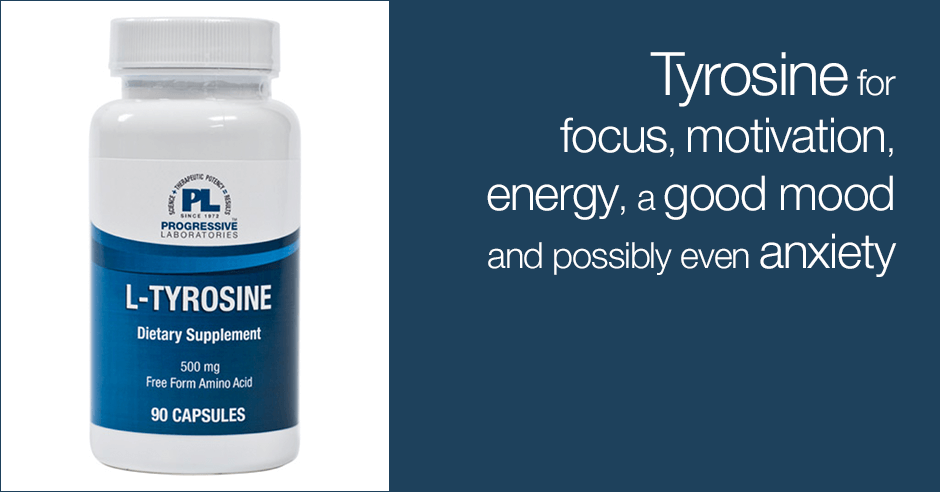
Progressive Labs tyrosine 500mg: 500mg l-tyrosine.  As I mentioned this is the last amino acid I trial with my anxious clients because it can make you more anxious (although as I mentioned above, with one client, it reduced her anxiety because she was able to focus better at work).

As with all the amino acids, when using tyrosine:

  • Start low (500mg is a typical starting dose) and increase as needed.
  • Do a trial to determine if the ADHD, fatigue, depression, low motivation is due to low catecholamines. I always do this with clients before starting any amino acid. Be sure to read how to do an amino acid trial. It has the amino acid questionnaire, the precautions and information on how to use targeted individual amino acids.
  • Take between meals and away from protein for the best effects

Tyrosine should never be used after 3pm as it’s too stimulating when used after this time. For my clients with sleep issues we go slow and stop after the mid-morning dose until we determine if sleep is being affected.

This blog post is part of the series of amino acid product reviews:

  • Tryptophan for low serotonin (worry-in-the-head anxiety)
  • GABA for low GABA symptoms (physical anxiety)
  • Glutamine for calming, intense sugar cravings, gut healing and low blood sugar
  • DPA for weepiness, pain and comfort and reward eating

The resources in this blog and my other articles are intended to be used in conjunction with my book: The Antianxiety Food Solution – How the Foods You Eat Can Help You Calm Your Anxious Mind, Improve Your Mood, and End Cravings. If you do not have my book I highly recommend getting it and reading it before jumping in and taking the amino acid supplements.

There is a complete chapter on the amino acids and one for pyroluria, plus information on real whole food, sugar and blood sugar, gluten, digestion and much more.

You can find the tyrosine product I recommend on this blog: The Antianxiety Food Solution Amino Acid and Pyroluria Supplements


For today’s tyrosine review:

  • What about your success stories with tyrosine? how has it helped you?
  • Or has it been an issue for you?
  • As I mentioned above it’s the last amino acid I used with my anxious clients because it can make you more anxious but it may just help your anxiety

If you have questions or feedback please post them below or on the supplements blog

Filed Under: Amino Acids, Anxiety, Caffeine, Supplements Tagged With: anxiety, blahs, caffeine, coffee, depression, energy, focus, GABA, tryptophan, tyrosine

DPA to end comfort-eating, end weepiness and boost endorphins

September 10, 2016 By Trudy Scott 83 Comments

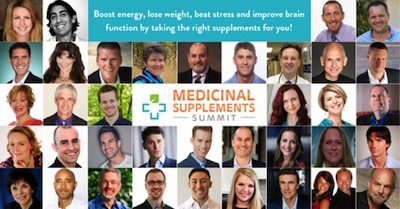
medicinal-supplements-summit-speakers

The Medicinal Supplements Summit runs September 12 -19 and is dedicated to helping you learn the latest in supplement customization to boost energy, lose weight, beat stress, improve brain function and heal your body! 

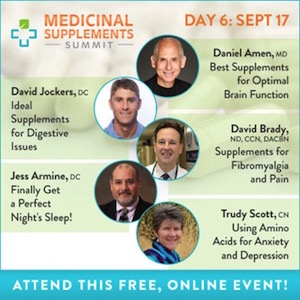
My interview addresses amino acids for both anxiety and depression – I talk about GABA, tryptophan, 5-HTP (and when not to use it), DPA, glutamine and tyrosine.

medicinal-supplements-summit-day6

Wendy asks me to share more about DPA for the low endorphins kind of depression, comfort eating, emotional pain, weepiness and physical pain. Here are some snippets on this topic from my interview:

DPA is D-phenylalanine. It’s an amino acid that actually destroys the enzyme that breaks down endorphins. Endorphins are feel-good chemicals that we may relate to when you hear about getting an endorphin rush, when you go for a run or when someone gives you a big hug or when you do something nice for someone or someone does something nice for you, you get that nice sort of feel good feeling, like you’ve got this big hug kind of feeling. So taking this amino acid, DPA, helps, in essence, to raise your endorphins.

There are different kinds of depression. I mentioned the low serotonin depression, which is more the anxiety kind of depression. With the low endorphin kind of depression, you’re very weepy. You may be overly emotional. So if you watched a TV ad or you watched a really sad movie, you may be more prone to crying than the average person. As well as being sensitive to emotional pain, which is the crying and the weepiness, you also tend to be sensitive to physical pain.

So we know that doing acupuncture raises your endorphin levels. And in that way it helps with pain. So taking this amino acid will help with that emotional sadness that you often feel when you’ve got low endorphins. And it is very, very helpful for physical pain as well. I find a number of clients with physical pain that is related to low endorphins. Pain can be related to low oxalates or nightshades, something physical, or even osteoarthritis. So you’ve got some kind of physical issue. But if it’s related to low endorphins you’ll actually see a really nice pain reduction effect from it.

Now, the big thing with low endorphins is this comfort eating. So I mentioned earlier with low serotonin you have the anxiety and the depression and the afternoon and the evening cravings. With low endorphins, as well as this emotional aspect and the pain aspect, the cravings part is very much a comfort kind of craving.

It’s like, “This is my reward. This is my treat. I deserve it.” And when you consume those carbohydrates, that bowl of ice cream, that bowl of cereal, that chocolate chip cookie, you feel like this is my reward. I deserve it. So a lot of people will resonate with the low endorphins kind of emotional eating. And when they get on DPA their mood improves, and this comfort eating goes away.

Tune in to hear my entire interview and all the other great speakers!

You can use this link to register for access: https://qt247.isrefer.com/go/SUPP16reg/trudyscottcn/

And use this link to purchase at pre-summit special prices:
https://qt247.isrefer.com/go/SUPP16order/trudyscottcn/

Filed Under: Events, GABA Tagged With: 5-HTP, aminos for anxiety, comfort eating, depression, DPA, emotional, GABA, glutamine, Medicinal supplements summit, tryptophan, tyrosine

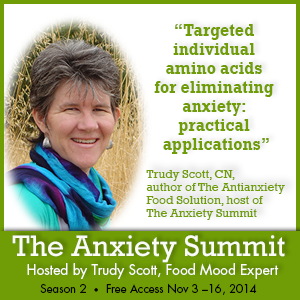
The Anxiety Summit – Targeted individual amino acids for eliminating anxiety: practical applications

November 10, 2014 By Trudy Scott 126 Comments

Host of the Anxiety Summit, Trudy Scott, Food Mood Expert and Nutritionist, author of The Antianxiety Food Solution. was interviewed by Dr Lauren Noel, host of Dr Lo radio.

Targeted individual amino acids for eliminating anxiety: practical applications

  • Glutamine: how it’s calming and helps with blood sugar balancing
  • GABA: how it eases physical tension
  • Tryptophan: how it eases anxiety in the head/busy ruminations (and when not to use 5-HTP)
  • DPA and tyrosine: how they help you quit the comfort-eating and coffee
  • Precautions when using individual amino acids
  • Factors that make them more effective and factors that make them less effective

Here are some snippets from our interview:

You’ll hear some practitioners say GABA molecules are too large to cross the blood brain barrier so GABA won’t work or if it does work you must have a leaky blood brain barrier

Some practitioners are talking about and using a “test” for leaky brain called the GABA Challenge which recommends taking1000- 2000 mg of GABA at night. If the blood brain barrier is intact, you supposedly won’t feel any effect from the GABA. If you do feel a change (drowsiness /feeling drunk or even jittery) then you will need to repair your leaky blood brain barrier.

I have not used the GABA Challenge and only recently learned about it but I am concerned with the very high dose of 2000mg of GABA. That is a lot of GABA for most people and I would expect severe drowsiness for most people or even a reverse effect. I find 125mg (in GABA Calm) is a good starting dose for my anxious clients.

I have also seen research indicating that GABA’s relaxing effect may be due to peripheral effects rather than the effect on/in the brain

Here are some of the papers about there being GABA-receptors in peripheral tissues (these are older papers and I’d love to see some newer research).

  • “GABA and its receptors are found in a wide range of peripheral tissues, including parts of the peripheral nervous system, endocrine, and non-neural tissues such as smooth muscle and the female reproductive system” (http://www.ncbi.nlm.nih.gov/pubmed/2162457)
  • “GABA is widely distributed in endocrine tissues including the pituitary, pancreas, adrenal glands, uterus, ovaries, placenta and testis” (http://www.ncbi.nlm.nih.gov/pubmed/16338174)

Here is the research on oral GABA being a natural relaxant for 13 subjects who crossed a suspended bridge as a stressful stimulus

GABA could work effectively as a natural relaxant and its effects could be seen within 1 hour of its administration to induce relaxation and diminish anxiety.

Here is the research on the stress-reducing effect of chocolate enriched with gamma-aminobutyric acid (GABA) in humans

the participants performed an arithmetic task and those that were given the GABA choc made a quick recovery to the normal state from the stressful state.

It has been reported that ordinary doses of GABA by oral ingestion do not permeate the blood brain barrier. Therefore, it has been considered that GABA may act on the peripheral nervous system of the digestive organs and not the central nervous system

Here is the blog post that discusses why I don’t use urinary neurotransmitter testing.
There are some precautions to be aware of when taking supplemental amino acids. Here are the Amino Acid Precautions.

Meme Grant shared her success story with the amazing amino acids (and the pyroluria protocol) in season 1. She had anxiety, had panic attacks, didn’t enjoy speaking in public, had insomnia and was an emotional eater.

  • glutamine allowed her to walk past the gluten and dairy free junk foods
  • tyrosine helped her flutterby mind, gave her energy, focus and a desire to do things again
  • DPA stopped her comfort eating for too much of the “healthy” sweeteners
  • Tryptophan stopped her mind talk, got her sleeping through the night for the first time in 11 years and helped reduce the frequency of her panic attacks
  • GABA was the best amino acid and how the panic attacks disappeared
  • zinc, vitamin B6 and evening primrose oil helped her pyroluria symptoms

Enjoy the bonus audio of my interview with Meme. You’ll be able to hear first-hand from someone who experienced amazing results.

Here is a video of Nicole trying some glutamine for low blood sugar

The questionnaires are also on the blog – amino acid questionnaire and pyroluria questionnaire.  Both have many comments that are invaluable.

If you are not already registered for the Anxiety Summit you can get live access to the speakers of the day here www.theAnxietySummit.com

Filed Under: Amino Acids, Antianxiety, Antianxiety Food Solution, Anxiety and panic, Depression, Emotional Eating, Food and mood, Sugar and mood, The Anxiety Summit 2 Tagged With: amino acids, anxiety, DPA, GABA, glutamine, the anxiety summit, Trudy Scott, tryptophan, tyrosine

  • « Go to Previous Page
  • Page 1
  • Interim pages omitted …
  • Page 3
  • Page 4
  • Page 5

Primary Sidebar

NEW! GABA QuickStart Homestudy (with special intro pricing)

gaba quickstart homestudy

Free Report

9 Great Questions Women Ask about Food, Mood and their Health

You'll also receive a complimentary subscription to my ezine "Food, Mood and Gal Stuff"


Connect with me

Popular Posts

  • Amino Acids Mood Questionnaire from The Antianxiety Food Solution
  • The Antianxiety Food Solution Amino Acid and Pyroluria Supplements
  • Pyroluria Questionnaire from The Antianxiety Food Solution
  • Collagen and gelatin lower serotonin: does this increase your anxiety and depression?
  • Tryptophan for the worry-in-your-head and ruminating type of anxiety
  • GABA for the physical-tension and stiff-and-tense-muscles type of anxiety
  • The Antianxiety Food Solution by Trudy Scott
  • Seriphos Original Formula is back: the best product for anxiety and insomnia caused by high cortisol
  • Am I an anxious introvert because of low zinc and vitamin B6? My response to Huffington Post blog
  • Vagus nerve rehab with GABA, breathing, humming, gargling and key nutrients

Recent Posts

  • What do I use instead of Seriphos to help lower high cortisol that is affecting my sleep and making me anxious at night?
  • BeSerene™ GABA/theanine cream eases severe muscle tension in her neck/shoulders, prevents her bad headaches and quells her anxiety
  • How the correct approach, dose and sublingual use of GABA can be calming and not cause a flushed and itchy face and neck
  • The amino acid glutamine improves low mood by addressing gut health, and it has calming effects too
  • Flight anxiety with heightened breath, physical tension and also fearing the worst (the role of low GABA and low serotonin)

Categories

  • 5-HTP
  • AB575
  • Addiction
  • ADHD
  • Adrenals
  • Alcohol
  • Allergies
  • Alzheimer's disease
  • Amino Acids
  • Anger
  • Antianxiety
  • Antianxiety Food Solution
  • Antidepressants
  • Anxiety
  • Anxiety and panic
  • Autism
  • Autoimmunity
  • benzodiazapines
  • Bipolar disorder
  • Books
  • Caffeine
  • Cancer
  • Candida
  • Children/Teens
  • Collagen
  • Cooking equipment
  • Coronavirus/COVID-19
  • Cravings
  • Depression
  • Detoxification
  • Diabetes
  • Diet
  • DPA/DLPA
  • Drugs
  • EFT/Tapping
  • EMF
  • EMFs
  • Emotional Eating
  • Endorphins
  • Environment
  • Essential oils
  • Events
  • Exercise
  • Fear
  • Fear of public speaking
  • Fertility and Pregnancy
  • Fish
  • Food
  • Food and mood
  • Functional neurology
  • GABA
  • Gene polymorphisms
  • General Health
  • Giving
  • Giving back
  • Glutamine
  • Gluten
  • GMOs
  • Gratitude
  • Gut health
  • Heart health/hypertension
  • Histamine
  • Hormone
  • Hyperparathyroidism
  • Hypoglycemia
  • Immune system
  • Inflammation
  • Insomnia
  • Inspiration
  • Introversion
  • Joy and happiness
  • Ketogenic diet
  • Lithium orotate
  • Looking awesome
  • Lyme disease and co-infections
  • MCAS/histamine
  • Medication
  • Men's health
  • Mental health
  • Mercury
  • Migraine
  • Mold
  • Movie
  • MTHFR
  • Multiple sclerosis
  • Music
  • NANP
  • Nature
  • Nutritional Psychiatry
  • OCD
  • Osteoporosis
  • Oxalates
  • Oxytocin
  • Pain
  • Paleo
  • Parasites
  • Parkinson’s disease
  • PCOS
  • People
  • PMS
  • Postpartum
  • PTSD/Trauma
  • Pyroluria
  • Questionnaires
  • Real whole food
  • Recipes
  • Research
  • Schizophrenia
  • serotonin
  • SIBO
  • Sleep
  • Special diets
  • Sports nutrition
  • Stress
  • Sugar addiction
  • Sugar and mood
  • Supplements
  • Teens
  • Testimonials
  • Testing
  • The Anxiety Summit
  • The Anxiety Summit 2
  • The Anxiety Summit 3
  • The Anxiety Summit 4
  • The Anxiety Summit 5
  • The Anxiety Summit 6
  • Thyroid
  • Thyroid health
  • Toxins
  • Tryptophan
  • Tyrosine
  • Uncategorized
  • Vegan/vegetarian
  • Women's health
  • Yoga

Archives

  • October 2025
  • September 2025
  • August 2025
  • July 2025
  • June 2025
  • May 2025
  • April 2025
  • March 2025
  • February 2025
  • January 2025
  • November 2024
  • October 2024
  • September 2024
  • August 2024
  • July 2024
  • June 2024
  • May 2024
  • April 2024
  • March 2024
  • February 2024
  • January 2024
  • December 2023
  • November 2023
  • October 2023
  • September 2023
  • August 2023
  • July 2023
  • June 2023
  • May 2023
  • April 2023
  • March 2023
  • February 2023
  • January 2023
  • December 2022
  • November 2022
  • October 2022
  • September 2022
  • August 2022
  • July 2022
  • June 2022
  • May 2022
  • April 2022
  • March 2022
  • February 2022
  • January 2022
  • December 2021
  • November 2021
  • October 2021
  • September 2021
  • August 2021
  • July 2021
  • June 2021
  • May 2021
  • April 2021
  • March 2021
  • February 2021
  • January 2021
  • December 2020
  • November 2020
  • October 2020
  • September 2020
  • August 2020
  • July 2020
  • June 2020
  • May 2020
  • April 2020
  • March 2020
  • February 2020
  • January 2020
  • December 2019
  • November 2019
  • October 2019
  • September 2019
  • August 2019
  • July 2019
  • June 2019
  • May 2019
  • April 2019
  • March 2019
  • February 2019
  • January 2019
  • December 2018
  • November 2018
  • October 2018
  • September 2018
  • August 2018
  • July 2018
  • June 2018
  • May 2018
  • April 2018
  • March 2018
  • February 2018
  • January 2018
  • December 2017
  • November 2017
  • October 2017
  • September 2017
  • August 2017
  • July 2017
  • June 2017
  • May 2017
  • April 2017
  • March 2017
  • February 2017
  • January 2017
  • December 2016
  • November 2016
  • October 2016
  • September 2016
  • August 2016
  • July 2016
  • June 2016
  • May 2016
  • April 2016
  • March 2016
  • February 2016
  • January 2016
  • December 2015
  • November 2015
  • October 2015
  • September 2015
  • August 2015
  • July 2015
  • June 2015
  • May 2015
  • April 2015
  • March 2015
  • February 2015
  • January 2015
  • December 2014
  • November 2014
  • October 2014
  • September 2014
  • August 2014
  • July 2014
  • June 2014
  • May 2014
  • April 2014
  • March 2014
  • February 2014
  • January 2014
  • December 2013
  • November 2013
  • October 2013
  • September 2013
  • August 2013
  • July 2013
  • June 2013
  • May 2013
  • April 2013
  • March 2013
  • February 2013
  • January 2013
  • December 2012
  • November 2012
  • October 2012
  • August 2012
  • July 2012
  • June 2012
  • May 2012
  • April 2012
  • March 2012
  • February 2012
  • January 2012
  • December 2011
  • November 2011
  • October 2011
  • September 2011
  • August 2011
  • July 2011
  • June 2011
  • May 2011
  • April 2011
  • March 2011
  • February 2011
  • January 2011
  • December 2010
  • October 2010
  • September 2010
  • July 2010
  • May 2010
  • April 2010
  • March 2010
  • February 2010
  • January 2010
  • November 2009

Share the knowledge!

The above statements have not been evaluated by the Food and Drug Administration. Products listed in this website are not intended to diagnose, treat, cure or prevent any disease.

The information provided on this site is for informational and educational purposes only and is not intended as a substitute for advice from your physician or other health care professional. You should consult with a healthcare professional before starting or modifying any diet, exercise, or supplementation program, before taking or stopping any medication, or if you have or suspect you may have a health problem.


Copyright © 2026 Trudy Scott. All Rights Reserved. | Privacy | Terms and Conditions | Refund Policy | Medical Disclaimer

Free Report

9 Great Questions Women Ask about Food, Mood and their Health

You’ll also receive a complimentary subscription to my ezine “Food, Mood and Gal Stuff”