• Skip to primary navigation
  • Skip to main content
  • Skip to primary sidebar

everywomanover29 blog

Food, Mood and Women's Health – Be your healthiest, look and feel great!

  • Blog
  • About
  • Services
  • Store
  • Resources
  • Testimonials
  • The Book
  • Newsletter
  • Contact
  • Search this site

tryptophan

My son has alcohol dependence and I want to help him quit drinking with GABA and other amino acid supplements

September 8, 2023 By Trudy Scott 15 Comments

alcohol and gaba

My son has alcohol dependence and I want to help him quit drinking with GABA and other amino acid supplements. Alcohol and the benzodiazepines used in treatment both block GABA receptors, but I assume having GABA available in your system is better than none (especially as nutrition has been very poor). Have you an article on this? Thank you for your knowledge and understanding.

MJ posted this question on one of the GABA blogs and I shared a few blogs to get her started (some of those are listed below). I also shared that with addictions to alcohol (and sugar and drugs) it’s a matter of figuring out which amino acids are needed in order to balance the neurotransmitters and help you to quit with no willpower and without feeling deprived. This can differ for each person and it’s a matter of doing a trial of each amino acid based on unique needs.

He may well need GABA if he self-medicates with alcohol when under stress, but he may also need serotonin support with tryptophan or 5-HTP if he drinks when depressed and needs a mood lift.

I decided to create a new blog because it’s a much needed topic and so I could share additional resources and a table I use (see below) to help you figure out where your need may be. We use this in conjunction with the symptoms questionnaire for each neurotransmitter.

In addition to addressing her benzodiazepine question, I also shared the need to address low blood sugar, low vitamin B1 and overall nutrient status. She does mention nutrition has been poor and it often is with alcohol addiction.

Which emotions are driving the need to self-medicate with alcohol and which amino acids to trial?

This is how I help you figure out which emotions are driving the need to self-medicate with alcohol and which amino acids to trial:

How do you feel before drinking alcohol? How do you feel after drinking alcohol? Likely brain chemistry imbalance Amino acid/s to supplement
Anxious or stressed (physical anxiety) Calm or relaxed Low GABA GABA, pharmaGABA or theanine
Depressed or worried? (mental anxiety) Happy or content Low serotonin Tryptophan or 5-HTP
Tired or unfocused Energetic, alert, or focused Low catecholamines Tyrosine
Wanting a reward or treat, and sad (weepy) Rewarded or comforted Low endorphins DPA (d-phenylalanine) or DLPA
Irritable and shaky Grounded or stable Low blood sugar Glutamine

We use this in conjunction with the symptoms questionnaire for each neurotransmitter.

Many individuals with alcohol addiction have imbalances in all areas. We use the same approach when it comes to alcohol addictions that we use sugar/carb/junk food addictions i.e. we tackle one imbalance at a time so we know which amino acid is helping and how much is needed.

The amino acids play many roles in addressing alcohol addiction:

  • They help you to quit alcohol with no willpower and without feeling deprived
  • They help to mitigate many of the adverse effects of quitting (like insomnia and increased anxiety and depression)
  • They address the root cause of the addiction i.e. neurotransmitter imbalances
  • They address the emotional aspect so mood and anxiety is improved
  • They help to heal the damage that has been done to the gut: glutamine, GABA and tryptophan
  • They prevent the need to find a replacement like sugar, coffee, Diet soda and cigarettes (intake is often ramped up when drinking ceases)
  • They even help children who have had prenatal exposure to alcohol – 5-HTP benefits both adopted daughters who had prenatal exposure to alcohol: they are happier, more focused and can stay on task

PharmaGABA eases physical anxiety, amino acids ease alcohol withdrawal symptoms, and tryptophan turns you off alcohol

These blog posts illustrate the many applications of amino acids when it comes to quitting alcohol

  • PharmaGABA eases physical anxiety in a young man who has recently given up Adderall, alcohol and nicotine (some folks do better with GABA and some with pharmaGABA)
  • An amino acid supplement with DLPA, glutamine and 5-HTP eases alcohol withdrawal symptoms at an inpatient detoxification program
  • Tryptophan had the added benefit of turning me completely off alcohol when I took it to improve mood and sleep during perimenopause (this need for serotonin support could be applicable for a male too and at any age)

As I mentioned above, be sure to use the search feature to find other blogs on this site: use alcohol, addiction and sugar (and replace sugar with alcohol in the sugar blogs).

Does his prior benzodiazepine prescription prevent him from being able to use GABA?

MJ asks if her son’s prior benzodiazepine prescription will prevent him from being able to use GABA. He will need to taper very very slowly under the guidance of someone knowledgeable and with oversight by the prescribing physician.

It is true that GABA receptors can be affected by benzodiazepines but despite this, many of my clients and others in my community do get relief from GABA during the taper period and afterwards.

We do start with a very small dose – I typically have someone start with 25mg GABA and go up from there – and only use sublingual GABA (or pharmaGABA). For some very sensitive folks we will start even lower as in this example where Syd gets sleep and body anxiety benefits with just 1.5 mg to 3 mg GABA.

I share more on this blog – Rebound insomnia after tapering a benzodiazepine: will taking GABA or any other natural supplement interfere with healing?

One big caveat is that nutritional stability is key when it comes to tapering benzodiazepines. It is also imperative when it comes to addiction recovery.

Good nutritional status, low blood sugar and low vitamin B1

MJ does mention that her son’s nutrition has been poor. It often is with alcohol addiction. I also shared with her the need to address low blood sugar and overall nutrient status.

When you are new to the amino acids and anxiety nutrition solutions my book “The Antianxiety Food Solution” is an excellent resource for all of the above – and the information applies to those with addictions too.  

Here is a blog with additional information and a study on the importance of addressing low blood sugar when it comes to anxiety and also addictions – Anxiety and Hypoglycemia Symptoms Improve with Diet Modification.

This highlights the importance of consuming enough protein, fats and fiber, especially at breakfast. There is an entire chapter on blood sugar in my book – it’s that important.

Finally, low thiamine/vitamin B1 must be addressed: “alcohol misuse is the most common risk factor for thiamine deficiency.” More about this here.

A complete nutritional assessment for other issues should be done too: low vitamin D, low zinc, other vitamin B deficiencies, low magnesium, adrenal insufficiency, leaky gut and more.

Medically assisted withdrawal treatment

If you are wanting to quit alcohol and don’t have an alcohol use disorder, all of the above approaches can be safely used.

However, medically assisted withdrawal treatment may be needed in some instances: “Excessive chronic alcohol users, and particularly patients with alcohol use disorder, may present an alcohol withdrawal syndrome if they abruptly stop drinking. Alcohol withdrawal syndrome requires pharmacological treatment for the treatment of withdrawal symptoms and to prevent withdrawal complications. Medically assisted withdrawal treatment is used in alcohol treatment units, but it is also frequently required in patients admitted to hospital for other conditions.”

It’s important that this is recognized for those who need it. MJ mentions benzodiazepines were used in her son’s treatment so presumably he had medically assisted withdrawal treatment.

In this situation, once her son has safely quit alcohol everything I mention above would then apply – looking at the amino acids and nutritional status so there is no relapse. And so recovery is easier and sustainable with a stable mood and no anxiety.

Resources if you are new to using amino acids as supplements

If you suspect low levels of any of the neurotransmitters and do not yet have my book, The Antianxiety Food Solution – How the Foods You Eat Can Help You Calm Your Anxious Mind, Improve Your Mood, and End Cravings, I highly recommend getting it and reading it before jumping in and using amino acids on your own so you are knowledgeable. And be sure to share it with the practitioner/health team you or your loved one is working with.

There is an entire chapter on the amino acids and they are discussed throughout the book in the sections on gut health, gluten, blood sugar control, sugar cravings, anxiety and mood issues.

The book doesn’t include product names (per the publisher’s request) so this blog, The Antianxiety Food Solution Amino Acid and Pyroluria Supplements, lists the amino acids that I use with my individual clients and those in my group programs. You can find them all in my online store.

If, after reading this blog and my book, you don’t feel comfortable figuring things out on your own (i.e. doing the symptoms questionnaire and respective amino acids trials), a good place to get help is the GABA QuickStart Program (if you have low GABA symptoms too). This is a paid online/virtual group program where you get my guidance and community support.

If you are a practitioner, join us in The Balancing Neurotransmitters: the Fundamentals program. This is also a paid online/virtual program with an opportunity to interact with me and other practitioners who are also using the amino acids.

Have you or a loved one used the amino acids to help with alcohol dependence/alcohol use disorder?

If benzodiazepines were used in the treatment center, was GABA still helpful?

Have the amino acids helped prevent new addictions to sugar/coffee/cigarettes and improved anxiety, depression and insomnia?

If you have questions and other feedback please share in the comments too.
Filed Under: Addiction, Alcohol, Amino Acids, GABA Tagged With: 5-HTP, alcohol, alcohol dependence, amino acid, benzodiazepines, depressed, deprived, drinking, drugs, emotions, GABA, low blood sugar, low vitamin B1, Medically assisted withdrawal treatment; GABA Quickstart; Balancing Neurotransmitters: the Fundamentals program for practitioners, neurotransmitters, nutrition, pharmaGABA, quit drinking, self-medicates, serotonin, stress, sugar, tryptophan, willpower

I have osteoporosis – within a week of starting collagen I experienced profound insomnia, was much more anxious and had tons of worrying thoughts

August 18, 2023 By Trudy Scott 14 Comments

osteoporosis collagen tryptophan

Nancy shares her unpleasant experience when using collagen for her osteoporosis and asks how she can use tryptophan and possibly add the collagen back:

I have osteoporosis and recently started taking a collagen peptide product (Fortibone). At the same time, I started taking a bone support formula containing calcium, magnesium, vitamin D, vitamin K2, boron, etc.

Within a week I began experiencing such PROFOUND insomnia. I felt like I was wide awake and could not drift off till 4 am each morning. Also, when I laid down at night, I was much more anxious than I normally am and had tons of worrying thoughts flitting thru my mind.

Within a couple weeks of the insomnia starting, I thankfully caught your talk about collagen and folks who are susceptible to it, at the 2023 Osteoporosis Summit. The puzzle pieces clicked together; I’m a MAO-A. I immediately stopped the collagen and the bone support supplement.

I understand supplementing with tryptophan may be the fix for being able to reintroduce the collagen.

I appreciate her for sharing her experience on one of my collagen blogs and thanked her, saying how glad I was that she heard my interview about this.

Read on to learn about how collagen and gelatin lower serotonin in susceptible individuals; discover if supplementing with tryptophan may be the fix for being able to reintroduce the collagen; how best to use tryptophan in a situation like this; and additional resources if you need guidance using an amino acid like tryptophan or 5-HTP.

Collagen and gelatin lower serotonin in susceptible individuals

Intake of collagen (and gelatin) can lower serotonin in susceptible individuals and cause these symptoms she experienced. I first blogged about this in 2017 but it’s still not common knowledge even amongst practitioners and companies selling collagen products.

The good news is that awareness is growing. Dr. R. Keith McCormick does mention the serotonin-collagen connection in his excellent book Great Bones – Taking Control of Your Osteoporosis  (my Amazon link). He does not, however, offer tryptophan as a solution.

If this is new to you, this blog post describes why it happens (i.e. collagen does not contain any tryptophan), lists many of the tryptophan depletion studies and who may be more susceptible to this effect – Collagen and gelatin lower serotonin: does this increase your anxiety and depression?

Here is a more recent blog on the topic too: Collagen causes increased anxiety, low mood, irritability, insomnia, gut issues and an itchy skin: some questions and my answers

The causes of these symptoms can be due to the serotonin-lowering effects of collagen but also the dietary oxalate impact, a histamine reaction and/or a glutamate reaction to collagen.

Could supplementing with tryptophan be the fix for being able to reintroduce the collagen?

Nancy said “I understand supplementing with tryptophan may be the fix for being able to reintroduce the collagen.” Hearing her symptoms – profound insomnia, increased anxiety and worrying thoughts flitting through her mind – led me to the same conclusion, especially since they all started soon after starting collagen.

We know she has the MAOA (monoamine oxidase A) genetic polymorphism – this does make her more susceptible to the serotonin-lowering effects of collagen. Other factors that may make her more susceptible (explained in the 2017 blog above) are current or prior depression and/or OCD (obsessive compulsive disorder) or family history of these conditions and being a smoker. In addition to a MAOA defect is having a 5-HTTLPR genetic polymorphism.

To confirm the likely low serotonin connection, it would have been helpful to know if she also experienced other low serotonin symptoms: panic attacks and phobias, lack of confidence, depression, negativity, imposter syndrome, PMS, irritability, anger issues and afternoon/evening cravings.

It would also be helpful to know if her symptoms resolved when she stopped using the collagen.

But the best way to confirm is to do a trial of tryptophan and observe if these symptoms resolve when using collagen.

How to use tryptophan in a situation like this?

She asked these specific questions about using tryptophan:

I bought the Lidtke brand which is a 500 mg. capsule. How do I dose this? I realize you said to trial dose it but:

1) what time of day is best to take it?

2) is it taken on an empty stomach or can it be taken with food?

3) should I start taking the tryptophan BEFORE restarting the collagen and be watching for the night time anxiety/insomnia symptoms to reappear?

4) if the insomnia, anxiety do reappear, how much do I titrate up and is there a max dose of tryptophan? If I’m taking more than one capsule a day, should they be taken at one time or divided throughout the day?

Tryptophan is always taken midafternoon and evening on an empty stomach/away from protein and increased until there is symptom resolution.

For clients in a similar situation who have stopped the collagen but still have insomnia, anxiety and worry symptoms, I have them start on tryptophan before adding back collagen and adjust the tryptophan dose up if needed once collagen is reintroduced.

If symptoms resolved when the collagen was stopped, tryptophan would be trialed as soon as symptoms show up when collagen is reintroduced.

With tryptophan, 500 mg is a typical starting dose but less may work in a situation like this. I’ve had clients use up to 1500 mg tryptophan 2 x day. It’s really individualized with no one-size fits all.

I did mention my book, The Antianxiety Food Solution, as an excellent resource for Nancy. There is an entire chapter on the amino acids and how to use them. I recommend everyone read it before using any of the amino acids as supplements.

Resources if you are new to using amino acids as supplements

If you are new to using amino acids as supplements, here is the Amino Acids Mood Questionnaire from The Antianxiety Food Solution (you can see all the symptoms of neurotransmitter imbalances, including low GABA, low serotonin, low dopamine, low blood sugar and low endorphins).

If you suspect low levels of any of the neurotransmitters and do not yet have my book, The Antianxiety Food Solution – How the Foods You Eat Can Help You Calm Your Anxious Mind, Improve Your Mood, and End Cravings, (as I mentioned above) I highly recommend getting it and reading it before jumping in and using amino acids on your own so you are knowledgeable. And be sure to share it with the practitioner/health team you or your loved one is working with.

There is an entire chapter on the amino acids and they are discussed throughout the book in the sections on gut health, gluten, blood sugar control, sugar cravings, anxiety and mood issues.

The book doesn’t include product names (per the publisher’s request) so this blog, The Antianxiety Food Solution Amino Acid and Pyroluria Supplements, lists the amino acids that I use with my individual clients and those in my group programs. You can find them all in my online store.

If, after reading this blog and my book, you don’t feel comfortable figuring things out on your own (i.e. doing the symptoms questionnaire and respective amino acids trials), if you need serotonin support, the Serotonin QuickStart Program is a good place to start. This is a paid online/virtual group program where you get my guidance on using tryptophan and 5-HTP safely, and community support during 5 LIVE Q&A calls. You can sign up to be notified when the next live launch of this program is happening. We take a deep dive into product options including Lidtke products and others if you’re not able to access Lidtke.

Low GABA can cause physical tension and overwhelm, affect sleep and cause stress eating. If you also have low GABA symptoms, the next step to get help is the GABA QuickStart Program. This is also a paid online/virtual group program where you get my guidance and community support. Another option is the budget-friendly GABA QuickStart Homestudy Program.

If you are a practitioner, join us in The Balancing Neurotransmitters: the Fundamentals program. This is also a paid online/virtual program with an opportunity to interact with me and other practitioners who are also using the amino acids.

Wrapping up and your feedback

Thanks to Nancy for sharing her experience with collagen and asking this question.

Have you used collagen for bone health/osteoporosis or for other reasons? And have you experienced insomnia, and increased anxiety and worrying?

Were your symptoms due to low serotonin and did tryptophan allow you to continue with collagen or add it back if you stopped it?

Or were your symptoms caused by oxalates in collagen, a histamine reaction and/or a glutamate reaction?

Has Fortibone led to improvements in your bone health? If yes, how long have you been using it and which collagen product (a number of products contain Fortibone)?

If you have questions and feedback please share them here too.

Filed Under: Anxiety, Collagen, Depression, Osteoporosis, Tryptophan Tagged With: amino acids; anxiety, anxious, collagen, collagen peptide, Fortibone, GABA Quickstart online program; Balancing Neurotransmitters: the Fundamentals program for practitioners, gelatin, how to use, insomnia, MAOA, osteoporosis, serotonin, serotonin-lowering, susceptible, tryptophan, wide awake, worrying thoughts

“Potion” of tyrosine, Endorphigen, GABA and tryptophan has been nothing less than a miracle for my depression and anxiety – how long can I remain on these?

August 11, 2023 By Trudy Scott 21 Comments

amino acids duration

Amy shares how much her particular “potion” or combination of amino acids has helped her depression and anxiety and wants to know how long she can remain on them:

I currently take 500 mg of l-tyrosine in the morning, 1 Endorphigen 2xday, 1 GABA calm 2x day and 1000 mg of tryptophan before bed with some natural calm & true calm. This “potion” has been nothing less than a miracle. I feel pretty good.

The past few years have been rough, managing depression and anxiety with frequent relapse, and I finally feel ok.

I don’t want to wean off yet and am curious as to how long I can remain on these. Is it dangerous to keep on it too long? Is there a maximum time? I follow your blog and reached out to you last year. Your information has been extremely helpful. Thank you.

I’m glad to hear Amy is doing so well on this miracle combination and finally feels ok. Before stopping the amino acids, the goal is to address diet, gut health, nutritional imbalances, toxins and all the underlying factors that lead to low catecholamines, low endorphins, low GABA and low serotonin.

It’s fine to stop taking them and see how you do and add some or all of them back if you find you still need that neurotransmitter support. This is one of a few approaches I use with clients. But here are times when it’s best to wait and continue using them (like when on the pill and when affected by seasonal depression). I share my insights on this and other ways to cut back below.

How long can you remain on amino acids and when do you consider stopping them?

There is no set time frame for staying on the amino acids. As I mentioned above you can stop taking the individual amino acids and see how you do and then add some or all of them back if you find you still need that neurotransmitter support. This is one of a few approaches I use with clients.

Other approaches include: completely stopping one amino acid at a time and monitoring symptoms or reducing the amount one amino acid at a time, also monitoring symptoms. I prefer the latter especially with someone like Amy who has been “managing depression and anxiety with frequent relapse.”

I can also hear that she has some hesitation about stopping her “potion” and going with your gut is a good thing too. She also has a few confounding factors that make me feel staying on them longer may be in her best interest. One factor is her long-term use of birth control pills.

Long term use of birth control pills and the impact on mood and nutritional status

Amy also shares about her use of the birth control pill and how she suspects it’s a factor in her depression and anxiety:

I should also mention I just went off birth control pills. I have taken them since age 16 only stopping for 3 pregnancies and breastfeeding. I am 46. I’ve been on for painful periods. I made the decision to stop for fear of clots, cardiac issues and most importantly my mental well being. I truly believe they contributed to my depression. I believe I’m in perimenopause and have higher than normal anxiety. I’m extremely worried about my periods if I stop the pill and think my amino acid supplements help these worries and I cope better. That’s why I’m reluctant to stop the supplements but still worried about long term use.

Because Amy has been using the birth control pill for around 25 years I’d have her continue with the amino acids for now and address the effects on her gut health and nutritional status first.

Women taking the pill and other hormonal contraception are more likely to be depressed. A Danish study published in JAMA Psychiatry of more than 1 million women aged 15 to 34, with no prior history of depression, were included in the study and followed for 13 years. The researchers found that those women who used the pill were 23% more likely to be depressed and  use antidepressants.

You can read more about the effects of the birth control pill on this blog and my book review of “Beyond the Pill” by Dr. Jolene Brighten. As you’ll read it causes vitamin, mineral, and antioxidant depletion (such as folate, B12, vitamin B6 and zinc).

She did actually come back and share that she tried and it didn’t work out going off the birth control pill. She was unable to manage the pain. She needs to address all these root causes first.

There is also no reason for her to be worried about long term use of the amino acids when they are clearly addressing her neurotransmitter imbalances.

The seasonal impact on mood and anxiety

I don’t have clients make changes to their amino acids in the Fall or Winter when there can be seasonal impacts on mood and anxiety. She had shared this too:

I’m more prone to depression this time of year. I think with these 2 factors [seasonal mood changes and the pill] I’ll stay on the regime until the spring.

This is a wise decision for Amy.

I would also hold off on making changes if someone is prone to airborne allergies. This is because there can be a higher need for neurotransmitter support when there are allergies.

Amy has already made many diet and lifestyle changes so she is heading in the right direction:

I have given my diet an overhaul. Not perfect but significantly less refined carbs and sugar. Plenty of fresh produce, healthy fats and protein ( especially animal). I also have committed to daily “body movement”: yoga, Pilates, max trainer, light weights or bike.

All of these changes are starting to support her overall nutritional status and resilience.

A recap of the amino acids Amy is using and the rationale for each one

If you’re new to using individual amino acids, here is a quick recap of the amino acids Amy is using and the rationale for each one.

She is using 500 mg of l-tyrosine in the morning. This supports low levels of dopamine/catchecolamines and improves the curl-up-in-bed kind of depression. You can read more about tyrosine here.

She is also using Endorphigen twice a day. This is a Lidtke product called Endorphigen and provides 500 mg  DPA/d-phenylalanine  per capsule. It raises endorphin levels, offering a mood boost, typically helping with weepiness and also emotional eating. You can read more about DPA here.

Amy is also using GABA Calm 2x day.  This is a sublingual/chewable product made by Source Naturals and is a nice low dose of 125mg per chewable. You can read more about GABA here.

And finally, she is using 1000 mg of tryptophan before bed. This supports low serotonin and improves worry-kind of anxiety and depression, ruminating, obsessive tendencies and also sleep issues. You can read more about tryptophan here.

Keep in mind this is what Amy found works for her unique needs and would have done trials of the amino acids one by one to figure out which ones to use and how much of each to use. There is no one size fits all.

It’s not unusual for folks using the amino acids to describe their results as miraculous!

Resources if you are new to using amino acids as supplements

If you are new to using amino acids as supplements, here is the Amino Acids Mood Questionnaire from The Antianxiety Food Solution (you can see all the symptoms of neurotransmitter imbalances, including low GABA, low serotonin, low dopamine, low blood sugar and low endorphins).

If you suspect low levels of any of the neurotransmitters and do not yet have my book, The Antianxiety Food Solution – How the Foods You Eat Can Help You Calm Your Anxious Mind, Improve Your Mood, and End Cravings, I highly recommend getting it and reading it before jumping in and using amino acids on your own so you are knowledgeable. And be sure to share it with the practitioner/health team you or your loved one is working with.

There is an entire chapter on the amino acids and they are discussed throughout the book in the sections on gut health, gluten, blood sugar control, sugar cravings, anxiety and mood issues.

The book doesn’t include product names (per the publisher’s request) so this blog, The Antianxiety Food Solution Amino Acid and Pyroluria Supplements, lists the amino acids that I use with my individual clients and those in my group programs. You can find them all in my online store.

If, after reading this blog and my book, you don’t feel comfortable figuring things out on your own (i.e. doing the symptoms questionnaire and respective amino acids trials), a good place to get help is the GABA QuickStart Program (if you have low GABA symptoms too). This is a paid online/virtual group program where you get my guidance and community support.

If you are a practitioner, join us in The Balancing Neurotransmitters: the Fundamentals program. This is also a paid online/virtual program with an opportunity to interact with me and other practitioners who are also using the amino acids.

Thanks to Amy for sharing her results and asking this question.

Have you seen similar benefits when using individual amino acids? If yes, which ones have helped you?

What approach have you used to stop or reduce your doses?

And have you continued using the amino acids because of the effects of the pill, seasonal mood shifts or seasonal allergies (or some other reason)?

If you have questions and feedback please share them here too.

Filed Under: Amino Acids, Anxiety, Depression, Women's health Tagged With: amino acids, catecholamines, dangerous, depression, diet, DPA, Endorphigen, endorphins, GABA, GABA Calm, GABA Quickstart online program; Balancing Neurotransmitters: the Fundamentals program for practitioners, gut health, how long, miracle, neurotransmitters, nutritional imbalances, seasonal depression, serotonin, the pill, toxins, tryptophan, tyrosine

My 12 year old son has ADHD, is impulsive, is a loner, craves carbs, and doesn’t do well or care about school – should he be on GABA?

July 21, 2023 By Trudy Scott 17 Comments

adhd and gaba

I’ve been reading your blogs and I’m trying to decide if my 12 year old son should be on GABA? He has ADHD, is impulsive, is a loner, craves carbs, and doesn’t do well or care about school.

Can you tell me what supplement he could be deficient and where to purchase? He is currently on ADHD medication (Focalin) during the school year.

Janice asked the above question about her 12 year old son. I wish it was as simple as just using the calming amino acid GABA but it’s seldom one amino acid that is the answer. GABA is often one of many supplements that may help and in this instance I suspect a combination of neurotransmitter imbalances (low GABA, low dopamine and low serotonin), pyroluria, other possible nutritional deficiencies and dietary factors are at play.  Read on to hear my approach for working through what may help this young man improve his focus, reduce his carbs, actually care about school and doing well, reduce his impulsivity and help him fit in socially – and ultimately lead to him being a happier, calmer and healthier child.

GABA with preteens who have ADHD and spinning-type symptoms

I always start with one of the amino acids because we get quick results and immediate feedback. Since Janice asked about GABA, this is the GABA feedback I shared with her: I’ve had good results with GABA with preteens who have ADHD and spinning-type symptoms. One clue is when the craving of carbs is driven by stress i.e. stress eating.  I always start with the symptoms questionnaire and have the parent rate each low GABA symptom on a scale of 1-10, with 10 being most severe, ideally in conjunction with their child.

I then have the child do a one-off trial of GABA and we observe improvements in the next 5-30 minutes. If the child reports any improvement in any of the symptoms – in this case focus and spinning driven by anxiety – the child continues with GABA and increases over the next few weeks to find the ideal dose for their needs.

Sometimes focus issues are so severe that it’s too challenging to rate symptoms before, doing a one-off trial of GABA and then rating symptoms afterwards. In cases like this, mom makes the decision to have their child use GABA before school, when they get home and possibly early evening too. Mom can observe their focus and spinning: like getting dressed and ready for school, settling down to homework in the afternoon and settling down for bed.

Relying on feedback from school is invaluable too. Stress related carb cravings are also assessed i.e. does he seek out sugar when stressed and anxious.

A mom shares how GABA helps her 11 year old daughter – GABA for children: ADHD, focus issues, irritability, anxiety and tantrums

My daughter hasn’t been diagnosed with ADHD but has a lot of ADHD qualities. We were having a huge amount of behavior problems as she is getting older (she’s 11). She has had amazing behavior at school and at home since giving it to her. She’s almost like a different child. GABA has truly changed our life.

…before the GABA she was irritable, she was fighting with her teacher and schoolmates, she couldn’t focus and was distracted by anything and everything, she was constantly disrupting the class and she was throwing major tantrums over ridiculous stuff (like her hair didn’t do what she wanted), she was mouthy and everything was a fight.

We are not seeing 99% of those behaviors at all anymore. She of course is still your typical pre-teen but if I say “no you can’t have that” our “no you can’t go there” her reaction is OK. Before it would have been a major fight or meltdown. Her teacher is reporting to me every day about her wonderful days.

Tyrosine for focus issues, low motivation and low energy type carb cravings

With focus issues I would also consider the role of low dopamine and do a trial of tyrosine. Other clues: are his carb cravings related to low energy and is there also low motivation tied to the fact that he doesn’t care about school? Are there also signs of depression or low mood?

We go back to the symptoms questionnaire and have the parent rate each low dopamine/low catecholamine symptom on a scale of 1-10, with 10 being most severe. Again, do this in conjunction with the child if possible.

We only do a trial of one amino acid at a time so we know what is working. Assuming the GABA has been helping, we’d do a trial of tyrosine next and look for improvements in focus, carb cravings (all neurotransmitter imbalances can lead to carb cravings), motivation and mood.

If the one-off trial approach is not an option, tyrosine is also used before school and right after school but no later than 3pm so as not to affect sleep. Again, the above symptoms are tracked.

In this blog both GABA and tyrosine help this teen: GABA helps 14-year-old with Tourette’s Syndrome (the tics and sleep), and tyrosine makes him happier and his mind sharper

Tryptophan or 5-HTP for ADHD/hyperactivity and afternoon cravings

Hyperactivity can also show up with low serotonin, and so can something like not caring about school i.e. a low mood. A clue here is when his carb cravings are more intense – with low serotonin it’s typically afternoon or evening.

We go back to the symptoms questionnaire and have the parent rate each low serotonin symptom on a scale of 1-10, with 10 being most severe. And again, it’s best to do this in conjunction with the child if possible and do a one-off trial of tryptophan or 5-HTP.

If that’s not possible, tryptophan or 5-HTP is used mid-afternoon and evening and symptoms are tracked. This can be layered in on top of the GABA and tyrosine if they are offering some relief.

Here is a blog post where a mom shares how 5-HTP helps her child – ADHD: 5-HTP melts have been a miracle for one of my adopted kids

5-HTP melts have been a miracle for one of my adopted kids. He had lots of trauma and off the charts ADHD. 5-HTP is better than methylphenidate (Ritalin) and we are now weaning off the non-stimulants.

Just 80 mg 5-HTP in the morning is all he needs. He was super ADHD, he had a para (teacher’s aide) in public school for years to keep him on track and this year at a school for ADHD the teachers were complaining that he was never on task. Now after a week it has changed his life.

Addressing pyroluria, low lithium, low zinc, low blood sugar and diet

Janice mentions her son is a loner so we’d look into pyroluria/social anxiety and add zinc, vitamin B6 and evening primrose oil (and other key nutrients). Keep in mind that zinc deficiency is common and is often low with ADHD.

She also mentions that he is impulsive. Impulsivity and ADHD is common with low levels of lithium. A big clue is a child having a roller-coaster of emotions. I use this low lithium questionnaire to assess for a need for low dose lithium (a nutritional supplement).

I consider low blood sugar with all my clients and with this young man low blood sugar may be contributing to his focus issues, low mood and desire for carbs. The amino acid glutamine helps as does breakfast and meals with quality animal protein and healthy fats.

And it goes without saying that dietary factors must always be addressed. My book is a great resource when are looking for a comprehensive dietary approach, which is needed with ADHD and the symptoms Janice describes – The Antianxiety Food Solution. There is also a chapter on low blood sugar, pyroluria and the amino acids.

If you are an adult and can relate to any of these symptoms and feelings, the same process applies. Just remember this: there is no one-size fits all since we all have unique biochemistry.

Side effects and longer term effects of stimulant medications

I appreciate Janice for reaching out and asking this question. Hopefully, implementing some or all of these changes, will allow her son to stop his stimulant medication, Focalin. This medication is similar to Ritalin (methylphenidate), which can cause the following side-effects: feeling sad or empty, irritability, loss of interest or pleasure, trouble concentrating, trouble sleeping (and many more).

These stimulant medications can also play a role in longer term health effects that include heart disease and the possibility of it being a gateway drug to other stimulants. The research on the latter is hotly debated but it is often seen clinically.

Resources if you are new to using amino acids as supplements

To recap, if you are new to using amino acids as supplements, here is the Amino Acids Mood Questionnaire from The Antianxiety Food Solution (you can see all the symptoms of neurotransmitter imbalances, including low GABA, low serotonin, low dopamine, low blood sugar and low endorphins).

If you suspect low levels of any of the neurotransmitters and do not yet have my book, The Antianxiety Food Solution – How the Foods You Eat Can Help You Calm Your Anxious Mind, Improve Your Mood, and End Cravings, I highly recommend getting it and reading it before jumping in and using amino acids on your own so you are knowledgeable. And be sure to share it with the practitioner/health team you or your loved one is working with.

As mentioned, there is an entire chapter on the amino acids and they are discussed throughout the book in the sections on gut health, gluten, blood sugar control, sugar cravings, anxiety and mood issues.

The book doesn’t include product names (per the publisher’s request) so this blog, The Antianxiety Food Solution Amino Acid and Pyroluria Supplements, lists the amino acids that I use with my individual clients and those in my group programs. You can find them all in my online store.

If, after reading this blog and my book, you don’t feel comfortable figuring things out on your own (i.e. doing the symptoms questionnaire and respective amino acids trials), a good place to get help is the GABA QuickStart Program (if you have low GABA symptoms too). This is a paid online/virtual group program where you get my guidance and community support.

If you are a practitioner, join us in The Balancing Neurotransmitters: the Fundamentals program. This is also a paid online/virtual program with an opportunity to interact with me and other practitioners who are also using the amino acids.

Have any of the above amino acids helped your child or you with the following symptoms: ADHD and poor focus, carb cravings and low mood/low motivation (doesn’t care)?

Has the pyroluria protocol helped your child or you be less of a loner?

Has low dose lithium helped your child or you with impulsivity and focus issues?

Have dietary changes helped too?

If you are a practitioner, are you using amino acids, the pyroluria protocol, low dose lithium and dietary changes with success in cases like this?

Feel free to post your questions and feedback here in the comments.

Filed Under: ADHD, Amino Acids, Anxiety, Children/Teens, Depression, GABA, Pyroluria Tagged With: ADHD, amino acids, anxiety, carbs, cravings, depression, dopamine, Focalin, GABA, GABA Quickstart online program; Balancing Neurotransmitters: the Fundamentals program for practitioners, impulsive, impulsiveness, loner, pyroluria, Ritalin, serotonin, social anxiety, spinning, stress-eating, tryptophan, tyrosine

Psychiatric Complications of Primary Hyperparathyroidism and Mild Hypercalcemia: anxiety, depression, anger, irritability, delusions and impaired cognition

July 7, 2023 By Trudy Scott 38 Comments

primary hyperparathyroidism

In samples of patients undergoing parathyroidectomy for primary hyperparathyroidism (PHPT), these disturbances have been identified at a rate of 43.1%–53.0% for anxiety, 33.0%–62.1% for depression, 22.0% for thoughts of death or suicide, 51.9% for anger and irritability, 5.0%–20.0% for hallucinations and delusions, and 37.3%–46.5% for impaired cognition.

In fact, it has been noted that there are more neuropsychiatric phenomena in PHPT than is often recognized and that these symptoms are easily missed, particularly in the elderly population.

This excerpt is from, Psychiatric Complications of Primary Hyperparathyroidism and Mild Hypercalcemia, published in Psychiatry Online.

I’ve recently been reading as much as I can about this condition, for personal and professional reasons. As soon as I learn about something new I go digging to see if there is an anxiety connection. And I must say I was very surprised to read these stats. It’s not something I’ve heard discussed or taught at mental health conferences.

The authors also state this about the condition:

The incidence of primary hyperparathyroidism (PHPT) is about 21 cases per 100,000 person-years, and the disorder is usually caused by a solitary parathyroid adenoma. PHPT has traditionally been recognized by its characteristic symptoms, including urolithiasis (“stones”); osteopenia and osteoporosis (“bones”); abdominal cramping, nausea, and peptic ulceration (“moans”); and depression, anxiety, cognitive dysfunction, insomnia, confusion, and personality changes (“psychiatric overtones”).

How do changes in serum calcium levels contribute to mental health and cognitive symptoms?

It’s always helpful to understand the mechanism and it was the first thought that went through my mind – how does hyperparathyroidism and changes in serum calcium levels cause these mental health and cognitive symptoms? The authors share this:

Although the pathogenesis [or cause] of psychiatric symptoms in primary hyperparathyroidism remains unclear, calcium is thought to figure prominently in determining changes in monoamine metabolism in the central nervous system(CNS), thereby modifying neurotransmission and resulting in alterations in mood and cognition.

I went digging and found this paper – Acute psychosis secondary to suspected hyperparathyroidism: A case report and literature review.

The authors also state that the mechanism isn’t known for certain. And although they are referring specifically to psychosis, the explanation could be applied to other symptoms too: “It is thought that the changes in serum calcium level slow down nerve function and neurotransmission rate, inducing psychosis (and other symptoms like anxiety, depression, anger, irritability and suicidal thoughts).

Understanding this possible mechanism helps us find a temporary solution for these symptoms until the hyperparathyroidism is addressed with surgery i.e. using amino acids as supplements.

Using amino acids to ease symptoms while you are seeking the root cause/s

If you’ve been following my work and have read my book The Antianxiety Food Solution, you’ll be familiar with using targeted amino acids as supplements to support low levels of neurotransmitters. These provide quick relief of symptoms (in a day or less) while you are seeking the root cause.

If we look at the above symptoms:

  • Anxiety can be a sign of low serotonin (worry type of anxiety) and/or low GABA (physical type of anxiety) – and tryptophan/5-HTP and/or GABA help ease symptoms.
  • Depression can be a sign of low serotonin (negativity), low dopamine (curl-up-in-bed depression) an/or low endorphins (weepy depression) – and tryptophan/5-HTP, tyrosine and/or DPA help ease symptoms.
  • Irritability and anger are common with low serotonin – and tryptophan/5-HTP helps to ease symptoms.
  • Low GABA can also be involved with anger and rage
  • Cognitive issues can be caused by low dopamine and low GABA – and tyrosine and/or GABA help ease symptoms

(You can find the symptoms questionnaire here. As always, amino acids are used based on symptom clusters and dosed according to your unique needs.)

If you find you have been using the amino acids long term and have explored all the possible root causes described in my book and summarized here, it may be worth investigating primary hyperthyroidism especially if you’re menopausal.

Case: “I had to have a parathyroid gland removed a few years ago… I literally felt better from the moment I came round from the surgery”

We always want to find the root cause when we have various symptoms. With this condition, it’s common to observe very quick resolution of symptoms after parathyroid surgery to remove the adenoma/s. Someone in our community shared this:

I had to have a parathyroid gland removed a few years ago … I literally felt better from the moment I came round from the surgery. It’s a miserable disease. I thought I was going to die! Lots of people get so low that they don’t feel like they can go on.

Bone pain was awful. Fatigue, depression etc.

I had had some dental issues around that time. One of my teeth crumbled. My Vitamin D went down to 9 so I am sure that was a large part of the puzzle.

I was actually diagnosed fairly quickly but was retested many times. I self-referred to a surgeon that was in-network in the end as my insurance wouldn’t cover various surgeons that my doctor wanted me to go too.

I had had breast cancer a few years ago and so had had weekly blood tests and, when I went back and looked, my calcium had been high for years. So important to read our own results.

The surgery was so easy.

What an amazing outcome for this woman and I appreciate her for sharing so we all get to learn and benefit from her journey. And yes, I agree, we need to advocate for ourselves and ask for and keep copies of all our labs. And get educated and ask questions. It’s really unfortunate that high calcium and hyperparathyroidism is so often missed.

Not everyone has all the listed symptoms of primary hyperparathyroidism. This woman did experience fatigue, depression and bone pain. She did not experience anxiety and didn’t have kidney stones. I do suspect dietary oxalate issues (without kidney stones) can be an issue for some folks because of the calcium disruption.

Some reasons why hyperparathyroidism is underdiagnosed

In the last few months I have learned that primary hyperparathyroidism is underdiagnosed. PTH (parathyroid hormone) is not routinely tested and I believe that it should be. Also, as you read above, elevated calcium levels are often ignored or brushed off as being a non-issue. And to complicate things further calcium is not always elevated. Hyperparathyroidism is also underdiagnosed and undertreated in the elderly.

For many women (and men) the discovery happens after they are diagnosed with osteoporosis and then calcium and PTH are tested, and/or past elevated calcium levels are “discovered.” If the hyperparathyroidism diagnosis happens first then osteoporosis screening is not always done and I believe it should be. And don’t get me started on when I believe osteoporosis screening should start (at 45 and not 65 or 70 years old) and issues with DEXA screening (more to come on this).

The good news is that primary hyperparathyroidism is a well-established cause of secondary osteoporosis which starts to resolve after the surgery too.

I’m still very much in learning mode

Primary hyperparathyroidism only recently appeared on my radar as a result of the 2023 osteoporosis summit, hosted by my friend and colleague, Margie Bissinger, Physical Therapist and osteoporosis coach. Dr. Deva Boone was a speaker on this condition on the summit and her site is a wealth of information. I appreciate them both.

As I mentioned above, I am also amazed it’s not something I’ve heard about at mental health or integrative health conferences and when doing continuing education.

I will admit I’m no expert and I’m still very much in learning mode – for myself and for you and this community. But, as you know, I like to share what I learn. As I continue to learn, I plan to share additional perspectives and the osteoporosis/menopause and oxalate links.

I am also in the process of creating a hyperparathyroidism questionnaire to use with my clients. Not everyone has all the above symptoms and not all the papers and resources list all the symptoms covered here today. For example, fatigue is listed on many sites but not in the above two papers and very few sites emphasize the mental health symptoms.

I’m also learning there are clues to look for – like forearm results on the DEXA scan and a good TBS/trabecular bone score has some significance. Stay tuned.

Resources if you are new to using amino acids as supplements

If you are new to using amino acids as supplements, here is the Amino Acids Mood Questionnaire from The Antianxiety Food Solution (you can see all the symptoms of neurotransmitter imbalances, including low GABA, low serotonin, low dopamine and low endorphins).

If you suspect low levels of any of the neurotransmitters and do not yet have my book, The Antianxiety Food Solution – How the Foods You Eat Can Help You Calm Your Anxious Mind, Improve Your Mood, and End Cravings, I highly recommend getting it and reading it before jumping in and using amino acids on your own so you are knowledgeable. And be sure to share it with the practitioner/health team you or your loved one is working with.

There is an entire chapter on the amino acids and they are discussed throughout the book in the sections on gut health, gluten, blood sugar control, sugar cravings, anxiety and mood issues.

The book doesn’t include product names (per the publisher’s request) so this blog, The Antianxiety Food Solution Amino Acid and Pyroluria Supplements, lists the amino acids that I use with my individual clients and those in my group programs. You can find them all in my online store.

If, after reading this blog and my book, you don’t feel comfortable figuring things out on your own (i.e. doing the symptoms questionnaire and respective amino acids trials), a good place to get help is the GABA QuickStart Program (if you have low GABA symptoms too). This is a paid online/virtual group program where you get my guidance and community support.

If you are a practitioner, join us in The Balancing Neurotransmitters: the Fundamentals program. This is also a paid online/virtual program with an opportunity to interact with me and other practitioners who are also using the amino acids.

If you’ve been diagnosed with hyperparathyroidism (or a family member has been) you can likely relate to much of this. Please share your/their journey. I’d love to hear how long it took for a diagnosis and treatment and what symptoms resolved after surgery, and how quickly.

Did you find the amino acids helped anxiety, mood and cognition symptoms in the short term, and then were no longer needed after surgery?

If you’re new to hyperparathyroidism, feel free to ask your questions and share what you’d like to hear more about in the follow-up blog.

If you are a practitioner, is primary hyperparathyroidism on your radar and do you recommend PTH testing in addition to calcium testing? Have you found the amino acids to be a good short-term solution for your clients/patients?

And if hyperparathyroidism is your area of expertise, feel free to add to the discussion.

Feel free to post your feedback here in the comments.

Filed Under: Anger, Anxiety, Depression, Hyperparathyroidism, Osteoporosis Tagged With: abdominal cramping, amino acids, anger, anxiety, cognition, delusions, depression, dopamine, GABA, hallucinations, Hypercalcemia, insomnia, irritability, neuropsychiatric, osteopenia, osteoporosis, parathyroid adenoma. Urolithiasis, Primary Hyperparathyroidism, psychiatric, psychosis, resources if you are new to the amino acids; the GABA Quickstart online program; and Balancing Neurotransmitters: the Fundamentals program for practitioners, serotonin, serum calcium, tryptophan, tyrosine

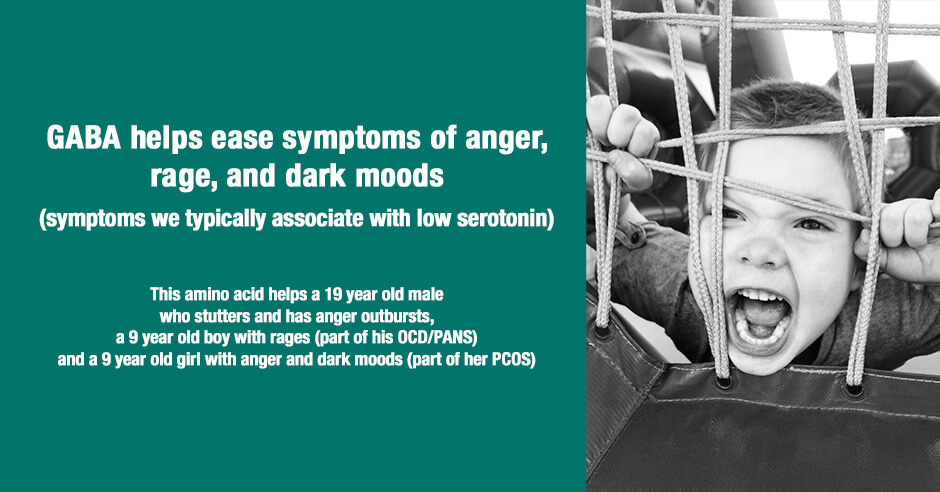
GABA helps ease symptoms of anger, rage, and dark moods (symptoms we typically associate with low serotonin)

June 30, 2023 By Trudy Scott 23 Comments

gaba eases anger

As a result of this wonderful feedback from a mom in the online GABA QuickStart program, I’ve been looking into GABA-anger connections. I’ve been trying to understand how GABA could offer similar benefits to tryptophan/5-HTP for anger, rage and dark moods, which we typically associate with low serotonin. She shares this:

My son who is 19 and on the autism spectrum was having issues with outbursts of anger and stuttering.  These issues seemed to worsen during his senior year of high school. Since starting GABA and tailoring his dosage from Trudy’s instruction and feedback, we have seen a 90% reduction in stuttering and 80% reduction in anger and outbursts.  We have done many supplemental protocols over the years and this is one of the few we have seen have an impact.

I am so happy for this young man and his family, and was also very intrigued. I’ve seen GABA help with stuttering. I have not noticed that GABA helps very much with anger/rage in clients but possibly because they are making other changes at the same time. Since they were in the program and he also had anxiety, we decided to continue with GABA.

I worked with them in the program over a few months and know he only changed one thing – GABA, starting low and increasing to find his ideal dose (with my guidance).

So I started to dig into the research, search through prior blog posts and ask on Facebook and the feedback is robust – folks are seeing GABA help with symptoms of anger and rage.

I share a few case studies below: how PharmaGABA helps a 9 year old boy with rages (part of his OCD/PANS), how GABA helps a young boy with Lyme-induced anger and how GABA helps a 9 year old girl with anger and dark moods (part of her PCOS).

I also share my insights with each case. And some possible mechanisms because we always want to understand why.

PharmaGABA helps 9 year old with rages that are part of his OCD/PANS

Kathy shares how pharmaGABA helped her son (on a pharmaGABA blog):

My 9 year old son had a lot of benefits from PharmaGABA. He used to have rages as part of his OCD/PANS. PharmaGaba 3 times a day was a miracle to get him through that period.

PANS is a neuropsychiatric disorder that falls under the same umbrella as PANDAS but is triggered by an infection other than strep.

If you’re new to PANS/PANDAS, I share the definition of PANDAS, from the PANDAS Network, in this blog: “PANDAS (Pediatric Autoimmune Neuropsychiatric Disorders Associated with Streptococcal Infections) occurs when strep triggers a misdirected immune response that results in inflammation on a child’s brain. In turn, the child quickly begins to exhibit life changing symptoms such as OCD/obsessive compulsive order, anxiety, tics, personality changes, decline in math and handwriting abilities, sensory sensitivities, restrictive eating, and more.”

Both PANS and PANDAS trigger OCD/obsessive compulsive disorder. OCD is typically supported with tryptophan and/or inositol i.e. these obsessive thinking and behaviors are typically related to low serotonin even when there is an infection involved. The infection needs to be addressed but the tryptophan and/or inositol help to ease the obsessive symptoms.

Rage is a common symptom when serotonin is low. Tryptophan addresses low serotonin and can have a huge impact as I share in this blog – Rage, anxiety, cravings & insomnia in 11-year old girl with RAD/reactive attachment disorder: chewable tryptophan turns things around.

However, in this instance, pharmaGABA worked for the rages Kathy’s son experienced.

PharmaGABA is one form of GABA that has been shown to help with relaxation and anxiety.

GABA helps a young boy with Lyme-induced anger

Another mom shared this on a Lyme disease post on Facebook:

One kid has developed fits of anger that come out of nowhere but the GABA seems to be able to help him to play longer periods.

Lyme disease can also have a neuropsychiatric aspect, as shared by Dr. Suruchi Chandra MD. I’ve had the pleasure of interviewing Dr. Chandra on one of the Anxiety Summits and hear her present at integrative mental health conferences.

In one conference presentation she shared this: “Lyme disease is one of the fastest growing infectious diseases in the United States. It can remain dormant for years and then later mimic a number of psychiatric illnesses, including anxiety disorders, mood disturbances, psychosis, and autism-like behaviors. It can be further complicated by the presence of co-infections.”

Anger and rage are also common symptoms. In one study, “Lyme rage” is described as an anger episode that “had a very abrupt onset and was extremely intense and often with minimal cognitive control.”

Yet again, we often see GABA help ease some of the anxiety symptoms, as I share here – GABA helps with Lyme anxiety (while addressing the underlying disease).

However in this instance, GABA helped with her son’s anger symptoms induced by the Lyme bacteria.

GABA helps a 9 year old girl with anger and dark moods (part of her PCOS)

Debbie was diagnosed with PCOS (polycystic ovarian syndrome) and GABA helped ease her lifelong anxiety, wean off anxiety medication, ovulate each month and stop her PCOS medications. She was thrilled that GABA helps her daughter too. She shared how her oldest daughter who is 9 has been showing early signs of developing PCOS and other issues similar to hers:

When her mood started changing and she was getting angry out of nowhere and very dark and moody, I started her on a small dose of GABA. Immediately both of us saw the difference in her mood. She now asks for her “happy pills” daily because she doesn’t want to feel those dark feelings anymore. I wish this information was around when I was young. It could’ve helped so much of what I had to struggle with for years.

I typically think of tryptophan or 5-HTP as “happy pills”, and anger and a dark mood as symptoms of low serotonin.

However, yet again, GABA resolves these symptoms in Debbie’s daughter.

These are just a few of the many recent success stories I’ve heard about GABA and anger/rage.

Does low GABA anger/rage look different from low serotonin anger-rage?

This is all new to me so I honestly don’t know. We do know that low GABA leads to more of a physical kind of anxiety (i.e. felt in the body) and it’s different from low serotonin worry-type anxiety (i.e. it’s felt in the head).

Therefore, it’s possible that low GABA anger and rage has more of a physical aspect too.

I have yet to explore this aspect but feel it may be helpful to figure out if there is a difference in order to effectively use the neurotransmitter symptoms questionnaire. This questionnaire is used to decide whether to trial GABA or tryptophan/5-HTP and the low GABA section will be updated with anger/rage once I’ve gone a bit deeper with all this.

The kind of anger symptoms may well look the same and then we’ll use the clustering of either low GABA or low serotonin symptoms to base our decision for doing an amino acid trial.

Research: GABA may be critical in the neurochemical control of aggressive behavior and rage

There is no research that I am aware of where the amino acid GABA has been used to ease rage, anger or dark moods.

However, this letter, Tiagabine for Rage, Aggression, and Anxiety published in the Journal of Neuropsychiatry and Clinical Neuroscicnes in 2015 offers some round-about support to this GABA-rage observation. They are discussing patients with treatment-resistant rage and aggression and they propose that:

Gamma-aminobutyric acid (GABA), the primary inhibitory neurotransmitter, may be critical in the neurochemical control of aggressive behavior.

They share that the prescription medication called Tiagabine, a selective GABA reuptake inhibitor (SGRI), increases synaptic GABA availability.

And that 20 out of 36 patients aged 15-54 years (69%)

with symptoms of rage, aggression, or anxiety in association with one or more of the following disorders: bipolar, intermittent explosive, major depression, panic disorder, attention deficit hyperactivity disorder, or substance abuse …demonstrated a good or excellent response to tiagabine, with reduction or elimination of the symptoms of rage, aggression, or anxiety.

This and the few studies on anger and glutamate (like this one) offer the most plausible explanations for the quick results we expect when using GABA and other amino acids i.e. quick as in results in 1-30 minutes.

Other than this there is not much direct evidence supporting this GABA-rage connection. GABA likely also helps quickly because of reduced anxiety, improved sleep, and being easil able to quit or eat less sugar (and in adults quit alcohol).

Based on some research I’ve found and my experience with GABA, I suspect GABA may also help in these ways over a longer period: countering a histamine reaction, reducing inflammation and impacting cytokines, improving progesterone levels, beneficial impacts on the microbiome, supporting the liver and toxin removal (such as fluorides), gut healing and reducing high blood pressure. I am still digging into the research.

I thank these families for sharing their stories so we all benefit.

I also really appreciate this opportunity to learn from you – my community – and I will always strive to keep an open mind.

Resources if you are new to using amino acids as supplements

If you are new to using amino acids as supplements, here is the Amino Acids Mood Questionnaire from The Antianxiety Food Solution (you can see all the symptoms of neurotransmitter imbalances, including low GABA and low serotonin).

If you suspect low levels of any of the neurotransmitters and do not yet have my book, The Antianxiety Food Solution – How the Foods You Eat Can Help You Calm Your Anxious Mind, Improve Your Mood, and End Cravings, I highly recommend getting it and reading it before jumping in and using amino acids on your own so you are knowledgeable. And be sure to share it with the practitioner/health team you or your loved one is working with.

There is an entire chapter on the amino acids and they are discussed throughout the book in the sections on gut health, gluten, blood sugar control, sugar cravings, anxiety and mood issues.

The book doesn’t include product names (per the publisher’s request) so this blog, The Antianxiety Food Solution Amino Acid and Pyroluria Supplements, lists the amino acids that I use with my individual clients and those in my group programs. You can find them all in my online store.

If, after reading this blog and my book, you don’t feel comfortable figuring things out on your own (i.e. doing the symptoms questionnaire and respective amino acids trials), a good place to get help is the GABA QuickStart Program (if you have low GABA symptoms). This is a paid online/virtual group program where you get my guidance and community support. Another option is the budget-friendly GABA QuickStart Homestudy program.

[The 19 year old young man/his mother were part of an earlier version of the GABA Quickstart program].

If you also need serotonin support, the Serotonin QuickStart Program is a good place to get help. This is also a paid online/virtual group program where you get my guidance on using tryptophan and 5-HTP safely, and community support during 5 LIVE Q&A calls. You can sign up to be notified when the next live launch of this program is happening.

If you are a practitioner, join us in The Balancing Neurotransmitters: the Fundamentals program. This is also a paid online/virtual program with an opportunity to interact with me and other practitioners who are also using the amino acids.

Now I’d love to hear from you ….

Has GABA helped you or your child with symptoms of anger, rage or a dark mood? And if yes, how did it help, how much helped and which product helped?

Can you be sure GABA helped i.e. is this the only change you made?

Has serotonin support with tryptophan or 5-HTP also helped? And if yes how would you describe the low serotonin anger symptoms vs the low GABA anger symptoms? Are they different?

If you are a practitioner, have you observed any of the above?

Feel free to post your feedback and questions here in the comments.

Filed Under: Anger, Anxiety, GABA Tagged With: 5-HTP, aggressive, amino acids, anger, anxiety, autism spectrum, dark moods, GABA, low serotonin, lyme, neurochemical, OCD, outbursts, PANDAS, PANS, PCOS, pharmaGABA, rage, resources if you are new to the amino acids; the GABA Quickstart online program; and Balancing Neurotransmitters: the Fundamentals program for practitioners, stuttering, Tiagabine, tryptophan

  • « Go to Previous Page
  • Page 1
  • Interim pages omitted …
  • Page 3
  • Page 4
  • Page 5
  • Page 6
  • Page 7
  • Interim pages omitted …
  • Page 31
  • Go to Next Page »

Primary Sidebar

GABA QuickStart Homestudy

gaba quickstart homestudy

Free Report

9 Great Questions Women Ask about Food, Mood and their Health

You'll also receive a complimentary subscription to my ezine "Food, Mood and Gal Stuff"


Connect with me

Popular Posts

  • Amino Acids Mood Questionnaire from The Antianxiety Food Solution
  • The Antianxiety Food Solution Amino Acid and Pyroluria Supplements
  • Pyroluria Questionnaire from The Antianxiety Food Solution
  • Collagen and gelatin lower serotonin: does this increase your anxiety and depression?
  • Tryptophan for the worry-in-your-head and ruminating type of anxiety
  • GABA for the physical-tension and stiff-and-tense-muscles type of anxiety
  • The Antianxiety Food Solution by Trudy Scott
  • Seriphos Original Formula is back: the best product for anxiety and insomnia caused by high cortisol
  • Am I an anxious introvert because of low zinc and vitamin B6? My response to Huffington Post blog
  • Vagus nerve rehab with GABA, breathing, humming, gargling and key nutrients

Recent Posts

  • Her cravings for chips and peanut butter were triggered by stress: GABA ends cravings and reduces physical tension and fear of heights
  • It is truly miraculous to be able to move through life without crippling anxiety and panic
  • GABA and tryptophan combo provide immediate and noticeable relief for tremors and cervical dystonia in just 7 days
  • Red light therapy for back and neck pain, plantar fasciitis and low mood – a complement to the amino acids GABA, DPA and tryptophan
  • What do I use instead of Seriphos to help lower high cortisol that is affecting my sleep and making me anxious at night?

Categories

  • 5-HTP
  • AB575
  • Addiction
  • ADHD
  • Adrenals
  • Alcohol
  • Allergies
  • Alzheimer's disease
  • Amino Acids
  • Anger
  • Antianxiety
  • Antianxiety Food Solution
  • Antidepressants
  • Anxiety
  • Anxiety and panic
  • Autism
  • Autoimmunity
  • benzodiazapines
  • Bipolar disorder
  • Books
  • Caffeine
  • Cancer
  • Candida
  • Children/Teens
  • Collagen
  • Cooking equipment
  • Coronavirus/COVID-19
  • Cravings
  • Depression
  • Detoxification
  • Diabetes
  • Diet
  • DPA/DLPA
  • Drugs
  • EFT/Tapping
  • EMF
  • EMFs
  • Emotional Eating
  • Endorphins
  • Environment
  • Essential oils
  • Events
  • Exercise
  • Fear
  • Fear of public speaking
  • Fertility and Pregnancy
  • Fish
  • Food
  • Food and mood
  • Functional neurology
  • GABA
  • Gene polymorphisms
  • General Health
  • Giving
  • Giving back
  • Glutamine
  • Gluten
  • GMOs
  • Gratitude
  • Gut health
  • Heart health/hypertension
  • Histamine
  • Hormone
  • Hyperparathyroidism
  • Hypoglycemia
  • Immune system
  • Inflammation
  • Insomnia
  • Inspiration
  • Introversion
  • Joy and happiness
  • Ketogenic diet
  • Lithium orotate
  • Looking awesome
  • Lyme disease and co-infections
  • MCAS/histamine
  • Medication
  • Men's health
  • Mental health
  • Mercury
  • Migraine
  • Mold
  • Movie
  • MTHFR
  • Multiple sclerosis
  • Music
  • NANP
  • Nature
  • Nutritional Psychiatry
  • OCD
  • Osteoporosis
  • Oxalates
  • Oxytocin
  • Pain
  • Paleo
  • Parasites
  • Parkinson’s disease
  • PCOS
  • People
  • PMS
  • Postpartum
  • PTSD/Trauma
  • Pyroluria
  • Questionnaires
  • Real whole food
  • Recipes
  • Research
  • Schizophrenia
  • serotonin
  • SIBO
  • Sleep
  • Special diets
  • Sports nutrition
  • Stress
  • Sugar addiction
  • Sugar and mood
  • Supplements
  • Teens
  • Testimonials
  • Testing
  • The Anxiety Summit
  • The Anxiety Summit 2
  • The Anxiety Summit 3
  • The Anxiety Summit 4
  • The Anxiety Summit 5
  • The Anxiety Summit 6
  • Thyroid
  • Thyroid health
  • Toxins
  • Tryptophan
  • Tyrosine
  • Uncategorized
  • Vegan/vegetarian
  • Women's health
  • Yoga

Archives

  • May 2026
  • April 2026
  • October 2025
  • September 2025
  • August 2025
  • July 2025
  • June 2025
  • May 2025
  • April 2025
  • March 2025
  • February 2025
  • January 2025
  • November 2024
  • October 2024
  • September 2024
  • August 2024
  • July 2024
  • June 2024
  • May 2024
  • April 2024
  • March 2024
  • February 2024
  • January 2024
  • December 2023
  • November 2023
  • October 2023
  • September 2023
  • August 2023
  • July 2023
  • June 2023
  • May 2023
  • April 2023
  • March 2023
  • February 2023
  • January 2023
  • December 2022
  • November 2022
  • October 2022
  • September 2022
  • August 2022
  • July 2022
  • June 2022
  • May 2022
  • April 2022
  • March 2022
  • February 2022
  • January 2022
  • December 2021
  • November 2021
  • October 2021
  • September 2021
  • August 2021
  • July 2021
  • June 2021
  • May 2021
  • April 2021
  • March 2021
  • February 2021
  • January 2021
  • December 2020
  • November 2020
  • October 2020
  • September 2020
  • August 2020
  • July 2020
  • June 2020
  • May 2020
  • April 2020
  • March 2020
  • February 2020
  • January 2020
  • December 2019
  • November 2019
  • October 2019
  • September 2019
  • August 2019
  • July 2019
  • June 2019
  • May 2019
  • April 2019
  • March 2019
  • February 2019
  • January 2019
  • December 2018
  • November 2018
  • October 2018
  • September 2018
  • August 2018
  • July 2018
  • June 2018
  • May 2018
  • April 2018
  • March 2018
  • February 2018
  • January 2018
  • December 2017
  • November 2017
  • October 2017
  • September 2017
  • August 2017
  • July 2017
  • June 2017
  • May 2017
  • April 2017
  • March 2017
  • February 2017
  • January 2017
  • December 2016
  • November 2016
  • October 2016
  • September 2016
  • August 2016
  • July 2016
  • June 2016
  • May 2016
  • April 2016
  • March 2016
  • February 2016
  • January 2016
  • December 2015
  • November 2015
  • October 2015
  • September 2015
  • August 2015
  • July 2015
  • June 2015
  • May 2015
  • April 2015
  • March 2015
  • February 2015
  • January 2015
  • December 2014
  • November 2014
  • October 2014
  • September 2014
  • August 2014
  • July 2014
  • June 2014
  • May 2014
  • April 2014
  • March 2014
  • February 2014
  • January 2014
  • December 2013
  • November 2013
  • October 2013
  • September 2013
  • August 2013
  • July 2013
  • June 2013
  • May 2013
  • April 2013
  • March 2013
  • February 2013
  • January 2013
  • December 2012
  • November 2012
  • October 2012
  • August 2012
  • July 2012
  • June 2012
  • May 2012
  • April 2012
  • March 2012
  • February 2012
  • January 2012
  • December 2011
  • November 2011
  • October 2011
  • September 2011
  • August 2011
  • July 2011
  • June 2011
  • May 2011
  • April 2011
  • March 2011
  • February 2011
  • January 2011
  • December 2010
  • October 2010
  • September 2010
  • July 2010
  • May 2010
  • April 2010
  • March 2010
  • February 2010
  • January 2010
  • November 2009

Share the knowledge!

The above statements have not been evaluated by the Food and Drug Administration. Products listed in this website are not intended to diagnose, treat, cure or prevent any disease.

The information provided on this site is for informational and educational purposes only and is not intended as a substitute for advice from your physician or other health care professional. You should consult with a healthcare professional before starting or modifying any diet, exercise, or supplementation program, before taking or stopping any medication, or if you have or suspect you may have a health problem.


Copyright © 2026 Trudy Scott. All Rights Reserved. | Privacy | Terms and Conditions | Refund Policy | Medical Disclaimer

Free Report

9 Great Questions Women Ask about Food, Mood and their Health

You’ll also receive a complimentary subscription to my ezine “Food, Mood and Gal Stuff”