• Skip to primary navigation
  • Skip to main content
  • Skip to primary sidebar

everywomanover29 blog

Food, Mood and Women's Health – Be your healthiest, look and feel great!

  • Blog
  • About
  • Services
  • Store
  • Resources
  • Testimonials
  • The Book
  • Newsletter
  • Contact
  • Search this site

melatonin

Melatonin improves sleep quality and reduces anxiety after a TBI (traumatic brain injury)

July 6, 2018 By Trudy Scott 11 Comments

New research shows that melatonin improves sleep quality and reduces anxiety after a TBI (traumatic brain injury). The study, Efficacy of melatonin for sleep disturbance following traumatic brain injury: a randomised controlled trial was completed in Australia and used a prolonged-release (also called timed-release) melatonin product.

The study participants, 67% of whom were male, had mild to severe TBI and sleep disturbances as a result of their injuries (most of which were from car accidents). There were 2 study groups, with one group given 2mg of prolonged-release melatonin for 4 weeks and then switched to a placebo for 4 weeks (with a 48-hour window in between). The other group did the opposite.

The prolonged-release melatonin was made by Sigma Pharmaceuticals Australia and called Circadin. Each night 2 hours before bedtime, 2mg of Circadin was taken by study participants. They received a reminder text message each night.

These are the study results for sleep:

Melatonin was associated with a significant and moderate reduction in PSQI [Pittsburgh Sleep Quality Index] global scores, indicating improved sleep quality.

There was no significant reduction in sleep onset latency with melatonin compared to placebo.

What this means is that overall quality of sleep improved but there was no change in the time it takes to fall asleep (sleep onset latency). The latter is to be expected with prolonged-release or timed-release melatonin.

The study concluded that:

The present results, therefore, suggest that melatonin may be useful in treating sleep disturbances in patients with TBI.

With better sleep quality you would expect reduced fatigue and improved vitality – both were reported by study participants.

Melatonin associated with a small decrease in self-reported anxiety

What is interesting is that melatonin was also associated with a small decrease in self-reported anxiety (no differences in depression were reported.) The authors suggest that one possible mechanism of this may be that melatonin acts a muscle relaxant. In this commentary: Potential action of melatonin in insomnia, the authors equate the beneficial effects of melatonin to benzodiazepines:

many of the actions of melatonin on sleep propensity, anxiety, thermoregulation, and convulsions resemble those reported following administration of benzodiazepines. It is possible that some of these actions of melatonin may be mediated via peripheral benzodiazepine receptors

They are suggesting that with melatonin we get the sleep improvement (sleep propensity is the readiness to transit from wakefulness to sleep, or the ability to stay asleep if already sleeping), relaxation effects and antianxiety benefits of benzodiazepines.

But you get none of the side-effects, tolerance issues and withdrawal nightmares with a benzodiazepine which do more harm than good. On a side notes: this month World Benzodiazepine Day is celebrated to create awareness and offer support for benzo sufferers.

I would have picked something more inert for the placebo ingredients

I would have picked something more inert for the placebo ingredients: mannitol (106mg), acacia (11 mg) and pure icing sugar (106 mg). Mannitol, a sugar alcohol, can cause bloating and diarrhea in some individuals and although the amount is tiny (5g of sugar equals 1 teaspoon), sugar consumption is not ideal before bed. As I would expect adverse symptoms:

were more frequently reported during placebo treatment. The most commonly reported symptoms were neurological, followed by bodily pain, gastrointestinal and dermatologic.

In Australia, melatonin cannot be purchased over the counter (OTC) at health stores or via online retailers, unlike in the USA, and is only available by prescription. I’m all for melatonin being available OTC but the silver lining to this is that companies that make melatonin, such as Circadin, have a vested interest in the research. Research is expensive and time-consuming and we get to benefit too.

Keep in mind that this research is applicable to anyone with low melatonin, whether or not a prior TBI has occurred.

There are many root causes of insomnia – how I work with clients

In those with TBI, sleep disturbances are common, and the authors do report reduced evening and overnight melatonin production in this population. However, there are many root causes of insomnia, with low melatonin being one possible root cause – in TBI and in those who have not had a TBI.

One study limitation is that they didn’t measure melatonin levels or circadian rhythm (salivary cortisol) in all of the study participants so we can’t be sure everyone did have low melatonin.

And melatonin isn’t going to work in all instances of insomnia. It’s one root cause I look at.

This is how I work with clients who have insomnia:

  • I start with low serotonin and address this with tryptophan observing improvements in sleep and easing of worry and anxiety (on a side note, low serotonin is common after a TBI so this makes total sense)
  • Then I have my client use sublingual melatonin if they have issues falling asleep AND timed-release melatonin if they have issues staying asleep (you can see some of the melatonin products I recommend here)
  • When saliva results come back, we address the adrenals as needed, often adding Seriphos when cortisol is high
  • Other factors are addressed based on each person’s need: gluten issues, SIBO, parasites, candida, EMFs, sex hormone imbalances, medication side-effects, sleep habits

We’d love to hear if timed-release melatonin has helped you improve your sleep quality? And if it also helped with easing anxiety?

What about tryptophan or sublingual melatonin for helping you fall asleep? And the other root causes?

If you’re a practitioner, do you use tryptophan or sublingual or timed-release melatonin with your clients? And address the other root causes of insomnia?

Feel free to post your questions too.
Filed Under: Anxiety, Insomnia Tagged With: anxiety, benzodiazepine, cortisol, insomnia, melatonin, prolonged-release, seriphos, serotonin, sleep quality, TBI, timed-release, traumatic brain injury, tryptophan

GABA, 5-HTP and melatonin isn’t working anymore for my insomnia and tryptophan gives me a migraine – what should I do?

May 11, 2018 By Trudy Scott 20 Comments

Today I’m addressing a great question I received on a recent tryptophan blog about insomnia and the use of the amino acids GABA and 5-HTP in a combination product together with melatonin, and what the next steps should be when you are not getting the expected results. And if continuing with tryptophan is a good idea when it seems to be causing a migraine and isn’t leading to a whole night’s sleep. Here is the question:

I have suffered from insomnia for most of my life. I just got your book and am loving it! Thank you for all that you do. My symptoms seem to be high for both low GABA and low serotonin [here is the questionnaire].

I also believe I have a blood sugar problem, so I’m starting to follow your suggestions for that.

I’ve been taking a supplement for sleep that has both GABA and 5-HTP in it, along with melatonin. It worked for a year, however it just recently stopped working.

I thought maybe I should try tryptophan. After taking only 220 mg per night, along with 5 mg of melatonin, I was able to sleep, but not through the entire night. However, the next day I woke up with a horrible headache/migraine. I know it was the tryptophan because I did a trial and tried a night without it and then again with it and the nights I took it, sure enough, the migraine would return.

I must add that I had bloodwork done and tested low for melatonin, which is why I was adding the melatonin into my protocol.

My question is: do I continue with a higher dose of GABA, 5-HTP and melatonin, since it worked for a year i.e. do I up the dosage of the supplement I’ve been taking? Or do I continue trying different doses of tryptophan?

I shared this response in my comment (with some additions for this blog post).

Always first address the nutritional foundational aspects

Firstly, I was glad to hear she is loving my book The Antianxiety Food Solution (my Amazon link) and implementing dietary changes. This is so foundational to any protocol for both anxiety and insomnia. Too often, someone hears me talking about the amazing amino acids and forgets the nutritional basics of real whole food, quality animal protein (like wild fish, pastured eggs and chicken, grass-fed red meat), organic veggies and fruit, healthy fats (like olive oil, coconut oil and butter), fermented foods and broths, and no gluten, caffeine or sugar.

I don’t ever have clients push through

With regards to her trial of tryptophan I shared that I don’t ever have clients push through on a product that is causing any adverse effects, and especially when it’s a migraine. She was smart and trialed the tryptophan twice to make sure it was the tryptophan that caused the migraine and not something else.

Capitalize on what has worked and increase one at a time

With regards to the GABA, 5-HTP and melatonin I shared that I always like to capitalize on what has worked in the past (or is currently working) and would rather increase the 5-HTP and/or melatonin and/or GABA one at a time.

Notice that I said increase these products one at a time. She is taking a combination product so it’s impossible for her to do this. Maybe her GABA levels are now good (because her progesterone levels have improved due to be on a regular zinc supplement or because she has been doing regular yoga sessions) and maybe she needs more serotonin support (because her estrogen levels are off because of recent exposure to xenoestrogens in plastics).

Even though is research showing that a combination product containing GABA and 5-HTP improved sleep and sleep duration more than the use of either of the two amino acids alone, based on her feedback, if we were working together I would have her do each of the GABA, 5-HTP and melatonin separately. This way it’s easy to mix and match and increase one and possibly lower the other, until the ideal combination is found for her unique needs at this time in her life.

She may even find she only needs GABA or only needs 5-HTP or only melatonin. She may also find she needs sublingual melatonin for helping her fall asleep and timed-release melatonin for helping her stay asleep.

She mentions the amino acid questionnaire so it sounds like she is clear on her symptoms: low GABA physical anxiety affecting her sleep and low serotonin mental worry-type of anxiety affecting her sleep. So as she trials the individual amino acids she can see how she does symptom-wise in order to find the ideal amount.

Other factors to consider with insomnia

It’s often straight-forward with the amino acids and the great thing is that one you have the correct combination you will see results in a few days to a few weeks. But There are other factors we may need to consider with insomnia:

  • Keep in mind that 5-HTP can raise cortisol and low blood sugar can indicate adrenal issues so looking at high cortisol as a factor in the sleep problems would be something to consider. A 4-collection saliva test will measure this and my favorite product for lowering high cortisol is Seriphos. Other nutrients for adrenal support may be needed too.
  • Just addressing low blood sugar can often improve insomnia. Eating to support blood sugar swings, early morning sunlight and no blue light after dark can make a world of difference.
  • Other sleep factors we always want to consider: sex hormone imbalances, parasites (they are more active at night and can keep you awake and play a role in high cortisol), accidental gluten exposure, SIBO (small intestinal bacterial overgrowth), candida, sleep apnea and mouth breathing, EMFs (WiFi in the home, commuting with the iphone on, a new cordless phone etc.) and medication side-effects (benzodiazepines are a common one).

I really appreciate questions like this being posted on the blog so others like you also get to benefit. This question also demonstrates just how our needs for certain nutrients can change over time and how we may to keep adjusting what we are doing.

In case you have questions about specific products that I use with clients, here is my supplements blog and more information on GABA for the physical type of anxiety and 5-HTP/tryptophan for the worry-type of anxiety.

Can you relate to this scenario? Feel free to ask your questions about sleep, GABA, 5-HTP, tryptophan and melatonin and share your experiences with these products and how they have helped you or if you’ve had issues with any of them.

Filed Under: Anxiety, GABA, Insomnia Tagged With: 5-HTP, anxiety, benzodiazepines, cortisol, GABA, insomnia, melatonin, migraine, sleep, tryptophan, worry

Wi-Fi is an important threat to human health and may contribute to unresolved anxiety, SIBO, oxalate issues and high cortisol

March 30, 2018 By Trudy Scott 32 Comments

A new paper by Martin Pall, Wi-Fi is an important threat to human health, states the following:

Repeated Wi-Fi studies show that Wi-Fi causes oxidative stress, sperm/testicular damage, neuropsychiatric effects including EEG changes, apoptosis, cellular DNA damage, endocrine changes, and calcium overload.

He states that EMF effects are often cumulative, EMFs may impact young people more than adults and that voltage-gated calcium channel (VGCC) activation plays a role in all seven effects:

Each of these seven is also produced by downstream effects of the main action of such EMFs, voltage-gated calcium channel (VGCC) activation.

Peroxynitrite is a very powerful oxidant leading to major oxidative stress in the body and his landmark VGCC paper covers how peroxynitrite is created:

EMF activation of VGCCs leads to rapid elevation of intracellular Ca2+ [calcium ions], nitric oxide and in some cases at least, peroxynitrite

I’m studying the human threats of Wi-Fi and EMFs in the practitioner ElectrosmogRx course being taught by Nick Pineault, so the timing of this new paper is excellent.  Nick’s course is highly recommended too.

I’ll have much more to share once the course is over but this is just some of what I’ve learned so far about the biological impacts of EMFs (other than what is mentioned in the above new paper by Martin Pall):

  • A contribution to mitochrondrial dysfunction
  • Increased inflammation
  • Glutathione depletion
  • Glutamate excitotoxicty
  • Break down of the blood brain barrier and other barriers like the gut
  • Melatonin depletion

And much more – all of which have major implications for mental health (and other health conditions too of course).

My speculations about chronic anxiety, insomnia, benzodiazepine issues, SIBO and oxalate issues

Based on the above and making some extrapolations from the research I am speculating that EMF overload may play a role in the following situations in some susceptible individuals:

  • Why some individuals have chronic high cortisol and yet nutritional support for the adrenals offers minimal help? And why some individuals continue to experience anxiety and insomnia (due in part to high cortisol and/or low melatonin) despite making all the root cause changes to diet, addressing gut health and addressing nutritional deficiencies? Or why ongoing nutrient support is needed despite following a healthy lifestyle?
  • Why some individuals on benzodiazepines have such a difficult time with tolerance, physical dependence and tapering, and even continue to experience adverse effects long after their last dose. This is based on extrapolations from research showing “Chronic benzodiazepine administration potentiates high voltage-activated calcium currents in hippocampal CA1 neurons”
  • Why so many have issues with dietary oxalates (found in nuts, wheat, leafy greens like spinach, strawberries, eggplant, kiwi fruit and other healthy vegetables and fruits) leading to increased anxiety and pain. I’m just starting to look at all the research – here is one paper that discusses the effects of electromagnetic radiation on the rat kidney: “kidney tissue is extremely sensitive to oxidative damage since it is one of the organs involving intense oxidation processes”
  • Why we are seeing such an increase in SIBO (small intestinal bacterial overgrowth) and why are there so many individuals who cannot resolve their chronic SIBO.  I’m still looking for some research linking EMFs and SIBO and/or IBS but Nick writes about this in his book. Is the high use of the cell phone for texting and communicating on social media playing a role since you hold your phone on your lap right by your belly? I did find this interesting research: could oxalate issues be contributing to chronic SIBO?

If you can relate to any of the above and you are now wondering if your Wi-Fi exposure could be playing a role, I’d love to hear from you in the comments. Please share your situation and symptoms and your current Wi-Fi and EMF exposure i.e. what are you being exposed to and for how long each day are you using various devices.

How to start mitigating your EMF exposure

I’ll be sharing more in the next few weeks, connecting some of the dots, digging into the research and sharing all the steps you can take to mitigate your EMF exposure. Here are some tips to get you started right now:

  • No electric blanket or clock radio next to your bed
  • Never have your cell phone on in a moving car (you can use Google maps with your cell phone on airplane mode – just do the search first and then put your phone on airplane mode)
  • Always have your cell phone on airplane mode at night (it’s even better to switch it off completely) and when carrying it in your bag or on your person
  • Never hold your cell phone to your ear – only ever speak on your cell phone using the speaker or use a hollow-tube headset
  • Stop texting/reading social media with your phone on your lap (it’s right by your belly and may be affecting your microbiome)
  • Do not allow children to use your cell phone or iPad or similar smart device unless they are on airplane mode.
  • Remove Wi-Fi from your home or at least (for starters) switch it off at night
  • Get rid of your wireless “toys” like wireless keyboard and mouse (I really didn’t want to get rid of mine)
  • Work on your laptop via an external wired keyboard and work on battery mode (charging it when you’re not working)
  • Get rid of cordless phones and get a corded phone

Nicolas Pineault is an investigative journalist and is the author of “The Non-Tinfoil Guide to EMFs” (my Amazon link). He is an expert on EMFs and his book is a wealth of knowledge.

I’d love to hear your level of awareness and concerns about the risks of EMFs? And what you currently do to reduce the risk for you and your family? And have you noticed any improvements in health or strange symptoms?

Or are you not concerned?

If you’re a practitioner is this something you discuss with your clients or patients? Have you observed they respond better to your recommendations and heal more quickly?

Filed Under: EMFs, Environment Tagged With: anxiety, depression, DNA damage, EMF, glutathione, health, Inflammation, melatonin, peroxynitrite, VGCC, Wi-Fi

Mercury detox: NBMI as a safe and non-toxic heavy metal chelator

January 22, 2018 By Trudy Scott 208 Comments

Mercury toxicity is a big issue when it comes to anxiety. Detoxification of mercury can be a complex process and is often controversial. I recently had the opportunity to hear Professor Boyd Haley’s interview on the Heavy Metals Summit where he addresses all this so well and shares some cutting-edge information. I was really quite blown away with what I learned.

Effective Mercury Detoxification Strategies is covered by Professor Haley, a researcher I have been following for years. He is interviewed by one of the summit hosts, Dr. Dietrich Klinghardt who asks brilliant questions. Be prepared for deep questions and some pretty technical feedback.

Professor Haley shares this about mercury amalgams in the mouth and iron that is displaced:

mercury vapor can penetrate any part of the body it wants. Mercury would rather be in fatty tissues, and that makes the brain a prime target. Plus, you can take it in through the axonal nerves… from the nasal cavity up into the brain. And if you breathe it, it gets into the body and it travels, basically penetrating every cell or any membrane.

When mercury is converted from Hg0 [elemental mercury] to Hg2+ [inorganic mercury] it displaces iron from iron sulfur centers in the brain. And that iron is now free, and iron is a very potent oxidative stress inducer…that’s associated with Alzheimer’s disease and other neurological illnesses [such as anxiety].

He talks about the synergistic effect of aluminum and mercury, and offers that the DMPS challenge test does show mercury body burden but isn’t good enough for reducing body burden, and that both DMPS and DMSA can make some people sicker and affect their kidneys. This has always been one of my concerns with this approach. I shared how I reacted badly to DMPS in my anxiety summit interview with Dr. John Dempster.

Professor Haley then shares how he set out to find a safe and non-toxic heavy metal chelator that would cross the blood-brain barrier, get inside the cells and bind the mercury. The compound was initially sold as an antioxidant (as OSR), is now called NBMI and is in phase 2 clinical trials:

It was sold for a long time, and called OSR, Oxidative Stress Relief. And now, it’s called NBMI…it takes a carboxybenzoate which is found in berries and couples to the carboxyl groups cystamine which is cysteine without the carboxyl group. And when you do that, you neutralize both of the charges, and you make an uncharged compound that has two sulfurs off two arms that can surround a mercury atom or any atom of any size.

And that compound is what we’re working on today. We’re now going into phase two studies. When we gave it to humans in a phase one study, the safety and pharmacokinetics, it was 60-80% absorbed into the blood. And we didn’t have one single adverse effect reported. It is the same thing we had when we sold it as a dietary antioxidant – this compound not only does it bind mercury, it is a very potent oxygen-radical scavenger, just like glutathione.

As of now this compound is only available in Switzerland and chelates any metal that binds sulfur – like mercury, lead, iron, cadmium, copper – all of which can increase anxiety when levels are high.

Dr. Klinghardt has been using it with success and feels Professor Haley deserves the Nobel Prize for his work! This is so promising because as you’ll hear in Dr. Klinghardt’s interview: Biophysics of Heavy Metal Detox (don’t miss this one either) heavy metal toxicity is at the root of most illnesses:

I found over the years that decreasing the body burden off metals, especially aluminum, lead, and mercury – if you can get that down – there is a point when we have been effective where all the vitality comes back.

I am so excited to share more as I learn more.

A good complement to the above two interviews is co-host, Dr. Christine Shaffer’s interview on Metal Allergies and Detoxing the Brain, where she shares much of what makes a detox successful. The discussion on how to get the brain’s glymphatic system working well is fascinating: sleep, melatonin (liposomal) and even GABA (also liposomal), looking at the vagus nerve and much more.


Update 7/10/20:

Here are updates on progress, new studies and proposed new applications – Mercury & gadolinium toxicity, iron overload, COVID-19: NBMI research update and potential applications.

The EmeraMed site has information about which countries are allowing early access. Please contact the company directly rather than ask me about how to obtain the product as I am simply sharing what they have shared with me. I also encourage you to sign up for EmeraMed’s newsletter so you can keep up to date with progress and access information.

I still find NBMI intriguing and look forward to it being readily available once the studies are completed. I’ll share again when I have additional information.

Filed Under: Anxiety, Detoxification, Events, Mercury, Toxins Tagged With: anxiety, Boyd Haley, detox, Dr. Dietrich Klinghard, GABA, heavy metals summit, melatonin, mercury, NBMI, non-toxic

The best food-mood-nutrient topics of 2017

December 29, 2017 By Trudy Scott Leave a Comment

As we move into 2018, it’s time to recap and share the best of 2017 – from both blog posts and facebook posts. Hopefully these topics have helped you move forward as you address your anxiety symptoms and will help you (and your clients/patients if you’re a practitioner) take even bigger leaps as you move into 2018!

Most popular blog posts

Here are the most popular blog posts of 2017, based on comments and questions. If you have already read one of these and found it interesting at the time of publication, it’s worth a re-read for all the valuable comments/questions and my feedback.

Collagen and gelatin lower serotonin: does this increase your anxiety and depression?

I see everyone raving about gelatin and collagen – and rightly so – they have amazing health benefits. However, no-one is addressing the fact that gelatin is actually used in tryptophan-depletion studies to lower serotonin.

Some people get more anxious and depressed when consuming collagen, some do just fine and some even use it to lower their serotonin. Many need to use it with added tryptophan. I recently made some additional updates to this blog and have more to add so stay tuned for more on this topic.

How much GABA should I use and which GABA product is best?

There is no simple answer! It requires a blog post to provide a good answer because we are all unique, have different needs and these needs can even differ at different times depending on the issue and what is going on in our lives at the moment.

My Kid is Not Crazy and PANS/PANDAS awareness day 2017

PANDAS (Pediatric Autoimmune Neuropsychiatric Disorders Associated with Streptococcal Infections) occurs when strep triggers a misdirected immune response results in inflammation on a child’s brain. In turn, the child quickly begins to exhibit life changing symptoms such as OCD, anxiety, tics, personality changes, decline in math and handwriting abilities, sensory sensitivities, restrictive eating, and more.

Anxiety, compulsive thinking, counting behaviors: gluten, tryptophan and inositol

Today I’m going to share my feedback on a question I received on how to approach working with a child with anxiety, compulsive thinking and counting behaviors in the hope it can help you or someone you know (or are working with if you’re a practitioner)

DPA for weepiness, pain and comfort and reward eating

This amino acid is a favorite with so many of my clients because it helps with [weepiness, pain and comfort and reward eating] by boosting your endorphins and when you chew a capsule you feel like you just got a big hug.

How to Beat Anxiety and Resolve Panic Attacks with Targeted Amino Acids: Wellness Mama podcast

I share my wonderful interview with Katie, the “Wellness Mama”. We talk about my favorite topic: How to Beat Anxiety and Resolve Panic Attacks with Targeted Amino Acids, with some extra questions about pregnancy and nursing that I’m not often asked about.

GABA for the physical-tension and stiff-and-tense-muscles type of anxiety

I’m going to review some GABA products for the physical-tension and stiff-and-tense-muscles type of anxiety, and share some additional resources for you….

I share that sublingual is best, do a trial and start low, my favorite GABA products and when it works and when it doesn’t.

Tryptophan for the worry-in-your-head and ruminating type of anxiety

I’m going to review some tryptophan products for the worry-in-your-head and ruminating type of anxiety… Lidtke is the only brand of tryptophan that I recommend simply because I see it work so well and because of quality issues with tryptophan in the past.

I also share when to use tryptophan and when to use GABA, and tryptophan for PMS.

GABA: an amino acid supplement for neurotransmitter support and anxiety relief

I recently attended the first international meeting of International Society for Nutritional Psychiatry Research and was honored and thrilled to present my poster – GABA: an amino acid supplement for neurotransmitter support and anxiety relief Because you were not able to be there, here are the contents of my poster word for word.

How GABA eases agonizing rectal pain and spasms in under 2 minutes

Proctalgia fugax is described as a condition that leads to rectal spasms and sharp fleeting pain in the lower rectum or anus. In some people it can be more than fleeting and is often described as excruciating and agonizing.

I have experienced this awful anal sphincter spasm and pain myself so I want to shine some light on this condition and offer the simplest and most effective solution: oral and sublingual GABA. It works to completely eliminate the pain in 1-2 minutes! And it can also be used to prevent a full-on spasm if you catch it in advance.

Migraines, Anxiety and Antiphospholipid Syndrome: on the Chronic Headache & Migraine Summit

The autoimmune condition called Antiphospholipid Syndrome (APS) is one of many possible contributing factors for both migraines and anxiety.

Cognitive impairment, strokes and livedo reticularis is common.

GABA protects against hypothyroidism caused by fluoride and reduces anxiety

To the best of our knowledge, this is the first study to establish the therapeutic efficacy of GABA as a natural antioxidant in inducing thyroprotection against fluoride-induced toxicity.

GABA for children: ADHD, focus issues, irritability, anxiety and tantrums

My daughter hasn’t been diagnosed with ADHD but has a lot of ADHD qualities. We were having a huge amount of behavior problems as she is getting older (she’s 11). I did some research and went to the health food store and bought a bottle [of GABA Calm]. At this point I was mentally exhausted from all the fighting and drama at home and at school. I was desperate and didn’t want to put her on any hard medication.

She has had amazing behavior at school and at home since giving it to her. She’s almost like different child. GABA has truly changed our life. She’s been taking it for almost 2 months.

Anxiety: when to use GABA and tryptophan and how much to use

When you have anxiety it can be confusing trying to figure out the root cause. I like to start by assessing for low GABA and low serotonin because when you address these with targeted individual amino acids you typically see results right away and feel hopeful (and now have time to look for other root causes like gluten issues, high cortisol, gut issues, dietary changes etc).

But there may still be some confusion about when to use GABA and when to use tryptophan and how much of each of these amino acids to use.

Vulvodynia: oxalates, GABA, tryptophan and physical therapy

I just listened to the webinar talking about oxalates. I was shocked and delighted to hear the mention of the connection between high oxalates and vulvodynia.

Research shows there is serotonin involvement with vulvodynia and SSRIs are often prescribed, as are benzodiazepines. My recommendation is trials of tryptophan and/or GABA.

Seriphos Original Formula is back: the best product for anxiety and insomnia caused by high cortisol

If you have high nighttime cortisol (as measured by an adrenal saliva test) it can cause insomnia and anxiety. Using 1-3 x Seriphos about 1-3 hours before the high cortisol is the best way I know for lowering the high cortisol and providing relief.

The product was reformulated and didn’t work like it used to and then the original formula was brought back.

GABA takes some of the anxiety edge away and now I want to add tryptophan: how do I do this?

I would say this – ask yourself what low GABA anxiety symptoms (this is the physical anxiety) have improved with the GABA and how much (rate each one before – out of 10; and what are they now – out of 10). From your question it sounds like they could improve more – so if we were working together I’d continue to increase GABA before adding something new.

The most popular facebook posts

And here are some of the most popular Facebook posts on TrudyScottAntianxietyFoodSolution (based on comments and shares). Many of these link to other sources like the research or other blogs with additional information. Most of them have a great back and forth discussion on the Facebook post so feel free to join in there.

Canola oil linked to worsened memory and learning ability in Alzheimer’s

Canola oil is one of the most widely consumed vegetable oils in the world, yet surprisingly little is known about its effects on health. Now, a new study published online December 7 in the journal Scientific Reports by researchers at the Lewis Katz School of Medicine at Temple University (LKSOM) associates the consumption of canola oil in the diet with worsened memory, worsened learning ability and weight gain in mice which model Alzheimer’s disease. The study is the first to suggest that canola oil is more harmful than healthful for the brain.

Canola oil is not something I’ve ever recommended and I’m really glad to see this research. You have to read labels because it’s in a lot of salad dressings and processed foods!

Nestle to buy vitamin maker Atrium Innovations for $2.3 billion

The following brands are now owned by Nestle: Garden of Life, Douglas Laboratories, Pure Encapsulations.

This is not good! Other than the fact that the formulations will likely be changed, there is much to be said about Nestle and their ethics.

The Big Vitamin D Mistake

This could lead to a recommendation of 1000 IU for children <1 year on enriched formula and 1500 IU for breastfed children older than 6 months, 3000 IU for children >1 year of age, and around 8000 IU for young adults and thereafter. Actions are urgently needed to protect the global population from vitamin D deficiency.

Do you use a zinc supplement every day?

1) how much and what form? and with or without copper?
2) how did you decide to add zinc (or was it recommended by a practitioner)
3) how did you assess your zinc status (alk phos? zinc challenge/tally? mood symptoms? white flecks on nails? poor digestion? pyroluria questionnaire? blood work? other?)
4) how it helps you? (less anxious? more social? less depressed? less cravings? better digestion? better skin? less aches/pains? better blood sugar control? less PMS/hormone symptoms? better adrenal health? better immunity? other?)

Scary new information about benzodiazepine deaths

The five most frequently occurring drugs found in decedents were ethyl alcohol (5,318), benzodiazepines (5,167, including 1,851 alprazolam occurrences), cocaine (2,882), cannabinoids (2,292), and morphine (2,040).

With teen mental health deteriorating over five years, there’s a likely culprit

In a new paper published in Clinical Psychological Science, my colleagues and I found that the increases in depression, suicide attempts and suicide appeared among teens from every background – more privileged and less privileged, across all races and ethnicities and in every region of the country. All told, our analysis found that the generation of teens I call “iGen” – those born after 1995 – is much more likely to experience mental health issues than their millennial predecessors.

What happened so that so many more teens, in such a short period of time, would feel depressed, attempt suicide and commit suicide? After scouring several large surveys of teens for clues, I found that all of the possibilities traced back to a major change in teens’ lives: the sudden ascendance of the smartphone.

Gabapentin and pregabalin are as problematic as benzodiazepines

Crippling toll of the new valium that’s ruining the lives of MILLIONS

Can you relate to the term high-functioning anxiety?

Busy and in control. High-achieving and perfectionistic. Driven by details and order in a desperate attempt to calm racing thoughts, worry, and the fear that invade every ounce of the mind and body. An over-thinker with a tendency to perseverate, dwell, and stew on everything.

I used to be like this before the panic attacks and it’s a big clue that it’s time to do something about it but too often we push and push and push and then it gets really bad. I would love to be able to reach women (and men) at this stage before it gets really bad!

Great article about squatting and the benefits

How often do you squat? and do you use a device like the Squatty Potty?

Screen time might boost depression, suicide behaviors in teens

A new study finds that teens, especially girls, who spend several hours per day on phones and tablets are more likely to be depressed and have suicide-related outcomes.

When it comes to cravings, addiction and appetite we have this research supporting the use of glutamine

– Glutamine and glutamatergic metabolism is a factor in cravings and alcohol dependence
– A combination of tyrosine, lecithin, glutamine and 5-HTP helped withdrawal syndromes and mental symptoms in detoxified heroin addicts
– Glutamine has been shown to decrease secretion of ghrelin, the hormone that impacts appetite regulation. High levels of ghrelin appear to make high-calorie foods look more appealing.

Why the vaginal mesh scandal could be ‘bigger than thalidomide’

More than 92,000 women had vaginal mesh implants between 2007 and 2015 in England, and about one in 11 is said to have complications. More than 800 of these women are now taking legal action against the NHS and mesh manufacturers.

Please be aware of the dangers of vaginal mesh (and other procedures that use mesh) – it’s something I’ve always warned my clients about and it needs to become common knowledge

Do you take probiotics on a daily basis and do they help? Have you had to stop taking probiotics because of any adverse effects?

Melatonin–estrogen interactions in breast cancer

Individualized protocols in Dr. Nalini Chilkov’s OutSmart Cancer system include melatonin at 10-20mg at bedtime (to match nature’s cycling of melatonin…not for sleep issues) . MANY breast cancer patients have low or aberrant melatonin patterns.

The anti antidepressant. Depression affects 16 million Americans.

One third don’t respond to treatment. A surprising new drug may change that: ketamine.

I’m quite surprised how many women who are smart and savvy when it comes to eating and natural health continue to color their hair (or straighten or perm or treat).

I’m curious if you are one of those people ? And if yes why? Do you know the risks or would you just prefer not to know?

Excellent article on toxic sunscreen ingredients

I have always avoided conventional sunscreens and teach my clients about this but wish more people were aware of these issues. It’s not just sunscreens either…so many skin care products, makeup, hair products and household products have ingredients that are endocrine disrupters, cause DNA and oxidative damage and affect our health – both physically and mentally! What sunscreen do you use?

My favorite protein powder

I love this one because _______. I use it in these ways ______, _______, ________.

Right now my favorite protein powder is a pea protein (made by Nuzest). I love this one because it’s gluten-free, dairy and soy free, GMO-free and is pea only (no other ingredients!). I just found out it’s also available in USA and other countries.

My favorite healthy protein bar

I love it because _______ AND/OR I tried ______ and don’t like it because ________. My clients are always looking for protein bars for a quick healthy snack but so many are loaded with sugar OR don’t have enough protein and fat OR are full of processed soy OR contain a ton of nuts OR aren’t gluten-free.

Thank you for being such a huge part of this community, for sharing your stories and successes and for offering words of encouragement to others in the community. Thank you too, for asking your questions. Keep the questions coming – they keep me on my toes and help me to learn too!

I’d love to hear how the above topics have helped you and what topics you’d like me to cover in 2018, plus which areas you’d like me to take an even deeper dive into.

Filed Under: Antianxiety Tagged With: anxiety, collagen, cravings, depression, DPA, GABA, melatonin, mesh, migraines, PANDAS, seriphos, serotonin, teens, tryptophan, vitamin D, vulvodynia, zinc

World Benzodiazepine Awareness Day 2017: Awareness and Anxiety Nutrition Solutions

July 14, 2017 By Trudy Scott 14 Comments

World Benzodiazepine Awareness Day 2017 was celebrated earlier this week on July 11th. The organization recommends that everyone should watch and share this short informative video: The risks of taking benzodiazepines (Klonopin, Xanax, Ativan) as prescribed. It could save your life or the life of someone you know.

This is what W-BAD shares about benzodiazepines and Z-drugs that are used as prescribed:

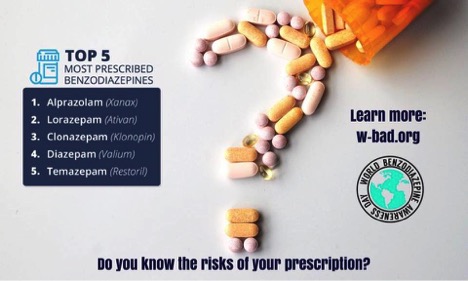
Benzodiazepines (Xanax, Klonopin, Ativan, Valium, Librium, and others) as well as Z-drugs (Ambien, Lunesta and others), which are similar, have the most debilitating withdrawal reactions in all of medicine.

This happens in regular, everyday people who are taking the medications exactly as their doctor prescribed. It also happens to people on what they think are “low doses” and is not just a “high dose” problem. This happens because the prescribing guidelines for this class of drug recommend short-term use only (less than 2-4 weeks), yet doctors are prescribing them for much longer. Even worse, these unsuspecting patients are given no warning (or informed consent) by their doctor about these risks and dangers before taking the prescription past the recommended timeline. The patients think the drugs are “safe” because they are prescribed when they are actually quite dangerous medications that are capable of inflicting sometimes severe and life-threatening withdrawal syndromes which are known, for some people, to persist for many years.

W-BAD shares these stats about how common it is to see physical dependence, adverse effects, and withdrawal:

Experts and studies estimate that as many as 60% of people taking benzodiazepines for more than the recommended 2-4 week time period will develop physical dependence, adverse effects, and withdrawal

60% is actually a conservative percentage, as some other sources indicate that “50-80% of people regularly taking benzodiazepines (even in ‘low dose’) for longer than a few months will develop a physical tolerance to the drug and become dependent, resulting in difficulty stopping benzodiazepines because of withdrawal symptoms”.

30% of long-term users will experience severe withdrawal or adverse effects which may include seizures, hallucinations, psychosis, akathisia, and sometimes suicide or death (people are especially at risk for severe withdrawal if they over-rapidly taper or cold-turkey their benzodiazepine/Z-drug).

The tapers to discontinue these medications, once you’ve taken them past 2-4 weeks and depending on dose, can last many months or years. I see this all the time in my practice.

About 10-15% of people who withdraw will develop a protracted withdrawal syndrome which can potentially persist for many years (there are anecdotal reports of it persisting up to five, seven, and even ten years post-cessation.). Others, even after a slow, gradual reduction of the benzodiazepine or Z-drug will experience withdrawal that lasts for up to 18 months post-cessation.

Physical dependence is a physical condition, a state of adaptation in the body caused by chronic use of a tolerance forming drug, in which abrupt or gradual drug withdrawal causes withdrawal.

When someone becomes physically dependent to benzodiazepines (or Z-drugs), they are also at risk for developing tolerance. With benzodiazepines/Z-drugs, specifically, when the receptors in the brain become adapted or accustomed to the action of the original dose of BZ, more of the drug is needed in order for the desired therapeutic effect (or the original effect at the original dose) to be achieved. This means that the drug loses its effectiveness and the person taking it can begin to experience withdrawal symptoms while still taking the prescribed dose of the drug.

It’s very unfortunate that some of the very same symptoms that are trying to be addressed by these medications are now amplified or seen for the first time:

Some common symptoms of tolerance include increasing anxiety, panic attacks, development of agoraphobia for the first time, interdose withdrawal (withdrawal symptoms emerging in between doses), as well as a plethora of other physical/neurological/psychological symptoms.

Visit the website World Benzodiazepine Awareness Day to learn more and to get involved:

By spreading the word about taken-as-prescribed benzodiazepine risks, harms, and dangers, W-BAD (World Benzodiazepine Awareness Day) hopes to bring awareness to the general public and the medical community about this problem before more people are needlessly harmed. Please help share this video with everyone you know and, together, we can prevent more victims of iatrogenic (caused by medicine) dependence, withdrawal, and injury from prescribed benzodiazepines and Z-drugs.

There are some heartbreaking stories on the Facebook page (an excellent resource) :

  • W-BAD volunteer Jan Elle bravely shares some details of her cold-turkey benzo withdrawal in this video as she recovers from the Protracted Withdrawal Syndrome
  • Jennifer Fritzler-Krueger was struggling really badly through withdrawal and major brain fog but shared her story via video anyway

W-BAD acknowledges Professor Malcolm H. Lader for guiding them in providing information that appears throughout the website and in handout materials. Prof. Lader first described benzodiazepine withdrawal syndrome as a potential brain injury in the scientific literature, and also campaigned around the world to get everyone from politicians to royalty to listen.

Here is some guidance with slow tapering protocols from W-BAD (and never stop cold-turkey).

For additional resources this is the blog post I published last year: World Benzodiazepine Awareness Day – say NO to Benzodiazepines for anxiety!

Awareness and nutrition solutions

I do love that this awareness is being created. It is so needed for those who are prescribed these medications and currently taking them, for anyone who may consider a future prescription, and for everyone in the medical profession, as well as all integrative and functional medicine practitioners and nutritionists.

All this awareness creates the perfect opportunity to offers nutrition solutions too, so we can address:

  • the initial root cause/s of your anxiety which led to your prescription of this medication to start with
  • the anxiety you now experience even through you were prescribed these medications for something else (such as pain)
  • your current biochemistry and nutritional status to facilitate an easier taper from the benzodiazepine with the least withdrawal effects
  • your current biochemistry and nutritional status so you don’t get anxiety in the future, once you have completed the taper

And if you are considering a benzodiazepine prescription in the future you are now informed about the dangers and have nutritional resources too.

When I am working with someone who has been prescribed a benzodiazepine, I get them nutritionally stable BEFORE they even consider a benzodiazepine taper.

I use amino acids like GABA and tryptophan, melatonin and niacinamide to make the taper easier and so we can balance brain chemistry before tapering and then during the taper (all under the supervision of the prescribing doctor and using the Ashton taper protocol).

Dr. Jonathan Prousky, talks about his success with benzodiazepine tapers on a prior Anxiety Summit interview – using melatonin, niacinamide, Neurapas Balance, rhodiola and GABA.

There is also a big focus on diet (real food/often a Paleo diet, no additives, organic, healthy fats, no gluten, no sugar, no caffeine, quality grass-fed/wild protein), addressing high cortisol if needed, addressing low zinc, low iron, low vitamin B6, low B12 and looking at gut health. Lifestyle and stress reduction is important and we look at and address all possible 60+ underlying factors/causes.

This is all covered in detail in my book “The Antianxiety Food Solution” (on amazon here) The basics plus advanced topics (like fluoroquinolone antibiotic issues when on benzodiazepines and more) are also addressed on the Anxiety Summits.

I feel very strongly about providing this nutritional support and sharing how helpful it is because organizations like W-BAD and Benzobuddies.org (as much as love them) advocate for no nutrient support suggesting it won’t help or could make symptoms worse. I will admit that some people who are tapering are very sensitive and in these situations very very tiny amounts (as small as a pinch in some instances) of some of the nutrients may be a better option, always only doing one thing at a time to make sure it’s helping and not making symptoms worse, and doing functional medicine tests. Using essential oils, light therapy, gentle detox, Heartmath and yoga are wonderful to start with, in conjunction with all the diet changes.

Please share your benzodiazepine story and what has helped you taper more easily and recover.

If you’re a practitioner please share what approaches you have used to help your clients or patients taper more easily.

Filed Under: benzodiazapines Tagged With: anxiety, benzodiazepine, diet, GABA, melatonin, nutrition solutions, World Benzodiazepine Awareness Day

  • « Go to Previous Page
  • Page 1
  • Page 2
  • Page 3
  • Page 4
  • Go to Next Page »

Primary Sidebar

GABA QuickStart Homestudy

gaba quickstart homestudy

Free Report

9 Great Questions Women Ask about Food, Mood and their Health

You'll also receive a complimentary subscription to my ezine "Food, Mood and Gal Stuff"


Connect with me

Popular Posts

  • Amino Acids Mood Questionnaire from The Antianxiety Food Solution
  • The Antianxiety Food Solution Amino Acid and Pyroluria Supplements
  • Pyroluria Questionnaire from The Antianxiety Food Solution
  • Collagen and gelatin lower serotonin: does this increase your anxiety and depression?
  • Tryptophan for the worry-in-your-head and ruminating type of anxiety
  • GABA for the physical-tension and stiff-and-tense-muscles type of anxiety
  • The Antianxiety Food Solution by Trudy Scott
  • Seriphos Original Formula is back: the best product for anxiety and insomnia caused by high cortisol
  • Am I an anxious introvert because of low zinc and vitamin B6? My response to Huffington Post blog
  • Vagus nerve rehab with GABA, breathing, humming, gargling and key nutrients

Recent Posts

  • Her cravings for chips and peanut butter were triggered by stress: GABA ends cravings and reduces physical tension and fear of heights
  • It is truly miraculous to be able to move through life without crippling anxiety and panic
  • GABA and tryptophan combo provide immediate and noticeable relief for tremors and cervical dystonia in just 7 days
  • Red light therapy for back and neck pain, plantar fasciitis and low mood – a complement to the amino acids GABA, DPA and tryptophan
  • What do I use instead of Seriphos to help lower high cortisol that is affecting my sleep and making me anxious at night?

Categories

  • 5-HTP
  • AB575
  • Addiction
  • ADHD
  • Adrenals
  • Alcohol
  • Allergies
  • Alzheimer's disease
  • Amino Acids
  • Anger
  • Antianxiety
  • Antianxiety Food Solution
  • Antidepressants
  • Anxiety
  • Anxiety and panic
  • Autism
  • Autoimmunity
  • benzodiazapines
  • Bipolar disorder
  • Books
  • Caffeine
  • Cancer
  • Candida
  • Children/Teens
  • Collagen
  • Cooking equipment
  • Coronavirus/COVID-19
  • Cravings
  • Depression
  • Detoxification
  • Diabetes
  • Diet
  • DPA/DLPA
  • Drugs
  • EFT/Tapping
  • EMF
  • EMFs
  • Emotional Eating
  • Endorphins
  • Environment
  • Essential oils
  • Events
  • Exercise
  • Fear
  • Fear of public speaking
  • Fertility and Pregnancy
  • Fish
  • Food
  • Food and mood
  • Functional neurology
  • GABA
  • Gene polymorphisms
  • General Health
  • Giving
  • Giving back
  • Glutamine
  • Gluten
  • GMOs
  • Gratitude
  • Gut health
  • Heart health/hypertension
  • Histamine
  • Hormone
  • Hyperparathyroidism
  • Hypoglycemia
  • Immune system
  • Inflammation
  • Insomnia
  • Inspiration
  • Introversion
  • Joy and happiness
  • Ketogenic diet
  • Lithium orotate
  • Looking awesome
  • Lyme disease and co-infections
  • MCAS/histamine
  • Medication
  • Men's health
  • Mental health
  • Mercury
  • Migraine
  • Mold
  • Movie
  • MTHFR
  • Multiple sclerosis
  • Music
  • NANP
  • Nature
  • Nutritional Psychiatry
  • OCD
  • Osteoporosis
  • Oxalates
  • Oxytocin
  • Pain
  • Paleo
  • Parasites
  • Parkinson’s disease
  • PCOS
  • People
  • PMS
  • Postpartum
  • PTSD/Trauma
  • Pyroluria
  • Questionnaires
  • Real whole food
  • Recipes
  • Research
  • Schizophrenia
  • serotonin
  • SIBO
  • Sleep
  • Special diets
  • Sports nutrition
  • Stress
  • Sugar addiction
  • Sugar and mood
  • Supplements
  • Teens
  • Testimonials
  • Testing
  • The Anxiety Summit
  • The Anxiety Summit 2
  • The Anxiety Summit 3
  • The Anxiety Summit 4
  • The Anxiety Summit 5
  • The Anxiety Summit 6
  • Thyroid
  • Thyroid health
  • Toxins
  • Tryptophan
  • Tyrosine
  • Uncategorized
  • Vegan/vegetarian
  • Women's health
  • Yoga

Archives

  • May 2026
  • April 2026
  • October 2025
  • September 2025
  • August 2025
  • July 2025
  • June 2025
  • May 2025
  • April 2025
  • March 2025
  • February 2025
  • January 2025
  • November 2024
  • October 2024
  • September 2024
  • August 2024
  • July 2024
  • June 2024
  • May 2024
  • April 2024
  • March 2024
  • February 2024
  • January 2024
  • December 2023
  • November 2023
  • October 2023
  • September 2023
  • August 2023
  • July 2023
  • June 2023
  • May 2023
  • April 2023
  • March 2023
  • February 2023
  • January 2023
  • December 2022
  • November 2022
  • October 2022
  • September 2022
  • August 2022
  • July 2022
  • June 2022
  • May 2022
  • April 2022
  • March 2022
  • February 2022
  • January 2022
  • December 2021
  • November 2021
  • October 2021
  • September 2021
  • August 2021
  • July 2021
  • June 2021
  • May 2021
  • April 2021
  • March 2021
  • February 2021
  • January 2021
  • December 2020
  • November 2020
  • October 2020
  • September 2020
  • August 2020
  • July 2020
  • June 2020
  • May 2020
  • April 2020
  • March 2020
  • February 2020
  • January 2020
  • December 2019
  • November 2019
  • October 2019
  • September 2019
  • August 2019
  • July 2019
  • June 2019
  • May 2019
  • April 2019
  • March 2019
  • February 2019
  • January 2019
  • December 2018
  • November 2018
  • October 2018
  • September 2018
  • August 2018
  • July 2018
  • June 2018
  • May 2018
  • April 2018
  • March 2018
  • February 2018
  • January 2018
  • December 2017
  • November 2017
  • October 2017
  • September 2017
  • August 2017
  • July 2017
  • June 2017
  • May 2017
  • April 2017
  • March 2017
  • February 2017
  • January 2017
  • December 2016
  • November 2016
  • October 2016
  • September 2016
  • August 2016
  • July 2016
  • June 2016
  • May 2016
  • April 2016
  • March 2016
  • February 2016
  • January 2016
  • December 2015
  • November 2015
  • October 2015
  • September 2015
  • August 2015
  • July 2015
  • June 2015
  • May 2015
  • April 2015
  • March 2015
  • February 2015
  • January 2015
  • December 2014
  • November 2014
  • October 2014
  • September 2014
  • August 2014
  • July 2014
  • June 2014
  • May 2014
  • April 2014
  • March 2014
  • February 2014
  • January 2014
  • December 2013
  • November 2013
  • October 2013
  • September 2013
  • August 2013
  • July 2013
  • June 2013
  • May 2013
  • April 2013
  • March 2013
  • February 2013
  • January 2013
  • December 2012
  • November 2012
  • October 2012
  • August 2012
  • July 2012
  • June 2012
  • May 2012
  • April 2012
  • March 2012
  • February 2012
  • January 2012
  • December 2011
  • November 2011
  • October 2011
  • September 2011
  • August 2011
  • July 2011
  • June 2011
  • May 2011
  • April 2011
  • March 2011
  • February 2011
  • January 2011
  • December 2010
  • October 2010
  • September 2010
  • July 2010
  • May 2010
  • April 2010
  • March 2010
  • February 2010
  • January 2010
  • November 2009

Share the knowledge!

The above statements have not been evaluated by the Food and Drug Administration. Products listed in this website are not intended to diagnose, treat, cure or prevent any disease.

The information provided on this site is for informational and educational purposes only and is not intended as a substitute for advice from your physician or other health care professional. You should consult with a healthcare professional before starting or modifying any diet, exercise, or supplementation program, before taking or stopping any medication, or if you have or suspect you may have a health problem.


Copyright © 2026 Trudy Scott. All Rights Reserved. | Privacy | Terms and Conditions | Refund Policy | Medical Disclaimer

Free Report

9 Great Questions Women Ask about Food, Mood and their Health

You’ll also receive a complimentary subscription to my ezine “Food, Mood and Gal Stuff”