• Skip to primary navigation
  • Skip to main content
  • Skip to primary sidebar

everywomanover29 blog

Food, Mood and Women's Health – Be your healthiest, look and feel great!

  • Blog
  • About
  • Services
  • Store
  • Resources
  • Testimonials
  • The Book
  • Contact
  • Search this site

low blood sugar

GABA Calm and 5-HTP twice a day, after struggling with ADD-like symptoms, have made our day-to-day life so much better!

June 14, 2024 By Trudy Scott 14 Comments

gaba calm and add-like symptoms

Kimberly is a mom in the community and shared this wonderful feedback about her 8-year old son who is using just two amino acids:

I started my son on Gaba Calm and Serotrex (5-htp) twice a day after struggling with ADD-like symptoms for about 9 months. I’m not sure if he really has ADD or if his gut problems are to blame, but the amino acids have made our day-to-day life so much better!

I think we may need to do some work with his nervous system and on helping him learn to regulate his emotions, but he’s much less mouthy and argumentative than he was before. We still have hard days, but the supplements have helped pull me out of being exhausted and discouraged all the time from fighting with him constantly over everything.

I never get tired of hearing feedback like this and it’s not uncommon for young children (and adults) to see benefits like this very quickly.

She doesn’t know if he has ADD (attention deficit disorder) but she used the amino acids based on his symptoms (low GABA and low serotonin). We know it was the right choice because of his results. Could his symptoms improve even further? Absolutely! We typically increase one amino acid at a time watching for further improvement and stop when we reach the ideal dose.

Because she says “we still have hard days” I’d want to see her increase the GABA and 5-HTP (as mentioned above) and also consider a trial of DPA/d-phenylalanine (for low endorphin emotional symptoms) and possibly tyrosine (for low dopamine focus and attention issues). Low blood sugar can also cause an emotional rollercoaster and eating for blood sugar stability and glutamine helps so much.

When I hear “mouthy” and “argumentative” I immediately consider low serotonin but low blood sugar comes to mind too.

These additional amino acid trials would also be done one at a time with careful tracking of symptoms and adjustments up and down as needed.

If you’re not familiar with the symptoms of low serotonin, low GABA, low endorphins, low dopamine and low blood sugar you can see them all here.

Kimberly acknowledges that they may need to do work in other areas too – like learning to regulate his emotions and addressing gut issues. This is good as it’s seldom just one approach that is going to shift things.

Kimberly has also seen benefits with 5-HTP

I also love this feedback from Kimberly because she is less exhausted and no longer discouraged because her son is doing so much better.

By the way, this mom also experiences benefits from amino acids. 5-HTP helps her with sugar cravings. I shared her feedback in a blog post last year: Would using 5-HTP or tryptophan help when you crave sugar (as a sort of antidepressant) late afternoon/evening?

I was taking a break from tryptophan/5-HTP and realized after reading this post that that might be a mistake! So I added 5-HTP back in mid-afternoon and my sugar cravings are almost completely gone.

And 5-HTP also helped her late afternoon sadness and despair:

I took a 50 mg 5-HTP along with my mid-afternoon Endorphigen capsule, and within just a few minutes I felt the sadness and despair that I often feel in the late afternoon, start to lift. I was astonished at how quickly it worked!

I just love it when the amino acids work for mom and then mom helps her child.

It goes without saying that dietary changes are foundational in situations like this – often for the entire family. This means eating real whole foods, quality animal protein (especially at breakfast to help with blood sugar stability), organic veggies and fruit, fermented foods, healthy fats and no sugar/gluten/caffeine (all covered in detail in my book).

Assessing for and addressing nutritional deficiencies (like low zinc, low vitamin B6, low omega-3s, low iron etc.), removing toxins, addressing the gut (more on this below) and addressing infections are all important too. It’s always a comprehensive approach. But the good news is that you start to get results right away with amino acid supplementation, while you are figuring out everything else.

Gut issues and 5-HTP/serotonin and GABA

As mentioned above Kimberly also suspects possible gut problems with her son. These could include dysbiosis (microbiome imbalance), food sensitivities, leaky gut, parasites, candida and or digestive enzyme issues etc.  These always need to be investigated and addressed – because they can all contribute to low GABA and low serotonin – but until the issues are resolved, you can start to see some symptom resolution with the amino acids.

The amino acids he is taking offer an added gut benefit too. In an animal study, Effects of Serotonin and Slow-Release 5-Hydroxytryptophan on Gastrointestinal Motility in a Mouse Model of Depression, 5-HTP was shown to normalize gut motility and growth of the enteric epithelium. The paper concludes that slow release 5-HTP “might be used to treat patients with intestinal dysfunction associated with low levels of serotonin.”

Interestingly, an in-vitro (test-tube) study found that: “Serotonin showed antifungal activity towards all isolates of candida.” This was for certain strains, such as albicans, glabrata, tropicalis, and a few others).

This review article published earlier this year, Gamma-aminobutyric acid as a potential postbiotic mediator in the gut-brain axis discusses the role GABA plays in “psychological disorders, including anxiety, depression, and stress” and also attention deficit hyperactivity disorder. The authors also share that GABA has an impact on “gut microbiota composition” and confirms what has been reported in other research and what we see clinically: the “possibility that GABA may be a potent mediator of the gut-brain axis.”

Additional resources when you are new to using amino acids as supplements

As always, I use the symptoms questionnaire to figure out if low GABA or low serotonin or other neurotransmitter imbalances may be an issue.

If you suspect low levels of any of the neurotransmitters and do not yet have my book, The Antianxiety Food Solution – How the Foods You Eat Can Help You Calm Your Anxious Mind, Improve Your Mood, and End Cravings, I highly recommend getting it and reading it before jumping in and using amino acids on your own so you are knowledgeable. And be sure to share it with the practitioner/health team you or your loved one is working with.

There is an entire chapter on the amino acids and they are discussed throughout the book in the sections on gut health, gluten, blood sugar control (this is covered in an entire chapter too), sugar cravings, anxiety and mood issues.

The book doesn’t include product names (per the publisher’s request) so this blog, The Antianxiety Food Solution Amino Acid and Pyroluria Supplements, lists the amino acids that I use with my individual clients and those in my group programs.

If, after reading this blog and my book, you don’t feel comfortable figuring things out on your own (i.e. doing the symptoms questionnaire and respective amino acids trials), a good place to get help is the GABA QuickStart Program (if you have low GABA symptoms too). This is a paid online/virtual group program where you get my guidance and community support.

If you are a practitioner, join us in The Balancing Neurotransmitters: the Fundamentals program. This is also a paid online/virtual program with an opportunity to interact with me and other practitioners who are also using the amino acids.

Wrapping up and your feedback

I’m thrilled Kimberly saw these benefits with 5-HTP and then helped her son with 5-HTP and GABA. I asked if I could share here to inspire other moms and give them hope and she said yes. I do always appreciate feedback from the community and being able to share it on the blog.

Now I’d love to hear from you – Does any of this resonate with you? If yes, which amino acid has helped you and your child and how has it helped?

If you’re a practitioner have you seen GABA and 5-HTP help in situations like this?
Filed Under: 5-HTP, ADHD, Anxiety, Children/Teens, GABA Tagged With: 5-HTP, ADD, amino acids, argumentative, attention deficit disorder, children, discouraged, dopamine, DPA endorphin, emotional symptoms, emotions, exhausted, focus, GABA, GABA Calm, glutamine, gut health; GABA Quickstart; Balancing Neurotransmitters: the Fundamentals program for practitioners, low blood sugar, mouthy, serotonin, Serotrex, tyrosine

Reactive hypoglycemia in binge eating disorder, food addiction and intense sugar cravings, and how glutamine stops the cravings

February 9, 2024 By Trudy Scott 6 Comments

reactive hypoglycemia

A number of years ago a woman came to see me looking for help for her anxiety, insomnia and out of control sugar cravings which she described as an “almost demonic urge  to eat sugar and all things sweet.”

Before working with me she had been trying to control her low blood sugar levels (or hypoglycemia) by eating the right foods at the right times i.e. healthy fats and quality protein especially at breakfast. But this wasn’t enough to eliminate her intense sweet cravings. She would make and eat sweet treats all day long, using “healthier” sweeteners like monk fruit and maple syrup.

I had her complete the brain chemistry symptoms questionnaire and she scored high on all the low blood sugar symptoms as well as low GABA and low serotonin. We focused on low blood sugar first and the solution for her cravings was using 500 mg of glutamine opened onto her tongue.

Initially she was sure this would NOT work – how would she possibly be able to use glutamine in the midst of experiencing reactive hypoglycemia or low blood sugar?

I had the same conversation  that  I have with all my clients who would obviously rather eat something sweet than open a glutamine capsule onto  their tongue: “If you have an intense craving for something sweet, tell yourself that  you’re  going to  indulge, but also humor your nutritionist and take the glutamine anyway. You may be surprised to find your urge completely disappears.”

She did that and it worked time and time again, ending her demonic urge to eat something sweet every time and very quickly. And it helped her with all her low blood sugar symptoms.

This blog addresses the role of low blood sugar or reactive hypoglycemia in intense sugar cravings, binge eating disorder and food addiction, and how glutamine helps.

Research: Reactive hypoglycemia in binge eating disorder and food addiction

The 2023 paper, Reactive hypoglycemia in binge eating disorder, food addiction, and the comorbid phenotype: unravelling the metabolic drive to disordered eating behaviours, highlights the fact that “impaired metabolic response” such as fasting blood glucose fluctuations are a factor in binge eating and food addiction, driving out of control and “repetitive consumption of highly processed food.”

The researchers “investigated hypoglycemia events during a 5-hour-long oral glucose tolerance test” in 200 participants and “the association between the severity of eating psychopathology and the variability in hypoglycemia events was explored.”

The authors conclude as follows:

People with binge eating disorder/BED or food addiction/FA are prone to experiencing reactive hypoglycemia; food addiction severity may predict early and symptomatic hypoglycemia events. This can further reinforce disordered eating behaviours by promoting addictive responses, both biologically and behaviourally.

You can read the study here.

It’s worth noting that the participants did not have diabetes. I mention this because most of the reactive hypoglycemia research looks at diabetic patients. Reactive hypoglycemia in the non-diabetic population is considered controversial even amongst functional medicine and/or integrative practitioners. This paper stands out for this reason.

It’s also recently published which makes me excited. This research is confirming what we see clinically.

This research is very much in line with the demonic urge my client described, and directly tied to her low blood sugar and blood sugar swings. My client did not do a 5 hour oral glucose tolerance test. Instead we used the low blood sugar symptoms questionnaire (see below) and a trial of glutamine.

My client was also not diagnosed with binge eating disorder or food addiction but didn’t have to be for us to recognize the issue and have her benefit from nutritional support in the way of glutamine and learning to eat for blood sugar stability.

Unfortunately the authors do not discuss glutamine as a solution in this particular paper or in any other research on human participants who are non-diabetic. There are a few animal diabetes studies, with this 2013 study reporting that “glutamine was more effective in promoting glycemia recovery if compared with glucose, lactate, glycerol, or alanine.”  The authors call for further investigations which I look forward to reading.

Low blood sugar symptoms and a glutamine trial

As a reminder here are the signs of low blood sugar:

Sugar cravings, binge eating and addiction symptoms:

  • Crave sugar, starch or alcohol any time during the day
  • Very intense cravings for sweets/sugar
  • Binge eating and/or food addiction (updated with this based on this research)

There are also anxiety, mood, sleep and energy symptoms when you have low blood sugar:

  • Nervous, anxious, panic attacks
  • Irritable, shaky, headachey – especially if you go too long between meals
  • Lightheaded if meals are missed
  • Agitated, easily upset
  • Eating relieves fatigue
  • Waking in the night or early hours with a jolt of anxiety/shakiness (I blogged about this here)

As I mention in the waking with a jolt/low blood sugar blog the good news is it’s relatively easy to figure out if low blood sugar is causing your symptoms. First I have clients rate their symptoms on the low blood sugar questionnaire and do a trial of glutamine. Next is figuring out the dosing and timing of glutamine, looking at a current food log and making dietary changes as needed.

Glutamine is always best opened on to the tongue but it must be used this way for stopping the intense sugar cravings quickly – as in immediately. It’s also used away from meals like all the amino acids.

If you notice improvements it’s very likely that reactive hypoglycemia or low blood sugar is a factor.

Glutamine for low blood sugar cravings: dosing and timing

As I share in my book and other blog posts, typically 500 mg glutamine is a good starting dose for intense cravings for sugary foods. We may increase based on individual needs and you may find you do need to use 500 mg -1000 mg two to three times a day when the intense desire for something sweet strikes – as blood sugar dips. Using a glutamine powder is a great way to use it especially if you find you do need more than 500 mg each time.

As I mentioned above when you use glutamine powder directly on the tongue (rather than mixed in water), the benefits are seen almost immediately and even if you don’t believe it could possibly work – like my client – your desire for sugar disappears.

GABA and serotonin support too

My client also needed GABA and serotonin support for her anxiety and sleep issues. Again, we used the low GABA and low serotonin symptoms questionnaire and did trials of GABA and tryptophan for her which helped further.

Sugar cravings and binge eating with other neurotransmitter imbalances too

Keep in mind that there is a sugar cravings aspect to all the neurotransmitter imbalances. The type of craving can be found on the above symptoms questionnaire. It’s not uncommon to need support more than one area:

  • Low blood sugar /hypoglycemia – glutamine for intense cravings at any time of the day
  • Low serotonin – tryptophan or 5-HTP for afternoon/evening cravings
  • Low endorphins – DPA for comfort/reward eating
  • Low catecholamines – tyrosine for low energy sugar cravings
  • Low GABA – GABA for stress eating

You can read more about this here: The individual amino acids glutamine, GABA, tryptophan (or 5-HTP), DPA and tyrosine are powerful for eliminating sugar cravings, often within 5 minutes 

Glutamine product options – capsule vs powder

l-glutamine
l-glutamine

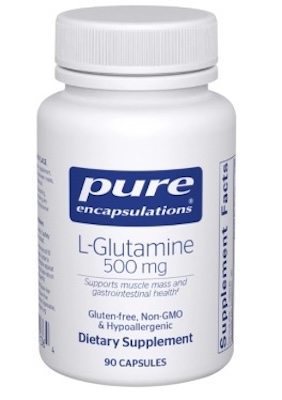
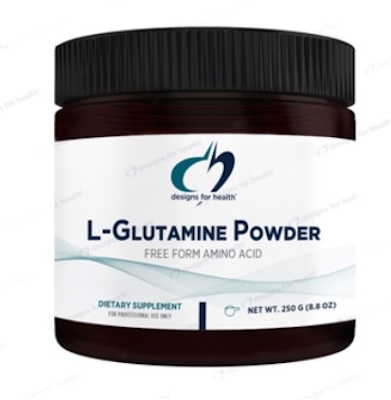
Products I recommend include Pure Encapsulations 500 mg l-glutamine (capsules opened on to your tongue) and Designs for Health l-glutamine powder as you find you need higher amounts.  You can purchase these from my online store (Fullscript – only available to US customers – use this link to set up an account).

l-glutamine
l-glutamine

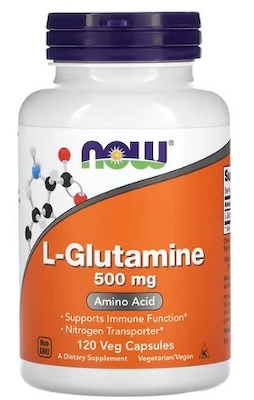
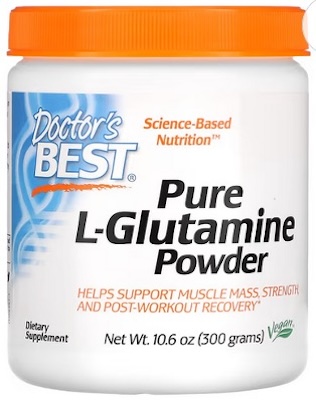
If you’re not in the US, Now l-glutamine 500 mg and Doctor’s best l-glutamine powder are products I recommend on iherb (use this link to save 5%).

Additional resources when you are new to using glutamine and other amino acids as supplements

We use the symptoms questionnaire to figure out if low blood sugar and/or low serotonin and/or low GABA and other neurotransmitter imbalances may be an issue for you.

If you suspect low levels of any of the neurotransmitters and do not yet have my book, The Antianxiety Food Solution – How the Foods You Eat Can Help You Calm Your Anxious Mind, Improve Your Mood, and End Cravings, I highly recommend getting it and reading it before jumping in and using amino acids on your own so you are knowledgeable. And be sure to share it with the practitioner/health team you or your loved one is working with.

There is an entire chapter on the amino acids and they are discussed throughout the book in the sections on gut health, gluten, blood sugar control (this is covered in an entire chapter too), sugar cravings, anxiety and mood issues. The importance of quality animal protein and healthy fats is also covered.

The book doesn’t include product names (per the publisher’s request) so this blog, The Antianxiety Food Solution Amino Acid and Pyroluria Supplements, lists the amino acids that I use with my individual clients and those in my group programs.

If, after reading this blog and my book, you don’t feel comfortable figuring things out on your own (i.e. doing the symptoms questionnaire and respective amino acids trials), a good place to get help is the GABA QuickStart Program (if you have low GABA symptoms too). This is a paid online/virtual group program where you get my guidance and community support.

If you are a practitioner, join us in The Balancing Neurotransmitters: the Fundamentals program. This is also a paid online/virtual program with an opportunity to interact with me and other practitioners who are also using the amino acids.

Have you had success with glutamine for blood sugar stability and binge eating, food addiction and intense cravings for sugar and carbs?

Have you also found it helps with sleep, leaky gut and anxiety during the day?

If yes, how much helps you? And how often do you use it? And what sugary foods have you been able to stop eating?

If you’re a practitioner do you use glutamine and with clients/patients with these low blood sugar cravings? Do you recognize reactive hypoglycemia as a very real issue in non-diabetics?

And please let me know if it’s helpful that I’m now including product recommendations and where to get them?

Feel free to share and ask your questions below.

Filed Under: Addiction, Anxiety and panic, Cravings, Glutamine, Hypoglycemia Tagged With: addiction, anxiety, binge, binge eating, carb craving, dosage, GABA Quickstart; Balancing Neurotransmitters: the Fundamentals program for practitioners, glutamine, Hypoglycemia, insomnia, low blood sugar, neurotransmitters, reactive hypoglycemia, sugar craving, Timing

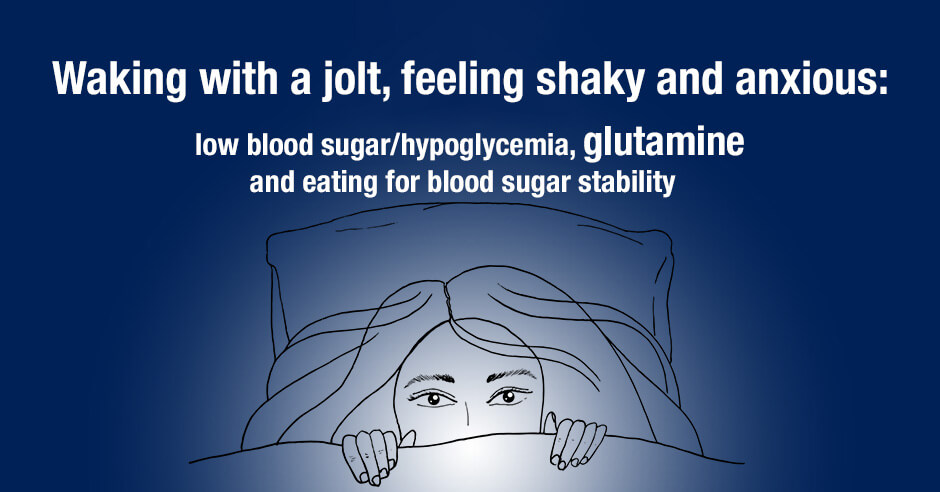
Waking with a jolt, feeling shaky and anxious: low blood sugar/hypoglycemia, glutamine and eating for blood sugar stability

February 2, 2024 By Trudy Scott 22 Comments

blood sugar stability

Low blood sugar is one of a number of causes of waking in the night or early hours, often with a jolt and feelings of anxiety or feeling like you’re having a panic attack. As shared in a recent blog post, cortisol that is high at night can cause very similar symptoms.

Because of a low blood sugar question on the high cortisol blog, today I’m explaining the very different solutions to each root cause: glutamine and eating for blood sugar stability when you have low blood sugar versus Seriphos when you have high cortisol.

Katherine shares that she has low cortisol and suspects hypoglycemia or low blood sugar, and is hesitant about using Seriphos:

My last 4 point cortisol test showed mine is low throughout the day. But I’m having episodes where I’m waking up in the mornings feeling a jolt (every time I wake up from sleeping) and sometimes also shaky and anxious.

A functional pharmacist suggested my blood sugar may be dropping during the night and hypoglycemia could cause an adrenaline surge.

I don’t know. I’m nervous to try something [such as Seriphos] to lower cortisol when it seems mine is already too low.

I agree with her functional pharmacist that hypoglycemia is likely a factor as it often is with adrenal dysfunction and low cortisol. And I am glad Katherine is being cautious about using Seriphos.

I shared that Seriphos is not the solution in this instance because she doesn’t have high cortisol based on her adrenal saliva test (4 collections). Instead, she has low cortisol throughout the day and using Seriphos would lower her cortisol even further. What many folks don’t realize is that high cortisol and low cortisol can lead to similar symptoms of anxiety, shakiness and waking in the night and early hours.

The good news is it’s relatively easy to figure out if low blood sugar is causing your symptoms. First I have clients rate their symptoms on the low blood sugar questionnaire and do a trial of glutamine. Next is figuring out the dosing and timing of glutamine, looking at a current food log and making dietary changes as needed.

If Katherine notices improvements – typically seen within a week – it’s very likely that hypoglycemia is a factor.

Finally, if additional support is needed for her anxiety I’d consider looking at low GABA and low serotonin symptoms and doing a trial of GABA and/or tryptophan.

Longer term solutions include all the dietary changes mentioned in my book – gluten-free, no sugar, no caffeine or alcohol, using nutritional support for the adrenals and addressing toxins, infections, trauma etc.

Low blood sugar symptoms

First I have clients rate their symptoms on the low blood sugar questionnaire and do a trial of glutamine if they have low blood sugar symptoms.

Here are the low blood sugar symptoms which are rated on a scale of 1 to 10, with 10 being most severe:

  • Crave sugar, starch or alcohol any time during the day
  • Irritable, shaky, headachey – especially if too long between meals
  • Intense cravings for sweets
  • Lightheaded if meals are missed
  • Eating relieves fatigue
  • Agitated, easily upset, nervous
  • Waking in the night or early hours with a jolt of anxiety/shakiness

If the ratings indicate the possibility of low blood sugar i.e. any cluster of the above symptoms, we do a trial of the amino acid glutamine on the tongue and record before and after ratings of a few symptoms.

Glutamine is a key amino acid for blood sugar stability and helps quickly while the adrenals heal and the dietary changes are figured out.

Glutamine for low blood sugar: dosing and timing

Typically 500 mg glutamine is a good starting dose. I see many folks start too high, like 5000 mg / 5 g and up multiple times a day, and it’s not necessary. However, we increase based on individual needs and you may find you do need to use 500 mg -1000 mg two to three times a day. Using a glutamine powder is a great way to use it especially if you find you do need more than 500 mg each time.

When you use glutamine powder directly on the tongue (rather than mixed in water), the benefits are seen almost immediately.

For someone like Katherine, using glutamine throughout the day may set her up for night time or early morning low blood sugar. She may also find she needs to use some glutamine just before bed too.

GABA and/or serotonin support too?

Depending on the causes of her anxiety and shakiness, in addition to glutamine, Katherine may need to consider GABA and/or tryptophan too. We use the low GABA and low serotonin symptoms questionnaire and do trials of GABA and/or tryptophan/5-HTP.

All three amino acids can be used before bed and during the night if needed but trials are best done one at a time.

Glutamine for low blood sugar, healing the gut, to reduce sugar cravings and for better sleep

In addition to helping with blood sugar stability and sleep issues, glutamine also helps to heal the gut and helps reduce sugar cravings. Laura shared how it’s been helping her with all of this on another blog:

I am currently struggling with gastritis (inflammation of the stomach lining) as well as a lifetime of low blood sugar and irritability. I started glutamine a few days ago (15 grams a day) and I am amazed at how it has calmed my gut as well as calmed the sugar cravings. I am also sleeping better!

I did share that 15 g is considered a high starting dose of glutamine. She may well get similar benefits with much less.

Glutamine for early morning low blood sugar and headaches

As you can see in this case, Cat finds 500 mg glutamine just once a day works well for her unique needs:

I found a powder that I mix approximately 500 mg of with water. It works within about 15 minutes and keeps me going for about 2 – 3 hours — long enough to reach a reasonable time for lunch.

I’m thrilled to have this option as anytime that I travel, low blood sugar becomes a huge issue as I suffer from ketotic hypoglycemia and end up with massive headaches and vomiting for 6-8 hours.

You can read more about Cat’s success here – Glutamine for hypoglycemia/low blood sugar: “500mg mixed in water works in 15 minutes and keeps me going for 2 – 3 hours”.

Dietary changes for blood sugar control and adrenal support

All my clients keep a food log and we look at what they are eating on a typical day and when. It’s key to eat in a certain way in order to control blood sugar:. breakfast on waking, healthy snacks 3 to 4  x day and some folks do well with a snack before bed. These meals and snacks should include quality animal protein and healthy fats. This is all outlined in detail in the diet and low blood sugar chapters in my book “The Antianxiety Food Solution”.

A protein smoothie in the morning is a good option too and especially helpful if you have the social anxiety condition pyroluria, where morning nausea and a low appetite is common initially. This blog highlights a research paper about breakfast smoothies helping to reduce anxiety and hypoglycemia symptoms.

Nutritional support for adrenal function includes a good B vitamin complex, extra vitamin B5/pantothenic acid, vitamin C and adaptogenic herbs such as rhodiola and ashwagandha.

Glutamine product options – capsule vs powder

l-glutamine
l-glutamine

Products I recommend include Pure Encapsulations 500 mg l-glutamine (capsules opened on to your tongue) and Designs for Health l-glutamine powder as you find you need higher amounts.  You can purchase these from my online store (Fullscript – only available to US customers – use this link to set up an account).

l-glutamine
l-glutamine

If you’re not in the US, Now l-glutamine 500 mg and Doctor’s best l-glutamine powder are products I recommend on iherb (use this link to save 5%).

Additional resources when you are new to using amino acids as supplements

We use the symptoms questionnaire to figure out if low blood sugar and/or low serotonin and/or low GABA and other neurotransmitter imbalances may be an issue for you.

If you suspect low levels of any of the neurotransmitters and do not yet have my book, The Antianxiety Food Solution – How the Foods You Eat Can Help You Calm Your Anxious Mind, Improve Your Mood, and End Cravings, I highly recommend getting it and reading it before jumping in and using amino acids on your own so you are knowledgeable. And be sure to share it with the practitioner/health team you or your loved one is working with.

There is an entire chapter on the amino acids and they are discussed throughout the book in the sections on gut health, gluten, blood sugar control (this is covered in an entire chapter too), sugar cravings, anxiety and mood issues. The importance of quality animal protein and healthy fats is also covered.

The book doesn’t include product names (per the publisher’s request) so this blog, The Antianxiety Food Solution Amino Acid and Pyroluria Supplements, lists the amino acids that I use with my individual clients and those in my group programs.

If, after reading this blog and my book, you don’t feel comfortable figuring things out on your own (i.e. doing the symptoms questionnaire and respective amino acids trials), a good place to get help is the GABA QuickStart Program (if you have low GABA symptoms too). This is a paid online/virtual group program where you get my guidance and community support.

If you are a practitioner, join us in The Balancing Neurotransmitters: the Fundamentals program. This is also a paid online/virtual program with an opportunity to interact with me and other practitioners who are also using the amino acids.

Have you had success with glutamine for blood sugar stability and waking with a jolt of anxiety/panic at night or in the early hours?

Have you used it for blood sugar stability, reduced cravings, leaky gut and anxiety during the day?

If yes, how much helps you? And how often do you use it?

Have dietary changes and adrenal support helped too?

If you’re a practitioner do you use glutamine and dietary approaches with clients/patients with low blood sugar?

And please let me know if it’s helpful that I’m now including product recommendations and where to get them?

Feel free to share and ask your questions below.

Filed Under: Adrenals, Anxiety and panic, Glutamine, Insomnia Tagged With: anxiety, cortisol, dosage, GABA Quickstart; Balancing Neurotransmitters: the Fundamentals program for practitioners, glutamine, Hypoglycemia, insomnia, jolt, low blood sugar, panic, salivary testing, shakiness, shaky, Timing, waking

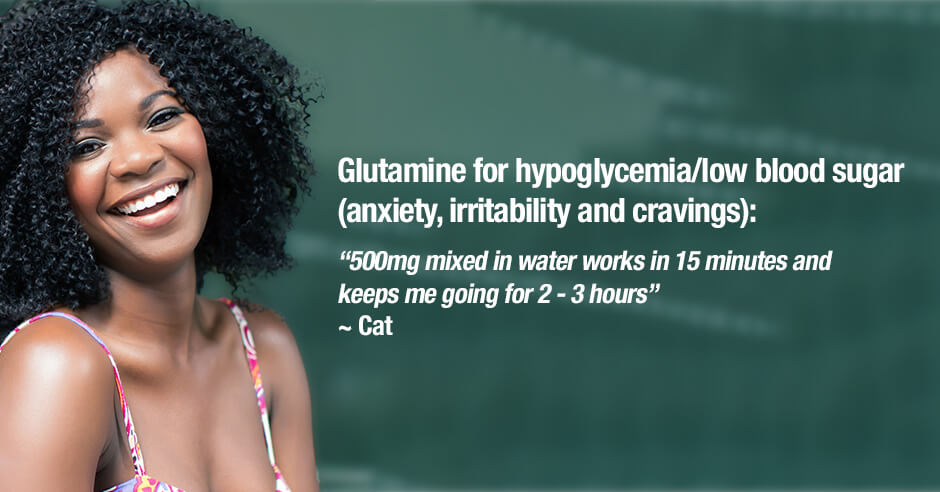
Glutamine for hypoglycemia/low blood sugar: “500mg mixed in water works in 15 minutes and keeps me going for 2 – 3 hours”

November 3, 2023 By Trudy Scott 27 Comments

glutamine and hypoglycemia

Cat shared this feedback about how effective just 500mg of glutamine is for her low blood sugar and how quickly it helps:

I recently followed one of your posts on GABA down the rabbit hole to a linked blog post and then to another post where I found a mention of using glutamine for hypoglycemia. This is the only reference that I have read on this in 35 years of research on the subject. I follow a low carb, higher protein, healthy fat diet, but still suffer low blood sugar issues consistently at one particular time of the day. After so many years of eating a second breakfast to prevent the lows, I was ready to give any other healthy option a try.

It works!!! I found a powder that I mix approximately 500 mg of with water. It works within about 15 minutes and keeps me going for about 2 – 3 hours — long enough to reach a reasonable time for lunch.

I’m thrilled to have this option as anytime that I travel, low blood sugar becomes a huge issue as I suffer from ketotic hypoglycemia and end up with massive headaches and vomiting for 6-8 hours.

You have freed me from a huge weight! Thank you and hugs!

(And thank you for researching and sharing the tremendously helpful information in your books, webinar presentations and blogs.)

Thank you Cat for sharing your success and you are most welcome! I’m sharing this as a blog post because you may also be new to this.

Glutamine dosing, using powder vs capsules and using it on the tongue

Cat finds 500 mg glutamine works well for her unique needs. This is a good starting dose. I see many folks start too high, like 5000 mg / 5 g and up multiple times a day, and it’s not necessary. However, we increase based on individual needs and you may find you do need to use 500 mg -1000 mg two to three times a day.

Using a glutamine powder is a great way to use it especially if you find you do need more than 500 mg each time.

One thing I mentioned to Cat is when you use glutamine powder directly on to the tongue (rather than mixed in water), the benefits are seen more quickly i.e. right away rather than having to wait 15 minutes.

If you do start with glutamine capsules, be sure to open the capsule on the tongue too, But watch for fillers which can be irritating to some folks. Powders are typically glutamine-only and don’t taste bad at all. But when traveling, capsules may be a better option (at least when on a plane).

Ketotic hypoglycemia, adrenal dysfunction and breakfast

Ketotic Hypoglycemia International defines ketotic hypoglycemia as “a condition characterized by low blood sugar (glucose) and elevated ketones, typically occurring after fasting, like sleeping overnight. Ketotic hypoglycemia (KH) is not a disease itself but rather a symptom or a clinical presentation that can occur as a result of various underlying conditions.” I’ve asked Cat if she is aware as to what is causing her ketotic hypoglycemia and I’ll report back.

I have also asked if she has had salivary cortisol testing done as adrenal dysfunction plays a role in all types of low blood sugar and will need to be addressed. This can take awhile to test and figure out nutritional support. Until then, glutamine is wonderful for preventing low blood sugar episodes.

I’m also curious what her breakfasts look like and will update the blog when I find out. Cat does mention that she follows “a low carb, higher protein, healthy fat diet” so I assume her first breakfast is a good one. But it’s always something to confirm.  As you can see on this blog, Anxiety and Hypoglycemia Symptoms Improve with Diet Modification, a healthy breakfast is key for blood sugar stability and preventing anxiety.

Low blood sugar symptoms and all the ways glutamine may help

This is the blog she commented on: Glutamine for calming, intense sugar cravings, gut healing and low blood sugar

I share all the symptoms we see with low blood sugar:

  • Crave sugar, starch or alcohol any time during the day
  • Irritable, shaky, headachey – especially if going too long between meals
  • Intense cravings for sweets
  • Lightheaded if meals are missed
  • Eating relieves fatigue
  • Agitated, easily upset
  • Nervous, anxious, panic attacks

As you can see, in addition to helping with low blood sugar symptoms, glutamine has calming properties (low blood sugar can also cause anxiety and panic attacks), helps reduce intense sugar cravings (sometimes described as a demonic urge to eat all things sweet and also helps with healing a leaky gut. Be sure to read these two blogs I’ve linked to above.

Glutamine has also been researched to help with addiction recovery. In this blog, An amino acid supplement with DLPA, glutamine and 5-HTP eases alcohol withdrawal symptoms at an inpatient detoxification program, glutamine is paired with two other amino acids.

Resources if you are new to using glutamine and other amino acids as supplements

We use the symptoms questionnaire to figure out if low blood sugar may be an issue for you.

If you suspect blood sugar or low levels of any of the neurotransmitters and do not yet have my book, The Antianxiety Food Solution – How the Foods You Eat Can Help You Calm Your Anxious Mind, Improve Your Mood, and End Cravings, I highly recommend getting it and reading it before jumping in and using amino acids on your own so you are knowledgeable. And be sure to share it with the practitioner/health team you or your loved one is working with.

There is an entire chapter on the amino acids and they are discussed throughout the book in the sections on gut health, gluten, blood sugar control (this topic has an entire chapter), sugar cravings, anxiety and mood issues.

The book doesn’t include product names (per the publisher’s request) so this blog, The Antianxiety Food Solution Amino Acid and Pyroluria Supplements, lists the amino acids that I use with my individual clients and those in my group programs. You can find them all in my online store.

If, after reading this blog and my book, you don’t feel comfortable figuring things out on your own (i.e. doing the symptoms questionnaire and respective amino acids trials), a good place to get help is the GABA QuickStart Program (if you have low GABA symptoms too). This is a paid online/virtual group program where you get my guidance and community support.

If you are a practitioner, join us in The Balancing Neurotransmitters: the Fundamentals program. This is also a paid online/virtual program with an opportunity to interact with me and other practitioners who are also using the amino acids.

I really appreciate Cat for sharing her story and giving me permission to share as a blog.

Has glutamine helped you with low blood sugar/hypoglycemia? If yes, in what way has it helped – reduced anxiety, less sugar cravings (or other addictions), and not as irritable and cranky/angry?

And how much helps and how quickly? Are you using it on the tongue?

Has glutamine  also helped with leaky gut?

If you’re a practitioner are you using glutamine this way with your clients/patients?

Feel free to share and ask your questions below.

Filed Under: Anger, Anxiety, Cravings, Glutamine, Hypoglycemia Tagged With: addictions, adrenal dysfunction, amino acids, anxiety, breakfast, capsules, cravings, GABA, GABA Quickstart; Balancing Neurotransmitters: the Fundamentals program for practitioners, glutamine, Headaches, Hypoglycemia, irritability, ketotic hypoglycemia, leaky gut, low blood sugar, low carb, on the tongue, powder, vomiting

My son has alcohol dependence and I want to help him quit drinking with GABA and other amino acid supplements

September 8, 2023 By Trudy Scott 15 Comments

alcohol and gaba

My son has alcohol dependence and I want to help him quit drinking with GABA and other amino acid supplements. Alcohol and the benzodiazepines used in treatment both block GABA receptors, but I assume having GABA available in your system is better than none (especially as nutrition has been very poor). Have you an article on this? Thank you for your knowledge and understanding.

MJ posted this question on one of the GABA blogs and I shared a few blogs to get her started (some of those are listed below). I also shared that with addictions to alcohol (and sugar and drugs) it’s a matter of figuring out which amino acids are needed in order to balance the neurotransmitters and help you to quit with no willpower and without feeling deprived. This can differ for each person and it’s a matter of doing a trial of each amino acid based on unique needs.

He may well need GABA if he self-medicates with alcohol when under stress, but he may also need serotonin support with tryptophan or 5-HTP if he drinks when depressed and needs a mood lift.

I decided to create a new blog because it’s a much needed topic and so I could share additional resources and a table I use (see below) to help you figure out where your need may be. We use this in conjunction with the symptoms questionnaire for each neurotransmitter.

In addition to addressing her benzodiazepine question, I also shared the need to address low blood sugar, low vitamin B1 and overall nutrient status. She does mention nutrition has been poor and it often is with alcohol addiction.

Which emotions are driving the need to self-medicate with alcohol and which amino acids to trial?

This is how I help you figure out which emotions are driving the need to self-medicate with alcohol and which amino acids to trial:

How do you feel before drinking alcohol? How do you feel after drinking alcohol? Likely brain chemistry imbalance Amino acid/s to supplement
Anxious or stressed (physical anxiety) Calm or relaxed Low GABA GABA, pharmaGABA or theanine
Depressed or worried? (mental anxiety) Happy or content Low serotonin Tryptophan or 5-HTP
Tired or unfocused Energetic, alert, or focused Low catecholamines Tyrosine
Wanting a reward or treat, and sad (weepy) Rewarded or comforted Low endorphins DPA (d-phenylalanine) or DLPA
Irritable and shaky Grounded or stable Low blood sugar Glutamine

We use this in conjunction with the symptoms questionnaire for each neurotransmitter.

Many individuals with alcohol addiction have imbalances in all areas. We use the same approach when it comes to alcohol addictions that we use sugar/carb/junk food addictions i.e. we tackle one imbalance at a time so we know which amino acid is helping and how much is needed.

The amino acids play many roles in addressing alcohol addiction:

  • They help you to quit alcohol with no willpower and without feeling deprived
  • They help to mitigate many of the adverse effects of quitting (like insomnia and increased anxiety and depression)
  • They address the root cause of the addiction i.e. neurotransmitter imbalances
  • They address the emotional aspect so mood and anxiety is improved
  • They help to heal the damage that has been done to the gut: glutamine, GABA and tryptophan
  • They prevent the need to find a replacement like sugar, coffee, Diet soda and cigarettes (intake is often ramped up when drinking ceases)
  • They even help children who have had prenatal exposure to alcohol – 5-HTP benefits both adopted daughters who had prenatal exposure to alcohol: they are happier, more focused and can stay on task

PharmaGABA eases physical anxiety, amino acids ease alcohol withdrawal symptoms, and tryptophan turns you off alcohol

These blog posts illustrate the many applications of amino acids when it comes to quitting alcohol

  • PharmaGABA eases physical anxiety in a young man who has recently given up Adderall, alcohol and nicotine (some folks do better with GABA and some with pharmaGABA)
  • An amino acid supplement with DLPA, glutamine and 5-HTP eases alcohol withdrawal symptoms at an inpatient detoxification program
  • Tryptophan had the added benefit of turning me completely off alcohol when I took it to improve mood and sleep during perimenopause (this need for serotonin support could be applicable for a male too and at any age)

As I mentioned above, be sure to use the search feature to find other blogs on this site: use alcohol, addiction and sugar (and replace sugar with alcohol in the sugar blogs).

Does his prior benzodiazepine prescription prevent him from being able to use GABA?

MJ asks if her son’s prior benzodiazepine prescription will prevent him from being able to use GABA. He will need to taper very very slowly under the guidance of someone knowledgeable and with oversight by the prescribing physician.

It is true that GABA receptors can be affected by benzodiazepines but despite this, many of my clients and others in my community do get relief from GABA during the taper period and afterwards.

We do start with a very small dose – I typically have someone start with 25mg GABA and go up from there – and only use sublingual GABA (or pharmaGABA). For some very sensitive folks we will start even lower as in this example where Syd gets sleep and body anxiety benefits with just 1.5 mg to 3 mg GABA.

I share more on this blog – Rebound insomnia after tapering a benzodiazepine: will taking GABA or any other natural supplement interfere with healing?

One big caveat is that nutritional stability is key when it comes to tapering benzodiazepines. It is also imperative when it comes to addiction recovery.

Good nutritional status, low blood sugar and low vitamin B1

MJ does mention that her son’s nutrition has been poor. It often is with alcohol addiction. I also shared with her the need to address low blood sugar and overall nutrient status.

When you are new to the amino acids and anxiety nutrition solutions my book “The Antianxiety Food Solution” is an excellent resource for all of the above – and the information applies to those with addictions too.  

Here is a blog with additional information and a study on the importance of addressing low blood sugar when it comes to anxiety and also addictions – Anxiety and Hypoglycemia Symptoms Improve with Diet Modification.

This highlights the importance of consuming enough protein, fats and fiber, especially at breakfast. There is an entire chapter on blood sugar in my book – it’s that important.

Finally, low thiamine/vitamin B1 must be addressed: “alcohol misuse is the most common risk factor for thiamine deficiency.” More about this here.

A complete nutritional assessment for other issues should be done too: low vitamin D, low zinc, other vitamin B deficiencies, low magnesium, adrenal insufficiency, leaky gut and more.

Medically assisted withdrawal treatment

If you are wanting to quit alcohol and don’t have an alcohol use disorder, all of the above approaches can be safely used.

However, medically assisted withdrawal treatment may be needed in some instances: “Excessive chronic alcohol users, and particularly patients with alcohol use disorder, may present an alcohol withdrawal syndrome if they abruptly stop drinking. Alcohol withdrawal syndrome requires pharmacological treatment for the treatment of withdrawal symptoms and to prevent withdrawal complications. Medically assisted withdrawal treatment is used in alcohol treatment units, but it is also frequently required in patients admitted to hospital for other conditions.”

It’s important that this is recognized for those who need it. MJ mentions benzodiazepines were used in her son’s treatment so presumably he had medically assisted withdrawal treatment.

In this situation, once her son has safely quit alcohol everything I mention above would then apply – looking at the amino acids and nutritional status so there is no relapse. And so recovery is easier and sustainable with a stable mood and no anxiety.

Resources if you are new to using amino acids as supplements

If you suspect low levels of any of the neurotransmitters and do not yet have my book, The Antianxiety Food Solution – How the Foods You Eat Can Help You Calm Your Anxious Mind, Improve Your Mood, and End Cravings, I highly recommend getting it and reading it before jumping in and using amino acids on your own so you are knowledgeable. And be sure to share it with the practitioner/health team you or your loved one is working with.

There is an entire chapter on the amino acids and they are discussed throughout the book in the sections on gut health, gluten, blood sugar control, sugar cravings, anxiety and mood issues.

The book doesn’t include product names (per the publisher’s request) so this blog, The Antianxiety Food Solution Amino Acid and Pyroluria Supplements, lists the amino acids that I use with my individual clients and those in my group programs. You can find them all in my online store.

If, after reading this blog and my book, you don’t feel comfortable figuring things out on your own (i.e. doing the symptoms questionnaire and respective amino acids trials), a good place to get help is the GABA QuickStart Program (if you have low GABA symptoms too). This is a paid online/virtual group program where you get my guidance and community support.

If you are a practitioner, join us in The Balancing Neurotransmitters: the Fundamentals program. This is also a paid online/virtual program with an opportunity to interact with me and other practitioners who are also using the amino acids.

Have you or a loved one used the amino acids to help with alcohol dependence/alcohol use disorder?

If benzodiazepines were used in the treatment center, was GABA still helpful?

Have the amino acids helped prevent new addictions to sugar/coffee/cigarettes and improved anxiety, depression and insomnia?

If you have questions and other feedback please share in the comments too.

Filed Under: Addiction, Alcohol, Amino Acids, GABA Tagged With: 5-HTP, alcohol, alcohol dependence, amino acid, benzodiazepines, depressed, deprived, drinking, drugs, emotions, GABA, low blood sugar, low vitamin B1, Medically assisted withdrawal treatment; GABA Quickstart; Balancing Neurotransmitters: the Fundamentals program for practitioners, neurotransmitters, nutrition, pharmaGABA, quit drinking, self-medicates, serotonin, stress, sugar, tryptophan, willpower

Pathological Demand Avoidance (PDA) in children with autism – how much is behavioral and how much is due to low serotonin?

June 9, 2023 By Trudy Scott 14 Comments

pda in children with autism

Pathological Demand Avoidance (PDA) is a condition associated with Autism Spectrum Disorder (ASD). It is a rare behavioral phenotype of ASD that is characterized by an overwhelming or obsessional need to resist or avoid demands, which can often lead to sensory overwhelm causing meltdowns and violent outbursts.

Although children in general may often try to avoid demands, children with PDA engage in avoidant behaviors at a greater level.

The key underlying factor is the extreme levels of anxiety associated with a loss of control, which can feel like a panic attack. Because of high levels of anxiety, they will often respond with a “No” even to tasks or activities that they normally enjoy and can spend a great deal of energy trying to gain control of situations and people.

(from an Australian PDA article: What is Pathological Demand Avoidance (PDA) and how can we address it? so I changed the spelling of behavioural and characterised to be American)

This is a typical overview of PDA and the common recommendations (as outlined in the above article) are all behavioral interventions: be an active listener and build trust, depersonalize requests, provide indirect praise, use humor and so on. Many parents find these helpful but the biochemical imbalances that trigger these behaviors are being ignored and/or there is a lack of awareness. I’d like to change this so more children and teens get quick relief.

There may be many different root causes such as low serotonin, low GABA, low blood sugar, gluten sensitivities, low zinc, low vitamin B6, low vitamin D, toxins, infections, phenols, salicylates etc. Today I’m going to discuss low serotonin and my rationale for reaching this conclusion. It’s also one of the quickest root causes to confirm (more on that below).

My rationale for proposing that Pathological Demand Avoidance (PDA) in children with autism is related to low serotonin

If we take the description above, all of these symptoms are classically found when a child (or adult) has low serotonin:

  • Extreme levels of anxiety
  • Can feel like a panic attack
  • Overwhelm
  • Meltdowns and violent outbursts
  • Loss of control
  • Spending a great deal of energy trying to gain control of situations and people (i.e. controlling)
  • Obsessional need to resist (any kind of obsessing is common when serotonin is low)

The second reason I suspect low serotonin with PDA is the timing of these behaviors i.e. later in the day. The article mentions that “A child with PDA can be very calm, cool and compliant at school and behave much worse at home. This is not because of incompetent parenting but because they have reached their tolerance levels and need to release that suppressed anxiety.”

This may well be a factor, however low serotonin symptoms are recognized as being more severe in the afternoon/evening when serotonin levels start to decline. If these children have low serotonin then it makes sense that these symptoms would start to increase once they get home.

My third reason is that low serotonin is common in autism/autism spectrum disorder (ASD).

Low serotonin is common in autism/autism spectrum disorder (ASD)

This paper, Vitamin D hormone regulates serotonin synthesis. Part 1: relevance for autism, summarizes it as follows: “The disruption of the serotonergic system is one of the most consistent observations associated with autism. Serotonin in the brain promotes prosocial behavior and correct assessment of emotional social cues.”  

Their recommendations are vitamin D and tryptophan supplementation which they say “may be a simple method of increasing brain serotonin without negative side effects.”

Testing for low levels of vitamin D and supplementing accordingly is important.

Are there other low serotonin symptoms and using a trial of tryptophan to confirm

As mentioned above, low serotonin is also one of the quickest root causes to confirm. As always, regardless of the diagnosis, we assess for low serotonin by rating symptoms on a scale of 1 to 10 (with 10 being most severe) and do a trial of tryptophan (chewed or a capsule opened on to the tongue). You will have your answer very quickly because we rate improvements in symptoms in the next 5 to 30 minutes.

In addition to the above symptoms we also look for these: worry-in-your-head and ruminating type of anxiety, phobias, lack of confidence, depression, negativity, imposter syndrome, PMS, irritability, insomnia and afternoon/evening cravings for carbs and sugar.

Lidtke is the only brand of tryptophan that I recommend simply because I see it work so well and because of quality issues with tryptophan in the past. Here are the Lidtke tryptophan products I recommend:

  • Lidtke Chewable Tryptophan 100 mg is a good for doing a trial and works when lower doses are needed as with children.
  • Lidtke Tryptophan 500 mg can be used for doing a trial. I open the capsule and use 100mg for a child. Going forward this product is helpful when higher doses are needed, especially at night. When opened it doesn’t taste very good but can be mixed with inositol or even glutamine powder or mashed banana.

You can read more on this blog: Tryptophan for the worry-in-your-head and ruminating type of anxiety, see the full list of low serotonin symptoms here and find the tryptophan products on the supplements blog here.

If you’re new to PDA, the DSM and low serotonin/other biochemical factors

Professor Elizabeth Newson was a developmental psychologist known for her work with children in the autism spectrum. This is her 2003 paper on the topic – Pathological demand avoidance syndrome: a necessary distinction within the pervasive developmental disorders

It’s not part of the DSM-5, the standard classification of mental disorders used by mental health professionals in the United States. This article, A Brief History of Pathological Demand Avoidance, offers a good backstory and shares why families want it to be part of the DSM.

Whether or not it becomes a distinct condition or autism subtype in the DSM, I’d like to see low serotonin (and likely low vitamin D) being recognized as one root cause. And acknowledging that there may be many other biochemical/nutritional approaches that should also be explored.

These symptoms are listed in the above article, in addition to avoidance behaviors, and all could fall into typical low serotonin symptoms:

  • verbal and physical aggression when feeling loss of control
  • self-injurious behavior
  • property destruction
  • refusal to participate in self-care such as bathing or brushing teeth (is this depression?)
  • inability to attend social events (is this fear and social anxiety?)
  • controlling what noises are allowed in a home, such as no music, or only certain music
  • inability to allow parents to have friends visit the home (is this also controlling?)
  • are often combative with siblings
  • issues with food, what to eat, when to eat, who to eat with
  • conflict with siblings

As mentioned above we also look into low GABA and low blood sugar (trials of GABA and glutamine will give quick confirmation too), gluten sensitivity, low zinc, low vitamin B6, toxins, infections, phenols, salicylates and so on. Of course, Nutritional and Dietary Intervention for Autism Spectrum Disorder is crucial.

Some success stories and connecting the dots with low serotonin

These two success stories illustrate how successful tryptophan and GABA can be and also how quickly they offer relief:

  • Rage, anxiety, cravings & insomnia in 11-year old girl with RAD/reactive attachment disorder: chewable tryptophan turns things around
  • Half a crushed GABA Calm for my autistic child: sleep, anxiety and sensorimotor skills (writing, horse riding and swimming) improve

This blog post illustrates similar low serotonin symptoms and end-of-the-day timing in adults with Alzheimer’s – Sundowning in Alzheimer’s and dementia: melatonin/tryptophan for the agitation, restlessness, anxiety, disturbed sleep and aggression. It’s low serotonin that is the cause, regardless of the diagnosis.

This blog illustrates another mechanism for these types of disruptive behaviors: Christmas tree phenols as a trigger for anger, meltdowns, anxiety, hyperactivity, insomnia, aggression, self-injury and autistic symptoms? There is a serotonin connection when there are phenol issues too.

Resources if you are new to using amino acids as supplements

If you are new to using amino acids as supplements, here is the Amino Acids Mood Questionnaire from The Antianxiety Food Solution (you can see all the symptoms of neurotransmitter imbalances, including low GABA, low serotonin and low endorphins).

If you suspect low levels of any of the neurotransmitters and do not yet have my book, The Antianxiety Food Solution – How the Foods You Eat Can Help You Calm Your Anxious Mind, Improve Your Mood, and End Cravings, I highly recommend getting it and reading it before jumping in and using amino acids on your own so you are knowledgeable. And be sure to share it with the practitioner/health team you or your loved one is working with.

There is an entire chapter on the amino acids and they are discussed throughout the book in the sections on gut health, gluten, blood sugar control, sugar cravings, anxiety and mood issues.

The book doesn’t include product names (per the publisher’s request) so this blog, The Antianxiety Food Solution Amino Acid and Pyroluria Supplements, lists the amino acids that I use with my individual clients and those in my group programs. You can find them all in my online store.

If, after reading this blog and my book, you don’t feel comfortable figuring things out on your own (i.e. doing the symptoms questionnaire and respective amino acids trials), if you need serotonin support, the Serotonin QuickStart Program is a good place to start. This is a paid online/virtual group program where you get my guidance on using tryptophan and 5-HTP safely, and community support during 5 LIVE Q&A calls. You can sign up to be notified when the next live launch of this program is happening. We take a deep dive into product options including Lidtke products and others if you’re not able to access Lidtke.

If you also have low GABA symptoms, the next step to get help is the GABA QuickStart Program.This is also a paid online/virtual group program where you get my guidance and community support. Another option is the budget-friendly GABA QuickStart Homestudy program.

If you are a practitioner, join us in The Balancing Neurotransmitters: the Fundamentals program. This is also a paid online/virtual program with an opportunity to interact with me and other practitioners who are also using the amino acids.

Now I’d like to hear from you

Have you been told your child may have Pathological Demand Avoidance (PDA)? Have you only been offered behavioral change tools and how have they helped?

Has low serotonin (and other biochemistry imbalances) been discussed too?

What symptoms does your child have and are things worse later in the day?

Has tryptophan helped reduce the above low serotonin symptoms in your child? How much helps and how quickly?

Or do you find 5-HTP works better? If yes, how much helps and how quickly?

What other biochemical changes have helped?

If you’re a practitioner, are you hearing about increased discussion of Pathological Demand Avoidance (PDA) and do you address low serotonin with your clients/patients?

Feel free to post your feedback and questions here in the comments.

Filed Under: Anger, Anxiety, Autism, Children/Teens, Depression, Tryptophan Tagged With: amino acids, anxiety, ASD, autism, behavioral, behavioural, biochemical imbalances, control, demands, GABA, gluten, infections, low blood sugar, low GABA, low serotonin, meltdowns, neurotransmitters, obsessional, outbursts, overwhelming, panic attack, Pathological Demand Avoidance, PDA, Phenols, salicylates, sensory overwhelm, the GABA Quickstart online program; and Balancing Neurotransmitters: the Fundamentals program for practitioners, toxins, tryptophan, violent, vitamin D

  • Page 1
  • Page 2
  • Page 3
  • Go to Next Page »

Primary Sidebar

NEW! GABA QuickStart Homestudy (with special intro pricing)

gaba quickstart homestudy

Free Report

9 Great Questions Women Ask about Food, Mood and their Health

You'll also receive a complimentary subscription to my ezine "Food, Mood and Gal Stuff"


Connect with me

Popular Posts

  • Amino Acids Mood Questionnaire from The Antianxiety Food Solution
  • The Antianxiety Food Solution Amino Acid and Pyroluria Supplements
  • Pyroluria Questionnaire from The Antianxiety Food Solution
  • Collagen and gelatin lower serotonin: does this increase your anxiety and depression?
  • Tryptophan for the worry-in-your-head and ruminating type of anxiety
  • GABA for the physical-tension and stiff-and-tense-muscles type of anxiety
  • The Antianxiety Food Solution by Trudy Scott
  • Seriphos Original Formula is back: the best product for anxiety and insomnia caused by high cortisol
  • Am I an anxious introvert because of low zinc and vitamin B6? My response to Huffington Post blog
  • Vagus nerve rehab with GABA, breathing, humming, gargling and key nutrients

Recent Posts

  • What do I use instead of Seriphos to help lower high cortisol that is affecting my sleep and making me anxious at night?
  • BeSerene™ GABA/theanine cream eases severe muscle tension in her neck/shoulders, prevents her bad headaches and quells her anxiety
  • How the correct approach, dose and sublingual use of GABA can be calming and not cause a flushed and itchy face and neck
  • The amino acid glutamine improves low mood by addressing gut health, and it has calming effects too
  • Flight anxiety with heightened breath, physical tension and also fearing the worst (the role of low GABA and low serotonin)

Categories

  • 5-HTP
  • AB575
  • Addiction
  • ADHD
  • Adrenals
  • Alcohol
  • Allergies
  • Alzheimer's disease
  • Amino Acids
  • Anger
  • Antianxiety
  • Antianxiety Food Solution
  • Antidepressants
  • Anxiety
  • Anxiety and panic
  • Autism
  • Autoimmunity
  • benzodiazapines
  • Bipolar disorder
  • Books
  • Caffeine
  • Cancer
  • Candida
  • Children/Teens
  • Collagen
  • Cooking equipment
  • Coronavirus/COVID-19
  • Cravings
  • Depression
  • Detoxification
  • Diabetes
  • Diet
  • DPA/DLPA
  • Drugs
  • EFT/Tapping
  • EMF
  • EMFs
  • Emotional Eating
  • Endorphins
  • Environment
  • Essential oils
  • Events
  • Exercise
  • Fear
  • Fear of public speaking
  • Fertility and Pregnancy
  • Fish
  • Food
  • Food and mood
  • Functional neurology
  • GABA
  • Gene polymorphisms
  • General Health
  • Giving
  • Giving back
  • Glutamine
  • Gluten
  • GMOs
  • Gratitude
  • Gut health
  • Heart health/hypertension
  • Histamine
  • Hormone
  • Hyperparathyroidism
  • Hypoglycemia
  • Immune system
  • Inflammation
  • Insomnia
  • Inspiration
  • Introversion
  • Joy and happiness
  • Ketogenic diet
  • Lithium orotate
  • Looking awesome
  • Lyme disease and co-infections
  • MCAS/histamine
  • Medication
  • Men's health
  • Mental health
  • Mercury
  • Migraine
  • Mold
  • Movie
  • MTHFR
  • Multiple sclerosis
  • Music
  • NANP
  • Nature
  • Nutritional Psychiatry
  • OCD
  • Osteoporosis
  • Oxalates
  • Oxytocin
  • Pain
  • Paleo
  • Parasites
  • Parkinson’s disease
  • PCOS
  • People
  • PMS
  • Postpartum
  • PTSD/Trauma
  • Pyroluria
  • Questionnaires
  • Real whole food
  • Recipes
  • Research
  • Schizophrenia
  • serotonin
  • SIBO
  • Sleep
  • Special diets
  • Sports nutrition
  • Stress
  • Sugar addiction
  • Sugar and mood
  • Supplements
  • Teens
  • Testimonials
  • Testing
  • The Anxiety Summit
  • The Anxiety Summit 2
  • The Anxiety Summit 3
  • The Anxiety Summit 4
  • The Anxiety Summit 5
  • The Anxiety Summit 6
  • Thyroid
  • Thyroid health
  • Toxins
  • Tryptophan
  • Tyrosine
  • Uncategorized
  • Vegan/vegetarian
  • Women's health
  • Yoga

Archives

  • October 2025
  • September 2025
  • August 2025
  • July 2025
  • June 2025
  • May 2025
  • April 2025
  • March 2025
  • February 2025
  • January 2025
  • November 2024
  • October 2024
  • September 2024
  • August 2024
  • July 2024
  • June 2024
  • May 2024
  • April 2024
  • March 2024
  • February 2024
  • January 2024
  • December 2023
  • November 2023
  • October 2023
  • September 2023
  • August 2023
  • July 2023
  • June 2023
  • May 2023
  • April 2023
  • March 2023
  • February 2023
  • January 2023
  • December 2022
  • November 2022
  • October 2022
  • September 2022
  • August 2022
  • July 2022
  • June 2022
  • May 2022
  • April 2022
  • March 2022
  • February 2022
  • January 2022
  • December 2021
  • November 2021
  • October 2021
  • September 2021
  • August 2021
  • July 2021
  • June 2021
  • May 2021
  • April 2021
  • March 2021
  • February 2021
  • January 2021
  • December 2020
  • November 2020
  • October 2020
  • September 2020
  • August 2020
  • July 2020
  • June 2020
  • May 2020
  • April 2020
  • March 2020
  • February 2020
  • January 2020
  • December 2019
  • November 2019
  • October 2019
  • September 2019
  • August 2019
  • July 2019
  • June 2019
  • May 2019
  • April 2019
  • March 2019
  • February 2019
  • January 2019
  • December 2018
  • November 2018
  • October 2018
  • September 2018
  • August 2018
  • July 2018
  • June 2018
  • May 2018
  • April 2018
  • March 2018
  • February 2018
  • January 2018
  • December 2017
  • November 2017
  • October 2017
  • September 2017
  • August 2017
  • July 2017
  • June 2017
  • May 2017
  • April 2017
  • March 2017
  • February 2017
  • January 2017
  • December 2016
  • November 2016
  • October 2016
  • September 2016
  • August 2016
  • July 2016
  • June 2016
  • May 2016
  • April 2016
  • March 2016
  • February 2016
  • January 2016
  • December 2015
  • November 2015
  • October 2015
  • September 2015
  • August 2015
  • July 2015
  • June 2015
  • May 2015
  • April 2015
  • March 2015
  • February 2015
  • January 2015
  • December 2014
  • November 2014
  • October 2014
  • September 2014
  • August 2014
  • July 2014
  • June 2014
  • May 2014
  • April 2014
  • March 2014
  • February 2014
  • January 2014
  • December 2013
  • November 2013
  • October 2013
  • September 2013
  • August 2013
  • July 2013
  • June 2013
  • May 2013
  • April 2013
  • March 2013
  • February 2013
  • January 2013
  • December 2012
  • November 2012
  • October 2012
  • August 2012
  • July 2012
  • June 2012
  • May 2012
  • April 2012
  • March 2012
  • February 2012
  • January 2012
  • December 2011
  • November 2011
  • October 2011
  • September 2011
  • August 2011
  • July 2011
  • June 2011
  • May 2011
  • April 2011
  • March 2011
  • February 2011
  • January 2011
  • December 2010
  • October 2010
  • September 2010
  • July 2010
  • May 2010
  • April 2010
  • March 2010
  • February 2010
  • January 2010
  • November 2009

Share the knowledge!

The above statements have not been evaluated by the Food and Drug Administration. Products listed in this website are not intended to diagnose, treat, cure or prevent any disease.

The information provided on this site is for informational and educational purposes only and is not intended as a substitute for advice from your physician or other health care professional. You should consult with a healthcare professional before starting or modifying any diet, exercise, or supplementation program, before taking or stopping any medication, or if you have or suspect you may have a health problem.


Copyright © 2026 Trudy Scott. All Rights Reserved. | Privacy | Terms and Conditions | Refund Policy | Medical Disclaimer

Free Report

9 Great Questions Women Ask about Food, Mood and their Health

You’ll also receive a complimentary subscription to my ezine “Food, Mood and Gal Stuff”