• Skip to primary navigation
  • Skip to main content
  • Skip to primary sidebar

everywomanover29 blog

Food, Mood and Women's Health – Be your healthiest, look and feel great!

  • Blog
  • About
  • Services
  • Store
  • Resources
  • Testimonials
  • The Book
  • Contact
  • Search this site

lithium

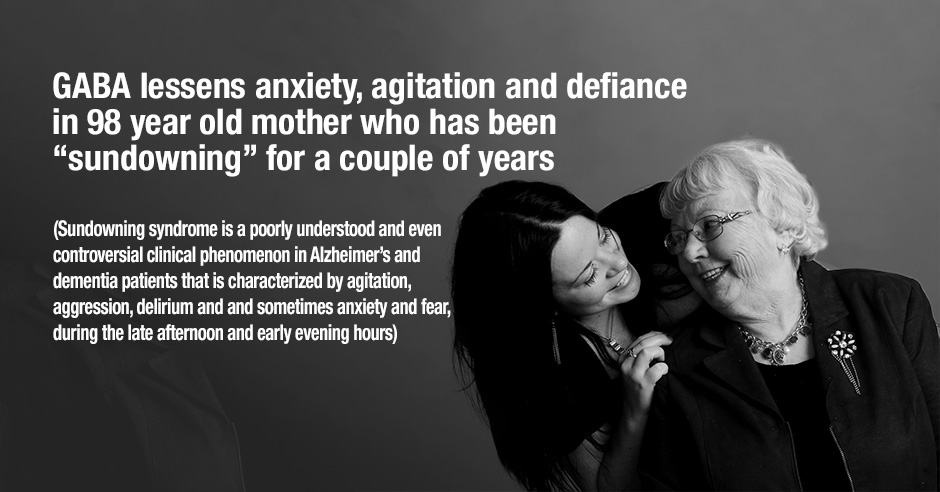
GABA lessens anxiety, agitation and defiance in 98 year old mother who has been “sundowning” for a couple of years

March 17, 2023 By Trudy Scott 11 Comments

gaba and sundowning

Marsha shared this feedback on one of the blogs, saying that GABA lessens anxiety in her 98 year old mother:

My mother is 98 and has been “sundowning” for a couple of years. It starts around 3pm, sometimes earlier. Some days it’s no big deal. It is on those other days when she starts and then it goes to anxiety, agitation, then she can get sort of defiant which is so not her. She is a gentle soul, friendly, and kind so this is difficult on her as well as our family.

I just started to use my pestle and mortar to crush up a 125 mg GABA CALM supplement (Source Naturals) and I mix a little into her flavored yogurt when I start to see her having difficulty. I give it to her throughout the day. She only gets the 125 mg amount so I feel safe with that.

I believe that I do notice it lessens her anxiety. I pray that this will be helpful for her because that anxiety can be really draining for her. I will keep you posted. I have not noticed any adverse reactions. Thank you Trudy for all your info.

Anxiety, fear and agitation in sundowning syndrome: circadian dysfunction and low GABA

I responded, saying how wonderful to hear that she is noticing supplemental GABA lessens her mother’s anxiety (and presumably her agitation and defiance too). And I shared that GABA may be involved in sundowning syndrome.

This paper describes “sundowning syndrome,” as “a poorly understood (and even controversial) clinical phenomenon in Alzheimer’s and dementia patients that is characterized by agitation, aggression, and delirium during the late afternoon and early evening hours.”

The authors are focusing on potential pathways for circadian rhythm – physical, mental, and behavioral changes that follow a 24-hour cycle – dysfunction in sundowning. They also mention the presence of fear and anxiety and the fact that there is a circadian aspect of these emotional processes.

What is interesting is that the “master circadian pacemaker” i.e. “the suprachiasmatic nucleus of the hypothalamus” has impacts on both GABA and serotonin, and also dopamine and orexin (involved in sleep-wake processes).

Given the circadian aspect addressed in the above paper, “properly timed light exposure” i.e. early morning sunlight, is also worth exploring.

This paper, Implications of GABAergic Neurotransmission in Alzheimer’s Disease, focuses onGABA and shares that “of the two major types of synapses in the central nervous system (CNS): glutamatergic and GABAergic, which provide excitatory and inhibitory outputs respectively, abundant data implicate an impaired glutamatergic system during disease progression.” 

The amino acid GABA helps to ease anxiety symptoms and agitation and restlessness, also helping with disturbed sleep.

GABA Calm dosing in the elderly with sundowning syndrome: my observations

I also expressed how this is a smart way to use the GABA Calm. I’m going to make some assumptions and share my observations:

  • Marsha uses GABA Calm herself and has a good level of comfort based on personal results. She knows how she feels after using it and is observing her mother’s symptoms. I have guided many family members in doing the same type of thing – mom’s working to help a child and a granddaughter helping a grandparent – and it works well.
  • Marsha has also started with a low dose of 125 mg. This is a typical starting dose and is a reasonable dose that may suffice for the entire day for someone this age. She may also need more and increasing the dose and observing is the way to go when someone can’t articulate how the amino acid is helping them. For some folks, 125mg may be too much – making them too sleepy or even more agitated/anxious – the dose can be reduced in this case (after using vitamin C as an antidote).
  • Marsha crushes the GABA Calm chewable/sublingual and mixes it into her mother’s flavored yogurt, since having her suck on the chewable is not an option. This is a great plan but as she continues to help her, she may see better results using a non-protein source to mix it in – like apple sauce or mashed banana.
  • Finally, she gives it to her mother when she starts to see her having difficulty. Again, it’s wonderful she is observing and helping her at the moment, but this could be a clue that she needs more GABA to provide even better results. We also don’t want to wait for the anxiety and then address it. Instead, we want to get GABA levels up and prevent it.

You can read more about Source Naturals GABA Calm product and why I use it with clients here.

Low serotonin, tryptophan and melatonin in sundowning syndrome

I also told Marsha that when I hear symptoms like agitation and defiance, especially with the 3pm start, I also would also consider low serotonin since it starts to decline afternoon into evening.

Her mother’s anxiety may be a mix of low GABA physical-type anxiety and low serotonin worry-type anxiety. She’ll only really know once she trials the respective amino acids.

I’ve seen low serotonin worry-type anxiety, agitation and defiance symptoms improve with tryptophan and/or melatonin and share more about this in this blog post – Sundowning in Alzheimer’s and dementia: melatonin/tryptophan for the agitation, restlessness, anxiety, disturbed sleep and aggression

Dietary factors and low dose lithium

Marsha says some days it’s no big deal. I would recommend keeping a food-mood log and make sure it’s not something in her diet that may be a trigger: hidden gluten, dietary oxalates or even blood sugar swings.

These are mentioned in the above blog, together with low dose lithium orotate which can help keep moods more even.

Microdose lithium is also capable of halting signs of advanced Alzheimer’s and improving cognition. More on that here.

It’s with much appreciation that Marsha shared this feedback. I’m thrilled for her and her mother. Hopefully, my feedback on this blog means she’ll be able to fine-tune things. And you get to learn and benefit from this feedback too – for your loved one.

A few GABA product options  – a sublingual, a powder and a cream

A product I use and recommend is Source Naturals GABA Calm lozenges. This is one Marsha uses for herself and is using with her mother.  It’s a good low dose of 125 mg and is convenient and effective because it’s a sublingual lozenge.

Now GABA Powder is another product I use and recommend. It does need to be measured out to provide a 125 mg typical starting dose or less (as needed), and could be mixed in water in a situation like this. I have clients use a handy mini measuring spoon like this one (my Amazon link) and share more about how to measure out GABA powder on this blog).

For Source Naturals GABA Calm lozenges and Now GABA Powder:

  • You can purchase these from my online store (Fullscript – only available to US customers – use this link to set up an account).
  • If you’re not in the US, you can purchase these at iherb (use this link to save 5%).

Somnium GABA Cream is another option that could be considered especially for those with Alzheimer’s or dementia who may struggle with using a supplement. It is available in the US and elsewhere with international shipping. Read more about the product and who else may benefit from using a cream, and grab my coupon code to save 15%.

Resources if you are new to using tryptophan or GABA as supplements

If you are new to using tryptophan or GABA as supplements, here is the Amino Acids Mood Questionnaire from The Antianxiety Food Solution (you can see all the symptoms of neurotransmitter imbalances, including low GABA and low serotonin).

If you suspect low levels of any of the neurotransmitters and do not yet have my book, The Antianxiety Food Solution – How the Foods You Eat Can Help You Calm Your Anxious Mind, Improve Your Mood, and End Cravings, I highly recommend getting it and reading it before jumping in and using amino acids on your own so you are knowledgeable. And be sure to share it with the practitioner/health team you or your loved one is working with.

There is an entire chapter on the amino acids and they are discussed throughout the book in the sections on gut health, gluten, blood sugar control, sugar cravings, anxiety and mood issues (which include rage/anger/irritability/self-harm).

The book doesn’t include product names (per the publisher’s request) so this blog, The Antianxiety Food Solution Amino Acid and Pyroluria Supplements, lists the amino acids that I use with my individual clients and those in my group programs. You can find them all in my online store. The above oral lavender products are available in my online store too.

If, after reading this blog and my book, you don’t feel comfortable figuring things out on your own (i.e. doing the symptoms questionnaire and respective amino acids trials), a good place to get help is the GABA QuickStart Program (if you have low GABA symptoms). This is a paid online/virtual group program where you get my guidance and community support.

If you are a practitioner, join us in The Balancing Neurotransmitters: the Fundamentals program. This is also a paid online/virtual program with an opportunity to interact with me and other practitioners who are also using the amino acids.

Have you found GABA to help in a situation like this?

If yes, which symptoms have resolved and how much GABA/which product are you using/did you use?

What time did the symptoms start to ramp up?

And has serotonin support with tryptophan and/or melatonin also helped?

If you have questions and other feedback please share it here too.
Filed Under: GABA, Lithium orotate, serotonin, Tryptophan Tagged With: agitation, alzheimer's, amino acids, anxiety, anxious; GABA Quickstart online program; Balancing Neurotransmitters: the Fundamentals program for practitioners, circadian dysfunction, defiance, dementia, dietary factors, elderly, fear, GABA, GABA Calm, lithium, melatonin, serotonin, Sundowning, tryptophan

Low lithium questionnaire and how we use lithium orotate with the amino acids

August 19, 2022 By Trudy Scott 44 Comments

low lithium questionnaire

This is the low lithium questionnaire that I use with new clients in order for us to figure out if a trial of low dose lithium, in the form of lithium orotate, may be helpful. The hallmark of low lithium is a rollercoaster of emotions. Keep in mind that this is just one of 12 questionnaires that I have my clients complete. Many of the following symptoms can have multiple causes, the labs may relate to other deficiencies and the conditions have other root causes. This questionnaire simply provides additional evidence that lithium orotate may help.

We typically do a lithium orotate trial, starting with 5 mg once a day, and going up to 10 mg twice a day. We do this after we have started trialing the respective amino acids for low serotonin, low GABA, low endorphins, low catecholamines and low blood sugar. A big clue that lithium orotate may be helpful (when many of the symptoms below are checked off) is when the amino acids for low serotonin (tryptophan or 5-HTP), low GABA (GABA or theanine), low endorphins (DPA or DLPA), low catecholamines (tyrosine or DLPA) and low blood sugar (glutamine) are not as effective as expected (based on the amino acids mood/neurotransmitter questionnaire).

Low lithium questionnaire

Symptoms
Mood swings (a rollercoaster of emotions)
Addictions and/or cravings
Depressed
Low self-esteem
Boredom
Easily distracted
Rebellious, disruptive behavior and/or aggressiveness
Irritability
Restless/internal anxiety (similar to low serotonin worry/ruminating anxiety)
Restless/external anxiety (similar to low GABA physical anxiety)
Anxiety ups and downs (fluctuations)
Melancholic pessimism
Suicidal thoughts
Disorganized with planning difficulties
Focus issues/ADHD
Insomnia
Procrastination and/or no initiative
Jack of all trades, master of none
Impulsive and/or lacking tact
Poor insight
Risky behavior
Cognitive issues
Migraines or cluster headaches

Effectiveness of amino acids
The amino acids for low serotonin, low GABA, low endorphins, low catecholamines and low blood sugar are not as effective as expected (based on the amino acids mood/neurotransmitter questionnaire)

Labs
Low white blood cell count
Low red blood cell count
Anemia
Low platelet count

Conditions
Anorexia nervosa
Heart disease (heart arrhythmias, history of heart attack)
Raised blood sugar or diabetes
Kleptomania
Alcoholism
Alzheimer’s disease
Fibromyalgia
Bipolar II
Gout
Hyperthyroidism
Nearsightedness or glaucoma
Herpes infections (current or prone to them)

If you are new to low dose lithium / lithium orotate

As I share in this blog, Upping my tryptophan and lithium orotate have been absolutely profound for me: I’ve been depression free and anxiety free for over a year, I’ve used lithium orotate with many clients and use it when folks have mood swings and anxiety ups and downs. It’s harder for the amino acids to work when there is a moving goal post and lithium orotate evens things out.

You can read Katrin’s wonderful results: “Upping my tryptophan dose and also including and upping the dose of lithium orotate has been absolutely profound for me. I’m off my SSRI/antidepressant (which I was off and on for a number of years). I’ve been depression/anxiety free for over a year. So fantastic.”

The above blog also includes additional information on the differences between low dose lithium / lithium orotate and prescription lithium carbonate. The latter is used at much higher doses and does have side-effects.

One of the many ways lithium works is via the impact on neurotransmitter production. This paper, Potential Mechanisms of Action of Lithium in Bipolar Disorder, states this: “At a neuronal level, lithium reduces excitatory (dopamine and glutamate) but increases inhibitory (GABA) neurotransmission.” It also increases protective proteins such as BDNF (brain-derived neurotrophic factor), helps reduce oxidative stress and is neuroprotective. This paper is referring to lithium carbonate and not lithium orotate but until we have more research on lithium orotate, I feel comfortable extrapolating, given what I’ve seen clinically with lithium orotate.

I’ve also blogged about low dose or microdose lithium here: Microdose lithium formulation is capable of halting signs of advanced Alzheimer’s and improving cognition. In a study published in 2020, “a team of researchers has shown that, when given in a formulation that facilitates passage to the brain, lithium in doses up to 400 times lower than what is currently being prescribed for mood disorders is capable of both halting signs of advanced Alzheimer’s pathology and of recovering lost cognitive abilities.”  In this study, they used lithium citrate in similar doses as the lithium orotate i.e  3.2 mg to 6.4 mg NP03 based on 70kg of body weight (which is around 154.3 lbs).

Resources if you are new to using the amino acids as supplements (and where to get lithium orotate)

If you are new to using any of the amino acids as supplements, here is the Amino Acids Mood Questionnaire from The Antianxiety Food Solution (you can see all the symptoms of neurotransmitter imbalances).

If you suspect low levels of any of the neurotransmitters and do not yet have my book, The Antianxiety Food Solution – How the Foods You Eat Can Help You Calm Your Anxious Mind, Improve Your Mood, and End Cravings, I highly recommend getting it and reading it before jumping in and using amino acids on your own so you are knowledgeable. And be sure to share it with the practitioner/health team you or your loved one is working with.

There is an entire chapter on the amino acids and they are discussed throughout the book in the sections on gut health, gluten, blood sugar control, sugar cravings, self-medicating with alcohol and more.

The book doesn’t include product names (per the publisher’s request) so this blog, The Antianxiety Food Solution Amino Acid and Pyroluria Supplements, lists the amino acids that I use with my individual clients and those in my group programs.

You can find the amino acid products I use and a number of different lithium orotate products in my online Fullscript store.

If, after reading this blog and my book, you don’t feel comfortable figuring things out on your own (i.e. doing the symptoms questionnaire and respective amino acids trials), a good place to get help is the GABA QuickStart Program (if you have low GABA symptoms). This is a paid online/virtual group program where you get my guidance and community support. There are many moms in the program who are having much success with their kids.

If you are a practitioner, join us in The Balancing Neurotransmitters: the Fundamentals program. This is also a paid online/virtual program with an opportunity to interact with me and other practitioners who are also using the amino acids.

Do you resonate with any of the above and have you used lithium orotate with success?

Was the rollercoaster of emotions and fluctuating anxiety a hallmark for you before using lithium orotate?

If you’re a practitioner, do you use lithium orotate with your clients or patients?

If you have questions please share them here too.

Filed Under: Anxiety, Depression, GABA, Lithium orotate Tagged With: addiction, ADHD, aggressiveness, Alzheimer’s disease, amino acids, anxious, boredom, catecholamines, cognitive, endorphins, GABA, insomnia, irritable, lithium, lithium orotate, low blood sugar, low dose lithium, Low lithium questionnaire, low self-esteem, mood swings, rebellious, rollercoaster of emotions, serotonin, tryptophan

Tryptophan doesn’t work, then it does and then it doesn’t: could it be hormonal shifts, dietary factors and/or parasites?

November 26, 2021 By Trudy Scott 19 Comments

tryptophan result

Have you been in a situation where tryptophan doesn’t work, then it does work, and then sometimes it doesn’t work as expected? There is a reasonable explanation as to why it may not work initially – too much or too little was used. The variable results and the need to switch between lower and higher doses on an ongoing basis can happen but it’s not very pronounced unless there is a specific reason. In this blog I cover some of these reasons – hormone shifts, dietary factors and parasites/other digestive issues.

I’m writing this blog in response to a question that was posted on one of my speaker pages on the Anxiety Summit: Gut-Brain Axis. This is the actual question:

I tried to use tryptophan the first time (whole capsule) and got really high. Some time later I tried again, but used 1/4 of a capsule and had a good result. A few weeks later 1/4 of the capsule didn’t work at night. So I went up to half a capsule. And that’s where  I am now. But some nights (very rare) I can only get good results from a whole capsule. I use it along with the same amount of GABA. Is that a normal reaction for tryptophan?

I don’t know what brand of tryptophan she was using but assume 500mg was her starting dose and she now shifts between 125 mg (¼ capsule) and 250 mg (½ capsule) with variable results.

It’s not unusual for someone to not feel great on 500 mg if that dose is too much for their unique needs. She did the right thing by lowering her dose.  It’s also reasonable that someone may find 500 mg as an initial dose isn’t enough to reduce symptoms.

The variable results and the need to switch between 125 mg and 250 mg can happen but it’s not very pronounced unless there is a specific reason. Some of these reasons include hormone shifts, dietary factors, parasites/other digestive issues, thyroid issues, low lithium, product quality and environmental factors. More on all this below.

Hormone shifts/more serotonin is needed in the luteal phase

I have my clients track when the variability happens, with female clients documenting their cycles. Some women need more serotonin support in the luteal phase i.e. after ovulation and right up to before their periods. Some may even need additional tryptophan for the first few days of their periods too.

Write about tryptophan working well in the luteal phase in this blog – Tryptophan for PMS: premenstrual dysphoria, mood swings, tension, and irritability

In a study published in 1999, A placebo-controlled clinical trial of L-tryptophan in premenstrual dysphoria, tryptophan was found to reduce symptoms of PMS when used in the luteal phase or second half of the cycle (i.e. after ovulation):

37 patients with premenstrual dysphoric disorder were treated with L-tryptophan 6 g per day, and 34 were given placebo. The treatments were administered under double-blind conditions for 17 days, from the time of ovulation to the third day of menstruation, during three consecutive menstrual cycles.

They looked at dysphoria, which is defined as a state of unease or generalized dissatisfaction with life, plus mood swings, tension (and anxiety), and irritability and they found a 34.5% reduction of symptoms with tryptophan compared to 10.4% with placebo.

The paper concludes: “that these results suggest that increasing serotonin synthesis during the late luteal phase of the menstrual cycle has a beneficial effect in patients with premenstrual dysphoric disorder.”

It’s a small study but the results are powerful and it’s something I see clinically with my clients. The one big difference is that I typically have clients using tryptophan throughout the month.

But if you are seeing tryptophan work and then not work at similar times each month this is something to consider and track. And then if need be, increase and decrease tryptophan accordingly (and track again).

Dietary factors – collagen, gluten, sugar, wine and coffee

There are other factors to consider too and dietary impacts is one. For example, collagen leads to a higher need for tryptophan in susceptible individuals (due to it’s serotonin-lowering effects – I blog about this here)

Another dietary factor is accidental gluten exposure in susceptible individuals or a newly discovered gluten issue

High sugar intake, alcohol and/or caffeine consumption may also be a factor – contributing to added stress for the adrenals and depletions in zinc and the B vitamins. This can contribute to lowered serotonin and a need for a higher dose of tryptophan.

Now imagine if it’s just before her period and she adds collagen to her diet and she also eats out and gets zapped by gluten. Triple whammy for this woman!

And she goes to a party and happens to indulge in cocktails or wine, and then goes on a binge at the dessert table, followed by a few cups of coffee (or even one dessert and one cup of coffee).

A food-mood log really helps you figure things out.  And then, if need be, increase and decrease tryptophan accordingly.  And track again and address the dietary issues.

Parasites and other gut issues

If she has a very pronounced shift in symptoms for 4-5 days around a full moon each month – more severe insomnia, more anxious, more depressed – I would want to check for parasites.

I would also want to check for other digestion issues like dysbiosis, SIBO (small intestinal bacterial overgrowth), candida and liver health as they may all be factors. With SIBO and candida, dietary slip-ups may make symptoms worse right after the slip-up, for example increased bloating making sleep and anxiety worse.

Using tryptophan sublingually/opened on the tongue may bypass some of the digestive/liver  issues until they are resolved.

As mentioned above, if need be, increase and decrease tryptophan accordingly. And track again and address the underlying issues.

Other factors to rule out – thyroid, lithium, environmental factors and the product

Two other underlying root causes we always want to rule out when we see variable results using tryptophan (and any of the amino acids) are Hashimoto’s thyroiditis (because we can have variable thyroid results – sometimes hypo/low and sometimes hyper/high) and low levels of lithium (because this can affect the results we see with all the amino acids).

And we always check environmental factors like mold, EMFs and outside stresses. And look for infections like Lyme disease or EBV.  If the basics are not unearthing the solution we continue to dig deeper and do a full functional medicine workup. And adjust the tryptophan as needed.

And finally the quality of the product is key. I find Lidtke Tryptophan to be better than many other brands. I’ve also had many clients switch to Lidtke tryptophan and see better results and often need a lower dose.

Resources if you are new to using tryptophan and the amino acids as supplements

If you are new to using the amino acids tryptophan/5-HTP and the other amino acids as supplements, here is the Amino Acids Mood Questionnaire from The Antianxiety Food Solution (you can see the low serotonin symptoms here) and a brief overview here, Anxiety and targeted individual amino acid supplements: a summary.

If you suspect low serotonin or low levels of any of the neurotransmitters and do not yet have my book, The Antianxiety Food Solution – How the Foods You Eat Can Help You Calm Your Anxious Mind, Improve Your Mood, and End Cravings, I highly recommend getting it and reading it before jumping in and using amino acids so you are knowledgeable. And be sure to share it with the team you or your loved one is working with.

The book doesn’t include product names (per the publisher’s request) so this blog, The Antianxiety Food Solution Amino Acid and Pyroluria Supplements, lists the amino acid products that I use with my individual clients and those in my group programs.

I always appreciate good questions like this and hope this feedback has helped her and you too if you’ve experienced something like this (or if you do in the future). In case you’re wondering, this question was posted after someone tuned into my interview, “GABA & Tryptophan: Gut-Anxiety Connections” on the Anxiety Summit 5: Gut-Brain Axis.

Have you had a variable response to tryptophan (or 5-HTP) and can you relate to any of this?

What did you figure out to be the reason?

Feel free to ask your questions here too.

Filed Under: Anxiety, Depression, Gut health, serotonin, Tryptophan Tagged With: amino acids, anxiety, coffee, collagen, depressed, diet, environmental, GABA, gluten, gut, hormonal shifts, lithium, liver, luteal phase, neurotransmitter, parasites, quality, serotonin, sugar, thyroid, tryptophan, variable, wine

Microdose lithium formulation is capable of halting signs of advanced Alzheimer’s and improving cognition

February 7, 2020 By Trudy Scott 59 Comments

microdose lithium formulation and alzheimer

In a new study, a team of researchers has shown that, when given in a formulation that facilitates passage to the brain, lithium in doses up to 400 times lower than what is currently being prescribed for mood disorders is capable of both halting signs of advanced Alzheimer’s pathology and of recovering lost cognitive abilities.

The above snippet is from a press release published in January 2020 on Science Daily: Can lithium halt progression of Alzheimer’s disease? Keep in mind that this is an animal study but the results are so promising.  I’m also very intrigued by the delivery method (more on that below).

In order to give this microdosing context, a typical adult prescription is 900-1800mg lithium carbonate/day.  I reached out to the lead author for clarification about the dosing of this new formulation and lead researcher Dr. Cuello shared this with me:

I calculate that our lithium dosage is 285 times lower concentration than the 900 mg dose (based on 70 kg of body weight) and 570 times lower than the 1800 mg dose.

This translates to around 3.2 mg to 6.4 mg NP03 based on 70kg of body weight (which is around 154.3 lbs).

NP03 is a disease-modifying nano dose formulation of lithium citrate which is used sublingually. I assume it’s not yet commercially available.

Also from the press release: “our findings show that microdoses of lithium in formulations such as the one we used, which facilitates passage to the brain through the brain-blood barrier while minimizing levels of lithium in the blood, sparing individuals from adverse effects, should find immediate therapeutic applications.”

Here is a link to the actual paper: NP03, a Microdose Lithium Formulation, Blunts Early Amyloid Post-Plaque Neuropathology in McGill-R-Thy1-APP Alzheimer-Like Transgenic Rats

Can we compare NP03 to low dose lithium orotate?

What is really interesting is that low dose lithium in the form of lithium orotate is commonly recommended by integrative practitioners for anxiety, mild mood swings, brain fog, ADHD and insomnia. I have found it to be extremely beneficial for many of my clients and have used it personally with success (for brain fog and insomnia).

Just how much lithium orotate is low dose? Typical doses are 5-10 mg per day, increasing to 20mg per day.

Can we compare NP03 to low dose lithium orotate? It’s too early to know for sure but we I believe we can start to make extrapolations, especially given that both are very low doses.

Integrative psychiatrist, Dr. James Greenblatt, MD has written extensively about low dose lithium orotate for the above purposes and for Alzheimer’s too. In this article, Lithium: The Cinderella Story About a Mineral That May Prevent Alzheimer’s Disease, he shares that

Scientists first became interested in the use of lithium for treating neurodegenerative disorders when they observed that bipolar patients using lithium therapy seemed to have lower rates of cognitive decline than peers on other medications.

He writes how an enzyme called Glycogen Synthase Kinase-3 (GSK-3) – a serine/threonine protein kinase – normally plays a major role in neural growth and development and how lithium

works as a direct GSK-3 inhibitor… halting inappropriate amyloid production and the hyper-phosphoryation of tau proteins before they become problematic.

If all this fascinates you as much as it does me, Dr. Greenblatt writes more about lithium orotate in his excellent book: “Nutritional Lithium: A Cinderella Story: The Untold Tale of a Mineral That Transforms Lives and Heals the Brain” (my Amazon link).

Lithium deficiency and the onset of Alzheimer’s disease: a 2025 study

Update August 8,  2025:

A new animal study, Lithium deficiency and the onset of Alzheimer’s disease (and published Aug 2025), supports the above, concluding that lithium orotate is “a potential approach to the prevention and treatment of Alzheimer’s disease.” The authors share this about lithium in the brain:

endogenous lithium is dynamically regulated in the brain and contributes to cognitive preservation during ageing. Of the metals we analysed, lithium was the only one that was significantly reduced in the brain in individuals with mild cognitive impairment (MCI), a precursor to Alzheimer’s disease. Lithium bioavailability was further reduced in Alzheimer’s disease by amyloid sequestration.

The authors explored the role of endogenous lithium in the brain (i.e. lithium within the brain) by depleting it from the diet of wild-type and Alzheimer’s disease mouse models and found that:

Reducing endogenous cortical lithium by approximately 50% markedly increased the deposition of amyloid-β and the accumulation of phospho-tau, and led to pro-inflammatory microglial activation, the loss of synapses, axons and myelin, and accelerated cognitive decline.

It’s exciting that they found that lithium orotate, “a lithium salt with reduced amyloid binding, prevents pathological changes and memory loss in Alzheimer’s disease mouse models and ageing wild-type mice.” And this paper also mentions the fact that these “effects were mediated, at least in part, through activation of the kinase GSK3β.”

They conclude that:

These findings reveal physiological effects of endogenous lithium in the brain and indicate that disruption of lithium homeostasis may be an early event in the pathogenesis (cause) of Alzheimer’s disease. Lithium replacement with amyloid-evading salts [such as lithium orotate] is a potential approach to the prevention and treatment of Alzheimer’s disease.

Given the concerns with the toxicity of high dose prescription lithium carbonate, I appreciate that this was addressed:

An important limitation in the treatment of aged individuals with pharmacological doses of lithium [i.e. lithium carbonate] is kidney and thyroid toxicity. It is encouraging that toxicity could not be detected following long-term treatment of ageing mice with a low dose of lithium orotate.

Alzheimer’s and cognitive decline have many root causes

Keep in mind that Alzheimer’s and cognitive decline have many root causes that must be considered. This may include inflammation, stress and candida, and even insecticide exposure.

The best Alzheimer’s book is “The End of Alzheimer’s: The First Program to Prevent and Reverse Cognitive Decline” by Dr. Dale Bredeson (my Amazon link). He doesn’t mention lithium orotate so I look forward to hearing his thoughts on this new research. [I’ll come and update the blog when I do]

You can read about some of Dr. Bredesen’s work here: Alzheimer’s disease, mercury and mycotoxins.

Benzodiazepines have also been linked to increased Alzheimer’s risk which is why a nutritional approach for anxiety is the best approach. Let’s use the amino acids like GABA (for physical anxiety), and tryptophan (for worry and fears), as well as dietary changes and improving gut health instead of anti-anxiety medications (more on these below).

Additional resources when you are new to using tryptophan and other amino acids as supplements

As always, I use the symptoms questionnaire to figure out if low serotonin or other neurotransmitter imbalances may be an issue.

If you suspect low levels of any of the neurotransmitters and do not yet have my book, The Antianxiety Food Solution – How the Foods You Eat Can Help You Calm Your Anxious Mind, Improve Your Mood, and End Cravings, I highly recommend getting it and reading it before jumping in and using amino acids on your own so you are knowledgeable. And be sure to share it with the practitioner/health team you or your loved one is working with.

There is an entire chapter on the amino acids and they are discussed throughout the book in the sections on gut health, gluten, blood sugar control (this is covered in an entire chapter too), sugar cravings, anxiety and mood issues.

The book doesn’t include product names (per the publisher’s request) so this blog, The Antianxiety Food Solution Amino Acid and Pyroluria Supplements, lists the amino acids that I use with my individual clients and those in my group programs.

If, after reading this blog and my book, you don’t feel comfortable figuring things out on your own (i.e. doing the symptoms questionnaire and respective amino acids trials), a good place to get help is the GABA QuickStart Program (if you have low GABA symptoms). This is a paid online/virtual group program where you get my guidance and community support. You can sign up to be notified when the next live launch is happening.

If you need serotonin support, the Serotonin QuickStart Program is a good place to get help. This is also a paid online/virtual group program where you get my guidance on using tryptophan and 5-HTP safely, and community support during 5 LIVE Q&A calls. You can sign up to be notified when the next live launch of this program is happening.

If you are a practitioner, join us in The Balancing Neurotransmitters: the Fundamentals program. This is also a paid online/virtual program with an opportunity to interact with me and other practitioners who are also using the amino acids.

Wrapping up and your feedback

I look forward to human clinical trials of NP03. Dr. Cuello “ believes that there is an excellent opportunity to launch initial clinical trials of this formulation with populations with detectable preclinical Alzheimer’s pathology or with populations genetically predisposed to Alzheimer’s, such as adult individuals with Down Syndrome.”

I also look forward to human clinical trials of lithium orotate for Alzheimer’s disease. And  I would love to see lithium orotate compared to NP03 in future research.

In the meantime I feel this research is exciting because it supports so much of what is being seen clinically with lithium orotate.

Have you used lithium orotate with success? How much has helped you and have you seen cognitive benefits? What about a more even mood, better sleep and less anxiety?

And have you or a family member seen improvements with the Bredesen protocol?

Filed Under: Alzheimer's disease, Anxiety Tagged With: alzheimer's, anxiety, benzodizepines, brain fog, cognition, cognitive, Dr. Dale Bredesen, Dr. James Greenblatt, insomnia, lithium, lithium citrate, lithium orotate, low-dose, Microdose, mood swings

Genes, lithium, Kundalini yoga, coffee enemas, GABA, dairy: IMMH highlights part 1

December 12, 2016 By Trudy Scott 17 Comments

Here are some highlights from the recent Integrative Medicine for Mental Health conference. We did it live on Facebook, holding my iphone, as the conference was ending. I’m with my colleague Dr. Josh Friedman and this is the video and transcript of our discussion – we cover the following:

  • Methygenetic Testing to fine tune your gene results
  • Low dose lithium for irritability and alcoholism
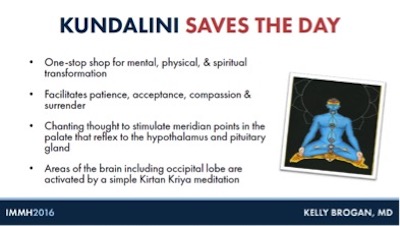
  • Kundalini yoga if you have a hard time meditating
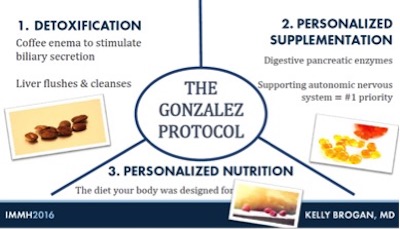
  • Coffee enemas for medication detox
  • Working as a detective to find your root cause
  • Simple changes like adding GABA or 5-HTP or removing gluten and/or dairy

Ok we are live… Trudy Scott, certified nutritionist and author of The Antianxiety Food Solution and Dr. Josh Friedman, a psychologist interested in integrative medicine approaches to depression.  

Josh: I have a new website integrativedepressionsolutions.com and we are at the IMMH conference and it has just wrapped up – there was a huge amount of information, tons to learn, it was wonderful. What were your take aways Trudy?

Trudy:   One of the things that I thought was absolutely fascinating was this booth called Methyl Genetic Testing. You can enter your 23andme data and then what you can also do is – while they are running their analysis on that – enter blood work, enter results of organic acid tests and results of stool. They actually show you if your genes are expressing and causing problems. Because you may have a MTHFR methylation genetic defect showing up on your SNP but maybe it is not causing you a problem. So this way you can actually determine if it is causing you a problem. You had shared with me that you have done the training?

Josh:   The training was really amazing. Functional medicine looks at how the biochemical pathways of the body are working. This provides you with another layer – which is how are the   genes that are programming those enzymes support those pathways – and it can provide you with an awful lot of information. And then they have a very simple program you plug your genes into and it gives you a guide as to what kind of supplements might help.

Trudy:   Amazing! So it is really fine tuning the functional medicine and fine tuning what might actually be going on with each individual.

Josh:   It gives you the next amount of information because the functional medicine actually shows you what is happening whereas the genetic testing shows you what potentiality there might be. So you might have a folic acid defect or your folate could be fine – so that was pretty interesting.

Trudy:   What else did you like?

Josh:   I went to a lecture on the use of low dose lithium for all kinds of things.   It is something that I’ve known about – obviously pharmaceutical use [of lithium] for bipolar disorder.   Low dose lithium can also be used for bipolar disorder, but the two things new I learnt is that it is incredibly helpful for irritability. So I am dealing with [clients with] depression and it is something that I have often not thought about for irritability. It is also helpful for situations if you have a parent or family history or a past history of substance abuse or alcoholism. So that was something that I’ll take home to my office.

Trudy:   And it is something that I currently use in my practice and [I learned it from] Dr. James Greenblatt. He actually presented on a similar topic last year and I heard it then. So low dose lithium is the lithium orotate, we want to be clear about that – 5 to 10 mg twice a day is kind of what we are thinking about. I’ve had great results with women with insomnia.   It helps to stabilize the mood and when you are using the amino acids you need a stable mood – you can’t have these ups and downs – so the low dose lithium is really good for that. I would like to hear how it goes when you are using it.

Josh:   I have used it with some people with a history of alcoholism and it has provided stability in their mood which is really good. What else have you got?

Trudy: I loved Dr. Kelly Brogan, we always love her, don’t we?   She is just really fabulous. She talked about the issues with all the medication and how she does not prescribe anymore. And she talked about a good Paleo diet and getting off gluten and all that good stuff.   New things that I heard from her was how she loves Kundalini yoga and how she loves it because she can’t meditate. I find a lot of my clients have a problem with meditating so I always say if that does not work find something that is going to work. And she has found that this Kundalini yoga works for her. So tell me a little about what you know about it?

Josh: I think Kundalini yoga is quick movements with very quick breathing so it easily occupies the mind. So for someone who would have a hard time sitting and meditating that kind of movement would be helpful.   Other kinds of movements and other types of yoga are Tai Chi or qigong.   Movement or walking meditation can be easier practices for stress management if sitting completely still is hard.

Trudy: So we are doing Facebook live here for those of you who are just joining now.   We are at Integrative Medicine for Mental Health conference and it is Trudy Scott and Josh Friedman.

And I want to pass the phone to Josh to hold because my arm is sore and killing me. Maybe he will do a better job than me.

The other thing that I heard from Kelly Brogan that I really enjoyed is that she is using coffee enemas. I have quite a lot of experience with them because the first practitioner that I worked with when I was an intern used coffee enemas for detox for cancer and had really good results.   Dr. Brogan was saying how effective it is for phase 1 and phase 2 detox. It also helps with bile production and the part that I really like is that it helps with medication detox. So this is something that I’m going to be looking into a little bit more and I’ll come back and share more as I learn more.

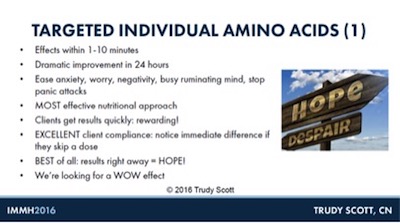
Josh: That’s pretty cool. One take away I had is that functional medicine can often be like a very complex process of delving into the root underlying cause of symptoms – so things like detox pathways or different kinds of infections. Trudy here gave a talk – and her talk was on amino acids and dietary change and blood sugar stabilization and stress management. One of the things I heard running through the entire workshop was sometimes it is simple things that can make a huge difference. And so with using amino acids for mood issues it can be incredibly quick.

I don’t remember what her name was, but there was a psychiatrist who presented at the end, she talked about how she got into functional medicine and she was talking about the radical changes she had in her health status from simple dietary changes. So stopping gluten and dairy was a huge change for her.

Trudy: That’s important. We want to realize that these dietary changes and nutrients can have profound effects. I was talking to Dr. Nicole Beurkens earlier [about zinc and GABA for anxiety] and saying a lot of my clients will say “my anxiety and my depression is so severe I have to have medication, there is no way that diet and nutrients can make a difference”.   But they really can.   It can completely transform your life.   I remember you shared a story of someone who got off gluten?

Josh:   Yes, I see those powerful changes every day – where someone with a dietary change or a supplement like 5-HTP or GABA just changes everything. It is the one change that might move things along. It is quite amazing.  

Trudy: And it is just a matter of finding what that root cause is for your anxiety and your depression – it may be low serotonin, and it may be gluten or you might need lithium support, it may be that you have an infection. We have heard about Clostridia this weekend, we’ve heard about Toxoplasma gondii, we’ve heard about Lyme disease – they can manifest in many different ways, [including anxiety and depression] – so finding that root cause is important.

Josh: So what people were talking about was being a clinical detective. So working collaboratively with your clients and just saying “it is going to be a process, we will find a solution, but it is going to take some time to figure it out.”   Then there is a lot of detective work that can be done with pencil and paper: measures, asking questions, a clinical interview and it is putting the person’s story together to get to the bottom of what is going on. And so sometimes we can do that without testing. There are a lot of clinicians here, there are doctors here but neither of us are physicians and a lot of the work we both do is working with clients to try to figure out what that missing piece is.

And so, sometimes the missing piece can be quite small. I had a patient who had debilitating depression, had been hospitalized three or four times and we did one test, and the test was an IgG food allergy test.   He was a weight lifter and he was doing 5 whey protein shakes a day, and it came up that he was severely allergic to dairy.   He stopped dairy and within two days his mood was back to normal. I spoke to him recently and he has been stable and happy since his mood lifted.


What a wonderful outcome for his client!

And what an excellent conference! This is part 1 of our discussion. Stay tuned for part 2.

Feel free to post questions or comments below. And let us know if any of the above resonate with you?

Filed Under: Mental health Tagged With: coffee enemas, dairy, GABA, genetics, IMMH, Integrative Medicine for Mental Health, Josh Friedman, Kundalini yoga, lithium

Nutrients for dementia: could they help during benzodiazepine withdrawal?

September 19, 2014 By Trudy Scott 29 Comments

Half Coconut and Flower on Bamboo Mat

Could certain nutrients help with memory and cognitive issues, and the “pseudo-dementia” symptoms so many people experience when withdrawing from benzodiazapines?

In a recent article I shared the new research on benzodiazepines being linked to increased Alzheimer’s risk and other serious concerns.

Alison, who was featured in the Boston Globe story, commented on the above blog post:

I am only 29 years old, and I developed what I refer to as pseudo-dementia once I developed a tolerance to benzodiazepines and it got worse once the drug was stopped. From what I have seen from others recovering from and in tolerance to benzodiazepines, cognitive functioning and memory can get hit hard and actually mimic dementia. I wonder if the symptoms these elders are experiencing are true Alzheimer’s, or a side effect/withdrawal effect.

This really got me thinking. She makes an excellent point. It may well be that the symptoms they are seeing in the study are a side effect/withdrawal effect, rather than true Alzheimer’s disease and may be reversible. It surprises me that the study authors have not commented on this since cognitive effects are well documented in the literature.

Here are a few examples I found:

“Benzodiazepines revisited—will we ever learn?” Published in Addiction in 2011

“The review noted a series of adverse effects that continued to cause concern, such as cognitive and psychomotor impairment. In addition, dependence and abuse remain as serious problems. Despite warnings and guidelines, usage of these drugs remains at a high level.”

“Benzodiazepine harm: how can it be reduced?” Published in British Journal of Clinical Pharmacology in January this year (2014)

“Adverse effects comprise sedation subjectively and cognitive and psychomotor impairment objectively. Complex skills such as driving can be compromised… Withdrawal and dependence have excited particular concern, and even polemic. Perhaps a third of long term (beyond 6 months) users experience symptoms and signs on attempting to withdraw – anxiety, insomnia, muscle spasms and tension and perceptual hypersensitivity.”

I was not able to find much in the literature on pseudo-dementia. I did see it listed on the benzo.org.uk site but not elsewhere in relation to benzodiazapines.

I did find this paper “Pseudo-dementia: A neuropsychological review” which is presumably something different (as it refers to depression/dementia). This part may be applicable: “ ‘The pseudo component’ which denotes the actual lack of the neurodegenerative dementia” and the fact that it can be reversed.

This all inspired me to do some digging on dementia. If what they are seeing in participants of the British Medical Journal is not true dementia, it’s very encouraging to think that recovery is possible.

There are some very powerful foods and nutrients that help certain people with dementia and I wonder if they would also help with the benzodiazepine-induced pseudo-dementia:

  • Phosphatidyl serine
  • Fish oil
  • Niacinaminde
  • Olive oil
  • Coconut oil
  • Nattokinase
  • Vitamin E
  • Folate
  • Folate, vitamin B6 and B12
  • Zinc
  • Lithium orotate
  • Bacopa

Not all of the above would work for everyone because of biochemical individuality, and there are mixed results in the literature, but it’s worth assessing for possible deficiencies and addressing overall nutrient status.

It would be wonderful to think that benzo recovery can be improved in the areas of cognition, memory and “pseudo-dementia.”

Interestingly, many of these above nutrients are also factors in anxiety and/or depression and may be related to why someone sought help and was prescribed benzos initially.

P.S. There nutrients are great for overall brain function so anyone could benefit from one or more of them. I actually take 20mg of lithium orotate a day and it helps keep my post-menopausal brain sharp and focused.

P.P.S. I have recently learned that many people in benzo withdrawal do not tolerate supplements so please USE CAUTION and work with your health practitioner.  I will do a part 2 follow up to this blog listing foods high in these nutrients in case you feel more comfortable and do better with a food based approach. 


Filed Under: benzodiazapines Tagged With: bacopa, benzodiazapines, cognitive, dementia, fish oil, lithium, olive oil

Primary Sidebar

NEW! GABA QuickStart Homestudy (with special intro pricing)

gaba quickstart homestudy

Free Report

9 Great Questions Women Ask about Food, Mood and their Health

You'll also receive a complimentary subscription to my ezine "Food, Mood and Gal Stuff"


Connect with me

Popular Posts

  • Amino Acids Mood Questionnaire from The Antianxiety Food Solution
  • The Antianxiety Food Solution Amino Acid and Pyroluria Supplements
  • Pyroluria Questionnaire from The Antianxiety Food Solution
  • Collagen and gelatin lower serotonin: does this increase your anxiety and depression?
  • Tryptophan for the worry-in-your-head and ruminating type of anxiety
  • GABA for the physical-tension and stiff-and-tense-muscles type of anxiety
  • The Antianxiety Food Solution by Trudy Scott
  • Seriphos Original Formula is back: the best product for anxiety and insomnia caused by high cortisol
  • Am I an anxious introvert because of low zinc and vitamin B6? My response to Huffington Post blog
  • Vagus nerve rehab with GABA, breathing, humming, gargling and key nutrients

Recent Posts

  • What do I use instead of Seriphos to help lower high cortisol that is affecting my sleep and making me anxious at night?
  • BeSerene™ GABA/theanine cream eases severe muscle tension in her neck/shoulders, prevents her bad headaches and quells her anxiety
  • How the correct approach, dose and sublingual use of GABA can be calming and not cause a flushed and itchy face and neck
  • The amino acid glutamine improves low mood by addressing gut health, and it has calming effects too
  • Flight anxiety with heightened breath, physical tension and also fearing the worst (the role of low GABA and low serotonin)

Categories

  • 5-HTP
  • AB575
  • Addiction
  • ADHD
  • Adrenals
  • Alcohol
  • Allergies
  • Alzheimer's disease
  • Amino Acids
  • Anger
  • Antianxiety
  • Antianxiety Food Solution
  • Antidepressants
  • Anxiety
  • Anxiety and panic
  • Autism
  • Autoimmunity
  • benzodiazapines
  • Bipolar disorder
  • Books
  • Caffeine
  • Cancer
  • Candida
  • Children/Teens
  • Collagen
  • Cooking equipment
  • Coronavirus/COVID-19
  • Cravings
  • Depression
  • Detoxification
  • Diabetes
  • Diet
  • DPA/DLPA
  • Drugs
  • EFT/Tapping
  • EMF
  • EMFs
  • Emotional Eating
  • Endorphins
  • Environment
  • Essential oils
  • Events
  • Exercise
  • Fear
  • Fear of public speaking
  • Fertility and Pregnancy
  • Fish
  • Food
  • Food and mood
  • Functional neurology
  • GABA
  • Gene polymorphisms
  • General Health
  • Giving
  • Giving back
  • Glutamine
  • Gluten
  • GMOs
  • Gratitude
  • Gut health
  • Heart health/hypertension
  • Histamine
  • Hormone
  • Hyperparathyroidism
  • Hypoglycemia
  • Immune system
  • Inflammation
  • Insomnia
  • Inspiration
  • Introversion
  • Joy and happiness
  • Ketogenic diet
  • Lithium orotate
  • Looking awesome
  • Lyme disease and co-infections
  • MCAS/histamine
  • Medication
  • Men's health
  • Mental health
  • Mercury
  • Migraine
  • Mold
  • Movie
  • MTHFR
  • Multiple sclerosis
  • Music
  • NANP
  • Nature
  • Nutritional Psychiatry
  • OCD
  • Osteoporosis
  • Oxalates
  • Oxytocin
  • Pain
  • Paleo
  • Parasites
  • Parkinson’s disease
  • PCOS
  • People
  • PMS
  • Postpartum
  • PTSD/Trauma
  • Pyroluria
  • Questionnaires
  • Real whole food
  • Recipes
  • Research
  • Schizophrenia
  • serotonin
  • SIBO
  • Sleep
  • Special diets
  • Sports nutrition
  • Stress
  • Sugar addiction
  • Sugar and mood
  • Supplements
  • Teens
  • Testimonials
  • Testing
  • The Anxiety Summit
  • The Anxiety Summit 2
  • The Anxiety Summit 3
  • The Anxiety Summit 4
  • The Anxiety Summit 5
  • The Anxiety Summit 6
  • Thyroid
  • Thyroid health
  • Toxins
  • Tryptophan
  • Tyrosine
  • Uncategorized
  • Vegan/vegetarian
  • Women's health
  • Yoga

Archives

  • October 2025
  • September 2025
  • August 2025
  • July 2025
  • June 2025
  • May 2025
  • April 2025
  • March 2025
  • February 2025
  • January 2025
  • November 2024
  • October 2024
  • September 2024
  • August 2024
  • July 2024
  • June 2024
  • May 2024
  • April 2024
  • March 2024
  • February 2024
  • January 2024
  • December 2023
  • November 2023
  • October 2023
  • September 2023
  • August 2023
  • July 2023
  • June 2023
  • May 2023
  • April 2023
  • March 2023
  • February 2023
  • January 2023
  • December 2022
  • November 2022
  • October 2022
  • September 2022
  • August 2022
  • July 2022
  • June 2022
  • May 2022
  • April 2022
  • March 2022
  • February 2022
  • January 2022
  • December 2021
  • November 2021
  • October 2021
  • September 2021
  • August 2021
  • July 2021
  • June 2021
  • May 2021
  • April 2021
  • March 2021
  • February 2021
  • January 2021
  • December 2020
  • November 2020
  • October 2020
  • September 2020
  • August 2020
  • July 2020
  • June 2020
  • May 2020
  • April 2020
  • March 2020
  • February 2020
  • January 2020
  • December 2019
  • November 2019
  • October 2019
  • September 2019
  • August 2019
  • July 2019
  • June 2019
  • May 2019
  • April 2019
  • March 2019
  • February 2019
  • January 2019
  • December 2018
  • November 2018
  • October 2018
  • September 2018
  • August 2018
  • July 2018
  • June 2018
  • May 2018
  • April 2018
  • March 2018
  • February 2018
  • January 2018
  • December 2017
  • November 2017
  • October 2017
  • September 2017
  • August 2017
  • July 2017
  • June 2017
  • May 2017
  • April 2017
  • March 2017
  • February 2017
  • January 2017
  • December 2016
  • November 2016
  • October 2016
  • September 2016
  • August 2016
  • July 2016
  • June 2016
  • May 2016
  • April 2016
  • March 2016
  • February 2016
  • January 2016
  • December 2015
  • November 2015
  • October 2015
  • September 2015
  • August 2015
  • July 2015
  • June 2015
  • May 2015
  • April 2015
  • March 2015
  • February 2015
  • January 2015
  • December 2014
  • November 2014
  • October 2014
  • September 2014
  • August 2014
  • July 2014
  • June 2014
  • May 2014
  • April 2014
  • March 2014
  • February 2014
  • January 2014
  • December 2013
  • November 2013
  • October 2013
  • September 2013
  • August 2013
  • July 2013
  • June 2013
  • May 2013
  • April 2013
  • March 2013
  • February 2013
  • January 2013
  • December 2012
  • November 2012
  • October 2012
  • August 2012
  • July 2012
  • June 2012
  • May 2012
  • April 2012
  • March 2012
  • February 2012
  • January 2012
  • December 2011
  • November 2011
  • October 2011
  • September 2011
  • August 2011
  • July 2011
  • June 2011
  • May 2011
  • April 2011
  • March 2011
  • February 2011
  • January 2011
  • December 2010
  • October 2010
  • September 2010
  • July 2010
  • May 2010
  • April 2010
  • March 2010
  • February 2010
  • January 2010
  • November 2009

Share the knowledge!

The above statements have not been evaluated by the Food and Drug Administration. Products listed in this website are not intended to diagnose, treat, cure or prevent any disease.

The information provided on this site is for informational and educational purposes only and is not intended as a substitute for advice from your physician or other health care professional. You should consult with a healthcare professional before starting or modifying any diet, exercise, or supplementation program, before taking or stopping any medication, or if you have or suspect you may have a health problem.


Copyright © 2026 Trudy Scott. All Rights Reserved. | Privacy | Terms and Conditions | Refund Policy | Medical Disclaimer

Free Report

9 Great Questions Women Ask about Food, Mood and their Health

You’ll also receive a complimentary subscription to my ezine “Food, Mood and Gal Stuff”