• Skip to primary navigation
  • Skip to main content
  • Skip to primary sidebar

everywomanover29 blog

Food, Mood and Women's Health – Be your healthiest, look and feel great!

  • Blog
  • About
  • Services
  • Store
  • Resources
  • Testimonials
  • The Book
  • Contact
  • Search this site

irritability

GABA Calm is in short supply – what other GABA products are there for easing anxiety?

January 22, 2021 By Trudy Scott 90 Comments

gaba calm alternatives

Sheila contacted me via the blog asking about Source Naturals GABA Calm ~ I am from Brussels/Belgium. I cannot find the Source Naturals GABA Calm sublingual anymore. The one you recommend. I’ve been recommending this for years to clients since I read your book “The Antianxiety Food Solution.” I already contacted Source Naturals a few times but no response. Do you know why they have stopped selling this in Europe?

After doing some checking around and contacting Source Naturals it seems there is a world-wide shortage of Source Naturals GABA Calm 125mg lozenges. When I reached out to them I was told it’s indefinite (with no reason why) and to check back at the end of January. Two other people were told it would be available mid-January and mid-February so the messages are mixed.

Today I’m sharing some other GABA product options until GABA Calm comes back or in case it doesn’t or if there is another shortage in the future. It’s such a pity since it is so effective for so many folks as you can see in these blogs:

  • Source Naturals GABA Calm™: Why I recommend it for anxiety
  • GABA Calm instead of Xanax for panic attacks, heightened stress and anxiety: questions and my feedback
  • GABA for children: ADHD, focus issues, irritability, anxiety and tantrums

I also posted this message on Facebook to let my community there know and to find out what they were using instead.
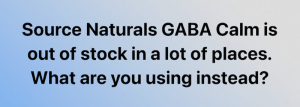
gaba calm alternative question facebook

This is some of the feedback I received:

  • Mary ~ Oh my goodness! I just found it in my local Vitamin Shoppe tonight! There was one bottle left.
  • Diana ~I noticed. My son uses this, I’m a little worried.

I shared that there are other products that will hopefully work as well and asked everyone who was using something else: Do  you use it opened onto the tongue or swallowed? And if you’ve used Source Naturals GABA Calm in the past how does it compare for you?

A number of people said they like Thorne pharmaGABA capsules, someone said she like Now GABA Powder and a few people like Natural Factors pharmaGABA chewables:

  • Tara ~ I’ve only used Thorne PharmaGABA because of how it’s derived [fermented]. I just swallow the capsule and I’m immediately calm within 5-15 mins. I was previously prescribed a benzo & this is much better. 100mg is all I take when I feel a panic attack coming on. I’ve been thru a few years of absolute hell of benzo withdrawal coming off of my klonopin prescription. The GABA feels almost the exact same as the benzo except the benzo would actually cause rebound panic attacks (I didn’t realize it at the time) & the GABA does not.
  • Jane ~I use Now Foods GABA powder. A little under the tongue works well.I have found both effective. Powder good for rapid effect at home (1/4 teaspoon as needed). GABA Calm good to take out with you.
  • Meesh ~ I use the Natural Factors pharmaGABA (100mg) and it works great. I use it in combo with L-theanine 250mg (which also contains 20mg of magnesium)… and the combination is magic

I’ve updated the supplements blog with the above products and a few additional similar products so you have many options to select from based on your unique needs and taste preferences, and what’s available at the time:

  • Thorne PharmaGABA-100: the label says Gamma-Aminobutyric Acid (GABA) 100 mg but it also states that the product uses Pharma Foods International’s Gamma-Aminobutyric Acid (PharmaGABA®).  This is also pleasant-tasting when opened on to the tongue and is most effective when used this way. [AS OF NOV 24, 2021 THIS MAY ALSO BE UNAVAILABLE]
  • Thorne PharmaGABA-250: as above but contains 250mg of PharmaGABA®. This is also pleasant-tasting when opened on to the tongue and is most effective when used this way. [AS OF NOV 24, 2021 THIS MAY ALSO BE UNAVAILABLE]
  • Designs for Health PharmaGABA Chewables: gamma-amino butyric acid (pharmaGABA) 200 mg in 2 chewable tablets. It’s quick-acting and convenient like GABA-Calm because it’s chewable. This does contain xylitol, natural flavors, stevia and some other ingredients so taste may be a factor and xylitol can cause gas, bloating and diarrhea when too much is consumed.
  • Natural Factors PharmaGABA: gamma-amino butyric acid (pharmaGABA) 200 mg in 2 chewable tablets. It’s quick-acting and convenient like GABA-Calm because it’s chewable. However it also contains organic cane sugar and natural fruit flavors so it’s a little too candy-like for my preference, especially if you have low GABA-related sugar cravings. Also 2 chewable tablets – 4g of carbs which is almost 1 teaspoon of sugar!
    [January 22, 2021: I’ve included this as a stand-by option for occasional use until Source Naturals GABA Calm is readily available again or if Designs for Health PharmaGABA Chewables are not available.]
  • Now Foods GABA Powder: 1/4 Level Teaspoon (500mg). This is pleasant-tasting when opened on to the tongue and is most effective when used this way. The only challenge with powder like this is making sure you don’t use too much by mistake. And it’s especially challenging when you only need 100mg.
  • Quicksilver Scientific Liposomal GABA with L-Theanine: 2ml (4 Pumps) provides (Gamma Amino Butyric Acid) 240mg, L-Theanine 100mg and Phosphatidylcholine 120mg (from purified sunflower seed lecithin). It does contain ethanol so would not be suitable for alcoholics or young children.
  • GABA-Pro Calming Effect Chewable: This is a chewable that contains 100 mg of pharmaGABA in 1 tablet. It is pharmaGABA even though the product says GABA-Pro on the front and the label states Gamma Amino Butyric Acid (GABA). This product is a reasonable replacement for Source Naturals GABA Calm.  It does contain natural flavors and xylitol.
  • GABA-Pro Calming Effect: This contains 100 mg of pharmaGABA in 1 tablet. It is pharmaGABA even though the product says GABA-Pro on the front and the label states Gamma Amino Butyric Acid (GABA). This capsule can be opened onto the tongue.  It does contain rice flour which can be an issue if you have a rice allergy/sensitivity and/or SIBO.

I do want to add that Nutritional Fundamentals for Health GABA-T SAP is still a firm favorite of mine: gamma-Aminobutyric acid (GABA) 300 mg, l-Theanine 150 mg. This is pleasant-tasting when opened on to the tongue and works very well when GABA Calm can’t be used (because of the tyrosine or taste or sugar alcohols). It is also often used with GABA Calm – like GABA Calm in the day and GABA-T SAP at night or some combination.  I find best results when it is used opened on to the tongue and it offers a feeling of calm focus. It could easily be used as a substitute for GABA Calm in the short-term.

In case you’re new to GABA you can read more about it here: GABA for the physical-tension and stiff-and-tense-muscles type of anxiety.

UPDATE Nov 24, 2021:
=================

Source Naturals GABA Calm is in short supply again, so I’ve updated this blog with some other options (above) because the Thorne Products may also be unavailable for now:

  • GABA-Pro Calming Effect Chewable
  • GABA-Pro Calming Effect

Is Source Naturals GABA Calm a favorite of yours? And how has it helped you?  What have you found works as well – for physical anxiety, tension, insomnia, pain, sugar cravings, muscle spasms – when it’s not available?

If you’ve used a GABA product in capsules, do you use it opened onto the tongue or swallowed? And if you’ve used Source Naturals GABA Calm in the past how does it compare for you?

If you’re a practitioner do you use GABA Calm and/or other GABA products?

Please do share in the comments below and let me know if you found this helpful or if you have questions. And thanks for the questions and contributions so far!

Filed Under: Amino Acids, Anxiety, GABA Tagged With: ADHD, chewable, cravings, GABA, GABA Calm, insomnia, irritability, opened onto tongue, panic, pharmaGABA, powder, Source Naturals GABA Calm, sublingual, sugar, tension

Christmas tree phenols as a trigger for anger, meltdowns, anxiety, hyperactivity, insomnia, aggression, self-injury and autistic symptoms?

December 18, 2020 By Trudy Scott 16 Comments

christmastree phenols and anxiety

Are you aware that the aromatic oils that give pine trees their wonderful smell are phenols and that these phenols may be a trigger for anger and meltdowns, anxiety, hyperactivity, irritability insomnia, self-injurious behavior, digestive issues and autistic symptoms (such as stimming, swinging and hand-flapping)? All this can be caused by an indoor Christmas tree in susceptible individuals.

My colleague Julie Matthews writes about this here: Avoiding Holiday Havoc: Healthy solutions to avoid meltdowns and keep the holidays happy

“When phenols are not able to be broken-down and detoxified by a process called sulfation, which is low in many children with autism and ADHD”, they can cause these symptoms and also red cheeks and ears. She shares that “phenolic compounds come in many forms including artificial petroleum-based food additives, and salicylates (a type of phenol) found in plants and foods like strawberries and spices, as well as pine trees.”

In the above blog, Julie shares this story about a client with a 10-year old son with autism. He severely regressed during the holidays and it was because of the Christmas tree. This is what the mom shared:

During the Holidays our son regressed severely.  He became anxious, aggressive, and self-abusive. He cried and had tantrums regularly throughout the day. He couldn’t sleep anymore and was up for hours at a time, night after night. He was hand-flapping like crazy.  We have a swing in the house for him and he now wanted to swing all day long, constantly, and do nothing else. He lost eye contact and he stopped responding to his name.

Once the Christmas tree was removed the improvements were dramatic:

The next day, he was much calmer. He seemed to have “exhaled.” Within 48 hours, our son was completely back to normal.

I shared Julie’s blog on my Facebook page and a father in my community shared a similar experience about his autistic son’s severe reactions to phenols:

Yes! My autistic son who is sensitive to phenols, would completely meltdown during the holidays. We thought it was just the change in routine and his environment, but quite by accident we discovered fragrances seemed to make him worse. We got rid of the fragrances and holiday tree/decor and the improvement in our son was dramatic! We now realize it was the phenols.

My son’s reaction to phenols/fragrances are bright red cheeks/ears, dark under eye circles, headaches, inappropriate manic laughter, aggression/self injurious behavior, marathon meltdowns/screaming, incontinence, insomnia/less than 3 hrs sleep a night, bumpy rashes, GI issues/diarrhea, excessive sensory stimming (hand flapping, lip licking, running around and body slamming into things.) During the holidays, the intensity of these reactions shot through the roof.

They found out by chance that it was the Christmas tree that was causing his son’s issues each year. It started when he was a toddler and they figured it was the stress and changes of the holidays that was the issue. One year they didn’t put up a tree and they could not believe the difference. It was then they made the connection and learned more about phenols and made the necessary changes.

By reducing phenols in his diet and environment, and giving him Epsom Salt baths and enzymes (No-Fenol), most of the above symptoms were significantly reduced.

I suspect there are many families who are seeing similar meltdowns and have no idea it could be the Christmas tree. Keep in mind that the reactions may not be as severe as these two cases I’ve shared here. If you are seeing any increase in anxiety, irritability, sleep problems, digestive issues or other unusual behavior changes in your child, keep an open mind that it may be more than just the holiday changes.

Julie’s advice is this:

  • Since so many children with autism and ADHD react to salicylates/phenols – in her nutrition practice she finds an overwhelming majority react negatively – she suggests a cautious approach to holiday decorating for all families of a child with autism or ADHD. Simply avoid the pine Christmas tree.
  • If you are unsure about their sensitivity to salicylates/phenols you might ask yourself if your child is often hyper, irritable, or has red cheeks, and other common salicylate symptoms, or whether they crave salicylate-rich foods such as berries, grapes, apples, and ketchup. If so, explore salicylates further.

I encourage you to read Julie’s blog to gain a better understanding of salicylates and phenols. If you are a practitioner and want to learn more about low salicylates/phenols and other special diets her practitioner training is excellent.

I appreciate this mom and dad for sharing their experiences with their sons so we can all learn and help other families. I also so appreciate Julie’s expertise in this area and really look forward to digging further into the research and picking her brain so I can share more.

Could your holiday anxiety and/or insomnia be phenol issues too?

Julie works with children with autism and ADHD but as someone who works primarily with adults with anxiety, I’m going to be exploring sensitivity to salicylates/phenols further. Julie recently shared this with me: “if you start looking you’ll probably see a lot of your clients with anxiety have phenol issues.”

If you also notice any increase in anxiety, anger, irritability, sleep problems, digestive issues or other unusual behavior changes, keep an open mind that it may be more than just the holiday stress or winter blues/winter anxiety. It may well be phenol issues too.

Serotonin connection to phenol issues

I’ll be blogging more about this and the fascinating serotonin connection to phenol issues. You may have noticed that many of the symptoms these 2 boys experienced sound a lot like either low serotonin or high serotonin (both of which can occur in autism).  Serotonin is an endogenous phenol compound and this phenol issue is likely causing high serotonin.

When I asked Julie about this she shared this with me: “Yes, serotonin and dopamine are phenolic. And sulfation is important for the inactivation of dopamine and serotonin. So poor sulfation can lead to neurotransmitter imbalances.”

Using collagen to lower high serotonin?

I’ve blogged about how collagen can lower serotonin in susceptible folks and increase anxiety. It is also used by some folks to lower their high serotonin and make them calm. Misty reports using collagen ‘therapeutically’:

I use it to reduce tryptophan because I have a tendency toward high serotonin. I have suffered my entire life with ADD, tics as a child, grinding teeth, general anxiety, lack of motivation and later, IBS. In my 53 years I’ve never been as calm as I am now.

I don’t know if Misty has a phenol issue but I’m going to be exploring if collagen or gelatin could possibly be used to help lower the high serotonin and ease some of these severe phenol reactions quickly, in conjunction with other approaches like avoiding the foods and environmental exposures, enzymes and other nutrients, and Epsom salt baths.

Christmas tree syndrome, mold issues and toxic plastic trees

I hate to spoil the Christmas fun but here are a few other things to consider:

  • Christmas tree syndrome is also a real issue for many individuals
  • My friend and Enviornmental Toxins expert Lara Adler shares how mold from a real tree made her and her cat really sick “Within a few days of getting the tree, I broke out in a full-body rash that required a 10-day run of prednisone. I didn’t think it was the tree at first (it could have been something else), but then my cat, who was already dealing with GI inflammation and a gut issue developed asthma! Out of nowhere! She also ended up on prednisone. I got rid of the tree and both our symptoms never came back.”
  • She also shares some issues with plastic trees: they are often made from toxic PVC (polyvinyl chloride) with “softeners like lead and/or phthalates”, and often treated with endocrine-disrupting flame retardant chemicals. More about this on Lara’s blog here.

Have you observed a salicylate/phenol reaction with your child or client/patient? What about a less severe reaction with your child or with you personally?

Have the following helped you: avoiding the foods and environmental exposures like a Christmas tree, using enzymes like No-Fenol and other nutrients, and Epsom salt baths? In the midst of a very severe reaction has collagen or gelatin helped reduce symptoms quickly?

What about mold issues or allergies with a Christmas tree?

Feel free to post your questions here on the blog too.

Filed Under: ADHD, Anxiety, Autism, Toxins Tagged With: ADHD, aggression, allergy, anger, anxiety, autism, autistic symptoms, Christmas tree, collagen, hyperactivity, insomnia, irritability, meltdowns, mold, Phenols, pine tree, plastic tree, salicylates, self-injury, serotonin

Anxiety case study: a very very slow SSRI taper with tryptophan and other nutritional support

August 28, 2020 By Trudy Scott 14 Comments

anxiety case study

Today I’m sharing an update from someone in my community who is tapering from an SSRI (Cipralex/lexapro) in the best way possible – very methodically and doing a very very slow taper, using compounded medication and nutritional support. It is a team approach with a supportive doctor monitoring for serotonin syndrome, her pharmacist compounding her medication and input from me.

She has an excellent diet that contains enough healthy protein and fats, plenty of vegetables, and no sugar or caffeine. She has the basic nutrients covered and is on the pyroluria protocol (these nutrients help make serotonin). She is using the amino acid tryptophan for serotonin support as she tapers. And she is out walking in nature and practicing mindfulness.

All of this sets her up for success and being able to avoid antidepressant discontinuation syndrome.

Here is her story:

I began tapering off 10 mg of Cipralex in November 2017. I have my little “Support Team” that includes a compounding pharmacist and my GP. Feeling very fortunate that I have these people as my taper has not exactly gone as planned (although far better than my last two attempts)

Originally, the plan was to go down by 10% of the dose and stay at that dose for 4 weeks. That didn’t work for me. I was fine when I dropped from 10mg to 9, but after my next 10% drop I experienced that familiar withdrawal hell. I got a little scared, but stuck with it, and decided to stay at that dose for a bit longer. While I leveled out, I did a lot of reading about how SSRIs work. I learned about the 1/2 life of Cipralex (all SSRIs have a different 1/2 life) and what was actually happening physiologically as my body adjusts to the lower dose. It’s a recovery process.

With that new knowledge, I decided to try another approach. I knew I couldn’t handle a drop of 10%. So, I started to taper at a rate of 0.1mg once a week (far less than 10%!). By day three at the new dose, I could feel the withdrawal, but it was far less severe. Small drops=small “withdrawal wave”. I discovered that I am able to manage a 2% drop of the current dose and I have been able to drop that % each week. So, I’m still reducing by 8% a month, which means I am close to the original plan of dropping by 10% a month. At this time I am at 6.24mg.

Yes, it is a very slow process and I have a long way to go, but it’s working. I have read that some people have to reduce by 1% of their current dose and remain at that dose for 4 weeks to allow their body the time to heal and adjust to life on the lower dose. Having the liquid compound has made such a difference! You sure would have difficulty accurately shaving off a pill by 2%!! If anyone is trying to come off of this drug, do your best to find a compounding pharmacist!

I find that I must stick to a very healthy diet. I eat a lot of fresh, raw and cooked vegetables. I mean a LOT of vegetables. I eat good sources of protein and walk for at least 45 min almost every day. I steer clear of sugar and caffeine. Both make my withdrawal much worse.

Every day I take omega 3, vitamin C, vitamin D, vitamin B complex. I take the supplements for pyroluria, vitamin B6, evening primrose oil and zinc. I take magnesium at night. I took Trudy’s amino acids course online and did all of the amino acid trials. I discovered all I really need is tryptophan. It has made a huge difference for me. Yes, I take Lidke tryptophan. For us Canadians, it can be ordered online.

I practice mindfulness. I’ve read a lot about the anxious brain (the reason I took Cipralex in the first place) so I understand what is happening now, what is real and what is just noise in my head.

Antidepressant discontinuation syndrome

This is the best way to taper SSRI medications in order to avoid withdrawal effects, also known as discontinuation syndrome which can be very severe for some folks.

Accordingly to this paper, Antidepressant discontinuation syndrome occurs in about 20% of patients who reduce the dose or abruptly stop an antidepressant that they have been taking for one month. This paper states that “symptoms are usually mild….occur within two to four days after drug cessation and usually last one to two weeks.”

It also states that occasionally symptoms “may persist up to one year…and if the same or a similar drug is started, the symptoms will resolve within one to three days.”

I typically hear from individuals who fall into the category of severe symptoms that are persisting past 2 weeks. It’s not uncommon to see symptoms continue for a year and often longer in some cases.

Also from the above paper, is the mnemonic FINISH which summarizes these symptoms:

  • Flu-like symptoms (lethargy, fatigue, headache, achiness, sweating)
  • Insomnia (with vivid dreams or nightmares)
  • Nausea (sometimes vomiting)
  • Imbalance (dizziness, vertigo, light-headedness)
  • Sensory disturbances (“burning,” “tingling,” “electric-like” or “shock-like” sensations) and
  • Hyperarousal (anxiety, irritability, agitation, aggression, mania, jerkiness).”

How you will feel if your serotonin is low and how to learn more

With low serotonin you will have the worry-in-your-head and ruminating type of anxiety, panic attacks and phobias, lack of confidence, depression, negativity, imposter syndrome, PMS, irritability, anger issues, insomnia and afternoon/evening cravings.

If you suspect low serotonin symptoms and are new to using the amino acids and do not have my book I highly recommend getting it and reading it before jumping in to taking supplements and navigating this with your prescribing physician: The Antianxiety Food Solution – How the Foods You Eat Can Help You Calm Your Anxious Mind, Improve Your Mood, and End Cravings. You may need to lend him/her a copy of my book too.

There is a complete chapter on the amino acids and one for pyroluria, plus information on real whole food, sugar and blood sugar, gluten, digestion and much more.  If you’re not a reader there is now also an audible version.

Here is the Amino Acids Mood Questionnaire from The Antianxiety Food Solution and additional information on Anxiety and targeted individual amino acid supplements: a summary

Please also read and follow these Amino Acid Precautions.

This lists The Antianxiety Food Solution Amino Acid and Pyroluria Supplements that I use with my individual clients and those in my group programs – you will find the Lidtke Tryptophan here. You can also read more about why I prefer the Lidtke tryptophan on this blog.

I would like to end off by saying how much I appreciate this woman and others sharing their stories like this so we can all learn!

Please also share your taper story and what you did to make it easier.  If you had challenges share those too. Let us know if you can relate to any of the above FINISH symptoms and how long they lasted.

Feel free to post your questions here too.

Filed Under: Anxiety, Tryptophan Tagged With: achiness, aggression, agitation, antidepressant, anxiety, B6, burning, cravings, diet, Dizziness, fatigue, flu-like symptoms, headache, insomnia, irritability, jerkiness, lethargy, light-headedness, mania, nausea, Nightmares, nutritional support, panic, serotonin, shock-like sensations, SSRI, SSRI taper, sweating, tingling, tryptophan, vertigo, vivid dreams, vomiting, worry, zinc

5-HTP can raise salivary cortisol: does this cause a “wired-tired” feeling?

August 14, 2020 By Trudy Scott 48 Comments

5-htp salivary

Are you aware that 5-HTP – an amino acid supplement that supports serotonin levels – can raise cortisol levels and leave you feeling “wired-tired”? You may be able to relate to this if you’ve ever used 5-HTP to help with anxiety and insomnia and ended up feeling more anxious and more wide-awake despite your exhaustion and need for sleep. You feel “wired-tired” and it’s not pleasant at all.

Both 5-HTP and tryptophan, used as supplements, help to boost serotonin levels so you can feel happy, calm, sleep well and not crave carbs in the afternoon/evening. They also help with panic attacks and phobias, lack of confidence, depression, negativity, imposter syndrome, PMS, irritability, anger issues, pain/fibromyalgia, TMJ and anger. I typically have my clients with low serotonin symptoms start with a trial of tryptophan because I see such excellent results with this amino acid. That being said, some people simply do better on one versus the other and you may do better with 5-HTP.

However there is one big caveat with 5-HTP. I don’t recommend 5-HTP when a client has elevated cortisol levels because we know that it can raise cortisol levels in certain individuals. This can leave you feeling agitated, cranky, as well as wired and yet tired at the same time.

In this 2002 study, L-5-hydroxytryptophan induced increase in salivary cortisol in panic disorder patients and healthy volunteers

Salivary cortisol levels were measured in 24 panic disorder patients and 24 healthy volunteers, following ingestion of 200 mg L-5-hydroxytryptophan or placebo.

The experiment was carried out in the afternoon, “when basal cortisol secretion is more stable.” The first saliva sample was obtained at 1pm and the subjects ingested the 200mg 5-HTP at 2pm. Additional saliva samples were obtained at 2:30pm, 3:00pm and 3:30pm.

They report the following:

A significant rise in cortisol was observed in both patients and controls following ingestion of L-5-hydroxytryptophan. No such effects were seen in the placebo condition.

Here are a few additional comments and my thoughts:

  • This study was done to find evidence for “serotonin receptor hypersensitivity in panic disorder” and not specifically to test for the effects of 5-HTP on cortisol levels but it serves this purpose rather nicely (and it’s one of many similar studies, some of which measure plasma cortisol levels)
  • Keep in mind 200mg of 5-HTP is a large starting dose. It’s typical to start with 50mg so may be a factor to consider
  • In this study they did not assess cortisol levels beyond the 1.5 hours from ingestion of the 5-HTP. It would have been useful to see when levels started to go down
  • We would want to consider the ramifications of using 5-HTP for weeks (whether it’s 50 or 200mg). What impact would that have on cortisol and the adrenals? (I am not aware of a study like this having been done)
  • I’m also not aware of a study being done with 50mg but if you feel worse and feel “wired-tired” with 5-HTP and switch to tryptophan (the equivalent starting dose is 500mg) and your anxiety and other low serotonin symptoms resolve then you have found your solution
  • You may be wondering: “could I use 5-HTP to raise my low cortisol levels”? Theoretically yes and possibly very short-term. But I would question the timing since 5-HTP and tryptophan are best dosed mid-afternoon and later. This is when we would expect our cortisol levels to be on the downward slope as we end our day. I’d also want to nourish the adrenals with B vitamins and herbal adaptogen and remove the trigger/s that are leading to low cortisol.

If you suspect low serotonin symptoms and are new to using the amino acids and do not have my book I highly recommend getting it and reading it before jumping in to taking supplements: The Antianxiety Food Solution – How the Foods You Eat Can Help You Calm Your Anxious Mind, Improve Your Mood, and End Cravings.

There is a complete chapter on the amino acids and one for pyroluria, plus information on real whole food, sugar and blood sugar, gluten, digestion and much more.  If you’re not a reader there is now also an audible version.

Here is the Amino Acids Mood Questionnaire from The Antianxiety Food Solution and additional information on Anxiety and targeted individual amino acid supplements: a summary

Please also read and follow these Amino Acid Precautions.

This lists The Antianxiety Food Solution Amino Acid and Pyroluria Supplements that I use with my individual clients and those in my group programs.

Have you used 5-HTP with success? Or have you used it and felt “wired-tired”? Have you correlated the success or failure of your 5-HTP use with your salivary cortisol levels?

If you switched from 5-HTP to tryptophan did you have success with that?

If you’re a practitioner is this something you see with your clients/patients and take into consideration?

Feel free to post your questions here too.

Filed Under: Antianxiety Tagged With: 5-HTP, adrenals, amino acid, anger, anger issues, calm, cortisol, depression, Fibromyalgia, happy, Imposter syndrome, irritability, L-5-hydroxytryptophan, negativity, pain, panic attacks, Panic disorder, phobias, PMS, serotonin, sleep, TMJ, tryptophan, wired-tired

MDMA-Assisted Psychotherapy for Treating Chronic PTSD: Why I feel we can do better and the role of nutrition and amino acids like GABA

November 2, 2018 By Trudy Scott 7 Comments

You may be familiar with MDMA (3,4-methylenedioxymethamphetamine), also known as “ecstasy”, because of its reputation as a party drug. And you have likely seen some of the media reports on the new research and growing support for MDMA-Assisted psychotherapy for treating chronic PTSD (post-traumatic stress disorder). Due to adverse effects I’d like to share my concerns about this research and treatment and why I feel we can do better – by addressing nutrition and using amino acids like GABA and others.

In a recent press release, Colorado Study Shows Lasting Benefits of MDMA-Assisted Psychotherapy for Treating Chronic PTSD, the non-profit organization, Multidisciplinary Association for Psychedelic Studies (MAPS) reports these study results:

28 participants found that one month after their second day-long experimental session, 42.9% in the active-dose (100 mg and 125 mg) MDMA groups did not qualify for a diagnosis of PTSD, compared to 33.3% in the low-dose MDMA (40 mg active placebo) control group.

The results were even more notable 12 months after the third active-dose experimental session, which found that one year following treatment with MDMA-assisted psychotherapy, 76% of participants no longer had PTSD.

It is the largest U.S. FDA-regulated double-blind, placebo-controlled clinical trial of MDMA-assisted psychotherapy for the treatment of chronic PTSD and the results are impressive: 76% of the study participants no longer had PTSD after a year and 3 treatment sessions. I’m really happy for the participants BUT I believe we can do better because there are adverse reactions to this treatment and there are other safer approaches for recovery.

This comment about an acceptable risk profile and adverse reactions concerns me (and I suspect it concerns you too):

The study replicated previous research showing an acceptable risk profile for MDMA, with the most frequently reported adverse reactions during experimental sessions being anxiety, jaw clenching, headache, muscle tension, dizziness, fatigue, and low mood.

Adverse reactions one week following treatment included insomnia, low mood, irritability, and ruminations. Temporary elevations in pulse, blood pressure, and temperature were also recorded during MDMA sessions, and did not require medical intervention.

A common theme we see in the research on psychedelics is how effective it is for PTSD that doesn’t respond to therapy or medications. This paper states:

There is an immense need for innovative treatment options that improve outcomes, especially for PTSD refractory to psychotherapy and/or pharmacotherapies

I agree there is an immense need for successful treatment approaches, but jumping to MDMA from psychotherapy and/or psychiatric medications is skipping out the entire nutritional and biochemical step which is SO powerful and doesn’t have the above adverse effects. I’m concerned too many who have not seen benefits from therapy or medications are seeing MDMA as THE solution and are going to be harmed even further.

This paper, The Potential Dangers of Using MDMA for Psychotherapy, the author is concerned about the fact that “acute MDMA can stimulate the release of difficult feelings and memories, which may be distressing” and also the negative moods that occur after MDMA treatment:

This period of negative cognitions may be counter-productive, especially in psychiatrically vulnerable clients, for instance those with predispositions to anxiety, depression, or psychosis. For example, it could increase the likelihood of suicide in those individuals with strong post-recovery feelings of depression.

Because of this, I wholeheartedly agree with the author’s position:

it will always be far safer to undertake psychotherapy without using co-drugs. In selected cases MDMA might provide an initial boost, but it also has far too many potentially damaging effects for safe general usage.

In addition to psychotherapy, there are also so many nutritional and biochemical factors we can consider when it comes to PTSD. These don’t have any of the above damaging effects seen with MDMA. Here are a few to consider:

  • In this blog post, PTSD from 3 tours in Afghanistan: Can GABA help with the anxiety? how low GABA can lead to physical anxiety, muscle tension and the need to self-medicate with alcohol or sugary foods in order to calm down and relax. We also have research supporting the use of GABA for helping with unwanted obtrusive thoughts which are common with PTSD. When low GABA is suspected we do an amino acid trial with GABA, one of the calming amino acids.
  • A 2016 reports that blueberries boost serotonin and may help with PTSD and anxiety https://www.everywomanover29.com/blog/blueberries-serotonin-ptsd-anxiety/. This was an animal study where the traumatized rats were fed a blueberry-enriched diet. The study authors report an increase in serotonin levels, suggesting that “non-pharmacological approaches might modulate neurotransmitters in PTSD.”
  • A recent meta-analysis, Association between posttraumatic stress disorder and lack of exercise, poor diet, obesity, and co-occuring smoking, confirms the diet and lifestyle connection to being more impacted by trauma when health is not optimal.

I feel it is these above approaches and others like this that we need to be using to address PTSD, rather than subjecting individuals who are already suffering to treatments that have adverse reactions AND are not addressing underlying nutritional deficiencies of low GABA, low serotonin, out of balance endocannabinoid system and overall health, to name a few of many possible underlying biochemical factors.

If this treatment approach is approved, I would hope that all the adverse effects and dangers are clearly explained and I’d also like there to be informed consent before it is used – so individuals know exactly what they are getting into. Hopefully, by the time it is approved, nutritional psychiatry will be more accepted.

I’d love to hear your thoughts on this research and treatment approach. Is it something you have considered or would possibly consider in the future – you personally or with patients?

Or do you have similar concerns that I have?

Have you already tried MDMA recreationally (possibly for therapeutic reasons) and what were your experiences like?

Filed Under: PTSD/Trauma Tagged With: anxiety, biochemical, blueberries, depression, GABA, insomnia, irritability, low mood, MAPS, MDMA, nutrition, nutritional, PTSD, ruminations

Tryptophan for PMS: premenstrual dysphoria, mood swings, tension, and irritability

July 1, 2016 By Trudy Scott 65 Comments

tryptophan for pms

In a study published in 1999, A placebo-controlled clinical trial of L-tryptophan in premenstrual dysphoria, tryptophan was found to reduce symptoms of PMS when used in the luteal phase or second half of the cycle (i.e. after ovulation):

37 patients with premenstrual dysphoric disorder were treated with L-tryptophan 6 g per day, and 34 were given placebo. The treatments were administered under double-blind conditions for 17 days, from the time of ovulation to the third day of menstruation, during three consecutive menstrual cycles.

They looked at dysphoria, which is defined as a state of unease or generalized dissatisfaction with life, plus mood swings, tension (and anxiety), and irritability and they found a 34.5% reduction of symptoms with tryptophan compared to 10.4% with placebo.

The paper concludes:

that these results suggest that increasing serotonin synthesis during the late luteal phase of the menstrual cycle has a beneficial effect in patients with premenstrual dysphoric disorder.

Let me share what I see with the women with PMS that I work with:

  • This is very typical when I’m working with someone with PMS and anxiety and other mood symptoms. It typically takes 2 to 3 cycles for an amino acid like tryptophan to have an impact on PMS itself. But it does typically start to work right away on the less severe anxiety and mood symptoms that may also be a factor during the rest of the month.
  • I don’t start with 6g per day of the tryptophan but rather have each person do the amino acid questionnaire, review the precautions and do a trial of tryptophan, increasing as needed to find the optimal amount for their needs (you can read more about this here on anxiety and the amino acid overview
  • We often find that adding GABA helps too, as this supports progesterone production
  • Many anxious women I work with also have pyroluria or signs of low zinc and low vitamin B6 and adding these nutrients, together with evening primrose oil, provide additional hormonal support (and help with the social anxiety).
  • Other factors to consider with PMS: low total cholesterol (as cholesterol is needed to make hormones), gluten issues, adrenal function and blood sugar control, gut health and the microbiome, and liver support
  • And finally, we can’t forget diet and need to switch to eating a real whole foods diet free from sugar, gluten and caffeine. Coffee and chocolate in the second half of the cycle can be especially problematic for many women

Together with the tryptophan and the above approaches (if needed as we are all so different), it’s not unreasonable to get the reduction of symptoms from 34.5% (as seen with the tryptophan) down to 100%. It breaks my heart when I hear women think they have to live with PMS symptoms when they don’t have to!

Additional resources when you are new to using tryptophan, GABA, and other amino acids as supplements

As always, I use the symptoms questionnaire to figure out if low serotonin or low GABA or other neurotransmitter imbalances may be an issue.

If you suspect low levels of any of the neurotransmitters and do not yet have my book, The Antianxiety Food Solution – How the Foods You Eat Can Help You Calm Your Anxious Mind, Improve Your Mood, and End Cravings, I highly recommend getting it and reading it before jumping in and using amino acids on your own so you are knowledgeable. And be sure to share it with the practitioner/health team you or your loved one is working with.

There is an entire chapter on the amino acids and they are discussed throughout the book in the sections on gut health, gluten, blood sugar control (this is covered in an entire chapter too), sugar cravings, anxiety and mood issues.

The book doesn’t include product names (per the publisher’s request) so this blog, The Antianxiety Food Solution Amino Acid and Pyroluria Supplements, lists the amino acids that I use with my individual clients and those in my group programs.

If, after reading this blog and my book, you don’t feel comfortable figuring things out on your own (i.e. doing the symptoms questionnaire and respective amino acids trials), a good place to get help is the GABA QuickStart Program (if you have low GABA symptoms). This is a paid online/virtual group program where you get my guidance and community support.

If you are a practitioner, join us in The Balancing Neurotransmitters: the Fundamentals program. This is also a paid online/virtual program with an opportunity to interact with me and other practitioners who are also using the amino acids.

Wrapping up and your feedback

Have you used tryptophan for PMS? Do you take it all month or just in the 2nd half of your cycle? What about other changes that have helped: GABA or liver support or quitting caffeine? Or something else?  Please share.

Filed Under: Tryptophan, Women's health Tagged With: anxiety, irritability, mood swings, PMS, premenstrual dysphoria, tension, tryptophan

  • « Go to Previous Page
  • Page 1
  • Page 2
  • Page 3

Primary Sidebar

NEW! GABA QuickStart Homestudy (with special intro pricing)

gaba quickstart homestudy

Free Report

9 Great Questions Women Ask about Food, Mood and their Health

You'll also receive a complimentary subscription to my ezine "Food, Mood and Gal Stuff"


Connect with me

Popular Posts

  • Amino Acids Mood Questionnaire from The Antianxiety Food Solution
  • The Antianxiety Food Solution Amino Acid and Pyroluria Supplements
  • Pyroluria Questionnaire from The Antianxiety Food Solution
  • Collagen and gelatin lower serotonin: does this increase your anxiety and depression?
  • Tryptophan for the worry-in-your-head and ruminating type of anxiety
  • GABA for the physical-tension and stiff-and-tense-muscles type of anxiety
  • The Antianxiety Food Solution by Trudy Scott
  • Seriphos Original Formula is back: the best product for anxiety and insomnia caused by high cortisol
  • Am I an anxious introvert because of low zinc and vitamin B6? My response to Huffington Post blog
  • Vagus nerve rehab with GABA, breathing, humming, gargling and key nutrients

Recent Posts

  • What do I use instead of Seriphos to help lower high cortisol that is affecting my sleep and making me anxious at night?
  • BeSerene™ GABA/theanine cream eases severe muscle tension in her neck/shoulders, prevents her bad headaches and quells her anxiety
  • How the correct approach, dose and sublingual use of GABA can be calming and not cause a flushed and itchy face and neck
  • The amino acid glutamine improves low mood by addressing gut health, and it has calming effects too
  • Flight anxiety with heightened breath, physical tension and also fearing the worst (the role of low GABA and low serotonin)

Categories

  • 5-HTP
  • AB575
  • Addiction
  • ADHD
  • Adrenals
  • Alcohol
  • Allergies
  • Alzheimer's disease
  • Amino Acids
  • Anger
  • Antianxiety
  • Antianxiety Food Solution
  • Antidepressants
  • Anxiety
  • Anxiety and panic
  • Autism
  • Autoimmunity
  • benzodiazapines
  • Bipolar disorder
  • Books
  • Caffeine
  • Cancer
  • Candida
  • Children/Teens
  • Collagen
  • Cooking equipment
  • Coronavirus/COVID-19
  • Cravings
  • Depression
  • Detoxification
  • Diabetes
  • Diet
  • DPA/DLPA
  • Drugs
  • EFT/Tapping
  • EMF
  • EMFs
  • Emotional Eating
  • Endorphins
  • Environment
  • Essential oils
  • Events
  • Exercise
  • Fear
  • Fear of public speaking
  • Fertility and Pregnancy
  • Fish
  • Food
  • Food and mood
  • Functional neurology
  • GABA
  • Gene polymorphisms
  • General Health
  • Giving
  • Giving back
  • Glutamine
  • Gluten
  • GMOs
  • Gratitude
  • Gut health
  • Heart health/hypertension
  • Histamine
  • Hormone
  • Hyperparathyroidism
  • Hypoglycemia
  • Immune system
  • Inflammation
  • Insomnia
  • Inspiration
  • Introversion
  • Joy and happiness
  • Ketogenic diet
  • Lithium orotate
  • Looking awesome
  • Lyme disease and co-infections
  • MCAS/histamine
  • Medication
  • Men's health
  • Mental health
  • Mercury
  • Migraine
  • Mold
  • Movie
  • MTHFR
  • Multiple sclerosis
  • Music
  • NANP
  • Nature
  • Nutritional Psychiatry
  • OCD
  • Osteoporosis
  • Oxalates
  • Oxytocin
  • Pain
  • Paleo
  • Parasites
  • Parkinson’s disease
  • PCOS
  • People
  • PMS
  • Postpartum
  • PTSD/Trauma
  • Pyroluria
  • Questionnaires
  • Real whole food
  • Recipes
  • Research
  • Schizophrenia
  • serotonin
  • SIBO
  • Sleep
  • Special diets
  • Sports nutrition
  • Stress
  • Sugar addiction
  • Sugar and mood
  • Supplements
  • Teens
  • Testimonials
  • Testing
  • The Anxiety Summit
  • The Anxiety Summit 2
  • The Anxiety Summit 3
  • The Anxiety Summit 4
  • The Anxiety Summit 5
  • The Anxiety Summit 6
  • Thyroid
  • Thyroid health
  • Toxins
  • Tryptophan
  • Tyrosine
  • Uncategorized
  • Vegan/vegetarian
  • Women's health
  • Yoga

Archives

  • October 2025
  • September 2025
  • August 2025
  • July 2025
  • June 2025
  • May 2025
  • April 2025
  • March 2025
  • February 2025
  • January 2025
  • November 2024
  • October 2024
  • September 2024
  • August 2024
  • July 2024
  • June 2024
  • May 2024
  • April 2024
  • March 2024
  • February 2024
  • January 2024
  • December 2023
  • November 2023
  • October 2023
  • September 2023
  • August 2023
  • July 2023
  • June 2023
  • May 2023
  • April 2023
  • March 2023
  • February 2023
  • January 2023
  • December 2022
  • November 2022
  • October 2022
  • September 2022
  • August 2022
  • July 2022
  • June 2022
  • May 2022
  • April 2022
  • March 2022
  • February 2022
  • January 2022
  • December 2021
  • November 2021
  • October 2021
  • September 2021
  • August 2021
  • July 2021
  • June 2021
  • May 2021
  • April 2021
  • March 2021
  • February 2021
  • January 2021
  • December 2020
  • November 2020
  • October 2020
  • September 2020
  • August 2020
  • July 2020
  • June 2020
  • May 2020
  • April 2020
  • March 2020
  • February 2020
  • January 2020
  • December 2019
  • November 2019
  • October 2019
  • September 2019
  • August 2019
  • July 2019
  • June 2019
  • May 2019
  • April 2019
  • March 2019
  • February 2019
  • January 2019
  • December 2018
  • November 2018
  • October 2018
  • September 2018
  • August 2018
  • July 2018
  • June 2018
  • May 2018
  • April 2018
  • March 2018
  • February 2018
  • January 2018
  • December 2017
  • November 2017
  • October 2017
  • September 2017
  • August 2017
  • July 2017
  • June 2017
  • May 2017
  • April 2017
  • March 2017
  • February 2017
  • January 2017
  • December 2016
  • November 2016
  • October 2016
  • September 2016
  • August 2016
  • July 2016
  • June 2016
  • May 2016
  • April 2016
  • March 2016
  • February 2016
  • January 2016
  • December 2015
  • November 2015
  • October 2015
  • September 2015
  • August 2015
  • July 2015
  • June 2015
  • May 2015
  • April 2015
  • March 2015
  • February 2015
  • January 2015
  • December 2014
  • November 2014
  • October 2014
  • September 2014
  • August 2014
  • July 2014
  • June 2014
  • May 2014
  • April 2014
  • March 2014
  • February 2014
  • January 2014
  • December 2013
  • November 2013
  • October 2013
  • September 2013
  • August 2013
  • July 2013
  • June 2013
  • May 2013
  • April 2013
  • March 2013
  • February 2013
  • January 2013
  • December 2012
  • November 2012
  • October 2012
  • August 2012
  • July 2012
  • June 2012
  • May 2012
  • April 2012
  • March 2012
  • February 2012
  • January 2012
  • December 2011
  • November 2011
  • October 2011
  • September 2011
  • August 2011
  • July 2011
  • June 2011
  • May 2011
  • April 2011
  • March 2011
  • February 2011
  • January 2011
  • December 2010
  • October 2010
  • September 2010
  • July 2010
  • May 2010
  • April 2010
  • March 2010
  • February 2010
  • January 2010
  • November 2009

Share the knowledge!

The above statements have not been evaluated by the Food and Drug Administration. Products listed in this website are not intended to diagnose, treat, cure or prevent any disease.

The information provided on this site is for informational and educational purposes only and is not intended as a substitute for advice from your physician or other health care professional. You should consult with a healthcare professional before starting or modifying any diet, exercise, or supplementation program, before taking or stopping any medication, or if you have or suspect you may have a health problem.


Copyright © 2026 Trudy Scott. All Rights Reserved. | Privacy | Terms and Conditions | Refund Policy | Medical Disclaimer

Free Report

9 Great Questions Women Ask about Food, Mood and their Health

You’ll also receive a complimentary subscription to my ezine “Food, Mood and Gal Stuff”