• Skip to primary navigation
  • Skip to main content
  • Skip to primary sidebar

everywomanover29 blog

Food, Mood and Women's Health – Be your healthiest, look and feel great!

  • Blog
  • About
  • Services
  • Store
  • Resources
  • Testimonials
  • The Book
  • Contact
  • Search this site

insomnia

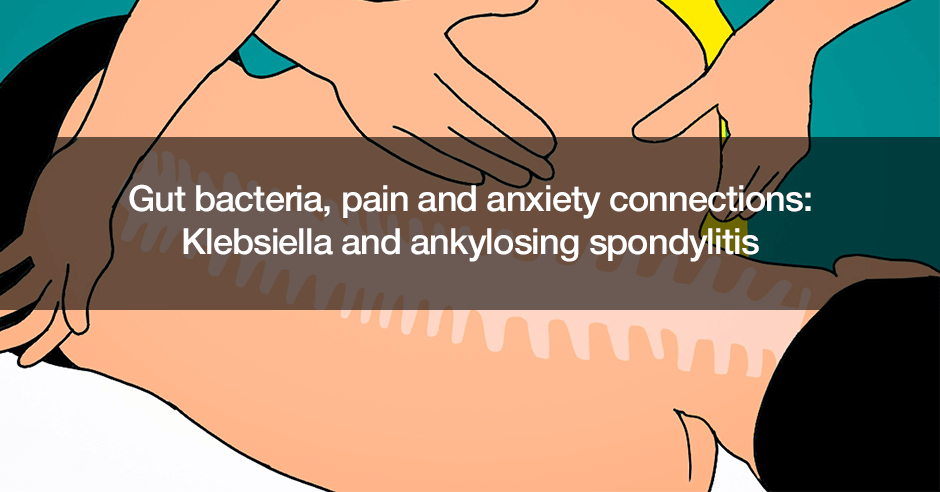
Gut bacteria, pain and anxiety connections: Klebsiella and ankylosing spondylitis

December 28, 2018 By Trudy Scott 21 Comments

We know about the gut-brain connection where the health of our microbiome impacts how anxious or depressed we feel, but we often forget that there is a gut-pain connection too and how addressing dysbiosis and bad bacteria in the gut can have far-reaching benefits.

An old work friend recently reached out asking for help for her husband who had been diagnosed with ankylosing spondylitis, ulcerative colitis and gluten sensitivity, and was not seeing results with conventional treatment. I did some digging for them and a colleague mentioned that they had addressed Klebsiella when they discovered that her husband had genes predisposing him to ankylosing spondylitis. Read on to see what I’ve learned.

Klebsiella as a precursor to ankylosing spondylitis

The paper shared with me: The relationship between Klebsiella infection and ankylosing spondylitis, discusses the HLA-B27 gene and the Klebsiella connection:

Klebsiella-reactive arthritis is the precursor stage occurring in the early and active phases of ankylosing spondylitis.

Let’s learn more about Klebsiella, ankylosing spondylitis, the anxiety connection and prevalence, the role of neuro-inflammation and genes, the problems of a high carb diet and the role the amino acids GABA, tryptophan and DPA play in pain and anxiety relief and being able to quit the carbs easily, plus provide sleep support.

In case you’re not familiar with Klebsiella, this excellent FX Medicine article describes it as follows:

Klebsiella pneumoniae (KP) is a type of gram-negative rod-shaped bacteria that can cause different types of infections ranging from pneumonia (lung), blood infections (septicaemia), wound or surgical infections, urinary tract infections, small intestinal bowel overgrowth (SIBO), ankylosing spondylitis, Crohn’s disease, ulcerative colitis and meningitis (brain).

Ankylosing spondylitis is an inflammatory disease of the spine

In case you’re not familiar with the condition ankylosing spondylitis (pronounced like this) the Mayo Clinic site provides this summary:

Ankylosing spondylitis is an inflammatory disease that, over time, can cause some of the vertebrae in your spine to fuse. This fusing makes the spine less flexible and can result in a hunched-forward posture. If ribs are affected, it can be difficult to breathe deeply.

Ankylosing spondylitis affects men more often than women. Signs and symptoms typically begin in early adulthood. Inflammation also can occur in other parts of your body – most commonly, your eyes.

They say there is no cure and the treatments include pain medications and physical therapy to ease symptoms (and surgery in some cases).

I’m all for physical therapy but you’ll notice there is no mention of gut health or Klebsiella. This is why we have to keep searching for root causes – and work with a functional medicine practitioner – no matter what the health condition, be it ankylosing spondylitis or anything else.

Prevalence of anxiety in ankylosing spondylitis

As with most physical conditions there is a connection with anxiety. This paper: Prevalence of psychological disorders, sleep disturbance and stressful life events and their relationships with disease parameters in Chinese patients with ankylosing spondylitis reports that

AS [ankylosing spondylitis] patients had more severe psychological disorders, sleep disturbance, and stressful life events.

Prevalence of anxiety, depression, and sleep disturbance was 31.6%, 59.3%, and 31.0% respectively.

We have to ask ourselves if we have anxiety, depression and insomnia because of the pain being experienced or because of one or more of the root causes that contribute to both pain and anxiety.

Microbiota disturbance, neuro-inflammation, and anxiety

Often the research focuses on the former but we know that there is Evidence for interplay among antibacterial-induced gut microbiota disturbance, neuro-inflammation, and anxiety in mice. In this 2018 animal study treatment with lactobacilli suppresses this neuro-inflammation.

Ankylosing spondylitis, Crohn’s disease, genes and a high carb diet

The above FX Medicine article shares the connection between ankylosing spondylitis, Crohn’s disease and ulcerative colitis, as well as the genetic susceptibility, together with the problems of a high carb diet:

Genetically susceptible people, such as those who have the HLA-B27 allelotypes and consume a high starch/carbohydrate diet, can trigger a growth in Klebsiella in the bowel, the starch becoming a main food supply for the Klebsiella.

The amino acids for pain, carb addition, anxiety and insomnia

The amino acids come into the picture again, helping to ease the pain, provide precursors for neurotransmitter production until the microbiome is balanced, and eliminate carbohydrate cravings so they can be given up without willpower.

As always figuring out your own imbalance and doing an amino acid trial is key. Here is a summary of how they may help in this instance, assuming you have low levels of GABA, serotonin and/or endorphins:

  • GABA helps with stress eating of carbs, eases physical anxiety, eases some pain.
  • Tryptophan helps with afternoon and evening carb cravings, eases mental worry-type anxiety and depression, and also eases some pain. Both GABA and tryptophan help with insomnia.
  • DPA boosts endorphins providing acupuncture-like pain relief and provides the emotional comfort that starchy treats often do.

The FX Medicine article has treatment and prevention tips for you to share with your functional medicine doctor, who will be able to run a functional stool test such as the GI-MAP offered by Diagnostic Solutions Lab.

Just because there are these gut bacteria, pain, anxiety, Klebsiella and ankylosing spondylitis connections, it doesn’t necessarily mean everyone with ankylosing spondylitis has Klebsiella or that everyone who has Klebsiella will go on to develop ankylosing spondylitis (as stated above) or even that everyone with ankylosing spondylitis will have anxiety. I’m simply connecting some dots so you can start to think outside the box.

I’d love to hear what has worked for you or a loved one with ankylosing spondylitis and/or if you’ve seen elevated Klebsiella on your stool test or have the genetic predisposition?

Have the amino acids and a low-carb diet helped the healing process and eased some of your anxiety while addressing the underlying Klebsiella infection?

Filed Under: Gut health Tagged With: amino acids, ankylosing spondylitis, anxiety, back pain, carbs, cravings, DPA, endorphins, GABA, GI MAP, insomnia, Klebsiella, microbiome, pain, serotonin, tryptophan

The amino acids GABA and tryptophan can help to relieve anxiety in children: an interview with Dr. Nicole Beurkens

December 14, 2018 By Trudy Scott 16 Comments

Using individual amino acids such as GABA and tryptophan can have an incredible impact on children with anxiety, easing anxiety very quickly. I don’t often write or talk about using amino acids with children and since many of you have asked for more resources for children, today I’m sharing an interview I recently did on this topic on The Better Behavior Show. This is a podcast hosted by my colleague and good friend Dr. Nicole Beurkens.

I share specifics on how Amino acids can help to relieve anxiety in children, together with some case studies.

Dr. Nicole sums up the power of the amino acids beautifully – and this is exactly why my clients love them so much – they take the edge off quickly, provide results and help with overwhelm:

I think that the fact that these [amino acids] can work quickly is really helpful. And as you said, it helps to take the edge off, it helps to reduce the symptoms so then we can more effectively address all of the underlying things. Because often, I’ll have parents say, “Oh, you want me to change the diet and do all these things, I just feel so overwhelmed, my kid is having so many issues, I don’t know how we’re going to do any of that.” And then when you can use things like targeted aminos to help take the edge off the symptoms for the parent and the child, it makes all of that other stuff more doable, I think.

Here are some snippets from one of the stories I share – the wonderful results I had with a 11-year old girl who had been adopted, was diagnosed with reactive attachment disorder and had explosive anger issues. This young girl:

….also had insomnia, so she was not sleeping well at all. She was very fatigued in the day, had really bad anxiety about going to school and loved colored candies and she was a big bread eater.

This family didn’t have much money to spend so I really had to find an affordable solution with the biggest benefits. She was anemic so we addressed that with iron supplements and getting her eating quality grass-fed red meat again and we figured out that gluten was an issue so she went gluten-free and this made a big difference with the outbursts.

The other factor was to figure out if low serotonin was a factor and address this. The big clues were the anger, the insomnia, the anxiety and the sugary cravings:

I was talking to her about the fact that she loved candies and she loved bread, and I said — how would you feel about giving it up? She was fuming with me. She was in a swivel chair and she turned her back to me and she didn’t want to talk about it.

I offered her a 100mg chewable tryptophan to see if it would help with her sugar cravings and the fact that she was furious with me:

“How about trying this amino acid, it’s called tryptophan and it’s chewable and it doesn’t taste bad… and then we’ll talk a little bit later. Don’t worry about what I said earlier.” So I gave her 100mg of chewable tryptophan.

She chewed the tryptophan and within 5 minutes, she turned around, smiled at me and said, “I think I can do it, I’m ready to do it.”

She was calm and smiling, and ready to give up the candies and bread and other gluten-containing products. These 3 interventions – addressing her low iron levels, having her go gluten-free and supplementing with tryptophan – completely turned this little girl’s life around.

Here is the link to the entire transcript of our interview: Amino acids can help to relieve anxiety in children. You can also find the audio interview at this same link or by going directly to iTunes – simply search for “The Better Behavior Show.”

Do listen in and/or read the transcript and learn more about:

  • how I do a trial of the amino acids (this allows for quick results in 5-10 minutes)
  • how I’ve worked with non-verbal children
  • a simple trick for using the unpleasant tasting tryptophan sublingually
  • what low GABA anxiety looks like in a child
  • why ADHD symptoms in children may actually be anxiety (I share another success story in this section)
  • why I use GABA Calm with children and adults (Dr. Nicole uses this GABA product too and loves that it’s sublingual and tastes great)
  • times you may consider using tyrosine or DPA
  • and much more

It was a pleasure to be on the show of someone whose work I deeply respect. Dr. Nicole is a unique combination of clinical psychologist, nutritionist, and special education teacher, and shares these resources for help with improving your child’s behavior naturally: her book Life Will Get Better, blog, and the Better Behavior Naturally Parent Program.  and tune in to my interview and some of the other excellent interviews.

If you’d like to learn more about these supplements, look at my supplements blog here

There is also a “Liquid and powder options for children” section on this blog – with other products you may find useful for children.

I’d also like offer a caution about the 100mg chewable tryptophan This chewable form is both good and bad. It’s good because it’s a nice 100mg of tryptophan per tablet, is chewable, tastes good and is suitable for children and “pixie dust” individuals who need a very small amount and for when doing the initial trial. The bad aspect is that it does contain sugar and is quite sweet. Because you are continually consuming something sweet you may end up over-consuming them if sugar addiction is your issue. I’ve seen the same with children who want to eat them like candy. So, what I do most of the time is use the chewable tryptophan for the trial and then switch to the 500mg tryptophan after that. We did that with the 11-year old with anger issues, anxiety and candy cravings.

One more thing: Lidtke is the only brand of tryptophan I use and recommend because of its quality. I forgot to mention that in our interview.

Have you benefited from using any of the amino acids and then found they also help your child/children?

Filed Under: Amino Acids Tagged With: amino acids, anger, anxiety, children, cravings, Dr. Nicole Beurkens, GABA, insomnia, serotonin, tryptophan

EMFs from computers, phones, smart meters and circuit breakers: insomnia, anxiety, depression, IBS, numb hands and skin issues

November 9, 2018 By Trudy Scott 4 Comments

EMFs from computers, phones, smart meters and circuit breakers can cause insomnia, anxiety, depression, IBS, numb hands and skin issues, and even play a role in the severity of autism and other chronic health conditions.

Investigative health journalist, Nick Pineault, also known as “The EMF Guy” is on a mission to create awareness and provide practical and research-based resources for practitioners via his ElectrosmogRX training. He kindly offered to answer questions from some of you in my community. Thank you if you submitted a question and if you didn’t hopefully you get to learn from these great questions that were submitted.

Sarah ask about smart meters, cell phone in the bedroom and a CPAP machine, and depression, IBS, insomnia, pain and sinus problems

PART 1: I’d like to know Nick’s thoughts on what to do about a smart meter outside a bedroom wall almost directly behind my husband’s side of the bed. He suffers from many things… depression IBS, diarrhea during stressful events, painful joints and muscles, fatigue, insomnia at times, sinus problems.

Here is Nick’s feedback for Sarah:

Smart utility meters have often been linked with an increase in a slew of symptoms. One 2013 survey conducted in Maine has shown that 98% of respondents were “fairly sure” or “very sure” that their meter had made them sicker.

Depression, digestive issues, joint pain, fatigue, insomnia are all possible EMF-related symptoms.

The best thing you can do is to call your utility company and have your smart meter replaced by an analog meter. In certain states they will charge you a monthly penalty for that, and in other states the utility company won’t let you do it.

If you can’t remove the smart meter, then your next best choice is to shield it. A cheap solution to dampen the signal is to install a Smart Meter Guard, but in the case of your husband there’s a chance this would not be enough.

You could install special shielding materials between your bedroom wall and the meter, with the help of a certified Building Biologist (find one in your state)

PART 2: I’ve just put our WiFi on a timer to turn off at night. He still charges his phone next to him at night and sleeps with a CPAP machine. My main question is, in the whole scheme of EMF exposure where does the smart meter stand? And how serious is this compared to having the phone charging at night and the CPAP machine?  Thanks very much for all that you do!

Here is Nick’s additional feedback for Sarah H:

Turning off the wifi at night is an extremely important step. In the case of your husband, again I’m not sure that will be sufficient.

I would try the following for 3 nights:

  • Make sure the CPAP machine is 3 or more feet away.
  • Charge the phones in another room
  • No wireless device in the room whatsoever
  • Unplug everything from the walls — lamps, alarm clocks, etc. Phones in Airplane Mode can act as an alarm clock, but don’t charge it on the bed stand.

See how his symptoms change. If there are improvements in his sleep and reduction in symptoms, it’ll be easier for him to get on board too.

I’d like to add to this and suggest also getting a meter to get your husband on board – seeing is often believing.

Nicole is concerned about numb hands, hypersensitivity to smells and skin issues

Can EMFs cause numb hands, hypersensitivity to smells, skin issues?

Here is Nick’s feedback for Nicole:

Numb hands is a very common symptom. A lot of people feel itchy, tingling or other weird sensations when they hold a cell phone.

Hypersensitivity to smells might be linked with multiple chemical sensitivity (MCS), which often comes with his cousin electro hypersensitivity (EHS).

EMFs can definitely be linked with skin issues as well. For starters, EMF cause oxidative stress in cells, which will lead to premature aging of the skin.

Many EHS sufferers have reported skin-related symptoms. The work of Dr. Dominique Belpomme from France has shown that 40% of EHS people have high histamine levels in their blood, and the work of Olle Johansson has shown that exposure to screens and TV monitors (sources of magnetic and electrical fields) causes mast cells to migrate to the top dermis and release more histamine.

Basically, this means that a lot of us could be having a type of low-level allergic reaction on the skin when exposed to various types of EMFs.

Dilia is concerned about the circuit breaker and EMFs

How can I deal with EMF? I live in a small apartment where the breaker of the house is located. Is there something I can do about this?

Here is Nick’s feedback for Dilia:

Make sure that this circuit breaker panel is at least several feet away from an area where you spend a lot of time. It is unfortunately very hard to shield against the magnetic fields emitted by a breaker panel — I would suggest hiring a Building Biologist if the breaker panel was right next to your bed, for example.

That being said, generally speaking, you can deal with EMFs by turning off your wireless devices when not in use.

This includes:

  • Hitting Airplane Mode on your phone unless you need it
  • Turning off the wifi at night when not in use and at night, or using wired ethernet (best)
  • “Unsmarting” the home by getting rid of cordless phones and other wireless gadgets if you can

Sarah J asks about EMF mitigating devices and harmonizers for anxiety, sleep issues and more

My family is experiencing a plethora of serious health issues including anxiety, major sleep issues, autism, multiple brain injuries, etc.

There are many EMF mitigating devices and harmonizers on the market.  Which products really make a difference? How can one know? Are there any specific brands you can recommend that really work?

How does one cut through the pretenders and find the products that really help? Thank you for the opportunity ask Nick!! I’ve struggling with these questions for a long time

Here is Nick’s feedback for Sarah J:

A lot of devices (chips you’d out on your cell phone or computer, pendants, etc.) claim to “harmonize” EMFs, but there is very little scientific validation to back up these claims.

I cannot deny that some of these devices have been shown to alleviate some symptoms: less frequent headaches, less blood clumping and better blood circulation, better HRV (a sign of lowered stress), etc.

That being said, there are a few problems with these devices:

a) They are often marketed as “protective” (prevents harm), but the manufacturers offer tests which demonstrate that they are “supportive” (reduces symptoms).

In other words, I have no seen a single manufacturer of these devices who could show me the scientific proof that if I installed one of these devices on my phone, my body would experience ZERO biological effects from it. No DNA damage, no oxidative stress.

b) As these devices reduce symptoms related to EMF exposure, some people use them as an excuse to increase their EMF exposure now that they don’t feel as sensitive to EMFs anymore.

If you keep all of the above in mind, using these pendant or “chips” isn’t a bad idea to reduce symptoms and support the body during times of inevitable exposure outside the home.

May I add that considering the plethora of symptoms that your family is experiencing — all of which have been linked in medical literature with EMF exposure — I suggest hiring a Building Biologist and having them do a thorough home survey in order to identify how you could minimize EMFs inside the home, and shield against outside exposures (cell phone towers, smart meters, etc.), if the need be.

I’d like to add that I am convinced my Qlink helps me, especially with sleep, but I also follow Nick’s advice and have no WiFi and very seldom use my smart phone. I also recently had someone share this with me: “I shut off my WiFi at night and wear a Qlink. I have tested the Qlink with looking at blood cells under a dark field microscope and when it’s removed there is definitely clumping of red blood cells. They move fine with it on.”

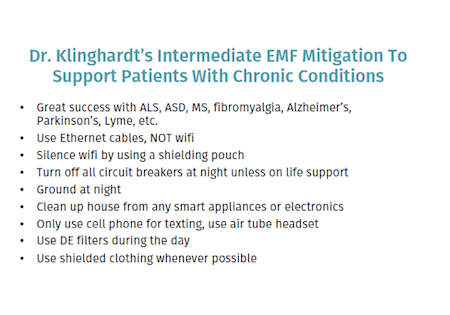
This question about EMF mitigating devices and harmonizers is the most common question I get related to EMFs so I’d like to reiterate Nick’s advice and share how Dr. Klinghardt supports his patients who have chronic health conditions – notice he makes no mention of devices or harmonizers.

The above slide is shared with permission from Nick Pineault’s ElectrosmogRX training (more details below).

Adriana asks this question about EMFs and sleep

My boyfriend cannot sleep for years now. We are in the outskirts of [a big city], close to the international airport. We lived in the city and there we had a lot of EMF (3 GSM antennas on the neighboring block, WiFi with every neighbor in the block – 10 stories high and 4 apartments/floor + intelligent meters for heating on every heater in the house. That was a lot for him and after we moved outside the city, to a house and in a low-density housing area, then it was better for him. But he sits at the laptop for 6-8 hours every day. You think that may be affecting him that much?

Here is Nick’s feedback for Adriana:

Your boyfriend might be feeling symptoms related to EMF exposure, and sleep disturbance is one of the most common ones.

If he exposes himself to a laptop connected via WiFi, then his symptoms might persist.

In his case, especially if he works at the computer all day, every day — I’d recommend cutting off the WiFi anytime it’s not in use and using his computer via an ethernet cable instead of WiFi.

Turn off the WiFi at night, unplug everything from the walls and even turn off the circuit breaker to the bedroom at night for at least 3 days and sees if this helps him.

In order to alleviate EMF sensitivity, it’s critical that he takes extra step to reduce his exposure as much as possible.

If you’re a practitioner, are you looking at the impact EMFs have on the health of your clients/patients and do you feel comfortable answering questions like these ones? If not, Nick Pineault is on a mission to create awareness and provide practical and research-based resources for practitioners via his ElectrosmogRX training (it’s 33% off for a limited time).

Nick is also offering these non-cost resources so you can be as informed as possible:

  • Downloadable Guide: How EMFs Affect Your Patients/Clients
  • EMF case studies video (teaching you how to identify EMF-related symptoms)
  • Here is the link to register for a replay of the webinar: 3 Essential Steps to Know Which of Your Patients/Clients Are Suffering From EMF-Related Symptoms

This blog is strictly about EMFs – which cannot be ignored – but we must not forget how the amino acids like GABA and tryptophan can help with anxiety and depression, and even pain and IBS. They can both also help with insomnia as can melatonin which has been shown to be disrupted by EMF exposure. This is just the tip of the iceberg in terms of nutritional support for EMF-related issues for both healing and resilience – Nick covers it all in the ElectrosmogRX training (which I’ve done and wholeheartedly endorse).

Are you seeing improvements in your health once you address EMFs? What changes have you made? Have nutritional changes helped too?

Filed Under: EMF, EMFs Tagged With: anxiety, depression, electrosmog, EMF harmonizer, EMF mitigating device, EMFs, IBS, insomnia, Nick Pineault, Qlink, sinus, skin, sleep

MDMA-Assisted Psychotherapy for Treating Chronic PTSD: Why I feel we can do better and the role of nutrition and amino acids like GABA

November 2, 2018 By Trudy Scott 7 Comments

You may be familiar with MDMA (3,4-methylenedioxymethamphetamine), also known as “ecstasy”, because of its reputation as a party drug. And you have likely seen some of the media reports on the new research and growing support for MDMA-Assisted psychotherapy for treating chronic PTSD (post-traumatic stress disorder). Due to adverse effects I’d like to share my concerns about this research and treatment and why I feel we can do better – by addressing nutrition and using amino acids like GABA and others.

In a recent press release, Colorado Study Shows Lasting Benefits of MDMA-Assisted Psychotherapy for Treating Chronic PTSD, the non-profit organization, Multidisciplinary Association for Psychedelic Studies (MAPS) reports these study results:

28 participants found that one month after their second day-long experimental session, 42.9% in the active-dose (100 mg and 125 mg) MDMA groups did not qualify for a diagnosis of PTSD, compared to 33.3% in the low-dose MDMA (40 mg active placebo) control group.

The results were even more notable 12 months after the third active-dose experimental session, which found that one year following treatment with MDMA-assisted psychotherapy, 76% of participants no longer had PTSD.

It is the largest U.S. FDA-regulated double-blind, placebo-controlled clinical trial of MDMA-assisted psychotherapy for the treatment of chronic PTSD and the results are impressive: 76% of the study participants no longer had PTSD after a year and 3 treatment sessions. I’m really happy for the participants BUT I believe we can do better because there are adverse reactions to this treatment and there are other safer approaches for recovery.

This comment about an acceptable risk profile and adverse reactions concerns me (and I suspect it concerns you too):

The study replicated previous research showing an acceptable risk profile for MDMA, with the most frequently reported adverse reactions during experimental sessions being anxiety, jaw clenching, headache, muscle tension, dizziness, fatigue, and low mood.

Adverse reactions one week following treatment included insomnia, low mood, irritability, and ruminations. Temporary elevations in pulse, blood pressure, and temperature were also recorded during MDMA sessions, and did not require medical intervention.

A common theme we see in the research on psychedelics is how effective it is for PTSD that doesn’t respond to therapy or medications. This paper states:

There is an immense need for innovative treatment options that improve outcomes, especially for PTSD refractory to psychotherapy and/or pharmacotherapies

I agree there is an immense need for successful treatment approaches, but jumping to MDMA from psychotherapy and/or psychiatric medications is skipping out the entire nutritional and biochemical step which is SO powerful and doesn’t have the above adverse effects. I’m concerned too many who have not seen benefits from therapy or medications are seeing MDMA as THE solution and are going to be harmed even further.

This paper, The Potential Dangers of Using MDMA for Psychotherapy, the author is concerned about the fact that “acute MDMA can stimulate the release of difficult feelings and memories, which may be distressing” and also the negative moods that occur after MDMA treatment:

This period of negative cognitions may be counter-productive, especially in psychiatrically vulnerable clients, for instance those with predispositions to anxiety, depression, or psychosis. For example, it could increase the likelihood of suicide in those individuals with strong post-recovery feelings of depression.

Because of this, I wholeheartedly agree with the author’s position:

it will always be far safer to undertake psychotherapy without using co-drugs. In selected cases MDMA might provide an initial boost, but it also has far too many potentially damaging effects for safe general usage.

In addition to psychotherapy, there are also so many nutritional and biochemical factors we can consider when it comes to PTSD. These don’t have any of the above damaging effects seen with MDMA. Here are a few to consider:

  • In this blog post, PTSD from 3 tours in Afghanistan: Can GABA help with the anxiety? how low GABA can lead to physical anxiety, muscle tension and the need to self-medicate with alcohol or sugary foods in order to calm down and relax. We also have research supporting the use of GABA for helping with unwanted obtrusive thoughts which are common with PTSD. When low GABA is suspected we do an amino acid trial with GABA, one of the calming amino acids.
  • A 2016 reports that blueberries boost serotonin and may help with PTSD and anxiety https://www.everywomanover29.com/blog/blueberries-serotonin-ptsd-anxiety/. This was an animal study where the traumatized rats were fed a blueberry-enriched diet. The study authors report an increase in serotonin levels, suggesting that “non-pharmacological approaches might modulate neurotransmitters in PTSD.”
  • A recent meta-analysis, Association between posttraumatic stress disorder and lack of exercise, poor diet, obesity, and co-occuring smoking, confirms the diet and lifestyle connection to being more impacted by trauma when health is not optimal.

I feel it is these above approaches and others like this that we need to be using to address PTSD, rather than subjecting individuals who are already suffering to treatments that have adverse reactions AND are not addressing underlying nutritional deficiencies of low GABA, low serotonin, out of balance endocannabinoid system and overall health, to name a few of many possible underlying biochemical factors.

If this treatment approach is approved, I would hope that all the adverse effects and dangers are clearly explained and I’d also like there to be informed consent before it is used – so individuals know exactly what they are getting into. Hopefully, by the time it is approved, nutritional psychiatry will be more accepted.

I’d love to hear your thoughts on this research and treatment approach. Is it something you have considered or would possibly consider in the future – you personally or with patients?

Or do you have similar concerns that I have?

Have you already tried MDMA recreationally (possibly for therapeutic reasons) and what were your experiences like?

Filed Under: PTSD/Trauma Tagged With: anxiety, biochemical, blueberries, depression, GABA, insomnia, irritability, low mood, MAPS, MDMA, nutrition, nutritional, PTSD, ruminations

My iPhone was zapping me with EMFs even when on airplane mode – affecting my sleep, and making me agitated and fatigued

September 7, 2018 By Trudy Scott 17 Comments

I recently got a new iPhone 6 and after having it for a good few weeks I discovered it had been zapping me with EMFs (electromagnetic fields) even when it was on airplane mode.

It was affecting my sleep, making me twitchy and agitated, leaving me feeling exhausted and more jet-lagged than usual (I had just travelled to the USA and then back to Australia) and making my right arm/mouse arm “thick” and slow when working on my PC. I have a feeling it played a role in my worsening lower back pain too!

I was NOT happy! I was actually fuming!

I have my phone on airplane mode most of time because in the last 6 months I’ve discovered I have some degree of EHS or electromagnetic hypersensitivity. This is a very real condition and many people are not even aware that EMFs may be playing a role in their symptoms.

This abstract summarizes EHS well: Characteristics of perceived electromagnetic hypersensitivity in the general population

Health problems evoked in the presence of electrical equipment is a concern, calling for better understanding for characteristics of electromagnetic hypersensitivity (EHS) in the general population.

The present study investigated demographics, lifestyle factors, frequency and duration, coping strategies, proportion meeting clinical criteria for intolerance attributed to electromagnetic fields (EMF) and comorbidity. Using data from a large-scale population-based questionnaire study, we investigated persons with self-reported (n = 91) EHS in comparison to referents (n = 3,250).

Middle age, female sex and poor perceived health was found to be associated with EHS. More than 50% in the EHS group reported having EMF-related symptoms more often than once a week, and the mean number of years experiencing EHS was 10.5. More than half of the EHS group reported that their symptoms started after a high-dose or long-term EMF exposure, that they actively tried to avoid EMF sources and that they mostly could affect the EMF environment. A minority of the EHS group had sought medical attention, been diagnosed by a physician or received treatment.

Exhaustion syndrome, anxiety disorder, back/joint/muscle disorder, depression, functional somatic syndrome and migraine were comorbid with EHS.

The results provide ground for future study of these characteristic features being risk factors for development of EHS and or consequences of EHS.

Fortunately, I used my Cornet meter and figured out something was up. Unfortunately, it took me some time to connect the dots. I figured I wasn’t feeling that great because of my recent trip and spending time sitting in planes and being exposed to so much WiFi in airports, planes, hotels, and conference rooms. I also drive a keyless car for 4 hours! Also, when you’re in the midst of this type of thing you’re kind of slow in figuring things out!

I’m going to share the lessons I learned so they can help you prevent something similar.

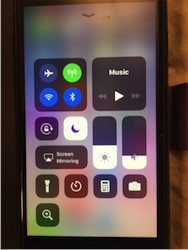
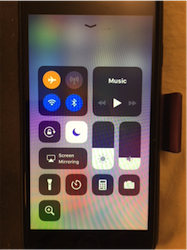
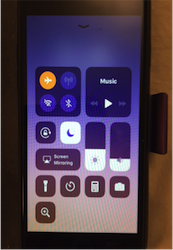
Lesson #1: When you toggle airplane mode off it via the swipe up feature it also activates Bluetooth and WiFi. BUT when you turn on airplane mode when using the swipe up feature, both Bluetooth and Wifi stay on unless you turn them off first in settings! This must be the default for new iPhones (and may even reset back to this with a software upgrade).

A: as expected
B: not good
C: make sure it’s like this

A: Airplane mode off (blue color plane) and Wifi is on and Bluetooth is on

B: Airplane mode on (orange color plane) and yet Bluetooth and WiFi is still on – this is not good if you’re using your phone next to your bed or in a car or close to your body

C: Airplane mode on (orange color plane) and Bluetooth and WiFi is off (they have a line through them) – make sure it’s like this when it’s next to your bed or in a car or close to your body

Lesson #2: Watch to see if 3G goes back to 4G when you toggle airplane mode on and off. I have changed my phone from 4G to 3G in settings in order to reduce EMF exposure when my phone is on. If you don’t know how to do this: settings/cellular/cellular data options – enable 4G toggle. Some folks are saying the airplane mode toggle reactivates 4G. I’m guessing it’s specific to the phone version as it’s not an issue on my phone.

Lesson #3: When you get a new phone or any new device, check everything and even if it’s not new, upgrades to software may change things.

Lesson #4: Distance is your friend when it comes to EMFs. I believe this impacted me more because I thought the iPhone was safely in airplane mode and not emitting EMFs. I had it close to me: in my handbag during the day when out and about, on my side-table next to my head at night, on my desk near me during the day, and in my money-belt right over my belly on the plane for 15 hours flying back!

Lesson #5: Trust your gut if you feel something is off and keep searching for a solution. I knew something was off and was prowling around trying to find what WiFi had been turned on in our home and looking for new hotspots in the area (I recently blogged about how a WiFi modem with a public hotspot caused seizures, vertigo, headaches, insomnia and heart palpitations in a woman with a history of West Nile virus)

Lesson #6: Get a meter so you can be proactive and actually measure this stuff. My Cornet meter is awesome! I’m still a newbie at this but when I see red flashing lights I know I’m onto something.

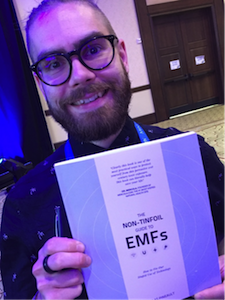
I owe much appreciation to Nick Pineault, author of The Non-Tinfoil Guide to EMFs (my Amazon link) for his amazing ElectrosmogRx practitioner training. I’ve learned so much about how EMFs are impacting our health and want to share this with you because I truly believe it’s a big player when you have ongoing anxiety, insomnia, pain, brain fog and with more serious health concerns too.

I even got to see Nick at the event I attended in the USA and got a signed copy of his excellent book!

When I shared this story on Facebook it was received with much interest and two people shared similar issues. One person said this:

Since I’ve moved I’ve been using my iPhone 6 as an alarm and getting disrupted sleep every night! Time for change!

And then shared this a few days later:

I want to report that I definitely slept better without my iPhone in the room last night!.

Someone else shared this:

Since getting the iPhone 6 I have been experiencing an overactive brain when trying to sleep plus heart palpitations. I usually sleep so well and turn off my thoughts and relax with no problems. I just thought it was a culmination of work, stress deadlines and hormones.

Too often I hear comments like this: “it’s all around us – what are we supposed to do?!” There is so much we can do!

Once I made the simple change of making sure the Bluetooth and WiFi stayed off when I toggled airplane mode on, my sleep improved, the twitchiness and agitation abated, my exhaustion ramped down and my slow mouse arm started to work normally again. My back pain is slowly but surely easing too.

As a nutritionist I always use everything at my disposal and so I’ve also used GABA for my back pain and tryptophan for the agitation and sleep issues and plenty of rosemary essential oil, together with grounding/earthing on a daily basis.

Thank goodness for my Qlink too! I’d probably have been feeling much worse had I not been wearing it 24 hours a day.

My wish now is for more folks to take this seriously!

Do you use your iPhone (or other smart phone) as an alarm without switching to airplane mode? Have you checked if Bluetooth and WiFi is off when you do switch to airplane mode?

And has disrupted sleep or other issues like anxiety, agitation, heart palpitations, pain issues, brain fog or fatigue resolved when making these very simple changes?

I’d love some feedback if you have a smart phone other than an iPhone – to share what happens on your phone and how you addressed it.

Filed Under: EMF Tagged With: agitated, airplane mode, anxious, EHS, EMF, EMFs, exhausted, fatigued, insomnia, iPhone, pain, sleep

WiFi modem with a public hotspot causes seizures, vertigo, headaches, insomnia and heart palpitations in a woman with a history of West Nile virus

August 24, 2018 By Trudy Scott 11 Comments

This recent research illustrates the harmful effects of a new type of wireless modem, enabled for both personal use and functioning as a public hotspot: Exacerbation of demyelinating syndrome after exposure to wireless modem with public hotspot. The public hotspot feature was designed to reach up to 100 meters (or 328 feet which is close to the length of a football field).

Here is the entire abstract since it explains the situation so well:

In August 2003, 48-year-old JS of Colorado, USA, a fitness therapist and sports nutritionist, contracted neuroinvasive [i.e infecting the nervous system] West Nile virus which left her with disabilities due to spinal axonal damage.

In August 2014, she suddenly developed symptoms very much like her acute West Nile infection 11 years ago, including focal seizures, ataxia, vertigo and headaches. Her blood count looked normal so there was no obvious infection. What struck her as odd was that when she left her apartment for any length of time, the symptoms stopped.

She found out that a new type of wireless modem, enabled for both personal use and functioning as a public hotspot designed to reach up to 100 m, had been installed in the flat under hers. Her neighbor replaced the modem with a router without the hotspot feature. After that, the seizures stopped immediately, and the other symptoms faded gradually, after which she was fine and again could sleep well.

Later, when another activated hotspot was installed in an adjacent flat, JS once again noticed symptoms.

A possible association between electrohypersensitivity, myelin integrity and exposure to low-intensity radiofrequency electromagnetic fields (RF-EMF) typical in the modern world has recently been proposed.

Since the West Nile virus attacks both the nerve cells and the glial ones, one explanation to the above observed case effects is that the initial virus attack and the wireless modem’s RF-EMF affect the nervous system through the very same, or similar, avenues, and maybe both via the oligodendrocytes [i.e. the myelinating cells of the central nervous system].

Here are a few of the other symptoms she reported before discovering that it was the public hotspot that was causing her symptoms:

  • losing sensation in her face, neck and torso
  • tinnitus (ringing in the ears)
  • allergy symptoms like those of severe hayfever
  • difficulty concentrating
  • poor fine motor control
  • impaired short-term memory
  • pain in the facial bones, especially the cheeks, jaw bones and the roots of her teeth
  • numbness and tingling
  • difficulty breathing and swallowing (more pronounced after exertion)
  • dizziness
  • elevated morning fasting blood sugar levels (up 25% from usual to 100 mg/dL) and then back to normal 2 weeks after the hotspot was disabled
  • fight or flight reaction for the first 2–3 weeks, which then turned into fatigue and apathy with little accomplished during the day

These symptoms all dissipated when she wasn’t home. Once home in the evenings, her desire for sweets increased and her sleep was also impacted:

In the evening, her appetite was much increased and she craved sweet food, which was not usual for her. She became sleepy at the usual time, settling down between 10.30 pm and 11 pm and could fall asleep, all as normal.

However, within 1–2 hours, she routinely woke suddenly having had very vivid, disturbing dreams and with a pounding heartbeat. This was usually followed by a seizure, sometimes focal, where one part of her body (primarily right arm) would be shaking. Other times, her whole body was shaking.

She also noticed more severe symptoms when the modem with the activated public hotspot was closer to where she slept i.e. distance was a factor. On bad nights, after waking, she would sometimes go and sleep in her living room which was further away from the modem.

After a seizure, she slept fitfully, unless she moved to sleep on the couch in another room. There, JS found she could fall asleep quite quickly and sleep through the rest of the night.

When in her bedroom the modem was just 20–30 feet away and when in the living room it was about 50–60 feet from her (plus an additional wall), both of which weakened the signal.

It should also be noted that JS used a cell phone, a wireless router and a computer and had no problems from any of these – it was only the modem with the public hotspot that was problematic.The study authors shared that

The hotspot antenna almost certainly has a considerably higher transmit power as this would be needed to increase the effective transmit range for users in the area.

Other possible causes/mechanisms are reported as follows:

  • the pulse width of the beacon signal
  • an additional pattern or stroboscopic effect, or double intensity set up by the simultaneous transmission of the private and public hotspots

However, do keep in mind that for some people with electrohypersensitivity, simply using a cell phone and WiFi can cause symptoms.

Do you know if your router has this public Wi-Fi hotspot feature turned on?

Do you know if your router has this public Wi-Fi hotspot feature turned on? Many people do not and are fuming when they find out – I know I was!

JS discovered this as a result of a pop-upon her mobile phone:

From before the episodes occurred, JS kept her mobile phone WiFi disabled while at home. The day after she began having symptoms in August, she had temporarily enabled the WiFi feature while out shopping and when she came home that day, a pop-up appeared informing her she was in a free Xfinity WiFi zone.

In this article two Comcast customers sued the company for turning their Xfinity Internet routers into public WiFi hotspots saying “Comcast’s actions pose risks to subscribers and are taken without seeking their authorization.” They objected to the increase in customers’ electricity costs, the impacts on network performance and network security concerns.

However, they don’t even raise the issue of potential harm from a public WiFi hotspot that is activated on a modem in your home or one nearby.

In fact this site that offers instructions for disabling this public WiFi hotspot on your Comcast Xfinity router states that “We don’t necessarily think you have to disable this feature, as it seems to work fine — we haven’t heard any horror stories or reports of problems yet.”  

I would consider this case study to be a horror story that is not common knowledge and needs to be. JS was seriously harmed on two occasions by modems with public WiFi hotspots. In both instances the home-owners with these modems were not even aware they had these public hotspots activated and very quickly had them disabled once they found out what was happening to JS.

The study authors conclude that this case study strongly indicates that:

emissions from these new wireless modems could cause physical harm for those susceptible to that type of radiation.

My questions are this:

  • How many people are not even aware that their modem has this public WiFi hotspot feature enabled?
  • How many other people like JS are being seriously harmed by modems with public WiFi hotspots?
  • How many people have chronic issues like problems falling asleep, waking in the early hours, agitation, anxiety and heart palpitations – all possibly caused by a public WiFi hotspot on their modem or on a modem next door or even down the street?

I consider JS to be the canary in the coal-mine and her story is a good lesson for all us to wake up and get serious about WiFi and EMFs.

Here are some other blogs posts I’ve written about WiFi and EMFs:

  • Wi-Fi is an important threat to human health and may contribute to unresolved anxiety, SIBO, oxalate issues and high cortisol
  • Electrosmog and autoimmune disease: silver-threaded caps result in improved symptoms for 90% of study participants
  • EMFs: a factor in neuropsychiatric symptoms and cancer (this post has additional information about the practitioner Electrosmog RX evergreen training and Nicholas Pineault’s book “The Non-Tinfoil Guide to EMFs: How to Fix Our Stupid Use of Technology” (my Amazon link)

Do share what you’ve experienced with modems that have public WiFi hotspots activated and if you can relate to any of the symptoms JS experienced?

Filed Under: EMFs Tagged With: anxiety, electrohypersensitivity, EMF, Headaches, heart palpitations, insomnia, modem, public hotspot, seizures, vertigo, West Nile virus, WiFi

  • « Go to Previous Page
  • Page 1
  • Interim pages omitted …
  • Page 12
  • Page 13
  • Page 14
  • Page 15
  • Page 16
  • Page 17
  • Go to Next Page »

Primary Sidebar

NEW! GABA QuickStart Homestudy (with special intro pricing)

gaba quickstart homestudy

Free Report

9 Great Questions Women Ask about Food, Mood and their Health

You'll also receive a complimentary subscription to my ezine "Food, Mood and Gal Stuff"


Connect with me

Popular Posts

  • Amino Acids Mood Questionnaire from The Antianxiety Food Solution
  • The Antianxiety Food Solution Amino Acid and Pyroluria Supplements
  • Pyroluria Questionnaire from The Antianxiety Food Solution
  • Collagen and gelatin lower serotonin: does this increase your anxiety and depression?
  • Tryptophan for the worry-in-your-head and ruminating type of anxiety
  • GABA for the physical-tension and stiff-and-tense-muscles type of anxiety
  • The Antianxiety Food Solution by Trudy Scott
  • Seriphos Original Formula is back: the best product for anxiety and insomnia caused by high cortisol
  • Am I an anxious introvert because of low zinc and vitamin B6? My response to Huffington Post blog
  • Vagus nerve rehab with GABA, breathing, humming, gargling and key nutrients

Recent Posts

  • What do I use instead of Seriphos to help lower high cortisol that is affecting my sleep and making me anxious at night?
  • BeSerene™ GABA/theanine cream eases severe muscle tension in her neck/shoulders, prevents her bad headaches and quells her anxiety
  • How the correct approach, dose and sublingual use of GABA can be calming and not cause a flushed and itchy face and neck
  • The amino acid glutamine improves low mood by addressing gut health, and it has calming effects too
  • Flight anxiety with heightened breath, physical tension and also fearing the worst (the role of low GABA and low serotonin)

Categories

  • 5-HTP
  • AB575
  • Addiction
  • ADHD
  • Adrenals
  • Alcohol
  • Allergies
  • Alzheimer's disease
  • Amino Acids
  • Anger
  • Antianxiety
  • Antianxiety Food Solution
  • Antidepressants
  • Anxiety
  • Anxiety and panic
  • Autism
  • Autoimmunity
  • benzodiazapines
  • Bipolar disorder
  • Books
  • Caffeine
  • Cancer
  • Candida
  • Children/Teens
  • Collagen
  • Cooking equipment
  • Coronavirus/COVID-19
  • Cravings
  • Depression
  • Detoxification
  • Diabetes
  • Diet
  • DPA/DLPA
  • Drugs
  • EFT/Tapping
  • EMF
  • EMFs
  • Emotional Eating
  • Endorphins
  • Environment
  • Essential oils
  • Events
  • Exercise
  • Fear
  • Fear of public speaking
  • Fertility and Pregnancy
  • Fish
  • Food
  • Food and mood
  • Functional neurology
  • GABA
  • Gene polymorphisms
  • General Health
  • Giving
  • Giving back
  • Glutamine
  • Gluten
  • GMOs
  • Gratitude
  • Gut health
  • Heart health/hypertension
  • Histamine
  • Hormone
  • Hyperparathyroidism
  • Hypoglycemia
  • Immune system
  • Inflammation
  • Insomnia
  • Inspiration
  • Introversion
  • Joy and happiness
  • Ketogenic diet
  • Lithium orotate
  • Looking awesome
  • Lyme disease and co-infections
  • MCAS/histamine
  • Medication
  • Men's health
  • Mental health
  • Mercury
  • Migraine
  • Mold
  • Movie
  • MTHFR
  • Multiple sclerosis
  • Music
  • NANP
  • Nature
  • Nutritional Psychiatry
  • OCD
  • Osteoporosis
  • Oxalates
  • Oxytocin
  • Pain
  • Paleo
  • Parasites
  • Parkinson’s disease
  • PCOS
  • People
  • PMS
  • Postpartum
  • PTSD/Trauma
  • Pyroluria
  • Questionnaires
  • Real whole food
  • Recipes
  • Research
  • Schizophrenia
  • serotonin
  • SIBO
  • Sleep
  • Special diets
  • Sports nutrition
  • Stress
  • Sugar addiction
  • Sugar and mood
  • Supplements
  • Teens
  • Testimonials
  • Testing
  • The Anxiety Summit
  • The Anxiety Summit 2
  • The Anxiety Summit 3
  • The Anxiety Summit 4
  • The Anxiety Summit 5
  • The Anxiety Summit 6
  • Thyroid
  • Thyroid health
  • Toxins
  • Tryptophan
  • Tyrosine
  • Uncategorized
  • Vegan/vegetarian
  • Women's health
  • Yoga

Archives

  • October 2025
  • September 2025
  • August 2025
  • July 2025
  • June 2025
  • May 2025
  • April 2025
  • March 2025
  • February 2025
  • January 2025
  • November 2024
  • October 2024
  • September 2024
  • August 2024
  • July 2024
  • June 2024
  • May 2024
  • April 2024
  • March 2024
  • February 2024
  • January 2024
  • December 2023
  • November 2023
  • October 2023
  • September 2023
  • August 2023
  • July 2023
  • June 2023
  • May 2023
  • April 2023
  • March 2023
  • February 2023
  • January 2023
  • December 2022
  • November 2022
  • October 2022
  • September 2022
  • August 2022
  • July 2022
  • June 2022
  • May 2022
  • April 2022
  • March 2022
  • February 2022
  • January 2022
  • December 2021
  • November 2021
  • October 2021
  • September 2021
  • August 2021
  • July 2021
  • June 2021
  • May 2021
  • April 2021
  • March 2021
  • February 2021
  • January 2021
  • December 2020
  • November 2020
  • October 2020
  • September 2020
  • August 2020
  • July 2020
  • June 2020
  • May 2020
  • April 2020
  • March 2020
  • February 2020
  • January 2020
  • December 2019
  • November 2019
  • October 2019
  • September 2019
  • August 2019
  • July 2019
  • June 2019
  • May 2019
  • April 2019
  • March 2019
  • February 2019
  • January 2019
  • December 2018
  • November 2018
  • October 2018
  • September 2018
  • August 2018
  • July 2018
  • June 2018
  • May 2018
  • April 2018
  • March 2018
  • February 2018
  • January 2018
  • December 2017
  • November 2017
  • October 2017
  • September 2017
  • August 2017
  • July 2017
  • June 2017
  • May 2017
  • April 2017
  • March 2017
  • February 2017
  • January 2017
  • December 2016
  • November 2016
  • October 2016
  • September 2016
  • August 2016
  • July 2016
  • June 2016
  • May 2016
  • April 2016
  • March 2016
  • February 2016
  • January 2016
  • December 2015
  • November 2015
  • October 2015
  • September 2015
  • August 2015
  • July 2015
  • June 2015
  • May 2015
  • April 2015
  • March 2015
  • February 2015
  • January 2015
  • December 2014
  • November 2014
  • October 2014
  • September 2014
  • August 2014
  • July 2014
  • June 2014
  • May 2014
  • April 2014
  • March 2014
  • February 2014
  • January 2014
  • December 2013
  • November 2013
  • October 2013
  • September 2013
  • August 2013
  • July 2013
  • June 2013
  • May 2013
  • April 2013
  • March 2013
  • February 2013
  • January 2013
  • December 2012
  • November 2012
  • October 2012
  • August 2012
  • July 2012
  • June 2012
  • May 2012
  • April 2012
  • March 2012
  • February 2012
  • January 2012
  • December 2011
  • November 2011
  • October 2011
  • September 2011
  • August 2011
  • July 2011
  • June 2011
  • May 2011
  • April 2011
  • March 2011
  • February 2011
  • January 2011
  • December 2010
  • October 2010
  • September 2010
  • July 2010
  • May 2010
  • April 2010
  • March 2010
  • February 2010
  • January 2010
  • November 2009

Share the knowledge!

The above statements have not been evaluated by the Food and Drug Administration. Products listed in this website are not intended to diagnose, treat, cure or prevent any disease.

The information provided on this site is for informational and educational purposes only and is not intended as a substitute for advice from your physician or other health care professional. You should consult with a healthcare professional before starting or modifying any diet, exercise, or supplementation program, before taking or stopping any medication, or if you have or suspect you may have a health problem.


Copyright © 2026 Trudy Scott. All Rights Reserved. | Privacy | Terms and Conditions | Refund Policy | Medical Disclaimer

Free Report

9 Great Questions Women Ask about Food, Mood and their Health

You’ll also receive a complimentary subscription to my ezine “Food, Mood and Gal Stuff”