• Skip to primary navigation
  • Skip to main content
  • Skip to primary sidebar

everywomanover29 blog

Food, Mood and Women's Health – Be your healthiest, look and feel great!

  • Blog
  • About
  • Services
  • Store
  • Resources
  • Testimonials
  • The Book
  • Newsletter
  • Contact
  • Search this site

GABA

DPA for weepiness, pain and comfort and reward eating

September 20, 2017 By Trudy Scott 63 Comments

Today I’m reviewing DPA (or d-phenylalanine) for weepiness, pain and comfort and reward eating. This amino acid is a favorite with so many of my clients because it helps with the above by boosting your endorphins and when you open a capsule onto your tongue you feel like you just got a big hug. It’s a really good feeling!

I’m also sharing some additional resources for you on DPA.

DPA and endorphins

DPA is an amino acid that destroys the enzyme that breaks down endorphins. Endorphins are feel-good chemicals that you experience with an endorphin rush when you go for a run or when someone gives you a big hug, when you show kindness to someone or someone does something nice for you. Taking the amino acid, DPA, helps to raise your endorphins.

Low endorphins and weepiness

With low endorphins you’re very weepy. You may be overly emotional. If you watched a TV ad or you watched a really sad movie, you may be more prone to crying than the average person.

It’s also known as the break-up pill and is very helpful when going through a relationship split.

It’s also extremely helpful after a stressful event. I spoke with a friend who was impacted by Hurricane Harvey and recommended DPA for the weepiness she was starting to feel a few days after the clean-up efforts. It’s one of the amino acids I recommend in my blog: Nutrition solutions for psychological stress after a natural disaster

Low endorphins and pain

As well as being sensitive to emotional pain (the crying and the weepiness), you also tend to be sensitive to physical pain when endorphins are low.

We know acupuncture raises your endorphin levels and eases pain. Using DPA helps physical pain in a similar way. Pain can be caused by low GABA and low serotonin, an inflammatory diet, a high oxalate diet or nightshades, something physical like a fall, osteoarthritis or an autoimmune condition like rheumatoid arthritis. If there is also a low endorphin aspect to your pain, DPA can provide some pain reduction.

Low endorphins and comfort/reward eating

Another symptom of low endorphins is comfort/reward eating. You may relate to the term emotional eating. It often goes like this: “This is my reward. This is my treat. I absolutely deserve it.”

And when you consume those carbohydrates – that bowl of ice cream, that bowl of cereal, that chocolate chip cookie, that chocolate cup-cake – you feel like “this is my reward, this comforts me.” When you use DPA you can literally take it or leave it. Really!

DPA is one of the amino acids that help you easily quit sugar without having to use massive willpower and without feeling deprived. The best way to figure it out is to do the amino acid mood questionnaire

Here is a summary to help you figure out which brain chemistry imbalance is driving your sugar cravings (and mood issues):

  • if you have to eat sugar when you haven’t eaten in awhile it’s likely low blood sugar and glutamine on the tongue stops the sugar desire on the spot
  • if you stress-eat your sugar cravings are likely due to low GABA, and GABA will stop the stress-eating and calm you down
  • if you eat sugar or carbs to feel happy (and especially from late afternoon onwards) then your sugar cravings are likely due to low serotonin, and tryptophan stops the cravings and boosts mood and reduces anxiety
  • if you eat sugar for an energy boost then it’s likely due to low catecholamines and tyrosine will stop those cravings and give you a mood and energy boost
  • if you are a comfort-eater or big emotional eater, then it’s likely due to low endorphins and DPA will stop that “I deserve-it-reward-eating” and also give you a hug-like mood boost

And remember it’s not unusual to need to address all areas. You can have low GABA anxiety and low endorphins too and low blood sugar. If this is the case I have my clients address one at a time.

If addressing low endorphins helps reduce or eliminate the reward eating and helps you eat less or no sugar it means less impact on your adrenals and more even blood sugar levels and therefore less anxiety too.

As with all the amino acids, when using DPA:

  • Start low (500mg is a typical starting dose) and increase as needed.
  • Do a trial to determine if the emotional eating is due to low endorphins. I always do this with clients before starting any amino acid. Be sure to read how to do an amino acid trial. It has the amino acid questionnaire, the precautions and information on how to use targeted individual amino acids.
  • Take between meals and away from protein for the best effects

This blog post is part of the series of amino acid product reviews:

  • Tryptophan for low serotonin (worry-in-the-head anxiety)
  • GABA for low GABA symptoms (physical anxiety)
  • Glutamine for calming, intense sugar cravings, gut healing and low blood sugar
  • Tyrosine for focus, motivation, energy, a good mood and possibly even anxiety

The resources in this blog and my other articles are intended to be used in conjunction with my book: The Antianxiety Food Solution – How the Foods You Eat Can Help You Calm Your Anxious Mind, Improve Your Mood, and End Cravings. If you do not have my book I highly recommend getting it and reading it before jumping in and taking the amino acid supplements:

There is a complete chapter on the amino acids and one for pyroluria, plus information on real whole food, sugar and blood sugar, gluten, digestion and much more.

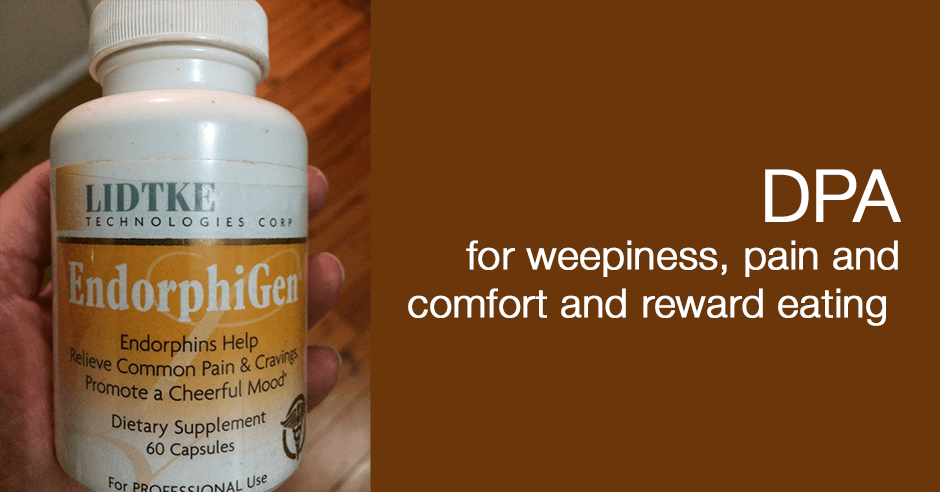
The Lidtke Endorphigen 500mg product is the one I recommend. You can find this DPA product and the others I recommend on this blog: The Antianxiety Food Solution Amino Acid and Pyroluria Supplements.

*******************
Update Feb 20, 2020:

DPA is one of my top products that I recommend. I do find it much more effective than DPLA (for endorphin boosting) so I no longer recommend or use DLPA.

I used to recommend simply chewing the capsule to get the quickest and best effects and this worked well when this product was produced in a gelatin capsule. Now it’s made with a cellulose capsule and chewing doesn’t work at all well so opening the capsule (or just biting off the top) and tipping the powder into your mouth works well.

It does taste quite pleasant – some of my clients think it has a dark chocolate-like taste. A few people don’t like the taste at all but even then, it is still very effective when low endorphins are an issue.

*******************

I’d love to hear if DPA has worked for you and how it’s helped?

If you have questions please post them below or on the supplements blog
Filed Under: GABA Tagged With: anxiety, comfort eating, DPA, emotional eating, endorphins, GABA, reward eating, sugar cravings, weepiness

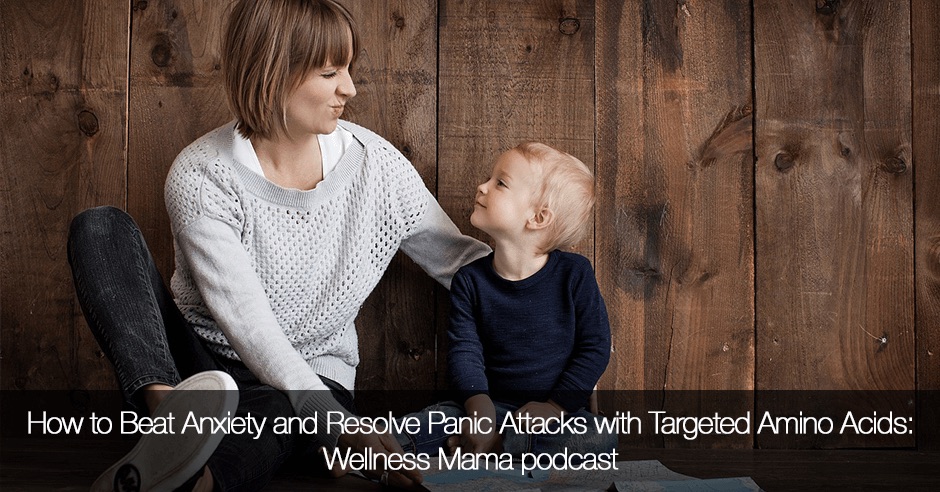
How to Beat Anxiety and Resolve Panic Attacks with Targeted Amino Acids: Wellness Mama podcast

September 15, 2017 By Trudy Scott 20 Comments

Today I share my wonderful interview with Katie, the “Wellness Mama”. We talk about my favorite topic: How to Beat Anxiety and Resolve Panic Attacks with Targeted Amino Acids with some extra questions about pregnancy and nursing that I’m not often asked about. Katie is mom to 6 children and many in her community are moms too.

Here is some of what we cover in our interview:

  • nutritional deficiencies commonly linked to anxiety, depression, and other problems
  • my own story of recovery from severe panic attacks
  • why perfectionism and worry might have more to do with body chemistry than your personality
  • all about the key anti-anxiety amino acids: GABA, theanine, tryptophan, 5-HTP (and others)
  • how low vitamin D, low zinc, high copper, and other nutritional factors add to anxiety
  • the low zinc and high copper play a role in postpartum depression
  • the potential neurotransmitter issue that leads to cravings
  • biochemical reasons some people are introverted or socially anxious
  • guidance for pregnant moms who can’t take amino acids (and what to do if you’re nursing)
  • the way an MTHFR mutation is linked to anxiety and how to resolve it

Here is a snippet of our interview on the topic of how to assess for low neurotransmitters and do a trial of GABA or tryptophan, and how quickly they work:

Just like you test your vitamin D levels – that’ll tell you that you’ve got low levels and you need to supplement with vitamin D, then you’ll retest and see that your levels have come up. With the amino acids and the low neurotransmitters, I find using a questionnaire is the best way to assess the fact that you may have low GABA and you may have low serotonin. Then you do a trial of the amino acid based on your unique needs, and then you redo the questionnaire and you see how things have changed.

If you use these targeted individual amino acids based on your unique need, you can see results very quickly – within five minutes, and then over the course of the next few weeks you should be seeing results very quickly. Some people will say, “I’m not seeing any impact, should I keep trying, you know, how long should I be aiming for.” The thing that, about the amino is that are so amazing, is that you get results right away. If you don’t get results, it means it’s not enough or it means you don’t need it. The anxiety is not caused by low serotonin or low GABA.

I also talk about my personal experience with low serotonin and perfectionism:

I discovered low serotonin was a factor because although the GABA helped with the physical anxiety and the panic attacks, I still had this perfectionism issue. I remember working in that computer job and being called up to do an appraisal. And they told me I was too much of a perfectionist and I needed to let go a little bit. I couldn’t believe anyone could think that was a bad thing. So it was interesting how, as you start to implement some of these, you start to realize some of these other things that you may think is just a personality thing or it’s just me, it’s just the way I am – you realize that some of these things can be related to biochemical imbalances.

As I mention above Katie does ask me about using the amino acids during pregnancy and while nursing:

I don’t recommend anyone take them during pregnancy. It’s difficult advice for me to give because I know that there are so many issues with SSRIs during pregnancy. Because we don’t have the research, it’s not something that I can recommend. If you are prone to anxiety or you’ve had anxiety, get that sorted out before you get pregnant. I know, that’s easier said than done. A lot of women really want to get pregnant now or they are pregnant and then they realize that they’ve got the anxiety. So that’s a very difficult situation.

Once you’ve had the baby, if you are having really bad anxiety, obviously you’ve got to talk to your doctor and make sure that they are okay with you taking the amino acids right after nursing and then waiting four to six hours before nursing again. It is one way to do it. And then monitoring the baby to make sure that they are okay. There are actually two studies that came out recently showing that tryptophan and tyrosine, doesn’t seem to be an issue in breast milk.

You can listen to the entire interview (and download the interview mp3 file and read the transcript) via the Wellness Mama podcast #105 blog.

For additional information on products over and above those we covered in the interview here are some recent blogs:

  • GABA for the physical tension kind of anxiety
  • tryptophan for the worry-in-the-head anxiety

Katie, is the “Wellness Mama” and her goal is to help other families live more naturally through practical tips, real food recipes, natural beauty and cleaning tutorials, natural remedies and more. Her blog is a wealth of information and if you don’t tune in to her podcasts and get her newsletter I encourage you to check her out.

Here are a few really good ones to get you started (although they really are all excellent!):

  • Epsom Salt: 21 Surprising Uses & Benefits for Health, Beauty, and Home (the first one is to use it for a relaxing bath soak, a favorite of mine; another is a recipe for a soothing magnesium lotion)
  • Homemade Remineralizing Toothpaste Recipe (Natural + Simple)
  • Homemade HE Laundry Detergent Recipe (Laundry Soap) (this was a hot topic on a recent facebook discussion)

She shares this on her site: “my real goal with the blog is to help you and to create lasting changes so that our children can grow up in a better world.” I just love her mission and passion and all the very practical and safe solutions she offers!

Filed Under: Amino Acids Tagged With: amino acids, anxiety, GABA, Katie, nursing, panic attacks, pregnancy, tryptophan, Wellness Mama

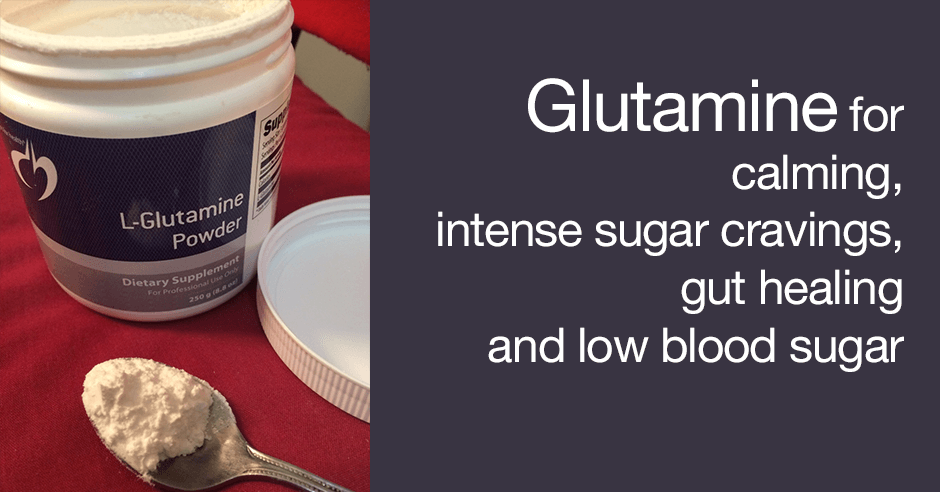
Glutamine for calming, intense sugar cravings, gut healing and low blood sugar

September 13, 2017 By Trudy Scott 29 Comments

Today I’m reviewing glutamine for the calming properties and to also share how glutamine helps reduce intense sugar cravings, helps with gut healing and prevents low blood sugar (which can actually cause anxiety and panic attacks).

I’m also sharing some additional resources for you on glutamine.

Here are all the symptoms we see with low blood sugar:

  • Crave sugar, starch or alcohol any time during the day
  • Irritable, shaky, headachey – especially if going too long between meals
  • Intense cravings for sweets
  • Lightheaded if meals are missed
  • Eating relieves fatigue
  • Agitated, easily upset
  • Nervous, anxious, panic attacks

Together with low serotonin and low GABA, addressing low blood sugar is one of the most effective approach I use with clients to help ease anxiety.   We achieve this with the use of glutamine and by controlling blood sugar by starting the day with a breakfast that includes quality animal protein.

Glutamine also helps eliminate sugar cravings and the strong desire for something sweet when opened directly on to the tongue. This blog and video explains it all: Glutamine for low blood sugar and calming effects

watch this video to hear how powerful glutamine was for Nicole – she saw results in around 5 minutes. I really like to get testimonials like this because when I talk about the profound and quick effects of the amazing amino acids it almost sounds too good to be true! But in this case (and the majority of cases), it really is true!

Nicole says “I get irritable, I get shaky and I get to the point that if I don’t get food NOW I think I’m going to hurt something!”

She tried the glutamine and in under 5 minutes she went from that feeling to: “I’m ok. I feel happy, I feel calm, I feel I can make it longer without needing food right away.”

She finished up by saying “I’m impressed at how well that worked for me”

When I mentioned I was working on this blog (on facebook) I had plenty of questions about this sugar craving benefit we see with glutamine. Keep in mind that low blood sugar is just ONE of the root causes of sugar cravings and glutamine will only work if the cravings are driven by low blood sugar. The way to figure it out is to do the amino acid mood questionnaire

Here is a simple way to help you figure it out:

  • if you have to eat sugar when you haven’t eaten in awhile it’s likely low blood sugar and glutamine on the tongue stops the sugar desire on the spot
  • if you stress-eat your sugar cravings are likely due to low GABA, and GABA will stop the stress-eating and calm you down
  • if you eat sugar or carbs to feel happy (and especially from late afternoon onwards) then your sugar cravings are likely due to low serotonin, and tryptophan stops the cravings and boosts mood and reduces anxiety
  • if you eat sugar for an energy boost then it’s likely due to low catecholamines and tyrosine will stop those cravings and give you a mood and energy boost
  • if you are a comfort-eater then it’s likely due to low endorphins and DPA will stop that “I deserve-it-reward-eating” and also give you a hug-like mood boost

When I asked for feedback one person felt glutamine made her depressed. This was new to me but I never say never and suggested she look at what else was in the product she used. I had one client feel more anxious on glutamine and it was due to one of the fillers.

Glutamine converts to GABA in most people and this is another way it helps calm you. For some people it converts to too much glutamate and can be a bit too stimulating. I’ll have these people use less or only use it during the day or not use it all. As with all nutrients used as supplements there is no one size fits all.

Dr. Josh Axe shares that glutamine is critical for any program designed to heal leaky gut and I write about this in this blog: Glutamine for healing a leaky gut

as a functional amino acid with multiple key physiological roles, glutamine holds great promise in protecting the gut from atrophy and injury under various stress conditions in mammals and other animals.

Here are some of the actual glutamine products I recommend and use with clients:

  • Pure Encapsulations L-Glutamine 500mg:  L-glutamine (free-form) 500 mg, vitamin C (as ascorbyl palmitate) 5 mg. The capsules can be swallowed or the capsule can be opened on to the tongue
  • Designs for Health Glutamine Powder: This is a powdered glutamine that you can use right on your tongue or even mixed in water. The taste is quite pleasant.

As with all the amino acids, when using glutamine:

  • Start low (500mg is a typical starting dose) and increase as needed.
  • Do a trial to determine if the anxiety and sugar cravings are in fact due to low blood sugar. I always do this with clients before starting any amino acid. Be sure to read how to do an amino acid trial. It has the amino acid questionnaire, the precautions and information on how to use targeted individual amino acids.
  • Take between meals and away from protein for the best effects

The blog has many other posts on glutamine – simply use the “search” function to find them.

This blog post is part of the series of amino acid product reviews:

  • Tryptophan for low serotonin (worry-in-the-head anxiety)
  • GABA for low GABA symptoms (physical anxiety)
  • DPA for weepiness, pain and comfort and reward eating
  • Tyrosine for focus, motivation, energy, a good mood and possibly even anxiety

The resources in this blog and my other articles are intended to be used in conjunction with my book: The Antianxiety Food Solution – How the Foods You Eat Can Help You Calm Your Anxious Mind, Improve Your Mood, and End Cravings. If you do not have my book I highly recommend getting it and reading it before jumping in and taking the amino acid supplements:

There is a complete chapter on the amino acids and one for pyroluria, plus information on real whole food, sugar and blood sugar, gluten, digestion and much more.

You can find the glutamine products and the others I recommend here on this blog: The Antianxiety Food Solution Amino Acid and Pyroluria Supplements


I’d love to hear if glutamine has worked for you and how it’s helped? With low blood sugar symptoms and anxiety? For intense sugar cravings? For gut healing?

If you have questions please post them below or on the supplements blog

Filed Under: Glutamine Tagged With: anxiety, calming, GABA, glutamine, gut healing, intense sugar cravings, low blood sugar, physical anxiety

Nutrition solutions for psychological stress after a natural disaster

September 8, 2017 By Trudy Scott 8 Comments

There is much that can be done nutritionally in support of psychological stress and PTSD (post-traumatic stress disorder) during and after a natural disaster. I’ve written this blog for you if you’ve been impacted by the recent storm and flooding due to Hurricane Harvey in the Houston area (the pictures of people returning home are so sad), and for everyone impacted by Irma and about to be impacted by Irma. This is for you if

  • you had to be rescued and had to evacuate your home, are displaced and/or saw neighbors in trouble, have lost your belongings and home – and anything else that may have happened during this natural disaster
  • you have been involved in on-the-ground rescue efforts or working online helping with rescue efforts and you have working long hours, not getting enough sleep and likely not eating well
  • you had a loved one in trouble and feared for their lives
  • and if you’re on observer feeling distressed by what you have witnessed

You may be feeling on edge and anxious about the future, fearful about losing your job, worried about expenses and the chemical soup of flood waters you were exposed to, exhausted and yet not able to sleep, feeling overly emotional and weepy, having nightmares and flashbacks and feeling frazzled.

I wasn’t even in Texas and my contribution was a very small one, helping online rescue efforts from Australia via a volunteer rescue group created by McCall McPherson, but I felt really burned out after just a few days and quite distressed by some of the rescues we were trying to facilitate. I have had to really walk my talk and implement some of what I’m sharing here even though I would consider myself resilient because my nutrient balance is good.

B-Complex for everyone

My first recommendation is a B complex and if this is all that can be managed it would be my first choice for everyone. In fact, if you live in an area prone to hurricanes, flood, fires etc. I’d recommend being on a B complex all the time.

My colleagues Bonnie Kaplin and Julia Rucklidge published this paper in 2015: A randomised trial of nutrient supplements to minimise psychological stress after a natural disaster. They share that:

After devastating flooding in southern Alberta in June 2013, we attempted to replicate a New Zealand randomised trial that showed that micronutrient (minerals, vitamins) consumption after the earthquakes of 2010-11 resulted in improved mental health. Residents of southern Alberta were invited to participate in a study on the potential benefit of nutrient supplements following a natural disaster.

Fifty-six adults aged 23-66 were randomised to receive one of the following for 6 weeks:

  1. vitamin D as a single nutrient
  2. a B-Complex formula or a
  3. broad-spectrum mineral/vitamin formula

The study participants monitored changes in depression, anxiety and stress via self-reporting. All of the above 3 groups showed substantial decreases on all measures. However, those consuming the B-Complex and the broad-spectrum mineral/vitamin formula showed significantly greater improvement in stress and anxiety compared with those consuming the vitamin D alone, with the results being similar for the group using the B-Complex and the broad-spectrum mineral/vitamin formula.

The authors report that:

The use of nutrient formulas with multiple minerals and/or vitamins to minimise stress associated with natural disasters is now supported by three studies.

Further research should be carried out to evaluate the potential population benefit that might accrue if such formulas were distributed as a post-disaster public health measure.

I would love to see either a B-Complex or broad-spectrum mineral/vitamin formula be given out to everyone as part of relief efforts for all natural disasters.

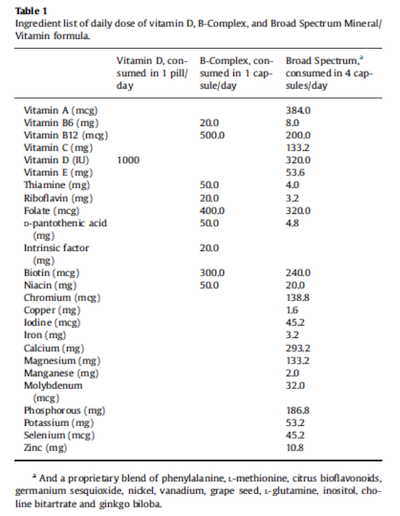
The B-Complex used in the study was made by Douglas labs but other similar B-Complex products would be fine too.  I happen to use Designs for Health B Supreme with my clients.

The broad-spectrum mineral/vitamin formula in the study was EmpowerPlus made by TrueHope.

From: A randomised trial of nutrient supplements to minimise psychological stress after a natural disaster

Vitamin D based on levels

In the above study, some participants in the vitamin D group did see benefits and it’s likely to have been those who were low in vitamin D at the time of the flooding since other research supports a connection between low vitamin D and anxiety and depression. I like to see vitamin D results before recommending supplementation.

Serotonin, GABA and endorphin support based on symptoms and a trial

As well as a B-complex and/or vitamin D, I’d also consider the following neurotransmitter support on a case by case basis, and after doing the amino acid questionnaire and a trial of each amino acid:

  • Serotonin support with Lidtke tryptophan or Lidtke Tryptophan Complete or Lidtke Combat Stress (a tryptophan product formulated for stress support) – especially if you’re feeling sad, worried, resolving to try and feel positive, imagining the worst, feeling fearful and having problem sleeping. I blogged about tryptophan products last week.
  • GABA support for physical tension and an increased need to self-medicate with alcohol in order to stay calm. New research shows that reduced plasma levels of GABA observed in PTSD could be considered as a possible biomarker for PTSD severity. This is not something I typically look at but it’s something I will be considering going forward. I blogged about some specific GABA products earlier this week.
  • Endorphin support with Lidtke DPA if you’re feeling especially emotional and weepy.

Serotonin and GABA play a role in stress resilience and when we have enhanced stress resilience mechanisms we have the ability to adapt more successfully to stressful situations like natural disasters.    

Additional adrenal support if needed

The adrenals are part of the hypothalamic-pituitary axis (HPA) and also need nutritional support after stress and trauma. I recommend a good adrenal support product with rhodiola, Vitamin C, pantothenic acid, eleuthero and ashwagandha. Designs for Health Adrenotone is a good product.

If it’s known that cortisol levels are high then the addition of Seriphos and/or a lactium product (such as Biotics Research De-Stress) helps to lower high cortisol, reduce anxiety and help with insomnia.

Additional pyroluria support if needed

It is well known that pyroluria symptoms are made worse in times of heightened stress. If you are on protocol for pyroluria, additional zinc and vitamin B6/P5P is likely going to be needed short-term too.

Essential oils

Essential oils like lavender and citrus are wonderful for the stress, anxiety and sleepless nights. An animal study reports that passively inhaling orange essential oil could potentially reduce PTSD symptoms in humans


Some other considerations include the following once things start to get back to some kind of normal:

  • trying to eat as well as you can and not skipping meals
  • trying to get enough sleep (the GABA and tryptophan support mentioned above can help in this area)
  • getting outside into nature as soon as it’s possible. If this is impossible right away, simply looking at images of nature can help you feel calmer, less irritable, and more empathetic. I hope you enjoy this flower photograph I took in Australia!   
  • meditating and doing yoga
  • community support and helping others if you’re able to
  • getting a cat or dog (veterans who were given pet dogs showed significant improvement in their PTSD symptoms)

I would recommend a similar approach for any natural disaster or in fact for any other traumatic event, always working individually with each person.  

If you have found some approach to be particularly useful for you please do share it.

And if you have any connections for getting this information into the hands of public health officials and non-profits offering aid please let me know. I feel that protocols similar to this one need to be made available to everyone subjected to a natural disaster.

I wish you and your families much healing and a speedy recovery.

Additional resources

I added these additional resources after September 20, 2017:

  • How to Stay Safe in a Disaster: Emergency Preparedness List by Katie Wells on the Wellness Mama blog. She says this: “The point of putting together an emergency preparedness plan is not to create any undue anxiety, but to help alleviate some of the stress of a disaster in case it hits.”
  • What to Do After a Hurricane: The Dangers Lurking Beyond the Storm by Dr. Jill Carnahan. This blog addresses both mold and bacteria in flood waters, and practical steps on how to deal with these issues.  Mold needs to be taken seriously – I interviewed Dr. Carnahan on the topic of mold toxicity and anxiety during one the Anxiety Summits – Is Toxic Mold the Hidden Cause of Your Anxiety?
  • My Flood Story and What to Do About Mold by Dave Asprey. This blog offers practical solutions on how best to do clean-up after a flood and the dangers of mold. He is also very kindly making his documentary, Moldy available for viewing at no charge.
  • Beyond Meditation: Making Mindfulness Accessible for Everyone by Mira Dessy and Kerry McClure. Mira is a dear friend whose home was flooded by Harvey and went I spoke to her last week she shared how much her meditation practice has been helping her.  I love that she has a book on the topic so that it can be shared far and wide to help those affected.
  • My book The Antianxiety Food Solution: How the Foods You Eat Can Help You Calm Your Anxious Mind, Improve Your Mood and End Cravings, available in major books stores and via online stores like Amazon. You can find out more here.
  • I am also the host of The Anxiety Summit, now in it’s 4th season and called a “bouquet of hope”. It’s a wealth of information on all topics related to anxiety. More on the Anxiety Summit here. 

If you have links to additional useful resources please let me know and I’ll add them.

Filed Under: PTSD/Trauma, Stress Tagged With: essential oils, floods, GABA, Houston, Hurricane Harvey, lactium, natural disaster, nature, nutrition solutions, psychological stress, PTSD, seriphos, stress, tryptophan, vitamin B6, zinc

GABA for the physical-tension and stiff-and-tense-muscles type of anxiety

September 6, 2017 By Trudy Scott 185 Comments

Today I’m going to review some GABA products for the physical-tension and stiff-and-tense-muscles type of anxiety, and share some additional resources for you.

The other symptoms we see with low GABA are panic attacks, physical tension in certain settings like public speaking or driving, and the need to self-medicate to calm down, often with alcohol but sometimes with carbs and sugary foods. Insomnia can also be due to low GABA and you’ll experience physical tension (rather than the ruminating thoughts which is the low serotonin type of insomnia – although it’s not uncommon to experience both). GABA also helps with muscle spasms and pain relief when muscles are tight.

The biggest take-aways with GABA:

  • Sublingual is best. I find that GABA works best when used sublingually and this is one reason I like Source Naturals GABA Calm so much. If this is not an option (it does contain sugar alcohols that some clients can’t or won’t use and does contain tyrosine which as some contraindications) then opening a capsule of a GABA-only or a GABA-theanine combination are my next choices when working with someone.
  • Start very low and increase as needed. I have found 125mg to be a good starting dose but some pixie dust clients do well on a dab or pinch
  • Do a trial to determine if the anxiety in in fact due to low GABA. I always do this with clients before starting any amino acid. Be sure to read how to do an amino acid trial – it has the low GABA questionnaire, the precautions and information on how to use targeted individual amino acids.

Here are some of the actual GABA products I recommend and use with clients:

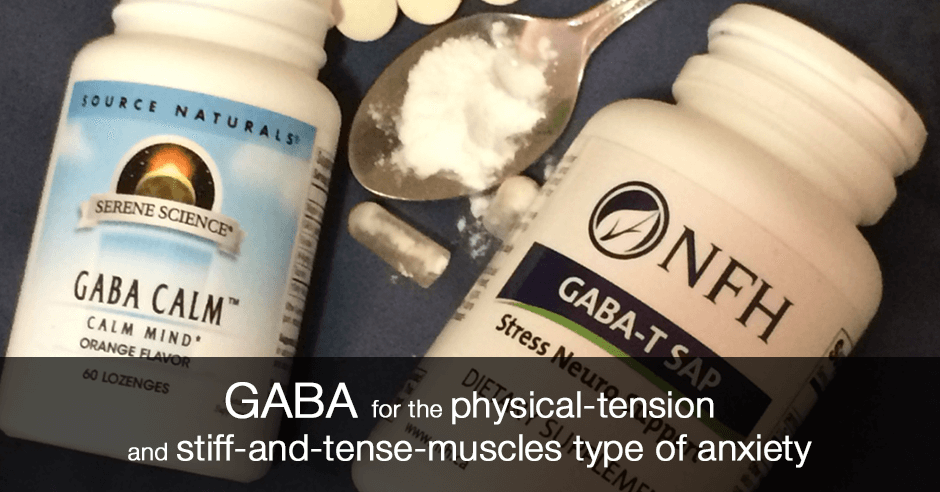
  • Source Naturals GABA Calm. This is a pleasant-tasting sublingual product that is my most popular and most effective form of GABA I use with my clients. It contains 125 mg GABA and some glycine, taurine and magnesium, and a small amount of tyrosine to counter the calming effects. You can see the lozenges in the picture above.
  • Nutritional Fundamentals for Health GABA-T SAP: gamma-Aminobutyric acid (GABA) 300 mg, l-Theanine 150 mg. This is pleasant-tasting when opened on to the tongue and works very well when GABA Calm can’t be used.  I find best results when it is used opened on to the tongue and I really like that it’s a low dose of GABA. Some of my clients do well with half a capsule. You can see an opened capsule in the picture above.
  • Enzymatic Therapy GABA: gamma-Aminobutyric acid (GABA) 250 mg. This is also pleasant-tasting when opened on to the tongue and works very well when GABA Calm can’t be used.  As with all GABA products, I find best results when it is used opened on to the tongue.
  • ProThera 500mg GABA: gamma-aminobutyric acid (GABA) 500 mg.  You will likely need to open this up and start with less than a full capsule during the day and increase as needed based on the trial. A full capsule may be fine at night for some individuals and more than one works in some situations.

There are a number of other great GABA products. When I reached out on Facebook for feedback I heard from one mom who likes Kirkman Labs GABA with Niacinamide and Inositol for her son who is on the spectrum, and someone else shared she likes Thorne PharmaGABA better than GABA products.

A few people shared this feedback when using GABA: one person felt too tired, someone else felt a niacin-type flush and someone else got an electric shock feeling in her brain. How you respond depends on the dose and with GABA and the other amino acids there is no one recommended dose for anyone. It’s very individualized which is why I have clients do a trial and start low. GABA helps many people tapering from benzodiazepines but some people are so sensitive that even a pinch is too much.

One person asked how to get GABA from food as she is fearful of taking medications and supplements. I always recommend a real whole foods diet with quality animal protein and organic produce, together with health fats and fermented veggies – so this is a great foundation. It may not be enough and when there is fear and phobias I immediately think of low serotonin and would determine if this is a factor an address this first. I covered low serotonin and tryptophan in the product review last week.

Here are some additional GABA resources for you:

Source Naturals GABA Calm™: Why I recommend it for anxiety

It’s a great product to use with children. Trish Soderstrom shared how she used this product with her daughter’s Lyme anxiety.

We’ve used Source Naturals GABA Calm sublinguals with good results. I learned about GABA helping anxiety and because I was treating my young daughter I purchased this because it was easy for her to take.But there may still be some confusion about when to use GABA and when to use tryptophan and how much of each of these amino acids to use.

GABA is calming for me, doesn’t work for my daughter’s anxiety and makes my son sleepy

I have used GABA (several brands, just open capsule and sprinkle small amount under tongue) for years now, with calming results within minutes. It was recommended to me by 2 family members, both bi-polar, who were tested by Dr. Amen. I have also used it with my children (now adults); my daughter says it doesn’t work for her. (She has anxiety issues and occasional panic attacks, and Rescue Remedy helps her.) It does work to calm my 3 sons, but one says it makes him sleepy, and lasts into the next day, so he won’t take it.

GABA for children: ADHD, focus issues, irritability, anxiety and tantrums

My daughter hasn’t been diagnosed with ADHD but has a lot of ADHD qualities. We were having a huge amount of behavior problems as she is getting older (she’s 11). I did some research and went to the health food store and bought a bottle. At this point I was mentally exhausted from all the fighting and drama at home and at school. I was desperate and didn’t want to put her on any hard medication.

She has had amazing behavior at school and at home since giving it to her. She’s almost like different child. GABA has truly changed our life. She’s been taking it for almost 2 months.

The blog has many other posts on GABA and serotonin and simply use the “search” function to find them.

This blog post is part of the series of amino acid product reviews:

  • Tryptophan for low serotonin (worry-in-the-head anxiety)
  • Glutamine for calming, intense sugar cravings, gut healing and low blood sugar
  • DPA for weepiness, pain and comfort and reward eating
  • Tyrosine for focus, motivation, energy, a good mood and possibly even anxiety

The resources in this blog and my other articles are intended to be used in conjunction with my book: The Antianxiety Food Solution – How the Foods You Eat Can Help You Calm Your Anxious Mind, Improve Your Mood, and End Cravings. If you do not have my book I highly recommend getting it and reading it before jumping in and taking the amino acid supplements:

There is a complete chapter on the amino acids and one for pyroluria, plus information on real whole food, sugar and blood sugar, gluten, digestion and much more.

You can find the GABA products and the others I recommend here on this blog: The Antianxiety Food Solution Amino Acid and Pyroluria Supplements


I’d love to hear what GABA product has worked for you and how it’s helped?

If you have questions please post them below or on the supplements blog
Filed Under: GABA, Supplements Tagged With: anxiety, GABA, GABA Calm, insomnia, pain, physical-tension, stiff and tense muscles, theanine

Benzodiazepine horror story on The Mental Wellness Summit 2

August 27, 2017 By Trudy Scott 28 Comments

The Mental Wellness Summit 2 aired online September 25 – October 2, 2017

Whether challenged by depression, anxiety, stress, addiction or another mental health challenge, every single person is impacted and affected – you, your family, friends, neighbors and coworkers -either directly or indirectly every single day.

This Mental Wellness Summit 2 will provided the information you need to:

  • Overcome the silence, isolation and fear of your struggle
  • Transcend outdated, prescription-based healthcare systems
  • Find holistic practitioners and natural solutions for your pain
  • Implement expert practices, tools and tips into your daily routine

My interview covered the dangers of benzodiazepines and why GABA is a more effective option for anxiety.

Here are some snippets from my interview where I discuss benzodiazepines which are

  • a class of psychoactive drugs / tranquillizers with sedative, sleep-inducing, anti-anxiety, anticonvulsant, and muscle relaxant properties
  • they target the GABAA receptor and enhance the effect of the neurotransmitter GABA
  • the common Brand name/drug name are: Xanax/ Alprazolam, Klonopin/Clonazepam, Valium/ Diazepam, Ativan/ Lorazapam

These medications are commonly prescribed for:

  • Anxiety, social anxiety, panic, pain/dental pain, insomnia, fear of flying, Lyme disease, ER visits for back/neck spasms
  • Children with autism
  • IBS
  • pre-surgery anxiety
  • ICU patients needing ventilation
  • during chemotherapy for cancer treatments – for anxiety, nausea and anticipatory nausea

I share this true benzodiazepine horror story:

Been totally disabled by benzos for over 3 years. I have been off meds for 17.5 months and the impact of these meds makes any anxiety I ever felt a cake walk. Please run from the poison.

When I turned 21 I went to the doctor for dizziness and they put me on xanax. I started to feel anxious and they then added Zoloft. That was the start of a long journey. I was shifted from one anti-depressant to another. At 34 I was told I was treatment resistant and they added lamotrigine. Then my world crashed at age 37. I have been on xanax, then klonopin, then Ativan, then back to xanax, then valium to taper. I had also been given ambien to sleep in early 30s.

I tapered off meds over a period of a year. I was on 1.5 mg xanax and tapered off valium as prescribed. I have tried many supplements but I react poorly to all of them. I get very agitated and revved up.

I have locked shoulder muscles, neck, jaw; I have internal vibrations, I get bad headaches, jelly legs, distorted vision like floaters and squiggles and fireworks, my teeth all feel like they will fall out but they are not loose, it feels like adrenaline or cortisol rushes through the body. Sometimes my arms go numb. I am pretty tortured every day. These meds are truly causing chemical warfare on some of us. 

This is one of the many reasons I do this work – so more people don’t end up in this situation and so everyone knows about the dangers of benzodiazepines and that there are nutritional solutions for anxiety. One of them is the amino acid GABA and I discuss this in the latter half of the interview.

Filed Under: benzodiazapines, Events Tagged With: anxiety, benzodiazepine, GABA, Mental Wellness Summit

  • « Go to Previous Page
  • Page 1
  • Interim pages omitted …
  • Page 34
  • Page 35
  • Page 36
  • Page 37
  • Page 38
  • Interim pages omitted …
  • Page 49
  • Go to Next Page »

Primary Sidebar

GABA QuickStart Homestudy

gaba quickstart homestudy

Free Report

9 Great Questions Women Ask about Food, Mood and their Health

You'll also receive a complimentary subscription to my ezine "Food, Mood and Gal Stuff"


Connect with me

Popular Posts

  • Amino Acids Mood Questionnaire from The Antianxiety Food Solution
  • The Antianxiety Food Solution Amino Acid and Pyroluria Supplements
  • Pyroluria Questionnaire from The Antianxiety Food Solution
  • Collagen and gelatin lower serotonin: does this increase your anxiety and depression?
  • Tryptophan for the worry-in-your-head and ruminating type of anxiety
  • GABA for the physical-tension and stiff-and-tense-muscles type of anxiety
  • The Antianxiety Food Solution by Trudy Scott
  • Seriphos Original Formula is back: the best product for anxiety and insomnia caused by high cortisol
  • Am I an anxious introvert because of low zinc and vitamin B6? My response to Huffington Post blog
  • Vagus nerve rehab with GABA, breathing, humming, gargling and key nutrients

Recent Posts

  • Her cravings for chips and peanut butter were triggered by stress: GABA ends cravings and reduces physical tension and fear of heights
  • It is truly miraculous to be able to move through life without crippling anxiety and panic
  • GABA and tryptophan combo provide immediate and noticeable relief for tremors and cervical dystonia in just 7 days
  • Red light therapy for back and neck pain, plantar fasciitis and low mood – a complement to the amino acids GABA, DPA and tryptophan
  • What do I use instead of Seriphos to help lower high cortisol that is affecting my sleep and making me anxious at night?

Categories

  • 5-HTP
  • AB575
  • Addiction
  • ADHD
  • Adrenals
  • Alcohol
  • Allergies
  • Alzheimer's disease
  • Amino Acids
  • Anger
  • Antianxiety
  • Antianxiety Food Solution
  • Antidepressants
  • Anxiety
  • Anxiety and panic
  • Autism
  • Autoimmunity
  • benzodiazapines
  • Bipolar disorder
  • Books
  • Caffeine
  • Cancer
  • Candida
  • Children/Teens
  • Collagen
  • Cooking equipment
  • Coronavirus/COVID-19
  • Cravings
  • Depression
  • Detoxification
  • Diabetes
  • Diet
  • DPA/DLPA
  • Drugs
  • EFT/Tapping
  • EMF
  • EMFs
  • Emotional Eating
  • Endorphins
  • Environment
  • Essential oils
  • Events
  • Exercise
  • Fear
  • Fear of public speaking
  • Fertility and Pregnancy
  • Fish
  • Food
  • Food and mood
  • Functional neurology
  • GABA
  • Gene polymorphisms
  • General Health
  • Giving
  • Giving back
  • Glutamine
  • Gluten
  • GMOs
  • Gratitude
  • Gut health
  • Heart health/hypertension
  • Histamine
  • Hormone
  • Hyperparathyroidism
  • Hypoglycemia
  • Immune system
  • Inflammation
  • Insomnia
  • Inspiration
  • Introversion
  • Joy and happiness
  • Ketogenic diet
  • Lithium orotate
  • Looking awesome
  • Lyme disease and co-infections
  • MCAS/histamine
  • Medication
  • Men's health
  • Mental health
  • Mercury
  • Migraine
  • Mold
  • Movie
  • MTHFR
  • Multiple sclerosis
  • Music
  • NANP
  • Nature
  • Nutritional Psychiatry
  • OCD
  • Osteoporosis
  • Oxalates
  • Oxytocin
  • Pain
  • Paleo
  • Parasites
  • Parkinson’s disease
  • PCOS
  • People
  • PMS
  • Postpartum
  • PTSD/Trauma
  • Pyroluria
  • Questionnaires
  • Real whole food
  • Recipes
  • Research
  • Schizophrenia
  • serotonin
  • SIBO
  • Sleep
  • Special diets
  • Sports nutrition
  • Stress
  • Sugar addiction
  • Sugar and mood
  • Supplements
  • Teens
  • Testimonials
  • Testing
  • The Anxiety Summit
  • The Anxiety Summit 2
  • The Anxiety Summit 3
  • The Anxiety Summit 4
  • The Anxiety Summit 5
  • The Anxiety Summit 6
  • Thyroid
  • Thyroid health
  • Toxins
  • Tryptophan
  • Tyrosine
  • Uncategorized
  • Vegan/vegetarian
  • Women's health
  • Yoga

Archives

  • May 2026
  • April 2026
  • October 2025
  • September 2025
  • August 2025
  • July 2025
  • June 2025
  • May 2025
  • April 2025
  • March 2025
  • February 2025
  • January 2025
  • November 2024
  • October 2024
  • September 2024
  • August 2024
  • July 2024
  • June 2024
  • May 2024
  • April 2024
  • March 2024
  • February 2024
  • January 2024
  • December 2023
  • November 2023
  • October 2023
  • September 2023
  • August 2023
  • July 2023
  • June 2023
  • May 2023
  • April 2023
  • March 2023
  • February 2023
  • January 2023
  • December 2022
  • November 2022
  • October 2022
  • September 2022
  • August 2022
  • July 2022
  • June 2022
  • May 2022
  • April 2022
  • March 2022
  • February 2022
  • January 2022
  • December 2021
  • November 2021
  • October 2021
  • September 2021
  • August 2021
  • July 2021
  • June 2021
  • May 2021
  • April 2021
  • March 2021
  • February 2021
  • January 2021
  • December 2020
  • November 2020
  • October 2020
  • September 2020
  • August 2020
  • July 2020
  • June 2020
  • May 2020
  • April 2020
  • March 2020
  • February 2020
  • January 2020
  • December 2019
  • November 2019
  • October 2019
  • September 2019
  • August 2019
  • July 2019
  • June 2019
  • May 2019
  • April 2019
  • March 2019
  • February 2019
  • January 2019
  • December 2018
  • November 2018
  • October 2018
  • September 2018
  • August 2018
  • July 2018
  • June 2018
  • May 2018
  • April 2018
  • March 2018
  • February 2018
  • January 2018
  • December 2017
  • November 2017
  • October 2017
  • September 2017
  • August 2017
  • July 2017
  • June 2017
  • May 2017
  • April 2017
  • March 2017
  • February 2017
  • January 2017
  • December 2016
  • November 2016
  • October 2016
  • September 2016
  • August 2016
  • July 2016
  • June 2016
  • May 2016
  • April 2016
  • March 2016
  • February 2016
  • January 2016
  • December 2015
  • November 2015
  • October 2015
  • September 2015
  • August 2015
  • July 2015
  • June 2015
  • May 2015
  • April 2015
  • March 2015
  • February 2015
  • January 2015
  • December 2014
  • November 2014
  • October 2014
  • September 2014
  • August 2014
  • July 2014
  • June 2014
  • May 2014
  • April 2014
  • March 2014
  • February 2014
  • January 2014
  • December 2013
  • November 2013
  • October 2013
  • September 2013
  • August 2013
  • July 2013
  • June 2013
  • May 2013
  • April 2013
  • March 2013
  • February 2013
  • January 2013
  • December 2012
  • November 2012
  • October 2012
  • August 2012
  • July 2012
  • June 2012
  • May 2012
  • April 2012
  • March 2012
  • February 2012
  • January 2012
  • December 2011
  • November 2011
  • October 2011
  • September 2011
  • August 2011
  • July 2011
  • June 2011
  • May 2011
  • April 2011
  • March 2011
  • February 2011
  • January 2011
  • December 2010
  • October 2010
  • September 2010
  • July 2010
  • May 2010
  • April 2010
  • March 2010
  • February 2010
  • January 2010
  • November 2009

Share the knowledge!

The above statements have not been evaluated by the Food and Drug Administration. Products listed in this website are not intended to diagnose, treat, cure or prevent any disease.

The information provided on this site is for informational and educational purposes only and is not intended as a substitute for advice from your physician or other health care professional. You should consult with a healthcare professional before starting or modifying any diet, exercise, or supplementation program, before taking or stopping any medication, or if you have or suspect you may have a health problem.


Copyright © 2026 Trudy Scott. All Rights Reserved. | Privacy | Terms and Conditions | Refund Policy | Medical Disclaimer

Free Report

9 Great Questions Women Ask about Food, Mood and their Health

You’ll also receive a complimentary subscription to my ezine “Food, Mood and Gal Stuff”