• Skip to primary navigation
  • Skip to main content
  • Skip to primary sidebar

everywomanover29 blog

Food, Mood and Women's Health – Be your healthiest, look and feel great!

  • Blog
  • About
  • Services
  • Store
  • Resources
  • Testimonials
  • The Book
  • Newsletter
  • Contact
  • Search this site

anxiety

How to Reduce Stress and Anxiety by Optimizing Performance: Global Stress Summit

April 23, 2017 By Trudy Scott 2 Comments

I really enjoyed this guest expert interview with John Assaraf on the Global Stress Summit because it is so practical: Reducing Stress and Optimizing Performance. He developed some ideas based on following what really highly successful people do within time.


He shares this about time management:

And the first thing that I learned in research and study is, number one, there’s no such thing as time management. And so, that’s the first fallacy.

And what I discovered was that highly successful people really know how to organize and prioritize what they are committed to accomplishing in a day.

And this gem about prioritization:

When you shift your thinking to understanding that you cannot manage time, all you can get really, really good at is prioritizing what you do in time and when.

John shares that all your time management should evolve around your highest values and life’s priorities and then

how do you orchestrate your decisions into that framework so that you’re taking care of at least two or three of your highest values before 9 o’clock every morning. I get to do three of those before 9 o’clock every day, which means the rest of the day I can do all the other stuff.

He does work mostly with entrepreneurs and his talk is aimed at those with their own businesses and flexibility but I can see how some of it could be tweaked and also applied to anyone.

If time management is a nightmare for you and you don’t feel you have enough hours in the day then this interview is well worth tuning in to! You may just find that by applying some of the concepts that you are able to reduce your stress levels and anxiety!

If you’d like to hear more from John Assaraf and the other fascinating speakers tune in to the Global Stress Summit, which is online from April 24 – May1, 2017

John’s inteview interview airs on day 4.
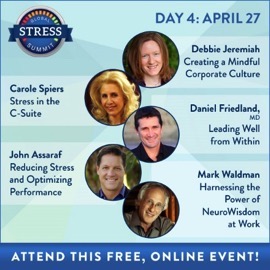
Your host, Dr. Heidi Hanna, began her expedition into the world of stress science at the early age of 12 when she began to suffer from debilitating anxiety, depression, and panic attacks. With no medical explanation, she was forced to dive into mind-body research to try to put the puzzle pieces together.

In this Global Stress Summit, Dr. Hanna interviews the very pioneering researchers and thought leaders who helped her learn how to utilize stress as a stimulus for growth rather than a trigger for burnout and breakdown, as she passionately encourages us to do the same. Here is the registration link.
Filed Under: Events Tagged With: anxiety, Dr. Heidi Hanna, global stress summit, John Assaraf, stress, Time Management

Autism, anxiety and the gut: Microbiota transfer therapy or fecal microbiota transplant

April 17, 2017 By Trudy Scott 8 Comments

We know that one of your greatest ally in health is your microbiome – the trillions of bacteria that are the control center of your health! But sometimes your microbiome can actually cause problems. One way to improve the microbiome is via microbiota transfer therapy (MTT), also called fecal microbiota transplant (FMT).  

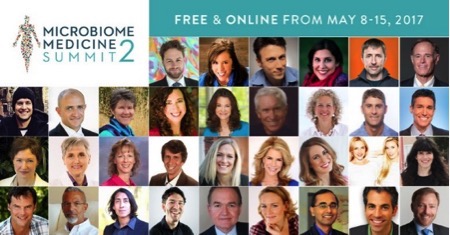
I was recently interviewed by Dr. Raphael Kellman for the Microbiome Medicine Summit 2 (it starts May 8) and shared newly published research on this approach – Microbiota Transfer Therapy alters gut ecosystem and improves gastrointestinal and autism symptoms: an open-label study

Here are some of the details of this very promising research:

  • It was a small study on children 6 to 7 years old
  • They were given antibiotics for 2 weeks
  • They were given a bowel cleanse
  • They were given an extended fecal microbiota transplant. This was a high initial dose followed by daily and lower maintenance doses for 7–8 weeks.
  • By the end of treatment and 80% reduction of gastrointestinal symptoms were seen. This included: constipation, diarrhea, indigestion, and abdominal pain.
  • These gastrointestinal symptoms improvements persisted for 8 weeks after treatment.
  • They also saw behavioral autism spectrum disorder symptoms improve significantly and remain improved 8 weeks after treatment ended. These symptoms included irritability, hyperactivity, lethargy and socialization

During the interview Dr. Kellman asked what bacterial changes were observed and I didn’t have the study on hand. I looked it up after the interview and this is what they report

Specifically, overall bacterial diversity and the abundance of Bifidobacterium, Prevotella, and Desulfovibrio among other taxa increased following MTT, and these changes persisted after treatment stopped (followed for 8 weeks).

Also

following MTT, the relative abundance of Bifidobacterium significantly increased fourfold and became comparable to its relative abundance in neurotypical children

They conclude that the MTT

shifted gut microbiota of children with ASD toward that of neurotypical children … consistent with the hypothesis that gut microbiota may be at least partially responsible for GI and ASD symptoms

Research just published last month reports similar results with digestive issues and anxiety. Germ-free mice were given the fecal microbiota from healthy control individuals or IBS patients with diarrhea, with or without anxiety. They found that the microbiota profiles in the mice matched the microbiota profiles of the human donors, affecting their digestive function and anxiety levels! I’ll share more on this study in a future blog post.

I hope you’ll join us on the Microbiome Medicine Summit 2, May 8-15, 2017 to learn more

Your host, Dr. Raphael Kellman, has seen the profound healing power of microbiome medicine and how it can address many diseases.

Learn the lessons and methodologies of microbiome medicine – it could improve your health, longevity, vitality and assist with unresolved problems!

It can enhance your brain function, improve mood, reduce anxiety and depression; and address gastrointestinal illnesses, including IBS, Crohn’s and colitis; counter newly identified GI/brain syndromes; and address autism and autoimmune diseases at the root cause!

I thoroughly enjoyed my interview with Dr. Kellman and look forward to hearing all the other great interviews. You can find details and registration here

I hope you can join us!

Filed Under: Autism, Events Tagged With: anxiety, autism, Dr. Kellman, fecal microbiota transplant, microbiome medicine summit, Microbiota transfer therapy

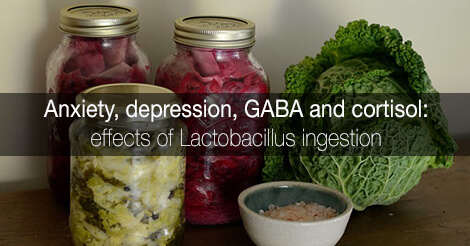
Anxiety, depression, GABA and cortisol: effects of Lactobacillus ingestion

April 14, 2017 By Trudy Scott 23 Comments

We now know that good bacteria or probiotics have the potential to alter brain chemistry and have an impact on anxiety and depression. You may recall my interview with Professor Ted Dinan on a prior Anxiety Summit – Microbes in the gut and psychobiotics as a potential treatment for anxiety and depression. He shared his paper and this definition of Psychobiotics: a novel class of psychotropic.

…we define a psychobiotic as a live organism that, when ingested in adequate amounts, produces a health benefit in patients suffering from psychiatric illness. As a class of probiotic, these bacteria are capable of producing and delivering neuroactive substances such as gamma-aminobutyric acid and serotonin, which act on the brain-gut axis.

Research published by Dinan, Cryan and their teams also found benefits of Lactobacillus rhamnosus on stress, anxiety and depression type behaviors in mice. This is older research (published in 2011) but it’s the first time I’ve shared it on the blog. I talk about this paper in the upcoming Microbiome Medicine 2 Summit so I like to share study excerpts and links to the study.

The write up in Science Daily is a good one – Mind-Altering Microbes: Probiotic Bacteria May Lessen Anxiety and Depression

…mice fed with Lactobacillus rhamnosus JB-1 showed significantly fewer stress, anxiety and depression-related behaviours than those fed with just broth. Moreover, ingestion of the bacteria resulted in significantly lower levels of the stress-induced hormone, corticosterone.

The part that I find fascinating is the effects of Lactobacillus on GABA receptors in the brain (GABA is your main calming neurotransmitter):

The researchers also showed that regular feeding with the Lactobacillus strain caused changes in the expression of receptors for the neurotransmitter GABA in the mouse brain, which is the first time that it has been demonstrated that potential probiotics have a direct effect on brain chemistry in normal situations.

In this paper the authors discuss the vagus nerve and the three-way communication:

…the vagus nerve is the main relay between the microbiome (bacteria in the gut) and the brain. This three way communication system is known as the microbiome-gut-brain axis and these findings highlight the important role of bacteria in the communication between the gut and the brain, and suggest that certain probiotic organisms may prove to be useful adjunct therapies in stress-related psychiatric disorders.

What is even more fascinating is this:

the neurochemical and behavioral effects were not found in vagotomized mice

What does this mean? When the researchers severed the vagus nerve in the test mice – removing the communication between the gut and the brain – they found that the behaviors and stress hormone levels reverted back to the way they had been i.e. the vagotomized mice were more anxious, more stressed, more depressed and had higher corticosterone levels.

You can find the abstract of the paper here: Ingestion of Lactobacillus strain regulates emotional behavior and central GABA receptor expression in a mouse via the vagus nerve.

What does this mean for you? It means that good bacteria in your diet could well improve your anxiety and depression symptoms and even have an impact on your adrenals and cortisol levels. This could be in the form of a good probiotic and should always include fermented foods like sauerkraut, kimchi, kombucha, yogurt and kefir (if dairy is tolerated), water kefir (if dairy is not tolerated).

Have you observed an improvement in your anxiety and stress levels since adding a probiotic or fermented foods into your diet?

Filed Under: GABA, Gut health Tagged With: anxiety, cortisol, depression, GABA, lactobacillus, lactobacillus ingestion, psychobiotics, Ted Dinan, vagus nerve

Why green spaces in cities are good for grey matter, stress and anxiety

April 12, 2017 By Trudy Scott 2 Comments

Central Park in New York City

I love all research that support green space and nature for anxiety and stress reduction. And I’m thrilled to see this taking a front seat in cities where people often have less access to greenery!   A great example is the beautiful   Central Park in New York City.

New research is reviewed in this report in Science Daily: Why green spaces in cities are good for grey matter

Walking between busy urban environments and green spaces triggers changes in levels of excitement, engagement and frustration in the brain, a study of older people has found.

Researchers at the Universities of York and Edinburgh say the findings have important implications for architects, planners and health professionals as we deal with an aging population.

The volunteers experienced beneficial effects of green space and preferred it, as it was calming and quieter, the study revealed.

Dr Chris Neale, Research Fellow, from the University of York’s Stockholm Environment Institute, said: “There are concerns about mental wellbeing as the global population becomes older and more urbanised.”

“Urban green space has a role to play in contributing to a supportive city environment for older people through mediating the stress induced by built up settings.”

You can read the study abstract here – Older People’s Experiences of Mobility and Mood in an Urban Environment: A Mixed Methods Approach Using Electroencephalography (EEG) and Interviews.

Personally I need greenery and nature and thrive on it!

How important is greenery for you? Especially if you’re a city person?

Filed Under: Antianxiety, Environment, Nature, Stress Tagged With: anxiety, calming, green spaces, greenery, grey matter, nature, parks, stress

Sweet Freedom Summit: industry manipulation, mouth feel and vanishing caloric density

April 8, 2017 By Trudy Scott 4 Comments

The Sweet Freedom Summit runs April 10-17. I like to do a sneak preview of some of the interviews so I can share some highlights with you and I was blown away by some of what I learned from Damon Gameau, Australian actor and producer of That Sugar Film.

His interview: The Real Dope on Added Sugars. We know this goes on but every time I hear it I feel mad (and a bit sad) that it happens and that it’s actually allowed to happen! And that so few people even know about this! Here goes:

Nestlé, for example, have about seven hundred PhD scientists just working on their foods and understanding what the mouth feel of the food is that makes us really like them or how it triggers certain parts of our brain and releases dopamine that makes us want more.

People often talk about, “It’s freedom of choice. People should be able to decide what they want.” But that’s fair enough if you understand the playing field and it’s a very one-sided playing field because these foods are being engineered to get you liking and wanting more and more of them. So, it is very hard for some people to say no to things.

This term was new to me: vanishing caloric density!

There is a great term I learned for those kind of—we have them in Australia—they are called Cheetos or Puffs where you have them and they feel like they turn to air in your mouth very quickly. It’s called vanishing caloric density. It means that you don’t feel like you are eating much. So, you can just sit there and watch TV and demolish an entire bag because it’s tricking your brain into thinking that you are actually not eating very much because they are disappearing in your mouth. So these have been designed this way, very carefully so that they’ll sell more of those products.

Damon is shocked by the manipulation and so should we all be!

That probably shocked me in terms of the manipulation there. And just to start to understand the level of rigging of science, the paid scientists, the PR companies that are pushing the food industry’s brand, how they attack certain groups in social media; just the sort of orchestration that these companies use to make sure that there is ambiguity and doubt in the public mind.

Damon’s interview airs on day 1 and not to be missed. Be sure to listen to the entire interview! You won’t believe what he did to himself in That Sugar Film! (hint: he embarked on a unique experiment to document the effects of a high sugar diet on a healthy body, consuming only foods that are commonly perceived, or promoted to be ‘healthy’.)

On day 1 you can also hear Jonathan Landsman (what sugar does in your body), JJ Virgin (sugar’s full impact) and Ty Bollinger (sugar-cancer connection).

The first step is awareness and knowing where sugar is found – this is covered extensively during the summit.

The next step is switching to a real whole foods diet with quality animal protein (I’m not a fan of a vegetarian diet – covered by one of the speakers) and healthy fats, organic produce and no sugar.

This is easier said than done for many people. You may know you need to quit sugar but willpower gets the better of you. If this sounds like you be sure to tune in to my interview.

In case you missed it, a few weeks ago I shared some snippets from my brain chemical/neurotransmitter imbalance interview with Sherry – addressing sugar cravings as well as anxiety and depression. I talk about the BIG connection between stress eating, comfort eating, emotional eating and low levels of the brain chemicals serotonin, GABA and endorphins.

Sherry loved our interview so much she’s decided to offer it as a gift to EVERYONE who signs up for the summit! So you can enjoy it from day 1 or tune in and comment when it airs.

The Sweet Freedom Summit runs April 10-17 and when you register you’ll get immediate access to my interview and some other cool sign up gifs.

Please share with family and friends who you know can benefit from this information!

Got questions or feedback? Please share them in the blog comments below.

Filed Under: Events, Sugar addiction Tagged With: addiction, anxiety, Damon Gameau, industry manipulation, mouth feel, Sherry Strong, sugar, sweet freedom summit, That Sugar Film, vanishing caloric density

Paleo and grain free diets: anxiety and depression success stories

March 31, 2017 By Trudy Scott 16 Comments

I recently reached out to my community to hear your diet-depression or diet-anxiety success stories in anticipation of the new SMILES diet depression trial, published last month and which I covered in a blog post last week. In that post I promised to share some real-life success stories on how an anti-inflammatory and anti-anxiety diet i.e. nutritional psychiatry people’s lives for the better!

I also shared that everyone who responded with success stories was following a more “evolved” diet than those who participated in the SMILES trial, the first randomized controlled diet depression study where ONE THIRD of the dietary intervention group saw improvements in their depression symptoms by switching from processed/junk food to real food with no specific dietary restrictions!

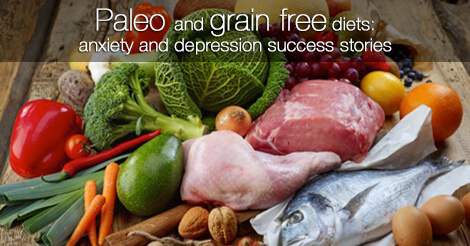
What do I mean by a more evolved diet? Each of them was eating a real foods or traditional non-processed diet that was gluten-free, mostly or all grain-free and various permutations of the Paleo or cave-main diet.

The anxiety and depression success stories

Alice from Cape Town shared this about banting, a Paleo-type dietary approach that does include dairy products and has been popularized in South Africa by Professor Tim Noakes:

Three days after I stopped eating grains, my chronic depression lifted and has never returned (it’s three years later now). I had been a vegetarian most of my life, discovered in my early 50s that I was gluten intolerant, went off grains, started banting (Cape Town craze!) and have never felt better. Gut, mood, bones, energy, skin … all better!

Andrea shared this about her diet-mood results, also with a grain-free and high fat diet:

I happened upon a fat loss diet that had me cut out grains, most dairy, and sugar while focusing on mostly meat, fish, fats from nature such as butter, olive, and coconut oils. Nuts, seeds, and legumes were allowed too. These rules made it so I had to avoid processed foods. There was one day a week of eating anything.

Within 6 weeks I was shocked that I got much much more than fat loss. My depression, anxiety, mood swings, sleep issues and all but one pesky health symptom was left disappeared. I was stronger, faster, and felt energy I never remember having.

Holly shared how she healed severe depression and anxiety by changing her diet:

Over the course of a year and a half, I was given 10 different psychiatric diagnoses and cycled through 10 different medications. I discovered the healing power of diet completely by accident, and it changed my life. I now live with no diagnoses and no symptoms.

I started with the Whole30 (strict paleo), then went paleo, dabbled with a ketogenic approach, and now I eat a modified paleo diet, with some rice and goat dairy.

Krysti shared how diet reduced her severe mood swings and panic attacks:

I was dx with bipolar at 18 years old. Suffered panic attacks and the random severe mood swings that made absolutely no sense. I was sad for days to weeks only to be followed with unrealistic overly-exuberant highs where I had the energy of a toddler on sugar and the signature grandiose thoughts that I could simultaneously fly and conquer the world and do all the things! For a day. Then the next day felt numb. And resorted back to “cutting” just to feel something. I never cut for attention. In fact not even my closest friends knew I did it. It was for me and I hid it.

…my oldest sister introduced me to Paleo. I was soon dx celiac, cut out grains and have been med and *mostly* mood swing/manic free ever since. No panic attacks. I have never felt more emotionally stable. Even through the death of my youngest sister and big life events, my emotions have been that of a normal person. Explicable. Expected. Level. No extremes.

You can read their entire inspiring diet-depression stories and other ones in the comments on this blog.

Thanks to Alice, Andrea, Holly and Krysti for sharing your wonderful and very hopeful stories! It warms my heart and I know it inspires my community!

And here is my story again:

For me it was anxiety and panic attacks that resolved when I made dietary and other nutritional and lifestyle changes.   I had been eating a vegetarian diet for a few years and I suspect the non-organic/GMO processed soy products (soy milk, soy yogurt, soy “butter” etc) were a big issue for me and damaged my gut.  When I added back quality animal protein (grass-fed red meat, wild fish, pastured eggs and chicken), switched to organic produce, added healthy fats and removed gluten my mood improved dramatically.  Now I eat a combination of a Paleo/SCD /low FODMAPS/low oxalate diet.

During the severe anxiety and panic attacks I also needed additional support in the way of the targeted amino acids GABA (this was a life-saver and stopped the panic attacks in a few days) and tryptophan, plus zinc, vitamin B6, evening primrose oil, a good multi and B complex and adrenal support.  I still continue with some of these basic nutrients today.

My health issues have been complex as I’ve also had to deal with heavy metals, poor gut health and much more so I had what I call “a perfect storm” and yet diet has had such a huge impact for me!

Getting off medications

Lead researcher Professor Felice Jacka was quoted in an ABC article saying this in response to the SMILES trial:

people suffering from depression should not replace therapy and drug treatments with the Mediterranean diet.

Based on my experience working with clients and feedback I receive on the blog, finding the ideal diet and addressing all nutritional deficiencies often allows my clients to work with their doctors on eliminating all their depression and antianxiety medications. Other medications also go by the wayside: pain meds, high blood pressure meds, allergy meds, reflux meds etc.

What is Paleo?

I had the pleasure of hearing Australian Chef Pete Evans at an all-day Sydney event earlier this year, in celebration of the launch of his new book The Complete Gut Health Cookbook, with co-author Dr. Helen Padarin. He is a big time Paleo advocate and this is what he said on stage at the start of his presentation and wonderful day of cooking demos:

Paleo is basically a meat and 3 vegetables – it’s that simple!

To expand on this a bit…this means quality animal proteins like grass-fed red meat, wild fish, pastured eggs and chickens, organic vegetables (typically lower carb) and fruit, soaked nuts (if tolerated), bone broths, fermented vegetables and broths, and health fats like coconut and avocado. Many in the Paleo community say no to dairy and butter but I do find that some of my clients do fine with small amounts and some people do better with fermented dairy like kefir and yogurt or goat/sheep and even camel milk rather than cow’s milk.

I also got to meet both Pete and Helen at the book signing – they are both wonderful and very down-to-earth!

Meeting the famous (and very down-to-earth) Chef Pete Evans at the book signing

Can you imagine my surprise when Pete invited me on to stage to welcome me to Australia and share a bit about my work with diet and anxiety!?

Here is a 5 minute clip of me on stage with Pete and Helen where we talk about:

  • How what we eat has a direct impact on our brains and how we feel
  • How our gut bacteria make some of our brain chemicals like serotonin and GABA when we consume fermented foods [and other foods rich in amino acids and organic produce]
  • The term “psychobiotics” coined by Dr. Ted Dinan ie. good bacteria that improve our mood
  • Kelly Brogan’s wonderful work around depression and diet and medication tapering, and her great book A Mind of Your Own
  • How quickly can diet lead to anxiety and depression symptoms improving and allowing you to get off medications? …biochemical individuality, diet alone, addressing gut health, adding fermented foods, addressing low zinc and other root causes, looking at gene defects
  • Real food, liver, rooibos tea, herbs
  • My story of anxiety and panic attacks and changing from a vegetarian diet to a modified Paleo diet
  • The Anxiety Summit and my book The Antianxiety Food Solution as resources


As you’ve read with these success stories and heard me say on Pete’s stage, many people can do it with diet alone (even if their anxiety is very severe), many need additional nutritional support, and many need the targeted individual amino acids to get immediate relief from their anxiety or depression while they are looking for all their root causes. Many also need the amino acids to break their gluten and sugar addictions. But making the dietary changes are the foundation!

Stay tuned for more about Pete Evans, some of his recipes and gut healing protocols and the unfortunate grilling he’s been getting in the Australian media for advocating a Paleo diet! In the meantime, I will say that all his books come highly recommended!

In case you’re wondering about the research on the Paleo diet, while we don’t have a study that’s looking directly at anxiety and depression, we do have these papers on the overall benefits of a Paleolithic diet:

  • January 2017: Benefits of a Paleolithic diet with and without supervised exercise on fat mass, insulin sensitivity, and glycemic control: a randomized controlled trial in individuals with type 2 diabetes
  • June 2016: Paleolithic and Mediterranean Diet Pattern Scores Are Inversely Associated with Biomarkers of Inflammation and Oxidative Balance in Adults
  • January 2016: Cutting through the Paleo hype: The evidence for the Palaeolithic diet

And in this paper co-authored by Professor Felice Jacka – Nutritional psychiatry research: an emerging discipline and its intersection with global urbanization, environmental challenges and the evolutionary mismatch, they mention

a potential evolutionary mismatch between our ancestral past (Paleolithic, Neolithic) and the contemporary nutritional environment.

We do, of course, have many studies supporting a diet-mood connection:

  • Anxiety and Hypoglycemia Symptoms Improve with Diet Modification
  • Western diet is associated with a smaller left hippocampus and anxiety
  • Integrative Medicine Approach to Pediatric Obsessive-Compulsive Disorder and Anxiety
  • Reduced anxiety in forensic inpatients – long-term intervention with Atlantic salmon

And Professor Felice Jacka shared this during our interview on The Anxiety Summit: The Research – Food to prevent and treat anxiety and depression?

One of the hypotheses that I had during the Ph.D. was that increased intake of animal foods would be toxic and would be associated with more mental disorders.

This did not turn out to be the case: In our study, out of every single dietary food grouping that I looked at including vegetables, fruits, salads, beans, etc the strongest correlate of mental health was red meat intake [grass-fed red meat of course.]

Consistently, women who have less than the recommended intake of red meat seem to be in an increased risk for common mental disorders [like anxiety and depression] and bipolar disorder.

She was referring to the results of her Ph.D. paper that was published in the American Journal of Psychiatry in 2010: “Association of Western and Traditional Diets with Depression and Anxiety in Women.”

Have you changed your diet to a Paleo way of eating and observed a reduction or elimination of anxiety or depression? Was a dietary change enough or did you need to address brain chemical imbalances and other nutritional deficiencies too?

If you’re a practitioner, have you seen results like this with your clients or patients?

Filed Under: Antianxiety, Antianxiety Food Solution, Paleo Tagged With: anxiety, depression, felice jacka, grain-free, grains, paleo, Pete Evans, red meat, vegetables

  • « Go to Previous Page
  • Page 1
  • Interim pages omitted …
  • Page 53
  • Page 54
  • Page 55
  • Page 56
  • Page 57
  • Interim pages omitted …
  • Page 96
  • Go to Next Page »

Primary Sidebar

GABA QuickStart Homestudy

gaba quickstart homestudy

Free Report

9 Great Questions Women Ask about Food, Mood and their Health

You'll also receive a complimentary subscription to my ezine "Food, Mood and Gal Stuff"


Connect with me

Popular Posts

  • Amino Acids Mood Questionnaire from The Antianxiety Food Solution
  • The Antianxiety Food Solution Amino Acid and Pyroluria Supplements
  • Pyroluria Questionnaire from The Antianxiety Food Solution
  • Collagen and gelatin lower serotonin: does this increase your anxiety and depression?
  • Tryptophan for the worry-in-your-head and ruminating type of anxiety
  • GABA for the physical-tension and stiff-and-tense-muscles type of anxiety
  • The Antianxiety Food Solution by Trudy Scott
  • Seriphos Original Formula is back: the best product for anxiety and insomnia caused by high cortisol
  • Am I an anxious introvert because of low zinc and vitamin B6? My response to Huffington Post blog
  • Vagus nerve rehab with GABA, breathing, humming, gargling and key nutrients

Recent Posts

  • Her cravings for chips and peanut butter were triggered by stress: GABA ends cravings and reduces physical tension and fear of heights
  • It is truly miraculous to be able to move through life without crippling anxiety and panic
  • GABA and tryptophan combo provide immediate and noticeable relief for tremors and cervical dystonia in just 7 days
  • Red light therapy for back and neck pain, plantar fasciitis and low mood – a complement to the amino acids GABA, DPA and tryptophan
  • What do I use instead of Seriphos to help lower high cortisol that is affecting my sleep and making me anxious at night?

Categories

  • 5-HTP
  • AB575
  • Addiction
  • ADHD
  • Adrenals
  • Alcohol
  • Allergies
  • Alzheimer's disease
  • Amino Acids
  • Anger
  • Antianxiety
  • Antianxiety Food Solution
  • Antidepressants
  • Anxiety
  • Anxiety and panic
  • Autism
  • Autoimmunity
  • benzodiazapines
  • Bipolar disorder
  • Books
  • Caffeine
  • Cancer
  • Candida
  • Children/Teens
  • Collagen
  • Cooking equipment
  • Coronavirus/COVID-19
  • Cravings
  • Depression
  • Detoxification
  • Diabetes
  • Diet
  • DPA/DLPA
  • Drugs
  • EFT/Tapping
  • EMF
  • EMFs
  • Emotional Eating
  • Endorphins
  • Environment
  • Essential oils
  • Events
  • Exercise
  • Fear
  • Fear of public speaking
  • Fertility and Pregnancy
  • Fish
  • Food
  • Food and mood
  • Functional neurology
  • GABA
  • Gene polymorphisms
  • General Health
  • Giving
  • Giving back
  • Glutamine
  • Gluten
  • GMOs
  • Gratitude
  • Gut health
  • Heart health/hypertension
  • Histamine
  • Hormone
  • Hyperparathyroidism
  • Hypoglycemia
  • Immune system
  • Inflammation
  • Insomnia
  • Inspiration
  • Introversion
  • Joy and happiness
  • Ketogenic diet
  • Lithium orotate
  • Looking awesome
  • Lyme disease and co-infections
  • MCAS/histamine
  • Medication
  • Men's health
  • Mental health
  • Mercury
  • Migraine
  • Mold
  • Movie
  • MTHFR
  • Multiple sclerosis
  • Music
  • NANP
  • Nature
  • Nutritional Psychiatry
  • OCD
  • Osteoporosis
  • Oxalates
  • Oxytocin
  • Pain
  • Paleo
  • Parasites
  • Parkinson’s disease
  • PCOS
  • People
  • PMS
  • Postpartum
  • PTSD/Trauma
  • Pyroluria
  • Questionnaires
  • Real whole food
  • Recipes
  • Research
  • Schizophrenia
  • serotonin
  • SIBO
  • Sleep
  • Special diets
  • Sports nutrition
  • Stress
  • Sugar addiction
  • Sugar and mood
  • Supplements
  • Teens
  • Testimonials
  • Testing
  • The Anxiety Summit
  • The Anxiety Summit 2
  • The Anxiety Summit 3
  • The Anxiety Summit 4
  • The Anxiety Summit 5
  • The Anxiety Summit 6
  • Thyroid
  • Thyroid health
  • Toxins
  • Tryptophan
  • Tyrosine
  • Uncategorized
  • Vegan/vegetarian
  • Women's health
  • Yoga

Archives

  • May 2026
  • April 2026
  • October 2025
  • September 2025
  • August 2025
  • July 2025
  • June 2025
  • May 2025
  • April 2025
  • March 2025
  • February 2025
  • January 2025
  • November 2024
  • October 2024
  • September 2024
  • August 2024
  • July 2024
  • June 2024
  • May 2024
  • April 2024
  • March 2024
  • February 2024
  • January 2024
  • December 2023
  • November 2023
  • October 2023
  • September 2023
  • August 2023
  • July 2023
  • June 2023
  • May 2023
  • April 2023
  • March 2023
  • February 2023
  • January 2023
  • December 2022
  • November 2022
  • October 2022
  • September 2022
  • August 2022
  • July 2022
  • June 2022
  • May 2022
  • April 2022
  • March 2022
  • February 2022
  • January 2022
  • December 2021
  • November 2021
  • October 2021
  • September 2021
  • August 2021
  • July 2021
  • June 2021
  • May 2021
  • April 2021
  • March 2021
  • February 2021
  • January 2021
  • December 2020
  • November 2020
  • October 2020
  • September 2020
  • August 2020
  • July 2020
  • June 2020
  • May 2020
  • April 2020
  • March 2020
  • February 2020
  • January 2020
  • December 2019
  • November 2019
  • October 2019
  • September 2019
  • August 2019
  • July 2019
  • June 2019
  • May 2019
  • April 2019
  • March 2019
  • February 2019
  • January 2019
  • December 2018
  • November 2018
  • October 2018
  • September 2018
  • August 2018
  • July 2018
  • June 2018
  • May 2018
  • April 2018
  • March 2018
  • February 2018
  • January 2018
  • December 2017
  • November 2017
  • October 2017
  • September 2017
  • August 2017
  • July 2017
  • June 2017
  • May 2017
  • April 2017
  • March 2017
  • February 2017
  • January 2017
  • December 2016
  • November 2016
  • October 2016
  • September 2016
  • August 2016
  • July 2016
  • June 2016
  • May 2016
  • April 2016
  • March 2016
  • February 2016
  • January 2016
  • December 2015
  • November 2015
  • October 2015
  • September 2015
  • August 2015
  • July 2015
  • June 2015
  • May 2015
  • April 2015
  • March 2015
  • February 2015
  • January 2015
  • December 2014
  • November 2014
  • October 2014
  • September 2014
  • August 2014
  • July 2014
  • June 2014
  • May 2014
  • April 2014
  • March 2014
  • February 2014
  • January 2014
  • December 2013
  • November 2013
  • October 2013
  • September 2013
  • August 2013
  • July 2013
  • June 2013
  • May 2013
  • April 2013
  • March 2013
  • February 2013
  • January 2013
  • December 2012
  • November 2012
  • October 2012
  • August 2012
  • July 2012
  • June 2012
  • May 2012
  • April 2012
  • March 2012
  • February 2012
  • January 2012
  • December 2011
  • November 2011
  • October 2011
  • September 2011
  • August 2011
  • July 2011
  • June 2011
  • May 2011
  • April 2011
  • March 2011
  • February 2011
  • January 2011
  • December 2010
  • October 2010
  • September 2010
  • July 2010
  • May 2010
  • April 2010
  • March 2010
  • February 2010
  • January 2010
  • November 2009

Share the knowledge!

The above statements have not been evaluated by the Food and Drug Administration. Products listed in this website are not intended to diagnose, treat, cure or prevent any disease.

The information provided on this site is for informational and educational purposes only and is not intended as a substitute for advice from your physician or other health care professional. You should consult with a healthcare professional before starting or modifying any diet, exercise, or supplementation program, before taking or stopping any medication, or if you have or suspect you may have a health problem.


Copyright © 2026 Trudy Scott. All Rights Reserved. | Privacy | Terms and Conditions | Refund Policy | Medical Disclaimer

Free Report

9 Great Questions Women Ask about Food, Mood and their Health

You’ll also receive a complimentary subscription to my ezine “Food, Mood and Gal Stuff”