• Skip to primary navigation
  • Skip to main content
  • Skip to primary sidebar

everywomanover29 blog

Food, Mood and Women's Health – Be your healthiest, look and feel great!

  • Blog
  • About
  • Services
  • Store
  • Resources
  • Testimonials
  • The Book
  • Newsletter
  • Contact
  • Search this site

anxiety

The Evolution of Psychiatry: integrative psychiatry, anxiety and the thyroid

February 18, 2017 By Trudy Scott 2 Comments

James Maskell is the founder of The Functional Forum and this month the theme was The Evolution of Psychiatry. It was such a great episode so I’m sharing it with you here today.

The first presentation was by Janet Settle, MD and Will Van Derveer, MD. They took the stage and presented on the fundamentals of integrative psychiatry, covering root cause-based psychiatry. Together with Scott Shannon, MD, they are also now offering their “Psychiatry Masterclass” training program to other doctors.

This presentation included:

  • The foundations of truly effective, root-cause focused mental health system
  • Typical unresolved physiological dysfunctions that manifest as mental illness
  • Concrete steps for creating the mental health centers of the future

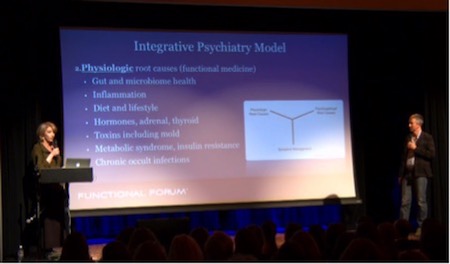
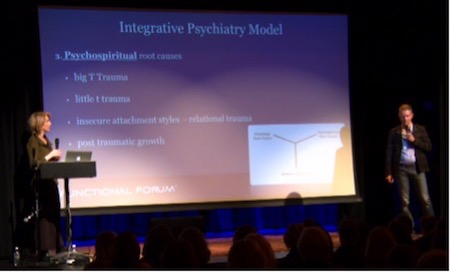
Here is a sampling of what they covered. Isn’t it wonderful to see a slide titled “Integrative Psychiatry Model” and with physiologic root causes listed?
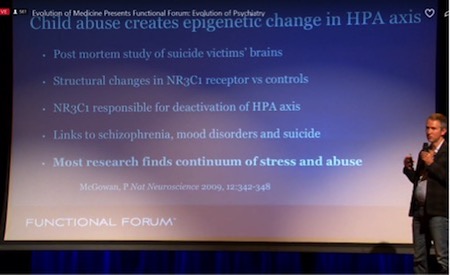
The section on child abuse, trauma and psychospiritual root causes was enlightening:
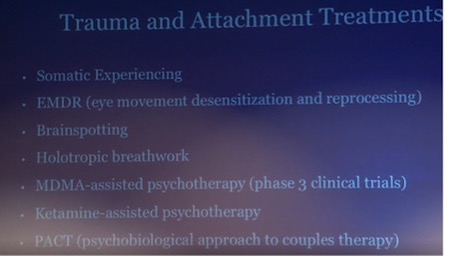
They cover MDMA- and ketamine-assisted psychotherapy and I look forward to learning more from them about these approaches. However, until I learn more I’m wary of these approaches because of the side-effects. Based on the work I do with targeted individual amino acids I would use them before even considering MDMA or ketamine.
You can watch the entire video presentation here:


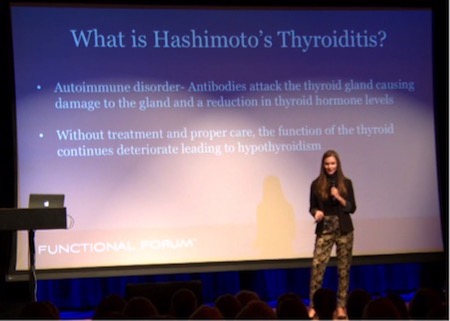
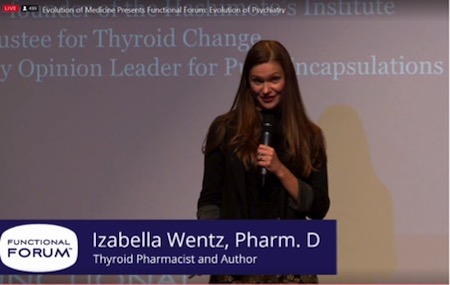
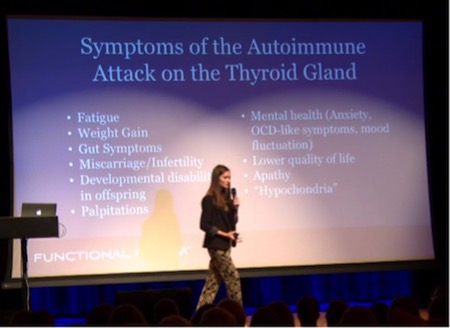
Next up was Thyroid Pharmacist, Dr. Izabella Wentz, returning to the Functional Forum stage for her first keynote. Dr. Izabella is a dear friend and one of my favorite thyroid experts and she covered the connections between thyroid health and depression and anxiety, looking at proven protocols to address the underlying causes.   Her presentation is titled “The Misdiagnosis Machine: How Thyroid Problems Mimic the Symptoms of Mental Illness.”
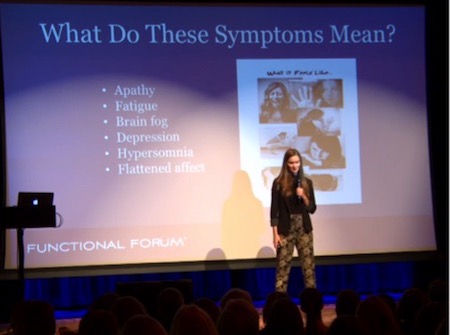
Dr. Izabella shares the symptoms of the autoimmune attack on the thyroid gland. As well as fatigue, weight gain, gut issues and apathy, you can experience mood symptoms such as anxiety, OCD-like symptoms and mood swings.
You can watch the entire video presentation here (and listen for a mention of my name and how commonly I see anxiety with clients with thyroid symptoms):


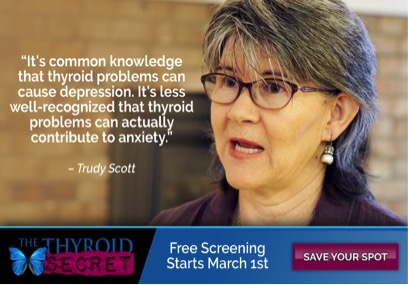
If you enjoyed Dr. Izabella’s presentation you don’t want to miss her upcoming documentary called The Thyroid Secret. I’m thrilled to have been invited to contribute on my expertise on anxiety and how this ties back to thyroid health. You can read more about it and find a few snippets from my interview here.
 

Dr. Izabella also has a new book that will be released next month: Hashimoto’s Protocol: A 90-Day Plan for Reversing Thyroid Symptoms and Getting Your Life Back. I have a review copy and it’s brilliant! I’ll be sharing more via a book review and interview with Dr. Izabella, taking a deep dive into infections and Hashimoto’s, so stay tuned for that.

I hope you’ve enjoyed these two presentations! For me, hearing presentations like these gives me so much optimism for the future of mental health!

I’d love to hear what has inspired you?

If you’re a practitioner and would like to attend a live Functional Forum meeting in the future or tune in online, you can register here to be notified. James and his team also offer excellent practice resources for functional medicine practitioners. We appreciate him for what he is doing for functional medicine via the Functional Forum!


Filed Under: Anxiety and panic, Depression, Events, People, Thyroid, Thyroid health Tagged With: anxiety, depression, functional forum, integrative psychiatry, izabella wentz, james maskell, Janet Settle, mental health, thyroid, Will Van Derveer

The Thyroid Secret online premiere and my anxiety interview

February 16, 2017 By Trudy Scott 12 Comments

My colleague Dr. Izabella Wentz and her amazing team have produced a powerful 9-part documentary called The Thyroid Secret and it truly is groundbreaking!

Thyroid disease is one of the most overlooked diseases and is so often misdiagnosed. I see this all this time with my anxious clients.

Dr. Izabella is a dear friend of mine and suffered for years with chronic fatigue, depression, anxiety and panic attacks simply because she didn’t know she had a thyroid condition. She saw many doctors and they all said “Your labs are normal.” When she finally did get her Hashimoto’s diagnosis she still couldn’t find a doctor to help her so she read and researched and figured out her own solution! And now her mission is to share what she has learned so you don’t have to suffer like she did!

She shares this in her interview with Andrea Nakayama:

It’s really really important for a person to realize that how much control they have in their own situation, and how powerful they really are. They can help themselves.

Of course, having a coach, having a guide, having somebody who has maybe done it before with themselves or with other patients helps.

This documentary is one of your guides to educate and empower you!

If you resonate with any of these symptoms then I encourage you to join us:

  • Fatigue
  • Brain fog
  • Depression and/or anxiety and panic attacks
  • Weight gain
  • Diabetes
  • Heart disease
  • High cholesterol
  • Peripheral neuropathy
  • Goiter (which may inhibit your ability to swallow or breathe)
  • Infertility and birth defects in your children

Dr. Izabella has gathered over 100 of the TOP experts in integrative thyroid treatment to unmask the confusion and misinformation surrounding thyroid issues.

I’m honored and thrilled to have been invited to participate in the documentary!


Here is a snippet from my interview:

I’ve got an underactive thyroid. I discovered that at the same time that I was working with the naturopath, and we supported [my thyroid] nutritionally. I still need to really take care of my thyroid. The interesting thing is, a lot of the nutrients that help with anxiety also help with thyroid health. One of them is zinc, a really important nutrient for anxiety. When you’ve got low zinc levels you’ll feel more anxious, you’re prone to panic attacks, and zinc is one of the key nutrients for thyroid health.

Gluten is a factor for autoimmune thyroid conditions. I’ve got a gluten issue and I can’t eat gluten at all, so getting rid of that [out of my diet] helped my anxiety, and it also gave my thyroid a chance to recover.

There are a lot of overlaps between anxiety and thyroid problems.

A lot of people go to the doctor and get a diagnosis, you’ve got anxiety, or you’ve got depression, and they’ll be given a medication: benzodiazepine or an SSRI. It may be the thyroid that’s causing the problems.

It’s common knowledge that thyroid problems can cause depression. It’s less well recognized that thyroid problems can actually contribute to anxiety.

I actually looked at a study that was published in 2010, and they found that there was three times higher incidence of anxiety in women who have an underactive thyroid. It’s more common than a lot of people realize.

Certainly in my practice, working with anxious women (most of the people that I work with are women, I work with men as well) – most of the women that I work with, with anxiety, have thyroid issues. They either have Hashimoto’s thyroiditis, they have hypothyroidism, or they may have had Graves’ in the past. It’s very, very common that I see this.

Dr. Izabella also interviewed over 50 thyroid patients who share their personal and sometimes heartbreaking stories. I love this aspect because it helps us realize that we are not alone and there is hope!

I’d love to invite YOU to the premiere of this exciting and empowering ONLINE educational event as my guest! Mark March 1st on your calendar and then click here to reserve your spot for this special online event.

The Thyroid Secret is a 9-part documentary and is available to watch online at no charge. Starting March 1st there will be a brand new episode up for you to watch each day for 24 hours until the next episode is ready

If you have thyroid disease or if you think you may have thyroid disease this documentary is not to be missed! I know I’m going to learn from Dr. Izabella and her guests too!

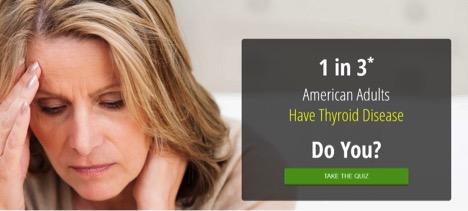
If you’re NOT sure if you have a thyroid condition (1 in 3 American adults actually have a thyroid condition and many don’t even know it) take the quiz to see how healthy your thyroid is!

Feel free to share with loved ones or friend who may also benefit from this valuable resource

Please share your thyroid story and questions below in the comments.

Filed Under: Events, Thyroid Tagged With: anxiety, izabella wentz, thyroid, thyroid secrets

Interview: Heal Your Pain Now + the fear-pain connection

February 14, 2017 By Trudy Scott 5 Comments

If you struggle with chronic pain from an injury, autoimmune disease, fibromyalgia, joint pain, arthritis, anxiety, depression or have tried everything without success, Heal Your Pain Now provides natural solutions to eliminate pain and return you to a life worth living.

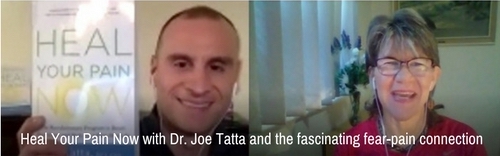
I recently had the pleasure of interviewing Dr. Joe Tatta, physical therapist and nutritionist, author of this wonderful new book and a dear friend!

You can watch the interview here:


And here is a summary from our great interview:

What is chronic pain – it’s about protection. Acute pain like an ankle sprain tells you to rest and heal; chronic pain – persists beyond 3 months and is less about protection and more about the brain being in a hyper-sensitive state.

The human body has innate ability to heal i.e. the body has a natural anti-inflammatory process and tissue will heal in 3 months. After those 3 months it becomes less about the actual tissue and more about what is going on centrally in the brain and nervous system.

Central sensitization or the hyper-sensitive brain: we have a neural signature specific to you and your pain experience.

It’s based on what you believe about pain, are told about pain, your memories, your emotions, input from body (such as tightness), your thoughts, touch and sound.

With central sensitization pathways light up in the brain causing pain and in some instances those pathways never quiet down. The more we can be educated about pain the faster we can release this central sensitization and the pain.

An example: You and I had backpain – my life: mom is a nurse, my backpain comes and goes, I can move a little, I go to work, do some chores and basic exercise; in your life your grandmother had really bad back pain, was in a wheelchair and said back pain is the worst pain you could ever have. This may make your pain persist. Fear causes pain to persist over a long period of time.

Fear and pain: it can be actual fear or perceived; fight or flight – muscles tense around the spinal column; blood is shunted away from the spinal muscles because you’re getting ready to run or fight; when it’s persistent there is no blood flow and no healthy nutrients going to the spinal muscles; cortisol levels become elevated – they are inflammatory and very powerful at laying down memory patterns (which can make pain persist).

When you lessen fear you promote relaxation and in general pain disappears very fast.

When you hear all this the brain repatterns – you’re doing a mini cognitive behavior session just listening to and watching the video of us interacting! (I love this!)

Myth: chronic pain has to be chronic – no! Replace the word chronic with persistent because language is really important for creating these pain memories.

Myth: imaging studies like xrays and MRIs are correlated with pain. Often we see intense pain with normal xrays, sometimes no pain with awful rays.

There is also the emotional aspect – when someone in a white coat holds up that xray and says you have this issue it can start that fear response and the pain can be worse.

This fear pain connection is fascinating and I asked if it common knowledge

  • The average physician only receives 4 hours of pain science education in 12 -16 years of education – most of what they learn focused on medications, injections and surgery. We currently have a biomedical model (xray and injection or surgery, injections or medications) but we are moving to a biopsychosocial model (movement, nutrition, mindset, the brain)
  • The book has 40 pages of evidence based research (if you’re a practitioner and would like access to the papers let me know in the comments and Dr. Joe can get them to you)
  • I suggest using the book to educate yourself and your doctor

Medications prescribed for pain: Opioids (oxycontin, codeine, morphine) #1 drug prescribed for pain. CDC and NIH: You should not prescribe opioids as first line of treatment for chronic pain. They are highly addictive – 3 million addicted to them; 2 million die each year; opioid-induced hyperalgesia – the more you take the more pain sensitivity you have and the more medication is needed.

Side effects: constipation caused by opioids and you’re prescribed medications for the constipation; called OIC (opioid induced constipation) – changes the microbiome, fecal matter is bound up, you get leaky gut, inflammation starts in gut and there are impacts on neurotransmitter production like GABA and serotonin (and then increased anxiety and depression).

Other medications used are SSRIs – depression looks very similar to pain in the brain – when you heal the gut you can balance serotonin

Gabapentin and NSAIDs and benzodiazepines are also prescribed.

The book covers ALL pain – any chronic (or persistent) pain that has been around for 3 months or longer

Nutrition: diet is the #1 way to reduce inflammation – food is medicine approach; 100% whole food (if it comes in a box or a can or is made by man it has no place in your diet especially if you have chronic pain); farm-raised beef, wild fish, fruit and vegetables, healthy fats i.e. a modified Mediterranean diet.

Then use a gut-healing protocol for removing inflammation and addressing autoimmunity – remove gluten, dairy and sugar. In 3-7 days people see their pain decrease from 8/10 to 2/10.

“I don’t think I have arthritis and I don’t think I need this Aleve – I think it was the gluten I was eating”

If you slip a little and have some gluten then you realize you can’t even have any and you’re educating yourself that food is medicine. It’s very powerful

With gut healing, if you have autoimmunity take out eggs and GMOs (soy and corn) too; there is more clinical evidence around nightshades – if you can heal the gut you can often tolerate small amounts.

The ketogenic diet is last phase: 65% – 75% fat, 5% carbs (from fibrous vegetables) and the rest is protein. It’s awesome to regulate blood sugar, helps central sensitization (we know because those with seizures do really well on a ketogenic diet). With seizures glutamate is high and GABA low and the ketogenic diet helps balance out these in your brain and calms the nervous system and decreases pain; upregulates ATP (energy molecule) which helps with pain. Brain fogs goes away.

The ketogenic diet is not for someone with type 1 diabetes, who is pregnant or in acute adrenal fatigue

Do a trial of 3-4 weeks and cycle into ketosis every 4-6 months.

Intermittent fasting tricks body into thinking body is starving.

A big plane flies over at the 41 minute mark! Enjoy the laugh with us!

With intermittent fasting do a 14-16 hour fast overnight, say 6pm to 9am the next day

Mini-fasts: protein shake in the morning or evening – the meal is smaller; or use bone broth – healing for gut and collagen for your joints!

Supplements: omega-3s (2000 to 4000mg); curcumin (in oil – really important to help absorption); vitamin D 5000-10,000 IU; some kind of proteolytic enzymes; GABA for pain and anxiety and central sensitization.

If this feels overwhelming and you feel you need more support (in addition to reading the book) Dr. Joe does have a group program

It’s called Heal your Pain Heal your Life  – 6 week process, a Facebook group group, Q and A calls, and social support (which is huge if you have pain and can’t get out of house, or if others can’t relate to your pain, plus for the community support)

Movement, sedentary syndrome, sit rise test: movement is medicine and has to be in your life in some form. Even 5 minutes twice a day can help. It sends signal to your brain “I can move a bit and I’m safe”, you build confidence and fear decreases, releases endorphins, quiets down the nervous system

Sit rise test – cross your legs and lower yourself down to the floor without your hands and then stand back up. It indicates a long life-expectancy; they are not sure why – cardio effects? Balance? It tests strength and vitality; if you can’t do it – practice each day. Third world cultures sit on the floor to communicate – when you move joints in full range it lubricates them.

I’m a climber, skier, mountain biker, windsurfer and have had many injuries and worked with wonderful physical therapist and yet I have learned so much from Dr. Joe and this book! I will use it for prevention of injuries and pain and for the next time I am injured and in pain.

Dr. Joe ended by saying

Keep moving forward, we’re going to change the pain paradigm and give people their lives back!

This is the book summary:

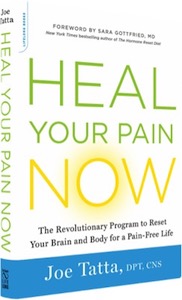
In Heal Your Pain Now, Dr. Joe Tatta teaches you how to regain control of your life by breaking the cycle of persistent pain. Following Dr. Tatta’s program, you learn the role of the brain in pain–and how to use your brain to STOP your pain; how nutrition can eliminate the inflammation in your body, which is exacerbating your pain; and how to overcome Sedentary Syndrome and choose the best movement strategy. Dr. Tatta provides quizzes, self-assessments, meal plans, shopping lists, recipes, and exercises to support you throughout the program.

As I mentioned in the interview I really appreciate the very unique perspective Dr. Joe brings to healing from pain. His expertise from the physical therapy and movement world is so beautifully meshed with the power of nutrition! He covers the foundational information for eating an anti-inflammatory diet, an excellent gut healing protocol, healing supplements and with much fascinating reading on intermittent fasting and the ketogenic diet.

Dr. Joe explains these concepts brilliantly: the brain in pain, central sensitization, myths around pain and the biospychosocial model of pain. With the work that I do with anxious women like you (and men too), the pain connection to fear is very relevant; and the fact that stress, anxiety, post-traumatic stress disorder (PTSD), or depression are danger signals that can actually make the pain worse depending on how “sensitive” your nervous system has become.

Also, since many of the same pain medications are also often prescribed for anxiety, this book is a wonderful resource for someone with both pain and anxiety. But best of all, this book offers real solutions for everyone suffering from any kind of pain, and a solid understanding of the mechanisms.

I’m sure you’d like access to what we talked about during the interview:

  • Joe’s Pain Quiz
  • His 6 week group program Heal your Pain heal your Life
  • You can order the book Heal Your Pain Now from Amazon and get access to some bonus gifts here
  • I forgot to mention that Dr. Joe has live Q and A webinar coming up on February 22, 2017 at 7pm EST and you can register for that here so that you know exactly how to heal without medication, injections or surgery. There is new science to end – or dramatically reduce your pain.


Please let us know which parts of this really resonated with you and what you’re looking forward to implementing for your pain.


Filed Under: Books, Pain Tagged With: anxiety, Anxiety and Depression association, book, depression, fear, heal your pain now, Joe Tatta

Vulvodynia: oxalates, GABA, tryptophan and physical therapy

February 10, 2017 By Trudy Scott 41 Comments

On a recent webinar with Julie Matthews, I shared how healthy foods that are high in oxalates caused me excruciating foot pain: Oxalates and leaky gut for Anxiety.

We also mentioned how oxalates can be a factor in vulvodynia and someone asked this question on the blog:

I just listened to the webinar talking about oxalates. I was shocked and delighted to hear the mention of the connection between high oxalates and vulvodynia. My friend has suffered with this for 18 months with little improvement. She has painful feet so I am wondering if there is indeed a connection for her situation. Could you please explain a bit more of the vulvodynia/ oxalates connection? I would like to give my friend the information.

Before I share the resources I offered her for her friend, let me share this about vulvodynia:

Vulvodynia is defined as chronic vulvar burning, stinging, rawness, soreness or pain in the absence of objective clinical or laboratory findings to explain these symptoms. Vulvodynia is a chronic pain syndrome affecting up to 18% of the female population and is generally regarded as an underdiagnosed difficult to treat gynecological disorder.

There is still much we have to learn about vulvodynia and the causes are multifactorial:

The etiology [cause] of vulvodynia is still enigmatic and is probably multifactorial-including physiological concerns (eg, pelvic floor muscle dysfunction, neuropathic pain, and psychosocial) and sexual issues (eg, anxiety and sexual dysfunction). Although it is a common syndrome, most patients are neither correctly diagnosed nor treated. A diagnosis of vulvodynia is based upon patient history and lack of physical findings upon careful examination. No clinical or histological findings are present to aid in diagnosis. Most treatment options for vulvodynia are neither well studied nor have an evidence base, relying instead upon expert opinion, care provider experience, and use of data from other pain syndromes. However, many patients show marked improvement after physical therapy for the pelvic floor, medications for neuropathic pain, and psychosexual therapy.

You’ll notice that oxalates and other dietary approaches are not mentioned. There are actually 2 studies that state there is NO connection between dietary oxlalates and vulvodynia. This is the first one: Influence of dietary oxalates on the risk of adult-onset vulvodynia. The second paper: Urinary oxalate excretion and its role in vulvar pain syndrome concludes that:

Urinary oxalates may be nonspecific irritants that aggravate vulvodynia; however, the role of oxalates as instigators is doubtful.

In this paper: Vulvar vestibulitis-a complex clinical entity, a low oxalate diet and calcium citrate did help:

Successful outcomes were achieved in 14.3% of patients using a low oxalate diet and calcium citrate supplementation

The Vulval Pain Society is a wealth of information on vulvodynvia and they have this information on the low oxalate diet, saying it helps many women and it worth trying:

A diet low in oxalate salts has been suggested as a treatment for women who experience unexplained vulval pain or vulvodynia… it is widely used in the United States as a treatment for vulvodynia. The diet may be supplemented with the use of oral calcium citrate.

There are few doctors in the UK who are aware of or routinely use this treatment. Many specialist doctors who run vulval clinics in this country [the UK] are skeptical about the treatment, as much of the evidence has not been published in the medical literature and the treatment is not of proven value. A diet low in oxalate with or without calcium citrate may, however, benefit some women with vulval pain and this is certainly an option for some women to try.

The vulvar pain is often described as a “burning” or “cutting” or “sharp” kind of pain. You’ll see medications recommended for the neuropathic pain in many of the studies and on the Vulval Pain society site.

It does concern me that so many women are prescribed SSRIs and medications like gabapentin and benzodiazepines when there are the safer and more effective options of the amino acids such as tryptophan and GABA.   When dosed correctly these individual amino acids help with some of the pain and anxiety right away while other root causes are addressed.

For my clients, I recommend targeted individual amino acids instead of the medications. I recommend a trial of tryptophan instead of an antidepressant, assuming they score low on the serotonin section of the amino acid questionnaire.

Research shows there is serotonin involvement with vulvodynia. In this study of women with PVD (provoked vestibulodynia i.e. pain in the entrance of the vagina, common with vulvodynia):

Polymorphism in the serotonin receptor gene, 5HT-2A, has been associated with other chronic pain disorders such as fibromyalgia…. The results [of this study] indicate a contribution of alterations in the serotonergic system to the patho-genesis of PVD and gives further evidence of PVD being a general pain disorder similar to other chronic pain disorders.

I also recommend a trial of GABA instead of gabapentin or one of the benzodiazepines, assuming they score low on the GABA section of the amino acid questionnaire.

Tryptophan and GABA can help with both the pain, and the anxiety and depression that is commonly seen with vulvodynia and other pelvic floor conditions – right away while other root causes are addressed.

Since acupuncture is often reported to be helpful, I also consider a trial of DPA for endorphin boosting and hence some pain reduction too.

Physical therapy is often extremely beneficial and frequently overlooked, so finding a good pelvic floor PT to be part of your healing team is key too.

When responding to the blog question I commented that “your friend is fortunate to have you looking out for her”. Using some or all of the above approaches I would expect her to find some relief of the vulva pain, the foot pain and experience reduced anxiety and depression (assuming these are her root causes).

Please note that this is not an exhaustive list of contributing factors for vulvoldynia – other factors could include candida, infections such as HPV, IBS/SIBO, and trauma and sexual abuse. My colleague, Jessica Drummond, nutritionist and physical therapist, and an expert on female pelvic pain, writes about immunity, dysbiosis, gluten and other food sensitivities, cortisol and sex hormone imbalances in this article: Vulvovaginal Pain and The Immune System: Practical Steps for Vulvovaginal Pain Relief. A full functional workup is required and your root cause can be different from someone else’s root cause.

I’d also like to add that although dietary oxalates cause excruciating pain in my feet, I’m so fortunate, in that I do not have vulvodynia.

Additional resources when you are new to using tryptophan and other amino acids as supplements

We use the symptoms questionnaire to figure out if low serotonin or other neurotransmitter imbalances may be an issue for you.

If you suspect low levels of any of the neurotransmitters and do not yet have my book, The Antianxiety Food Solution – How the Foods You Eat Can Help You Calm Your Anxious Mind, Improve Your Mood, and End Cravings, I highly recommend getting it and reading it before jumping in and using amino acids on your own so you are knowledgeable. And be sure to share it with the practitioner/health team you or your loved one is working with.

There is an entire chapter on the amino acids and they are discussed throughout the book in the sections on gut health, gluten, blood sugar control (this is covered in an entire chapter too), sugar cravings, anxiety and mood issues. The importance of quality animal protein and healthy fats is also covered.

The book doesn’t include product names (per the publisher’s request) so this blog, The Antianxiety Food Solution Amino Acid and Pyroluria Supplements, lists the amino acids that I use with my individual clients and those in my group programs.

If, after reading this blog and my book, you don’t feel comfortable figuring things out on your own (i.e. doing the symptoms questionnaire and respective amino acids trials), a good place to get help is the GABA QuickStart Program (if you have low GABA symptoms too). This is a paid online/virtual group program where you get my guidance and community support.

If you are a practitioner, join us in The Balancing Neurotransmitters: the Fundamentals program. This is also a paid online/virtual program with an opportunity to interact with me and other practitioners who are also using the amino acids.

Have you had success with a low oxalate diet and calcium citrate for vulvodynia? And other pain (in the feet or hips or elsewhere in the body)?

Has physical therapy with a pelvic floor specialist helped?

Have you found tryptophan, GABA or DPA to help with the pain and the anxiety and/or depression too?

Have any other treatments helped you?

If you’re a practitioner what approaches have helped your clients/patients?

Please share questions or feedback below.

Filed Under: Amino Acids, Women's health Tagged With: anxiety, benzodiazepine, depression, GABA, gabapentin, oxalates, pain, physical therapy, SSRI, tryptophan, vulvodynia

Seriphos Original Formula is back: the best product for anxiety and insomnia caused by high cortisol

January 20, 2017 By Trudy Scott 296 Comments

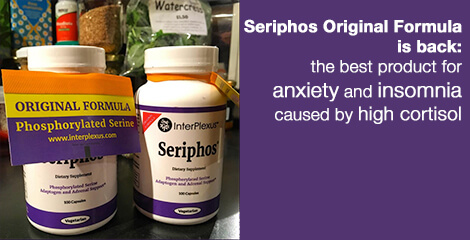
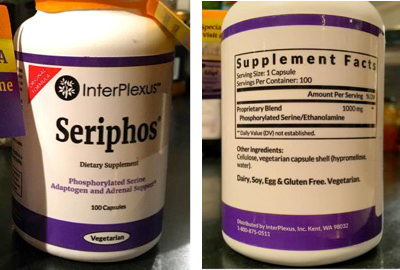
Seriphos “Original Formula” with a red triangle on the left side of the bottle (Photo credit: Drew Todd)

Interplexus changed its proprietary formula for Seriphos, a phosphorylated serine product, sometime March/April 2016. It was changed to a form which no longer worked for many people with the anxiety and insomnia that is associated with high levels of cortisol at night.

Thanks to feedback from folks in my community I investigated and blogged about this here: Seriphos has been reformulated – what do I use to lower high cortisol?, sharing information about labeling confusion and many possible alternatives.  I also looked into Relora, a standardized/patented Magnolia bark extract and Phellodendron bark extract, as a very viable alternative.

But I was hoping, as were many of you, that they’d hear all the requests and complaints from their loyal users and practitioners like myself and bring back the original formula.

This week a number of people in my community notified me that the original Seriphos is back so I reached out to Interplexus again. I had been watching their site and had not seen any announcement just a banner stating it’ll be ready Dec 2016 (which is still on the site as of this writing). So I emailed Interplexus earlier this week:

Just checking to see if you have a status update on this please?  When will it be ready and when can we expect to see it in online stores? Can it be purchased from Interplexus directly? Can you also please share how we’ll know it’s the new formulation and are you able to guarantee it’s the exact same formula as before?

And the response from Interplexus:

Seriphos has been in stock for about 3 weeks now and is widely available online, we are suggesting retail customers search the product online and purchase from the most convenient retailer because at this time we [Interplexus] are wholesale only. However we will be venturing into retail in the future.

The label now has a red triangle on the left side that states “Original Formula.” To avoid confusion we are asking that customers purchase from online stores that have the updated label. We can assure you that it is the exact same formula as before.

The Original Formula of Seriphos is now back! And we’re thrilled! Thank you Interplexus!

(Photo credit: Julie Matthews)

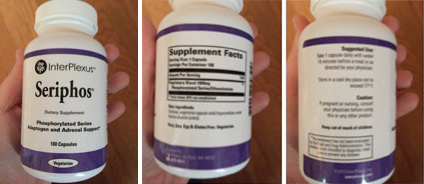
This is what the old bottle looked like before it was reformulated. The label reads: Proprietary Blend 1000mg Phosphorylated Serine/Ethanolamine.

(Photo credit: Drew Todd)

This is the label from the “Original Formula” – the new Seriphos just reintroduced

As you can see the new “Original Formula” has the red triangle on the front and the back also reads: Proprietary Blend 1000mg Phosphorylated Serine/Ethanolamine.

I’m sharing all this and the images for a few reasons:

  • There was some confusion with the labels when it was reformulated earlier in 2016 (you can see what I mean here)
  • If you need it I want to make sure you get the correct one and
  • In the last week I’ve had three reports from people who have the “Original Formula” and feel it’s not working as before.

I’m going to stay optimistic and hope they’ll see results after another week of use (maybe 2 weeks tops), although in the past I have had many clients say they notice a difference in a few days.

If you have new “Original Formula” and have started using it again and have observed it’s not working as before here are a few things to consider:

  • Give it a week or two to see if it’s going to work for you
  • Keep a food mood sleep log to make sure nothing else is affecting your anxiety and sleep (like accidental gluten exposure, caffeine, high FODMAPs food if you have SIBO
  • Your cortisol high may have shifted in the time you weren’t taking the old Seriphos pre-April 2016 and you may need to retest your salivary cortisol levels and adjust the timing accordingly
  • Think back to try and figure out if anything else may have change between then and now (a new medication started, a medication stopped, new supplements, dietary changes etc)

If this is the first time you’re reading about Seriphos here is some additional information: If you have high nighttime cortisol (as measured by an adrenal saliva test) it can cause insomnia and anxiety. Using 1-3 x Seriphos about 1-3 hours before the high cortisol is the best way I know for lowering the high cortisol and providing relief.

Here is some feedback from someone who commented on the blog:

I have been tested for cortisol and I have extremely high levels day and night. The old Seriphos [pre-April 2016] was working for me to reduce the internal jitters which would wake me several times a night with heart pounding and adrenalin rushing. I do not have a problem turning my brain off going to sleep – just problems waking several hours later (sometimes several times a night) – sometimes not being able to get back to sleep because I am wide awake.

And feedback from Julie Matthews, Certified Nutrition Consultant, Author of Nourishing Hope for Autism and founder of Bioindividual Nutrition Institute:

Seriphos is the best thing I found to combat high cortisol levels in the evening. I don’t need to take it every day, but if there is an event that gets my cortisol up such as: travel, speaking at a conference, or doing taiko too late at night, I could be awake for hours from high cortisol. When I take Seriphos, I can literally feel my system dramatically ratcheting down moment by moment and within an hour or less I am easily able to go to bed and sleep. I have tried other supplements and none of them work nearly as well as Seriphos for me. I’m so glad the “Original Formula” is back.

If you do have the new “Original Formula” and used the old Seriphos pre-April 2016, have you started using it again? We’d love to hear how you’re doing and how it compares to the Seriphos pre-April 2016?

If you’re a practitioner and have used the old Seriphos pre-April 2016 with success for helping clients/patients lower high cortisol we’d love to hear your feedback on the new “Original Formula.”

Thanks for the initial alert about the reformulation, thanks if you shared pictures with me, thanks if have been asking questions and sharing feedback here on the blog, and thanks if you contacted Interplexus! I love the community we are creating here!

UPDATE 3/7/2020: The new “Original Formula” of Seriphos is the same as the old Seriphos pre-April 2016 and is working as it always did, helping to lower high cortisol levels in order to ease anxiety that is due to high cortisol and improve sleep issues that are caused by high night-time or early morning cortisol. (I’ve been replying to comments to this effect but forgot to come back and update the blog.)

Filed Under: Supplements Tagged With: anxiety, cortisol, insomnia, seriphos

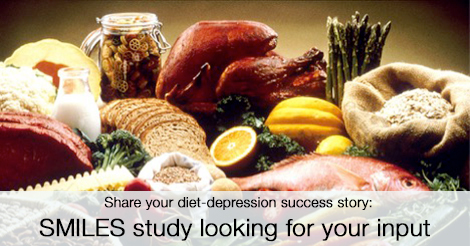
Share your diet-depression success story: SMILES study looking for your input

January 19, 2017 By Trudy Scott 18 Comments

Professor Felice Jacka, nutritional psychiatry researcher and founder of ISNPR/International Society for Nutritional Psychiatry Research posted this exciting news and important request on the ISNPR facebook page:

The SMILES RCT, which is the first randomised controlled trial to test whether dietary improvement can actually treat depression, has now been accepted for publication in BMC Medicine (publication date 31st January).

As part of the media campaign, we will be needing to identify people who are willing to be interviewed. If there is anyone who has personally experienced a benefit from improving their diet, would you please volunteer for this purpose?

It’s a very important role, as the media coverage for SMILES will be limited if we can’t provide personal, first-person experiences to journalists. Clearly – for the sake of the field – it will be important to generate extensive media in order for clinicians and the general public to understand the implications and possibilities that arise from the RCT. Your help is enormously appreciated!

You can read more about this SMILES RCT here and the Anxiety Summit interview with Felice Jacka here: The Research – Food to prevent and treat anxiety and depression?.

Although anxiety was looked at in the study, Felice shared this regarding the type of interviewees they are looking for:

  • We really need to keep a focus on the topic of the RCT, which is depression
  • And to also keep it to those who improved the quality of their diet i.e. moving from a processed food diet, to one high in plant foods and healthy fats and healthy proteins
  • Not a particular type of diet (e.g. not paleo, not gluten free).

If you’ve personally benefited from changing your diet in this way and you’d like to help by sharing your story with the media please comment on the blog (or send an email to support [at] everywomanover29.com) with details of your story and willingness to be interviewed, plus your location. Be sure to let us know how best to contact you.

Right now we’ll just be calling on those who meet the above criteria for the media interviews.

BUT if you’ve benefited from any other changes to your diet – for either anxiety or depression – feel free to share anyway, so we can inspire others to do the same.

Here is my story:

For me it was anxiety and panic attacks that resolved when I made dietary and other nutritional and lifestyle changes.   I had been eating a vegetarian diet for a few years and I suspect the non-organic/GMO processed soy products (soy milk, soy yogurt, soy “butter” etc) were a big issue for me and damaged my gut.  When I added back quality animal protein (grass-fed red meat, wild fish, pastured eggs and chicken), switched to organic produce, added healthy fats and removed gluten my mood improved dramatically.  Now I eat a combination of a Paleo/SCD /low FODMAPS/low oxalate diet. 

During the severe anxiety and panic attacks I also needed additional support in the way of the targeted amino acids GABA (this was a life-saver and stopped the panic attacks in a few days) and tryptophan, plus zinc, vitamin B6, evening primrose oil, a good multi and B complex and adrenal support.  I still continue with some of these basic nutrients today.

My health issues have been complex as I’ve also had to deal with heavy metals, poor gut health and much more so I had what I call “a perfect storm” and yet diet has had such a huge impact for me!

Thanks for sharing your story! I’ll be sharing more as soon as the paper is actually published. Stay tuned for an interview with Felice too! 

And  big congrats to Felice and her team on this ground-breaking research!

UPDATE January 30, 2017: Here is the link to the research – A randomised controlled trial of dietary improvement for adults with major depression (the ‘SMILES’ trial)


Filed Under: Depression, Food and mood, Research Tagged With: anxiety, depression, diet, felice jacka, food, smiles study

  • « Go to Previous Page
  • Page 1
  • Interim pages omitted …
  • Page 55
  • Page 56
  • Page 57
  • Page 58
  • Page 59
  • Interim pages omitted …
  • Page 96
  • Go to Next Page »

Primary Sidebar

GABA QuickStart Homestudy

gaba quickstart homestudy

Free Report

9 Great Questions Women Ask about Food, Mood and their Health

You'll also receive a complimentary subscription to my ezine "Food, Mood and Gal Stuff"


Connect with me

Popular Posts

  • Amino Acids Mood Questionnaire from The Antianxiety Food Solution
  • The Antianxiety Food Solution Amino Acid and Pyroluria Supplements
  • Pyroluria Questionnaire from The Antianxiety Food Solution
  • Collagen and gelatin lower serotonin: does this increase your anxiety and depression?
  • Tryptophan for the worry-in-your-head and ruminating type of anxiety
  • GABA for the physical-tension and stiff-and-tense-muscles type of anxiety
  • The Antianxiety Food Solution by Trudy Scott
  • Seriphos Original Formula is back: the best product for anxiety and insomnia caused by high cortisol
  • Am I an anxious introvert because of low zinc and vitamin B6? My response to Huffington Post blog
  • Vagus nerve rehab with GABA, breathing, humming, gargling and key nutrients

Recent Posts

  • Her cravings for chips and peanut butter were triggered by stress: GABA ends cravings and reduces physical tension and fear of heights
  • It is truly miraculous to be able to move through life without crippling anxiety and panic
  • GABA and tryptophan combo provide immediate and noticeable relief for tremors and cervical dystonia in just 7 days
  • Red light therapy for back and neck pain, plantar fasciitis and low mood – a complement to the amino acids GABA, DPA and tryptophan
  • What do I use instead of Seriphos to help lower high cortisol that is affecting my sleep and making me anxious at night?

Categories

  • 5-HTP
  • AB575
  • Addiction
  • ADHD
  • Adrenals
  • Alcohol
  • Allergies
  • Alzheimer's disease
  • Amino Acids
  • Anger
  • Antianxiety
  • Antianxiety Food Solution
  • Antidepressants
  • Anxiety
  • Anxiety and panic
  • Autism
  • Autoimmunity
  • benzodiazapines
  • Bipolar disorder
  • Books
  • Caffeine
  • Cancer
  • Candida
  • Children/Teens
  • Collagen
  • Cooking equipment
  • Coronavirus/COVID-19
  • Cravings
  • Depression
  • Detoxification
  • Diabetes
  • Diet
  • DPA/DLPA
  • Drugs
  • EFT/Tapping
  • EMF
  • EMFs
  • Emotional Eating
  • Endorphins
  • Environment
  • Essential oils
  • Events
  • Exercise
  • Fear
  • Fear of public speaking
  • Fertility and Pregnancy
  • Fish
  • Food
  • Food and mood
  • Functional neurology
  • GABA
  • Gene polymorphisms
  • General Health
  • Giving
  • Giving back
  • Glutamine
  • Gluten
  • GMOs
  • Gratitude
  • Gut health
  • Heart health/hypertension
  • Histamine
  • Hormone
  • Hyperparathyroidism
  • Hypoglycemia
  • Immune system
  • Inflammation
  • Insomnia
  • Inspiration
  • Introversion
  • Joy and happiness
  • Ketogenic diet
  • Lithium orotate
  • Looking awesome
  • Lyme disease and co-infections
  • MCAS/histamine
  • Medication
  • Men's health
  • Mental health
  • Mercury
  • Migraine
  • Mold
  • Movie
  • MTHFR
  • Multiple sclerosis
  • Music
  • NANP
  • Nature
  • Nutritional Psychiatry
  • OCD
  • Osteoporosis
  • Oxalates
  • Oxytocin
  • Pain
  • Paleo
  • Parasites
  • Parkinson’s disease
  • PCOS
  • People
  • PMS
  • Postpartum
  • PTSD/Trauma
  • Pyroluria
  • Questionnaires
  • Real whole food
  • Recipes
  • Research
  • Schizophrenia
  • serotonin
  • SIBO
  • Sleep
  • Special diets
  • Sports nutrition
  • Stress
  • Sugar addiction
  • Sugar and mood
  • Supplements
  • Teens
  • Testimonials
  • Testing
  • The Anxiety Summit
  • The Anxiety Summit 2
  • The Anxiety Summit 3
  • The Anxiety Summit 4
  • The Anxiety Summit 5
  • The Anxiety Summit 6
  • Thyroid
  • Thyroid health
  • Toxins
  • Tryptophan
  • Tyrosine
  • Uncategorized
  • Vegan/vegetarian
  • Women's health
  • Yoga

Archives

  • May 2026
  • April 2026
  • October 2025
  • September 2025
  • August 2025
  • July 2025
  • June 2025
  • May 2025
  • April 2025
  • March 2025
  • February 2025
  • January 2025
  • November 2024
  • October 2024
  • September 2024
  • August 2024
  • July 2024
  • June 2024
  • May 2024
  • April 2024
  • March 2024
  • February 2024
  • January 2024
  • December 2023
  • November 2023
  • October 2023
  • September 2023
  • August 2023
  • July 2023
  • June 2023
  • May 2023
  • April 2023
  • March 2023
  • February 2023
  • January 2023
  • December 2022
  • November 2022
  • October 2022
  • September 2022
  • August 2022
  • July 2022
  • June 2022
  • May 2022
  • April 2022
  • March 2022
  • February 2022
  • January 2022
  • December 2021
  • November 2021
  • October 2021
  • September 2021
  • August 2021
  • July 2021
  • June 2021
  • May 2021
  • April 2021
  • March 2021
  • February 2021
  • January 2021
  • December 2020
  • November 2020
  • October 2020
  • September 2020
  • August 2020
  • July 2020
  • June 2020
  • May 2020
  • April 2020
  • March 2020
  • February 2020
  • January 2020
  • December 2019
  • November 2019
  • October 2019
  • September 2019
  • August 2019
  • July 2019
  • June 2019
  • May 2019
  • April 2019
  • March 2019
  • February 2019
  • January 2019
  • December 2018
  • November 2018
  • October 2018
  • September 2018
  • August 2018
  • July 2018
  • June 2018
  • May 2018
  • April 2018
  • March 2018
  • February 2018
  • January 2018
  • December 2017
  • November 2017
  • October 2017
  • September 2017
  • August 2017
  • July 2017
  • June 2017
  • May 2017
  • April 2017
  • March 2017
  • February 2017
  • January 2017
  • December 2016
  • November 2016
  • October 2016
  • September 2016
  • August 2016
  • July 2016
  • June 2016
  • May 2016
  • April 2016
  • March 2016
  • February 2016
  • January 2016
  • December 2015
  • November 2015
  • October 2015
  • September 2015
  • August 2015
  • July 2015
  • June 2015
  • May 2015
  • April 2015
  • March 2015
  • February 2015
  • January 2015
  • December 2014
  • November 2014
  • October 2014
  • September 2014
  • August 2014
  • July 2014
  • June 2014
  • May 2014
  • April 2014
  • March 2014
  • February 2014
  • January 2014
  • December 2013
  • November 2013
  • October 2013
  • September 2013
  • August 2013
  • July 2013
  • June 2013
  • May 2013
  • April 2013
  • March 2013
  • February 2013
  • January 2013
  • December 2012
  • November 2012
  • October 2012
  • August 2012
  • July 2012
  • June 2012
  • May 2012
  • April 2012
  • March 2012
  • February 2012
  • January 2012
  • December 2011
  • November 2011
  • October 2011
  • September 2011
  • August 2011
  • July 2011
  • June 2011
  • May 2011
  • April 2011
  • March 2011
  • February 2011
  • January 2011
  • December 2010
  • October 2010
  • September 2010
  • July 2010
  • May 2010
  • April 2010
  • March 2010
  • February 2010
  • January 2010
  • November 2009

Share the knowledge!

The above statements have not been evaluated by the Food and Drug Administration. Products listed in this website are not intended to diagnose, treat, cure or prevent any disease.

The information provided on this site is for informational and educational purposes only and is not intended as a substitute for advice from your physician or other health care professional. You should consult with a healthcare professional before starting or modifying any diet, exercise, or supplementation program, before taking or stopping any medication, or if you have or suspect you may have a health problem.


Copyright © 2026 Trudy Scott. All Rights Reserved. | Privacy | Terms and Conditions | Refund Policy | Medical Disclaimer

Free Report

9 Great Questions Women Ask about Food, Mood and their Health

You’ll also receive a complimentary subscription to my ezine “Food, Mood and Gal Stuff”