• Skip to primary navigation
  • Skip to main content
  • Skip to primary sidebar

everywomanover29 blog

Food, Mood and Women's Health – Be your healthiest, look and feel great!

  • Blog
  • About
  • Services
  • Store
  • Resources
  • Testimonials
  • The Book
  • Newsletter
  • Contact
  • Search this site

How do I taper tryptophan without withdrawal symptoms: a tight band around my head, brain zaps and agitated free-floating anxiety?

September 21, 2018 By Trudy Scott 43 Comments

I have not had any clients experience the need to taper or slowly wean their tryptophan dose or report tapering side-effects similar to those they experienced when tapering off an antidepressant. However, I recently had someone ask this question on the blog (and then had someone else ask a similar question) so I’m sharing these questions and my responses in the hope of gleaning some additional information (and educating you if this applies to you). I never say never and am always learning. I’m also very interested to know how common this is and what some of the underlying factors could be.

Here is the question that was asked by Lara (we’ll call her Lara) and slightly paraphrased for clarity:

I’ve been taking 1500 mg of tryptophan for 3 months, and it has helped a lot with sleep and depression. I dropped to 1000 mg about a week ago then 500mg just to see how I’d do without it. I didn’t think it was numbing my feelings, but I am experiencing a return of feeling good.

I’ve been on antidepressants before and I am feeling the same withdrawal effects as when I weaned off meds. This is exactly why I chose to not go back to pharmaceuticals. It was difficult to wean off. How do I taper tryptophan without experiencing withdrawal symptoms? Thank you for your valuable knowledge.

These are the kinds of questions I’d ask a client in this situation:

  • Was the 1500mg helping and which low serotonin symptoms were eased?
  • How did this change when you reduced to 1000mg and then reduced to 500mg? i.e. did the low serotonin symptoms come back?
  • Which antidepressant are you comparing these affects to? And how long ago did you wean off the antidepressant?
  • Which brand of tryptophan you are using? (I find Lidtke is the best quality)

Keep in mind that we always want to be sure it’s not a one-off situation. In order to be sure someone is observing mild adverse effects from a supplement I’ll often have my client stop it and then add it back to make sure. And sometimes more than once.

In this instance repeating the process may be a good idea i.e. going back to 1000mg and then 1500mg and then reducing again, carefully documenting in a food mood supplement log.

It turns out that Lara was using the Lidtke tryptophan and she was seeing wonderful benefits for her low serotonin symptoms with none of the typical SSRI side-effects:

the 1500mg before bed with a small carb helped me get to sleep and stay asleep. It also helped with anxiety and depression during day. I tend to be a worrier, have social anxiety, and get stuck with negative thoughts about myself and others. And have very little interest in life.

I was on Zoloft from 2005 – 2009. Got off of that and did Lexapro for only 6 months in 2012. The Zoloft was life changing for me but I did not like the side effects and being on an antidepressant for the rest of my life.

The tryptophan is superior to these SSRIs [selective serotonin reuptake inhibitors] – no sexual side effects, no weight gain, or anhedonia [inability to feel pleasure in normally pleasurable activities].

She describes how she reduced the tryptophan and how her withdrawal symptoms were similar to those she experienced when tapering off her SSRIs in the past:

The withdrawal effects were felt when dropping from 1500mg to 1000mg, to 500mg, then zero over 2 days and they lasted about 3 days. By the 4th day I was no longer feeling bad.

The symptoms are hard to explain – it felt like a tight band around my head, also brain zaps (this is a common SSRI withdrawal symptom many describe feeling in their head).

The worst of it was a deep agitated free-floating anxiety like you’re walking along the edge of a cliff and there’s a physical pain in your gut. Fortunately, it was only present from waking up till around 2pm.

These are questions I’d ask or wonder about

As I mentioned in the introduction, I have not had any clients experience the need to taper or slowly wean their tryptophan dose or report tapering side-effects similar to those they experienced when tapering off an antidepressant. But if this is an issue some individuals experience I’d like to know about it

I’d also like to know how long the tapering side-effects of tryptophan last and how severe the symptoms are. In Lara’s case the symptoms were pretty severe but fortunately they only lasted 3 days which is very much shorter than SSRI tapers.

There could be confounding factors and here are additional questions I’d ask or wonder about if a client experienced similar adverse tapering effects. These are questions you could ask yourself if you have experienced this when stopping tryptophan abruptly:

  • Could the prior use of SSRI prescriptions be a factor? (but I have worked with many clients with prior use of SSRIs and not have tryptophan tapering issues)
  • What else has changed in terms of stress, diet, hidden gluten exposure, or even the something like a recent introduction of collagen (which may deplete serotonin levels in susceptible folks)?
  • Are there hormonal changes that could affect serotonin levels – like in a woman with PMS or perimenopausal or menopausal symptoms? (again, I’ve worked with many women of all ages and haven’t observed this to be an issue)
  • If you are prone to the winter blues and reduced winter serotonin, could stopping the tryptophan in the winter play a role? (I have had clients have SSRI tapering issues in winter because of being prone to the winter blues and choose to work with their doctors on their SSRI taper in the spring and summer for this reason)
  • Could this also be an issue with summer blues in hot states like Arizona?
  • Could any of these play a role: a recent medical procedure, a course of antibiotics (especially fluoroquinolones) or antifungals, poor gut health, a new infection, decreased immunity or increased inflammation?
  • Could low levels of these nutrients play a role: vitamin B6, ferritin, magnesium and zinc?
  • Would using high doses of vitamin C during the “taper” help reduce some of the symptoms? (this works well as an antidote when you take tryptophan and don’t need it and want to negate some of the negative effects, so may help in this situation)

Stopped tryptophan and felt very angry and down

The other question I had about tryptophan weaning is this one from someone who shared that she had suggested tryptophan for a friend. This friend was

experiencing a lot of ruminating and anxiety. She responded beautifully and felt great. About a year later, she tried to stop taking it, and said she felt very angry and down. Is there a weaning process for the tryptophan?

This could possibly be related to the above and you could pose similar questions but based on on what I see with clients I feel this is more of a matter of stopping the tryptophan too soon while she still had low serotonin – especially if the ruminating and anxiety came back. Feeling angry and down are classic signs of low serotonin.

The questions asked were specifically about tryptophan but they could also possibly apply to some individuals who stop 5-HTP abruptly.

I’d love to hear if you’ve experienced anything like this with either tryptophan or 5-HTP and if yes please share your answers to some of the above questions.

Right now, I’m afraid I don’t have an answer for you on how to taper tryptophan without these withdrawal symptoms: a tight band around the head, brain zaps and agitated free-floating anxiety. Right now, I’m not sure how big an issue this is. If it is common, I’m hoping some of the feedback I receive may provide some answers.
Filed Under: Tryptophan Tagged With: 5-HTP, agitated, angry, antidepressant, anxiety, anxious, brain zaps, down, symptoms, taper, tryptophan, withdrawal

A new book: You Can Fix Your Brain by Dr. Tom O’Bryan

September 19, 2018 By Trudy Scott 2 Comments

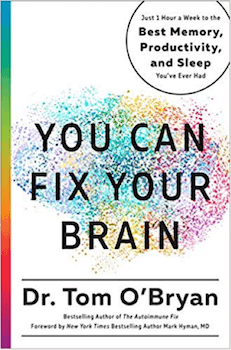
There is a new book that I think you may be interested in (for yourself or a family member): You Can Fix Your Brain: Just 1 Hour a Week to the Best Memory, Productivity, and Sleep You’ve Ever Had (Amazon link), written by my amazing friend and colleague Dr. Tom O’Bryan.

One of my favorite chapters is chapter 2: The Leaky Brain, where Dr. Tom writes about the blood-brain barrier (BBB), comparing it to a protective cheesecloth-like lining where:

its main role is to block large molecules from entering into the brain from the bloodstream. The brain’s cheesecloth is even finer than the one in the intestine because most molecules are too big to fit in the blood vessels that service the brain. Just as the intestinal lining can tear, resulting in a leaky gut, the cheesecloth of the brain can tear, resulting in a leaky brain. Scientists refer to these tears as a breach of the blood-brain barrier.

He shares the many reasons we can end up with a leaky brain: trauma to the head/a concussion,

“smaller, repeated traumas (think of head butts during soccer practice that can happen 20, 30, or 50 times a day, 3, 4, or even 5 days a week)”, and even excessive exercise (a modest amount of exercise is beneficial).

Dr. Tom also shares the role of inflammation in creating tears in the blood-brain barrier – due to antibodies to wheat and dairy, bacteria, parasites or autoimmune diseases, together with advanced glycation end products (AGEs) from eating charred meats or barbecued chicken.

He shares that the blood-brain barrier typical heals quickly, within 4 hours but “if there is a recurring insult, leaky brain will remain, allowing macromolecules to penetrate the very sensitive brain.”

Dr. Tom suggests having your doctor order the Neural Zoomer blood test from Vibrant Wellness Laboratories, in order to identify if you have ongoing tearing of your blood-brain barrier:

Two of the biomarkers used in emergency rooms for severe trauma to the blood-brain barrier are called S100B and neuron-specific enolase (NSE). If they are elevated, it means that you’re leaking S100B and NSE into your bloodstream. If you have high levels of S100B and/or NSE in your bloodstream long-term (for instance, as a result of playing soccer or football regularly), your body will make antibodies to them in order to get rid of the excess. When you have elevated antibodies to S100B and NSE, it strongly suggests that you have an ongoing tearing of your blood-brain barrier. These are extremely accurate biomarkers that show up with damage to the blood-brain barrier from any cause, not just physical trauma. They identify that the flood gates are open, allowing macromolecules into the brain, which then will activate the immune response, causing the inflammation that eventually manifests as brain fog, forgetfulness, ADHD, seizures, anxiety, depression, schizophrenia, bipolar disorder, and eventually dementia, Parkinson’s, MS, and Alzheimer’s.

According to Dr. Tom the Neural Zoomer blood test is:

cutting-edge and is the most sensitive biomarker of brain antibodies available today and includes all six of the most important categories to set a benchmark for: demyelination (the condition of your nerves in your brain, related to MS), the blood-brain barrier [S100B and NSE], peripheral neuropathies (numbness and tingling), brain autoimmunity (antibodies to brain tissue), herpes (there are more than 100 studies connecting herpes simplex 1 and Alzheimer’s), and the genes for Alzheimer’s. I believe this test is a game-changer. It can identify, years in advance, the ongoing mechanisms that can cause degenerative brain diseases. When you can identify the mechanism before there is so much tissue damage that symptoms appear, you have a window of opportunity to do something about it.

If your doctor can’t order the test you can order it directly from theDr.com/neuralzoomer.

Here’s the official book blurb for You Can Fix Your Brain: Just 1 Hour a Week to the Best Memory, Productivity, and Sleep You’ve Ever Had (Amazon link)

For anyone worried about any type of brain ailment, ranging from the chronic conditions to simple brain fog and fatigue, this essential guide covers the full spectrum of prevention to treatment.

We’ve all experienced brain fog―misplaced keys, forgotten facts, a general feeling that you’re just feeling off today. And many of us will experience that “fog” manifesting as something more permanent―either in ourselves or our loved ones.

No matter what your current brain health state may be, You Can Fix Your Brain will enable and empower you to take concrete steps that will make an immediate difference in your brain’s vitality, clarity, and energy. Your memory will improve, fogginess will disappear, you’ll be less tired all the time, and much more. And, you’ll learn that these aren’t empty promises. Dr. Tom O’Bryan, author of The Autoimmune Fix, knows how to create lasting changes in health, and he’s here to share them with you.

It’s a step-by-step approach to better cognitive function―being selective about what’s on your fork, what’s in your environment, and how you take care of yourself can make a world of difference. With only one hour a week of practice, in 6 months, you can say goodbye to brain fog and welcome a better long-term memory and a sharper mind.

This is my endorsement:

The advice Dr. Tom shares in this book is cutting edge and provides powerful results if you want to have the best possible brain. This book is a must-read if you want to improve your memory and clear brain fog, have amazing sleep, reduce anxiety and ADHD, be productive and even feel happier. I love his message about setting a goal each week to learn just one thing and apply it – it makes this totally do-able for each of us!

If you already know you’d like to buy a copy of the book (or have already bought a copy) go to this link after your purchase to get access to some valuable bonuses.

If you’d like to get a taste of some of the content before purchasing you can check out some snippets in this download: Surprising Everyday Things That Can Damage Your Brain (changing the way you pump gasoline is one very simple changes you can make).

Enjoy! And be sure to leave Dr. Tom a review.

Filed Under: Books Tagged With: blood brain barrier, Dr Tom O'Bryan, leaky brain, you can fix your brain

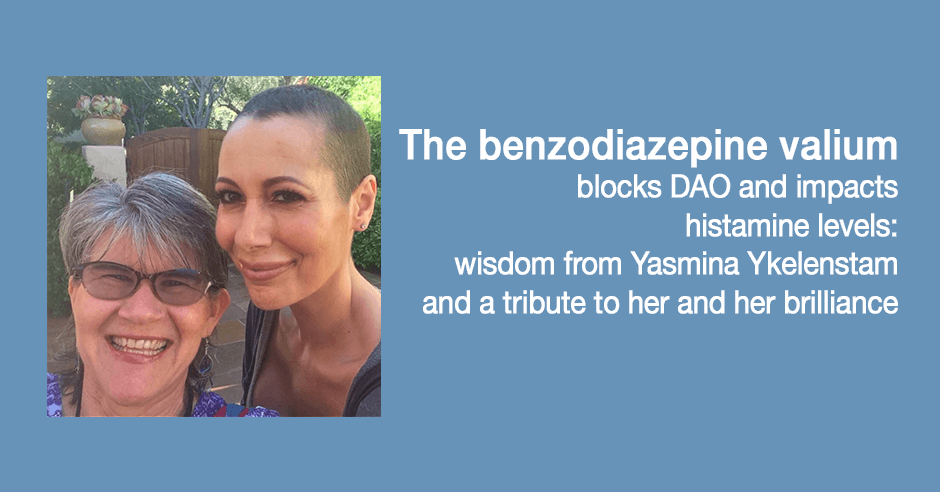
The benzodiazepine valium blocks DAO and impacts histamine levels: wisdom from Yasmina Ykelenstam and a tribute to her brilliance

September 14, 2018 By Trudy Scott 72 Comments

The benzodiazepine valium blocks DAO and impacts histamine levels and may actually increase anxiety via this mechanism. I learned all this in an interview I conducted with my amazing colleague Yasmina Ykelenstam.

Sadly Yasmina lost her battle to a rare and aggressive type of breast cancer this week. She had triple negative breast cancer which has a minimal survival rate of no longer than just a few months. She lived with it for over 2 years, outliving all odds. She had just turned 43.

It is with great sadness and reflection that I write this post as tribute to Yasmina who was as bold as she was brilliant.

Yasmina is well known as the Low Histamine Chef and for an abundance of histamine intolerance resources and recipes on Healing Histamine.

We only met in person on one occasion in 2017 and spent an evening and wonderful lunch together. Her warmth, passion and caring shone through and I felt I already knew this kind and smart woman. I had been following her work online after an interview with Dr. Ben Lynch on season 2 of the Anxiety Summit – Biochemical and genetic predispositions: COMT, GAD & MAOA – where he raved about her work.

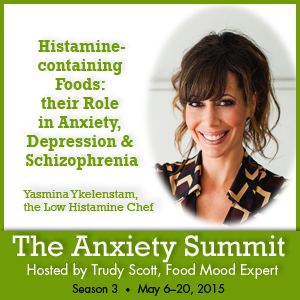
I reached out to Yasmina and was so thrilled to have the opportunity to interview her for season 3 of the Anxiety Summit – Histamine-containing Foods: their Role in Anxiety, Depression and Schizophrenia

As a tribute to Yasmina and so her brilliance continues to shine I’m sharing some of the highlights from our interview, where she shared that:

  • Histamine is the gluten of the intolerance world
  • Histamine is a neurotransmitter and plays a role in mood disorders
  • Histamine can cause symptoms of anxiety: Increased heart rate and blood pressure, shortness of breath and gasping for air, pounding heart, dizziness and feeling faint

In case you’re new to histamine intolerance this paper provides a quick overview: Histamine and histamine intolerance

Histamine intolerance results from a disequilibrium of accumulated histamine and the capacity for histamine degradation. Histamine is a biogenic amine that occurs to various degrees in many foods. In healthy persons, dietary histamine can be rapidly detoxified by amine oxidases, whereas persons with low amine oxidase activity are at risk of histamine toxicity. Diamine oxidase (DAO) is the main enzyme for the metabolism of ingested histamine.

This new research shows how a low histamine diet has benefits: Histamine-reduced diet and increase of serum diamine oxidase correlating to diet compliance in histamine intolerance

In our interview we had a lengthy discussion on benzodiazapines and the histamine connection. It was both fascinating and very concerning:

Many people doing a benzodiazepine taper are often switched to Valium which is a DAO [diamine oxidase blocker (or histamine liberator)] and this further prevents histamine from being removed from the body.

Dye are also triggers…the pink Xanax can be problematic 

Here is the transcript from the benzodiazepine section of our interview, with a few tweaks to give it context. I start by asking Yasmina to talk about histamine interactions with psychiatric medications.

* * * * * * * * * * * * * * * * * * *

Yasmina Ykelenstam: Well, I recommend that people go to a wonderful website and it is called histaminintoleranz.ch. It’s German, but it’s translated into English. That’s H‑I‑S‑T‑A‑M‑I‑N‑I‑N‑T‑O‑L‑E‑R‑A‑N‑Z.ch. And they have a very, very long list of medications on there that interact with diamine oxidase or histamine liberators. The one that I just wanted to mention very quickly because it’s relevant to anxiety – and that one is diazepam [you can find this listed on the above site on this page.]

Diazepam (or Valium) is a medicine, as I said, that I used when I was a child – for a couple of days. And it’s a tranquilizer, a benzodiazepine. One of the most commonly prescribed benzodiazepines in the world is Valium.

I don’t know if it still is, but when the UN would send out emergency packs to people, Valium was included in there. That’s how widespread its use is. It’s a diamine oxidase blocker. So it blocks the enzyme responsible for degrading histamine in the body. So people who are dealing with anxiety symptoms that are perhaps caused by histamine issues would not do very well potentially with Valium / diazepam because it would further prevent histamine from being removed from the body.

I was on Valium / diazepam for many, many years after it was first prescribed to me and I did not know that. And it was the medicine, it was the tranquilizer that I chose to use to taper from another benzo. I was on Xanax at the time and I had been told that Xanax is harder to withdraw from than crack. So I should switch to another benzodiazepine that had a longer half-life – how long it stays in the body – so that it would make it easier for me to withdraw. And Valium / diazepam was the one that I chose and I think that’s when my body started giving me the message of “Hurry up; just finish this; just cut, cut, cut; get this out of the body because it’s not doing you any good.”

But there is a very, very long list of medications on that German site and interestingly, there are a number of antihistamines in the list of medications that block diamine oxidase and also the other histamine-degrading enzyme. Cimetidine, C‑I‑M‑E‑T‑I‑D‑I‑N-E – I think it is a second-generation antihistamine. It is still prescribed today. It was being prescribed to many people by a doctor in London.

I have another doctor: Dr. Seneviratne in London. He is an immunologist with mast cell focus. He’s excellent. But there was another doctor who was supposedly a mast cell person who was prescribing cimetidine to people. I had to send a message to him saying please stop doing this because it’s probably not very good for them. Also, we were talking about diphenhydramine and that is an HNMT blocker, which is the other histamine‑degrading enzyme.

Trudy Scott: Okay. So I want to just recap here. So we’ve got these meds that block the DAO enzyme, which in turn prevents you from releasing histamine and preventing histamine from being removed from the body.

Yasmina Ykelenstam: Exactly. Yeah, and what’s odd is diphenhydramine is obviously Benadryl, which is one of the most commonly prescribed antihistamines in the United States.

Trudy Scott: A lot of people are on diphenhydramine. You’re right, yeah.

Yasmina Ykelenstam: There are many different mechanisms of action for degrading histamine and for getting it out of the body. So it might not be the end of the world if you’re taking one medication that affects the DAO enzyme but doesn’t affect the HNMT enzyme. And obviously, there’s the liver and there’s different methods of dealing with things in the body. So it’s not the end of the world, but still it’s something you might not want to do and should definitely discuss with your doctor.

Trudy Scott: Yes, and being aware of this. Now I wanted to just go back to the benzodiazepines because I was not aware of this connection to Valium diazepam, and that being a DAO blocker. So is it only the Valium and the other benzodiazepines are not, or is it all benzodiazepines?

Yasmina Ykelenstam: Okay, let me try to remember. Haloperidol is an antipsychotic, isn’t it? (It’s on the list)

Trudy Scott: Yes, that’s correct.

Yasmina Ykelenstam: I am not aware of any others offhand and I’m just trying to take a quick look at the list now that I have it in front of me. But no, I don’t believe so because I looked them up because having taken all of them, and I mean, really all of them, I have taken every benzodiazepine ever made in the last 30 years. And no, I think it was just the diazepam, but as I said, it is one of the most commonly prescribed.

Trudy Scott: And it’s really important for me to mention this because I am dead against all benzodiazepines because of their addictive/dependent nature and the side effects and when you’re trying to taper off they cause all these problems. I’ve interviewed a number of people on this topic. In Season 1 of the Anxiety Summit, I interviewed Dr. Catherine Pittman who talked about the Benzobuddies.org group and how so many individuals battle getting off benzodiazepines.

Yasmina Ykelenstam: Oh, I was a member.

Trudy Scott: You were?

Yasmina Ykelenstam: I was a member there (at benzobuddies.org) at one point.

Trudy Scott: Oh, you were? Yeah, it’s a very big issue and problematic drug. But why I’m saying this is because Professor Ashton, who’s an expert on tapering, talks about switching to Valium. So this could be problematic.

Yasmina Ykelenstam: Well, if you could reach out to these communities, that would be fantastic because I did spend some time after, figuring out what was going on, trying to contact people and trying to let them know of this link because there were a lot of people that were in these communities that were suffering from protracted withdrawals. And by this point, I had my suspicions that the protracted withdrawals were actually a histamine response and that the reason that they were experiencing this was just that the original issue was never dealt with. And that was that it might be an underlying histamine issue that initially had them diagnosed with the anxiety disorder and then they were taking these meds. And so when you take the medication away, you’re still left with the existing condition but it isn’t being addressed.

Trudy Scott: Yes, and maybe some of them had done the switch to Valium, which was making things worse.

Yasmina Ykelenstam: Exactly.

Trudy Scott: Very interesting.

Yasmina Ykelenstam: The reason I switched to Valium was because I was following Dr. Ashton’s protocol from benzo.org.uk. I was advised against coming off my medication and I was told that there was no safe withdrawal protocol. I brought them a copy of the Ashton protocol and I was laughed out of the office, but I chose to do it on my own anyway and I’m very grateful to her research.

Trudy Scott: Yes, she’s done amazing research. I’m so appreciative to learn of this component and I’m on a mission to educate people about the benzodiazepines and this is just another aspect that we need to be considering. I will certainly reach out to some of these groups and people hearing this on this Summit, is going to bring awareness to this aspect. All of this is fantastic.

Yasmina Ykelenstam: The other brief thing is that, of course, the dyes are also triggers. And this is why a lot of us, when we’re prescribed psychiatric meds, end up with a new set of symptoms because of the coloring that is actually on the tablets. I was unable to take the pink Xanax, but I was able to take the white Xanax, and my doctor never understood it. He said, “I don’t understand how higher doses of Xanax make you feel worse, but the lower ones works for you.” And I kept telling him, “But I’m taking the same dose at the end of the day, so I don’t understand either.”

* * * * * * * * * * * * * * * * * * *

Here is the link to the entire audio so you can get a better understanding of histamine intolerance.

I’d love to hear your benzodiazepine and histamine intolerance experiences – both good and bad

It would remiss of me to omit something that is seldom discussed: the link between benzodiazepine use and increased cancer risk. In our interview Yasmina shared this “I have taken every benzodiazepine ever made in the last 30 years.”

Yasmina was always very open about her healing journey and I suspect she asked herself this question and would be ok with me making this possible connection in the hope it may help someone who is considering a starting a benzodiazepine prescription or someone contemplating doing a benzodiazepine taper.

I hope this has been helpful if you’re currently taking a benzodiazepine, are considering taking one, have taken one in the past, have issues with high histamine foods, are taking one of the other medications on the list, and/or have had issues with the colors in medications.

With much appreciation to Yasmina! We loved her and thank her for sharing so freely and wisely and we love that her wisdom will live on! Rest in peace.  My deepest sympathies to her family and others who were close to her.

Note added later on 9/14/18 after this blog was published:

As soon as I heard the sad news about Yasmina I wrote this blog as a tribute to her. Then a few hours before it was due to be published I heard her family had not yet made the announcement public and hadn’t yet shared the news with her community.  At the last minute I removed the tribute sections out of respect for them. When I woke I saw the announcement on her Facebook page and reinstated my tribute.

I’ll be doing further updates to share some of what was said about continuing her legacy and anything more I learn.

Filed Under: benzodiazapines Tagged With: benzodiazepine, cancer, DAO, diazepam, histamine, Valium, Yasmina Ykelenstam

My iPhone was zapping me with EMFs even when on airplane mode – affecting my sleep, and making me agitated and fatigued

September 7, 2018 By Trudy Scott 17 Comments

I recently got a new iPhone 6 and after having it for a good few weeks I discovered it had been zapping me with EMFs (electromagnetic fields) even when it was on airplane mode.

It was affecting my sleep, making me twitchy and agitated, leaving me feeling exhausted and more jet-lagged than usual (I had just travelled to the USA and then back to Australia) and making my right arm/mouse arm “thick” and slow when working on my PC. I have a feeling it played a role in my worsening lower back pain too!

I was NOT happy! I was actually fuming!

I have my phone on airplane mode most of time because in the last 6 months I’ve discovered I have some degree of EHS or electromagnetic hypersensitivity. This is a very real condition and many people are not even aware that EMFs may be playing a role in their symptoms.

This abstract summarizes EHS well: Characteristics of perceived electromagnetic hypersensitivity in the general population

Health problems evoked in the presence of electrical equipment is a concern, calling for better understanding for characteristics of electromagnetic hypersensitivity (EHS) in the general population.

The present study investigated demographics, lifestyle factors, frequency and duration, coping strategies, proportion meeting clinical criteria for intolerance attributed to electromagnetic fields (EMF) and comorbidity. Using data from a large-scale population-based questionnaire study, we investigated persons with self-reported (n = 91) EHS in comparison to referents (n = 3,250).

Middle age, female sex and poor perceived health was found to be associated with EHS. More than 50% in the EHS group reported having EMF-related symptoms more often than once a week, and the mean number of years experiencing EHS was 10.5. More than half of the EHS group reported that their symptoms started after a high-dose or long-term EMF exposure, that they actively tried to avoid EMF sources and that they mostly could affect the EMF environment. A minority of the EHS group had sought medical attention, been diagnosed by a physician or received treatment.

Exhaustion syndrome, anxiety disorder, back/joint/muscle disorder, depression, functional somatic syndrome and migraine were comorbid with EHS.

The results provide ground for future study of these characteristic features being risk factors for development of EHS and or consequences of EHS.

Fortunately, I used my Cornet meter and figured out something was up. Unfortunately, it took me some time to connect the dots. I figured I wasn’t feeling that great because of my recent trip and spending time sitting in planes and being exposed to so much WiFi in airports, planes, hotels, and conference rooms. I also drive a keyless car for 4 hours! Also, when you’re in the midst of this type of thing you’re kind of slow in figuring things out!

I’m going to share the lessons I learned so they can help you prevent something similar.

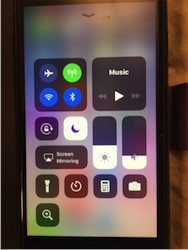
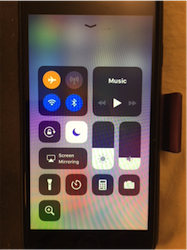
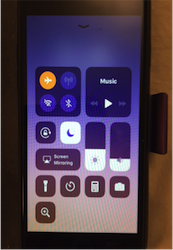
Lesson #1: When you toggle airplane mode off it via the swipe up feature it also activates Bluetooth and WiFi. BUT when you turn on airplane mode when using the swipe up feature, both Bluetooth and Wifi stay on unless you turn them off first in settings! This must be the default for new iPhones (and may even reset back to this with a software upgrade).

A: as expected
B: not good
C: make sure it’s like this

A: Airplane mode off (blue color plane) and Wifi is on and Bluetooth is on

B: Airplane mode on (orange color plane) and yet Bluetooth and WiFi is still on – this is not good if you’re using your phone next to your bed or in a car or close to your body

C: Airplane mode on (orange color plane) and Bluetooth and WiFi is off (they have a line through them) – make sure it’s like this when it’s next to your bed or in a car or close to your body

Lesson #2: Watch to see if 3G goes back to 4G when you toggle airplane mode on and off. I have changed my phone from 4G to 3G in settings in order to reduce EMF exposure when my phone is on. If you don’t know how to do this: settings/cellular/cellular data options – enable 4G toggle. Some folks are saying the airplane mode toggle reactivates 4G. I’m guessing it’s specific to the phone version as it’s not an issue on my phone.

Lesson #3: When you get a new phone or any new device, check everything and even if it’s not new, upgrades to software may change things.

Lesson #4: Distance is your friend when it comes to EMFs. I believe this impacted me more because I thought the iPhone was safely in airplane mode and not emitting EMFs. I had it close to me: in my handbag during the day when out and about, on my side-table next to my head at night, on my desk near me during the day, and in my money-belt right over my belly on the plane for 15 hours flying back!

Lesson #5: Trust your gut if you feel something is off and keep searching for a solution. I knew something was off and was prowling around trying to find what WiFi had been turned on in our home and looking for new hotspots in the area (I recently blogged about how a WiFi modem with a public hotspot caused seizures, vertigo, headaches, insomnia and heart palpitations in a woman with a history of West Nile virus)

Lesson #6: Get a meter so you can be proactive and actually measure this stuff. My Cornet meter is awesome! I’m still a newbie at this but when I see red flashing lights I know I’m onto something.

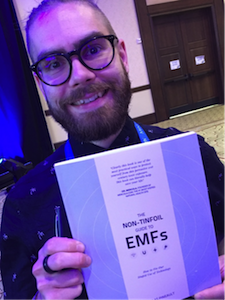
I owe much appreciation to Nick Pineault, author of The Non-Tinfoil Guide to EMFs (my Amazon link) for his amazing ElectrosmogRx practitioner training. I’ve learned so much about how EMFs are impacting our health and want to share this with you because I truly believe it’s a big player when you have ongoing anxiety, insomnia, pain, brain fog and with more serious health concerns too.

I even got to see Nick at the event I attended in the USA and got a signed copy of his excellent book!

When I shared this story on Facebook it was received with much interest and two people shared similar issues. One person said this:

Since I’ve moved I’ve been using my iPhone 6 as an alarm and getting disrupted sleep every night! Time for change!

And then shared this a few days later:

I want to report that I definitely slept better without my iPhone in the room last night!.

Someone else shared this:

Since getting the iPhone 6 I have been experiencing an overactive brain when trying to sleep plus heart palpitations. I usually sleep so well and turn off my thoughts and relax with no problems. I just thought it was a culmination of work, stress deadlines and hormones.

Too often I hear comments like this: “it’s all around us – what are we supposed to do?!” There is so much we can do!

Once I made the simple change of making sure the Bluetooth and WiFi stayed off when I toggled airplane mode on, my sleep improved, the twitchiness and agitation abated, my exhaustion ramped down and my slow mouse arm started to work normally again. My back pain is slowly but surely easing too.

As a nutritionist I always use everything at my disposal and so I’ve also used GABA for my back pain and tryptophan for the agitation and sleep issues and plenty of rosemary essential oil, together with grounding/earthing on a daily basis.

Thank goodness for my Qlink too! I’d probably have been feeling much worse had I not been wearing it 24 hours a day.

My wish now is for more folks to take this seriously!

Do you use your iPhone (or other smart phone) as an alarm without switching to airplane mode? Have you checked if Bluetooth and WiFi is off when you do switch to airplane mode?

And has disrupted sleep or other issues like anxiety, agitation, heart palpitations, pain issues, brain fog or fatigue resolved when making these very simple changes?

I’d love some feedback if you have a smart phone other than an iPhone – to share what happens on your phone and how you addressed it.

Filed Under: EMF Tagged With: agitated, airplane mode, anxious, EHS, EMF, EMFs, exhausted, fatigued, insomnia, iPhone, pain, sleep

Tyrosine for alleviating anxiety and panic attacks and creating a feeling of calm focus

August 31, 2018 By Trudy Scott 72 Comments

If you had anxiety, felt hugely stressed and were having panic attacks would you consider using tyrosine to help calm you? It’s not the first approach I use with a client as I typically want to calm things down first by addressing the low serotonin symptoms of anxiety (such as worry, overwhelm, insomnia and panic attacks) and the low GABA physical symptoms of anxiety (physical tension, stiff and tense muscles, overwhelm and panic attacks).

However, for some individuals addressing low catecholamines with tyrosine is the best approach to take, even if it feels counter-intuitive. Since everyone is different using the trial method is the best way to figure out what you need.

Here is another success story from someone using tyrosine, as shared in the comments on a recent blog post on tyrosine:

Tyrosine for anxiety has done wonders for me! I have tried GABA and Tryptophan. The GABA seemed to take the edge off a little when panic attacks occurred but wasn’t keeping anxiety from occurring.

I have been under tremendous pressure at work. The internal stress has been overwhelming! I haven’t been able to remember anything, even things I’ve done for years! I am in the process of learning new software at work. In the very first class my mind just went blank. The more I tried to focus the more stressed I became. All I could do was sit and stare at my screen while the rest of the class moved forward.

In short order I developed a migraine and panic. The internal pressure felt as if someone was wringing out my brain like one would do to a wash rag! I had to leave the class earlier. From this point on I was struggling to even do my job as I have done the last few years. Every time I tried to think I’d immediately become overwhelmed and shut down. I felt like crying most of the time from the sheer force of the internal pressure (this is embarrassing to admit as I’m someone with a competitive career). This stress just completely shut down my ability to learn and problem solve.

So, I decided to start some tyrosine. I was hesitant because I have heard it can cause panic attacks and I definitely don’t need more of those! I bought some powder and took 400mg on an empty stomach about 30 minutes before breakfast. WOW!!! Within an hour the stress just melted away!

I wasn’t stressed on my way to work either which normally I am. I was able to sit down and think thru my problems without feeling overwhelmed at all. Also, I was communicating with people much more easily. I noticed better eye-contact. I seemed less concerned of anyone’s opinions too.

I take another 400mg 30 minutes before lunch. I simply cannot believe how much better I am doing!

Just a few weeks prior I was telling my wife that I may need to start thinking about starting the process for disability because I simply could not function well enough to do my job.

I’d also add that the stress from the anxiety was so bad I felt like I had the flu for a few weeks. This also has dissipated since starting the tyrosine.

It’s still early in this experiment but I am hopeful for once. Nothing, and I mean NOTHING has worked so well so fast for me than tyrosine. It’s the closest thing to a miracle I’ve ever experienced. A night and day experience!

What wonderful results! I’m thrilled to hear about his “miracle” and that he’s doing so much better, that he has hope and that the stress from the anxiety has dissipated!

What approach to follow if you can relate to this situation

Of course, I thanked him for sharing his success story with tyrosine and added my response for other blog readers who may relate to this situation and may consider a trial of tyrosine as a first step when anxiety is an issue.

I still stand by my advice to start with GABA and tryptophan when you have anxiety whether it’s the low serotonin-type anxiety (worry in the head) or the low GABA-type anxiety (physical anxiety). I always have clients start by addressing these deficiencies first before adding tyrosine for the low catecholamine symptoms because tyrosine is too stimulating for many and can increase anxiety and insomnia (and may also cause a panic attack).

With the majority of the anxious clients that I’ve worked with, the order of doing trials is as follows: tryptophan or GABA first and then tyrosine.

Addressing his low catecholamine symptoms was what he needed

For this gentleman, clearly GABA and tryptophan support was not what he needed or was not enough to ease his anxiety. Addressing his low catecholamine symptoms was what he needed to do.

In case you’re wondering how he’s doing now – I reached out to him and he reports he’s still taking tyrosine and is still doing great!

He is the third person that I know of who has experienced these types of results with tyrosine so I expect there are others who could benefit too – which is why I decided to share his story.

Increased anxiety because of lack of focus and low motivation

Here is another similar story from a prior client of mine. She had terrible anxiety, and we trialed both GABA and tryptophan. While she did get some benefits with both it just wasn’t enough.

She was sleeping better but still felt so stressed and anxious when preparing for an important meeting at work which she was in charge of running. The anxiety also seemed to get worse during the meetings. She did also score high on the low catecholamines section on the amino acid questionnaire (poor focus, low motivation, fatigue, ADHD, depression) but were working on the low serotonin and low GABA types of anxiety before addressing poor focus and low motivation.

It turned out that her anxiety escalated around her work meetings because of her lack of focus and low motivation – she was pushing herself to get through them. Once she added tyrosine her anxiety was under control. In this instance tyrosine actually helped ease the anxiety because her ADHD symptoms diminished and her motivation and drive improved!

This is what biochemically individuality is all about and how we all have our own unique needs. And is why I love the trial-method for determining which amino acid is best for your own unique needs.

Here are some related blog posts that you may find helpful:

  • Amino Acids Mood Questionnaire from The Antianxiety Food Solution
  • How to do an amino acid trial for anxiety
  • Tyrosine for focus, motivation, energy, a good mood and possibly even anxiety

Do let us know if you have experienced less anxiety and a sense of calm focus when taking tyrosine?

Filed Under: Anxiety Tagged With: Amino acid trial, anxiety, calm, catecholamines, GABA, serotonin, stress, tyrosine

Radical Metabolism: boosting energy, enhancing digestion, improving hormone health and blasting fat

August 28, 2018 By Trudy Scott 13 Comments

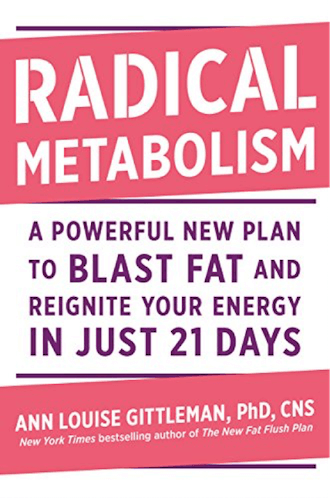
Ann Louise Gittleman has a new book called “Radical Metabolism: A Powerful New Plan to Blast Fat and Reignite Your Energy in Just 21 Days.”

Last week I had the wonderful opportunity to interview her! The book is primarily about weight-loss but I chose to focus on other aspects in our interview. We talked about so many valuable topics for boosting metabolism and energy, enhancing digestion, improving hormone health and reducing anxiety.

She shares that no disease can be healed if your cell membranes – which direct nutrients in and poisons out – are weak and unstable:

Radical Metabolism is all about what to eat to rebuild and fortify those lipid (fat)-based cell membranes, so that toxins are prevented from moving up the chain and gunking up the function of every cell, tissue, and organ in your body, from your brain to your thyroid, gallbladder, liver, kidneys, and skin. This is where omega-6 fats really shine.

Here are some of the highlights of what we covered, together with some related snippets from the book:

– our gallbladders and thyroid health

a study out of Finland found that people with decreased bile production are nearly ten times more apt to experience hypothyroidism. With low thyroid on the rise, this provides great hope to the millions of hypothyroid sufferers who experience metabolic slowdown as well as fatigue, dry skin, and constipation. Besides hypothyroidism, studies have also connected poor quality bile with chronic fatigue, migraines, depression, and autoimmune disorders.

– the importance of bile for digesting fat and absorbing fat-soluble vitamins

Bile is stored in the gallbladder to break down dietary fat and remove toxins from the body. Harvard Medical School research has revealed that subjects with improved bile health showed a remarkable spike in metabolism.

– the metabolic benefits of omega-6 fats – hemp seed oil, sesame seed oil, pine nut oil and ghee

Hemp seeds are one of nature’s greatest gifts, perfect little bundles of benefits for your entire body. You can reap the hemp’s benefits by consuming the oil, seeds (typically these are “hemp hearts” which have had their hulls removed), or by blending them into hemp milk. Hemp seeds are about one third healthful fats and one quarter protein, as well as a magnificent source of natural GLA (gamma-linolenic acid). It’s hard to find a food with a better essential fat profile – hemp boasts a 3:1 omega-6–to–omega-3 ratio.

– omega-6s and pyroluria/zinc absorption (my addition)

– why to include these oils if you’re eating a keto or paleo diet

– why bitters are beautiful – the big one is improving digestion and stimulating bile production!

Studies suggest bitters “get your juices flowing” (literally) by stimulating the release of bile, as well as saliva, HCl, pepsin, gastrin, and pancreatic enzymes.

– watercress as a great bitter food bile booster

Watercress is kind of the forgotten stepchild of the cruciferous family – a peppery-flavored cousin to cabbage, arugula, and mustard greens. Recent studies have put watercress back on the menu thanks to its powerful health-stimulating benefits, which is why it deserves a starring role in the Radical Metabolism plan

Besides being a bitter food bile-booster, in a study led by nutritionist Sarah Schenker a small group of women lost an average of 17 pounds in six weeks on a watercress soup diet. The exceptional antioxidants in watercress pump up your energy while exercising, while at the same time protecting you from exertion-related DNA damage. According to head researcher Dr. Mark Fogarty, watercress contains ten times as many beneficial chemicals as any other fruit or vegetable.

– how coffee and cacao work as bitters and dandelion tea as a good alternative (also bitter) if you can’t tolerate coffee

– and grapefruit as a bitter fruit (and one of the reasons why the grapefruit diet worked!)

– why testing ferritin is so important (and why to avoid cast iron pots)

Here is the audio of our interview. Enjoy!

https://s3-us-west-2.amazonaws.com/trudyjvs/ann-louise-gittleman-radical-matabolism-interview.mp3

And here is the recipe for: Creamy Dreamy Watercress Soup

This soup is not only fat-burning, but filling and flavorful. The recipe makes about one day’s worth of soup on the 4-Day Radical Intensive. You can either prepare it daily or cook up four batches in advance—whatever works best with your schedule.

Makes 6 cups

4 cups bone broth, either homemade (page 216) or Kettle & Fire

1/2 large bulb celeriac (celery root), (about one 5-inch bulb), brown exterior removed (do not to remove too much); cauliflower works as substitute

1 bunch leeks, cleaned and sliced

1 daikon radish, roughly chopped

1 (2-inch) piece fresh ginger, peeled and chopped

1 to 2 teaspoons sea salt, to taste

1 Radical Lemon Cube

1 large bunch watercress, roughly chopped

Optional: Add 1/2 to 1 teaspoon miso to each warm bowl of soup

Bring the broth to a simmer in a saucepan. Add the celeriac, leeks, daikon, and ginger. Add enough water to the pot to just submerge the vegetables. Simmer for 20 minutes, or until the veggies are tender.

Using an immersion blender, blend the soup until creamy. If too thick, you can always add a bit more water. Stir in the salt, lemon cube, and watercress. Simmer for 5 minutes, then blend again with your immersion blender.

Serve in a mug or bowl with or without the miso.

Note: To make Radical Lemon Cubes: 3 lemons quartered, 1 cup filtered water

Place the lemons and water in a blender or food processor and puree. Spoon the puree into ice cube trays and freeze.

Ann Louise Gittleman, New York Times bestselling author of more than thirty books including The Fat Flush Plan series and Before the Change, has been revolutionizing the rules of health and nutrition for more than three decades. She holds an MS in Nutrition Education from Columbia University, the title of Certified Nutrition Specialist (CNS) from the American College of Nutrition, and a PhD in Holistic Nutrition. Gittleman has also served as the Chief Nutritionist of the Pediatric Clinic at Bellevue Hospital and is the former Director of Nutrition at the Pritikin Longevity Center in Santa Monica, CA. She currently sits on the Advisory Board for the International Institute for Building-Biology & Ecology, the Nutritional Therapy Association, Inc. and Clear Passage, Inc. Read more about her at www.annlouise.com.

Grab your copy of Radical Metabolism on Amazon here (my Amazon link). Grab bonus ebooks and details about the private Facebook group here

Enjoy! And do let us know what you think of these tips and the watercress soup recipe. And be sure to leave a review for Ann Louise.

Filed Under: Books Tagged With: ann louise gittleman, anxiety, blasting fat, digestion, energy, hormone health, Radical Metabolism

  • « Go to Previous Page
  • Page 1
  • Interim pages omitted …
  • Page 50
  • Page 51
  • Page 52
  • Page 53
  • Page 54
  • Interim pages omitted …
  • Page 160
  • Go to Next Page »

Primary Sidebar

GABA QuickStart Homestudy

gaba quickstart homestudy

Free Report

9 Great Questions Women Ask about Food, Mood and their Health

You'll also receive a complimentary subscription to my ezine "Food, Mood and Gal Stuff"


Connect with me

Popular Posts

  • Amino Acids Mood Questionnaire from The Antianxiety Food Solution
  • The Antianxiety Food Solution Amino Acid and Pyroluria Supplements
  • Pyroluria Questionnaire from The Antianxiety Food Solution
  • Collagen and gelatin lower serotonin: does this increase your anxiety and depression?
  • Tryptophan for the worry-in-your-head and ruminating type of anxiety
  • GABA for the physical-tension and stiff-and-tense-muscles type of anxiety
  • The Antianxiety Food Solution by Trudy Scott
  • Seriphos Original Formula is back: the best product for anxiety and insomnia caused by high cortisol
  • Am I an anxious introvert because of low zinc and vitamin B6? My response to Huffington Post blog
  • Vagus nerve rehab with GABA, breathing, humming, gargling and key nutrients

Recent Posts

  • Her cravings for chips and peanut butter were triggered by stress: GABA ends cravings and reduces physical tension and fear of heights
  • It is truly miraculous to be able to move through life without crippling anxiety and panic
  • GABA and tryptophan combo provide immediate and noticeable relief for tremors and cervical dystonia in just 7 days
  • Red light therapy for back and neck pain, plantar fasciitis and low mood – a complement to the amino acids GABA, DPA and tryptophan
  • What do I use instead of Seriphos to help lower high cortisol that is affecting my sleep and making me anxious at night?

Categories

  • 5-HTP
  • AB575
  • Addiction
  • ADHD
  • Adrenals
  • Alcohol
  • Allergies
  • Alzheimer's disease
  • Amino Acids
  • Anger
  • Antianxiety
  • Antianxiety Food Solution
  • Antidepressants
  • Anxiety
  • Anxiety and panic
  • Autism
  • Autoimmunity
  • benzodiazapines
  • Bipolar disorder
  • Books
  • Caffeine
  • Cancer
  • Candida
  • Children/Teens
  • Collagen
  • Cooking equipment
  • Coronavirus/COVID-19
  • Cravings
  • Depression
  • Detoxification
  • Diabetes
  • Diet
  • DPA/DLPA
  • Drugs
  • EFT/Tapping
  • EMF
  • EMFs
  • Emotional Eating
  • Endorphins
  • Environment
  • Essential oils
  • Events
  • Exercise
  • Fear
  • Fear of public speaking
  • Fertility and Pregnancy
  • Fish
  • Food
  • Food and mood
  • Functional neurology
  • GABA
  • Gene polymorphisms
  • General Health
  • Giving
  • Giving back
  • Glutamine
  • Gluten
  • GMOs
  • Gratitude
  • Gut health
  • Heart health/hypertension
  • Histamine
  • Hormone
  • Hyperparathyroidism
  • Hypoglycemia
  • Immune system
  • Inflammation
  • Insomnia
  • Inspiration
  • Introversion
  • Joy and happiness
  • Ketogenic diet
  • Lithium orotate
  • Looking awesome
  • Lyme disease and co-infections
  • MCAS/histamine
  • Medication
  • Men's health
  • Mental health
  • Mercury
  • Migraine
  • Mold
  • Movie
  • MTHFR
  • Multiple sclerosis
  • Music
  • NANP
  • Nature
  • Nutritional Psychiatry
  • OCD
  • Osteoporosis
  • Oxalates
  • Oxytocin
  • Pain
  • Paleo
  • Parasites
  • Parkinson’s disease
  • PCOS
  • People
  • PMS
  • Postpartum
  • PTSD/Trauma
  • Pyroluria
  • Questionnaires
  • Real whole food
  • Recipes
  • Research
  • Schizophrenia
  • serotonin
  • SIBO
  • Sleep
  • Special diets
  • Sports nutrition
  • Stress
  • Sugar addiction
  • Sugar and mood
  • Supplements
  • Teens
  • Testimonials
  • Testing
  • The Anxiety Summit
  • The Anxiety Summit 2
  • The Anxiety Summit 3
  • The Anxiety Summit 4
  • The Anxiety Summit 5
  • The Anxiety Summit 6
  • Thyroid
  • Thyroid health
  • Toxins
  • Tryptophan
  • Tyrosine
  • Uncategorized
  • Vegan/vegetarian
  • Women's health
  • Yoga

Archives

  • May 2026
  • April 2026
  • October 2025
  • September 2025
  • August 2025
  • July 2025
  • June 2025
  • May 2025
  • April 2025
  • March 2025
  • February 2025
  • January 2025
  • November 2024
  • October 2024
  • September 2024
  • August 2024
  • July 2024
  • June 2024
  • May 2024
  • April 2024
  • March 2024
  • February 2024
  • January 2024
  • December 2023
  • November 2023
  • October 2023
  • September 2023
  • August 2023
  • July 2023
  • June 2023
  • May 2023
  • April 2023
  • March 2023
  • February 2023
  • January 2023
  • December 2022
  • November 2022
  • October 2022
  • September 2022
  • August 2022
  • July 2022
  • June 2022
  • May 2022
  • April 2022
  • March 2022
  • February 2022
  • January 2022
  • December 2021
  • November 2021
  • October 2021
  • September 2021
  • August 2021
  • July 2021
  • June 2021
  • May 2021
  • April 2021
  • March 2021
  • February 2021
  • January 2021
  • December 2020
  • November 2020
  • October 2020
  • September 2020
  • August 2020
  • July 2020
  • June 2020
  • May 2020
  • April 2020
  • March 2020
  • February 2020
  • January 2020
  • December 2019
  • November 2019
  • October 2019
  • September 2019
  • August 2019
  • July 2019
  • June 2019
  • May 2019
  • April 2019
  • March 2019
  • February 2019
  • January 2019
  • December 2018
  • November 2018
  • October 2018
  • September 2018
  • August 2018
  • July 2018
  • June 2018
  • May 2018
  • April 2018
  • March 2018
  • February 2018
  • January 2018
  • December 2017
  • November 2017
  • October 2017
  • September 2017
  • August 2017
  • July 2017
  • June 2017
  • May 2017
  • April 2017
  • March 2017
  • February 2017
  • January 2017
  • December 2016
  • November 2016
  • October 2016
  • September 2016
  • August 2016
  • July 2016
  • June 2016
  • May 2016
  • April 2016
  • March 2016
  • February 2016
  • January 2016
  • December 2015
  • November 2015
  • October 2015
  • September 2015
  • August 2015
  • July 2015
  • June 2015
  • May 2015
  • April 2015
  • March 2015
  • February 2015
  • January 2015
  • December 2014
  • November 2014
  • October 2014
  • September 2014
  • August 2014
  • July 2014
  • June 2014
  • May 2014
  • April 2014
  • March 2014
  • February 2014
  • January 2014
  • December 2013
  • November 2013
  • October 2013
  • September 2013
  • August 2013
  • July 2013
  • June 2013
  • May 2013
  • April 2013
  • March 2013
  • February 2013
  • January 2013
  • December 2012
  • November 2012
  • October 2012
  • August 2012
  • July 2012
  • June 2012
  • May 2012
  • April 2012
  • March 2012
  • February 2012
  • January 2012
  • December 2011
  • November 2011
  • October 2011
  • September 2011
  • August 2011
  • July 2011
  • June 2011
  • May 2011
  • April 2011
  • March 2011
  • February 2011
  • January 2011
  • December 2010
  • October 2010
  • September 2010
  • July 2010
  • May 2010
  • April 2010
  • March 2010
  • February 2010
  • January 2010
  • November 2009

Share the knowledge!

The above statements have not been evaluated by the Food and Drug Administration. Products listed in this website are not intended to diagnose, treat, cure or prevent any disease.

The information provided on this site is for informational and educational purposes only and is not intended as a substitute for advice from your physician or other health care professional. You should consult with a healthcare professional before starting or modifying any diet, exercise, or supplementation program, before taking or stopping any medication, or if you have or suspect you may have a health problem.


Copyright © 2026 Trudy Scott. All Rights Reserved. | Privacy | Terms and Conditions | Refund Policy | Medical Disclaimer

Free Report

9 Great Questions Women Ask about Food, Mood and their Health

You’ll also receive a complimentary subscription to my ezine “Food, Mood and Gal Stuff”