• Skip to primary navigation
  • Skip to main content
  • Skip to primary sidebar

everywomanover29 blog

Food, Mood and Women's Health – Be your healthiest, look and feel great!

  • Blog
  • About
  • Services
  • Store
  • Resources
  • Testimonials
  • The Book
  • Newsletter
  • Contact
  • Search this site

DIY moisturizer recipes to lower inflammation and reduce anxiety, panic, PTSD, phobias and social anxiety?

May 3, 2019 By Trudy Scott 16 Comments

Could daily use of a good quality moisturizer help to reduce anxiety, panic, PTSD, phobias and social anxiety by reducing inflammation? Last week I blogged about a new pilot study on how a skin moisturizer reduced inflammation in older adults and extrapolated these results suggesting this may well be applicable for you if you suffer from anxiety because of the reduced inflammation. The benefits of touch, the oxytocin boost and slowing down for some self-care most likely play a role too. I promised to share some DIY home-made moisturizer recipes so here goes. You’ll see that many of these include ingredients that are helpful for anxiety when used stand-alone, so you get that benefit too.

Dr. Mariza shares Lavender-Cocoa Body Lotion Bars and a Soothing Skin Roller Blend

Dr. Mariza Snyder, author of The Essential Oils Hormone Solution (my Amazon link) and Smart Mom’s Guide to Essential Oils (my Amazon link), has a lovely recipe for DIY lotion bars on her site which she gave me permission to share here. She describes these bars as a “luxurious chocolaty-lavender post-shave moisturizer.” She adds that “Lavender and Geranium essential oils are the perfect combination when it comes to softening the skin while helping you to relax in the process.”

Lavender-Cocoa Body Lotion Bars

Ingredients:

1 cup beeswax pastilles
1 cup cocoa butter
1 cup coconut oil
2 teaspoons vitamin E
10 drops lavender essential oil
10 drops geranium essential oil

Directions: Combine all ingredients except essential oils in a double boiler or a glass bowl over a smaller sauce pan with 1 inch of water in it. Bring to a boil. Stir ingredients until they are completely melted and smooth. Remove from heat and then add essential oils and stir. Pour mixture into silicone bake cup molds for the lotion to solidify, allowing them to completely dry before removing them from the molds. Store lotion bars in a clean container and apply to body after a shower. The heat from your body will melt the lotion! Yield: 10-12 bars (depending on molds).

Check out her blog for other self-care recipes like a salt scrub, a cooling peppermint shaving cream and a razor burn serum (with versions for both women and men).

When I reached out to her for recipes, Dr. Mariza also shared a soothing skin healing blend recipe saying: “I’ve used this blend to reduce inflammation and redness on irritated skin with incredible success! I’ve treated a lot of acute eczema and psoriasis with this blend flare ups.” 

Soothing Skin Roller Blend 

Ingredients:

5 drops Melaleuca/Tea Tree essential oil
5 drops Geranium essential oil
6 drops Rose essential oil (optional)
6 drops Lavender essential oil
6 drops Frankincense essential oil
Fractionated Coconut Oil or Carrier Oil of choice

Directions:  Add essential oils to 10ml roller bottle and top off with Fractionated Coconut oil, or carrier oil of your choice.  Apply directly over the area of concern to reduce red, irritated skin.  Use as needed.

You can read my review of her book here): The Essential Oils Hormone Solution.

Dr. Z and Mama Z share their most used recipe: DIY Healing Skin Serum

Dr. Eric Zielinski, author of The Healing Power of Essential Oils (my Amazon link), and known affectionately as Dr. Z, and his wonderful wife, Mama Z, gave me permission to share this DIY Healing Skin Serum recipe. They run the Natural Living Family site.

Mama Z’s DIY Healing Skin Serum

Ingredients:

1 tablespoon cold fresh frozen aloe, or aloe vera gel
1 tablespoon organic coconut oil (softened or melted)
5 drops lavender essential oil
2 drops frankincense essential oil

Directions:

  1. Blend the aloe gel, coconut oil and essential oils in a Magic Bullet or food processor until smooth.
  2. Once well mixed, store in a class jar or glass salve container in a cool place so the coconut oil remains hardened.
  3. Store in fridge or cool place and enjoy at least once per day. Make fresh each week.

Notes: No matter what allergies you may have, there’s a carrier oil that’s right for you. You can use any, or a combination of these: Avocado, Fractionated Coconut, Grapeseed, Jojoba, Sweet Almond.

Be sure to read the entire blog post to get the back story on how Mama Z used this to heal her face after experiencing some chemical burns from store bought facial cleansers and creams when she was a teen, how it helped her dad with some skin cancer on his hands, some tips on aloe and some recipe variations.

Dr. Z gives it this glowing endorsement: “This is by far the most proven and most used DIY recipe that we have. It helps people with everything with skin cancer to sun burn, eczema to acne to psoriasis to you name it.”

Here is my review of Dr. Z’s book: The Healing Power of Essential Oils. You’ll find additional recipes here.

If you’re looking to learn how to use essential oils, I highly recommend their Essential Oils for Abundant Living 10-Part Video Masterclass.

Rachael, herbal skincare formulator, shares a lovely Skin Repair Souffle recipe

Rachael Pontillo, Licensed Aesthetician, herbal skincare formulator, educator and author of Love Your Skin, Love Yourself (my Amazon link) shares this lovely Skin Repair Souffle recipe.

Skin Repair Souffle Recipe

Supplies needed:

A glass jar–4 oz is preferred
A small double boiler/bain marie
Heat element (stove, cooktop, hot plate)
Kitchen scale
A small whisk
Small hand mixer, milk frother, or immersion blender

Ingredients:

30 g shea butter
30 g jojoba oil
15 drops total essential oils (Frankincense, Helichrysum, Geranium, and Lavender are the essential oils Rachael likes best for barrier support. She says either choose one or create a blend).

Instructions:

  1. Heat your double boiler until the water is boiling, then reduce to a simmer.
  2. Add the shea and jojoba and whisk gently until completely melted.
  3. Remove the vessel from the heat (careful not to get water into the mixture), and cool to room temperature in an ice bath while stirring gently.
  4. Add your essential oils, one by one, stirring gently.
  5. Blend gently with your milk frother or blender until the mixture begins to rise with a meringue-like texture (usually about 60 seconds)
  6. Pour into your jar. Close the jar immediately. Refrigerate overnight.

Dr. Keira, The Skin Whisperer, shares Lavender Bath Oil and Rejuvenating Serum

Dr. Keira L. Barr, MD, Founder and Chief Wellness Officer of Resilient Health Institute and author of The Skin Whisperer: A Dermatologist Reveals How to Look Younger, Radiate Beauty and Create the Life you Crave (my Amazon link), shares two wonderful recipes.

Lavender Bath Oil

Ingredients:

30 ml Almond Oil (or other carrier oil)
3 drops lavender essential oil
1 drop jasmine essential oil
1 drop myrrh essential oil

Instructions:

Mix all oils together in a bottle and shake well. This oil can be applied to skin in the shower, added to bath water or used after bathing or showering (while skin is damp but not completely dry to aid in absorption). Note: essential oil is 1% dilution.

Rejuvenating Serum 

Ingredients:

4ml Rosehip Seed Oil
3 ml Argan Oil
1 ml Pomegranate seed Oil
1 ml Sea Buckthorn Oil
1 drop carrot seed essential oil
Pour into 10 ml amber or dark colored glass bottle and label

Instructions:

Blend all the oils together adding the carrot seed essential oil last. Shake thoroughly and store in the refrigerator. Apply 3 to 5 drops after cleansing the skin nightly. Can be used on the face, neck and back of hands.

Calming essential oils and the original blog

As I mentioned above many of these recipes include ingredients that are calming and helpful for anxiety when used stand-alone, so you get that benefit too:

  • Intoxicating fragrance: Jasmine as valium substitute? New 2019 research confirms this
  • Blend of lavender, ylang-ylang, marjoram, and neroli reduces stress and lowers cortisol
  • Essential oils to help alleviate anxiety and improve sleep

If you missed the original blog with the research or would like a recap here it is: Could a daily moisturizer help to lower markers of inflammation and reduce anxiety, panic, PTSD, phobias and social anxiety?

You can learn more about the study; why poor skin health leads to inflammation; the role of inflammation on anxiety and other mental health conditions; the many nutritional approaches for reducing cytokines and inflammation; some studies on the benefit of touch and a boost of oxytocin; and tips for adding skin moisturizing to your daily self-care routine.

Skin moisturizing, diet and calming nutrients

As I said in the original blog, I feel very comfortable saying you now have a new tool – daily skin moisturizing – to add to your toolbox to help lower inflammation and reduce anxiety, panic, PTSD, phobias and social anxiety. Let’s use this – together with dietary changes and key calming nutrients – to eliminate anxiety and feel your absolute best.

These recipes provide safe and fun options for you to try. Have fun with these recipes and be sure to share which ones you try and like or if you have your own favorite. Also share what your moisturizing self-care routine is like.

I have more to share – all the feedback from a recent Facebook post on favorite home-made and store-bought moisturizers and will share this in the next installment. Do let me know what else you’d like me to cover.
Filed Under: Inflammation Tagged With: anxiety, coconut oil, diet, essential oils, geranium, Inflammation, lavender, moisturizer, panic, phobias and social anxiety, PTSD, skin

Could a daily moisturizer help to lower markers of inflammation and reduce anxiety, panic, PTSD, phobias and social anxiety?

April 26, 2019 By Trudy Scott 43 Comments

Could using a good quality moisturizer on a daily basis help to lower markers of inflammation (proinflammatory markers) and actually help reduce anxiety, panic, PTSD, phobias, social anxiety and other mental health symptoms, plus other chronic health conditions at the same time? Based on a new pilot study, I’m going out on a limb and saying this may well pan out to be true. And there is certainly no harm in making this a daily self-care routine until further research confirms this, certainly because of the other benefits of using a moisturizer.

New study: a skin moisturizer reduces markers of inflammation

Let’s take a look at this new study which reports how using a skin moisturizer actually reduces markers of inflammation in the body: Topical Applications of an Emollient Reduce Circulating Pro-Inflammatory Cytokine Levels in Chronically Aged Humans: A Pilot Clinical Study

Emollients are moisturizers that help keep the skin moist and supple by reducing water loss from the epidermis, the outer layer of the skin.

The study set out to mirror an animal study where skin problems in older/aged mice was tied to elevated markers of inflammation called cytokines. When epidermal function/skin health in the mice was improved, the circulating cytokine levels were reduced:

Thirty‐three aged humans were treated twice‐daily for 30 days, with ≈3 ml of an emollient, previously shown to improve epidermal [i.e. skin] function

Changes in epidermal function and levels of three key, age‐related, plasma cytokines (IL‐1β, IL‐6 and TNFα) were measured at baseline and after treatment.

Circulating levels of proinflammatory cytokines in the body, IL‐1β, IL‐6 and TNFα, were higher in the older adults before the use of the emollient. After topical use, i.e, using the cream on their skin twice a day for 30 days:

circulating levels of IL‐1β and IL‐6 normalized, while TNFα levels declined substantially.

The authors suggest larger clinical trials to confirm this connection between high levels of proinflammatory cytokines and chronic inflammatory disorders and to show how improving skin health by moisturizing may prevent chronic inflammatory disorders such as heart disease, type II diabetes, osteoporosis and Alzheimer’s disease in older adults.

The University of California explains the mechanism:

Our skin starts to deteriorate around age 50 with changes to epidermal pH, hydration, and the permeability barrier, which keeps water in and bacteria and other potential pathogens out. A loss of moisture and breaks in the permeability barrier cause the skin to release inflammatory cytokines. Ordinarily, these cytokines help to repair defects in the barrier, but in aging skin the barrier can’t be fixed as easily, so the inflammatory signals continue to be released, eventually reaching the blood.

This article and the study authors are suggesting this is an issue to be addressed with older adults and with respect to the above chronic diseases, but there is enough research on the role of inflammation on anxiety and other mental health conditions at any age, that this study had me perk up and take notice. Also, if you’re young and not moisturizing or living in a dry climate or have other factors contributing to inflammation (more on that below), could this be happening too? I believe it’s highly likely.

The role of inflammation on anxiety and other mental health conditions

Here is one of the many anxiety-inflammation studies: Inflammation in Fear- and Anxiety-Based Disorders: PTSD, GAD, and Beyond, reporting that:

heightened concentrations of inflammatory signals, including cytokines and C-reactive protein, have been described in posttraumatic stress disorder (PTSD), generalized anxiety disorder (GAD), panic disorder (PD), and phobias (agoraphobia, social phobia), etc.

And concludes that:

targeting inflammation may serve as a potential therapeutic target for treating these fear- and anxiety-based disorders in the future

Inflammation plays a role in depression too. This paper, Role of Inflammation in Depression and Treatment Implications reports that:

Numerous studies (including meta-analyses) have found elevated peripheral and central inflammatory cytokines and acute phase proteins in depression.

The ongoing inflammation affects neurotransmitters and makes antidepressants less effective:

Chronic exposure to increased inflammation is thought to drive changes in neurotransmitters and neurocircuits that lead to depressive symptoms and that may also interfere with or circumvent the efficacy of antidepressants.

Many approaches for reducing cytokines and inflammation

I do want to address the one statement in the emollient study where they say that “approaches that reduce circulating cytokines are not yet available.” There are, in fact, many approaches for reducing cytokines and inflammation.

In one study vitamin D supplementation improved mood, reduced anxiety and lowered markers of inflammation (CRP and IL-10) in female diabetics who had low levels of vitamin D.

In another study looking at anxiety in women with PCOS (polycystic ovary syndrome), probiotics and selenium improved their mental health and hormonal profiles, lowered markers of inflammation and reduced oxidative stress.

This paper lists a number of underling root causes that cause systemic inflammation and depression: psychosocial or life stressors, poor diet, physical inactivity, obesity, smoking, altered gut permeability (i.e. leaky gut), atopy (a genetic tendency to allergies – this could include gluten sensitivity), poor dental health, sleep issues and vitamin D deficiency.

Of course, these factors may also play a role in anxiety and using a functional medicine and nutritional approach, you can reduce the inflammation and eliminate the anxiety/depression. It’s a matter of finding your root cause/s and addressing them.

Research is also finding that GABA, one of the main calming neurotransmitters, may also have a possible role in “neuroimmune interaction, being involved in the modulation of immune cell activity associated with different systemic and enteric inflammatory conditions.”

Low zinc and low vitamin B6 are also factors in inflammation, and addressing low levels reduces inflammation and eases anxiety such as pyroluria (a social anxiety condition) and low GABA and low serotonin anxiety because zinc and vitamin B6 are co-factors for making these brain chemicals.

The benefit of touch and a boost of oxytocin

I’d like to mention other benefits of using a daily moisturizer – the benefits of touch, massage and a boost of oxytocin:

  • Hand massage and therapeutic touch has been shown to decrease anxiety and make the elderly in a nursing home feel more comforted. If you’re a caregiver to a parent, make daily moisturizing part of your routine.
  • Swedish massage reduces anxiety in ICU patients and improves vital signs.
  • Touch increases the release of oxytocin improving well-being and may also have “applications in neuropsychiatric disorders especially those characterized by persistent fear, repetitive behavior, reduced trust and avoidance of social interactions.”

Adding skin moisturizing to your daily self-care routine

I feel very comfortable saying you now we have a new tool – daily skin moisturizing – to add to your toolbox to help lower your markers of inflammation and reduce anxiety, panic, PTSD, phobias and social anxiety. Let’s use everything at your disposal to heal and feel your absolute best.

It’s something most women (and a few men) are already doing, and this information can give you more reason to continue to do it.

It’s a lovely self-care routine if you’ve not been doing it for some time or have never regularly used a moisturizer. This information can be an incentive to add it back to your daily routine or start doing it.

The biggest problem I see with moisturizing is using toxic chemicals and less than ideal creams on your skin so I reached out to colleagues and my community on Facebook to get input on their favorite home-made and store-bought moisturizers:

  • Here are the DIY recipes: DIY moisturizer recipes to lower inflammation and reduce anxiety, panic, PTSD, phobias and social anxiety?
  • Stay tuned for a new blog on favorite good quality store-bought moisturizers

In the meanwhile, feel free to share your favorites and what your moisturizing self-care routine is like, and if you get regular massages and use moisturizing creams with love ones. Simply comment below.

Filed Under: Inflammation Tagged With: anxiety, diet, gluten, Inflammation, massage, moisturizer, oxytocin, panic, phobias and social anxiety, PTSD, skin, touch, vitamin D

Phenibut for anxiety and insomnia: FDA warns 3 companies to cease distribution of their products

April 19, 2019 By Trudy Scott 71 Comments

Earlier this week, on April 16, 2019, the FDA issued warning letters to 3 companies have products that are marketed as dietary supplements with a label saying they contain Phenibut. These companies have been told to stop distribution of the current products and to let the FDA know within 15 days what they plan to do to be compliant with the law.

Quite frankly, I’m surprised it’s taken this long, and I actually agree with the decision. However, there are some major problems that are being overlooked with a decision like this, such as the dire consequences for susceptible individuals currently tapering from Phenibut or needing to do a slow taper once they no longer have access to Phenibut (more on that below).

The good news is that GABA, when used correctly i.e. used sublingually as part of a trial process to find the ideal amount for each person, is as effective and with none of the dependence and withdrawal issues.

Here is the announcement on the FDA site:

Phenibut has been found in products labeled as dietary supplements, sometimes marketed for uses such as a sleep aid. Phenibut does not meet the definition of a dietary ingredient Under the Federal Food, Drug, and Cosmetic Act (FD&C Act). Products labeled as dietary supplements that list phenibut as a dietary ingredient are misbranded.

Phenibut is also known as:

  • fenibut
  • phenigam
  • PhGaba
  • Phenigamma
  • Phenygam
  • 4-Amino-3-phenylbutanoic acid
  • β-(aminomethyl)benzenepropanoic acid
  • beta-(Aminomethyl)hydrocinnamic acid
  • β-phenyl-γ-aminobutyric acid

The companies have 15 business days from the date of receipt of the letter to communicate to the agency the specific steps they will take to bring their products into compliance with the law. The warning letters also caution the companies that the FDA may take enforcement action without further notice if they do not immediately cease distribution of the products.

A reaffirmed commitment to traditional advisory and enforcement actions, such as warning letters, in combination with the newly launched rapid-response tool, the Dietary Supplement Ingredient Advisory List, are integral parts of the FDA’s overall effort to strengthen the agency’s regulation and oversight of dietary supplements. We continue to look for ways to modernize our approach to protecting consumers from misbranded, unsafe, or otherwise unlawful dietary supplements.

I have always been very open with my warnings and have never recommended Phenibut because of the dependence issues and the fact that withdrawal can be similar to benzodiazepines. I blogged about my concerns back in 2016: Why I recommend GABA for anxiety instead of Phenibut

Here are a few highlights from this blog:

  • I have concerns with Phenibut and I don’t feel anyone should be using it
  • It is widely used in Russia as a prescription medication for anxiety, tension, fear, to improve sleep, pre- or post-operatively, depression, post-traumatic stress, stuttering and vestibular disorders
  • It’s available over-the-counter and as a supplement in the USA and the UK. It’s no longer available in Australia as a supplement
  • It’s very effective for anxiety and insomnia and this is why anxious individuals really love it and many practitioners recommend it before they start to see problems
  • One of the reasons Phenibut seems to work so well is because it is so similar to benzodiazepines.
  • The adverse effects can be similar to those experienced with benzos. This case study is one of many that report physical dependence can develop, including tolerance and withdrawal

Here are a few more recent case studies, reviews and papers on Phenibut:

  • Phenibut exposures and clinical effects reported to a regional poison center (the numbers are small: “56 exposure calls over 19 years with 48 (85.7%) calls within the past five years” but we know not everyone feels the need to call poison control)
  • Phenibut (β-Phenyl-γ-Aminobutyric Acid): an Easily Obtainable “Dietary Supplement” With Propensities for Physical Dependence and Addiction

Over the last several years, multiple case reports have highlighted phenibut’s potential to produce the conditions of physical dependence, withdrawal, and addiction. In cases involving intoxication, patients have presented with a varying degree of mental status changes, from being minimally responsive to manifesting symptoms of an agitated delirium. Phenibut is a potent psychoactive substance with GABAB agonist properties, which is emerging as a drug of misuse through growing internet sales. Its marketing as a “dietary supplement” is inaccurate and misleading, given its pharmacological profile and ability to induce the physiological changes associated with withdrawal and physical dependence

  • Acute phenibut withdrawal: A comprehensive literature review and illustrative case report . In many of the published cases “Patients were typically younger and had coexisting substance abuse disorders to other drugs” but based on feedback I’ve had from folks in my community and elsewhere this is certainly not the case across the board. However it may be that prior benzodiazepine or fluoroquinolone use may play a role in individuals being more susceptible to issues.
  • Phenibut (β-Phenyl-γ-Aminobutyric Acid) Psychosis. This case study was a situation of recreational abuse but even so it shows how severe symptoms can be.

I see no reason to use a product like Phenibut given the potential to cause harm and because GABA (when used correctly i.e. used sublingually as part of a trial process to find the ideal amount for each person) is as effective and with none of the dependence and withdrawal issues.

Phenibut: initially very promising results and then rebound anxiety, panic and insomnia

I’d like to share a story from someone in my community who posted on the 2016 blog above. He shared this about the addictive aspects he observed when he used a Phenibut product called GABA Wave, saying his initial reaction was very positive and quite extreme compared to his previous trials of GABA:

The initial response in the first couple of weeks was great, especially a couple of hours after taking it. The effects were a marked elevation in mood to the point of euphoria, enhanced appreciation for music, improved focus and cognition initially (but that became memory difficulty), marked relief of anxiety, increased motivation, renewed interest in things, being more talkative, a significant calming/relaxation effect, generally a deep and great night’s sleep the night of the morning it is taken.

He then shares how this changed after a few weeks with rebound insomnia, panic and anxiety, and other adverse symptoms:

However, after a few weeks it was the reaction on the following day of taking it that kicked me in the butt, literally. On the following day I began to feel very low, groggy and spaced out, almost like a hangover and then during the following night I began having brutal insomnia – a complete turn-around from the night before. A kind of rebound response. I imagine that’s when the tolerance and addiction begins to develop because one craves the next dose to provide the good night’s sleep after the bad sleep on the second night. Other side effects included mood swings, irritability, rebound anxiety, panic, loss of short-term memory, total and utter loss of any form of libido and constipation!

He shared that his diet and self-care are excellent, but he is dealing with and working past emotional and psychological traumas – and this may make him more susceptible to the adverse effects.

And this is one of the problems with Phenibut – you’ll hear excellent initial reports and for some people this continues. Not everyone is adversely affected but you just don’t know in advance if you will be someone who is adversely affected or just how badly you’ll be affected.

Merry has had very severe ongoing adverse effects from Phenibut.

Merry Citoli shares her warnings about benzodiazepine, lunesta and Phenibut withdrawal

Merry Citoli shares her warnings about benzodiazepine, lunesta and Phenibut withdrawal. Lunesta and then Phenibut were recommended to help her taper from the benzodiazepine she was prescribed for perimenopausal anxiety. At the time of this recording, she had tapered off the benzo and lunesta, but was having great difficulties tapering off Phenibut – almost as bad as her benzo taper.

You can learn more about Merry on Follow Your Bliss. She shares how cathartic it is to share her story and the desire to help stop others going through what she has been through. I’d like to acknowledge Merry for doing this (and all of you for sharing your stories and posting encouraging messages here on the blog for each other).

I’d also like to give a shout out to the Benzodiazepine Information Coalition who is doing amazing advocacy and educational work about these awful medications.

The comments in my 2016 blog: Why I recommend GABA for anxiety instead of Phenibut are worth a read if this affects you. You’ll see there are some very different thoughts on Phenibut safety and folks saying GABA won’t work. This is typical of what you can expect to hear elsewhere online.

I don’t have all the answers

I know many Phenibut users are going to be very concerned about this and we’ll be dealing with many withdrawal issues and folks looking for an alternative. I recognize that this is not going to be easy if there is no Phenibut available for tapering. There are also very serious concerns for those who can’t go cold-turkey off Phenibut and won’t have the time to taper. Abrupt discontinuation of Phenibut may result in withdrawal which can be severe and require hospitalization.

What I don’t know:

  • if other companies and products will be targeted too?
  • if Phenibut will be made available as prescription in some form or another?
  • what resources are in place or going to be put in place for individuals who are in the process for trying to taper from Phenibut right now (or if there is even the awareness that this is an issue and very needed? For people like Merry, cold-turkeying off Phenibut could be life-threatening)
  • what advocacy groups and benzo support groups know and what advice do they have?
  • what my colleagues know and are planning to do?
  • why so many practitioners recommended it and why so many companies made it available as a supplement, given the research/case studies and the issues so many individuals report?
  • if there will be a place to submit concerns and complaints?

What I do know – GABA and the foundations

Give GABA serious consideration for safe and comfortable tapering (assuming there is enough Phenibut to do slow tapers) and for ongoing support of the low GABA symptoms of physical anxiety and tension.

It’s really best that you work with your practitioner. As with a benzodiazepine, before starting a Phenibut taper, I’ve always found it’s best to get nutritionally stable as possible first and address all root causes of anxiety before starting to taper and then tapering Phenibut very very very slowly. For some folks it’s just very uncomfortable for a few weeks and for others it’s a long-term ordeal.

I use GABA sublingually after an initial trial to find the ideal amount for each person. I have found that for both a benzo and Phenibut taper, very very tiny amounts (like a pinch or dab) will be enough for some folks.

Other nutrients are used based on each person’s need – such as theanine, tryptophan, melatonin, niacinamide, zinc and vitamin B6 and others. Light therapy, exercise, yoga, meditation, getting out in nature and essential oils like lavender, citrus and jasmine are also wonderful to incorporate. Of course, diet, blood sugar control and gut health are the foundation.

These are various GABA products I use. You can find some examples on my supplements blog here:

  • Source Naturals GABA Calm (with additional information here)
  • Nutritional Fundamentals for Health GABA-T SAP: gamma-aminobutyric acid (GABA) 300 mg, l-theanine 150 mg. This is pleasant-tasting when opened on to the tongue and works very well when GABA Calm can’t be used.  I find best results when it is used opened on to the tongue.
  • Enzymatic Therapy GABA: gamma-aminobutyric acid (GABA) 250 mg. This is also pleasant-tasting when opened on to the tongue and works very well when GABA Calm can’t be used.  As with all GABA products, I find best results when it is used opened on to the tongue.
  • ProThera 500mg GABA: gamma-aminobutyric acid (GABA) 500 mg.  You will likely need to open this up and start with less than a full capsule during the day. A full capsule may be fine at night for some individuals.

They can all be purchased from my online store here.

As you can see, I don’t have all the answers about this FDA announcement, but I wanted to share what I do know so you are aware of what’s going on.

In the next few weeks I’m going to be reaching out to benzodiazepine groups, colleagues, the companies affected and individuals who are in the process for trying to taper from Phenibut. As I learn more, I’ll share what I learn.

In the meantime, please post questions you may have, and I’ll do my best to either answer them now or find answers for you.

And please do share your Phenibut stories (both good and bad), your concerns, and any resources you may have.

And do share if GABA has help you taper from Phenibut.

Filed Under: Anxiety Tagged With: anxiety, fda, GABA, GABA Calm, insomnia, panic, phenibut, theanine, tolerance, withdrawal

GABA Calm instead of Xanax for panic attacks, heightened stress and anxiety: questions and my feedback

April 12, 2019 By Trudy Scott 42 Comments

Last month I shared Dee’s wonderful results with using GABA Calm for her panic attacks, heightened stress and anxiety. I posted the following on Facebook and it led to some really good questions so here they are with my feedback in case you have similar questions about using GABA, which is a calming amino acid. This is Dee’s feedback:

I have taken Xanax in the past for panic attacks. My functional medicine doctor suggested GABA Calm as I wanted a natural product. I was amazed how it works just like the Xanax did – instant calm feeling within 10 mins of taking 2 capsules. I use them as needed when I am having heightened stress and anxiety.

These are wonderful results for Dee and what a great functional medicine doctor she has. I get feedback like this all the time with my clients. In fact, I had this positive feedback on the Facebook post:

  • “Yes absolutely treat the anxiety while finding root cause” – I agree with this but would add that low GABA is one of the root causes we are addressing right away
  • I have GAD enzyme deficiency. B6, Magnesium, theanine, and GABA are a must
  • GABA saved my life – my functional medicine doctor gave me the same thing!


(1) The first question I received was about which product and which form of GABA:

The Gaba Calm that is being mentioned by Dee says 2 capsules – would you please provide a link for that? I see the one you mention as a lozenge – which I’d like to try as well. Do they contain pharmaGaba or synthetic GABA? I read that the pharmaGaba is superior – your thoughts on this?

This is the GABA product Dee is referring to: Source Naturals GABA Calm and she used 2 sublingual lozenges.

As a recap (in case you’re new to the low GABA type of anxiety) when you have low GABA levels you will have physical anxiety with stiff and tense muscles as well as feelings of stress, overwhelm and may even have panic attacks.

The amino acid GABA helps to raise GABA levels and ease these symptoms very quickly. I find that all GABA products are most effective when taken sublingually or opened on to the tongue. This is why I recommend the Source Naturals GABA Calm™ product.

This is my most popular and most effective form of GABA I use with my clients. It is a pleasant-tasting sublingual product that you can buy at your local health-store and in my online supplement store.

I prefer to start with GABA with my clients but folks do better with pharmaGABA so it’s matter of doing a trial to figure it out.

(2) Someone also asked if you can you take it if you are on antidepressants?

There are no known issues that I am aware of and I use GABA calm with clients who are prescribed antidepressants.

(3) One woman had a concern about her prior use and how GABA made her feel worse:

2 capsules at what dosage? I tried one at 750 mg and made me feel more panicked. Maybe it’s the strength?

I always have my clients start LOW, typically at 125mg, which is the amount in one GABA Calm lozenge. We start even lower (like ¼ of a lozenge) if they are very sensitive to supplement or medications. Higher doses like 750mg (and even 500mg for some people) is way too much for most folks to start on and can make you feel worse and even cause a panic attack, make you feel flushed and light-headed and very sleepy.

(4) One woman said, “unfortunately GABA didn’t work for me” but lithium orotate (5-10 mg per day did help her – “Great mood stabilizer”

When GABA doesn’t help to ease anxiety, it could be for a number of reasons:

  • the root cause of the anxiety wasn’t due to low GABA (perhaps it’s the low serotonin anxiety) or
  • it wasn’t enough GABA (we titrate up from 125mg until we find the ideal amount for each person) or
  • too much GABA was used (as above) or
  • it wasn’t actually GABA that was used (some people say GABA when they used the medication gabapentin or used Phenibut) or
  • the GABA was not used sublingually (this is the best way to use it for quickest results) or
  • the person has thyroid issues (the amino acids are less effective in this instance)

I do like lithium orotate as a mood stabilizer and find that for some individuals this does make the amino acids more effective. The fact that lithium worked for her makes me think there is some GABA involvement in her anxiety because lithium seems to support increased levels of GABA. Dr. Peter Bongiorno writes about this in his book Put Anxiety Behind You.

(5) One person shared her success with exposure therapy and acceptance and cognitive behavior therapy (CBT) instead of using GABA, and a concern about a lifetime need for GABA. I’m paraphrasing some of the discussion:

I have recovered from GAD, panic disorder, OCD and depression from exposure therapy and acceptance and cognitive behavior therapy (CBT). It takes a lot of work and understanding but anxiety and panic can be recovered, and you don’t have use ANY external substances.

We can’t take GABA for a whole life time and it isn’t a permanent solution. Anxiety comes with a LOT more than uncomfortable feelings. Unfortunately for myself and many others GABA had no significant impact on anxiety. No external substance is going to correct a cognitive disorder.

GABA is not a life-time solution. The goal is to take GABA short-term and address other root causes that are leading to low GABA such as poor gut health, gluten issues, diet (not enough quality protein or health fats), stress/adrenals, sex hormone imbalances, heavy metals, Lyme disease and so on.

As I mention in #4 above there are reasons when the GABA doesn’t work or doesn’t seem to work.

I respectfully disagree that “No external substance is going to correct a cognitive disorder.” I’m all for CBT but many folks have to address their biochemistry too for lasting results. I also have many therapist colleagues who share that CBT and other therapy is often more effective when someone is nutritionally stable and with no deficiencies or biochemical imbalances. I say let’s use everything at our disposal to feel good again!

I’m really pleased she found results with acceptance and cognitive behavior therapy. I will admit that I’m not a big fan of exposure therapy as I’m concerned about the added stress for someone who is already anxious. I’ve also worked with a number of clients who have not seen long-term results with exposure therapy.

Here are three additional GABA success stories:

  • GABA for children: ADHD, focus issues, irritability, anxiety and tantrums
  • GABA helps with Lyme anxiety (while addressing the underlying disease)
  • GABA for ending sugar cravings (and anxiety and insomnia)

In case this is relevant for you, the product mentioned in this blog can be found in my online store:

  • Source Naturals GABA Calm (with additional information here)

If for some reason GABA Calm isn’t the best product for you, a low dose GABA-only product or combination GABA/theanine product can easily be opened onto the tongue in order to provide similar benefits to the lozenge. You can find some examples on my supplements blog here and purchased from my online store:

  • Nutritional Fundamentals for Health GABA-T SAP: gamma-aminobutyric acid (GABA) 300 mg, l-theanine 150 mg. This is pleasant-tasting when opened on to the tongue and works very well when GABA Calm can’t be used.  I find best results when it is used opened on to the tongue.
  • Enzymatic Therapy GABA: gamma-aminobutyric acid (GABA) 250 mg. This is also pleasant-tasting when opened on to the tongue and works very well when GABA Calm can’t be used.  As with all GABA products, I find best results when it is used opened on to the tongue.
  • ProThera 500mg GABA: gamma-aminobutyric acid (GABA) 500 mg.  You will likely need to open this up and start with less than a full capsule during the day. A full capsule may be fine at night for some individuals)

I’d love to hear if these questions and my feedback have been helpful for you as you navigate the low GABA type of anxiety? Do you have additional GABA questions for me? Or a GABA success story to share? Please post in the comments below.

Filed Under: GABA Tagged With: anxiety, CBT, exposure therapy, GABA, GABA Calm, panic attacks, Source naturals, stress, theanine, Xanax

Sleeping through the night for the first time in many years: a trial and error approach to find the ideal tryptophan product

April 5, 2019 By Trudy Scott 42 Comments

If you have trouble sleeping through the night (or even have anxiety or panic attacks), finding the nutritional/biochemical root causes and addressing them is going to provide relief but it’s not always straightforward to find your root cause or causes (there are often more than one). Also, what works for you today may not work for you in 2 years time and may not work for your friend who has similar symptoms. You have to be a detective yourself and/or work with a health professional who can put all the puzzle pieces together.

I recently read a Facebook comment where someone was really frustrated about all the trial and error work that may be involved:

I’m just so tired of all this trial and error work trying to figure out why I’m anxious and depressed can’t sleep more than 4 hours a night. It’s been going on way too long I just want answers and a solution to all this. Enough already!

While I feel for this woman, I do acknowledge that it can sometimes be challenging to put all the puzzle pieces together. Other times we are able to figure things out very quickly. I’d like to share some feedback from Lorraine on the tryptophan-PMS-anxiety blog to illustrate how one small change made a big difference for her and it was a matter of trial and error.

Lorraine shares her great results with this Tryptophan Complete tweak for her insomnia:

Trudy, after listening to your talks about Lidtke Tryptophan I decided to give the Tryptophan Complete a try. I’ve taken one capsule each on the last two nights instead of two of the Tryptophan 500mg caps. Both nights I slept straight through all night and had a hard time waking up in the morning. I’ve struggled with insomnia for many, many years. The 500mg Lidtke Tryptophan supplements were helping but I was still waking up during the night. For me to sleep all night is almost miraculous.

I’ve been also taking Progesterone (low on testing), Magnesium, L-Theanine and Melatonin.

I recently added phosphatidylserine, and Holy Basil because saliva testing showed high cortisol at bedtime and off the charts high in the morning. I’m hoping to start eliminating some of those other supplements now that I’m sleeping so well.

I want to thank you for the Anxiety Summits and your book and updates on Facebook and newsletters. I have learned so much from you!

I’ve blogged about which product to use for boosting serotonin: Tryptophan 500mg or Tryptophan Complete (by Lidtke)?. I share this

  • I like to have my clients do a trial of the amino acidsso they can find the ideal dose for their needs and right now I still feel this would still be the best approach to take – using 500mg tryptophan. Once you have figured out you do well with tryptophan-only product and have your dose, then consider reducing it slightly after about 2-3 weeks and adding in additional Tryptophan Complete.
  • The other option is this: if you don’t get the expected results with Tryptophan 500mg, then try the Tryptophan Complete. You may need the other ingredients for it to work well for you.

Lorraine chose to do the latter – switching to Tryptophan Complete – since she didn’t get ideal results with Tryptophan 500mg and it worked for her. I will add that even though she slept straight through all night, I don’t like that she had a hard time waking up in the morning and when that happens, I recommend less tryptophan. It’s very possible that the ideal combination would be 1 x Tryptophan 500mg and 1 x Tryptophan Complete (my first suggestion).

Here is my quick commentary on the other products she’s using for her insomnia:

  • Progesterone and theanine: Testing progesterone levels are important before using progesterone. Both theanine and GABA support GABA production and when GABA is low, we often see low progesterone. With both low GABA and low progesterone, sleep and anxiety can be worse.
  • Magnesium: This mineral is commonly low and is needed to make both serotonin and GABA.
  • Melatonin: This is made in the body when there is sufficient serotonin and may not be needed long-term once she has good levels of serotonin (which the tryptophan product/s are helping her make).
  • Phosphatidylserine and holy basil: High cortisol is a common root cause of both insomnia and anxiety and saliva testing is an excellent way to confirm this. Phosphatidylserine can be used to lower high cortisol although I have found even better results with a phosphorylated serine product called Seriphos. Holy basil or tulsi is an adaptogenic herbal product that provides adrenal support helping with sleep problems and easing anxiety and stress.

In Lorraine’s case, her insomnia was caused by low serotonin (hence the need for tryptophan, melatonin and magnesium), low GABA/low progesterone (hence the need for progesterone, theanine and magnesium) and high cortisol (hence the need for phosphatidylserine and holy basil).

She shares she’s hoping to start eliminating some of these other supplements now that she’s sleeping so well. So, this would be another trial and error approach, stopping and/or reducing one at a time and seeing how she does. Or she may well find she needs to continue with everything for some time.

As you can see, for Lorraine it was a matter of trial and error to find her solution, but it was well worth it to get the “miraculous results” she experienced: sleeping though the night for the first time in many years!

Some of these products may work for you but it’s going to be a matter of trial and error to find your root cause/s and solution.

In case they are relevant for you, these products mentioned in this blog can all be found in my online Fullscript store:

  • Lidtke 500mg Tryptophan (with additional information here)
  • Lidtke Tryptophan Complete (with additional information here)
  • Magnesium
  • Melatonin (with additional information here)
  • Holy basil /tulsi (with additional information here)
  • Interplexus Seriphos (with additional information here)

I’d love to hear how you’ve used a trial and error approach either on your own or with the help of your practitioner to find the nutritional solution for your insomnia and/or anxiety?

If you’re a practitioner, please do share an example of how you’ve used this approach with a client or patient.

If you’ve had frustrations with this trial and error approach, please share them too.

Feel free to post your questions here too.

Filed Under: Tryptophan Tagged With: adrenals, anxiety, cortisol, depression, GABA, insomnia, Lidtke, magnesium, seriphos, serotonin, sleep, sleeping, trial and error, tryptophan, tryptophan complete, tulsi

Dr. Mark Hyman’s Broken Brain 2: mold toxicity, the heart-brain connection, genetics, inspiration and more

April 1, 2019 By Trudy Scott 6 Comments

Dr. Mark Hyman has done it again with a powerful all-new online docuseries called Broken Brain 2: The Body-Mind Connection as a follow-up to his very popular earlier online docuseries. Some of the big topics that are covered mycotoxins and mold toxicity, the heart-brain connection, the role of genetics and your environment and of course diet and lifestyle.

In the first episode, Dr. Hyman shares his own and very recent personal story with mold toxicity,  how it damaged his brain and how he recovered:

My mold toxicity started off as a cough I just couldn’t kick. After seeing several doctors (something even a doctor has to do sometimes!) I was advised that it could be mold. My house was the prime suspect and my hunch was right, and so began the process of healing my body and gutting my home. I was at one point so sick I couldn’t get out of bed; my mind and body felt like they were failing me and I was desperate to feel like myself again.

In a later episode, Dr. Hyman also shares how the connection between the heart and brain is a great example of the body’s interconnectedness at work:

People often think the brain is the one sending signals to the heart, instructing it to pump blood throughout the body. But there is much more to the story. The heart actually sends MORE signals to the brain than the other way around. The rhythm of the heart is extremely influential—it can signal a state of calm or one of stress, which the nervous system and brain register and share with the rest of the body.

That means your emotional and physical experiences all tie back to the rhythm of the heart. When we’re in a chronic state of stress, that disordered heart rate becomes our norm, and the amygdala gets familiar with it; the brain actually gets comfortable with it and sees it as our baseline.

For this reason, heart rate variability, or HRV, can be used as a dynamic tool to reset our heart-brain connection. We want to strive for a state of coherence—a smooth wave pattern in heart rate variability over time. This coherence is a reflection of a balance between the parasympathetic or relaxation nervous system and our sympathetic nervous system, which is the fight or flight system.

Coherence is the natural state of feeling good and it sends the most beneficial signals to the brain; it actually means we are able to send more information through the vagus nerve to the brain and when we’re in this state frequently it sets a new baseline, one that keeps the body relaxed, enhances cognition, and keeps our physiology balanced.

The powerful evidence behind the heart-brain connection has given birth to a concept called HeartMath, a methodology that assesses HRV and encourages self-regulation practices to promote heart-brain coherence for optimal health.

Dr Hyman and the experts will be doing a deep dive into HeartMath and the importance of the heart-brain connection in Broken Brain 2: The Body-Mind Connection. 

Here are some gems and inspiration from a few of the 70 health experts you can expect to learn from in the docuseries.

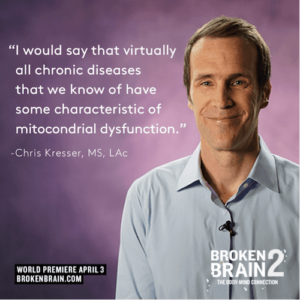
Dr. Chris Kresser on mitochondrial dysfunction and chronic disease….

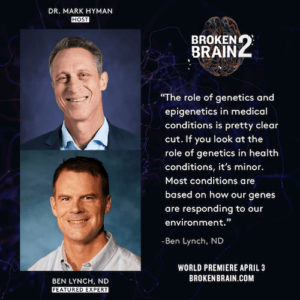
Dr. Ben Lynch on our genes and the environment …

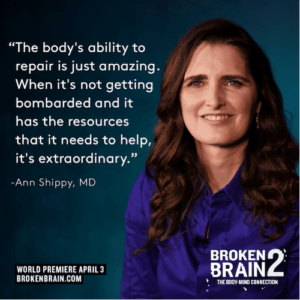
And some inspiration from Dr. Ann Shippy during her discussion on mold toxicity and brain health …

I am privileged and honored to have a very small cameo section in the docuseries!

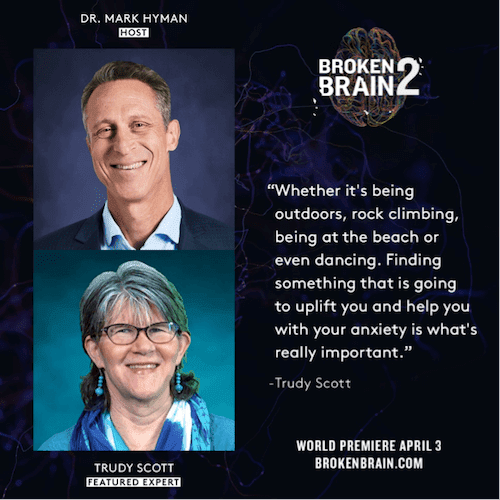
Here is some of my advice to find something you love to do and have fun…

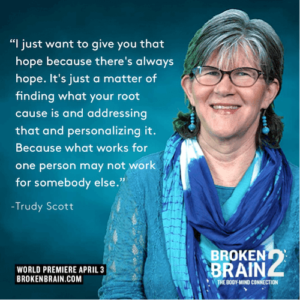
And my closing words of wisdom about hope and finding your unique root cause …

» Click here to Reserve your SPOT to see Broken Brain 2

In Broken Brain 2, you’ll hear from me and leading health experts AND hear inspiring stories from recovering patients. You’ll discover:

  • Unique ways to protect your brain from the multitude of toxins inside your home…
  • The odd way in which your heart rhythm can shape your brain function…
  • Easy methods to heal yourself from destructive beliefs and traumas that impact your mind and body…
  • How to use your personal genetics to improve your brain and overall health…
  • The little-known link between your brain health and your eyes, teeth, and gums…
  • A simple morning routine for more success and better brain health…
  • And much, much more…

In Broken Brain 2, you’ll learn all about the functional medicine approaches available for overcoming a variety of toxic environmental exposures, including mold, as well as how to heal from toxic beliefs, support the heart-brain connection, understand immunity in the brain, and so much more.

Over the course of 8 full-length episodes, you’ll learn cutting-edge strategies to help you heal your own mind, brain, and body. Here are all 8 episodes and when they will air:

  1. April 3: Dr. Hyman’s Story: The Power of the Body-Mind Connection
  2. April 4: Protecting Your Brain from a Toxic World
  3. April 5: Rising Above and Healing from Toxic Beliefs and Trauma
  4. April 6: The Secrets Behind the Heart-Brain Connection
  5. April 7: Cooling the Fire Within: The Immune-Brain Connection
  6. April 8: How to Personalize Your Diet and Understand Your Genetics
  7. April 9: Optimizing Your Brain Health and Innovative Therapies
  8. April 10: The Step-by-Step Brain Reset

» Click here to register for Broken Brain 2

This was truly a “labor of love” for Dr. Hyman and all of us participants and we hope you’ll join.

Please help us spread the word by sharing this with your friends and loved ones who may benefit from this information.

Let us know if you can relate to any of this and feel free to post your questions here.

Filed Under: Events Tagged With: Ben Lynch, Broken Brain 2, Dr. Ann Shippy, Dr. Mark Hyman, functional medicine, genes, heart, Heartmath, mold toxicity

  • « Go to Previous Page
  • Page 1
  • Interim pages omitted …
  • Page 44
  • Page 45
  • Page 46
  • Page 47
  • Page 48
  • Interim pages omitted …
  • Page 160
  • Go to Next Page »

Primary Sidebar

GABA QuickStart Homestudy

gaba quickstart homestudy

Free Report

9 Great Questions Women Ask about Food, Mood and their Health

You'll also receive a complimentary subscription to my ezine "Food, Mood and Gal Stuff"


Connect with me

Popular Posts

  • Amino Acids Mood Questionnaire from The Antianxiety Food Solution
  • The Antianxiety Food Solution Amino Acid and Pyroluria Supplements
  • Pyroluria Questionnaire from The Antianxiety Food Solution
  • Collagen and gelatin lower serotonin: does this increase your anxiety and depression?
  • Tryptophan for the worry-in-your-head and ruminating type of anxiety
  • GABA for the physical-tension and stiff-and-tense-muscles type of anxiety
  • The Antianxiety Food Solution by Trudy Scott
  • Seriphos Original Formula is back: the best product for anxiety and insomnia caused by high cortisol
  • Am I an anxious introvert because of low zinc and vitamin B6? My response to Huffington Post blog
  • Vagus nerve rehab with GABA, breathing, humming, gargling and key nutrients

Recent Posts

  • Her cravings for chips and peanut butter were triggered by stress: GABA ends cravings and reduces physical tension and fear of heights
  • It is truly miraculous to be able to move through life without crippling anxiety and panic
  • GABA and tryptophan combo provide immediate and noticeable relief for tremors and cervical dystonia in just 7 days
  • Red light therapy for back and neck pain, plantar fasciitis and low mood – a complement to the amino acids GABA, DPA and tryptophan
  • What do I use instead of Seriphos to help lower high cortisol that is affecting my sleep and making me anxious at night?

Categories

  • 5-HTP
  • AB575
  • Addiction
  • ADHD
  • Adrenals
  • Alcohol
  • Allergies
  • Alzheimer's disease
  • Amino Acids
  • Anger
  • Antianxiety
  • Antianxiety Food Solution
  • Antidepressants
  • Anxiety
  • Anxiety and panic
  • Autism
  • Autoimmunity
  • benzodiazapines
  • Bipolar disorder
  • Books
  • Caffeine
  • Cancer
  • Candida
  • Children/Teens
  • Collagen
  • Cooking equipment
  • Coronavirus/COVID-19
  • Cravings
  • Depression
  • Detoxification
  • Diabetes
  • Diet
  • DPA/DLPA
  • Drugs
  • EFT/Tapping
  • EMF
  • EMFs
  • Emotional Eating
  • Endorphins
  • Environment
  • Essential oils
  • Events
  • Exercise
  • Fear
  • Fear of public speaking
  • Fertility and Pregnancy
  • Fish
  • Food
  • Food and mood
  • Functional neurology
  • GABA
  • Gene polymorphisms
  • General Health
  • Giving
  • Giving back
  • Glutamine
  • Gluten
  • GMOs
  • Gratitude
  • Gut health
  • Heart health/hypertension
  • Histamine
  • Hormone
  • Hyperparathyroidism
  • Hypoglycemia
  • Immune system
  • Inflammation
  • Insomnia
  • Inspiration
  • Introversion
  • Joy and happiness
  • Ketogenic diet
  • Lithium orotate
  • Looking awesome
  • Lyme disease and co-infections
  • MCAS/histamine
  • Medication
  • Men's health
  • Mental health
  • Mercury
  • Migraine
  • Mold
  • Movie
  • MTHFR
  • Multiple sclerosis
  • Music
  • NANP
  • Nature
  • Nutritional Psychiatry
  • OCD
  • Osteoporosis
  • Oxalates
  • Oxytocin
  • Pain
  • Paleo
  • Parasites
  • Parkinson’s disease
  • PCOS
  • People
  • PMS
  • Postpartum
  • PTSD/Trauma
  • Pyroluria
  • Questionnaires
  • Real whole food
  • Recipes
  • Research
  • Schizophrenia
  • serotonin
  • SIBO
  • Sleep
  • Special diets
  • Sports nutrition
  • Stress
  • Sugar addiction
  • Sugar and mood
  • Supplements
  • Teens
  • Testimonials
  • Testing
  • The Anxiety Summit
  • The Anxiety Summit 2
  • The Anxiety Summit 3
  • The Anxiety Summit 4
  • The Anxiety Summit 5
  • The Anxiety Summit 6
  • Thyroid
  • Thyroid health
  • Toxins
  • Tryptophan
  • Tyrosine
  • Uncategorized
  • Vegan/vegetarian
  • Women's health
  • Yoga

Archives

  • May 2026
  • April 2026
  • October 2025
  • September 2025
  • August 2025
  • July 2025
  • June 2025
  • May 2025
  • April 2025
  • March 2025
  • February 2025
  • January 2025
  • November 2024
  • October 2024
  • September 2024
  • August 2024
  • July 2024
  • June 2024
  • May 2024
  • April 2024
  • March 2024
  • February 2024
  • January 2024
  • December 2023
  • November 2023
  • October 2023
  • September 2023
  • August 2023
  • July 2023
  • June 2023
  • May 2023
  • April 2023
  • March 2023
  • February 2023
  • January 2023
  • December 2022
  • November 2022
  • October 2022
  • September 2022
  • August 2022
  • July 2022
  • June 2022
  • May 2022
  • April 2022
  • March 2022
  • February 2022
  • January 2022
  • December 2021
  • November 2021
  • October 2021
  • September 2021
  • August 2021
  • July 2021
  • June 2021
  • May 2021
  • April 2021
  • March 2021
  • February 2021
  • January 2021
  • December 2020
  • November 2020
  • October 2020
  • September 2020
  • August 2020
  • July 2020
  • June 2020
  • May 2020
  • April 2020
  • March 2020
  • February 2020
  • January 2020
  • December 2019
  • November 2019
  • October 2019
  • September 2019
  • August 2019
  • July 2019
  • June 2019
  • May 2019
  • April 2019
  • March 2019
  • February 2019
  • January 2019
  • December 2018
  • November 2018
  • October 2018
  • September 2018
  • August 2018
  • July 2018
  • June 2018
  • May 2018
  • April 2018
  • March 2018
  • February 2018
  • January 2018
  • December 2017
  • November 2017
  • October 2017
  • September 2017
  • August 2017
  • July 2017
  • June 2017
  • May 2017
  • April 2017
  • March 2017
  • February 2017
  • January 2017
  • December 2016
  • November 2016
  • October 2016
  • September 2016
  • August 2016
  • July 2016
  • June 2016
  • May 2016
  • April 2016
  • March 2016
  • February 2016
  • January 2016
  • December 2015
  • November 2015
  • October 2015
  • September 2015
  • August 2015
  • July 2015
  • June 2015
  • May 2015
  • April 2015
  • March 2015
  • February 2015
  • January 2015
  • December 2014
  • November 2014
  • October 2014
  • September 2014
  • August 2014
  • July 2014
  • June 2014
  • May 2014
  • April 2014
  • March 2014
  • February 2014
  • January 2014
  • December 2013
  • November 2013
  • October 2013
  • September 2013
  • August 2013
  • July 2013
  • June 2013
  • May 2013
  • April 2013
  • March 2013
  • February 2013
  • January 2013
  • December 2012
  • November 2012
  • October 2012
  • August 2012
  • July 2012
  • June 2012
  • May 2012
  • April 2012
  • March 2012
  • February 2012
  • January 2012
  • December 2011
  • November 2011
  • October 2011
  • September 2011
  • August 2011
  • July 2011
  • June 2011
  • May 2011
  • April 2011
  • March 2011
  • February 2011
  • January 2011
  • December 2010
  • October 2010
  • September 2010
  • July 2010
  • May 2010
  • April 2010
  • March 2010
  • February 2010
  • January 2010
  • November 2009

Share the knowledge!

The above statements have not been evaluated by the Food and Drug Administration. Products listed in this website are not intended to diagnose, treat, cure or prevent any disease.

The information provided on this site is for informational and educational purposes only and is not intended as a substitute for advice from your physician or other health care professional. You should consult with a healthcare professional before starting or modifying any diet, exercise, or supplementation program, before taking or stopping any medication, or if you have or suspect you may have a health problem.


Copyright © 2026 Trudy Scott. All Rights Reserved. | Privacy | Terms and Conditions | Refund Policy | Medical Disclaimer

Free Report

9 Great Questions Women Ask about Food, Mood and their Health

You’ll also receive a complimentary subscription to my ezine “Food, Mood and Gal Stuff”