• Skip to primary navigation
  • Skip to main content
  • Skip to primary sidebar

everywomanover29 blog

Food, Mood and Women's Health – Be your healthiest, look and feel great!

  • Blog
  • About
  • Services
  • Store
  • Resources
  • Testimonials
  • The Book
  • Newsletter
  • Contact
  • Search this site

GABA

GABA for children: ADHD, focus issues, irritability, anxiety and tantrums

April 7, 2017 By Trudy Scott 117 Comments

Is GABA safe for children with symptoms of ADHD? I was asked this question after my interview on anxiety on the Diabetes Summit. I shared the question and my answer on facebook:

I’ve used GABA (and theanine) very successfully with children with physical anxiety symptoms and ADHD. I’ve also used tyrosine for the attention/focus issues. Plus I always consider gluten, blood sugar control (animal protein at breakfast often makes the biggest difference), colors/additives, low iron, low zinc and candida (this list is not inclusive but is a good starting point)

Jenny is a mom in my facebook community and responded to the above post, sharing that a friend of hers recommended GABA for her daughter after reading some of my posts. She shared this wonderful feedback:

My daughter hasn’t been diagnosed with ADHD but has a lot of ADHD qualities. We were having a huge amount of behavior problems as she is getting older (she’s 11). I did some research and went to the health food store and bought a bottle. At this point I was mentally exhausted from all the fighting and drama at home and at school. I was desperate and didn’t want to put her on any hard medication.

She has had amazing behavior at school and at home since giving it to her. She’s almost like different child. GABA has truly changed our life. She’s been taking it for almost 2 months.

What wonderful results! I’m thrilled for Jenny and her daughter. I asked Jenny to share what her daughter’s symptoms/behaviors were before they used the GABA and which symptoms improved. This is what Jenny shared:

…before the GABA she was irritable, she was fighting with her teacher and schoolmates, she couldn’t focus and was distracted by anything and everything, she was constantly disrupting the class and she was throwing major tantrums over ridiculous stuff (like her hair didn’t do what she wanted), she was mouthy and everything was a fight.

We are not seeing 99% of those behaviors at all anymore. She of course is still your typical pre-teen but if I say “no you can’t have that” our “no you can’t go there” her reaction is OK. Before it would have been a major fight or meltdown. Her teacher is reporting to me every day about her wonderful days.

I love hearing this feedback and it’s not unusual for children to act out when they have low GABA levels. Adults may identify with being anxious, but children may appear irritable, unfocused and distracted, may have tantrums and meltdowns, and all the while not be able to articulate how they are feeling.

Long–term use of GABA and root causes of low GABA

Jenny also posed some additional questions about GABA:

I do have some questions – I can’t really find anything online saying that it’s OK to give to kids. I mean, I’ve seen the results but it still worries me. She takes one 25 mg pill a day – do you think that’s OK?? Should I give her more or less or keep it the same? Just wondering your opinion?

I shared some of this feedback on the facebook thread and have elaborated on it here on the blog.

There is no research on children and the long-term use of amino acids but plenty of clinical evidence showing they can be used safely for 3-12 months. But I am also always working with my clients to find out why there is the deficiency in the first place and addressing that. This could include any or all of the following:

  • low zinc/vitamin B6/low iron which are all co-factors needed to make GABA (and then I’d want to know why are these low)
  • dysbiosis, parasites and/or candida (we make GABA in the gut and we may have GABA-eating bacteria in the gut – such as gabavorous)
  • too much stress at school, playing sports and/or at home
  • not getting enough sleep
  • not eating animal protein at breakfast (this affects blood sugar control and can stress the adrenals and impact cortisol, sex hormones and brain chemicals)
  • gluten sensitivity (gluteomorphins in gluten can impact mood and gluten can damage the gut leading to nutritional deficiencies)
  • low animal protein intake and/or eating a low-fat diet
  • low stomach acid (so you can’t digest the protein you’re eating)
  • toxin exposure (like pesticides or BPA)
  • low total cholesterol (caused in part by low levels of enzymes for fat digestion or a low-fat diet)

I shared these 60+ Nutritional and Biochemical Causes of Anxiety on my closing call of the The Anxiety Summit season 3.   I use this to help put the puzzle pieces together for my clients to resolve their anxiety and related issues like ADHD, insomnia, sadness, irritability etc.

When Jenny saw some of the root causes for low GABA she shared that she’s going to be making an appointment with her doctor. Keep in mind that in this instance it will need to be a functional medicine doctor or nutritionally trained doctor or a doctor who is open to learning about all this. I always also suggest taking a copy of my book The Antianxiety Food Solution to share with the doctor too!

What GABA product?

I typically have clients start with Source Naturals GABA Calm which contains 125mg of GABA. I was curious to know which 25mg GABA product she was using. It turns out to be a sublingual product by KAL.
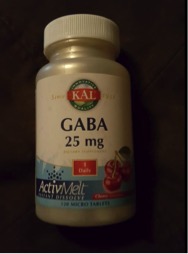
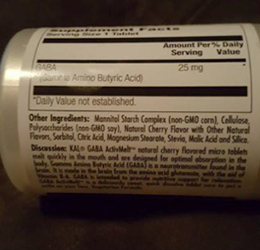


You can find the other GABA products I use and recommend here and the precautions with using GABA here. Typically it’s an amino acid that has the least issues, unless too high an amount is used.   I often hear that 500mg or 1000mg was used and caused dizziness or breathlessness – these are clues it’s too much!

As mentioned, one product I use and recommend is Source Naturals GABA Calm lozenges. It’s a good low dose of 125 mg and is convenient and effective because it’s a sublingual lozenge.

Now GABA Powder is another product I use and recommend. It does need to be measured out to provide a 125 mg typical starting dose or less (as needed). I have clients use a handy mini measuring spoon like this one (my Amazon link) and share more about how to measure out GABA powder on this blog).

For Source Naturals GABA Calm lozenges and Now GABA Powder:

  • You can purchase these from my online store (Fullscript – only available to US customers – use this link to set up an account).
  • If you’re not in the US, you can purchase these at iherb (use this link to save 5%).

Somnium GABA Cream is another option that could be considered especially for children and those with special needs. It is available in the US and elsewhere with international shipping. Read more about the product and who else may benefit from using a cream, and grab my coupon code to save 15%.

Why does GABA help in a situation like this?

These results are exceptional and it’s seldom just low GABA that needs to be addressed but in this instance it was. The low GABA type of ADHD is a bit different than low dopamine or low ferritin ADHD. With low GABA, it’s the anxiety that is causing the spinning, lack of focus, irritability and tantrums.

This blog post and study explains some of it – Oral GABA supplementation allows better prioritizing of planned actions: new research. GABA provides a better ability to handle tasks (complex and/or planned tasks) with less spinning and feelings of overwhelm, and prioritization of tasks is improved.

In addition to addressing low GABA, we also typically address the diet, gut health, toxin exposures (cosmetics are a big issue at this age), screen-time/EMFs (also a big issue at this age), and any other nutritional deficiencies.

Resources if you are new to using GABA as a supplement

If you are new to using GABA as a supplement, here is the Amino Acids Mood Questionnaire from The Antianxiety Food Solution (you can see all the low GABA symptoms).

If you suspect low levels of GABA or any of the neurotransmitters and do not yet have my book, The Antianxiety Food Solution – How the Foods You Eat Can Help You Calm Your Anxious Mind, Improve Your Mood, and End Cravings, I highly recommend getting it and reading it before jumping in and using amino acids on your own so you are knowledgeable. And be sure to share it with the team you or your loved one is working with.

There is an entire chapter on the amino acids and they are discussed throughout the book in the sections on gut health, blood sugar control, sugar cravings, self-medicating with alcohol and more.

The book doesn’t include product names (per the publisher’s request) so this blog, The Antianxiety Food Solution Amino Acid and Pyroluria Supplements, lists the amino acids that I use with my individual clients and those in my group programs.

If, after reading this blog and my book, you don’t feel comfortable figuring things out on your own (i.e. doing the symptoms questionnaire and respective amino acids trials), a good place to get help is the GABA QuickStart Program. This is a paid online/virtual group program where you get my guidance and community support. There are many moms in the program who are having much success with their kids.

If you are a practitioner, join us in The Balancing Neurotransmitters: the Fundamentals program. This is also a paid online/virtual program with an opportunity to interact with me and other practitioners who are also using the amino acids.

Have you noticed that your child (or even you personally) has seen improvements in these symptoms after using GABA: ADHD, focus issues, irritability, anxiety and tantrums?

Does it seem like it gives them (or you) a better ability to handle tasks (complex and/or planned tasks) with less spinning and feelings of overwhelm? Is prioritization improved?

If you are a practitioner are you seeing results like this with your clients/patients?

If you have questions please share them here too.

I asked Jenny if I could share here to give other mom’s hope and inspiration and practical results so they can help their children – and I really appreciate her being willing to do so.

Thanks for sharing Jenny! Happy mama and happy daughter – it warms my heart to hear stories like this!
Filed Under: GABA Tagged With: ADHD, children, GABA, tantrums

Anxiety: when to use GABA and tryptophan and how much to use

March 17, 2017 By Trudy Scott 116 Comments

When you have anxiety it can be confusing trying to figure out the root cause. I like to start by assessing for low GABA and low serotonin because when you address these with targeted individual amino acids you typically see results right away and feel hopeful (and now have time to look for other root causes like gluten issues, high cortisol, gut issues, dietary changes etc).

But there may still be some confusion about when to use GABA and when to use tryptophan and how much of each of these amino acids to use.

I’d like to share a question I received on this blog: I am on 5-HTP for anxiety and I am wondering about trying tryptophan instead and my response so you have a clearer understanding of this:

I have started with Source Naturals GABA Calm 125 mg, 2 on awakening and two in mid-afternoon, and 2 GABA Relaxer at bedtime. It has taken some anxiety edge away from me, but I still feel some anxiety on and off, not so severe as before. I used to feel very anxious on awakening. I want to improve more.

Today, I ordered Lidtke L-trytophan 500mg and am expecting to receive it in a week. I plan to take 2 Gaba Calm on awakening and 2 in mid-afternoon, then add one 500mg Trytophan mid-afternoon and one 500 mg trytophan at bed time.

Is this a good plan? Or shall I have 2 GABA Calm on awakening, 2 trytophan mid-afternoon and 2 trytophan at bedtime.

It’s an excellent question and this is my feedback (with some additional information here for this blog post)

Firstly I’m so pleased to hear the GABA products has taken some of the anxiety edge away.

I would expect this when someone has the low GABA type of anxiety and hear this all the time despite the fact I continue to be asked the blood brain barrier question and does GABA really work as a supplement.

There is also no specific formula to be followed because each person is different and when I’m working with someone we’re figuring out what is working and why and adjusting accordingly. If something is working we continue with that until no additional benefits are seen.

Ask yourself what low GABA anxiety symptoms (this is the physical anxiety) have improved with the GABA and how much (rate each one before – out of 10; and what are they now – out of 10).

From your question it sounds like they could improve more – so if we were working together I’d continue to increase GABA before adding something new. I’d do this until the low GABA symptoms are resolved or until no additional benefits are observed.

Remember when it comes to brain chemical imbalances and anxiety we have 3 anxiety types

  1. Low GABA anxiety type (physical anxiety, more stiff and tense muscles)
  2. Low serotonin anxiety type (mental anxiety, ruminations, negative self-talk, worry)
  3. Low blood sugar anxiety type (physical anxiety, but more shaky)

You need to figure out which type of anxiety you are experiencing and address that. It can be different for each person but it’s not uncommon to experience all of the above.

Once that has been done and we have the ideal amount of GABA and no more low GABA anxiety symptoms I’d then check what low serotonin symptoms my client has (these are the busy mind, ruminations type or worry anxiety).

If she does have some of these symptoms, we pick one or two symptoms and do a trial with 1 x 500mg tryptophan opened on to the tongue (or less if she’s super sensitive). She rates the symptoms out of 10 before the tryptophan trial and then after the trial. Depending on how she responds on the trial, we’ll decide if she needs 1 or 2 x 500mg mid-afternoon and evening. The bedtime dose also depends on how bad the insomnia is. We continue to increase as needed based on symptoms until she has no more low serotonin type symptoms or until no additional benefits are observed.

All the while we are starting to make other changes – like diet, eating for blood sugar balance (this and using glutamine helps with the low blood sugar anxiety type), no caffeine, no sugar, looking for high cortisol, no gluten, looking at gut health and for other nutritional deficiencies.

Here are some links to additional resources related to the above:

  • The amino acid questionnaire to help you figure out which anxiety type you have: low GABA or low serotonin
  • How to do an amino acid trial
  • Targeted individual amino acids: what do we really mean?
  • Anxiety and the amino acids: an overview
    • In this blog I make the following recommendation: if you do not have my book The Antianxiety Food Solution, I highly recommend getting it and reading it before jumping in to taking amino acids
  • Here are the supplements I use with my clients

I’d love to hear your feedback – do you/did you have the low GABA type of anxiety or the low serotonin type of anxiety or the low blood sugar type of anxiety or all three?

And feel free to share the before rating (from 1 to 10) and the after rating (from 1 to 10) once you’re taking the corresponding amino acid.

Filed Under: GABA, Tryptophan Tagged With: anxiety, GABA, tryptophan

Diabetes, anxiety and GABA

February 24, 2017 By Trudy Scott 21 Comments


Anxiety and depression are common in patients with diabetes. In this 2016 paper: Prevalence and predictors of depression and anxiety in patients of diabetes mellitus in a tertiary care center, it was found that a significantly larger proportion of diabetic patients had

  • Anxiety: 27.6% vs. 12.7% as compared to healthy controls and
  • Depression: 26.3% vs. 11.2% as compared to healthy controls
  • Both depression andanxiety: 21.0% vs. 7.3% as compared to healthy controls

The paper also reports that diabetic women had higher rates of anxiety than men (17.6% vs. 10.0%) and higher rates of depression than men (17.1% vs. 9.3%).

GABA is one of the calming amino acids I used with much success with my clients who have the physical type of anxiety (with stiff and tense muscles). As well as addressing this type of anxiety it also helps them to end their sugar addiction, reducing cravings dramatically. Melissa shares her results after using GABA on this blog: GABA for ending sugar cravings (and anxiety and insomnia)

I was cool as a cucumber at the airport and was much calmer when visiting family and friends compared to last year! The true test of its efficacy will be in two weeks when the semester starts. For now, I notice a general calmness and am sleeping well.

An unexpected result was that I stopped craving sweets after about a week of taking it! I didn’t even realize this until I was grocery shopping and out of habit walked towards the ice cream – I stopped and realized I didn’t want ice cream. So I walked toward the chocolate – same reaction. For once in my life, I was not craving sweets.

Now there is some interesting recent research showing how GABA may play a role in diabetes treatment too.

This February 2015 paper, GABAergic system in the endocrine pancreas: a new target for diabetes treatment explains the role of GABA in regulating islet-cell secretion and that it exerts β-cell regenerative effects:

Excessive loss of functional pancreatic β-cell mass, mainly due to apoptosis, is a major factor in the development of hyperglycemia in both type 1 and type 2 diabetes (T1D and T2D).

In T1D, β-cells are destroyed by immunological mechanisms. In T2D, while metabolic factors are known to contribute to β-cell failure and subsequent apoptosis, mounting evidence suggests that islet inflammation also plays an important role in the loss of β-cell mass. Therefore, it is of great importance for clinical intervention to develop new therapies.

γ-Aminobutyric acid (GABA), a major neurotransmitter, is also produced by islet β-cells, where it functions as an important intraislet transmitter in regulating islet-cell secretion and function. Importantly, recent studies performed in rodents, including in vivo studies of xenotransplanted human islets, reveal that GABA exerts β-cell regenerative effects. Moreover, it protects β-cells against apoptosis induced by cytokines, drugs, and other stresses, and has anti-inflammatory and immunoregulatory activities. It ameliorates the manifestations of diabetes in preclinical models, suggesting potential applications for the treatment of diabetic patients.

This paper published in November 2015: Study of GABA in Healthy Volunteers: Pharmacokinetics and Pharmacodynamics also reports potential therapeutic benefits for those with diabetes:

Our data show that GABA is rapidly absorbed and tolerated in human beings; its endocrine effects, exemplified by increasing islet hormonal secretion, suggest potential therapeutic benefits for diabetes.

You can read more about this in the blog post: GABA rapidly absorbed and tolerated – benefits for anxiety and diabetes

A paper published in December 2016 on GABA and diabetes: Long-Term GABA Administration Induces Alpha Cell-Mediated Beta-like Cell Neogenesis states that

This newly discovered GABA-induced α cell-mediated β-like cell neogenesis [or the regeneration of tissue] could therefore represent an unprecedented hope toward improved therapies for diabetes.

So here we have the amino amazing acid GABA that when used as a targeted supplement:

  • we know reduces and often eliminates sugar cravings completely
  • calms the anxious mind and reduces physical tension and stress within 5 to 30 minutes
  • has much potential in offering therapeutic benefits for diabetes

I’m proposing oral GABA as a much better option for diabetic patients with anxiety – better than benzodiazepines which have been shown to contribute to cognitive impairment. Using GABA sublingually seems to be most effective.

Do you have diabetes and has GABA helped you with your cravings and anxiety? And enabled you to reduce your diabetes medication?

If you’re a practitioner I’m curious if you commonly see anxiety and depression in your diabetes patients/clients? And do you currently use GABA (and other amino acids like tryptophan and glutamine) to help reduce their anxiety and sugar cravings? And reduce their diabetes medication?


Filed Under: Diabetes, GABA Tagged With: anxiety, Brian Mowll, diabetes, Diabetes Summit, GABA, tryptophan

Why I recommend GABA for anxiety instead of phenibut

November 25, 2016 By Trudy Scott 68 Comments

gaba-instead-of-phanibut

I have concerns with phenibut and I don’t feel anyone should be using it. It is widely used in Russia as a medication for anxiety and it’s only available by prescription in that country. It’s available over-the-counter in the USA, Australia and the UK and it’s very effective for anxiety and insomnia. It’s for this reason that many anxious individuals really love it and practitioners recommend it.

Here is some information about phenibut from this 2001 paper – Phenibut (beta-phenyl-GABA): a tranquilizer and nootropic drug:

Phenibut (beta-phenyl-gamma-aminobutyric acid HCl) is a neuropsychotropic drug that was discovered and introduced into clinical practice in Russia in the 1960s. It has anxiolytic and nootropic (cognition enhancing) effects. It acts as a GABA-mimetic, primarily at GABA(B) and, to some extent, at GABA(A) receptors. It also stimulates dopamine receptors and antagonizes beta-phenethylamine (PEA), a putative endogenous anxiogenic. The psychopharmacological activity of phenibut is similar to that of baclofen, a p-Cl-derivative of phenibut.

Phenibut is widely used in Russia to relieve tension, anxiety, and fear, to improve sleep in psychosomatic or neurotic patients; as well as a pre- or post-operative medication. It is also used in the therapy of disorders characterized by asthenia [abnormal physical weakness or lack of energy] and depression, as well as in post-traumatic stress, stuttering and vestibular disorders.

One of the reasons phenibut seems to work so well is because it is so similar to benzodiazepines. The above paper goes on to state:

Comparison of phenibut with piracetam and diazepam reveals similarities and differences in their pharmacological and clinical effects.

There is research showing that physical dependence can develop, including tolerance and withdrawal, and adverse symptoms can be similar to benzodiazepines: Phenibut Dependence

We present a case of a patient who used phenibut to self-medicate anxiety, insomnia and cravings for alcohol. While phenibut was helpful initially, the patient developed dependence including tolerance, significant withdrawal symptoms within 3-4 h of last use and failure to fulfil his roles at work and at home. He finally sought medical assistance in our addictions clinic. We have gradually, over the course of 9 weeks, substituted phenibut with baclofen, which has similar pharmacological properties, and then successfully tapered the patient off baclofen. This required approximately 10 mg of baclofen for each gram of phenibut.

I talk about my concerns about phenibut and cover the best forms of GABA in my Anxiety Summit season 4 presentation – GABA: Blood Brain Barrier Controversy Concerns, Best Forms and How to Do a Trial for Eliminating Anxiety, and share what other practitioners share:

…practitioners will say well they use it cautiously. They only use it if really needed. And some practitioners will say they pulse. So they’ll have a client or a patient take it for a certain number of days and then stop for a certain number of days.

I just think let’s err on the side of caution and let’s not even go there. Let’s use these other nutrients [like GABA].

Why mess with something when you’ve got something else that can be used. I’ve had practitioners say to me “Well, phenibut works so well. That’s why I use it. GABA doesn’t seem to work as well.” And maybe it’s because they are not doing it sublingually. So if you’ve been using phenibut or you’re a practitioner I’d love to hear from you if you switch your patients or your clients to GABA and have them open up the capsules. Let us know if you’re finding better results with that method rather than having them swallow the GABA capsules.

During this same GABA presentation on the Anxiety Summit I share some of my other concerns about phenibut:

It’s used in high doses for performance enhancement and what really horrified me is that there are these dedicated forums with information on how to taper safely. So there are these forums that talk about phenibut like it’s a drug and tell people how they can safely go this high [on the phenibut] and if they get these [bad] effects, what they need to do and how they can taper. When I read all that I was just horrified.

Why mess with something like phenibut when we’ve got GABA that does work so well when used in the right way (sublingually appears to be most effective) and when trialed to find the ideal targeted dose for your particular needs.

If you’d like a refresher or want to learn more about the following topics, be sure to listen (or re-listen if you tuned in during the summit) to my season 4 Anxiety Summit presentation on GABA:

  • more about phenibut
  • gabapentin (which also has issues and withdrawal symptoms can to mimic some of the same withdrawal symptoms associated with benzodiazepine and alcohol withdrawal)
  • the blood-brain barrier GABA concerns that many people raise (and one of the reasons many practitioners say they like phenibut)
  • some possible mechanisms as to how GABA does work to ease anxiety and worry
  • good forms of GABA and how best to use GABA
  • how to do a GABA trial to find your ideal dose (you can find some of this information here and in my book The Antianxiety Food Solution)
  • feedback from people who have used GABA with success (you can also find some of that positive feedback here)
  • and what to use if you don’t have access to GABA supplements

Please share your phenibut and GABA experiences so we can all learn.

Filed Under: GABA Tagged With: anxiety, depression, GABA, gabapentin, phenibut, post-traumatic stress, the anxiety summit

Low zinc and low GABA contributing to anxiety in children and women

October 7, 2016 By Trudy Scott 18 Comments

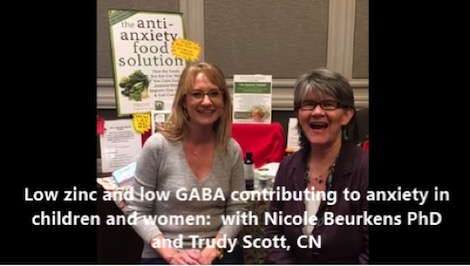
low-zinc-gaba-video

Dr. Nicole Beurkens and I sit down together at the end of the recent Integrative Medicine for Mental Health conference to talk about anxiety and the impact of both low zinc and low GABA. Nicole shares her perspectives on working with children and I share what I see with the adult women I work with. We don’t specifically talk about older adults or men but it’s applicable to everyone.

Dr. Nicole Beurkens PhD, a special educator, clinical psychologist and nutritionist, is author of the new book Life Will Get Better: Simple Solutions for Parents of Children with Attention, Anxiety, Mood and Behavior Challenges

In case you’re new to my community, this is my book: The Antianxiety Food Solution: How the Foods You Eat Can Help You Calm Your Anxious Mind, Improve Your Mood, and End Cravings

Here are some of the highlights from our conversation about zinc:

  • Zinc is a very common deficiency and can be a contributing factor in both anxiety and ADHD
  • Zinc is depleted by sugar consumption, stress and exercise
  • Zinc sulfate used as a zinc challenge is one way to determine your zinc status
  • Nicole’s response to the zinc challenge: fuzzy, strong yukky taste – which means good zinc levels
  • Most people coming to the booth had very little reaction to the zinc challenge – which means low zinc levels
  • Level 1, 2, 3 and 4 are used to figure out your zinc status (you can read about the zinc taste test here)
  • My response to the zinc challenge: metallic, gross, horrible and I got goosebumps – – which means good zinc levels
  • Nicole shares that most of kids and young adults at her clinic have level 1 or level 2 zinc status, and it’s an easy test to do with kids
  • Many people at the conference were on zinc and were surprised they were not tasting the zinc sulfate. Other than sugar consumption, stress and exercise, low HCl (stomach acid) can affect your absorption. I also found that many of these folks were on a gluten-free or Paleo or GAPs diet and eating a lot of nuts or using nut flours. Nuts are high in copper and this can counteract the zinc.
  • We talk about the importance of good quality zinc supplements and finding a zinc product and multi that is copper-free. Here are the products I recommend.

Then we talk about GABA Calm, a calming amino acid that we both love! Here are some of the highlights from this section:

  • It’s a lozenge/sublingual, is easy to take and helps in situations where the anxiety can quickly escalate into panic attacks. Nicole likes the peppermint flavor and finds many of the children and young adults she works with prefer the orange flavor. Personally I also prefer the orange flavor.
  • For adults, if you use wine at the end of the day to de-stress, you may be low in GABA and self-medicating, and using something like GABA-Calm often helps.
  • Moms will take their GABA Calm with them and use as needed and give to their kids if needed too.  
  • I share how effective it is for Lyme anxiety and how it can be used instead of benzodiazepines (I interviewed Trish about this on the recent Anxiety Summit)
  • GABA Calm can help when you’re on a benzodiazepine and even very severe anxiety or depression can be alleviated with diet and nutrients.
  • Nicole shares how common benzodiazepine prescriptions are in teens and young adults; and the issues with dependence and wanting to quit but not being able to. It can sometimes take years to reduce the medications.
  • I share about the first World Benzo Awareness Day on July 11 – so many people are in trouble and are not cautioned.

We were both so encouraged being at this conference and seeing so many physicians, psychiatrists, psychotherapists, psychiatric nurse practitioners and others practitioners who are really interested in learning more about these approaches. They are seeing the same issues we see with some of the medications (and not getting to the root cause of anxiety) and they are excited to expand their knowledge base. It’s just so exciting to see the pendulum swinging!

We both really appreciate the Integrative Medicine for Mental Health conference. If you’re a practitioner and haven’t attended it’s a must-attend event. If you were there you know what I mean. It was also super to meet so many of you after my talk and at my booth. If you’re not a practitioner do tell your doctor about it. Save the date for 2017: September 28 – October 1 in Orange County, California.

We did this as a live video feed on Facebook hence the references to posting questions and Facebook. It was also the end of the event and the people next to us were packing boxes and using a lot of tape so apologies for the weird noises.  

Feel free to share your results with zinc and GABA Calm and any questions you may have.

Filed Under: GABA Tagged With: anxiety, benzodiazepines, children, GABA, GABA Calm, Integrative Medicine for Mental Health conference, Nicole Beurkens, Trudy Scott, women, zinc

DPA to end comfort-eating, end weepiness and boost endorphins

September 10, 2016 By Trudy Scott 83 Comments

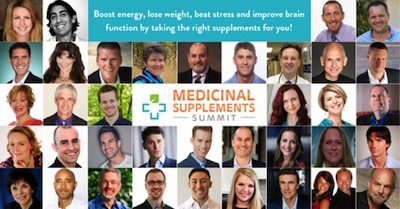
medicinal-supplements-summit-speakers

The Medicinal Supplements Summit runs September 12 -19 and is dedicated to helping you learn the latest in supplement customization to boost energy, lose weight, beat stress, improve brain function and heal your body! 

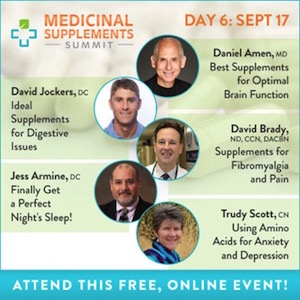
My interview addresses amino acids for both anxiety and depression – I talk about GABA, tryptophan, 5-HTP (and when not to use it), DPA, glutamine and tyrosine.

medicinal-supplements-summit-day6

Wendy asks me to share more about DPA for the low endorphins kind of depression, comfort eating, emotional pain, weepiness and physical pain. Here are some snippets on this topic from my interview:

DPA is D-phenylalanine. It’s an amino acid that actually destroys the enzyme that breaks down endorphins. Endorphins are feel-good chemicals that we may relate to when you hear about getting an endorphin rush, when you go for a run or when someone gives you a big hug or when you do something nice for someone or someone does something nice for you, you get that nice sort of feel good feeling, like you’ve got this big hug kind of feeling. So taking this amino acid, DPA, helps, in essence, to raise your endorphins.

There are different kinds of depression. I mentioned the low serotonin depression, which is more the anxiety kind of depression. With the low endorphin kind of depression, you’re very weepy. You may be overly emotional. So if you watched a TV ad or you watched a really sad movie, you may be more prone to crying than the average person. As well as being sensitive to emotional pain, which is the crying and the weepiness, you also tend to be sensitive to physical pain.

So we know that doing acupuncture raises your endorphin levels. And in that way it helps with pain. So taking this amino acid will help with that emotional sadness that you often feel when you’ve got low endorphins. And it is very, very helpful for physical pain as well. I find a number of clients with physical pain that is related to low endorphins. Pain can be related to low oxalates or nightshades, something physical, or even osteoarthritis. So you’ve got some kind of physical issue. But if it’s related to low endorphins you’ll actually see a really nice pain reduction effect from it.

Now, the big thing with low endorphins is this comfort eating. So I mentioned earlier with low serotonin you have the anxiety and the depression and the afternoon and the evening cravings. With low endorphins, as well as this emotional aspect and the pain aspect, the cravings part is very much a comfort kind of craving.

It’s like, “This is my reward. This is my treat. I deserve it.” And when you consume those carbohydrates, that bowl of ice cream, that bowl of cereal, that chocolate chip cookie, you feel like this is my reward. I deserve it. So a lot of people will resonate with the low endorphins kind of emotional eating. And when they get on DPA their mood improves, and this comfort eating goes away.

Tune in to hear my entire interview and all the other great speakers!

You can use this link to register for access: https://qt247.isrefer.com/go/SUPP16reg/trudyscottcn/

And use this link to purchase at pre-summit special prices:
https://qt247.isrefer.com/go/SUPP16order/trudyscottcn/

Filed Under: Events, GABA Tagged With: 5-HTP, aminos for anxiety, comfort eating, depression, DPA, emotional, GABA, glutamine, Medicinal supplements summit, tryptophan, tyrosine

  • « Go to Previous Page
  • Page 1
  • Interim pages omitted …
  • Page 20
  • Page 21
  • Page 22
  • Page 23
  • Page 24
  • Page 25
  • Go to Next Page »

Primary Sidebar

GABA QuickStart Homestudy

gaba quickstart homestudy

Free Report

9 Great Questions Women Ask about Food, Mood and their Health

You'll also receive a complimentary subscription to my ezine "Food, Mood and Gal Stuff"


Connect with me

Popular Posts

  • Amino Acids Mood Questionnaire from The Antianxiety Food Solution
  • The Antianxiety Food Solution Amino Acid and Pyroluria Supplements
  • Pyroluria Questionnaire from The Antianxiety Food Solution
  • Collagen and gelatin lower serotonin: does this increase your anxiety and depression?
  • Tryptophan for the worry-in-your-head and ruminating type of anxiety
  • GABA for the physical-tension and stiff-and-tense-muscles type of anxiety
  • The Antianxiety Food Solution by Trudy Scott
  • Seriphos Original Formula is back: the best product for anxiety and insomnia caused by high cortisol
  • Am I an anxious introvert because of low zinc and vitamin B6? My response to Huffington Post blog
  • Vagus nerve rehab with GABA, breathing, humming, gargling and key nutrients

Recent Posts

  • Her cravings for chips and peanut butter were triggered by stress: GABA ends cravings and reduces physical tension and fear of heights
  • It is truly miraculous to be able to move through life without crippling anxiety and panic
  • GABA and tryptophan combo provide immediate and noticeable relief for tremors and cervical dystonia in just 7 days
  • Red light therapy for back and neck pain, plantar fasciitis and low mood – a complement to the amino acids GABA, DPA and tryptophan
  • What do I use instead of Seriphos to help lower high cortisol that is affecting my sleep and making me anxious at night?

Categories

  • 5-HTP
  • AB575
  • Addiction
  • ADHD
  • Adrenals
  • Alcohol
  • Allergies
  • Alzheimer's disease
  • Amino Acids
  • Anger
  • Antianxiety
  • Antianxiety Food Solution
  • Antidepressants
  • Anxiety
  • Anxiety and panic
  • Autism
  • Autoimmunity
  • benzodiazapines
  • Bipolar disorder
  • Books
  • Caffeine
  • Cancer
  • Candida
  • Children/Teens
  • Collagen
  • Cooking equipment
  • Coronavirus/COVID-19
  • Cravings
  • Depression
  • Detoxification
  • Diabetes
  • Diet
  • DPA/DLPA
  • Drugs
  • EFT/Tapping
  • EMF
  • EMFs
  • Emotional Eating
  • Endorphins
  • Environment
  • Essential oils
  • Events
  • Exercise
  • Fear
  • Fear of public speaking
  • Fertility and Pregnancy
  • Fish
  • Food
  • Food and mood
  • Functional neurology
  • GABA
  • Gene polymorphisms
  • General Health
  • Giving
  • Giving back
  • Glutamine
  • Gluten
  • GMOs
  • Gratitude
  • Gut health
  • Heart health/hypertension
  • Histamine
  • Hormone
  • Hyperparathyroidism
  • Hypoglycemia
  • Immune system
  • Inflammation
  • Insomnia
  • Inspiration
  • Introversion
  • Joy and happiness
  • Ketogenic diet
  • Lithium orotate
  • Looking awesome
  • Lyme disease and co-infections
  • MCAS/histamine
  • Medication
  • Men's health
  • Mental health
  • Mercury
  • Migraine
  • Mold
  • Movie
  • MTHFR
  • Multiple sclerosis
  • Music
  • NANP
  • Nature
  • Nutritional Psychiatry
  • OCD
  • Osteoporosis
  • Oxalates
  • Oxytocin
  • Pain
  • Paleo
  • Parasites
  • Parkinson’s disease
  • PCOS
  • People
  • PMS
  • Postpartum
  • PTSD/Trauma
  • Pyroluria
  • Questionnaires
  • Real whole food
  • Recipes
  • Research
  • Schizophrenia
  • serotonin
  • SIBO
  • Sleep
  • Special diets
  • Sports nutrition
  • Stress
  • Sugar addiction
  • Sugar and mood
  • Supplements
  • Teens
  • Testimonials
  • Testing
  • The Anxiety Summit
  • The Anxiety Summit 2
  • The Anxiety Summit 3
  • The Anxiety Summit 4
  • The Anxiety Summit 5
  • The Anxiety Summit 6
  • Thyroid
  • Thyroid health
  • Toxins
  • Tryptophan
  • Tyrosine
  • Uncategorized
  • Vegan/vegetarian
  • Women's health
  • Yoga

Archives

  • May 2026
  • April 2026
  • October 2025
  • September 2025
  • August 2025
  • July 2025
  • June 2025
  • May 2025
  • April 2025
  • March 2025
  • February 2025
  • January 2025
  • November 2024
  • October 2024
  • September 2024
  • August 2024
  • July 2024
  • June 2024
  • May 2024
  • April 2024
  • March 2024
  • February 2024
  • January 2024
  • December 2023
  • November 2023
  • October 2023
  • September 2023
  • August 2023
  • July 2023
  • June 2023
  • May 2023
  • April 2023
  • March 2023
  • February 2023
  • January 2023
  • December 2022
  • November 2022
  • October 2022
  • September 2022
  • August 2022
  • July 2022
  • June 2022
  • May 2022
  • April 2022
  • March 2022
  • February 2022
  • January 2022
  • December 2021
  • November 2021
  • October 2021
  • September 2021
  • August 2021
  • July 2021
  • June 2021
  • May 2021
  • April 2021
  • March 2021
  • February 2021
  • January 2021
  • December 2020
  • November 2020
  • October 2020
  • September 2020
  • August 2020
  • July 2020
  • June 2020
  • May 2020
  • April 2020
  • March 2020
  • February 2020
  • January 2020
  • December 2019
  • November 2019
  • October 2019
  • September 2019
  • August 2019
  • July 2019
  • June 2019
  • May 2019
  • April 2019
  • March 2019
  • February 2019
  • January 2019
  • December 2018
  • November 2018
  • October 2018
  • September 2018
  • August 2018
  • July 2018
  • June 2018
  • May 2018
  • April 2018
  • March 2018
  • February 2018
  • January 2018
  • December 2017
  • November 2017
  • October 2017
  • September 2017
  • August 2017
  • July 2017
  • June 2017
  • May 2017
  • April 2017
  • March 2017
  • February 2017
  • January 2017
  • December 2016
  • November 2016
  • October 2016
  • September 2016
  • August 2016
  • July 2016
  • June 2016
  • May 2016
  • April 2016
  • March 2016
  • February 2016
  • January 2016
  • December 2015
  • November 2015
  • October 2015
  • September 2015
  • August 2015
  • July 2015
  • June 2015
  • May 2015
  • April 2015
  • March 2015
  • February 2015
  • January 2015
  • December 2014
  • November 2014
  • October 2014
  • September 2014
  • August 2014
  • July 2014
  • June 2014
  • May 2014
  • April 2014
  • March 2014
  • February 2014
  • January 2014
  • December 2013
  • November 2013
  • October 2013
  • September 2013
  • August 2013
  • July 2013
  • June 2013
  • May 2013
  • April 2013
  • March 2013
  • February 2013
  • January 2013
  • December 2012
  • November 2012
  • October 2012
  • August 2012
  • July 2012
  • June 2012
  • May 2012
  • April 2012
  • March 2012
  • February 2012
  • January 2012
  • December 2011
  • November 2011
  • October 2011
  • September 2011
  • August 2011
  • July 2011
  • June 2011
  • May 2011
  • April 2011
  • March 2011
  • February 2011
  • January 2011
  • December 2010
  • October 2010
  • September 2010
  • July 2010
  • May 2010
  • April 2010
  • March 2010
  • February 2010
  • January 2010
  • November 2009

Share the knowledge!

The above statements have not been evaluated by the Food and Drug Administration. Products listed in this website are not intended to diagnose, treat, cure or prevent any disease.

The information provided on this site is for informational and educational purposes only and is not intended as a substitute for advice from your physician or other health care professional. You should consult with a healthcare professional before starting or modifying any diet, exercise, or supplementation program, before taking or stopping any medication, or if you have or suspect you may have a health problem.


Copyright © 2026 Trudy Scott. All Rights Reserved. | Privacy | Terms and Conditions | Refund Policy | Medical Disclaimer

Free Report

9 Great Questions Women Ask about Food, Mood and their Health

You’ll also receive a complimentary subscription to my ezine “Food, Mood and Gal Stuff”