• Skip to primary navigation
  • Skip to main content
  • Skip to primary sidebar

everywomanover29 blog

Food, Mood and Women's Health – Be your healthiest, look and feel great!

  • Blog
  • About
  • Services
  • Store
  • Resources
  • Testimonials
  • The Book
  • Newsletter
  • Contact
  • Search this site

GABA

Does GABA offer gut protection after drinking alcohol?

September 22, 2017 By Trudy Scott 12 Comments

A paper published earlier this year has us asking the question: will oral GABA supplementation offer gut protection in humans who drink too much alcohol? It’s too soon to know but the results from the animal study leave me spell-bound by this calming amino acid yet again!

The paper, Gastroprotective effect of gamma-aminobutyric acid on ethanol-induced gastric mucosal injury

aimed to investigate the gastroprotective effect of gamma-aminobutyric acid (GABA) on ethanol-induced gastric mucosal injury and gastric epithelial cells injury [in rats].

Ethanol or alcohol is known to damage the gut and the study was carried out on rats given GABA and then ethanol.

It was also tested using the human gastric epithelial cell line GES-1 (more here on how human cell lines are commonly used in research) which was incubated with GABA and then treated with ethanol to induce cell injury.

The use of GABA prior to treatment with ethanol

showed that GABA pretreatment significantly reduced gastric ulcer index in a dose-dependent manner.

Administration with GABA could not only remarkably restrain oxidative stress by increase of superoxide dismutase, catalase activities and decrease of malondialdehyde content in gastric tissue and cells, but also significantly reduced pro-inflammatory factors activities (interleukin-6 and tumor necrosis factor α) in gastric tissue.

These studies clearly provided evidence that GABA had a considerable gastroprotective effect on ethanol-induced gastric mucosal injury and gastric epithelial cells injury. The underlying mechanism of mitigating lesions may be ascribed to the improvement of anti-inflammatory and anti-oxidant status as well as the increases of PGE2 [prostaglandin E2] and NO [nitric oxide] levels.

In summary, the use of GABA shows the potential for less ulcers, less oxidative damage, less inflammation in the gut, and gastroprotective properties after alcohol consumption. Human studies will show if oral GABA supplementation offers gut protection in those who drink too much alcohol.

Many social drinkers are not connecting their drinking to stress

We are a stressed society and this leads a great deal of “social” drinking. Many social drinkers are not connecting their drinking to stress and their need to self-medicate and de-stress.

As I found when I posted new study this on facebook – Moderate alcohol consumption as risk factor for adverse brain outcomes and cognitive decline – many social drinkers also get upset when you point out research like this because they don’t want to have to give it up. This CNN article, Moderate drinking may alter brain, summarizes the study and reports that the

moderate group was drinking about 14 to 21 units of alcohol per week, or about a medium glass of wine each night, plus a little extra on the weekends.

Update: Dec 2025
This 2024 paper, A qualitative analysis investigating drinking practices and meanings among a sample of Australian working mothers, explores the emotional/stress connection and how alcohol is their escape and coping tool:

Women felt they had to be available to both their employers and their children at the same time. For some, this led to internalized feelings of guilt and fatigue, increasing women’s desire to drink, and limiting their capacity to be mindful of the amount of alcohol they were consuming.

Women also described feeling overloaded and under-supported, where alcohol was viewed as being relaxing and rewarding, as well as a way to escape, cope, and recover from their day-to-day stressors.

Furthermore, through a combination of targeted marketing and broader social normalisation, women felt alcohol was presented as a solution to stress and problems among working mothers.

GABA also helps reduce your need to self-medicate or self-soothe with alcohol (or sugar/carbs)

What is so interesting is that this very same calming amino acid, GABA, when used to address low GABA levels can help reduce your need to self-medicate or self-soothe with alcohol (or sugar/carbs). Don’t forget, with low GABA levels, you’ll also experience physical anxiety, stiff and tense muscles, overwhelm and panic attacks. I recently blogged about GABA here: GABA for the physical-tension and stiff-and-tense-muscles type of anxiety

Of course, I’d recommend using GABA supplements to address the low GABA and prevent so much “social” drinking that may damage to the gut (i.e. addressing the root cause as always), rather than using GABA to prevent gut damage when you do drink.

If you are a big “social” drinker and choose the latter (use GABA to prevent gut damage when you do drink) be warned, you’ll feel calmer and less stressed and very likely reduce your desire and need for a drink!

My blog mentions “social” drinking because of the paper about moderate alcohol consumption above but all this could be equally applicable to heavy drinkers and alcoholics too.

In summary, the amino acid GABA can achieve the following:

  • help you quit alcohol and not feel deprived and having to use willpower
  • leave you feeling calm and stress-free with no need to self-medicate with alcohol
  • heal damage caused to your gut if you do indulge once in awhile (based on projections from the above research)

Additional resources when you are new to using GABA or other amino acids as supplements

We use the symptoms questionnaire to figure out if low GABA (indicating a possible need for GABA or theanine) or low serotonin (indicating a need for tryptophan or 5-HTP) or low endorphins (indicating a possible need for DPA) or other neurotransmitter imbalances may be an issue for you.

If you suspect low levels of any of the neurotransmitters and do not yet have my book, The Antianxiety Food Solution – How the Foods You Eat Can Help You Calm Your Anxious Mind, Improve Your Mood, and End Cravings. I highly recommend getting it and reading it before jumping in and using amino acids on your own so you are knowledgeable. And be sure to share it with the practitioner/health team you or your loved one is working with.

There is an entire chapter on the amino acids and they are discussed throughout the book in the sections on gut health, gluten, blood sugar control, sugar cravings, anxiety and mood issues. The importance of quality animal protein and healthy fats is also covered.

The book doesn’t include product names (per the publisher’s request) so this blog, The Antianxiety Food Solution Amino Acid and Pyroluria Supplements, lists the amino acids that I use with my individual clients and those in my group programs.

If, after reading this blog and my book, you don’t feel comfortable figuring things out on your own (i.e. doing the symptoms questionnaire and respective amino acids trials), a good place to get help is the GABA QuickStart Program (if you have low GABA symptoms). This is a paid online/virtual group program where you get my guidance and community support. Another option is the budget-friendly GABA QuickStart Homestudy program.

If you also need serotonin support, the Serotonin QuickStart Program is a good place to get help. This is also a paid online/virtual group program where you get my guidance on using tryptophan and 5-HTP safely, and community support during 5 LIVE Q&A calls. You can sign up to be notified when the next live launch of this program is happening.

If you are a practitioner, join us in The Balancing Neurotransmitters: the Fundamentals program. This is also a paid online/virtual program with an opportunity to interact with me and other practitioners who are also using the amino acids.

Now I’d like to hear from you

Do you drink alcohol in order to relieve your stress?

Have you noticed that GABA reduces your need to drink alcohol?

And have you noticed any improvements in gut health since using GABA?

Feel free to post your questions below.
Filed Under: Anxiety, GABA, Stress Tagged With: alcohol, anxiety, de-stress, GABA, gastroprotective, gut damage, self-medicate, stress

DPA for weepiness, pain and comfort and reward eating

September 20, 2017 By Trudy Scott 63 Comments

Today I’m reviewing DPA (or d-phenylalanine) for weepiness, pain and comfort and reward eating. This amino acid is a favorite with so many of my clients because it helps with the above by boosting your endorphins and when you open a capsule onto your tongue you feel like you just got a big hug. It’s a really good feeling!

I’m also sharing some additional resources for you on DPA.

DPA and endorphins

DPA is an amino acid that destroys the enzyme that breaks down endorphins. Endorphins are feel-good chemicals that you experience with an endorphin rush when you go for a run or when someone gives you a big hug, when you show kindness to someone or someone does something nice for you. Taking the amino acid, DPA, helps to raise your endorphins.

Low endorphins and weepiness

With low endorphins you’re very weepy. You may be overly emotional. If you watched a TV ad or you watched a really sad movie, you may be more prone to crying than the average person.

It’s also known as the break-up pill and is very helpful when going through a relationship split.

It’s also extremely helpful after a stressful event. I spoke with a friend who was impacted by Hurricane Harvey and recommended DPA for the weepiness she was starting to feel a few days after the clean-up efforts. It’s one of the amino acids I recommend in my blog: Nutrition solutions for psychological stress after a natural disaster

Low endorphins and pain

As well as being sensitive to emotional pain (the crying and the weepiness), you also tend to be sensitive to physical pain when endorphins are low.

We know acupuncture raises your endorphin levels and eases pain. Using DPA helps physical pain in a similar way. Pain can be caused by low GABA and low serotonin, an inflammatory diet, a high oxalate diet or nightshades, something physical like a fall, osteoarthritis or an autoimmune condition like rheumatoid arthritis. If there is also a low endorphin aspect to your pain, DPA can provide some pain reduction.

Low endorphins and comfort/reward eating

Another symptom of low endorphins is comfort/reward eating. You may relate to the term emotional eating. It often goes like this: “This is my reward. This is my treat. I absolutely deserve it.”

And when you consume those carbohydrates – that bowl of ice cream, that bowl of cereal, that chocolate chip cookie, that chocolate cup-cake – you feel like “this is my reward, this comforts me.” When you use DPA you can literally take it or leave it. Really!

DPA is one of the amino acids that help you easily quit sugar without having to use massive willpower and without feeling deprived. The best way to figure it out is to do the amino acid mood questionnaire

Here is a summary to help you figure out which brain chemistry imbalance is driving your sugar cravings (and mood issues):

  • if you have to eat sugar when you haven’t eaten in awhile it’s likely low blood sugar and glutamine on the tongue stops the sugar desire on the spot
  • if you stress-eat your sugar cravings are likely due to low GABA, and GABA will stop the stress-eating and calm you down
  • if you eat sugar or carbs to feel happy (and especially from late afternoon onwards) then your sugar cravings are likely due to low serotonin, and tryptophan stops the cravings and boosts mood and reduces anxiety
  • if you eat sugar for an energy boost then it’s likely due to low catecholamines and tyrosine will stop those cravings and give you a mood and energy boost
  • if you are a comfort-eater or big emotional eater, then it’s likely due to low endorphins and DPA will stop that “I deserve-it-reward-eating” and also give you a hug-like mood boost

And remember it’s not unusual to need to address all areas. You can have low GABA anxiety and low endorphins too and low blood sugar. If this is the case I have my clients address one at a time.

If addressing low endorphins helps reduce or eliminate the reward eating and helps you eat less or no sugar it means less impact on your adrenals and more even blood sugar levels and therefore less anxiety too.

As with all the amino acids, when using DPA:

  • Start low (500mg is a typical starting dose) and increase as needed.
  • Do a trial to determine if the emotional eating is due to low endorphins. I always do this with clients before starting any amino acid. Be sure to read how to do an amino acid trial. It has the amino acid questionnaire, the precautions and information on how to use targeted individual amino acids.
  • Take between meals and away from protein for the best effects

This blog post is part of the series of amino acid product reviews:

  • Tryptophan for low serotonin (worry-in-the-head anxiety)
  • GABA for low GABA symptoms (physical anxiety)
  • Glutamine for calming, intense sugar cravings, gut healing and low blood sugar
  • Tyrosine for focus, motivation, energy, a good mood and possibly even anxiety

The resources in this blog and my other articles are intended to be used in conjunction with my book: The Antianxiety Food Solution – How the Foods You Eat Can Help You Calm Your Anxious Mind, Improve Your Mood, and End Cravings. If you do not have my book I highly recommend getting it and reading it before jumping in and taking the amino acid supplements:

There is a complete chapter on the amino acids and one for pyroluria, plus information on real whole food, sugar and blood sugar, gluten, digestion and much more.

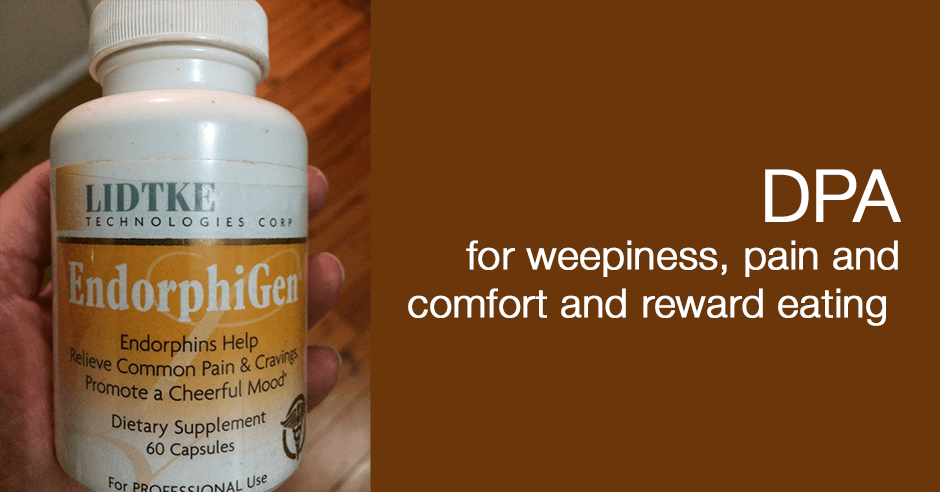
The Lidtke Endorphigen 500mg product is the one I recommend. You can find this DPA product and the others I recommend on this blog: The Antianxiety Food Solution Amino Acid and Pyroluria Supplements.

*******************
Update Feb 20, 2020:

DPA is one of my top products that I recommend. I do find it much more effective than DPLA (for endorphin boosting) so I no longer recommend or use DLPA.

I used to recommend simply chewing the capsule to get the quickest and best effects and this worked well when this product was produced in a gelatin capsule. Now it’s made with a cellulose capsule and chewing doesn’t work at all well so opening the capsule (or just biting off the top) and tipping the powder into your mouth works well.

It does taste quite pleasant – some of my clients think it has a dark chocolate-like taste. A few people don’t like the taste at all but even then, it is still very effective when low endorphins are an issue.

*******************

I’d love to hear if DPA has worked for you and how it’s helped?

If you have questions please post them below or on the supplements blog

Filed Under: GABA Tagged With: anxiety, comfort eating, DPA, emotional eating, endorphins, GABA, reward eating, sugar cravings, weepiness

GABA for the physical-tension and stiff-and-tense-muscles type of anxiety

September 6, 2017 By Trudy Scott 186 Comments

Today I’m going to review some GABA products for the physical-tension and stiff-and-tense-muscles type of anxiety, and share some additional resources for you.

The other symptoms we see with low GABA are panic attacks, physical tension in certain settings like public speaking or driving, and the need to self-medicate to calm down, often with alcohol but sometimes with carbs and sugary foods. Insomnia can also be due to low GABA and you’ll experience physical tension (rather than the ruminating thoughts which is the low serotonin type of insomnia – although it’s not uncommon to experience both). GABA also helps with muscle spasms and pain relief when muscles are tight.

The biggest take-aways with GABA:

  • Sublingual is best. I find that GABA works best when used sublingually and this is one reason I like Source Naturals GABA Calm so much. If this is not an option (it does contain sugar alcohols that some clients can’t or won’t use and does contain tyrosine which as some contraindications) then opening a capsule of a GABA-only or a GABA-theanine combination are my next choices when working with someone.
  • Start very low and increase as needed. I have found 125mg to be a good starting dose but some pixie dust clients do well on a dab or pinch
  • Do a trial to determine if the anxiety in in fact due to low GABA. I always do this with clients before starting any amino acid. Be sure to read how to do an amino acid trial – it has the low GABA questionnaire, the precautions and information on how to use targeted individual amino acids.

Here are some of the actual GABA products I recommend and use with clients:

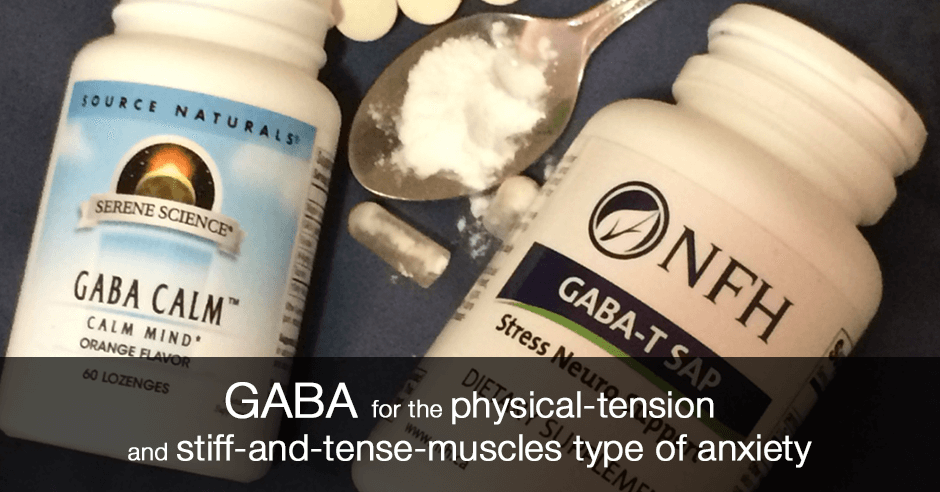
  • Source Naturals GABA Calm. This is a pleasant-tasting sublingual product that is my most popular and most effective form of GABA I use with my clients. It contains 125 mg GABA and some glycine, taurine and magnesium, and a small amount of tyrosine to counter the calming effects. You can see the lozenges in the picture above.
  • Nutritional Fundamentals for Health GABA-T SAP: gamma-Aminobutyric acid (GABA) 300 mg, l-Theanine 150 mg. This is pleasant-tasting when opened on to the tongue and works very well when GABA Calm can’t be used.  I find best results when it is used opened on to the tongue and I really like that it’s a low dose of GABA. Some of my clients do well with half a capsule. You can see an opened capsule in the picture above.
  • Enzymatic Therapy GABA: gamma-Aminobutyric acid (GABA) 250 mg. This is also pleasant-tasting when opened on to the tongue and works very well when GABA Calm can’t be used.  As with all GABA products, I find best results when it is used opened on to the tongue.
  • ProThera 500mg GABA: gamma-aminobutyric acid (GABA) 500 mg.  You will likely need to open this up and start with less than a full capsule during the day and increase as needed based on the trial. A full capsule may be fine at night for some individuals and more than one works in some situations.

There are a number of other great GABA products. When I reached out on Facebook for feedback I heard from one mom who likes Kirkman Labs GABA with Niacinamide and Inositol for her son who is on the spectrum, and someone else shared she likes Thorne PharmaGABA better than GABA products.

A few people shared this feedback when using GABA: one person felt too tired, someone else felt a niacin-type flush and someone else got an electric shock feeling in her brain. How you respond depends on the dose and with GABA and the other amino acids there is no one recommended dose for anyone. It’s very individualized which is why I have clients do a trial and start low. GABA helps many people tapering from benzodiazepines but some people are so sensitive that even a pinch is too much.

One person asked how to get GABA from food as she is fearful of taking medications and supplements. I always recommend a real whole foods diet with quality animal protein and organic produce, together with health fats and fermented veggies – so this is a great foundation. It may not be enough and when there is fear and phobias I immediately think of low serotonin and would determine if this is a factor an address this first. I covered low serotonin and tryptophan in the product review last week.

Here are some additional GABA resources for you:

Source Naturals GABA Calm™: Why I recommend it for anxiety

It’s a great product to use with children. Trish Soderstrom shared how she used this product with her daughter’s Lyme anxiety.

We’ve used Source Naturals GABA Calm sublinguals with good results. I learned about GABA helping anxiety and because I was treating my young daughter I purchased this because it was easy for her to take.But there may still be some confusion about when to use GABA and when to use tryptophan and how much of each of these amino acids to use.

GABA is calming for me, doesn’t work for my daughter’s anxiety and makes my son sleepy

I have used GABA (several brands, just open capsule and sprinkle small amount under tongue) for years now, with calming results within minutes. It was recommended to me by 2 family members, both bi-polar, who were tested by Dr. Amen. I have also used it with my children (now adults); my daughter says it doesn’t work for her. (She has anxiety issues and occasional panic attacks, and Rescue Remedy helps her.) It does work to calm my 3 sons, but one says it makes him sleepy, and lasts into the next day, so he won’t take it.

GABA for children: ADHD, focus issues, irritability, anxiety and tantrums

My daughter hasn’t been diagnosed with ADHD but has a lot of ADHD qualities. We were having a huge amount of behavior problems as she is getting older (she’s 11). I did some research and went to the health food store and bought a bottle. At this point I was mentally exhausted from all the fighting and drama at home and at school. I was desperate and didn’t want to put her on any hard medication.

She has had amazing behavior at school and at home since giving it to her. She’s almost like different child. GABA has truly changed our life. She’s been taking it for almost 2 months.

The blog has many other posts on GABA and serotonin and simply use the “search” function to find them.

This blog post is part of the series of amino acid product reviews:

  • Tryptophan for low serotonin (worry-in-the-head anxiety)
  • Glutamine for calming, intense sugar cravings, gut healing and low blood sugar
  • DPA for weepiness, pain and comfort and reward eating
  • Tyrosine for focus, motivation, energy, a good mood and possibly even anxiety

The resources in this blog and my other articles are intended to be used in conjunction with my book: The Antianxiety Food Solution – How the Foods You Eat Can Help You Calm Your Anxious Mind, Improve Your Mood, and End Cravings. If you do not have my book I highly recommend getting it and reading it before jumping in and taking the amino acid supplements:

There is a complete chapter on the amino acids and one for pyroluria, plus information on real whole food, sugar and blood sugar, gluten, digestion and much more.

You can find the GABA products and the others I recommend here on this blog: The Antianxiety Food Solution Amino Acid and Pyroluria Supplements


I’d love to hear what GABA product has worked for you and how it’s helped?

If you have questions please post them below or on the supplements blog

Filed Under: GABA, Supplements Tagged With: anxiety, GABA, GABA Calm, insomnia, pain, physical-tension, stiff and tense muscles, theanine

GABA and tryptophan for pain and anxiety in Parkinson’s disease?

August 25, 2017 By Trudy Scott 12 Comments

Last week I blogged about my recent back injury and how acupuncture boosts GABA to reduce back pain and how oral GABA further reduces the pain. Both these interventions have helped me so much and I’m doing so much better.

I love the feedback I receive in the blog comments and the great questions – which get to help the person asking the question and everyone else reading the blog and comments. So thank you if you comment!

I received this lovely feedback about GABA and anxiety, and a question about Parkinson’s disease (on the above blog) and want to share it and my response here so you and families with a loved one with Parkinson’s disease will also have access to this information:

I have loved reading your articles for a long time and listen to you whenever you are on a summit. I have learned a lot. GABA definitely helps me to relax, reduce my monkey mind and sleep better.

My mom has Parkinson’s disease and is very stiff and tight. She hurts often, especially her back. She also has afternoon anxiety, some call it “sundowners”. Can she take GABA with carbidopa-levidopa and blood pressure meds? She needs some kind of help!

Thank you in advance for any suggestions you might have to give her any quality of life as right now it is not good and the doctors offer no suggestions beyond possibly more prescriptions.

I responded saying how glad I was to hear GABA helps her to relax, reduces her monkey mind and also helps her to sleep better and how sorry I was to hear about her mom’s stiffness, pain and anxiety.

I posted this regarding the stiffness and back pain: share this paper with your doctor and get his/her approval to do a trial of GABA – Parkinson’s Disease and Neurodegeneration: GABA-Collapse Hypothesis:

the original description of Parkinson’s disease (PD) as due to the selective damage of dopaminergic neurons in the mesencephalon should be updated into the concept of a severe multisystemic neurodegenerative disorder of the nervous system, whose clinical symptoms reflect the localization and progression of the most advanced GABA pathology. A future and more complete therapeutic approach to PD should be aimed first at slowing (or stopping) the progression of Ca(2+)/GABA functional decline.

I have worked with a few people with Parkinson’s disease and GABA has been very helpful for the stiffness and pain, the physical anxiety, easing some of their tremors and helping with insomnia. I always do a trial so we know how much the individual will need.

For someone on blood pressure medication I’d start with a GABA-only product or GABA-theanine product rather than GABA Calm which does contain tyrosine.

I posted this regarding the “sundowners” question: I’d share this with your doctor and get the approval to do a trial of tryptophan – Sundown Syndrome in Persons with Dementia: An Update

sundown syndrome is characterized by the emergence or increment of neuropsychiatric symptoms such as agitation, confusion, anxiety, and aggressiveness in late afternoon, in the evening, or at night.

Although this paper refers to dementia, these symptoms also happen to be classic low serotonin symptoms that typically respond really well to tryptophan. The paper mentions melatonin as an intervention but since tryptophan converts to melatonin I’d start with tryptophan (based on doing a trial) and then consider adding melatonin too if needed.

I shared a few more resources on Parkinson’s disease:

  • Chris Kresser has an excellent blog post called New Research and Treatments for Parkinson’s Disease where he writes about the microbiome, constipation, SIBO, gluten, the HPA axis, low-dose naltrexone (LDN) and the possible autoimmune aspect, iron overload and the benefits of curcumin, a ketogenic diet and glutathione.
  • The Wahls Protocol for MS (some versions of which are ketogenic diets) shows promise for many neurodegenerative diseases and is also being researched for Parkinson’s disease

I also shared this amazing and inspiring video created by physical therapist Anicea Gunlock, on how using music while gait training can be beneficial for those suffering from Parkinsons’s disease

You read more about this music approach Anicea Gunlock used with her patient here.

The amino acids GABA and tryptophan can often be used in conjunction with all of the above approaches and often provide immediate relief for anxiety, pain, agitation and insomnia while some of the other root causes are being addressed.

I’ve recently updated the Antianxiety Food Solution Amino Acid and Pyroluria Supplements blog with some of my favorite GABA and tryptophan products mentioned above. You’ll also see the amino acid questionnaire and amino acid precautions on this blog.

Instead of only considering the amino acids for someone whose primary issue is anxiety, I’d like you to start thinking about using the amino acids for anyone who has a medical diagnosis – such as autism, cancer, ALS, Parkinson’s disease, MS, Alzheimer’s disease or anything else – and who also happens to suffer from anxiety.

Have you used GABA or tryptophan to ease stiff and tense muscles and pain in your Parksinson’s disease, for a family member or for a patient/client?

And have you used tryptophan for the low serotonin worry-type of anxiety, agitation and insomnia?

Filed Under: Anxiety, GABA, serotonin Tagged With: agitation, anxiety, autism, GABA, MS, pain, Parkinson's disease, serotonin, stiff and tense muscles, sundowners, tryptophan

Acupuncture boosts GABA to reduce back pain and oral GABA further reduces the pain

August 18, 2017 By Trudy Scott 13 Comments

I fell and injured my back last week but I am doing much better already. I’m going to be sharing a series of articles on post what I’m doing to ease the pain and heal – acupuncture and cupping being two of the approaches. As well as heat (with a hot water bottle), I’m also using a long list of nutrients such as:

  • high-dose fish oil and curcumin (as anti-inflammatories)
  • relaxing magnesium
  • arnica for bruising
  • GABA for relaxing my muscles and helping with the acute pain, and for easing the fear and anxiety (initially I was very fearful I had a serious back injury) and
  • DPA (d-phenylalanine) for the endorphin-boosting pain-relief

Today I’m going to share some research on GABA and how it helps with pain reduction and muscle tension, and how the acupuncture actually boosts GABA (as well as endorphins) to reduce pain.

Based on the examination I have soft tissue bruising around the lumbar area (L3 to L5). Sitting had been impossible until 2 days ago and even now I have to alternate between sitting and standing. I also twisted my ankle in the fall so initially standing was even challenging!  

I had one acupuncture and cupping session last Saturday and will be having another one this coming Saturday. I felt some immediate relief after this session and my back has been getting better and better each day.

Oral sublingual GABA for the acute pain and muscle relaxation

In the interim, between acupuncture/cupping sessions I felt I needed relaxing support for my stiff and spasming back muscles so I immediately started using high doses of GABA for the acute pain. And it’s been working amazingly well.

Right after the fall I was taking 1g of GABA powder every few hours (held in my mouth for 1-2 minutes) and now I only need to take it 2 or 3 times a day as needed. This is the dose I started with only because I know this dose works for me for the rectal spasms I sometimes experience. I always have clients do a trial and start low and increase slowly based on need and response. The starting dose is typically 125mg as found in GABA Calm but I suspect this is likely too low if you are someone needing pain relief.

With the oral sublingual GABA I feel relief from the pain within 5 minutes and it lasts a few hours.

My pain level was 10/10 and is now down to 2/10 most of the time with a few times during the day when it is 4/10. I’m walking, standing, able to turn over in bed and sleep through the night, and able to get off the bed without assistance. I can now also put on my yoga pants, socks and shoes myself – these were impossible tasks in the first 5 days after my fall!

Acupuncture boosts GABA and downregulates substance P and CGRP

I have not been able to find research on oral GABA for easing pain but do have some research to share. In this first paper, Effect of electroacupuncture on thermal pain threshold and expression of calcitonin-gene related peptide, substance P and γ-aminobutyric acid in the cervical dorsal root ganglion of rats with incisional neck pain the authors state that it is known that acupuncture therapy effectively reduces post-surgical pain, but its mechanism of action remains unclear. The aim of the study was to investigate:

whether expression of γ-aminobutyric acid (GABA) and the neuropeptides substance P (SP) and calcitonin gene-related peptide (CGRP) in the primary sensory neurons of cervical dorsal root ganglia (DRG) are involved in electroacupuncture (EA)-induced analgesia [pain reduction]in a rat model of incisional neck pain.

The conclusion is as follows: acupuncture increases the pain threshold i.e. it reduces pain and the mechanism is likely related to

downregulation of pronociceptive mediators SP/CGRP and upregulation of the inhibitory transmitter GABA in the primary sensory neurons of cervical DRGs

In case you’re not familiar with the terms substance P (SP) and calcitonin gene-related peptide (CGRP) I’m going to explain what they are, how they are connected to pain and why downregulation helps with pain reduction.

What is substance P (SP)?

Founders and Directors of Neuroplastix, Marla Golden, DO and Michael Moskowitz, MD share this about substance-P (SP), the main pain neurotransmitter:

It has five basic functions in the body. They are pain, inflammation, anxiety, depression and nausea. Even though these seem like negative experiences, they are important for survival. Problems arise with excessive production and release of Substance-P.

They share a very descriptive video that:

depicts a nerve injury causing a massive release of Substance-P, up to 5 times greater than in acute pain. This diffuses out to three to five times more local area. This is a major way that the pain map expands in persistent pain and keeps the pain going.

Be sure to watch the video on this page.

What is calcitonin gene-related peptide (CGRP)?

Calcitonin gene-related peptide (CGRP) is relatively new marker for pain as this recent review paper discusses – Calcitonin gene-related peptide and pain: a systematic review

The present review revealed the association between measured CGRP levels and somatic, visceral, neuropathic and inflammatory pain. These data suggest that CGRP may act as a neuromodulator in non-headache pain conditions. However, more studies are needed to fully understand the role of CGRP in nociceptive processing and therapy of chronic pain.

Oral GABA lowers substance P and CGRP in asthmatic children

As I mentioned there is no research on the effects of oral GABA on pain reduction so I’m going to extrapolate from this study on asthma – Effect of gamma-aminobutyric acid treatment on plasma substance P and calcitonin gene-related peptide levels in children with asthma.

In this study of 75 children with asthma, 36 children were in the GABA treatment group and received oral GABA (25-30 mg/kg per day) in addition to standard asthma medications. For a 100 lb /45 kg child this would equate to 1125-1350mg of GABA per day.

The conclusion of the study is that oral GABA

can significantly decrease plasma levels of SP and CGRP in children suffering from acute asthma.

The authors propose that airway inflammation may be a factor in asthma and since GABA reduces SP and CGRP, eases neurogenic inflammation and tracheal spasms, it may offer a new approach for the prevention and treatment of asthma (this is my best translation from the Chinese paper).

In summary, oral GABA, used sublingually has helped me tremendously with the acute pain of my muscle injury, and it helped ease the anxiety and fear I felt right after the incident.

As you read above, I am using more than just the GABA, but because it works so quickly I saw benefits right away and had hope while all the other approaches are starting to slowly help too. I just love that I get to experience this first-hand and share it with you – although I would have preferred not falling and that initial severe pain!

I also have a good history of GABA helping me so this was a clue for me to try it now. It was my life-saver when I first experienced my terrible anxiety and panic attacks and helped me tremendously within a few days.  I also did very well with GABA when I used it for throat spasms during  my vagus nerve issue after that scary plane ride, and another incidence when I was getting terrible ice-pick type headaches that turned out to be a jammed neck issue.   I really am a GABA girl aren’t I!?

I have used high doses of GABA like this with one client who had a back and neck injury after a construction accident. It also helped him tremendously.

Have you used high doses of GABA for muscle injuries and seen improvements like this? Or do you use this approach with your clients/patients?

Filed Under: Anxiety, GABA, Pain Tagged With: Acupuncture, anxiety, asthma, back, calcitonin gene-related peptide, CGRP, GABA, Inflammation, muscle injury, pain, SP, substance P

GABA: an amino acid supplement for neurotransmitter support and anxiety relief

August 4, 2017 By Trudy Scott 44 Comments

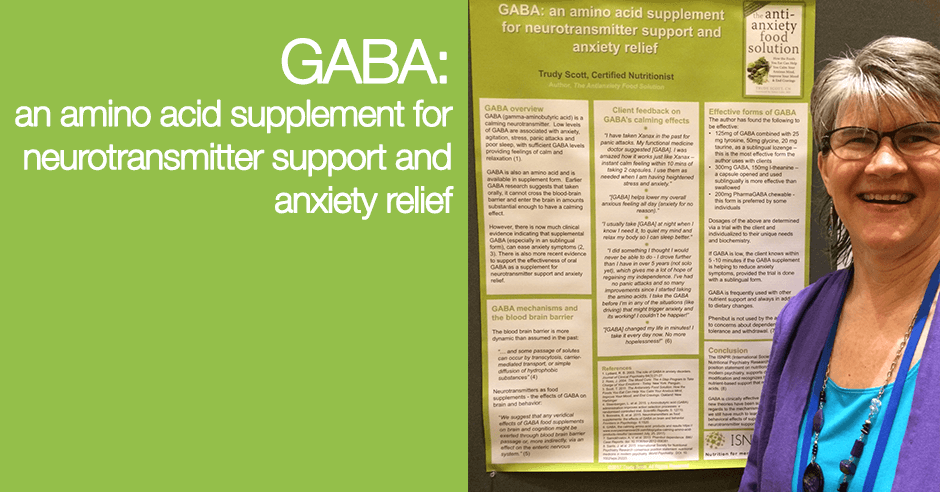
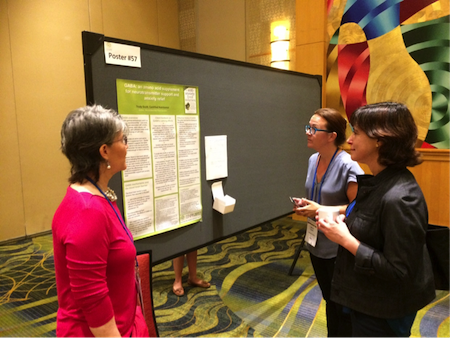
I recently attended the first international meeting of International Society for Nutritional Psychiatry Research and was honored and thrilled to present my poster – GABA: an amino acid supplement for neurotransmitter support and anxiety relief

Because you were not able to be there, here are the contents of my poster word for word.

GABA overview

GABA (gamma-aminobutyric acid) is a calming neurotransmitter. Low levels of GABA are associated with anxiety, agitation, stress, panic attacks and poor sleep, with sufficient GABA levels providing feelings of calm and relaxation (1).

GABA is also an amino acid and is available in supplement form. Earlier GABA research suggests that taken orally, it cannot cross the blood-brain barrier and enter the brain in amounts substantial enough to have a calming effect.

However, there is now much clinical evidence indicating that supplemental GABA (especially in a sublingual form), can ease anxiety symptoms (2, 3). There is also more recent evidence to support the effectiveness of oral GABA as a supplement for neurotransmitter support and anxiety relief.

GABA mechanisms and the blood brain barrier

The blood brain barrier is more dynamic than assumed in the past:

… and some passage of solutes can occur by transcytosis, carrier-mediated transport, or simple diffusion of hydrophobic substances (4)

Neurotransmitters as food supplements – the effects of GABA on brain and behavior:

We suggest that any veridical effects of GABA food supplements on brain and cognition might be exerted through blood brain barrier passage or, more indirectly, via an effect on the enteric nervous system. (5)

Client feedback on GABA’s calming effects

I have taken Xanax in the past for panic attacks. My functional medicine doctor suggested [GABA]. I was amazed how it works just like Xanax – instant calm feeling within 10 mins of taking 2 capsules. I use them as needed when I am having heightened stress and anxiety.

[GABA] helps lower my overall anxious feeling all day (anxiety for no reason).

I usually take [GABA] at night when I know I need it, to quiet my mind and relax my body so I can sleep better.”

I did something I thought I would never be able to do – I drove further than I have in over 5 years (not solo yet), which gives me a lot of hope of regaining my independence. I’ve had no panic attacks and so many improvements since I started taking the amino acids. I take the GABA before I’m in any of the situations (like driving) that might trigger anxiety and its working! I couldn’t be happier!

[GABA] changed my life in minutes! I take it every day now. No more hopelessness! (6)

Effective forms of GABA

The author has found the following to be effective:

  • 125mg of GABA combined with 25 mg tyrosine, 50mg glycine, 20 mg taurine, as a sublingual lozenge – this is the most effective form the author uses with clients
  • 300mg GABA, 150mg l-theanine – a capsule opened and used sublingually is more effective than swallowed
  • 200mg PharmaGABA chewable – this form is preferred by some individuals

Dosages of the above are determined via a trial with the client and individualized to their unique needs and biochemistry.

If GABA is low, the client knows within 5 -10 minutes if the GABA supplement is helping to reduce anxiety symptoms, provided the trial is done with a sublingual form.

GABA is frequently used with other nutrient support and always in addition to dietary changes.

Phenibut is not used by the author due to concerns about dependence, tolerance and withdrawal. (7)

Conclusion

The ISNPR (International Society for Nutritional Psychiatry Research) consensus position statement on nutritional medicine in modern psychiatry, supports dietary modification and recognizes the need for nutrient-based support that may include amino acids. (8)

GABA is clinically effective for anxiety, and new theories have been suggested with regards to the mechanism of action. However, we still have much to learn about the behavioral effects of supplemental GABA for neurotransmitter support and anxiety relief. (5)

References

  1. Lydiard, R. B. 2003. The role of GABA in anxiety disorders. Journal of Clinical Psychiatry 64(3):21-27.
  2. Ross, J. 2004. The Mood Cure: The 4-Step Program to Take Charge of Your Emotions – Today. New York: Penguin.
  3. Scott, T. 2011. The Antianxiety Food Solution: How the Foods You Eat Can Help You Calm Your Anxious Mind, Improve Your Mood, and End Cravings. Oakland: New Harbinger 
  4. Steenbergen, L. et al. 2015. γ-Aminobutyric acid (GABA) administration improves action selection processes: a randomised controlled trial. Scientific Reports. 5: 12770.
  5. Boonstra, E. et al. 2015. Neurotransmitters as food supplements: the effects of GABA on brain and behavior. Frontiers in Psychology. 6:1520.
  6. GABA, the calming amino acid: products and results (accessed July, 25, 2017)
  7. Samokhvalov, A. V. et al. 2013. Phenibut dependence. BMJ Case Reports. doi: 10.1136/bcr-2012-008381.
  8. Sarris, J. et al. 2015. International Society for Nutritional Psychiatry Research consensus position statement: nutritional medicine in modern psychiatry. World Psychiatry. DOI: 10. 1002/wps.20223

It was very encouraging to see the interest in my poster and this topic of GABA for anxiety! I shared how I use GABA with a number of psychiatrists, some dietitians, a psychiatric nurse practitioner, a number of researchers, and a number of nutritionists and health coaches.

I’m really pleased to have had the opportunity to meet so many amazing researchers and hope to be able to collaborate on research.  

Please let me know if you have questions and do share if you use GABA personally or use it with clients/patients.

Filed Under: Events, GABA Tagged With: anxiety relief, GABA, International Society for Nutritional Psychiatry Research, neurotransmitter support

  • « Go to Previous Page
  • Page 1
  • Interim pages omitted …
  • Page 18
  • Page 19
  • Page 20
  • Page 21
  • Page 22
  • Interim pages omitted …
  • Page 25
  • Go to Next Page »

Primary Sidebar

GABA QuickStart Homestudy

gaba quickstart homestudy

Free Report

9 Great Questions Women Ask about Food, Mood and their Health

You'll also receive a complimentary subscription to my ezine "Food, Mood and Gal Stuff"


Connect with me

Popular Posts

  • Amino Acids Mood Questionnaire from The Antianxiety Food Solution
  • The Antianxiety Food Solution Amino Acid and Pyroluria Supplements
  • Pyroluria Questionnaire from The Antianxiety Food Solution
  • Collagen and gelatin lower serotonin: does this increase your anxiety and depression?
  • Tryptophan for the worry-in-your-head and ruminating type of anxiety
  • GABA for the physical-tension and stiff-and-tense-muscles type of anxiety
  • The Antianxiety Food Solution by Trudy Scott
  • Seriphos Original Formula is back: the best product for anxiety and insomnia caused by high cortisol
  • Am I an anxious introvert because of low zinc and vitamin B6? My response to Huffington Post blog
  • Vagus nerve rehab with GABA, breathing, humming, gargling and key nutrients

Recent Posts

  • Her cravings for chips and peanut butter were triggered by stress: GABA ends cravings and reduces physical tension and fear of heights
  • It is truly miraculous to be able to move through life without crippling anxiety and panic
  • GABA and tryptophan combo provide immediate and noticeable relief for tremors and cervical dystonia in just 7 days
  • Red light therapy for back and neck pain, plantar fasciitis and low mood – a complement to the amino acids GABA, DPA and tryptophan
  • What do I use instead of Seriphos to help lower high cortisol that is affecting my sleep and making me anxious at night?

Categories

  • 5-HTP
  • AB575
  • Addiction
  • ADHD
  • Adrenals
  • Alcohol
  • Allergies
  • Alzheimer's disease
  • Amino Acids
  • Anger
  • Antianxiety
  • Antianxiety Food Solution
  • Antidepressants
  • Anxiety
  • Anxiety and panic
  • Autism
  • Autoimmunity
  • benzodiazapines
  • Bipolar disorder
  • Books
  • Caffeine
  • Cancer
  • Candida
  • Children/Teens
  • Collagen
  • Cooking equipment
  • Coronavirus/COVID-19
  • Cravings
  • Depression
  • Detoxification
  • Diabetes
  • Diet
  • DPA/DLPA
  • Drugs
  • EFT/Tapping
  • EMF
  • EMFs
  • Emotional Eating
  • Endorphins
  • Environment
  • Essential oils
  • Events
  • Exercise
  • Fear
  • Fear of public speaking
  • Fertility and Pregnancy
  • Fish
  • Food
  • Food and mood
  • Functional neurology
  • GABA
  • Gene polymorphisms
  • General Health
  • Giving
  • Giving back
  • Glutamine
  • Gluten
  • GMOs
  • Gratitude
  • Gut health
  • Heart health/hypertension
  • Histamine
  • Hormone
  • Hyperparathyroidism
  • Hypoglycemia
  • Immune system
  • Inflammation
  • Insomnia
  • Inspiration
  • Introversion
  • Joy and happiness
  • Ketogenic diet
  • Lithium orotate
  • Looking awesome
  • Lyme disease and co-infections
  • MCAS/histamine
  • Medication
  • Men's health
  • Mental health
  • Mercury
  • Migraine
  • Mold
  • Movie
  • MTHFR
  • Multiple sclerosis
  • Music
  • NANP
  • Nature
  • Nutritional Psychiatry
  • OCD
  • Osteoporosis
  • Oxalates
  • Oxytocin
  • Pain
  • Paleo
  • Parasites
  • Parkinson’s disease
  • PCOS
  • People
  • PMS
  • Postpartum
  • PTSD/Trauma
  • Pyroluria
  • Questionnaires
  • Real whole food
  • Recipes
  • Research
  • Schizophrenia
  • serotonin
  • SIBO
  • Sleep
  • Special diets
  • Sports nutrition
  • Stress
  • Sugar addiction
  • Sugar and mood
  • Supplements
  • Teens
  • Testimonials
  • Testing
  • The Anxiety Summit
  • The Anxiety Summit 2
  • The Anxiety Summit 3
  • The Anxiety Summit 4
  • The Anxiety Summit 5
  • The Anxiety Summit 6
  • Thyroid
  • Thyroid health
  • Toxins
  • Tryptophan
  • Tyrosine
  • Uncategorized
  • Vegan/vegetarian
  • Women's health
  • Yoga

Archives

  • May 2026
  • April 2026
  • October 2025
  • September 2025
  • August 2025
  • July 2025
  • June 2025
  • May 2025
  • April 2025
  • March 2025
  • February 2025
  • January 2025
  • November 2024
  • October 2024
  • September 2024
  • August 2024
  • July 2024
  • June 2024
  • May 2024
  • April 2024
  • March 2024
  • February 2024
  • January 2024
  • December 2023
  • November 2023
  • October 2023
  • September 2023
  • August 2023
  • July 2023
  • June 2023
  • May 2023
  • April 2023
  • March 2023
  • February 2023
  • January 2023
  • December 2022
  • November 2022
  • October 2022
  • September 2022
  • August 2022
  • July 2022
  • June 2022
  • May 2022
  • April 2022
  • March 2022
  • February 2022
  • January 2022
  • December 2021
  • November 2021
  • October 2021
  • September 2021
  • August 2021
  • July 2021
  • June 2021
  • May 2021
  • April 2021
  • March 2021
  • February 2021
  • January 2021
  • December 2020
  • November 2020
  • October 2020
  • September 2020
  • August 2020
  • July 2020
  • June 2020
  • May 2020
  • April 2020
  • March 2020
  • February 2020
  • January 2020
  • December 2019
  • November 2019
  • October 2019
  • September 2019
  • August 2019
  • July 2019
  • June 2019
  • May 2019
  • April 2019
  • March 2019
  • February 2019
  • January 2019
  • December 2018
  • November 2018
  • October 2018
  • September 2018
  • August 2018
  • July 2018
  • June 2018
  • May 2018
  • April 2018
  • March 2018
  • February 2018
  • January 2018
  • December 2017
  • November 2017
  • October 2017
  • September 2017
  • August 2017
  • July 2017
  • June 2017
  • May 2017
  • April 2017
  • March 2017
  • February 2017
  • January 2017
  • December 2016
  • November 2016
  • October 2016
  • September 2016
  • August 2016
  • July 2016
  • June 2016
  • May 2016
  • April 2016
  • March 2016
  • February 2016
  • January 2016
  • December 2015
  • November 2015
  • October 2015
  • September 2015
  • August 2015
  • July 2015
  • June 2015
  • May 2015
  • April 2015
  • March 2015
  • February 2015
  • January 2015
  • December 2014
  • November 2014
  • October 2014
  • September 2014
  • August 2014
  • July 2014
  • June 2014
  • May 2014
  • April 2014
  • March 2014
  • February 2014
  • January 2014
  • December 2013
  • November 2013
  • October 2013
  • September 2013
  • August 2013
  • July 2013
  • June 2013
  • May 2013
  • April 2013
  • March 2013
  • February 2013
  • January 2013
  • December 2012
  • November 2012
  • October 2012
  • August 2012
  • July 2012
  • June 2012
  • May 2012
  • April 2012
  • March 2012
  • February 2012
  • January 2012
  • December 2011
  • November 2011
  • October 2011
  • September 2011
  • August 2011
  • July 2011
  • June 2011
  • May 2011
  • April 2011
  • March 2011
  • February 2011
  • January 2011
  • December 2010
  • October 2010
  • September 2010
  • July 2010
  • May 2010
  • April 2010
  • March 2010
  • February 2010
  • January 2010
  • November 2009

Share the knowledge!

The above statements have not been evaluated by the Food and Drug Administration. Products listed in this website are not intended to diagnose, treat, cure or prevent any disease.

The information provided on this site is for informational and educational purposes only and is not intended as a substitute for advice from your physician or other health care professional. You should consult with a healthcare professional before starting or modifying any diet, exercise, or supplementation program, before taking or stopping any medication, or if you have or suspect you may have a health problem.


Copyright © 2026 Trudy Scott. All Rights Reserved. | Privacy | Terms and Conditions | Refund Policy | Medical Disclaimer

Free Report

9 Great Questions Women Ask about Food, Mood and their Health

You’ll also receive a complimentary subscription to my ezine “Food, Mood and Gal Stuff”