• Skip to primary navigation
  • Skip to main content
  • Skip to primary sidebar

everywomanover29 blog

Food, Mood and Women's Health – Be your healthiest, look and feel great!

  • Blog
  • About
  • Services
  • Store
  • Resources
  • Testimonials
  • The Book
  • Contact
  • Search this site

GABA

Herbal therapy is equivalent to rifaximin for the treatment of small intestinal bacterial overgrowth (SIBO)

December 1, 2017 By Trudy Scott 15 Comments

Despite the fact that this paper was published in 2014, it’s still very relevant and I’m just behind in sharing it via a blog post: Herbal therapy is equivalent to rifaximin for the treatment of small intestinal bacterial overgrowth

Patients with small intestine bacterial overgrowth (SIBO) have chronic intestinal and extraintestinal symptomatology which adversely affects their quality of life. Present treatment of SIBO is limited to oral antibiotics with variable success. A growing number of patients are interested in using complementary and alternative therapies for their gastrointestinal health. The objective was to determine the remission rate of SIBO using either the antibiotic rifaximin or herbals in a tertiary care referral gastroenterology practice.

I’ve also decided to post this study now because I’ve been dealing with chronic SIBO for some time and am in the middle of doing the Metagenics herbal protocol (more information on that below).

SIBO symptoms and conditions

Here is a summary of some of the chronic intestinal symptoms: Abdominal bloating (gas), belching, flatulence, abdominal pain, cramps, constipation and/or diarrhea, heartburn (reflux or GERD), nausea and food sensitivities.

Here is a summary of some of the extraintestinal (outside the intestinal system) symptoms and conditions that have been linked to SIBO and/or dysbiosis: disorders of mood and behavior (including anxiety), diabetes, obesity, cardiovascular disease, rosacea, restless legs syndrome, pain, anemia, interstitial cystitis, and other pelvic conditions such as vulvodynia and proctalgia fugax (rectal spasms), chronic prostatitis and polyneuropathy.

During season 3 of The Anxiety Summit, I interviewed Dr. Allison Siebecker on Small Intestinal Bacterial Overgrowth and Anxiety. We talked about the SIBO Questionnaire I use with my clients and she gave me permission to share my modified version. You can find this SIBO questionnaire here. Please check out Dr. Siebecker’s site siboinfo.com for a wealth of information about SIBO.

The herbal treatments in this study

In this study, one hundred and four patients who tested positive for newly diagnosed SIBO by lactulose breath testing were offered either 1200mg rifaximin a day or one of two herbal treatments for 4 weeks. Lactulose breath testing was done again at the end of the treatment.

These are the two herbal treatments that were offered:  

Dysbiocide and FC Cidal (both by Biotics Research): take 2 capsules twice daily of each of these products

or

Candibactin-AR and Candibactin-BR (both by Metagenics): take 2 capsules twice daily of each of these products
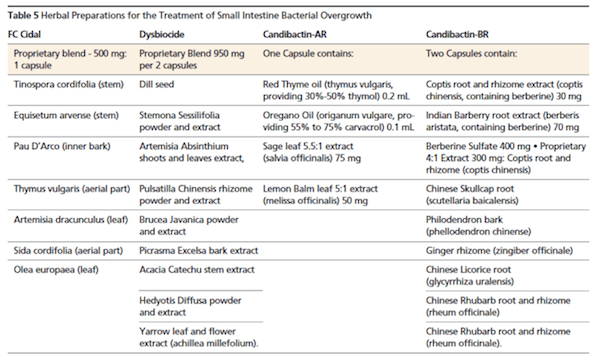
The ingredients in each of the products
(from the paper: Herbal therapy is equivalent to rifaximin for the treatment of small intestinal bacterial overgrowth)

Study conclusion

The study concluded that these herbal therapies are at least as effective as rifaximin for resolution of SIBO. It also states that the herbal products also appear to be as effective as triple antibiotic therapy in patients who don’t respond to rifaximin.

Adverse effects

With regards to adverse effects, they were reported as follows: in the rifaximin treated patients there was 1 case of anaphylaxis, 2 cases of hives, 2 cases of diarrhea and 1 case of Clostridium difficile; in the herbal group only one case of diarrhea was reported.

A comment about bioindividuality

You’ll notice that the only herb that is in both sets of herbal protocols is Red Thyme Oil or thymus vulgaris and yet both herbal protocols offer a solution. I’ve heard Dr. Siebecker share that of all the different approaches for SIBO (including the elemental diet), at least one approach works for everyone. So, if you’ve tried an approach and it hasn’t worked, don’t give up and move on to the next approach. This points to bioindividuality, and there being no one size fits all approach.

Dr. Siebecker lists the above combination herbal protocols together with the herbal protocol her and team use on her site, which, again, is different from the above: 1-3 of the following herbs x 4 weeks per course, at highest levels suggested on product labels.

  • Allicin from Garlic (the highest potency formula is Allimed)
  • Oregano
  • Berberine- found in Goldenseal, Oregon Grape, Barberry, Coptis, Phellodendron
  • Neem
  • Cinnamon

My protocol and experience

As I mention above, I also decided to post this study because I’ve been dealing with chronic SIBO for some time and am in the middle of doing the Metagenics herbal protocol. I’m 14 days into a 28-day protocol.

I’m actually doing 1 capsule of Candibactin-AR, 3 times a day away from food and 2 capsules of Candibactin-BR, twice a day, and about 10 minutes before food. I landed on this protocol, so I would have enough of each for a 4-week protocol.

When I started on the products I immediately observed the typical SIBO bloating and almost quit but quickly figured out it was from the microcrystalline cellulose and hypromellose in the Candibactin-BR.

It turns out that these are soluble fibers (dispersible in water) and are more easily fermented than insoluble fibers. This fermentation in the small intestine can trigger IBS/SIBO symptoms. Adding 2 capsules of a product with cellulase (an enzyme that breaks down cellulose) has helped.

Pain, gas and GABA

I also remembered that Dr. Siebecker shared on the SIBO SOS I summit about how SIBO patients can have visceral hypersensitivity where their pain can be due to the pressure of the gas that is produced and the muscles in the digestive system actually contracting against this pressure. It got me thinking about how effective GABA is for relieving muscle tension. I use GABA with my clients all the time for relief of their physical anxiety and stiff and tense muscles. And GABA helps me and many others with proctalgia fugax (rectal spasms)  which seems to be related to IBS/SIBO.

Over the last week I’ve tried sublingual GABA a few times to ease the pain and pressure and it’s been amazing. I’ve used it as soon as I notice the bloating starting AND even the next morning when I wake with the bloated ache in my belly.  I’ve been using the NFH GABA-T SAP opened on to my tongue. This product contains 300mg GABA and 150mg of theanine.  

I’m going to keep this in mind in case of a future flare up of my IBS/SIBO if I’m accidentally exposed to a food I can’t tolerate – assuming this protocol doesn’t clear it up for me. I suspect, as Dr. Siebecker reports, and based on the fact that I have chronic SIBO, that I’ll need a few more rounds anyway.

There is research supporting why this works: there are GABA receptors all over the gut and GABA is important for motility. (Stay tuned for a detailed blog post on this topic).

As well as the initial bloating and pain, I’ve also experienced some die-off symptoms like brain-fog and feeling blah, together with some sleep issues a few nights. The GABA helps with this and so does the tryptophan that I’ve also added.

If you’ve used GABA for this purpose or medications like Gabapentin or others to achieve similar results, I’d love to hear from you.

I’ll share more as I progress through the protocol. I’m also going to be speaking on SIBO SOS summit (the 3rd one) hosted by Dr. Allison Siebecker and Shivan Sarno. I will share more about my SIBO journey then, as well as all my results with this herbal protocol and any other challenges I face along the way.

Please also share if you’ve had success with any of the above herbal protocols or other approaches for your SIBO.

And feel free to post any questions below.

Filed Under: GABA, Gut health, SIBO Tagged With: anxiety, Candibactin-AR, Candibactin-BR, Dysbiocide, FC Cidal, GABA, herbal, IBS, rifaximin, SIBO, tryptophan

GABA helps with inhibition of unwanted thoughts

November 17, 2017 By Trudy Scott 74 Comments

There is plenty of research and clinical evidence showing that low serotonin promotes worry and ruminating thoughts and we know that using tryptophan (or 5-HTP) can help with easing these worries and unwanted thoughts i.e. the worry-in-the-head type of anxiety.

The calming supplement GABA has long been recognized to help ease the more physical type of anxiety where you feel body tension and may have stiff and tense muscles.

Over the last year I’ve been getting feedback from women in my community saying that oral GABA supplements also helps some of the head symptoms too and now we have some new research supporting the possible mechanism of this – Scientists identify mechanism that helps us inhibit unwanted thoughts:

We are sometimes confronted with reminders of unwanted thoughts – thoughts about unpleasant memories, images or worries. When this happens, the thought may be retrieved, making us think about it again even though we prefer not to. While being reminded in this way may not be a problem when our thoughts are positive, if the topic was unpleasant or traumatic, our thoughts may be very negative, worrying or ruminating about what happened, taking us back to the event.

Scientists have identified a key chemical within the ‘memory’ region of the brain that allows us to suppress unwanted thoughts, helping explain why people who suffer from disorders such as anxiety, post-traumatic stress disorder (PTSD), depression, and schizophrenia often experience persistent intrusive thoughts when these circuits go awry.

Professor Anderson, Dr. Schmitz and colleagues showed that the ability to inhibit unwanted thoughts relies on a neurotransmitter – a chemical within the brain that allows messages to pass between nerve cells – known as GABA.

GABA is the main ‘inhibitory’ neurotransmitter in the brain, and its release by one nerve cell can suppress activity in other cells to which it is connected.

Anderson and colleagues discovered that GABA concentrations within the hippocampus – a key area of the brain involved in memory – predict people’s ability to block the retrieval process and prevent thoughts and memories from returning.

The study is looking at GABA concentrations within the hippocampus and there is no mention of the use of GABA supplementation to enhance this process:

While the study does not examine any immediate treatments, Professor Anderson believes it could offer a new approach to tackling intrusive thoughts in these disorders.

Ideally the next step will be to study the use of oral GABA supplementation.

Here is the study abstract: Hippocampal GABA enables inhibitory control over unwanted thoughts

UPDATE Jan 28, 2022:

This 2021 paper, Astroglia and Obsessive Compulsive Disorder, supports the low GABA mechanism when it comes to obsessive compulsive disorder/OCD which is characterized by persistent intrusive thoughts (obsessions) and repetitive behaviors (compulsions).

The researcher shares the most prominent theory regarding the underlying mechanisms of OCD and persistent intrusive thoughts (and compulsions):

an increased excitation to inhibition (E/I) ratio due to increased glutamatergic excitation or reduced GABAergic inhibition.

And states that, in astrocytes (a subtype of glial cells), both the glutamate transporter GLT1 and GABA transporter GAT-3 are critical for regulating this balance.   

Feedback on GABA helping with overactive brain and perseveration

When I shared this research on facebook two people commented on how the Source Naturals GABA Calm product I recommend helps them with this aspect of anxiety.

Tiffany shares how Source Naturals GABA Calm helps calm her overactive brain:

I have definitely noticed that sublingual GABA Calm that you suggest helps calm my overactive brain.

Dawn shares how this same GABA product has helped her a lot:

I have an old TBI [traumatic brain injury] and the physiology of PTSD, from childhood trauma, so a double whammy. This sublingual lozenge makes a big difference in my day if I start to get anxious, or begin to perseverate on something that really isn’t all that important.

Perseverate is not a word I use very much and in case you’re not familiar with this term, the Oxford dictionary defines it as follows: “repeat or prolong an action, thought, or utterance after the stimulus that prompted it has ceased.” It’s also defined as: “the tendency of an idea to stick in your mind or recur, or getting stuck on something mentally and not being able to shift gears.” In psychiatry it’s “the persistent and pathological repetition of a verbal or motor response, often seen in organic brain disease and schizophrenia.”

Updating the GABA questionnaire and GABA blog

I’m using this research and feedback to make an update of the low GABA section on the amino acid questionnaire:

  • Do you have intrusive thoughts, perseverate or have an overactive brain? Or do you have unwanted thoughts – thoughts about unpleasant memories, images or worries?

I’ve also updated this recent blog post – Anxiety, compulsive thinking, counting behaviors: gluten, tryptophan and inositol where I to share my feedback on a question I received on how to approach working with a child with anxiety, compulsive thinking and counting behaviors. I mentioned GABA as a possibility but with her symptoms and this new research, a GABA trial would definitely be something to pursue.

Resources if you are new to using GABA as a supplement

If you are new to using the the amino acid GABA as a supplement, here is the Amino Acids Mood Questionnaire from The Antianxiety Food Solution (you can see the low GABA and other low neurotransmitter symptoms) and a brief overview here: Anxiety and targeted individual amino acid supplements: a summary.

If you suspect low levels of GABA and do not yet have my book, The Antianxiety Food Solution – How the Foods You Eat Can Help You Calm Your Anxious Mind, Improve Your Mood, and End Cravings, I highly recommend getting it and reading it before jumping in and using amino acids so you are knowledgeable. And be sure to share it with the team you or your loved one is working with.

The book doesn’t include product names (per the publisher’s request) so this blog, The Antianxiety Food Solution Amino Acid and Pyroluria Supplements, lists the GABA products that I use with my individual clients and those in my group programs.

I’d love your feedback

  • Do you resonate with any of this and have you seen this benefit when using GABA, in addition to the relief of physical anxiety?
  • If you’ve also observed improvements in your ruminating thoughts when using tryptophan, I’d love you to try and share how GABA helps and how tryptophan helps i.e. how you feel before and after with each supplement?
  • Also, if you are also using tryptophan and/or 5-HTP how do you know if it’s these amino acids or the GABA that is helping?
  • I’m really looking for the differences you observe as you support low GABA vs low serotonin?  Are they clear or are they blurred?
  • If you’re a practitioner what feedback do you get from your clients/patients about low GABA vs low serotonin?

As I mention above I would love to see follow-on research showing that sublingual GABA supplements can actually shift this. Sharing what we see clinically will be very helpful so your feedback is valuable and appreciated.

Feel free to ask your questions here too.

Filed Under: GABA Tagged With: anxiety, GABA, intrusive thoughts, overactive brain, perseverate, ruminating thoughts, tryptophan, worry

Does GABA offer gut protection after drinking alcohol?

September 22, 2017 By Trudy Scott 12 Comments

A paper published earlier this year has us asking the question: will oral GABA supplementation offer gut protection in humans who drink too much alcohol? It’s too soon to know but the results from the animal study leave me spell-bound by this calming amino acid yet again!

The paper, Gastroprotective effect of gamma-aminobutyric acid on ethanol-induced gastric mucosal injury

aimed to investigate the gastroprotective effect of gamma-aminobutyric acid (GABA) on ethanol-induced gastric mucosal injury and gastric epithelial cells injury [in rats].

Ethanol or alcohol is known to damage the gut and the study was carried out on rats given GABA and then ethanol.

It was also tested using the human gastric epithelial cell line GES-1 (more here on how human cell lines are commonly used in research) which was incubated with GABA and then treated with ethanol to induce cell injury.

The use of GABA prior to treatment with ethanol

showed that GABA pretreatment significantly reduced gastric ulcer index in a dose-dependent manner.

Administration with GABA could not only remarkably restrain oxidative stress by increase of superoxide dismutase, catalase activities and decrease of malondialdehyde content in gastric tissue and cells, but also significantly reduced pro-inflammatory factors activities (interleukin-6 and tumor necrosis factor α) in gastric tissue.

These studies clearly provided evidence that GABA had a considerable gastroprotective effect on ethanol-induced gastric mucosal injury and gastric epithelial cells injury. The underlying mechanism of mitigating lesions may be ascribed to the improvement of anti-inflammatory and anti-oxidant status as well as the increases of PGE2 [prostaglandin E2] and NO [nitric oxide] levels.

In summary, the use of GABA shows the potential for less ulcers, less oxidative damage, less inflammation in the gut, and gastroprotective properties after alcohol consumption. Human studies will show if oral GABA supplementation offers gut protection in those who drink too much alcohol.

Many social drinkers are not connecting their drinking to stress

We are a stressed society and this leads a great deal of “social” drinking. Many social drinkers are not connecting their drinking to stress and their need to self-medicate and de-stress.

As I found when I posted new study this on facebook – Moderate alcohol consumption as risk factor for adverse brain outcomes and cognitive decline – many social drinkers also get upset when you point out research like this because they don’t want to have to give it up. This CNN article, Moderate drinking may alter brain, summarizes the study and reports that the

moderate group was drinking about 14 to 21 units of alcohol per week, or about a medium glass of wine each night, plus a little extra on the weekends.

Update: Dec 2025
This 2024 paper, A qualitative analysis investigating drinking practices and meanings among a sample of Australian working mothers, explores the emotional/stress connection and how alcohol is their escape and coping tool:

Women felt they had to be available to both their employers and their children at the same time. For some, this led to internalized feelings of guilt and fatigue, increasing women’s desire to drink, and limiting their capacity to be mindful of the amount of alcohol they were consuming.

Women also described feeling overloaded and under-supported, where alcohol was viewed as being relaxing and rewarding, as well as a way to escape, cope, and recover from their day-to-day stressors.

Furthermore, through a combination of targeted marketing and broader social normalisation, women felt alcohol was presented as a solution to stress and problems among working mothers.

GABA also helps reduce your need to self-medicate or self-soothe with alcohol (or sugar/carbs)

What is so interesting is that this very same calming amino acid, GABA, when used to address low GABA levels can help reduce your need to self-medicate or self-soothe with alcohol (or sugar/carbs). Don’t forget, with low GABA levels, you’ll also experience physical anxiety, stiff and tense muscles, overwhelm and panic attacks. I recently blogged about GABA here: GABA for the physical-tension and stiff-and-tense-muscles type of anxiety

Of course, I’d recommend using GABA supplements to address the low GABA and prevent so much “social” drinking that may damage to the gut (i.e. addressing the root cause as always), rather than using GABA to prevent gut damage when you do drink.

If you are a big “social” drinker and choose the latter (use GABA to prevent gut damage when you do drink) be warned, you’ll feel calmer and less stressed and very likely reduce your desire and need for a drink!

My blog mentions “social” drinking because of the paper about moderate alcohol consumption above but all this could be equally applicable to heavy drinkers and alcoholics too.

In summary, the amino acid GABA can achieve the following:

  • help you quit alcohol and not feel deprived and having to use willpower
  • leave you feeling calm and stress-free with no need to self-medicate with alcohol
  • heal damage caused to your gut if you do indulge once in awhile (based on projections from the above research)

Additional resources when you are new to using GABA or other amino acids as supplements

We use the symptoms questionnaire to figure out if low GABA (indicating a possible need for GABA or theanine) or low serotonin (indicating a need for tryptophan or 5-HTP) or low endorphins (indicating a possible need for DPA) or other neurotransmitter imbalances may be an issue for you.

If you suspect low levels of any of the neurotransmitters and do not yet have my book, The Antianxiety Food Solution – How the Foods You Eat Can Help You Calm Your Anxious Mind, Improve Your Mood, and End Cravings. I highly recommend getting it and reading it before jumping in and using amino acids on your own so you are knowledgeable. And be sure to share it with the practitioner/health team you or your loved one is working with.

There is an entire chapter on the amino acids and they are discussed throughout the book in the sections on gut health, gluten, blood sugar control, sugar cravings, anxiety and mood issues. The importance of quality animal protein and healthy fats is also covered.

The book doesn’t include product names (per the publisher’s request) so this blog, The Antianxiety Food Solution Amino Acid and Pyroluria Supplements, lists the amino acids that I use with my individual clients and those in my group programs.

If, after reading this blog and my book, you don’t feel comfortable figuring things out on your own (i.e. doing the symptoms questionnaire and respective amino acids trials), a good place to get help is the GABA QuickStart Program (if you have low GABA symptoms). This is a paid online/virtual group program where you get my guidance and community support. Another option is the budget-friendly GABA QuickStart Homestudy program.

If you also need serotonin support, the Serotonin QuickStart Program is a good place to get help. This is also a paid online/virtual group program where you get my guidance on using tryptophan and 5-HTP safely, and community support during 5 LIVE Q&A calls. You can sign up to be notified when the next live launch of this program is happening.

If you are a practitioner, join us in The Balancing Neurotransmitters: the Fundamentals program. This is also a paid online/virtual program with an opportunity to interact with me and other practitioners who are also using the amino acids.

Now I’d like to hear from you

Do you drink alcohol in order to relieve your stress?

Have you noticed that GABA reduces your need to drink alcohol?

And have you noticed any improvements in gut health since using GABA?

Feel free to post your questions below.

Filed Under: Anxiety, GABA, Stress Tagged With: alcohol, anxiety, de-stress, GABA, gastroprotective, gut damage, self-medicate, stress

DPA for weepiness, pain and comfort and reward eating

September 20, 2017 By Trudy Scott 63 Comments

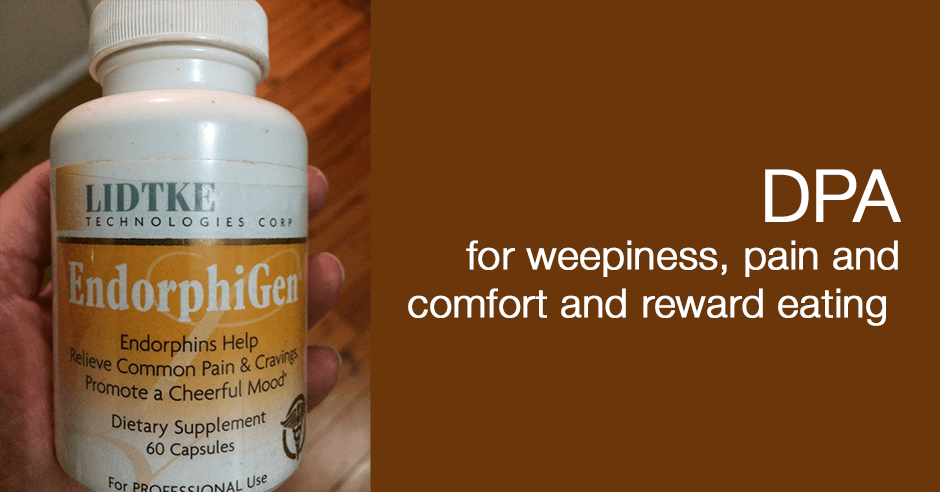
Today I’m reviewing DPA (or d-phenylalanine) for weepiness, pain and comfort and reward eating. This amino acid is a favorite with so many of my clients because it helps with the above by boosting your endorphins and when you open a capsule onto your tongue you feel like you just got a big hug. It’s a really good feeling!

I’m also sharing some additional resources for you on DPA.

DPA and endorphins

DPA is an amino acid that destroys the enzyme that breaks down endorphins. Endorphins are feel-good chemicals that you experience with an endorphin rush when you go for a run or when someone gives you a big hug, when you show kindness to someone or someone does something nice for you. Taking the amino acid, DPA, helps to raise your endorphins.

Low endorphins and weepiness

With low endorphins you’re very weepy. You may be overly emotional. If you watched a TV ad or you watched a really sad movie, you may be more prone to crying than the average person.

It’s also known as the break-up pill and is very helpful when going through a relationship split.

It’s also extremely helpful after a stressful event. I spoke with a friend who was impacted by Hurricane Harvey and recommended DPA for the weepiness she was starting to feel a few days after the clean-up efforts. It’s one of the amino acids I recommend in my blog: Nutrition solutions for psychological stress after a natural disaster

Low endorphins and pain

As well as being sensitive to emotional pain (the crying and the weepiness), you also tend to be sensitive to physical pain when endorphins are low.

We know acupuncture raises your endorphin levels and eases pain. Using DPA helps physical pain in a similar way. Pain can be caused by low GABA and low serotonin, an inflammatory diet, a high oxalate diet or nightshades, something physical like a fall, osteoarthritis or an autoimmune condition like rheumatoid arthritis. If there is also a low endorphin aspect to your pain, DPA can provide some pain reduction.

Low endorphins and comfort/reward eating

Another symptom of low endorphins is comfort/reward eating. You may relate to the term emotional eating. It often goes like this: “This is my reward. This is my treat. I absolutely deserve it.”

And when you consume those carbohydrates – that bowl of ice cream, that bowl of cereal, that chocolate chip cookie, that chocolate cup-cake – you feel like “this is my reward, this comforts me.” When you use DPA you can literally take it or leave it. Really!

DPA is one of the amino acids that help you easily quit sugar without having to use massive willpower and without feeling deprived. The best way to figure it out is to do the amino acid mood questionnaire

Here is a summary to help you figure out which brain chemistry imbalance is driving your sugar cravings (and mood issues):

  • if you have to eat sugar when you haven’t eaten in awhile it’s likely low blood sugar and glutamine on the tongue stops the sugar desire on the spot
  • if you stress-eat your sugar cravings are likely due to low GABA, and GABA will stop the stress-eating and calm you down
  • if you eat sugar or carbs to feel happy (and especially from late afternoon onwards) then your sugar cravings are likely due to low serotonin, and tryptophan stops the cravings and boosts mood and reduces anxiety
  • if you eat sugar for an energy boost then it’s likely due to low catecholamines and tyrosine will stop those cravings and give you a mood and energy boost
  • if you are a comfort-eater or big emotional eater, then it’s likely due to low endorphins and DPA will stop that “I deserve-it-reward-eating” and also give you a hug-like mood boost

And remember it’s not unusual to need to address all areas. You can have low GABA anxiety and low endorphins too and low blood sugar. If this is the case I have my clients address one at a time.

If addressing low endorphins helps reduce or eliminate the reward eating and helps you eat less or no sugar it means less impact on your adrenals and more even blood sugar levels and therefore less anxiety too.

As with all the amino acids, when using DPA:

  • Start low (500mg is a typical starting dose) and increase as needed.
  • Do a trial to determine if the emotional eating is due to low endorphins. I always do this with clients before starting any amino acid. Be sure to read how to do an amino acid trial. It has the amino acid questionnaire, the precautions and information on how to use targeted individual amino acids.
  • Take between meals and away from protein for the best effects

This blog post is part of the series of amino acid product reviews:

  • Tryptophan for low serotonin (worry-in-the-head anxiety)
  • GABA for low GABA symptoms (physical anxiety)
  • Glutamine for calming, intense sugar cravings, gut healing and low blood sugar
  • Tyrosine for focus, motivation, energy, a good mood and possibly even anxiety

The resources in this blog and my other articles are intended to be used in conjunction with my book: The Antianxiety Food Solution – How the Foods You Eat Can Help You Calm Your Anxious Mind, Improve Your Mood, and End Cravings. If you do not have my book I highly recommend getting it and reading it before jumping in and taking the amino acid supplements:

There is a complete chapter on the amino acids and one for pyroluria, plus information on real whole food, sugar and blood sugar, gluten, digestion and much more.

The Lidtke Endorphigen 500mg product is the one I recommend. You can find this DPA product and the others I recommend on this blog: The Antianxiety Food Solution Amino Acid and Pyroluria Supplements.

*******************
Update Feb 20, 2020:

DPA is one of my top products that I recommend. I do find it much more effective than DPLA (for endorphin boosting) so I no longer recommend or use DLPA.

I used to recommend simply chewing the capsule to get the quickest and best effects and this worked well when this product was produced in a gelatin capsule. Now it’s made with a cellulose capsule and chewing doesn’t work at all well so opening the capsule (or just biting off the top) and tipping the powder into your mouth works well.

It does taste quite pleasant – some of my clients think it has a dark chocolate-like taste. A few people don’t like the taste at all but even then, it is still very effective when low endorphins are an issue.

*******************

I’d love to hear if DPA has worked for you and how it’s helped?

If you have questions please post them below or on the supplements blog

Filed Under: GABA Tagged With: anxiety, comfort eating, DPA, emotional eating, endorphins, GABA, reward eating, sugar cravings, weepiness

GABA for the physical-tension and stiff-and-tense-muscles type of anxiety

September 6, 2017 By Trudy Scott 180 Comments

Today I’m going to review some GABA products for the physical-tension and stiff-and-tense-muscles type of anxiety, and share some additional resources for you.

The other symptoms we see with low GABA are panic attacks, physical tension in certain settings like public speaking or driving, and the need to self-medicate to calm down, often with alcohol but sometimes with carbs and sugary foods. Insomnia can also be due to low GABA and you’ll experience physical tension (rather than the ruminating thoughts which is the low serotonin type of insomnia – although it’s not uncommon to experience both). GABA also helps with muscle spasms and pain relief when muscles are tight.

The biggest take-aways with GABA:

  • Sublingual is best. I find that GABA works best when used sublingually and this is one reason I like Source Naturals GABA Calm so much. If this is not an option (it does contain sugar alcohols that some clients can’t or won’t use and does contain tyrosine which as some contraindications) then opening a capsule of a GABA-only or a GABA-theanine combination are my next choices when working with someone.
  • Start very low and increase as needed. I have found 125mg to be a good starting dose but some pixie dust clients do well on a dab or pinch
  • Do a trial to determine if the anxiety in in fact due to low GABA. I always do this with clients before starting any amino acid. Be sure to read how to do an amino acid trial – it has the low GABA questionnaire, the precautions and information on how to use targeted individual amino acids.

Here are some of the actual GABA products I recommend and use with clients:

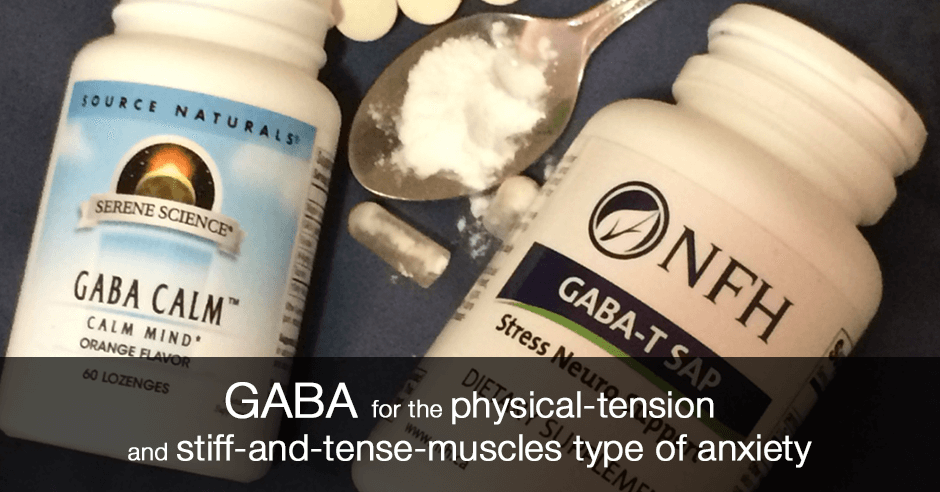
  • Source Naturals GABA Calm. This is a pleasant-tasting sublingual product that is my most popular and most effective form of GABA I use with my clients. It contains 125 mg GABA and some glycine, taurine and magnesium, and a small amount of tyrosine to counter the calming effects. You can see the lozenges in the picture above.
  • Nutritional Fundamentals for Health GABA-T SAP: gamma-Aminobutyric acid (GABA) 300 mg, l-Theanine 150 mg. This is pleasant-tasting when opened on to the tongue and works very well when GABA Calm can’t be used.  I find best results when it is used opened on to the tongue and I really like that it’s a low dose of GABA. Some of my clients do well with half a capsule. You can see an opened capsule in the picture above.
  • Enzymatic Therapy GABA: gamma-Aminobutyric acid (GABA) 250 mg. This is also pleasant-tasting when opened on to the tongue and works very well when GABA Calm can’t be used.  As with all GABA products, I find best results when it is used opened on to the tongue.
  • ProThera 500mg GABA: gamma-aminobutyric acid (GABA) 500 mg.  You will likely need to open this up and start with less than a full capsule during the day and increase as needed based on the trial. A full capsule may be fine at night for some individuals and more than one works in some situations.

There are a number of other great GABA products. When I reached out on Facebook for feedback I heard from one mom who likes Kirkman Labs GABA with Niacinamide and Inositol for her son who is on the spectrum, and someone else shared she likes Thorne PharmaGABA better than GABA products.

A few people shared this feedback when using GABA: one person felt too tired, someone else felt a niacin-type flush and someone else got an electric shock feeling in her brain. How you respond depends on the dose and with GABA and the other amino acids there is no one recommended dose for anyone. It’s very individualized which is why I have clients do a trial and start low. GABA helps many people tapering from benzodiazepines but some people are so sensitive that even a pinch is too much.

One person asked how to get GABA from food as she is fearful of taking medications and supplements. I always recommend a real whole foods diet with quality animal protein and organic produce, together with health fats and fermented veggies – so this is a great foundation. It may not be enough and when there is fear and phobias I immediately think of low serotonin and would determine if this is a factor an address this first. I covered low serotonin and tryptophan in the product review last week.

Here are some additional GABA resources for you:

Source Naturals GABA Calm™: Why I recommend it for anxiety

It’s a great product to use with children. Trish Soderstrom shared how she used this product with her daughter’s Lyme anxiety.

We’ve used Source Naturals GABA Calm sublinguals with good results. I learned about GABA helping anxiety and because I was treating my young daughter I purchased this because it was easy for her to take.But there may still be some confusion about when to use GABA and when to use tryptophan and how much of each of these amino acids to use.

GABA is calming for me, doesn’t work for my daughter’s anxiety and makes my son sleepy

I have used GABA (several brands, just open capsule and sprinkle small amount under tongue) for years now, with calming results within minutes. It was recommended to me by 2 family members, both bi-polar, who were tested by Dr. Amen. I have also used it with my children (now adults); my daughter says it doesn’t work for her. (She has anxiety issues and occasional panic attacks, and Rescue Remedy helps her.) It does work to calm my 3 sons, but one says it makes him sleepy, and lasts into the next day, so he won’t take it.

GABA for children: ADHD, focus issues, irritability, anxiety and tantrums

My daughter hasn’t been diagnosed with ADHD but has a lot of ADHD qualities. We were having a huge amount of behavior problems as she is getting older (she’s 11). I did some research and went to the health food store and bought a bottle. At this point I was mentally exhausted from all the fighting and drama at home and at school. I was desperate and didn’t want to put her on any hard medication.

She has had amazing behavior at school and at home since giving it to her. She’s almost like different child. GABA has truly changed our life. She’s been taking it for almost 2 months.

The blog has many other posts on GABA and serotonin and simply use the “search” function to find them.

This blog post is part of the series of amino acid product reviews:

  • Tryptophan for low serotonin (worry-in-the-head anxiety)
  • Glutamine for calming, intense sugar cravings, gut healing and low blood sugar
  • DPA for weepiness, pain and comfort and reward eating
  • Tyrosine for focus, motivation, energy, a good mood and possibly even anxiety

The resources in this blog and my other articles are intended to be used in conjunction with my book: The Antianxiety Food Solution – How the Foods You Eat Can Help You Calm Your Anxious Mind, Improve Your Mood, and End Cravings. If you do not have my book I highly recommend getting it and reading it before jumping in and taking the amino acid supplements:

There is a complete chapter on the amino acids and one for pyroluria, plus information on real whole food, sugar and blood sugar, gluten, digestion and much more.

You can find the GABA products and the others I recommend here on this blog: The Antianxiety Food Solution Amino Acid and Pyroluria Supplements


I’d love to hear what GABA product has worked for you and how it’s helped?

If you have questions please post them below or on the supplements blog

Filed Under: GABA, Supplements Tagged With: anxiety, GABA, GABA Calm, insomnia, pain, physical-tension, stiff and tense muscles, theanine

GABA and tryptophan for pain and anxiety in Parkinson’s disease?

August 25, 2017 By Trudy Scott 12 Comments

Last week I blogged about my recent back injury and how acupuncture boosts GABA to reduce back pain and how oral GABA further reduces the pain. Both these interventions have helped me so much and I’m doing so much better.

I love the feedback I receive in the blog comments and the great questions – which get to help the person asking the question and everyone else reading the blog and comments. So thank you if you comment!

I received this lovely feedback about GABA and anxiety, and a question about Parkinson’s disease (on the above blog) and want to share it and my response here so you and families with a loved one with Parkinson’s disease will also have access to this information:

I have loved reading your articles for a long time and listen to you whenever you are on a summit. I have learned a lot. GABA definitely helps me to relax, reduce my monkey mind and sleep better.

My mom has Parkinson’s disease and is very stiff and tight. She hurts often, especially her back. She also has afternoon anxiety, some call it “sundowners”. Can she take GABA with carbidopa-levidopa and blood pressure meds? She needs some kind of help!

Thank you in advance for any suggestions you might have to give her any quality of life as right now it is not good and the doctors offer no suggestions beyond possibly more prescriptions.

I responded saying how glad I was to hear GABA helps her to relax, reduces her monkey mind and also helps her to sleep better and how sorry I was to hear about her mom’s stiffness, pain and anxiety.

I posted this regarding the stiffness and back pain: share this paper with your doctor and get his/her approval to do a trial of GABA – Parkinson’s Disease and Neurodegeneration: GABA-Collapse Hypothesis:

the original description of Parkinson’s disease (PD) as due to the selective damage of dopaminergic neurons in the mesencephalon should be updated into the concept of a severe multisystemic neurodegenerative disorder of the nervous system, whose clinical symptoms reflect the localization and progression of the most advanced GABA pathology. A future and more complete therapeutic approach to PD should be aimed first at slowing (or stopping) the progression of Ca(2+)/GABA functional decline.

I have worked with a few people with Parkinson’s disease and GABA has been very helpful for the stiffness and pain, the physical anxiety, easing some of their tremors and helping with insomnia. I always do a trial so we know how much the individual will need.

For someone on blood pressure medication I’d start with a GABA-only product or GABA-theanine product rather than GABA Calm which does contain tyrosine.

I posted this regarding the “sundowners” question: I’d share this with your doctor and get the approval to do a trial of tryptophan – Sundown Syndrome in Persons with Dementia: An Update

sundown syndrome is characterized by the emergence or increment of neuropsychiatric symptoms such as agitation, confusion, anxiety, and aggressiveness in late afternoon, in the evening, or at night.

Although this paper refers to dementia, these symptoms also happen to be classic low serotonin symptoms that typically respond really well to tryptophan. The paper mentions melatonin as an intervention but since tryptophan converts to melatonin I’d start with tryptophan (based on doing a trial) and then consider adding melatonin too if needed.

I shared a few more resources on Parkinson’s disease:

  • Chris Kresser has an excellent blog post called New Research and Treatments for Parkinson’s Disease where he writes about the microbiome, constipation, SIBO, gluten, the HPA axis, low-dose naltrexone (LDN) and the possible autoimmune aspect, iron overload and the benefits of curcumin, a ketogenic diet and glutathione.
  • The Wahls Protocol for MS (some versions of which are ketogenic diets) shows promise for many neurodegenerative diseases and is also being researched for Parkinson’s disease

I also shared this amazing and inspiring video created by physical therapist Anicea Gunlock, on how using music while gait training can be beneficial for those suffering from Parkinsons’s disease

You read more about this music approach Anicea Gunlock used with her patient here.

The amino acids GABA and tryptophan can often be used in conjunction with all of the above approaches and often provide immediate relief for anxiety, pain, agitation and insomnia while some of the other root causes are being addressed.

I’ve recently updated the Antianxiety Food Solution Amino Acid and Pyroluria Supplements blog with some of my favorite GABA and tryptophan products mentioned above. You’ll also see the amino acid questionnaire and amino acid precautions on this blog.

Instead of only considering the amino acids for someone whose primary issue is anxiety, I’d like you to start thinking about using the amino acids for anyone who has a medical diagnosis – such as autism, cancer, ALS, Parkinson’s disease, MS, Alzheimer’s disease or anything else – and who also happens to suffer from anxiety.

Have you used GABA or tryptophan to ease stiff and tense muscles and pain in your Parksinson’s disease, for a family member or for a patient/client?

And have you used tryptophan for the low serotonin worry-type of anxiety, agitation and insomnia?

Filed Under: Anxiety, GABA, serotonin Tagged With: agitation, anxiety, autism, GABA, MS, pain, Parkinson's disease, serotonin, stiff and tense muscles, sundowners, tryptophan

  • « Go to Previous Page
  • Page 1
  • Interim pages omitted …
  • Page 17
  • Page 18
  • Page 19
  • Page 20
  • Page 21
  • Interim pages omitted …
  • Page 25
  • Go to Next Page »

Primary Sidebar

NEW! GABA QuickStart Homestudy (with special intro pricing)

gaba quickstart homestudy

Free Report

9 Great Questions Women Ask about Food, Mood and their Health

You'll also receive a complimentary subscription to my ezine "Food, Mood and Gal Stuff"


Connect with me

Popular Posts

  • Amino Acids Mood Questionnaire from The Antianxiety Food Solution
  • The Antianxiety Food Solution Amino Acid and Pyroluria Supplements
  • Pyroluria Questionnaire from The Antianxiety Food Solution
  • Collagen and gelatin lower serotonin: does this increase your anxiety and depression?
  • Tryptophan for the worry-in-your-head and ruminating type of anxiety
  • GABA for the physical-tension and stiff-and-tense-muscles type of anxiety
  • The Antianxiety Food Solution by Trudy Scott
  • Seriphos Original Formula is back: the best product for anxiety and insomnia caused by high cortisol
  • Am I an anxious introvert because of low zinc and vitamin B6? My response to Huffington Post blog
  • Vagus nerve rehab with GABA, breathing, humming, gargling and key nutrients

Recent Posts

  • What do I use instead of Seriphos to help lower high cortisol that is affecting my sleep and making me anxious at night?
  • BeSerene™ GABA/theanine cream eases severe muscle tension in her neck/shoulders, prevents her bad headaches and quells her anxiety
  • How the correct approach, dose and sublingual use of GABA can be calming and not cause a flushed and itchy face and neck
  • The amino acid glutamine improves low mood by addressing gut health, and it has calming effects too
  • Flight anxiety with heightened breath, physical tension and also fearing the worst (the role of low GABA and low serotonin)

Categories

  • 5-HTP
  • AB575
  • Addiction
  • ADHD
  • Adrenals
  • Alcohol
  • Allergies
  • Alzheimer's disease
  • Amino Acids
  • Anger
  • Antianxiety
  • Antianxiety Food Solution
  • Antidepressants
  • Anxiety
  • Anxiety and panic
  • Autism
  • Autoimmunity
  • benzodiazapines
  • Bipolar disorder
  • Books
  • Caffeine
  • Cancer
  • Candida
  • Children/Teens
  • Collagen
  • Cooking equipment
  • Coronavirus/COVID-19
  • Cravings
  • Depression
  • Detoxification
  • Diabetes
  • Diet
  • DPA/DLPA
  • Drugs
  • EFT/Tapping
  • EMF
  • EMFs
  • Emotional Eating
  • Endorphins
  • Environment
  • Essential oils
  • Events
  • Exercise
  • Fear
  • Fear of public speaking
  • Fertility and Pregnancy
  • Fish
  • Food
  • Food and mood
  • Functional neurology
  • GABA
  • Gene polymorphisms
  • General Health
  • Giving
  • Giving back
  • Glutamine
  • Gluten
  • GMOs
  • Gratitude
  • Gut health
  • Heart health/hypertension
  • Histamine
  • Hormone
  • Hyperparathyroidism
  • Hypoglycemia
  • Immune system
  • Inflammation
  • Insomnia
  • Inspiration
  • Introversion
  • Joy and happiness
  • Ketogenic diet
  • Lithium orotate
  • Looking awesome
  • Lyme disease and co-infections
  • MCAS/histamine
  • Medication
  • Men's health
  • Mental health
  • Mercury
  • Migraine
  • Mold
  • Movie
  • MTHFR
  • Multiple sclerosis
  • Music
  • NANP
  • Nature
  • Nutritional Psychiatry
  • OCD
  • Osteoporosis
  • Oxalates
  • Oxytocin
  • Pain
  • Paleo
  • Parasites
  • Parkinson’s disease
  • PCOS
  • People
  • PMS
  • Postpartum
  • PTSD/Trauma
  • Pyroluria
  • Questionnaires
  • Real whole food
  • Recipes
  • Research
  • Schizophrenia
  • serotonin
  • SIBO
  • Sleep
  • Special diets
  • Sports nutrition
  • Stress
  • Sugar addiction
  • Sugar and mood
  • Supplements
  • Teens
  • Testimonials
  • Testing
  • The Anxiety Summit
  • The Anxiety Summit 2
  • The Anxiety Summit 3
  • The Anxiety Summit 4
  • The Anxiety Summit 5
  • The Anxiety Summit 6
  • Thyroid
  • Thyroid health
  • Toxins
  • Tryptophan
  • Tyrosine
  • Uncategorized
  • Vegan/vegetarian
  • Women's health
  • Yoga

Archives

  • October 2025
  • September 2025
  • August 2025
  • July 2025
  • June 2025
  • May 2025
  • April 2025
  • March 2025
  • February 2025
  • January 2025
  • November 2024
  • October 2024
  • September 2024
  • August 2024
  • July 2024
  • June 2024
  • May 2024
  • April 2024
  • March 2024
  • February 2024
  • January 2024
  • December 2023
  • November 2023
  • October 2023
  • September 2023
  • August 2023
  • July 2023
  • June 2023
  • May 2023
  • April 2023
  • March 2023
  • February 2023
  • January 2023
  • December 2022
  • November 2022
  • October 2022
  • September 2022
  • August 2022
  • July 2022
  • June 2022
  • May 2022
  • April 2022
  • March 2022
  • February 2022
  • January 2022
  • December 2021
  • November 2021
  • October 2021
  • September 2021
  • August 2021
  • July 2021
  • June 2021
  • May 2021
  • April 2021
  • March 2021
  • February 2021
  • January 2021
  • December 2020
  • November 2020
  • October 2020
  • September 2020
  • August 2020
  • July 2020
  • June 2020
  • May 2020
  • April 2020
  • March 2020
  • February 2020
  • January 2020
  • December 2019
  • November 2019
  • October 2019
  • September 2019
  • August 2019
  • July 2019
  • June 2019
  • May 2019
  • April 2019
  • March 2019
  • February 2019
  • January 2019
  • December 2018
  • November 2018
  • October 2018
  • September 2018
  • August 2018
  • July 2018
  • June 2018
  • May 2018
  • April 2018
  • March 2018
  • February 2018
  • January 2018
  • December 2017
  • November 2017
  • October 2017
  • September 2017
  • August 2017
  • July 2017
  • June 2017
  • May 2017
  • April 2017
  • March 2017
  • February 2017
  • January 2017
  • December 2016
  • November 2016
  • October 2016
  • September 2016
  • August 2016
  • July 2016
  • June 2016
  • May 2016
  • April 2016
  • March 2016
  • February 2016
  • January 2016
  • December 2015
  • November 2015
  • October 2015
  • September 2015
  • August 2015
  • July 2015
  • June 2015
  • May 2015
  • April 2015
  • March 2015
  • February 2015
  • January 2015
  • December 2014
  • November 2014
  • October 2014
  • September 2014
  • August 2014
  • July 2014
  • June 2014
  • May 2014
  • April 2014
  • March 2014
  • February 2014
  • January 2014
  • December 2013
  • November 2013
  • October 2013
  • September 2013
  • August 2013
  • July 2013
  • June 2013
  • May 2013
  • April 2013
  • March 2013
  • February 2013
  • January 2013
  • December 2012
  • November 2012
  • October 2012
  • August 2012
  • July 2012
  • June 2012
  • May 2012
  • April 2012
  • March 2012
  • February 2012
  • January 2012
  • December 2011
  • November 2011
  • October 2011
  • September 2011
  • August 2011
  • July 2011
  • June 2011
  • May 2011
  • April 2011
  • March 2011
  • February 2011
  • January 2011
  • December 2010
  • October 2010
  • September 2010
  • July 2010
  • May 2010
  • April 2010
  • March 2010
  • February 2010
  • January 2010
  • November 2009

Share the knowledge!

The above statements have not been evaluated by the Food and Drug Administration. Products listed in this website are not intended to diagnose, treat, cure or prevent any disease.

The information provided on this site is for informational and educational purposes only and is not intended as a substitute for advice from your physician or other health care professional. You should consult with a healthcare professional before starting or modifying any diet, exercise, or supplementation program, before taking or stopping any medication, or if you have or suspect you may have a health problem.


Copyright © 2026 Trudy Scott. All Rights Reserved. | Privacy | Terms and Conditions | Refund Policy | Medical Disclaimer

Free Report

9 Great Questions Women Ask about Food, Mood and their Health

You’ll also receive a complimentary subscription to my ezine “Food, Mood and Gal Stuff”