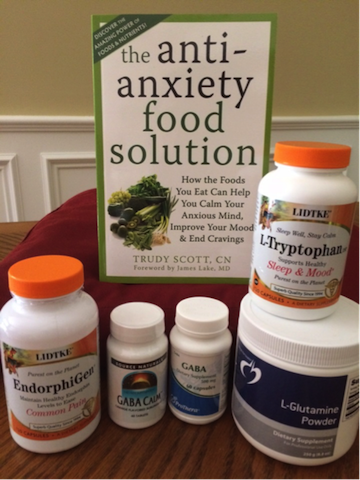
The targeted use of individual amino acid supplements will balance brain chemistry to alleviate anxiety, fear, worry, panic attacks, and feeling stressed or overwhelmed. They can also be helpful in addressing other problems that contribute to or exacerbate anxiety, such as sugar cravings and addictions. In addition, they can help with depression and insomnia, which often co-occur with anxiety. When you balance your brain chemistry, not only will you alleviate symptoms of anxiety, you’ll also have a great mood, eliminate cravings, sleep well, and have good energy and mental focus.
The above is from an earlier blog post: Anxiety and targeted individual amino acid supplements: a summary
I recently shared this article on my facebook page TrudyScott AntianxietyFoodSolution and we had such a healthy productive discussion going I’ve decided to share some of the great questions here – and my responses to them – so you can benefit too.
Some of these have been paraphrased, typos have been corrected and I’ve added additional information. Here is the link to the facebook discussion.
The first question was related to how to know which amino acid to use:
But how do you know which one will help? I have heard of so many different options. I was told by my nutritionist to try one called l-theanine but I haven’t tried it due to the fact that she told me it could have a reverse effect on me. Any advice?
Here is my response:
I have my clients do the amino acid questionnaire and then a trial of the amino acids that show up as likely being low: tryptophan for low serotonin, GABA for low GABA, DPA for low endorphins, tyrosine for low catecholamines and glutamine for low blood sugar. You may need support in more than one area. And if you need the amino acids you can actually get results in 5 minutes!
I prefer GABA to theanine as it’s often more effective but you may do well on theanine. And yes too much can cause a reverse effect so start low and back down if you don’t feel an improvement or feel worse.
In case you have not heard me present on this topic I’ll be featured on the online Mental Wellness Summit that started this week. My interview airs Saturday August 15th.
Another question was related to how long to take the amino acids:
When do you stop taking them? I have been taking GABA since January and it has helped tremendously. Is there ever a time you stop or do you take it indefinitely?
Here is my response:
I’m so pleased to hear the GABA has helped tremendously. Some people just forget to take them and then realize they feel good, have no more anxiety and don’t need the amino acids any more.
For other people we may say “let’s stop or cut back and see how you feel.” If you cut back and feel worse then you add them back again. If you feel fine on the lower amounts then you stay there and lower again a few weeks later.
With GABA, if you’re taking too much you may feel sluggish and tired.
There is no set length that works for everyone – it varies. For some it’s a month. I would say 6 months is pretty typical but a year is not unheard of.
If you find you are needing to keep taking the amino acids long term then I like to look at why. So we’d look at diet, stress and adrenal health, food sensitivities, malabsorption etc.
As someone kindly said in this same thread:
You can’t just “wing it.” You need dosage guidance on amino acid supplements, same as you would a prescription. I found reading Trudy’s blogs and book The Antianxiety Food Solution very helpful, plus the book The Mood Cure by Julia Ross give specific guidance on which ones to use and how.
I agree, of course, and would like to add that each person is different and has their own unique needs. And not everyone with anxiety or depression has a neurotransmitter deficiency and needs amino acids.
This question about adverse effects was also posted:
What’s the story with trying amino acid supplements and tyrosine gives you headaches and makes you feel unsettled, and GABA and 5-HTP makes you feel dopey. I’ve tried different dosing and I’m still not getting anywhere. Can you suggest what else may be going on?
Here is my response:
I would look at the quality of the amino acids being used (here are brands I use and like) and also consider if you’re possibly using too much. Some pixie dust clients need just a dab to start.
You may also have genetic SNPs that are affecting you or you may simply not need them. That’s when we dig deeper and look for other causes: here are the 60+ Nutritional & Biochemical Causes of Anxiety I covered in the last Anxiety Summit
If you enjoyed this and want to be part of future interactive discussions do come on over to facebook and join in.
If you’ve been using any of the amino acids, I hope this has been helpful for you. Please share how you’re doing in the comments and feel free to ask additional questions.
If you’re new to the amazing amino acids for anxiety and you’d like more detailed information, my book The Antianxiety Food Solution has a whole very detailed chapter on the topic, together with the other 8 steps I use with my clients to alleviate anxiety: real whole food, balance blood sugar, quit caffeine, quit gluten, address the gut, pyroluria, lifestyle and other factors.
If this sounds intriguing and you’d like guidance with using the amino acids, stay tuned for the launch of The Amazing Aminos for Anxiety homestudy group program that will be starting in September. You’re welcome to sign up here to be notified when we have details about the start date and more.