• Skip to primary navigation
  • Skip to main content
  • Skip to primary sidebar

everywomanover29 blog

Food, Mood and Women's Health – Be your healthiest, look and feel great!

  • Blog
  • About
  • Services
  • Store
  • Resources
  • Testimonials
  • The Book
  • Contact
  • Search this site

worry

Imposter syndrome and neurotransmitter support: I feel like the person I’m supposed to become

February 26, 2021 By Trudy Scott 9 Comments

imposter syndrome and neurotransmitter support

A newly qualified nutritionist posted wonderful feedback on a blog post on imposter syndrome and low serotonin with tryptophan as one possible solution. She shared how neurotransmitter support with tryptophan, tyrosine and GABA was her solution, eliminating her imposter syndrome and social awkwardness in 2 weeks. Here is the feedback Yo shared on the blog:

Thanks for your work on neurotransmitters, Trudy.  I am a fan. I had suffered BADLY from imposter syndrome at the end of my nutrition degree and I felt socially awkward in so many outings and situations. My anxiety and stress were through the roof! VERY bad sleep, stressed and my digestion was very poor.

Fast forward to a year later after addressing my sleep (no. 1 priority); stress levels; diet; loads of minerals; vitamin supplementation – my health started to shift for the better, but I still had the imposter syndrome hanging over my head.

What really tipped the balance was the supplementation of tyrosine, tryptophan & GABA. The imposter syndrome seemed to have vanished within two weeks. And it was in your blogs that had pointed out clues to the amino acids I was needing to supplement.

I feel like the person I’m supposed to become and I can’t thank you enough for the amazing work you’ve been doing. I will definitely be following your journey, learning more about these neurotransmitters, and sharing this information so that others can benefit from it. Thank you, thank you!

I thanked Yo for her kind words and for sharing this wonderful outcome.  I always say we all deserve to feel our absolute best so I love that she says “I feel like the person I’m supposed to become”!

Addressing neurotransmitter imbalances with targeted amino acids

I also congratulated her on doing the foundational work first. As she discovered, even with all that in place, we often still have to address neurotransmitter imbalances with targeted amino acids too.  With regards to imposter syndrome and the amino acids she used:

  • Using tryptophan to address low serotonin eases worry, rumination, anxiety, negative self-talk, self-doubt and and not feeling capable – all of which we’d typically associate with imposter syndrome
  • Using tyrosine to address low dopamine results in more motivation and better focus so you are more likely to finish tasks (and therefore feel more confident and capable). Many folks report a feeling of calm focus with tyrosine too
  • Using GABA to address low GABA eases physical tension and overwhelm and helps stop unwanted thoughts.

A 2-week turnaround is fabulous and means she found the right combination of amino acids and ideal doses for her unique needs right away. I’ve seen results like this in 2 weeks but doing a new amino acid trial each week would usually take at least 3 weeks. I suspect her results were so fast because of the foundational work that was in place.

I typically start with amino acids trials on day one of working with someone, while we are working on diet, sleep, stress – this would have led to her feeling like the person she was meant to become much sooner and would have helped with sleep, stress and dietary changes too.  Her approach worked but it took longer to get results.

Questions I still have about the amino acid trials

I have these questions I posed to Yo and hope to hear back as I feel these answers may be helpful as you navigate your own challenges with imposter syndrome:

  • Did she do a trial of one amino acid at a time (my preferred approach so you know exactly what effects each one has)?
  • Or did she start taking all 3 amino acids at once and why?
  • What doses were ideal for her unique needs and how quickly did she find the ideal doses
  • Is she continuing with a maintenance dose?
  • Also, since she mentioned social awkwardness I have to wonder if the pyroluria protocol would be of added value (if any of the social awkwardness still remains)? This protocol helps to make neurotransmitters.

I’ll report back once I get Yo’s feedback.

If you’re new to imposter syndrome

If you’re new to imposter syndrome, here is a definition from Intellectual Self-doubt and How to Get Out of It:

People with imposter syndrome often feel like they are not as capable or adequate as others perceive or evaluate them to be. The signs and symptoms are feelings of phoniness, self-doubt, and inability to take credit for one’s accomplishments. It is a form of intellectual self-doubt. Those with imposter syndrome are often intelligent and high achievers – like many academics, pharmacists, and professional students. On one hand, imposter syndrome provides motivation to persevere. On the other hand, you over prepare and overwork.

This author shares a link to the Clance Imposter Scale. This is a self-assessment of imposter syndrome, developed by Dr. Pauline Rose Clance and Dr. Suzanne Imes (who worked together and coined the term “Impostor Phenomenon”.).

This paper reports that

Imposter syndrome is common among early career nurse researchers and often has a considerable impact on those affected. It can cause various problems, including anxiety, self-doubt and feelings of inadequacy, and therefore has significant potential to adversely affect personal and professional development.

You can also read more about imposter syndrome on my previous blog post on this topic – Imposter syndrome and low serotonin: is tryptophan the solution? and the Harvard Business review definition:

Imposter syndrome can be defined as a collection of feelings of inadequacy that persist despite evident success. ‘Imposters’ suffer from chronic self-doubt and a sense of intellectual fraudulence that override any feelings of success or external proof of their competence.

The numbers of papers on imposter syndrome are increasing but there is still no mention of biochemistry or neurotransmitters so these amino acid success stories are adding to the body of knowledge. (I would love to get them published as case studies so if you can help please do let me know.)

I love hearing life-changing stories like this and I am sharing it here to inspire and offer hope! I also love that Yo is such a fan now and wants to pay it forward by sharing this information with clients so I also shared my amino acid practitioner training.

Is imposter syndrome new to you? And is this concept of addressing imposter syndrome with amino acids new to you? If you have a question we would appreciate hearing:

#1 How you describe your imposter syndrome and how it impacts your life

#2 How you score on the Clance Imposter Scale (and which aspects bother you the most)

#3 What symptoms you have on the Amino Acid Questionnaire in the low serotonin, low catecholamine and low GABA sections.

If you already know about imposter syndrome and have found a solution with the amino acids please do share your success story so we can all learn from each other, as well as inspire and offer hope. We would appreciate hearing:

#A How you described your imposter syndrome and how it impacted your life

#B How you scored on the Clance Imposter Scale before and after using amino acids (and which aspects bothered you the most)

#C What symptoms you had on the Amino Acid Questionnaire  in the low serotonin, low catecholamine and low GABA sections (before and after using the amino acids)

#D Which amino acids were most helpful and how much of each amino acid helped you

#E If you’ve also had CBT (cognitive behavior therapy) and how it helped too

(if you feel more comfortable sharing some of this anonymously feel free to use a nickname or your initials only when commenting – I’m aware that there is a stigma to admitting this in the corporate world, as a health professional and as an entrepreneur)

Feel free to post your questions and feedback in the comments below.
Filed Under: Anxiety, Testimonials, Tryptophan, Women's health Tagged With: anxiety, Clance Imposter Scale, dopamine, focus, GABA, Imposter syndrome, Impostor Phenomenon, neurotransmitter, Pauline Rose Clance, phoniness, self-doubt, serotonin, tryptophan, tyrosine, worry

Tryptophan for my teenager: she laughs and smiles, her OCD and anxiety has lessened, and she is more goal oriented and focused on school.

February 19, 2021 By Trudy Scott 60 Comments

tryptophan teenager

A mom posted wonderful feedback on a recent blog post on ADHD and 5-HTP, sharing how how tryptophan has helped her daughter in ways that didn’t even realize were an issue. She was shocked to see so many improvements and she called it a miracle experience. Here is the feedback Kathy shared:

We had a “miracle” experience with adding L-Tryptophan 300mg at bedtime for my teenager. I was shocked to see how much it improved my child, especially in ways that I didn’t even realize were an issue.

  • The results were like my teenager coming out of a fog, and also like my child was when she was younger.
  • She became more engaged with the family and did a lot less isolating.
  • She suddenly had interest in activities she had never pursued before. For instance, she wanted to start playing team sports after having played nothing for years. She wanted to do family game night! Before, we couldn’t force her to do it, and now it was her idea.
  • Her thoughts seemed to quiet down and were more organized.
  • Her OCD [obsessive compulsive disorder] and anxiety symptoms lessened.
  • She became more goal oriented and focused on school.
  • She laughs and smiles more!

We were most shocked because what we thought was normal teenage development was actually depression that we had no idea was there.

Tryptophan has been the most effective supplement we have ever used, and we have used a lot. We experimented with the dose until we ended up on 3 at bedtime. The brand we used was the Lidtke L-Tryptophan.

This did not cure her ADD [attention deficit disorder], but definitely improved her executive functioning. We tried GABA and saw no improvement with that. We have tinkered with L-Tyrosine, but haven’t been able to get on a steady dose of it yet to see if it will also help.

Thank you for giving us the idea to try!

I thanked Kathy for sharing the wonderful results her daughter has experienced with the Lidtke Tryptophan and how happy I was for both of them! I love all the surprise benefits she saw and appreciate this feedback: “This has been the most effective supplement we have ever used, and we have used a lot.” I hear this a lot – tryptophan and GABA are game-changers for so many of my clients.

I have these questions I posed to this mom and hope to hear back as I feel these answers may be helpful for other parents and practitioners who work with children and teens:

  • Did she use 3 x chewable 100mg tryptophan or did they open the 500mg capsule
  • What did the trial look like for them to end up with 300mg at night?
  • What made her decide to trial tryptophan instead of 5-HTP?
  • What made you decide to even trial tryptophan – was it her daughter’s anxiety and OCD?
  • Was her daughter willing to trial tryptophan initially or was there resistance?

I’ll report back once I get Kathy’s feedback.

Updated Feb 26, 2021: Kathy’s additional feedback

I read all your blog articles and listened to some of your talks. I made a chart of symptoms and then decided to try GABA Calm first.

Since that didn’t help, the next logical choice for us was Tryptophan. My daughter has a lot of anxiety, intrusive thoughts and other OCD symptoms. The reason I didn’t trial the 5HTP first was because my daughter has some PTSD like startle responses, and since you said it isn’t good if you have high cortisol, I just made the guess that she might due to her startle response.

With the Lidtke brand, we used the [500mg] capsules and I did not open them up. My teen would not have gone for that because she already takes a lot of supplements and medication because she is being treated for Lyme and Bartonella. She is cooperative with taking all the supplements/medication. We started at 1 capsule a night for probably 5 days and saw no difference, then went to two for another 5 days, and then landed on 3 when we noticed the dramatic change.

Even her LLMD [Lyme literate MD] was shocked at how differently she interacted with her in our last appointment.

To further clarify, it turns out Kathy actually started her daughter on 500 mg tryptophan at bedtime and they experimented with the dose until they ended up on 3 x 500 mg at bedtime for a total of 1500 mg. Kathy’s initial comment about 300 mg had me thinking she was using 3 x 100 mg tryptophan.  Either way, the dose really simply reflects what her needs are and someone else may well get similar benefits with a total of 300 mg. This is why we experiment and do trials of different doses.

Normal teenage development or really depression?

I also have to wonder how many other parents would say this after addressing low serotonin levels in their daughters and/or sons: “We were most shocked because what we thought was normal teenage development was actually depression that we had no idea was there.” I suspect the number would be high, especially given the growing incidence of anxiety and depression in teens.

Also, according to the ADAA/Anxiety and Depression Association of America “80 percent of kids with a diagnosable anxiety disorder and 60 percent of kids with diagnosable depression are not getting treatment.”

Now that Kathy has seen these wonderful changes in her daughter, I’d love to know – if she could go back in time – what questions would she have asked her anxious and depressed daughter so she could help her with solutions sooner?

And what would she suggest to other parents to be looking out for in order to identify anxiety and depression in their children (who often cannot adequately articulate that they do feel anxious and/or depressed)?

If you’re new to tryptophan and low serotonin symptoms

In case you’re new to tryptophan, it is an amino acid that is used as a supplement to support low levels of serotonin. With low serotonin we the worry-in-your-head and ruminating type of anxiety, panic attacks and phobias, lack of confidence, depression, negativity, imposter syndrome, PMS, irritability, anger issues, insomnia and afternoon/evening cravings.

My thoughts on addressing the ADD/inattention issues

Here are my thoughts for her as a starting point for helping to address her daughter’s residual ADD/inattention symptoms:

  • When someone does well with tryptophan at night, we often trial 5-HTP in the day too. As I shared in a recent blog, this mom shared how 5-HTP melts helped with ADHD symptoms one of her adopted kids was experiencing. She also called it a miracle!
  • A tyrosine trial may also be worth considering because low catecholamines lead to poor focus and feelings of calm focus are reported with tyrosine. However we also see low energy, low motivation and depression with low catecholamines which no longer seem to be an issue – so I’m not sure if tyrosine would help.
  • L-theanine may work better than the GABA they tried. Research shows it helps with cognitive function specifically improvements in verbal fluency (especially letter fluency) and improvements in executive function (planning, multi-tasking etc).
  • With inattention issues it’s also key to look at low blood sugar, gluten and sugar consumption, low iron, low zinc and low omega-3s.
  • If there was hyperactivity with the inattention then we’d look at salicylates in the diet as they can cause behaviour issues. This doesn’t seem to be the issue but a big clue would be red cheeks and ears that are not from the heat.
  • Consider the Ayurvedic herb Bacopa monnieri which has been shown to improve “visual perception, impulsivity, and attention” in children and adults.
  • Consider the herb saffron (Crocus sativus) which has “memory-enhancing and antidepressant effects” and has been shown to be as effective as Methylphenidate/Ritalin.

Additional resources when you are new to using amino acids as supplements

We use the symptoms questionnaire to figure out if low serotonin or low GABA or low endorphins or low dopamine or low blood sugar may be an issue for you.

If you suspect low levels of any of the neurotransmitters and do not yet have my book, The Antianxiety Food Solution – How the Foods You Eat Can Help You Calm Your Anxious Mind, Improve Your Mood, and End Cravings, I highly recommend getting it and reading it before jumping in and using amino acids on your own so you are knowledgeable. And be sure to share it with the practitioner/health team you or your loved one is working with.

There is an entire chapter on the amino acids and they are discussed throughout the book in the sections on gut health, gluten, blood sugar control, sugar cravings, anxiety and mood issues.

The book doesn’t include product names (per the publisher’s request) so this blog, The Antianxiety Food Solution Amino Acid and Pyroluria Supplements, lists the amino acids that I use with my individual clients and those in my group programs. You can find them all in my online store.

If, after reading this blog and my book, you don’t feel comfortable figuring things out on your own (i.e. doing the symptoms questionnaire and respective amino acids trials), the Serotonin QuickStart Program is a good place to start if you need serotonin support. This is a paid online/virtual group program where you get my guidance on using tryptophan and 5-HTP safely, and community support during 5 LIVE Q&A calls. You can sign up to be notified when the next live launch of this program is happening. We take a deep dive into product options including the Lidtke products and others if you’re not able to access Lidtke.

If you also have low GABA symptoms, the next step to get help is the GABA QuickStart Program. This is also a paid online/virtual group program where you get my guidance and community support. Another option is the budget-friendly GABA QuickStart Homestudy program.

If you are a practitioner, join us in The Balancing Neurotransmitters: the Fundamentals program. This is also a paid online/virtual program with an opportunity to interact with me and other practitioners who are also using the amino acids.

Now I’d like to hear from you

I love hearing heartwarming stories like this and I am sharing it here to inspire and offer hope!

Please do share your success story on the blog so we can all learn from each other, as well as inspire and offer hope.

How has tryptophan helped you or your child? What has helped with inattention?

Feel free to post your questions and feedback in the comments below.
Filed Under: Anxiety, Children/Teens, Testimonials, Tryptophan Tagged With: anxiety, children, depression, engaged, focused, fog, goal oriented, isolating, laughs, OCD, organized, panic, serotonin, teenager, tryptophan, worry

Anxiety case study: a very very slow SSRI taper with tryptophan and other nutritional support

August 28, 2020 By Trudy Scott 14 Comments

anxiety case study

Today I’m sharing an update from someone in my community who is tapering from an SSRI (Cipralex/lexapro) in the best way possible – very methodically and doing a very very slow taper, using compounded medication and nutritional support. It is a team approach with a supportive doctor monitoring for serotonin syndrome, her pharmacist compounding her medication and input from me.

She has an excellent diet that contains enough healthy protein and fats, plenty of vegetables, and no sugar or caffeine. She has the basic nutrients covered and is on the pyroluria protocol (these nutrients help make serotonin). She is using the amino acid tryptophan for serotonin support as she tapers. And she is out walking in nature and practicing mindfulness.

All of this sets her up for success and being able to avoid antidepressant discontinuation syndrome.

Here is her story:

I began tapering off 10 mg of Cipralex in November 2017. I have my little “Support Team” that includes a compounding pharmacist and my GP. Feeling very fortunate that I have these people as my taper has not exactly gone as planned (although far better than my last two attempts)

Originally, the plan was to go down by 10% of the dose and stay at that dose for 4 weeks. That didn’t work for me. I was fine when I dropped from 10mg to 9, but after my next 10% drop I experienced that familiar withdrawal hell. I got a little scared, but stuck with it, and decided to stay at that dose for a bit longer. While I leveled out, I did a lot of reading about how SSRIs work. I learned about the 1/2 life of Cipralex (all SSRIs have a different 1/2 life) and what was actually happening physiologically as my body adjusts to the lower dose. It’s a recovery process.

With that new knowledge, I decided to try another approach. I knew I couldn’t handle a drop of 10%. So, I started to taper at a rate of 0.1mg once a week (far less than 10%!). By day three at the new dose, I could feel the withdrawal, but it was far less severe. Small drops=small “withdrawal wave”. I discovered that I am able to manage a 2% drop of the current dose and I have been able to drop that % each week. So, I’m still reducing by 8% a month, which means I am close to the original plan of dropping by 10% a month. At this time I am at 6.24mg.

Yes, it is a very slow process and I have a long way to go, but it’s working. I have read that some people have to reduce by 1% of their current dose and remain at that dose for 4 weeks to allow their body the time to heal and adjust to life on the lower dose. Having the liquid compound has made such a difference! You sure would have difficulty accurately shaving off a pill by 2%!! If anyone is trying to come off of this drug, do your best to find a compounding pharmacist!

I find that I must stick to a very healthy diet. I eat a lot of fresh, raw and cooked vegetables. I mean a LOT of vegetables. I eat good sources of protein and walk for at least 45 min almost every day. I steer clear of sugar and caffeine. Both make my withdrawal much worse.

Every day I take omega 3, vitamin C, vitamin D, vitamin B complex. I take the supplements for pyroluria, vitamin B6, evening primrose oil and zinc. I take magnesium at night. I took Trudy’s amino acids course online and did all of the amino acid trials. I discovered all I really need is tryptophan. It has made a huge difference for me. Yes, I take Lidke tryptophan. For us Canadians, it can be ordered online.

I practice mindfulness. I’ve read a lot about the anxious brain (the reason I took Cipralex in the first place) so I understand what is happening now, what is real and what is just noise in my head.

Antidepressant discontinuation syndrome

This is the best way to taper SSRI medications in order to avoid withdrawal effects, also known as discontinuation syndrome which can be very severe for some folks.

Accordingly to this paper, Antidepressant discontinuation syndrome occurs in about 20% of patients who reduce the dose or abruptly stop an antidepressant that they have been taking for one month. This paper states that “symptoms are usually mild….occur within two to four days after drug cessation and usually last one to two weeks.”

It also states that occasionally symptoms “may persist up to one year…and if the same or a similar drug is started, the symptoms will resolve within one to three days.”

I typically hear from individuals who fall into the category of severe symptoms that are persisting past 2 weeks. It’s not uncommon to see symptoms continue for a year and often longer in some cases.

Also from the above paper, is the mnemonic FINISH which summarizes these symptoms:

  • Flu-like symptoms (lethargy, fatigue, headache, achiness, sweating)
  • Insomnia (with vivid dreams or nightmares)
  • Nausea (sometimes vomiting)
  • Imbalance (dizziness, vertigo, light-headedness)
  • Sensory disturbances (“burning,” “tingling,” “electric-like” or “shock-like” sensations) and
  • Hyperarousal (anxiety, irritability, agitation, aggression, mania, jerkiness).”

How you will feel if your serotonin is low and how to learn more

With low serotonin you will have the worry-in-your-head and ruminating type of anxiety, panic attacks and phobias, lack of confidence, depression, negativity, imposter syndrome, PMS, irritability, anger issues, insomnia and afternoon/evening cravings.

If you suspect low serotonin symptoms and are new to using the amino acids and do not have my book I highly recommend getting it and reading it before jumping in to taking supplements and navigating this with your prescribing physician: The Antianxiety Food Solution – How the Foods You Eat Can Help You Calm Your Anxious Mind, Improve Your Mood, and End Cravings. You may need to lend him/her a copy of my book too.

There is a complete chapter on the amino acids and one for pyroluria, plus information on real whole food, sugar and blood sugar, gluten, digestion and much more.  If you’re not a reader there is now also an audible version.

Here is the Amino Acids Mood Questionnaire from The Antianxiety Food Solution and additional information on Anxiety and targeted individual amino acid supplements: a summary

Please also read and follow these Amino Acid Precautions.

This lists The Antianxiety Food Solution Amino Acid and Pyroluria Supplements that I use with my individual clients and those in my group programs – you will find the Lidtke Tryptophan here. You can also read more about why I prefer the Lidtke tryptophan on this blog.

I would like to end off by saying how much I appreciate this woman and others sharing their stories like this so we can all learn!

Please also share your taper story and what you did to make it easier.  If you had challenges share those too. Let us know if you can relate to any of the above FINISH symptoms and how long they lasted.

Feel free to post your questions here too.

Filed Under: Anxiety, Tryptophan Tagged With: achiness, aggression, agitation, antidepressant, anxiety, B6, burning, cravings, diet, Dizziness, fatigue, flu-like symptoms, headache, insomnia, irritability, jerkiness, lethargy, light-headedness, mania, nausea, Nightmares, nutritional support, panic, serotonin, shock-like sensations, SSRI, SSRI taper, sweating, tingling, tryptophan, vertigo, vivid dreams, vomiting, worry, zinc

I am an emotional eater and eat sugar as a reward and find myself craving it when I am fatigued. Do you have clients on more than one amino acid?!

July 24, 2020 By Trudy Scott 24 Comments


emotional eating and amino acides

This is a question I received from a stressed out mom in my community. She has identified when she craves sugar and the emotion connected to her cravings. Now she has questions about how to trial and use amino acids to stop her cravings, get her energy back and feel emotionally stable:

I know I am an emotional eater, I know I eat sugar as a reward and I do find myself craving it when I am fatigued. I also seem to crave it after a very savory meal; especially one with garlic. What is THAT about?! Do you have clients on more than one amino acid?!

I have been a caregiver for my son (multiple disabilities) for 30 years; he has uncontrolled seizures and my husband has PTSD. It is a stressful household.

This is what I shared with her about the brain chemical imbalances and amino acids:

  • Many of my clients need more than one amino acid but it’s best to trial one at a time. When I hear my client say they eat sugar as a reward we immediately consider a trial of DPA (d-phenylalanine) especially if they are also overly emotional/weepy and also have physical pain.
  • When I hear my client say “I do find myself craving sugar when I am fatigued” we consider low catecholamines and a trial of tyrosine especially if they also have poor focus, low motivation and a flat mood. If the fatigue is caused by low blood sugar this can cause fatigue, irritability/crankiness and anxiety and a trial of glutamine may be a better option. If the DPA helps the emotional-reward-eating after a week or two, then we may do a trial of tyrosine and/or glutamine (one at a time) and use them in addition to the DPA.
  • When I hear “sugar cravings after a savory meal” we consider low serotonin and a trial of tryptophan if it’s after lunch or dinner. Serotonin dips in the afternoon and evening triggering this type of craving. With low serotonin we also see worry, anxiety, depression, anger, PMS, insomnia and irritability. Let’s assume the DPA helps and the tyrosine helps with the fatigue, then we’d consider a trial of tryptophan and add that.

So yes I do have many clients needing more than one amino acid! But we always trial one at a time and find a good baseline before adding the next one or doing a new trial if the first one didn’t give expected results.

With regards to which amino acid trial to do first, I always ask my client which area is causing the most problem or distress in your life and we start there. Since she mentioned emotional eating and then fatigue and then cravings after a savory meal, this sequence may be best for her. But addressing the fatigue with tyrosine first may be a better approach for someone else.

With regards to cravings after a savory meal we also look into how much protein and healthy fats the client has in that meal. I don’t know why garlic would be a trigger other than it’s possibly stirring up candida. Candida is also a big factor when it comes to sugar cravings, fatigue and feeling sad/emotional so we would also possibly need to address this too.

Adrenal and sleep support is also key and I recommend this resource for additional caregiver support for her – The psychological trauma of coronavirus – nutritional support for doctors, nurses and their loved ones.

For her husband’s PTSD I recommend this resource – PTSD from 3 tours in Afghanistan: Can GABA help with the anxiety?

For her son’s seizures I recommend this paper, Ketogenic Diet and Epilepsy: What We Know So Far, and working with a practitioner who could offer consultation and guidance on a ketogenic diet.  Another useful resource is this one – Use of Cannabidiol in the Treatment of Epilepsy: Efficacy and Security in Clinical Trials.

If you suspect low levels of any any of the neurotransmitters and are new to using the amino acids and do not have my book I highly recommend getting it and reading it before jumping in to taking supplements: The Antianxiety Food Solution – How the Foods You Eat Can Help You Calm Your Anxious Mind, Improve Your Mood, and End Cravings.

There is a complete chapter on the amino acids and one for pyroluria, plus information on real whole food, sugar and blood sugar, gluten, digestion and much more.  If you’re not a reader there is now also an audible version.

Here is the Amino Acids Mood Questionnaire from The Antianxiety Food Solution and additional information on Anxiety and targeted individual amino acid supplements: a summary

Please also read and follow these Amino Acid Precautions.

This lists The Antianxiety Food Solution Amino Acid and Pyroluria Supplements that I use with my individual clients and those in my group programs. You’ll find DPA, tyrosine and tryptophan listed here.

Please share your emotional eating and sugar craving success story if you have one using DPA.

And let us know if tyrosine helps with your fatigue and low-energy driven sugar cravings?

And does tryptophan help your afternoon and evening sugar cravings?

Feel free to post your questions here too.

Filed Under: Cravings Tagged With: anxiety, DPA, emotional eating, endorphins, energy, fatigue, glutamine, insomnia, low mood, pain, PTSD, seizures, serotonin, stressed, sugar, tryptophan, worry

Tryptophan ends TMJ pain, headaches and worry, and improves mood and sleep: a success story

July 17, 2020 By Trudy Scott 32 Comments

tryptophan success story

Today I’m sharing a success story on how the amino acid tryptophan, taken as a supplement, ends  TMJ (temporomandibular joint) pain and headaches in a woman in my community. She had the added benefits of an improved mood and less worrying and her sleep improved too.

There is evidence to support the low serotonin connection to TMJ and pain like fibromyalgia and I share that research below.

Before I share the success story, in case you’re new to neurotransmitter imbalances, the other symptoms we see with low serotonin are the worrying-type of anxiety, panic attacks and phobias, lack of confidence, depression, negativity, imposter syndrome, PMS, irritability, anger issues, insomnia and afternoon/evening cravings. Tryptophan can be used to boost serotonin levels and improve these symptoms as you’ll see below.

Right after speaking on the recent Trauma and Mind-Body Super Conference, Renee shared her wonderful success story on Facebook:

Out of all the interviews I felt yours gave the most actionable steps. I was taking amitriptyline for TMJ and didn’t like the side effects, however what other options did I have? Not many according to my GP [general practitioner]. Luckily I found your suggestion of tryptophan. And I can’t explain how much of a change it made! I weaned off the medicine and took tryptophan instead and not only did it help the TMJ but also helped me feel more even emotionally.

I am being referred for trauma therapy and I am optimistic that I will be discomfort free soon.

So huge thanks for sharing your knowledge. It helped me at a time when I was really starting to think there were no ‘natural’ options and conventional meds were all I could take.

I checked in with her, thanking her and acknowledging her wonderful feedback. I also asked how much tryptophan made this difference and how quickly she saw an improvement. And what side-effects she was seeing with the medication. She shared this:

I am a week into taking tryptophan, and I’m taking 500mg. I saw improvements with the TMJ within an hour of taking it. My jaw felt loose and I had no headaches, I also felt more ‘even’ mood wise. Like an underlying worry had gone. [worry is a classic symptom of low serotonin – more on that here]

I also had some stress yesterday that usually would have made me crumble, but instead I was able to stand up for myself and see subjectively the extent of the issue and resolve it. I am amazed!

My original medication (amitriptyline) had given me extreme dry mouth, which I found hard to manage, the headaches were also not relieved as much as I had hoped, plus I was having sessions of palpitations.

I haven’t had any palpitations from the day I started tryptophan whereas the dry mouth took some time to subside.

These really are wonderful results and typical that we’d see results this quickly with tryptophan if the root cause of the TMJ and headaches is low serotonin. It can sometimes take a few weeks to find the ideal dose but Renee found it with the initial trial amount of 500mg.

Sleep improved but made her too sleepy too early (some of the medication side-effects went away too)

The tryptophan also improved her sleep (and the palpitations and dry mouth side-effects from the medication stopped):

I was struggling to get to sleep and stay asleep, suffering bouts of insomnia, prior to any medication. I still am sleeping well taking tryptophan which I am pleased about.

She did however share that the timing of the tryptophan was making her too sleepy too early in the evening and she was planning to shift the timing:

I am finding tryptophan is making me feel drowsy in the evening, so I am trying different times during the day to take it. Hopefully I can push back the tiredness to perhaps 8/9 at night to coincide with bedtime.

My advice to her was that I have my clients use tryptophan MA (mid-afternoon) and evening and if MA makes them too sleepy they just do an evening dose. That can be enough for TMJ the next day. Sometimes more than 1 x 500mg in the evening is needed for easing TMJ and headache pain that night and the next day too.

I did check with her about weaning off the medication as cold-turkey quitting of psychiatric medications are dangerous and not advised. She shared this:

I weaned off over 1 week, but I was only on it for 8 weeks in total before I found tryptophan.

A slow taper under the guidance of the prescribing doctor is always recommended (more on this for amitriptyline/Elavil withdrawal here).

Some research supporting this serotonin/TMJ connection

  • Plasma tryptophan and kynurenine in females with temporomandibular disorders and fibromyalgia – An exploratory pilot study

…both temporomandibular disorders myalgia (TMDM) and fibromyalgia (FM) have been linked to central and peripheral changes in serotonin availability.” (tryptophan is not used in this study which also makes the serotonin/anxiety connection)

  • The effects of dietary tryptophan on chronic maxillofacial pain and experimental pain tolerance

Over the 4 weeks of the study, there was a greater reduction in reported clinical pain and a greater increase in pain tolerance threshold in the tryptophan group than in the placebo group. The tryptophan group was given “three grams of tryptophan in conjunction with a high carbohydrate, low fat, low protein diet.”

Additional resources when you are new to using tryptophan and other amino acids as supplements

As always, I use the symptoms questionnaire to figure out if low serotonin or other neurotransmitter imbalances may be an issue.

If you suspect low levels of any of the neurotransmitters and do not yet have my book, The Antianxiety Food Solution – How the Foods You Eat Can Help You Calm Your Anxious Mind, Improve Your Mood, and End Cravings, I highly recommend getting it and reading it before jumping in and using amino acids on your own so you are knowledgeable. And be sure to share it with the practitioner/health team you or your loved one is working with.

There is an entire chapter on the amino acids and they are discussed throughout the book in the sections on gut health, gluten, blood sugar control (this is covered in an entire chapter too), sugar cravings, anxiety and mood issues.

The book doesn’t include product names (per the publisher’s request) so this blog,The Antianxiety Food Solution Amino Acid and Pyroluria Supplements, lists the amino acids that I use with my individual clients and those in my group programs.

If, after reading this blog and my book, you don’t feel comfortable figuring things out on your own (i.e. doing the symptoms questionnaire and respective amino acids trials), a good place to get help is the GABA QuickStart Program (if you have low GABA symptoms). This is a paid online/virtual group program where you get my guidance and community support. You can sign up to be notified when the next live launch is happening.

If you need serotonin support, the Serotonin QuickStart Program is a good place to get help. This is also a paid online/virtual group program where you get my guidance on using tryptophan and 5-HTP safely, and community support during 5 LIVE Q&A calls. You can sign up to be notified when the next live launch of this program is happening.

If you are a practitioner, join us in The Balancing Neurotransmitters: the Fundamentals program. This is also a paid online/virtual program with an opportunity to interact with me and other practitioners who are also using the amino acids.

Wrapping up and your feedback

I appreciate Renee sharing her success story and I’m thrilled with her results.

Please share your TMJ/headache tryptophan success story if you have one (and how much tryptophan or 5-HTP helped you).

What about mood, anxiety and sleep (and any other low serotonin symptoms) – did they improve too?

And do share if other nutrients or approaches have helped.

And feel free to post your questions here too.

Filed Under: Anxiety, Pain, Tryptophan Tagged With: anxiety, Headaches, insomnia, mood, pain, palpitations, serotonin, sleep, temporomandibular joint pain, TMJ, TMJ pain, tryptophan, worry

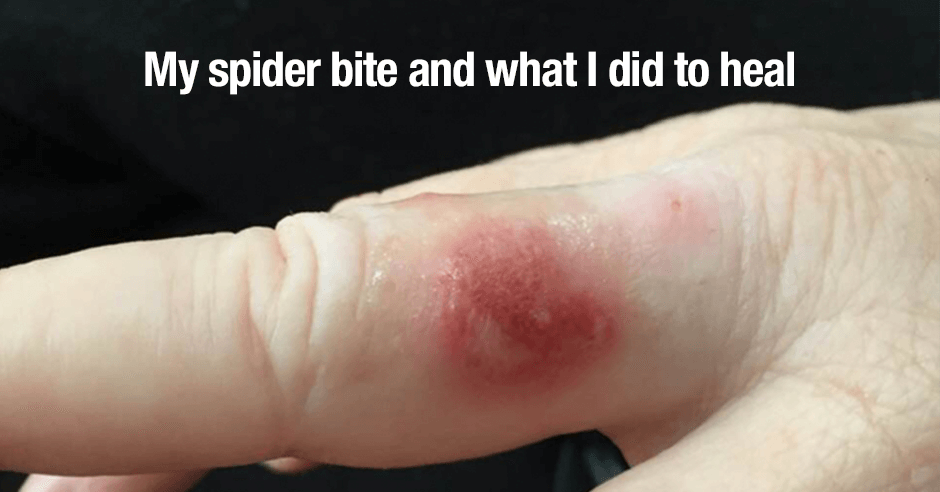
My spider bite and what I did to heal

August 2, 2019 By Trudy Scott 24 Comments

spider bite

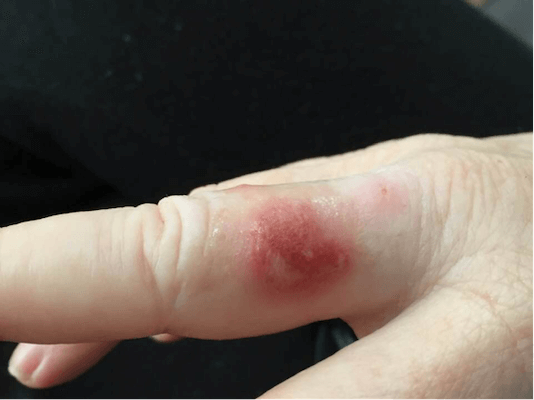
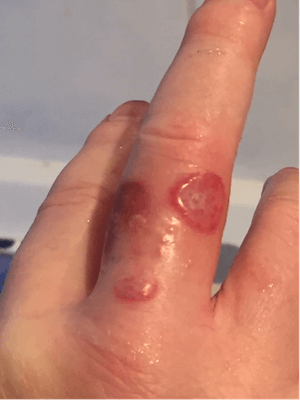
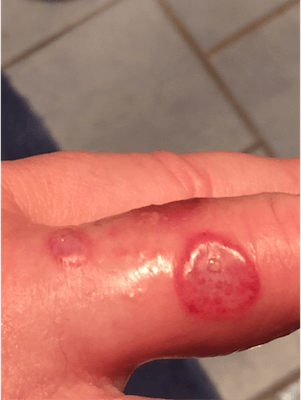
I’m writing this blog to share pictures of the spider bite on the middle finger of my right hand and what I did to heal. I am the first to admit that I am no expert in this area and I am simply sharing my personal story and what I decided was best for me and my body.

I did see a doctor and he said he suspected it was a bite from a white-tailed spider.  A local naturopath and a pharmacist also said it looked like a bite from a white-tailed spider (independently of each other).

It got infected and then “grew” into two large new infections, possibly multiple spider bites? I don’t recall being bitten but did have a bad day where it felt like I had been “gluten-ed” – aching all over, stiff neck, wiped out and bad night’s sleep. Maybe it was the result of the bite?

There is also the possibility swimming and snorkeling on the Great Barrier Reef contributed to the infection. It was covered but water may have gotten inside the dressing. I was also away from home for a week and living in an environment with a fair bit of second-hand smoke and that may have lowered my immunity too.

I did end up having a tetanus shot per the doctor’s recommendation. I had to make a quick decision because the next day I was heading to a farm for 3 days. Upon reflection I doubt it would have made any difference. I hadn’t had a tetanus shot for over 30 years so now I am all set for the next 30 years.

I opted for no antibiotics but did have a prescription in case they grew bigger. I decided to use what I’ve used for boils in the past – cleaning them with tea-tree oil and lavender essential oil and using castor oil and manuka honey topically, together with tons of immune-boosting and natural anti-bacterial products.  These included: oregano oil, garlic and colloidal silver as natural antibiotics; and all this for immune boosting: extra zinc, extra vitamin C, extra vitamin D, and Echinacea.

spider bites

This picture (above) was taken July 6 and was the first picture I took because before then it looked like a slightly infected scratch. I started to clean it daily with lavender and tea tree essential oil and kept it covered with a nice big smear of raw Manuka honey and castor oil (castor oil on the gauze first with honey on top of it).


spider bites spider bites

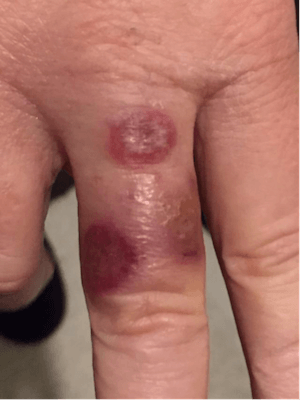
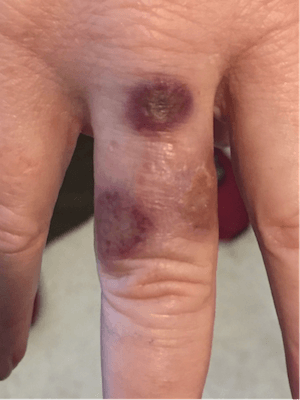
By July 9 the one bite had “morphed” into three and they were looking pretty nasty (as you can see in the above 2 pictures). I wouldn’t say I was overly anxious, but I did have a few moments of worry about whether what I was doing was going to be enough.  I was watching and hoping it wasn’t going to spread beyond my finger.


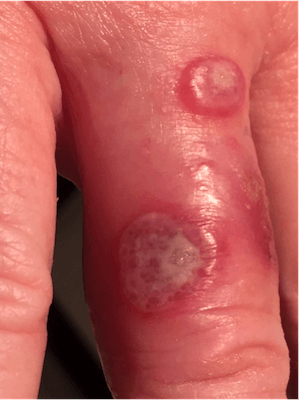
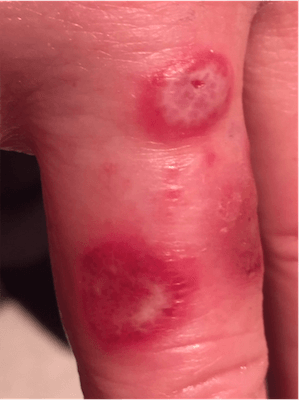
spider bites spider bites

By July 10 and 11 (these 2 pictures above) they were looking very red and I could tell I was really fighting an infection. I continued to watch carefully to make sure it stayed local.


spider bites

And then a day later, July 12, the 3 bites were looking less inflamed and I could tell they were starting to heal nicely. I continued to clean them as above and use Manuka honey/castor oil daily, plus all the nutrients.

spider bites

This is what they looked like by July 16 – the initial bite has healed, and the 2nd and 3rd bites are starting to heal.

Around July 19 I did feet out of sorts for a good week. I had no pain but my finger was still swollen and I had low energy and a foggy brain.


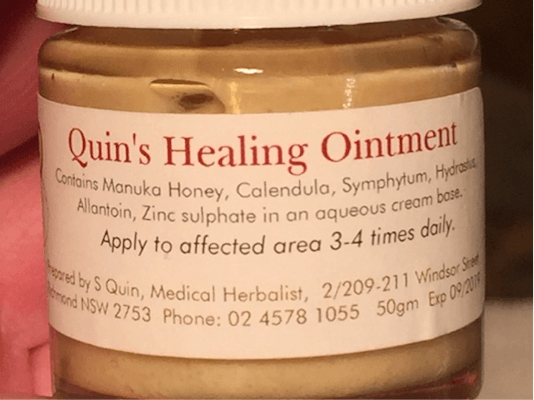
quin's healing ointment

I started to use this – Quin’s Healing Ointment – topically during this last week, always keeping the bites covered. It’s a formulation from a local herbalist Sue Quin and I like that it has manuka honey and calendula, together with zinc. Symphytum/comfrey also helps with wound healing.

spider bites

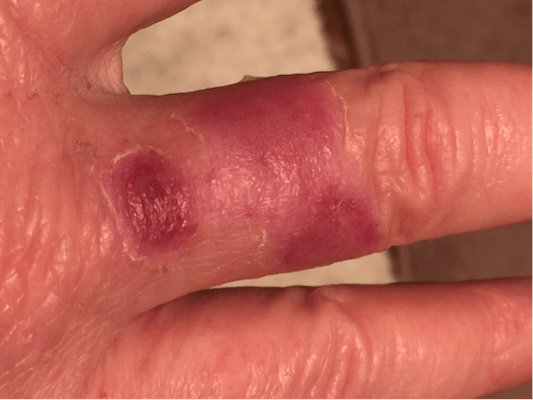
Here you can see all 3 bites nicely healed with new pink skin underneath. This picture was taken yesterday. I’ll start using Helichrysum essential oil (for additional skin healing) together with lavender essential oil in a carrier like coconut oil. I’m going to use lavender because I’m not fond of the Helichrysum aroma and because lavender is healing too (and my favorite essential oil!).

As I mentioned, this is not my area of expertise, but I’ve had enough interest and many requests to share. Documenting it all also helps me if I ever have to go through something like this again – because I’ll hopefully know what to expect.

When I first shared about my spider bite in my newsletter, I was very touched by all the wonderful caring emails – thank you so much for your kind thoughts and tips for me.  You are just wonderful!

If you did email me with your healing tips (I read all the emails) please feel free to post them here in the comments.

And even if you didn’t email me but have your own healing tips about what has worked for you do post them too.   We can all learn from each other.

Filed Under: Inflammation Tagged With: anxious, calendula, essential oils, immune boosting nutrients, lavender, manuka honey, spider bite, tea tree, worried, worry

  • « Go to Previous Page
  • Page 1
  • Page 2
  • Page 3
  • Page 4
  • Go to Next Page »

Primary Sidebar

NEW! GABA QuickStart Homestudy (with special intro pricing)

gaba quickstart homestudy

Free Report

9 Great Questions Women Ask about Food, Mood and their Health

You'll also receive a complimentary subscription to my ezine "Food, Mood and Gal Stuff"


Connect with me

Popular Posts

  • Amino Acids Mood Questionnaire from The Antianxiety Food Solution
  • The Antianxiety Food Solution Amino Acid and Pyroluria Supplements
  • Pyroluria Questionnaire from The Antianxiety Food Solution
  • Collagen and gelatin lower serotonin: does this increase your anxiety and depression?
  • Tryptophan for the worry-in-your-head and ruminating type of anxiety
  • GABA for the physical-tension and stiff-and-tense-muscles type of anxiety
  • The Antianxiety Food Solution by Trudy Scott
  • Seriphos Original Formula is back: the best product for anxiety and insomnia caused by high cortisol
  • Am I an anxious introvert because of low zinc and vitamin B6? My response to Huffington Post blog
  • Vagus nerve rehab with GABA, breathing, humming, gargling and key nutrients

Recent Posts

  • What do I use instead of Seriphos to help lower high cortisol that is affecting my sleep and making me anxious at night?
  • BeSerene™ GABA/theanine cream eases severe muscle tension in her neck/shoulders, prevents her bad headaches and quells her anxiety
  • How the correct approach, dose and sublingual use of GABA can be calming and not cause a flushed and itchy face and neck
  • The amino acid glutamine improves low mood by addressing gut health, and it has calming effects too
  • Flight anxiety with heightened breath, physical tension and also fearing the worst (the role of low GABA and low serotonin)

Categories

  • 5-HTP
  • AB575
  • Addiction
  • ADHD
  • Adrenals
  • Alcohol
  • Allergies
  • Alzheimer's disease
  • Amino Acids
  • Anger
  • Antianxiety
  • Antianxiety Food Solution
  • Antidepressants
  • Anxiety
  • Anxiety and panic
  • Autism
  • Autoimmunity
  • benzodiazapines
  • Bipolar disorder
  • Books
  • Caffeine
  • Cancer
  • Candida
  • Children/Teens
  • Collagen
  • Cooking equipment
  • Coronavirus/COVID-19
  • Cravings
  • Depression
  • Detoxification
  • Diabetes
  • Diet
  • DPA/DLPA
  • Drugs
  • EFT/Tapping
  • EMF
  • EMFs
  • Emotional Eating
  • Endorphins
  • Environment
  • Essential oils
  • Events
  • Exercise
  • Fear
  • Fear of public speaking
  • Fertility and Pregnancy
  • Fish
  • Food
  • Food and mood
  • Functional neurology
  • GABA
  • Gene polymorphisms
  • General Health
  • Giving
  • Giving back
  • Glutamine
  • Gluten
  • GMOs
  • Gratitude
  • Gut health
  • Heart health/hypertension
  • Histamine
  • Hormone
  • Hyperparathyroidism
  • Hypoglycemia
  • Immune system
  • Inflammation
  • Insomnia
  • Inspiration
  • Introversion
  • Joy and happiness
  • Ketogenic diet
  • Lithium orotate
  • Looking awesome
  • Lyme disease and co-infections
  • MCAS/histamine
  • Medication
  • Men's health
  • Mental health
  • Mercury
  • Migraine
  • Mold
  • Movie
  • MTHFR
  • Multiple sclerosis
  • Music
  • NANP
  • Nature
  • Nutritional Psychiatry
  • OCD
  • Osteoporosis
  • Oxalates
  • Oxytocin
  • Pain
  • Paleo
  • Parasites
  • Parkinson’s disease
  • PCOS
  • People
  • PMS
  • Postpartum
  • PTSD/Trauma
  • Pyroluria
  • Questionnaires
  • Real whole food
  • Recipes
  • Research
  • Schizophrenia
  • serotonin
  • SIBO
  • Sleep
  • Special diets
  • Sports nutrition
  • Stress
  • Sugar addiction
  • Sugar and mood
  • Supplements
  • Teens
  • Testimonials
  • Testing
  • The Anxiety Summit
  • The Anxiety Summit 2
  • The Anxiety Summit 3
  • The Anxiety Summit 4
  • The Anxiety Summit 5
  • The Anxiety Summit 6
  • Thyroid
  • Thyroid health
  • Toxins
  • Tryptophan
  • Tyrosine
  • Uncategorized
  • Vegan/vegetarian
  • Women's health
  • Yoga

Archives

  • October 2025
  • September 2025
  • August 2025
  • July 2025
  • June 2025
  • May 2025
  • April 2025
  • March 2025
  • February 2025
  • January 2025
  • November 2024
  • October 2024
  • September 2024
  • August 2024
  • July 2024
  • June 2024
  • May 2024
  • April 2024
  • March 2024
  • February 2024
  • January 2024
  • December 2023
  • November 2023
  • October 2023
  • September 2023
  • August 2023
  • July 2023
  • June 2023
  • May 2023
  • April 2023
  • March 2023
  • February 2023
  • January 2023
  • December 2022
  • November 2022
  • October 2022
  • September 2022
  • August 2022
  • July 2022
  • June 2022
  • May 2022
  • April 2022
  • March 2022
  • February 2022
  • January 2022
  • December 2021
  • November 2021
  • October 2021
  • September 2021
  • August 2021
  • July 2021
  • June 2021
  • May 2021
  • April 2021
  • March 2021
  • February 2021
  • January 2021
  • December 2020
  • November 2020
  • October 2020
  • September 2020
  • August 2020
  • July 2020
  • June 2020
  • May 2020
  • April 2020
  • March 2020
  • February 2020
  • January 2020
  • December 2019
  • November 2019
  • October 2019
  • September 2019
  • August 2019
  • July 2019
  • June 2019
  • May 2019
  • April 2019
  • March 2019
  • February 2019
  • January 2019
  • December 2018
  • November 2018
  • October 2018
  • September 2018
  • August 2018
  • July 2018
  • June 2018
  • May 2018
  • April 2018
  • March 2018
  • February 2018
  • January 2018
  • December 2017
  • November 2017
  • October 2017
  • September 2017
  • August 2017
  • July 2017
  • June 2017
  • May 2017
  • April 2017
  • March 2017
  • February 2017
  • January 2017
  • December 2016
  • November 2016
  • October 2016
  • September 2016
  • August 2016
  • July 2016
  • June 2016
  • May 2016
  • April 2016
  • March 2016
  • February 2016
  • January 2016
  • December 2015
  • November 2015
  • October 2015
  • September 2015
  • August 2015
  • July 2015
  • June 2015
  • May 2015
  • April 2015
  • March 2015
  • February 2015
  • January 2015
  • December 2014
  • November 2014
  • October 2014
  • September 2014
  • August 2014
  • July 2014
  • June 2014
  • May 2014
  • April 2014
  • March 2014
  • February 2014
  • January 2014
  • December 2013
  • November 2013
  • October 2013
  • September 2013
  • August 2013
  • July 2013
  • June 2013
  • May 2013
  • April 2013
  • March 2013
  • February 2013
  • January 2013
  • December 2012
  • November 2012
  • October 2012
  • August 2012
  • July 2012
  • June 2012
  • May 2012
  • April 2012
  • March 2012
  • February 2012
  • January 2012
  • December 2011
  • November 2011
  • October 2011
  • September 2011
  • August 2011
  • July 2011
  • June 2011
  • May 2011
  • April 2011
  • March 2011
  • February 2011
  • January 2011
  • December 2010
  • October 2010
  • September 2010
  • July 2010
  • May 2010
  • April 2010
  • March 2010
  • February 2010
  • January 2010
  • November 2009

Share the knowledge!

The above statements have not been evaluated by the Food and Drug Administration. Products listed in this website are not intended to diagnose, treat, cure or prevent any disease.

The information provided on this site is for informational and educational purposes only and is not intended as a substitute for advice from your physician or other health care professional. You should consult with a healthcare professional before starting or modifying any diet, exercise, or supplementation program, before taking or stopping any medication, or if you have or suspect you may have a health problem.


Copyright © 2026 Trudy Scott. All Rights Reserved. | Privacy | Terms and Conditions | Refund Policy | Medical Disclaimer

Free Report

9 Great Questions Women Ask about Food, Mood and their Health

You’ll also receive a complimentary subscription to my ezine “Food, Mood and Gal Stuff”