• Skip to primary navigation
  • Skip to main content
  • Skip to primary sidebar

everywomanover29 blog

Food, Mood and Women's Health – Be your healthiest, look and feel great!

  • Blog
  • About
  • Services
  • Store
  • Resources
  • Testimonials
  • The Book
  • Contact
  • Search this site

Trudy Scott

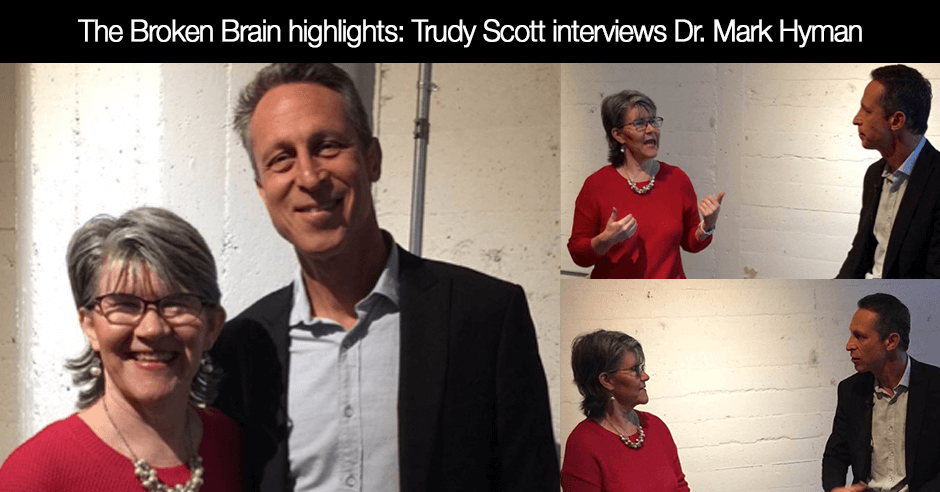
The Broken Brain highlights: Trudy Scott interviews Dr. Mark Hyman

January 3, 2018 By Trudy Scott 6 Comments

I’m really excited to share my in-person video interview with Dr. Mark Hyman, MD. It’s an interview I arranged because I’m so excited about his Broken Brain docu-series which will start airing on January 17th. You may have seen it when they recently did a test launch but if you haven’t yet seen the series it is well-worth watching and is highly recommended! (Registration link here)

In this interview with Dr. Hyman we talk about root causes of anxiety, depression, dementia, Alzheimer’s disease and ADHD: medication side-effects, diet, the microbiome, nutritional deficiencies, brain chemical imbalances, heavy metal toxicities and more; he shares his personal mercury toxicity story and the why behind the Broken Brain series; we cover off-label medications, trauma, labels and functional medicine.

I love the term he uses to describe body-mind medicine (which is different from mind-body medicine): somatopsychic = mental symptoms caused by bodily illness i.e. all of the above root causes.

One of the big reasons I’m supporting The Broken Brain docu-sersies is that it offers solutions and plenty of hope!

Here is the interview and transcript.

(there are captions on the video – if you don’t see them be sure to click the CC on the bottom right)

Trudy: – Welcome, it’s Trudy Scott here, food mood expert, certified nutritionist, author of The Antianxiety Food Solution, host of The Anxiety Summit, and today I’ve got the pleasure of interviewing Dr. Mark Hyman, who is the creator and host of the new Broken Brain series, and I’m just really excited to be here. I’ve been such a fan of yours for so many years. I know my community knows who you are, and they’re really excited about the Broken Brain series. I wanted to get together with you, and give some highlights, and talk about firstly why you created the Broken Brain series, and you’ve got a story behind your passion about it.

Dr. Mark Hyman: – I do. I do. Thank you for having me. Yeah, so about 20 years ago, I went from being a very healthy young doctor to having a broken brain, and a broken body, and it turned out it was from mercury poisoning that I got when I was in China, and I just developed severe chronic fatigue, where I couldn’t focus, I couldn’t remember, I couldn’t think, I couldn’t pay attention, I was depressed, I couldn’t sleep, I felt just completely not myself, and through that journey, was able to discover this world of functional medicine, which I thought was fairly developed at the time, but was really just in its infancy, and through discovering functional medicine, I was able to repair my own system, and fix my broken brain. I began to apply this with patients, seeing all kinds of things, without really knowing what I was doing, I was just treating people’s physical systems, fixing their gut, helping their immune system, cleaning up their diet, optimizing their nutritional status, balancing their hormones, and all their mental problems would get better. Their anxiety would get better, their depression would get better, and I wasn’t actually treating the depression or anxiety. Autism, ADD, memory issues, dementia, all these things would start to get better, and I began to realize that the body was driving a lot of this brain dysfunction, and that if you fix the body, a lot of the brain disorders would get better, that it wasn’t a primarily a mental problem, but it was a physical problem. Just as there’s a mind body effect, which is real, there’s also a body mind effect and that hadn’t been really talked about, so I wrote a book called The UltraMind Solution 10 years ago, which outlined this model, and then really this has been an incredible 10 years of brain research that I felt needed updating, and so we created a documentary series online looking at the new research, and how this applies, and the things that I noticed 10, 15, 20 years ago are now becoming more and more accepted and understood as real, and so we’re able to actually work with people in a very specific and direct way to help heal their broken brains, and to help people recover from things that we thought were really irreversible, not just anxiety, depression, but ADD, autism, dementia, Parkinson’s, all sort of issues that affect the brain that have a very different approach that can be used to repair and heal.

Trudy: – That’s so powerful, and I love that you talk about this effect that the body has on the brain, because we know about mind body medicine, you talk about that in the series, about how we can use our mind to affect our health, but you use this term. Tell me what the term is that you use that talks about how physical issues in our body, nutritional deficiencies, imbalances, can actually affect the brain.

Dr. Mark Hyman: – You mean the body mind effect?

Trudy: – Yes.

Dr. Mark Hyman – Yeah.

Trudy: – You’ve give it a term, and it was called?

Dr. Mark Hyman: – Oh, somatopsychic.

Trudy: – Somatopsychic, yes.

Dr. Mark Hyman: – We think of psychosomatic, but there’s also a somatopsychic phenomena. I would say if you have mercury poisoning, or you have a thyroid problem, or you have abnormal gut flora, or you’re vitamin D deficient, or B12 deficient, it’s very hard to have a proper functioning brain. You can’t just say someone’s got depression, that’s what’s causing their hopelessness, and helplessness, and sadness, and maybe many other things, it could be psychological, it could be a trauma, but it also could be so many other factors, and they often are overlooked and ignored, and when I start peeling back the layers of what’s happening with these people, and looking underneath the hood, and looking through the functional medicine lens at the body as a system, and correcting the imbalances, it’s shocking to me what happens. I always remember when I start applying this, I was like, wow, you got better? I can’t believe it. You shouldn’t really get better, according to Western medicine.

Trudy: – Amazing, and you mention trauma. Even if someone has experienced trauma, if their nutritional status is good, they’re able to deal with it better.

Dr. Mark Hyman: – Right.

Trudy: – And maybe have less symptoms of post-traumatic stress.

Dr. Mark Hyman: – That’s right.

Trudy: – If they have a good nutritional status, and there’s a lot of good research supporting that.

Dr. Mark Hyman: – Absolutely.

Trudy: – You talk about that in the series as well.

Dr. Mark Hyman: – Yeah, absolutely. Your brain has the ability to be resilient, but if you’re nutritionally depleted, and if you’re having all sorts of inflammatory problems, if you’re eating foods you’re reacting to, or allergic to, your brain can’t work properly, so your baseline is going be much lower, but if you fix all those things, then your capacity to deal with your psychological issues, it’s not that they don’t exist, it’s that your ability to cope with them, to work through them, to heal and repair the more difficult things, which are early life traumas, or abuse, or addiction, these are much easier to deal with once you fix the basic constitution of the person.

Trudy: – Right. Now one thing that you talk about a lot in the Broken Brain series, which I really appreciate, is the fact that there’s so much over-medication.

Dr. Mark Hyman: – Yeah.

Trudy: – Can you talk a little about it today? And I know with your story, you also had anxiety, depression, and you were prescribed medications as well.

Dr. Mark Hyman: – Yeah.

Trudy: – So this is common.

Dr. Mark Hyman: – Yeah.

Trudy: – You talk about antipsychotics. You shared some pretty scary stats on the increase that we see.

Dr. Mark Hyman: – When you look at it, it kind of goes up and down, but psychiatric medication as a whole, is the number two or three most prescribed category of drugs in America, and increasing across the globe, and it’s being used instead of dealing with the real issues, and they don’t really even work that well. I mean, anxiety medications can work, but antidepressants have been shown really not to work that well for mild to moderate depression. For severe depression, they can be helpful, and they can be life saving for some people, but they’re not a panacea, and when I was a kid, there was that one kid in the class, Patty Ainsworth, who was a troublemaker. Now it’s like 10% of the class is on ADD medication. That’s a problem.

Trudy: – It is.

Dr. Mark Hyman: – And when we see one in four people have depression in their lifetime, and if the knee jerk reaction is medication, it just sort of gives people a sense of numbness, but it doesn’t really deal with the issue. So I think we are way over-medicated, and on top of that, there’s pushing of medications for off-label use, which means that they’re not approved for those indications. So they’re doing this for kids with antipsychotics, and they’re actually been sued. So the pharma companies have been held liable for promoting these drugs for off-label uses, which they’re not allowed to do, for kids. They get fined billions of dollars, but they don’t care because they’ve made umpteen more billions, and they just see it as a marketing expense. So it’s really discouraging to see what happens to the pharmaceutical use in this space, because even for example, ADD is so fixable by dealing with the root causes, and most of us not are not even trained how to think that way.

Trudy: – That’s why I love the Broken Brian series, because it offers a message of hope, offers some practical solutions, and it empowers the person who’s suffering from the brain disorder, whatever it is, anxiety, depression, dementia, you name it, empowers them with solutions, and I think the other thing is it’s going to give curious practitioners who are not on board with this functional medicine approach some insights into what the future may hold, which I think is very promising.

Dr. Mark Hyman: – Yeah. It’s very powerful. I remember this guy who read my book, The UltraMind Solution, which is really what the Broken Brain series is based on, and he was a doctor, and he had a kid with autism, and he said, “We’re so desperate. Our kids was five, he wasn’t talking. We just started with the diet. We just got him off gluten, casein, and a few days later, all of a sudden, he started talking in full sentences,” and this is a skeptical physician who witnessed this, and I see this all the time. Patients, for example, have Alzheimer’s, or dementia, or diagnosed with dementia, and it turns out they have other issues. They have heavy metal poisoning, or they might have Lyme disease in the brain, or they might have severe nutritional deficiencies, or they might be insulin resistant with high levels of sugar in their diet that are affecting their brain, and you can fix those things. There may still be issues left over, but it’s going to be much easier to deal with those after.

Trudy: – Get to the root cause, and address those root causes.

Dr. Mark Hyman: – That’s right. That’s the purpose of functional medicine, which is a medicine of why, not what, and we have all these labels, but you know, if someone comes into my office, and they’re hopeless, and helpless, have no interest in life, can’t focus, can’t sleep, don’t want to have sex, I know what’s wrong with you. Depression, but depression isn’t the cause of those symptoms, it’s the name of the symptoms. It doesn’t tell you what’s really wrong with that person. It’s could be a host of things, from low thyroid, to gluten, to mercury poisoning, to vitamin D deficiency, to B12 deficiency, to insulin resistance. All these factors can lead to depression. Same syndrome, but different causes. So I’m much more interested in addressing the causes, then you don’t have to use the medication.

Trudy: – And some people have an issue with gluten, and have autism symptoms, and someone else can have depression or anxiety or dementia.

Dr. Mark Hyman: – That’s right.

Trudy: – So it can affect different people in a different way.

Dr. Mark Hyman: – That’s a very good point. So in functional medicine, we see that one disease can have many causes, but on the other hand, one causative factor can create many diseases. For example, heavy metals may cause dementia, or autism, or depression, or anxiety, or insomnia, or gut issues can cause all these various things that are not one disease, or for example gluten, like you mentioned, can cause autoimmune disease, can cause cancer, can cause diabetes, can cause osteoporosis, can cause anemia, can cause depression, can cause even dementia. So how do you begin to think about it? Our current naming of diseases doesn’t make any sense. So all the labeling, if you look at the diagnostic criteria, we have something called the DSM-5, which is the diagnostic and statistical manual that categorizes and catalogs all the psychiatric disorders, and they’re all categorized by symptoms. So it’s all descriptive. It’s says if you have these five symptoms, you have this, but it doesn’t tell you why, and it doesn’t really help you, other than giving you a label, which doesn’t mean anything about helping you understand what’s really going on.

Trudy: – And then you’re on a medication that’s going to give you side effects, and not actually get to the root cause of the problem.

Dr. Mark Hyman: – Right.

Trudy: – And yeah, just make some nutritional changes, addressing the thyroid, getting off gluten, addressing the gut – big session in the Broken Brain series.

Dr. Mark Hyman: – Yeah, it’s huge.

Trudy: – The gut brain connection.

Dr. Mark Hyman: – I mean, we’re just learning about this. For example, for years one of the main ways I treated the brain was fixing the gut, and that means optimizing the flora, getting rid of bad bugs, helping heal leaky gut, and we just did it, we didn’t really have a deep understanding other than we knew the microbiome was important, but now we know, for example, that there are more bacterial molecules in your blood than your own molecules, that you have 10 times as many bacterial cells in you as your own cells, 100 times as much bacterial DNA, and that DNA is all producing proteins, and all those proteins, you have 20,000 genes, there’s two million genes of bacteria in you, and they’re all producing molecules that are entering your blood stream, and driving all sorts of biological reactions, that aren’t even human molecules. So we have to begin to sort of how do those affect the brain and what’s going on? And it’s very powerful.

Trudy: – And so much research in this area, it’s just growing and growing.

Dr. Mark Hyman: – Yeah.

Trudy: – So you mentioned earlier that you wanted to do this because of all the new research. There is so much research on the gut brain connection, nutritional psychiatry. Dr. Drew Ramsey talks about this recent study on depression, and just getting people onto a real whole foods diet, and how 30% saw remission of symptoms, just changing their diet.

Dr. Mark Hyman: – Of course.

Trudy: – Not even going gluten free. So it’s powerful. These small changes can have powerful effects.

Dr. Mark Hyman: – Profound, profound effects

Trudy: – Well, thank you so much.

Dr. Mark Hyman – Thank you.

Trudy: – For your wonderful work that you do. And for making time today. I highly recommend the Broken Brain series with Dr. Mark Hyman, all the wonderful experts.

Dr. Mark Hyman: – Oh, so many. We’ve got 57 experts.

Trudy: – Amazing, some of our favorite functional medicine practitioners.

Dr. Mark Hyman: – Yeah.

Trudy: – Thank you.

Dr. Mark Hyman: – Thank you.

(I’m a tad disappointed that there is the background noise of people talking – and apologize – but I am hoping the great content overrides this and it’s not too distracting.)
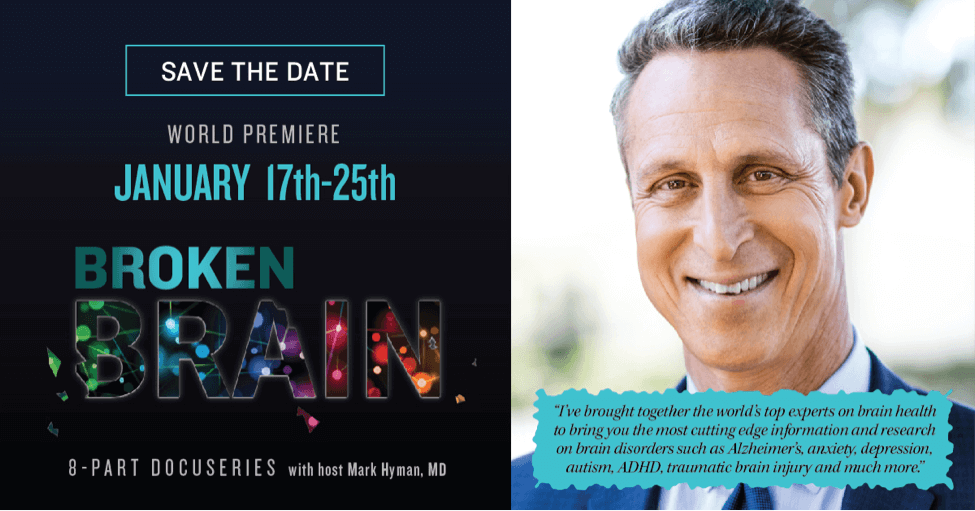
Save the date for the 8 -part Broken Brain docusersies, hosted by Dr. Mark Hyman – and register here. It airs January 17-25th

Here’s a list of ALL the episodes, to showcase just some of what you will have access to. Each episode will be available for 24 hours, at no-cost!

  1. The Broken Brain Epidemic / My Story (January 17)
  2. Gut Brain Connection: Getting to The Root of a Broken Brain (January 18)
  3. Losing Your Mind (Alzheimer’s, Dementia, MS, and More) (January 19)
  4. ADHD and Autism (January 20)
  5. Depression & Anxiety (January 21)
  6. Traumatic Brain Injury: Accidents, Sports, and More (January 22)
  7. 7 Steps to An UltraMind (Part 1) (January 23)
  8. 7 Steps to An UltraMind (Part 2) (January 24)

I hope you enjoy it and get as much out of it as I did!

I actually flew from Sydney to LA for this opportunity to meet and interview him, and share more about the Broken Brain series, and I’m so glad I did! It was the first time I’d met Dr. Hyman in person and it truly was an honor to be in the company of this great man who is doing so much in the functional medicine world! Again, here is that link to register

Please share if any of this resonates with you – what solutions you have found have helped you and/or what you are working on addressing now?

AN UPDATE: there has been some feedback on the term “broken brain” being too negative and even scary so I gathered some feedback and share it in this blog: Is the term ‘broken brain’ hopeful and real or too negative and scary? I really want to hear your thoughts if you are offended by the term broken brain.  I also want to share Dr. Hyman’s apology.
Filed Under: Anxiety, Depression, Events, Gut health, Mental health, Mercury Tagged With: ADHD, alzheimer's, anxiety, broken brain, depression, functional medicine, mark hyman, Trudy Scott

Toxoplasma gondii: schizophrenia, bipolar disorder, OCD and unresolved anxiety?

August 14, 2017 By Trudy Scott 17 Comments

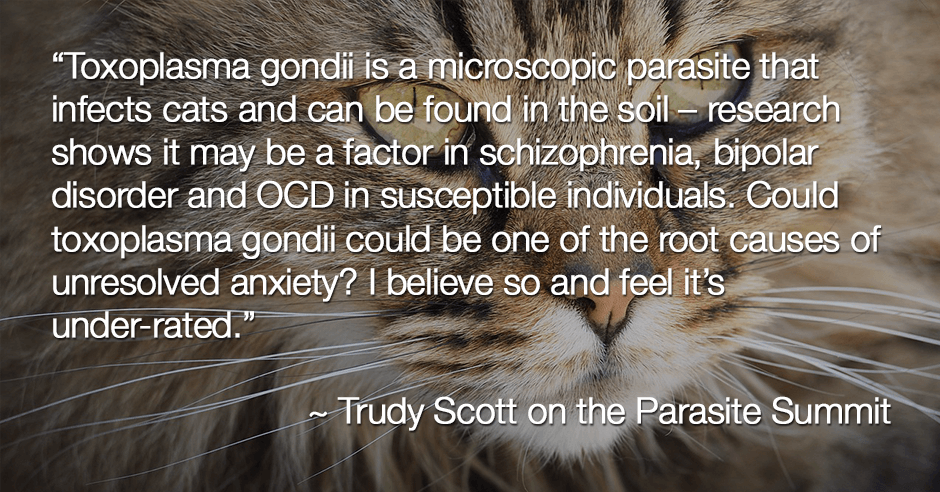
Toxoplasma gondii is a microscopic parasite that infects cats and can be found in the soil – research shows it may be a factor in schizophrenia, bipolar disorder and OCD in susceptible individuals. Could toxoplasma gondii could be one of the root causes of unresolved anxiety? I believe so and feel it’s under-rated.

This is the one of the parasitic infections I cover in an interview I did on The Parasite Summit.

Here are a few snippets from my interview:

A single-celled parasite called Toxoplasma gondii causes a disease known as toxoplasmosis.

Toxoplasma gondii is a microscopic parasite that infects cats and can be found in the soil. The infection can be acquired by ingesting contaminated food or water, by handling contaminated cat litter, or by transmission from mother-to-child.

According to the CDC – as of Mar 1, 2017 – in the United States it is estimated that 11% of the population 6 years and older have been infected with Toxoplasma. In various places throughout the world, it has been shown that up to 95% of some populations have been infected with Toxoplasma.

I love cats and have always been a cat person and pets are wonderful companions helping many of us humans recovering from PTSD and trauma – but we always need to dig deeper:

  • some individuals don’t respond as well to dietary changes, brain chemical balancing and addressing other biochemical/nutritional factors
  • I’m always looking for root possible causes. I’ve identified 70+ causes of anxiety and one of them is parasites
  • any parasite could be a factor – it causes stress and inflammation in the body, and we may see high cortisol leading to increased anxiety, insomnia and inflammation
  • could toxoplasma gondii could be one of the root causes of unresolved anxiety? I believe so and feel it’s under-rated – and believe we’ll be hearing more about it as more research comes out

I discuss this review paper published this year: Is Toxoplasma gondii a Trigger of Bipolar Disorder?

The association between T. gondii and schizophrenia/schizoaffective disorder is one of the most studied links between one pathogen and a psychiatric disorder.

However, growing emerging evidence has also documented an association between latent toxoplasmosis and the risk of [bipolar disorder] and suicidal/aggressive behaviors. T. gondii infection, as previously suggested for schizophrenia, may contribute to the onset and the progressive course of the disease interacting with genetic hereditary predisposing factors, as well as affecting neurotransmitter systems and immune responses, which have recently been shown to be closely linked to the pathogenesis of BD and its medical comorbidities.

The link between this parasite and psychiatric disorders could be also explained by its ability to influence neurotransmitter pathways. Indeed, T. gondii has been shown to increase dopamine levels, as well as to modulate serotonin, gamma-aminobutyric acid (GABA) and glutamate signaling.

With the impacts on neurotransmitters it’s clear how this parasite could directly trigger anxiety, panic attacks, fears, worry and even OCD. I cover this and more (malaria and malaria medications too) in my interview and book.

Parasites may be silently impacting your health and they’re FAR MORE COMMON than you think! Parasites aren’t just found in third-world countries, millions are already infected in industrialized countries and parasites could be silently hampering your health. Fortunately, with awareness and appropriate care, parasites can be prevented and treated, once detected.

If you’re struggling with any of the following, it may be worth looking into parasites:

  • Gastrointestinal: pain/cramps, excess gas, bloating, constipation/diarrhea
  • Infertility and hormone disorders
  • Skin issues: acne, itching, rashes
  • Mental health: depression, bipolar disorder, anxiety, OCD, schizophrenia
  • Challenges with autoimmune disease recovery (Toxoplasma gondii may also be a factor in Hashimoto’s thyroiditis)

Please share feedback and ask questions in the comments below.

Filed Under: Anxiety and panic, Events, Parasites Tagged With: anxiety, bipolar disorder, cats, dopamine, GABA, hashimoto's thyroiditis, OCD, parasite, schizophrenia, serotonin, The Parasite Summit, toxoplasma gondii, Trudy Scott

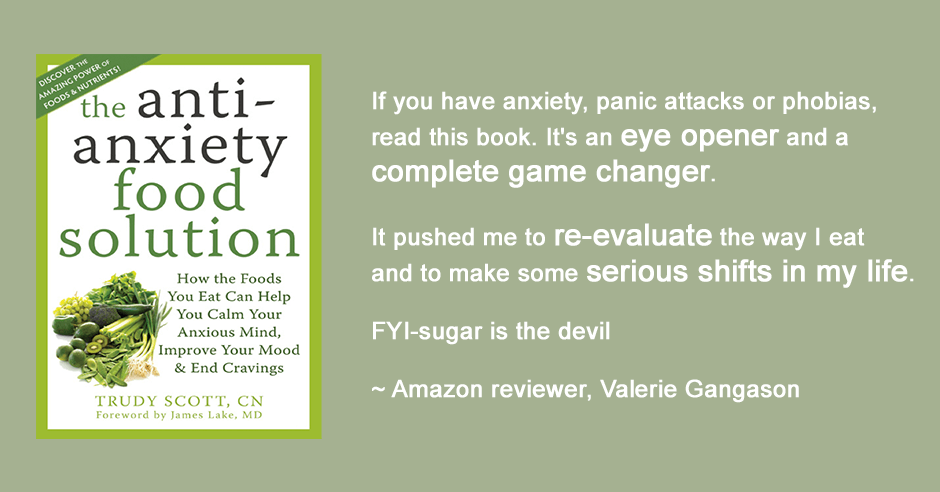
The Antianxiety Food Solution: This Book Is a Total Game Changer!!

July 21, 2017 By Trudy Scott 7 Comments

I write multiple blogs each week and the website is a wealth of information (be sure to check the comments too – I love the community feedback and questions and learn so much from you!) BUT the foundation of all that I teach and how I work with my anxious clients is outlined in great detail in my book The Antianxiety Food Solution, so I recommend this essential reading to make the basic food changes (for some people that’s all they need to do), and before using any of the nutrients, and especially before using targeted individual amino acids.  

Valerie Gangason posted this wonderful review on Amazon recently: This Book Is a Total Game Changer!!

If you have anxiety, panic attacks or phobias, read this book. It’s an eye opener and a complete game changer. It pushed me to re-evaluate the way I eat and to make some serious shifts in my life. FYI-sugar is the devil

I love the comment about sugar being the devil and commend her for re-evaluating how she eats and for making those serious shifts. It’s how you get results and I ever get tired of feedback like this.

Grab your copy from Amazon here if you don’t yet have it. If you already have a copy I’d love a review on Amazon please! And if you have an older copy with no index you can grab a copy of the index here

Feel free to share your great results or ask questions in the comments.

Filed Under: Books Tagged With: anxiety, anxious, eat, panic attacks, phobias, sugar, the antianxiety food solution, Trudy Scott

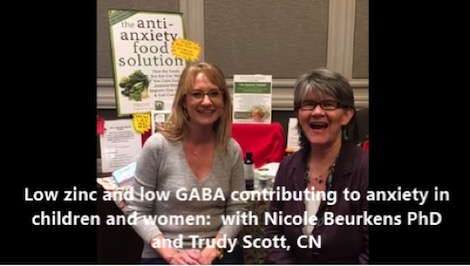
Low zinc and low GABA contributing to anxiety in children and women

October 7, 2016 By Trudy Scott 18 Comments

low-zinc-gaba-video

Dr. Nicole Beurkens and I sit down together at the end of the recent Integrative Medicine for Mental Health conference to talk about anxiety and the impact of both low zinc and low GABA. Nicole shares her perspectives on working with children and I share what I see with the adult women I work with. We don’t specifically talk about older adults or men but it’s applicable to everyone.

Dr. Nicole Beurkens PhD, a special educator, clinical psychologist and nutritionist, is author of the new book Life Will Get Better: Simple Solutions for Parents of Children with Attention, Anxiety, Mood and Behavior Challenges

In case you’re new to my community, this is my book: The Antianxiety Food Solution: How the Foods You Eat Can Help You Calm Your Anxious Mind, Improve Your Mood, and End Cravings

Here are some of the highlights from our conversation about zinc:

  • Zinc is a very common deficiency and can be a contributing factor in both anxiety and ADHD
  • Zinc is depleted by sugar consumption, stress and exercise
  • Zinc sulfate used as a zinc challenge is one way to determine your zinc status
  • Nicole’s response to the zinc challenge: fuzzy, strong yukky taste – which means good zinc levels
  • Most people coming to the booth had very little reaction to the zinc challenge – which means low zinc levels
  • Level 1, 2, 3 and 4 are used to figure out your zinc status (you can read about the zinc taste test here)
  • My response to the zinc challenge: metallic, gross, horrible and I got goosebumps – – which means good zinc levels
  • Nicole shares that most of kids and young adults at her clinic have level 1 or level 2 zinc status, and it’s an easy test to do with kids
  • Many people at the conference were on zinc and were surprised they were not tasting the zinc sulfate. Other than sugar consumption, stress and exercise, low HCl (stomach acid) can affect your absorption. I also found that many of these folks were on a gluten-free or Paleo or GAPs diet and eating a lot of nuts or using nut flours. Nuts are high in copper and this can counteract the zinc.
  • We talk about the importance of good quality zinc supplements and finding a zinc product and multi that is copper-free. Here are the products I recommend.

Then we talk about GABA Calm, a calming amino acid that we both love! Here are some of the highlights from this section:

  • It’s a lozenge/sublingual, is easy to take and helps in situations where the anxiety can quickly escalate into panic attacks. Nicole likes the peppermint flavor and finds many of the children and young adults she works with prefer the orange flavor. Personally I also prefer the orange flavor.
  • For adults, if you use wine at the end of the day to de-stress, you may be low in GABA and self-medicating, and using something like GABA-Calm often helps.
  • Moms will take their GABA Calm with them and use as needed and give to their kids if needed too.  
  • I share how effective it is for Lyme anxiety and how it can be used instead of benzodiazepines (I interviewed Trish about this on the recent Anxiety Summit)
  • GABA Calm can help when you’re on a benzodiazepine and even very severe anxiety or depression can be alleviated with diet and nutrients.
  • Nicole shares how common benzodiazepine prescriptions are in teens and young adults; and the issues with dependence and wanting to quit but not being able to. It can sometimes take years to reduce the medications.
  • I share about the first World Benzo Awareness Day on July 11 – so many people are in trouble and are not cautioned.

We were both so encouraged being at this conference and seeing so many physicians, psychiatrists, psychotherapists, psychiatric nurse practitioners and others practitioners who are really interested in learning more about these approaches. They are seeing the same issues we see with some of the medications (and not getting to the root cause of anxiety) and they are excited to expand their knowledge base. It’s just so exciting to see the pendulum swinging!

We both really appreciate the Integrative Medicine for Mental Health conference. If you’re a practitioner and haven’t attended it’s a must-attend event. If you were there you know what I mean. It was also super to meet so many of you after my talk and at my booth. If you’re not a practitioner do tell your doctor about it. Save the date for 2017: September 28 – October 1 in Orange County, California.

We did this as a live video feed on Facebook hence the references to posting questions and Facebook. It was also the end of the event and the people next to us were packing boxes and using a lot of tape so apologies for the weird noises.  

Feel free to share your results with zinc and GABA Calm and any questions you may have.

Filed Under: GABA Tagged With: anxiety, benzodiazepines, children, GABA, GABA Calm, Integrative Medicine for Mental Health conference, Nicole Beurkens, Trudy Scott, women, zinc

The Anxiety Summit – Closing

June 16, 2016 By Trudy Scott 21 Comments

Trudy Scott_Anxiety4_Closing

The host of the Anxiety Summit, Trudy Scott, Food Mood Expert and Nutritionist, author of The Antianxiety Food Solution closes the Anxiety Summit Season 4.

Anxiety Summit closing: Neurotransmitter testing, amino acid questions, hyperflexibility/EDS and pet anxiety

  • Ehlers Danlos Syndrome/EDS, hyperflexibility, connective tissue problems and the connection to pyroluria/social anxiety
  • Natural anxiety solutions for cats, dogs and horses
  • Neurotransmitter and pyroluria testing: what works and what doesn’t
  • Amino acid questions I get asked and my feedback
  • Questions from you, the summit attendees

If this is your first summit and this nutritional info is new to you and you feel overwhelmed start at the beginning and take baby steps and start with the basics: switch to eating a real whole foods diet and dump the junk/processed food, eat to control blood sugar get off the sugar and get off the gluten and caffeine.

You can come back to the advanced topics like oxytocin and fluroquinoline toxicty and Lyme disease and heavy metals and Ehlers Danlos syndrome (and all the rest) later.

I shared these 60+ Nutritional & Biochemical Causes of Anxiety on my closing call  of  The Anxiety Summit season 3.   I hope they will help you put the puzzle pieces together to resolve your anxiety.

Here is some of the Ehlers-Danlos Syndrome and anxiety/social anxiety/pyroluria information from the blog I posted late last year: Joint hypermobility / Ehlers-Danlos Syndrome and pyroluria?

Here is what we know from the research: disorder of connective tissue, premature osteoarthritis, intestinal dysmotility, and laxity in other tissues causing hernias or uterine or rectal prolapse, chronic pain some with serious disability

Here is the feedback I received from my blog reader: much higher than expected incidences of anxiety, depression, chronic pain which is often labelled as fibromyalgia, gastrointestinal problems, pyroluria, POTS (Postural orthostatic tachycardia syndrome) and MCAS (Mast Cell Activation Syndrome), leaky gut, less than ideal responses to nutrient therapies, many on cocktails of medications for pain, sleep, anxiety, depression, reflux, IBS, menstrual disorders etc.  [I appreciate her for posing the question]

There are a number of papers published in 2014 and 2015 linking EDS / Ehlers-Danlos Syndrome with psychiatric disorders, in one Swedish paper anxiety was as high as 74.8%.  In another paper they found preliminary connections with depression, ADHD, autism spectrum disorders, and OCD.

I have had many people with pyroluria confirm the connection and a number who get on the pyroluria protocol see their symptoms improve.  One person found a connection to Thin Basement Membrane Disease (an inherited collagen/connective tissue disorder diagnosed via kidney biopsy) and pyroluria and saw an improvement in both on the pyroluria protocol.

Here is the pyroluria questionnaire

Please see the above blog for links to the research I discussed and all the comments

Lisa Bloomquist shared this in the blog comments of her interview: Antibiotic Induced Anxiety – How Fluoroquinolone Antibiotics Induce Psychiatric Illness Symptoms

I agree completely, both that people with EDS should never be given fluoroquinolones (check this out ), and that fluoroquinolones can also exacerbate and cause EDS symptoms (and maybe EDS itself). Fluoroquinolones definitely cause connective tissue problems. They even have a black box warning on them noting the damage they can do to tendons. In addition to tendons, they can also damage cartilage, muscles, and collagen. I’m not sure whether the FQs trigger symptoms of EDS, or if they trigger epigenetic changes that lead to EDS. There are an unfortunately large number of people who have EDS symptoms post-exposure to these drugs.

The person who posed the question to me is a member of a FB group called: Ehlers Danlos Syndrome and Polysaccharide 

I haven’t had a chance to look into everything they recommend but I’ve been super impressed with what I’ve seen on this online forum.

Let us know if this resonates with you and if you have you been diagnosed with joint hypermobility or Ehlers-Danlos Syndrome?  If you have pyroluria to let us know if the pyroluria protocol of zinc, vitamin B6, evening primrose oil and a good copper-free multi has helped?

thundershirt

Pets and anxiety:

  • Anxitane, tryptophan, gluten-free diet and a Thundershirt (here’s an example of one)
  • Check with your vet about Rescue Remedy and pyroluria protocol (I’ve had feedback from people using both approaches)
  • Researchers have found that vets who were given pet dogs showed significant improvement in their PTSD symptoms. Here is the article

New research just out: Antidepressive treatment during pregnancy can affect newborn brain activity

New Medscape article – Fluoroquinolones: Not First-Line Treatment

Inspiring words of wisdom from a listener:

It was very helpful to hear of Tricia and her family’s journey with lyme, anxiety, pylouria, GABA, etc.  I am hoping that other parents will try “natural” remedies first for anxiety, panic, etc. I was put on antidepressants in my early teens and thus began a life long battle of trying to get my life back.

My parents didn’t know the repercussions of the medications I was on. I went from being an A student to being completely zoned out for a while in school, along with other problems from the prescription medications. Then came the thoughts of suicide and more. I had no idea what was going on with me.

Years later, a psychiatrist who seemed more open to natural remedies and who couldn’t find a medication that could help me or keep me from completely losing it, had an “enlightened moment” and when he went back over my history realized the “issues” I was having was most likely related to my hormones. I would indeed find out later that this was the case and that it had to do a lot with what we were eating growing up. My hormones were a mess as a young teenager and what we were eating a home was not at all healthy for us and filled with hormones, antibiotics, etc.

I want to impress on people that these prescription medications will ALWAYS do more damage than good. And my heart breaks when I hear of the young people around me being put on these medications. I just recently learned ECT (shock treatment) is now being used on the young.

Some time back, I cannot remember, I learned of you, Trudy, and your work. Even though I knew some of what you taught, I was still afraid to completely let go of the meds. It took some time, a great deal of struggle, patience and trust, but I eventually made the switch to a WAY MORE healthier diet, L-tryptophan, GABA calm and GABA, and have slowly begun to reclaim my life.

If you are not already registered for the Anxiety Summit you can get live access to the speakers of the day here: www.theAnxietySummit.com

Missed this interview or can’t listen live? Or want this and the other great interviews for your learning library? Purchase the MP3s or MP3s + transcripts and listen when it suits you.

You can find your purchasing options here.: Anxiety Summit Season 1, Anxiety Summit Season 2, Anxiety Summit Season 3, and Anxiety Summit Season 4.

Filed Under: Events, The Anxiety Summit 4 Tagged With: anxiety, anxiety summit, Trudy Scott

The Anxiety Summit – GABA: Blood brain barrier controversy, concerns, best forms and how to do a trial for eliminating anxiety

June 15, 2016 By Trudy Scott 106 Comments

Trudy Scott_GABA_Anxiety4

Trudy Scott, Food Mood Expert and Nutritionist, author of The Antianxiety Food Solution. presents during the Anxiety Summit Season 4.

GABA: Blood brain barrier controversy, concerns, best forms and how to do a trial for eliminating anxiety

  • Dispelling the blood brain barrier and the leaky brain myths
  • The newest research on GABA effectiveness
  • The best forms of GABA and why I have concerns about phenibut
  • Results from clients and feedback from practitioners using GABA
  • How to do a trial for the best results in eliminating anxiety

Here are some snippets from my presentation:

Worry and anxiety can be a result of low GABA and also low serotonin, so you may check off anxiety in both sections. Low GABA tends to result in a more physical anxiety, while low serotonin tends to result in more anxiety in the head and ruminating thoughts etc

With low GABA you have physical anxiety

  • Anxiety and feeling overwhelmed or stressed
  • Feeling worried or fearful
  • Panic attacks
  • Unable to relax or loosen up
  • Stiff or tense muscles
  • Feeling stressed and burned-out
  • Craving carbs, alcohol, or drugs for relaxation and calming

The targeted use of individual amino acid supplements like GABA will balance brain chemistry to alleviate anxiety, fear, worry, panic attacks, and feeling stressed or overwhelmed. They can also be helpful in addressing other problems that contribute to or exacerbate anxiety, such as sugar cravings and addictions. In addition, they can help with depression and insomnia, which often co-occur with anxiety.

Here is the amino acid questionnaire with all 5 sections including GABA

Here is the blog that discusses urinary neurotransmitter testing and why I don’t use it

Here are the list of amino acid precautions 

the main precaution with GABA is low blood pressure but I have yet to see it as an issue, liver/kidney issues – watch, GABA has not been studied in pregnancy or breastfeeding

Many individuals tapering from benzodiazepines find using GABA and other nutrients help the taper while others can’t tolerate GABA and other supplements.  If you’re new to the ill-effects of benzos do watch this webinar I did for Hawthorn University last year: Say NO to Benzos

The blood brain barrier controversy and the fact that so many people say GABA only works if you have a leaky brain

Does a GABA supplement have to cross the blood brain barrier to be effective? A nutrition seminar I have been to, said it does not and GABA supplements are ineffective

The 1960 paper published by Eugene Roberts, the scientist who discovered GABA mentions the failure of GABA to penetrate the blood-brain barrier readily:  Metabolic and Neurophysiological Roles of GABA

The 2015 zonulin intestinal permeability/leaky gut and possible blood brain barrier disruption paper: Gluten Psychosis: Confirmation of a New Clinical Entity

Zonulin is a tight junction modulator that is released by the small intestine mucosa upon gluten stimulation. Interestingly the zonulin receptor, identified as the precursor for haptoglobin-2, has been found in the human brain. Overexpression of zonulin (aka haptoglobin-2) could be involved in the blood brain barrier disruption similarly to the role that zonulin plays in increasing intestinal permeability.

NY Times article: Could Alzheimer’s Stem From Infections?

A virus, fungus or bacterium gets into the brain, passing through a membrane — the blood-brain barrier — that becomes leaky as people age

GABA – other possible mechanisms of action:

The microbiome and the bidirectional gut brain communication: Ingestion of Lactobacillus strain regulates emotional behavior and central GABA receptor expression in a mouse via the vagus nerve

Is the blood brain barrier more dynamic than assumed? A 2015 study discusses this Oral GABA supplementation allows better prioritizing of planned actions: new research

In the literature, there are controversial findings about GABA entering the brain through the blood brain barrier (BBB). The BBB is a tightly sealed layer of cerebral endothelial cells that form continuous tight junctions and prevent most solutes from entering the brain on the basis of size, charge, and lipid solubility. However … recent studies have demonstrated that the BBB is much more dynamic than assumed in the past, and some passage of solutes can occur by transcytosis, carrier-mediated transport, or simple diffusion of hydrophobic substances.

GABA’s relaxing effect may be due to peripheral effects rather than the effect on/in the brain. Here is an excerpt from this paper: GABA-receptors in peripheral tissues

GABA and its receptors are found in a wide range of peripheral tissues, including parts of the peripheral nervous system, endocrine, and non-neural tissues such as smooth muscle and the female reproductive system

The possible peripheral effects are also mentioned in this paper –  Psychological stress-reducing effect of chocolate enriched with gamma-aminobutyric acid (GABA) in humans: assessment of stress using heart rate variability and salivary chromogranin A

it has been considered that GABA may act on the peripheral nervous system of the digestive organs and not the central nervous system

The newest research on the mechanism of GABA was published just last year in October 2015 – Neurotransmitters as food supplements: the effects of GABA on brain and behavior

There is some evidence in favor of a calming effect of GABA food supplements, but most of this evidence was reported by researchers with a potential conflict of interest. We suggest that any veridical effects of GABA food supplements on brain and cognition might be exerted through BBB passage or, more indirectly, via an effect on the enteric nervous system. We conclude that the mechanism of action of GABA food supplements is far from clear, and that further work is needed to establish the behavioral effects of GABA. 

Here is other GABA research I mentioned:

  • A paper published in Life Sciences reports that a combination of GABA (?-aminobutyric acid) and 5-HTP (5-hydroxytryptophan) improved sleep and sleep duration more than the use of either of the two amino acids alone.
  • Research published in November 2015 – Study of GABA in Healthy Volunteers: Pharmacokinetics and Pharmacodynamics shows potential benefits for diabetes
  • The 2006 research on oral GABA being a natural relaxant for 13 subjects who crossed a suspended bridge as a stressful stimulus
  • The Improvement of Sleep by Oral Intake of GABA and Apocynum venetum Leaf Extract

I voiced concerns about how with phenibut physical dependence can develop and withdrawal symptoms can be similar to benzodiazepines

And how gabapentin withdrawal tends to mimic some of the same withdrawal symptoms associated with benzodiazepine withdrawal

Here is the blog post: how to do an amino acid trial for anxiety

I get valuable feedback about GABA’s effectiveness from other practitioners. Here are a few (and more here):

Dr. Josh Friedman, integrative psychotherapist uses amino acids and other nutritional approaches in his practice:

[GABA] is definitely something I use. I am not a biochemist, so I actually don’t really know whether it crosses the blood/brain barrier, nor do I care actually. The first question should be, is it harmful? Are any of these things going to cause harm? And the answer with all the amino acids are no, they’re not going to cause harm, especially when compared to psychiatric medicines. The second question is, does it work? Is it helpful for our patients that we see in our practice?

Jonathan Prousky, ND, MSc, editor of the Journal of Orthomolecular Medicine and author of Anxiety: Orthomolecular Diagnosis and Treatment shares this in our season 2 interview: Tapering off psychiatric drugs so they do not ruin your life 

I have found GABA to be invariably helpful and I don’t really know exactly how GABA works but I know it to be very, very safe and, to me, that is fundamentally important. It’s not associated with any withdrawal, with any tolerance, with any habituation, so people can try it without a lot of concern.

And it seems fitting to end with a quote from my mentor Julia Ross

On a scale of zero to ten, zero is not an unrealistic goal when it comes to anxiety.  It’s really the human potential and GABA gives us access to it.

And some feedback from real people who’ve used GABA (more here)

Dee likes the instant calm from a product that contains 500mg GABA and 200mg Theanine:

I have taken Xanax in the past for panic attacks. My functional medicine doctor suggested this product as I wanted a natural product. I was amazed how it works just like the Xanax did – instant calm feeling within 10 mins of taking 2 capsules. I use them as needed when I am having heightened stress and anxiety.

Melissa likes a product that contains GABA, taurine, glycine, inositol, niacin and vitamin B6

After my first panic attack I thankfully found Julia Ross’s work. I began taking 250 mg GABA every night. That really helped! Now a few years later I don’t need it every day, and I take a half pill during my cycle anxiety – more like uneasiness and over worried now, just as needed. I then heard you speak Trudy and share more info, bought your book, and put into place supportive lifestyle changes, and I have my life back. GABA is a great supplement for some of us!

Gina chewed two 100mg pharma GABA tablets and said this:

It changed my life in minutes! Take it every day now. No more hopelessness!

Do the amino acid questionnaire, review the precautions and do a GABA trial and let us know how it worked for you? If you’re a practitioner I’d love feedback too.

I’d also love to hear if you notice any difference opening a capsule or using something like GABA Calm instead of swallowing a capsule.

Here’s to hope and calm!

If you are not already registered for the Anxiety Summit you can get live access to the speakers of the day here: www.theAnxietySummit.com

Missed this interview or can’t listen live? Or want this and the other great interviews for your learning library? Purchase the MP3s or MP3s + transcripts and listen when it suits you.

You can find your purchasing options here.: Anxiety Summit Season 1, Anxiety Summit Season 2, Anxiety Summit Season 3, and Anxiety Summit Season 4.

Filed Under: Events, GABA, The Anxiety Summit 4 Tagged With: anxiety, anxiety summit, blood brain barrier, GABA, GABA trial, Trudy Scott

  • « Go to Previous Page
  • Page 1
  • Page 2
  • Page 3
  • Page 4
  • Interim pages omitted …
  • Page 24
  • Go to Next Page »

Primary Sidebar

NEW! GABA QuickStart Homestudy (with special intro pricing)

gaba quickstart homestudy

Free Report

9 Great Questions Women Ask about Food, Mood and their Health

You'll also receive a complimentary subscription to my ezine "Food, Mood and Gal Stuff"


Connect with me

Popular Posts

  • Amino Acids Mood Questionnaire from The Antianxiety Food Solution
  • The Antianxiety Food Solution Amino Acid and Pyroluria Supplements
  • Pyroluria Questionnaire from The Antianxiety Food Solution
  • Collagen and gelatin lower serotonin: does this increase your anxiety and depression?
  • Tryptophan for the worry-in-your-head and ruminating type of anxiety
  • GABA for the physical-tension and stiff-and-tense-muscles type of anxiety
  • The Antianxiety Food Solution by Trudy Scott
  • Seriphos Original Formula is back: the best product for anxiety and insomnia caused by high cortisol
  • Am I an anxious introvert because of low zinc and vitamin B6? My response to Huffington Post blog
  • Vagus nerve rehab with GABA, breathing, humming, gargling and key nutrients

Recent Posts

  • What do I use instead of Seriphos to help lower high cortisol that is affecting my sleep and making me anxious at night?
  • BeSerene™ GABA/theanine cream eases severe muscle tension in her neck/shoulders, prevents her bad headaches and quells her anxiety
  • How the correct approach, dose and sublingual use of GABA can be calming and not cause a flushed and itchy face and neck
  • The amino acid glutamine improves low mood by addressing gut health, and it has calming effects too
  • Flight anxiety with heightened breath, physical tension and also fearing the worst (the role of low GABA and low serotonin)

Categories

  • 5-HTP
  • AB575
  • Addiction
  • ADHD
  • Adrenals
  • Alcohol
  • Allergies
  • Alzheimer's disease
  • Amino Acids
  • Anger
  • Antianxiety
  • Antianxiety Food Solution
  • Antidepressants
  • Anxiety
  • Anxiety and panic
  • Autism
  • Autoimmunity
  • benzodiazapines
  • Bipolar disorder
  • Books
  • Caffeine
  • Cancer
  • Candida
  • Children/Teens
  • Collagen
  • Cooking equipment
  • Coronavirus/COVID-19
  • Cravings
  • Depression
  • Detoxification
  • Diabetes
  • Diet
  • DPA/DLPA
  • Drugs
  • EFT/Tapping
  • EMF
  • EMFs
  • Emotional Eating
  • Endorphins
  • Environment
  • Essential oils
  • Events
  • Exercise
  • Fear
  • Fear of public speaking
  • Fertility and Pregnancy
  • Fish
  • Food
  • Food and mood
  • Functional neurology
  • GABA
  • Gene polymorphisms
  • General Health
  • Giving
  • Giving back
  • Glutamine
  • Gluten
  • GMOs
  • Gratitude
  • Gut health
  • Heart health/hypertension
  • Histamine
  • Hormone
  • Hyperparathyroidism
  • Hypoglycemia
  • Immune system
  • Inflammation
  • Insomnia
  • Inspiration
  • Introversion
  • Joy and happiness
  • Ketogenic diet
  • Lithium orotate
  • Looking awesome
  • Lyme disease and co-infections
  • MCAS/histamine
  • Medication
  • Men's health
  • Mental health
  • Mercury
  • Migraine
  • Mold
  • Movie
  • MTHFR
  • Multiple sclerosis
  • Music
  • NANP
  • Nature
  • Nutritional Psychiatry
  • OCD
  • Osteoporosis
  • Oxalates
  • Oxytocin
  • Pain
  • Paleo
  • Parasites
  • Parkinson’s disease
  • PCOS
  • People
  • PMS
  • Postpartum
  • PTSD/Trauma
  • Pyroluria
  • Questionnaires
  • Real whole food
  • Recipes
  • Research
  • Schizophrenia
  • serotonin
  • SIBO
  • Sleep
  • Special diets
  • Sports nutrition
  • Stress
  • Sugar addiction
  • Sugar and mood
  • Supplements
  • Teens
  • Testimonials
  • Testing
  • The Anxiety Summit
  • The Anxiety Summit 2
  • The Anxiety Summit 3
  • The Anxiety Summit 4
  • The Anxiety Summit 5
  • The Anxiety Summit 6
  • Thyroid
  • Thyroid health
  • Toxins
  • Tryptophan
  • Tyrosine
  • Uncategorized
  • Vegan/vegetarian
  • Women's health
  • Yoga

Archives

  • October 2025
  • September 2025
  • August 2025
  • July 2025
  • June 2025
  • May 2025
  • April 2025
  • March 2025
  • February 2025
  • January 2025
  • November 2024
  • October 2024
  • September 2024
  • August 2024
  • July 2024
  • June 2024
  • May 2024
  • April 2024
  • March 2024
  • February 2024
  • January 2024
  • December 2023
  • November 2023
  • October 2023
  • September 2023
  • August 2023
  • July 2023
  • June 2023
  • May 2023
  • April 2023
  • March 2023
  • February 2023
  • January 2023
  • December 2022
  • November 2022
  • October 2022
  • September 2022
  • August 2022
  • July 2022
  • June 2022
  • May 2022
  • April 2022
  • March 2022
  • February 2022
  • January 2022
  • December 2021
  • November 2021
  • October 2021
  • September 2021
  • August 2021
  • July 2021
  • June 2021
  • May 2021
  • April 2021
  • March 2021
  • February 2021
  • January 2021
  • December 2020
  • November 2020
  • October 2020
  • September 2020
  • August 2020
  • July 2020
  • June 2020
  • May 2020
  • April 2020
  • March 2020
  • February 2020
  • January 2020
  • December 2019
  • November 2019
  • October 2019
  • September 2019
  • August 2019
  • July 2019
  • June 2019
  • May 2019
  • April 2019
  • March 2019
  • February 2019
  • January 2019
  • December 2018
  • November 2018
  • October 2018
  • September 2018
  • August 2018
  • July 2018
  • June 2018
  • May 2018
  • April 2018
  • March 2018
  • February 2018
  • January 2018
  • December 2017
  • November 2017
  • October 2017
  • September 2017
  • August 2017
  • July 2017
  • June 2017
  • May 2017
  • April 2017
  • March 2017
  • February 2017
  • January 2017
  • December 2016
  • November 2016
  • October 2016
  • September 2016
  • August 2016
  • July 2016
  • June 2016
  • May 2016
  • April 2016
  • March 2016
  • February 2016
  • January 2016
  • December 2015
  • November 2015
  • October 2015
  • September 2015
  • August 2015
  • July 2015
  • June 2015
  • May 2015
  • April 2015
  • March 2015
  • February 2015
  • January 2015
  • December 2014
  • November 2014
  • October 2014
  • September 2014
  • August 2014
  • July 2014
  • June 2014
  • May 2014
  • April 2014
  • March 2014
  • February 2014
  • January 2014
  • December 2013
  • November 2013
  • October 2013
  • September 2013
  • August 2013
  • July 2013
  • June 2013
  • May 2013
  • April 2013
  • March 2013
  • February 2013
  • January 2013
  • December 2012
  • November 2012
  • October 2012
  • August 2012
  • July 2012
  • June 2012
  • May 2012
  • April 2012
  • March 2012
  • February 2012
  • January 2012
  • December 2011
  • November 2011
  • October 2011
  • September 2011
  • August 2011
  • July 2011
  • June 2011
  • May 2011
  • April 2011
  • March 2011
  • February 2011
  • January 2011
  • December 2010
  • October 2010
  • September 2010
  • July 2010
  • May 2010
  • April 2010
  • March 2010
  • February 2010
  • January 2010
  • November 2009

Share the knowledge!

The above statements have not been evaluated by the Food and Drug Administration. Products listed in this website are not intended to diagnose, treat, cure or prevent any disease.

The information provided on this site is for informational and educational purposes only and is not intended as a substitute for advice from your physician or other health care professional. You should consult with a healthcare professional before starting or modifying any diet, exercise, or supplementation program, before taking or stopping any medication, or if you have or suspect you may have a health problem.


Copyright © 2026 Trudy Scott. All Rights Reserved. | Privacy | Terms and Conditions | Refund Policy | Medical Disclaimer

Free Report

9 Great Questions Women Ask about Food, Mood and their Health

You’ll also receive a complimentary subscription to my ezine “Food, Mood and Gal Stuff”