• Skip to primary navigation
  • Skip to main content
  • Skip to primary sidebar

everywomanover29 blog

Food, Mood and Women's Health – Be your healthiest, look and feel great!

  • Blog
  • About
  • Services
  • Store
  • Resources
  • Testimonials
  • The Book
  • Newsletter
  • Contact
  • Search this site

serotonin

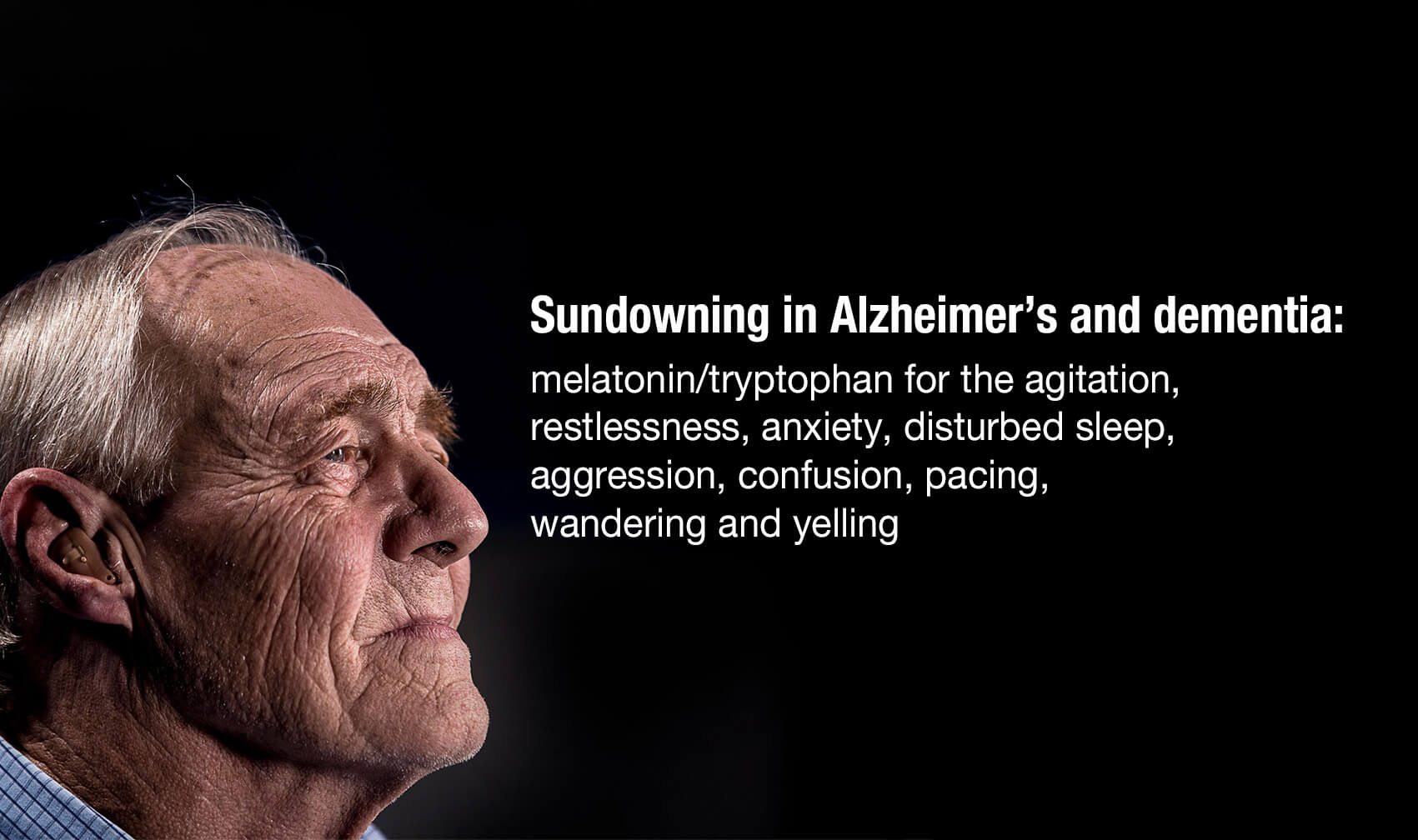
Sundowning in Alzheimer’s and dementia: melatonin/tryptophan for the agitation, restlessness, anxiety, disturbed sleep and aggression

March 3, 2023 By Trudy Scott 8 Comments

sundowning in alzheimer's and dementia

The terms “sundown syndrome” or “sundowning” are used to describe a wide range of neuropsychiatric symptoms occurring in individuals with dementia in the late afternoon, evening, or night. These symptoms include confusion, restlessness, anxiety, agitation, aggression, pacing, wandering, screaming, yelling, and hallucinations. The treatment of sundown syndrome is challenging, and pharmacological therapies are not particularly effective.

This definition is from a very encouraging case study published as a letter to the editor of the Journal of the American Geriatrics Society – Melatonin for Sundown Syndrome and Delirium in Dementia: Is It Effective?

This case study is very typical in terms of symptoms and a pharmacological approach:

An 81-year-old man with Alzheimer’s disease diagnosed 4 years previously was admitted to the elderly department because of behavioral disturbances, sleep disorders, and wandering. His wife said that his cognitive and functional impairments had gradually worsened over the past 4 years and that, in the last 6 months, her husband had become verbally aggressive, agitated, and restless; wandered; and paced. He did not sleep for long and had difficulty falling asleep. The symptoms increased in the late afternoon and at night. He had no hallucinations or delusions. One month before admission, delirium was suspected, and his general practitioner prescribed haloperidol, but it was not effective.

During admission, sundown syndrome was diagnosed, and he received pharmacological and nonpharmacological interventions for behavioral and sleep disturbances, but none was effective, and some aggravated symptoms. The pharmacological interventions consisted of benzodiazepines, antipsychotics, cholinesterase inhibitors, mood stabilizers, and antidepressants, all given in an optimal dosing schedule.

Read on to learn how melatonin led to much improved symptoms within a few hours; more about melatonin, sleep quality and reduction of anxiety after a TBI (traumatic brain injury); sundowning and the serotonin connection (and using tryptophan or 5-HTP); Dr. Dale Bredesen’s work and tryptophan recommendations; low GABA in Alzheimer’s disease and dementia; hope for symptom relief; and additional resources if you need guidance using amino acids like GABA and tryptophan.

Melatonin led to much improved symptoms within a few hours

None of the medications were effective and some made his symptoms worse. This case study is atypical in that his doctors were open to the use of melatonin. This led to much improved symptoms within a few hours and complete resolution in 2 weeks with a second dose:

After extensive review of his history, the effect of past treatments, and the published literature, melatonin was started at a dose of 2 mg at 8:00 p.m. for sleep disorders. Not only did his sleep quality improve within a week, but there was also significant improvement in his behavior within 2 hours of initiation of melatonin. A therapeutic trial with an additional dose of 2 mg given at 3:00 p.m. was started, and his symptoms gradually improved over the subsequent 2 weeks (NPI score 20). No behavioral changes were observed in the 2-month follow-up.

These results are powerful and mirror what a number of other studies are showing, for sundowning and to also slow “down the progression of cognitive impairment”). We also see melatonin working clinically for this population.

I share this case study so if you are a carer or have a parent or loved one with Alzheimer’s or dementia, you have a resource to share with the medical team. There is growing awareness of this research and some neurologists are prescribing melatonin with success. Typically 0.5 mg to 5 mg melatonin is used once or twice a day.

My hope is that this becomes the standard of care instead of prescribing psychiatric medications which the authors acknowledge are not particularly effective. And they don’t get to the root cause that is triggering these symptoms: low melatonin and low serotonin (more on low serotonin below).

Melatonin and anxiety

Melatonin also improves sleep quality and reduces anxiety after a TBI (traumatic brain injury). I blogged about a study that used timed-release melatonin here. The study participants used 2 mg of timed-release/prolonged-release melatonin for 4 weeks. This improved sleep quality and melatonin was also associated with a small decrease in self-reported anxiety.

As outlined in this paper, Melatonin as a Potential Approach to Anxiety Treatment, “melatonin’s benefit in anxiety may reside in its sympatholytic action, interaction with the renin-angiotensin and glucocorticoid systems, modulation of interneuronal signaling and its extraordinary antioxidant and radical scavenging nature.”

The serotonin connection and using tryptophan or 5-HTP

Keep in mind the strong serotonin connection: these sundowning symptoms start late afternoon and evening (hence the name sundowning) and serotonin is a precursor to melatonin production.

I look forward to seeing research on the use of tryptophan or 5-HTP for sundowning symptoms too. Until then, based on the above, and the fact that many of these symptoms are classic signs of low serotonin, I feel comfortable recommending either of these amino acids.

As always, we start low, use afternoon and evening doses and increase based on symptom resolution. The typical adult dose of tryptophan is 500 mg and 50 mg of 5-HTP. I recommend starting with 100 mg tryptophan and 10mg of 5-HTP. The amino acid precautions are always reviewed. I would not recommend either tryptophan or 5-HTP if the individual is currently prescribed an antidepressant, unless you are working with a knowledgeable practitioner and always with the approval and monitoring of the prescribing doctor. This is because of the possibility of serotonin syndrome.

Dr. Dale Bredesen recommends tryptophan and melatonin

Dr. Dale Bredesen is the author of The End of Alzheimer’s (my Amazon link) and a number of other books on Alzheimer’s. He is an authority on Alzheimer’s and recommends both tryptophan and melatonin. In this paper, Reversal of cognitive decline: A novel therapeutic program, he reports the use of 0.5 mg melatonin and 500 mg tryptophan used (3 x week) for sleep issues.

Interestingly and surprisingly, he doesn’t mention sundowning in his books or papers. However, if you are new to his work, I encourage you to look into his functional medicine approach, which is extensive and offers results and hope for many.

Low GABA in Alzheimer’s disease and dementia

This paper, Implications of GABAergic Neurotransmission in Alzheimer’s Disease, shares that “of the two major types of synapses in the central nervous system (CNS): glutamatergic and GABAergic, which provide excitatory and inhibitory outputs respectively, abundant data implicate an impaired glutamatergic system during disease progression.” 

The amino acid GABA may also help anxiety, disturbed sleep and restlessness. And it’s common to have both low serotonin and low GABA.

This case study illustrates how using the amino acid GABA can help ease the anxiety often experienced in those with Alzheimer’s disease.

It’s too entrenched in our thinking that there is nothing to be done

It saddens me that it’s too entrenched in our thinking that there is nothing to be done. Unfortunately, many family members and medical professionals consider sundowning a normal part of the disease progression and question whether it’s worth doing anything.

My feedback is this: please don’t discount the power of the amino acids, melatonin and other nutritional approaches to offer some relief and improved quality of life for the patient. And when they are calmer, less aggressive and sleeping better it’s so much easier for the caregivers too.

Resources if you are new to using tryptophan or GABA as supplements

If you are new to using tryptophan or GABA as supplements, here is the Amino Acids Mood Questionnaire from The Antianxiety Food Solution (you can see all the symptoms of neurotransmitter imbalances, including low GABA and low serotonin).

If you suspect low levels of any of the neurotransmitters and do not yet have my book, The Antianxiety Food Solution – How the Foods You Eat Can Help You Calm Your Anxious Mind, Improve Your Mood, and End Cravings, I highly recommend getting it and reading it before jumping in and using amino acids on your own so you are knowledgeable. And be sure to share it with the practitioner/health team you or your loved one is working with.

There is an entire chapter on the amino acids and they are discussed throughout the book in the sections on gut health, gluten, blood sugar control, sugar cravings, self-medicating with alcohol and more.

The book doesn’t include product names (per the publisher’s request) so this blog, The Antianxiety Food Solution Amino Acid and Pyroluria Supplements, lists the amino acids that I use with my individual clients and those in my group programs. You can find them all in my online store. The above oral lavender products are available in my online store too.

If, after reading this blog and my book, you don’t feel comfortable figuring things out on your own (i.e. doing the symptoms questionnaire and respective amino acids trials), a good place to get help is the GABA QuickStart Program (if you have low GABA symptoms). This is a paid online/virtual group program where you get my guidance and community support. Another option is the budget-friendly GABA QuickStart Homestudy Program.

If you need serotonin support, the Serotonin QuickStart Program is a good place to get help. This is also a paid online/virtual group program where you get my guidance on using tryptophan and 5-HTP safely, and community support during 5 LIVE Q&A calls. You can sign up to be notified when the next live launch of this program is happening.

If you are a practitioner, join us in The Balancing Neurotransmitters: the Fundamentals program. This is also a paid online/virtual program with an opportunity to interact with me and other practitioners who are also using the amino acids.

Wrapping up and your feedback

Have you used melatonin to help with sundowning symptoms with your loved one and if yes how much helps?

Was melatonin prescribed or did you research it and bring the information to the doctor?

Have you used melatonin to help with sundowning symptoms in your clients/patients? What ranges have you seen to help?

Have you also found tryptophan, 5-HTP and/or GABA to help?

If you have questions and other feedback please share it here too.
Filed Under: Alzheimer's disease, Anxiety, serotonin, Tryptophan Tagged With: 5-HTP, aggression, agitation, alzheimer's, anxiety, confusion, dementia, disturbed sleep, Dr. Dale Bredesen, GABA, GABA Quickstart online program; and Balancing Neurotransmitters: the Fundamentals program for practitioners, melatonin, pacing, restlessness, serotonin, sundown syndrome, Sundowning, tryptophan, wandering, yelling

GABA and Silexan (an oral lavender product) for anxiety, panic attacks, agoraphobia, insomnia and stressful events like travel/social events

February 24, 2023 By Trudy Scott 29 Comments

gaba and silexan

When sharing a study on the benefits of Silexan, a proprietary formulation of oral lavender essential oil (used as a supplement), I received this feedback from Kat. She uses both Silexan and GABA with success, depending on the situation:

I used Silexan (CalmAid) here in the USA, for 7 weeks and had wonderful results!!

I was having daily constant panic attacks… agoraphobia and insomnia. They put me on several SSRIs to which I had severe reactions to. The Silexan saved me! I was able to get my life back. I used it nightly and it helped tremendously with sleep and anxiety. I heard about it through The Carlat Report Psych podcast and website after a desperate search to find something to help.

It’s a product that I highly recommend to everyone I know who suffers with anxiety. I now use it only as needed. There are no side effects except a perfume burp but that’s tolerable for me! It can be stopped without any withdrawal effects.

And this is how she responded when I asked if she had previously done a trial of GABA or tryptophan and how Silexan compared to the amino acids.

I use the GABA during times where the panic is increasing (GABA Calm 1/2 tablet, sublingually).

I use the Silexan when I have something stressful planned like travel, social events etc. Silexan works so well without any side effects and can be stopped without any withdrawal effects.

The GABA is an immediate effect vs the Silexan which is slower acting but lasts throughout the day.

What wonderful results for Kat. I thanked her for sharing and voiced my concern with CalmAid and some of the other products that contain Silexan: they contain canola oil. I just wish they stopped making this with canola oil! I share more about this below and another product option that doesn’t use canola oil.

GABA or Silexan? Kat’s sweet spot, serotonin and pyroluria

If you’re wondering where you should start – GABA or Silexan? If you’ve been following my work or even starting to use GABA, you’ll know I always start clients with GABA when they have low GABA symptoms of physical anxiety and tension.

I agree with Kat – it’s very typical for GABA to provide immediate results. I did also share with her that in order to get longer lasting effects GABA does need to be used 3-4 x day, between meals. This means that, for her, GABA may offer similar results to Silexan by slowly building up her GABA levels.

However, Kat has found the sweet spot she needs by using this combination so I would stick with this approach.

If she did decide to stop using Silexan in the future, tryptophan may be needed too – for low serotonin worry-type anxiety symptoms. She did mention that she doesn’t currently use tryptophan and Silexan also affects serotonin levels.  

I do love that Kat plans for stressful events and uses Silexan in these situations. She does mention needing it for social events so I’d suggest looking into pyroluria too. More here on this social anxiety condition and how zinc, vitamin B6 and other key nutrients can help.

Kat’s dietary changes, no caffeine, no sugar and cravings?

I also asked if she has also made dietary changes and quit caffeine, alcohol and sugar. Kat shared that she doesn’t drink any caffeine and hasn’t since 2015. Good for her – caffeine is a major anxiety trigger. She does recognize that her anxiety gets worse when she’s eating a lot of processed foods/gluten/dairy/soy and she limits these.

I said it’s best to avoid these trigger foods altogether. This is often easier said than done! The amino acids help so much to break the addiction and eliminate the need to use willpower: GABA for stress-eating, tryptophan or 5-HTP if her cravings happen mostly in the afternoon and evening, and DPA if comfort foods are her reward. More on the amino acids and cravings here.

I thanked Kat for sharing her wonderful results and asked for permission to share as a blog.  I always appreciate being able to do this so I can continue to educate and inspire. This also shows how there is no-one size fits all.

Silexan research on anxiety and insomnia

This is the study I shared on Facebook – Prescription of Silexan Is Associated with Less Frequent General Practitioner Repeat Consultations Due to Disturbed Sleep Compared to Benzodiazepine Receptor Agonists: A Retrospective Database Analysis

The prescription of Silexan to adult patients consulting general practitioners (GPs) for disturbed sleep results in less frequent repeat consultations than Z-drugs (including zolpidem, zopiclone, and zaleplon).

This may support Silexan’s role as an efficacious, self-enabling, well-tolerated, and sustained treatment option.

Because Silexan is a proven anxiolytic, its impact in improving undiagnosed anxiety disorders may have had a lasting effect for certain patients.

As explained in this same paper, “Silexan is an active substance with an essential oil produced from Lavandula angustifolia flowers.” It’s a proprietary lavender oil that complies with and exceeds the European Pharmacopoeia quality definition for the monograph lavender oil. “Several studies have shown positive effects of Silexan on symptoms of subsyndromal/mild anxiety or GAD [generalized anxiety disorder] compared to conventional treatment or placebo groups.”

Silexan and other oral lavender products

The proprietary product of Silexan, with 80mg of Lavandula angustifolia essential oil, is found in a number of products:

  • Nature’s Way CalmAid ® (this is the product Kat used/uses)
  • Integrative Therapeutics Lavela ™
  • Seremind ® (in Australia)

This supplement, NFH Lavender SAP, does not use the proprietary Silexan but does contain 80mg of organic lavender (Lavandula angustifolia) essential oil. This product is my preference since it contains olive oil and not canola oil like the others mentioned above.

All of the above are available in my online supplement store (for US purchases only). Nature’s Way CalmAid ® is also available on iherb.

Dosing recommendations for adults is 1 softgel once or twice daily with a full glass of water. There is a caution not to use while pregnant, nursing, or for children under 12 years of age.

GABA for anxiety, insomnia, sugar cravings, sensorimotor skills and immunity

I share case studies and research about GABA all the time so I’ll just share links to some of the past GABA blogs in case you’re new to GABA (a calming amino acid and neurotransmitter):

  • GABA for ending sugar cravings (and anxiety and insomnia)
  • GABA is a life saver for anxiety, theanine helps at night (insomnia) and 5-HTP makes a significant difference in lessening daily pain
  • GABA and theanine for easing anxiety, improving sleep and supporting immunity
  • Half a crushed GABA Calm for my autistic child: sleep, anxiety and sensorimotor skills (writing, horse riding and swimming) improve

Resources if you are new to using GABA and other amino acids as supplements

If you are new to using GABA or any of the other amino acids as supplements, here is the Amino Acids Mood Questionnaire from The Antianxiety Food Solution (you can see all the symptoms of neurotransmitter imbalances, including low GABA and low serotonin).

If you suspect low levels of any of the neurotransmitters and do not yet have my book, The Antianxiety Food Solution – How the Foods You Eat Can Help You Calm Your Anxious Mind, Improve Your Mood, and End Cravings, I highly recommend getting it and reading it before jumping in and using amino acids on your own so you are knowledgeable. And be sure to share it with the practitioner/health team you or your loved one is working with.

There is an entire chapter on the amino acids and they are discussed throughout the book in the sections on gut health, gluten, blood sugar control, sugar cravings, self-medicating with alcohol and more.

The book doesn’t include product names (per the publisher’s request) so this blog, The Antianxiety Food Solution Amino Acid and Pyroluria Supplements, lists the amino acids that I use with my individual clients and those in my group programs. You can find them all in my online store. The above oral lavender products are available in my online store too.

If, after reading this blog and my book, you don’t feel comfortable figuring things out on your own (i.e. doing the symptoms questionnaire and respective amino acids trials), a good place to get help is the GABA QuickStart Program (if you have low GABA symptoms). This is a paid online/virtual group program where you get my guidance and community support.

If you are a practitioner, join us in The Balancing Neurotransmitters: the Fundamentals program. This is also a paid online/virtual program with an opportunity to interact with me and other practitioners who are also using the amino acids.

Have you found that an oral lavender product such as Silexan (used as a supplement) helps with your anxiety, panic attacks and/or sleep?

Have you used the NFH Lavender SAP product with similar success to other Silexan products?

Do you also use the amino acid GABA (sublingually) and in what situations do you use GABA vs oral lavender?

How much of each do you use?

If you have other questions and feedback please share them here too.

Filed Under: Anxiety, GABA, Insomnia Tagged With: Agoraphobia, anxiety, essential oil supplement, GABA, GABA Calm, lavender, Nature’s Way CalmAid, NFH Lavender SAP, oral lavender, panic attacks, pyroluria, resources if you are new to the amino acids; the GABA Quickstart online program; and Balancing Neurotransmitters: the Fundamentals program for practitioners, serotonin, Silexan, sleep, social events, stressful events, sugar cravings, travel

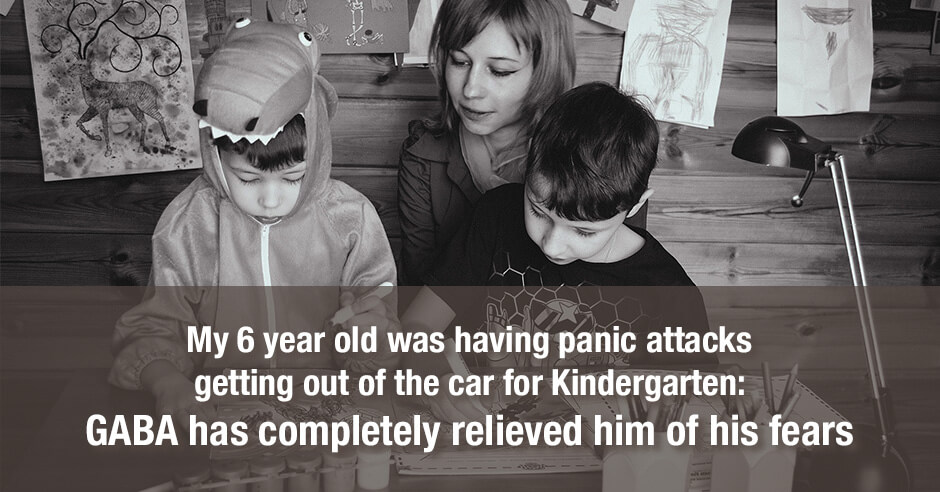
My 6 year old was having panic attacks getting out of the car for Kindergarten: GABA has completely relieved him of his fears

January 27, 2023 By Trudy Scott 12 Comments

gaba for fears

My 6 year old son was having panic attacks getting out of the car going to Kindergarten and taking two GABA Calm has completely relieved him of his fears. He has been going for 3 straight weeks in a row.

I thought it may be low serotonin since this happened last winter as well but I gave him 5-HTP for a couple months and it didn’t seem to affect him and his anxiety. We had to have him repeat Kinder this year.

But wow, the GABA has been fabulous and Kindergarten is in full swing because of your help.

This is from Lisa, a mom in the community. I never get tired of getting feedback like this – how wonderful for this young boy and his family. She shared this very positive outcome on one of the GABA blogs, asking this question (which I address below):

Quick question…does the GABA have to be taken on an empty stomach to work? We try to give it as soon as he is awake and wait to eat for 15-20 mins but sometimes it’s not possible.

The timing of GABA and tracking symptoms

I share that GABA is best taken on an empty stomach and ideally 30 minutes away from protein-containing food. But I also say that the way she is having him use it is clearly working for him. In a situation like this it’s simple enough to track the outcome on days they do wait 15-20 mins and on days when it’s not possible to wait the 15-20 mins (and make a note of how close to food he does take GABA). How is his anxiety, fears and panic attacks in these two situations?

Lisa shared that GABA works well in both instances:

We will keep doing the no food for 15-20 minutes after taking it because it is obviously working. We’ve only had it happen where he eats after about 5 mins and it seems to still do the job.

This sounds like a great plan. If they can, I would also do a trial waiting the full 30 minutes and see how he does on those days. She may find with the longer duration he only needs one GABA Calm.

It may also be that because GABA is being used in a sublingual manner like this, it can be used closer to food. Perhaps a trial right after food is worthwhile. I’m sure it will reduce some of the early morning stress and rush getting ready for Kindergarten.

I also confirmed with her that he is using the Source Naturals GABA Calm product. This is the sublingual product (with just 125mg of GABA and a few other ingredients) that I have so much success with. You can read more about it here – Source Naturals GABA Calm™: Why I recommend it for anxiety.

The school is in shock at how well carpooling is going for him

I love that the school is now in shock and that this mom went with her instinct and pulled him out of school the first year his fears showed up:

We just got a call from the school today and they are in shock at how well carpooling is going for him. They wanted to know what I was doing, ha! He had been a star student so they were shocked when he started to have meltdowns and panic attacks, running away and into traffic about 3 months into school. We deal with a bit of ADHD at home (it’s manageable with the diet) but anxiety is what most see on the outside.

We are repeating Kindergarten because half way through last year he started to panic getting out of the car. The previous school wanted to grab him out of the car and have me drive off. They said he would calm down better without me. What? Just what I want to do is traumatize my child at the start of his academic life. I pulled him and we waited since he was on the younger side and put him in a fabulous charter school this year.

The GABA has taken all those fears out and has been a huge bridge for him to get to school.

I do hope Lisa told the school exactly what he’s doing with GABA and how quickly it’s helped him. So many children are struggling with anxiety and mental health issues and could do with nutritional support like GABA and some of the dietary changes he had made before using GABA (more on that below).

5-HTP didn’t help and why a switch to tryptophan may have helped

You’ll notice she mentioned that 5-HTP had not helped the previous year:

I thought it may be low serotonin since this happened last winter as well but I gave him 5-HTP for a couple months and it didn’t seem to affect him and his anxiety.

Fear and panic attacks are common with low serotonin so it’s good that she did a trial of 5-HTP. Here are some of my insights:

  • I would not have someone use 5-HTP for a couple of months – the amino acids work quickly so a week or possibly two should be enough to decide whether to continue or stop
  • You always want to increase until you find the ideal dose. I’m not sure how Lisa approached this aspect.
  • When there are low serotonin symptoms and 5-HTP doesn’t work, we switch to tryptophan. 5-HTP works well for some and tryptophan works better for others. You can see all the low serotonin symptoms here

It’s possible her son may still benefit from additional serotonin support. Or it may be that the GABA is all he needs. With ADHD it may be worth investigating tyrosine too.

Dietary changes: gluten, dairy, phenols and high histamine foods

It’s important to always address the foundational diet so I checked with Lisa about dietary changes. This is key to not needing long-term GABA supplementation (once other causes of low GABA are addressed – such as Lyme disease, phthalates, aspartame, gut health etc). She shared this about his diet:

He has always been gluten free and dairy free (only goats milk as a baby). We follow the Feingold Diet and try to stay away from high histamine foods as it causes his anger and anxiety to be worse.

It’s great she has made these foundational dietary changes with gluten and dairy – both can exacerbate mood issues. The Feingold diet eliminates phenols. Both phenols and high histamine foods can be problematic for many children too, as she reports.

All these dietary factors are so key but even then additional neurotransmitter support is often needed and in this instance it’s GABA that he clearly needs. Because of his issue with histamines it’s possible he may not have tolerated pharmaGABA (a fermented GABA) so GABA Calm was a good first choice for the initial trial.

Pyroluria testing – why I often don’t use this urine test

I know he has some imbalances so we need to do an OAT test and pyroluria test (I have pyroluria so I know he is bound to have it). Money is the issue at the moment so the GABA chewables have been a true lifesaver. I can’t thank you enough!

I let her know that I don’t often have clients do the urine test for pyroluria because of the false negatives. He’s doing really well but children with pyroluria are really good at masking and pushing through (and so are adults, as I’m sure Lisa already knows). The pyroluria protocol (zinc, vitamin B6 and evening primrose oil) provide raw materials for neurotransmitter production and can help with ADHD symptoms too. We simply do a trial of the protocol when symptoms exist and determine if they are helping.

I love her comment: “the GABA chewables have been a true lifesaver.” This and the outcome for this 6 year old is the reason I love the amino acids.  They offer incredible results and relief from anxiety, fears and panic attacks, while you are working through testing (like the OAT and others) and other contributing root causes.

I said her feedback is really inspiring and I’d love to share it as a blog post for other families. She kindly responded with this:

You can definitely write up a blog post about it. If I can help other families going through the same thing it was all worth it. If you have any other questions don’t hesitate to ask. Thank you again for sharing all your knowledge.

I appreciate her willingness to post their success and her permission to share as a blog post.

Resources if you are new to using GABA and other amino acids as supplements

If you are new to using GABA or any of the other amino acids as supplements, here is the Amino Acids Mood Questionnaire from The Antianxiety Food Solution (you can see all the symptoms of neurotransmitter imbalances, including low GABA and low serotonin).

If you suspect low levels of any of the neurotransmitters and do not yet have my book, The Antianxiety Food Solution – How the Foods You Eat Can Help You Calm Your Anxious Mind, Improve Your Mood, and End Cravings, I highly recommend getting it and reading it before jumping in and using amino acids on your own so you are knowledgeable. And be sure to share it with the practitioner/health team you or your loved one is working with.

There is an entire chapter on the amino acids and they are discussed throughout the book in the sections on gut health, gluten, blood sugar control, sugar cravings, self-medicating with alcohol and more.

The book doesn’t include product names (per the publisher’s request) so this blog, The Antianxiety Food Solution Amino Acid and Pyroluria Supplements, lists the amino acids that I use with my individual clients and those in my group programs. You can find them all in my online store.

If, after reading this blog and my book, you don’t feel comfortable figuring things out on your own (i.e. doing the symptoms questionnaire and respective amino acids trials), a good place to get help is the GABA QuickStart Program (if you have low GABA symptoms). This is a paid online/virtual group program where you get my guidance and community support.

If you are a practitioner, join us in The Balancing Neurotransmitters: the Fundamentals program. This is also a paid online/virtual program with an opportunity to interact with me and other practitioners who are also using the amino acids.

Have one of your children experienced similar results with GABA offering relief for anxiety, fears and panic attacks? Which GABA product helped your child and how much helped?

When using sublingual or chewable GABA products like GABA Calm, have you found the timing in relation to foods being important?

What dietary changes has your child also made and how have they helped?

If you have questions and feedback please share them here too.

Filed Under: Anxiety, Children/Teens, GABA Tagged With: 5-HTP, 6 year old, amino acids, anxiety, Balancing Neurotransmitters: the Fundamentals program, dietary changes, empty stomach, fears, GABA, GABA Calm, GABA Quickstart online program, Kindergarten, panic attacks, practitioners, pyroluria, school, serotonin, Timing, tracking, tryptophan

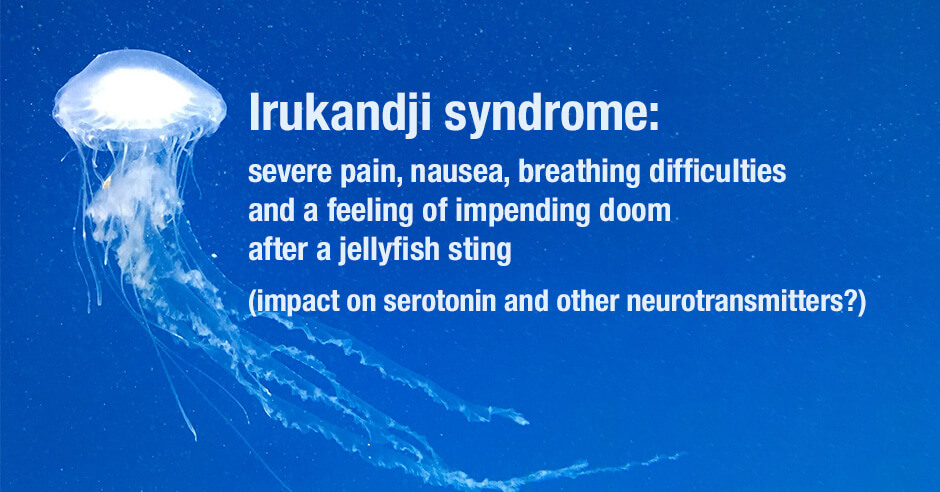
Irukandji syndrome: severe pain, nausea, breathing difficulties and a feeling of impending doom (impact on serotonin and other neurotransmitters?)

December 30, 2022 By Trudy Scott 14 Comments

Irukandji syndrome

Irukandji syndrome is in the news again. In addition to the jellyfish sting causing severe pain, nausea and breathing difficulties, the research states there is a feeling of impending doom after you’re stung. I’m sharing this current news from Australia and a recent study because I’m curious about the mechanisms and short- and long-term impacts on serotonin and other neurotransmitters, likely affecting anxiety, depression, pain and insomnia. And I’d like to help create awareness since there is not 100% consensus on what to do right away after a sting and less awareness in the medical community than I feel comfortable with.

From the ABC article published this week in Australia: “Another child has been flown to Hervey Bay Hospital with a suspected Irukandji sting after swimming in a creek off Wathumba Road on K’gari (Fraser Island) in Queensland, Australia on Wednesday afternoon.

The key points of the article:

  • “Three young girls and a boy have been flown to hospital with suspected Irukandji stings in the past two days
  • The jellyfish stings can cause severe pain, nausea and breathing difficulties
  • A Toxicologist is calling for more research into their movements and physiology”

The yahoo news article expanded on the symptoms: “They have this severe body pain, often low back pain, nausea, vomiting, and this feeling of impending doom that sort of lays over the top of this whole thing.”

I found the latter interesting as impending doom is a classic sign of low serotonin. So I went digging into the research. I was enlightened and surprised by what I found.

Raising awareness on this worldwide increasing threat

This 2022 paper, Raising Awareness on the Clinical and Forensic Aspects of Jellyfish Stings: A Worldwide Increasing Threat is eye-opening and concerning and also mentions the impending doom symptom.

Irukandji syndrome is a severe illness produced by the envenomation i.e. injection of venom, of some species of small jellyfish from the Cubozoa class, known as box jellyfish.

It consists of a clinical picture dominated by systemic symptoms similar to a catecholamine surge, including hypertension, tachycardia, intense pain, and muscle cramping, eventually leading to pulmonary edema, shock and cerebral hemorrhage.

Also listed are symptoms of anxiety, restlessness, headache, localized sweating and impending doom.  A feeling of impending doom is a classic symptom of low serotonin.

With regards to Irukandji syndrome it’s becoming a worldwide problem: “The first cases described happened in the northern Australian territories. However, similar disorders have been observed all over the tropical waters, including Thailand, the Caribbean, Florida, and Hawaii.”

The good news is that the authors state “Irukandji syndrome is typically not deadly, especially if supportive care is given early” and “not all encounters with species capable of producing Irukandji syndrome result in this clinical state.” They also share that typically the severe pain only lasts a few hours but do mention one case where “pain recurred up to a year later.” I discuss possible longer term effects below.

As you read the paper, be aware there are many types of jellyfish with many different mechanisms. Cubozoa includes the deadliest jellyfish species and includes Carukia barnesi and Chironex fleckeri. (commonly known as the Australian box jelly). It’s the Carukia barnesi that causes Irukandji syndrome.

The images in the above paper are graphic so be warned.

There is not 100% consensus on what to do right away

What is also really concerning is that there is not 100% consensus on what to do right away. This 2017 paper, Cubozoan Sting-Site Seawater Rinse, Scraping, and Ice Can Increase Venom Load: Upending Current First Aid Recommendations, published by Hawaiian researchers, found the “best outcomes occurred with the use of venom-inhibiting technologies (Sting No More® products)” and they state not to use a sea water rinse. They also found vinegar and heat treatment were less effective with certain types of jellyfish.

And yet the tentative recommendation from the above 2022 paper is to use vinegar, heat, sea water, and careful removal of remaining tentacles with tweezers quickly because only “about 1% of nematocysts (stinging cells) discharge upon initial contact.” They do suggest using Sting No More® before removing tentacles in order to deactivate the nematocysts.

I’m not sharing any of the above as conclusive in all situations but more to illustrate what both papers state: further research is needed in different places of the world, as different jellyfish species seem to react differently to the treatments.

There is also less awareness in the medical community than I feel comfortable with hence my desire to share this so you are more aware if you or a family member is stung by a jellyfish.

Are there possible long-term impacts on anxiety, depression, pain and insomnia? (and the potential role of amino acids)

Just like we have long-term impacts on anxiety, depression, pain and insomnia with Lyme disease and other infections like Bartonella – due to effects on serotonin, GABA and other neurotransmitters – do we need to consider these long term impacts after a jellyfish sting too?

I have to wonder if there are also longer term impacts given the trauma of the situation and the many medications that are needed to save your life: nitroglycerin, opioids, benzodiazepines and others.

If mood, anxiety, pain and sleep issues persist after the acute recovery phase (which can take up to 3 months and more) and there are other signs of low serotonin, GABA, dopamine and endorphins, it’s important to consider the use of targeted amino acids. I recommend tryptophan or 5-HTP for low serotonin symptoms (worry type of anxiety, insomnia and low mood), GABA for low GABA symptoms (physical anxiety and tension), tyrosine for low dopamine symptoms (depressed with low energy and poor focus) and DPA for low endorphin symptoms (pain and weepiness).

It would be wonderful to see research in this area.

Is there a possible role for GABA right after the sting too?

Given there is “hypertension, tachycardia, intense pain, and muscle cramping”, would the amino acid GABA help?

With Irukandji syndrome, “there have been reports of blood pressures as high as 300/180 mmHg” (normal is 120/80 mmHg). In one study, 80mg GABA was found to reduce mild hypertension and it’s possible that a higher dose of GABA may help right after the sting. It may also help to alleviate pain and muscle tension/muscle cramping too.

It would be wonderful to see research on GABA use right after the sting too.

Resources if you are new to using amino acids as supplements

If you are new to using GABA or any of the other amino acids as supplements, here is the Amino Acids Mood Questionnaire from The Antianxiety Food Solution (you can see all the symptoms of neurotransmitter imbalances, including low GABA and low serotonin).

If you suspect low levels of any of the neurotransmitters and do not yet have my book, The Antianxiety Food Solution – How the Foods You Eat Can Help You Calm Your Anxious Mind, Improve Your Mood, and End Cravings, I highly recommend getting it and reading it before jumping in and using amino acids on your own so you are knowledgeable. And be sure to share it with the practitioner/health team you or your loved one is working with.

There is an entire chapter on the amino acids and they are discussed throughout the book in the sections on gut health, gluten, blood sugar control, sugar cravings, self-medicating with alcohol and more.

The book doesn’t include product names (per the publisher’s request) so this blog, The Antianxiety Food Solution Amino Acid and Pyroluria Supplements, lists the amino acids that I use with my individual clients and those in my group programs. You can find them all in my online store.

If, after reading this blog and my book, you don’t feel comfortable figuring things out on your own (i.e. doing the symptoms questionnaire and respective amino acids trials), a good place to get help is the GABA QuickStart Program (if you have low GABA symptoms). This is a paid online/virtual group program where you get my guidance and community support.

If you are a practitioner, join us in The Balancing Neurotransmitters: the Fundamentals program. This is also a paid online/virtual program with an opportunity to interact with me and other practitioners who are also using the amino acids.

I do hope these 4 young Australian children are doing well after having been stung.

Have you or a family member been stung by a jellyfish? Where did it happen and what type of jellyfish? What symptoms did you experience? What was the treatment and what was recovery like?

Have you or your family member had any long-term lingering symptoms of anxiety, depression, pain and insomnia? Have the amino acids or other solutions helped?

If you’re a practitioner have you seen long-term lingering symptoms of anxiety, depression, pain and insomnia in your clients/patients who have had a jellyfish sting?

Feel free to post your questions and feedback in the comments below.

Filed Under: Anxiety, Depression, GABA, Pain, serotonin Tagged With: a feeling of impending doom, amino acids, and Balancing Neurotransmitters: the Fundamentals program for practitioners, anxiety, box jellyfish, breathing difficulties, Carukia barnesi, Cubozoa, depression, DPA, GABA, GABA Quickstart online program, insomnia, Irukandji jellyfish, nausea, neurotransmitters, pain, serotonin, severe pain, tryptophan

5-HTP with Paxil, when nursing, for men, with insomnia in Parkinson’s and when it gives you nightmares: questions and answers

December 9, 2022 By Trudy Scott 8 Comments

5-htp q and a

5-HTP is an amino acid, made from the seeds of an African plant, Griffonia simplicifolia, and used as a supplement to ease low serotonin symptoms of worry-type anxiety, often with ruminations, obsessing and panic attacks. When you have insomnia caused by low serotonin you may lie awake worrying. This type of anxiety is different from the low GABA physical/tension type anxiety. Other low serotonin symptoms include low mood/depression, late afternoon and evening carbohydrate cravings, pain, digestive/IBS symptoms, PMS, irritability, rage and anger, TMJ, low confidence, imposter syndrome and perfectionism.

I’ve blogged about 5-HTP extensively and I receive many great questions about this supplement. Today I’m going to share some of these questions and my answers so you can get the benefits too: using it with Paxil, insomnia when you have Parkinson’s disease, if 5-HTP works for men, timing of 5-HTP with nightmares and if 5-HTP can be used in pregnancy and when nursing.

Haley shared how 5-HTP helps with insomnia and asks about taking it with Paxil:

I was taking 5-HTP and it definitely helped me sleep at night. I recently started Paxil for my panic attacks after a recent trauma and I’m no longer sure if I can take Paxil with 5-HTP or not?

I’m so glad to hear 5-HTP helped with sleep. I’m sorry to hear about your recent trauma but keep in mind the other benefits of 5-HTP – helping with panic attacks is just one. When I’m working with someone who has experienced something like this and is already seeing benefits with 5-HTP, we increase their 5-HTP to help with the panic attacks too.

If they have already started Paxil and would prefer to stop using it I have them read this tapering blog and work/discuss with their prescribing doctor. There is the risk of serotonin syndrome with SSRIs (such as Paxil) and 5-HTP (and tryptophan).

There are many nutritional solutions for trauma and psychological stress (a natural disaster or anything else) and we’d address all this too.

Lynn has Parkinson’s disease and sleep problems:

I have Parkinson’s and sleep is starting to be an issue. I usually fall asleep but after about 4 hours I’m wide awake. I’m afraid this sleeplessness will negatively affect my brain if I can’t remedy this. I take carbidopa/levodopa. I’ve seen a sleep neurologist and she wants to prescribe drugs which again I’m afraid will have a negative effect on my brain. Your suggestions around 5-HTP would be very much appreciated.

We always start with the low serotonin symptoms and do a trial of either 5-HTP or tryptophan if it looks like low serotonin is the root cause of the sleep issues (there are many other root causes of insomnia).

If you score high on many of the low serotonin symptoms I suggest sharing this 5-HTP/Parkinson’s disease blog post and research with your sleep neurologist and Parkinson’s doctor: “Research shows that the amino acid 5-HTP (5-hydroxytryptophan), the intermediate metabolite of tryptophan in the production of serotonin, offers benefits for Parkinson’s disease patients. It has been reported to ease depression and to reduce levodopa-induced motor complications. This was reported in two separate studies by the same research team at the University of Cagliari, Cagliari, Italy. They were small studies and considered preliminary.”

Meleah asks about using 5-HTP with men:

Hi Trudy, did you recommend the same protocol for men? Most of the examples are about women and I have a male friend who needs help

Generally speaking the amino acids work the same for men but I have found that the impact they have on the sex hormone estrogen when using 5-HTP or tryptophan (and progesterone when using GABA) means they tend to work exceptionally well for women.

I also have much more experience working with women so I have more to share on these outcomes. With the few men I have worked with I find they tend to under-report when looking at their low serotonin symptoms so this needs to be taken into account when doing the trial of 5-HTP or tryptophan.

Scott shared how he uses 5-HTP for insomnia and his solution for preventing nightmares when using it:

In regards to nightmares with 5-HTP, I definitely seem to experience disturbing dreams when I take it within 4 hours of bedtime. Therefore, I normally don’t take any after 7pm but do take it periodically throughout the day.

I also suggested it to a friend who tried and likes it very much, however, he experienced excessive dreaming which interferes with him sleeping soundly, so I suggested the same protocol to him.

When I was in college, I am now a senior, I tried taking regular tryptophan and soon started having nightmares and hallucinations as I began seeing faces on the wall when I was trying to fall asleep.

I only take 5-HTP now, in extended release 200mg tablets from the Natrol company. Thank you, Trudy, for bringing this subject up.

I thanked him for sharing this interesting nuance of nightmares with 5-HTP and using it in the day instead. (which I blogged about here i.e. some folks do get nightmares when using 5-HTP)

I’m glad he figured this out and it helps since tryptophan does cause him nightmares. We are all so different and have to find what works best for our unique needs.

Carly asks about using 5-HTP when nursing:

Can someone take 5-HTP while nursing?

5-HTP has not been studied during pregnancy or nursing but a free form amino acid blend that does contain tryptophan is often very helpful. You have to really look for these because many companies choose to leave out tryptophan. I have a few listed on the supplements blog.

Other approaches to improve mood, reduce anxiety and help with sleep while nursing include exercise, yoga, diet and bright light therapy/full spectrum light. Dr. Aviva Romm writes about herbs for anxiety and specifies which are safe while nursing.

If you are new to other anxiety nutrition solutions like gluten/sugar/caffeine removal, blood sugar control, gut health, and pyroluria my book “The Antianxiety Food Solution” is a great place to start for the foundations. Much of this helps with low mood, cravings and insomnia too. More here.

5-HTP is often successfully used in conjunction with other amino acids

Here are some useful blogs related to low serotonin and 5-HTP. As you can see, it’s often successfully used in conjunction with other amino acid supplementation:

  • You can see all the low serotonin symptoms here.
  • Fibromyalgia: tryptophan or 5-HTP for anxiety, depression, pain and insomnia
  • GABA is a life saver for anxiety, theanine helps at night (insomnia) and 5-HTP makes a significant difference in lessening daily pain
  • Drastic reduction in intrusive thoughts, anxiety and fears (and better sleep) with GABA, tryptophan, 5-HTP and the pyroluria protocol
  • If low GABA type anxiety and insomnia is also an issue you may find this helpful too – GABA for easing physical anxiety and tension: some questions and answers.
  • An amino acid supplement with DLPA, glutamine and 5-HTP eases alcohol withdrawal symptoms at an inpatient detoxification program
  • You can see the 5-HTP and tryptophan products (and GABA) I use with my clients here on the supplements blog.

As always, it’s not only the low serotonin we need to address. 5-HTP offers quick relief but we must always do a full functional workup looking at diet, nutritional deficiencies, digestion, all hormones, toxins and infections (and so on) so we can address all possible root causes – and why serotonin is low in the first place.

I also want to add that I typically start with tryptophan for low serotonin support simply because I have such good results with it and because 5-HTP can raise cortisol in some folks. If we already have salivary cortisol results and none of the four collections are high then 5-HTP is an option to consider.

Resources if you are new to using 5-HTP and other amino acids as supplements

If you are new to using 5-HTP or any of the other amino acids as supplements, here is the Amino Acids Mood Questionnaire from The Antianxiety Food Solution (you can see all the symptoms of neurotransmitter imbalances, including low GABA and low serotonin).

If you suspect low levels of any of the neurotransmitters and do not yet have my book, The Antianxiety Food Solution – How the Foods You Eat Can Help You Calm Your Anxious Mind, Improve Your Mood, and End Cravings, I highly recommend getting it and reading it before jumping in and using amino acids on your own so you are knowledgeable. And be sure to share it with the practitioner/health team you or your loved one is working with.

There is an entire chapter on the amino acids and they are discussed throughout the book in the sections on gut health, gluten, blood sugar control, sugar cravings, self-medicating with alcohol and more.

The book doesn’t include product names (per the publisher’s request) so this blog, The Antianxiety Food Solution Amino Acid and Pyroluria Supplements, lists the amino acids that I use with my individual clients and those in my group programs. You can find them all in my online store.

If, after reading this blog and my book, you don’t feel comfortable figuring things out on your own (i.e. doing the symptoms questionnaire and respective amino acids trials), a good place to get help is the GABA QuickStart Program (if you have low GABA symptoms). This is a paid online/virtual group program where you get my guidance and community support.

If you are a practitioner, join us in The Balancing Neurotransmitters: the Fundamentals program. This is also a paid online/virtual program with an opportunity to interact with me and other practitioners who are also using the amino acids.

Thanks to these folks for asking good questions and for allowing me to share here.

What questions do you have about 5-HTP?

Which low serotonin symptoms can you relate to and has 5-HTP or tryptophan helped? Or have you found success with a combination?

Feel free to post your questions and feedback in the comments below.

Filed Under: 5-HTP, Anxiety, Insomnia, serotonin Tagged With: 5-HTP, amino acid, GABA Quickstart online program; Balancing Neurotransmitters: the Fundamentals program for practitioners, insomnia, men, Nightmares, nursing, obsessing, panic attacks, Parkinson's, Paxil, pregnancy, ruminations, serotonin, tryptophan, worry-type anxiety

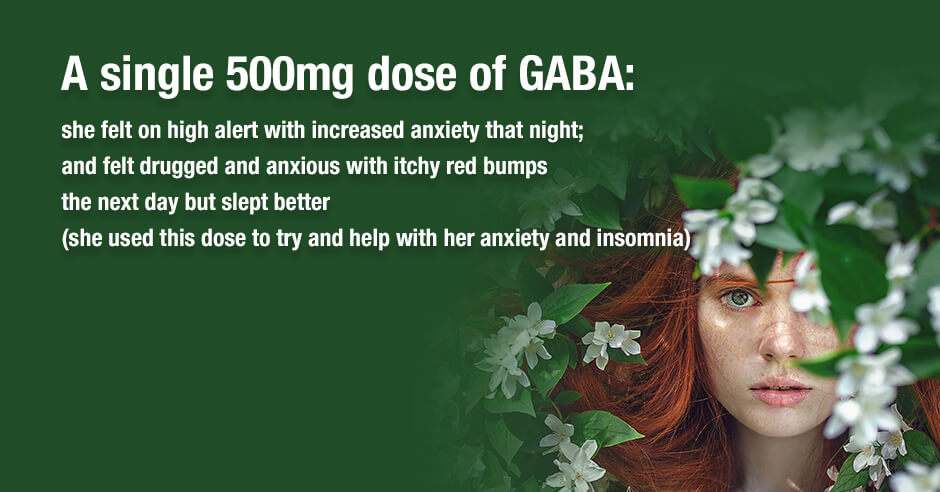
GABA 500mg: high alert and increased anxiety; drugged and anxious with itchy red bumps the next day but slept better

November 11, 2022 By Trudy Scott 22 Comments

500mg gaba

Too much of the calming amino acid, GABA, can cause the opposite effect leading to increased anxiety and feeling too tired the following day, sometimes even feeling drugged. I have clients start with 125mg if they have low GABA physical type of anxiety so when I hear someone has had a bad reaction after using 500mg GABA, it’s unfortunate but not surprising. SM posted her reaction on the blog where I write about a niacin-type flush from using too much GABA. However her reaction was more severe than this. Here is her feedback and questions:

I took a single dose of GABA 500mg from NOW foods one night hoping it can help with anxiety and insomnia. I felt on high alert that night and increased anxiety that night. The next day I felt drugged and anxious, but strangely slept better [the next] night. I also had itchy red bumps.

I realized from your blog that 500mg was too much for me. I switched to NOW Foods True Calm which has 200 mg GABA and other nutrients, quite like a mini version of the Country Life GABA. I slept better but again have itchy red bumps now, so I’m afraid of using another capsule during the day.

I am also on 0.375mg of Clonotril which I take only at night but it does not help with constant anxiety all day. I managed to taper down to 0.375mg from 1mg after taking magnesium glycinate but unfortunately I had too much diarrhea from the magnesium. That’s how I came to know about GABA hoping it can help relieve the constant anxiety and heart palpitations.

After reading this article I realize it’s important to start GABA low. I tried to use Olly Goodbye Stress gummies which have 100 mg GABA and 50 mg theanine per 2 gummies but it was of no help.

I want to try the Source Naturals GABA Calm lozenges you recommended but I’m also feeling scared as I have been trying so many things without much success. Very grateful if you could offer me some advice. I came across your work when googling about GABA. Thank you for this opportunity to ask you questions.

This is my feedback for SM: too much GABA can have adverse effects the day it’s taken and feeling on high alert with increased anxiety that night is not unusual. It’s also not unusual to feel overly fatigued and even experience a drugged-type feeling and still continue to feel anxious.

With symptoms like this my first piece of advice is to start low at 125mg and always have 1000mg vitamin C on hand when trialing GABA (and any of the amino acids). It’s the antidote and works quickly to ease all the adverse effects and also any beneficial effects that are experienced.

Use a much lower dose of GABA and keep vitamin C on hand

We often trial GABA again – even with adverse symptoms like this – but always use a much lower dose.. We could use another product like Source Naturals GABA Calm lozenges or use 125mg of the 500mg NOW GABA product.

One big clue that she may actually need GABA is that she did sleep better the next night.

If it’s a niacin type flush, as described in the blog she commented on, Too much GABA causes a tingling niacin-like flush sensation (in the brain and body). It’s awful and very uncomfortable!, I would still recommend another trial of the lower dose (with vitamin C on hand).

Other product options to consider are theanine and/or pharmaGABA too.

A histamine reaction or MCAS /mast cell activation syndrome?

However if it’s not a flush but a real rash or hives then I’m more concerned and would not have them trial something new. With a rash that doesn’t resolve we also consider a histamine reaction or MCAS /mast cell activation syndrome.

GABA typically helps with MCAS/histamine issues but unfortunately things are not predictable when you have MCAS. She may need to address the histamine/MCAS reaction before she can start benefiting from GABA.

A phenol sensitivity or allergic reaction?

Phenols can trigger some strong emotional reactions that do include anxiety, hyperactivity, insomnia and meltdowns – and a feeling of being on high alert (which SM mentions).

Since she mentions the rash, I would also want to rule out a phenol reaction to the GABA. My colleague Julie Matthews shares this: “When phenols are not able to be broken-down and detoxified by a process called sulfation… they can cause these emotional symptoms and also red cheeks and ears.”

The benzodiazepine may be the confounding factor

One other confounding factor is the Clonotril. Benzodiazepines (using them and/or tapering) can cause many different issues. I do have clients use GABA to help while tapering but we only change one thing at a time and the benzo taper is super super slow. They also only start to taper (with the doctor’s approval and monitoring) once they are nutritionally stable. My book The Antianxiety Food Solution is a great resource for learning more about becoming nutritionally stable.

Serotonin support as well as GABA support?

SM mentions that she took GABA hoping it would help with anxiety and insomnia. These are also both symptoms of low serotonin so she may also see benefits with tryptophan, 5-HTP and melatonin.   You can read more about tryptophan here: Tryptophan for the worry-in-your-head and ruminating type of anxiety and melatonin here: Melatonin improves sleep quality and reduces anxiety after a TBI.

Resources if you are new to using GABA and other amino acids as supplements

If you are new to using any of the amino acids as supplements, here is the Amino Acids Mood Questionnaire from The Antianxiety Food Solution (you can see all the symptoms of neurotransmitter imbalances, including low GABA and low serotonin).

If you suspect low levels of any of the neurotransmitters and do not yet have my book, The Antianxiety Food Solution – How the Foods You Eat Can Help You Calm Your Anxious Mind, Improve Your Mood, and End Cravings, I highly recommend getting it and reading it before jumping in and using amino acids on your own so you are knowledgeable. And be sure to share it with the practitioner/health team you or your loved one is working with.

There is an entire chapter on the amino acids and they are discussed throughout the book in the sections on gut health, gluten, blood sugar control, sugar cravings, self-medicating with alcohol and more.

The book doesn’t include product names (per the publisher’s request) so this blog, The Antianxiety Food Solution Amino Acid and Pyroluria Supplements, lists the amino acids that I use with my individual clients and those in my group programs. You can find them all in my online store.

If, after reading this blog and my book, you don’t feel comfortable figuring things out on your own (i.e. doing the symptoms questionnaire and respective amino acids trials), a good place to get help is the GABA QuickStart Program (if you have low GABA symptoms). This is a paid online/virtual group program where you get my guidance and community support.

If you are a practitioner, join us in The Balancing Neurotransmitters: the Fundamentals program. This is also a paid online/virtual program with an opportunity to interact with me and other practitioners who are also using the amino acids.

Have you had an adverse reaction to taking a high dose of GABA? What dose, which product and what was your reaction?

What did you figure out was the ideal dose for you?

If you have questions please share them here too.

Filed Under: Anxiety, GABA, Insomnia Tagged With: 500mg GABA, amino acids; GABA Quickstart online program; and Balancing Neurotransmitters: the Fundamentals program for practitioners, anxiety, anxious, benzodiazepine, Clonotril, drugged, high alert, histamine reaction, increased anxiety, insomnia, itchy red bumps, MCAS, niacin-type flush, phenol reaction, rash, serotonin, slept, Source Naturals GABA Calm, tired, vitamin C

  • « Go to Previous Page
  • Page 1
  • Interim pages omitted …
  • Page 4
  • Page 5
  • Page 6
  • Page 7
  • Page 8
  • Interim pages omitted …
  • Page 28
  • Go to Next Page »

Primary Sidebar

GABA QuickStart Homestudy

gaba quickstart homestudy

Free Report

9 Great Questions Women Ask about Food, Mood and their Health

You'll also receive a complimentary subscription to my ezine "Food, Mood and Gal Stuff"


Connect with me

Popular Posts

  • Amino Acids Mood Questionnaire from The Antianxiety Food Solution
  • The Antianxiety Food Solution Amino Acid and Pyroluria Supplements
  • Pyroluria Questionnaire from The Antianxiety Food Solution
  • Collagen and gelatin lower serotonin: does this increase your anxiety and depression?
  • Tryptophan for the worry-in-your-head and ruminating type of anxiety
  • GABA for the physical-tension and stiff-and-tense-muscles type of anxiety
  • The Antianxiety Food Solution by Trudy Scott
  • Seriphos Original Formula is back: the best product for anxiety and insomnia caused by high cortisol
  • Am I an anxious introvert because of low zinc and vitamin B6? My response to Huffington Post blog
  • Vagus nerve rehab with GABA, breathing, humming, gargling and key nutrients

Recent Posts

  • Her cravings for chips and peanut butter were triggered by stress: GABA ends cravings and reduces physical tension and fear of heights
  • It is truly miraculous to be able to move through life without crippling anxiety and panic
  • GABA and tryptophan combo provide immediate and noticeable relief for tremors and cervical dystonia in just 7 days
  • Red light therapy for back and neck pain, plantar fasciitis and low mood – a complement to the amino acids GABA, DPA and tryptophan
  • What do I use instead of Seriphos to help lower high cortisol that is affecting my sleep and making me anxious at night?

Categories

  • 5-HTP
  • AB575
  • Addiction
  • ADHD
  • Adrenals
  • Alcohol
  • Allergies
  • Alzheimer's disease
  • Amino Acids
  • Anger
  • Antianxiety
  • Antianxiety Food Solution
  • Antidepressants
  • Anxiety
  • Anxiety and panic
  • Autism
  • Autoimmunity
  • benzodiazapines
  • Bipolar disorder
  • Books
  • Caffeine
  • Cancer
  • Candida
  • Children/Teens
  • Collagen
  • Cooking equipment
  • Coronavirus/COVID-19
  • Cravings
  • Depression
  • Detoxification
  • Diabetes
  • Diet
  • DPA/DLPA
  • Drugs
  • EFT/Tapping
  • EMF
  • EMFs
  • Emotional Eating
  • Endorphins
  • Environment
  • Essential oils
  • Events
  • Exercise
  • Fear
  • Fear of public speaking
  • Fertility and Pregnancy
  • Fish
  • Food
  • Food and mood
  • Functional neurology
  • GABA
  • Gene polymorphisms
  • General Health
  • Giving
  • Giving back
  • Glutamine
  • Gluten
  • GMOs
  • Gratitude
  • Gut health
  • Heart health/hypertension
  • Histamine
  • Hormone
  • Hyperparathyroidism
  • Hypoglycemia
  • Immune system
  • Inflammation
  • Insomnia
  • Inspiration
  • Introversion
  • Joy and happiness
  • Ketogenic diet
  • Lithium orotate
  • Looking awesome
  • Lyme disease and co-infections
  • MCAS/histamine
  • Medication
  • Men's health
  • Mental health
  • Mercury
  • Migraine
  • Mold
  • Movie
  • MTHFR
  • Multiple sclerosis
  • Music
  • NANP
  • Nature
  • Nutritional Psychiatry
  • OCD
  • Osteoporosis
  • Oxalates
  • Oxytocin
  • Pain
  • Paleo
  • Parasites
  • Parkinson’s disease
  • PCOS
  • People
  • PMS
  • Postpartum
  • PTSD/Trauma
  • Pyroluria
  • Questionnaires
  • Real whole food
  • Recipes
  • Research
  • Schizophrenia
  • serotonin
  • SIBO
  • Sleep
  • Special diets
  • Sports nutrition
  • Stress
  • Sugar addiction
  • Sugar and mood
  • Supplements
  • Teens
  • Testimonials
  • Testing
  • The Anxiety Summit
  • The Anxiety Summit 2
  • The Anxiety Summit 3
  • The Anxiety Summit 4
  • The Anxiety Summit 5
  • The Anxiety Summit 6
  • Thyroid
  • Thyroid health
  • Toxins
  • Tryptophan
  • Tyrosine
  • Uncategorized
  • Vegan/vegetarian
  • Women's health
  • Yoga

Archives

  • May 2026
  • April 2026
  • October 2025
  • September 2025
  • August 2025
  • July 2025
  • June 2025
  • May 2025
  • April 2025
  • March 2025
  • February 2025
  • January 2025
  • November 2024
  • October 2024
  • September 2024
  • August 2024
  • July 2024
  • June 2024
  • May 2024
  • April 2024
  • March 2024
  • February 2024
  • January 2024
  • December 2023
  • November 2023
  • October 2023
  • September 2023
  • August 2023
  • July 2023
  • June 2023
  • May 2023
  • April 2023
  • March 2023
  • February 2023
  • January 2023
  • December 2022
  • November 2022
  • October 2022
  • September 2022
  • August 2022
  • July 2022
  • June 2022
  • May 2022
  • April 2022
  • March 2022
  • February 2022
  • January 2022
  • December 2021
  • November 2021
  • October 2021
  • September 2021
  • August 2021
  • July 2021
  • June 2021
  • May 2021
  • April 2021
  • March 2021
  • February 2021
  • January 2021
  • December 2020
  • November 2020
  • October 2020
  • September 2020
  • August 2020
  • July 2020
  • June 2020
  • May 2020
  • April 2020
  • March 2020
  • February 2020
  • January 2020
  • December 2019
  • November 2019
  • October 2019
  • September 2019
  • August 2019
  • July 2019
  • June 2019
  • May 2019
  • April 2019
  • March 2019
  • February 2019
  • January 2019
  • December 2018
  • November 2018
  • October 2018
  • September 2018
  • August 2018
  • July 2018
  • June 2018
  • May 2018
  • April 2018
  • March 2018
  • February 2018
  • January 2018
  • December 2017
  • November 2017
  • October 2017
  • September 2017
  • August 2017
  • July 2017
  • June 2017
  • May 2017
  • April 2017
  • March 2017
  • February 2017
  • January 2017
  • December 2016
  • November 2016
  • October 2016
  • September 2016
  • August 2016
  • July 2016
  • June 2016
  • May 2016
  • April 2016
  • March 2016
  • February 2016
  • January 2016
  • December 2015
  • November 2015
  • October 2015
  • September 2015
  • August 2015
  • July 2015
  • June 2015
  • May 2015
  • April 2015
  • March 2015
  • February 2015
  • January 2015
  • December 2014
  • November 2014
  • October 2014
  • September 2014
  • August 2014
  • July 2014
  • June 2014
  • May 2014
  • April 2014
  • March 2014
  • February 2014
  • January 2014
  • December 2013
  • November 2013
  • October 2013
  • September 2013
  • August 2013
  • July 2013
  • June 2013
  • May 2013
  • April 2013
  • March 2013
  • February 2013
  • January 2013
  • December 2012
  • November 2012
  • October 2012
  • August 2012
  • July 2012
  • June 2012
  • May 2012
  • April 2012
  • March 2012
  • February 2012
  • January 2012
  • December 2011
  • November 2011
  • October 2011
  • September 2011
  • August 2011
  • July 2011
  • June 2011
  • May 2011
  • April 2011
  • March 2011
  • February 2011
  • January 2011
  • December 2010
  • October 2010
  • September 2010
  • July 2010
  • May 2010
  • April 2010
  • March 2010
  • February 2010
  • January 2010
  • November 2009

Share the knowledge!

The above statements have not been evaluated by the Food and Drug Administration. Products listed in this website are not intended to diagnose, treat, cure or prevent any disease.

The information provided on this site is for informational and educational purposes only and is not intended as a substitute for advice from your physician or other health care professional. You should consult with a healthcare professional before starting or modifying any diet, exercise, or supplementation program, before taking or stopping any medication, or if you have or suspect you may have a health problem.


Copyright © 2026 Trudy Scott. All Rights Reserved. | Privacy | Terms and Conditions | Refund Policy | Medical Disclaimer

Free Report

9 Great Questions Women Ask about Food, Mood and their Health

You’ll also receive a complimentary subscription to my ezine “Food, Mood and Gal Stuff”