• Skip to primary navigation
  • Skip to main content
  • Skip to primary sidebar

everywomanover29 blog

Food, Mood and Women's Health – Be your healthiest, look and feel great!

  • Blog
  • About
  • Services
  • Store
  • Resources
  • Testimonials
  • The Book
  • Newsletter
  • Contact
  • Search this site

serotonin

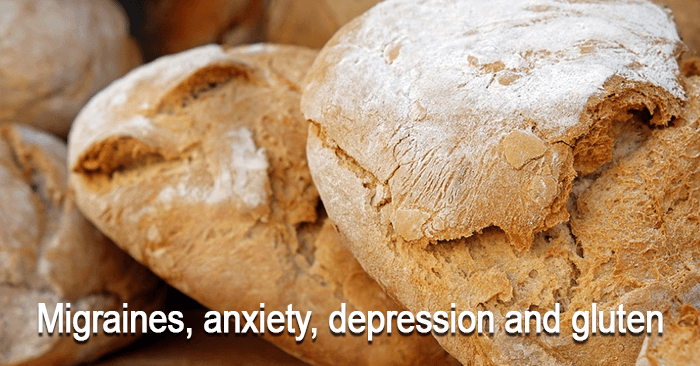
Migraines, anxiety, depression and gluten: on the Chronic Headache & Migraine Summit

June 26, 2017 By Trudy Scott 5 Comments

The goal of a 2015 Russian study titled Gluten Migraine, was to study the prevalence of migraine among patients with celiac disease and to assess the efficacy of a gluten-free diet in its treatment. There were 200 celiac disease (CD) patients and the

CD group had migraine syndrome four times more often than the control group. The attacks were more frequent in CD patients who were older than 50 years old.

The migraines disappeared in 25% of patients with migraines who were on the gluten free diet and the reduction in the intensity and/or frequency of attacks was observed in 38% of patients.

This is the study conclusion:

We revealed the clear association between migraine syndrome and CD and the high efficacy of gluten FREE diet in the treatment of migraine symptoms.”

I would suspect similar results if you have gluten sensitivity. And here is some gluten-migraine feedback from 4 different women in my community:

  • HUGE decrease in my migraines now that I eat more cleanly. I used to start to get headaches immediately upon eating gluten-y meals
  • I had them frequently from teenage years right up until my Celiac diagnosis in my thirties. Once gluten was gone so were the migraines
  • Stopping gluten stopped my migraines
  • My migraines always came from gluten and dairy

Of course there is also an anxiety-gluten and the depression-gluten connection so getting the gluten out of your diet will help with both anxiety and depression most of the time too.

I talked about all this on The Chronic Headache & Migraine Summit.

The other topic I covered is the autoimmune condition called Antiphospholipid Syndrome (APS) which is one of many possible contributing factors for both migraines and anxiety. Of course, with any autoimmune condition gluten removal is key.

I also cover low serotonin as one possible cause of migraines (and anxiety) and the use of tryptophan (instead of SSRIs). An amino acid like tryptophan or GABA also helps you break the gluten addiction so you don’t have to rely only on willpower!

Have you got questions or comments? Please post in the comment box below.
Filed Under: Events, Migraine Tagged With: amino acids, anxiety, depression, gluten, headache, migraine, serotonin, tryptophan, willpower

GABA is calming for me, doesn’t work for my daughter’s anxiety and makes my son sleepy

June 23, 2017 By Trudy Scott 10 Comments

I’m sharing this question I received on my GABA Calm blog to illustrate how different people respond to GABA and how some people may not even have the low GABA type of anxiety. Here is the question this mom posted:

I have used GABA (several brands, just open capsule and sprinkle small amount under tongue) for years now, with calming results within minutes. It was recommended to me by 2 family members, both bi-polar, who were tested by Dr. Amen. I have also used it with my children (now adults); my daughter says it doesn’t work for her. (She has anxiety issues and occasional panic attacks, and Rescue Remedy helps her.) It does work to calm my 3 sons, but one says it makes him sleepy, and lasts into the next day, so he won’t take it. Trudy, have you heard of this reaction? It seems extreme for such a small amount used. He is a college student and ‘medicates’ with caffeine, if that makes a difference.

She shared that she uses 500mg or 750mg capsules of GABA, and get several doses from a single cap (so maybe 100mg per dose).

This is what I shared with her: we are all biochemically different and one form of GABA (or GABA combined with other amino acids/nutrients such as GABA Calm) may work for one person and not another. Also one person may need more and another may do fine with much much less. Also anxiety has many underlying causes, with low GABA only being one of them.

If I was working with your daughter I’d have her trial higher amounts of GABA for the anxiety and panic attacks. I’d also look into low serotonin and a trial of tryptophan too especially if her anxiety is the worry, ruminating anxiety with insomnia and the blues, with increased afternoon and evening cravings for carbs and chocolates.

If I was working with your son, because it does work to calm him, I’d start by having him trial just 25mg of GABA and increase slowly from there, monitoring how he feels. His anxiety may also be related to his caffeine consumption – which can also affect sleep and the fatigue he feels in the morning could be related to that.

Note: She did ask this question on the GABA Calm blog and was planning to have them trial this form of GABA. I typically don’t have clients use GABA Calm at night (because of the tyrosine) but it’s certainly worth a trial especially with her son.

If you’re completely new to the amino acids for anxiety here is an overview with questionnaire, precautions and how to do a trial.

Filed Under: GABA Tagged With: anxiety, calming, GABA, GABA Calm, serotonin, sleepy, worry

Migraines, Anxiety and Antiphospholipid Syndrome: on the Chronic Headache & Migraine Summit

June 12, 2017 By Trudy Scott 39 Comments

The autoimmune condition called Antiphospholipid Syndrome (APS) is one of many possible contributing factors for both migraines and anxiety. I came across this condition when researching the links between migraine and anxiety in preparation for my interview with Erin Knight, one of the hosts of The Chronic Headache & Migraine Summit. This is one of the reasons I love presenting because I get to learn so much too!

Antiphospholipid syndrome occurs when your immune system attacks some of the normal proteins in your blood. It can cause blood clots in your arteries or veins. And it can cause pregnancy complications, such as miscarriage and stillbirth. (Source: Mayo Clinic)

I share some highlights from a 2015 paper: Antiphospholipid antibodies as biomarkers in psychiatry

  • Antiphospholipid syndrome (APS) has been implicated in a range of neuropsychiatric presentations
  • The link between depression, stroke, and cardiovascular disease could be explained in at least some patients by the presence of aPL antibodies
  • Approximately one in five (20%) strokes in individuals under the age of 45 years are associated with APS
  • Migraine is one of the most commonly observed symptoms in patients with APS
  • aPL antibodies are often found to show low or moderately positive levels which makes this syndrome a diagnostic dilemma in psychiatry. The St. Thomas ‘alternative criteria’ for APS may be a useful clinical tool for psychiatrists. These criteria include cognitive impairment, affective disorders [like depression and anxiety], headaches [or migraines], and livedo reticularis, with improvement after aspirin treatment

In case you are not familiar with livedo reticularis, it is a mottled purplish discoloration of the skin. Having this skin condition does not mean you have APS because livedo reticularis can be a normal condition that is simply more obvious when you are exposed to the cold. It can also be an indicator of impaired circulation.

Phospholipids are a class of lipids that are a major component of all cell membranes and also facilitate neurotransmitters communication so this condition affects serotonin, dopamine, glutamate and GABA levels.

Working with my client’s doctor, I would recommend an autoimmune dietary approach and trials of the respective amino acids to support low serotonin, low GABA (anxiety is common with migraine sufferers) and low dopamine.

We also discuss how effective gluten removal can be for my clients with anxiety and migraines and find it to be a common underlying factor (whether it’s celiac disease or gluten sensitivity). Since gluten is always an important factor for autoimmunity it should always be explored if APS has been diagnosed or is suspected.

We also cover low serotonin as one possible cause of migraines and the how to do a trial of tryptophan (instead of SSRIs). Using tryptophan also addresses the low serotonin that often occurs with APS and is one possible contributing cause of the anxiety, depression, insomnia and migraines.

Hosts of The Chronic Headache & Migraine Summit, Erin Knight, Corey Schuler and Marta Taylor, are familiar with headache pain and migraines; they’ve all experienced severe headache problems. They found functional medicine solutions, which they now share in their health practices each day.

Filed Under: Anxiety and panic, Depression, Events, Migraine Tagged With: antiphospholipid syndrome, anxiety, gluten, headache, livedo reticularis, migraine, serotonin, stroke

Anxiety in autism, ADHD and sensory processing disorders

June 5, 2017 By Trudy Scott 8 Comments

I had the pleasure of being interviewed by Tara Hunkin on the upcoming Autism, ADHD and Sensory Processing Disorder Summit and share my expertise on anxiety since we so often see anxiety in this population. My topic is: Anxiety’s Role in ASD, ADHD and SPD and how nutrient therapy can help.

I start out sharing some of the research on the incidence and connections.

This 2009 paper Sensory Overresponsivity and Anxiety in Children With ADHD in the American Journal of Occupational Therapy, reports that:

Approximately 25% of children with attention deficit hyperactivity disorder (ADHD) have a comorbid anxiety disorder.

The purpose of this particular study was to determine whether sensory overresponsivity (SOR) or sensory processing disorders are related to increased anxiety in children with ADHD. There were twenty-four children between the age of 6 to 10 with ADHD and 24 children without ADHD.

The study concluded that:

Children in the ADHD + SOR [sensory over responsivity] group were significantly more anxious than both the ADHD-only and non-ADHD (control) groups.

Occupational therapists treating children with ADHD and SOR should be aware that these children may also have anxiety and discuss options with families for prevention or treatment.

I would add that anyone working with these children should be aware of the connections: doctors, nutritionists, psychologists and anyone else on the health team.

We also discuss this 2012 paper, also from the American Journal of Occupational Therapy – Sensory Overresponsivity and Anxiety in Typically Developing Children and Children With Autism and Attention Deficit Hyperactivity Disorder: Cause or Coexistence?

Reviews of the coexistence of ASD [autism spectrum disorder] and anxiety disorders have concluded that among children and youth with ASD, anxiety disorders are highly prevalent, clinically significant, and varied as to specific type of anxiety disorder

Approximately 25% of children with attention deficit hyperactivity disorder (ADHD) also have anxiety disorder, a rate that is elevated when ADHD is seen in conjunction with conduct or oppositional defiant disorders

The paper mentions these 3 factors as models worthy of further study in order to understand the relationship between anxiety, sensory overresponsivity, autism and ADHD:

(1) anxiety caused by, or a symptom of, SOR (primary anxiety model);
(2) SOR caused by, or a symptom of, anxiety (primary SOR model); and
(3) the presence of both anxiety and SOR, linked by way of another factor

Based on what I know about anxiety I feel it could be a combination of all of the above.

My interview also covers the following around how to address the anxiety in these children and their moms (who also often have anxiety):

  • Low serotonin anxiety, symptoms, using tryptophan and 5-HTP and precautions with using them with an SSRI
  • A young girl with RAD (reactive attachment disorder) with rage/anger, anxiety, insomnia, and sugar cravings and the successful use of chewable tryptophan, addressing low iron and a gluten-free diet
  • A young boy with OCD and the successful use of both tryptophan and inositol
  • Low GABA anxiety, the use of GABA and not phenibut, and cautions about using too much
  • A young girl with ADHD and irritability and the successful use of GABA
  • Pyroluria incidence and symptoms and how it ties back to neurotransmitter imbalances

Sensory processing disorders, ADHD and autism are not my expertise and I don’t work much with children so I’m really pleased to be bringing you this information via the other amazing speakers AND listening and learning myself!

Here are some speakers and topics I’m particularly interested in

  • Brandon Brock, RN, DC: Understanding PANS and PANDAS role in ASD, ADHD and SPD.
  • Elizabeth Mumper, MD: Mitochondrial Dysfunction: What it is and how to address the underlying causes.
  • Richard Frye, MD, Ph.D.: Cerebral Folate Deficiency: and how it impairs neurological health.
  • Nancy O’Hara, MD: What you need to know about cell danger response in ASD & other neurodevelopmental disorders.
  • John Tjenos, NTP: The importance of the vagus nerve and how to build vagal tone with essential oils.

We have so much to learn from practitioners and researchers working in this area. And children affected by these conditions do recover!

The Autism, ADHD and Sensory Processing Disorder Summit, hosted by Tara Hunkin, NTP, runs from June 19-28, 2017.

It will be 10 days of eye opening information into the root causes of your child’s neurological dysfunction. Imagine learning about what may have caused their symptoms and how to address them with nutrition and biomedical approaches and leverage the power of positive neuroplasticity to improve function, health and their lives.

Do also keep in mind that these topics may have relevance for you even if you don’t have a child with a sensory processing disorder, ADHD and/or autism. These children are the canaries in the coal mine and many of my clients with anxiety can benefit from the biomedical support that many of these speakers are addressing. Simply replace sensory processing disorder, ADHD and/or autism with anxiety and listen and learn.

You can register for The Autism, ADHD and Sensory Processing Disorder Summit here

Feel free to ask questions or provide feedback and your experiences in the comment section below.

Filed Under: Autism, Events Tagged With: ADHD, anxiety, autism, Brandon Brock, Elizabeth Mumper, GABA, inositol, Nancy O’Hara, sensory overresponsivity, Sensory Processing Disorder, serotonin, Tara Hunkin, tryptophan

Low serotonin anxiety and sugar addiction: my interview on the Sweet Freedom Summit

March 20, 2017 By Trudy Scott 36 Comments

It’s not common knowledge that brain chemical or neurotransmitter imbalances can cause sugar cravings as well as anxiety and depression. But there certainly is a big connection between stress eating, comfort eating, emotional eating and low levels of the brain chemicals serotonin, GABA and endorphins. There is a growing body of research supporting this connection.

Sharing this sugar craving-brain chemical connection and bringing it back to my expertise in anxiety and stress is something I don’t get to do often enough. So when I heard about the Sweet Freedom Summit that Sherry Strong was hosting, I immediately reached out to her and shared this brain chemical imbalance/addiction/mood topic in the hope she’d invite me to speak.

I was thrilled when she said she’d love to interview me and then doubly thrilled when she said our interview was SO good (I really enjoyed it too!) she’s decided to offer it as a gift to EVERYONE who signs up for the summit! Wow!

The Sweet Freedom Summit runs April 10-17 and I’m giving you a sneak peek to some of my interview today.

Sherry starts the sugar cravings/emotional eating/addiction discussion by asking what the connection is to brain chemistry imbalances and what evidence do we have that this is happening? Here are a few snippets from my response:

Say we’ve got a brain chemical deficiency of low serotonin, we are going to crave sugar and carbs in the afternoon and evening. And we will also have the low serotonin symptoms which are depression, the worry type of anxiety, the ruminating thoughts, the worry, the fear (these are the symptoms I experienced in my late 30s – I was also a chocoholic)

So you have this emotional aspect and the sugar cravings aspect when you’ve got these brain chemical imbalances.

And I just want to share something with you. This is a study done in 2002. And I’m going to just read a quote from this. The title is Evidence that Intermittent, Excessive Sugar Intake Causes Endogenous Opioid Dependence.

They’re saying that sugar can be as addicting as opioids and drugs. The goal of the study was to determine whether withdrawal from sugar can cause symptoms similar to opioid dependence. We’ve been hearing in the news how opioid drugs like OxyContin can cause dependence and we can have severe withdrawal symptoms.  

What they’re saying is palatable food stimulates systems in the body that are implicated in drug addiction. And they felt that intermittent, excessive sugar intake might create a dependency and you get these withdrawal signs.

So they are saying that withdrawal from sugar is very similar to withdrawal from something like morphine or nicotine. And this is interesting because we know how addicting drugs can be. And we don’t realize that sugar can be as addicting.

Sherry had me repeat this statement to really bring the message home: 

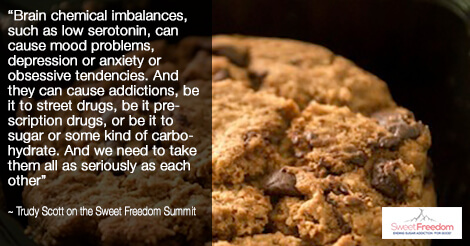
Brain chemical imbalances, such as low serotonin, can cause mood problems, depression or anxiety or obsessive tendencies. And they can cause addictions, be it to street drugs, be it prescription drugs, or be it to sugar or some kind of carbohydrate. And we need to take them all as seriously as each other.

Do you resonate with any of the above? Maybe the example I shared will be closer to reality for you:

Just think about the obsessive nature we have when we’re craving something. We’ll binge eat a box of cookies. And then we may even rush out and buy a second box to replace the box that we binge-ate to replace it before someone sees that we’ve eaten the first box. That sounds like the behavior of a drug addict to me!

We also cover the low GABA type of stress eating that we see with anxiety and low endorphins comfort/reward eating where you really LOVE certain foods (think a big bowl of ice-cream) – and which targeted individual amino acids to use for each brain chemical imbalance. This all means NO willpower is required and zero feelings of deprivation! Really! (and you get a mood boost too)

I hope you can join us at the online no-cost event – simply click here to register today. It runs April 10-17 and when you register you’ll get immediate access to my interview and some other cool sign up gifs. Please share with family and friends who you know can benefit from this information!

Two decades ago, your host, Sherry Strong, was completely addicted to sugar. She was obese, sick and depressed to the point of wanting to die. All of that changed when she removed sugar from her diet.

If you are struggling to give up sugar, are an emotional eater or stress-eater or even if you simply indulge periodically – whether a health professional, busy mom, athlete or career-driven person – this event can help you, finally, improve your health, your life, your mood and end those sugar cravings and addictions!

Got questions or feedback? Please share them in the blog comments below.


Filed Under: Sugar addiction, Sugar and mood Tagged With: serotonin, Sugar addiction, sweet freedom summit

How do I taper from my antidepressant with tryptophan and can I safely use the other amino acids?

November 18, 2016 By Trudy Scott 121 Comments

antidepressant-tapering

Today’s article is based on a question I am seeing more and more on the blog: How do I taper from my antidepressant with tryptophan and can I safely use the other amino acids?

I find my clients do better when tapering off an antidepressant (which is often prescribed for anxiety and panic attacks) when their nutritional status is solid. Incorporating diet changes and adding amino acids and other nutrients first can result in a more successful taper with less side-effects. This would mean starting with the basics – eating real whole food, incorporating quality animal protein, eating to balance blood sugar, and removing gluten, caffeine and sugar.

If needed and based on testing results, it’s important to address any other nutritional deficiencies such as low iron, low vitamin D, low stomach acid, low total cholesterol, low B12 (and whatever else is an issue), plus support the adrenals/sex hormones/thyroid if needed and addressing gut health like leaky gut and dysbiosis.

Adding a good copper free multivitamin and often the addition of zinc and vitamin B6, evening primrose oil and possibly fish oil – the latter based on each person’s unique needs.

With antidepressants such as selective serotonin-reuptake inhibitors (SSRIs), I have my clients work with their prescribing doctor and get the approval to add tryptophan (or 5-HTP) 6 hours apart from the SSRI. If they are taking the medication at night they get the approval from their doctor to switch it to the morning, and will take tryptophan (or 5-HTP) at least 6 hours later, mid-afternoon and evening.

If they decide to do both the medication and tryptophan (or 5-HTP), they get a protocol for the SSRI taper for the future. This is important. If you are in too big a rush to start right away, it often causes more issues. It’s also important to make sure you get a very slow taper protocol from your doctor. Some antidepressants are harder to taper (Paxil is notoriously difficult) and they all should be tapered really slowly.

The plan is to start to taper the SSRI once you have been using the tryptophan (or 5-HTP) for at least 4 to 8 weeks and are seeing real benefits by using it. This translates to much much less or none of the following symptoms: anxiety, depression, insomnia, rumination, worry, negative-self-talk, perfectionism, afternoon and evening carbohydrate cravings, PMS, rage or anger.

For some of my clients it’s 3 months before they feel they are ready to taper. This may be because of feedback they have provided based on prior taper attempts and how they are feeling this time. It may also be based on what else is going on in their lives like a stressful work situation. It may also be based on the time of the year: winter is generally not a good time to taper and definitely not if you suffer from increased depression or anxiety in winter.

The tryptophan (or 5-HTP) is adjusted up as needed while continuing to taper the SSRI.

The doctor is always kept informed and monitors for the possibility of serotonin syndrome. I learned about the potential concerns about serotonin syndrome when using tryptophan or 5-HTP with an SSRI from Julia Ross, author of The Mood Cure, and so I continue to caution my clients about this.

When I interviewed Dr. Peter Bongiorno in season 4 of the Anxiety Summit (Serotonin and anxiety: tryptophan, 5-HTP, serotonin syndrome and medication tapers), he shared that he is not concerned about serotonin syndrome being an issue with tryptophan or 5-HTP dosed with an SSRI, even if taken at the same time. He cited research that found the combination of tryptophan and SSRI did not result in serotonin syndrome in any of the participants.

Dr. Bongiorno also uses the same approach to address the basics:

the most important thing is that we really establish all the basics and that they’re in the healthiest place possible.  Because if those aren’t there, if a patient just gets off the medication and we haven’t really done anything to change the underlying reasons why they got to the place where they had the mood issue, in most cases they’re going to go back there again.

Some people need amino acid support in more than just the low serotonin area so we review the amino acid questionnaire and consider trials of GABA and other amino acids too. All this only applies for SSRIs and tryptophan or 5-HTP. The other amino acids can safely be used with SSRIs, and it’s not uncommon to also have low GABA, low endorphins, low catecholamines and low blood sugar and need them all, but it’s still best to discuss them with the prescribing doctor.

We also review all the amino acid precautions.

Some people choose to work with their doctor to taper the SSRI and then add the tryptophan (or 5-HTP) once they have quit the medication. I have found that this makes it much harder to do and more side-effects are seen. With the amino acids you start to get some relief right away and have hope on the first day! They also make it so much easier to quit the sugar, gluten and caffeine without having to use will-power.

In summary, these are my recommendations for doing an SSRI taper with amino acids:

  • doctor’s approval to taper the SSRI and use amino acids
  • address diet and nutritional deficiencies first – before starting to taper
  • work with someone knowledgeable in amino acid use
  • OR educate yourself by
    • reading my book The Antianxiety Food Solution , Julia’s book The Mood Cure and Dr. Kelly Brogan’s new book A Mind of Your Own
    • listening to the Anxiety Summit interviews

(please don’t simply read one or two blogs and jump in to this)

  • use the amino acids from day one to start addressing low levels of all the brain chemicals
  • use the tryptophan or 5-HTP at least 6 hours away from the SSRI

I would like to add that Dr. Brogan shares that coffee enemas help her patients who are doing medication tapers.

If you are a practitioner, join us in The Balancing Neurotransmitters: the Fundamentals program. It’s an opportunity to interact with me and other practitioners who are also using the amino acids and helping their clients/patients to taper from antidepressants (always working with the prescribing doctor).

Have you used a similar SSRI taper protocol? And how did it work for you? What would you have done differently? And what advice would you give someone contemplating an SSRI taper?

Have you found that coffee enemas have helped?

If you are a practitioner, has the above approach been helpful for your clients/patients?

Filed Under: Antidepressants Tagged With: 5-HTP, amino acids, antidepressant, anxiety, depression, serotonin, SSRI, taper, tryptophan

  • « Go to Previous Page
  • Page 1
  • Interim pages omitted …
  • Page 21
  • Page 22
  • Page 23
  • Page 24
  • Page 25
  • Interim pages omitted …
  • Page 28
  • Go to Next Page »

Primary Sidebar

GABA QuickStart Homestudy

gaba quickstart homestudy

Free Report

9 Great Questions Women Ask about Food, Mood and their Health

You'll also receive a complimentary subscription to my ezine "Food, Mood and Gal Stuff"


Connect with me

Popular Posts

  • Amino Acids Mood Questionnaire from The Antianxiety Food Solution
  • The Antianxiety Food Solution Amino Acid and Pyroluria Supplements
  • Pyroluria Questionnaire from The Antianxiety Food Solution
  • Collagen and gelatin lower serotonin: does this increase your anxiety and depression?
  • Tryptophan for the worry-in-your-head and ruminating type of anxiety
  • GABA for the physical-tension and stiff-and-tense-muscles type of anxiety
  • The Antianxiety Food Solution by Trudy Scott
  • Seriphos Original Formula is back: the best product for anxiety and insomnia caused by high cortisol
  • Am I an anxious introvert because of low zinc and vitamin B6? My response to Huffington Post blog
  • Vagus nerve rehab with GABA, breathing, humming, gargling and key nutrients

Recent Posts

  • Her cravings for chips and peanut butter were triggered by stress: GABA ends cravings and reduces physical tension and fear of heights
  • It is truly miraculous to be able to move through life without crippling anxiety and panic
  • GABA and tryptophan combo provide immediate and noticeable relief for tremors and cervical dystonia in just 7 days
  • Red light therapy for back and neck pain, plantar fasciitis and low mood – a complement to the amino acids GABA, DPA and tryptophan
  • What do I use instead of Seriphos to help lower high cortisol that is affecting my sleep and making me anxious at night?

Categories

  • 5-HTP
  • AB575
  • Addiction
  • ADHD
  • Adrenals
  • Alcohol
  • Allergies
  • Alzheimer's disease
  • Amino Acids
  • Anger
  • Antianxiety
  • Antianxiety Food Solution
  • Antidepressants
  • Anxiety
  • Anxiety and panic
  • Autism
  • Autoimmunity
  • benzodiazapines
  • Bipolar disorder
  • Books
  • Caffeine
  • Cancer
  • Candida
  • Children/Teens
  • Collagen
  • Cooking equipment
  • Coronavirus/COVID-19
  • Cravings
  • Depression
  • Detoxification
  • Diabetes
  • Diet
  • DPA/DLPA
  • Drugs
  • EFT/Tapping
  • EMF
  • EMFs
  • Emotional Eating
  • Endorphins
  • Environment
  • Essential oils
  • Events
  • Exercise
  • Fear
  • Fear of public speaking
  • Fertility and Pregnancy
  • Fish
  • Food
  • Food and mood
  • Functional neurology
  • GABA
  • Gene polymorphisms
  • General Health
  • Giving
  • Giving back
  • Glutamine
  • Gluten
  • GMOs
  • Gratitude
  • Gut health
  • Heart health/hypertension
  • Histamine
  • Hormone
  • Hyperparathyroidism
  • Hypoglycemia
  • Immune system
  • Inflammation
  • Insomnia
  • Inspiration
  • Introversion
  • Joy and happiness
  • Ketogenic diet
  • Lithium orotate
  • Looking awesome
  • Lyme disease and co-infections
  • MCAS/histamine
  • Medication
  • Men's health
  • Mental health
  • Mercury
  • Migraine
  • Mold
  • Movie
  • MTHFR
  • Multiple sclerosis
  • Music
  • NANP
  • Nature
  • Nutritional Psychiatry
  • OCD
  • Osteoporosis
  • Oxalates
  • Oxytocin
  • Pain
  • Paleo
  • Parasites
  • Parkinson’s disease
  • PCOS
  • People
  • PMS
  • Postpartum
  • PTSD/Trauma
  • Pyroluria
  • Questionnaires
  • Real whole food
  • Recipes
  • Research
  • Schizophrenia
  • serotonin
  • SIBO
  • Sleep
  • Special diets
  • Sports nutrition
  • Stress
  • Sugar addiction
  • Sugar and mood
  • Supplements
  • Teens
  • Testimonials
  • Testing
  • The Anxiety Summit
  • The Anxiety Summit 2
  • The Anxiety Summit 3
  • The Anxiety Summit 4
  • The Anxiety Summit 5
  • The Anxiety Summit 6
  • Thyroid
  • Thyroid health
  • Toxins
  • Tryptophan
  • Tyrosine
  • Uncategorized
  • Vegan/vegetarian
  • Women's health
  • Yoga

Archives

  • May 2026
  • April 2026
  • October 2025
  • September 2025
  • August 2025
  • July 2025
  • June 2025
  • May 2025
  • April 2025
  • March 2025
  • February 2025
  • January 2025
  • November 2024
  • October 2024
  • September 2024
  • August 2024
  • July 2024
  • June 2024
  • May 2024
  • April 2024
  • March 2024
  • February 2024
  • January 2024
  • December 2023
  • November 2023
  • October 2023
  • September 2023
  • August 2023
  • July 2023
  • June 2023
  • May 2023
  • April 2023
  • March 2023
  • February 2023
  • January 2023
  • December 2022
  • November 2022
  • October 2022
  • September 2022
  • August 2022
  • July 2022
  • June 2022
  • May 2022
  • April 2022
  • March 2022
  • February 2022
  • January 2022
  • December 2021
  • November 2021
  • October 2021
  • September 2021
  • August 2021
  • July 2021
  • June 2021
  • May 2021
  • April 2021
  • March 2021
  • February 2021
  • January 2021
  • December 2020
  • November 2020
  • October 2020
  • September 2020
  • August 2020
  • July 2020
  • June 2020
  • May 2020
  • April 2020
  • March 2020
  • February 2020
  • January 2020
  • December 2019
  • November 2019
  • October 2019
  • September 2019
  • August 2019
  • July 2019
  • June 2019
  • May 2019
  • April 2019
  • March 2019
  • February 2019
  • January 2019
  • December 2018
  • November 2018
  • October 2018
  • September 2018
  • August 2018
  • July 2018
  • June 2018
  • May 2018
  • April 2018
  • March 2018
  • February 2018
  • January 2018
  • December 2017
  • November 2017
  • October 2017
  • September 2017
  • August 2017
  • July 2017
  • June 2017
  • May 2017
  • April 2017
  • March 2017
  • February 2017
  • January 2017
  • December 2016
  • November 2016
  • October 2016
  • September 2016
  • August 2016
  • July 2016
  • June 2016
  • May 2016
  • April 2016
  • March 2016
  • February 2016
  • January 2016
  • December 2015
  • November 2015
  • October 2015
  • September 2015
  • August 2015
  • July 2015
  • June 2015
  • May 2015
  • April 2015
  • March 2015
  • February 2015
  • January 2015
  • December 2014
  • November 2014
  • October 2014
  • September 2014
  • August 2014
  • July 2014
  • June 2014
  • May 2014
  • April 2014
  • March 2014
  • February 2014
  • January 2014
  • December 2013
  • November 2013
  • October 2013
  • September 2013
  • August 2013
  • July 2013
  • June 2013
  • May 2013
  • April 2013
  • March 2013
  • February 2013
  • January 2013
  • December 2012
  • November 2012
  • October 2012
  • August 2012
  • July 2012
  • June 2012
  • May 2012
  • April 2012
  • March 2012
  • February 2012
  • January 2012
  • December 2011
  • November 2011
  • October 2011
  • September 2011
  • August 2011
  • July 2011
  • June 2011
  • May 2011
  • April 2011
  • March 2011
  • February 2011
  • January 2011
  • December 2010
  • October 2010
  • September 2010
  • July 2010
  • May 2010
  • April 2010
  • March 2010
  • February 2010
  • January 2010
  • November 2009

Share the knowledge!

The above statements have not been evaluated by the Food and Drug Administration. Products listed in this website are not intended to diagnose, treat, cure or prevent any disease.

The information provided on this site is for informational and educational purposes only and is not intended as a substitute for advice from your physician or other health care professional. You should consult with a healthcare professional before starting or modifying any diet, exercise, or supplementation program, before taking or stopping any medication, or if you have or suspect you may have a health problem.


Copyright © 2026 Trudy Scott. All Rights Reserved. | Privacy | Terms and Conditions | Refund Policy | Medical Disclaimer

Free Report

9 Great Questions Women Ask about Food, Mood and their Health

You’ll also receive a complimentary subscription to my ezine “Food, Mood and Gal Stuff”