• Skip to primary navigation
  • Skip to main content
  • Skip to primary sidebar

everywomanover29 blog

Food, Mood and Women's Health – Be your healthiest, look and feel great!

  • Blog
  • About
  • Services
  • Store
  • Resources
  • Testimonials
  • The Book
  • Newsletter
  • Contact
  • Search this site

serotonin

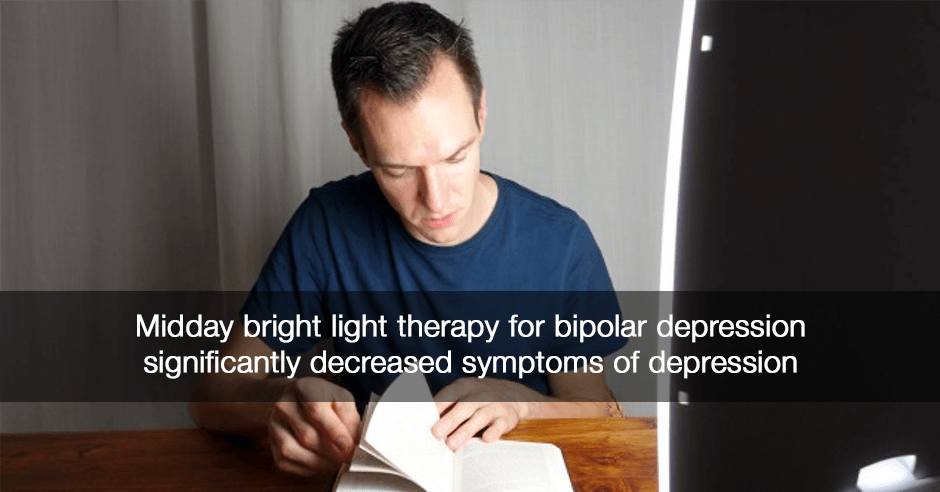
Midday bright light therapy for bipolar depression

October 20, 2017 By Trudy Scott 6 Comments

A recent study from Northwestern University and published in The American Journal of Psychiatry: Adjunctive Bright Light Therapy for Bipolar Depression: A Randomized Double-Blind Placebo-Controlled Trial has found that midday daily exposure to 7,000 lux bright white light for 6 weeks, significantly decreased symptoms of depression and increased functioning in people with bipolar disorder.

The press release issued by Northwestern University reports as follows

Previous studies found morning bright light therapy reduced symptoms of depression in patients with Seasonal Affective Disorder (SAD.). But patients with bipolar disorder can experience side effects such as mania or mixed symptoms from this type of depression treatment. This study implemented a novel midday light therapy intervention in an effort to provide relief for bipolar depression and avoid those side effects.

Compared to dim placebo light, study participants assigned to bright white light between noon and 2:30 p.m. for six weeks experienced a significantly higher remission rate (minimal depression and return to normal functioning). More than 68 percent of patients who received midday bright light achieved a normal level of mood, compared to 22.2 percent of patients who received the placebo light.
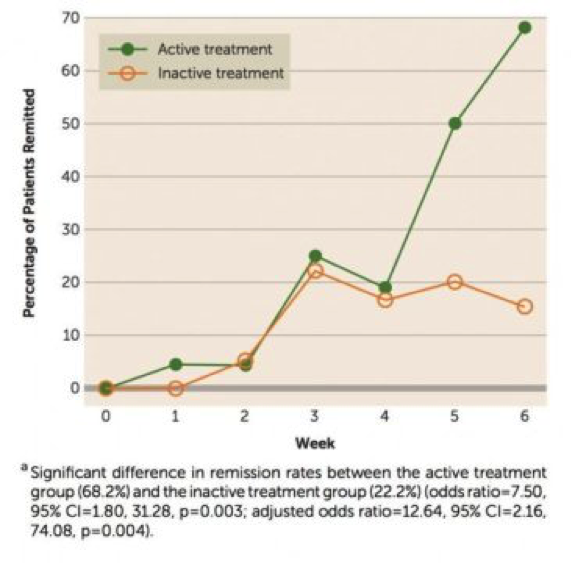
Images used with permission from Northwestern University

How the 7,000 lux bright light therapy was used

Here are the details of how the 7,000 lux bright light therapy was used in the study:

The light therapy patients were instructed to place the light box about one foot from their face for 15-minute sessions to start.

Every week, they increased their exposure to the light therapy by 15-minute increments until they reached a dose of 60 minutes per day or experienced a significant change in their mood.

Study lead author Dr. Dorothy Sit shares that starting low and slowly increasing the treatment made it more tolerable. None of the study participants experienced side effects, likely because the treatment was customized for each patient:

No one experienced mania or hypomania, a condition that includes a period of elation, euphoria, irritability, agitation, rapid speech, racing thoughts, a lack of focus and risk-taking behaviors.

A noticeable mood improvement with bright light therapy was also noticed as quickly as four weeks, which is similar to other light therapy research for non-seasonal depression and depression during pregnancy.

How do you do this in the middle of a work day?

You may have concerns about doing this at midday as this facebook follower voiced:

I guess if your bipolar depression is so debilitating that you cannot hold a job, then this is worth trying.

But 60 minutes!! What working person has 60 minutes in the middle of their workday?

It’s very doable because there are very nice desk versions that could easily be used at work (without anyone knowing – if privacy is a concern) or at a home-office desk for your convenience. I share some examples in this blog – Winter blues or SAD: light therapy.

I have tried lights in the morning but found that it caused agitation

I also received this feedback about increased agitation:

I have tried lights in the morning but found that it caused agitation. Over time my tolerance went down so that I could only use for less than 5 minutes. I haven’t ever tried midday light though. I’m not bipolar but I have depression which is generally worse in the winter. Exercise helps.

It may be worth trying midday light therapy if morning light therapy causes agitation or other adverse effects.

The press release mentions that light therapy is typically used in the morning to help reset circadian rhythms and the authors are unclear why midday light therapy worked for these patients with bipolar disorder. They plan to investigate further. If it is working via the same mechanism i.e. by resetting circadian rhythms, then it may well work at this time for other individuals too.

It may also be that your depression (and/or anxiety) is not caused by low serotonin but by something else instead – such as low catecholamines, poor thyroid health, gluten issues, poor diet and so on.

Using light therapy and tryptophan (or 5-HTP)

I have also found that some people do well on a combination of light therapy and tryptophan (or 5-HTP). One of my clients had many low serotonin symptoms and did better mood-wise and with reduced anxiety, on a small amount of tryptophan but still needed additional serotonin support. Additional tryptophan was too much for him and increased his day-time sleepiness, but using a small amount of tryptophan together with light therapy was the ideal balance for him.

Have you used light therapy with success – for the winter blues or depression or bipolar disorder? Or even for anxiety?

Have you ever used it at midday or at other times?

And have you used light therapy in conjunction with tryptophan or 5-HTP?
Filed Under: Antianxiety, Bipolar disorder, Depression, Mental health Tagged With: 5-HTP, anxiety, bipolar disorder, Bright light therapy, depression, serotonin, tryptophan

Anxiety, compulsive thinking, counting behaviors: gluten, tryptophan and inositol

October 6, 2017 By Trudy Scott 42 Comments

Today I’m going to share my feedback on a question I received on how to approach working with a child with anxiety, compulsive thinking and counting behaviors in the hope it can help you or someone you know (or are working with if you’re a practitioner). Here is the question:

Regarding anxiety and compulsive thinking/OCD counting behaviors in a 12 year old, have you experienced (or heard through client sharing) a correlation with certain foods or inflammatory compounds? In a younger person, I am trying figure out the triggers if there is low production of certain neurotransmitters driving the symptoms. This child in particular has had a long history of allergies and terrible asthma (requiring nebulizer treatments) so I’ve long suspected food sensitivities as a driver for systemic inflammation but am trying to connect the dots for her parent. The counting seems to be a distraction of sorts for her – I assume following a triggering thought. This parent is very new to integrative therapies so treating with an amino acid is going to *feel* like she’s not doing enough as parent. Standard talk therapy has not helped.

This is how I responded and it’s how I would start to work with a parent with a child with these types of issues.

After looking at the basics to make sure the child is eating real whole food with no additives, is not consuming any caffeine and is getting quality animal protein at breakfast (to keep blood sugar stable and reduce anxiety), I always consider gluten and even dairy and other food intolerances. I write about the success of a gluten-free diet with a 7 year old boy in this blog: Integrative Medicine Approach to Pediatric Obsessive-Compulsive Disorder and Anxiety. He saw a “marked reduction of OCD symptoms and anxiety along with marked improvement of social behavior and school work.”

OCD and counting behaviors are classic low serotonin symptoms and her anxiety could be the low-serotonin worrying type or the low GABA type which is more physical anxiety. I’d have them do the amino acid questionnaire

I’d start with a trial of tryptophan – using 100mg of Lidtke Chewable Tryptophan – to help with the OCD, counting and worry-type anxiety. If it helps, I’d have her use it twice a day mid-afternoon and evening, increasing it over the course of a few weeks to find the ideal amount for symptom relief (and keeping a food mood log to record doses and symptoms).

Some people do really well with tryptophan, others do better with 5-HTP for low serotonin symptoms, so doing a trial with 25mg of 5-HTP would be an option if the tryptophan doesn’t help as expected.  

I would carefully review the precautions with the mom as tryptophan and 5-HTP can sometimes be an issue with asthma and may need to be lowered or discontinued.

Inositol can be added if additional nutritional support is needed for the OCD and counting behaviors and may even be needed to replace the tryptophan or 5-HTP if either one triggers asthma. The maximum dose in the research is 18g of inositol per day and I start at 2g once a day and increase slowly over a few weeks to find the ideal dose. Here is feedback from one mom on how inositol alone helped her son with migraines, stress, anxiety and OCD

Once we’ve figured out nutritional support for the low serotonin symptoms then we’d address low GABA if needed, using sublingual GABA. [Update Nov 17, 2017: I mentioned GABA as a possibility but with her symptoms and the new GABA research on intrusive thoughts, a GABA trial would definitely be something to pursue]

I found this comment to be rather unusual: “treating with an amino acid is going to *feel* like she’s not doing enough as parent.” The parents I work with are thrilled to discover how powerful the amino acids are and how quickly they provide amazing results.

These other factors would also be addressed: possible high cortisol, gut health and any of the other possible contributing root causes. I also always keep Lyme disease, heavy metals and PANDAS on the list as possible areas to refer out for if symptoms are not resolving with the above approaches.

Here are links to the amino acid questionnaire, the precautions and the supplements:

  • I have my clients complete the Amino Acids Mood Questionnaire from The Antianxiety Food Solution and check off their symptoms in each of the sections. The rating uses scale of 1-10 with 10 being worst.
  • I also have my clients review the Amino Acids Precautions and we figure out which amino acids they can and can’t use
  • These are some of the supplements I use with my clients

Have you used any of the above approaches with your child or for your symptoms or for a client/patient?

Filed Under: Supplements Tagged With: 5-HTP, anxiety, counting, GABA, inositol, OCD, serotonin, tryptophan

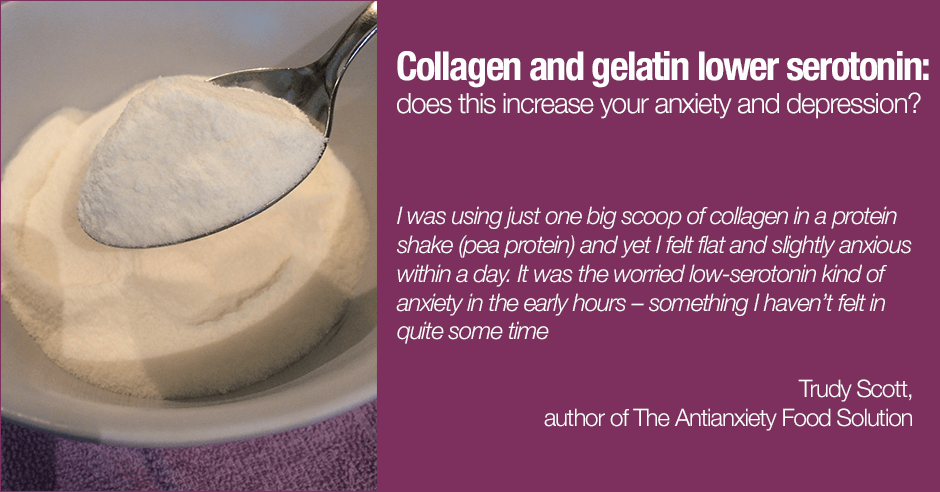
Collagen and gelatin lower serotonin: does this increase your anxiety and depression?

September 29, 2017 By Trudy Scott 471 Comments

I see everyone raving about gelatin and collagen – and rightly so – they have amazing health benefits. However, no-one is addressing the fact that gelatin is actually used in tryptophan-depletion studies to lower serotonin (gelatin is derived from collagen: when collagen breaks down, it becomes gelatin). When I first discovered this fact it really concerned me that this very important aspect is ignored so I added it to my long list of topics to investigate.

I posted the above on Facebook last month as part of a fact-finding exercise and appreciate all the feedback and questions. Today I share some of the feedback and research and I’d love to hear from you what your experiences have been.

I share how my experience with collagen left me flat and worried until I added tryptophan; feedback from individuals who wondered if collagen was affecting their sleep, making them moody, on edge or feeling night-time anxiety; some reported no mood issues when using collagen with tryptophan; feedback from many who didn’t notice any obvious mood issues at all ;and one woman who uses collagen ‘therapeutically’ to lower her serotonin levels.

I also share some very interesting research on why some people seem to be adversely impacted by acute tryptophan depletion/ATD (caused by collagen or gelatin consumption) while others are not. There are definitely some folks who are more susceptible.

The health benefits of collagen

In case you’re new to collagen, Dr. Josh Axe provides an excellent overview of the health benefits of collagen

  1. Improves Health of Skin and Hair
  2. Reduces Joint Pains and Degeneration
  3. Helps Heal Leaky Gut
  4. Boosts Metabolism, Muscle Mass and Energy Output
  5. Strengthens Nails, Hair and Teeth
  6. Improves Liver Health
  7. Protects Cardiovascular Health

Gelatin is used in tryptophan depletion studies

Tryptophan-depletion studies have been done for years, as a way to study the relationship between low serotonin and depression.  Often a tryptophan-deficient amino acid mixture is used for this purpose.  More recently, collagen and gelatin are being used.

Collagen and gelatin are an excellent source of these amino acids: proline, glycine, glutamine and arginine, but they do not contain the amino acid tryptophan.

This paper, Pharmacokinetics of acute tryptophan depletion using a gelatin-based protein in male and female Wistar rats summarizes what we find in a number of studies that use gelatin for the purpose of lowering serotonin levels, in order to study the relationship between serotonin and behavior:

The essential amino acid tryptophan is the precursor of the neurotransmitter serotonin. By depleting the body of tryptophan, brain tryptophan and serotonin levels are temporarily reduced. In this paper, several experiments are described in which dose and treatment effects of acute tryptophan depletion (ATD) using a gelatin-based protein-carbohydrate mixture were studied in male and female Wistar rats.

My experience with collagen – flat and worried until I added tryptophan

When I recently injured my back and sprained my ankle, I decided to add collagen to speed up the healing and very quickly had to take a deeper dive into the topic because I noticed it affected my mood right away! I was using just one big scoop of collagen in a protein shake (pea protein) and yet I felt flat and slightly anxious within a day. It was the worried low-serotonin kind of anxiety in the early hours – something I haven’t felt in quite some time.

I wondered if it was due to the injury and inflammation my body was dealing with or if it was related to the effects of tryptophan depletion. I stopped the collagen and then added it back and had the same experience. I did this a few times and experienced similar feelings each time.

When I used tryptophan mid-afternoon and at bedtime I felt fine and was able to continue taking the collagen with no problems. I am prone to low serotonin – it was one of the root causes of my big anxiety issues in my late 30s – so I may be more affected than the average person.

Wondering if collagen causing mood issues and an increase in anxiety?

Here is feedback from someone who is wondering if collagen is causing her mood to dive:

I have wondered if it affects my mood so I haven’t been using it lately. Interested to see what other people say. I was using about a table spoon in a drink that I would sip on throughout the morning. My moods just take dives now and then. I have isolated gluten as a HUGE factor. I am forever wondering what else causes the dives and I began to wonder if collagen was causing problems so I haven’t used it in several months.

Stephanie feels moody when using collagen:

I have found that the days I take collagen that I’m moody. I’ve kept trying, but am always surprised by the reaction. I even mentioned it to my naturopath recently. Curious to see if there’s a connection.

Here is feedback from someone also reporting mood dives and feeling on edge (although as I pointed out to her the feeling on edge is very likely due to or partly due to the coffee):

I take collagen (grass-fed and grass-finished) in my coffee every morning. I’ve also had some mood dives consistently the last few months and feel more on edge. I’ve honestly never made the connection and actually thought it was hormones. Something to think about!

Melissa shared it affected her sleep:

As soon as I started taking gelatin daily I have had difficult falling asleep.

Katinka began having strange night time anxiety:

I did [Vital Proteins grass fed beef gelatin] for 2 weeks in bone broth. My nails grew like crazy, but at the same time I begun having strange night time anxiety: worry, obsessive, but not any of the other symptoms like depression and cravings. It is interesting to me because this was the only time I had anxiety at night since going gluten free.

Collagen caused a racing heart for Beverly:

Used to take Vital Proteins products. Was woken up several times in the night with racing heartbeat and out of breath. This went away when I stopped the collagen. I have symptoms of low serotonin but have not tried tryptophan

No noticeable problems

Many people shared that they didn’t notice any obvious mood issues so it’s clearly not a problem for everyone:

  • Jaime: Interesting, I use it almost daily for protein at breakfast. I will pay attention better. No obvious problems now (used for 9 months).
  • Angela: …I don’t think I have any side effects and I do have serotonin issues. I think I will have to do more research
  • Courtney: I just started using collagen peptides but not every day. Maybe once or twice a week. I haven’t noticed any difference in mood but I also just started taking it a few weeks ago.
  • Debra: I take 1bsp of Great Lakes Collagen Hydrosylate every day and take it to help heal my leaky gut….haven’t noticed any particular side-effects. I alternate it with the normal gelatin. I suffer from complex PTSD, anxiety and depression…I haven’t noticed any difference in that either

Jessica Drummond, nutritionist and physical therapist, and an expert on female pelvic pain and women’s health shared:

I use collagen regularly and I also eat quite a lot of meat and fish. For me both help me to feel very grounded and less anxious. I think of collagen as balancing for all of the muscle meat that we eat. I eat anywhere from 10-20 grams 4-5 days per week.


Feels anxious using gelatin, stop using it and anxiety is gone/less

Laura’s anxiety got worse within a few months of adding daily gelatin:

Wow, I never heard that gelatin can lower serotonin. I started using [Puritan’s Pride brand], 650mg, daily about 6 months ago to strengthen my nails. It’s worked very well for that. About a couple months ago my anxiety started to get worse again. My anxiety shows up as fear and worry mostly and not being able to quiet my mind. I had gotten it under control for almost 2 years now. I wonder if there is a connection. I’m going to stop taking the gelatin and see if my anxiety improves. I have not tried tryptophan, but I have found GABA helped quiet my mind and let me sleep better.

She decided to stop taking it to see if her anxiety symptoms would reduce and when I checked back with her she shared this:

I was surprised to find after about 2 weeks of stopping the gelatin, I began to feel more calm again and it’s been a lasting change. I still take zinc, vitamin b6 and lysine in the morning and GABA in the evening. This combination works well for me. I’m so grateful for all the information you share! Thank you!

Toni experienced something similar:

I’ve been using Organic collagen for about 8 months now… love the hair and skin results. My tummy felt better at first but not currently. My anxiety and panic attacks are off the charts: panic attacks, heart racing, sweating, brain fog. I want to escape -like fight or flight. Definately obsessing and fears. Memory difficulty. I have an upcoming GI appointment to check for Candida /SIBO… but I had no idea this could add to my anxiety. I’ll be looking forward to more information, Seriously.

And a few weeks after stopping the collagen she shared this:

I stopped using the collagen. Since then, my anxiety and panic are decreased by less than half. Mild in comparison. I’m definately taking a long break.

Keep in mind I’m not suggesting we should not be using collagen – just that if it seems to lower serotonin and increase anxiety/depression doing a trial with tryptophan may be the solution (more on that and some other possible causes of anxiety below).

When used with tryptophan – no mood issues

Karen uses collagen and tryptophan at night:

I use collagen every day. But hey, I also take L-tryptophan every night for anxiety. It runs in the family and a small amount of Tyrptophan at night helps resolve mine. No clue there was a connection

Maxine uses it every morning and takes 1 tryptophan before bed and reports no mood issues

I take it [Great Lakes gelatin and Vital Choice collagen] every morning in my tea and at night in my bone broth for my skin and joints and I take one tryptophan before bed. The tryptophan with GABA before bed is for better sleep. No mood issues.


Used ‘therapeutically’ to lower serotonin

Misty reports using it ‘therapeutically’ to lower her high serotonin levels. This application is new to me and I find it quite fascinating:

I use it to reduce tryptophan because I have a tendency toward high serotonin. I have suffered my entire life with ADD, tics as a child, grinding teeth, general anxiety, lack of motivation and later, IBS. In my quest to maximize my health, I finally came to these web pages for help. In my 53 years I’ve never been as calm as I am now. If I’m not careful, I can get a bout of IBS (not food related and trust me, from GAPS to AIP, nothing really affects me). I reduce tryptophan and I’m balanced. It seems contrary but it works for me and so many others

She links to these articles Tryptophan, Sleep, and Depression and The Sadder Side of Serotonin which both refer to the work of Ray Peat who I recently discovered is very much against the use of tryptophan.

I agree with the premise of too much serotonin causing issues (often the same symptoms we see with serotonin that is too low) but not the general message that tryptophan supplements and foods high in tryptophan are harmful and should be avoided by everyone. Based on the clinical results myself and other practitioners see boosting low serotonin with tryptophan and/or 5-HTP -and the wonderful results they experience – in my opinion, this is really all about biochemical individuality.

I decided to share this story here, even with the controversial tryptophan articles, because it illustrates that it is highly likely that the collagen is lowering her serotonin levels and making her feel better. I’ll tackle the above negative articles about serotonin and tryptophan in a separate blog post.

Why are some people adversely impacted by acute tryptophan depletion/ATD while others are not?

UPDATE: Dec 22, 2017. This section adds additional evidence or possibly some theories for why some people are adversely impacted when consuming collagen, while others are not impacted mood-wise – all related to the lowering of serotonin levels. These are called ATD or acute tryptophan depletion studies.

This paper: The effect of raising and lowering tryptophan levels on human mood and social behavior explains that effects of ATD can vary based on susceptibility of the study participants to clinical depression:

Acute tryptophan depletion (ATD) studies indicate that low serotonin can lower mood and also increase aggression, although results vary somewhat between studies with similar participants. Lowering of mood after ATD is related to the susceptibility of the study participants to clinical depression, and some participants show no effect on mood.

In healthy individuals, there is little or no lowering of mood, although results can be quite variable between studies, with some lowering of mood seen more often in women than in men.

The author reports the following variable responses:

In healthy participants with a family history of depression, there is a lowering of mood although mood remains within the normal range of mood.

In newly recovered depressed patients on antidepressants that act on the serotonergic system, 50 per cent or more of the patients show a temporary reappearance of the depressed mood they experienced before recovery.

In recovered depressed patients off antidepressants, only a small percentage of the patients show a marked lowering of mood.

In recovered depressed on noradrenergic antidepressants, there is no lowering of mood.

The results of the ATD studies suggest that lowering serotonin synthesis can lower mood in some circumstances, and that the magnitude of the effect tends to be greater in people with a greater susceptibility for depression.

Other studies report on these groups of people that were adversely affected with a lowered mood after ATD:

OCD / obsessive compulsive disorder: Patients with OCD experienced a decrease in control and an increase in interfering thoughts after acute tryptophan depletion. There was no effect on anxiety in this group.

Genetic polymorphisms: A number of papers show some genetic polymorphisms make some individuals vulnerable to increased depression after acute tryptophan depletion, such as MAOA and 5-HTTLPR (the serotonin transporter gene). In one 5-HTTLPR polymorphism study differences were seen between men and women: healthy men became more impulsive, whereas healthy women showed a mood reduction after ATD. Keep in mind that having a polymorphism doesn’t mean there will always be an issue, instead, it means there may be a predisposition.

Smokers: The moderating influence of nicotine and smoking on resting-state mood and EEG changes in remitted depressed patients during tryptophan depletion.

Comorbidity between depression and tobacco use may reflect self-medication of serotonergically mediated mood dysregulation [and acute tryptophan depletion or ATD] increased self-ratings of depressed mood [in certain smokers].

Although this study was looking at the role of nicotinic receptors in disordered mood and the self-medication of mood by smoking, we may be able to extrapolate this for our purposes because it was this one subset of smokers who were more depressed after tryptophan depletion. Could it be that smokers or even former smokers are more likely see increased depression after consuming collagen because it contains no tryptophan? Or is it that smokers tend to be drawn to smoking because they are prone to low serotonin?

Women ecstasy users: The effect of acute tryptophan depletion on mood and impulsivity in polydrug ecstasy users.

Women polydrug ecstasy users appear to be more susceptible than men to the effects of lowered serotonin levels [when they] received a tryptophan-deficient amino acid mixture and a control amino acid mixture containing tryptophan, at least 1 week apart.

The women who were impacted – with a lowering of their mood – used a tryptophan-deficient amino acid mixture and not collagen. The authors suggest this could be due to the drug-use causing progressive damage of serotonin neurons. Could this also happen with collagen consumption in current and possibly prior drug users? What about users of other street drugs or even medications that may also damage serotonin neurons?

Interestingly, in a study looking at five chronic fatigue/CFS patients, none of them showed any significant differences in fatigue, depression and concentration when subjected to acute tryptophan depletion /ATD. Was this group of patients too small or were none of them susceptible to low serotonin?

This is just a small selection of studies looking at the effects of acute tryptophan depletion or ATD but they give us much to think about when it comes to considering the varied effects we are seeing when individuals consume collagen.

If collagen affects you adversely and makes you feel more depressed, more anxious and experience worse sleep, can you relate to any of the above scenarios?

More questions and looking for your feedback

As you can see we have very different experiences but there are enough unanswered questions we need to be asking:

  • Are the negative effects because of low serotonin? If yes, are some of us more susceptible to the serotonin-lowering effects than others and should we stop using collagen despite all the health benefits?
  • And should we be assessing for low serotonin levels before using collagen or gelatin, and supplementing with tryptophan when it is low (more on this below)? There is one company that has added tryptophan to their collagen – is this a good idea?
  • Or are the negative effects some people experience due to glutamates, arginine, histamine, because of quality issues and glyphosate levels, an increase in oxalates or something else such as not eating enough animal protein?

I’ll address the above questions and share some additional research and feedback from collagen experts in part 2 of this article.

Until then, if you have observed a mood dip or increase in anxiety since using collagen or gelatin, I would suggest you stop using collagen/gelatin and see how you feel, then add it back and see how you feel. If you do see a correlation, do the low serotonin questionnaire and a trial of tryptophan (after checking the precautions) to see if this improves your mood when using collagen/gelatin. I recently blogged about tryptophan here (brand is important).

Resources if you are new to using the amino acids as supplements

If you are new to using any of the amino acids as supplements, here is the Amino Acids Mood Questionnaire from The Antianxiety Food Solution (you can see all the symptoms of neurotransmitter imbalances, including low endorphins).

If you suspect low levels of any of the neurotransmitters and do not yet have my book, The Antianxiety Food Solution – How the Foods You Eat Can Help You Calm Your Anxious Mind, Improve Your Mood, and End Cravings, I highly recommend getting it and reading it before jumping in and using amino acids on your own so you are knowledgeable. And be sure to share it with the practitioner/health team you or your loved one is working with.

There is an entire chapter on the amino acids and they are discussed throughout the book in the sections on gut health, gluten, blood sugar control, sugar cravings, self-medicating with alcohol and more.

The book doesn’t include product names (per the publisher’s request) so as mentioned above, this blog, The Antianxiety Food Solution Amino Acid and Pyroluria Supplements, lists the amino acids that I use with my individual clients and those in my group programs.

As mentioned above, Lidtke Endorphigen is the DPA product I’ve had the most success with (and it can be found in my online store). Doctor’s Best D-phenylalanine is also a good product.

If, after reading this blog and my book, you don’t feel comfortable figuring things out on your own (i.e. doing the symptoms questionnaire and respective amino acids trials), a good place to get help is the GABA Quickstart Program (if you have low GABA symptoms). This is a paid online/virtual group program where you get my guidance and community support. There are many moms in the program who are having much success with their kids.

You can then use this knowledge to then trial DPA and other amino acids or move on to the Amazing Aminos for Anxiety Program and get help there.

If you are a practitioner, join us in The Balancing Neurotransmitters: the Fundamentals program. This is also a paid online/virtual program with an opportunity to interact with me and other practitioners who are also using the amino acids with success with their clients/patients.


I would love your feedback. Do you use gelatin or collagen regularly i.e. daily or weekly? And why do you use it? How do you use it and what benefits do you notice?

Have you noticed any worsening of mood or an increase in anxiety or any of the other low serotonin symptoms? Do you take tryptophan to offset the fact that gelatin or collagen doesn’t contain any tryptophan?

Have you done the off/on test with collagen/gelatin and what was the outcome?

I’d love your feedback in the comments. Be sure to share what you’re using (collagen or gelatin and the brand), how much, how often you consume it, what you take it with, how much caffeine you consume, how much protein you consume on a daily basis and what kind of protein, and how you react to home made bone broth. If you’re comfortable with sharing how you score on the low serotonin questionnaire (now or in the past i.e. are you prone to low serotonin) and if you’re using a SSRI (or have in the recent past), this may help us piece the puzzle together.

Filed Under: Anxiety, Depression, Food and mood, serotonin Tagged With: anxiety, collagen, depression, gelatin, mood, serotonin, tryptophan

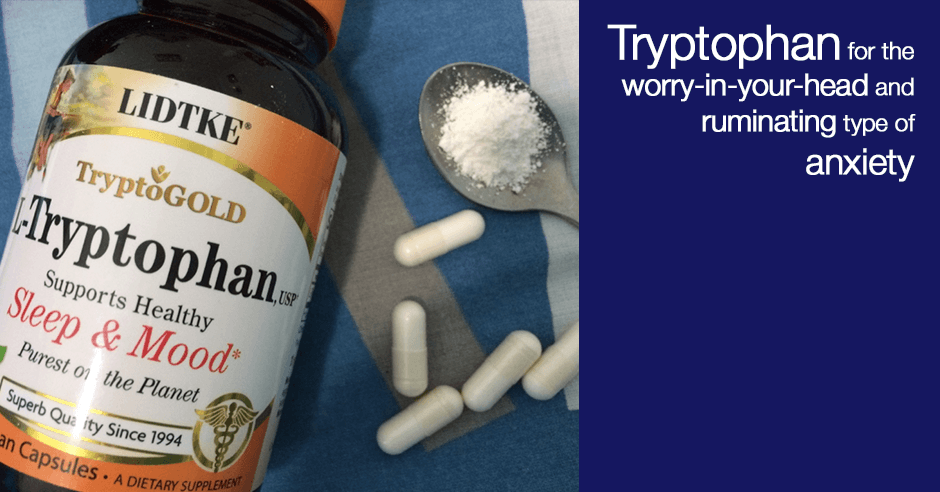
Tryptophan for the worry-in-your-head and ruminating type of anxiety

August 30, 2017 By Trudy Scott 193 Comments

Today I’m going to review some tryptophan products for the worry-in-your-head and ruminating type of anxiety, and share some additional resources for you.

The other symptoms we see with low serotonin are: panic attacks and phobias, lack of confidence, depression, negativity, imposter syndrome, PMS, irritability, anger issues, insomnia and afternoon/evening cravings.

Lidtke is the top brand of tryptophan that I recommend simply because I see it work so well and because of quality issues with tryptophan in the past. Here are the Lidtke tryptophan products I recommend:

  • Lidtke Tryptophan 500mg (this is ideal for doing a targeted trial, opened; it doesn’t taste very good and if a client needs to continue taking it this way we have them mix it with inositol or even glutamine powder)
  • Lidtke Tryptophan Complete (see below for when this one may work well)
  • Lidtke Chewable Tryptophan (this is also good for doing a trial and if lower doses are better; it’s also wonderful for children; there is some hesitation with the taste of the new 2025 formulation – more on this below)

This blog covers how to do an amino acid trial and has the low serotonin questionnaire, the precautions and what I mean by targeted individual amino acids.

When to use GABA vs tryptophan, PMS and when to use Tryptophan Complete

Anxiety: when to use GABA and tryptophan and how much to use

When you have anxiety it can be confusing trying to figure out the root cause. I like to start by assessing for low GABA and low serotonin because when you address these with targeted individual amino acids you typically see results right away and feel hopeful (and now have time to look for other root causes like gluten issues, high cortisol, gut issues, dietary changes etc).

But there may still be some confusion about when to use GABA and when to use tryptophan and how much of each of these amino acids to use. Read more here.

Tryptophan for PMS: premenstrual dysphoria, mood swings, tension, and irritability

In a study published in 1999, A placebo-controlled clinical trial of L-tryptophan in premenstrual dysphoria, tryptophan was found to reduce symptoms of PMS when used in the luteal phase or second half of the cycle (i.e. after ovulation)

This is very typical when I’m working with someone with PMS and anxiety and other mood symptoms. It typically takes 2 to 3 cycles for an amino acid like tryptophan to have an impact on PMS itself. But it does typically start to work right away on the less severe anxiety and mood symptoms that may also be a factor during the rest of the month. Read more here.

Tryptophan 500mg or Tryptophan Complete (by Lidtke)?

I like to have my clients do a trial of the amino acids so they can find the ideal dose for their needs and right now I still feel this would still be the best approach to take – using 500mg tryptophan. Once you have figured out you do well with tryptophan-only product and have your dose, then consider reducing it slightly after about 2-3 weeks and adding in additional Tryptophan Complete. Read more here.

Using chewable tryptophan for kids and pixie dust adults (and a potential taste issue)

Update Jan 2025: 

Lidtke tryptophan 100mg chewable is back! It’s great for anxious, worried, raging kids and pixie dust adults who have trouble sleeping too

The Lidtke tryptophan 100mg chewable product was out of stock for close to a year and was reformulated last year. This product has been a firm favorite of mine for many years and I’ve used it successfully with children and adults with signs of low serotonin.

I’ve used this product in the past with children who are anxious, worried, raging, having problems sleeping and craving sugar and carbs. I’ve also used it with “pixie dust” clients who do well with a small dose and prefer a chewable form of tryptophan. And I often recommend clients use it to do the initial one-off trial to figure out if low serotonin is the issue (and before moving on to a typical starting dose of 500mg tryptophan twice a day).

In this blog you’ll see the label of the newly formulated tryptophan 100mg chewable and some of the many advantages of tryptophan as a low-dose chewable. You’ll also see some feedback on the previous formulation, a success story with a young girl, my personal experience and some of the negative feedback on the taste. Read more here.

This blog post is part of a series of amino acid product reviews

You can read about GABA, glutamine, DPA (D-phenylalanine) and tyrosine on the following blog posts:

  • GABA for low GABA symptoms (physical anxiety)
  • Glutamine for calming, intense sugar cravings, gut healing and low blood sugar
  • DPA for weepiness, pain and comfort and reward eating
  • Tyrosine for focus, motivation, energy, a good mood and possibly even anxiety

Additional resources when you are new to using amino acids as supplements

We use the symptoms questionnaire to figure out if low serotonin or low GABA or low endorphins or low dopamine or low blood sugar may be an issue for you.

If you suspect low levels of any of the neurotransmitters and do not yet have my book, The Antianxiety Food Solution – How the Foods You Eat Can Help You Calm Your Anxious Mind, Improve Your Mood, and End Cravings, I highly recommend getting it and reading it before jumping in and using amino acids on your own so you are knowledgeable. And be sure to share it with the practitioner/health team you or your loved one is working with.

There is an entire chapter on the amino acids and they are discussed throughout the book in the sections on gut health, gluten, blood sugar control, sugar cravings, anxiety and mood issues.

The book doesn’t include product names (per the publisher’s request) so this blog, The Antianxiety Food Solution Amino Acid and Pyroluria Supplements, lists the amino acids that I use with my individual clients and those in my group programs. You can find them all in my online store.

If, after reading this blog and my book, you don’t feel comfortable figuring things out on your own (i.e. doing the symptoms questionnaire and respective amino acids trials), a good place to start if you also need serotonin support, is the Serotonin QuickStart Program. This is a paid online/virtual group program where you get my guidance on using tryptophan and 5-HTP safely, and community support during 5 LIVE Q&A calls. You can sign up to be notified when the next live launch of this program is happening. We take a deep dive into product options including the Lidtke products and others if you’re not able to access Lidtke.

If you also have low GABA symptoms, the next step to get help is the GABA QuickStart Program. This is also a paid online/virtual group program where you get my guidance and community support. Another option is the budget-friendly GABA QuickStart Homestudy program.

If you are a practitioner, join us in The Balancing Neurotransmitters: the Fundamentals program. This is also a paid online/virtual program with an opportunity to interact with me and other practitioners who are also using the amino acids.

Now I’d like to hear from you

The blog has many other posts on tryptophan and serotonin and simply use the “search” function to find them.

Have you had success with any of these tryptophan products? Or another brand?

Feel free to share and ask your questions below.


Filed Under: Supplements, Tryptophan Tagged With: lidke, serotonin, supplements, tryptophan

GABA and tryptophan for pain and anxiety in Parkinson’s disease?

August 25, 2017 By Trudy Scott 12 Comments

Last week I blogged about my recent back injury and how acupuncture boosts GABA to reduce back pain and how oral GABA further reduces the pain. Both these interventions have helped me so much and I’m doing so much better.

I love the feedback I receive in the blog comments and the great questions – which get to help the person asking the question and everyone else reading the blog and comments. So thank you if you comment!

I received this lovely feedback about GABA and anxiety, and a question about Parkinson’s disease (on the above blog) and want to share it and my response here so you and families with a loved one with Parkinson’s disease will also have access to this information:

I have loved reading your articles for a long time and listen to you whenever you are on a summit. I have learned a lot. GABA definitely helps me to relax, reduce my monkey mind and sleep better.

My mom has Parkinson’s disease and is very stiff and tight. She hurts often, especially her back. She also has afternoon anxiety, some call it “sundowners”. Can she take GABA with carbidopa-levidopa and blood pressure meds? She needs some kind of help!

Thank you in advance for any suggestions you might have to give her any quality of life as right now it is not good and the doctors offer no suggestions beyond possibly more prescriptions.

I responded saying how glad I was to hear GABA helps her to relax, reduces her monkey mind and also helps her to sleep better and how sorry I was to hear about her mom’s stiffness, pain and anxiety.

I posted this regarding the stiffness and back pain: share this paper with your doctor and get his/her approval to do a trial of GABA – Parkinson’s Disease and Neurodegeneration: GABA-Collapse Hypothesis:

the original description of Parkinson’s disease (PD) as due to the selective damage of dopaminergic neurons in the mesencephalon should be updated into the concept of a severe multisystemic neurodegenerative disorder of the nervous system, whose clinical symptoms reflect the localization and progression of the most advanced GABA pathology. A future and more complete therapeutic approach to PD should be aimed first at slowing (or stopping) the progression of Ca(2+)/GABA functional decline.

I have worked with a few people with Parkinson’s disease and GABA has been very helpful for the stiffness and pain, the physical anxiety, easing some of their tremors and helping with insomnia. I always do a trial so we know how much the individual will need.

For someone on blood pressure medication I’d start with a GABA-only product or GABA-theanine product rather than GABA Calm which does contain tyrosine.

I posted this regarding the “sundowners” question: I’d share this with your doctor and get the approval to do a trial of tryptophan – Sundown Syndrome in Persons with Dementia: An Update

sundown syndrome is characterized by the emergence or increment of neuropsychiatric symptoms such as agitation, confusion, anxiety, and aggressiveness in late afternoon, in the evening, or at night.

Although this paper refers to dementia, these symptoms also happen to be classic low serotonin symptoms that typically respond really well to tryptophan. The paper mentions melatonin as an intervention but since tryptophan converts to melatonin I’d start with tryptophan (based on doing a trial) and then consider adding melatonin too if needed.

I shared a few more resources on Parkinson’s disease:

  • Chris Kresser has an excellent blog post called New Research and Treatments for Parkinson’s Disease where he writes about the microbiome, constipation, SIBO, gluten, the HPA axis, low-dose naltrexone (LDN) and the possible autoimmune aspect, iron overload and the benefits of curcumin, a ketogenic diet and glutathione.
  • The Wahls Protocol for MS (some versions of which are ketogenic diets) shows promise for many neurodegenerative diseases and is also being researched for Parkinson’s disease

I also shared this amazing and inspiring video created by physical therapist Anicea Gunlock, on how using music while gait training can be beneficial for those suffering from Parkinsons’s disease

You read more about this music approach Anicea Gunlock used with her patient here.

The amino acids GABA and tryptophan can often be used in conjunction with all of the above approaches and often provide immediate relief for anxiety, pain, agitation and insomnia while some of the other root causes are being addressed.

I’ve recently updated the Antianxiety Food Solution Amino Acid and Pyroluria Supplements blog with some of my favorite GABA and tryptophan products mentioned above. You’ll also see the amino acid questionnaire and amino acid precautions on this blog.

Instead of only considering the amino acids for someone whose primary issue is anxiety, I’d like you to start thinking about using the amino acids for anyone who has a medical diagnosis – such as autism, cancer, ALS, Parkinson’s disease, MS, Alzheimer’s disease or anything else – and who also happens to suffer from anxiety.

Have you used GABA or tryptophan to ease stiff and tense muscles and pain in your Parksinson’s disease, for a family member or for a patient/client?

And have you used tryptophan for the low serotonin worry-type of anxiety, agitation and insomnia?

Filed Under: Anxiety, GABA, serotonin Tagged With: agitation, anxiety, autism, GABA, MS, pain, Parkinson's disease, serotonin, stiff and tense muscles, sundowners, tryptophan

Toxoplasma gondii: schizophrenia, bipolar disorder, OCD and unresolved anxiety?

August 14, 2017 By Trudy Scott 17 Comments

Toxoplasma gondii is a microscopic parasite that infects cats and can be found in the soil – research shows it may be a factor in schizophrenia, bipolar disorder and OCD in susceptible individuals. Could toxoplasma gondii could be one of the root causes of unresolved anxiety? I believe so and feel it’s under-rated.

This is the one of the parasitic infections I cover in an interview I did on The Parasite Summit.

Here are a few snippets from my interview:

A single-celled parasite called Toxoplasma gondii causes a disease known as toxoplasmosis.

Toxoplasma gondii is a microscopic parasite that infects cats and can be found in the soil. The infection can be acquired by ingesting contaminated food or water, by handling contaminated cat litter, or by transmission from mother-to-child.

According to the CDC – as of Mar 1, 2017 – in the United States it is estimated that 11% of the population 6 years and older have been infected with Toxoplasma. In various places throughout the world, it has been shown that up to 95% of some populations have been infected with Toxoplasma.

I love cats and have always been a cat person and pets are wonderful companions helping many of us humans recovering from PTSD and trauma – but we always need to dig deeper:

  • some individuals don’t respond as well to dietary changes, brain chemical balancing and addressing other biochemical/nutritional factors
  • I’m always looking for root possible causes. I’ve identified 70+ causes of anxiety and one of them is parasites
  • any parasite could be a factor – it causes stress and inflammation in the body, and we may see high cortisol leading to increased anxiety, insomnia and inflammation
  • could toxoplasma gondii could be one of the root causes of unresolved anxiety? I believe so and feel it’s under-rated – and believe we’ll be hearing more about it as more research comes out

I discuss this review paper published this year: Is Toxoplasma gondii a Trigger of Bipolar Disorder?

The association between T. gondii and schizophrenia/schizoaffective disorder is one of the most studied links between one pathogen and a psychiatric disorder.

However, growing emerging evidence has also documented an association between latent toxoplasmosis and the risk of [bipolar disorder] and suicidal/aggressive behaviors. T. gondii infection, as previously suggested for schizophrenia, may contribute to the onset and the progressive course of the disease interacting with genetic hereditary predisposing factors, as well as affecting neurotransmitter systems and immune responses, which have recently been shown to be closely linked to the pathogenesis of BD and its medical comorbidities.

The link between this parasite and psychiatric disorders could be also explained by its ability to influence neurotransmitter pathways. Indeed, T. gondii has been shown to increase dopamine levels, as well as to modulate serotonin, gamma-aminobutyric acid (GABA) and glutamate signaling.

With the impacts on neurotransmitters it’s clear how this parasite could directly trigger anxiety, panic attacks, fears, worry and even OCD. I cover this and more (malaria and malaria medications too) in my interview and book.

Parasites may be silently impacting your health and they’re FAR MORE COMMON than you think! Parasites aren’t just found in third-world countries, millions are already infected in industrialized countries and parasites could be silently hampering your health. Fortunately, with awareness and appropriate care, parasites can be prevented and treated, once detected.

If you’re struggling with any of the following, it may be worth looking into parasites:

  • Gastrointestinal: pain/cramps, excess gas, bloating, constipation/diarrhea
  • Infertility and hormone disorders
  • Skin issues: acne, itching, rashes
  • Mental health: depression, bipolar disorder, anxiety, OCD, schizophrenia
  • Challenges with autoimmune disease recovery (Toxoplasma gondii may also be a factor in Hashimoto’s thyroiditis)

Please share feedback and ask questions in the comments below.

Filed Under: Anxiety and panic, Events, Parasites Tagged With: anxiety, bipolar disorder, cats, dopamine, GABA, hashimoto's thyroiditis, OCD, parasite, schizophrenia, serotonin, The Parasite Summit, toxoplasma gondii, Trudy Scott

  • « Go to Previous Page
  • Page 1
  • Interim pages omitted …
  • Page 20
  • Page 21
  • Page 22
  • Page 23
  • Page 24
  • Interim pages omitted …
  • Page 28
  • Go to Next Page »

Primary Sidebar

GABA QuickStart Homestudy

gaba quickstart homestudy

Free Report

9 Great Questions Women Ask about Food, Mood and their Health

You'll also receive a complimentary subscription to my ezine "Food, Mood and Gal Stuff"


Connect with me

Popular Posts

  • Amino Acids Mood Questionnaire from The Antianxiety Food Solution
  • The Antianxiety Food Solution Amino Acid and Pyroluria Supplements
  • Pyroluria Questionnaire from The Antianxiety Food Solution
  • Collagen and gelatin lower serotonin: does this increase your anxiety and depression?
  • Tryptophan for the worry-in-your-head and ruminating type of anxiety
  • GABA for the physical-tension and stiff-and-tense-muscles type of anxiety
  • The Antianxiety Food Solution by Trudy Scott
  • Seriphos Original Formula is back: the best product for anxiety and insomnia caused by high cortisol
  • Am I an anxious introvert because of low zinc and vitamin B6? My response to Huffington Post blog
  • Vagus nerve rehab with GABA, breathing, humming, gargling and key nutrients

Recent Posts

  • Her cravings for chips and peanut butter were triggered by stress: GABA ends cravings and reduces physical tension and fear of heights
  • It is truly miraculous to be able to move through life without crippling anxiety and panic
  • GABA and tryptophan combo provide immediate and noticeable relief for tremors and cervical dystonia in just 7 days
  • Red light therapy for back and neck pain, plantar fasciitis and low mood – a complement to the amino acids GABA, DPA and tryptophan
  • What do I use instead of Seriphos to help lower high cortisol that is affecting my sleep and making me anxious at night?

Categories

  • 5-HTP
  • AB575
  • Addiction
  • ADHD
  • Adrenals
  • Alcohol
  • Allergies
  • Alzheimer's disease
  • Amino Acids
  • Anger
  • Antianxiety
  • Antianxiety Food Solution
  • Antidepressants
  • Anxiety
  • Anxiety and panic
  • Autism
  • Autoimmunity
  • benzodiazapines
  • Bipolar disorder
  • Books
  • Caffeine
  • Cancer
  • Candida
  • Children/Teens
  • Collagen
  • Cooking equipment
  • Coronavirus/COVID-19
  • Cravings
  • Depression
  • Detoxification
  • Diabetes
  • Diet
  • DPA/DLPA
  • Drugs
  • EFT/Tapping
  • EMF
  • EMFs
  • Emotional Eating
  • Endorphins
  • Environment
  • Essential oils
  • Events
  • Exercise
  • Fear
  • Fear of public speaking
  • Fertility and Pregnancy
  • Fish
  • Food
  • Food and mood
  • Functional neurology
  • GABA
  • Gene polymorphisms
  • General Health
  • Giving
  • Giving back
  • Glutamine
  • Gluten
  • GMOs
  • Gratitude
  • Gut health
  • Heart health/hypertension
  • Histamine
  • Hormone
  • Hyperparathyroidism
  • Hypoglycemia
  • Immune system
  • Inflammation
  • Insomnia
  • Inspiration
  • Introversion
  • Joy and happiness
  • Ketogenic diet
  • Lithium orotate
  • Looking awesome
  • Lyme disease and co-infections
  • MCAS/histamine
  • Medication
  • Men's health
  • Mental health
  • Mercury
  • Migraine
  • Mold
  • Movie
  • MTHFR
  • Multiple sclerosis
  • Music
  • NANP
  • Nature
  • Nutritional Psychiatry
  • OCD
  • Osteoporosis
  • Oxalates
  • Oxytocin
  • Pain
  • Paleo
  • Parasites
  • Parkinson’s disease
  • PCOS
  • People
  • PMS
  • Postpartum
  • PTSD/Trauma
  • Pyroluria
  • Questionnaires
  • Real whole food
  • Recipes
  • Research
  • Schizophrenia
  • serotonin
  • SIBO
  • Sleep
  • Special diets
  • Sports nutrition
  • Stress
  • Sugar addiction
  • Sugar and mood
  • Supplements
  • Teens
  • Testimonials
  • Testing
  • The Anxiety Summit
  • The Anxiety Summit 2
  • The Anxiety Summit 3
  • The Anxiety Summit 4
  • The Anxiety Summit 5
  • The Anxiety Summit 6
  • Thyroid
  • Thyroid health
  • Toxins
  • Tryptophan
  • Tyrosine
  • Uncategorized
  • Vegan/vegetarian
  • Women's health
  • Yoga

Archives

  • May 2026
  • April 2026
  • October 2025
  • September 2025
  • August 2025
  • July 2025
  • June 2025
  • May 2025
  • April 2025
  • March 2025
  • February 2025
  • January 2025
  • November 2024
  • October 2024
  • September 2024
  • August 2024
  • July 2024
  • June 2024
  • May 2024
  • April 2024
  • March 2024
  • February 2024
  • January 2024
  • December 2023
  • November 2023
  • October 2023
  • September 2023
  • August 2023
  • July 2023
  • June 2023
  • May 2023
  • April 2023
  • March 2023
  • February 2023
  • January 2023
  • December 2022
  • November 2022
  • October 2022
  • September 2022
  • August 2022
  • July 2022
  • June 2022
  • May 2022
  • April 2022
  • March 2022
  • February 2022
  • January 2022
  • December 2021
  • November 2021
  • October 2021
  • September 2021
  • August 2021
  • July 2021
  • June 2021
  • May 2021
  • April 2021
  • March 2021
  • February 2021
  • January 2021
  • December 2020
  • November 2020
  • October 2020
  • September 2020
  • August 2020
  • July 2020
  • June 2020
  • May 2020
  • April 2020
  • March 2020
  • February 2020
  • January 2020
  • December 2019
  • November 2019
  • October 2019
  • September 2019
  • August 2019
  • July 2019
  • June 2019
  • May 2019
  • April 2019
  • March 2019
  • February 2019
  • January 2019
  • December 2018
  • November 2018
  • October 2018
  • September 2018
  • August 2018
  • July 2018
  • June 2018
  • May 2018
  • April 2018
  • March 2018
  • February 2018
  • January 2018
  • December 2017
  • November 2017
  • October 2017
  • September 2017
  • August 2017
  • July 2017
  • June 2017
  • May 2017
  • April 2017
  • March 2017
  • February 2017
  • January 2017
  • December 2016
  • November 2016
  • October 2016
  • September 2016
  • August 2016
  • July 2016
  • June 2016
  • May 2016
  • April 2016
  • March 2016
  • February 2016
  • January 2016
  • December 2015
  • November 2015
  • October 2015
  • September 2015
  • August 2015
  • July 2015
  • June 2015
  • May 2015
  • April 2015
  • March 2015
  • February 2015
  • January 2015
  • December 2014
  • November 2014
  • October 2014
  • September 2014
  • August 2014
  • July 2014
  • June 2014
  • May 2014
  • April 2014
  • March 2014
  • February 2014
  • January 2014
  • December 2013
  • November 2013
  • October 2013
  • September 2013
  • August 2013
  • July 2013
  • June 2013
  • May 2013
  • April 2013
  • March 2013
  • February 2013
  • January 2013
  • December 2012
  • November 2012
  • October 2012
  • August 2012
  • July 2012
  • June 2012
  • May 2012
  • April 2012
  • March 2012
  • February 2012
  • January 2012
  • December 2011
  • November 2011
  • October 2011
  • September 2011
  • August 2011
  • July 2011
  • June 2011
  • May 2011
  • April 2011
  • March 2011
  • February 2011
  • January 2011
  • December 2010
  • October 2010
  • September 2010
  • July 2010
  • May 2010
  • April 2010
  • March 2010
  • February 2010
  • January 2010
  • November 2009

Share the knowledge!

The above statements have not been evaluated by the Food and Drug Administration. Products listed in this website are not intended to diagnose, treat, cure or prevent any disease.

The information provided on this site is for informational and educational purposes only and is not intended as a substitute for advice from your physician or other health care professional. You should consult with a healthcare professional before starting or modifying any diet, exercise, or supplementation program, before taking or stopping any medication, or if you have or suspect you may have a health problem.


Copyright © 2026 Trudy Scott. All Rights Reserved. | Privacy | Terms and Conditions | Refund Policy | Medical Disclaimer

Free Report

9 Great Questions Women Ask about Food, Mood and their Health

You’ll also receive a complimentary subscription to my ezine “Food, Mood and Gal Stuff”