• Skip to primary navigation
  • Skip to main content
  • Skip to primary sidebar

everywomanover29 blog

Food, Mood and Women's Health – Be your healthiest, look and feel great!

  • Blog
  • About
  • Services
  • Store
  • Resources
  • Testimonials
  • The Book
  • Contact
  • Search this site

oxytocin

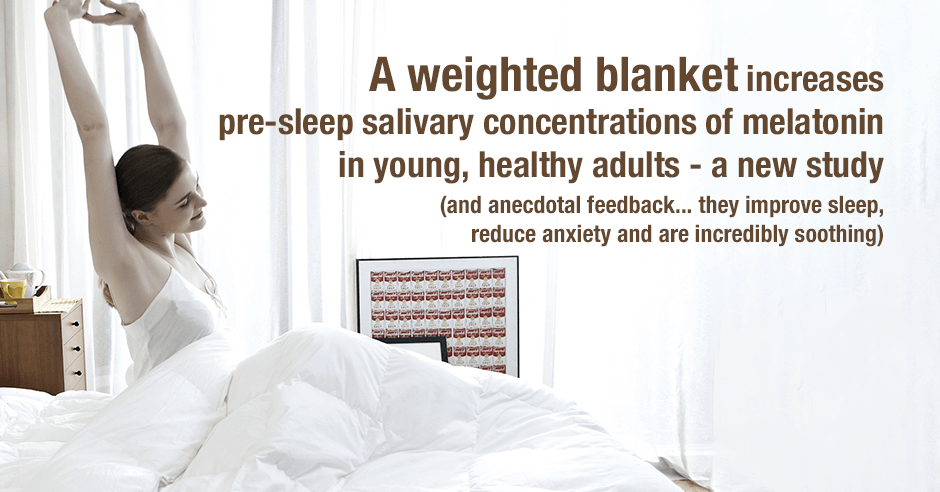
A weighted blanket increases pre-sleep salivary concentrations of melatonin in young, healthy adults – a new study

October 28, 2022 By Trudy Scott 7 Comments

weighted blanket melatonin

A new paper published earlier this month, A weighted blanket increases pre-sleep salivary concentrations of melatonin in young, healthy adults provides yet another mechanism supporting the benefits of a weighted blanket for improving sleep and also reducing anxiety – an increase in melatonin. The authors share that “Weighted blankets have emerged as a potential non-pharmacological intervention to ease conditions such as insomnia and anxiety. Despite a lack of experimental evidence, these alleged effects are frequently attributed to a reduced activity of the endogenous stress systems and an increased release of hormones such as oxytocin and melatonin.”

Here are some of the details from the study:

  • It was a small in-laboratory crossover study and included 26 young and healthy participants (15 men and 11 women)
  • The heavier weighted blanket was about 12% of their body weight
  • The following were measured: “salivary concentrations of the stress hormone cortisol, salivary alpha-amylase activity (as an indicative metric of sympathetic nervous system activity), subjective sleepiness, and sleep duration.”

The only difference found was a 1 hour increase of salivary melatonin from 10pm to lights off at 11pm. It was about 32% higher when using the heavier weighted blanket.

No other differences were found in terms of subjective sleepiness and total sleep duration.

The study concludes as follows:

Our study is the first to suggest that using a weighted blanket may result in a more significant release of melatonin at bedtime. Future studies should investigate whether the stimulatory effect on melatonin secretion is observed on a nightly basis when frequently using a weighted blanket over weeks to months. It remains to be determined whether the observed increase in melatonin may be therapeutically relevant for the previously described effects of the weighted blanket on insomnia and anxiety.

The authors only identified an increase in pre-sleep melatonin in this study. But keep in mind these limitations of the study: participants did not have insomnia or anxiety, and they were young (and melatonin declines as we age). The authors didn’t find an improvement in subjective feedback on better sleep and they did not measure subjective changes in anxiety levels – which I don’t find surprising.

However, as you’ll read below, many individuals in my community responded favorably when I posted this new study on Facebook, sharing how using their weighted blankets does improve their sleep and reduce their anxiety.  I share some of the anecdotal feedback below.

Feedback from real people: improved sleep, calm body, soothing and less anxiety

Here is some of the feedback from folks in my Facebook community:

Krys shares this: Ever since I started using a weighted blanket my sleep has improved. I think I need a heavier one. I believe the one I have is only 12 lbs. I was born in Poland, and we always had very heavy covers. Usually feather filled comforters, which made me feel secure and helped with sleep. I have a lot of past trauma and did not notice the weighted  blanket to be confining.

Christine shares this “I love my weighted blanket and sleep much better with it. I definitely sleep more soundly…less waking up. I bought it about 3 months ago and plan to use it year round. It is a faux fur glass bead filled one….it is super flexible and I can tuck it in and around all the nooks and crannies around my body. I considered a flatter, more stiff one but preferred the tucking option.” Christine’s weighted blanket is 15lbs and she plans to use an electric blanket to warm it up in winter (and switch it off /unplug it, before getting into bed).

Courtney shares this: “I started with a 12lb, then 20lb, now I have a 25lb one lol. I absolutely love my weighted blanket and can not sleep without it…I use it year round, it’s not hot but yet keeps you warm. And I feel like the weight keeps you from tossing and turning as much. It feels like a hug lol.”  The hug comment makes me wonder if they provide endorphin support too.

MaryKatherine shares this: “Wow that is seriously amazing. They definitely help me. I love weighted blankets…I feel almost instant calm in my body when I use weighted blankets. It does take 10-15 min for full effect.”

Tana shares this: “I love  my weighted blanket. It helps me relax. I sleep so much better.”

And then she shared this: “After this post I thought I should let my teenage daughter try my weighted blanket . She has anxiety and poor sleep habits. She loved it. I will be ordering her one.”  How wonderful is this?

Brenda shares this: “Love mine… I find it helps my AM anxiety. I’m kind of a hot sleeper, so I can’t keep it on for long, but I pull it up in the early morning, and it just gives a nice feeling of safety almost. I know a guy who does this with his dog when he’s having PTSD anxiety attacks.”

Willow shares this: “I have a cooling weighted blanket that I use all year. It is completely magical. I bought it hoping to sleep better but I didn’t expect it to be so incredibly soothing. Mine is 100% organic bamboo with glass beads. I find the cooling cover perfect all year. I honestly LOVE this improvement in my life.”

Katie shares this: “I love mine! I got one for each of my kids too. For my son I got a lighter one for kids, though he prefers my heavier adult blanket. He has ADHD and anxiety and really loves the weight. We all sleep deeper and fall asleep faster. Sometimes I use mine during the day when anxiety is especially high and it helps to calm my nervous system.”

Many folks are going to need additional nutritional support for their anxiety and insomnia

One person shared this: “I love my weighted blankets but it took awhile to get used to the heaviness on me… It’s not a miracle particularly if my stress and anxiety is much higher but I’d rather have it then not. It’s more helpful if I’m calmer.”

I agree. Many folks are going to need additional nutritional support for their anxiety and insomnia. This is where my work with addressing low GABA and low serotonin comes into play. Also, we may need to consider high cortisol and always need to address gut health, diet, caffeine/sugar/gluten intake, parasites, EMFs and everything covered in my book “The Antianxiety Food Solution.”

Here are a few (of many) useful resources from the blog:

  • GABA and theanine mixture improves sleep and eases anxiety
  • Rage, anxiety, cravings & insomnia in 11-year old girl with RAD/reactive attachment disorder: chewable tryptophan turns things around
  • Lactium® (alpha-s1 casein hydrolysate/hydrolyzed casein) for lowering high cortisol, reducing anxiety and improving sleep

Feel free to use the search feature to find additional anxiety and sleep resources and success stories.

Resources if you are new to using GABA, tryptophan and other amino acids as supplements

If you are new to using any of the amino acids as supplements, here is the Amino Acids Mood Questionnaire from The Antianxiety Food Solution (you can see all the symptoms of neurotransmitter imbalances, including low GABA and low serotonin).

If you suspect low levels of any of the neurotransmitters and do not yet have my book, The Antianxiety Food Solution – How the Foods You Eat Can Help You Calm Your Anxious Mind, Improve Your Mood, and End Cravings, I highly recommend getting it and reading it before jumping in and using amino acids on your own so you are knowledgeable. And be sure to share it with the practitioner/health team you or your loved one is working with.

There is an entire chapter on the amino acids and they are discussed throughout the book in the sections on gut health, gluten, blood sugar control, sugar cravings, self-medicating with alcohol and more.

The book doesn’t include product names (per the publisher’s request) so this blog, The Antianxiety Food Solution Amino Acid and Pyroluria Supplements, lists the amino acids that I use with my individual clients and those in my group programs. You can find them all in my online store.

If, after reading this blog and my book, you don’t feel comfortable figuring things out on your own (i.e. doing the symptoms questionnaire and respective amino acids trials), a good place to get help is the GABA QuickStart Program (if you have low GABA symptoms). This is a paid online/virtual group program where you get my guidance and community support.

If you are a practitioner, join us in The Balancing Neurotransmitters: the Fundamentals program. This is also a paid online/virtual program with an opportunity to interact with me and other practitioners who are also using the amino acids.

Have you had success with a weighted blanket …for sleep issues and anxiety?

If you have seen these benefits with a weighted blanket:

  • I’m also curious if you’ve observed reductions in sugar cravings, less anger issues, less irritability, less PMS symptoms, less negativity and less worry and panic attacks? These are all symptoms of low serotonin. I suspect that if there is an increase in melatonin there may also be an increase in serotonin (which is used to make melatonin).
  • Have you noticed any other benefits?
  • Be sure to share which weighted blanket you have, what percentage of your weight it is, and how often you use it.
  • Have some of the nutritional approaches helped too?

If you have not seen benefits or didn’t like using one, please feel free to share your experiences.

If you’re a practitioner, do you recommend a weighted blanket to your clients/patients?

If you have questions please share them here too.
Filed Under: Anxiety, GABA, Insomnia, serotonin Tagged With: amino acids; the GABA Quickstart online program; Balancing Neurotransmitters: the Fundamentals program for practitioners, anxiety, calm body, calming, cortisol, GABA, healthy adults, insomnia, lactium, melatonin, oxytocin, pre-sleep salivary melatonin, sleep, sleep duration, sleepiness, soothing, theanine, tryptophan, weighted blanket, young

Social anxiety caused by pyroluria: oxytocin, the vagus nerve, pectus excavatum and Ehlers-Danlos Syndrome

June 12, 2020 By Trudy Scott 19 Comments

social anxiety pyroluria

Pyroluria is associated with a type of anxiety characterized by social anxiety, avoidance of crowds, a feeling of inner tension, and bouts of depression. If you have pyroluria you may experience varying degrees of anxiety or fear, often starting in childhood, and you usually manage to cover it up and push through. You may build your life around one person, become more of a loner over time, have difficulty handling stress or change, and have heightened anxiety symptoms when under more stress.

It’s not well-recognized in the medical profession and has long been considered a genetic condition. More recently some practitioners have been proposing that it may be triggered by environmental toxins and that it’s not only genetic. Either way, symptoms can start to resolve within a week when low levels of zinc and vitamin B6, together with some other nutrients are addressed. Stress management is key. This can be emotional stress and the stress of toxin exposure, infections like Lyme disease, mold toxicity and even low blood sugar and gluten issues.

We would typically not connect social anxiety/pyroluria with low oxytocin, vagus nerve function or connective tissue disorders but if you read on you’ll see there are some interesting connections.

Oxytocin, social anxiety and zinc

Research has found that oxytocin levels correlate strongly with levels of social anxiety. A paper published in the Journal of Psychiatric Research looked at how variations in the oxytocin receptor (OXTR) gene is associated with an increased risk of anxiety, stress and depression in individuals with a history of exposure to early life stress. Supporting low levels of oxytocin can ease the threats of social interactions.

What is interesting is that zinc, a key nutrient for pyroluria, is needed for binding oxytocin to its receptor. You can read more about all this here: Oxytocin, social anxiety, pyroluria and autism

Sociability improves vagus nerve function and thriving at home alone

Increased sociability helps improve vagus nerve function. It’s all good and well to recommend getting out and hanging out with more people but if you have pyroluria it’s really challenging. It’s also hard work, very stressful and the added stress makes your pyroluria symptoms worse so it becomes a vicious cycle.

You can read all about this here: Increased sociability improves vagus nerve function: the role of social anxiety, pyroluria and low zinc. There is an updated section on social isolation during coronavirus and how some people are thriving being home alone.

Pectus excavatum and Ehlers-Danlos Syndrome

Pectus excavatum is an indentation in the chest wall and is related to problems with connective tissue. When it comes to pyroluria and pectus excavatum, this is what we see in common: social anxiety and depression, low zinc and low vitamin B6, dental crowding and sometimes Ehlers-Danlos Syndrome (EDS). I write more about this here: Pectus excavatum and pyroluria: is there a connection?.

I’ve written an entire blog on Joint hypermobility / Ehlers-Danlos Syndrome and pyroluria. Anxiety, depression, attention deficit (and hyperactivity) disorder, autism spectrum disorders, and obsessive-compulsive personality disorders are all common with EDS. Many folks with EDS report better less social anxiety, improved mood and often improved physical symptoms/reduced pain on the pyroluria protocol of zinc, vitamin B6, evening primrose oil and a good copper-free multi.

Resources for you

  • My book The Antianxiety Food Solution (my Amazon affiliate link) has an entire chapter on pyroluria. Read it and become a savvy health-advocate for yourself. Share a copy with your doctor and point out the references.
  • Here is the pyroluria questionnaire. Here is a blog if you’re new to pyroluria and the associated conditions.
  • You can find the pyroluria products in my supplement store here.

Please do share if you have pyroluria or score high on the questionnaire and have seen improvements in your social anxiety and any physical symptoms.

Filed Under: Anxiety, Pyroluria Tagged With: anxiety, Ehlers-Danlos Syndrome, oxytocin, Pectus Excavatum, pyroluria, social anxiety, vagus nerve, vitamin B6, zinc

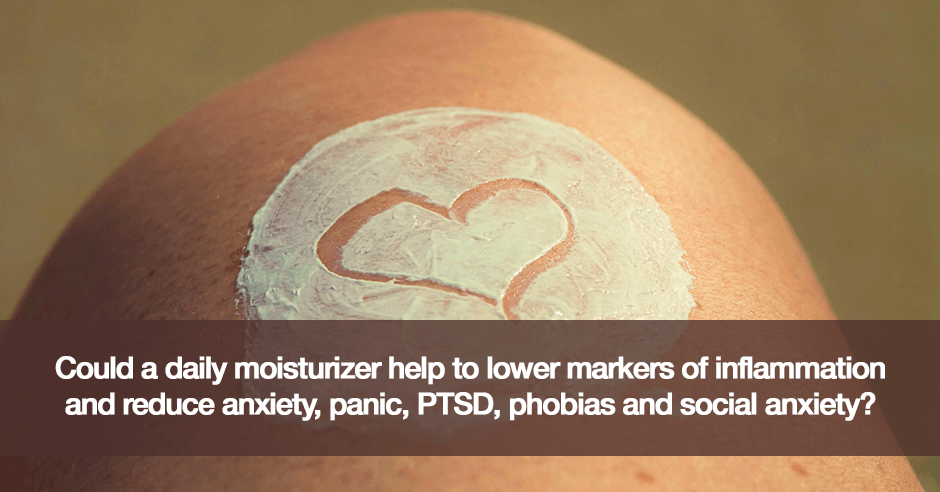
Could a daily moisturizer help to lower markers of inflammation and reduce anxiety, panic, PTSD, phobias and social anxiety?

April 26, 2019 By Trudy Scott 43 Comments

Could using a good quality moisturizer on a daily basis help to lower markers of inflammation (proinflammatory markers) and actually help reduce anxiety, panic, PTSD, phobias, social anxiety and other mental health symptoms, plus other chronic health conditions at the same time? Based on a new pilot study, I’m going out on a limb and saying this may well pan out to be true. And there is certainly no harm in making this a daily self-care routine until further research confirms this, certainly because of the other benefits of using a moisturizer.

New study: a skin moisturizer reduces markers of inflammation

Let’s take a look at this new study which reports how using a skin moisturizer actually reduces markers of inflammation in the body: Topical Applications of an Emollient Reduce Circulating Pro-Inflammatory Cytokine Levels in Chronically Aged Humans: A Pilot Clinical Study

Emollients are moisturizers that help keep the skin moist and supple by reducing water loss from the epidermis, the outer layer of the skin.

The study set out to mirror an animal study where skin problems in older/aged mice was tied to elevated markers of inflammation called cytokines. When epidermal function/skin health in the mice was improved, the circulating cytokine levels were reduced:

Thirty‐three aged humans were treated twice‐daily for 30 days, with ≈3 ml of an emollient, previously shown to improve epidermal [i.e. skin] function

Changes in epidermal function and levels of three key, age‐related, plasma cytokines (IL‐1β, IL‐6 and TNFα) were measured at baseline and after treatment.

Circulating levels of proinflammatory cytokines in the body, IL‐1β, IL‐6 and TNFα, were higher in the older adults before the use of the emollient. After topical use, i.e, using the cream on their skin twice a day for 30 days:

circulating levels of IL‐1β and IL‐6 normalized, while TNFα levels declined substantially.

The authors suggest larger clinical trials to confirm this connection between high levels of proinflammatory cytokines and chronic inflammatory disorders and to show how improving skin health by moisturizing may prevent chronic inflammatory disorders such as heart disease, type II diabetes, osteoporosis and Alzheimer’s disease in older adults.

The University of California explains the mechanism:

Our skin starts to deteriorate around age 50 with changes to epidermal pH, hydration, and the permeability barrier, which keeps water in and bacteria and other potential pathogens out. A loss of moisture and breaks in the permeability barrier cause the skin to release inflammatory cytokines. Ordinarily, these cytokines help to repair defects in the barrier, but in aging skin the barrier can’t be fixed as easily, so the inflammatory signals continue to be released, eventually reaching the blood.

This article and the study authors are suggesting this is an issue to be addressed with older adults and with respect to the above chronic diseases, but there is enough research on the role of inflammation on anxiety and other mental health conditions at any age, that this study had me perk up and take notice. Also, if you’re young and not moisturizing or living in a dry climate or have other factors contributing to inflammation (more on that below), could this be happening too? I believe it’s highly likely.

The role of inflammation on anxiety and other mental health conditions

Here is one of the many anxiety-inflammation studies: Inflammation in Fear- and Anxiety-Based Disorders: PTSD, GAD, and Beyond, reporting that:

heightened concentrations of inflammatory signals, including cytokines and C-reactive protein, have been described in posttraumatic stress disorder (PTSD), generalized anxiety disorder (GAD), panic disorder (PD), and phobias (agoraphobia, social phobia), etc.

And concludes that:

targeting inflammation may serve as a potential therapeutic target for treating these fear- and anxiety-based disorders in the future

Inflammation plays a role in depression too. This paper, Role of Inflammation in Depression and Treatment Implications reports that:

Numerous studies (including meta-analyses) have found elevated peripheral and central inflammatory cytokines and acute phase proteins in depression.

The ongoing inflammation affects neurotransmitters and makes antidepressants less effective:

Chronic exposure to increased inflammation is thought to drive changes in neurotransmitters and neurocircuits that lead to depressive symptoms and that may also interfere with or circumvent the efficacy of antidepressants.

Many approaches for reducing cytokines and inflammation

I do want to address the one statement in the emollient study where they say that “approaches that reduce circulating cytokines are not yet available.” There are, in fact, many approaches for reducing cytokines and inflammation.

In one study vitamin D supplementation improved mood, reduced anxiety and lowered markers of inflammation (CRP and IL-10) in female diabetics who had low levels of vitamin D.

In another study looking at anxiety in women with PCOS (polycystic ovary syndrome), probiotics and selenium improved their mental health and hormonal profiles, lowered markers of inflammation and reduced oxidative stress.

This paper lists a number of underling root causes that cause systemic inflammation and depression: psychosocial or life stressors, poor diet, physical inactivity, obesity, smoking, altered gut permeability (i.e. leaky gut), atopy (a genetic tendency to allergies – this could include gluten sensitivity), poor dental health, sleep issues and vitamin D deficiency.

Of course, these factors may also play a role in anxiety and using a functional medicine and nutritional approach, you can reduce the inflammation and eliminate the anxiety/depression. It’s a matter of finding your root cause/s and addressing them.

Research is also finding that GABA, one of the main calming neurotransmitters, may also have a possible role in “neuroimmune interaction, being involved in the modulation of immune cell activity associated with different systemic and enteric inflammatory conditions.”

Low zinc and low vitamin B6 are also factors in inflammation, and addressing low levels reduces inflammation and eases anxiety such as pyroluria (a social anxiety condition) and low GABA and low serotonin anxiety because zinc and vitamin B6 are co-factors for making these brain chemicals.

The benefit of touch and a boost of oxytocin

I’d like to mention other benefits of using a daily moisturizer – the benefits of touch, massage and a boost of oxytocin:

  • Hand massage and therapeutic touch has been shown to decrease anxiety and make the elderly in a nursing home feel more comforted. If you’re a caregiver to a parent, make daily moisturizing part of your routine.
  • Swedish massage reduces anxiety in ICU patients and improves vital signs.
  • Touch increases the release of oxytocin improving well-being and may also have “applications in neuropsychiatric disorders especially those characterized by persistent fear, repetitive behavior, reduced trust and avoidance of social interactions.”

Adding skin moisturizing to your daily self-care routine

I feel very comfortable saying you now we have a new tool – daily skin moisturizing – to add to your toolbox to help lower your markers of inflammation and reduce anxiety, panic, PTSD, phobias and social anxiety. Let’s use everything at your disposal to heal and feel your absolute best.

It’s something most women (and a few men) are already doing, and this information can give you more reason to continue to do it.

It’s a lovely self-care routine if you’ve not been doing it for some time or have never regularly used a moisturizer. This information can be an incentive to add it back to your daily routine or start doing it.

The biggest problem I see with moisturizing is using toxic chemicals and less than ideal creams on your skin so I reached out to colleagues and my community on Facebook to get input on their favorite home-made and store-bought moisturizers:

  • Here are the DIY recipes: DIY moisturizer recipes to lower inflammation and reduce anxiety, panic, PTSD, phobias and social anxiety?
  • Stay tuned for a new blog on favorite good quality store-bought moisturizers

In the meanwhile, feel free to share your favorites and what your moisturizing self-care routine is like, and if you get regular massages and use moisturizing creams with love ones. Simply comment below.

Filed Under: Inflammation Tagged With: anxiety, diet, gluten, Inflammation, massage, moisturizer, oxytocin, panic, phobias and social anxiety, PTSD, skin, touch, vitamin D

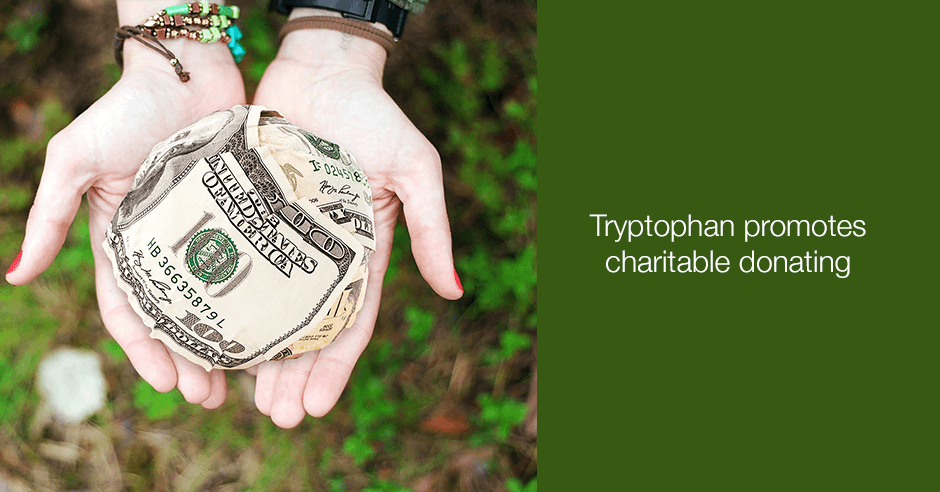
Tryptophan promotes charitable donating

February 9, 2018 By Trudy Scott 2 Comments

This 2014 study is one of my all-time favorite applications of tryptophan, an amino acid I use extensively with anxious clients. The goal of the study, Tryptophan promotes charitable donating, was to investigate the link between serotonin and charitable giving, something the authors consider to be “one of the most important elements of prosocial behavior.” They offer this quote by Molière:

Every good act is charity. A man’s true wealth hereafter is the good that he does in this world to his fellow.

In this study they tested whether charitable donating or giving can be promoted with the use of the amino acid tryptophan, the biochemical precursor of serotonin:

Participants were compared with respect to the amount of money they donated when given the opportunity to make a charitable donation.

Additional information about the study

Here is some additional information about the study, where the study group was given 800mg of tryptophan:

Thirty-two healthy international south European students (mean age = 21.8; 4 male, 28 female; mean Body Mass Index = 21.5, range 17.8–30.8) with no cardiac, hepatic, renal, neurological, or psychiatric disorders, personal or family history of depression, migraine and medication or drug use participated in the experiment.

Sixteen participants (2 male, 14 female) were exposed to an oral dose (powder) of 0.8 grams [which is 800mg] of tryptophan – which roughly corresponds to the amount of TRP contained in 3 eggs–and 16 (2 male, 14 female) to 0.8 grams of microcrystalline cellulose, a neutral placebo. These doses were always dissolved in 200 ml of orange juice.

The donating task was standardized, without the presence of an experimenter, and with a fixed amount of money in a fixed number of notes and coins:

…Participants were not informed beforehand that the donating task was part of the experiment. Donating behavior was measured by the amount of money the participant donated. After having received 10 Euros… for their participation in the study, participants were left alone and asked whether they were willing to donate part of their financial reward to charity. Four money boxes (Unicef, Amnesty International, Greenpeace, and World Wildlife Fund) had been positioned on the table.

Here are the results:

As expected, compared to a neutral placebo, [tryptophan] appears to increase the participants’ willingness to donate money to a charity.

The serotonin oxytocin connection

The authors mention the “functional and anatomical interactions between serotonergic and oxytocinergic systems” and that “it may be likely that the willingness to donate money to a charity is modulated by the effect that serotonin exerts on oxytocin levels.”

My perspectives

I always like to add my perspectives on studies like this so here goes. We know that because tryptophan boosts serotonin it’s going to improve mood and reduce anxiety, worrying and fears. When you feel better, lighter, happier and calmer you feel like anything is possible and I can see how this could translate to feeling more caring and wanting to be charitable.

The authors do mention how low serotonin is correlated with “antisocial behaviors such as social isolation and aggression.” Anger and irritability is also something we see when serotonin is low. Of course, these are also antisocial behaviors.

Here is the amino acid questionnaire with the low serotonin section.  I’d like to add this new sign to the questionnaire and wonder what would work: Lack of charitability? No desire to give to charity?  

One additional comment is that with the work I do, the amino acids are used when you show signs of low serotonin such as anxiety or worry or depression or insomnia or afternoon/evening cravings. I use the trial-response method to determine if you’ll actually respond to tryptophan i.e. experience benefits and how much you will need to see those benefits. I starting dose is typically 500mg tryptophan and I have found the Lidtke brand to be the most effective. You can read more on tryptophan here.

Because of this I’m intrigued with this application of using tryptophan in healthy individuals. But I’d also be cautious based on what I’ve seen with clients who don’t need serotonin support and take tryptophan – they can feel too sleepy or even more sad or more anxious. This would be my hesitation in saying we should give everyone tryptophan in order to create a more charitable and giving society. I do however agree with the authors about the importance of a quality real whole foods diet with adequate quality animal protein, saying the study result:

supports the idea that the food we eat may act as a cognitive enhancer modulating the way we think and perceive the world and others.

The lead author, Professor Laura Steenbergen, works in the Cognitive Psychology Unit, Institute for Psychological Research and Leiden Institute for Brain and Cognition, Leiden University Leiden, Netherlands, as is doing some very interesting research with amino acids, cognitive enhancement and mood improvement. It’s really exciting!

We’d love to hear if you feel more charitable and giving when you take tryptophan or 5-HTP (since it also boosts serotonin)?

And if you feel more charitable and giving when you eat a quality real whole foods diet with adequate quality animal protein?

Filed Under: Tryptophan Tagged With: anxiety, Charitable, cognition, donation, giving, oxytocin, serotonin, tryptophan

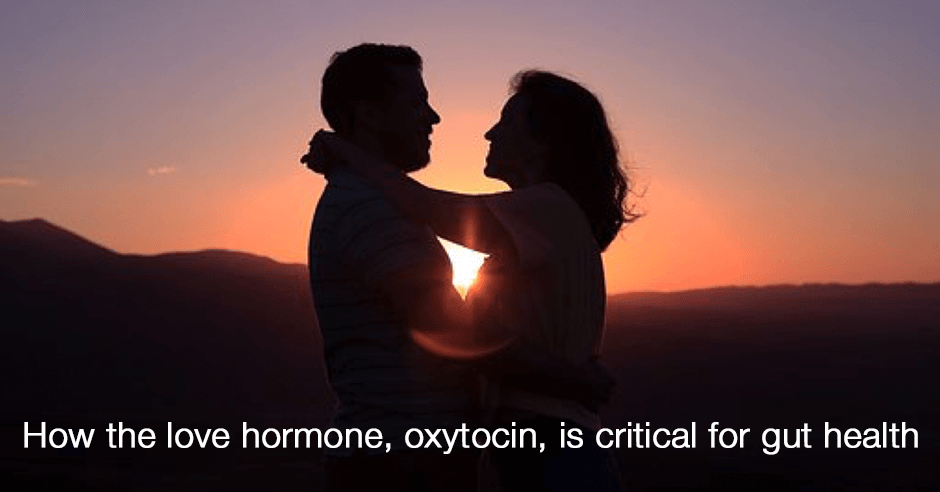
How the love hormone, oxytocin, is critical for gut health

September 7, 2017 By Trudy Scott 17 Comments

Dr. Lindsey Berkson’s fascinating interview on the Digestive Health Summit, hosted by Dr. Michael Murray, is all about the love hormone or oxytocin and the effects on digestion. The interview is called – How the Love Hormone is Critical for Gut Health.

Oyxtocin is not just a love hormone. It is also a helpful gut hormone. Dr. Berkson will clearly and easily explain the role of oxytocin in gut motility, sensation, tone of the muscular and nervous system layers, and even in the application for various gut issues from leaky gut to inflammatory bowel disease. You will also learn why nature intended oxytocin to be a care-taker of human health and how critical this hormone is in both genders throughout life. Historically oxytocin was regarded as a pregnancy and lactation hormone but you will now learn how it is even amazingly much more.  She shares that the love hormone: 

can be endocrine-disrupted by plastic, by Bisphenol A, by synthetic oxytocin given to a mother at birth i.e. Pitocin. I started using oxytocin in practice about 15 years ago as a hormonal Viagra and a rebooter, and I suddenly discovered that when I added it to the protocol of my inflammatory bowel disease patients, often people who were on Prednisone, methotrexate, on multiple meds, that could barely drag themselves out of bed, they were having many bowel movements a day, many of them were diarrhea-like and bloody; when I added oxytocin to them, usually within a few weeks we were able to get them off most of their meds and their health just came up incredibly.

There are oxytocin receptors all throughout the gut:

They’re in the esophagus. They’re in the stomach. They’re in the small intestine, the large intestine, they’re in the pancreas. They have a lot to do with the alpha and beta cells, with the release and maintenance of sugar. They’re in the liver; they have a lot to do with detoxification.

And oxytocin has also been shown to have an impact on constipation:

They have a double-blind, randomized trial in women with constipation and when they gave them oxytocin, they just delivered nasally because it first acts on the brain and then it has peripheral or distant actions. They had statistically significant normalization of bowel movements with oxytocin sprayed through the nose. How amazing is that?

Dr. Berkson then shares how intimacy and regular love-making improves gut health via oxytocin release:

I was so struck by how regular, satisfying intimacy was right up there with veggies and exercise [for longevity] and I was trying to figure out why, is it just the human contact? Well, one of the reasons was because both men and women become drenched in oxytocin and so nature takes care of your gut.

It’s a really fascinating interview with new information that is science-based.  It is not to be missed!

You can register for the Digestive Health Summit here

Other interviews include:

  • Joe Pizzorno, ND – The Toxin Solution: How to Clean Up the Gut to Ignite Vibrant Health
  • Wardee Harmon – Improve Your Gut Health and Save Money by Making Your Own Fermented Foods at Home
  • Razi Berry – Butterflies in Your Stomach: How Stess and Love Affect Digestive Health
  • Trudy Scott – Anxiety, the Microbiome, Psychobiotics and GABA
  • And more

Hope to see you on the summit!

Filed Under: Events, Gut health Tagged With: gut health, Lindsey Berkson, love hormone, oxytocin

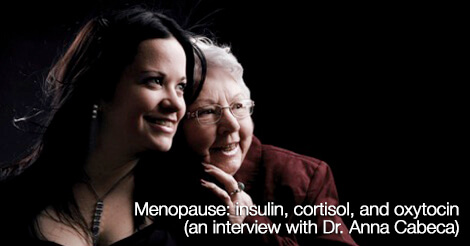
Menopause: insulin, cortisol, and oxytocin (an interview with Dr. Anna Cabeca)

March 13, 2017 By Trudy Scott Leave a Comment

What should a healthy menopause look like and what does an unhealthy hormonal imbalance leads? And what is the significance of insulin, cortisol, and oxytocin?

Dr. Brian Mowll, host of the upcoming Diabetes Summit, interviews Dr. Anna Cabeca on the topic of menopause and metabolic health. Dr. Anna is a board certified gynecologist and obstetrician as well as board certified in anti-aging and regenerative medicine. She is an expert in functional medicine and an expert in women’s health.

She starts with an overview of what menopause should look like and what an unhealthy hormonal imbalance leads to:

Hormonally, what does menopause look like? Yes, we’re going to age. And we’re going to have wrinkles and laugh lines and smile lines and things like that. But that’s awesome. We should be waking up rested, going to sleep on schedule without difficulty and have the sense of peace within us that we’ve become able to enjoy the life that we’ve worked so hard to create and also be able to educate, inspire, and instruct those around us and the generations that follow us. So those are the ideals in menopause.

However, with our environment and toxicities and unhealthy aging and unhealthy hormonal imbalance, what happens is we tend to get overweight, difficulty with weight loss. We tend to have increases in our blood sugar, increases of heart disease. What that feels like, too, is hot flashes, mood swings, itchy skin, night sweats and irritability. The monster within us can come out!

The next part of their discussion is fascinating and rather unexpected. Dr. Brian asks Dr. Anna about the main hormonal players in menopause and this is what she shares:  

As a gynecologist, you would think the major players would be estrogen, progesterone, and even testosterone. However, the major players when it comes to a healthy menopause are insulin, cortisol, and oxytocin. I run menopause programs specifically to get these major hormones in balance. And then we can fine tune the minor hormones.

But unless we’re getting the concepts that relate to increasing our body’s ability to have insulin sensitivity and, regarding cortisol, to have reset our cortisol, our natural circadian rhythm, we’re not going to get hormonal balance at all. And we’ll continue to struggle with the inflammation, the weight gain, the mood swings, [the anxiety and insomnia], the night sweats….  

Actually, insulin and cortisol have a bigger role than estrogen, progesterone, and testosterone although those are important and DHEA as well which I will replace very frequently. But insulin and cortisol are key to healthy menopause.  

And so cortisol is our natural anti-inflammatory. But also, we know that when we excrete high spikes of cortisol, that’s going to affect glucose production. So whether cortisol is too high or too low, we’re going to have an issue with glucose production and metabolism and increasing hemoglobin A1c and inflammation. So from both those areas, we’re going affect our inflammatory pathways.

Dr. Anna also covers some of the following in the interview:

  • Issues she sees with ketogenic diets and eating low carbohydrate diets (this one is for women in particular – she feels it throws off our neurotransmitters)
  • Why to test for pH and how to do it
  • Simple ways to boost oxytocin
  • Nutritional support for the adrenals

As I mentioned above, these are a few snippets from the upcoming Diabetes Summit.

In case you’re thinking “I don’t have diabetes, I don’t need to tune in to this one”, or “I’m not menopausal” or “I’m a guy” here are few points to consider:

  • If you’re a woman and experience stress this would be applicable whether or not you have diabetes or are in menopause (addressing this could help prevent diabetes and make menopause a breeze)
  • If you’re a man and experience stress this topic is also relevant, whether or not you have diabetes – just remove the words “menopause” and “women” and focus on the information about insulin, cortisol and oxytocin

So do consider tuning in to this one and other interviews in the summit!

If you do have diabetes or pre-diabetes then tuning in to the summit is a must! According to a 2015 study, nearly half the US population had diabetes or pre-diabetes.  Add to that all the Americans who are overweight, obese, or have insulin resistance and other blood sugar imbalances, that number likely climbs above 75%! Unfortunately it’s not just in the US.  Diabetes has become a global epidemic, predicted to get much worse in the next 20 years.

Clearly we need to do something different.  Change often starts with information and inspiration.  Learning the root causes of the problem and real solutions to correct those causes can motivate action.

That’s why I’m excited about this upcoming online Diabetes Summit.  My friend and diabetes expert, Dr. Brian Mowll, is hosting this life-changing event for the fourth year, and this year’s event looks amazing.

I’m really pleased to be a speaker on this summit too. I cover the anxiety diabetes connection and how GABA helps reduce anxiety and how research shows it’s a promising treatment for diabetes. Read more here.

You can register for this online event here.


Filed Under: Women's health Tagged With: Anna Cabeca, cortisol, insulin, menopause, oxytocin

  • Page 1
  • Page 2
  • Go to Next Page »

Primary Sidebar

NEW! GABA QuickStart Homestudy (with special intro pricing)

gaba quickstart homestudy

Free Report

9 Great Questions Women Ask about Food, Mood and their Health

You'll also receive a complimentary subscription to my ezine "Food, Mood and Gal Stuff"


Connect with me

Popular Posts

  • Amino Acids Mood Questionnaire from The Antianxiety Food Solution
  • The Antianxiety Food Solution Amino Acid and Pyroluria Supplements
  • Pyroluria Questionnaire from The Antianxiety Food Solution
  • Collagen and gelatin lower serotonin: does this increase your anxiety and depression?
  • Tryptophan for the worry-in-your-head and ruminating type of anxiety
  • GABA for the physical-tension and stiff-and-tense-muscles type of anxiety
  • The Antianxiety Food Solution by Trudy Scott
  • Seriphos Original Formula is back: the best product for anxiety and insomnia caused by high cortisol
  • Am I an anxious introvert because of low zinc and vitamin B6? My response to Huffington Post blog
  • Vagus nerve rehab with GABA, breathing, humming, gargling and key nutrients

Recent Posts

  • What do I use instead of Seriphos to help lower high cortisol that is affecting my sleep and making me anxious at night?
  • BeSerene™ GABA/theanine cream eases severe muscle tension in her neck/shoulders, prevents her bad headaches and quells her anxiety
  • How the correct approach, dose and sublingual use of GABA can be calming and not cause a flushed and itchy face and neck
  • The amino acid glutamine improves low mood by addressing gut health, and it has calming effects too
  • Flight anxiety with heightened breath, physical tension and also fearing the worst (the role of low GABA and low serotonin)

Categories

  • 5-HTP
  • AB575
  • Addiction
  • ADHD
  • Adrenals
  • Alcohol
  • Allergies
  • Alzheimer's disease
  • Amino Acids
  • Anger
  • Antianxiety
  • Antianxiety Food Solution
  • Antidepressants
  • Anxiety
  • Anxiety and panic
  • Autism
  • Autoimmunity
  • benzodiazapines
  • Bipolar disorder
  • Books
  • Caffeine
  • Cancer
  • Candida
  • Children/Teens
  • Collagen
  • Cooking equipment
  • Coronavirus/COVID-19
  • Cravings
  • Depression
  • Detoxification
  • Diabetes
  • Diet
  • DPA/DLPA
  • Drugs
  • EFT/Tapping
  • EMF
  • EMFs
  • Emotional Eating
  • Endorphins
  • Environment
  • Essential oils
  • Events
  • Exercise
  • Fear
  • Fear of public speaking
  • Fertility and Pregnancy
  • Fish
  • Food
  • Food and mood
  • Functional neurology
  • GABA
  • Gene polymorphisms
  • General Health
  • Giving
  • Giving back
  • Glutamine
  • Gluten
  • GMOs
  • Gratitude
  • Gut health
  • Heart health/hypertension
  • Histamine
  • Hormone
  • Hyperparathyroidism
  • Hypoglycemia
  • Immune system
  • Inflammation
  • Insomnia
  • Inspiration
  • Introversion
  • Joy and happiness
  • Ketogenic diet
  • Lithium orotate
  • Looking awesome
  • Lyme disease and co-infections
  • MCAS/histamine
  • Medication
  • Men's health
  • Mental health
  • Mercury
  • Migraine
  • Mold
  • Movie
  • MTHFR
  • Multiple sclerosis
  • Music
  • NANP
  • Nature
  • Nutritional Psychiatry
  • OCD
  • Osteoporosis
  • Oxalates
  • Oxytocin
  • Pain
  • Paleo
  • Parasites
  • Parkinson’s disease
  • PCOS
  • People
  • PMS
  • Postpartum
  • PTSD/Trauma
  • Pyroluria
  • Questionnaires
  • Real whole food
  • Recipes
  • Research
  • Schizophrenia
  • serotonin
  • SIBO
  • Sleep
  • Special diets
  • Sports nutrition
  • Stress
  • Sugar addiction
  • Sugar and mood
  • Supplements
  • Teens
  • Testimonials
  • Testing
  • The Anxiety Summit
  • The Anxiety Summit 2
  • The Anxiety Summit 3
  • The Anxiety Summit 4
  • The Anxiety Summit 5
  • The Anxiety Summit 6
  • Thyroid
  • Thyroid health
  • Toxins
  • Tryptophan
  • Tyrosine
  • Uncategorized
  • Vegan/vegetarian
  • Women's health
  • Yoga

Archives

  • October 2025
  • September 2025
  • August 2025
  • July 2025
  • June 2025
  • May 2025
  • April 2025
  • March 2025
  • February 2025
  • January 2025
  • November 2024
  • October 2024
  • September 2024
  • August 2024
  • July 2024
  • June 2024
  • May 2024
  • April 2024
  • March 2024
  • February 2024
  • January 2024
  • December 2023
  • November 2023
  • October 2023
  • September 2023
  • August 2023
  • July 2023
  • June 2023
  • May 2023
  • April 2023
  • March 2023
  • February 2023
  • January 2023
  • December 2022
  • November 2022
  • October 2022
  • September 2022
  • August 2022
  • July 2022
  • June 2022
  • May 2022
  • April 2022
  • March 2022
  • February 2022
  • January 2022
  • December 2021
  • November 2021
  • October 2021
  • September 2021
  • August 2021
  • July 2021
  • June 2021
  • May 2021
  • April 2021
  • March 2021
  • February 2021
  • January 2021
  • December 2020
  • November 2020
  • October 2020
  • September 2020
  • August 2020
  • July 2020
  • June 2020
  • May 2020
  • April 2020
  • March 2020
  • February 2020
  • January 2020
  • December 2019
  • November 2019
  • October 2019
  • September 2019
  • August 2019
  • July 2019
  • June 2019
  • May 2019
  • April 2019
  • March 2019
  • February 2019
  • January 2019
  • December 2018
  • November 2018
  • October 2018
  • September 2018
  • August 2018
  • July 2018
  • June 2018
  • May 2018
  • April 2018
  • March 2018
  • February 2018
  • January 2018
  • December 2017
  • November 2017
  • October 2017
  • September 2017
  • August 2017
  • July 2017
  • June 2017
  • May 2017
  • April 2017
  • March 2017
  • February 2017
  • January 2017
  • December 2016
  • November 2016
  • October 2016
  • September 2016
  • August 2016
  • July 2016
  • June 2016
  • May 2016
  • April 2016
  • March 2016
  • February 2016
  • January 2016
  • December 2015
  • November 2015
  • October 2015
  • September 2015
  • August 2015
  • July 2015
  • June 2015
  • May 2015
  • April 2015
  • March 2015
  • February 2015
  • January 2015
  • December 2014
  • November 2014
  • October 2014
  • September 2014
  • August 2014
  • July 2014
  • June 2014
  • May 2014
  • April 2014
  • March 2014
  • February 2014
  • January 2014
  • December 2013
  • November 2013
  • October 2013
  • September 2013
  • August 2013
  • July 2013
  • June 2013
  • May 2013
  • April 2013
  • March 2013
  • February 2013
  • January 2013
  • December 2012
  • November 2012
  • October 2012
  • August 2012
  • July 2012
  • June 2012
  • May 2012
  • April 2012
  • March 2012
  • February 2012
  • January 2012
  • December 2011
  • November 2011
  • October 2011
  • September 2011
  • August 2011
  • July 2011
  • June 2011
  • May 2011
  • April 2011
  • March 2011
  • February 2011
  • January 2011
  • December 2010
  • October 2010
  • September 2010
  • July 2010
  • May 2010
  • April 2010
  • March 2010
  • February 2010
  • January 2010
  • November 2009

Share the knowledge!

The above statements have not been evaluated by the Food and Drug Administration. Products listed in this website are not intended to diagnose, treat, cure or prevent any disease.

The information provided on this site is for informational and educational purposes only and is not intended as a substitute for advice from your physician or other health care professional. You should consult with a healthcare professional before starting or modifying any diet, exercise, or supplementation program, before taking or stopping any medication, or if you have or suspect you may have a health problem.


Copyright © 2026 Trudy Scott. All Rights Reserved. | Privacy | Terms and Conditions | Refund Policy | Medical Disclaimer

Free Report

9 Great Questions Women Ask about Food, Mood and their Health

You’ll also receive a complimentary subscription to my ezine “Food, Mood and Gal Stuff”