• Skip to primary navigation
  • Skip to main content
  • Skip to primary sidebar

everywomanover29 blog

Food, Mood and Women's Health – Be your healthiest, look and feel great!

  • Blog
  • About
  • Services
  • Store
  • Resources
  • Testimonials
  • The Book
  • Contact
  • Search this site

mood

Swings are fun for teens, college students and adults! And they reduce stress/anxiety, and improve mood, memory and PMS symptoms

June 18, 2021 By Trudy Scott 21 Comments

swings for anxiety

Earlier this month I met up with a dear childhood friend for a walk and catch-up and we both rediscovered the joy of swings. I always suggest a walk or hike or swim when meeting with friends and colleagues, and this time was no different except that I really wanted to go somewhere with a swing!

The reason that I wanted to find a swing set was because I had just read an article about swings and teen girls needing a better place to hang out. I love the outdoors and love to play, laugh and have fun, and I couldn’t resist it once I started looking at the research. I discovered all the wonderful benefits of improved mood, reduced anxiety and stress, improved cognition and memory, reduced PMS symptoms, improved social relationships and reduced pain.

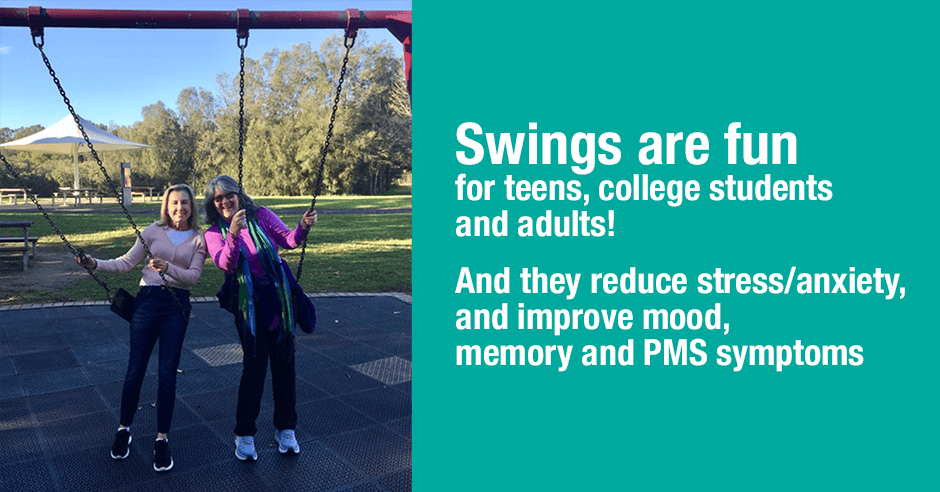
These pictures are us swinging and catching up – we laughed and laughed and had such fun!  It’s hard to believe we’ve been friends for close to 50 years and it always feels like we were never apart when we do get together.

swings

Our swing experience made it extra special this time! You can see the pure joy on our faces!

Teen girls needing a better public space to hang out

The recent Bloomberg article I had read, Teen Girls Need Better Public Spaces to Hang Out shares this:

Making space for girls means rethinking which age groups need to swing and climb, how to encourage physical activity (and not just playing a sport), and how to make a safe, sheltered place for outdoor conversation.

And this about movement:

While lack of activity among teens is a major public health issue, many girls are looking for more creative, less competitive ways of moving their bodies.

It features really cool images of swings called “Swing Time.” They are designed by Höweler + Yoon Architecture and deliver “the kind of fun, physical outdoor experience with room for face-to-face conversation that many teen girls are looking for.”

As I mentioned above, I was immediately intrigued because I love the idea of outdoor play and social interaction in a safe place for young girls.

Beth Jones, a Mindset and Wellness Coach who works with teen girls and their moms incorporating movement, play and nutrition, posted the Bloomberg article on Facebook saying:

I love this idea so much. I used to love going to the playground in my teens to swing, hang out, just have a space for me. There’s a reason why my business logo has a girl on a swing. That swinging and twisting are also so great for the vestibular system and can help calm anxiety (the back and forth swinging). Maybe they should bring back some swings to middle and high schools.

I’m familiar with the use of swings in occupational therapy to address sensory processing disorders in children. But I was also very interested to know if there was any research on the health benefits of swings for teens and adults. I went searching and was very pleased with what I found, hence this blog post.

Before we get into the research I’d like to extend a big thanks to Beth Jones for the inspiration for all this! Now the research …..

PMS symptoms improved: mood, stress, anxiety, social relationships, pain and memory

This small study, Vestibular stimulation for management of premenstrual syndrome found the following benefits after 2 months of using the swing in females 18-30 years of age:

  • Depression and stress scores decreased
  • Anxiety scores decreased (although it was not statistically significant)
  • Serum cortisol levels decreased.
  • Social relationships improved
  • Systolic blood pressure decreased (there was no change in diastolic blood pressure and pulse rate)
  • Pain levels decreased
  • Spatial and verbal memory improved

These are amazing benefits using something as simple as a swing. I feel we could safely extrapolate to younger teen girls and even women above 30 years of age too.

Swings for stress management in college students

Vestibular stimulation using swings is the specialty of Dr. Mukkadan, Founder and Research Director of Little Flower Medical Research Centre in India. Together with his team, he published the above PMS paper and this paper on Vestibular Stimulation for Stress Management in Students.

They recommend “placement of swings in college campuses … which may be a simple approach to alleviate stress among college students.”

This is such a simple and yet powerful (and also fun!) intervention especially given the huge rise in anxiety and mental health issues in students. It would be a perfect approach to use in conjunction with amino acid supplements and nutritional psychiatry for these students.

According to another study published by his team, college students will also see improved spatial and verbal memory.

What about swings for teen boys and all adults too?

Once I saw the images in the Bloomberg article, and after reading the research, and after playing on swings again after all these years, my thinking started expanding. I believe everyone could benefit from using a swing.

I certainly wanted to swing right away (hence the walk and swing meet up with my friend a few weeks ago) and now seek out swings when I go for walks. I would love to see an area set aside in parks for teen girls (and boys too) and as Beth says, in middle and high schools too. And how about a designated area in parks for adults who want to swing too?

There are now parks with Liberty swings for children and adults in wheelchairs. The vestibular benefits of rocking chairs are helping veterans dealing with substance abuse and mood issues. I also see an application for stress reduction in the workplace. The opportunities are endless.

Here are some of my recommendations:

  • Seek out swings in parks. Give it a try to see how you feel and how much you enjoy it!
  • Advocate for swings in your communities, middle schools, high schools, colleges and place of business.
  • Get a rocking chair for yourself and/or older family members
  • Get a swing for your backyard (suitable for teens and adults). I’m looking into options for my backyard and will share more once I find some suitable options.

When did you last go for a swing as an adult? How much fun was it!?

If it’s been some time, does this – my pictures and the research – inspire you to want to look for a swing and have a go again?

Does your teen or college student seek out outdoor play like swings and see benefits?

If you are an OT/occupational therapist or exercise physiologist or other health professional using vestibular therapy with swings please do share so we can all learn.

Feel free to post any questions here too.
Filed Under: Anxiety, Joy and happiness, Stress, Teens, Women's health Tagged With: adults, amino acids, anxiety, calm anxiety, cognition, college students, Dr. Mukkadan, fun, joy, laugh, liberty swing, memory, mood, nutritional psychiatry, pain, play, PMS, premenstrual syndrome, social relationships, stress, stress management, swing, Swings, teen girls, teens, vestibular system, veterans

Bartonella infection in mom and both sons: anxiety, panic attacks, insomnia, inconsolable crying, irritability, ADHD, rage and pain

March 12, 2021 By Trudy Scott 32 Comments

bartonella infection

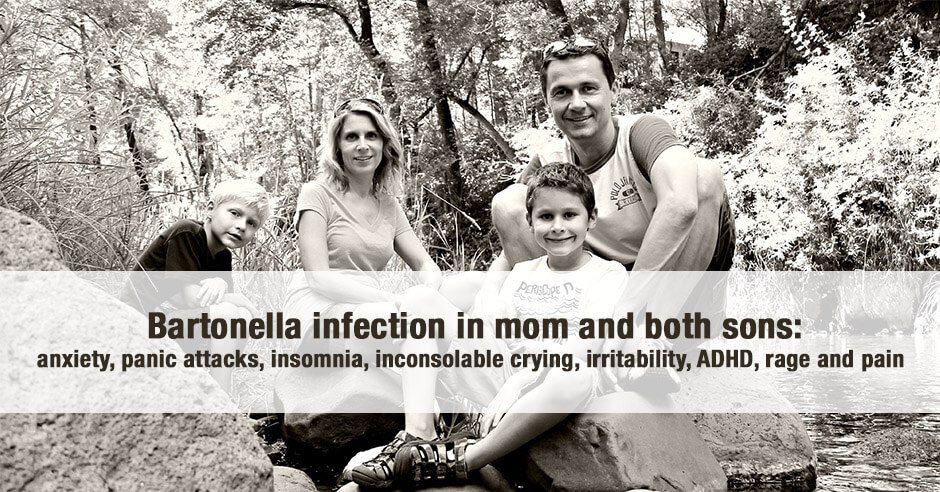
A mom and both her sons experienced a variety of emotional/mood and pain symptoms between them as a result of a Bartonella infection: anxiety, panic attacks, insomnia, irritability, inconsolable crying, ADHD, rage, eye pain, joint pain and pain in the legs. This family case study was published in Parasites and Vectors in 2013. I would love to see individual amino acids being used to ease some of these symptoms while the infection is being treated (more on this below).

Here are some of the emotional and mood-related symptoms they experienced:

  • the mother and both sons developed recurrent rash-like skin lesions, disruptive sleep patterns and both boys developed anxiety accompanied by episodes of inconsolable crying, irritability, and panic attacks
  • subsequent to the spider infestation of the apartment, [the mother] developed fatigue, memory difficulties, headaches, irritability, eye pain, insomnia, chest pain, blurred vision, shortness of breath, rash and skin lesions and anxiety attacks.
  • The youngest son… awakened at night crying and complaining of pain in his legs
  • The older son experienced increased irritability and rage episodes. In addition, the boy’s teacher indicated a lack of attention during class, and suggested that the child might have an Attention Deficit Hyperactivity Disorder (ADHD).

The youngest son also developed severe neurological symptoms and was diagnosed with Guillain-Barre syndrome and Chronic Inflammatory Demyelinating Polyradiculoneuropathy.

You can read the full investigation, timing, sequence of events and all the symptoms in the paper: Bartonella henselae infection in a family experiencing neurological and neurocognitive abnormalities after woodlouse hunter spider bites

Creating awareness, motivating, inspiring and educating

I’d like to highlight some of the reasons for sharing this paper:

  • creating more awareness about the emotional/mood symptoms that can occur with a Bartonella henselae infection
  • educating about this infection in general so other families can find solutions quicker than this family did
  • motivating and inspiring you to not give up looking for answers for you and your family – this mom suspected Bartonella infection after doing internet searches (almost 3 years after all this started)
  • creating more awareness about possible hosts other than ticks (in this case woodlice and woodlice hunter spiders)
  • highlighting how family members exposed to the same infection can have different symptoms and how some family members may not be infected at all (in this case the father was not affected)
  • highlighting that some individuals (the mom in this case) do not recall being bitten and yet still get sick
  • educating on how amino acids can offer much symptom relief during the investigation and treatment of the infection (more on this below)

Treatment with antibiotics and Chinese herbs

This family was successfully treated with antibiotics and other medications once it was determined Bartonella was the cause of their symptoms:

The parents report that the [youngest] child is actively socializing with other children and now runs and plays like he had never done before.

Following this antibiotic course, the mother reported substantial overall improvement and was almost symptom free. However, she continues to experience occasional irritability, confusion, dizziness, nausea, and pain involving the shoulder, hip and the bottoms of her feet.

One of the common symptoms of Bartonella is burning feet and this article, How to Put Out the Fire in Your Burning Bartonella Feet, mentions a herb from the Zhang protocol:

In Chinese herbal medicine, an herb called “houttuynia” is classified as “Clearing Heat and Relieving Toxicity.” This herb has been successfully used to treat Bartonella by a Chinese physician in New York named Dr. Q. Zhang. This herb has antibacterial and antiviral properties in addition to clearing heat and toxins. Fortunately this herb can be combined with other herbs to help relieve Bartonella symptoms.

I mention this because I am personally familiar with the Zhang protocol, having used it when working with Dr. Darin Ingels to address my Lyme disease (Borrelia). Dr. Ingels is the author of  The Lyme Solution and writes about the Zhang protocol in this excellent book.

Using amino acids to address anxiety, panic attacks, sleep problems, crying and pain

Individual amino acids, used as supplements, can offer much symptom relief during the investigation and treatment of the Bartonella infection, however they are seldom recommended. I would love to see this change and become the norm.

In this blog post, GABA helps with Lyme anxiety (while addressing the underlying disease), Tricia shares that “Lyme, Bartonella and Babesia are all known to cause anxiety and other psychological disorders ranging from mild to very severe.” She also shares that her daughter used GABA:

We’ve used Source Naturals GABA Calm sublinguals with good results. I learned about GABA helping anxiety and because I was treating my young daughter I purchased this because it was easy for her to take.

Looking at some of the emotional symptoms this family experienced, and how the amino acids could have helped:

  • anxiety, irritability, and panic attacks: can be eased by using tryptophan/5-HTP
  • disruptive sleep patterns and waking: can be helped by using calming GABA
  • inconsolable crying: can be eased by using DPA to boost endorphins
  • headaches, pain in the legs, shoulders and elsewhere: can be eased with DPA and/or tryptophan
  • rage episodes: can be eased with tryptophan/5-HTP
  • ADHD: can be helped with GABA in some instances and 5-HTP in other instances

I feel for this poor family. It certainly was a very complex family case and reflects the need to dig deep to find the root cause. And I appreciate the case being written up so more awareness can be created.

Have you or your family experienced something like this? And has your practitioner introduced you to the amino acids for some symptom relief while they are addressing the infection/s?

If you’re a practitioner working with Lyme disease and coinfections such as Bartonella, have you seen cases similar to this one? Do you use amino acids for some symptom relief while addressing the infection/s?

Feel free to post your questions and feedback in the comments below.

Filed Under: ADHD, Anxiety, Children/Teens, Lyme disease and co-infections Tagged With: ADHD, amino acids, anxiety, Bartonella henselae infection, Bartonella infection, burning feet, DPA, emotional, eye pain, GABA, inconsolable crying, insomnia, irritability, joint pain, Lyme anxiety, mood, neurocognitive, neurological, pain, pain in the legs, panic attacks, rage, sleep, The Lyme Solution book, tryptophan, woodlouse hunter spider bites, Zhang protocol

Tryptophan ends TMJ pain, headaches and worry, and improves mood and sleep: a success story

July 17, 2020 By Trudy Scott 32 Comments

tryptophan success story

Today I’m sharing a success story on how the amino acid tryptophan, taken as a supplement, ends  TMJ (temporomandibular joint) pain and headaches in a woman in my community. She had the added benefits of an improved mood and less worrying and her sleep improved too.

There is evidence to support the low serotonin connection to TMJ and pain like fibromyalgia and I share that research below.

Before I share the success story, in case you’re new to neurotransmitter imbalances, the other symptoms we see with low serotonin are the worrying-type of anxiety, panic attacks and phobias, lack of confidence, depression, negativity, imposter syndrome, PMS, irritability, anger issues, insomnia and afternoon/evening cravings. Tryptophan can be used to boost serotonin levels and improve these symptoms as you’ll see below.

Right after speaking on the recent Trauma and Mind-Body Super Conference, Renee shared her wonderful success story on Facebook:

Out of all the interviews I felt yours gave the most actionable steps. I was taking amitriptyline for TMJ and didn’t like the side effects, however what other options did I have? Not many according to my GP [general practitioner]. Luckily I found your suggestion of tryptophan. And I can’t explain how much of a change it made! I weaned off the medicine and took tryptophan instead and not only did it help the TMJ but also helped me feel more even emotionally.

I am being referred for trauma therapy and I am optimistic that I will be discomfort free soon.

So huge thanks for sharing your knowledge. It helped me at a time when I was really starting to think there were no ‘natural’ options and conventional meds were all I could take.

I checked in with her, thanking her and acknowledging her wonderful feedback. I also asked how much tryptophan made this difference and how quickly she saw an improvement. And what side-effects she was seeing with the medication. She shared this:

I am a week into taking tryptophan, and I’m taking 500mg. I saw improvements with the TMJ within an hour of taking it. My jaw felt loose and I had no headaches, I also felt more ‘even’ mood wise. Like an underlying worry had gone. [worry is a classic symptom of low serotonin – more on that here]

I also had some stress yesterday that usually would have made me crumble, but instead I was able to stand up for myself and see subjectively the extent of the issue and resolve it. I am amazed!

My original medication (amitriptyline) had given me extreme dry mouth, which I found hard to manage, the headaches were also not relieved as much as I had hoped, plus I was having sessions of palpitations.

I haven’t had any palpitations from the day I started tryptophan whereas the dry mouth took some time to subside.

These really are wonderful results and typical that we’d see results this quickly with tryptophan if the root cause of the TMJ and headaches is low serotonin. It can sometimes take a few weeks to find the ideal dose but Renee found it with the initial trial amount of 500mg.

Sleep improved but made her too sleepy too early (some of the medication side-effects went away too)

The tryptophan also improved her sleep (and the palpitations and dry mouth side-effects from the medication stopped):

I was struggling to get to sleep and stay asleep, suffering bouts of insomnia, prior to any medication. I still am sleeping well taking tryptophan which I am pleased about.

She did however share that the timing of the tryptophan was making her too sleepy too early in the evening and she was planning to shift the timing:

I am finding tryptophan is making me feel drowsy in the evening, so I am trying different times during the day to take it. Hopefully I can push back the tiredness to perhaps 8/9 at night to coincide with bedtime.

My advice to her was that I have my clients use tryptophan MA (mid-afternoon) and evening and if MA makes them too sleepy they just do an evening dose. That can be enough for TMJ the next day. Sometimes more than 1 x 500mg in the evening is needed for easing TMJ and headache pain that night and the next day too.

I did check with her about weaning off the medication as cold-turkey quitting of psychiatric medications are dangerous and not advised. She shared this:

I weaned off over 1 week, but I was only on it for 8 weeks in total before I found tryptophan.

A slow taper under the guidance of the prescribing doctor is always recommended (more on this for amitriptyline/Elavil withdrawal here).

Some research supporting this serotonin/TMJ connection

  • Plasma tryptophan and kynurenine in females with temporomandibular disorders and fibromyalgia – An exploratory pilot study

…both temporomandibular disorders myalgia (TMDM) and fibromyalgia (FM) have been linked to central and peripheral changes in serotonin availability.” (tryptophan is not used in this study which also makes the serotonin/anxiety connection)

  • The effects of dietary tryptophan on chronic maxillofacial pain and experimental pain tolerance

Over the 4 weeks of the study, there was a greater reduction in reported clinical pain and a greater increase in pain tolerance threshold in the tryptophan group than in the placebo group. The tryptophan group was given “three grams of tryptophan in conjunction with a high carbohydrate, low fat, low protein diet.”

Additional resources when you are new to using tryptophan and other amino acids as supplements

As always, I use the symptoms questionnaire to figure out if low serotonin or other neurotransmitter imbalances may be an issue.

If you suspect low levels of any of the neurotransmitters and do not yet have my book, The Antianxiety Food Solution – How the Foods You Eat Can Help You Calm Your Anxious Mind, Improve Your Mood, and End Cravings, I highly recommend getting it and reading it before jumping in and using amino acids on your own so you are knowledgeable. And be sure to share it with the practitioner/health team you or your loved one is working with.

There is an entire chapter on the amino acids and they are discussed throughout the book in the sections on gut health, gluten, blood sugar control (this is covered in an entire chapter too), sugar cravings, anxiety and mood issues.

The book doesn’t include product names (per the publisher’s request) so this blog,The Antianxiety Food Solution Amino Acid and Pyroluria Supplements, lists the amino acids that I use with my individual clients and those in my group programs.

If, after reading this blog and my book, you don’t feel comfortable figuring things out on your own (i.e. doing the symptoms questionnaire and respective amino acids trials), a good place to get help is the GABA QuickStart Program (if you have low GABA symptoms). This is a paid online/virtual group program where you get my guidance and community support. You can sign up to be notified when the next live launch is happening.

If you need serotonin support, the Serotonin QuickStart Program is a good place to get help. This is also a paid online/virtual group program where you get my guidance on using tryptophan and 5-HTP safely, and community support during 5 LIVE Q&A calls. You can sign up to be notified when the next live launch of this program is happening.

If you are a practitioner, join us in The Balancing Neurotransmitters: the Fundamentals program. This is also a paid online/virtual program with an opportunity to interact with me and other practitioners who are also using the amino acids.

Wrapping up and your feedback

I appreciate Renee sharing her success story and I’m thrilled with her results.

Please share your TMJ/headache tryptophan success story if you have one (and how much tryptophan or 5-HTP helped you).

What about mood, anxiety and sleep (and any other low serotonin symptoms) – did they improve too?

And do share if other nutrients or approaches have helped.

And feel free to post your questions here too.

Filed Under: Anxiety, Pain, Tryptophan Tagged With: anxiety, Headaches, insomnia, mood, pain, palpitations, serotonin, sleep, temporomandibular joint pain, TMJ, TMJ pain, tryptophan, worry

The vagus nerve impacts mood, anxiety, immune response, digestion and heart rate

May 4, 2020 By Trudy Scott 12 Comments

vagus nerve impacts

The vagus nerve forms a bi-directional “super-highway” between your brain and the majority of your internal organs. Unless your vagus nerve is in good shape and activates readily when it is supposed to, the communication between your brain and the body will be disrupted.

This modern world can lead to overstimulation of the nervous system and you can become desensitized to chronic stress. Over time, this can lead to low vagal tone, which has been linked to a variety of mental and physical health issues, including chronic inflammation, poor gut function, neurodegeneration, autoimmunity and cancer.

And we know this to be true: you cannot FULLY heal leaky gut, microbiome function or brain issues WITHOUT optimizing your vagus function.

Host of the Mind, Body & The Vagus Nerve Connection Summit, Eva Detko, PhD, MSc, BA (Hons), mIAHT, shares the above wisdom about the vagus nerve. I’ll add this: overstimulation of the nervous system is especially high right now during the coronavirus pandemic.

In my interview, Balancing Neurotransmitters to Optimize Vagus Function, we start with a review paper that reports how the vagus nerve is intricately connected with anxiety and mood (and immunity).

I share from Vagus Nerve as Modulator of the Brain–Gut Axis in Psychiatric and Inflammatory Disorders:

  • The vagus nerve represents the main component of the parasympathetic nervous system, which oversees a vast array of crucial bodily functions, including control of mood, immune response, digestion, and heart rate.
  • It establishes one of the connections between the brain and the gastrointestinal tract and sends information about the state of the inner organs to the brain via afferent fibers.

The review article goes on to state how the vagus nerve is an attractive tool for treating psychiatric and gastrointestinal disorders: “There is preliminary evidence that vagus nerve stimulation is a promising add-on treatment for treatment-refractory depression, posttraumatic stress disorder, and inflammatory bowel disease.”

And as we all know when we hear the term treatment-refractory depression, it means we haven’t got to the root cause of it. It just means that medications haven’t worked for it.

So this allows us to extrapolate and say, well, there’s other lifestyle and dietary, and nutritional approaches that we could use. But they’re saying that stimulating the vagus nerve, activating it, can actually help in this area. And with my work in anxiety, whenever I see depression, I feel like I can replace that with anxiety (because of similar underlying causes). The other thing that they say is that there’s this impact on inflammation: “Treatments that target the vagus nerve increase the vagal tone and inhibit cytokine production.”

And we know that when we’ve got inflammation going on in the body, that’s going to contribute to mood disorders: “Stimulation of vagal efferent fibers in the gut influences neurotransmitters (like serotonin and dopamine, and GABA) that play a crucial role in major psychiatric disorders.”

So the conclusion is that vagal tone is correlated with the capacity to regulate stress responses and can be influenced by breathing. Its increase through meditation and yoga is likely to contribute to resilience, and the mitigation of mood and anxiety symptoms. And we know from other research, and we know from just doing it, that using meditation and yoga is going to affect anxiety levels. We’ve seen research showing that yoga and meditation raises GABA levels, which is one of the neurotransmitters that helps us feel calm.  But now we’re also seeing from the research that good vagal tone has an impact as well.

So it’s really exciting to see that there’s many different ways that we can use to approach someone who does have anxiety issues.

I also talk about a very interesting study that brings the connections between GABA and the vagus nerve together very nicely. As I’m talking I see Eva nodding in agreement as I cover this. I wanted to share this study to add another mechanism as to how GABA may work, given so many people don’t believe it can because of the blood brain barrier.

This was an animal study done in 2011 and it’s titled: Ingestion of Lactobacillus Strain Regulates Emotional Behavior and Central GABA Receptor Expression in a Mouse via the Vagus Nerve. You may have had other people in the summit talking about this. I can see you nodding there. Let me just bring it back to this discussion because I’ve got something to add about this. But what they found is this – Lactobacillus rhamnosus increased GABA in the hippocampus. It reduced cortisol levels, which was caused by the increased stress, and it reduced anxiety and the depression in the animals.

When they severed the vagus nerve in some of the mice in the study they found that these neurochemical and behavioral effects were not found. So as soon as the vagus nerve was severed, the effects of the Lactobacillus rhamnosus, which was increasing GABA levels, was not reducing the anxiety and it was not reducing those cortisone levels.

The biggest question that I get about GABA is: “How could GABA possibly work if it can’t cross the blood brain barrier?”  Maybe this is one way that is having an impact on anxiety. We know that we’ve got a lot of GABA receptors in our peripheral tissue. We’ve got GABA receptors in our muscles, which probably is the reason why we feel it when we’ve got this physical tension, or we’ve got the spasms. We’ve got GABA receptors in our pancreas. We’ve got GABA receptors in our endocrine system.

But maybe this vagus nerve connection and the fact that when it’s severed we’re not getting those effects, maybe this is another way that GABA is having an impact on anxiety.

Making the vagus nerve connection to serotonin, I share some interesting new research on SSRIs/antidepressants and the vagus nerve: Oral Selective Serotonin Reuptake Inhibitors Activate Vagus Nerve Dependent Gut-brain Signalling.

SSRIs like Zoloft or Paxil or Prozac are often prescribed for anxiety, depression, autism and dementia. And there’s a whole host of issues that we have with SSRIs where you’ll have serious withdrawal symptoms in some people.

In the study, the researchers proposed that SSRIs were having an effect on serotonin and it was the vagus nerve that was now communicating to the brain leading to increased serotonin levels. Similar to the GABA study, when they severed the vagus nerve of the mice, they did not see the same benefits from the SSRI.

My thinking is this: could we possibly extrapolate and say the amino acid tryptophan may have similar effects?

We won’t hold our breath for a similar tryptophan study but we can learn from this paper and possible mechanisms.

I also share how I use GABA and tryptophan with clients so if you’re new to using targeted individual amino acids you’ll learn more about this too.

As you know, my work is primarily using the neurotransmitters precursors (such as the amino acids) and using dietary changes, but we don’t want to forget about other approaches like vagus nerve support.

If we can improve vagus function, then we’re going to get even better benefits.

I share some of my favorite vagus nerve exercises. One of them – social interaction – has been challenging lately but cold showers are very do-able.

Let me share some aspects on the importance of social interaction for improving vagal tone.

Research shows that the more social interactions you have, the more it improves vagal tone. And then that improved vagal tone, improves your mood and makes you more social (and has ramifications for so many other areas as you’ll learn on the summit).

However if you have a condition called pyroluria (social anxiety, preferring one-to-one connections rather than being in large groups, not liking small talk, early morning nausea, not really big on animal protein – I go into it in depth during the interview if it’s new to you), getting out and being social can be very challenging when you are forcing yourself and putting on a brave face:

It’s a very stressful situation in doing that, and then it makes your pyroluria worse so your social anxiety gets worse. So when you have pyroluria and you have a stressful situation, you end up dumping high levels of zinc and B6. So it makes things worse.

If you do go out, it’s either very stressful or you just don’t even do it. So my contribution to the discussion is: let’s address pyroluria and that’s going to in turn allow people to get out and socialize without feeling uncomfortable, without feeling awkward, without having to stress, without feeling absolutely exhausted afterwards, and it’s going to help improve vagal tone.

Eva sums up with this important aspect:

What people need to know is that social connection is good for your vagus nerve only if it’s perceived positively by you internally. So if you’re in a situation where you’re forcing yourself to interact with other people, you’re actually not going to have a positive knock-on effect on your vagus nerve because it’s going to be the opposite. You’re going to stimulate the sympathetic nervous system response because you’re there, as you described, completely uncomfortable and basically stress out. So those social connections need to be positive.

Here are some interviews I look forward to tuning into:

  • Niki Gratrix, BA, Dip ION: Connecting the Vagus Nerve, Emotions and Gut Function
  • Ben Lynch, ND: Epigenetics of Chronic Stress
  • Bridgit Danner, LAc, FDNP: How Mold Toxicity Damages Your Nervous System
  • Jay Davidson, DC, PScD: Impact of Infections on Mitochondrial and Vagus Function
  • Kimm Sun, CNM: Impact of Birth Trauma Across Lifetime
  • Eva Detko, PhD, MSc, BA (Hons): Impact of Perfectionism on Heart Rate Variability
  • Misa Hopkins: Vagus Nerve Session of the Day – Vagus Nerve Sound Healing

I don’t go into the immune connection in my interview because it was recorded before the coronavirus pandemic started but keep this in mind as you tune in: you cannot have a well-functioning immune system without a healthy nervous system, and vice-versa!

Filed Under: Events Tagged With: anxiety, B6, depression, digestion, Eva Detko, GABA, heart rate, immune response, immunity, lactobacillus rhamnosis, mood, neurotransmitters, pyroluria, serotonin, social interaction, SSRI, stress response, tryptophan, vagal tone, vagus nerve, zinc

Parasites, Anxiety and TUDCA for Your Liver with Dr. Jay Davidson: The Anxiety Summit 5

November 22, 2019 By Trudy Scott 4 Comments

parasites anxiety TUDCA

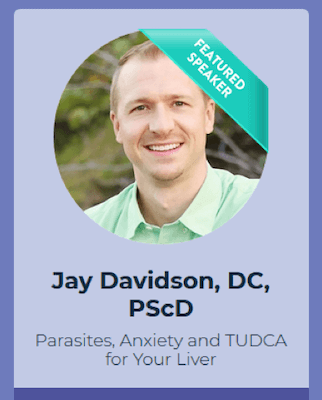
Dr. Jay Davidson is one my guest experts on The Anxiety Summit 5: Gut-Brain Axis and our topic is: Parasites, Anxiety and TUDCA for Your Liver.  What you’ll learn

  • Parasite facts and myths
  • New dosing options for mimosa pudica seed
  • TUDCA for liver, neuroinflammation and depression

and much more. It’s an excellent interview and was voted as one of the top 5 interviews of the summit in 2019.

jay davidson

After hearing Dr. Jay’s explanation of what a parasite is, I couldn’t resist using the above image of a happy worm. This is what he shares:

the Greek meaning of parasite is one that sits at another’s table. So essentially think of a parasite as it’s taking things from you. It’s taking nutrients, it’s taking key things that your body needs and literally off of you, not to the point that it’s killing you because then you’re not a good host to give a good environment. So it’s basically just kind of sucking you dry.

Unfortunately you have this very “happy” and satisfied parasite sitting at your “table” and causing all kinds of symptoms:

Mood stuff for sure, which obviously this is The Anxiety Summit. So we want to highlight that one, absolutely. Sleep issues though. In the big sleep one that I see is restless sleep where you toss, you turn, you wake often. You can’t just be relaxed when you sleep. Parasites get active when you go to bed.

So the more active they are within your body and the more you’re trying to calm down, the more your body is getting stressed out. This is where teeth grinding happens when you sleep. This is, again, where the restless legs. You can also say the calf cramping, restless leg type symptoms would come in as well being associated. It’s classic, though, for parasites to affect the gut. So obviously diarrhea, is clearly a classic sign of acute parasitic type infection.

Other symptoms we discuss at length: bowel urgency, SIBO, vertical wrinkles above your mouth, nail-biting, food sensitivities, bed-wetting, insomnia (especially around full moon), grinding teeth, night sweats and anxiety.

And Dr. Jay shares how parasites contribute to neurotransmitter imbalances:

Parasites will eat the protein you eat and not allow your body to break down that protein into amino acids. That’s why amino acid therapy can be so beneficial symptomatically and change people’s lives, because they’re getting these amino acids that they’re not getting when they have parasites. But you always want to make sure to go to the underlying cause to remove the parasitic infection.

He also shares that parasites will “literally manipulate your thoughts and your personality” and I share the example of toxoplasma gondii and schizophrenia, and rats losing their fear of cats so the parasite can be transferred. It’s fascinating.

We cover why and how do do the parasite protocol before, during and after the full moon, his parasite story and the latest information on mimosa pudica seed:

So mimosa pudica seed is an amazing, just overall gut support. So even if your goal isn’t the parasite cleanse, mimosa pudica seed is awesome to help support the digestive tract. It can help break up biofilm. It’s really good against Candida and just helping to normalize microbial levels within the GI besides the fact that it can help with parasites.

Dr. Jay shares what he’s seeing clinically in terms of dosing mimosa pudica seed and when exactly to use it.

I share that I found an animal study where they were looking at the whole plant extract and found that it helped with modulating GABA receptors. And they said it had very similar effects to diazepam, which is a benzodiazepine that a lot of people with anxiety are prescribed. Fascinating!

The latter half of the interview focuses on drainage and supporting bile production with TUDCA, which also happens to support the mitochondria and help prevent Alzheimer’s disease.

I encourage you to also listen to Pyroluria, Oxidative Stress and Parasites with Todd Watts, DC, PScD. We discuss some of these same protocols in the context of pyroluria/social anxiety and oxidative stress.

You’re going to be hearing a lot more from me about these products and protocols as I learn more and trial them personally.

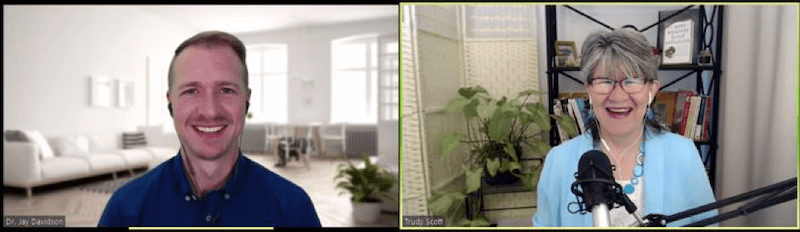
jay davidson trudy scott as5

You may notice this image doesn’t look like the video on the summit. This was one of 4 interviews we had to repeat due to technical issues!

Be sure to listen to Dr. Jay’s wonderful interview on The Anxiety Summit 5: Gut-Brain Axis.

As I mentioned, his interview was voted as one of the top 5 interviews of the summit in 2019. The other 4 top voted interviews are:

  • Fix the Brain to Fix the Gut – Datis Kharrazian, DHSc, DC, MS, FACN, CNS (more here)
  • Why Bile is the Key to Anxiety & Hormone Havoc – Ann Louise Gittleman, PhD, CNS (more here)
  • Vagus Nerve Activation to Reduce Anxiety – Dr. Navaz Habib, DC (more here)

and my interview GABA & Tryptophan: The Gut-Anxiety Connections (more here)

If you’re already familiar with Dr. Jay’s parasite protocols and TUDCA please share how they have helped you. That way we can all learn.

I’d also love to hear from you once you’ve listened in to Dr. Jay’s interview and the others.

If you’d like to ask a question, please post in the comments below.

Learn more/purchase now


Filed Under: The Anxiety Summit 5 Tagged With: anxiety, anxiety summit, biofilm, candida, GABA, insomnia, Jay Davidson, microbial, mimosa pudica seed, mood, parasites, Todd Watts, TUDCA

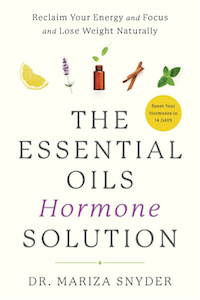
The Essential Oils Hormone Solution by Dr. Mariza Snyder – my book review

February 22, 2019 By Trudy Scott 15 Comments

Together with dietary changes and key nutrients like GABA, tryptophan, zinc and vitamin B6, using essential oils are a wonderful tool for helping to ease anxiety, reduce stress, improve sleep and focus and contribute to overall hormonal health for women. Now we have a new book that is a wonderful essential oil resource specifically for women, The Essential Oils Hormone Solution: Reclaim Your Energy and Focus and Lose Weight Naturally by Dr. Mariza Snyder.

She shares this about essential oils:

Essential oils are natural aromatic com­pounds found in the roots, seeds, stems, bark, leaves, and flowers of various plants. They are super-charged, fifty to seventy times more potent than their dried-herbal counterparts. They’re simply the best plant-based remedy that exists, and they have been success­fully used for thousands of years.

Dr. Mariza lists these top 5 must-have hormone-support essential oils for perimenopausal and menopausal women: clary sage, geranium, lavender, peppermint and rosemary. Lavender and peppermint have been long-time favorites of mine and I recently learned about clary sage and rosemary and love both.

She covers so many wonderful essential oils in the book but for the purposes of this review I’ll focus on clary sage since it was new to me until recently and may be new to you too.

In the chapter on sleep, she shares this about the benefits of clary sage and how to use this essential oil:

CLARY SAGE (Salvia sclarea)

  • Promotes relaxation of the body for a restful night’s sleep
  • Calms and soothes the mind and body
  • Supportive during menstrual distress

Aromatic Use 

  • Apply 1–2 drops directly to bedclothes or pillow.
  • Diffuse 3–4 drops before bedtime.

Topical Use

  • Dilute 1–2 drops with your favorite carrier oil and massage into abdomen.
  • Add 2–3 drops to a warm bath with ¼ cup Epsom salts dis­solved in the water.
  • Dilute 1–2 drops with your favorite carrier oil and massage into your soles before bedtime.

I had looked into clary sage about 6 months ago when I learned that it supports serotonin production and also lowers high cortisol.

Interestingly, I didn’t care for the aroma of clary sage when I first purchased it and I diffused it with lavender and rosemary to disguise the aroma. But I have grown to really like it and use a drop on a hanky each night and look forward to how much it helps me sleep and the fact that it eased the mild hot flashes I had started to experience again.

I love the combinations/blends Dr. Mariza recommends in the book and would have welcomed these ideas when I first started using clary sage myself. Here is one example of a rollerball blend with clary sage:

Tense-Away Rollerball Blend

10 drops Lavender essential oil

10 drops Clary Sage essential oil

10 drops Peppermint essential oil

Carrier oil of choice

I also really like that Dr. Mariza describes different ways to use the oils other than only diffusing – like using rollerballs, using them for massages and in baths, and applying the essential oils on various parts of the body for a more direct impact. One such example is the Hormone Synergy Rollerball Blend (which contains clary sage, lavender, geranium, bergamot and ylang ylang). She recommends applying this blend directly over your ovaries.

I learned this direct application tip from Dr. Mariza last year and started using lavender, peppermint and rosemary (in a carrier oil) topically on my belly before bed. It helps with digestion, occasional belly bloat from SIBO (if I’ve eaten something that triggers symptoms) and is relaxing too. I think I’ll add clary sage to this belly blend too for the added hormone benefits. This could be one way to use clary sage for the benefits if you find you don’t really like the aroma (because it will be further from your nose!)

Here are some of the benefits of the other top 5 hormone-support essential oils for perimenopausal and menopausal women that Dr. Mariza shares:

  • geranium – calming and soothing and “rejuvenates and revitalizes skin, complexion, and hair” (I haven’t been using this one and looking forward to trying this one)
  • lavender – “eases and calms feelings of anxiety, stress, and tension while rebalancing emotions” and “relieves discomfort associated with menstrual cycles” (I’ve been using lavender for years)
  • peppermint – “stimulates mental focus and energy by enlivening the senses” and supports your respiratory system (I also use this one all the time. It’s also great for headaches and neck pain)
  • and rosemary – “increases memory, concentration, and focus” (I also use it for EMF/electromagnetic radiation protection. Research shows rosemary could play a protective role against this harmful effect through its antioxidant activity)

Clary sage is also featured in the libido chapter: “Commonly used to stimulate sexual energy and boost libido.” This aspect was new to me, but it makes sense given that it lowers cortisol and supports serotonin production (and hence estrogen). Dr. Mariza also covers many other wonderful essential oils that boost libido too: jasmine, neroli, rose, sandalwood, ylang ylang and geranium.  In one study neroli, lavender, fennel, geranium, and rose significantly improved sexual function in menopausal women.

Here is the official book blurb:

Have your hormones been hijacked? Do you feel energy-depleted and irritable, unable to sleep, stay focused, or lose weight? You may have attributed these symptoms to the natural hormonal fluctuations that occur with age. But behind the scenes, there are a host of pesky culprits wreaking havoc on your hormonal health: chronic stress, air pollution, chemical-laden foods and cleaning supplies, and the synthetic estrogens in personal care products. Women of all ages are left vulnerable to the consequences, suffering from unnecessary hormonal imbalance and frustrating symptoms that are often dismissed by their doctors.

Dr. Mariza Snyder is here to help put you back in control of your health. In The Essential Oils Hormone Solution, you will learn how to heal hormonal chaos and revitalize the body from the inside out with the support of high-quality essential oils. You’ll learn how essential oils work on a cellular level to mitigate the toxic loads we carry, and how to use essential oils to reduce cravings, get deep, restful sleep, ease stress, improve mood, banish the worst symptoms of PMS, regain focus and concentration, boost libido, and increase energy.

Featuring a 14-day plan to jumpstart your hormonal health, with over 100 essential oil blends, daily self-care rituals, and delicious, easy-to-prepare recipes, you’ll discover how to reset your body and pave the way for improved hormonal health, without taking hormones.

Grab your copy of The Essential Oils Hormone Solution here (my Amazon link).

I’d like to add my thoughts on what I have found to be safe use of essential oils, and what I share with my clients (I consider myself an essential oil user like you – I’m not an expert):

  • Always use a carrier oil, unless you are diffusing, and this includes using essential oils in the bath (I know there is some conflicting advice on this, but I like to err on the side of caution)
  • Don’t try to remove too much of an essential oil with water – it will only drive it deeper into the skin
  • Think low doses i.e. a little goes a long way
  • Be sure to rotate your essential oils
  • Don’t ingest the oils neat or even in a gelatin capsule. I would only consider doing so if I was working with an experienced practitioner and using an enteric coated capsule  (there is definitely conflicting advice on this one but again I like to err on the side of caution)

It’s a fun book with wonderful ideas for how to combine essential oils and use them to improve hormone imbalance. I love this quote from Dr. Mariza:

Inhaling them and applying them is like adorning yourself in something truly beautiful

What are your favorite essential oils and combinations for easing anxiety, reducing stress, improving sleep and balancing your hormones? How are you “adorning yourself” and what is your favorite way to use them – diffused, topically, via a rollerball, or via a massage or in the bath? Feel free to post questions here too.

Filed Under: Books, Essential oils Tagged With: anxiety, calming, clary sage, cortisol, Dr. Mariza Snyder, energy, essential oils, focus, hormone, hormones, insomnia, lavender, libido, mood, peppermint, PMS, serotonin, sleep, stress, The Essential Oils Hormone Solution

  • « Go to Previous Page
  • Page 1
  • Page 2
  • Page 3
  • Page 4
  • Page 5
  • Interim pages omitted …
  • Page 8
  • Go to Next Page »

Primary Sidebar

NEW! GABA QuickStart Homestudy (with special intro pricing)

gaba quickstart homestudy

Free Report

9 Great Questions Women Ask about Food, Mood and their Health

You'll also receive a complimentary subscription to my ezine "Food, Mood and Gal Stuff"


Connect with me

Popular Posts

  • Amino Acids Mood Questionnaire from The Antianxiety Food Solution
  • The Antianxiety Food Solution Amino Acid and Pyroluria Supplements
  • Pyroluria Questionnaire from The Antianxiety Food Solution
  • Collagen and gelatin lower serotonin: does this increase your anxiety and depression?
  • Tryptophan for the worry-in-your-head and ruminating type of anxiety
  • GABA for the physical-tension and stiff-and-tense-muscles type of anxiety
  • The Antianxiety Food Solution by Trudy Scott
  • Seriphos Original Formula is back: the best product for anxiety and insomnia caused by high cortisol
  • Am I an anxious introvert because of low zinc and vitamin B6? My response to Huffington Post blog
  • Vagus nerve rehab with GABA, breathing, humming, gargling and key nutrients

Recent Posts

  • What do I use instead of Seriphos to help lower high cortisol that is affecting my sleep and making me anxious at night?
  • BeSerene™ GABA/theanine cream eases severe muscle tension in her neck/shoulders, prevents her bad headaches and quells her anxiety
  • How the correct approach, dose and sublingual use of GABA can be calming and not cause a flushed and itchy face and neck
  • The amino acid glutamine improves low mood by addressing gut health, and it has calming effects too
  • Flight anxiety with heightened breath, physical tension and also fearing the worst (the role of low GABA and low serotonin)

Categories

  • 5-HTP
  • AB575
  • Addiction
  • ADHD
  • Adrenals
  • Alcohol
  • Allergies
  • Alzheimer's disease
  • Amino Acids
  • Anger
  • Antianxiety
  • Antianxiety Food Solution
  • Antidepressants
  • Anxiety
  • Anxiety and panic
  • Autism
  • Autoimmunity
  • benzodiazapines
  • Bipolar disorder
  • Books
  • Caffeine
  • Cancer
  • Candida
  • Children/Teens
  • Collagen
  • Cooking equipment
  • Coronavirus/COVID-19
  • Cravings
  • Depression
  • Detoxification
  • Diabetes
  • Diet
  • DPA/DLPA
  • Drugs
  • EFT/Tapping
  • EMF
  • EMFs
  • Emotional Eating
  • Endorphins
  • Environment
  • Essential oils
  • Events
  • Exercise
  • Fear
  • Fear of public speaking
  • Fertility and Pregnancy
  • Fish
  • Food
  • Food and mood
  • Functional neurology
  • GABA
  • Gene polymorphisms
  • General Health
  • Giving
  • Giving back
  • Glutamine
  • Gluten
  • GMOs
  • Gratitude
  • Gut health
  • Heart health/hypertension
  • Histamine
  • Hormone
  • Hyperparathyroidism
  • Hypoglycemia
  • Immune system
  • Inflammation
  • Insomnia
  • Inspiration
  • Introversion
  • Joy and happiness
  • Ketogenic diet
  • Lithium orotate
  • Looking awesome
  • Lyme disease and co-infections
  • MCAS/histamine
  • Medication
  • Men's health
  • Mental health
  • Mercury
  • Migraine
  • Mold
  • Movie
  • MTHFR
  • Multiple sclerosis
  • Music
  • NANP
  • Nature
  • Nutritional Psychiatry
  • OCD
  • Osteoporosis
  • Oxalates
  • Oxytocin
  • Pain
  • Paleo
  • Parasites
  • Parkinson’s disease
  • PCOS
  • People
  • PMS
  • Postpartum
  • PTSD/Trauma
  • Pyroluria
  • Questionnaires
  • Real whole food
  • Recipes
  • Research
  • Schizophrenia
  • serotonin
  • SIBO
  • Sleep
  • Special diets
  • Sports nutrition
  • Stress
  • Sugar addiction
  • Sugar and mood
  • Supplements
  • Teens
  • Testimonials
  • Testing
  • The Anxiety Summit
  • The Anxiety Summit 2
  • The Anxiety Summit 3
  • The Anxiety Summit 4
  • The Anxiety Summit 5
  • The Anxiety Summit 6
  • Thyroid
  • Thyroid health
  • Toxins
  • Tryptophan
  • Tyrosine
  • Uncategorized
  • Vegan/vegetarian
  • Women's health
  • Yoga

Archives

  • October 2025
  • September 2025
  • August 2025
  • July 2025
  • June 2025
  • May 2025
  • April 2025
  • March 2025
  • February 2025
  • January 2025
  • November 2024
  • October 2024
  • September 2024
  • August 2024
  • July 2024
  • June 2024
  • May 2024
  • April 2024
  • March 2024
  • February 2024
  • January 2024
  • December 2023
  • November 2023
  • October 2023
  • September 2023
  • August 2023
  • July 2023
  • June 2023
  • May 2023
  • April 2023
  • March 2023
  • February 2023
  • January 2023
  • December 2022
  • November 2022
  • October 2022
  • September 2022
  • August 2022
  • July 2022
  • June 2022
  • May 2022
  • April 2022
  • March 2022
  • February 2022
  • January 2022
  • December 2021
  • November 2021
  • October 2021
  • September 2021
  • August 2021
  • July 2021
  • June 2021
  • May 2021
  • April 2021
  • March 2021
  • February 2021
  • January 2021
  • December 2020
  • November 2020
  • October 2020
  • September 2020
  • August 2020
  • July 2020
  • June 2020
  • May 2020
  • April 2020
  • March 2020
  • February 2020
  • January 2020
  • December 2019
  • November 2019
  • October 2019
  • September 2019
  • August 2019
  • July 2019
  • June 2019
  • May 2019
  • April 2019
  • March 2019
  • February 2019
  • January 2019
  • December 2018
  • November 2018
  • October 2018
  • September 2018
  • August 2018
  • July 2018
  • June 2018
  • May 2018
  • April 2018
  • March 2018
  • February 2018
  • January 2018
  • December 2017
  • November 2017
  • October 2017
  • September 2017
  • August 2017
  • July 2017
  • June 2017
  • May 2017
  • April 2017
  • March 2017
  • February 2017
  • January 2017
  • December 2016
  • November 2016
  • October 2016
  • September 2016
  • August 2016
  • July 2016
  • June 2016
  • May 2016
  • April 2016
  • March 2016
  • February 2016
  • January 2016
  • December 2015
  • November 2015
  • October 2015
  • September 2015
  • August 2015
  • July 2015
  • June 2015
  • May 2015
  • April 2015
  • March 2015
  • February 2015
  • January 2015
  • December 2014
  • November 2014
  • October 2014
  • September 2014
  • August 2014
  • July 2014
  • June 2014
  • May 2014
  • April 2014
  • March 2014
  • February 2014
  • January 2014
  • December 2013
  • November 2013
  • October 2013
  • September 2013
  • August 2013
  • July 2013
  • June 2013
  • May 2013
  • April 2013
  • March 2013
  • February 2013
  • January 2013
  • December 2012
  • November 2012
  • October 2012
  • August 2012
  • July 2012
  • June 2012
  • May 2012
  • April 2012
  • March 2012
  • February 2012
  • January 2012
  • December 2011
  • November 2011
  • October 2011
  • September 2011
  • August 2011
  • July 2011
  • June 2011
  • May 2011
  • April 2011
  • March 2011
  • February 2011
  • January 2011
  • December 2010
  • October 2010
  • September 2010
  • July 2010
  • May 2010
  • April 2010
  • March 2010
  • February 2010
  • January 2010
  • November 2009

Share the knowledge!

The above statements have not been evaluated by the Food and Drug Administration. Products listed in this website are not intended to diagnose, treat, cure or prevent any disease.

The information provided on this site is for informational and educational purposes only and is not intended as a substitute for advice from your physician or other health care professional. You should consult with a healthcare professional before starting or modifying any diet, exercise, or supplementation program, before taking or stopping any medication, or if you have or suspect you may have a health problem.


Copyright © 2026 Trudy Scott. All Rights Reserved. | Privacy | Terms and Conditions | Refund Policy | Medical Disclaimer

Free Report

9 Great Questions Women Ask about Food, Mood and their Health

You’ll also receive a complimentary subscription to my ezine “Food, Mood and Gal Stuff”