• Skip to primary navigation
  • Skip to main content
  • Skip to primary sidebar

everywomanover29 blog

Food, Mood and Women's Health – Be your healthiest, look and feel great!

  • Blog
  • About
  • Services
  • Store
  • Resources
  • Testimonials
  • The Book
  • Contact
  • Search this site

mood

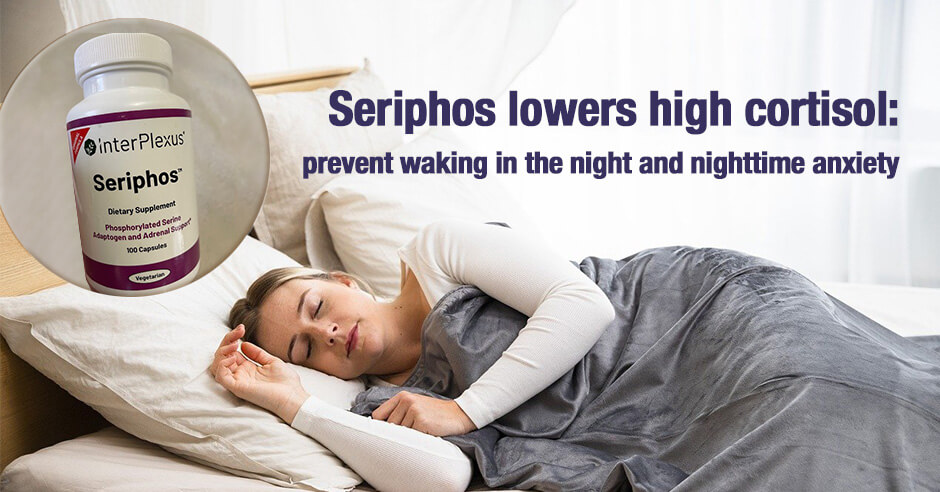
Seriphos lowers high cortisol: prevent waking in the night and nighttime anxiety

October 20, 2023 By Trudy Scott 63 Comments

seriphos and cortisol

Seriphos is my favorite nutrient for lowering high nighttime cortisol in order to reduce night waking and nighttime anxiety. I’ve used it with success in the past and have just needed it again:

After coming back from Hawaii (I was there for just under 2 weeks), I was still waking a few times each night. Sometimes I would be awake for 2-3 hours! I’m a hot mess when I don’t get sleep through the night. With just 1 Seriphos before bed for 9 days I was sleeping through the night again. It was glorious!

High cortisol can be a temporary issue after international travel i.e. caused by jetlag and out of balance circadian rhythm. I will admit that I have a number of confounding factors – like my loss and grief (my darling mom has just passed away), being sprayed with insecticide on landing in Australia (which I suspect caused severe vertigo the day after I got back), and high blood pressure (and likely higher cortisol too) after drinking too much licorice tea for my voice loss. Whatever the causes of my high cortisol, Seriphos really helped me sleep through the night.

I ran out of Seriphos 2 nights ago and I was awake for 3 hours last night. I’ll be adding it back to my nighttime protocol as soon as my order arrives.

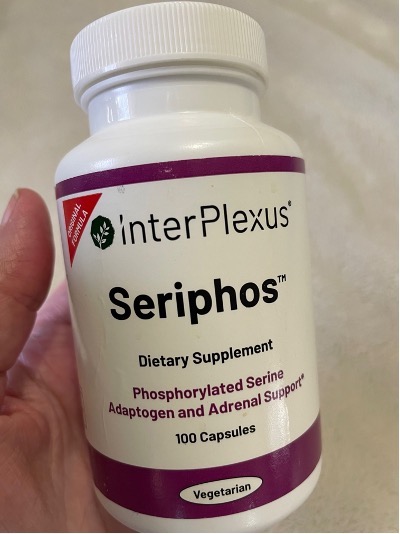
Seriphos is made by Interplexus and is a phosphorylated serine product. It is similar to the more recognized phosphatidylserine which is also used and known for lowering high cortisol – clinically and in the research.  However, clinically, I have found Seriphos to be more effective and work more quickly.

UPDATE Feb 2024: I did end up tweaking my Seriphos dose a few times. After a few weeks I decided to trial 2 per night – this worked well. Then a few weeks later I trialed 3 per night – but after a few days I realized that even though it worked well for sleep it made me too tired the next day. For this reason I went back down to 2 Seriphos at bedtime.

UPDATE August 2024: I’m now using just 1 Seriphos at night and have added ox bile supplementation and a bright light panel in the morning because of bile issues. More on this below.

Seriphos for high cortisol due to trauma, loss of beloved cat and more

When I posted this on Facebook, I had a number of folks share how Seriphos has also helped them.

Kathy shared this: “I take two Seriphos at night for high cortisol that causes insomnia. It works well for me and helps me to relax. I have a significant trauma background that keeps me in fight or flight, so Seriphos is a must have at night. I do take a break from time to time if I am going through a less stressful time.”

Hopefully Kathy is also working on the trauma, doing trauma work and even incorporating other nutritional approaches which help so much with recovery – like zinc, vitamin D, a B complex, GABA and tryptophan etc. Taking a break from time to time is a good plan – I share more about this below.

Kim shared this: “Seriphos is a life saver – I started it when I was having cortisol/adrenaline issues a few years ago and have continued using it. I don’t ever want to be without Seriphos. A little over a month ago I unexpectedly lost my youngest cat. She was emaciated when I rescued her over 4 years ago and we turned around health issues. I feel so sad that she was dealt such a bad hand but we got her a loving home. My animals are everything to me and the grief is so difficult. She was a character and I love her so much.”

She uses one capsule in the evening but also uses a capsule during the day if she feels off. Hopefully Kim is also doing trauma work and other nutritional support too.

Janie shared this: “I have used it, years ago when my cortisol was off the charts, morning and at night. I was awake every night until 2am, unable to sleep. Seriphos certainly helped.”

She used 1 Seriphos per day for about 3 months.

Patricia said: “Please remember that there is Original Seriphos and the next gen Seriphos. I was one of thousands of people who had used original Seriphos for sleep and then they changed their formulation without telling us and then so very many of us were wide awake at night until we realized that they had changed the formulation.”

This happened in 2016/2017 and I blogged about that whole fiasco here –  Seriphos Original Formula is back: the best product for anxiety and insomnia caused by high cortisol. You can read many other success stories on the blog and in the comments.

Address the causes of your high cortisol: jetlag, grief, toxins, licorice intake

As you can see from my example there can be a number of causes of high cortisol and you always want to address these causes while using Seriphos so you can eventually stop using it:

  • International travel i.e. caused by jetlag and out of balance circadian rhythm. I’m home so this is no longer a contributing issue.
  • Loss and grief can have physiological effects and high cortisol is one of many effects: “It appears that cortisol remains elevated for at least the first 6 months of bereavement. For some, cortisol elevation may become chronic”. The loss of my darling mom is going to take time but I am making time for grieving and I’m nurturing myself. As I navigate this period in my life I’ll continue to share what has helped me. I suspect I may need Seriphos for longer than the usual 3 months.
  • Being sprayed with insecticide on landing in Australia (which I suspect caused severe vertigo the day after I got back). It’s well-recognized that environmental toxins are hormone disruptors and affect the hypothalamic-pituitary-adrenal (HPA) axis and cortisol. I’m addressing this with active detoxification and my portable infrared sauna.
  • High blood pressure and likely higher cortisol too after drinking too much licorice tea for my voice loss. I have stopped the licorice consumption and my blood pressure is back to normal.

Other possible causes of high cortisol include day to day stresses, food sensitivities such as gluten, high sugar consumption, parasites and so on. Each factor needs to be addressed.

I do recommend Salivary cortisol testing before using Seriphos

Salivary cortisol testing is something I do with all my clients anyway. And I do recommend salivary cortisol testing before using Seriphos and the other cortisol-lowering nutrients mentioned below.

I will admit that I didn’t follow my own recommendation because I’ve had high nighttime cortisol in the past and recognized the symptoms. I had also identified all the above root causes and I desperately needed to sleep. I now have an adrenal saliva test kit on hand and will report back when I get the results.

Seriphos will only work for waking in the night if cortisol is high

One woman shared “I have never slept through the night in years. It would be delightful to get to the morning without waking.” Seriphos will very likely help if her cortisol is high.

Keep in mind there are many causes of not being able to sleep through the night and Seriphos will not help if cortisol is not high. Other root causes for insomnia/waking in the night (and nighttime anxiety) we consider and investigate are:

  • Low GABA and low serotonin (I always start with these while waiting for salivary cortisol results to come back),
  • Low melatonin

The following factors need to be addressed as root causes of sleep issues, anxiety and other symptoms (like gut issues, pain etc.), and also keep in mind that they are very possibly contributing to your high cortisol too:

  • Gluten and other food sensitivities
  • Caffeine and sugar intake
  • Oxalate issues and/or toxins exposure affecting bile production (this affected my sleep last year)
  • EMFs
  • Parasites and other gut issues like IBS/SIBO etc.
  • Disrupted circadian rhythms connected to liver/gallbladder/bile issues – more on that and bright light here. (Research does support a connection between high cortisol and cholestasis i.e. “stagnation, or at least a marked reduction, in bile secretion and flow.”)

A few folks reported they had tried Seriphos without success and it may well be that they don’t have high cortisol. Or they would possibly benefit from another approach to lower their cortisol (more on this below).

What are my options if I have high cortisol at night and Seriphos has the opposite effect?

One person said it had the opposite reaction. Joanne shared this: “Seriphos had the opposite effect on me. [One Seriphos] gave me extreme anxiety, kept me awake all night. Saliva tested consistently high cortisol at night so it should have helped. Been trying to work out why it would and how it might inform how I treat my insomnia.”

I’ve had a few clients do better with less than the recommended 3 per day and one not being able to use it at all. I suspect an allergic reaction or that it’s just too high a dose for some folks. The capsule could be opened and less could be used.

If this doesn’t work, other options for lowering high cortisol include lactium/hydrolyzed casein, Relora® (which contains Magnolia officinalis and Phellodendron amurense), essential oils such as bergamot and some herbal adaptogens. You can also read about some phosphatidylserine products I looked into when the Seriphos product was changed.

Forest bathing also helps to lower high cortisol levels and I recommend it for everyone.

Where does using Seriphos fit into everything else that I’m doing to address my insomnia and/or anxiety?

I typically don’t start with Seriphos right away with clients unless we know cortisol is high. As mentioned above I always start with assessing for low GABA and low serotonin and we do trials of the respective amino acids based on the symptoms questionnaire.

I also assess for low blood sugar and dietary factors like gluten, caffeine, sugar, quality animal protein intake etc. as covered in my book “The Antianxiety Food Solution.” More about my book here.  It does include a chapter on the amino acids and how to use them too.

Then we start to dig deeper and would consider Seriphos or lactium for anxiety caused by high night time or even high morning cortisol or high cortisol at other times of the day.

With many folks all of the above often applies. And we continue with assessing for each of the 60+ nutritional and biochemical root causes of anxiety/waking in the night (which does include liver/gallbladder/bile issues).

Where do I purchase Seriphos and how much do I use? What about taking a break?
seriphos

You can purchase Seriphos from my online store (Fullscript – only available to USA customers – use this link to set up an account) and you can also find it on iherb (use this link to save 5%).

The bottle states to use 1 capsule with water 15 minutes before a meal. Clinically, using 1-3 capsules a few hours before the high cortisol seems to be most effective. For 2-4am waking this typically means taking Seriphos right before bed. In some instances, taking 1 on waking in the night can help too (for a maximum of 3).

With high cortisol in the night and on waking, I have clients use Seriphos before bed and lactium on waking.

It is recommended to take a one-month break after 3 months of Seriphos use. Ideally, once the root causes of high cortisol are addressed, you should be able to stop anyway.  Or take a break, retest cortisol and then continue.

I’ll share some research and how Seriphos differs from phosphatidylserine in a follow-up blog if there is enough interest.

I appreciate all the feedback from these women in my community.

Have you used Seriphos (a phosphorylated serine product) to help with high cortisol and waking in the night/nighttime anxiety caused by any of the?

What do you suspect the cause(s) of your high cortisol is or was? And have you confirmed high cortisol with a saliva cortisol test?

Have any of the other products mentioned above helped to reduce high cortisol? If yes, have you compared them with Seriphos?

Let me know if you’re interested in a follow-up blog that includes some research and how Seriphos differs from phosphatidylserine.

Feel free to share and ask your questions below.
Filed Under: Adrenals, Anxiety, Insomnia, Stress, Toxins Tagged With: 000 lux, 10, anxiety, Balancing Neurotransmitters: the Fundamentals program for practitioners, bile liver, bright light, bright light panel, cholestasis, circadian rhythm, cognitive performance, cortisol, daytime sleepiness, disturbed sleep, GABA, GABA Quickstart, grief, high blood pressure, high cortisol, insecticide, Interplexus, jet lag, jetlag, licorice tea for my voice loss, melatonin, mood, nighttime anxiety, phosphatidylserine, phosphorylated serine, primary biliary cholangitis, salivary cortisol testing, seriphos, serotonin, sleep, sleep quality, sleep timing, trauma, tryptophan, vertigo, waking, waking early

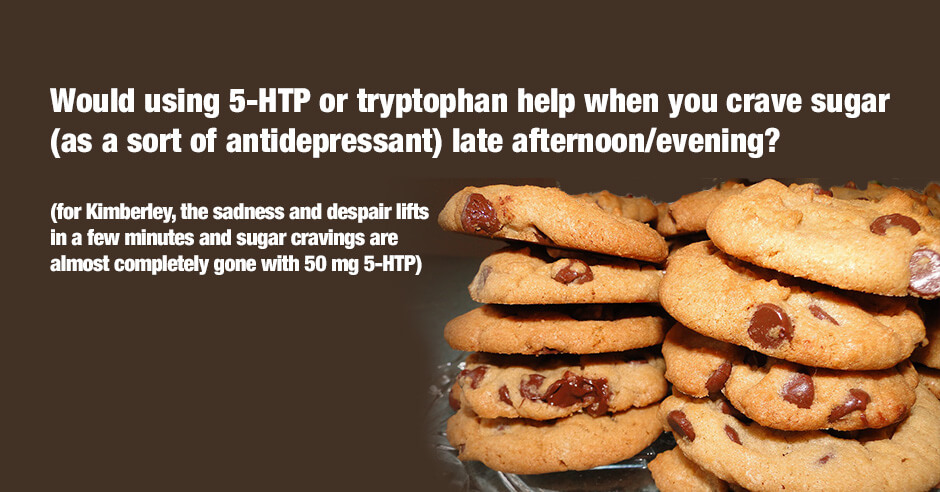
Would using 5-HTP or tryptophan help when you crave sugar (as a sort of antidepressant) late afternoon/evening?

June 2, 2023 By Trudy Scott 29 Comments

5-htp and sugar craving

Would using 5-HTP or tryptophan also help when you crave sugar (as a sort of antidepressant) late afternoon/evening? ~ Kimberley

This question was posed in response to my recent blog post about using tryptophan or 5-HTP to help with alcohol cravings/addiction in the late afternoon/evening – to help you wind down and relax, improve mood and sleep, and also as a reward/treat.

I said yes it is often the same cause when it happens late afternoon/evening and when there are other low serotonin symptoms like low mood, anxiety, worry, insomnia etc. When serotonin is low we self-medicate with wine, sugar, carbs, gluten, dairy and chocolate etc. in order to feel good, get a mood boost and reduce stress. 5-HTP or tryptophan stops the sugar cravings, acts as an antidepressant (improving mood) and eases other low serotonin symptoms too.

It turns out Kimberley was craving sugar late afternoon: “it’s definitely late afternoon for me, while I’m making dinner. Maybe it’s time to go back on 5-HTP.”

And then 2 days later she posted how quickly 5-HTP helped when she added it back mid-afternoon:

I was taking a break from tryptophan/5-HTP and realized after reading this post that that might be a mistake! So I added 5-HTP back in mid-afternoon and my sugar cravings are almost completely gone. It’s funny how I forget the symptoms of low neurotransmitters. Thanks for reminding me!

5-HTP works quickly when it’s low serotonin

How wonderful are these results for Kimberley. I never get tired of hearing feedback like this! I appreciate her sharing and giving me permission to share as a blog so you get to learn and be inspired too.

It’s not unusual for 5-HTP to work this quickly and when it does it’s a clue that the symptoms are related to low serotonin and that she found the ideal dose for her needs.

Kimberley had good results with 5-HTP in the past so she went back to what had worked for her before and it worked for her again.

But do keep in mind, some folks do better with 5-HTP and some do better with tryptophan so it’s a matter of doing a trial of each one each.

50 mg 5-HTP: the sadness and despair lifts in a few minutes

A week later she kindly came and shared additional details in the comments of the tryptophan/ 5-HTP alcohol cravings blog, saying:

It’s possible that I was already in the middle of my daily, mid-afternoon chocolate chip binge when I saw your post

I took a 50 mg 5-HTP along with my mid-afternoon Endorphigen capsule, and within just a few minutes I felt the sadness and despair that I often feel in the late afternoon, start to lift. I was astonished at how quickly it worked! I didn’t open the capsule, or chew it, I just swallowed it with water and had a snack afterwards. I really can’t thank you enough for asking that question because I was really struggling with low mood and sadness almost every day.

Even though KImberley had used 5-HTP with success in the past, she was still astonished how quickly it worked and how effective it was. She was also surprised she had forgotten her prior low serotonin symptoms:

Up until January I had taken 5-HTP in the mid-afternoon and then Tryptophan at bedtime, but I wanted to try a program to support my thyroid. That program told me that too much serotonin is often at the root of gut damage, so I weaned myself off of the 5-HTP and tryptophan. I didn’t really notice much difference, except the daily sugar cravings.

I’m not sure how I could so easily forget the symptoms of low serotonin, but I did.

Your question really was a God-send for me, Trudy. It reminded me that there was an option for feeling better (in fact, MUCH better than sugar makes me feel) that didn’t involve something that’s not good for me.

And I really did feel remarkably better the same day, and those results have continued.

Thanks again, Trudy, for continuing to bring these topics up. Some of us are forgetful and need reminding. Usually, when you have symptoms of low serotonin there are enough other issues going on in your life that it’s easy to overlook the obvious. So I’m very grateful that you asked the question, because I feel so much better able to deal with my circumstances now that I’m back on the 5-HTP. Blessings to you!

I am curious about the program that told her too much serotonin is often at the root of gut damage and if they suggested stopping 5-HTP and tryptophan. It doesn’t make any sense to me.  I’ll report back when I learn more about this.

More tired during the day and a headache: what to consider

She did mention “I’m finding myself more tired during the day and have also had a headache for the last few days.” I would suspect chocolate/caffeine withdrawal may have caused her headache.

With feeling more tired I’d also watch the dose of 5-HTP. She may find less is better for her needs.

She is also trying tryptophan at bedtime so that may be making her more tired the next day. Doing one amino acid at a time is often the best way to know how each one is affecting you.

Finding what works for your unique needs

Here are some other amino acid/sugar cravings blog posts that illustrate how we all have unique needs and different biochemical imbalances:

  • The individual amino acids glutamine, GABA, tryptophan (or 5-HTP), DPA and tyrosine are powerful for eliminating sugar cravings, often within 5 minutes

The individual amino acids glutamine, GABA, tryptophan (or 5-HTP), DPA and tyrosine are powerful for eliminating sugar cravings, often within 5 minutes. It seems that this wonderful benefit – over and above the anxiety-reducing and mood-boosting benefits – is often overlooked or poorly understood.

  • GABA for ending sugar cravings (and anxiety and insomnia)

For Melissa, an unexpected result was that she stopped craving sugar (chocolates, ice cream and truffles) after about a week of taking GABA for her travel anxiety.

It’s a matter of finding what works for your sugar cravings and unique needs. GABA worked for Melissa and yet 5-HTP works for Kimberley – for their sugar cravings.

Here is the tryptophan/5-HTP alcohol cravings blog that started the discussion: Tryptophan had the added benefit of turning me completely off alcohol when I took it to improve mood and sleep during perimenopause. In this case, tryptophan helped Victoria quit the wine that she was self-medicating with in order to feel good and relax.

Resources if you are new to using amino acids as supplements

If you are new to using amino acids as supplements, here is the Amino Acids Mood Questionnaire from The Antianxiety Food Solution (you can see all the symptoms of neurotransmitter imbalances, including low GABA, low serotonin and low endorphins).

If you suspect low levels of any of the neurotransmitters and do not yet have my book, The Antianxiety Food Solution – How the Foods You Eat Can Help You Calm Your Anxious Mind, Improve Your Mood, and End Cravings, I highly recommend getting it and reading it before jumping in and using amino acids on your own so you are knowledgeable. And be sure to share it with the practitioner/health team you or your loved one is working with.

There is an entire chapter on the amino acids and they are discussed throughout the book in the sections on gut health, gluten, blood sugar control, sugar cravings, anxiety and mood issues.

The book doesn’t include product names (per the publisher’s request) so this blog, The Antianxiety Food Solution Amino Acid and Pyroluria Supplements, lists the amino acids that I use with my individual clients and those in my group programs. You can find them all in my online store.

If, after reading this blog and my book, you don’t feel comfortable figuring things out on your own (i.e. doing the symptoms questionnaire and respective amino acids trials), a good place to get help is the GABA QuickStart Program (if you have low GABA symptoms too). This is a paid online/virtual group program where you get my guidance and community support.

If you are a practitioner, join us in The Balancing Neurotransmitters: the Fundamentals program. This is also a paid online/virtual program with an opportunity to interact with me and other practitioners who are also using the amino acids.

Has 5-HTP helped reduce your cravings and/or feelings of despair and sadness? How much helps and how quickly?

Or do you find tryptophan works better for you? If yes, how much helps and how quickly?

What sugary food/s do you self-medicate with in order to feel good?

If you’re a practitioner, do you use this approach with your clients/patients?

Feel free to post your feedback and questions here in the comments.

Filed Under: 5-HTP, Cravings, Depression, Tryptophan Tagged With: 5-HTP, addiction, alcohol cravings, amino acids, antidepressant, anxiety, carbs, crave sugar, dairy, despair, evening, GABA, gluten, insomnia, late afternoon, low serotonin, mood, neurotransmitters, relax, sadness, self-medicate, sleep, sugar, sugar cravings, the GABA Quickstart online program; and Balancing Neurotransmitters: the Fundamentals program for practitioners, tryptophan, wine, worry

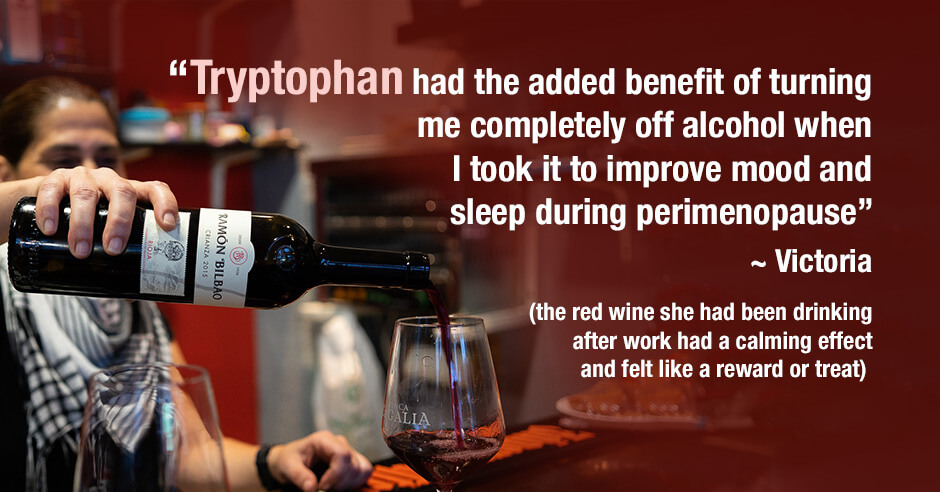
Tryptophan had the added benefit of turning me completely off alcohol when I took it to improve mood and sleep during perimenopause

May 12, 2023 By Trudy Scott 33 Comments

tryptophan alcohol

I started taking tryptophan 3 years ago to improve mood and sleep (not recognizing I was in perimenopause which it helped), but had the added benefit of turning me completely off alcohol! Lol. What serendipitous timing! I use amino therapy with pretty much all my perimenopause patients now. Thanks to you and Julia Ross’s work. Forever grateful.

Victoria shared this wonderful feedback about the benefits she experienced with tryptophan on a recent Facebook thread and kindly gave me permission to share.

Self-medicating with wine (and other alcoholic beverages) is common when we are anxious or stressed and typically we use it to wind down at the end of the day and to fit in socially. This is common when GABA levels are low and also happens due to low serotonin which declines from mid-afternoon into the evening.

I asked what she had been drinking and how often? And if it was calming for her? This was her response:

Red wine the minute I walked in the door in the evening. I guess it was calming… maybe more reward driven? It would be my reward for getting home from work via picking kids up from sport and doing a grocery shop and … (fill in the blank) that we working mums do and then having to walk straight into the kitchen to start on dinner.

The wine was like my little treat or reward to motivate me to just keep moving with my chores. No time to sit and unwind, just pour the wine and start chopping! Lol… I had tried to stop before but just couldn’t pick up a knife without the wine glass!

Within days, the tryptophan made the wine taste like cat’s pee! Haven’t touched it since. No desire at all. Almost hypnosis like?

How much tryptophan Victoria used and how did it help her quit?

Victoria used the Now Tryptophan 1000 mg at 3pm and 9pm for about a year, eventually stopping it and saying: “Alcohol still does not interest me at all.”

What wonderful results! A typical starting dose for tryptophan is 500 mg midafternoon and evening and she increased this to find her ideal dose of 1000 mg twice a day. She did report that 5-HTP didn’t work for her the way tryptophan did. This is not unusual as some folks do better with one versus the other.   

She has a great explanation regarding how tryptophan helped her quit without having to use willpower. She had no time to sit and unwind ….. so she was experiencing some of the calming aspects of getting serotonin support with the amino acid tryptophan. This is a very common benefit.

Serotonin appears to regulate the secretion of beta-endorphins

It is interesting that Victoria mentions a reward/treat benefit which is often due to low endorphins rather than low serotonin. This paper, Roles of β-Endorphin in Stress, Behavior, Neuroinflammation, and Brain Energy Metabolism, states that β-endorphins, in addition to their “potent analgesic effects” i.e. pain relief (both physical and emotional pain), are also involved in “reward-centric and homeostasis-restoring behaviors.”

However, as stated in this same paper, beta-endorphins play a role in stress-relief (common with working moms like Victoria) and are closely connected with serotonin. In fact “serotonin appears to regulate the secretion of β-endorphins” and vice versa. The body is fascinating and so smart.

Amino acids for alcohol addiction: 5-HTP, DLPA and glutamine

We know that amino acids help with alcohol cravings and addiction and have even been used in inpatient settings. This blog illustrates this well – An amino acid supplement with DLPA, glutamine and 5-HTP (and a few other nutrients) eases alcohol withdrawal symptoms at an inpatient detoxification program.

The study authors state that: “the physiological craving for alcohol may be the result of a deficiency of the naturally occurring opiate like substances as well as other neurochemical deficits (i.e., dopaminergic, GABAergic, and serotonergic).

Both tryptophan and 5-HTP support low serotonin worry-type anxiety, low mood and insomnia. Victoria happened to benefit from tryptophan. Someone else may benefit more from 5-HTP or DLPA or glutamine or a combination as illustrated in the above study. And even GABA, which can help with stress-drinking or stress-eating, as well as physical anxiety.

DPA and DLPA support endorphins and provide the reward/treat benefits from red wine that Victoria mentions.  You can read about the difference between DPA and DLPA here.

What if you have afternoon and evening sugar cravings instead of wine?

You may self-medicate with sugar, carbs, gluten, dairy instead of wine. Late afternoon/evening cravings are typically related to low serotonin when there are other low serotonin symptoms like low mood, anxiety, ruminations, worry, insomnia, PMS etc. You can see all the low serotonin symptoms here.

In this case, tryptophan or 5-HTP can be used in a similar way to stop the cravings with no willpower required and no feelings of being deprived. You’ll also experience reduced anxiety, improved mood and better sleep. Read more about this on this blog: Would using 5-HTP or tryptophan help when you crave sugar (as a sort of antidepressant) late afternoon/evening?

Other changes Victoria made and how is she doing now?

Victoria did also share that hot flushes “got me in the end though and I gave in to body identical progesterone for the final year of peri” and takes estradiol transdermally now that she is in menopause. Based on seeing these benefits while in perimenopause, she is now trialing tryptophan again for increased irritability. That is a huge plus with amino acids: once we’ve experienced the benefits, you have them at our disposal again and again in the future as your hormones or situation starts to change.

I love that she now uses tryptophan with her patients. She is a physio/physical therapist and exercise scientist turned Functional Health Practitioner having studied with IFM during the pandemic.

Of course, I thanked her for the kind words and shared how fortunate I was to work in Julia Ross’ clinic for 2 years. I also appreciate her for sharing this feedback and allowing me to share it here as a blog post so you get to learn, be inspired and have hope.

And finally, all this illustrates that there is no one-size-fits-all and we often get unexpected side-benefits when using amino acids.

Tryptophan and 5-HTP product options

Victoria happens to respond well to tryptophan and yet some folks do better with 5-HTP so it’s a matter of doing a trial of each.

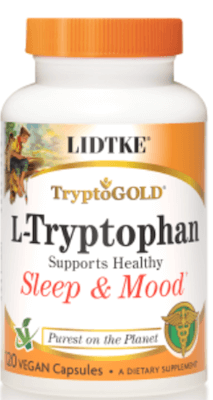
lydke l-tryptophan
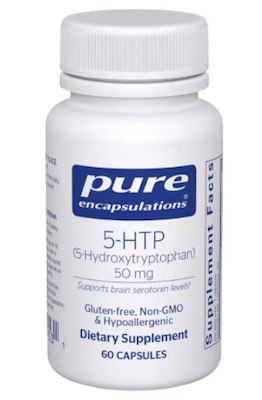
pure 5htp

Products I recommend include Lidtke 500 mg Tryptophan, and Pure Encapsulations 50 mg 5-HTP.  You can purchase these from my online store (Fullscript – only available to US customers – use this link to set up an account).

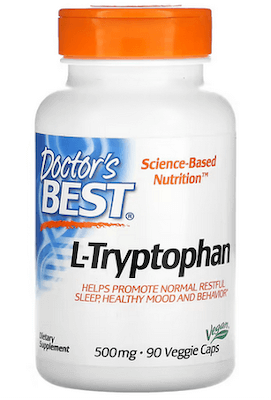
nature's best l-tryptophan
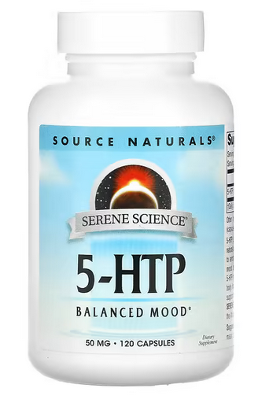
source natural 5-htp

If you’re not in the US, Doctor’s Best L-Tryptophan 500mg and Source Naturals 50 mg 5-HTP  are products I recommend on iherb (use this link to save 5%).

Resources if you are new to using amino acids as supplements

If you are new to using amino acids as supplements, here is the Amino Acids Mood Questionnaire from The Antianxiety Food Solution (you can see all the symptoms of neurotransmitter imbalances, including low GABA, low serotonin and low endorphins).

If you suspect low levels of any of the neurotransmitters and do not yet have my book, The Antianxiety Food Solution – How the Foods You Eat Can Help You Calm Your Anxious Mind, Improve Your Mood, and End Cravings, I highly recommend getting it and reading it before jumping in and using amino acids on your own so you are knowledgeable. And be sure to share it with the practitioner/health team you or your loved one is working with.

There is an entire chapter on the amino acids and they are discussed throughout the book in the sections on gut health, gluten, blood sugar control, sugar cravings, anxiety and mood issues.

The book doesn’t include product names (per the publisher’s request) so this blog, The Antianxiety Food Solution Amino Acid and Pyroluria Supplements, lists the amino acids that I use with my individual clients and those in my group programs. You can find them all in my online store.

If, after reading this blog and my book, you don’t feel comfortable figuring things out on your own (i.e. doing the symptoms questionnaire and respective amino acids trials), a good place to get help is the GABA QuickStart Program (if you have low GABA symptoms too). This is a paid online/virtual group program where you get my guidance and community support.

If you are a practitioner, join us in The Balancing Neurotransmitters: the Fundamentals program. This is also a paid online/virtual program with an opportunity to interact with me and other practitioners who are also using the amino acids.

Has tryptophan helped you quit alcohol easily when you could not do so with willpower alone?

Does tryptophan also help with your low mood, anxiety and sleep issues?

What about 5-HTP (some folks do better on one versus the other)?

And has either tryptophan or 5-HTP helped with other afternoon/evening cravings like sugar and other carbs?

If you have questions and other feedback please share it here too.

Filed Under: Addiction, Amino Acids, Anxiety, Tryptophan Tagged With: 5-HTP, alcohol, alcohol addiction, amino acids, anxious, beta-endorphins, calming, DLPA, evening, GABA, GABA Quickstart online program; Balancing Neurotransmitters: the Fundamentals program for practitioners, glutamine, mid-afternoon, mood, perimenopause, red wine, reward, self-medicating, serotonin, sleep, stressed, sugar cravings, treat, tryptophan, wine

A case of enterobiasis presenting as post-traumatic-stress-disorder / PTSD (i.e. a common and parasitic pinworm infection)

February 3, 2023 By Trudy Scott 11 Comments

case of enterobiasis

Enterobiasis (oxyuriasis) is a common infection in humans caused by Enterobius vermicularis (E. vermicularis), a human intestinal helminth. Because of the easy way of its transmission among people, it has an extremely high prevalence in overcrowded conditions, such as nurseries and primary schools. Oxyuriasis’s symptoms are extremely diverse in children, ranging from nausea, diarrhea, insomnia, irritability, recurrent cellulitis, loss of appetite, nightmares and endometritis.

Here we report a curious case of oxyuriasis in the settings of a refugee camp in Greece. The patient was a 10-year old Syrian female, who presented with unusual and vague symptoms like insomnia and irritability. Given the violent background of the Syrian warzone that the patient had escaped, she was firstly diagnosed with post traumatic stress disorder (PTSD) before eventually getting correctly diagnosed with enterobiasis.

This infection is the first documented case of enterobiasis in the settings of a refugee camp and can highlight the unsanitary living conditions that refugees have to endure in those camps.

The above is the abstract from a 2017 paper: A case of enterobiasis presenting as post-traumatic-stress-disorder (PTSD): a curious case of the infection with predominant mental health symptoms, presenting for the first time in the settings of a refugee camp

In addition to her symptoms of insomnia and irritability, she had a decreased appetite and mild abdominal (tummy) pain. She was also experiencing nausea and vomiting and had a slightly raised body temperature (subfebrile). She was severely malnourished and had lost 3kg/6.6lbs in 5 days.

Because of the violent nature of her situation she was initially seen by a psychologist but her symptoms worsened in a few days. When this young girl complained about itching in the perianal area (around her anus), the clinic reassessed her and scars around the anal area from the scratches.

They then confirmed enterobiasis/pinworm after using a piece of clear adhesive tape “to collect a specimen from the perianal surface of the girl, for three consecutive mornings … A microscopic examination showed the presence of oval shaped eggs, which is typical for the specific helminth [parasitic worm].”

She was treated with “two doses of albendazole, with each dose two weeks apart, in order to avoid reinfection …. And after a 3 month follow-up period, the patient remains asymptomatic without any signs of recurrence.”

An overview of pinworm infections, symptoms, tape test and treatment approaches

This WebMD article offers an overview of pinworm infections, the symptoms, the tape test and treatment approaches.

As you’ll read it’s not only a problem in refugee camps – it’s “very common in elementary school-aged children” and it’s the most common kind of worm infection in the United States. “Most of the time, pinworm infections don’t cause serious problems.” However, when one child (or adult) gets a pinworm infection it can easily be spread to the entire family.  The Syrian refugee paper mentions the whole family was tested.

Systemic infection: female health issues and gut health

The WebMD authors also state, “in rare cases, and especially if you have a lot of them, the pinworms can travel from the anal area up the vagina to the uterus, fallopian tubes, and around the pelvic organs. This can cause inflammation of the vagina (vulvovaginitis).”

I first learned about these serious systemic issues in women from naturopathic doctor Rachel Arthur at a conference in Australia. Contrary to the WedMD article, she believes this is not rare and more common than you’d expect, contributing to hormonal imbalances and even infertility.

The research confirms the impacts of pinworm on the gut, with reports of pinworm associated with appendicitis, pinworm in the liver, pinworms contributing to dysbiosis and pinworm being a factor in inflammatory bowel disease.

The WebMD article doesn’t mention the mental health symptoms and mechanisms but you can read more about that (and my interview with Dr. Jay Davidson) below.

Annual deworming and concerns about drug resistance?

I’m not going to get into anti-parasitic medications and herbal alternatives in this blog post – Dr. Jay talks about mimosa pudica seeds and Dr. Rachel recommends chondroitin sulfate – but do I want to mention that there are many public policy papers calling for annual deworming procedures for everyone. It’s also mentioned in the above Syrian refugee paper, as is hand-washing for prevention.

And many folks recall annual deworming concoctions as a child and did/do the same with their children.

There is, however, the concern about antiparasitic drug resistance similar to what is being seen with antibiotics and antiviral drugs.

If you are new to parasites and their impacts on mood issues, anxiety and insomnia and more

If you are new to parasites, here are some insights from an interview I did with Dr. Jay Davidson on The Anxiety Summit 5: Gut Brain Axis. The topic of our interview is – Parasites, Anxiety and TUDCA for Your Liver. He shares this:

The Greek meaning of parasite is one that sits at another’s table. So essentially think of a parasite as it’s taking things from you. It’s taking nutrients, it’s taking key things that your body needs and literally off of you, not to the point that it’s killing you because then you’re not a good host to give a good environment. So it’s basically just kind of sucking you dry.

We discussed symptoms individuals may experience: mood issues, anxiety and insomnia (especially around full moon). He shared that with insomnia “the big issue that I see is restless sleep where you toss, you turn, you wake often. You can’t just be relaxed when you sleep. Parasites get active when you go to bed. The more active they are within your body and the more you’re trying to calm down, the more your body is getting stressed out. This is where teeth grinding happens when you sleep.

This is very typical and likely the kinds of insomnia symptoms this young refugee girl experienced too. Pinworm is more active at night so the itching around her anus and the need to scratch would have affected her sleep too. This is a classic sign of pinworm.

With regards to anxiety and mood issues and possible mechanisms, Dr. Jay shares how parasites contribute to neurotransmitter imbalances:

Parasites will eat the protein you eat and not allow your body to break down that protein into amino acids. That’s why amino acid therapy can be so beneficial symptomatically and change people’s lives, because they’re getting these amino acids that they’re not getting when they have parasites.

When we digest protein, the amino acids are needed to help us make neurotransmitters. With his amino acid comments, he is making reference to my work with the amino acid tryptophan to support your low serotonin worry-type of anxiety symptoms and the amino acid GABA to support your low GABA physical-anxiety type symptoms. They are wonderful for quick relief of anxiety and mood symptoms, and even help sleep problems too. But as he says “you always want to make sure to go to the underlying cause to remove the parasitic infection.”

Other symptoms of parasitic infection that we discuss at length: restless legs and calf cramping, diarrhea, bowel urgency, SIBO (small intestinal bacterial overgrowth), vertical wrinkles above your mouth, nail-biting, food sensitivities, bed-wetting and night sweats. These are all symptoms that we need to look for and then consider stool testing and/or the sticky tape test/clear adhesive tape test for pinworm (as mentioned in the Syrian refugee paper and WebMD article above).

If you missed this interview and/or summit, you can find the purchase link on the above blog and here.

Tryptophan is not working (possibly because of parasites) and toxoplasma gondii (and GABA/anxiety)

Here is some additional reading on parasites on my site and in the literature:

  • Tryptophan doesn’t work, then it does and then it doesn’t: could it be hormonal shifts, dietary factors and/or parasites? As I share here, if you have a very pronounced shift in symptoms for 4-5 days around a full moon each month – more severe insomnia, more anxious, more depressed – I would want to check for parasites (as well as hormonal impacts and everything else covered on this blog).
  • Toxoplasma gondii: schizophrenia, bipolar disorder, OCD and unresolved anxiety? As I share in this blog, toxoplasma gondii is a microscopic parasite that infects cats and can be found in the soil – research shows it may be a factor in schizophrenia, bipolar disorder and OCD in susceptible individuals. Could toxoplasma gondii could be one of the root causes of unresolved anxiety? I believe so and feel it’s under-rated.
  • In this study, Toxoplasma gondii Infections Alter GABAergic Synapses and Signaling in the Central Nervous System, the authors share that “toxoplasma interferes with GABA signaling in the brain …playing a role in seizures and other neurological complications seen in Toxoplasma-infected individuals.” This particular parasite disrupts the workings of the glutamic acid decarboxylase 67 enzyme (GAD67), used to make GABA from glutamate, and very likely contributes to increased anxiety symptoms too.

Resources if you are new to using tryptophan, GABA and other amino acids as supplements

If you are new to using tryptophan, GABA or any of the other amino acids as supplements, here is the Amino Acids Mood Questionnaire from The Antianxiety Food Solution (you can see all the symptoms of neurotransmitter imbalances, including low GABA and low serotonin).

If you suspect low levels of any of the neurotransmitters and do not yet have my book, The Antianxiety Food Solution – How the Foods You Eat Can Help You Calm Your Anxious Mind, Improve Your Mood, and End Cravings, I highly recommend getting it and reading it before jumping in and using amino acids on your own so you are knowledgeable. And be sure to share it with the practitioner/health team you or your loved one is working with.

There is an entire chapter on the amino acids and they are discussed throughout the book in the sections on gut health, gluten, blood sugar control, sugar cravings, self-medicating with alcohol and more.

The book doesn’t include product names (per the publisher’s request) so this blog, The Antianxiety Food Solution Amino Acid and Pyroluria Supplements, lists the amino acids that I use with my individual clients and those in my group programs. You can find them all in my online store.

If, after reading this blog and my book, you don’t feel comfortable figuring things out on your own (i.e. doing the symptoms questionnaire and respective amino acids trials), a good place to get help is the GABA QuickStart Program (if you have low GABA symptoms). This is a paid online/virtual group program where you get my guidance and community support.

If you are a practitioner, join us in The Balancing Neurotransmitters: the Fundamentals program. This is also a paid online/virtual program with an opportunity to interact with me and other practitioners who are also using the amino acids.

If you or a family member have had a pinworm infection, what symptoms did you experience and was the entire family affected?

Have you had hormonal and/or pelvic issues and/or gut issues as a result of systemic infection with pinworm?

How have other parasitic infections impacted your health?

How familiar are you with the fact that pinworm and other parasites can affect your mood, anxiety and sleep, as well as cause gut issues?

If you’re interested in learning more about testing and herbal protocols please let me know. If you’d like to share what has worked for you please do share too.

If you have other questions and feedback please share them here too.

Filed Under: Anxiety, Gut health, Insomnia, Parasites, PTSD/Trauma Tagged With: amino acids, anxiety, diarrhea, Enterobiasis, female health, GABA, insomnia, irritability, itching anal area, loss of appetite, mental health, mood, nausea, Nightmares, parasite, parasitic, pinworm, post-traumatic-stress-disorder, PTSD, Syrian, tape, the GABA Quickstart online program; and Balancing Neurotransmitters: the Fundamentals program for practitioners, toxoplasma gondii, tryptophan

Is DPA stimulating; can it be used with kids and someone with bipolar disorder; can it be used with a benzo/SSRI? (and other questions)

July 22, 2022 By Trudy Scott 12 Comments

dpa questions

DPA (d-phenylalanine) is an amino acid that destroys the enzyme that breaks down endorphins. Endorphins are feel-good chemicals that you experience with an endorphin rush when you go for a run or when someone gives you a big hug, when you show kindness to someone or someone does something nice for you. The amino acid DPA helps to raise your endorphins. With low endorphins you can feel very weepy, overly emotional, be extra sensitive to emotional pain, be sensitive to physical pain, and indulge in comfort/reward eating. Today I’m sharing some questions (and my feedback) as to whether it’s stimulating, can it be used with kids and someone with bipolar disorder, can it be used with a benzo/SSRI and more.

Misha has had success with DPA and wants to know if it is considered too stimulating. Here is her feedback and question:

I first tried DPA after reading about it on your blog and found it helpful for raising my mood. The DPA definitely helped curb my weepiness. I used Lidtke Endorphigen 1 cap/day. I have chronic Lyme which creates severe difficulty with sleep, anxiety and depression. Six months ago my neurologist took me off DPA saying it would be too stimulating to my nervous system.

I have since begun using DPA again; I really need the endorphin boost. Do you have any insights on whether DPA is considered stimulating? Whether it interferes with sleep (unfortunately my sleep is bad whether I take DPA or not)? Or suggestions for time of day to take it?

Here is my feedback for Misha: There is no evidence that DPA is too stimulating whereas DLPA (dl-phenylalanine) is known to be stimulating (it works like a combination of DPA and tyrosine).

And when I hear all this it tells me the person needs endorphin support:

  • “found it helpful for raising my mood”
  • “The DPA definitely helped curb my weepiness”
  • “I have since begun using DPA again; I really need the endorphin boost”

That said anything is possible which is why using the amino acids is based on the questionnaire and trials to see how a person responds. The best way to know if sleep is affected is to monitor sleep when using it and when not using it. She says her sleep is bad whether she takes DPA or not so I would recommend going back to her neurologist, sharing this information and the fact that it’s helping her so much. And look for other causes of her sleep issues.

Anna asks if DPA and other amino acids are safe for kids and how high doses? This is her question:

My 10 yr old has been diagnosed with social anxiety and she ticks off most of the boxes for low endorphins, low GABA, low serotonin. She’s very sensitive and very very emotional. We tried, but can’t seem to find a naturopath that can help her much. I feel after a while they all reach a dead end. I have been following you for a year and recently got your book. It looks relatively easy to follow, however I’m a bit reluctant, as she’s a kid.

My feedback: I work with women and once they have figured out the amino acids and neurotransmitter imbalances themselves they find it much easier to help their children who often have similar issues. When that is not the case working with a practitioner is ideal. That being said many moms become informed and educated enough to trial the amino acids on their own (like this mom who had her daughter use GABA with much success).

Anna says her daughter is very sensitive and very very emotional so I’d consider using 125 mg DPA to start (500 mg is an adult starting dose).With kids we also always start with dietary changes as laid out in my book. A good place to start is with a gluten-free and sugar-free diet and DPA (and the other amino acids) can help curb the cravings and feelings of deprivation.

Anon has bipolar disorder and likes comfort foods. This is her question:

I have bipolar disorder and wonder if the DPA will send me into a manic state. It’s one of the reasons I can’t take anti-depressants or stimulants otherwise I go manic. But I can eat for comfort so I only have food in the house I’m going to eat according to meal schedules. So I want to try the DPA.

Here is my feedback: I have not seen DPA to be an issue with bipolar disorder and it’s fabulous when you are a comfort-eater. If you have bipolar disorder and are on medications, it’s always advised to discuss new supplements with your prescribing doctor. You can share that DPA is not on the list of amino acids that have precautions with bipolar disorder.

I would not recommend the use of DLPA (dl-phenylalanine) with bipolar disorder because some of this increases dopamine (which can trigger a manic state).

Kristie is doing a benzodiazepine taper and would like to use DPA:

I am currently going through a benzo taper & there are numerous wonderful products that I am unable to mix with benzos. Would this be safe for me?

This is my feedback: I have not had issues with DPA with clients who are doing a benzo taper and there are no documented contraindications. DPA can help with some of the emotional blunting caused by benzos and the emotional fragility we often see during a benzo taper.  I know some of the great benzo support groups say not to use GABA but I find it very helpful when tapering too.

The medication question is a common one. Someone else described her depression as weepy and is using the SSRI. There are also no documented contraindications when using DPA with a SSRI. But again, best to discuss with the prescribing doctor.

Arleen has a question about blood pressure and the DPA product I recommend (Lidtke Endorphigen):

1) Is this product gluten free and 2) What effect if any would it have on blood pressure (mine is naturally low)

Here is my feedback: Lidtke Endorphigen is gluten-free and I have not seen it or other DPA products to be an issue with low blood pressure.

Jan wants to use GABA and DPA. She asks:

Can I use Gaba 125mg and also take DPA? Would either offset the other?

If someone has low GABA symptoms and GABA helps with the physcal anxiety and they also have low endorphin symptoms and DPA helps then they are absolutely fine to use together and even at the same time. However, I have clients trial one at a time in order to find the ideal dose and so you know how each one is working.

Resources if you are new to using the amino acids as supplements

If you are new to using any of the amino acids as supplements, here is the Amino Acids Mood Questionnaire from The Antianxiety Food Solution (you can see all the symptoms of neurotransmitter imbalances, including low endorphins).

If you suspect low levels of any of the neurotransmitters and do not yet have my book, The Antianxiety Food Solution – How the Foods You Eat Can Help You Calm Your Anxious Mind, Improve Your Mood, and End Cravings, I highly recommend getting it and reading it before jumping in and using amino acids on your own so you are knowledgeable. And be sure to share it with the practitioner/health team you or your loved one is working with.

There is an entire chapter on the amino acids and they are discussed throughout the book in the sections on gut health, gluten, blood sugar control, sugar cravings, self-medicating with alcohol and more.

The book doesn’t include product names (per the publisher’s request) so as mentioned above, this blog, The Antianxiety Food Solution Amino Acid and Pyroluria Supplements, lists the amino acids that I use with my individual clients and those in my group programs.

As mentioned above, Lidtke Endorphigen is the DPA product I’ve had the most success with (and it can be found in my online store). Doctor’s Best D-phenylalanine is also a good product.

If, after reading this blog and my book, you don’t feel comfortable figuring things out on your own (i.e. doing the symptoms questionnaire and respective amino acids trials), a good place to get help is the GABA Quickstart Program (if you have low GABA symptoms). This is a paid online/virtual group program where you get my guidance and community support. There are many moms in the program who are having much success with their kids.

You can then use this knowledge to then trial DPA and other amino acids or move on to the Amazing Aminos for Anxiety Program and get help there.

If you are a practitioner, join us in The Balancing Neurotransmitters: the Fundamentals program. This is also a paid online/virtual program with an opportunity to interact with me and other practitioners who are also using the amino acids with success with their clients/patients.

Have you used DPA with success and if yes how has it helped?

If you’re a practitioner, do you use DPA with your clients/patients?

If you have questions please share them here too.

Filed Under: Amino Acids, DPA/DLPA, Endorphins, Supplements Tagged With: amino acid, anxiety, Balancing Neurotransmitters: the Fundamentals, benzo, bipolar disorder, comfort/reward eating, d-phenylalanine, DPA, emotional, emotional pain, endorphin-boosting, endorphins, GABA, GABA Quickstart program, kids, low blood pressure, mood, physical pain, SSRI, stimulating, weepiness, weepy

Trigeminal neuralgia and anxiety: GABA, tryptophan, St. John’s Wort, acupuncture, DPA, gluten, herpes and Lyme disease

December 31, 2021 By Trudy Scott 30 Comments

trigeminal neuralgia and anxiety

I get a surprisingly high number of questions about trigeminal neuralgia asking if there is a role for the amino acids GABA or tryptophan to help ease some of the nerve and associated face pain. It’s surprising because trigeminal neuralgia is considered a rare neurological disorder.

Nerve pain is not my area of expertise (anxiety is), and because anxiety and depression is common in this population, there are very likely similar underlying causes (more on that below). The targeted individual amino acids that we use for anxiety, also help to ease pain, so I’m sharing some of what I know in case it helps you or a loved one.

Read on to learn more about this condition and GABA, tryptophan, DPA, acupuncture, St. John’s Wort, Lyme disease, herpes and B vitamins.

About trigeminal neuralgia and the incidence

The NIH fact sheet defines trigeminal neuralgia (TN) as

a chronic pain condition that affects the trigeminal or 5th cranial nerve, one of the most widely distributed nerves in the head. TN is a form of neuropathic pain (pain associated with nerve injury or nerve lesion.) The typical or “classic” form of the disorder (called “Type 1” or TN1) causes extreme, sporadic, sudden burning or shock-like facial pain that lasts anywhere from a few seconds to as long as two minutes per episode.  These attacks can occur in quick succession, in volleys lasting as long as two hours.  The “atypical” form of the disorder (called “Type 2” or TN2), is characterized by constant aching, burning, stabbing pain of somewhat lower intensity than Type 1.  Both forms of pain may occur in the same person, sometimes at the same time. The intensity of pain can be physically and mentally incapacitating.

The incidence of new cases is approximately 12 per 100,000 people per year and women are impacted more than men.

A number of studies show anxiety, depression and insomnia are common when someone has trigeminal neuralgia. The question is this – is the pain causing the anxiety, depression and insomnia OR are there common underlying physiological causes for both. It’s likely a combination of both especially when it comes to idiopathic trigeminal neuralgia i.e. when there is no known cause. Known causes include head injury, multiple sclerosis, dental procedures, tumors and cysts.

By using some of the approaches outlined below, we may see pain relief and improved mood, less severe anxiety and better sleep.

When to consider GABA and serotonin support

There is no research on either GABA or tryptophan/5-HTP helping with symptoms of trigeminal neuralgia, however medications that work on both GABA and serotonin are typically prescribed for trigeminal nerve pain. For this reason I would consider a trial of GABA and/or tryptophan (or 5-HTP if other low GABA physical anxiety symptoms and low serotonin worry-type anxiety symptoms are also present. You can find the symptoms list here.

There is research-based and clinical evidence that GABA and serotonin support help with other types of pain:

  • Tryptophan ends TMJ pain, headaches and worry, and improves mood and sleep: a success story
  • GABA lozenge relieves excruciating pelvic floor/rectal pain and spasms within 30 seconds: a solution for proctalgia fugax

Both help with the anxiety, low mood and insomnia that is often present with pain conditions like this.

St. John’s Wort for nerve pain and mood

In one case report, Hypericum perforatum (St. John’s Wort) as a possible therapeutic alternative for the management of trigeminal neuralgia (TN), a 53-year-old Hispanic female patient with a history of trigeminal neuralgia used an over-the-counter preparation of St. John’s Wort and found it relieved her pain completely.

St. John’s Wort is a herb that is primarily “used for depression but also is used for rheumatism, gastroenteritis, headache and neuralgias. ” This case report is one of many studies on this herb and trigeminal neuralgia and other neuralgias (nerve pain).

It has anti-inflammatory and antioxidant effects and also supports serotonin and GABA production which further supports the above recommendations to trial the amino acids.  GABA and tryptophan would also be safe options if St. John’s Wort can’t be used as in the case of blood thinners, the birth control pill and other medications

Pain relief with endorphin support: acupuncture and DPA

Acupuncture offers pain relief via endorphin boosting and can be an option for the treatment of  trigeminal neuralgia, also offering relief for the “secondary myofascial pain associated with it.”

DPA (d-phenylalanine) is an endorphin-boosting amino acid that may also offer some pain relief. It can also be used to wean off prescription pain medication and improve sleep.

Other research-based pain-relief approaches for trigeminal neuralgia

Physical therapy, chiropractic care, using a custom dental appliance, and addressing myofacial pain may offer relief or be part of the solution.

There are some less recognized approaches too:

  • Photobiomodulation on trigeminal neuralgia: systematic review “Photobiomodulation appears to be as effective as conventional therapies” that include medications and surgery and yet without the side-effects. Photobiomodulation, also known as red light therapy, is also beneficial for anxiety and mood regulation.
  • Palmitoylethanolamide and Its Formulations on Management of Peripheral Neuropathic Pain – Palmitoylethanolamide (shortened to PEA) “has anti-inflammatory and anti-hyperalgesic effects, due to the down-regulation of activation of mast cells”
  • Therapeutic potential of cannabinoids in trigeminal neuralgia – there is growing evidence that “cannabinoids may be effective in alleviating neuropathic pain and hyperalgesia [extreme pain sensitivity]” via “inhibiting neuronal transmission in pain pathways.”

All of the above can also improve mood and insomnia and reduce anxiety too.

Other factors to consider: B vitamins, Lyme disease, herpes and gluten

As with any condition, a full functional medicine work up should be done to rule out and/or address gluten issues, low vitamin B6/B1/B12, and even herpes zoster and Lyme disease as a root cause (or contributing factor).

Current approaches and emerging interventions – disappointing for a 2021 paper

I was excited to read the title of this paper, Trigeminal Neuralgia: Current Approaches and Emerging Interventions, published late this year. The authors share that it “summarizes over 150 years of collective clinical experience in the medical and surgical treatment of trigeminal neuralgia.”

What is disappointing is there is no mention of any of the approaches listed in this blog. It’s published by neurosurgeons so it is understandable that they would say: “The first-line treatment remains anticonvulsant medical therapy. Patients who fail this have a range of surgical options available to them.”

Medications and/or surgical options may work well for you but if not, you need to know there are other options. You may also be looking for a medication-free or non-invasive approach.

Keep in mind that this is what you’ll be offered unless you work with a functional medicine practitioner.

I do agree with and am encouraged by these statements:

  • What is increasingly clear is that there is no catch-all medical intervention that is effective for all patients with trigeminal neuralgia, likely reflective of the fact that it is likely a heterogenous group of disorders that jointly manifests in facial pain.
  • Ultimately, elucidation of the molecular mechanisms underlying trigeminal neuralgia will pave the way for novel, more effective and less invasive therapies.

Complementary approaches: NIH fact sheet

What is encouraging is that the NIH fact sheet I link to above, does mention low-impact exercise, yoga, creative visualization, aromatherapy and meditation.

Other than the standard medications (carbamazepine, oxcarbazepine, topiramate, gabapentin, pregabalin, clonazepam, phenytoin, lamotrigine and valproic acid and tricyclic antidepressants such as amitriptyline or nortriptyline) and surgical options they do also mention acupuncture, chiropractic, biofeedback and nutrients.

Botox is listed too but I have concerns about this approach.

This blog is not intended to be a comprehensive approach for pain relief for trigeminal neuralgia but rather some options you can consider and explore with your practitioner – especially when you also have anxiety, depression and insomnia too.

Resources if you are new to using tryptophan/5-HTP, GABA and DPA as supplements

If you are new to using the amino acids as supplements, here is the Amino Acids Mood Questionnaire from The Antianxiety Food Solution (you can see the low serotonin, low GABA and low endorphin symptoms) and a brief overview here: Anxiety and targeted individual amino acid supplements: a summary.

If you suspect low levels of any of the neurotransmitters and do not yet have my book, The Antianxiety Food Solution – How the Foods You Eat Can Help You Calm Your Anxious Mind, Improve Your Mood, and End Cravings, I highly recommend getting it and reading it before jumping in and using amino acids so you are knowledgeable. And be sure to share it with the team you or your loved one is working with.

The book doesn’t include product names (per the publisher’s request) so this blog, The Antianxiety Food Solution Amino Acid and Pyroluria Supplements, lists the amino acid products that I use with my individual clients and those in my group programs.

Has any of the above approaches helped you or your loved one? If not, what has helped you?

What conventional treatment have you had and did it help? Were you offered any of the above non-medication and non-surgical treatment approaches?

If you’re a practitioner, has any of this helped? Please share your treatment approaches too.

Feel free to ask your questions here too.

Filed Under: Anxiety, GABA, Pain, serotonin, Tryptophan Tagged With: Acupuncture, anxiety, B vitamins, cannabinoids, depression, DPA, endorphin, face pain, GABA, gluten, herpes, insomnia, Lyme Disease, mood, nerve pain, pain relief, PEA, photobiomodulation, St. John’s Wort, trigeminal neuralgia, tryptophan

  • « Go to Previous Page
  • Page 1
  • Page 2
  • Page 3
  • Page 4
  • Interim pages omitted …
  • Page 8
  • Go to Next Page »

Primary Sidebar

NEW! GABA QuickStart Homestudy (with special intro pricing)

gaba quickstart homestudy

Free Report

9 Great Questions Women Ask about Food, Mood and their Health

You'll also receive a complimentary subscription to my ezine "Food, Mood and Gal Stuff"


Connect with me

Popular Posts

  • Amino Acids Mood Questionnaire from The Antianxiety Food Solution
  • The Antianxiety Food Solution Amino Acid and Pyroluria Supplements
  • Pyroluria Questionnaire from The Antianxiety Food Solution
  • Collagen and gelatin lower serotonin: does this increase your anxiety and depression?
  • Tryptophan for the worry-in-your-head and ruminating type of anxiety
  • GABA for the physical-tension and stiff-and-tense-muscles type of anxiety
  • The Antianxiety Food Solution by Trudy Scott
  • Seriphos Original Formula is back: the best product for anxiety and insomnia caused by high cortisol
  • Am I an anxious introvert because of low zinc and vitamin B6? My response to Huffington Post blog
  • Vagus nerve rehab with GABA, breathing, humming, gargling and key nutrients

Recent Posts

  • What do I use instead of Seriphos to help lower high cortisol that is affecting my sleep and making me anxious at night?
  • BeSerene™ GABA/theanine cream eases severe muscle tension in her neck/shoulders, prevents her bad headaches and quells her anxiety
  • How the correct approach, dose and sublingual use of GABA can be calming and not cause a flushed and itchy face and neck
  • The amino acid glutamine improves low mood by addressing gut health, and it has calming effects too
  • Flight anxiety with heightened breath, physical tension and also fearing the worst (the role of low GABA and low serotonin)

Categories

  • 5-HTP
  • AB575
  • Addiction
  • ADHD
  • Adrenals
  • Alcohol
  • Allergies
  • Alzheimer's disease
  • Amino Acids
  • Anger
  • Antianxiety
  • Antianxiety Food Solution
  • Antidepressants
  • Anxiety
  • Anxiety and panic
  • Autism
  • Autoimmunity
  • benzodiazapines
  • Bipolar disorder
  • Books
  • Caffeine
  • Cancer
  • Candida
  • Children/Teens
  • Collagen
  • Cooking equipment
  • Coronavirus/COVID-19
  • Cravings
  • Depression
  • Detoxification
  • Diabetes
  • Diet
  • DPA/DLPA
  • Drugs
  • EFT/Tapping
  • EMF
  • EMFs
  • Emotional Eating
  • Endorphins
  • Environment
  • Essential oils
  • Events
  • Exercise
  • Fear
  • Fear of public speaking
  • Fertility and Pregnancy
  • Fish
  • Food
  • Food and mood
  • Functional neurology
  • GABA
  • Gene polymorphisms
  • General Health
  • Giving
  • Giving back
  • Glutamine
  • Gluten
  • GMOs
  • Gratitude
  • Gut health
  • Heart health/hypertension
  • Histamine
  • Hormone
  • Hyperparathyroidism
  • Hypoglycemia
  • Immune system
  • Inflammation
  • Insomnia
  • Inspiration
  • Introversion
  • Joy and happiness
  • Ketogenic diet
  • Lithium orotate
  • Looking awesome
  • Lyme disease and co-infections
  • MCAS/histamine
  • Medication
  • Men's health
  • Mental health
  • Mercury
  • Migraine
  • Mold
  • Movie
  • MTHFR
  • Multiple sclerosis
  • Music
  • NANP
  • Nature
  • Nutritional Psychiatry
  • OCD
  • Osteoporosis
  • Oxalates
  • Oxytocin
  • Pain
  • Paleo
  • Parasites
  • Parkinson’s disease
  • PCOS
  • People
  • PMS
  • Postpartum
  • PTSD/Trauma
  • Pyroluria
  • Questionnaires
  • Real whole food
  • Recipes
  • Research
  • Schizophrenia
  • serotonin
  • SIBO
  • Sleep
  • Special diets
  • Sports nutrition
  • Stress
  • Sugar addiction
  • Sugar and mood
  • Supplements
  • Teens
  • Testimonials
  • Testing
  • The Anxiety Summit
  • The Anxiety Summit 2
  • The Anxiety Summit 3
  • The Anxiety Summit 4
  • The Anxiety Summit 5
  • The Anxiety Summit 6
  • Thyroid
  • Thyroid health
  • Toxins
  • Tryptophan
  • Tyrosine
  • Uncategorized
  • Vegan/vegetarian
  • Women's health
  • Yoga

Archives

  • October 2025
  • September 2025
  • August 2025
  • July 2025
  • June 2025
  • May 2025
  • April 2025
  • March 2025
  • February 2025
  • January 2025
  • November 2024
  • October 2024
  • September 2024
  • August 2024
  • July 2024
  • June 2024
  • May 2024
  • April 2024
  • March 2024
  • February 2024
  • January 2024
  • December 2023
  • November 2023
  • October 2023
  • September 2023
  • August 2023
  • July 2023
  • June 2023
  • May 2023
  • April 2023
  • March 2023
  • February 2023
  • January 2023
  • December 2022
  • November 2022
  • October 2022
  • September 2022
  • August 2022
  • July 2022
  • June 2022
  • May 2022
  • April 2022
  • March 2022
  • February 2022
  • January 2022
  • December 2021
  • November 2021
  • October 2021
  • September 2021
  • August 2021
  • July 2021
  • June 2021
  • May 2021
  • April 2021
  • March 2021
  • February 2021
  • January 2021
  • December 2020
  • November 2020
  • October 2020
  • September 2020
  • August 2020
  • July 2020
  • June 2020
  • May 2020
  • April 2020
  • March 2020
  • February 2020
  • January 2020
  • December 2019
  • November 2019
  • October 2019
  • September 2019
  • August 2019
  • July 2019
  • June 2019
  • May 2019
  • April 2019
  • March 2019
  • February 2019
  • January 2019
  • December 2018
  • November 2018
  • October 2018
  • September 2018
  • August 2018
  • July 2018
  • June 2018
  • May 2018
  • April 2018
  • March 2018
  • February 2018
  • January 2018
  • December 2017
  • November 2017
  • October 2017
  • September 2017
  • August 2017
  • July 2017
  • June 2017
  • May 2017
  • April 2017
  • March 2017
  • February 2017
  • January 2017
  • December 2016
  • November 2016
  • October 2016
  • September 2016
  • August 2016
  • July 2016
  • June 2016
  • May 2016
  • April 2016
  • March 2016
  • February 2016
  • January 2016
  • December 2015
  • November 2015
  • October 2015
  • September 2015
  • August 2015
  • July 2015
  • June 2015
  • May 2015
  • April 2015
  • March 2015
  • February 2015
  • January 2015
  • December 2014
  • November 2014
  • October 2014
  • September 2014
  • August 2014
  • July 2014
  • June 2014
  • May 2014
  • April 2014
  • March 2014
  • February 2014
  • January 2014
  • December 2013
  • November 2013
  • October 2013
  • September 2013
  • August 2013
  • July 2013
  • June 2013
  • May 2013
  • April 2013
  • March 2013
  • February 2013
  • January 2013
  • December 2012
  • November 2012
  • October 2012
  • August 2012
  • July 2012
  • June 2012
  • May 2012
  • April 2012
  • March 2012
  • February 2012
  • January 2012
  • December 2011
  • November 2011
  • October 2011
  • September 2011
  • August 2011
  • July 2011
  • June 2011
  • May 2011
  • April 2011
  • March 2011
  • February 2011
  • January 2011
  • December 2010
  • October 2010
  • September 2010
  • July 2010
  • May 2010
  • April 2010
  • March 2010
  • February 2010
  • January 2010
  • November 2009

Share the knowledge!

The above statements have not been evaluated by the Food and Drug Administration. Products listed in this website are not intended to diagnose, treat, cure or prevent any disease.

The information provided on this site is for informational and educational purposes only and is not intended as a substitute for advice from your physician or other health care professional. You should consult with a healthcare professional before starting or modifying any diet, exercise, or supplementation program, before taking or stopping any medication, or if you have or suspect you may have a health problem.


Copyright © 2026 Trudy Scott. All Rights Reserved. | Privacy | Terms and Conditions | Refund Policy | Medical Disclaimer

Free Report

9 Great Questions Women Ask about Food, Mood and their Health

You’ll also receive a complimentary subscription to my ezine “Food, Mood and Gal Stuff”