• Skip to primary navigation
  • Skip to main content
  • Skip to primary sidebar

everywomanover29 blog

Food, Mood and Women's Health – Be your healthiest, look and feel great!

  • Blog
  • About
  • Services
  • Store
  • Resources
  • Testimonials
  • The Book
  • Newsletter
  • Contact
  • Search this site

GABA

Anxiety, phenibut, toxins and cold showers for detoxification

March 19, 2017 By Trudy Scott 10 Comments

Anxiety, phenibut, toxins, cold showers for detox and more. All of this and more is being covered on the upcoming online Diabetes Summit.

Starting Monday March 20th

I’m really pleased to be a speaker on this summit this year. I cover the anxiety diabetes connection. Anxiety is very common in diabetes – some research shows it’s as high as 25%, and women with diabetes are twice as likely to be affected with anxiety and depression. I also cover how and how GABA helps reduce physical anxiety AND how new research shows GABA is also a promising treatment for diabetes!

Dr. Mowll asked me about using phenibut instead of GABA:

I’ve seen a number of papers that talk about tolerance. I’ve talked to practitioners who’ve said they’ll rotate. They’ll have people be on Phenibut for five days, two days off. And I’ve seen some really scary drug forums where people are using Phenibut as a sort of mood enhancing and performance enhancing drug. They are using very high doses and there are protocols on how to safely taper off Phenibut.

So when I see things like that it concerns me. I’ve had a handful of people, who’ve had some pretty bad side effects from Phenibut. So with someone who’s going through anxiety I just don’t want to add anything else into the mix that may cause problems.

The concern is it does seem to work really well for anxiety and sleep, so that’s why I think a lot of practitioners are drawn to using it. And it may be that they’re not recommending the GABA/ Gamma Amino Butyric Acid sublingually. And they may not be doing a trial to find the optimal dose [so that’s why they are not seeing the results they’d hope to see]. So I would steer clear of phenibut.

We also cover the following (all relevant if you have diabetes AND if you don’t have diabetes):

  • doing a GABA trial and the blood brain barrier controversy
  • benzodiazepine tapers and nutritional support during a taper
  • rooibos tea for metabolic support and adrenal health
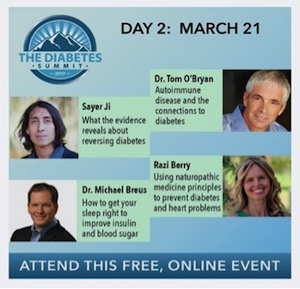
On day 2 of the summit, Razi Berry shares this about the toxins in our environment and the impacts they have on our health:

Out of the 80,000 chemicals that we have in our world, we have barely studied any of them. A couple presidents ago, the Environment Protection Agency was supposed to study the first 300 of these 80,000 chemicals. And so far they’ve only studied one, which is BPA. And BPA is all around us

She had to get rid of the toxins in her environment to help her fibromyalgia and chronic fatigue.

I had to stop using the body sprays that I love from Bath and Body, and the perfumes

I got rid of everything fragrant. And I didn’t use essential oils at first either because you still want to use them judiciously and in the right way. So I switched to everything unscented. And I found a lot about beeswax candles. Beeswax candles are so not only beautiful, and they have this honey like scent to them, but they actually neutralize odors and toxins in the air. They don’t just cover it up. So you actually can clean the air by burning beeswax candles. For centuries churches could not burn tallow or paraffin. They could only burn beeswax.

She covers tons of other everyday toxins we are exposed to and how we can safely avoid them. And then importantly, how we can detoxify from these toxins. One approach she covers is hot and cold showers or hydrotherapy (very powerful and very easy to do at home):

Hydrotherapy is a really old technique. It became really popular in the last turn of the century, the late 1800s, early 1900s. And it’s this use of water and/or temperature to help prime your body to get rid of toxins.

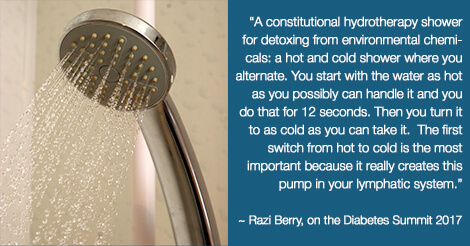
So one of the ways that you can do hydrotherapy at home is through what’s called a constitutional hydrotherapy shower. And it’s basically taking a hot and cold shower where you alternate. You start with the water as hot as you possibly can handle it. And you do that for like 12 seconds. Then you turn it to as cold as you can take it.

And the first switch from hot to cold is the most important because it really creates this pump in your lymphatic system, the hot, cold, hot, cold, and really helps to move toxins through your body so it can be eliminated by your kidneys, by your liver, through your respiration.

As you can see there’s plenty to learn from these experts!
Here are just a few of the topics being covered (general topics and applicable if you have diabetes):

  • How food allergens can trigger blood sugar problems, and how to detoxify the body safely
  • Understanding the stress continuum and how children trauma, adverse life events, and daily stressors can lead to diabetes (all of this is applicable to any health condition)
  • Natural strategies to balance blood sugar including new supplement recommendations, essential oils, and using food as medicine
  • Breaking down various eating strategies including the ketogenic diet (vegan diets and raw food diets are also addressed but I must add that I don’t endorse this way of eating if you do have anxiety)
  • Menopause and blood sugar issues (insulin, cortisol and oxytocin)
  • How to get your sleep right to balance insulin and blood sugar

And some topics taking a deeper diver into very specific diabetes areas (if you have type 1 or type 2 diabetes):

  • Developing a deeper understanding of peripheral neuropathy – how to test for it and how to treat it, naturally and effectively
  • Important strategies for those dealing with type 1 diabetes in themselves or a child 
  • Autoimmunity and diabetes

I hope you’ll join us to learn from these experts on the online Diabetes Summit.  My friend and diabetes expert, Dr. Brian Mowll, is hosting this life-changing event for the fourth year, and this year’s event looks amazing.
You can register for this online event here.

Feel free to ask questions in the comments below.
 

Filed Under: Events Tagged With: Brian Mowll, diabetes, Diabetes Summit, GABA, Razi Berry

Anxiety: when to use GABA and tryptophan and how much to use

March 17, 2017 By Trudy Scott 116 Comments

When you have anxiety it can be confusing trying to figure out the root cause. I like to start by assessing for low GABA and low serotonin because when you address these with targeted individual amino acids you typically see results right away and feel hopeful (and now have time to look for other root causes like gluten issues, high cortisol, gut issues, dietary changes etc).

But there may still be some confusion about when to use GABA and when to use tryptophan and how much of each of these amino acids to use.

I’d like to share a question I received on this blog: I am on 5-HTP for anxiety and I am wondering about trying tryptophan instead and my response so you have a clearer understanding of this:

I have started with Source Naturals GABA Calm 125 mg, 2 on awakening and two in mid-afternoon, and 2 GABA Relaxer at bedtime. It has taken some anxiety edge away from me, but I still feel some anxiety on and off, not so severe as before. I used to feel very anxious on awakening. I want to improve more.

Today, I ordered Lidtke L-trytophan 500mg and am expecting to receive it in a week. I plan to take 2 Gaba Calm on awakening and 2 in mid-afternoon, then add one 500mg Trytophan mid-afternoon and one 500 mg trytophan at bed time.

Is this a good plan? Or shall I have 2 GABA Calm on awakening, 2 trytophan mid-afternoon and 2 trytophan at bedtime.

It’s an excellent question and this is my feedback (with some additional information here for this blog post)

Firstly I’m so pleased to hear the GABA products has taken some of the anxiety edge away.

I would expect this when someone has the low GABA type of anxiety and hear this all the time despite the fact I continue to be asked the blood brain barrier question and does GABA really work as a supplement.

There is also no specific formula to be followed because each person is different and when I’m working with someone we’re figuring out what is working and why and adjusting accordingly. If something is working we continue with that until no additional benefits are seen.

Ask yourself what low GABA anxiety symptoms (this is the physical anxiety) have improved with the GABA and how much (rate each one before – out of 10; and what are they now – out of 10).

From your question it sounds like they could improve more – so if we were working together I’d continue to increase GABA before adding something new. I’d do this until the low GABA symptoms are resolved or until no additional benefits are observed.

Remember when it comes to brain chemical imbalances and anxiety we have 3 anxiety types

  1. Low GABA anxiety type (physical anxiety, more stiff and tense muscles)
  2. Low serotonin anxiety type (mental anxiety, ruminations, negative self-talk, worry)
  3. Low blood sugar anxiety type (physical anxiety, but more shaky)

You need to figure out which type of anxiety you are experiencing and address that. It can be different for each person but it’s not uncommon to experience all of the above.

Once that has been done and we have the ideal amount of GABA and no more low GABA anxiety symptoms I’d then check what low serotonin symptoms my client has (these are the busy mind, ruminations type or worry anxiety).

If she does have some of these symptoms, we pick one or two symptoms and do a trial with 1 x 500mg tryptophan opened on to the tongue (or less if she’s super sensitive). She rates the symptoms out of 10 before the tryptophan trial and then after the trial. Depending on how she responds on the trial, we’ll decide if she needs 1 or 2 x 500mg mid-afternoon and evening. The bedtime dose also depends on how bad the insomnia is. We continue to increase as needed based on symptoms until she has no more low serotonin type symptoms or until no additional benefits are observed.

All the while we are starting to make other changes – like diet, eating for blood sugar balance (this and using glutamine helps with the low blood sugar anxiety type), no caffeine, no sugar, looking for high cortisol, no gluten, looking at gut health and for other nutritional deficiencies.

Here are some links to additional resources related to the above:

  • The amino acid questionnaire to help you figure out which anxiety type you have: low GABA or low serotonin
  • How to do an amino acid trial
  • Targeted individual amino acids: what do we really mean?
  • Anxiety and the amino acids: an overview
    • In this blog I make the following recommendation: if you do not have my book The Antianxiety Food Solution, I highly recommend getting it and reading it before jumping in to taking amino acids
  • Here are the supplements I use with my clients

I’d love to hear your feedback – do you/did you have the low GABA type of anxiety or the low serotonin type of anxiety or the low blood sugar type of anxiety or all three?

And feel free to share the before rating (from 1 to 10) and the after rating (from 1 to 10) once you’re taking the corresponding amino acid.

Filed Under: GABA, Tryptophan Tagged With: anxiety, GABA, tryptophan

Anxiety and the thyroid: how to make the amino acids more effective

March 2, 2017 By Trudy Scott 16 Comments

Did you know that thyroid disease can be a root cause of anxiety? In fact, most of my anxious clients have thyroid issues.

Having an excess amount of thyroid hormone can make us extremely anxious, irritable and on edge. This is one symptom that is commonly attributed to Graves’ disease but can also happen in Hashimoto’s.

In the early stages of Hashimoto’s, the thyroid is under attack by the immune system. Thyroid cells are broken down, and they release thyroid hormones into the bloodstream. This causes thyroid hormone surges or a transient hyperthyroidism.

I know how awful anxiety can feel, I had anxiety, panic attacks and pyroluria (social anxiety) in my late 30s, together with an underactive thyroid, adrenal issues, gluten sensitivity, heavy metals, low progesterone (I call it my perfect storm!).   

I’m excited to share that there is a way out and that you don’t have to feel this way forever. Everyone is different, but two of the things that worked wonders for me and now work for my clients are nutrition and targeted individual amino acids (like GABA and tryptophan).

But are you aware that the amino acids will be effective for addressing low GABA and low serotonin (in their typical quick manner, often providing relief in 5 to 10 minutes) ONLY when thyroid health is optimal (not many people know this!)

And by optimizing your thyroid health, I don’t just mean taking thyroid medications….

Dr. Izabella Wentz, the Thyroid Pharmacist, is a personal friend of mine – we’re both members of Mindshare, a collaboration of like-minded functional medicine practitioners. 

Magdalena Wzelaki, Niki Gratrix, Izabella Wentz, myself and Julie Matthews

I adore Izabella and love how she is connecting all the dots with the research and the feedback she receives from her community.  She is trailblazing and always focused on the why of how a condition develops.

She has found that thyroid disease is triggered by a combination of food sensitivities, nutrient depletions, intestinal permeability, chronic infections, toxins and also a faulty stress response.

The thing about thyroid disease, just like anxiety, is that it’s a sign of a bigger imbalance in your body – while thyroid medications and glandulars can certainly help, they do not get to the underlying root cause of the condition, and thyroid conditions, which are usually autoimmune in nature, may progress to other types of autoimmune disorders.

Hashimoto’s, a condition that affects up to 27% of the population in the United States has 5 stages to it. Out of the 90 million or so people that have it, close to 80 million don’t know that they have it. Often, they are in the earlier stages that are missed by conventional tests.

Hashimoto’s is the primary cause of hypothyroidism, accounting for 95% of cases of hypothyroid in the United States. This condition occurs when the immune system recognizes the thyroid gland as foreign invader and launches an attack against it, eventually destroying enough of the thyroid to produce hypothyroidism.

The five stages of Hashimoto’s are:

1) In the first stage, for all intents and purposes, you will just have the genetic predisposition

2) In the second stage, you start developing an autoimmune attack on the thyroid gland – at this stage, you will also have thyroid symptoms (the most common one is anxiety), but the TSH test will still be normal. Only the thyroid antibodies will be elevated at that point, and at this stage people are often misdiagnosed with anxiety or depression

3) The third stage is when the thyroid gland starts to have more damage than it can repair, and begins to fail. More symptoms are seen, but doctors often miss this stage as well because the TSH is only “slightly” elevated according to their reference ranges

4) The fourth stage, we see overt hypothyroidism. At this page a person has had a significant amount of thyroid damage, and their thyroid fully loses its ability to compensate and create thyroid hormone

5) The fifth stage is the scariest, this is when a thyroid condition progresses to another autoimmune condition. The immune system finds another target to attack, and person may end up with lupus, rheumatoid arthritis, Sjogren’s or even multiple sclerosis.

The only treatment that is offered by conventional medicine is thyroid hormones, which is prescribed in stage 4. When that can help of course, it doesn’t address most people’s symptoms and doesn’t stop the progression of the condition and autoimmunity. There is no conventional treatment for stopping or reversing the progression, but luckily we have functional medicine and nutrition to the rescue!

A shocking thing that Izabella has shared, is that it takes people on average of 10 years to get diagnosed, and this is also the time it takes to get from stage 2 to stage 4 of Hashimoto’s! Izabella was actually misdiagnosed with anxiety and chronic fatigue for almost a decade before she got the Hashimoto’s diagnosis, and many people are told that they have intractable infertility, lifelong anxiety that they are told they will have to “manage” forever or even told they have treatment-resistant depression, or that they are simply overweight and lazy.

I know that many of my clients with anxiety are likely still in the earliest stages of Hashimoto’s, and there is hope that you can eliminate your symptoms, AND you can actually prevent the damage to the thyroid gland if you intervene at this point.

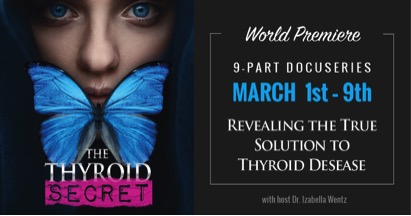
Izabella created the Thyroid Secret documentary series to help you connect the dots of your own thyroid condition, so that you can rebuild your health and eliminate your symptoms (and potentially your health conditions). She shares her latest research in overcoming thyroid disorders, and interviews the top experts who share their best strategies as well.

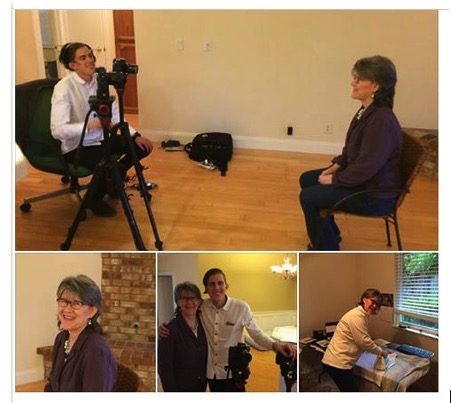
I was so excited when Izabella asked me to join the Thyroid Secret as an expert – in fact my interview was the very last thing I did in the United States, before I moved to Australia! This topic is so important to me (and so key for my clients and you to know about) that I did the interview in an empty house, with just a few chairs and our almost-packed suitcases, and just a few hours to spare before we got on the plane!

Here are a few pictures (I was ironing my clothes on a spare table in the mostly empty study!):

The Thyroid Secret covers not just the symptoms of thyroid disease (like anxiety) that can masquerade as mental illness, but also the triggers that can cause both conditions, and the solutions and protocols you need to recover your health.

When your thyroid is working as it should be, the amazing amino acids like GABA and tryptophan are truly effective in 5-10 minutes – so you really can say they are amazing!  You will see incredible results – anxiety relief right away – and a feeling of hope while you dig deeper for root causes that can take longer to address.

I wrote this blog for everyone using amino acids and not seeing results.  And also for everyone with a thyroid condition or if you have unresolved symptoms that could be related to your thyroid.

I do hope you’re already signed up and are enjoying watching, listening and learning as much as I am.

If you haven’t yet signed up you can still join as my guest to view the entire series at no cost (it started March 1). Just use this link to register.

We’ve come together in this Thyroid Secret documentary to give you this information because you deserve to feel on top of the world again!

Got questions or feedback? Your favorite speaker and some takeaways?

Did you find that GABA, tryptophan and other amino acids were more effective once you addressed your thyroid health? If you’re a practitioner do you see this with patients/clients?

Please share in the blog comments below.


Filed Under: Amino Acids, Antianxiety, Events, Thyroid Tagged With: amino acids, anxiety, GABA, izabella wentz, The Thyroid Secret, thyroid secrets, tryptophan

Thyroid Secret documentary – wise words of wisdom!

February 25, 2017 By Trudy Scott 9 Comments

The Thyroid Secret documentary is just around the corner!  My colleague Dr. Izabella Wentz and her amazing team have produced this powerful 9-part documentary and it truly is groundbreaking! (It starts on March 1.)

Thyroid disease is one of the most overlooked diseases and is so often misdiagnosed. I see this all this time with my anxious clients (and I share more about this in the documentary!)

In case you’re not already signed up here is the link to sign up. And some wise words of wisdom from some of the experts that are part of the documentary

If you are already signed up enjoy these wise words too!

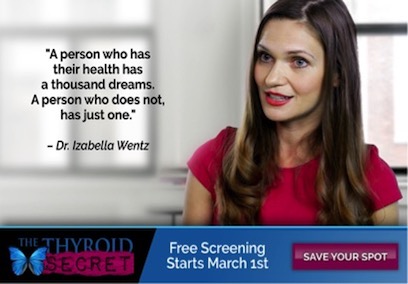
Dr. Izabella Wentz, host and producer of the documentary, and author of the forthcoming book, Hashimoto’s Protocol, sets the tone and I love it!

A person who has their health has 1,000 dreams. A person who does not has just one.

Allowing yourself to heal will allow you to do all these different things in your life that you maybe dreamed about but you never thought were possible. I have people within my community who’ve become like romance novelists or … they’ve gone back to horseback riding. They’ve done all of these things that they never thought will be possible and sometimes in their 40s, 50s, 60s, lucky ones in their 20s.

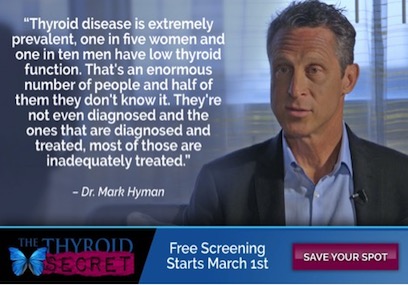
Dr. Mark Hyman, author of The Blood Sugar Solution, discusses the prevalence of thyroid disease in this part of his interview:

Thyroid disease is extremely prevalent, one in five women and one in ten men have low thyroid function. That’s an enormous number of people and half of them they don’t know it. They’re not even diagnosed and the ones that are diagnosed and treated most of those are inadequately treated.

You’ve got an epidemic or thyroid dysfunction that is really driving a lot of suffering and it’s subtle. People don’t know, they think it’s something else. Oh I’m a little tired, oh I have trouble getting up in the morning, my skin’s a little dry, my nails are cracking, I’m a little constipated, I have a little fluid retention. Can’t remember things as well, I feel little depressed, I might not be sleeping as well, I might get muscle cramps, my sex drive’s a little low… You add all these things up, oh my hair’s falling out a little bit.


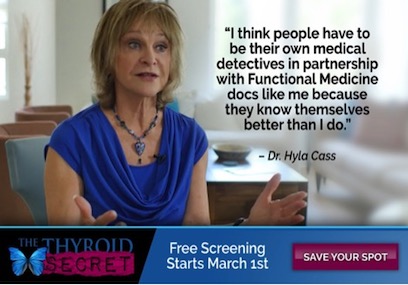
Dr. Hyla Cass, integrative psychiatrist, talks about antidepressant side-effects in this part of her interview:

I think people have to be their own medical detectives in partnership with Functional Medicine docs like me because they know themselves better than I do.

 I think the way conventional medicine is treating depression is really a disaster and that’s simply writing prescriptions for antidepressants. I get a lot of these women and women outnumbering men with thyroid issues coming to me, that have been failures. ‘Failures’ at antidepressant therapy, they’re still depressed and they’re not only still depressed but they now have side effects from being on antidepressants. They can’t sleep or they’re sleeping too much, weight gain, huge weight gain (with thyroid issues you’re already gaining weight). Then there is dizziness, nausea, lack of libido… I mean really? So many problems with the antidepressants and it’s not directed to the cause.


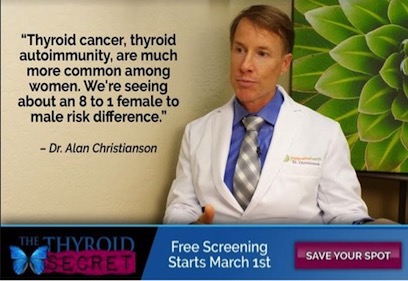
Dr. Alan Christianson, author of The Adrenal Reset Diet, covers our genes and environmental toxins in this part of his interview:

Thyroid cancer, thyroid autoimmunity are much more common among women. We’re seeing about a eight to one female to male risk difference.

So, we think that it’s really a perfect storm of three, three large factors; we’ve got the, the genes, you know. So, the first step is you got to be cautious about choosing your parents (laughter), however that works out, I don’t know. So, there’s some genetic susceptibility and then, and there’s some foreign substances. So, your thyroid like, there’s the shows about the hoarders you know, like those that like never let go of things. So, your thyroid is kind of a hoarder (laughter). It needs iodine, but the amount that it needs is way above what your blood carries, so it concentrates it and pulls it in.

We have a lot of weird chemicals nowadays that confuse that concentrator, that your concentrator thinks, “Well, that looks like iodine,” but it’s not. So, we have uh, Perchlorate for example in the soils in the southwest area, where we had someone just the other day who is working in aviation, in managing the airplanes out in the tarmac and what not and exposed to jet fuel, and they get Perchlorate from that as well.

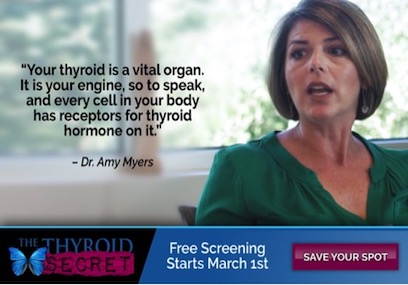
Dr. Amy Myers, author of The Autoimmune Solution, covers diagnosis, root causes and supplemental thyroid hormone in this part of her interview:

Your thyroid is a vital organ. It is your engine, so to speak, and every cell in your body has receptors for thyroid hormone on it.

The average is 6 to 10 doctors in five years to get any kind of autoimmune diagnosis. It may be less for thyroid because that’s a little more common and people do screen at least with a TSH, but if that damage has been going on or you are just now becoming aware of it and you’ve had Hashimoto’s for 20 years, if you’ve had enough damage and destruction to your thyroid, I and no one can grow your thyroid back. We can optimize the function through, and I’m sure we’ll talk about that through this interview, we can optimize the function, we can prevent you hopefully from getting another autoimmune disease, we can get to the root cause of why you got it, but I can’t regrow thyroid tissue for you. You may still need to be on some supplemental thyroid hormone, and that’s okay. I just want people to know that there are people, and I have them in my clinic as well, that we get it early enough and we’re able to do all the things that we’ll talk about in the interview, and they don’t need to go on supplemental thyroid hormone, or they’ve gone on it and we’ve been able to get them off.

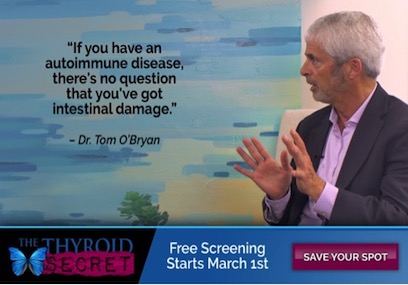
Dr. Tom O’Bryan, author of The Autoimmune Fix, discusses the key role the gut and microbiome play:

If you have an autoimmune disease, there’s no question that you’ve got intestinal damage.

It’s a shift. The first shift is recognizing that there’s no magic pill for thyroid autoimmune disease. There’s no magic pill. The second shift is recognizing that it’s going to take time to reverse the damage that’s accrued. If you can accept that and look for the small wins regularly, and the third is … My recommendation to people, one hour a week. Can you give one hour a week to just doing some research on this topic that you have? Just one hour a week.

The most important thing as we’re learning now in this last ten to twelve year period is if there’s one organ that is more impactful on the rest of the body than any other organ, it’s the microbiome. The microbiome controls our brain function. For every one message coming from the brain down to the gut, there are nine messages from the gut to the brain. It’s the exhaust, if you will, the chemicals that are secreted by the microbiome that go up to the brain to tell the brain what to do. It’s a nine to one ratio. For your heart, the microbiome sends direction to the heart. For your thyroid, the microbiome sends direction to the thyroid.

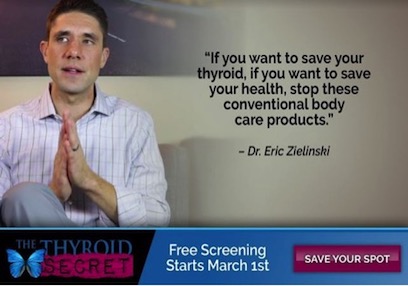
Dr. Eric Zielinski, host of the Essential Oils Summit, covers the dangers of conventional body care products and why use essential oils instead:

We need to work on preventing disease before they happen and I hope to God, that the researchers will come together, that the funding will be available so we could start testing how certain essential oils and chemical constituencies in these oils affect thyroid conditions. Until we do have that, I’m telling you one thing.

If you want to save your thyroid, if you want to save your health, stop these conventional body care products. I’m talking throw them away.

The lowest hanging fruit that anyone can do today, so easy, is literally to throw away all hand sanitizer. I’m telling you, it’s like the worst stuff for you. Conventional hand sanitizer, throw it away. To replace it, super simple. You get a one to two ounce glass spritzer bottle, you put a few drops of witch hazel in it, a couple drops of aloe, vitamin E, and seven drops of essential oils per every ounce that the bottle is.

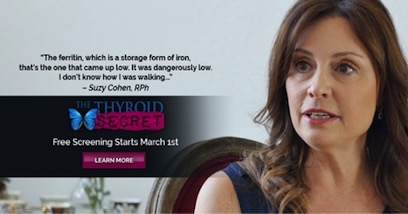
Suzy Cohen, RPh covers low ferritin and low manganese:

The ferritin, which is a storage form of iron, that’s the one that came up low. It was dangerously low. I don’t know how I was walking, it was eight, and it was eight for years. It was eight when I measured it, so it was probably lower, but eight is a very bad number. We shoot to have it above 50, sometimes even closer to 70.

I’m often asked, “What did I do to raise that ferritin, how did I get my iron up?” You would think the answer is that I took iron supplements, but that didn’t work. I did try them. I tried them for six months, they tore me apart. I took the best forms. I’m a pharmacist, I know what the best forms are. Iron doesn’t really help you if you’re iron deficient. That’s a huge secret.

The things that I did were I bought a cast iron pot. I bought two, a little one and a bigger one, and I cooked everything in my cast iron pot because the iron leaches just a little teeny bit. It’s just a little bit, but cooking all of your food in a cast iron pot helped. I drank a little Dixie cup full of orange juice every day. I took betaine with pepsin. This was huge for me. You’ve written articles about this, where you have to titrate up with the betaine. You can’t just take five all at once, but I was so low in acid that at one point I was taking six with my meals. Isn’t that a lot? Today I don’t take any, but there was a point where I worked my way up from one capsule with a meal to six.

The final piece of this was manganese. If your iron is low, manganese is lower, count on it. Having your iron and your manganese in the correct ratio is very huge. I took one capsule of manganese every day and that worked for me. It allows you to better absorb your iron, you need less iron, and you maintain the manganese-iron ratio, and that was a very big piece of it. I took one manganese capsule every day for about a year.

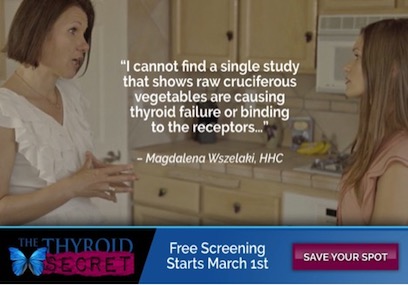
Magdalena Wszelaki, creator of Eating for Hormone Balance, talks about raw cruciferous vegetables and oxalates in this part of her interview:

I cannot find a single study that shows raw cruciferous vegetables are causing thyroid failure or binding to the receptors, or whatever. It’s the stuff that I feel like the bloggers have copied and pasted the same information and just created fear. Having said that, I have come across people …This is anecdotal, but when you have people coming to you over and over again telling these stories of going on a health binge, on a health kick I should say, and they will do juicing or they would start blending smoothies that are full of kale, and beets, and almonds. Then three months into that health protocol, they start having a lot of issues with fatigue. They start putting on weight. They go and get a test that turns out it’s the thyroid.

I think that what is happening is that there’s an issue with oxalates with a lot of the vegetables. Kale has got some oxalates, but spinach is super high in oxalates. Almonds are super high in oxalates, so are hemp seeds, all the seeds and nuts. That has been well-documented that oxalates can deposit on the thyroid gland and be causing an issue. I suspect that could be a problem for a lot of people. With the cruciferous vegetables, I love them because they are so rich in … Nutritionally they’re so much richer than all the other vegetables. They’re also full of diindolylmethane, DIM also named, which binds estrogen and that really supports the thyroid function. I’m definitely for them.

Trudy Scott, yours truly (!), and author of The Antianxiety Food Solution:

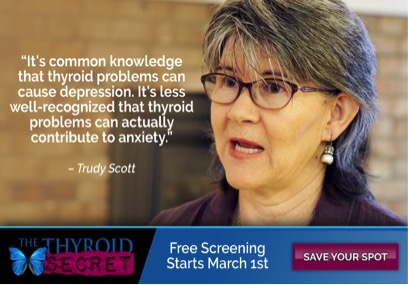
A lot of people go to the doctor and get a diagnosis, you’ve got anxiety, or you’ve got depression, and they’ll be given a medication, benzodiazepine or an SSRI. It may be the thyroid that’s causing the problems. It’s common knowledge that thyroid problems can cause depression. It’s less well recognized that thyroid problems can actually contribute to anxiety.

I actually looked at a study that was published in 2010, and they found that there was three times the higher incidence of anxiety in women who have underactive thyroid. It’s more common than a lot of people realize.

Certainly in my practice, working with anxious women, most of the people that I work with are women, I work with men as well, but most of the women that I work with, with anxiety, have thyroid issues. They either have Hashimoto’s Thyroiditis, they have hypothyroid, or they may have had Graves’ in the past. It’s very, very common that I see this.

One of the things that we want to think about from a biochemical and a nutritional aspect when it comes to anxiety is, junk food. We want to eat real whole food. The additives, the colors, the pesticides, the trans fats, all of those can be problematic when it comes to anxiety, because we don’t have the raw materials to make our brain chemicals. GABA is a wonderful calming neurotransmitter, and serotonin is also calming, and if we don’t have enough of the raw materials to make those neurotransmitters, we can be more prone to anxiety.

I’d like to end with a perfect quote from Mary Shomon, thyroid advocate: Be your own CEO of your healthcare!

Watching this Thyroid Secret documentary will empower you, provide you with vital thyroid knowledge you and will truly allow you to be the CEO of your own healthcare when it comes to your thyroid health!

Here is the link to register for the 9-part online documentary The Thyroid Secret, which runs March 1-9.

I do hope you can join us online for this amazing 9-part documentary that I’m so honored to have been a part of!

Filed Under: Anxiety and panic, Events, Thyroid, Thyroid health Tagged With: anxiety, Dr Alan Christianson, Dr Tom O'Bryan, Dr. Mark Hyman, GABA, hashimoto's thyroiditis, izabella wentz, thyroid, Thyroid Secret

Diabetes, anxiety and GABA

February 24, 2017 By Trudy Scott 21 Comments


Anxiety and depression are common in patients with diabetes. In this 2016 paper: Prevalence and predictors of depression and anxiety in patients of diabetes mellitus in a tertiary care center, it was found that a significantly larger proportion of diabetic patients had

  • Anxiety: 27.6% vs. 12.7% as compared to healthy controls and
  • Depression: 26.3% vs. 11.2% as compared to healthy controls
  • Both depression andanxiety: 21.0% vs. 7.3% as compared to healthy controls

The paper also reports that diabetic women had higher rates of anxiety than men (17.6% vs. 10.0%) and higher rates of depression than men (17.1% vs. 9.3%).

GABA is one of the calming amino acids I used with much success with my clients who have the physical type of anxiety (with stiff and tense muscles). As well as addressing this type of anxiety it also helps them to end their sugar addiction, reducing cravings dramatically. Melissa shares her results after using GABA on this blog: GABA for ending sugar cravings (and anxiety and insomnia)

I was cool as a cucumber at the airport and was much calmer when visiting family and friends compared to last year! The true test of its efficacy will be in two weeks when the semester starts. For now, I notice a general calmness and am sleeping well.

An unexpected result was that I stopped craving sweets after about a week of taking it! I didn’t even realize this until I was grocery shopping and out of habit walked towards the ice cream – I stopped and realized I didn’t want ice cream. So I walked toward the chocolate – same reaction. For once in my life, I was not craving sweets.

Now there is some interesting recent research showing how GABA may play a role in diabetes treatment too.

This February 2015 paper, GABAergic system in the endocrine pancreas: a new target for diabetes treatment explains the role of GABA in regulating islet-cell secretion and that it exerts β-cell regenerative effects:

Excessive loss of functional pancreatic β-cell mass, mainly due to apoptosis, is a major factor in the development of hyperglycemia in both type 1 and type 2 diabetes (T1D and T2D).

In T1D, β-cells are destroyed by immunological mechanisms. In T2D, while metabolic factors are known to contribute to β-cell failure and subsequent apoptosis, mounting evidence suggests that islet inflammation also plays an important role in the loss of β-cell mass. Therefore, it is of great importance for clinical intervention to develop new therapies.

γ-Aminobutyric acid (GABA), a major neurotransmitter, is also produced by islet β-cells, where it functions as an important intraislet transmitter in regulating islet-cell secretion and function. Importantly, recent studies performed in rodents, including in vivo studies of xenotransplanted human islets, reveal that GABA exerts β-cell regenerative effects. Moreover, it protects β-cells against apoptosis induced by cytokines, drugs, and other stresses, and has anti-inflammatory and immunoregulatory activities. It ameliorates the manifestations of diabetes in preclinical models, suggesting potential applications for the treatment of diabetic patients.

This paper published in November 2015: Study of GABA in Healthy Volunteers: Pharmacokinetics and Pharmacodynamics also reports potential therapeutic benefits for those with diabetes:

Our data show that GABA is rapidly absorbed and tolerated in human beings; its endocrine effects, exemplified by increasing islet hormonal secretion, suggest potential therapeutic benefits for diabetes.

You can read more about this in the blog post: GABA rapidly absorbed and tolerated – benefits for anxiety and diabetes

A paper published in December 2016 on GABA and diabetes: Long-Term GABA Administration Induces Alpha Cell-Mediated Beta-like Cell Neogenesis states that

This newly discovered GABA-induced α cell-mediated β-like cell neogenesis [or the regeneration of tissue] could therefore represent an unprecedented hope toward improved therapies for diabetes.

So here we have the amino amazing acid GABA that when used as a targeted supplement:

  • we know reduces and often eliminates sugar cravings completely
  • calms the anxious mind and reduces physical tension and stress within 5 to 30 minutes
  • has much potential in offering therapeutic benefits for diabetes

I’m proposing oral GABA as a much better option for diabetic patients with anxiety – better than benzodiazepines which have been shown to contribute to cognitive impairment. Using GABA sublingually seems to be most effective.

Do you have diabetes and has GABA helped you with your cravings and anxiety? And enabled you to reduce your diabetes medication?

If you’re a practitioner I’m curious if you commonly see anxiety and depression in your diabetes patients/clients? And do you currently use GABA (and other amino acids like tryptophan and glutamine) to help reduce their anxiety and sugar cravings? And reduce their diabetes medication?


Filed Under: Diabetes, GABA Tagged With: anxiety, Brian Mowll, diabetes, Diabetes Summit, GABA, tryptophan

Vulvodynia: oxalates, GABA, tryptophan and physical therapy

February 10, 2017 By Trudy Scott 41 Comments

On a recent webinar with Julie Matthews, I shared how healthy foods that are high in oxalates caused me excruciating foot pain: Oxalates and leaky gut for Anxiety.

We also mentioned how oxalates can be a factor in vulvodynia and someone asked this question on the blog:

I just listened to the webinar talking about oxalates. I was shocked and delighted to hear the mention of the connection between high oxalates and vulvodynia. My friend has suffered with this for 18 months with little improvement. She has painful feet so I am wondering if there is indeed a connection for her situation. Could you please explain a bit more of the vulvodynia/ oxalates connection? I would like to give my friend the information.

Before I share the resources I offered her for her friend, let me share this about vulvodynia:

Vulvodynia is defined as chronic vulvar burning, stinging, rawness, soreness or pain in the absence of objective clinical or laboratory findings to explain these symptoms. Vulvodynia is a chronic pain syndrome affecting up to 18% of the female population and is generally regarded as an underdiagnosed difficult to treat gynecological disorder.

There is still much we have to learn about vulvodynia and the causes are multifactorial:

The etiology [cause] of vulvodynia is still enigmatic and is probably multifactorial-including physiological concerns (eg, pelvic floor muscle dysfunction, neuropathic pain, and psychosocial) and sexual issues (eg, anxiety and sexual dysfunction). Although it is a common syndrome, most patients are neither correctly diagnosed nor treated. A diagnosis of vulvodynia is based upon patient history and lack of physical findings upon careful examination. No clinical or histological findings are present to aid in diagnosis. Most treatment options for vulvodynia are neither well studied nor have an evidence base, relying instead upon expert opinion, care provider experience, and use of data from other pain syndromes. However, many patients show marked improvement after physical therapy for the pelvic floor, medications for neuropathic pain, and psychosexual therapy.

You’ll notice that oxalates and other dietary approaches are not mentioned. There are actually 2 studies that state there is NO connection between dietary oxlalates and vulvodynia. This is the first one: Influence of dietary oxalates on the risk of adult-onset vulvodynia. The second paper: Urinary oxalate excretion and its role in vulvar pain syndrome concludes that:

Urinary oxalates may be nonspecific irritants that aggravate vulvodynia; however, the role of oxalates as instigators is doubtful.

In this paper: Vulvar vestibulitis-a complex clinical entity, a low oxalate diet and calcium citrate did help:

Successful outcomes were achieved in 14.3% of patients using a low oxalate diet and calcium citrate supplementation

The Vulval Pain Society is a wealth of information on vulvodynvia and they have this information on the low oxalate diet, saying it helps many women and it worth trying:

A diet low in oxalate salts has been suggested as a treatment for women who experience unexplained vulval pain or vulvodynia… it is widely used in the United States as a treatment for vulvodynia. The diet may be supplemented with the use of oral calcium citrate.

There are few doctors in the UK who are aware of or routinely use this treatment. Many specialist doctors who run vulval clinics in this country [the UK] are skeptical about the treatment, as much of the evidence has not been published in the medical literature and the treatment is not of proven value. A diet low in oxalate with or without calcium citrate may, however, benefit some women with vulval pain and this is certainly an option for some women to try.

The vulvar pain is often described as a “burning” or “cutting” or “sharp” kind of pain. You’ll see medications recommended for the neuropathic pain in many of the studies and on the Vulval Pain society site.

It does concern me that so many women are prescribed SSRIs and medications like gabapentin and benzodiazepines when there are the safer and more effective options of the amino acids such as tryptophan and GABA.   When dosed correctly these individual amino acids help with some of the pain and anxiety right away while other root causes are addressed.

For my clients, I recommend targeted individual amino acids instead of the medications. I recommend a trial of tryptophan instead of an antidepressant, assuming they score low on the serotonin section of the amino acid questionnaire.

Research shows there is serotonin involvement with vulvodynia. In this study of women with PVD (provoked vestibulodynia i.e. pain in the entrance of the vagina, common with vulvodynia):

Polymorphism in the serotonin receptor gene, 5HT-2A, has been associated with other chronic pain disorders such as fibromyalgia…. The results [of this study] indicate a contribution of alterations in the serotonergic system to the patho-genesis of PVD and gives further evidence of PVD being a general pain disorder similar to other chronic pain disorders.

I also recommend a trial of GABA instead of gabapentin or one of the benzodiazepines, assuming they score low on the GABA section of the amino acid questionnaire.

Tryptophan and GABA can help with both the pain, and the anxiety and depression that is commonly seen with vulvodynia and other pelvic floor conditions – right away while other root causes are addressed.

Since acupuncture is often reported to be helpful, I also consider a trial of DPA for endorphin boosting and hence some pain reduction too.

Physical therapy is often extremely beneficial and frequently overlooked, so finding a good pelvic floor PT to be part of your healing team is key too.

When responding to the blog question I commented that “your friend is fortunate to have you looking out for her”. Using some or all of the above approaches I would expect her to find some relief of the vulva pain, the foot pain and experience reduced anxiety and depression (assuming these are her root causes).

Please note that this is not an exhaustive list of contributing factors for vulvoldynia – other factors could include candida, infections such as HPV, IBS/SIBO, and trauma and sexual abuse. My colleague, Jessica Drummond, nutritionist and physical therapist, and an expert on female pelvic pain, writes about immunity, dysbiosis, gluten and other food sensitivities, cortisol and sex hormone imbalances in this article: Vulvovaginal Pain and The Immune System: Practical Steps for Vulvovaginal Pain Relief. A full functional workup is required and your root cause can be different from someone else’s root cause.

I’d also like to add that although dietary oxalates cause excruciating pain in my feet, I’m so fortunate, in that I do not have vulvodynia.

Additional resources when you are new to using tryptophan and other amino acids as supplements

We use the symptoms questionnaire to figure out if low serotonin or other neurotransmitter imbalances may be an issue for you.

If you suspect low levels of any of the neurotransmitters and do not yet have my book, The Antianxiety Food Solution – How the Foods You Eat Can Help You Calm Your Anxious Mind, Improve Your Mood, and End Cravings, I highly recommend getting it and reading it before jumping in and using amino acids on your own so you are knowledgeable. And be sure to share it with the practitioner/health team you or your loved one is working with.

There is an entire chapter on the amino acids and they are discussed throughout the book in the sections on gut health, gluten, blood sugar control (this is covered in an entire chapter too), sugar cravings, anxiety and mood issues. The importance of quality animal protein and healthy fats is also covered.

The book doesn’t include product names (per the publisher’s request) so this blog, The Antianxiety Food Solution Amino Acid and Pyroluria Supplements, lists the amino acids that I use with my individual clients and those in my group programs.

If, after reading this blog and my book, you don’t feel comfortable figuring things out on your own (i.e. doing the symptoms questionnaire and respective amino acids trials), a good place to get help is the GABA QuickStart Program (if you have low GABA symptoms too). This is a paid online/virtual group program where you get my guidance and community support.

If you are a practitioner, join us in The Balancing Neurotransmitters: the Fundamentals program. This is also a paid online/virtual program with an opportunity to interact with me and other practitioners who are also using the amino acids.

Have you had success with a low oxalate diet and calcium citrate for vulvodynia? And other pain (in the feet or hips or elsewhere in the body)?

Has physical therapy with a pelvic floor specialist helped?

Have you found tryptophan, GABA or DPA to help with the pain and the anxiety and/or depression too?

Have any other treatments helped you?

If you’re a practitioner what approaches have helped your clients/patients?

Please share questions or feedback below.

Filed Under: Amino Acids, Women's health Tagged With: anxiety, benzodiazepine, depression, GABA, gabapentin, oxalates, pain, physical therapy, SSRI, tryptophan, vulvodynia

  • « Go to Previous Page
  • Page 1
  • Interim pages omitted …
  • Page 38
  • Page 39
  • Page 40
  • Page 41
  • Page 42
  • Interim pages omitted …
  • Page 49
  • Go to Next Page »

Primary Sidebar

GABA QuickStart Homestudy

gaba quickstart homestudy

Free Report

9 Great Questions Women Ask about Food, Mood and their Health

You'll also receive a complimentary subscription to my ezine "Food, Mood and Gal Stuff"


Connect with me

Popular Posts

  • Amino Acids Mood Questionnaire from The Antianxiety Food Solution
  • The Antianxiety Food Solution Amino Acid and Pyroluria Supplements
  • Pyroluria Questionnaire from The Antianxiety Food Solution
  • Collagen and gelatin lower serotonin: does this increase your anxiety and depression?
  • Tryptophan for the worry-in-your-head and ruminating type of anxiety
  • GABA for the physical-tension and stiff-and-tense-muscles type of anxiety
  • The Antianxiety Food Solution by Trudy Scott
  • Seriphos Original Formula is back: the best product for anxiety and insomnia caused by high cortisol
  • Am I an anxious introvert because of low zinc and vitamin B6? My response to Huffington Post blog
  • Vagus nerve rehab with GABA, breathing, humming, gargling and key nutrients

Recent Posts

  • Her cravings for chips and peanut butter were triggered by stress: GABA ends cravings and reduces physical tension and fear of heights
  • It is truly miraculous to be able to move through life without crippling anxiety and panic
  • GABA and tryptophan combo provide immediate and noticeable relief for tremors and cervical dystonia in just 7 days
  • Red light therapy for back and neck pain, plantar fasciitis and low mood – a complement to the amino acids GABA, DPA and tryptophan
  • What do I use instead of Seriphos to help lower high cortisol that is affecting my sleep and making me anxious at night?

Categories

  • 5-HTP
  • AB575
  • Addiction
  • ADHD
  • Adrenals
  • Alcohol
  • Allergies
  • Alzheimer's disease
  • Amino Acids
  • Anger
  • Antianxiety
  • Antianxiety Food Solution
  • Antidepressants
  • Anxiety
  • Anxiety and panic
  • Autism
  • Autoimmunity
  • benzodiazapines
  • Bipolar disorder
  • Books
  • Caffeine
  • Cancer
  • Candida
  • Children/Teens
  • Collagen
  • Cooking equipment
  • Coronavirus/COVID-19
  • Cravings
  • Depression
  • Detoxification
  • Diabetes
  • Diet
  • DPA/DLPA
  • Drugs
  • EFT/Tapping
  • EMF
  • EMFs
  • Emotional Eating
  • Endorphins
  • Environment
  • Essential oils
  • Events
  • Exercise
  • Fear
  • Fear of public speaking
  • Fertility and Pregnancy
  • Fish
  • Food
  • Food and mood
  • Functional neurology
  • GABA
  • Gene polymorphisms
  • General Health
  • Giving
  • Giving back
  • Glutamine
  • Gluten
  • GMOs
  • Gratitude
  • Gut health
  • Heart health/hypertension
  • Histamine
  • Hormone
  • Hyperparathyroidism
  • Hypoglycemia
  • Immune system
  • Inflammation
  • Insomnia
  • Inspiration
  • Introversion
  • Joy and happiness
  • Ketogenic diet
  • Lithium orotate
  • Looking awesome
  • Lyme disease and co-infections
  • MCAS/histamine
  • Medication
  • Men's health
  • Mental health
  • Mercury
  • Migraine
  • Mold
  • Movie
  • MTHFR
  • Multiple sclerosis
  • Music
  • NANP
  • Nature
  • Nutritional Psychiatry
  • OCD
  • Osteoporosis
  • Oxalates
  • Oxytocin
  • Pain
  • Paleo
  • Parasites
  • Parkinson’s disease
  • PCOS
  • People
  • PMS
  • Postpartum
  • PTSD/Trauma
  • Pyroluria
  • Questionnaires
  • Real whole food
  • Recipes
  • Research
  • Schizophrenia
  • serotonin
  • SIBO
  • Sleep
  • Special diets
  • Sports nutrition
  • Stress
  • Sugar addiction
  • Sugar and mood
  • Supplements
  • Teens
  • Testimonials
  • Testing
  • The Anxiety Summit
  • The Anxiety Summit 2
  • The Anxiety Summit 3
  • The Anxiety Summit 4
  • The Anxiety Summit 5
  • The Anxiety Summit 6
  • Thyroid
  • Thyroid health
  • Toxins
  • Tryptophan
  • Tyrosine
  • Uncategorized
  • Vegan/vegetarian
  • Women's health
  • Yoga

Archives

  • May 2026
  • April 2026
  • October 2025
  • September 2025
  • August 2025
  • July 2025
  • June 2025
  • May 2025
  • April 2025
  • March 2025
  • February 2025
  • January 2025
  • November 2024
  • October 2024
  • September 2024
  • August 2024
  • July 2024
  • June 2024
  • May 2024
  • April 2024
  • March 2024
  • February 2024
  • January 2024
  • December 2023
  • November 2023
  • October 2023
  • September 2023
  • August 2023
  • July 2023
  • June 2023
  • May 2023
  • April 2023
  • March 2023
  • February 2023
  • January 2023
  • December 2022
  • November 2022
  • October 2022
  • September 2022
  • August 2022
  • July 2022
  • June 2022
  • May 2022
  • April 2022
  • March 2022
  • February 2022
  • January 2022
  • December 2021
  • November 2021
  • October 2021
  • September 2021
  • August 2021
  • July 2021
  • June 2021
  • May 2021
  • April 2021
  • March 2021
  • February 2021
  • January 2021
  • December 2020
  • November 2020
  • October 2020
  • September 2020
  • August 2020
  • July 2020
  • June 2020
  • May 2020
  • April 2020
  • March 2020
  • February 2020
  • January 2020
  • December 2019
  • November 2019
  • October 2019
  • September 2019
  • August 2019
  • July 2019
  • June 2019
  • May 2019
  • April 2019
  • March 2019
  • February 2019
  • January 2019
  • December 2018
  • November 2018
  • October 2018
  • September 2018
  • August 2018
  • July 2018
  • June 2018
  • May 2018
  • April 2018
  • March 2018
  • February 2018
  • January 2018
  • December 2017
  • November 2017
  • October 2017
  • September 2017
  • August 2017
  • July 2017
  • June 2017
  • May 2017
  • April 2017
  • March 2017
  • February 2017
  • January 2017
  • December 2016
  • November 2016
  • October 2016
  • September 2016
  • August 2016
  • July 2016
  • June 2016
  • May 2016
  • April 2016
  • March 2016
  • February 2016
  • January 2016
  • December 2015
  • November 2015
  • October 2015
  • September 2015
  • August 2015
  • July 2015
  • June 2015
  • May 2015
  • April 2015
  • March 2015
  • February 2015
  • January 2015
  • December 2014
  • November 2014
  • October 2014
  • September 2014
  • August 2014
  • July 2014
  • June 2014
  • May 2014
  • April 2014
  • March 2014
  • February 2014
  • January 2014
  • December 2013
  • November 2013
  • October 2013
  • September 2013
  • August 2013
  • July 2013
  • June 2013
  • May 2013
  • April 2013
  • March 2013
  • February 2013
  • January 2013
  • December 2012
  • November 2012
  • October 2012
  • August 2012
  • July 2012
  • June 2012
  • May 2012
  • April 2012
  • March 2012
  • February 2012
  • January 2012
  • December 2011
  • November 2011
  • October 2011
  • September 2011
  • August 2011
  • July 2011
  • June 2011
  • May 2011
  • April 2011
  • March 2011
  • February 2011
  • January 2011
  • December 2010
  • October 2010
  • September 2010
  • July 2010
  • May 2010
  • April 2010
  • March 2010
  • February 2010
  • January 2010
  • November 2009

Share the knowledge!

The above statements have not been evaluated by the Food and Drug Administration. Products listed in this website are not intended to diagnose, treat, cure or prevent any disease.

The information provided on this site is for informational and educational purposes only and is not intended as a substitute for advice from your physician or other health care professional. You should consult with a healthcare professional before starting or modifying any diet, exercise, or supplementation program, before taking or stopping any medication, or if you have or suspect you may have a health problem.


Copyright © 2026 Trudy Scott. All Rights Reserved. | Privacy | Terms and Conditions | Refund Policy | Medical Disclaimer

Free Report

9 Great Questions Women Ask about Food, Mood and their Health

You’ll also receive a complimentary subscription to my ezine “Food, Mood and Gal Stuff”