• Skip to primary navigation
  • Skip to main content
  • Skip to primary sidebar

everywomanover29 blog

Food, Mood and Women's Health – Be your healthiest, look and feel great!

  • Blog
  • About
  • Services
  • Store
  • Resources
  • Testimonials
  • The Book
  • Contact
  • Search this site

fatigue

Mitochondrial disruption and systemic benzodiazepine side effects/tapering issues: pain, fatigue, brain fog, insomnia and anxiety

May 16, 2025 By Trudy Scott 19 Comments

mitochondrial disruption

A recent article published on Naturopathic Doctor News & Review, Mitochondrial Disruption Explains Systemic Benzodiazepine Side Effects, reports on new research that identifies a possible mechanism for wide-ranging side effects of these antianxiety medications. In addition to side-effects there can also be persistent withdrawal symptoms that continue after they have been tapered:

Benzodiazepines impair mitochondrial signaling across multiple systems in the body, not just GABA receptors in the brain. Mitochondria play a central role in regulating cell energy metabolism, hormone synthesis, oxidative stress balance, and immune response.

Disrupting these pathways has systemic consequences that explain the wide range of symptoms patients report during chronic use and withdrawal.

These findings offer a cellular mechanism for persistent fatigue, pain syndromes, cognitive impairment, and inflammatory symptoms that may continue after tapering.

Many medications impact the mitochondria but this new research has identified a new possible mechanism: tryptophan-rich sensory proteins (HsTSPO1) and reactive oxygen species.

In this blog I share more about HsTSPO1 and this new research, additional symptoms of benzodiazepine withdrawal, what we already know about mitochondria and anxiety, other medications and environmental toxicants that affect the mitochondria, and some key nutrients for mitochondrial support.

Benzodiazepines bind to tryptophan-rich sensory proteins (HsTSPO1)

This article from Virginia Commonwealth University, Researchers may have solved decades-old mystery behind benzodiazepine side effects, discusses the new study and HsTSPO1:

Benzodiazepines produce their therapeutic effect by binding with GABAA receptors in the brain; however, the drug has an equally strong affinity to human mitochondrial tryptophan-rich sensory proteins (HsTSPO1), located on the outer membrane of mitochondria in cells.

This type of protein is linked to several neurodegenerative diseases, including Alzheimer’s, and researchers have suspected that HsTSPO1 may be involved in certain side effects of benzodiazepine drugs.

And “when valium and other benzodiazepines bind to HsTSPO1, they inhibit the protein’s ability to manage ROS (reactive oxygen species) levels in our cells … this both reduces the production and the neutralization of ROS.

This may help explain why such medications cause side effects over time

And the authors propose this: “The new insights into HsTSPO1’s function could help pharmaceutical companies develop improved benzodiazepines.”

I have a better idea and propose we create more awareness about how these and other medications affect the mitochondria. I believe all medications should include a warning about these mitochondrial effects, and that mitochondrial support should be included when these medications are prescribed and then tapered.

This may include a combination of the same nutrients used for neurodegenerative disorders caused by mitochondrial dysfunction – CoQ10, B-vitamins/NADH, L-carnitine, vitamin D, and alpha-lipoic acid. And should also include infrared sauna, red light therapy and other detox approaches.

Ideally, this awareness will increase the use of the amino acids GABA, tryptophan, 5-HTP and DPA (d-phenylalanine), and other nutritional approaches instead of long-term benzodiazepine prescriptions for anxiety, pain and sleep issues. More on that below.

Some of the many other symptoms of benzodiazepine withdrawal

This paper from 1994, The benzodiazepine withdrawal syndrome describes some of the many symptoms:

Physiological dependence on benzodiazepines is accompanied by a withdrawal syndrome which is typically characterized by sleep disturbance, irritability, increased tension and anxiety, panic attacks, hand tremor, sweating, difficulty in concentration, dry wretching and nausea, some weight loss, palpitations, headache, muscular pain and stiffness and a host of perceptual changes.

The mechanism is not addressed in the paper but in the light of this new research, it’s possible that tryptophan-rich sensory proteins, increased reactive oxygen species and mitochondrial dysfunction are factors.

Brain mitochondria: anxiety and fear

I first addressed mitochondrial dysfunction during the 2019 Anxiety Summit: Gut-Brain Axis. One of my guest experts, Tara Hunkin, NTP, CGP, RWP shared these highlights from this review paper – Anxiety and Brain Mitochondria: A Bidirectional Crosstalk:

  • Despite the established link between mitochondrial dysfunction and various psychiatric disorders, the contribution of mitochondria in anxiety disorders has not been extensively addressed.
  • Mitochondria are emerging as modulators of anxiety-related behavior, as evidenced both in animal and human studies.
  • There is a bidirectional link between mitochondria and anxiety. Mitochondrial, energy metabolism, and oxidative stress alterations are observed in high anxiety; conversely, changes in mitochondrial function can lead to heightened anxiety.

More recent research, published in 2024, The Emerging Role of Brain Mitochondria in Fear and Anxiety, supports this and proposes “a model in which mitochondrial function is critical for regulating the neural circuits that underpin fear and anxiety behaviors, highlighting how mitochondrial dysfunction can lead to their pathological manifestations.”

The new HsTSPO1 research builds on this research, identifying a possible mechanism and further supporting the oxidative stress connection.

On a side note, I’m really intrigued to learn more about these tryptophan-rich sensory proteins!

Other medications and environmental toxicants that impact the mitochondria

Keep in mind that it’s not only benzodiazepines that impact the mitochondria.

This 2023 paper, Drug-induced mitochondrial toxicity: Risks of developing glucose handling impairments, explores the correlation between potential mitochondrial dysfunction caused by selected medications, specifically looking at their effects on insulin signalling and glucose handling:

Drug classes such as statins, anti-diabetics, anti-epileptics, NSAIDs, anti-depressants, and certain antibiotics have been identified to induce mitochondrial toxicity.

This 2022 paper, Environmental Chemical Exposures and Mitochondrial Dysfunction: a Review of Recent Literature, states this:

Classes of environmental toxicants such as polycyclic aromatic hydrocarbons, air pollutants, heavy metals, endocrine-disrupting compounds, pesticides, and nanomaterials can damage the mitochondria in varied ways, with changes in mtDNA copy number and measures of oxidative damage the most commonly measured in human populations.

Amino acids and nutritional support: instead of benzos and before/during tapering

As I mentioned above, this awareness will hopefully increase the use of the amino acids GABA, tryptophan, 5-HTP and DPA (d-phenylalanine), and other nutritional approaches instead of long-term benzodiazepine prescriptions for anxiety, pain and sleep issues.

When it comes to tapering, it’s best to be nutritionally stable BEFORE starting to taper. This means eating real whole food that includes quality animal protein, healthy fats, fermented foods and organic vegetables and fruit; eating for blood sugar control; quitting sugar, gluten, alcohol and caffeine; addressing gut and adrenal health; addressing pyroluria and key nutritional deficiencies like low zinc, low iron, low vitamin D and more. This is all covered in my book.

Addressing neurotransmitter imbalances with amino acids before and during the tapering helps immensely too.  And so does mitochondrial support.

And a reminder: tapering should always be done very very very slowly and under medical supervision with the prescribing doctor.

Additional resources when you are new to using GABA, tryptophan and other amino acids as supplements

As always, I use the symptoms questionnaire to figure out if low serotonin or low GABA or other neurotransmitter imbalances may be an issue.

If you suspect low levels of any of the neurotransmitters and do not yet have my book, The Antianxiety Food Solution – How the Foods You Eat Can Help You Calm Your Anxious Mind, Improve Your Mood, and End Cravings, I highly recommend getting it and reading it before jumping in and using amino acids on your own so you are knowledgeable. And be sure to share it with the practitioner/health team you or your loved one is working with.

There is an entire chapter on the amino acids and they are discussed throughout the book in the sections on gut health, gluten, blood sugar control (this is covered in an entire chapter too), sugar cravings, anxiety and mood issues.

The book doesn’t include product names (per the publisher’s request) so this blog, The Antianxiety Food Solution Amino Acid and Pyroluria Supplements, lists the amino acids that I use with my individual clients and those in my group programs.

If, after reading this blog and my book, you don’t feel comfortable figuring things out on your own (i.e. doing the symptoms questionnaire and respective amino acids trials), a good place to get help is the GABA QuickStart Program (if you have low GABA symptoms). This is a paid online/virtual group program where you get my guidance and community support.

If you are a practitioner, join us in The Balancing Neurotransmitters: the Fundamentals program. This is also a paid online/virtual program with an opportunity to interact with me and other practitioners who are also using the amino acids.

Wrapping up and your feedback

Are you aware that benzodiazepines and many other medications can play a role in mitochondrial disruption? And that this mitochondrial disruption is likely a factor when it comes to systemic benzodiazepine side effects and tapering issues such as pain, fatigue, brain fog, insomnia and anxiety (and more)?

Have you considered or used mitochondrial support when tapering one of the benzodiazepines and has this approach helped?

And has it helped to be nutritionally stable BEFORE tapering and using amino acids to help with tapering? What changes did you make and which amino acids helped?

If you’re a practitioner is this a topic you discuss and address with your clients/patients?

Please do share in the comments below.
Filed Under: Anxiety, GABA, Insomnia Tagged With: alpha-lipoic acid, antianxiety medications, anxiety, B vitamins, benzodiazepine, brain fog, cell energy metabolism, CoQ10, fatigue, GABA, HsTSPO1, insomnia, L-carnitine, medications, mitochondria, Mitochondrial disruption, oxidative stress, pain, reactive oxygen species, side-effects, tapering, tryptophan-rich sensory proteins, vitamin D

How to use bright light therapy for increased anxiety, increased panic and SAD during the cold dark winter months

January 19, 2024 By Trudy Scott 2 Comments

bright light therapy

There is a seasonality to anxiety and panic disorder just as there are seasonal variations in mood for certain susceptible individuals:

Following a clinical observation of increased anxiety symptoms and mood changes during winter in panic disorder patients, the Seasonal Pattern Assessment Questionnaire (SPAQ) was completed by 133 patients. Global Seasonality Scores (GSS), and the prevalence of Seasonal Affective Disorder (SAD), were significantly higher than reported in general population studies.

Seasonal changes were also found in anxiety and panic attacks.

These findings suggest the possibility of a common aetiology [etiology or cause] for panic disorder and SAD, that seasonality may be a far more general phenomenon in psychopathology, and that light therapy may be a useful treatment for some panic disorder patients.

The above abstract is from this paper: Seasonality in panic disorder

If you’re new to bright light therapy or are currently using it with success and would like to learn more, I’d like to point you to this excellent review paper, Bright Light as a Personalized Precision Treatment of Mood Disorders. The authors of the above paper cover some of the basics like how to use bright light for SAD (seasonal affective disorder) or the winter blues, and for how long, possible adverse effects and who should not use bright light therapy (this last aspect is theoretical).

This information about bright light and mood disorders can be applied to anxiety and panic attacks, in addition to SAD.

As you’ll read below there are also often benefits for non seasonal depression, bipolar disorder, fatigue, sleep issues, emotional eating and other conditions too.  And bright light therapy can be used in conjunction with the amino acids tryptophan or 5-HTP, and is often used with psychiatric medications too.

How to use bright light for SAD and winter anxiety/panic and for how long?

You sit in front of the light box or full spectrum lamp – on a table or your desk – with open eyes.  Using a standing lamp as a source of light is another option.

The authors of the Bright Light paper share the following approach for SAD (seasonal affective disorder or the winter blues), all of which is applicable for increased anxiety and panic attacks in winter too):

  • Start with a “duration of 30 minutes, using a light intensity of 10,000 lux.” (more on lux comparisons below)
  • “Early morning administration offers greater chances for remission” (although there is documented research and clinical results that for some folks later in the day works well too).
  • “Measured at eye level, a therapeutic distance of 60–80 cm from the light box can be seen as standard requirements (some other devices recommend a distance of 30 cm, so we advise to follow the device recommendations that take into account light parameters and distance).” Most of the lights/devices I recommend state a distance of 30 cm so it’s best to follow the manufacturer’s guidelines.
  • “Lower intensities also appear to be effective, but need longer exposure durations: 2,500 Lux for 2 hours per day or 5,000 Lux for 1 hour a day.” This means sitting further away may allow you to sit in front of the lamp/device for longer duration and get the same benefits.
  • “Significant effects appear only at 2–3 weeks of treatment.” Based on my clinical results, I have clients start to feel some improvements right away with the correct distance and a good lamp.
  • “Treatment is usually continued until the time of usual spontaneous remission in the spring or summer” (and is ideally started as fall/autumn starts to approach rather than in the middle of winter).

I’m also adding this missing and yet important fact from another paper: “The light box is angled ~30° from the line of gaze. The user does not stare directly into the light.”

They also discuss guidelines for year round use of bright light therapy for non-seasonal unipolar depression, another term for major depressive disorder. And midday or morning use for bipolar depression (when on mood stabilizers). I share more about this in my blog: Midday bright light therapy for bipolar depression. I refer you to the study for this information so it can be discussed with your doctor.

Bright light therapy for insomnia and decreased alertness/fatigue

The Bright Light paper also mentions how light therapy “may also be useful to improve sleep quality” … and … “abnormalities in circadian rhythms such as sleep phase delay syndrome, that are frequently associated in mood disorders.”

The authors also mention how light therapy can also help “decreased alertness”, presumably as a result of poor sleep.

Clinically, I see these benefits for clients in similar ways that tryptophan or 5-HTP help with sleep issues. This is related to the serotonin boosting mechanism of bright light therapy. Keep in mind anxiety and panic are symptoms of low serotonin.

What are some possible adverse effects of bright light therapy?

The authors state that bright light therapy “is well-tolerated by patients; adverse effects such as headache, eyestrain, nausea and agitation, are usually transient and mild.” Clinically, I have seldom seen clients experience headache, eyestrain and nausea.

However, I have seen agitation and other low serotonin symptoms get worse – like feeling more sad or more worried or more angry or more irritated or more sleep issues (or all of the above). Too much bright light therapy can ramp up low serotonin symptoms in a similar way that too much tryptophan or 5-HTP can. In other words, it can be overdone and more is not necessarily better. You have to find a balance and figure out what works best for your needs.

I also have clients who are prescribed antidepressants discuss light therapy with their prescribing doctor as I suspect there is the possibility of serotonin syndrome. I don’t see any reports of this in the research and a number of reports of bright light therapy being used successfully in conjunction with antidepressants.

Who should not use bright light therapy?

The authors share these contraindications: “ophthalmic disorders (cataract, macular degeneration, glaucoma, retinitis pigmentosa) and disorders affecting the retina (retinopathy, diabetes, herpes, etc.).” They recommend getting an eye examination if you are in doubt.

Other papers state that the above is theoretical and there are no documented cases of eye damage from bright light therapy. But if you suspect you may be at high risk, get the approval from your ophthalmologist and ongoing monitoring too.

Recommended lights, lamps and panels: always 10,000 lux

This blog post, Winter blues or SAD: light therapy has been updated (as of Jan 2024) with new links for recommended lights/lamps/panels, all 10,000 lux. You can also read feedback from folks who use and find the benefits of full spectrum light or bright light therapy. For example, Chrstine shared this:

My office is the darkest room in the house and I have one sitting on my desk, especially helpful in the winter. This is the second Verilux Happy Light I have used and I really like it. Living in Nevada where there is sunshine over 330 days of the year I am so accustomed to light and brightness that if I am in a dark room or space for too long it really affects me. This has been a great product for me and I can recommend it.

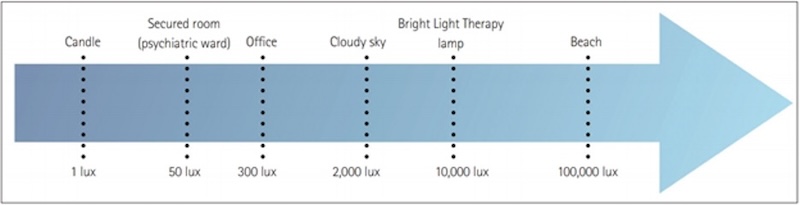
If you’re curious about lux, it is a unit of illumination and this paper, Light Therapy in Mood Disorders: A Brief History with Physiological Insights, includes this very useful lux comparison image:

light therapy and mood disorders
The above is shared under the Creative Commons Attribution License and can be found here .

The combination of using bright light therapy with amino acids such as tryptophan and 5-HTP

I often recommend the use of light therapy in conjunction with amino acids such as tryptophan and 5-HTP. This offers additional serotonin support and helps ease worry-type anxiety, panic attacks, low mood, insomnia, cravings and more. I discuss this combination approach in the winter blues blog.

When someone is already using amino acids with some success, we may just add light therapy and keep amino acid dosing the same or we may use higher doses of amino acids like tryptophan, 5-HTP and GABA during the winter months. We may also use both depending on the person’s unique needs.

I had one client who did really well with tryptophan: his anxiety decreased dramatically but then ramped up before winter. Increasing tryptophan was too much for him so we kept the original tryptophan dose and he started bright light therapy. This worked very well for him until the end of spring when he was able to stop the light therapy.

I also share links to increased OCD (obsessive compulsive disorder), intrusive thoughts, PMDD (premenstrual dysphoric disorder), PMS (premenstrual syndrome), binge eating/emotional eating and drinking/alcoholism in the winter months – and the role of light therapy and amino acids.

Additional resources when you are new to using tryptophan or other amino acids as supplements

We use the symptoms questionnaire to figure out if low serotonin or other neurotransmitter imbalances may be an issue for you.

If you suspect low levels of any of the neurotransmitters and do not yet have my book, The Antianxiety Food Solution – How the Foods You Eat Can Help You Calm Your Anxious Mind, Improve Your Mood, and End Cravings, I highly recommend getting it and reading it before jumping in and using amino acids on your own so you are knowledgeable. And be sure to share it with the practitioner/health team you or your loved one is working with.

There is an entire chapter on the amino acids and they are discussed throughout the book in the sections on gut health, gluten, blood sugar control, sugar cravings, anxiety and mood issues. The importance of quality animal protein is also covered.

The book doesn’t include product names (per the publisher’s request) so this blog, The Antianxiety Food Solution Amino Acid and Pyroluria Supplements, lists the amino acids that I use with my individual clients and those in my group programs.

If, after reading this blog and my book, you don’t feel comfortable figuring things out on your own (i.e. doing the symptoms questionnaire and respective amino acids trials), a good place to get help is the GABA QuickStart Program (if you have low GABA symptoms too). This is a paid online/virtual group program where you get my guidance and community support.

If you are a practitioner, join us in The Balancing Neurotransmitters: the Fundamentals program. This is also a paid online/virtual program with an opportunity to interact with me and other practitioners who are also using the amino acids.

Do you experience increased anxiety, panic attacks and/or the winter blues in the winter months? Have you had success with bright light therapy?

If yes, which full spectrum lamp have you found to be the most useful? What time of the day do you use it, how often do you use it and for what duration?

Have you used a combination of amino acids and light therapy, and adjusted up your amino acids during the colder and darker winter months?

If you’re a practitioner do you recommend light therapy to your clients/patients?

Feel free to share and ask your questions below.

Filed Under: Amino Acids, Anxiety and panic, Depression, Emotional Eating Tagged With: 000 lux, 10, 5-HTP, anxiety, Bipolar, Bright light therapy, depression, emotional eating amino acids, fatigue, GABA Quickstart; Balancing Neurotransmitters: the Fundamentals program for practitioners, how to use, light therapy, mood, panic, SAD, seasonal affective disorder, seasonality, sleep, tryptophan, winter, winter blues

Waking in the night due to environmental toxins: impacts on the liver, gallbladder and fat digestion (making oxalate issues worse)

September 9, 2022 By Trudy Scott 37 Comments

night waking environmental toxins

Today I’m sharing how waking in the night may be caused by oxalate issues that are  made more severe because of home cleaning products, environmental toxins and fragrances/phthalates. It can happen because of the additional detoxification work required and adverse impacts on your liver and gallbladder. This can impact bile production so fat digestion is impaired. And when you have impaired fat digestion this can contribute to more severe oxalate issues because more oxalates are absorbed in the gut. This can lead to increased pain, worsening sleep and/or waking in the night, increased anxiety, fatigue, depression, more severe bladder symptoms, eye problems etc.

Using extra calcium citrate in the night can help in the short term. But improving fat digestion (with lipase, ox bile, taurine, a lipotropic formula, digestive bitters etc.) and supporting the liver/gallbladder is key because it gets to the root of the problem. And of course, avoid the chemical exposure. Sometimes this can’t be done – which is the case when you are traveling – so you have to do your best to reduce exposure.

This is actually my story. I’m traveling in South Africa at the moment and had a flare of my old oxalate issues, with increased foot pain at night, so much so that it was waking me at 3am in the morning. I’d be awake from 3-5am feeling agitated and restless and waiting for the extra calcium citrate to work. I’m a hot mess when I don’t get a solid 8-9 hours sleep so I had to figure out what the issue was and fix it quickly. It was a somewhat convoluted journey (more on that below) but eventually I landed on taurine as the solution and it’s been wonderful to get my solid sleep with no waking in the night!

I do eat a fair amount of fat – plenty of butter on my steamed veggies, olive oil, coconut oil, avocados, the fat from grass-fed meat, chicken skin, full fat cheese and eggs – and didn’t want to cut back.

So when taurine came to the rescue I was thrilled and still am!

I took 500mg before bed the first day and woke briefly twice but went right back to sleep. The second day I took 500mg taurine mid-morning, 500mg taurine mid-afternoon and 500mg before bed (all away from food). That night I woke briefly once and went right back to sleep. The third day I did the same and slept solidly through the night. My goal had been to increase to 3000mg per day but I’ll stick with 1500mg as long as this continues.

There were a few clues that indicated a need for liver-gallbladder support: the 3am waking is classic for liver issues; and my stool had become pale despite nothing else changing.

Impaired fat digestion leads to an increase in oxalate absorption

As mentioned above, when you have impaired fat digestion this can contribute to more severe oxalate issues because more oxalates are absorbed in the gut. This paper, Fat malabsorption induced by gastrointestinal lipase inhibitor leads to an increase in urinary oxalate excretion, summarizes the mechanism well:

Unabsorbed bile acids and fatty acids may react with calcium in the intestinal lumen, forming “soaps” that limit the amount of free calcium binding with oxalate, with a consequent increase in intestinal oxalate absorption leading to hyperoxaluria

In the above study, it’s orlistat (Xenical®), a gastrointestinal lipase inhibitor rather than environmental toxins and bile issues, that causes the increase in oxalates. I share it because it has a helpful explanation of the mechanism.

I share more about my issues with dietary oxalates here – Oxalate crystal disease, dietary oxalates and pain: the research & questions. My main issues in the past have been foot pain and eye pain, with downstream impacts on sleep. This blog has links to a number of other dietary oxalate blogs if this topic is new to you.

Bile production and detoxification

You may recall my wonderful interview with Ann Louise Gittleman on The Anxiety Summit 5: Gut-Brain Axis. The topic was: Why Bile is the Key to Anxiety & Hormone Havoc. I’ll add sleep to that too.

She covered the role of bile in PMS, estrogen imbalance and thyroid health; and importantly, how it’s involved in the removal of toxins from the body:

Bile is the dumping ground for hormones like estrogen. It’s the dumping ground for heavy metals that create anxiety like mercury, as well as too much aluminum and lead. And it’s the dumping ground, also, for a bunch of chemicals. So you got to keep the bile flowing. You have to keep it decongested. You have to thin it out.

She mentions simple tools to improve bile production: bitters (already part of my routine), lemon and water in the morning (also part of my daily routine), coffee (I can’t drink coffee as it makes me anxious), grapefruit and watercress. She also discusses key  nutrients for bile production and quality: choline, inositol, methionine and taurine.

I could not find any lipotropic formula with choline, inositol, methionine (they all had rice flour). And I could not find any products that contained only lipase or ox bile.

While I was looking for something to improve my bile production, I did try a milk thistle extract (for overall liver support) and a liver-gallbladder herbal tincture but both made things worse. So I did some reading on taurine, found a nice taurine only 500mg product and haven’t looked back. Read on for some of the mechanisms.

Taurine and bile acid conjugation and detoxification

Metabolic actions of the amino acid taurine include: “bile acid conjugation, detoxification, membrane stabilization, osmoregulation, and modulation of cellular calcium levels.”

This paper, The Continuing Importance of Bile Acids in Liver and Intestinal Disease, explains the significance of bile acid conjugation with taurine:

After biosynthesis from cholesterol and before excretion from the hepatocyte, bile acid molecules are conjugated with glycine or taurine, which converts a weak acid to a strong acid. As a result, conjugated bile acids are fully ionized at the range of pH values present in the small intestine.

Taurine works on GABA receptors and is a GABA alternative

What is really interesting is that taurine works on GABA receptors and has a synergistic effect with GABA. I suspect this played a role for me too.

In this editorial, Taurine and GABA neurotransmitter receptors, a relationship with therapeutic potential?, the authors share the following::

  • “Taurine exerts its neuronal inhibitory effect through the activation of GABAA receptors (GABAAR) but with less affinity than the specific agonists of each receptor.
  • GABA and taurine act synergistically in extra-synaptic GABA receptors.
  • Some experiments suggest that taurine activates GABAB receptors with high affinity”

In countries where over-the-counter GABA is not available (like the UK, Australia and New Zealand), I will recommend taurine as an option. I don’t find it to be as effective as GABA but it is slightly calming.

You may need to course-correct from time to time

I share this story to illustrate that things can be going well in terms of sleep, pain, anxiety, depression and so on, and then something can happen and you have to course-correct.

I also often hear from folks in my community saying: “GABA and/or tryptophan was working perfectly to help me sleep and all of a sudden it’s no longer working. What is going on?”  A situation like this shows how something else can change and it has nothing to do with the amino acids no longer working.

I do already use GABA, tryptophan (more on these below), melatonin and magnesium at bedtime and continued taking these supplements but I had to fix the root cause – the fat digestion issue.

I will add this: even if you don’t have dietary oxalate issues, this approach may be worth considering if you have no gallbladder, have fat digestion issues, are exposed to environmental toxins, have liver issues and wake in the night.

Resources if you are new to using amino acids as supplements

If you are new to using any of the amino acids as supplements, here is the Amino Acids Mood Questionnaire from The Antianxiety Food Solution (you can see all the symptoms of neurotransmitter imbalances, including low serotonin and low GABA).

If you suspect low levels of any of the neurotransmitters and do not yet have my book, The Antianxiety Food Solution – How the Foods You Eat Can Help You Calm Your Anxious Mind, Improve Your Mood, and End Cravings, I highly recommend getting it and reading it before jumping in and using amino acids on your own so you are knowledgeable. And be sure to share it with the practitioner/health team you or your loved one is working with.

There is an entire chapter on the amino acids and they are discussed throughout the book in the sections on gut health, gluten, blood sugar control, sugar cravings, self-medicating with alcohol and more.

The book doesn’t include product names (per the publisher’s request) so this blog, The Antianxiety Food Solution Amino Acid and Pyroluria Supplements, lists the amino acids that I use with my individual clients and those in my group programs. You can find them all in my online store.

If, after reading this blog and my book, you don’t feel comfortable figuring things out on your own (i.e. doing the symptoms questionnaire and respective amino acids trials), a good place to get help is the GABA QuickStart Program (if you have low GABA symptoms). This is a paid online/virtual group program where you get my guidance and community support.

If you are a practitioner, join us in The Balancing Neurotransmitters: the Fundamentals program. This is also a paid online/virtual program with an opportunity to interact with me and other practitioners who are also using the amino acids.

Have you experienced any adverse symptoms when exposed to environmental toxins? And has this made your oxalate issues worse or affected your fat digestion?

Have you used taurine with success? How much helps you?

Have other liver or gallbladder approaches also helped?

If you have questions please share them here too.

Read all posts in this series:

  • Coronavirus and vitamin C for immune support: new pain or more severe pain due to oxalate issues? (part 1)
  • Oxalate crystal disease, dietary oxalates and pain: the research & questions (part 2)
  • Vitamin C causes oxalate formation resulting in pain, anxiety, and insomnia (when there is a defect in ascorbic acid or oxalate metabolism)? (part 3)
  • Willow’s survival story: Easter Lilies cause acute renal failure in cats and Peace Lilies cause oxalate issues (part 4)
  • Waking in the night due to environmental toxins: impacts on the liver, gallbladder and fat digestion (making oxalate issues worse) (part 5)

Filed Under: GABA, Insomnia, Oxalates, Pain Tagged With: anxiety, Balancing Neurotransmitters: the Fundamentals program for practitioners, bile, bladder symptoms, calcium citrate, depression, detoxification, digestive bitters; GABA Quickstart program, environmental toxins, eye problems, fat digestion, fatigue, fragrances, gallbladder, home cleaning products, insomnia, lipase, lipotropic formula, liver, ox bile, oxalates, pain, phthalates, sleep, taurine, Waking in the night

Non-celiac gluten sensitivity manifestations outside the gut: foggy mind, depression, anxiety, neuropathy, joint pain, headache, fatigue and IBS

July 1, 2022 By Trudy Scott 2 Comments

non-celiac gluten sensitivity

Celiac disease is “a digestive and autoimmune disorder that can damage your small intestine. People with celiac disease might experience symptoms like diarrhea, bloating, gas, anemia and growth issues. Celiac disease can be triggered by a protein called gluten. Gluten is found in grains, like wheat, barley and rye” (and oats that are contaminated with gluten). This description by the Cleveland Clinic is well-understood and recognized.

However, what is less recognized and understood, is extra-intestinal (or outside the gut) manifestations of non-celiac gluten sensitivity.  A paper published in 2018, Extra-intestinal manifestations of non-celiac gluten sensitivity: An expanding paradigm lists a number of symptoms and conditions that gluten consumption may cause and/or contribute to, even when you do not have celiac disease.

These can include: ‘foggy mind’; psychiatric diseases such as depression, anxiety and even psychosis; gluten ataxia, gluten neuropathy and gluten encephalopathy (causing memory and cognitive problems); joint and muscle pain, and leg or arm numbness; headache and fatigue;  irritable bowel syndrome (IBS); autoimmune disorders; and and fibromyalgia.

This blog post highlights excerpts from the 2018 non-celiac gluten sensitivity paper and stories from real people who have experienced relief when removing gluten from their diets. And resources if you find you need neurotransmitter support to help break the addiction and not feel deprived.

This is from the abstract of the above paper:

Non celiac gluten sensitivity (NCGS) is a syndrome characterized by a cohort of symptoms related to the ingestion of gluten-containing food in subjects who are not affected by celiac disease (CD) or wheat allergy. The possibility of systemic manifestations in this condition has been suggested by some reports.

  • In most cases they are characterized by vague symptoms such as ‘foggy mind’, headache, fatigue, joint and muscle pain, leg or arm numbness even if more specific complaints have been described.
  • NCGS has an immune-related background. Indeed there is strong evidence that a selective activation of innate immunity may be the trigger for NCGS inflammatory response. The most common autoimmune disorders associated with NCGS are Hashimoto thyroiditis, dermatitis herpetiformis, psoriasis and rheumatologic diseases.
  • A possible neurological involvement has been underlined by NCGS association with gluten ataxia, gluten neuropathy and gluten encephalopathy.
  • NCGS patients may show even psychiatric diseases such as depression, anxiety and psychosis.
  • Finally, a link with functional disorders (irritable bowel syndrome and fibromyalgia) is a topic under discussion.

We see all this clinically so it’s wonderful to see this being addressed in the research. However, the authors are saying we need more research and better studies:

the novelty of this matter has generated an expansion of literature data with the unavoidable consequence that some reports are often based on low levels of evidence. Therefore, only studies performed on large samples with the inclusion of control groups will be able to clearly establish whether the large information from the literature regarding extra-intestinal NCGS manifestations could be supported by evidence-based agreements.

Until then we use what we know works clinically: a gluten-free diet and observation of symptom resolution. We also use amino acids to balance brain chemicals so we break the addiction and don’t feel deprived (more on that below). Nutritional deficiencies caused by damage to the gut/leaky gut also need to be addressed, as well as healing the leaky gut and dysbiosis.

I shared the study abstract on Facebook asking for feedback and the response was so overwhelming that I can only share some of the feedback. I will do follow-up posts sharing more detailed information from their healing journeys.

Caroline had bloating, pain and chronic sadness, and discovered  “joie de vivre”

Caroline confirmed that she has gluten sensitivity saying she stopped eating wheat in 2011:

Within a few months, my chronic sadness disappeared and I discovered the “joie de vivre”. It also allowed me to get rid of my swelling belly (bloating). Every evening I looked like a woman 2-3 months pregnant. [this likely falls into the irritable bowel syndrome category mentioned in the paper]

The pain in my joints also ended up disappearing.

I read so much about gluten once I started to realize it had changed my life to quit eating that stuff that now I’m convinced grains shouldn’t be part of human food, and I mean all grains (botanically speaking).

I think grains should at least be taken off all the menus in all hospitals, especially the psychiatric ones.

I adore her “joie de vivre” feedback and am so happy for her! I had this same feeling of pure joy when I went gluten-free. And I get so much feedback like this from clients who had no idea life could be so much better.

I also agree with her sentiment about gluten and grains being an issue too, especially in psychiatric settings.

Daphne was emotionally dysregulated with negative feelings and a pressure headache

Daphne shared what she calls an odd effect that she gets soon after eating bread: roiling emotions:

I get emotionally dysregulated. Negative feelings surface in various degrees, for me primarily anger and the reviewing of the incidents that caused it (aka ruminating thoughts?); less often sadness, disappointment, and overwhelm (that usually surfaces on its own anyway).

I also get what I call ‘bread head.’ I get a pressure headache from between my eyebrows, up the center of my head to my crown.

An additional effect: ‘the hangover’. Overnight the pressure headache subsides and the next day my whole head feels heavy and I am slower physically and mentally, and my hands in particular are achy

Also, I have had chicken bumps on my skin my whole life, until I stopped eating bread. I still have some, maybe from rice, potato and corn reactions. Starch is not my friend.

As I mentioned above, many folks are surprised at the emotional changes they see when eating gluten. Daphne called it an odd effect but her response is a very typical extra-intestinal (outside the gut) psychiatric response. And yes starches and grains are an issue for many folks.

Other feedback: fibromyalgia pain, brain fog, depression, cystic acne, anxiety, body aches, fatigue, PCOS and hypothyroidism

Here is some feedback from a few other women. As you can see the symptoms can vary per person:

  • “Removal of gluten and all grains has improved my fibromyalgia pain symptoms … The difference in pain was so dramatic that it was worth it.”
  • “It makes such a difference with my brain fog and depression! And cystic acne. If I have gluten, I have cystic acne for about 2 weeks.”
  • “My joint pain, anxiety, and depression are much improved when I avoid gluten (and corn.)”
  • “Yes! Within 15 min of ingesting gluten containing food I get all over body aches, fatigue and brain fog. It’s very unpleasant. I cut gluten out of my diet simply because I can’t function properly while eating it. I also have had episodes of reactive hypoglycemia from it too.”
  • “Removing gluten has cured my hypothyroidism. Also has improved my PCOS, anxiety and depression.”

Stay tuned for a follow-up blog with more from their healing journeys and additional insights from me.

Using the amino acids to help break the gluten addiction and feel less deprived

Sometimes it’s difficult to figure out why you crave or are addicted to gluten. It can be challenging to determine which part of your brain chemistry it’s affecting, and you may not associate cravings with mood issues.

Your drug-of-choice is something you self-medicate with and it is something that makes you feel good or “normal.” It could be starchy gluten-containing foods like bread or pasta or cookies. It could also be candy, chocolate, ice-cream, coffee, sodas, wine/beer, cigarettes, marijuana, a prescription medication like Prozac, street drugs, or even shopping or exercise.

Cravings for these substances (or behaviors) typically indicate a brain chemistry imbalance, so it’s very helpful to identify how the substances you crave affect you. This will help you determine which amino acids you might supplement to address the imbalance.

Use your “drug-of-choice” from your gluten or grain list (perhaps you love bread or chocolate chip muffins) and the chart below to help you determine what brain chemistry imbalance may be affecting you and which amino acid you may benefit from.

How you feel before How you feel after Brain chemistry imbalance Amino acid to supplement
Anxious or stressed Calm or relaxed Low GABA GABA
Depressed or anxious Happy or content Low serotonin Tryptophan or 5-HTP
Tired or unfocused Energetic, alert, or focused Low catecholamines Tyrosine
Wanting a reward or sad Rewarded or comforted Low endorphins DPA (d-phenylalanine)
Irritable and shaky Grounded or stable Low blood sugar Glutamine

Once you address that brain chemical imbalance, it’s easy to quit and you won’t feel deprived.

You can read more about why you crave on this blog post

Resources if you are new to using the amino acids as supplements

If you are new to using any of the amino acids as supplements, here is the Amino Acids Mood Questionnaire from The Antianxiety Food Solution (you can see all the symptoms of neurotransmitter imbalances).

If you suspect low levels of any of the neurotransmitters and do not yet have my book, The Antianxiety Food Solution – How the Foods You Eat Can Help You Calm Your Anxious Mind, Improve Your Mood, and End Cravings, I highly recommend getting it and reading it before jumping in and using amino acids on your own so you are knowledgeable. And be sure to share it with the practitioner/health team you or your loved one is working with.

There is an entire chapter on the amino acids and they are discussed throughout the book in the sections on gut health, gluten, blood sugar control, sugar cravings, self-medicating with alcohol and more. There is also an entire chapter on gluten and grains if this is new to you.

The book doesn’t include product names (per the publisher’s request) so this blog, The Antianxiety Food Solution Amino Acid and Pyroluria Supplements, lists the amino acids that I use with my individual clients and those in my group programs.

If, after reading this blog and my book, you don’t feel comfortable figuring things out on your own (i.e. doing the symptoms questionnaire and respective amino acids trials), a good place to get help is the GABA Quickstart Program (if you have low GABA symptoms). This is a paid online/virtual group program where you get my guidance and community support. There are many moms in the program who are having much success with their kids.

If you are a practitioner, join us in The Balancing Neurotransmitters: the Fundamentals program. This is also a paid online/virtual program with an opportunity to interact with me and other practitioners who are also using the amino acids.

With much appreciation for these women for sharing their stories. I’d love to get some of these published as case studies to further add to the evidence.

Do you have (or suspect you may have) non celiac gluten sensitivity (NCGS)?

And has gluten removal resolved any of the above issues? And have you seen an improvement in gut issues too?

Have you observed other improvements since eating gluten and/or grain-free?

Did you find the amino acids helped you break your addiction and feel less deprived?

Or are you stuck and still eating gluten and have no idea where to start on quitting? If this is you, would a webinar series help?

If you have questions please share them here too.

Filed Under: Anxiety, Endorphins, GABA, Gluten, Pain, serotonin Tagged With: "joie de vivre", addiction, amino acids, anxiety, Autoimmunity, bloating, body aches, brain fog, celiac, cystic acne, depression, deprived, emotionally dysregulated, extra-intestinal, fatigue, Fibromyalgia, foggy mind, GABA, GABA Quickstart program, gluten, gluten encephalopathy, headache, hypothyroidism, IBS, joint pain, NCGS, negative feelings, neuropathy, Non-celiac gluten sensitivity, outside the gut, PCOS, psychosis, sadness, wheat

DLPA (DL-Phenylalanine) eases PMDD/PMS symptoms in women who experience declining endorphin levels in the second half of their cycles

March 18, 2022 By Trudy Scott 23 Comments

dlpa

Mood swings, intense sugar cravings, comfort/binge eating, sadness, anxiety, crying, cramps and increased pain, irritability, anger, fatigue, cognitive dysfunction, overwhelm, feelings of unease and dissatisfaction, aggression, heartache, and/or insomnia are common for many women during the second half of the menstrual cycle i.e. in the luteal phase. You may relate to all or some of these symptoms. And you may have been diagnosed with or may identify with PMS (premenstrual syndrome) or PMDD (premenstrual dysphoric disorder – similar to PMS but more serious).

Research shows improvements of these symptoms with the amino acids tryptophan (which provides serotonin support) and GABA (which supports GABA levels). Although there is no research that the pyroluria protocol improves symptoms it’s something I see clinically all the time. (I’ve written about this extensively and share more on this below)

A really interesting study published in 1989 identified low endorphins and low catecholamines as a probable cause for some women – Prevention of Late Luteal Phase Dysphoric Disorder Symptoms with DL-Phenylalanine in Women with Abrupt β-Endorphin Decline: A Pilot Study

I recently came across the above paper and prior to this, had not considered this as a primary root cause. Here is the excerpt from the abstract:

Twenty-two women with late luteal phase dysphoric disorder were treated with DL-phenylalanine during the 15 days prior to menses in a double-blind crossover study.

DL-Phenylalanine was shown to be more effective than placebo in attenuating many symptoms characteristic of luteal phase dysphoric disorder. This amino acid was chosen because of its hypothesized actions in attenuating the symptoms associated with the sharp decline in central β-endorphin levels during the late luteal phase in women with luteal phase dysphoric disorder.

Let’s review a few terms… Late luteal phase dysphoric disorder is a synonym for PMDD. The luteal phase is one stage of the menstrual cycle and occurs after ovulation and before your period. When you feel dysphoric you feel very unhappy, uneasy, or dissatisfied. With the downward endorphin shift at this time, period pain and other pain can be worse, and weepiness and emotional symptoms increase. The need for comfort or reward eating also increases. The study authors suggest these PMDD symptoms may “closely resemble those seen during morphine or heroin withdrawal.”

Based on my experience I do feel comfortable extrapolating these findings to PMS and even peri and post-menopausal women who experience some or all of these symptoms (other than actual periods and period issues in post-menopausal women).

Study participants, dosing and timing of DLPA and improvements

The participants in the study were white, middle-class, and between 24 and 29. Each woman took one 750 mg of DLPA at breakfast and lunch for the 15 days prior to the expected onset of their periods.

In the study groups, it was found that “initial improvement started at the end of the first month of DLPA therapy. Continued therapy brought increased relief from symptoms by the end of the second month. Interestingly, the greatest period of improvement occurred during the washout period” at the end of the third month possibly due to a delayed action of DL-phenylalanine.

The authors make the following conclusion:

DL-phenylalanine was found to be safe, well-accepted, and without significant side effects. The significant improvement it produced with many of the symptoms characteristic of Late Luteal Phase Dysphoric Disorder [PMDD] suggests that it may prove a useful addition to the therapeutic armamentarium for this syndrome.

Keep in mind that a typical starting dose of DLPA is 500mg used 2-3 x per day and it’s typically used between meals for best effects. Ideal is also to customize dosing to your unique needs. In this study, everyone received the same dose at the same time. For these reasons it’s even more impressive to see results like they did.

It makes sense but I have just not used DPLA alone and only in the second half of the cycle

It’s a very small pilot study but given my experience with the amino acids DLPA, DPA and tyrosine, and the vast number of women I have worked with who had symptoms like the above, it makes sense. Using the above three amino acids in combination with dietary changes, tryptophan, GABA and the pyroluria protocol, this approach has offered relief for many of my clients. I have just not used DPLA alone and only in the second half of the cycle.

In case you’re wondering why I mention the three amino acids DLPA, DPA and tyrosine above, it’s because:

  • DLPA (the amino acid used in this study) supports both endorphins and catecholamines (dopamine is one of them)
  • Or DPA (supports endorphins only) can be used with tyrosine (supports catecholamines only) instead of DLPA which does both

I blog about the differences between DLPA and DPA here, together with all the symptoms we look at when considering doing a trial.

In this study, they used DLPA which boosts endorphins and catecholamines. As I share in my DPA vs DLPA blog, I prefer DPA (d-phenylalanine) for endorphin support when symptoms are severe. But DPA is not always available so DLPA is a good alternative, assuming the person can handle the catecholamine support. Some people can’t and there are some contraindications too.

I’d love to see follow-on research covering the following:

  • A larger group of women using DLPA
  • Individualizing the dosing of DLPA to each person’s unique needs
  • Correlating results with the low endorphin and low catecholamine symptoms questionnaire
  • Comparing DLPA alone with a combination of DPA + tyrosine (with each individualized based on unique needs)

Serotonin and GABA support for PMS/PMDD, and the pyroluria protocol

In this paper, Premenstrual Dysphoric Disorder the authors share that PMDD

comprises emotional and physical symptoms and functional impairment that lie on the severe end of the continuum of premenstrual symptoms. Women with PMDD have a differential response to normal hormonal fluctuations.

It’s recognized that serotonin and GABA play a role:

This susceptibility may involve the serotonin system, altered sensitivity of the GABAA receptor to the neurosteroid allopregnanalone [a naturally occurring neurosteroid which is made from the hormone progesterone], and altered brain circuitry involving emotional and cognitive functions.

They share SSRIs that are considered as the first-line treatment. Second-line treatments include oral contraceptives, calcium, chasteberry, and cognitive-behavioral therapy.

However, as I share in this blog, research supports the use of tryptophan – Tryptophan for PMS: premenstrual dysphoria, mood swings, tension, and irritability

A study published in 1999, A placebo-controlled clinical trial of L-tryptophan in premenstrual dysphoria, tryptophan was found to reduce symptoms of PMS when used in the luteal phase or second half of the cycle (i.e. after ovulation).

I mention GABA in this blog and the fact that many anxious women I work with also have pyroluria or signs of low zinc and low vitamin B6 and adding these nutrients, together with evening primrose oil, provide additional hormonal and neurotransmitter support, and help with the social anxiety.

Resources if you are new to using DLPA (or other amino acids) as supplements

If you are new to using DLPA or the other amino acids as supplements, here is the Amino Acids Mood Questionnaire from The Antianxiety Food Solution (you can see the low endorphin and low catecholamine symptoms.)

If you suspect low levels of endorphins and/or low levels of catecholamine and do not yet have my book, The Antianxiety Food Solution – How the Foods You Eat Can Help You Calm Your Anxious Mind, Improve Your Mood, and End Cravings, I highly recommend getting it and reading it before jumping in and using amino acids on your own so you are knowledgeable. And be sure to share it with the team you or your loved one is working with. Blog posts like this are intended to add value to the chapter on amino acids, which contains detailed information on doses and time of the day for dosing.

The book doesn’t include product names (per the publisher’s request) so this blog, The Antianxiety Food Solution Amino Acid and Pyroluria Supplements, lists the amino acid products that I use with my individual clients and those in my group programs.

If you are a practitioner, join us in The Balancing Neurotransmitters: the Fundamentals program. It’s an opportunity to interact with me and other practitioners who are also using the amino acids.

Have you considered that there may be different types of PMS (premenstrual syndrome) or PMDD (premenstrual dysphoric disorder) i.e. a different combination of root causes and therefore different solutions?

And have you had success with DLPA alone (providing both endorphin and dopamine support) or by using a combination of DPA (endorphin support only) and tyrosine (catecholamine support only).

If you’re peri or post menopausal have you also seen success with any of these amino acids?

Have the other amino acids, tryptophan and GABA or the pyroluria protocol helped too?

If you’re a practitioner please share what you’ve seen with clients/patients.

Feel free to ask your questions here too.

Filed Under: Amino Acids, Anxiety, Hormone, PMS, Women's health Tagged With: aggression, anger, anxiety, catecholamines, Cognitive dysfunction, comfort/binge eating, cramps, crying, dissatisfaction, dl-phenylalanine, DLPA, endorphin, fatigue, feelings of unease, GABA, heartache, increased pain, insomnia, intense sugar cravings, irritability, luteal phase. premenstrual syndrome, menstrual cycle, mood swings, overwhelm, PMDD, PMS, premenstrual dysphoric disorder, pyroluria, sadness, second half of their cycles, serotonin, tryptophan

Fatigue, sleep disorders, depression, anxiety, fibromyalgia and cardiac troubles as the expression of a classic mild thiamine deficiency

October 8, 2021 By Trudy Scott 15 Comments

coffee sugar thiamine

Fatigue, sleep disorders, depression, anxiety, fibromyalgia and cardiac troubles are some of the symptoms we see as the expression of a classic mild thiamine deficiency. Thiamine deficiency is very under-rated and under-recognized, and can have far reaching ramifications. And a magnesium deficiency and high dose magnesium can actually cause a thiamine deficiency. There are also many other causes of thiamine deficiency that may not be on your radar: a high carb/processed food/sugar diet, coffee, tea, alcohol, genetics, environmental toxins, medications, celiac disease, leaky gut, bariatric surgery and malabsorption.

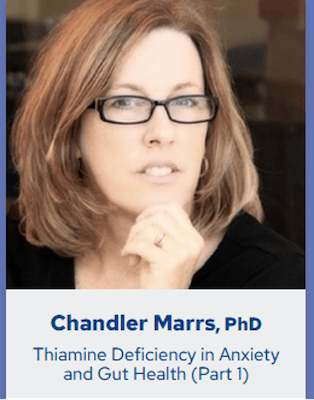
It’s for this reason that I invited Chandler Marrs, PhD to speak on the Anxiety Summit 5: Gut-Brain Axis. We had so much to cover and it ended up being so long, that we split it into part 1 and part 2.

chandler marrs

This is what we cover in Thiamine Deficiency in Anxiety and Gut Health (Part 1)

  • Excessive carbs, alcohol, medications and genetics as causes of low B1/thiamine
  • Dysbiosis, dysmotility, constipation, anxiety, depression, panic attacks, low energy
  • Psychiatric and digestive effects: research, history and other symptoms

This is what we cover in Thiamine Deficiency in Anxiety and Gut Health (Part 2)

  • The mitochondria, dysautonomia and POTS
  • Other symptoms: hyperemesis, exercise intolerance, muscle pain, neuropathy
  • Thiamine supplementation – forms, dosing and paradoxical reactions

Thiamine deficiency is under-rated and under-recognized

We start with why it’s an under-rated and under-recognized deficiency and Dr. Marrs shares that the assumption is that deficiency is not common and even when you test it looks like you are not deficient:

  • “The assumption is that there is no such thing [as a thiamine deficiency] and that it’s rare unless you are a chronic alcoholic. And even then, it’s missed 80% of the time. Or you have a severe injury or illness that depletes thiamine rapidly.
  • The presumption is that we’ve solved it, and it’s rare, and it only happens in countries where food availability is problematic.
  • The reality is that the chemistry of our foods, the chemistry of our environment, the medications that we take all combine and accrue to not only deplete the available thiamine on the basis of intake but to increase the need and to damage a lot of the enzymes involved in the processing of thiamine.
  • So a lot of folks are functionally deficient in that even though by definition they meet the daily requirement and they may, based upon lab testing, show up as being sufficient and not frankly deficient.
  • And so, I think that we just have taken our eye off of the ball with regard to this particular nutrient.”

Magnesium deficiency (and high dose magnesium) can actually cause a thiamine deficiency

Dr. Marrs also shares how a magnesium deficiency (which is very common) can actually cause a thiamine deficiency:

  • “One of the things that’s interesting is it requires magnesium to activate thiamine into its active form.
  • If someone is thiamine sufficient and magnesium deficient, then they are actually functionally deficient in thiamine because you cannot take the free thiamine and activate it into thiamine pyrophosphate.
  • So magnesium deficiency itself can cause thiamine deficiency. And there’s a good percentage of the population that doesn’t get enough magnesium.”

And she also shares how when taking high dose magnesium it’s so crucial to also be addressing low thiamine in order to prevent them becoming more thiamine deficient:

  • “Now, the flip side of that is really interesting. And I think this is important for your audience, in particular, is that magnesium supplementation, when someone has a problem with thiamine, will actually shut down thiamine processing and mitochondrial processing at one of the enzymes. Because if you don’t have thiamine with magnesium, then the enzyme α-ketoglutarate dehydrogenase kind of shuts the whole sequence down.
  • So if you are giving someone high dose magnesium, which is common to supplement, and not tackling the thiamine as well, you risk them becoming more thiamine deficient and reducing ATP output, energy output even further. So everything has to be in balance to some extent or another.”

I can think of one situation where this could be common. You use high dose magnesium due to constipation. Low thiamine may be one of the underlying causes of your constipation and now high dose magnesium is going to make the low thiamine situation worse.

Up to 30% of psychiatric patients have a thiamine deficiency

We talk about how up to 30% of psychiatric patients have a thiamine deficiency but that there hasn’t been enough work on psychiatric disorders which Dr. Marrs says “is strange given the fact that some of the strongest symptoms involve brain function and the most dangerous or some of the more dangerous damage is relative to areas of the brain.”

I share some quotes from a 2019 paper that does actually look at the psychiatric aspects – Neurological, Psychiatric, and Biochemical Aspects of Thiamine Deficiency in Children and Adults:

  • “The brain is highly vulnerable to thiamine deficiency due to its heavy reliance on mitochondrial ATP production. This is more evident during rapid growth, i.e., perinatal and children.
  • Thiamine deficiency contributes to a number of conditions spanning from mild neurological and psychiatric symptoms, confusion, reduced memory, sleep disturbances, and severe encephalopathy, ataxia, congestive heart failure, muscle atrophy, and even death.”

This paper also looks at the beneficial effect of thiamine supplementation in autism spectrum disorder (ASD) and other neurological conditions.

Below, I share some additional studies that we didn’t talk about in the interview but add value to the topic.

Fatigue, sleep disorders, depression, anxiety, fibromyalgia and cardiac troubles as the expression of a classic mild thiamine deficiency

This paper, High-dose thiamine improves the symptoms of fibromyalgia, states that “It is our opinion that fatigue, sleep disorders, depression, anxiety and cardiac troubles are the expressions of a classic mild thiamine deficiency.”

The authors share 3 cases where thiamine/vitamin B1 improved symptoms in all areas for all these women:

  • Patient 1: Female, 58 years old, weight 59 kg. From 1998, the patient began to have widespread pain accompanied by severe fatigue, depression, anxiety, irritability, sleep disorders, trouble concentrating, dry skin, general sickness, continuous headache, intolerance to low temperatures and, more recently, episodes of tachycardia and extrasystolia [alteration in heart rhythm].
  • Patient 2: Female, 37 years old, weight 74 kg. From 1999, the patient has had widespread pain and all the symptoms described for patient 1, with the only exception being that of cardiac symptoms.
  • Patient 3: Female, 60 years old, weight 65 kg. From 2006, the patient began to have widespread pain, fatigue, depression, anxiety, sleep disorders. Trouble concentrating.

As you can see the symptoms can be very varied and this is what makes it challenging to identify low thiamine as being the issue.

Thiamine deficiency after bariatric surgery

Here one case study where thiamine deficiency occurred after bariatric surgery: Wernicke’s encephalopathy mimicking multiple sclerosis in a young female patient post-bariatric gastric sleeve surgery:

We describe a case of Wernicke’s encephalopathy secondary to thiamine (B1) deficiency in a patient status post-bariatric sleeve gastrectomy.

The presenting symptoms of new-onset weakness, diplopia [double-vision], and confusion in a young female patient raised suspicion for multiple sclerosis (MS), but given a history of bariatric surgery, thiamine levels were checked, revealing significant Vitamin B1 (thiamine) deficiency.

This case highlights the importance of thorough history taking, as a misdiagnosis of MS in this case could have resulted in irreversible neurological deterioration and hematological and infectious consequences associated with the inappropriate administration of disease-modifying therapies.

Bariatric surgery is one of many causes of thiamine deficiency.

Some of the other many causes of thiamine deficiency

Other causes of thiamine deficiency include factors that may not be on your radar: a high carb/processed food/sugar diet (and even consistent smaller amounts of “healthy” sweeteners), coffee and tea consumption, alcohol consumption (excessive consumption and even moderate consumption i.e. social drinking), genetics (we talk about specific genes in the interview), environmental toxins, certain medications, celiac disease, leaky gut and malabsorption etc.

We do a deep dive into all this in the two interviews (and much more).

chandler marrs interview
(As you can see, when I do interviews I take notes throughout for a few reasons: writing consolidates the information into my brain and it allows me to make notes for follow-up questions. It also helps the video editing process later.)

Interviews that dove-tail well with this topic are these ones:

  • Michael Collins – Sugar/Fructose Addiction: Anxiety, ADHD and Aggression (because sugar and carbs lead to low thiamine)
  • My interviews, Glutamine, DPA and Tyrosine for Anxiety and Sugar Cravings and GABA & Tryptophan: Gut-Anxiety Connections (because the amino acids help you quit sugar/carbs, coffee and alcohol easily)
  • Tara Hunkin, NTP, CGP, RWP – Mitochondrial Dysfunction in Anxiety (because low thiamine adversely affects the mitochondria)

I encourage you to tune in if you have:

  • Anxiety & feel overwhelmed & stressed by little things
  • Panic attacks &/or obsessive thoughts or behaviors
  • Social anxiety/pyroluria
  • Phobias or fears (flying, spiders or even driving on a highway)

And also if you suffer from…

  • Food sensitivities, IBS/SIBO, parasites or gallbladder issues
  • Constipation, diarrhea, bloating, gas, pain & other digestive issues
  • Leaky gut, a leaky blood-brain barrier or vagus nerve issues

Join us if you are also an emotional eater with intense sugar cravings (and know you suffer from low blood sugar), experience insomnia, low mood, PMS, poor focus and/or low motivation.

This is THE online event to learn about the powerful individual amino acids – GABA, theanine, tryptophan, 5-HTP, glutamine, DPA and tyrosine – to quickly ease anxiety and help with gut symptoms while you are dealing with other root causes which take longer to address. (They also help with cravings as with this example, and sleep and immunity).

With research-based anxiety nutritional solutions and practical steps, you can determine your root causes, ease your anxiety and prevent it from coming back so you can feel on top of the world again!

If you are a practitioner, please join us too and find advanced solutions for your clients or patients too!

You’ve heard me say the Anxiety Summit has been called “a bouquet of hope!” My wish for you is that this summit is your bouquet of hope!

I hope you’ll join me and these incredible speakers, be enlightened and find YOUR solutions! More about this summit and other Anxiety Summits here.

Here’s to no more anxiety and you feeling on top of the world again!

Please share if these thiamine deficiency symptoms are new to you.

Also let us know if you’ve benefited from thiamine in the past or are currently using some form of thiamine – and how helped/is helping.

Have you seen this correlation between low magnesium and low thiamine OR taking high doses of magnesium and low thiamine symptoms?

Feel free to post your questions here too.

Learn more/purchase now

Filed Under: Anxiety, Depression, Sugar addiction, The Anxiety Summit 5 Tagged With: alcohol, anxiety, Anxiety Summit 5, carbs, cardiac, Chandler Marrs PhD., coffee, depression, fatigue, Fibromyalgia, insomnia, magnesium, neurological, psychiatric, sleep disorders, sugar, sugar craving, Thiamine, vitamin B1

  • Page 1
  • Page 2
  • Page 3
  • Go to Next Page »

Primary Sidebar

NEW! GABA QuickStart Homestudy (with special intro pricing)

gaba quickstart homestudy

Free Report

9 Great Questions Women Ask about Food, Mood and their Health

You'll also receive a complimentary subscription to my ezine "Food, Mood and Gal Stuff"


Connect with me

Popular Posts

  • Amino Acids Mood Questionnaire from The Antianxiety Food Solution
  • The Antianxiety Food Solution Amino Acid and Pyroluria Supplements
  • Pyroluria Questionnaire from The Antianxiety Food Solution
  • Collagen and gelatin lower serotonin: does this increase your anxiety and depression?
  • Tryptophan for the worry-in-your-head and ruminating type of anxiety
  • GABA for the physical-tension and stiff-and-tense-muscles type of anxiety
  • The Antianxiety Food Solution by Trudy Scott
  • Seriphos Original Formula is back: the best product for anxiety and insomnia caused by high cortisol
  • Am I an anxious introvert because of low zinc and vitamin B6? My response to Huffington Post blog
  • Vagus nerve rehab with GABA, breathing, humming, gargling and key nutrients

Recent Posts

  • What do I use instead of Seriphos to help lower high cortisol that is affecting my sleep and making me anxious at night?
  • BeSerene™ GABA/theanine cream eases severe muscle tension in her neck/shoulders, prevents her bad headaches and quells her anxiety
  • How the correct approach, dose and sublingual use of GABA can be calming and not cause a flushed and itchy face and neck
  • The amino acid glutamine improves low mood by addressing gut health, and it has calming effects too
  • Flight anxiety with heightened breath, physical tension and also fearing the worst (the role of low GABA and low serotonin)

Categories

  • 5-HTP
  • AB575
  • Addiction
  • ADHD
  • Adrenals
  • Alcohol
  • Allergies
  • Alzheimer's disease
  • Amino Acids
  • Anger
  • Antianxiety
  • Antianxiety Food Solution
  • Antidepressants
  • Anxiety
  • Anxiety and panic
  • Autism
  • Autoimmunity
  • benzodiazapines
  • Bipolar disorder
  • Books
  • Caffeine
  • Cancer
  • Candida
  • Children/Teens
  • Collagen
  • Cooking equipment
  • Coronavirus/COVID-19
  • Cravings
  • Depression
  • Detoxification
  • Diabetes
  • Diet
  • DPA/DLPA
  • Drugs
  • EFT/Tapping
  • EMF
  • EMFs
  • Emotional Eating
  • Endorphins
  • Environment
  • Essential oils
  • Events
  • Exercise
  • Fear
  • Fear of public speaking
  • Fertility and Pregnancy
  • Fish
  • Food
  • Food and mood
  • Functional neurology
  • GABA
  • Gene polymorphisms
  • General Health
  • Giving
  • Giving back
  • Glutamine
  • Gluten
  • GMOs
  • Gratitude
  • Gut health
  • Heart health/hypertension
  • Histamine
  • Hormone
  • Hyperparathyroidism
  • Hypoglycemia
  • Immune system
  • Inflammation
  • Insomnia
  • Inspiration
  • Introversion
  • Joy and happiness
  • Ketogenic diet
  • Lithium orotate
  • Looking awesome
  • Lyme disease and co-infections
  • MCAS/histamine
  • Medication
  • Men's health
  • Mental health
  • Mercury
  • Migraine
  • Mold
  • Movie
  • MTHFR
  • Multiple sclerosis
  • Music
  • NANP
  • Nature
  • Nutritional Psychiatry
  • OCD
  • Osteoporosis
  • Oxalates
  • Oxytocin
  • Pain
  • Paleo
  • Parasites
  • Parkinson’s disease
  • PCOS
  • People
  • PMS
  • Postpartum
  • PTSD/Trauma
  • Pyroluria
  • Questionnaires
  • Real whole food
  • Recipes
  • Research
  • Schizophrenia
  • serotonin
  • SIBO
  • Sleep
  • Special diets
  • Sports nutrition
  • Stress
  • Sugar addiction
  • Sugar and mood
  • Supplements
  • Teens
  • Testimonials
  • Testing
  • The Anxiety Summit
  • The Anxiety Summit 2
  • The Anxiety Summit 3
  • The Anxiety Summit 4
  • The Anxiety Summit 5
  • The Anxiety Summit 6
  • Thyroid
  • Thyroid health
  • Toxins
  • Tryptophan
  • Tyrosine
  • Uncategorized
  • Vegan/vegetarian
  • Women's health
  • Yoga

Archives

  • October 2025
  • September 2025
  • August 2025
  • July 2025
  • June 2025
  • May 2025
  • April 2025
  • March 2025
  • February 2025
  • January 2025
  • November 2024
  • October 2024
  • September 2024
  • August 2024
  • July 2024
  • June 2024
  • May 2024
  • April 2024
  • March 2024
  • February 2024
  • January 2024
  • December 2023
  • November 2023
  • October 2023
  • September 2023
  • August 2023
  • July 2023
  • June 2023
  • May 2023
  • April 2023
  • March 2023
  • February 2023
  • January 2023
  • December 2022
  • November 2022
  • October 2022
  • September 2022
  • August 2022
  • July 2022
  • June 2022
  • May 2022
  • April 2022
  • March 2022
  • February 2022
  • January 2022
  • December 2021
  • November 2021
  • October 2021
  • September 2021
  • August 2021
  • July 2021
  • June 2021
  • May 2021
  • April 2021
  • March 2021
  • February 2021
  • January 2021
  • December 2020
  • November 2020
  • October 2020
  • September 2020
  • August 2020
  • July 2020
  • June 2020
  • May 2020
  • April 2020
  • March 2020
  • February 2020
  • January 2020
  • December 2019
  • November 2019
  • October 2019
  • September 2019
  • August 2019
  • July 2019
  • June 2019
  • May 2019
  • April 2019
  • March 2019
  • February 2019
  • January 2019
  • December 2018
  • November 2018
  • October 2018
  • September 2018
  • August 2018
  • July 2018
  • June 2018
  • May 2018
  • April 2018
  • March 2018
  • February 2018
  • January 2018
  • December 2017
  • November 2017
  • October 2017
  • September 2017
  • August 2017
  • July 2017
  • June 2017
  • May 2017
  • April 2017
  • March 2017
  • February 2017
  • January 2017
  • December 2016
  • November 2016
  • October 2016
  • September 2016
  • August 2016
  • July 2016
  • June 2016
  • May 2016
  • April 2016
  • March 2016
  • February 2016
  • January 2016
  • December 2015
  • November 2015
  • October 2015
  • September 2015
  • August 2015
  • July 2015
  • June 2015
  • May 2015
  • April 2015
  • March 2015
  • February 2015
  • January 2015
  • December 2014
  • November 2014
  • October 2014
  • September 2014
  • August 2014
  • July 2014
  • June 2014
  • May 2014
  • April 2014
  • March 2014
  • February 2014
  • January 2014
  • December 2013
  • November 2013
  • October 2013
  • September 2013
  • August 2013
  • July 2013
  • June 2013
  • May 2013
  • April 2013
  • March 2013
  • February 2013
  • January 2013
  • December 2012
  • November 2012
  • October 2012
  • August 2012
  • July 2012
  • June 2012
  • May 2012
  • April 2012
  • March 2012
  • February 2012
  • January 2012
  • December 2011
  • November 2011
  • October 2011
  • September 2011
  • August 2011
  • July 2011
  • June 2011
  • May 2011
  • April 2011
  • March 2011
  • February 2011
  • January 2011
  • December 2010
  • October 2010
  • September 2010
  • July 2010
  • May 2010
  • April 2010
  • March 2010
  • February 2010
  • January 2010
  • November 2009

Share the knowledge!

The above statements have not been evaluated by the Food and Drug Administration. Products listed in this website are not intended to diagnose, treat, cure or prevent any disease.

The information provided on this site is for informational and educational purposes only and is not intended as a substitute for advice from your physician or other health care professional. You should consult with a healthcare professional before starting or modifying any diet, exercise, or supplementation program, before taking or stopping any medication, or if you have or suspect you may have a health problem.


Copyright © 2026 Trudy Scott. All Rights Reserved. | Privacy | Terms and Conditions | Refund Policy | Medical Disclaimer

Free Report

9 Great Questions Women Ask about Food, Mood and their Health

You’ll also receive a complimentary subscription to my ezine “Food, Mood and Gal Stuff”