• Skip to primary navigation
  • Skip to main content
  • Skip to primary sidebar

everywomanover29 blog

Food, Mood and Women's Health – Be your healthiest, look and feel great!

  • Blog
  • About
  • Services
  • Store
  • Resources
  • Testimonials
  • The Book
  • Contact
  • Search this site

depression

I have issues with perimenopausal anxiety a couple of weeks per month and don’t want to turn to SSRIs.

March 8, 2019 By Trudy Scott 10 Comments

My challenges with anxiety have been hormonal. I’ve had issues with both postpartum anxiety and now perimenopausal anxiety a couple of weeks per month as I’m approaching menopause. I don’t want to turn to SSRIs but some days are pretty miserable and most other days I feel fine. Any info you have to share regarding this topic or any natural solutions would be of great interest.

When I’m working with a client who reports symptoms like this we start with serotonin and GABA support; determine if they have low zinc, low vitamin B6 and low iron. I also always ask the question: are you on the birth control pill (now or in even in the past).

I’ve blogged about much of this in the past so I’m going to share snippets and blogs for further reading.

Serotonin support with tryptophan for immediate worry-type anxiety relief

In a study published in 1999, A placebo-controlled clinical trial of L-tryptophan in premenstrual dysphoria, tryptophan was found to reduce symptoms of PMS when used in the luteal phase or second half of the cycle (i.e. after ovulation).

This is very typical when I’m working with someone with both PMS (premenstrual syndrome) and perimenopausal anxiety, depression, irritability and mood swings. It typically takes 2 to 3 cycles for an amino acid like tryptophan to have an impact on the cyclical nature of your perimenopausal symptoms.

However, tryptophan does typically start to work right away on the less severe anxiety and mood symptoms assuming you find the ideal dose for your needs. I use the trial method to help my clients figure this out.

When you boost serotonin you also reduce the worry-in-your-head and ruminating type of anxiety, and end to panic attacks and phobias, a boost of confidence, no more depression and negativity, imposter syndrome that is no more, an end to your anger issues and irritability, an improvement in sleep and no more afternoon/evening cravings for something sweet.

You can read more about tryptophan here: Tryptophan for the worry-in-your-head and ruminating type of anxiety

GABA support for relief from tension-type anxiety

During perimenopause progesterone is often low and when it is low, we can expect GABA to be low too. Research confirms low GABA and high glutamate-glutamine in premenstrual dysphoric disorder (PMDD) and that shifting hormones may lead to dysregulation of GABA which contributes to HPA axis dysfunction. The HPA (hypothalamic pituitary adrenal) axis is your stress response system and when it’s not functioning well you are more susceptible to the effects of stress and more likely to feel depressed and anxious.

If your GABA levels are low you will feel increased physical tension and insomnia. The amino acid GABA, opened on to the tongue, can provide calming results within minutes.

Dee likes the instant calm and compares how it worked as well as Xanax had worked for her in the past:

I have taken Xanax in the past for panic attacks. My functional medicine doctor suggested this product as I wanted a natural product. I was amazed how it works just like the Xanax did – instant calm feeling within 10 mins of taking 2 capsules. I use them as needed when I am having heightened stress and anxiety.

Low zinc, low vitamin B6 and/or low iron?

Low iron/ferritin is common if you’re still having a period and it’s one of the important -cofactors for making serotonin, thyroid hormones and the sex hormones. Low iron, together with low vitamin B6 plays a role in anxiety and panic attacks. In one study premenopausal women who had been admitted to the emergency room with panic attacks were found to have both low iron and low vitamin B6. I have an entire blog post on this topic here

The other key co-factor for making serotonin is zinc. You’ll want to look into and address pyroluria if you feel more anxious in social situations like family gatherings, going to church events or community picnics, or even while doing business networking or in work meetings. The key nutrients for pyroluria are zinc and vitamin B6 and both help with PMS and perimenopausal anxiety, and hormone balance.

Are you on the birth control pill?

I recently reviewed Beyond the Pill A 30-Day Program to Balance Your Hormones, Reclaim Your Body, and Reverse the Dangerous Side Effects of the Birth Control Pill by Dr. Jolene Brighten.

If you currently on the pill or have been in the recent past read the above review and get the book to give you an excellent understanding of what may be going on with your body.

Dr. Jolene shares that mood disruption is common and mentions a study in the Journal of the American Medical Association which reports the following:

women who began the pill were more likely to be prescribed an antidepressant – which means it contributes to a bit more than moodiness

She writes in great detail about Post–birth control syndrome (PBCS) which is “is a constellation of symptoms women experience when they discontinue hormonal birth control.” She has found the symptoms of PBCS typically occur in the first 4-6 months after stopping the pill. As well as mood swings and anxiety, you may also experience heavy bleeding or no period, acne, headaches, infertility, pill-induced PCOS (polycystic ovarian syndrome), hypothyroidism, gut issues and even autoimmune symptoms.

You also want to reduce your stress levels. Here are some ideas for you:

  • Get into nature and experience the incredible benefits of forest bathing
  • Do some bird-watching in your backyard or at a nearby park: People living in neighborhoods with more birds, shrubs and trees are less likely to suffer from depression, anxiety and stress
  • Get outside and start bouldering or go and “play” in a climbing gym: A growing body of research suggests that bouldering, a form of rock climbing, can help build muscle and endurance while reducing stress

All the above is a great starting point. You also want to consider adrenal support if needed; and support liver health, together with dietary changes, addressing gut health and thyroid health, getting toxins out of your life and figuring out whatever your own root causes may be.

Here is the link to the amino acids and pyroluria supplements I use with my clients.

Have you found that any of the above has helped you with your PMS or perimenopausal anxiety?

Do you have any stress-relief tips to share with other women who find themselves so stressed out at this age?

Feel free to post questions here too.
Filed Under: Women's health Tagged With: adrenals, anxiety, Beyond the Pill, bird-watching, bouldering, depression, forest bathing, GABA, iron, perimenopause, serotonin, stress, the pill, vitamin B6, zinc

Tulsi or holy basil: adaptogenic herb for adrenal support, anxiety and anti-stress effects

March 1, 2019 By Trudy Scott 16 Comments

One very effective approach for supporting the adrenals, reducing anxiety and providing general anti-stress support is using a herbal adaptogen. One of my favorite herbal adaptogens and one that I have found to be very effective and well tolerated by my clients is tulsi, also known as holy basil or the “Elixir of Life” in Ayurveda. I also really like rhodiola. ashwagandha and licorice root but we’ll cover these in another blog.

As stated in this 2017 paper, The Clinical Efficacy and Safety of Tulsi in Humans: A Systematic Review of the Literature

Tulsi, also known as holy basil, is indigenous to the Indian continent and highly revered for its medicinal uses within the Ayurvedic and Siddha medical systems. Many in vitro, animal and human studies attest to tulsi having multiple therapeutic actions including adaptogenic, antimicrobial, anti-inflammatory, cardioprotective, and immunomodulatory effects.

The above paper is a review of the literature and the 24 studies that were included, reported favorable therapeutic effects of tulsi for humans and no significant adverse effects. Only one clinical trial reported mild nausea that lasted a short while.

The authors conclude that the outcome of this review

reinforces traditional uses and suggests tulsi is an effective treatment for lifestyle-related chronic diseases including diabetes, metabolic syndrome, and psychological stress.

With regards to psychological stress, three of the clinical studies reviewed

reported significant reduction in anxiety and stress levels with higher doses of tulsi given over a longer time period.

The positive effect of tulsi on mood was demonstrated … with two studies reporting reductions of 31.6%–39% in overall stress-related symptoms in patients with psychosomatic problems compared to a control group.

In two of these stress studies the dosage ranged from 300mg to 400mg 3 x day and was taken either before or after a meal. In one stress study, 3g (3,000mg) twice a day was used. In all the stress/anxiety studies improvements were observed in 4-12 weeks.

The review also looked at studies on metabolic disorders i.e. type 2 diabetes with “measures of blood glucose, lipids, and blood pressure” and studies on immunity, all showing benefits. In one of the immunity studies, the participants were given 10g (10,000mg) /day for viral hepatitis and symptoms all improved within 2 weeks. I’m sharing this so you can see that the dosage varies depending on the condition and severity of symptoms.

Adrenal support, anxiety, depression and radiation-protection

Here are some additional animal studies that support the use of holy basil or tulsi for adrenal support, for easing anxiety and even depression, and for the anti-stress effect it offers:

  • Anti-stress Activity of Ocimum sanctum: Possible Effects on Hypothalamic-Pituitary-Adrenal Axis

found to be effective in the management of stress effects, and anti-stress activity could be due to inhibition of cortisol release

  • Effects of Ocimum sanctum and Camellia sinensis on stress-induced anxiety and depression in male albino Rattus norvegicus

With all the WiFi we are exposed to and the fact that research is now showing that EMFs (electromagnetic frequencies) are likely playing a role in anxiety, depression and ADHD, I’m really pleased to see there are also some animal studies on tulsi being protective against radiation.

Consuming tulsi tea on a daily basis

The review paper above mentions

the Ayurvedic tradition of consuming tulsi on a daily basis

and an easy and delicious way to do this is to drink it as a herbal tea.

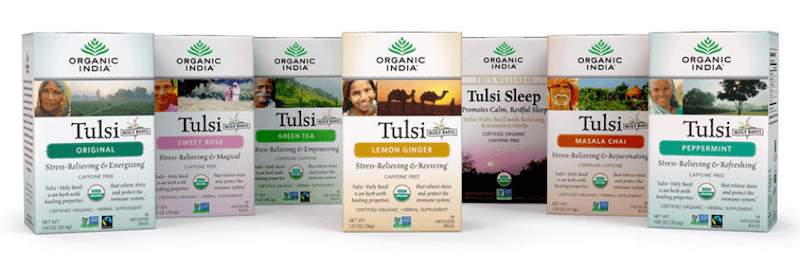
Next time you’re ordering your amino acids and pyroluria supplements from my online store with Fullscript, be sure to add a few boxes of Organic India tulsi tea to your shopping cart. This way you can enjoy the healing and anti-stress benefits of tulsi together with the many other herbs included in their teas.

The Lemon Ginger Tulsi has been a long-time favorite of mine and is wonderful when flying to counter motion sickness. Based on the radiation research I uncovered when writing this blog. I’m thrilled I’ll be getting those benefits when flying too. I also enjoy the Peppermint Tulsi early in the day and have recently found a new favorite, the Tumeric Ginger Tulsi (not pictured below). Just so you know, you can also find the herbal teas in most health shops and natural food markets.

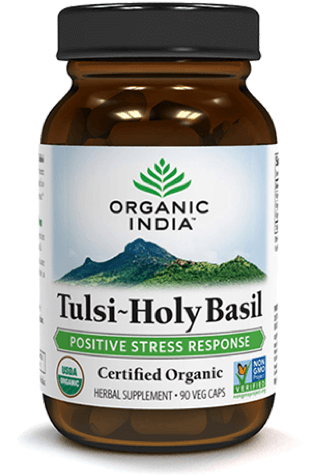
The adaptogenic Tulsi-Holy Basil product

Organic India also carries the wonderful adaptogenic Tulsi-Holy Basil product which is taken as a supplement. This is an option if you’re not a herbal tea drinker and/or you need some additional support.

If you’re interested in purchasing the tea or Tulsi-Holy Basil product, you can go to my online store with Fullscript, and simply search for “tulsi”.

How do I use tulsi with my anxious clients?

Where does recommending the tulsi herbal teas and/or the Tulsi-Holy Basil supplements fit in with the dietary and nutritional protocols of my anxious clients?

  • If you have stress in your life (and who doesn’t?!), drinking the tulsi herbal tea on a daily basis is beneficial. You can mix-and-match with other naturally caffeine-free and healing herbal teas such as rooibos
  • If you have done adrenal testing and cortisol results are outside of the reference ranges (either high or low) drink the herbal tea and use an adaptogenic herbal supplement such as tulsi (or rhodiola, licorice or ashwagandha), together with a B-Complex, extra vitamin C and extra pantothenic acid
  • Assess for low serotonin and low GABA anxiety with the questionnaire and do trials of amino acids for the low GABA physical anxiety and/or tryptophan for the worry-in-the-head anxiety
  • If you are tapering from a benzodiazepine and are not able to initially tolerate high doses of GABA, tulsi is often gentle enough to provide some additional healing support. Research shows the immune modulating effects of tulsi may be mediated by GABAergic pathways).
  • Make all the dietary changes and address gut health, blood sugar control, low levels of various nutrients like low zinc, reduce stress etc.

Organic India’s ethic and mission

I really love that Organic India works “with thousands of small family farmers in India to cultivate tens of thousands of acres of sustainable organic farmland”, the fact that their “farmers and tribal wildcrafters are educated in organic and regenerative agricultural practices”, and that they have global wellness as part of their bigger mission.

I would like to disclose that Organic India has sponsored me on a number of occasions, providing samples of herbal tea for me to share at conferences such as IMMH. I’ve blogged about this in the past thanking Organic India and other companies.

I do also want to mention that the review paper discloses that one of the authors, Professor Marc M. Cohen, “receives remuneration as a consultant and advisor to Organic India Pty. Ltd., which is a company that manufactures and distributes tulsi products. This article is the independent work of the authors and Organic India did not have input into the article’s content or the decision to publish it.” I appreciate this disclosure.

Do you drink tulsi tea on a regular basis and have you seen the anti-stress and calming benefits? If you drink Organic India tea, which one is your favorite one?

Have you used tulsi or holy basil in supplement form as an adaptogenic herb and what benefits have you observed? Have you used it while tapering from a benzodiazepine?

If you’re a practitioner do you use tulsi with clients/patients or recommend tulsi tea?

Feel free to post questions here too.
Filed Under: Supplements Tagged With: adaptogenic, adrenal, adrenals, anti-stress effects, anxiety, benzodiazepine, cortisol, depression, diabetes, GABA, holy basil, immunity, Organic India, radiation, serotonin, stress, tulsi, viral hepatitis

Mycotoxin illness is real! Is mold the root cause of your mystery symptoms and unresolved anxiety?

January 21, 2019 By Trudy Scott 13 Comments

Do you suffer from mystery symptoms and unresolved anxiety? Toxic mold is one possible unrecognized root cause – it can create hormonal imbalances, brain disrepair and neurotransmitter imbalances, chronic gastrointestinal issues and multiple autoimmune conditions.

Almost 20 years ago, your host, Dr. Margaret Christensen, was a successful OB-Gyn with a booming practice. She began having debilitating fatigue, was unable to think clearly and she ached all over, to such an extent that she had to close her practice.

Her family also showed symptoms: learning difficulties, insomnia, severe mood swings, migraines, ADD, asthma and bronchitis, tremors, sinusitis. After 8 years of sickness, they finally found toxic mold in their water-damaged house.

You should suspect and look into mold toxicity if you are:

  • Enduring terrible mood swings, anxiety and/or depression
  • Suffering from sinus infections, bronchitis and migraines
  • Weakened by gut issues, brain fog, fatigue, neurologic symptoms
  • Constantly challenged with sleep issues
  • Reacting to chemicals, smells, foods, medications

You may have told mold toxicity isn’t a real issue or that it is a pseudo condition. I was digging through the recent research and it’s not surprising that many doctors say it’s not real especially with studies like this one: Toxic mold: phantom risk vs science:

Indoor mold growth is variable, and its discovery in a building does not necessarily mean occupants have been exposed. Human response to fungal antigens may induce IgE or IgG antibodies that connote prior exposure but not necessarily a symptomatic state.

When mold-related symptoms occur, they are likely the result of transient irritation, allergy, or infection. Building-related illness due to mycotoxicosis has never been proved in the medical literature. Prompt remediation of water-damaged material and infrastructure repair should be the primary response to fungal contamination in buildings. 

There are a rather large number of studies that reach the same conclusion (it’s not real) but the good news is that there is a 2013 paper – A review of the mechanism of injury and treatment approaches for illness resulting from exposure to water-damaged buildings, mold, and mycotoxins acknowledging that mycotoxins are an issue for many individuals:

Illness results from a combination of factors present in water-damaged indoor environments including, mold spores and hyphal fragments, mycotoxins, bacteria, bacterial endotoxins, and cell wall components as well as other factors. Mechanisms of illness include inflammation, oxidative stress, toxicity, infection, allergy, and irritant effects of exposure.

And ask anyone who has lived through mold toxicity and then healed and thrived, just how real and debilitating it is trying to figure out if it is in fact toxic mold that is the root cause and then what to do about it.

This same paper reviews commonly used treatments

such as glutathione, antioxidants, antifungals, and sequestering agents such as cholestyramine, charcoal, clay and chlorella, antioxidants, probiotics, and induced sweating.

All of the above will be covered in the summit (and much more).

Here are a few highlights and insights from me.

The interview with Dr. Ann Shippy – “Overview of the Journey to Recovery” – is just that, a very useful summary of all the mold connections and it highlights many of the other speakers and topics. She also shares this about Lyme disease, toxic mold and your total toxic load

Patients can have Lyme disease and not be sick but when they are sick it’s often because mold is suppressing the immune system and causing symptoms. It may not even be Lyme but mold instead.

Yuli Horesh covers: “Diffusing Probiotics to Defend Your Environment.” It is a fascinating interview I look forward to seeing some long-term research on the safety aspects. Other than this it makes so much sense and is a very exciting approach together with everything else. I also want to say that we don’t want to be thinking of this as a short-cut/quick-fix and not doing anything else.

Dr. Mary Ackerly’s interview is fabulous and is not to be missed– “Brain on Fire: The Role of Toxic Mold in Triggering Psychiatric Symptoms”. It’s very exciting to hear a psychiatrist who is so knowledgeable and passionate about this topic. I loved that she talked specific testing and about group 1, 2,3 and 3B in terms of how sick folks are and how quickly they respond to treatment and what needs to be done in terms of remediation.

I was also thrilled to learn about the International Society for Environmentally Acquired Illness (ISEAI) and encourage you to check them out as a resource for both your own recovery and if you’re a practitioner, for learning. They are hosting their first conference in May: “Healing Complex patients in a Toxic World”.

I was hoping to learn more about the NeuroQuant Triage Brain Atrophy Report (from Cortech) from her and other speakers. I wanted to know if a contrast agent is needed during the MRI as many folks have issues with gadolinium toxicity when having MRIs and I’d be very concerned about adding to the toxic load. It seems the contrast isn’t needed.

In Dr. Jill Carnahan’s interview – “Metabolic Endotoxemia and the Gut-Brain Connection”, she recommends a provoked or challenged urinary myctoxin test with some glutathione or sauna because you can get false negatives if you don’t do this before testing. She also shares all her favorite binders: charcoal, clay, zeolite, glucommanan and citrus pectin.

They also talk about SIBO (small intestinal bacterial infection) and say that a lot of SIBO is really SIFO (small intestinal fungal infection), how toxic mold can impact gut motility and and how antifungals rather than anti-bacterials are the way to go in this instance.

Jeff Bookout’s interview on “Non-Toxic Remediation for Chemically Sensitive” is wonderful. They cover dry-fogging, using non-toxic citrus based oils, practical tips for travel and hotel rooms, keeping dorm rooms safe from toxic mold and how best to clean the HVAC (heating, ventilation and air-conditioning) system so you’re not dispersing toxic mold throughout the house. This is a very practical and common-sense interview.

If you didn’t register yet, I’m hoping this inspires you to register and tune in. It’s one of the most popular summits I’ve promoted and I feel it’s a topic we all need to learn about and ideally before it’s a problem because when you’re in the midst of it, it makes it that much more challenging to deal with. You just never know when you may need this information. Take for example all the people affected recently by the dreadful floods in Townsville in Australia, and elsewhere.

If you are in the midst of dealing with your own mold toxicity I know you’re getting great resources for remediation and recovery. Be sure to have a friend or loved one who has not been affected, listen in and read the transcripts so you’re not alone in figuring things out.

Even if you don’t currently have symptoms of mold toxicity, it’s an excellent resource so you can be prepared the next time you have water damage in your home, office or school. It will also allow you to make sure you don’t have a growing mold problem which may affect your health down the road.

The Toxic Mold Summit health experts, air quality experts and mold remediation specialists will help you identify if you have mold exposure and share the latest tools and techniques for dealing with toxic mold.

When you register be sure to check out the ebook, “Got Mold? Now What? Hope for Health and Home: Overview of Toxic Mold and Biotoxin Illness!” It covers why you get the following symptoms and the mechanisms, total toxic load, recommended testing for you and your moldy home (or work place or school etc.), resources to make you more resilient, basic treatment steps and dietary approaches to consider.

Here are symptoms and illnesses caused by toxic mold exposure. Dr. Christensen explains that mold/biotoxin illness may present in many ways, even within the same family who have been exposed to mold, and often with some kind of pain or inflammation, and in almost any area of the body:

  • Chronic recurrent upper respiratory and sinus infections
  • Chronic headaches/migraines
  • Severe chronic fatigue or ongoing flu-like symptoms
  • Fibromyalgia (tender, sore muscles)
  • Neurological issues (tremors, neuropathy, brain fog, ADD, learning issues, etc.)
  • Neuro-degenerative diseases (Parkinson’s, MS, ALS, Alzheimer’s and other dementias)
  • Severe gut symptoms (IBS, Crohn’s, ulcerative colitis, SIBO/SIFO)
  • Autoimmune disorders (thyroid, Hashimoto’s, psoriasis, rheumatoid arthritis, eczema, hives)
  • Multiple chemical sensitivities and histamine intolerance (rashes and hives)
  • Night sweats (common in men of all ages, as well as women)
  • Psychiatric symptoms (anxiety, depression, panic attacks, bipolar symptoms, psychosis)
  • Severe sleep disturbances
  • Recurrent interstitial cystitis, bladder infections and frequent urination
  • Hormonal imbalances (adrenal and thyroid hormones)
  • Infertility, heavy periods and cramps, endometriosis, PMS, PCOS
  • Cardiovascular disease
  • Lyme and co-infections, including viral infections like EBV, HHV6
  • Cancer (especially hormonal, leukemias/lymphomas and bladder/kidney)
  • Children: chronic ear, throat and upper respiratory infections, asthma, allergies, ADD/ADHD, sleep, irritability, bedwetting

In the testing section she does state that “HLA genetics tests are not necessary but can be interesting” and I was intrigued to hear this because I considered this a gold standard test to have done.

Here are some of the excellent topics and speakers:

  • Chemical Sensitivity and Detoxing Your Home with Bridgit Danner, LAc, FDNP
  • Heavy Metals, Fatigue and Detox with Wendy Myers, FDN-P, NC, CHHC
  • Essentials Oils to Treat and Prevent Mold Toxicity with Jen Broyles, CHC
  • Mold Inspection and Detection with JW Biava
  • Mold, Mental Illness and Suicide Prevention with Jill Sheppard Davenport, MS, CNS, LN
  • Mold, Histamine and Multiple Chemical Sensitivity with Gail Clayton, RPh, MS, CNS
  • Brain on Fire: Mental Illness and Mold with Mary Beth Ackerley, MD, MD(H), ABIHM
  • Advanced Therapies for Mold Recovery with Mark Hyman, MD
  • Finding a Quality Mold Inspector and Remediator with Jason Earle, IEP

========================

UPDATE: March 28, 2021
This summit is being re-released for a third time on April 26 – May 2, 2021 due to the high demand and excellent content.

I was thrilled to be invited to speak on this summit AND my interview, Immediate Relief for Anxiety, also happens to be one of the registration gifts so you get access right away!

We initially cover some of the many connections between mold toxicity and anxiety and low mood. I share from this 2018 paper, Effects of Mycotoxins on Neuropsychiatric Symptoms and Immune Processes:

  • the presence of mold and dampness was associated with the prevalence of depression and emotional distress
  • it’s unclear whether neuropsychological problems are due to the adverse effects of mycotoxins or the emotional and financial stress of keeping a house clean in the face of recurrent mold [it’s very likely both + the loss of treasured possessions for some folks too]
  • a low sense of control may lead to an elevated risk for anxiety and depression.

I also share how much I learned from Dr. Neil Nathan’s presentation at one of the IMMH conferences: “Mold Toxicity as an Unrecognized Cause of Mental Health issues.” He shares that “mold  toxicity may directly trigger anxiety, panic attacks, depression, depersonalization and hallucinations AND mast cell activation, multiple chemical sensitivities, secondary porphyrias, methylation dysfunction and pyroluria” … all of which plays a role in anxiety/depression.

I go on and cover the solutions for the anxiety and panic attacks (often directly triggered by mold toxicity) and the sense of loss while you are dealing with the mold toxicity and home remediation or move:

  • mold anxiety and how to use GABA and serotonin support to ease the anxiety, fears, insomnia, worry and panic attacks that are so common with mold toxicity (so there is not the added toxic burden of psychiatric meds)
  • how certain mycotoxins may actually lead to high serotonin and what to do in this instance
  • using DPA (an amino acid that boosts endorphins) to help comfort folks who may lose their homes and beloved contents/books/photos due to mycotoxins

========================

If you or a loved one suffers from mystery symptoms and/or unresolved anxiety I encourage you to tune in to learn more.

I’ll see you online at this educational summit when you register here.

Can you relate to any of this? Have you been ill as a result of toxic mold exposure? Or do you suspect mold is one of your root causes?

Have you remediated a moldy home and healed your self with a functional medicine approach?

Filed Under: Mold, Toxins Tagged With: anxiety, biotoxin illness, depersonalization, depression, DPA, Dr. Margaret Christensen, endorphins, GABA, mold, mycotoxins, neurotransmitter, serotonin, toxic mold

More kids are showing up in ERs with anxiety, depression and other common mental health problems: why isn’t nutritional psychiatry part of the discussion?

November 16, 2018 By Trudy Scott 23 Comments

This article on NBC news, More kids are showing up in ERs (Emergency Rooms) with mental health crises, reports large increases across the country.

Dr. Anna Abrams, a pediatrician and researcher at Children’s National Medical Center in Washington, finds the numbers both shocking and disheartening.

In the 5-year period from 2012 to 2016, when looking at ER mental health admissions in 45 children’s hospitals, they found the following increases:

  • 48 % in white children
  • 64% in non-Hispanic black children
  • 77% increase in Hispanic children

with about a 55 % increase overall.

Dr. Abrams and her colleagues presented these findings at the American Academy of Pediatrics conference in earlier this month.

Other than the very large increases, there is something else to be concerned about: the researchers say they aren’t sure why we are seeing these increases, speculating it “could be due to the scarcity of mental health professionals who can help children” and “People are also talking more openly about depression, anxiety and other common mental health problems and that may make parents feel more comfortable about seeking help for their children.”

While these are very valid reasons, we really do need to be incorporating nutritional psychiatry (a term coined in 2015) and functional medicine (Dr. Mark Hyman is one of the leaders in functional medicine) into these discussions, studies and conferences. Other than poor diets and nutritional deficiencies we need to be considering stress, exposure to toxins, poor gut health and increasing Wifi exposure, to name a few.

If we look at diet alone, there is so much recent research supporting the connection between diet and mental health. Here are two of many new studies:

  • Is there an association between diet and depression in children and adolescents? A systematic review

Despite some contradictory results, overall there was support for an association between healthy dietary patterns or consumption of a high-quality diet and lower levels of depression or better mental health. Similarly, there was a relationship between unhealthy diet and consumption of low-quality diet and depression or poor mental health.

  • A Pro-Inflammatory Diet Is Associated With an Increased Odds of Depression Symptoms Among Iranian Female Adolescents: A Cross-Sectional Study

These data suggest that Iranian adolescent females eating a pro-inflammatory diet…had greater odds of having at least moderate depressive symptoms.

And here are just a few other factors to consider:

  • Integrative Medicine Approach to Pediatric Obsessive-Compulsive Disorder and Anxiety – in this case study gluten removal was a big factor
  • GABA for children: ADHD, focus issues, irritability, anxiety and tantrums With this pre-teen young girl, her mom reports that “She’s almost like different child. GABA has truly changed our life.“

How do we get this nutritional psychiatry research and case studies into the hands of those who can change actually policy and the way mental health is addressed? I believe it has to be a grass-roots effort from the bottom up and I have these suggestions:

  • share this blog and the research with your doctor and/or allied health practitioner
  • reach out to study authors, journalists and legislators and share research and success stories like the above, and your own personal results
  • if you’re a practitioner, write blogs like this sharing the good results you see with your clients and patients – with researchers, journalists and legislators
  • share in forums and on social media, and with your neighbors, friends and family
  • comment on blogs like this – with success stories in your family or with clients – so more people get to see what really is working

Every little bit helps! I’d love to hear your ideas too.

Filed Under: Children/Teens, Mental health Tagged With: adolescents, anxiety, children, depression, diet, ERs, GABA, gluten, kids, mental health, nutrition, nutritional psychiatry

EMFs from computers, phones, smart meters and circuit breakers: insomnia, anxiety, depression, IBS, numb hands and skin issues

November 9, 2018 By Trudy Scott 4 Comments

EMFs from computers, phones, smart meters and circuit breakers can cause insomnia, anxiety, depression, IBS, numb hands and skin issues, and even play a role in the severity of autism and other chronic health conditions.

Investigative health journalist, Nick Pineault, also known as “The EMF Guy” is on a mission to create awareness and provide practical and research-based resources for practitioners via his ElectrosmogRX training. He kindly offered to answer questions from some of you in my community. Thank you if you submitted a question and if you didn’t hopefully you get to learn from these great questions that were submitted.

Sarah ask about smart meters, cell phone in the bedroom and a CPAP machine, and depression, IBS, insomnia, pain and sinus problems

PART 1: I’d like to know Nick’s thoughts on what to do about a smart meter outside a bedroom wall almost directly behind my husband’s side of the bed. He suffers from many things… depression IBS, diarrhea during stressful events, painful joints and muscles, fatigue, insomnia at times, sinus problems.

Here is Nick’s feedback for Sarah:

Smart utility meters have often been linked with an increase in a slew of symptoms. One 2013 survey conducted in Maine has shown that 98% of respondents were “fairly sure” or “very sure” that their meter had made them sicker.

Depression, digestive issues, joint pain, fatigue, insomnia are all possible EMF-related symptoms.

The best thing you can do is to call your utility company and have your smart meter replaced by an analog meter. In certain states they will charge you a monthly penalty for that, and in other states the utility company won’t let you do it.

If you can’t remove the smart meter, then your next best choice is to shield it. A cheap solution to dampen the signal is to install a Smart Meter Guard, but in the case of your husband there’s a chance this would not be enough.

You could install special shielding materials between your bedroom wall and the meter, with the help of a certified Building Biologist (find one in your state)

PART 2: I’ve just put our WiFi on a timer to turn off at night. He still charges his phone next to him at night and sleeps with a CPAP machine. My main question is, in the whole scheme of EMF exposure where does the smart meter stand? And how serious is this compared to having the phone charging at night and the CPAP machine?  Thanks very much for all that you do!

Here is Nick’s additional feedback for Sarah H:

Turning off the wifi at night is an extremely important step. In the case of your husband, again I’m not sure that will be sufficient.

I would try the following for 3 nights:

  • Make sure the CPAP machine is 3 or more feet away.
  • Charge the phones in another room
  • No wireless device in the room whatsoever
  • Unplug everything from the walls — lamps, alarm clocks, etc. Phones in Airplane Mode can act as an alarm clock, but don’t charge it on the bed stand.

See how his symptoms change. If there are improvements in his sleep and reduction in symptoms, it’ll be easier for him to get on board too.

I’d like to add to this and suggest also getting a meter to get your husband on board – seeing is often believing.

Nicole is concerned about numb hands, hypersensitivity to smells and skin issues

Can EMFs cause numb hands, hypersensitivity to smells, skin issues?

Here is Nick’s feedback for Nicole:

Numb hands is a very common symptom. A lot of people feel itchy, tingling or other weird sensations when they hold a cell phone.

Hypersensitivity to smells might be linked with multiple chemical sensitivity (MCS), which often comes with his cousin electro hypersensitivity (EHS).

EMFs can definitely be linked with skin issues as well. For starters, EMF cause oxidative stress in cells, which will lead to premature aging of the skin.

Many EHS sufferers have reported skin-related symptoms. The work of Dr. Dominique Belpomme from France has shown that 40% of EHS people have high histamine levels in their blood, and the work of Olle Johansson has shown that exposure to screens and TV monitors (sources of magnetic and electrical fields) causes mast cells to migrate to the top dermis and release more histamine.

Basically, this means that a lot of us could be having a type of low-level allergic reaction on the skin when exposed to various types of EMFs.

Dilia is concerned about the circuit breaker and EMFs

How can I deal with EMF? I live in a small apartment where the breaker of the house is located. Is there something I can do about this?

Here is Nick’s feedback for Dilia:

Make sure that this circuit breaker panel is at least several feet away from an area where you spend a lot of time. It is unfortunately very hard to shield against the magnetic fields emitted by a breaker panel — I would suggest hiring a Building Biologist if the breaker panel was right next to your bed, for example.

That being said, generally speaking, you can deal with EMFs by turning off your wireless devices when not in use.

This includes:

  • Hitting Airplane Mode on your phone unless you need it
  • Turning off the wifi at night when not in use and at night, or using wired ethernet (best)
  • “Unsmarting” the home by getting rid of cordless phones and other wireless gadgets if you can

Sarah J asks about EMF mitigating devices and harmonizers for anxiety, sleep issues and more

My family is experiencing a plethora of serious health issues including anxiety, major sleep issues, autism, multiple brain injuries, etc.

There are many EMF mitigating devices and harmonizers on the market.  Which products really make a difference? How can one know? Are there any specific brands you can recommend that really work?

How does one cut through the pretenders and find the products that really help? Thank you for the opportunity ask Nick!! I’ve struggling with these questions for a long time

Here is Nick’s feedback for Sarah J:

A lot of devices (chips you’d out on your cell phone or computer, pendants, etc.) claim to “harmonize” EMFs, but there is very little scientific validation to back up these claims.

I cannot deny that some of these devices have been shown to alleviate some symptoms: less frequent headaches, less blood clumping and better blood circulation, better HRV (a sign of lowered stress), etc.

That being said, there are a few problems with these devices:

a) They are often marketed as “protective” (prevents harm), but the manufacturers offer tests which demonstrate that they are “supportive” (reduces symptoms).

In other words, I have no seen a single manufacturer of these devices who could show me the scientific proof that if I installed one of these devices on my phone, my body would experience ZERO biological effects from it. No DNA damage, no oxidative stress.

b) As these devices reduce symptoms related to EMF exposure, some people use them as an excuse to increase their EMF exposure now that they don’t feel as sensitive to EMFs anymore.

If you keep all of the above in mind, using these pendant or “chips” isn’t a bad idea to reduce symptoms and support the body during times of inevitable exposure outside the home.

May I add that considering the plethora of symptoms that your family is experiencing — all of which have been linked in medical literature with EMF exposure — I suggest hiring a Building Biologist and having them do a thorough home survey in order to identify how you could minimize EMFs inside the home, and shield against outside exposures (cell phone towers, smart meters, etc.), if the need be.

I’d like to add that I am convinced my Qlink helps me, especially with sleep, but I also follow Nick’s advice and have no WiFi and very seldom use my smart phone. I also recently had someone share this with me: “I shut off my WiFi at night and wear a Qlink. I have tested the Qlink with looking at blood cells under a dark field microscope and when it’s removed there is definitely clumping of red blood cells. They move fine with it on.”

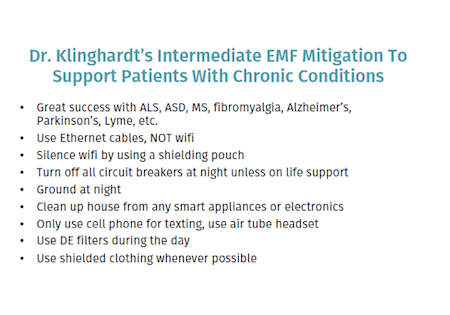
This question about EMF mitigating devices and harmonizers is the most common question I get related to EMFs so I’d like to reiterate Nick’s advice and share how Dr. Klinghardt supports his patients who have chronic health conditions – notice he makes no mention of devices or harmonizers.

The above slide is shared with permission from Nick Pineault’s ElectrosmogRX training (more details below).

Adriana asks this question about EMFs and sleep

My boyfriend cannot sleep for years now. We are in the outskirts of [a big city], close to the international airport. We lived in the city and there we had a lot of EMF (3 GSM antennas on the neighboring block, WiFi with every neighbor in the block – 10 stories high and 4 apartments/floor + intelligent meters for heating on every heater in the house. That was a lot for him and after we moved outside the city, to a house and in a low-density housing area, then it was better for him. But he sits at the laptop for 6-8 hours every day. You think that may be affecting him that much?

Here is Nick’s feedback for Adriana:

Your boyfriend might be feeling symptoms related to EMF exposure, and sleep disturbance is one of the most common ones.

If he exposes himself to a laptop connected via WiFi, then his symptoms might persist.

In his case, especially if he works at the computer all day, every day — I’d recommend cutting off the WiFi anytime it’s not in use and using his computer via an ethernet cable instead of WiFi.

Turn off the WiFi at night, unplug everything from the walls and even turn off the circuit breaker to the bedroom at night for at least 3 days and sees if this helps him.

In order to alleviate EMF sensitivity, it’s critical that he takes extra step to reduce his exposure as much as possible.

If you’re a practitioner, are you looking at the impact EMFs have on the health of your clients/patients and do you feel comfortable answering questions like these ones? If not, Nick Pineault is on a mission to create awareness and provide practical and research-based resources for practitioners via his ElectrosmogRX training (it’s 33% off for a limited time).

Nick is also offering these non-cost resources so you can be as informed as possible:

  • Downloadable Guide: How EMFs Affect Your Patients/Clients
  • EMF case studies video (teaching you how to identify EMF-related symptoms)
  • Here is the link to register for a replay of the webinar: 3 Essential Steps to Know Which of Your Patients/Clients Are Suffering From EMF-Related Symptoms

This blog is strictly about EMFs – which cannot be ignored – but we must not forget how the amino acids like GABA and tryptophan can help with anxiety and depression, and even pain and IBS. They can both also help with insomnia as can melatonin which has been shown to be disrupted by EMF exposure. This is just the tip of the iceberg in terms of nutritional support for EMF-related issues for both healing and resilience – Nick covers it all in the ElectrosmogRX training (which I’ve done and wholeheartedly endorse).

Are you seeing improvements in your health once you address EMFs? What changes have you made? Have nutritional changes helped too?

Filed Under: EMF, EMFs Tagged With: anxiety, depression, electrosmog, EMF harmonizer, EMF mitigating device, EMFs, IBS, insomnia, Nick Pineault, Qlink, sinus, skin, sleep

MDMA-Assisted Psychotherapy for Treating Chronic PTSD: Why I feel we can do better and the role of nutrition and amino acids like GABA

November 2, 2018 By Trudy Scott 7 Comments

You may be familiar with MDMA (3,4-methylenedioxymethamphetamine), also known as “ecstasy”, because of its reputation as a party drug. And you have likely seen some of the media reports on the new research and growing support for MDMA-Assisted psychotherapy for treating chronic PTSD (post-traumatic stress disorder). Due to adverse effects I’d like to share my concerns about this research and treatment and why I feel we can do better – by addressing nutrition and using amino acids like GABA and others.

In a recent press release, Colorado Study Shows Lasting Benefits of MDMA-Assisted Psychotherapy for Treating Chronic PTSD, the non-profit organization, Multidisciplinary Association for Psychedelic Studies (MAPS) reports these study results:

28 participants found that one month after their second day-long experimental session, 42.9% in the active-dose (100 mg and 125 mg) MDMA groups did not qualify for a diagnosis of PTSD, compared to 33.3% in the low-dose MDMA (40 mg active placebo) control group.

The results were even more notable 12 months after the third active-dose experimental session, which found that one year following treatment with MDMA-assisted psychotherapy, 76% of participants no longer had PTSD.

It is the largest U.S. FDA-regulated double-blind, placebo-controlled clinical trial of MDMA-assisted psychotherapy for the treatment of chronic PTSD and the results are impressive: 76% of the study participants no longer had PTSD after a year and 3 treatment sessions. I’m really happy for the participants BUT I believe we can do better because there are adverse reactions to this treatment and there are other safer approaches for recovery.

This comment about an acceptable risk profile and adverse reactions concerns me (and I suspect it concerns you too):

The study replicated previous research showing an acceptable risk profile for MDMA, with the most frequently reported adverse reactions during experimental sessions being anxiety, jaw clenching, headache, muscle tension, dizziness, fatigue, and low mood.

Adverse reactions one week following treatment included insomnia, low mood, irritability, and ruminations. Temporary elevations in pulse, blood pressure, and temperature were also recorded during MDMA sessions, and did not require medical intervention.

A common theme we see in the research on psychedelics is how effective it is for PTSD that doesn’t respond to therapy or medications. This paper states:

There is an immense need for innovative treatment options that improve outcomes, especially for PTSD refractory to psychotherapy and/or pharmacotherapies

I agree there is an immense need for successful treatment approaches, but jumping to MDMA from psychotherapy and/or psychiatric medications is skipping out the entire nutritional and biochemical step which is SO powerful and doesn’t have the above adverse effects. I’m concerned too many who have not seen benefits from therapy or medications are seeing MDMA as THE solution and are going to be harmed even further.

This paper, The Potential Dangers of Using MDMA for Psychotherapy, the author is concerned about the fact that “acute MDMA can stimulate the release of difficult feelings and memories, which may be distressing” and also the negative moods that occur after MDMA treatment:

This period of negative cognitions may be counter-productive, especially in psychiatrically vulnerable clients, for instance those with predispositions to anxiety, depression, or psychosis. For example, it could increase the likelihood of suicide in those individuals with strong post-recovery feelings of depression.

Because of this, I wholeheartedly agree with the author’s position:

it will always be far safer to undertake psychotherapy without using co-drugs. In selected cases MDMA might provide an initial boost, but it also has far too many potentially damaging effects for safe general usage.

In addition to psychotherapy, there are also so many nutritional and biochemical factors we can consider when it comes to PTSD. These don’t have any of the above damaging effects seen with MDMA. Here are a few to consider:

  • In this blog post, PTSD from 3 tours in Afghanistan: Can GABA help with the anxiety? how low GABA can lead to physical anxiety, muscle tension and the need to self-medicate with alcohol or sugary foods in order to calm down and relax. We also have research supporting the use of GABA for helping with unwanted obtrusive thoughts which are common with PTSD. When low GABA is suspected we do an amino acid trial with GABA, one of the calming amino acids.
  • A 2016 reports that blueberries boost serotonin and may help with PTSD and anxiety https://www.everywomanover29.com/blog/blueberries-serotonin-ptsd-anxiety/. This was an animal study where the traumatized rats were fed a blueberry-enriched diet. The study authors report an increase in serotonin levels, suggesting that “non-pharmacological approaches might modulate neurotransmitters in PTSD.”
  • A recent meta-analysis, Association between posttraumatic stress disorder and lack of exercise, poor diet, obesity, and co-occuring smoking, confirms the diet and lifestyle connection to being more impacted by trauma when health is not optimal.

I feel it is these above approaches and others like this that we need to be using to address PTSD, rather than subjecting individuals who are already suffering to treatments that have adverse reactions AND are not addressing underlying nutritional deficiencies of low GABA, low serotonin, out of balance endocannabinoid system and overall health, to name a few of many possible underlying biochemical factors.

If this treatment approach is approved, I would hope that all the adverse effects and dangers are clearly explained and I’d also like there to be informed consent before it is used – so individuals know exactly what they are getting into. Hopefully, by the time it is approved, nutritional psychiatry will be more accepted.

I’d love to hear your thoughts on this research and treatment approach. Is it something you have considered or would possibly consider in the future – you personally or with patients?

Or do you have similar concerns that I have?

Have you already tried MDMA recreationally (possibly for therapeutic reasons) and what were your experiences like?

Filed Under: PTSD/Trauma Tagged With: anxiety, biochemical, blueberries, depression, GABA, insomnia, irritability, low mood, MAPS, MDMA, nutrition, nutritional, PTSD, ruminations

  • « Go to Previous Page
  • Page 1
  • Interim pages omitted …
  • Page 8
  • Page 9
  • Page 10
  • Page 11
  • Page 12
  • Interim pages omitted …
  • Page 27
  • Go to Next Page »

Primary Sidebar

NEW! GABA QuickStart Homestudy (with special intro pricing)

gaba quickstart homestudy

Free Report

9 Great Questions Women Ask about Food, Mood and their Health

You'll also receive a complimentary subscription to my ezine "Food, Mood and Gal Stuff"


Connect with me

Popular Posts

  • Amino Acids Mood Questionnaire from The Antianxiety Food Solution
  • The Antianxiety Food Solution Amino Acid and Pyroluria Supplements
  • Pyroluria Questionnaire from The Antianxiety Food Solution
  • Collagen and gelatin lower serotonin: does this increase your anxiety and depression?
  • Tryptophan for the worry-in-your-head and ruminating type of anxiety
  • GABA for the physical-tension and stiff-and-tense-muscles type of anxiety
  • The Antianxiety Food Solution by Trudy Scott
  • Seriphos Original Formula is back: the best product for anxiety and insomnia caused by high cortisol
  • Am I an anxious introvert because of low zinc and vitamin B6? My response to Huffington Post blog
  • Vagus nerve rehab with GABA, breathing, humming, gargling and key nutrients

Recent Posts

  • What do I use instead of Seriphos to help lower high cortisol that is affecting my sleep and making me anxious at night?
  • BeSerene™ GABA/theanine cream eases severe muscle tension in her neck/shoulders, prevents her bad headaches and quells her anxiety
  • How the correct approach, dose and sublingual use of GABA can be calming and not cause a flushed and itchy face and neck
  • The amino acid glutamine improves low mood by addressing gut health, and it has calming effects too
  • Flight anxiety with heightened breath, physical tension and also fearing the worst (the role of low GABA and low serotonin)

Categories

  • 5-HTP
  • AB575
  • Addiction
  • ADHD
  • Adrenals
  • Alcohol
  • Allergies
  • Alzheimer's disease
  • Amino Acids
  • Anger
  • Antianxiety
  • Antianxiety Food Solution
  • Antidepressants
  • Anxiety
  • Anxiety and panic
  • Autism
  • Autoimmunity
  • benzodiazapines
  • Bipolar disorder
  • Books
  • Caffeine
  • Cancer
  • Candida
  • Children/Teens
  • Collagen
  • Cooking equipment
  • Coronavirus/COVID-19
  • Cravings
  • Depression
  • Detoxification
  • Diabetes
  • Diet
  • DPA/DLPA
  • Drugs
  • EFT/Tapping
  • EMF
  • EMFs
  • Emotional Eating
  • Endorphins
  • Environment
  • Essential oils
  • Events
  • Exercise
  • Fear
  • Fear of public speaking
  • Fertility and Pregnancy
  • Fish
  • Food
  • Food and mood
  • Functional neurology
  • GABA
  • Gene polymorphisms
  • General Health
  • Giving
  • Giving back
  • Glutamine
  • Gluten
  • GMOs
  • Gratitude
  • Gut health
  • Heart health/hypertension
  • Histamine
  • Hormone
  • Hyperparathyroidism
  • Hypoglycemia
  • Immune system
  • Inflammation
  • Insomnia
  • Inspiration
  • Introversion
  • Joy and happiness
  • Ketogenic diet
  • Lithium orotate
  • Looking awesome
  • Lyme disease and co-infections
  • MCAS/histamine
  • Medication
  • Men's health
  • Mental health
  • Mercury
  • Migraine
  • Mold
  • Movie
  • MTHFR
  • Multiple sclerosis
  • Music
  • NANP
  • Nature
  • Nutritional Psychiatry
  • OCD
  • Osteoporosis
  • Oxalates
  • Oxytocin
  • Pain
  • Paleo
  • Parasites
  • Parkinson’s disease
  • PCOS
  • People
  • PMS
  • Postpartum
  • PTSD/Trauma
  • Pyroluria
  • Questionnaires
  • Real whole food
  • Recipes
  • Research
  • Schizophrenia
  • serotonin
  • SIBO
  • Sleep
  • Special diets
  • Sports nutrition
  • Stress
  • Sugar addiction
  • Sugar and mood
  • Supplements
  • Teens
  • Testimonials
  • Testing
  • The Anxiety Summit
  • The Anxiety Summit 2
  • The Anxiety Summit 3
  • The Anxiety Summit 4
  • The Anxiety Summit 5
  • The Anxiety Summit 6
  • Thyroid
  • Thyroid health
  • Toxins
  • Tryptophan
  • Tyrosine
  • Uncategorized
  • Vegan/vegetarian
  • Women's health
  • Yoga

Archives

  • October 2025
  • September 2025
  • August 2025
  • July 2025
  • June 2025
  • May 2025
  • April 2025
  • March 2025
  • February 2025
  • January 2025
  • November 2024
  • October 2024
  • September 2024
  • August 2024
  • July 2024
  • June 2024
  • May 2024
  • April 2024
  • March 2024
  • February 2024
  • January 2024
  • December 2023
  • November 2023
  • October 2023
  • September 2023
  • August 2023
  • July 2023
  • June 2023
  • May 2023
  • April 2023
  • March 2023
  • February 2023
  • January 2023
  • December 2022
  • November 2022
  • October 2022
  • September 2022
  • August 2022
  • July 2022
  • June 2022
  • May 2022
  • April 2022
  • March 2022
  • February 2022
  • January 2022
  • December 2021
  • November 2021
  • October 2021
  • September 2021
  • August 2021
  • July 2021
  • June 2021
  • May 2021
  • April 2021
  • March 2021
  • February 2021
  • January 2021
  • December 2020
  • November 2020
  • October 2020
  • September 2020
  • August 2020
  • July 2020
  • June 2020
  • May 2020
  • April 2020
  • March 2020
  • February 2020
  • January 2020
  • December 2019
  • November 2019
  • October 2019
  • September 2019
  • August 2019
  • July 2019
  • June 2019
  • May 2019
  • April 2019
  • March 2019
  • February 2019
  • January 2019
  • December 2018
  • November 2018
  • October 2018
  • September 2018
  • August 2018
  • July 2018
  • June 2018
  • May 2018
  • April 2018
  • March 2018
  • February 2018
  • January 2018
  • December 2017
  • November 2017
  • October 2017
  • September 2017
  • August 2017
  • July 2017
  • June 2017
  • May 2017
  • April 2017
  • March 2017
  • February 2017
  • January 2017
  • December 2016
  • November 2016
  • October 2016
  • September 2016
  • August 2016
  • July 2016
  • June 2016
  • May 2016
  • April 2016
  • March 2016
  • February 2016
  • January 2016
  • December 2015
  • November 2015
  • October 2015
  • September 2015
  • August 2015
  • July 2015
  • June 2015
  • May 2015
  • April 2015
  • March 2015
  • February 2015
  • January 2015
  • December 2014
  • November 2014
  • October 2014
  • September 2014
  • August 2014
  • July 2014
  • June 2014
  • May 2014
  • April 2014
  • March 2014
  • February 2014
  • January 2014
  • December 2013
  • November 2013
  • October 2013
  • September 2013
  • August 2013
  • July 2013
  • June 2013
  • May 2013
  • April 2013
  • March 2013
  • February 2013
  • January 2013
  • December 2012
  • November 2012
  • October 2012
  • August 2012
  • July 2012
  • June 2012
  • May 2012
  • April 2012
  • March 2012
  • February 2012
  • January 2012
  • December 2011
  • November 2011
  • October 2011
  • September 2011
  • August 2011
  • July 2011
  • June 2011
  • May 2011
  • April 2011
  • March 2011
  • February 2011
  • January 2011
  • December 2010
  • October 2010
  • September 2010
  • July 2010
  • May 2010
  • April 2010
  • March 2010
  • February 2010
  • January 2010
  • November 2009

Share the knowledge!

The above statements have not been evaluated by the Food and Drug Administration. Products listed in this website are not intended to diagnose, treat, cure or prevent any disease.

The information provided on this site is for informational and educational purposes only and is not intended as a substitute for advice from your physician or other health care professional. You should consult with a healthcare professional before starting or modifying any diet, exercise, or supplementation program, before taking or stopping any medication, or if you have or suspect you may have a health problem.


Copyright © 2026 Trudy Scott. All Rights Reserved. | Privacy | Terms and Conditions | Refund Policy | Medical Disclaimer

Free Report

9 Great Questions Women Ask about Food, Mood and their Health

You’ll also receive a complimentary subscription to my ezine “Food, Mood and Gal Stuff”