• Skip to primary navigation
  • Skip to main content
  • Skip to primary sidebar

everywomanover29 blog

Food, Mood and Women's Health – Be your healthiest, look and feel great!

  • Blog
  • About
  • Services
  • Store
  • Resources
  • Testimonials
  • The Book
  • Contact
  • Search this site

depressed

My son has alcohol dependence and I want to help him quit drinking with GABA and other amino acid supplements

September 8, 2023 By Trudy Scott 15 Comments

alcohol and gaba

My son has alcohol dependence and I want to help him quit drinking with GABA and other amino acid supplements. Alcohol and the benzodiazepines used in treatment both block GABA receptors, but I assume having GABA available in your system is better than none (especially as nutrition has been very poor). Have you an article on this? Thank you for your knowledge and understanding.

MJ posted this question on one of the GABA blogs and I shared a few blogs to get her started (some of those are listed below). I also shared that with addictions to alcohol (and sugar and drugs) it’s a matter of figuring out which amino acids are needed in order to balance the neurotransmitters and help you to quit with no willpower and without feeling deprived. This can differ for each person and it’s a matter of doing a trial of each amino acid based on unique needs.

He may well need GABA if he self-medicates with alcohol when under stress, but he may also need serotonin support with tryptophan or 5-HTP if he drinks when depressed and needs a mood lift.

I decided to create a new blog because it’s a much needed topic and so I could share additional resources and a table I use (see below) to help you figure out where your need may be. We use this in conjunction with the symptoms questionnaire for each neurotransmitter.

In addition to addressing her benzodiazepine question, I also shared the need to address low blood sugar, low vitamin B1 and overall nutrient status. She does mention nutrition has been poor and it often is with alcohol addiction.

Which emotions are driving the need to self-medicate with alcohol and which amino acids to trial?

This is how I help you figure out which emotions are driving the need to self-medicate with alcohol and which amino acids to trial:

How do you feel before drinking alcohol? How do you feel after drinking alcohol? Likely brain chemistry imbalance Amino acid/s to supplement
Anxious or stressed (physical anxiety) Calm or relaxed Low GABA GABA, pharmaGABA or theanine
Depressed or worried? (mental anxiety) Happy or content Low serotonin Tryptophan or 5-HTP
Tired or unfocused Energetic, alert, or focused Low catecholamines Tyrosine
Wanting a reward or treat, and sad (weepy) Rewarded or comforted Low endorphins DPA (d-phenylalanine) or DLPA
Irritable and shaky Grounded or stable Low blood sugar Glutamine

We use this in conjunction with the symptoms questionnaire for each neurotransmitter.

Many individuals with alcohol addiction have imbalances in all areas. We use the same approach when it comes to alcohol addictions that we use sugar/carb/junk food addictions i.e. we tackle one imbalance at a time so we know which amino acid is helping and how much is needed.

The amino acids play many roles in addressing alcohol addiction:

  • They help you to quit alcohol with no willpower and without feeling deprived
  • They help to mitigate many of the adverse effects of quitting (like insomnia and increased anxiety and depression)
  • They address the root cause of the addiction i.e. neurotransmitter imbalances
  • They address the emotional aspect so mood and anxiety is improved
  • They help to heal the damage that has been done to the gut: glutamine, GABA and tryptophan
  • They prevent the need to find a replacement like sugar, coffee, Diet soda and cigarettes (intake is often ramped up when drinking ceases)
  • They even help children who have had prenatal exposure to alcohol – 5-HTP benefits both adopted daughters who had prenatal exposure to alcohol: they are happier, more focused and can stay on task

PharmaGABA eases physical anxiety, amino acids ease alcohol withdrawal symptoms, and tryptophan turns you off alcohol

These blog posts illustrate the many applications of amino acids when it comes to quitting alcohol

  • PharmaGABA eases physical anxiety in a young man who has recently given up Adderall, alcohol and nicotine (some folks do better with GABA and some with pharmaGABA)
  • An amino acid supplement with DLPA, glutamine and 5-HTP eases alcohol withdrawal symptoms at an inpatient detoxification program
  • Tryptophan had the added benefit of turning me completely off alcohol when I took it to improve mood and sleep during perimenopause (this need for serotonin support could be applicable for a male too and at any age)

As I mentioned above, be sure to use the search feature to find other blogs on this site: use alcohol, addiction and sugar (and replace sugar with alcohol in the sugar blogs).

Does his prior benzodiazepine prescription prevent him from being able to use GABA?

MJ asks if her son’s prior benzodiazepine prescription will prevent him from being able to use GABA. He will need to taper very very slowly under the guidance of someone knowledgeable and with oversight by the prescribing physician.

It is true that GABA receptors can be affected by benzodiazepines but despite this, many of my clients and others in my community do get relief from GABA during the taper period and afterwards.

We do start with a very small dose – I typically have someone start with 25mg GABA and go up from there – and only use sublingual GABA (or pharmaGABA). For some very sensitive folks we will start even lower as in this example where Syd gets sleep and body anxiety benefits with just 1.5 mg to 3 mg GABA.

I share more on this blog – Rebound insomnia after tapering a benzodiazepine: will taking GABA or any other natural supplement interfere with healing?

One big caveat is that nutritional stability is key when it comes to tapering benzodiazepines. It is also imperative when it comes to addiction recovery.

Good nutritional status, low blood sugar and low vitamin B1

MJ does mention that her son’s nutrition has been poor. It often is with alcohol addiction. I also shared with her the need to address low blood sugar and overall nutrient status.

When you are new to the amino acids and anxiety nutrition solutions my book “The Antianxiety Food Solution” is an excellent resource for all of the above – and the information applies to those with addictions too.  

Here is a blog with additional information and a study on the importance of addressing low blood sugar when it comes to anxiety and also addictions – Anxiety and Hypoglycemia Symptoms Improve with Diet Modification.

This highlights the importance of consuming enough protein, fats and fiber, especially at breakfast. There is an entire chapter on blood sugar in my book – it’s that important.

Finally, low thiamine/vitamin B1 must be addressed: “alcohol misuse is the most common risk factor for thiamine deficiency.” More about this here.

A complete nutritional assessment for other issues should be done too: low vitamin D, low zinc, other vitamin B deficiencies, low magnesium, adrenal insufficiency, leaky gut and more.

Medically assisted withdrawal treatment

If you are wanting to quit alcohol and don’t have an alcohol use disorder, all of the above approaches can be safely used.

However, medically assisted withdrawal treatment may be needed in some instances: “Excessive chronic alcohol users, and particularly patients with alcohol use disorder, may present an alcohol withdrawal syndrome if they abruptly stop drinking. Alcohol withdrawal syndrome requires pharmacological treatment for the treatment of withdrawal symptoms and to prevent withdrawal complications. Medically assisted withdrawal treatment is used in alcohol treatment units, but it is also frequently required in patients admitted to hospital for other conditions.”

It’s important that this is recognized for those who need it. MJ mentions benzodiazepines were used in her son’s treatment so presumably he had medically assisted withdrawal treatment.

In this situation, once her son has safely quit alcohol everything I mention above would then apply – looking at the amino acids and nutritional status so there is no relapse. And so recovery is easier and sustainable with a stable mood and no anxiety.

Resources if you are new to using amino acids as supplements

If you suspect low levels of any of the neurotransmitters and do not yet have my book, The Antianxiety Food Solution – How the Foods You Eat Can Help You Calm Your Anxious Mind, Improve Your Mood, and End Cravings, I highly recommend getting it and reading it before jumping in and using amino acids on your own so you are knowledgeable. And be sure to share it with the practitioner/health team you or your loved one is working with.

There is an entire chapter on the amino acids and they are discussed throughout the book in the sections on gut health, gluten, blood sugar control, sugar cravings, anxiety and mood issues.

The book doesn’t include product names (per the publisher’s request) so this blog, The Antianxiety Food Solution Amino Acid and Pyroluria Supplements, lists the amino acids that I use with my individual clients and those in my group programs. You can find them all in my online store.

If, after reading this blog and my book, you don’t feel comfortable figuring things out on your own (i.e. doing the symptoms questionnaire and respective amino acids trials), a good place to get help is the GABA QuickStart Program (if you have low GABA symptoms too). This is a paid online/virtual group program where you get my guidance and community support.

If you are a practitioner, join us in The Balancing Neurotransmitters: the Fundamentals program. This is also a paid online/virtual program with an opportunity to interact with me and other practitioners who are also using the amino acids.

Have you or a loved one used the amino acids to help with alcohol dependence/alcohol use disorder?

If benzodiazepines were used in the treatment center, was GABA still helpful?

Have the amino acids helped prevent new addictions to sugar/coffee/cigarettes and improved anxiety, depression and insomnia?

If you have questions and other feedback please share in the comments too.
Filed Under: Addiction, Alcohol, Amino Acids, GABA Tagged With: 5-HTP, alcohol, alcohol dependence, amino acid, benzodiazepines, depressed, deprived, drinking, drugs, emotions, GABA, low blood sugar, low vitamin B1, Medically assisted withdrawal treatment; GABA Quickstart; Balancing Neurotransmitters: the Fundamentals program for practitioners, neurotransmitters, nutrition, pharmaGABA, quit drinking, self-medicates, serotonin, stress, sugar, tryptophan, willpower

Tryptophan doesn’t work, then it does and then it doesn’t: could it be hormonal shifts, dietary factors and/or parasites?

November 26, 2021 By Trudy Scott 19 Comments

tryptophan result

Have you been in a situation where tryptophan doesn’t work, then it does work, and then sometimes it doesn’t work as expected? There is a reasonable explanation as to why it may not work initially – too much or too little was used. The variable results and the need to switch between lower and higher doses on an ongoing basis can happen but it’s not very pronounced unless there is a specific reason. In this blog I cover some of these reasons – hormone shifts, dietary factors and parasites/other digestive issues.

I’m writing this blog in response to a question that was posted on one of my speaker pages on the Anxiety Summit: Gut-Brain Axis. This is the actual question:

I tried to use tryptophan the first time (whole capsule) and got really high. Some time later I tried again, but used 1/4 of a capsule and had a good result. A few weeks later 1/4 of the capsule didn’t work at night. So I went up to half a capsule. And that’s where  I am now. But some nights (very rare) I can only get good results from a whole capsule. I use it along with the same amount of GABA. Is that a normal reaction for tryptophan?

I don’t know what brand of tryptophan she was using but assume 500mg was her starting dose and she now shifts between 125 mg (¼ capsule) and 250 mg (½ capsule) with variable results.

It’s not unusual for someone to not feel great on 500 mg if that dose is too much for their unique needs. She did the right thing by lowering her dose.  It’s also reasonable that someone may find 500 mg as an initial dose isn’t enough to reduce symptoms.

The variable results and the need to switch between 125 mg and 250 mg can happen but it’s not very pronounced unless there is a specific reason. Some of these reasons include hormone shifts, dietary factors, parasites/other digestive issues, thyroid issues, low lithium, product quality and environmental factors. More on all this below.

Hormone shifts/more serotonin is needed in the luteal phase

I have my clients track when the variability happens, with female clients documenting their cycles. Some women need more serotonin support in the luteal phase i.e. after ovulation and right up to before their periods. Some may even need additional tryptophan for the first few days of their periods too.

Write about tryptophan working well in the luteal phase in this blog – Tryptophan for PMS: premenstrual dysphoria, mood swings, tension, and irritability

In a study published in 1999, A placebo-controlled clinical trial of L-tryptophan in premenstrual dysphoria, tryptophan was found to reduce symptoms of PMS when used in the luteal phase or second half of the cycle (i.e. after ovulation):

37 patients with premenstrual dysphoric disorder were treated with L-tryptophan 6 g per day, and 34 were given placebo. The treatments were administered under double-blind conditions for 17 days, from the time of ovulation to the third day of menstruation, during three consecutive menstrual cycles.

They looked at dysphoria, which is defined as a state of unease or generalized dissatisfaction with life, plus mood swings, tension (and anxiety), and irritability and they found a 34.5% reduction of symptoms with tryptophan compared to 10.4% with placebo.

The paper concludes: “that these results suggest that increasing serotonin synthesis during the late luteal phase of the menstrual cycle has a beneficial effect in patients with premenstrual dysphoric disorder.”

It’s a small study but the results are powerful and it’s something I see clinically with my clients. The one big difference is that I typically have clients using tryptophan throughout the month.

But if you are seeing tryptophan work and then not work at similar times each month this is something to consider and track. And then if need be, increase and decrease tryptophan accordingly (and track again).

Dietary factors – collagen, gluten, sugar, wine and coffee

There are other factors to consider too and dietary impacts is one. For example, collagen leads to a higher need for tryptophan in susceptible individuals (due to it’s serotonin-lowering effects – I blog about this here)

Another dietary factor is accidental gluten exposure in susceptible individuals or a newly discovered gluten issue

High sugar intake, alcohol and/or caffeine consumption may also be a factor – contributing to added stress for the adrenals and depletions in zinc and the B vitamins. This can contribute to lowered serotonin and a need for a higher dose of tryptophan.

Now imagine if it’s just before her period and she adds collagen to her diet and she also eats out and gets zapped by gluten. Triple whammy for this woman!

And she goes to a party and happens to indulge in cocktails or wine, and then goes on a binge at the dessert table, followed by a few cups of coffee (or even one dessert and one cup of coffee).

A food-mood log really helps you figure things out.  And then, if need be, increase and decrease tryptophan accordingly.  And track again and address the dietary issues.

Parasites and other gut issues

If she has a very pronounced shift in symptoms for 4-5 days around a full moon each month – more severe insomnia, more anxious, more depressed – I would want to check for parasites.

I would also want to check for other digestion issues like dysbiosis, SIBO (small intestinal bacterial overgrowth), candida and liver health as they may all be factors. With SIBO and candida, dietary slip-ups may make symptoms worse right after the slip-up, for example increased bloating making sleep and anxiety worse.

Using tryptophan sublingually/opened on the tongue may bypass some of the digestive/liver  issues until they are resolved.

As mentioned above, if need be, increase and decrease tryptophan accordingly. And track again and address the underlying issues.

Other factors to rule out – thyroid, lithium, environmental factors and the product

Two other underlying root causes we always want to rule out when we see variable results using tryptophan (and any of the amino acids) are Hashimoto’s thyroiditis (because we can have variable thyroid results – sometimes hypo/low and sometimes hyper/high) and low levels of lithium (because this can affect the results we see with all the amino acids).

And we always check environmental factors like mold, EMFs and outside stresses. And look for infections like Lyme disease or EBV.  If the basics are not unearthing the solution we continue to dig deeper and do a full functional medicine workup. And adjust the tryptophan as needed.

And finally the quality of the product is key. I find Lidtke Tryptophan to be better than many other brands. I’ve also had many clients switch to Lidtke tryptophan and see better results and often need a lower dose.

Resources if you are new to using tryptophan and the amino acids as supplements

If you are new to using the amino acids tryptophan/5-HTP and the other amino acids as supplements, here is the Amino Acids Mood Questionnaire from The Antianxiety Food Solution (you can see the low serotonin symptoms here) and a brief overview here, Anxiety and targeted individual amino acid supplements: a summary.

If you suspect low serotonin or low levels of any of the neurotransmitters and do not yet have my book, The Antianxiety Food Solution – How the Foods You Eat Can Help You Calm Your Anxious Mind, Improve Your Mood, and End Cravings, I highly recommend getting it and reading it before jumping in and using amino acids so you are knowledgeable. And be sure to share it with the team you or your loved one is working with.

The book doesn’t include product names (per the publisher’s request) so this blog, The Antianxiety Food Solution Amino Acid and Pyroluria Supplements, lists the amino acid products that I use with my individual clients and those in my group programs.

I always appreciate good questions like this and hope this feedback has helped her and you too if you’ve experienced something like this (or if you do in the future). In case you’re wondering, this question was posted after someone tuned into my interview, “GABA & Tryptophan: Gut-Anxiety Connections” on the Anxiety Summit 5: Gut-Brain Axis.

Have you had a variable response to tryptophan (or 5-HTP) and can you relate to any of this?

What did you figure out to be the reason?

Feel free to ask your questions here too.

Filed Under: Anxiety, Depression, Gut health, serotonin, Tryptophan Tagged With: amino acids, anxiety, coffee, collagen, depressed, diet, environmental, GABA, gluten, gut, hormonal shifts, lithium, liver, luteal phase, neurotransmitter, parasites, quality, serotonin, sugar, thyroid, tryptophan, variable, wine

Medication tapering and withdrawal: an interview with Dr. Kelly Brogan

April 8, 2016 By Trudy Scott 80 Comments

mind-of-your-own-meme

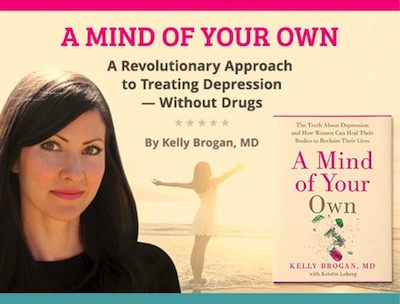
I recently had the absolute pleasure of interviewing Dr. Kelly Brogan, holistic women’s health psychiatrist and author of the new bestseller, A Mind of Your Own. I’ve had the section on medication tapering and withdrawal effects transcribed because it’s so valuable.

=================================================================

Kelly: Now much of my practice is devoted to psychiatric medications tapers. Guess what? I didn’t learn that in my training. There wasn’t a single hour of education on this subject. I have learned how to do this from patients, and really from patients globally who are educating each other and frankly educating physicians about how to engage in a safe and responsible psychiatric medication tapers……

…when you try to taper off a medication after long-term exposure, either because you’re no longer deriving that initial benefit from it, or because something has changes about your life circumstance and you want to try a different kind of healthcare maybe, they you might learn that these are some of the most habit forming medications, I would say habit forming substances, on the planet.

I wouldn’t believe this if I haven’t seen it with my very own eyes, but this is what actually compelled me to put down my prescription pad for good. After I read that book, I began to take patients, or at least offer them the opportunity to taper them off of medication. Even when we did it responsibly, I was essentially running an outpatient rehab. I mean from neurologic symptoms to psychiatric symptoms, physical symptoms, autoimmune diseases flaring, patients developing impulsive behavior and even violence. It was beyond description.

Then I began to see that actually a lot of patients around the world are talking about this. They’re talking about withdrawal from anti-depressant specifically, but of course other medications as well. Their doctors are totally ill-equipped to help them because we don’t learn about how to do this in our training. We actually in fact dismiss patients when they talk about these being addictive medications. Of course, now finally Fava is a group of researchers who have finally begun to publish the reality of this withdrawal syndrome, and how disabling it can be.

Since I have 4 grounded lifestyle interventions, and actually begun with nutrition such that I don’t even begin a medication taper until about 2 months into lifestyle change, everything is different now in my practice. I feel that once you can optimize your physiology, you really put yourself in a much, much better position to safely and strategically taper. Wow. Isn’t that something you would want to know before taking your first prescription? I certainly never told any patients that it could be like a horror show and you might never be able come off of a psychiatric medication if you’re taking it for longer than a year or so. I never informed patients of that.

A lot of what I discuss and describe in this book is in service of presenting people with a full picture of what the science has to say before they make a decision. I think we really wish that there was a magic pill. We really wish there was a safe effective quick fix. Unfortunately, what is available is really anything but that.

Trudy: Yeah. We want that quick fix. I’ve got a few follow on questions, because this is a lot of good information here. The fact that you see all these problems when people are coming off the meds, is there a time frame, or is that really dependent on each person?

Kelly: It’s very, very dependent on each person. That ends up being the take home that we are talking about. What I like to call end of one medicine. We’re talking about the fact that our levels of biochemical individuality have ever been more relevant than when we’re exploring how we interact with chemicals in our environment, in our pharmaceuticals. We really need to understand that every single person is an individual.

When I taper patients off of meds, I normally do what’s called a test dose decrease, which often is around 20% to 25% of the dose. We come down by that. Again, this is after we’ve done the initial months at least of fairly strict dietary compliance working with relaxation response, doing 20 minutes or more of movement, working on sleep. All of this has to happen first. Then we begin, and so we start with a test dose. If we see in about 2 to 4 weeks that test dose is completely well-tolerated, meaning you don’t even notice the difference, then we probably can work in bigger increments. That’s actually a godsend. These tapers, when we’re working in 10% and less doses, could take literally years.

You want to begin to learn about what your body is capable of bouncing back from. We begin with 25%. If that’s not a pretty picture, then we’ll just scale it back to about 10% of the initial dose, and work with that 10% increment at about every 2 to 4 weeks, sometimes unfortunately slower. The increment and then the speed are 2 variables that we have to learn for each patient.

I don’t know what I would do without a compounding pharmacy. While many of these medications are available in liquid form, and some of them, like Effexor for example, have beads inside a capsule, to be able to tailor and personalize the dosage to each individual patient is wonderful and that I have that option through compounding pharmacy. I work with one in Massachusetts named Johnson Compounding, and they’ve just been a wonderful support over the years to my patients.

Trudy: Wonderful. Very slow and then obviously very individualized. Now I’m very familiar with the effects of benzodiazepines and the slow taper process that’s needed for someone on the anti-anxiety benzodiazepine medication. Would you say that SSRIs can have comparable effects in some people, or are they not as bad as the benzodiazepines?

Kelly: That’s a great question. What we’ve observed in psychiatry is that there’s really been a transition from using benzodiazepine as sort of like a spot treatment to transitioning into using anti-depressants long-term. When I was in my training, the typical gold standard protocol would be to start somebody on both benzodiazepine and anti-depressant, and then taper them off to benzodiazepine and leave on the anti-depressant with the thinking being that benzodiazepine are acknowledged for their habit forming properties and anti-depressants are totally safe.

What we are learning is in fact, that group that Fava runs, with the papers that they’re putting out, they are essentially equating the anti-depressant withdrawal phenomenon to benzodiazepines. In my clinical experience, I would actually argue that SSRIs are worse with long-term exposure. A lot of people at this point, given that it’s been decades since Prozac, have been on these medications for more than 10 years. We’re really talking about a level of habituation that could be challenging to undo. It’s not that I haven’t. I struggled a lot with Klonopin for example. It’s not that I haven’t encountered challenges with benzodiazepines.

A patient in my practice I’m taking off of Lexapro a thousandth of a milligram a month. I’ve never heard of something like that. Heroin, crack, cocaine, oxycontin: show me something that would ever require that. It’s unbelievable. I think it’s at least comparable I would say, and that’s what the literature is beginning to demonstrate, is that there are actually comparable phenomenon, but we really never ever talked about anti-depressants in this way, so it really is a game changing perspective.

Trudy: The fact that you say people are not told that this could be a possibility, and the fact that you’re talking about this and writing about it I think is so important, because people need to know. They would choose not to do this if they did know. I see there is this MA bill going through [correction: being proposed – you can read more here]. It’s about benzodiazepines and people needing to consent to the fact that it’s going to possibly cause them issues. It sounds like we need to do the same with these anti-depressants.

Kelly: Absolutely, 100%.

Trudy: Now, I’ve heard that certain SSRIs are worse than others. I’ve heard that Paxil can be really bad. Have you seen a difference between different medications?

Kelly: Basically we look at half-life of these medications, and we extrapolate from there. Assuming that Prozac would be the easiest, and there are medications like Paxil and Effexor that are more challenging. In my experience, there are 2 ways of discontinuation – the field likes to call it discontinuations issues. The first is acute. It’s within 72 hours of a dose change where you can get brain zaps and headache, and gastrointestinal distress, you feel agitated. The Paxils of the world are much more likely to cause those more immediate withdrawal symptoms.

What I have found is unfortunately there’s no free lunch. There isn’t a medication that actually is effortless to come off for everyone, so that even when you’re on Prozac, for example, for a long period of time, even though it has this long half-life, it should be easy to come off of, in my experience, it can often be challenging as well. These other medications often manifest as second waves. What I have found is almost uncanny – after about 2 months, it’s almost always 6 to 8 weeks after the final dose or after a major dose change. It’s like the other shoe can drop.

You have those immediate withdrawal symptoms, and then about 2 months later, you can begin to have what has historically been categorized as a relapse. This is when your doctor will tell you, “You see, you should have never even tried to go off your medication. You need it for life. Now you know.” That’s what we’re taught to say. In fact, it’s actually a protracted withdrawal phenomenon. Again, this has now been documented that this can occur for unfortunately, I don’t want to scare anyone, it can occur for months and months and even years after the final dose. That being said, there is a medication that spares you from that arm of this problem.

Even I went for years tapering patients off of Wellbutrin and thinking, “Well, this is the easy one. I can even come down by 50% of the dose, and it’s not a problem.” Right now, I have in my practice, a patient who has been completely destabilized coming down by 25 milligrams of Wellbutrin. Again, it’s a very individualized process, and I don’t think that there are any obvious choices in terms of medications that are easier come off of after long-term exposure.

Trudy: Thank you for sharing that. It’s scary, but the good thing is that there are solutions. People on these medications must do the slow taper and make all the changes that you’ve talked about. I’m glad that you mentioned, “Don’t rush into this, make all the food changes.” We’re going to talk about some of the things that you recommend in a second, but get yourself in a better place to start making these changes. If you’re listening to this and you’re thinking, “Oh my gosh. This is terrible.” Don’t go and rush out and just stop. You simply don’t want to stop cold turkey. You want to be working with someone. Then obviously read the book and get resources so you can be in a good place when you’re starting to make these changes.

Kelly: Absolutely. That’s all incredibly important. Yes. Please don’t ever consider just stopping your medication.

Trudy: Absolutely. I have one final question on the medication aspect. You’ve got a small section in the book where you talk about using amino acids are helping people taper, and as you know, my community is very into using the amino acids. I find them very helpful for helping people with mood and anxiety issues. Can you talk a little bit about how you use the aminos and how beneficial you find them when someone is doing this taper?

Kelly: Yes. Absolutely. I am quite certain that there are many, many, many roads to physiologic and psycho spiritual resiliency. I, in no way, intend to position myself as having the answer by any means. I am very much trying to create a space for all of those who are passionate about natural healing, including yourself and our colleagues, because I think that just about everything in the natural health arena offers you the potential for very high yield, very low-risk healthcare.

I certainly don’t consider myself an expert in amino acids and don’t have a fraction of the knowledge that you have about this arena. That being said, I do use them for tapers specifically. If I use supplements I wait after a month of dietary change before introducing any supplements, mostly because I want to, I don’t know, send patients the message of what a single intervention, in terms of lifestyle, what a dietary intervention can do in terms of moving the needle of their health. I often don’t want to cloud the picture with other interventions like even supplements or even detox.

After that period, if it is necessary, I’ll often lead with some of the supplements that I talk about, whether it’s probiotic or glandulars, I use a lot based on my work with the only mentor I’ve ever had, Dr. Nicholas Gonzales. I learned a lot about using glandulars, using specific minerals, using fatty acids, that sort of thing. Well, we’re working with SSRIs. I tend to use tryptophan more often than 5-HTP. I do use tryptophan even in the 3 to 6 gram range before dinner and before bed. I would say that it’s helpful often, not in every case, with a lot of the insomnia specifically. It’s about the worst thing that can happen in the setting of a taper. It’s the kind of insomnia that’s induced by psychiatric medication taper.

I have several tricks up my sleeve, and that’s certainly one of them. Through my own self-education, and again, you may have a more sophisticated perspective on this that when you use 5-HTP or tryptophan for the longest period of time, meaning over a couple of weeks, so you want to balance it out with tyrosine or DL-phenylalanine. If we are using it for a period of time, I might incorporate that. I have found that when I work with Wellbutrin tapers, it’s extremely helpful. Tyrosine and actually an herb called mucuna support dopamine.

Then all of my patients who are tapering – I have them on a blend of amino acids.

=================================================================

We cover much more than the medication taper and withdrawal and you can listen to the entire interview here:

https://s3-us-west-2.amazonaws.com/axmisc/kelly-brogan-mind-of-your-own-interview-spr16.mp3


A Mind of Your Own: The Truth about Depression and How Women Can Heal Their Bodies to Reclaim Their Lives is superb, brave, bold, science-based (which I love!) and offers holistic solutions for depression (and anxiety). Get the book from Amazon or better yet, get a copy from your local book store (ask them to get it if they don’t carry it)!

mind-of-your-own-meme2

It launched March 16th and there is a grass-roots effort to share this book widely because of the mainstream media blackout.  Join the grassroots effort and help share this valuable message!

Take a picture with the book and post on social media with #amindofyourown and you can have an impact. You’ll also automatically show up in “hall of fame” on the tagboard.

mind-of-your-own-meme3

You can go and get the first chapter of the book if you’re on the fence (get it here: http://kellybroganmd.com/amindofyourown/?ref=35). After reading the first chapter, I know you’ll want to get the book and join the grass roots effort.

If you already have the book lets us know in the comments what you think.

Feel free to post questions on the blog and please do share your SSRI or benzodiazepine taper and withdrawal story so we can all be better informed.

PS. Both Kelly Brogan and myself will be presenting at the Mindd Conference in Sydney in May. We’ll also be presenting at IMMH/Integrative Medicine for Mental Health Conference in September in Washington DC. Come along to those events, and you can hear Kelly Brogan speak live, and you can hear me speak live as well.

Filed Under: Antidepressants, benzodiazapines, Books, Depression, Drugs, Events Tagged With: a mind of your own, antianxiety, antidepressant, anxiety, benzodiazepine, depressed, interview, Kelly Brogan, medication, SSRI, taper, withdrawal

Neurotransmitters in food addiction: dopamine, endorphins, GABA and serotonin

April 11, 2014 By Trudy Scott 22 Comments

chocolate-cake-icecream

Food can be as addicting as drugs and we often see mood changes when someone has addictions or out of control cravings.

In this blog post Why do you crave and how do you self-medicate? I covered a simple way for you to figure out why you crave something or why you’re drawn to a particular food, substance, or behavior. I also said that it can be challenging to determine which part of your brain chemistry it’s affecting, and you may not associate cravings with mood issues.

In a series of connected articles I’m going to share some of the research supporting this. If you’ve read my book, The Antianxiety Food Solution, or have been reading my blog posts, you know I like to share research-based evidence. Unfortunately there are not many double blind studies on intervention and symptom management when it comes to amino acids, but I’ll be sharing the research that has been done – focusing on each neurotransmitter and amino acid individually.

Let’s start with this 2013 review titled Pharmacotherapies for Overeating and Obesity. Although the focus of the review is drug-based interventions for finding solutions to food addictions, the mechanisms of food addiction is nicely spelled out: neurotransmitter or brain chemical imbalances. I’d like to add that all of this can be in play even if you are not obese – you just have to love sugar/carbs, wine, coffee etc and eat or drink them to self-medicate.

  • “Research has shown that obesity can and does cause changes in behavior and in the brain itself that are very similar to changes caused by drugs of abuse”
  • “While food addiction is not the causal agent of all obesity, it is clear that many people no longer eat to survive, but instead survive to eat.”
  • “This review considers the importance of the brain’s reward system in food intake.”
  • “…research has recently demonstrated that each of these nutrient elements affects specific neurotransmitter systems in the brain providing the potential for targeted pharmacologic treatments” [instead of targeted drug treatments, we can use targeted amino acid supplements]
  • “The American Society of Addiction Medicine (ASAM) now recognizes addictions as a brain disorder, and as such, treatments aimed at addressing food addiction must address the dysfunctions at the level of the brain”
  • “There are a number of such therapies under investigation targeting neuropathways and neurotransmitters implicated in addiction, including: dopaminergic [i.e. low or high dopamine, a catecholamine], opioid [i.e. low endorphins], GABAnergic [i.e. low GABA or a need for glutamine], cannabinoid, serotonergic [i.e. low serotonin], and other novel treatment options.”

If this scientific information is of interest to you, I encourage you to read the whole paper here.

In this 2014 study looking at food addiction, in 233 participants, they did find a relationship between food addiction and negative mood i.e. there was: “an inclination toward behaving irrationally while experiencing negative mood states (Negative Urgency) and low levels of task persistence (lack of Perseverance)”

As a reminder here is the table again:

How you feel before

How you feel after

Brain chemistry imbalance

Amino acid to supplement

Anxious or stressed

Calm or relaxed

Low GABA

GABA

Depressed or anxious

Happy or content

Low serotonin

Tryptophan or 5-HTP

Tired or unfocused

Energetic, alert, or focused

Low catecholamines

Tyrosine

Wanting a reward or sad

Rewarded or comforted

Low endorphins

DPA (d-phenylalanine)

Irritable and shaky

Grounded or stable

Low blood sugar

Glutamine


As I said, the research is important, but more important are the incredible results my clients get when they have brain chemical deficiencies and use the amino acids in a targeted manner addressing each area of deficiency.

Meme Grant, GAPS Practitioner, Nutritional Therapist, FNTP, givennewlife.info participated my Amazing Aminos for Ending Emotional Eating program and this is what she said afterwards:

“I still am amazed at how quickly the panic attacks, binge eating, and mood swings disappeared. Tyrosine enabled me to focus and gave me energy to do things again, glutamine allowed me to walk past the gluten and dairy free junk foods, d-phenylalanine [DPA] stopped my comfort eating, tryptophan enabled me to stop my negative thoughts and helped me sleep but the best was when GABA was introduced, the panic attacks disappeared.”

This is why I call them the amazing amino acids. And this why addressing neurotransmitter deficiencies can end food addiction and out-of-control sugar cravings (and at the same time they help to eliminate or reduce anxiety, mood issues and insomnia).

Update June 24, 2016:

Research is now further highlighting the connection between food addiction and depression and anxiety.

In this May 2016 paper, Food addiction associations with psychological distress among people with type 2 diabetes  they looked at the relationship between food addiction and psychological distress among 334 patients with type 2 diabetes and found that those:

meeting the FA [food addiction] criterion had significantly higher depression, anxiety, and stress scores as compared to participants who did not meet the FA [food addiction] criterion.

This applies whether or not you have type 2 diabetes and whether or not you are overweight.

As you can see in this blog post: GABA for ending sugar cravings (and anxiety and insomnia), Melissa started taking Source Naturals GABA Calm in anticipation of stressful holiday travel and holiday gatherings.  She felt much calmer when she used GABA Calm and discovered that a wonderful side-benefit (we like side-benefits vs side-effects!) was reduced cravings (as well as improved sleep):

An unexpected result was that I stopped craving sweets after about a week of taking it! I didn’t even realize this until I was grocery shopping and out of habit walked towards the ice cream – I stopped and realized I didn’t want ice cream. So I walked toward the chocolate – same reaction. For once in my life, I was not craving sweets. I made truffles for a NYE party and only ate two. But what is really shocking is that the leftovers are still in my refrigerator two days later and I haven’t touched them. I don’t understand what is going on! Can this be the GABA Calm?

She was pleasantly surprised as many of my clients are – she felt more calm, she had better sleep and saw an end to her cravings!

If this is new to you this is what I do with my clients:  

  • Have them do the Amino Acid questionnaire  so they can figure out if they may have low brain chemicals that are affecting both mood and playing a role in food addiction or cravings.   
  • Review the Amino Acid Precautions
  • Have them do a trial  of the relevant amino acids, one at a time and monitor how they feel in terms of reduced cravings, less anxiety, improved mood and sleep

Let us know if this resonates with you and if you have tried the amino acids for food addiction or sugar/carb cravings? And what results you have seen?


Filed Under: Addiction, Amino Acids, Anxiety and panic, Sugar addiction, Sugar and mood Tagged With: amino acids, anxious, crave, depressed, dopamine, food addiction, GABA, neurotransmitter, self-medicate, serotonin

Why do you crave and how do you self-medicate?

March 14, 2014 By Trudy Scott 23 Comments

Sometimes it’s difficult to figure out why you crave something or why you’re drawn to a particular food, substance, or behavior. It can be challenging to determine which part of your brain chemistry it’s affecting, and you may not associate cravings with mood issues. Here is a way to figure out why you may crave certain things.

Your drug-of-choice is something you self-medicate with and it is something that makes you feel good or “normal.” It could be candy, chocolate, starchy foods like bread or pasta, cookies, ice-cream, coffee, sodas or wine/beer. It could also be cigarettes, marijuana, a prescription medication like Prozac, street drugs, or even shopping or exercise.

Cravings for these substances (or behaviors) typically indicate a brain chemistry imbalance, so it’s very helpful to identify how the substances you crave affect you. This will help you determine which amino acids you might supplement to address the imbalance.

For example, a glass of wine may be calming for one person but energizing for another, or chocolate may be calming for some people and comforting for others. Certain prescription medications also offer clues. If you have many symptoms of low serotonin and have found that prescription SSRIs help, it’s possible that low serotonin is an issue.

Taking chocolate as an example, here’s what I suggest: Before you eat some chocolate, think about why you want it. Is it because you’re sad or tired or anxious? Or do you feel like you deserve a reward or feel irritable and shaky? Then, once you’ve eaten it, think about how it made you feel.

Use your drug-of-choice (candy, chocolate, starchy foods like bread or pasta, cookies, ice-cream, coffee, sodas or wine/beer etc) and the chart below to help you determine what brain chemistry imbalance may be affecting you and which amino acid you may benefit from.

How you feel before How you feel after Brain chemistry imbalance Amino acid to supplement
Anxious or stressed Calm or relaxed Low GABA GABA
Depressed or anxious Happy or content Low serotonin Tryptophan or 5-HTP
Tired or unfocused Energetic, alert, or focused Low catecholamines Tyrosine
Wanting a reward or sad Rewarded or comforted Low endorphins DPA (d-phenylalanine)
Irritable and shaky Grounded or stable Low blood sugar Glutamine

Feel free to share in the comments section: your drug-of-choice and how it makes you feel before you indulge and how you feel afterwards. If you’ve used any of the amino acid supplements to end the craving or addiction, I’d love to hear your feedback too.

Filed Under: Anxiety and panic, Food and mood, Sugar addiction Tagged With: amino acids, anxious, crave, depressed, drug-of-choice, self-medicate

Primary Sidebar

NEW! GABA QuickStart Homestudy (with special intro pricing)

gaba quickstart homestudy

Free Report

9 Great Questions Women Ask about Food, Mood and their Health

You'll also receive a complimentary subscription to my ezine "Food, Mood and Gal Stuff"


Connect with me

Popular Posts

  • Amino Acids Mood Questionnaire from The Antianxiety Food Solution
  • The Antianxiety Food Solution Amino Acid and Pyroluria Supplements
  • Pyroluria Questionnaire from The Antianxiety Food Solution
  • Collagen and gelatin lower serotonin: does this increase your anxiety and depression?
  • Tryptophan for the worry-in-your-head and ruminating type of anxiety
  • GABA for the physical-tension and stiff-and-tense-muscles type of anxiety
  • The Antianxiety Food Solution by Trudy Scott
  • Seriphos Original Formula is back: the best product for anxiety and insomnia caused by high cortisol
  • Am I an anxious introvert because of low zinc and vitamin B6? My response to Huffington Post blog
  • Vagus nerve rehab with GABA, breathing, humming, gargling and key nutrients

Recent Posts

  • What do I use instead of Seriphos to help lower high cortisol that is affecting my sleep and making me anxious at night?
  • BeSerene™ GABA/theanine cream eases severe muscle tension in her neck/shoulders, prevents her bad headaches and quells her anxiety
  • How the correct approach, dose and sublingual use of GABA can be calming and not cause a flushed and itchy face and neck
  • The amino acid glutamine improves low mood by addressing gut health, and it has calming effects too
  • Flight anxiety with heightened breath, physical tension and also fearing the worst (the role of low GABA and low serotonin)

Categories

  • 5-HTP
  • AB575
  • Addiction
  • ADHD
  • Adrenals
  • Alcohol
  • Allergies
  • Alzheimer's disease
  • Amino Acids
  • Anger
  • Antianxiety
  • Antianxiety Food Solution
  • Antidepressants
  • Anxiety
  • Anxiety and panic
  • Autism
  • Autoimmunity
  • benzodiazapines
  • Bipolar disorder
  • Books
  • Caffeine
  • Cancer
  • Candida
  • Children/Teens
  • Collagen
  • Cooking equipment
  • Coronavirus/COVID-19
  • Cravings
  • Depression
  • Detoxification
  • Diabetes
  • Diet
  • DPA/DLPA
  • Drugs
  • EFT/Tapping
  • EMF
  • EMFs
  • Emotional Eating
  • Endorphins
  • Environment
  • Essential oils
  • Events
  • Exercise
  • Fear
  • Fear of public speaking
  • Fertility and Pregnancy
  • Fish
  • Food
  • Food and mood
  • Functional neurology
  • GABA
  • Gene polymorphisms
  • General Health
  • Giving
  • Giving back
  • Glutamine
  • Gluten
  • GMOs
  • Gratitude
  • Gut health
  • Heart health/hypertension
  • Histamine
  • Hormone
  • Hyperparathyroidism
  • Hypoglycemia
  • Immune system
  • Inflammation
  • Insomnia
  • Inspiration
  • Introversion
  • Joy and happiness
  • Ketogenic diet
  • Lithium orotate
  • Looking awesome
  • Lyme disease and co-infections
  • MCAS/histamine
  • Medication
  • Men's health
  • Mental health
  • Mercury
  • Migraine
  • Mold
  • Movie
  • MTHFR
  • Multiple sclerosis
  • Music
  • NANP
  • Nature
  • Nutritional Psychiatry
  • OCD
  • Osteoporosis
  • Oxalates
  • Oxytocin
  • Pain
  • Paleo
  • Parasites
  • Parkinson’s disease
  • PCOS
  • People
  • PMS
  • Postpartum
  • PTSD/Trauma
  • Pyroluria
  • Questionnaires
  • Real whole food
  • Recipes
  • Research
  • Schizophrenia
  • serotonin
  • SIBO
  • Sleep
  • Special diets
  • Sports nutrition
  • Stress
  • Sugar addiction
  • Sugar and mood
  • Supplements
  • Teens
  • Testimonials
  • Testing
  • The Anxiety Summit
  • The Anxiety Summit 2
  • The Anxiety Summit 3
  • The Anxiety Summit 4
  • The Anxiety Summit 5
  • The Anxiety Summit 6
  • Thyroid
  • Thyroid health
  • Toxins
  • Tryptophan
  • Tyrosine
  • Uncategorized
  • Vegan/vegetarian
  • Women's health
  • Yoga

Archives

  • October 2025
  • September 2025
  • August 2025
  • July 2025
  • June 2025
  • May 2025
  • April 2025
  • March 2025
  • February 2025
  • January 2025
  • November 2024
  • October 2024
  • September 2024
  • August 2024
  • July 2024
  • June 2024
  • May 2024
  • April 2024
  • March 2024
  • February 2024
  • January 2024
  • December 2023
  • November 2023
  • October 2023
  • September 2023
  • August 2023
  • July 2023
  • June 2023
  • May 2023
  • April 2023
  • March 2023
  • February 2023
  • January 2023
  • December 2022
  • November 2022
  • October 2022
  • September 2022
  • August 2022
  • July 2022
  • June 2022
  • May 2022
  • April 2022
  • March 2022
  • February 2022
  • January 2022
  • December 2021
  • November 2021
  • October 2021
  • September 2021
  • August 2021
  • July 2021
  • June 2021
  • May 2021
  • April 2021
  • March 2021
  • February 2021
  • January 2021
  • December 2020
  • November 2020
  • October 2020
  • September 2020
  • August 2020
  • July 2020
  • June 2020
  • May 2020
  • April 2020
  • March 2020
  • February 2020
  • January 2020
  • December 2019
  • November 2019
  • October 2019
  • September 2019
  • August 2019
  • July 2019
  • June 2019
  • May 2019
  • April 2019
  • March 2019
  • February 2019
  • January 2019
  • December 2018
  • November 2018
  • October 2018
  • September 2018
  • August 2018
  • July 2018
  • June 2018
  • May 2018
  • April 2018
  • March 2018
  • February 2018
  • January 2018
  • December 2017
  • November 2017
  • October 2017
  • September 2017
  • August 2017
  • July 2017
  • June 2017
  • May 2017
  • April 2017
  • March 2017
  • February 2017
  • January 2017
  • December 2016
  • November 2016
  • October 2016
  • September 2016
  • August 2016
  • July 2016
  • June 2016
  • May 2016
  • April 2016
  • March 2016
  • February 2016
  • January 2016
  • December 2015
  • November 2015
  • October 2015
  • September 2015
  • August 2015
  • July 2015
  • June 2015
  • May 2015
  • April 2015
  • March 2015
  • February 2015
  • January 2015
  • December 2014
  • November 2014
  • October 2014
  • September 2014
  • August 2014
  • July 2014
  • June 2014
  • May 2014
  • April 2014
  • March 2014
  • February 2014
  • January 2014
  • December 2013
  • November 2013
  • October 2013
  • September 2013
  • August 2013
  • July 2013
  • June 2013
  • May 2013
  • April 2013
  • March 2013
  • February 2013
  • January 2013
  • December 2012
  • November 2012
  • October 2012
  • August 2012
  • July 2012
  • June 2012
  • May 2012
  • April 2012
  • March 2012
  • February 2012
  • January 2012
  • December 2011
  • November 2011
  • October 2011
  • September 2011
  • August 2011
  • July 2011
  • June 2011
  • May 2011
  • April 2011
  • March 2011
  • February 2011
  • January 2011
  • December 2010
  • October 2010
  • September 2010
  • July 2010
  • May 2010
  • April 2010
  • March 2010
  • February 2010
  • January 2010
  • November 2009

Share the knowledge!

The above statements have not been evaluated by the Food and Drug Administration. Products listed in this website are not intended to diagnose, treat, cure or prevent any disease.

The information provided on this site is for informational and educational purposes only and is not intended as a substitute for advice from your physician or other health care professional. You should consult with a healthcare professional before starting or modifying any diet, exercise, or supplementation program, before taking or stopping any medication, or if you have or suspect you may have a health problem.


Copyright © 2026 Trudy Scott. All Rights Reserved. | Privacy | Terms and Conditions | Refund Policy | Medical Disclaimer

Free Report

9 Great Questions Women Ask about Food, Mood and their Health

You’ll also receive a complimentary subscription to my ezine “Food, Mood and Gal Stuff”