• Skip to primary navigation
  • Skip to main content
  • Skip to primary sidebar

everywomanover29 blog

Food, Mood and Women's Health – Be your healthiest, look and feel great!

  • Blog
  • About
  • Services
  • Store
  • Resources
  • Testimonials
  • The Book
  • Newsletter
  • Contact
  • Search this site

calm

5-HTP for a calm brain, and a racing mind at night: questions and answers

April 16, 2021 By Trudy Scott 39 Comments

5-HTP q and a

5-HTP is an amino acid, made from the seeds of an African plant, Griffonia simplicifolia, and used as a supplement to ease low serotonin symptoms. With low levels of serotonin you’ll experience the worry-type of anxiety with ruminations, obsessing, panic attacks, insomnia (often lying awake worrying). This type of anxiety is different from the low GABA physical/tension type anxiety. Other low serotonin symptoms include low mood/depression, late afternoon and evening carbohydrate cravings, pain, digestive/IBS symptoms, PMS, irritability, rage and anger, TMJ, low confidence, imposter syndrome and perfectionism.

When I share my low serotonin blogs on Facebook I receive so many great questions about 5-HTP. Today I’m going to share some of these questions and my answers so you can get the benefits too.

Gail asks why 5-HTP stopped working for her when it had been working so amazingly well:

I took 5-HTP and it worked amazingly….for about 6 months. Then it did nothing. Any idea why?

I took 100 mg per day. It’s hard to explain, but it calmed my brain down. I wasn’t so quick to blurt things out during the day and at night I was able to sleep because my mind wasn’t racing. Nothing else changed at that time. That was a few years ago, I think I’ll buy more and try again

I would guess that something did shift around the 6 month mark and would try and identify what it was so you know for the future. It could have been accidental gluten exposure (from the diet or even cosmetics), hormonal shifts (perimenopause or menopause), adding collagen or gelatin on a regular basis (this can lower serotonin in susceptible folks) and/or changes in thyroid health.

If you have pyroluria and were exposed to major stresses (life stresses or toxic mold etc.) you’d lose vitamin B6 and this could affect serotonin production. The addition of the birth control pill and antidepressants can also deplete vitamin B6. I share some possible reasons for low serotonin on this blog on imposter syndrome (as mentioned above, imposter syndrome is a common sign of low serotonin).

With these wonderful benefits Gail experienced, trialing 5-HTP again is worth considering. Because 5-HTP works so quickly she’ll feel that sense of calm right away and she won’t blurt things out during the day (possibly caused by lack of confidence and/or irritability and/or anger?). Also, her mind won’t race at night, she’ll fall asleep quickly and will stay asleep, waking rested, calm, happy, confident and optimistic.

And in future if something like this happens again, I’d try to identify the cause and bump up 5-HTP temporarily.

Wendy asks about headaches as an adverse effect:

What do you recommend if 5-HTP gives you headaches?

Headaches are not a common adverse effect with 5-HTP (compared to the amino acid tyrosine which is recognized to cause headaches and migraines in susceptible folks).

Even if you are seeing benefits – for the worry-type anxiety and other low serotonin symptoms – with 5-HTP you don’t ever want to push through with something like headaches and continue to take it. I have clients use less 5-HTP and observe if they still see the benefits with no headaches.

We also make sure low serotonin is the issue. If it’s not then any amount of 5-HTP will either do nothing or cause adverse effects. If the issue is low serotonin then I have clients do a trial of  tryptophan.

If the 5-HTP is being used to ease low mood/depression caused by low catecholamine or low endorphins depression then neither 5-HTP or tryptophan is going to help and may cause adverse effects. And tyrosine and/or DPA are better choices.

Gerry asks this question after my interview on Your Best Sleep Ever Summit:

Great talk Trudy. When you want to increase serotonin, do you take both 5-HTP & tryptophan or just one or the other?

They can be used alone or both can be used together. I like to have clients add one new amino acid supplement at a time so we know what is working before confounding things with another one. I typically start with tryptophan for low serotonin support simply because I have such good results with it and because 5-HTP can raise cortisol in some folks.

We start with tryptophan mid-afternoon and evening (after doing a trial earlier in the day to make sure it helps).  If tryptophan causes adverse effects or doesn’t work then we do a trial of 5-HTP and then use it afternoon and evening (when serotonin levels tend to drop).

If tryptophan is working in the afternoon and evening, and additional support for worry or ruminations or panic or anxiety is needed earlier in the day, we may consider 5-HTP which can often also help improve focus. We may also consider tryptophan earlier in the day too.

It’s very individualized and we may mix and match to find the ideal combination and dosing based on trials and symptom resolution. It’s important to be aware that some folks do better on 5-HTP and some do better on tryptophan.

Here are some useful blogs related to low serotonin and the amino acids:

  • You can see all the low serotonin symptoms here.
  • Fibromyalgia: tryptophan or 5-HTP for anxiety, depression, pain and insomnia
  • You can see the 5-HTP and tryptophan products I use with my clients here on the supplements blog.
  • You may find this helpful too – GABA for easing physical anxiety and tension: some questions and answers.

As always, it’s not only the low serotonin we need to address. 5-HTP offers quick relief but we must always do a full functional workup looking at diet, nutritional deficiencies, digestion, all hormones, toxins and infections (and so on) so we can address all possible root causes – and why serotonin is low in the first place.

Thanks to these folks for asking good questions and for allowing me to share here.

What questions do you have about 5-HTP?

Which low serotonin symptoms can you relate to and has 5-HTP or tryptophan helped? Or have you found success with a combination.

Feel free to post your questions and feedback in the comments below.
Filed Under: 5-HTP, Anxiety, Insomnia, Tryptophan Tagged With: 5-HTP, anxiety, calm, collagen, cravings, Fibromyalgia, gluten, Headaches, hormonal, insomnia, night, obsessing, panic, racing mind, ruminations, serotonin, stopped working, thyroid, tryptophan, worry

5-HTP can raise salivary cortisol: does this cause a “wired-tired” feeling?

August 14, 2020 By Trudy Scott 48 Comments

5-htp salivary

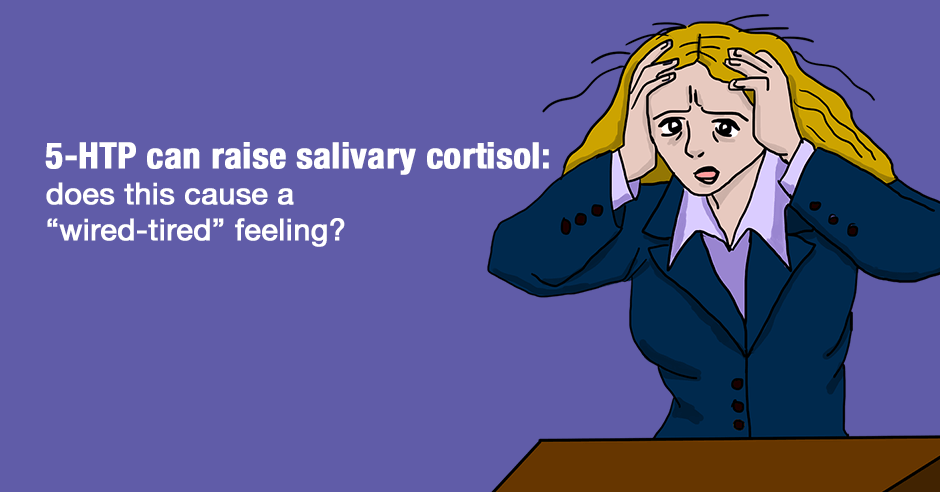
Are you aware that 5-HTP – an amino acid supplement that supports serotonin levels – can raise cortisol levels and leave you feeling “wired-tired”? You may be able to relate to this if you’ve ever used 5-HTP to help with anxiety and insomnia and ended up feeling more anxious and more wide-awake despite your exhaustion and need for sleep. You feel “wired-tired” and it’s not pleasant at all.

Both 5-HTP and tryptophan, used as supplements, help to boost serotonin levels so you can feel happy, calm, sleep well and not crave carbs in the afternoon/evening. They also help with panic attacks and phobias, lack of confidence, depression, negativity, imposter syndrome, PMS, irritability, anger issues, pain/fibromyalgia, TMJ and anger. I typically have my clients with low serotonin symptoms start with a trial of tryptophan because I see such excellent results with this amino acid. That being said, some people simply do better on one versus the other and you may do better with 5-HTP.

However there is one big caveat with 5-HTP. I don’t recommend 5-HTP when a client has elevated cortisol levels because we know that it can raise cortisol levels in certain individuals. This can leave you feeling agitated, cranky, as well as wired and yet tired at the same time.

In this 2002 study, L-5-hydroxytryptophan induced increase in salivary cortisol in panic disorder patients and healthy volunteers

Salivary cortisol levels were measured in 24 panic disorder patients and 24 healthy volunteers, following ingestion of 200 mg L-5-hydroxytryptophan or placebo.

The experiment was carried out in the afternoon, “when basal cortisol secretion is more stable.” The first saliva sample was obtained at 1pm and the subjects ingested the 200mg 5-HTP at 2pm. Additional saliva samples were obtained at 2:30pm, 3:00pm and 3:30pm.

They report the following:

A significant rise in cortisol was observed in both patients and controls following ingestion of L-5-hydroxytryptophan. No such effects were seen in the placebo condition.

Here are a few additional comments and my thoughts:

  • This study was done to find evidence for “serotonin receptor hypersensitivity in panic disorder” and not specifically to test for the effects of 5-HTP on cortisol levels but it serves this purpose rather nicely (and it’s one of many similar studies, some of which measure plasma cortisol levels)
  • Keep in mind 200mg of 5-HTP is a large starting dose. It’s typical to start with 50mg so may be a factor to consider
  • In this study they did not assess cortisol levels beyond the 1.5 hours from ingestion of the 5-HTP. It would have been useful to see when levels started to go down
  • We would want to consider the ramifications of using 5-HTP for weeks (whether it’s 50 or 200mg). What impact would that have on cortisol and the adrenals? (I am not aware of a study like this having been done)
  • I’m also not aware of a study being done with 50mg but if you feel worse and feel “wired-tired” with 5-HTP and switch to tryptophan (the equivalent starting dose is 500mg) and your anxiety and other low serotonin symptoms resolve then you have found your solution
  • You may be wondering: “could I use 5-HTP to raise my low cortisol levels”? Theoretically yes and possibly very short-term. But I would question the timing since 5-HTP and tryptophan are best dosed mid-afternoon and later. This is when we would expect our cortisol levels to be on the downward slope as we end our day. I’d also want to nourish the adrenals with B vitamins and herbal adaptogen and remove the trigger/s that are leading to low cortisol.

If you suspect low serotonin symptoms and are new to using the amino acids and do not have my book I highly recommend getting it and reading it before jumping in to taking supplements: The Antianxiety Food Solution – How the Foods You Eat Can Help You Calm Your Anxious Mind, Improve Your Mood, and End Cravings.

There is a complete chapter on the amino acids and one for pyroluria, plus information on real whole food, sugar and blood sugar, gluten, digestion and much more.  If you’re not a reader there is now also an audible version.

Here is the Amino Acids Mood Questionnaire from The Antianxiety Food Solution and additional information on Anxiety and targeted individual amino acid supplements: a summary

Please also read and follow these Amino Acid Precautions.

This lists The Antianxiety Food Solution Amino Acid and Pyroluria Supplements that I use with my individual clients and those in my group programs.

Have you used 5-HTP with success? Or have you used it and felt “wired-tired”? Have you correlated the success or failure of your 5-HTP use with your salivary cortisol levels?

If you switched from 5-HTP to tryptophan did you have success with that?

If you’re a practitioner is this something you see with your clients/patients and take into consideration?

Feel free to post your questions here too.

Filed Under: Antianxiety Tagged With: 5-HTP, adrenals, amino acid, anger, anger issues, calm, cortisol, depression, Fibromyalgia, happy, Imposter syndrome, irritability, L-5-hydroxytryptophan, negativity, pain, panic attacks, Panic disorder, phobias, PMS, serotonin, sleep, TMJ, tryptophan, wired-tired

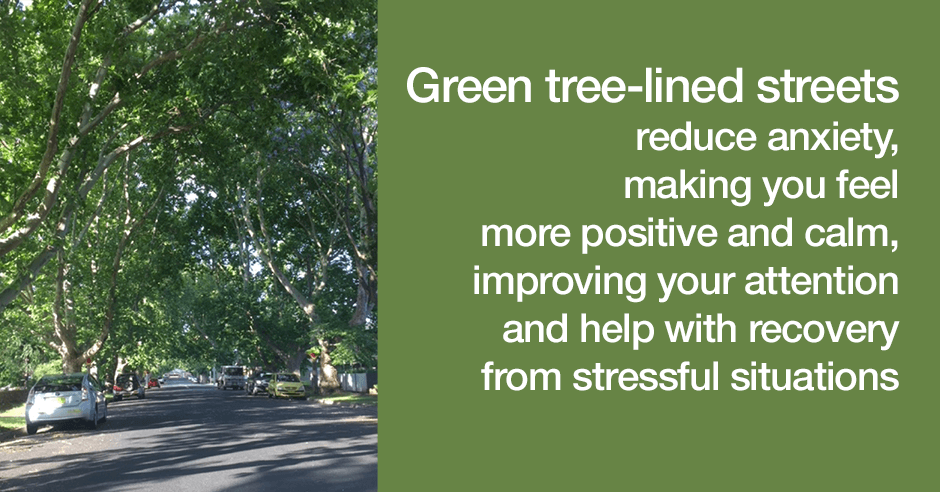
Green tree-lined streets reduce anxiety, making you feel more positive and calm, improving your attention and help with recovery from stressful situations.

January 11, 2019 By Trudy Scott 8 Comments

I’m a nature-lover and don’t need to be told that seeing trees or walking under them or driving along a tree-lined street has research supporting their benefits. I just feel the sense of wonderment, the calming effects and a heightened sense of joy and pleasure as soon as I’m in amongst trees in a street like the one above.

This is a quiet side street in the small town of Richmond in NSW, Australia. It runs perpendicular to a really busy road that heads up to North Richmond and beyond. Now the traffic doesn’t come close to comparing with Los Angeles traffic but for a small town it can be rather hectic from 4pm. If we happen to be heading towards North Richmond, we always take a detour along this wonderful tree-lined road and other similar tree-lined roads to get to where we’re going. As well as avoiding the bumper to bumper traffic we get this sense of ahhhhh!

I mentioned that I don’t need to be told there is research supporting the calming effects of tree lined-roads. But you know me: I’m always curious about the science so when I heard there was research I was of course intrigued about it and wanted to understand why they make us feel so good.

Here is some of the research I found: In Benefits of nature: what we are learning about why people respond to nature we discover that in general we respond in a positive way to nature and to trees in particular, especially “trees with spreading forms” reminiscent of trees on the African savanna. I was born in Africa and spent 32 years there so I find this so interesting! This paper also reports that

all colors were calming, but bright green trees were more calming than other tree colors, including less bright greens and oranges

and that

Adult responses to plants are also influenced by their childhood interactions with nature. We have shown that the more interaction people have with nature as children, the more positive are their attitudes towards nature as adults.

In this study: Stress recovery during exposure to natural and urban environments, the 120 participants were exposed to “color/sound videotapes of one of six different natural and urban settings” after watching a stressful movie. Watching the natural settings had a measurable impact on parasympathetic measures such as heart rate and muscle tension and they felt more positive, experienced improved attention and had better stress recovery.

In another study The View From the Road: Implications for Stress Recovery and Immunization, drivers were presented with a stress-causing stimulus and their reactions measured as they recovered from the stress. The Safe Streets report from the University of Washington summarizes the outcome:

Those viewing built-up, strip-mall-style roadside environments in a simulated drive after the stressful experience showed a slower and physiologically incomplete recovery and reported more negative feelings. Study participants seeing more natural roadside scenes (forests or golf courses) returned to normal baseline measures faster. An “immunization effect” was also detected, as initial exposure to a natural roadside setting decreased the magnitude of response to a subsequent stressful task.

And finally, the research about forest-bathing (known as Shinrin-yoku), although not directly related to stress-reduction from driving along tree-lined streets is worth mentioning. Just the word “forest-bathing” makes me smile.

Research on forest-bathing shows how spending time in forests can lower high blood pressure, and help ease modern-day “stress-state” and “technostress”. In one study, Effects of Short Forest Bathing Program on Autonomic Nervous System Activity and Mood States in Middle-Aged and Elderly Individuals:

The Profile of Mood States negative mood subscale scores of “tension-anxiety”, “anger-hostility”, “fatigue-inertia”, “depression-dejection”, and “confusion-bewilderment” were significantly lower, whereas the positive mood subscale score of “vigor-activity” was higher.

In summary, in this study, the 128 middle-aged and elderly individuals spent only 2 hours in a forest setting and felt less tense, had reduced anxiety, experienced less anger and hostility, felt less fatigued, were not depressed or dejected, felt less confused/bewildered and had more vigor and energy. This was after only 2 hours of forest-bathing!

Here are some ways you can get the most out of this information for your own sense of calm:

  • Take a detour like we do if at all possible and enjoy the calming effects of driving along a tree-lined street. Better yet, take a moment to get out the car and soak in the beauty while walking down the road. And best of all, take a full-day hike on a weekend or go camping for 2 days.
  • Plant a tree (or more than one) outside your home or get involved with a tree-planting committee at your child’s or your grand-child’s school or place of work to do the same
  • Talk to your local mayor and council members to make tree planting in your community a priority
  • If you live in a built-up city and can’t do any of the above, make an effort to spend quiet time in a nearby park
  • Find a tree-planting charity that is a good fit and make a donation in the name of a loved one in lieu of a gift or just do it for yourself
  • If you’re housebound (with agoraphobia for some other reason), find some pictures or a poster of green trees or dig out some old photos. Just looking at pictures of nature and greenery have a stress reducing effect.

On that note here is the bigger version of my Richmond tree-lined street image so you can enjoy looking at it while reading this blog AND get some of the stress-reducing benefits…until you’re in your own tree-lined street or out in nature.

Tree-lined street stress-reducing


I hope this motivates and inspires you to drive down more tree-lined streets and to do something tree-related in your life in addition to all the nutritional changes you’re making to eliminate your anxiety!

We’d love to hear how much you love trees and the outdoors. Do you have a favorite tree-planting charity? Feel free to share your feedback and questions too.

Filed Under: Anxiety, Nature Tagged With: anxiety, attention, calm, green, happy, positive, recovery from stressful situations, streets, stress, tree-lined

Tyrosine for alleviating anxiety and panic attacks and creating a feeling of calm focus

August 31, 2018 By Trudy Scott 72 Comments

If you had anxiety, felt hugely stressed and were having panic attacks would you consider using tyrosine to help calm you? It’s not the first approach I use with a client as I typically want to calm things down first by addressing the low serotonin symptoms of anxiety (such as worry, overwhelm, insomnia and panic attacks) and the low GABA physical symptoms of anxiety (physical tension, stiff and tense muscles, overwhelm and panic attacks).

However, for some individuals addressing low catecholamines with tyrosine is the best approach to take, even if it feels counter-intuitive. Since everyone is different using the trial method is the best way to figure out what you need.

Here is another success story from someone using tyrosine, as shared in the comments on a recent blog post on tyrosine:

Tyrosine for anxiety has done wonders for me! I have tried GABA and Tryptophan. The GABA seemed to take the edge off a little when panic attacks occurred but wasn’t keeping anxiety from occurring.

I have been under tremendous pressure at work. The internal stress has been overwhelming! I haven’t been able to remember anything, even things I’ve done for years! I am in the process of learning new software at work. In the very first class my mind just went blank. The more I tried to focus the more stressed I became. All I could do was sit and stare at my screen while the rest of the class moved forward.

In short order I developed a migraine and panic. The internal pressure felt as if someone was wringing out my brain like one would do to a wash rag! I had to leave the class earlier. From this point on I was struggling to even do my job as I have done the last few years. Every time I tried to think I’d immediately become overwhelmed and shut down. I felt like crying most of the time from the sheer force of the internal pressure (this is embarrassing to admit as I’m someone with a competitive career). This stress just completely shut down my ability to learn and problem solve.

So, I decided to start some tyrosine. I was hesitant because I have heard it can cause panic attacks and I definitely don’t need more of those! I bought some powder and took 400mg on an empty stomach about 30 minutes before breakfast. WOW!!! Within an hour the stress just melted away!

I wasn’t stressed on my way to work either which normally I am. I was able to sit down and think thru my problems without feeling overwhelmed at all. Also, I was communicating with people much more easily. I noticed better eye-contact. I seemed less concerned of anyone’s opinions too.

I take another 400mg 30 minutes before lunch. I simply cannot believe how much better I am doing!

Just a few weeks prior I was telling my wife that I may need to start thinking about starting the process for disability because I simply could not function well enough to do my job.

I’d also add that the stress from the anxiety was so bad I felt like I had the flu for a few weeks. This also has dissipated since starting the tyrosine.

It’s still early in this experiment but I am hopeful for once. Nothing, and I mean NOTHING has worked so well so fast for me than tyrosine. It’s the closest thing to a miracle I’ve ever experienced. A night and day experience!

What wonderful results! I’m thrilled to hear about his “miracle” and that he’s doing so much better, that he has hope and that the stress from the anxiety has dissipated!

What approach to follow if you can relate to this situation

Of course, I thanked him for sharing his success story with tyrosine and added my response for other blog readers who may relate to this situation and may consider a trial of tyrosine as a first step when anxiety is an issue.

I still stand by my advice to start with GABA and tryptophan when you have anxiety whether it’s the low serotonin-type anxiety (worry in the head) or the low GABA-type anxiety (physical anxiety). I always have clients start by addressing these deficiencies first before adding tyrosine for the low catecholamine symptoms because tyrosine is too stimulating for many and can increase anxiety and insomnia (and may also cause a panic attack).

With the majority of the anxious clients that I’ve worked with, the order of doing trials is as follows: tryptophan or GABA first and then tyrosine.

Addressing his low catecholamine symptoms was what he needed

For this gentleman, clearly GABA and tryptophan support was not what he needed or was not enough to ease his anxiety. Addressing his low catecholamine symptoms was what he needed to do.

In case you’re wondering how he’s doing now – I reached out to him and he reports he’s still taking tyrosine and is still doing great!

He is the third person that I know of who has experienced these types of results with tyrosine so I expect there are others who could benefit too – which is why I decided to share his story.

Increased anxiety because of lack of focus and low motivation

Here is another similar story from a prior client of mine. She had terrible anxiety, and we trialed both GABA and tryptophan. While she did get some benefits with both it just wasn’t enough.

She was sleeping better but still felt so stressed and anxious when preparing for an important meeting at work which she was in charge of running. The anxiety also seemed to get worse during the meetings. She did also score high on the low catecholamines section on the amino acid questionnaire (poor focus, low motivation, fatigue, ADHD, depression) but were working on the low serotonin and low GABA types of anxiety before addressing poor focus and low motivation.

It turned out that her anxiety escalated around her work meetings because of her lack of focus and low motivation – she was pushing herself to get through them. Once she added tyrosine her anxiety was under control. In this instance tyrosine actually helped ease the anxiety because her ADHD symptoms diminished and her motivation and drive improved!

This is what biochemically individuality is all about and how we all have our own unique needs. And is why I love the trial-method for determining which amino acid is best for your own unique needs.

Here are some related blog posts that you may find helpful:

  • Amino Acids Mood Questionnaire from The Antianxiety Food Solution
  • How to do an amino acid trial for anxiety
  • Tyrosine for focus, motivation, energy, a good mood and possibly even anxiety

Do let us know if you have experienced less anxiety and a sense of calm focus when taking tyrosine?

Filed Under: Anxiety Tagged With: Amino acid trial, anxiety, calm, catecholamines, GABA, serotonin, stress, tyrosine

GABA, the calming amino acid: products and results

December 18, 2015 By Trudy Scott 57 Comments

gaba

GABA (gamma-aminobutyric acid) is a calming amino acid that when taken orally works to relax, calm, ease anxiety and social anxiety, quiet the mind, help with sleeping better, reduce neck tension, remove uneasiness and worry, and give hope.

Even though we have recent research that it does work we still hear the naysayers saying “why bother to take GABA, it just doesn’t work unless you have a leaky blood brain barrier.”  

The blog post from last week – GABA, the calming amino acid: expert opinions generated so much interest and feedback, so I’m sharing some of this feedback so you can hear first-hand from people who have tried various GABA products. I’ve corrected typos but what follows is their actual feedback.

As you’ll see, it does work extremely well for many people. You’ll also see that there are many different products that work well. I’m sharing all of them even though I have my favorites.

There are some people that don’t benefit from it.   I share some questions below and you may want to go through these if GABA doesn’t work for you.

Here is the feedback for many of the products that were mentioned. It starts with products I like/recommend and have experience with.

Allergy Research 200mg of Zen product contains 500mg GABA and 200mg Theanine 200 mg per 2 capsules. Dee likes the instant calm and compared how it worked as well as Xanax had worked for her in the past:

I have taken Xanax in the past for panic attacks. My functional medicine doctor suggested this product as I wanted a natural product. I was amazed how it works just like the Xanax did – instant calm feeling within 10 mins of taking 2 capsules. I use them as needed when I am having heightened stress and anxiety.

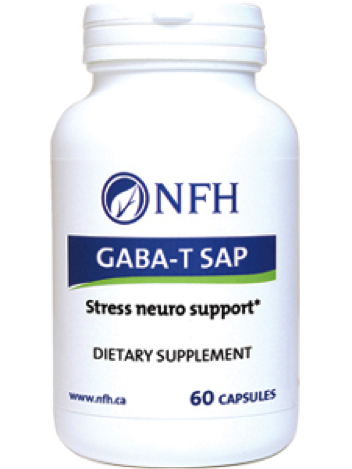
I’ve had a number of clients who really liked this GABA/theanine combination. This product together with Nutritional Fundamentals GABA-T SAP, also a GABA/theanine combination, comes highly recommended by me. They both contain a small amount of GABA, the theanine works really well with the GABA and the capsules, when opened on to the tongue, are pleasant tasting.

Source Naturals GABA Calm was only mentioned once which surprised me! Together with GABA/theanine combination products above, it’s the GABA product I use most with my clients because it’s sublingual, easy to take, great tasting and works so exceptionally well. It contains GABA, taurine and glycine, and a small amount of magnesium and tyrosine.   The tyrosine means this product cannot be used if you have melanoma, high blood pressure or bipolar disorder. You can see all the amino acid precautions here.  

Country Life GABA Relaxer contains GABA, taurine, glycine, inositol, niacin and vitamin B6. Melissa shares how much it helped her:

After my first panic attack I thankfully found Julia Ross’s work. I began taking 250 mg GABA every night. That really helped! Now a few years later I don’t need it every day, and I take a half pill during my cycle anxiety – more like uneasiness and over worried now, just as needed. I then heard you speak Trudy and share more info, bought your book, and put into place supportive lifestyle changes, and I have my life back. GABA is a great supplement for some of us!

I really like this product and used it when I worked with Julia Ross in her clinic. It was also a product I personally used when my anxiety and panic attacks started. I used this at night and GABA Calm in the day.

Seeking Health GABA 500mg was mentioned by a few people. Sherie said she loves it and takes it 2-4 times a day (she also takes theanine). This is what she shares:

It helps lower my overall anxious feeling all day (anxiety for no reason). I just started increasing the dose slightly and am beginning to take it a few times a day to help with social anxiety. I have lifelong problem of severe blushing and sweating from social anxiety and need that to stop.

I asked her if she’s looked into pyroluria and she said hadn’t but said it fits her to a T so this would be the next thing for her to address. It’s seldom just one underlying cause and the great thing is that the zinc, vitamin B6 and evening primrose oil of the pyroluria protocol help us make more GABA (and other brain chemicals).

I’d like to add that 500mg can be a high amount for many anxious individuals so it’s not something I typically start with. I like to have my clients start on either Source Naturals GABA Calm (which has 125mg of GABA) or one of the GABA/theanine combination products that have around 200mg GABA, and increase as needed.

I recommend GABA over pharmaGABA because over the years I’ve simply found more people seem to do better on GABA. But clearly, pharmaGABA does work for some individuals.

Thorne PharmaGABA-100 contains 100mg pharmaGABA and Cheryl shares how this product works great for her:

I usually only take it at night only when I know I need it, to quiet my mind and relax my body so I can sleep better. I need it less now because I am following MTHFR and adrenal fatigue supplement protocols and diet.

PharmaGABA Stress Relax from Natural Factors is another pharmaGABA product and Gina chewed two 100mg tablets and said this is how they helped:

It changed my life in minutes! Take it every day now. No more hopelessness!

April also finds that the Natural Factors pharmaGABA works great for her:

I take 100mg a day for about a week and then take time off until I feel I need it again or I feel I have too much. I know if I take too much, I get spacey, unmotivated, depressed even. Helps a ton with head/neck tension and anxiety.

I just want to add that this product does contain sugar (3.5 g with 300mg pharmaGABA) and fruit flavors (which sensitive folks may have an issue with) so this one would not be high on my list of recommendations. But if it’s the only one that works for you then go for it!

Quicksilver GABA is a liquid that contains GABA, theanine and sunflower lecithin, and is promoted as being a very effective form of delivery. Candy shares:

It is a liquid that I keep in the fridge. I squirt and leave it under my tongue for a couple minutes. It has been helpful.

I look forward to hearing if you or your clients have found this to be superior to other forms. I’d like add that it’s not suitable for children and alcoholics due to the ethanol.

A few other products were mentioned (neither of which I’ve had feedback on until now):

  • Source Naturals Theanine Serine which has GABA, theanine, taurine, magnesium and holy basil.
  • Pure Tranquility from Pure Encapsulations contains GABA, theanine and glycine. One person was suspicious that it was triggering migraines. I wonder if it could be related to one of the other ingredients like the natural apple flavor, potassium sorbate or purified stevia extract?

GABA won’t work for everyone and a few people said GABA didn’t work at all.

Karen appreciated me dispelling the blood-brain-barrier-GABA myth and pointing out that phenibut is not GABA. But GABA didn’t work for her and she shared this:

I have tried GABA, my mother swears by it and my husband uses it. It has a calming effect on me, but I like holy basil better.

I checked with her and she hasn’t tried it sublingually, which I find to be more effective for most of my clients. This could be something like Source Naturals GABA Calm or one of the GABA /theanine combination products opened on to tongue and held there for 1-2 minutes.

GABA also didn’t work for Sheri and she said:

I’m one of those folks for whom it seems to do nothing. Zip. I have found some relief using niacinamide, however.

Dr. Jonathan Prousky really likes niacinamide for anxiety and I find it helps a lot with my clients who have runaway thoughts and paranoia.

If GABA doesn’t work for you that’s fine, not everything works for everyone. But if you really feel GABA should work for you or feel you need additional support for your anxiety then I wouldn’t give up and ask these questions:

  1. do you have an underactive thyroid (amino acids may not be as effective)
  2. did you take it sublingually (it’s often more effective taken this way)
  3. did you take it away from protein (it needs to be taken this way)
  4. how much did you take (amounts can vary by person)
  5. do you have low GABA symptoms/physical anxiety (it will only work if you do) or
  6. are you taking a benzodiazepine (for some people on benzos many supplements don’t work or are just too much for them)

Here is the facebook post if you’d like to read the whole discussion.  I’d like to thank everyone who contributed to this great discussion!

I’ll cover phenibut (which is not GABA) in a future blog post. It’s always a hot topic and is not something I recommend but more on that next time.  

A heads up that I’ve shared links to the products that were mentioned so you can check them out. Some of the links are from Emerson, the online distributer I use. If you’d like to order from them you can find out how to set up an account here.

Now I’d love to hear from you. Have you used any of these GABA products (or had your clients use them) with good results? How much did you/they use and what were the results?

If GABA doesn’t help do you say “yes” to any of the 6 above questions?

Filed Under: Antianxiety, GABA Tagged With: amino acids, anxiety, calm, case study, GABA, sleep, supplements, tension, Trudy Scott

Calm, a cool new meditation tool to help you with anxiety and stress

May 15, 2015 By Trudy Scott 23 Comments

You heard me mention this new cool online tool called Calm in my Anxiety Summit interview with Dr. Eva Selhub

If you’re working and can’t get out in nature, try this very cool online meditation tool. It’s not nature but may help until you can get into nature.  You can pick what nature scene you like, the background sound and then pick the meditation duration.  I love it!

Of course I love mountains….

online-meditation


Maybe this is the one for you? Just seeing this is calming….

online-meditation2

In this image you actually get to watch and hear the waves …

online-meditation3

The Harvard Medical School newsletter shared this:

Although the practice of meditation is thousands of years old, research on its health benefits is relatively new, but promising. A research review published in JAMA Internal Medicine in January 2014 found meditation helpful for relieving anxiety, pain, and depression. For depression, meditation was about as effective as an antidepressant.

Enjoy! Go to Calm now and use it when your day gets hectic! Use it even when your day isn’t hectic! And do let us know what your favorite image and sound is! Right now mine is the breaking waves.

If you’re looking for other ways to ease your anxiety do check out the amazing speakers offering nutritional solutions on the Anxiety Summit  www.theAnxietySummit.com


Filed Under: Stress, The Anxiety Summit 3 Tagged With: calm, Dr. Eva Selhub, nature, online tool

  • « Go to Previous Page
  • Page 1
  • Page 2
  • Page 3
  • Page 4
  • Go to Next Page »

Primary Sidebar

GABA QuickStart Homestudy

gaba quickstart homestudy

Free Report

9 Great Questions Women Ask about Food, Mood and their Health

You'll also receive a complimentary subscription to my ezine "Food, Mood and Gal Stuff"


Connect with me

Popular Posts

  • Amino Acids Mood Questionnaire from The Antianxiety Food Solution
  • The Antianxiety Food Solution Amino Acid and Pyroluria Supplements
  • Pyroluria Questionnaire from The Antianxiety Food Solution
  • Collagen and gelatin lower serotonin: does this increase your anxiety and depression?
  • Tryptophan for the worry-in-your-head and ruminating type of anxiety
  • GABA for the physical-tension and stiff-and-tense-muscles type of anxiety
  • The Antianxiety Food Solution by Trudy Scott
  • Seriphos Original Formula is back: the best product for anxiety and insomnia caused by high cortisol
  • Am I an anxious introvert because of low zinc and vitamin B6? My response to Huffington Post blog
  • Vagus nerve rehab with GABA, breathing, humming, gargling and key nutrients

Recent Posts

  • Her cravings for chips and peanut butter were triggered by stress: GABA ends cravings and reduces physical tension and fear of heights
  • It is truly miraculous to be able to move through life without crippling anxiety and panic
  • GABA and tryptophan combo provide immediate and noticeable relief for tremors and cervical dystonia in just 7 days
  • Red light therapy for back and neck pain, plantar fasciitis and low mood – a complement to the amino acids GABA, DPA and tryptophan
  • What do I use instead of Seriphos to help lower high cortisol that is affecting my sleep and making me anxious at night?

Categories

  • 5-HTP
  • AB575
  • Addiction
  • ADHD
  • Adrenals
  • Alcohol
  • Allergies
  • Alzheimer's disease
  • Amino Acids
  • Anger
  • Antianxiety
  • Antianxiety Food Solution
  • Antidepressants
  • Anxiety
  • Anxiety and panic
  • Autism
  • Autoimmunity
  • benzodiazapines
  • Bipolar disorder
  • Books
  • Caffeine
  • Cancer
  • Candida
  • Children/Teens
  • Collagen
  • Cooking equipment
  • Coronavirus/COVID-19
  • Cravings
  • Depression
  • Detoxification
  • Diabetes
  • Diet
  • DPA/DLPA
  • Drugs
  • EFT/Tapping
  • EMF
  • EMFs
  • Emotional Eating
  • Endorphins
  • Environment
  • Essential oils
  • Events
  • Exercise
  • Fear
  • Fear of public speaking
  • Fertility and Pregnancy
  • Fish
  • Food
  • Food and mood
  • Functional neurology
  • GABA
  • Gene polymorphisms
  • General Health
  • Giving
  • Giving back
  • Glutamine
  • Gluten
  • GMOs
  • Gratitude
  • Gut health
  • Heart health/hypertension
  • Histamine
  • Hormone
  • Hyperparathyroidism
  • Hypoglycemia
  • Immune system
  • Inflammation
  • Insomnia
  • Inspiration
  • Introversion
  • Joy and happiness
  • Ketogenic diet
  • Lithium orotate
  • Looking awesome
  • Lyme disease and co-infections
  • MCAS/histamine
  • Medication
  • Men's health
  • Mental health
  • Mercury
  • Migraine
  • Mold
  • Movie
  • MTHFR
  • Multiple sclerosis
  • Music
  • NANP
  • Nature
  • Nutritional Psychiatry
  • OCD
  • Osteoporosis
  • Oxalates
  • Oxytocin
  • Pain
  • Paleo
  • Parasites
  • Parkinson’s disease
  • PCOS
  • People
  • PMS
  • Postpartum
  • PTSD/Trauma
  • Pyroluria
  • Questionnaires
  • Real whole food
  • Recipes
  • Research
  • Schizophrenia
  • serotonin
  • SIBO
  • Sleep
  • Special diets
  • Sports nutrition
  • Stress
  • Sugar addiction
  • Sugar and mood
  • Supplements
  • Teens
  • Testimonials
  • Testing
  • The Anxiety Summit
  • The Anxiety Summit 2
  • The Anxiety Summit 3
  • The Anxiety Summit 4
  • The Anxiety Summit 5
  • The Anxiety Summit 6
  • Thyroid
  • Thyroid health
  • Toxins
  • Tryptophan
  • Tyrosine
  • Uncategorized
  • Vegan/vegetarian
  • Women's health
  • Yoga

Archives

  • May 2026
  • April 2026
  • October 2025
  • September 2025
  • August 2025
  • July 2025
  • June 2025
  • May 2025
  • April 2025
  • March 2025
  • February 2025
  • January 2025
  • November 2024
  • October 2024
  • September 2024
  • August 2024
  • July 2024
  • June 2024
  • May 2024
  • April 2024
  • March 2024
  • February 2024
  • January 2024
  • December 2023
  • November 2023
  • October 2023
  • September 2023
  • August 2023
  • July 2023
  • June 2023
  • May 2023
  • April 2023
  • March 2023
  • February 2023
  • January 2023
  • December 2022
  • November 2022
  • October 2022
  • September 2022
  • August 2022
  • July 2022
  • June 2022
  • May 2022
  • April 2022
  • March 2022
  • February 2022
  • January 2022
  • December 2021
  • November 2021
  • October 2021
  • September 2021
  • August 2021
  • July 2021
  • June 2021
  • May 2021
  • April 2021
  • March 2021
  • February 2021
  • January 2021
  • December 2020
  • November 2020
  • October 2020
  • September 2020
  • August 2020
  • July 2020
  • June 2020
  • May 2020
  • April 2020
  • March 2020
  • February 2020
  • January 2020
  • December 2019
  • November 2019
  • October 2019
  • September 2019
  • August 2019
  • July 2019
  • June 2019
  • May 2019
  • April 2019
  • March 2019
  • February 2019
  • January 2019
  • December 2018
  • November 2018
  • October 2018
  • September 2018
  • August 2018
  • July 2018
  • June 2018
  • May 2018
  • April 2018
  • March 2018
  • February 2018
  • January 2018
  • December 2017
  • November 2017
  • October 2017
  • September 2017
  • August 2017
  • July 2017
  • June 2017
  • May 2017
  • April 2017
  • March 2017
  • February 2017
  • January 2017
  • December 2016
  • November 2016
  • October 2016
  • September 2016
  • August 2016
  • July 2016
  • June 2016
  • May 2016
  • April 2016
  • March 2016
  • February 2016
  • January 2016
  • December 2015
  • November 2015
  • October 2015
  • September 2015
  • August 2015
  • July 2015
  • June 2015
  • May 2015
  • April 2015
  • March 2015
  • February 2015
  • January 2015
  • December 2014
  • November 2014
  • October 2014
  • September 2014
  • August 2014
  • July 2014
  • June 2014
  • May 2014
  • April 2014
  • March 2014
  • February 2014
  • January 2014
  • December 2013
  • November 2013
  • October 2013
  • September 2013
  • August 2013
  • July 2013
  • June 2013
  • May 2013
  • April 2013
  • March 2013
  • February 2013
  • January 2013
  • December 2012
  • November 2012
  • October 2012
  • August 2012
  • July 2012
  • June 2012
  • May 2012
  • April 2012
  • March 2012
  • February 2012
  • January 2012
  • December 2011
  • November 2011
  • October 2011
  • September 2011
  • August 2011
  • July 2011
  • June 2011
  • May 2011
  • April 2011
  • March 2011
  • February 2011
  • January 2011
  • December 2010
  • October 2010
  • September 2010
  • July 2010
  • May 2010
  • April 2010
  • March 2010
  • February 2010
  • January 2010
  • November 2009

Share the knowledge!

The above statements have not been evaluated by the Food and Drug Administration. Products listed in this website are not intended to diagnose, treat, cure or prevent any disease.

The information provided on this site is for informational and educational purposes only and is not intended as a substitute for advice from your physician or other health care professional. You should consult with a healthcare professional before starting or modifying any diet, exercise, or supplementation program, before taking or stopping any medication, or if you have or suspect you may have a health problem.


Copyright © 2026 Trudy Scott. All Rights Reserved. | Privacy | Terms and Conditions | Refund Policy | Medical Disclaimer

Free Report

9 Great Questions Women Ask about Food, Mood and their Health

You’ll also receive a complimentary subscription to my ezine “Food, Mood and Gal Stuff”