• Skip to primary navigation
  • Skip to main content
  • Skip to primary sidebar

everywomanover29 blog

Food, Mood and Women's Health – Be your healthiest, look and feel great!

  • Blog
  • About
  • Services
  • Store
  • Resources
  • Testimonials
  • The Book
  • Newsletter
  • Contact
  • Search this site

Prosperity online viewing – can you help change the planet?

October 5, 2017 By Trudy Scott Leave a Comment

YOU can help change the planet. YOU have the power to help mold the future, change the trajectory of human history and help us enter the safest AND most prosperous era we’ve ever experienced.

My amazing friend Dr. Pedram Shojai has put thousands of hours and a lot of blood, sweat and tears into creating what many are describing as a masterpiece.

His brand new documentary Prosperity takes an incredible look into exactly how companies are bringing together passion, purpose and profits for the benefit of every person on earth.

Here is a short trailer of the movie:

Pedram shows us the problems AND the companies and individuals who are changing the way they do business and make a profit all while helping HEAL the planet in the process. This documentary actually provides answers to some of the most important questions of our time.. and MOST importantly it gives us HOPE.

He shares that “companies can be a force for good” and we need to stop rewarding corporate greed. YOU can be part of this!

Here are some wise words of wisdom from the documentary:

  • “it’s like we’re reckless teenagers unaware of the consequences”
  • “we need a new definition of prosperity, one that includes our values”
  • “why do we continue to buy from companies that don’t do good – people talk about having values but then support companies that don’t have the same values”
  • “companies can be a force for good” and we need to stop rewarding corporate greed
  • “now there is an emphasis on the triple bottom line which measures the impact on people and planet along with profit”

Pedram is making his new movie Prosperity available to watch at no cost for 10 days and 10 days only… and I’d love to invite you to see this exclusive online screening with me.

Prosperity will eventually be shown across the country in theaters, but you can watch it online now for the next 10 days. You can register to watch it here and discover just how powerful your voice can be.

I’ll be watching it with you (again – I did get a sneak preview – I always like to do this before promoting something)

Let us know what you think and what changes you plan to make.
Filed Under: Movie Tagged With: corporate, Pedram Shojai, prosperity

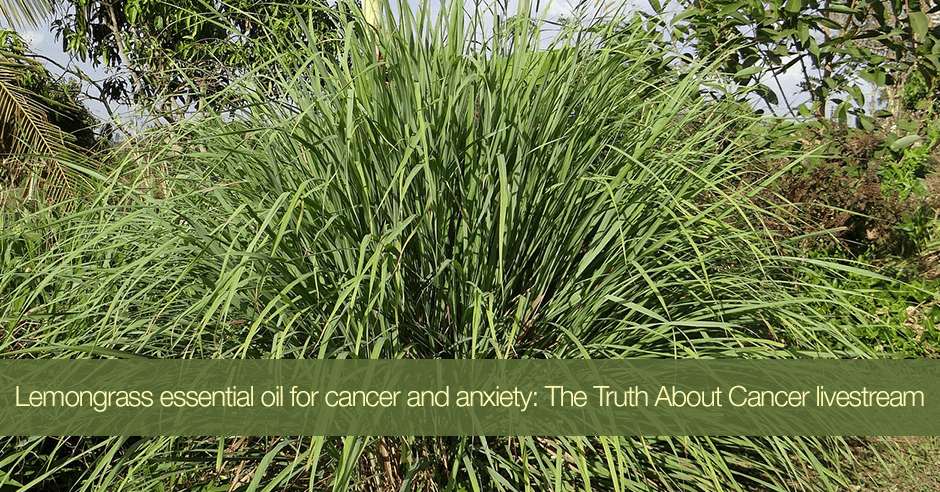
Lemongrass essential oil for cancer and anxiety: The Truth About Cancer livestream

October 2, 2017 By Trudy Scott 4 Comments

The Truth About Cancer live event which runs Oct 5-7 and the livestream broadcast starts on Thursday, October 5th at 9am Eastern. You can tune in and listen from home!

This event brings you the latest in natural cancer prevention, new therapies, cancer diets, toxins to avoid and much much more!

What’s so encouraging is that many of the natural treatments and approaches for cancer also help with reducing anxiety. One of these is the essential oil of lemongrass.

One of my favorite essential oil experts is Dr. Eric Zielinski and he is talking about Essential Oils, Aromatherapy, and Cancer. Dr. Z shares this about lemongrass essential oil and cancer:  

In 2009, an article was published that evaluated the essential oil of Cymbopogon flexuosus (a variety of lemongrass) for its in vitro cytotoxicity ability against 12 human cancer cell lines; as well as its anticancer effects on mice in vivo. The results were remarkable. Researchers discovered that the essential oil triggers a variety of mechanisms that kill cancer cells. “Our results indicate that the oil has a promising anticancer activity and causes loss in tumor cell viability by activating the apoptotic process as identified by electron microscopy.”

Research also shows that the GABAergic system contributes to the anxiety-reducing effect of essential oil from lemongrass (cymbopogon citratus).

A number of speakers are sharing the benefits of the ketogenic diet for cancer prevention and healing

  • Joseph Mercola – Ketogenic Diet and Cancer
  • Dr. Toni Bark – Ketogenic Diet and disease reversal and prevention
  • Cherie Calbom – Juice, Juice, and More Juice to Treat & Prevent Cancer: How Vegetable Juicing Complements a Ketogenic Diet

As you heard recently from Dr. David Jockers on the Mental Wellness Summit, the ketogenic diet helps with anxiety because it improves the ability of glutamate converting into GABA:

There is a relationship between glutamate, which is an excitatory neurotransmitter in the brain, and GABA, which is an inhibitory neurotransmitter. Glutamate naturally converts into GABA when certain nutrients are present – like magnesium and vitamin B6 – along with a properly working GAD enzyme.

Now, when we have ketones present, they have been shown to improve the ability to convert glutamate into GABA.

Dr. David Jockers is also a speaker at The Truth About Cancer and is covering The Sugar-Cancer Connection

The list of speakers is truly a Who’s Who of natural cancer therapies … and includes superstars like:

  • Patrick Quillin – Beating Cancer with Nutrition
  • Robert Scott Bell – Gut Health, the Microbiome, and Cancer
  • Rashid Buttar -The Cancer Conflict: Resolving the 5th Toxicity
  • Tony Jimenez – Treating Cancer with Sound and Light
  • Mike Adams – The importance of “ORGANIC”
  • Del Bigtree – Freedom of Choice in Medicine
  • Chris Wark – How “Chris Beat Cancer”
  • Sayer Ji – Epigenetics and Cancer
  • Dr. Darrell Wolfe – DETOX and the Lymphatic system
  • Jeffrey Smith – How GMOs have been linked to cancer
  • Doug Kaufman – The Fungal Link to Cancer
  • Pharmacist Ben Fuchs – Skin Health & Skin Cancer
  • Barbara Loe Fisher – Freedom of Choice in Medical Interventions
  • Dr. Stuart Nunnally – Biological Dentistry and Cancer Prevention
  • Dr. Ben Johnson – Stem Cells, Lasers, and Novel Approaches for Cancer
  • Dr. Marlene Siegel – Preventing and Treating Cancer in Pets

And many more!

It’s 3 days that could very well save your life or the life of someone you love.

You’re invited to watch it LIVE at no cost from the comfort of your own home.

Take a minute to get all the details right here. The broadcast starts Thursday, October 5th at 9am Eastern.

I don’t often share resources about cancer but I feel this is such an amazing opportunity to learn and feel empowered so you don’t have to feel anxious about cancer. These experts may just have the healing answers you’ve been looking for! Please share with your friends, family and anyone else you think could use this information!

Just like there is hope and solutions for anxiety, there is HOPE … and healing … and survival for cancer too.

To your health! See you on the livestream!

Filed Under: Cancer, Essential oils, Events Tagged With: anxiety, cancer, Dr. Eric Zielinski, essential oils, Ketogenic diet, lemongrass, The Truth About Cancer, Ty Bolinger

Collagen and gelatin lower serotonin: does this increase your anxiety and depression?

September 29, 2017 By Trudy Scott 471 Comments

I see everyone raving about gelatin and collagen – and rightly so – they have amazing health benefits. However, no-one is addressing the fact that gelatin is actually used in tryptophan-depletion studies to lower serotonin (gelatin is derived from collagen: when collagen breaks down, it becomes gelatin). When I first discovered this fact it really concerned me that this very important aspect is ignored so I added it to my long list of topics to investigate.

I posted the above on Facebook last month as part of a fact-finding exercise and appreciate all the feedback and questions. Today I share some of the feedback and research and I’d love to hear from you what your experiences have been.

I share how my experience with collagen left me flat and worried until I added tryptophan; feedback from individuals who wondered if collagen was affecting their sleep, making them moody, on edge or feeling night-time anxiety; some reported no mood issues when using collagen with tryptophan; feedback from many who didn’t notice any obvious mood issues at all ;and one woman who uses collagen ‘therapeutically’ to lower her serotonin levels.

I also share some very interesting research on why some people seem to be adversely impacted by acute tryptophan depletion/ATD (caused by collagen or gelatin consumption) while others are not. There are definitely some folks who are more susceptible.

The health benefits of collagen

In case you’re new to collagen, Dr. Josh Axe provides an excellent overview of the health benefits of collagen

  1. Improves Health of Skin and Hair
  2. Reduces Joint Pains and Degeneration
  3. Helps Heal Leaky Gut
  4. Boosts Metabolism, Muscle Mass and Energy Output
  5. Strengthens Nails, Hair and Teeth
  6. Improves Liver Health
  7. Protects Cardiovascular Health

Gelatin is used in tryptophan depletion studies

Tryptophan-depletion studies have been done for years, as a way to study the relationship between low serotonin and depression.  Often a tryptophan-deficient amino acid mixture is used for this purpose.  More recently, collagen and gelatin are being used.

Collagen and gelatin are an excellent source of these amino acids: proline, glycine, glutamine and arginine, but they do not contain the amino acid tryptophan.

This paper, Pharmacokinetics of acute tryptophan depletion using a gelatin-based protein in male and female Wistar rats summarizes what we find in a number of studies that use gelatin for the purpose of lowering serotonin levels, in order to study the relationship between serotonin and behavior:

The essential amino acid tryptophan is the precursor of the neurotransmitter serotonin. By depleting the body of tryptophan, brain tryptophan and serotonin levels are temporarily reduced. In this paper, several experiments are described in which dose and treatment effects of acute tryptophan depletion (ATD) using a gelatin-based protein-carbohydrate mixture were studied in male and female Wistar rats.

My experience with collagen – flat and worried until I added tryptophan

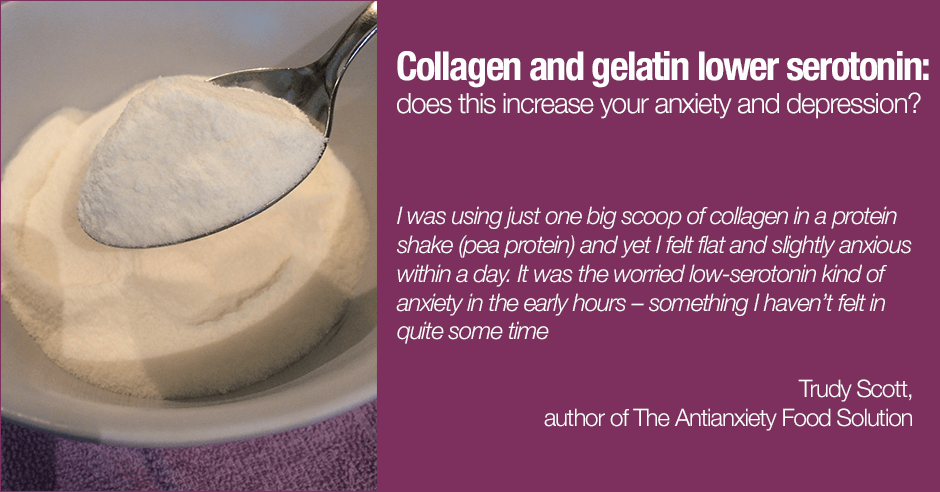
When I recently injured my back and sprained my ankle, I decided to add collagen to speed up the healing and very quickly had to take a deeper dive into the topic because I noticed it affected my mood right away! I was using just one big scoop of collagen in a protein shake (pea protein) and yet I felt flat and slightly anxious within a day. It was the worried low-serotonin kind of anxiety in the early hours – something I haven’t felt in quite some time.

I wondered if it was due to the injury and inflammation my body was dealing with or if it was related to the effects of tryptophan depletion. I stopped the collagen and then added it back and had the same experience. I did this a few times and experienced similar feelings each time.

When I used tryptophan mid-afternoon and at bedtime I felt fine and was able to continue taking the collagen with no problems. I am prone to low serotonin – it was one of the root causes of my big anxiety issues in my late 30s – so I may be more affected than the average person.

Wondering if collagen causing mood issues and an increase in anxiety?

Here is feedback from someone who is wondering if collagen is causing her mood to dive:

I have wondered if it affects my mood so I haven’t been using it lately. Interested to see what other people say. I was using about a table spoon in a drink that I would sip on throughout the morning. My moods just take dives now and then. I have isolated gluten as a HUGE factor. I am forever wondering what else causes the dives and I began to wonder if collagen was causing problems so I haven’t used it in several months.

Stephanie feels moody when using collagen:

I have found that the days I take collagen that I’m moody. I’ve kept trying, but am always surprised by the reaction. I even mentioned it to my naturopath recently. Curious to see if there’s a connection.

Here is feedback from someone also reporting mood dives and feeling on edge (although as I pointed out to her the feeling on edge is very likely due to or partly due to the coffee):

I take collagen (grass-fed and grass-finished) in my coffee every morning. I’ve also had some mood dives consistently the last few months and feel more on edge. I’ve honestly never made the connection and actually thought it was hormones. Something to think about!

Melissa shared it affected her sleep:

As soon as I started taking gelatin daily I have had difficult falling asleep.

Katinka began having strange night time anxiety:

I did [Vital Proteins grass fed beef gelatin] for 2 weeks in bone broth. My nails grew like crazy, but at the same time I begun having strange night time anxiety: worry, obsessive, but not any of the other symptoms like depression and cravings. It is interesting to me because this was the only time I had anxiety at night since going gluten free.

Collagen caused a racing heart for Beverly:

Used to take Vital Proteins products. Was woken up several times in the night with racing heartbeat and out of breath. This went away when I stopped the collagen. I have symptoms of low serotonin but have not tried tryptophan

No noticeable problems

Many people shared that they didn’t notice any obvious mood issues so it’s clearly not a problem for everyone:

  • Jaime: Interesting, I use it almost daily for protein at breakfast. I will pay attention better. No obvious problems now (used for 9 months).
  • Angela: …I don’t think I have any side effects and I do have serotonin issues. I think I will have to do more research
  • Courtney: I just started using collagen peptides but not every day. Maybe once or twice a week. I haven’t noticed any difference in mood but I also just started taking it a few weeks ago.
  • Debra: I take 1bsp of Great Lakes Collagen Hydrosylate every day and take it to help heal my leaky gut….haven’t noticed any particular side-effects. I alternate it with the normal gelatin. I suffer from complex PTSD, anxiety and depression…I haven’t noticed any difference in that either

Jessica Drummond, nutritionist and physical therapist, and an expert on female pelvic pain and women’s health shared:

I use collagen regularly and I also eat quite a lot of meat and fish. For me both help me to feel very grounded and less anxious. I think of collagen as balancing for all of the muscle meat that we eat. I eat anywhere from 10-20 grams 4-5 days per week.


Feels anxious using gelatin, stop using it and anxiety is gone/less

Laura’s anxiety got worse within a few months of adding daily gelatin:

Wow, I never heard that gelatin can lower serotonin. I started using [Puritan’s Pride brand], 650mg, daily about 6 months ago to strengthen my nails. It’s worked very well for that. About a couple months ago my anxiety started to get worse again. My anxiety shows up as fear and worry mostly and not being able to quiet my mind. I had gotten it under control for almost 2 years now. I wonder if there is a connection. I’m going to stop taking the gelatin and see if my anxiety improves. I have not tried tryptophan, but I have found GABA helped quiet my mind and let me sleep better.

She decided to stop taking it to see if her anxiety symptoms would reduce and when I checked back with her she shared this:

I was surprised to find after about 2 weeks of stopping the gelatin, I began to feel more calm again and it’s been a lasting change. I still take zinc, vitamin b6 and lysine in the morning and GABA in the evening. This combination works well for me. I’m so grateful for all the information you share! Thank you!

Toni experienced something similar:

I’ve been using Organic collagen for about 8 months now… love the hair and skin results. My tummy felt better at first but not currently. My anxiety and panic attacks are off the charts: panic attacks, heart racing, sweating, brain fog. I want to escape -like fight or flight. Definately obsessing and fears. Memory difficulty. I have an upcoming GI appointment to check for Candida /SIBO… but I had no idea this could add to my anxiety. I’ll be looking forward to more information, Seriously.

And a few weeks after stopping the collagen she shared this:

I stopped using the collagen. Since then, my anxiety and panic are decreased by less than half. Mild in comparison. I’m definately taking a long break.

Keep in mind I’m not suggesting we should not be using collagen – just that if it seems to lower serotonin and increase anxiety/depression doing a trial with tryptophan may be the solution (more on that and some other possible causes of anxiety below).

When used with tryptophan – no mood issues

Karen uses collagen and tryptophan at night:

I use collagen every day. But hey, I also take L-tryptophan every night for anxiety. It runs in the family and a small amount of Tyrptophan at night helps resolve mine. No clue there was a connection

Maxine uses it every morning and takes 1 tryptophan before bed and reports no mood issues

I take it [Great Lakes gelatin and Vital Choice collagen] every morning in my tea and at night in my bone broth for my skin and joints and I take one tryptophan before bed. The tryptophan with GABA before bed is for better sleep. No mood issues.


Used ‘therapeutically’ to lower serotonin

Misty reports using it ‘therapeutically’ to lower her high serotonin levels. This application is new to me and I find it quite fascinating:

I use it to reduce tryptophan because I have a tendency toward high serotonin. I have suffered my entire life with ADD, tics as a child, grinding teeth, general anxiety, lack of motivation and later, IBS. In my quest to maximize my health, I finally came to these web pages for help. In my 53 years I’ve never been as calm as I am now. If I’m not careful, I can get a bout of IBS (not food related and trust me, from GAPS to AIP, nothing really affects me). I reduce tryptophan and I’m balanced. It seems contrary but it works for me and so many others

She links to these articles Tryptophan, Sleep, and Depression and The Sadder Side of Serotonin which both refer to the work of Ray Peat who I recently discovered is very much against the use of tryptophan.

I agree with the premise of too much serotonin causing issues (often the same symptoms we see with serotonin that is too low) but not the general message that tryptophan supplements and foods high in tryptophan are harmful and should be avoided by everyone. Based on the clinical results myself and other practitioners see boosting low serotonin with tryptophan and/or 5-HTP -and the wonderful results they experience – in my opinion, this is really all about biochemical individuality.

I decided to share this story here, even with the controversial tryptophan articles, because it illustrates that it is highly likely that the collagen is lowering her serotonin levels and making her feel better. I’ll tackle the above negative articles about serotonin and tryptophan in a separate blog post.

Why are some people adversely impacted by acute tryptophan depletion/ATD while others are not?

UPDATE: Dec 22, 2017. This section adds additional evidence or possibly some theories for why some people are adversely impacted when consuming collagen, while others are not impacted mood-wise – all related to the lowering of serotonin levels. These are called ATD or acute tryptophan depletion studies.

This paper: The effect of raising and lowering tryptophan levels on human mood and social behavior explains that effects of ATD can vary based on susceptibility of the study participants to clinical depression:

Acute tryptophan depletion (ATD) studies indicate that low serotonin can lower mood and also increase aggression, although results vary somewhat between studies with similar participants. Lowering of mood after ATD is related to the susceptibility of the study participants to clinical depression, and some participants show no effect on mood.

In healthy individuals, there is little or no lowering of mood, although results can be quite variable between studies, with some lowering of mood seen more often in women than in men.

The author reports the following variable responses:

In healthy participants with a family history of depression, there is a lowering of mood although mood remains within the normal range of mood.

In newly recovered depressed patients on antidepressants that act on the serotonergic system, 50 per cent or more of the patients show a temporary reappearance of the depressed mood they experienced before recovery.

In recovered depressed patients off antidepressants, only a small percentage of the patients show a marked lowering of mood.

In recovered depressed on noradrenergic antidepressants, there is no lowering of mood.

The results of the ATD studies suggest that lowering serotonin synthesis can lower mood in some circumstances, and that the magnitude of the effect tends to be greater in people with a greater susceptibility for depression.

Other studies report on these groups of people that were adversely affected with a lowered mood after ATD:

OCD / obsessive compulsive disorder: Patients with OCD experienced a decrease in control and an increase in interfering thoughts after acute tryptophan depletion. There was no effect on anxiety in this group.

Genetic polymorphisms: A number of papers show some genetic polymorphisms make some individuals vulnerable to increased depression after acute tryptophan depletion, such as MAOA and 5-HTTLPR (the serotonin transporter gene). In one 5-HTTLPR polymorphism study differences were seen between men and women: healthy men became more impulsive, whereas healthy women showed a mood reduction after ATD. Keep in mind that having a polymorphism doesn’t mean there will always be an issue, instead, it means there may be a predisposition.

Smokers: The moderating influence of nicotine and smoking on resting-state mood and EEG changes in remitted depressed patients during tryptophan depletion.

Comorbidity between depression and tobacco use may reflect self-medication of serotonergically mediated mood dysregulation [and acute tryptophan depletion or ATD] increased self-ratings of depressed mood [in certain smokers].

Although this study was looking at the role of nicotinic receptors in disordered mood and the self-medication of mood by smoking, we may be able to extrapolate this for our purposes because it was this one subset of smokers who were more depressed after tryptophan depletion. Could it be that smokers or even former smokers are more likely see increased depression after consuming collagen because it contains no tryptophan? Or is it that smokers tend to be drawn to smoking because they are prone to low serotonin?

Women ecstasy users: The effect of acute tryptophan depletion on mood and impulsivity in polydrug ecstasy users.

Women polydrug ecstasy users appear to be more susceptible than men to the effects of lowered serotonin levels [when they] received a tryptophan-deficient amino acid mixture and a control amino acid mixture containing tryptophan, at least 1 week apart.

The women who were impacted – with a lowering of their mood – used a tryptophan-deficient amino acid mixture and not collagen. The authors suggest this could be due to the drug-use causing progressive damage of serotonin neurons. Could this also happen with collagen consumption in current and possibly prior drug users? What about users of other street drugs or even medications that may also damage serotonin neurons?

Interestingly, in a study looking at five chronic fatigue/CFS patients, none of them showed any significant differences in fatigue, depression and concentration when subjected to acute tryptophan depletion /ATD. Was this group of patients too small or were none of them susceptible to low serotonin?

This is just a small selection of studies looking at the effects of acute tryptophan depletion or ATD but they give us much to think about when it comes to considering the varied effects we are seeing when individuals consume collagen.

If collagen affects you adversely and makes you feel more depressed, more anxious and experience worse sleep, can you relate to any of the above scenarios?

More questions and looking for your feedback

As you can see we have very different experiences but there are enough unanswered questions we need to be asking:

  • Are the negative effects because of low serotonin? If yes, are some of us more susceptible to the serotonin-lowering effects than others and should we stop using collagen despite all the health benefits?
  • And should we be assessing for low serotonin levels before using collagen or gelatin, and supplementing with tryptophan when it is low (more on this below)? There is one company that has added tryptophan to their collagen – is this a good idea?
  • Or are the negative effects some people experience due to glutamates, arginine, histamine, because of quality issues and glyphosate levels, an increase in oxalates or something else such as not eating enough animal protein?

I’ll address the above questions and share some additional research and feedback from collagen experts in part 2 of this article.

Until then, if you have observed a mood dip or increase in anxiety since using collagen or gelatin, I would suggest you stop using collagen/gelatin and see how you feel, then add it back and see how you feel. If you do see a correlation, do the low serotonin questionnaire and a trial of tryptophan (after checking the precautions) to see if this improves your mood when using collagen/gelatin. I recently blogged about tryptophan here (brand is important).

Resources if you are new to using the amino acids as supplements

If you are new to using any of the amino acids as supplements, here is the Amino Acids Mood Questionnaire from The Antianxiety Food Solution (you can see all the symptoms of neurotransmitter imbalances, including low endorphins).

If you suspect low levels of any of the neurotransmitters and do not yet have my book, The Antianxiety Food Solution – How the Foods You Eat Can Help You Calm Your Anxious Mind, Improve Your Mood, and End Cravings, I highly recommend getting it and reading it before jumping in and using amino acids on your own so you are knowledgeable. And be sure to share it with the practitioner/health team you or your loved one is working with.

There is an entire chapter on the amino acids and they are discussed throughout the book in the sections on gut health, gluten, blood sugar control, sugar cravings, self-medicating with alcohol and more.

The book doesn’t include product names (per the publisher’s request) so as mentioned above, this blog, The Antianxiety Food Solution Amino Acid and Pyroluria Supplements, lists the amino acids that I use with my individual clients and those in my group programs.

As mentioned above, Lidtke Endorphigen is the DPA product I’ve had the most success with (and it can be found in my online store). Doctor’s Best D-phenylalanine is also a good product.

If, after reading this blog and my book, you don’t feel comfortable figuring things out on your own (i.e. doing the symptoms questionnaire and respective amino acids trials), a good place to get help is the GABA Quickstart Program (if you have low GABA symptoms). This is a paid online/virtual group program where you get my guidance and community support. There are many moms in the program who are having much success with their kids.

You can then use this knowledge to then trial DPA and other amino acids or move on to the Amazing Aminos for Anxiety Program and get help there.

If you are a practitioner, join us in The Balancing Neurotransmitters: the Fundamentals program. This is also a paid online/virtual program with an opportunity to interact with me and other practitioners who are also using the amino acids with success with their clients/patients.


I would love your feedback. Do you use gelatin or collagen regularly i.e. daily or weekly? And why do you use it? How do you use it and what benefits do you notice?

Have you noticed any worsening of mood or an increase in anxiety or any of the other low serotonin symptoms? Do you take tryptophan to offset the fact that gelatin or collagen doesn’t contain any tryptophan?

Have you done the off/on test with collagen/gelatin and what was the outcome?

I’d love your feedback in the comments. Be sure to share what you’re using (collagen or gelatin and the brand), how much, how often you consume it, what you take it with, how much caffeine you consume, how much protein you consume on a daily basis and what kind of protein, and how you react to home made bone broth. If you’re comfortable with sharing how you score on the low serotonin questionnaire (now or in the past i.e. are you prone to low serotonin) and if you’re using a SSRI (or have in the recent past), this may help us piece the puzzle together.

Filed Under: Anxiety, Depression, Food and mood, serotonin Tagged With: anxiety, collagen, depression, gelatin, mood, serotonin, tryptophan

Tyrosine for focus, motivation, energy, a good mood and possibly even anxiety

September 27, 2017 By Trudy Scott 42 Comments

Today I’m reviewing tyrosine, the amino acid that boosts catecholamines and helps with focus, motivation, energy (especially when you crave carbs for energy) and the blah kind of depression. It’s wonderful for helping you easily quit coffee/caffeine (when you are using it to “self-medicate” due to low catecholamines). It also provides support for the thyroid and surprising as it sounds, it may even ease some types of anxiety.

I’m also sharing some additional resources for you on tyrosine.

Tyrosine helps with energy, gives someone else migraines – look at precautions

Here is some feedback from my recent facebook post about tyrosine

  • Lorraine shared:

It really helped me have energy and endurance to be able to work out again! I went from not being able to even handle 20 minutes of weight lifting to doing regular 30 minute sessions and feeling energised and strong instead of depleted and exhausted.

  • Fay shared that it gives her a migraine. Migraines are one of contraindications with tyrosine if you are prone to them or have a history of migraines (and Fay does a history). This doesn’t mean you can’t ever benefit from tyrosine. With clients with migraine history we just start low, having them open a 500mg capsule and use just 50-100mg to start and then increase if they can.
  • Aaron Mello, Master Nutrition Therapist and founder of MoodFood Clinic, a practice that focuses on men’s mental health, loves using tyrosine with his clients and prefers it over phenylalanine because of the PKU contraindication. I agree and prefer tyrosine although I’ve only ever had one client with PKU. Aaron also mentioned that he also likes a combination product like Designs for Health DopaBoost: “I like that it has P5P and the mucuna is a natural source of L-dopa in addition to the tyrosine.” I do prefer standalone amino acids to start with (so just using tyrosine alone) but do also like the combinations in DopaBoost.

With all the amino acids, it’s important to be aware of the precautions. I mentioned PKU above. Here are other situations when tyrosine cannot be used: melanoma and Grave’s disease/overactive thyroid.

As with migraines, tyrosine does need to be watched with high blood pressure and bipolar disorder i.e. it may be tolerated and may not be tolerated. A trial will help you figure this out.

I personally can’t use either mucuna or tyrosine in large quantities but can tolerate the small amount in the Source Naturals GABA Calm product. The same tyrosine precautions do need to be considered when using GABA Calm for the low GABA type of anxiety.

Focus issues and ADHD – tyrosine or GABA?

Anxiety can often show up as focus issues or ADHD, especially in children who may not be able to articulate that they are anxious. Jenny is a mom in my facebook community and a friend of hers recommended GABA for her daughter after reading some of my posts. She shared this wonderful feedback:

My daughter hasn’t been diagnosed with ADHD but has a lot of ADHD qualities. We were having a huge amount of behavior problems as she is getting older (she’s 11). I did some research and went to the health food store and bought a bottle [of GABA Calm]. At this point I was mentally exhausted from all the fighting and drama at home and at school. I was desperate and didn’t want to put her on any hard medication.

She has had amazing behavior at school and at home since giving it to her. She’s almost like different child. GABA has truly changed our life. She’s been taking it for almost 2 months.

Anxiety and ADHD – where to start?

I recently received a great question from someone who heard my interview on the migraine summit:

I have a whole lot of overlap here. I’ve been diagnosed with ADHD with have anxiety issues. I also have a gluten sensitivity and migraines. Luckily, since I meditate daily, my migraines only occur every other month or so but usually involve weather changes.

It’s not uncommon to have overlaps and often addressing a few factors helps all issues. It sounds like she is gluten-free which is one common underlying factor in ADHD, migraines and anxiety. If someone is coming to see me for their anxiety we’ll work on that first – using GABA or tryptophan first – because tyrosine can help with ADHD but can make someone more anxious. We calm them first and then look at improving focus issues. With ADHD and anxiety, I also consider low blood sugar and making sure animal protein is being consumed at breakfast, and also check for low zinc and low iron (for starters).

GABA didn’t help her anxiety but tyrosine did

Everyone is different so using the trial method is the best way to figure out what you need. One of my past clients who had terrible anxiety, trialed both GABA and tryptophan and while she did get some benefits with both it just wasn’t enough.

She was sleeping better but still felt so stressed and anxious when preparing for an important meeting at work. The anxiety also seemed to get worse during the meeting which she was in charge of running. She did score high on the low catecholamines section on the amino acid questionnaire but were working on the anxiety before addressing poor focus and low motivation. It turned out that her anxiety escalated around her work meetings because of her lack of focus and low motivation – she was pushing herself to get through them. Once she added tyrosine her anxiety was under control. In this instance tyrosine actually helped ease the anxiety because he ADHD and motivation and drive improved!

Using tyrosine

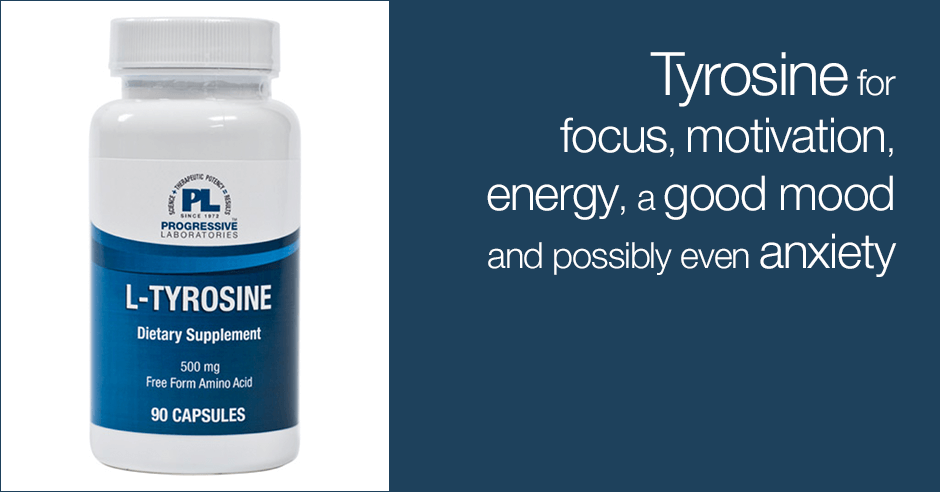
Here is one tyrosine product I use (there are many others on the market)

Progressive Labs tyrosine 500mg: 500mg l-tyrosine.  As I mentioned this is the last amino acid I trial with my anxious clients because it can make you more anxious (although as I mentioned above, with one client, it reduced her anxiety because she was able to focus better at work).

As with all the amino acids, when using tyrosine:

  • Start low (500mg is a typical starting dose) and increase as needed.
  • Do a trial to determine if the ADHD, fatigue, depression, low motivation is due to low catecholamines. I always do this with clients before starting any amino acid. Be sure to read how to do an amino acid trial. It has the amino acid questionnaire, the precautions and information on how to use targeted individual amino acids.
  • Take between meals and away from protein for the best effects

Tyrosine should never be used after 3pm as it’s too stimulating when used after this time. For my clients with sleep issues we go slow and stop after the mid-morning dose until we determine if sleep is being affected.

This blog post is part of the series of amino acid product reviews:

  • Tryptophan for low serotonin (worry-in-the-head anxiety)
  • GABA for low GABA symptoms (physical anxiety)
  • Glutamine for calming, intense sugar cravings, gut healing and low blood sugar
  • DPA for weepiness, pain and comfort and reward eating

The resources in this blog and my other articles are intended to be used in conjunction with my book: The Antianxiety Food Solution – How the Foods You Eat Can Help You Calm Your Anxious Mind, Improve Your Mood, and End Cravings. If you do not have my book I highly recommend getting it and reading it before jumping in and taking the amino acid supplements.

There is a complete chapter on the amino acids and one for pyroluria, plus information on real whole food, sugar and blood sugar, gluten, digestion and much more.

You can find the tyrosine product I recommend on this blog: The Antianxiety Food Solution Amino Acid and Pyroluria Supplements


For today’s tyrosine review:

  • What about your success stories with tyrosine? how has it helped you?
  • Or has it been an issue for you?
  • As I mentioned above it’s the last amino acid I used with my anxious clients because it can make you more anxious but it may just help your anxiety

If you have questions or feedback please post them below or on the supplements blog

Filed Under: Amino Acids, Anxiety, Caffeine, Supplements Tagged With: anxiety, blahs, caffeine, coffee, depression, energy, focus, GABA, tryptophan, tyrosine

Never Fear a Cancer Diagnosis – Livestream of The Truth About Cancer event

September 26, 2017 By Trudy Scott 1 Comment

Hearing the words “you’ve got cancer” is not something anyone wants to hear but statistically, one in two people WILL hear these words.

That’s right. The odds are 50/50 that it could be you or someone you love.

Anxiety and cancer feed off each other

  • you’re anxious and fearful about your cancer diagnosis (or the diagnosis of a loved one) and
  • the cancer itself can make you anxious and depressed because of the inflammation, the effects on the immune system and the cancer treatments themselves

But just like there is hope and solutions for anxiety, there is HOPE … and healing … and survival for cancer too.

There’s a growing body of evidence and data from a group of forward-thinking scientists and researchers around the world suggesting there are real solutions out there to prevent, treat, and beat cancer naturally.

Ty and Charlene Bollinger and their wonderful team at The Truth About Cancer are working hard to bring you the latest in natural cancer prevention, new therapies, cancer diets, toxins to avoid and much much more. It is being shared live on stage at their upcoming event (and you can watch it all via livestreaming from your home)

Dr. Joseph Mercola is speaking on the Ketogenic Diet and Cancer. He shares:

many cancer patients have reportedly overcome cancer by adopting a ketogenic diet, which calls for eliminating carbohydrates, replacing them with healthy fats and protein”

Dr. Veronique Desaulniers addresses Breast Cancer and Early Warning Signs. She faced the diagnosis of breast cancer and shares this about her journey

I came to appreciate that cancer was a message of love – that my body was trying to communicate with me and get my attention. If you keep doing things you have always done, you are going to get the same results. So for me, it was time to change emotional patterns, manage my stress, set boundaries and learn to love myself with all my perfect imperfections.

One of my favorite essential oil experts is Dr. Eric Zielinski and he covers Essential Oils, Aromatherapy, and Cancer. Dr. Z shares this about essential oils and cancer:

First – the research suggests that oils can help prevent and treat cancer at the cellular level. Additionally, and oftentimes overlooked, essential oils have been shown to be exceptionally effective at managing the side effects related to cancer itself and the side effects people suffer at the hands of medical interventions.

Second – it is critical to recognize that this is not an all-or-nothing approach. Just because you’re taking chemo doesn’t mean that you can’t use oils. The same is true on the flip side of that coin. Far too many patients and healthcare practitioners dichotomize natural from allopathic therapies, and do not give enough emphasis on the practicality of using both together.

The list of speakers is truly a Who’s Who of natural cancer therapies … and includes superstars like:

  • Patrick Quillin – Beating Cancer with Nutrition
  • Robert Scott Bell – Gut Health, the Microbiome, and Cancer
  • Rashid Buttar -The Cancer Conflict: Resolving the 5th Toxicity
  • Tony Jimenez – Treating Cancer with Sound and Light
  • Mike Adams – The importance of “ORGANIC”
  • Del Bigtree – Freedom of Choice in Medicine
  • Chris Wark – How “Chris Beat Cancer”
  • Sayer Ji – Epigenetics and Cancer
  • Dr. Darrell Wolfe – DETOX and the Lymphatic system
  • Dr. Toni Bark – Ketogenic Diet and disease reversal and prevention
  • Jeffrey Smith – How GMOs have been linked to cancer
  • Doug Kaufman – The Fungal Link to Cancer
  • Pharmacist Ben Fuchs – Skin Health & Skin Cancer
  • Barbara Loe Fisher – Freedom of Choice in Medical Interventions
  • Dr. Stuart Nunnally – Biological Dentistry and Cancer Prevention
  • Cherie Calbom – Juice, Juice, and More Juice to Treat & Prevent Cancer: How Vegetable Juicing Complements a Ketogenic Diet
  • Dr. Ben Johnson – Stem Cells, Lasers, and Novel Approaches for Cancer
  • Dr. Marlene Siegel – Preventing and Treating Cancer in Pets
  • Dr. David Jockers – The Sugar-Cancer Connection

And many more!

It’s 3 days that could very well save your life or the life of someone you love

You’re invited to watch it LIVE at no cost from the comfort of your own home.

Take a minute to get all the details right here. The broadcast starts Thursday, October 5th at 9am Eastern.

I don’t often share resources about cancer but I feel this is such an amazing opportunity to learn and feel empowered so you don’t have to feel anxious about cancer. These experts may just have the healing answers you’ve been looking for! Please share with your friends, family and anyone else you think could use this information!

To your health! See you on the livestream!

Filed Under: Cancer Tagged With: anxiety, cancer, Dr. Eric Zielinski, Dr. Mercola, essential oils, fear, The Truth About Cancer, Ty Bolinger

Does GABA offer gut protection after drinking alcohol?

September 22, 2017 By Trudy Scott 12 Comments

A paper published earlier this year has us asking the question: will oral GABA supplementation offer gut protection in humans who drink too much alcohol? It’s too soon to know but the results from the animal study leave me spell-bound by this calming amino acid yet again!

The paper, Gastroprotective effect of gamma-aminobutyric acid on ethanol-induced gastric mucosal injury

aimed to investigate the gastroprotective effect of gamma-aminobutyric acid (GABA) on ethanol-induced gastric mucosal injury and gastric epithelial cells injury [in rats].

Ethanol or alcohol is known to damage the gut and the study was carried out on rats given GABA and then ethanol.

It was also tested using the human gastric epithelial cell line GES-1 (more here on how human cell lines are commonly used in research) which was incubated with GABA and then treated with ethanol to induce cell injury.

The use of GABA prior to treatment with ethanol

showed that GABA pretreatment significantly reduced gastric ulcer index in a dose-dependent manner.

Administration with GABA could not only remarkably restrain oxidative stress by increase of superoxide dismutase, catalase activities and decrease of malondialdehyde content in gastric tissue and cells, but also significantly reduced pro-inflammatory factors activities (interleukin-6 and tumor necrosis factor α) in gastric tissue.

These studies clearly provided evidence that GABA had a considerable gastroprotective effect on ethanol-induced gastric mucosal injury and gastric epithelial cells injury. The underlying mechanism of mitigating lesions may be ascribed to the improvement of anti-inflammatory and anti-oxidant status as well as the increases of PGE2 [prostaglandin E2] and NO [nitric oxide] levels.

In summary, the use of GABA shows the potential for less ulcers, less oxidative damage, less inflammation in the gut, and gastroprotective properties after alcohol consumption. Human studies will show if oral GABA supplementation offers gut protection in those who drink too much alcohol.

Many social drinkers are not connecting their drinking to stress

We are a stressed society and this leads a great deal of “social” drinking. Many social drinkers are not connecting their drinking to stress and their need to self-medicate and de-stress.

As I found when I posted new study this on facebook – Moderate alcohol consumption as risk factor for adverse brain outcomes and cognitive decline – many social drinkers also get upset when you point out research like this because they don’t want to have to give it up. This CNN article, Moderate drinking may alter brain, summarizes the study and reports that the

moderate group was drinking about 14 to 21 units of alcohol per week, or about a medium glass of wine each night, plus a little extra on the weekends.

Update: Dec 2025
This 2024 paper, A qualitative analysis investigating drinking practices and meanings among a sample of Australian working mothers, explores the emotional/stress connection and how alcohol is their escape and coping tool:

Women felt they had to be available to both their employers and their children at the same time. For some, this led to internalized feelings of guilt and fatigue, increasing women’s desire to drink, and limiting their capacity to be mindful of the amount of alcohol they were consuming.

Women also described feeling overloaded and under-supported, where alcohol was viewed as being relaxing and rewarding, as well as a way to escape, cope, and recover from their day-to-day stressors.

Furthermore, through a combination of targeted marketing and broader social normalisation, women felt alcohol was presented as a solution to stress and problems among working mothers.

GABA also helps reduce your need to self-medicate or self-soothe with alcohol (or sugar/carbs)

What is so interesting is that this very same calming amino acid, GABA, when used to address low GABA levels can help reduce your need to self-medicate or self-soothe with alcohol (or sugar/carbs). Don’t forget, with low GABA levels, you’ll also experience physical anxiety, stiff and tense muscles, overwhelm and panic attacks. I recently blogged about GABA here: GABA for the physical-tension and stiff-and-tense-muscles type of anxiety

Of course, I’d recommend using GABA supplements to address the low GABA and prevent so much “social” drinking that may damage to the gut (i.e. addressing the root cause as always), rather than using GABA to prevent gut damage when you do drink.

If you are a big “social” drinker and choose the latter (use GABA to prevent gut damage when you do drink) be warned, you’ll feel calmer and less stressed and very likely reduce your desire and need for a drink!

My blog mentions “social” drinking because of the paper about moderate alcohol consumption above but all this could be equally applicable to heavy drinkers and alcoholics too.

In summary, the amino acid GABA can achieve the following:

  • help you quit alcohol and not feel deprived and having to use willpower
  • leave you feeling calm and stress-free with no need to self-medicate with alcohol
  • heal damage caused to your gut if you do indulge once in awhile (based on projections from the above research)

Additional resources when you are new to using GABA or other amino acids as supplements

We use the symptoms questionnaire to figure out if low GABA (indicating a possible need for GABA or theanine) or low serotonin (indicating a need for tryptophan or 5-HTP) or low endorphins (indicating a possible need for DPA) or other neurotransmitter imbalances may be an issue for you.

If you suspect low levels of any of the neurotransmitters and do not yet have my book, The Antianxiety Food Solution – How the Foods You Eat Can Help You Calm Your Anxious Mind, Improve Your Mood, and End Cravings. I highly recommend getting it and reading it before jumping in and using amino acids on your own so you are knowledgeable. And be sure to share it with the practitioner/health team you or your loved one is working with.

There is an entire chapter on the amino acids and they are discussed throughout the book in the sections on gut health, gluten, blood sugar control, sugar cravings, anxiety and mood issues. The importance of quality animal protein and healthy fats is also covered.

The book doesn’t include product names (per the publisher’s request) so this blog, The Antianxiety Food Solution Amino Acid and Pyroluria Supplements, lists the amino acids that I use with my individual clients and those in my group programs.

If, after reading this blog and my book, you don’t feel comfortable figuring things out on your own (i.e. doing the symptoms questionnaire and respective amino acids trials), a good place to get help is the GABA QuickStart Program (if you have low GABA symptoms). This is a paid online/virtual group program where you get my guidance and community support. Another option is the budget-friendly GABA QuickStart Homestudy program.

If you also need serotonin support, the Serotonin QuickStart Program is a good place to get help. This is also a paid online/virtual group program where you get my guidance on using tryptophan and 5-HTP safely, and community support during 5 LIVE Q&A calls. You can sign up to be notified when the next live launch of this program is happening.

If you are a practitioner, join us in The Balancing Neurotransmitters: the Fundamentals program. This is also a paid online/virtual program with an opportunity to interact with me and other practitioners who are also using the amino acids.

Now I’d like to hear from you

Do you drink alcohol in order to relieve your stress?

Have you noticed that GABA reduces your need to drink alcohol?

And have you noticed any improvements in gut health since using GABA?

Feel free to post your questions below.

Filed Under: Anxiety, GABA, Stress Tagged With: alcohol, anxiety, de-stress, GABA, gastroprotective, gut damage, self-medicate, stress

  • « Go to Previous Page
  • Page 1
  • Interim pages omitted …
  • Page 65
  • Page 66
  • Page 67
  • Page 68
  • Page 69
  • Interim pages omitted …
  • Page 160
  • Go to Next Page »

Primary Sidebar

GABA QuickStart Homestudy

gaba quickstart homestudy

Free Report

9 Great Questions Women Ask about Food, Mood and their Health

You'll also receive a complimentary subscription to my ezine "Food, Mood and Gal Stuff"


Connect with me

Popular Posts

  • Amino Acids Mood Questionnaire from The Antianxiety Food Solution
  • The Antianxiety Food Solution Amino Acid and Pyroluria Supplements
  • Pyroluria Questionnaire from The Antianxiety Food Solution
  • Collagen and gelatin lower serotonin: does this increase your anxiety and depression?
  • Tryptophan for the worry-in-your-head and ruminating type of anxiety
  • GABA for the physical-tension and stiff-and-tense-muscles type of anxiety
  • The Antianxiety Food Solution by Trudy Scott
  • Seriphos Original Formula is back: the best product for anxiety and insomnia caused by high cortisol
  • Am I an anxious introvert because of low zinc and vitamin B6? My response to Huffington Post blog
  • Vagus nerve rehab with GABA, breathing, humming, gargling and key nutrients

Recent Posts

  • Her cravings for chips and peanut butter were triggered by stress: GABA ends cravings and reduces physical tension and fear of heights
  • It is truly miraculous to be able to move through life without crippling anxiety and panic
  • GABA and tryptophan combo provide immediate and noticeable relief for tremors and cervical dystonia in just 7 days
  • Red light therapy for back and neck pain, plantar fasciitis and low mood – a complement to the amino acids GABA, DPA and tryptophan
  • What do I use instead of Seriphos to help lower high cortisol that is affecting my sleep and making me anxious at night?

Categories

  • 5-HTP
  • AB575
  • Addiction
  • ADHD
  • Adrenals
  • Alcohol
  • Allergies
  • Alzheimer's disease
  • Amino Acids
  • Anger
  • Antianxiety
  • Antianxiety Food Solution
  • Antidepressants
  • Anxiety
  • Anxiety and panic
  • Autism
  • Autoimmunity
  • benzodiazapines
  • Bipolar disorder
  • Books
  • Caffeine
  • Cancer
  • Candida
  • Children/Teens
  • Collagen
  • Cooking equipment
  • Coronavirus/COVID-19
  • Cravings
  • Depression
  • Detoxification
  • Diabetes
  • Diet
  • DPA/DLPA
  • Drugs
  • EFT/Tapping
  • EMF
  • EMFs
  • Emotional Eating
  • Endorphins
  • Environment
  • Essential oils
  • Events
  • Exercise
  • Fear
  • Fear of public speaking
  • Fertility and Pregnancy
  • Fish
  • Food
  • Food and mood
  • Functional neurology
  • GABA
  • Gene polymorphisms
  • General Health
  • Giving
  • Giving back
  • Glutamine
  • Gluten
  • GMOs
  • Gratitude
  • Gut health
  • Heart health/hypertension
  • Histamine
  • Hormone
  • Hyperparathyroidism
  • Hypoglycemia
  • Immune system
  • Inflammation
  • Insomnia
  • Inspiration
  • Introversion
  • Joy and happiness
  • Ketogenic diet
  • Lithium orotate
  • Looking awesome
  • Lyme disease and co-infections
  • MCAS/histamine
  • Medication
  • Men's health
  • Mental health
  • Mercury
  • Migraine
  • Mold
  • Movie
  • MTHFR
  • Multiple sclerosis
  • Music
  • NANP
  • Nature
  • Nutritional Psychiatry
  • OCD
  • Osteoporosis
  • Oxalates
  • Oxytocin
  • Pain
  • Paleo
  • Parasites
  • Parkinson’s disease
  • PCOS
  • People
  • PMS
  • Postpartum
  • PTSD/Trauma
  • Pyroluria
  • Questionnaires
  • Real whole food
  • Recipes
  • Research
  • Schizophrenia
  • serotonin
  • SIBO
  • Sleep
  • Special diets
  • Sports nutrition
  • Stress
  • Sugar addiction
  • Sugar and mood
  • Supplements
  • Teens
  • Testimonials
  • Testing
  • The Anxiety Summit
  • The Anxiety Summit 2
  • The Anxiety Summit 3
  • The Anxiety Summit 4
  • The Anxiety Summit 5
  • The Anxiety Summit 6
  • Thyroid
  • Thyroid health
  • Toxins
  • Tryptophan
  • Tyrosine
  • Uncategorized
  • Vegan/vegetarian
  • Women's health
  • Yoga

Archives

  • May 2026
  • April 2026
  • October 2025
  • September 2025
  • August 2025
  • July 2025
  • June 2025
  • May 2025
  • April 2025
  • March 2025
  • February 2025
  • January 2025
  • November 2024
  • October 2024
  • September 2024
  • August 2024
  • July 2024
  • June 2024
  • May 2024
  • April 2024
  • March 2024
  • February 2024
  • January 2024
  • December 2023
  • November 2023
  • October 2023
  • September 2023
  • August 2023
  • July 2023
  • June 2023
  • May 2023
  • April 2023
  • March 2023
  • February 2023
  • January 2023
  • December 2022
  • November 2022
  • October 2022
  • September 2022
  • August 2022
  • July 2022
  • June 2022
  • May 2022
  • April 2022
  • March 2022
  • February 2022
  • January 2022
  • December 2021
  • November 2021
  • October 2021
  • September 2021
  • August 2021
  • July 2021
  • June 2021
  • May 2021
  • April 2021
  • March 2021
  • February 2021
  • January 2021
  • December 2020
  • November 2020
  • October 2020
  • September 2020
  • August 2020
  • July 2020
  • June 2020
  • May 2020
  • April 2020
  • March 2020
  • February 2020
  • January 2020
  • December 2019
  • November 2019
  • October 2019
  • September 2019
  • August 2019
  • July 2019
  • June 2019
  • May 2019
  • April 2019
  • March 2019
  • February 2019
  • January 2019
  • December 2018
  • November 2018
  • October 2018
  • September 2018
  • August 2018
  • July 2018
  • June 2018
  • May 2018
  • April 2018
  • March 2018
  • February 2018
  • January 2018
  • December 2017
  • November 2017
  • October 2017
  • September 2017
  • August 2017
  • July 2017
  • June 2017
  • May 2017
  • April 2017
  • March 2017
  • February 2017
  • January 2017
  • December 2016
  • November 2016
  • October 2016
  • September 2016
  • August 2016
  • July 2016
  • June 2016
  • May 2016
  • April 2016
  • March 2016
  • February 2016
  • January 2016
  • December 2015
  • November 2015
  • October 2015
  • September 2015
  • August 2015
  • July 2015
  • June 2015
  • May 2015
  • April 2015
  • March 2015
  • February 2015
  • January 2015
  • December 2014
  • November 2014
  • October 2014
  • September 2014
  • August 2014
  • July 2014
  • June 2014
  • May 2014
  • April 2014
  • March 2014
  • February 2014
  • January 2014
  • December 2013
  • November 2013
  • October 2013
  • September 2013
  • August 2013
  • July 2013
  • June 2013
  • May 2013
  • April 2013
  • March 2013
  • February 2013
  • January 2013
  • December 2012
  • November 2012
  • October 2012
  • August 2012
  • July 2012
  • June 2012
  • May 2012
  • April 2012
  • March 2012
  • February 2012
  • January 2012
  • December 2011
  • November 2011
  • October 2011
  • September 2011
  • August 2011
  • July 2011
  • June 2011
  • May 2011
  • April 2011
  • March 2011
  • February 2011
  • January 2011
  • December 2010
  • October 2010
  • September 2010
  • July 2010
  • May 2010
  • April 2010
  • March 2010
  • February 2010
  • January 2010
  • November 2009

Share the knowledge!

The above statements have not been evaluated by the Food and Drug Administration. Products listed in this website are not intended to diagnose, treat, cure or prevent any disease.

The information provided on this site is for informational and educational purposes only and is not intended as a substitute for advice from your physician or other health care professional. You should consult with a healthcare professional before starting or modifying any diet, exercise, or supplementation program, before taking or stopping any medication, or if you have or suspect you may have a health problem.


Copyright © 2026 Trudy Scott. All Rights Reserved. | Privacy | Terms and Conditions | Refund Policy | Medical Disclaimer

Free Report

9 Great Questions Women Ask about Food, Mood and their Health

You’ll also receive a complimentary subscription to my ezine “Food, Mood and Gal Stuff”