• Skip to primary navigation
  • Skip to main content
  • Skip to primary sidebar

everywomanover29 blog

Food, Mood and Women's Health – Be your healthiest, look and feel great!

  • Blog
  • About
  • Services
  • Store
  • Resources
  • Testimonials
  • The Book
  • Newsletter
  • Contact
  • Search this site

Low zinc, social anxiety and the gut on the Better Belly Project 2.0

November 27, 2017 By Trudy Scott 17 Comments

Pyroluria is a social anxiety condition, where specific physical and emotional symptoms are caused by deficiencies of vitamin B6 and zinc. As well as feeling anxious, shy, or fearful or experiencing inner tension since childhood (and often hiding these feelings from others), digestive symptoms are common.

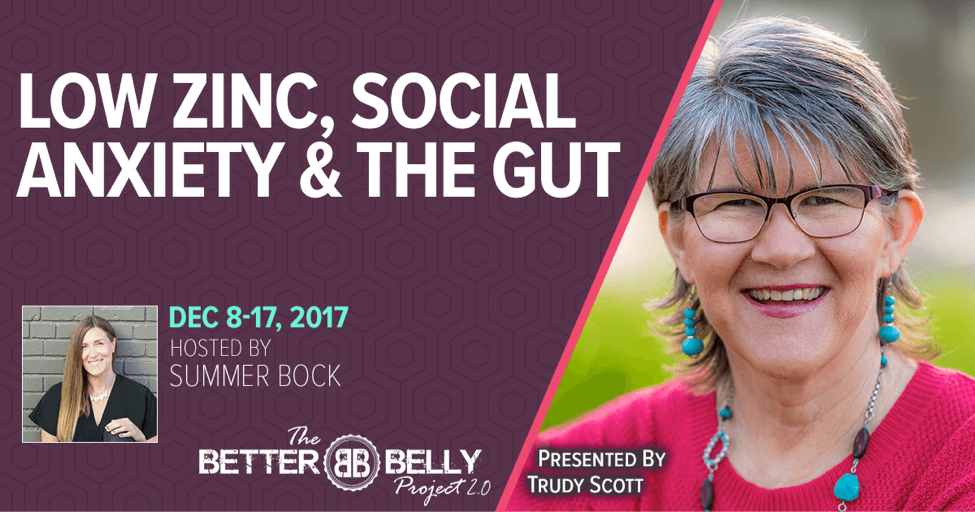
I discuss this condition, connecting the dots with digestive issues and low zinc, with my friend and colleague, Summer Bock, on the virtual conference called Better Belly Project 2.0:

We talk about some of the digestive symptoms we see with pyroluria:

  • leaky gut
  • gluten and other food sensitivities
  • morning nausea
  • poor appetite
  • not a big protein eater (an aversion to red meat is common)
  • stitch on your side
  • morning constipation

(These symptoms and others are all listed on the pyroluria questionnaire)

I cover one possible mechanism related to low zinc, reviewing a 2016 study from Cornell University – Chronic Zinc Deficiency Alters Chick Gut Microbiota Composition and Function:  

  • Zinc deficiency is caused by insufficient dietary zinc (or in this instance, pyroluria)
  • This contributes to a decrease in gut microbial diversity
  • We see an overgrowth of bacteria because of low zinc conditions, leading to dysbiosis
  • This leads to alterations in the functional capacity of the microflora – affecting zinc absorption, carbohydrate digestion and fermentation
  • This causes less production of short chain fatty acids, which are compounds that are responsible for improving the bioavailability of zinc.
  • Overall, these microbial effects may decrease zinc absorbability and disturb gut health, perpetuating a zinc deficient state.

We also discuss the following:

  • How low vitamin B6 plays a major role in inflammation
  • How low zinc impacts your connective tissue – your joints, skin and your digestive system (there appears to be a possible connection to Ehlers Danlos Syndrome/EDS, a connective tissue disorder characterized by hypermobile joints)
  • How collagen and gelatin, which are being used to heal the gut, may actually be depleting serotonin levels and increasing anxiety/depression in some individuals

Summer Bock, one of the leading gut health experts, is interviewing 49 experts who are leaders in the field of digestion, nutrition, and health in this huge, week-long virtual conference called Better Belly Project 2.0: Crushing the Critters, Plugging the Leaks, & Balancing the Biome for Your Best Body Ever

Summer’s goal is to create a great resource with a few different tracks to make it easier for you to navigate the information:

  1. Gut Health Basics
  2. Gut-Brain Axis (my interview “Low zinc, social anxiety/pyroluria and the gut” is in this track)
  3. Wellness Professional
  4. Fermentation
  5. Microbiome & Probiotics

This online event will provide exceptional value, knowledge, and truly life-changing insights from authors, professors, scientists, fermented foods experts, and wellness practitioners who have an understanding on how you can improve your digestive health amidst all the processed foods, antibiotics, stress and lack of probiotic-rich foods in the diet.

The dates are December 8-14th and there’s no charge to attend when you register in time for the live event.

You can see the event schedule and register here for Better Belly Project 2.0

I hope you enjoy it and get as much out of it as I plan too! I learn new information at all these online events too!

Do you have pyroluria and can you relate to these digestive symptoms?

Feel free to leave your questions and comments below.
Filed Under: Events, Gut health Tagged With: gut, low zinc, summer bock

30 Experts Share Their Best Advice for Brain Health by Jordan Fallis

November 24, 2017 By Trudy Scott 4 Comments

Jordan Fallis of Optimal Living Dynamics reached out to some of his favorite cutting-edge health practitioners and researchers and asked them one question:

What is the one piece of advice you would offer to people who want to improve and optimize their brain health?

I was thrilled to be one of the people he reached out to. This is my response:

This a tough question and I can think of many things such as eating sardines or other oily fish for the omega-3 benefits; eating pumpkin seeds as a great source of zinc and tryptophan (both great for anxiety and depression); dumping the bread and cookies due to the inflammatory effects of gluten on the brain and body; and eating grass-fed red meat as a great source of zinc, omega-3s and iron, all of which are needed for brain health. 

But if I had to pick only one piece of advice, I would say to optimize gut health because of the very strong gut-brain connection. This means healing a leaky gut with an amino acid like glutamine; improving the microbiome by eating fermented foods like sauerkraut; improving protein digestion with enzymes; cooking and eating quality food at home; chewing our food slowly, and addressing issues like candida, parasites, small intestinal bacterial overgrowth and dysbiosis.

In addition to the above, I always trial the use of targeted individual amino acids such as calming GABA, mood-boosting tryptophan and DPA, and addressing nutritional deficiencies with nutrients like zinc, vitamin B6, iron, magnesium and so on. You may need to also address Lyme disease, mold, heavy metals and many of the other possible biochemical causes of anxiety and depression.

Here are some snippets from a few of my favorite quotes:

  • Kelly Brogan: the brain “does not understand modern chemicals, processed foods, and industrial pollutants. It also doesn’t understand chronic stress, poor sleep, minimal movement, and indoor living”
  • Hyla Cass: “don’t follow a low-fat diet! Make sure to get sufficient fats and protein. Avoid trans fats, but eat healthy fats like omega 3’s found in fatty fish, and medium chain triglycerides from coconut oil”
  • Sayer Ji: “Turmeric is one of the most remarkable neuroprotective and neurorestorative agents yet identified”
  • Max Lugavere: “…there’s simply nothing like exercise for the brain.”
  • Gwen Olson: “Do your own due diligence before taking any pharmaceuticals. Put the name of the drug into a search engine followed by the words ‘controversy’ and ‘side effects’”
  • James Greenblatt: “As vitamins and minerals serve as co-factors in almost every enzymatic reaction in the brain, it is important to assess for adequate nutrient levels regularly to ensure that you are optimizing brain health”

You can read all the inspiring and valuable responses on Jordan’s blog: 30 Experts Share Their Best Advice for Brain Health. You’ll see some common themes: stress, the gut, exercise, real food, sleep and nutrients.

When I asked Jordan how he knew of me and my work he shared this:

I found you through Sean Croxton’s Depression Sessions. When that first came out, I was in the middle of my journey, trying to restore my own mental health. It was great timing. So I immediately purchased it and watched all the videos for more solutions.

I already knew about pyroluria, as I had read Dr. William Walsh’s book Nutrient Power at that time. But it was great to see you talk about it and bring it to light! And I believe I was taking just regular B6 before your talk. So then I switched to P-5-P. I continue to take P-5-P and zinc picolinate regularly.

I’m so thankful I’m feeling better and have my life back, so I’m going to work really hard to share everything that helped me. I just feel like I need to do that 🙂

I really appreciate that Jordan wants to share everything that has helped him and this article is a perfect way to do this.

Here are some additional resources for you on pyroluria, the social anxiety condition he mentions above:

  • Pyroluria prevalence and associated conditions
  • A snippet from the interview I did with Sean: Can Social Anxiety Be Reversed with Nutrition?
  • Some information from my interview with Dr. William Walsh on a prior Anxiety Summit: Is My Anxiety and Depression from a Methylation, Pyrrole, or Copper-Zinc Imbalance?

I hope you enjoy these resources from me, Jordan and all the experts he reached out to!

I’d love to hear what you have found to be the best brain advice you have received and implemented?  


Filed Under: Pyroluria Tagged With: anxiety, brain, brain health, copper, GABA, Jord, pyroluria, social anxiety, tryptophan, zinc

GABA helps with inhibition of unwanted thoughts

November 17, 2017 By Trudy Scott 74 Comments

There is plenty of research and clinical evidence showing that low serotonin promotes worry and ruminating thoughts and we know that using tryptophan (or 5-HTP) can help with easing these worries and unwanted thoughts i.e. the worry-in-the-head type of anxiety.

The calming supplement GABA has long been recognized to help ease the more physical type of anxiety where you feel body tension and may have stiff and tense muscles.

Over the last year I’ve been getting feedback from women in my community saying that oral GABA supplements also helps some of the head symptoms too and now we have some new research supporting the possible mechanism of this – Scientists identify mechanism that helps us inhibit unwanted thoughts:

We are sometimes confronted with reminders of unwanted thoughts – thoughts about unpleasant memories, images or worries. When this happens, the thought may be retrieved, making us think about it again even though we prefer not to. While being reminded in this way may not be a problem when our thoughts are positive, if the topic was unpleasant or traumatic, our thoughts may be very negative, worrying or ruminating about what happened, taking us back to the event.

Scientists have identified a key chemical within the ‘memory’ region of the brain that allows us to suppress unwanted thoughts, helping explain why people who suffer from disorders such as anxiety, post-traumatic stress disorder (PTSD), depression, and schizophrenia often experience persistent intrusive thoughts when these circuits go awry.

Professor Anderson, Dr. Schmitz and colleagues showed that the ability to inhibit unwanted thoughts relies on a neurotransmitter – a chemical within the brain that allows messages to pass between nerve cells – known as GABA.

GABA is the main ‘inhibitory’ neurotransmitter in the brain, and its release by one nerve cell can suppress activity in other cells to which it is connected.

Anderson and colleagues discovered that GABA concentrations within the hippocampus – a key area of the brain involved in memory – predict people’s ability to block the retrieval process and prevent thoughts and memories from returning.

The study is looking at GABA concentrations within the hippocampus and there is no mention of the use of GABA supplementation to enhance this process:

While the study does not examine any immediate treatments, Professor Anderson believes it could offer a new approach to tackling intrusive thoughts in these disorders.

Ideally the next step will be to study the use of oral GABA supplementation.

Here is the study abstract: Hippocampal GABA enables inhibitory control over unwanted thoughts

UPDATE Jan 28, 2022:

This 2021 paper, Astroglia and Obsessive Compulsive Disorder, supports the low GABA mechanism when it comes to obsessive compulsive disorder/OCD which is characterized by persistent intrusive thoughts (obsessions) and repetitive behaviors (compulsions).

The researcher shares the most prominent theory regarding the underlying mechanisms of OCD and persistent intrusive thoughts (and compulsions):

an increased excitation to inhibition (E/I) ratio due to increased glutamatergic excitation or reduced GABAergic inhibition.

And states that, in astrocytes (a subtype of glial cells), both the glutamate transporter GLT1 and GABA transporter GAT-3 are critical for regulating this balance.   

Feedback on GABA helping with overactive brain and perseveration

When I shared this research on facebook two people commented on how the Source Naturals GABA Calm product I recommend helps them with this aspect of anxiety.

Tiffany shares how Source Naturals GABA Calm helps calm her overactive brain:

I have definitely noticed that sublingual GABA Calm that you suggest helps calm my overactive brain.

Dawn shares how this same GABA product has helped her a lot:

I have an old TBI [traumatic brain injury] and the physiology of PTSD, from childhood trauma, so a double whammy. This sublingual lozenge makes a big difference in my day if I start to get anxious, or begin to perseverate on something that really isn’t all that important.

Perseverate is not a word I use very much and in case you’re not familiar with this term, the Oxford dictionary defines it as follows: “repeat or prolong an action, thought, or utterance after the stimulus that prompted it has ceased.” It’s also defined as: “the tendency of an idea to stick in your mind or recur, or getting stuck on something mentally and not being able to shift gears.” In psychiatry it’s “the persistent and pathological repetition of a verbal or motor response, often seen in organic brain disease and schizophrenia.”

Updating the GABA questionnaire and GABA blog

I’m using this research and feedback to make an update of the low GABA section on the amino acid questionnaire:

  • Do you have intrusive thoughts, perseverate or have an overactive brain? Or do you have unwanted thoughts – thoughts about unpleasant memories, images or worries?

I’ve also updated this recent blog post – Anxiety, compulsive thinking, counting behaviors: gluten, tryptophan and inositol where I to share my feedback on a question I received on how to approach working with a child with anxiety, compulsive thinking and counting behaviors. I mentioned GABA as a possibility but with her symptoms and this new research, a GABA trial would definitely be something to pursue.

Resources if you are new to using GABA as a supplement

If you are new to using the the amino acid GABA as a supplement, here is the Amino Acids Mood Questionnaire from The Antianxiety Food Solution (you can see the low GABA and other low neurotransmitter symptoms) and a brief overview here: Anxiety and targeted individual amino acid supplements: a summary.

If you suspect low levels of GABA and do not yet have my book, The Antianxiety Food Solution – How the Foods You Eat Can Help You Calm Your Anxious Mind, Improve Your Mood, and End Cravings, I highly recommend getting it and reading it before jumping in and using amino acids so you are knowledgeable. And be sure to share it with the team you or your loved one is working with.

The book doesn’t include product names (per the publisher’s request) so this blog, The Antianxiety Food Solution Amino Acid and Pyroluria Supplements, lists the GABA products that I use with my individual clients and those in my group programs.

I’d love your feedback

  • Do you resonate with any of this and have you seen this benefit when using GABA, in addition to the relief of physical anxiety?
  • If you’ve also observed improvements in your ruminating thoughts when using tryptophan, I’d love you to try and share how GABA helps and how tryptophan helps i.e. how you feel before and after with each supplement?
  • Also, if you are also using tryptophan and/or 5-HTP how do you know if it’s these amino acids or the GABA that is helping?
  • I’m really looking for the differences you observe as you support low GABA vs low serotonin?  Are they clear or are they blurred?
  • If you’re a practitioner what feedback do you get from your clients/patients about low GABA vs low serotonin?

As I mention above I would love to see follow-on research showing that sublingual GABA supplements can actually shift this. Sharing what we see clinically will be very helpful so your feedback is valuable and appreciated.

Feel free to ask your questions here too.

Filed Under: GABA Tagged With: anxiety, GABA, intrusive thoughts, overactive brain, perseverate, ruminating thoughts, tryptophan, worry

Pesticides, plastics and fluoridated water: environmental toxins on Healing Hashimoto’s Summit

November 6, 2017 By Trudy Scott 2 Comments

Lara Adler, environmental toxins expert, addresses the effects of environmental toxins on Healing Hashimoto’s Summit 2017 and how pesticides, plastics and fluoridated water impact the thyroid (and other endocrine systems) and what you can do about this exposure.   She sets the stage by explaining how it’s the environment that pulls the trigger: 

So there’s a common expression that I’m sure you’ve heard million times … our genetics loads the gun, but it’s the environment that pulls the trigger.

So even if somebody has a genetic predisposition towards autoimmune issues or Hashimoto’s, that doesn’t necessarily mean that they are destined to develop Hashimoto’s or another autoimmune condition. There is sort of this perfect storm that this needs to happen in order for that to manifest in someone’s body.

And one of those things in a lot of instances can be this exposure to environmental chemicals. And that sometimes an exposure to a chemical, maybe it’s in an occupational setting, if you work in a hair salon or you work in a factory or an office that uses chemicals, sometimes it can be an acute exposure to a chemical that can actually trigger an autoimmune response. It can set your immune system on high alert.

Sometimes, that might not be the primary trigger, but it’s adding gasoline to the fire. It’s just adding inflammation. It’s adding chemicals that can interfere specifically with hormone production of thyroid hormones.

She shares that chemicals like chlorine, bromine, and fluorine – chemicals that mimic iodine – can trigger cell death and inflammation in the thyroid. Lara’s first very practical tip is to eat organic as much as possible because of organochlorine pesticides. She shares how:

studies in both adults and children have shown that when people switch to a mostly organic diet, they can drop their levels of circulating pesticides by 80-90% in 3-5 days. That’s it. That’s all it takes.

Lara’s second tip is to avoid the hormone-disrupting effects of plastic. She shares how we all have had that forever stained orange Tupperware container:

No matter how many times you try to clean it, you can never get the orange out. The physical line actually blurs, and so you actually get oil molecules from your sauce physically embedded into the structure of the plastic, which is why you can’t wash it because it’s not on the plastic. It’s in the plastic. And the inverse of that is that you’re getting molecules of plastic inside your sauce.

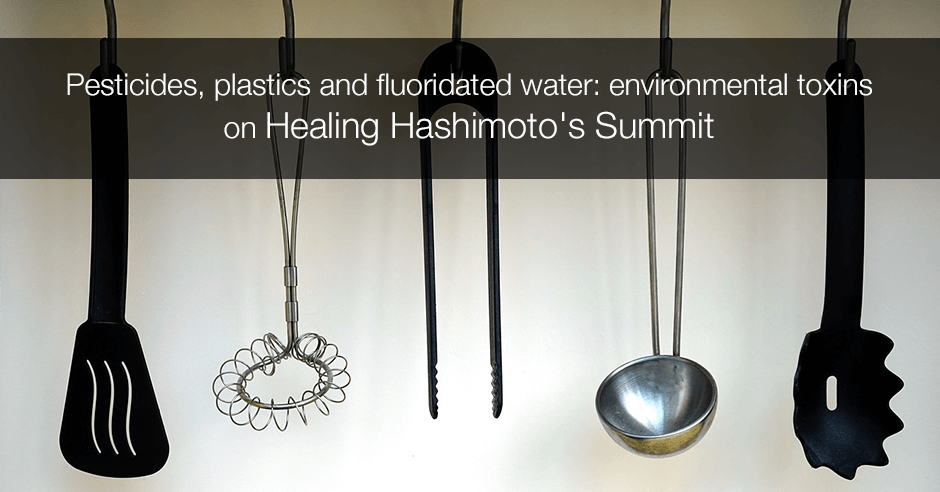
She provides plenty of practical tips for phasing out everything plastic in your kitchen  – items like food storage containers, plastic spatulas, plastic colanders – and replacing them with glass, wood, stainless steel and bamboo.

Lara’s third tip is to filter your water to remove fluoride using a water filter that is either a reverse osmosis system or one that contains a media called activated alumina.

I’m really pleased they addressed overwhelm, anxiety, fear and even the term “detoxorexia” and just taking one step at a time and doing the best you can do. 

I’d like to add this to the discussion: if all this information leaves you feeling much too overwhelmed, very anxious and fearful and even obsessive about making these changes, then I’d suggest determining if low serotonin and low GABA are possible factors and doing a trial of tryptophan (and possibly inositol) and GABA. Keep in mind that an animal study has shown that GABA reverses fluoride-induced hypothyroidism, so you’ll be getting those benefits too.   

Tune in to the Healing Hashimoto’s Summit 2017 to hear the entire interview and the other experts.

The Healing Hashimoto’s Summit 2017 is here to:

  • Raise awareness about this chronic disease
  • Help with early detection, testing and diagnosis
  • Discuss the importance of physical, mental and emotional healing
  • Advice for navigating the ups and downs
  • Share success stories (it IS possible and you’re not alone!)

90% of all hypothyroid conditions are due to Hashimoto’s, and tens of millions of people world-wide are struggling from this disorder – it’s STILL one of the most common yet uncommonly diagnosed diseases in the world!

Your thyroid is important to every aspect of your health. Slight imbalances can cause problems all over your body. Symptoms range from hair loss, weight gain, depression, anxiety, chronic fatigue, cold hands and feet, excessive perspiration, dryness, irritability, brain fog, skin issues, hives, digestive distress, malnutrition, heart palpitations, hormone imbalance, decreased libido and sluggishness.
The Healing Hashimoto’s Summit 2017 is online from November 6-13, 2017. You can register here

Let us know what changes you have made in these 3 areas and if it’s helped your thyroid symptoms.

Filed Under: Events Tagged With: hashimoto's, Lara Adler

Healthy travel food, first aid and avoiding anxiety and motion sickness when flying

November 3, 2017 By Trudy Scott 15 Comments

Updated: June 28, 2024

In today’s blog I share what I eat on a long international flight, plus what “first-aid” goodies I take in my carry-on luggage, how to stay cool, calm and collected when flying and demonstrate my favorite wrist bands for preventing motion sickness.

Even though I order gluten-free meals, I’m sure you’ll agree that the food on planes is pretty horrible and sometimes you can’t even be sure you’ll get your special meal.  One flight we ordered gluten-free only to be told on the plane that they don’t serve gluten-free meals! Fortunately we did a layover in Hawaii and were able to buy a salad and some fruit after a lot of searching but it was not what you’d expect. It was a good thing we did take some snacks with us too but I am now way more prepared when I travel.

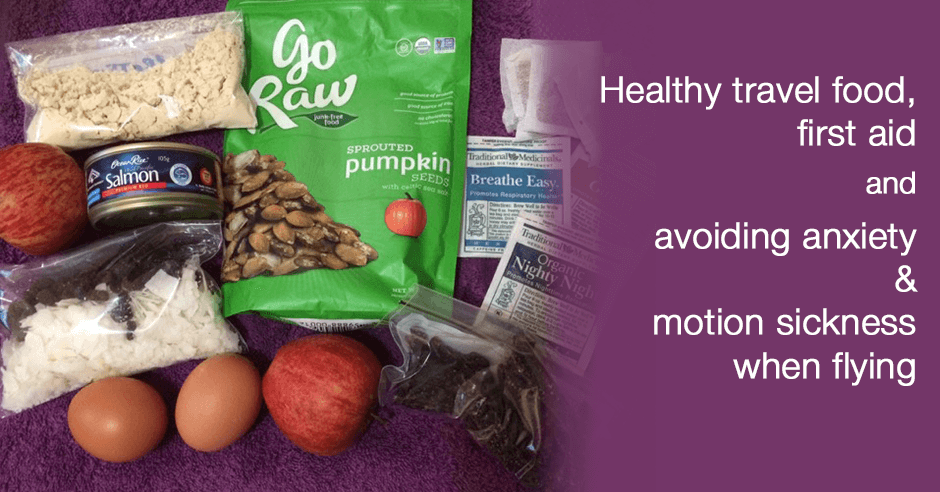
As you can see from the above image, this is the typical travel food (or “padkos” as we call it in South Africa) for a 13-hour flight:

  • 2 organic apples
  • 2 organic boiled eggs and some sea salt
  • Homemade biltong from grass fed beef (a South African version of jerky) made with sea salt, coriander and pepper
  • Coconut flakes and organic raisins
  • Sprouted pumpkin seeds (many nuts and seeds are medium and high oxalate but a few tablespoons of pumpkin seeds are low oxalate – more on oxalates here)
  • A selection of herbal tea bags: ginger (which is great for motion sickness), Nighty night which contains chamomile and is relaxing), Breathe Easy (in case of congestion) and rooibos (great for stress and an excellent source of polyphenols)
  • A can of wild salmon
  • Pea protein powder or whey or beef protein powder (as tolerated)

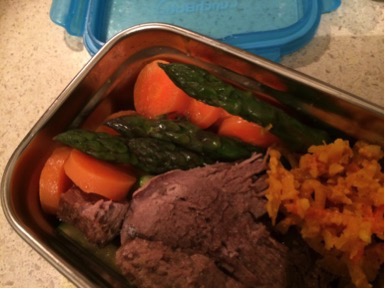
I also packed a meal of roast lamb with a veggie selection of carrots, zucchini and asparagus, plus some cauliflower sauerkraut. This was really delicious!

Also, to be safe, I take a selection of “first-aid” products in my carry-on luggage.

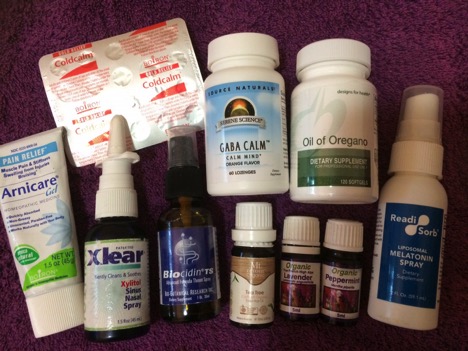
Here is some of what I typically pack for “first-aid”:

  • Arnicare which is an arnica gel * (for muscle pain)
  • Xlear nasal spray * and Biocidin throat spray * – I find that using these two products before boarding the plane and half way into the flight prevents me from picking up any bugs and getting sick
  • Tree tree oil *
  • Essential oils of lavender * (for relaxation and sleep) and peppermint * (for energy and a headache). Both are antibacterial too.
  • Melatonin spray * to help reset my circadian rhythm and help with jetlag
  • Designs for Health Oil of Oregano * and garlic supplements (not shown) for bug protection
  • Source Naturals GABA Calm for tension and anxiety. I didn’t use it/need it this trip but after my scary plane ride last year leading to vagus nerve issues, I’ve decided to always have some on hand when flying
  • Boiron Cold Calm, one of my favorite homeopathic cold remedies

I also take a few of each of the following in a supplement box: Designs for Health Inflammatone * (a natural anti-inflammatory), DPP-IV enzymes * (for accidental gluten exposure), activated charcoal * (also for accidental gluten exposure) and my daily supplements.

Note: the products marked with a * above can all be found on my Fullscript supplement store. And tryptophan, mentioned below, is also available on Fullscript.

Here is a video I did for the Healthy Travelers Global summit, an online event that was hosted by my good friend Robyn Benson in 2015 (just ignore the summit promo and enjoy the tips and demonstrations).

I share the following:

  • A quick demonstration using Xlear (notice that I actually miss my nose by mistake!) and Biocidin Throat Spray for avoiding bugs
  • The pressure-point wrist-bands I use for motion sickness (find them on Amazon here). Many people with pyroluria are more prone to morning nausea and may be very prone to motion sickness (and it’s commonly a sign of low vitamin B6). In order to be effective they do need to be put on BEFORE you start to travel and the position is key).
  • I don’t mention it in the video but motion sickness can be a sign of low bile production or poor quality bile. I share more about how I’ve been using ox bile to improve fat digestion and help with oxalate issues here. Hopefully this will help even more with my motion sickness.
  • Amino acids for travel anxiety (GABA for the physical anxiety and tryptophan for the fearful, worrying-about-flying anxiety)
  • Healthy travel snacks

Enjoy the beautiful Rocky Mountains! When I filmed this I was on a trip to St Paul, MN for the National Association of Nutrition Professionals conference and wanted to share just how I travel.

Additional resources when you are new to using amino acids such as GABA or tryptophan as supplements

As always, I use the symptoms questionnaire to figure out if low GABA or low serotonin may be an issue.

When considering them for flying I have clients do a trial before they leave and figure out optimal doses for their unique needs. And then use GABA and/or tryptophan as needed on the flight.

If you suspect low levels of any of the neurotransmitters and do not yet have my book, The Antianxiety Food Solution – How the Foods You Eat Can Help You Calm Your Anxious Mind, Improve Your Mood, and End Cravings, I highly recommend getting it and reading it before jumping in and using amino acids on your own so you are knowledgeable. And be sure to share it with the practitioner/health team you or your loved one is working with.

There is an entire chapter on the amino acids and they are discussed throughout the book in the sections on gut health, gluten, blood sugar control (this is covered in an entire chapter too), sugar cravings, anxiety and mood issues.

The book doesn’t include product names (per the publisher’s request) so this blog, The Antianxiety Food Solution Amino Acid and Pyroluria Supplements, lists the amino acids that I use with my individual clients and those in my group programs.

If, after reading this blog and my book, you don’t feel comfortable figuring things out on your own (i.e. doing the symptoms questionnaire and respective amino acids trials), a good place to get help is the GABA QuickStart Program (if you have low GABA symptoms too). This is a paid online/virtual group program where you get my guidance and community support.

If you are a practitioner, join us in The Balancing Neurotransmitters: the Fundamentals program. This is also a paid online/virtual program with an opportunity to interact with me and other practitioners who are also using the amino acids.

Wrapping up and your feedback

I hope this is all helpful for your next long flight or even a road-trip you have coming up. Do keep in mind that some of this can be adapted for a day out shopping or a day at the beach too.

I’d love to hear about your favorite travel foods and first-aid goodies that you take on a trip.

Feel free to share and ask your questions below.

Filed Under: Anxiety Tagged With: anxiety, anxiety nutrition solutions, depression, DPA, GABA, iPhone, kids, teen, Teen Depression and Anxiety: Why the Kids Are Not Alright, teens, tryptophan

Toxic free skin products from Annmarie Skin Care

October 30, 2017 By Trudy Scott 9 Comments

Annmarie Skin Care is an organic skin care line that is wildcrafted and promises a beautiful and glowing skin. Their products are non-GMO, fair trade, gluten-free, and they never test on animals. 

As you know, I’m all about quality when it comes to the food you consume, the nutrients you use for optimal health and easing your anxiety AND also what you use on your skin!

I’ve been a fan of Annmarie Skin Care products since the company launched because they are so clean!

The Annmarie Skin Care line is free of toxic ingredients and share more in their blog: Top 10 Toxic Skin Care Ingredients (Avoid Putting on Your Skin at All Costs)

The key to healthy beauty care is to understand what’s really underneath the lid. While that may seem like a lot of work, you just have to know what to keep your eyes open for. And once you know what to look for, you can add yourself among the rapidly growing group of empowered consumers who are asking questions and being justifiably snobby about their product choices.

To help you in this mission to makeover your personal stock of cosmetics, we’ve put together a list of 10 ingredients you should avoid in anything you buy. By steering clear of these nasties, you can rest assured that whatever you’re putting on your skin isn’t harming it.

Parabens #1 on the list and are unquestionably the most commonly used preservatives in the cosmetics industry:

They’re in just about any cream you might use, as they prevent mold, fungus and parasites from sprouting and growing in your products. The problem is that they can be absorbed through the skin, and have often been found in breast cancer tumors! All signs point to skin care products being the cause.

Because of this, there is a growing concern that excessive use of parabens may give rise to breast cancer in women and testicular cancer in men. Although there haven’t been any conclusive studies proving this, it should be enough to make you concerned. In fact, it’s why there are so many “paraben-free” items popping up in the supermarket and pharmacies around the country.

Parabens can appear in different forms, so here’s what you want to look out for:

  • benzylparaben
  • butyiparaben
  • propylparaben
  • methylparaben
  • ethylparaben
  • isobutylparaben

Here are #2 through #10 Toxic Skin Care Ingredients to avoid (none of which are found in Annmarie Gianni products):

  1. Phthalates
  2. Benzoyl Peroxide
  3. Triclosan
  4. Resorcinol
  5. Hydroquinone
  6. Petroleum
  7. Methylisothiazolinone
  8. Oxybenzone
  9. Artificial Dyes and Synthetic Colors

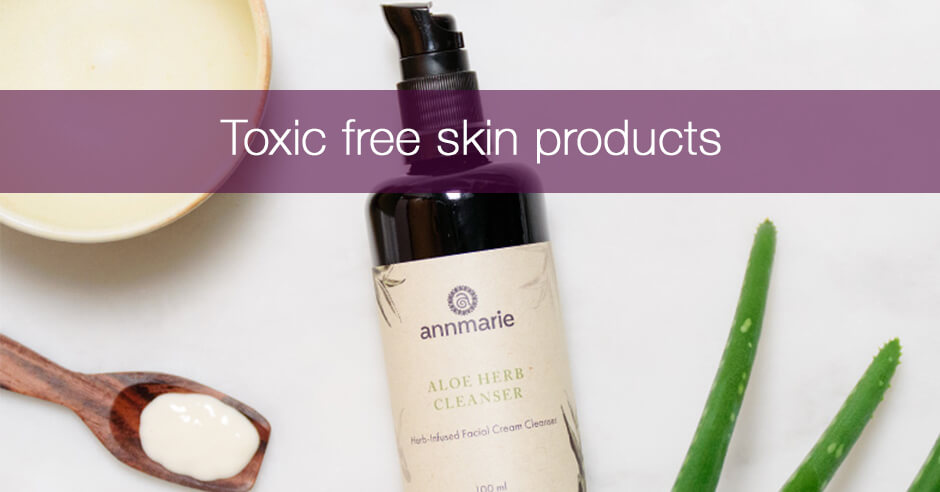
I love the Aloe Herb Cleanser pictured above but my favorite product is the Neroli Toning Mist which I use as a spritz instead of perfume. It’s refreshing, uplifting and calming!

I encourage you to give these products a try. I know you’ll love how clean they are. Here is the link to the store.

I’d love to hear what you think and do let us know which are your favorite Annmarie products and if you have other favorite non-toxic cosmetic companies you like.

Filed Under: Toxins Tagged With: annmarie skin care, toxic free skin care

  • « Go to Previous Page
  • Page 1
  • Interim pages omitted …
  • Page 63
  • Page 64
  • Page 65
  • Page 66
  • Page 67
  • Interim pages omitted …
  • Page 160
  • Go to Next Page »

Primary Sidebar

GABA QuickStart Homestudy

gaba quickstart homestudy

Free Report

9 Great Questions Women Ask about Food, Mood and their Health

You'll also receive a complimentary subscription to my ezine "Food, Mood and Gal Stuff"


Connect with me

Popular Posts

  • Amino Acids Mood Questionnaire from The Antianxiety Food Solution
  • The Antianxiety Food Solution Amino Acid and Pyroluria Supplements
  • Pyroluria Questionnaire from The Antianxiety Food Solution
  • Collagen and gelatin lower serotonin: does this increase your anxiety and depression?
  • Tryptophan for the worry-in-your-head and ruminating type of anxiety
  • GABA for the physical-tension and stiff-and-tense-muscles type of anxiety
  • The Antianxiety Food Solution by Trudy Scott
  • Seriphos Original Formula is back: the best product for anxiety and insomnia caused by high cortisol
  • Am I an anxious introvert because of low zinc and vitamin B6? My response to Huffington Post blog
  • Vagus nerve rehab with GABA, breathing, humming, gargling and key nutrients

Recent Posts

  • Her cravings for chips and peanut butter were triggered by stress: GABA ends cravings and reduces physical tension and fear of heights
  • It is truly miraculous to be able to move through life without crippling anxiety and panic
  • GABA and tryptophan combo provide immediate and noticeable relief for tremors and cervical dystonia in just 7 days
  • Red light therapy for back and neck pain, plantar fasciitis and low mood – a complement to the amino acids GABA, DPA and tryptophan
  • What do I use instead of Seriphos to help lower high cortisol that is affecting my sleep and making me anxious at night?

Categories

  • 5-HTP
  • AB575
  • Addiction
  • ADHD
  • Adrenals
  • Alcohol
  • Allergies
  • Alzheimer's disease
  • Amino Acids
  • Anger
  • Antianxiety
  • Antianxiety Food Solution
  • Antidepressants
  • Anxiety
  • Anxiety and panic
  • Autism
  • Autoimmunity
  • benzodiazapines
  • Bipolar disorder
  • Books
  • Caffeine
  • Cancer
  • Candida
  • Children/Teens
  • Collagen
  • Cooking equipment
  • Coronavirus/COVID-19
  • Cravings
  • Depression
  • Detoxification
  • Diabetes
  • Diet
  • DPA/DLPA
  • Drugs
  • EFT/Tapping
  • EMF
  • EMFs
  • Emotional Eating
  • Endorphins
  • Environment
  • Essential oils
  • Events
  • Exercise
  • Fear
  • Fear of public speaking
  • Fertility and Pregnancy
  • Fish
  • Food
  • Food and mood
  • Functional neurology
  • GABA
  • Gene polymorphisms
  • General Health
  • Giving
  • Giving back
  • Glutamine
  • Gluten
  • GMOs
  • Gratitude
  • Gut health
  • Heart health/hypertension
  • Histamine
  • Hormone
  • Hyperparathyroidism
  • Hypoglycemia
  • Immune system
  • Inflammation
  • Insomnia
  • Inspiration
  • Introversion
  • Joy and happiness
  • Ketogenic diet
  • Lithium orotate
  • Looking awesome
  • Lyme disease and co-infections
  • MCAS/histamine
  • Medication
  • Men's health
  • Mental health
  • Mercury
  • Migraine
  • Mold
  • Movie
  • MTHFR
  • Multiple sclerosis
  • Music
  • NANP
  • Nature
  • Nutritional Psychiatry
  • OCD
  • Osteoporosis
  • Oxalates
  • Oxytocin
  • Pain
  • Paleo
  • Parasites
  • Parkinson’s disease
  • PCOS
  • People
  • PMS
  • Postpartum
  • PTSD/Trauma
  • Pyroluria
  • Questionnaires
  • Real whole food
  • Recipes
  • Research
  • Schizophrenia
  • serotonin
  • SIBO
  • Sleep
  • Special diets
  • Sports nutrition
  • Stress
  • Sugar addiction
  • Sugar and mood
  • Supplements
  • Teens
  • Testimonials
  • Testing
  • The Anxiety Summit
  • The Anxiety Summit 2
  • The Anxiety Summit 3
  • The Anxiety Summit 4
  • The Anxiety Summit 5
  • The Anxiety Summit 6
  • Thyroid
  • Thyroid health
  • Toxins
  • Tryptophan
  • Tyrosine
  • Uncategorized
  • Vegan/vegetarian
  • Women's health
  • Yoga

Archives

  • May 2026
  • April 2026
  • October 2025
  • September 2025
  • August 2025
  • July 2025
  • June 2025
  • May 2025
  • April 2025
  • March 2025
  • February 2025
  • January 2025
  • November 2024
  • October 2024
  • September 2024
  • August 2024
  • July 2024
  • June 2024
  • May 2024
  • April 2024
  • March 2024
  • February 2024
  • January 2024
  • December 2023
  • November 2023
  • October 2023
  • September 2023
  • August 2023
  • July 2023
  • June 2023
  • May 2023
  • April 2023
  • March 2023
  • February 2023
  • January 2023
  • December 2022
  • November 2022
  • October 2022
  • September 2022
  • August 2022
  • July 2022
  • June 2022
  • May 2022
  • April 2022
  • March 2022
  • February 2022
  • January 2022
  • December 2021
  • November 2021
  • October 2021
  • September 2021
  • August 2021
  • July 2021
  • June 2021
  • May 2021
  • April 2021
  • March 2021
  • February 2021
  • January 2021
  • December 2020
  • November 2020
  • October 2020
  • September 2020
  • August 2020
  • July 2020
  • June 2020
  • May 2020
  • April 2020
  • March 2020
  • February 2020
  • January 2020
  • December 2019
  • November 2019
  • October 2019
  • September 2019
  • August 2019
  • July 2019
  • June 2019
  • May 2019
  • April 2019
  • March 2019
  • February 2019
  • January 2019
  • December 2018
  • November 2018
  • October 2018
  • September 2018
  • August 2018
  • July 2018
  • June 2018
  • May 2018
  • April 2018
  • March 2018
  • February 2018
  • January 2018
  • December 2017
  • November 2017
  • October 2017
  • September 2017
  • August 2017
  • July 2017
  • June 2017
  • May 2017
  • April 2017
  • March 2017
  • February 2017
  • January 2017
  • December 2016
  • November 2016
  • October 2016
  • September 2016
  • August 2016
  • July 2016
  • June 2016
  • May 2016
  • April 2016
  • March 2016
  • February 2016
  • January 2016
  • December 2015
  • November 2015
  • October 2015
  • September 2015
  • August 2015
  • July 2015
  • June 2015
  • May 2015
  • April 2015
  • March 2015
  • February 2015
  • January 2015
  • December 2014
  • November 2014
  • October 2014
  • September 2014
  • August 2014
  • July 2014
  • June 2014
  • May 2014
  • April 2014
  • March 2014
  • February 2014
  • January 2014
  • December 2013
  • November 2013
  • October 2013
  • September 2013
  • August 2013
  • July 2013
  • June 2013
  • May 2013
  • April 2013
  • March 2013
  • February 2013
  • January 2013
  • December 2012
  • November 2012
  • October 2012
  • August 2012
  • July 2012
  • June 2012
  • May 2012
  • April 2012
  • March 2012
  • February 2012
  • January 2012
  • December 2011
  • November 2011
  • October 2011
  • September 2011
  • August 2011
  • July 2011
  • June 2011
  • May 2011
  • April 2011
  • March 2011
  • February 2011
  • January 2011
  • December 2010
  • October 2010
  • September 2010
  • July 2010
  • May 2010
  • April 2010
  • March 2010
  • February 2010
  • January 2010
  • November 2009

Share the knowledge!

The above statements have not been evaluated by the Food and Drug Administration. Products listed in this website are not intended to diagnose, treat, cure or prevent any disease.

The information provided on this site is for informational and educational purposes only and is not intended as a substitute for advice from your physician or other health care professional. You should consult with a healthcare professional before starting or modifying any diet, exercise, or supplementation program, before taking or stopping any medication, or if you have or suspect you may have a health problem.


Copyright © 2026 Trudy Scott. All Rights Reserved. | Privacy | Terms and Conditions | Refund Policy | Medical Disclaimer

Free Report

9 Great Questions Women Ask about Food, Mood and their Health

You’ll also receive a complimentary subscription to my ezine “Food, Mood and Gal Stuff”