• Skip to primary navigation
  • Skip to main content
  • Skip to primary sidebar

everywomanover29 blog

Food, Mood and Women's Health – Be your healthiest, look and feel great!

  • Blog
  • About
  • Services
  • Store
  • Resources
  • Testimonials
  • The Book
  • Newsletter
  • Contact
  • Search this site

Women's health

Beyond the Pill by Dr. Jolene Brighten – my book review

February 15, 2019 By Trudy Scott 9 Comments

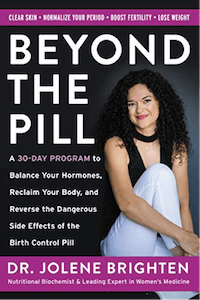
I really wish this book – Beyond the Pill A 30-Day Program to Balance Your Hormones, Reclaim Your Body, and Reverse the Dangerous Side Effects of the Birth Control Pill by Dr. Jolene Brighten – was available when I was in my 30s and on the pill.

Dr. Jolene mentions a study in the Journal of the American Medical Association which reports the following:

women who began the pill were more likely to be prescribed an antidepressant – which means it contributes to a bit more than moodiness.

This was not a small study and included over one million women.

Symptoms caused by the pill and the damage it does to your body

This book, Beyond the Pill, provides a comprehensive list of symptoms caused by the pill:

  • hormonal confusion: missing or irregular periods, light or heavy periods, short cycles, infertility, headaches
  • digestive problems: leaky gut, gut dysbiosis, inflammatory bowel disease
  • energy reduction: fatigue, adrenal and thyroid dysfunction
  • skin issues: hair loss, dry skin
  • mood disruption: depression, anxiety
  • lady part disturbance: low libido (Oh, hell no!), vaginal dryness, chronic infection, pain with sex
  • vitamin, mineral, and antioxidant depletion (such as folate, B12, and magnesium) (I’ll add vitamin B6 to this list too – it is mentioned elsewhere in the book)

The pill does further damage to your body and also:

  • intensifies the risk of blood clots, which lead to strokes
  • increases the risk of breast, cervical, and liver cancers
  • increases the risk of diabetes
  • raises the risk of heart attacks
  • triggers autoimmune disease

Truth-bombs about how the pill works

She shares plenty of truth-bombs about how the pill works – like these gems:

As long as you’re on the pill, your brain and ovaries aren’t talking, which can seriously affect all your hormones.

When you take that week of placebo pills, you’re not actually getting a period because you never ovulated. Instead, this is what is called a withdrawal bleed (I did not know this!)

Post–birth control syndrome (PBCS)

I first became aware of Dr. Jolene’s brilliance in this area when she started writing about Post–birth control syndrome (PBCS) a few years ago. PBCS is “is a constellation of symptoms women experience when they discontinue hormonal birth control.” She has found the symptoms of PBCS – hormonal irregularities like no period or heavy bleeding, acne, mood swings and anxiety, headaches, infertility, pill-induced PCOS (polycystic ovarian syndrome), hypothyroidism, gut issues and even autoimmune symptoms – typically occur in the first 4-6 months after stopping the pill. To make it easy for you the PBCS symptoms are all laid out in a handy quiz in the book.

She has found these symptoms won’t go away without taking the necessary steps that include detox, gut repair, healing the thyroid and adrenals, addressing metabolic health or blood sugar control, boosting mood, improving libido and addressing nutritional deficiencies that the pill has caused. This is all covered in the book as a 30-day program to balance your hormones, reclaim your body, and reverse the dangerous side effects of the birth control pill.

I really appreciate that Dr. Jolene shares this:

I want you to know I’m not anti-pill. Nope. I’m pro–informed consent, which means doctors giving you all the information you need to consent to taking birth control.

This book will help you understand what those hormonal symptoms mean, how the pill is affecting your body, and what to do if you either need to stay on it or are ready to get off it.

Addressing low vitamin B6, low serotonin and low GABA

Here are a few of the nutritional supporting approaches she covers (all supported by research) that are very applicable for support for anxiety specifically and relevant to what you’ve been learning from me: addressing low vitamin B6, low serotonin and low GABA.

Because the pill depletes vitamin B6, she recommends up to 100mg per day for PMS and mood-related symptoms, and symptoms of PBCS. (I know vitamin B6 is controversial and she does acknowledge this).

Dr Jolene identifies the concerning and far-reaching effects of the pill on serotonin: “studies have shown that women on the pill don’t metabolize tryptophan normally” affecting both serotonin and melatonin production, reducing kynurenic acid and raising high-sensitivity C-reactive protein (hs-CRP), a marker of inflammation and immune system activation, and shifting the “tryptophan pathway… toward quinolinic acid production, which is inflammatory and harmful to the brain.”

I would have loved to see more about tryptophan and 5-HTP and even vitamin B6 (given that it is crucial for the conversion of tryptophan away from quinolinic acid) in this section of the book. Using tryptophan as a supplement is only briefly mentioned and 50-100mg 5-HTP is only recommended for serotonin-related cravings. As you may know from my work using targeted trials of the amino acid tryptophan and/or 5-HTP offers very quick anxiety relief and  support for PMS within 3 cycles. Fortunately, you can fill in the gaps and use what I teach about these amino acids in conjunction with everything else in the book.

I do love that she adds to our knowledge base with other tips, sharing that the botanicals “passionflower and skullcap support healthy serotonin production by reducing quinolinic acid production.” This was new to me and I’m intrigued.

I love what she writes about progesterone inducing “a sense of calm and a deep sense of love and connection by stimulating gamma-aminobutyric acid (GABA) receptors.”  Theanine and taurine (a precursor of GABA) are recommended and taurine is also part of her detox and adrenal protocols which I love.

However, I use GABA itself extensively in my work and find it to be more effective than theanine or taurine for the anxiety symptoms – it’s a firm favorite for the majority of my anxious clients. Again, you can fill in the gaps and check out what I share about GABA for very quick anxiety relief and PMS support.


My other favorite sections: libido and orgasms, and liver detox

Some of my other favorite sections include the libido section and her wonderful information about orgasms – she shares the myriad of health benefits of orgasms and recommends once-weekly orgasms but need I say more than this comment from Dr. Jolene:

Women can have four different types of orgasm throughout the month because of the hormonal changes we experience. Dude, this is a serious reason to consider ending that pill pack.

I couldn’t resist including this advice for anxiety and insomnia:

Trouble with anxiety? Have sex. Trouble with insomnia? Have sex. When you have an orgasm and release oxytocin, it relaxes you, calms your mind, and enables you to get a good night’s sleep. Besides oxytocin, your body releases vasopressin during orgasm, a hormone that often accompanies the release of melatonin.

If you do have low libido Dr. Jolene has this covered.

I also love the liver detox chapter and so will you. You’ll learn that the pill can cause benign liver tumors and can contribute to gallstones and gallbladder disease. She also shares this about the synthetic estrogen in birth control pills and the liver/libido connection:

There is some concern that long-term exposure to the synthetic estrogen in birth control pills actually alters your liver genes to make higher levels of SHBG (sex hormone binding globulin) for the rest of your life. Unfortunately, SHBG also binds up your testosterone. The result is a libido that’s nonexistent.

She also has you covered on how to detox as part of this wonderfully comprehensive hormone balancing program.

The official book blurb

Out of the 100 million women – almost 11 million in the United States alone – who are on the pill, roughly 60 percent take it for non-contraceptive reasons like painful periods, endometriosis, PCOS, and acne. While the birth control pill is widely prescribed as a quick-fix solution to a variety of women’s health conditions, taking it can also result in other more serious and dangerous health consequences.

Did you know that women on the pill are more likely to be prescribed an antidepressant? That they are at significantly increased risk for autoimmune disease, heart attack, thyroid and adrenal disorders, and even breast and cervical cancer? That the pill can even cause vaginal dryness, unexplained hair loss, flagging libido, extreme fatigue, and chronic infection.

As if women didn’t have enough to worry about, that little pill we’re taking to manage our symptoms is only making things worse.

This book is perfect for you if

  • You’re a woman in your child-bearing years and are currently on the pill, considering the pill, have been on the pill in the past and had issues, and even did well on the pill in the past
  • You’re a woman like me and past the birth control age and yet are intrigued to get a better understanding of how you may have been affected by the pill in the past and also want a better understanding of your body and hormonal health going forward
  • You have a daughter or grand-daughter or niece or friend you can gift a copy to
  • You are a practitioner who works with women
  • You are a curious male with women in your life and would like to understand them better so you can continue to have the healthiest relationship possible.

I’m already recommending this book and will continue to recommend it going forward!

This much-needed solution-based and heavily referenced book released January 29. It’s ground-breaking information and I’m thrilled to be sharing it with you!

Grab your copy of Beyond the Pill (my Amazon link) and find additional information here.

I now recognize that post–birth control syndrome (PBCS) was part the perfect storm that contributed to my anxiety and panic attacks in my late 30s (and a whole host of other symptoms). Personally, I found the entire book fascinating reading, and wish I’d had access to this material while I was in the midst of trying to figure things out.

Fortunately, GABA and tryptophan helped immensely with my anxiety and PMS (together with everything else I did) and I eventually discovered FAM (Fertility Awareness Method). But wish I’d know about this safer option when I was younger. Dr. Jolene is a big fan of FAM and covers it extensively in the book, sharing what I found to be true: it works even if it seems scary at first AND you get to learn so much about your body.

Please feel free to share your experiences with the birth control pill (both good and bad), why it was prescribed and what you learn from this book that can help others in your situation. Feel free to post questions here too.
Filed Under: Books, GABA, serotonin, Women's health Tagged With: antidepressant, anxiety, BCP, Beyond the Pill, Dr. Jolene Brighten, GABA, insomnia, libido, orgasm, post-birth control syndrome, serotonin, the birth control pill, the pill

How GABA eases agonizing rectal pain and spasms in under 2 minutes

June 30, 2017 By Trudy Scott 188 Comments

Proctalgia fugax is described as a condition that leads to rectal spasms and sharp fleeting pain in the lower rectum or anus. In some people it can be more than fleeting and is often described as excruciating and agonizing.  

This paper describing proctalgia fugax shares how this pain can

recur over weeks, is localized to the anus or lower rectum, and can last from seconds to several minutes with no pain between episodes. There is no diurnal variation. There are numerous precipitants [preceding factors] including sexual activity, stress, constipation, defecation and menstruation, although the condition can occur without a trigger.

Although the cause of proctalgia fugax is unclear, spasm of the anal sphincter is commonly implicated. The condition may be more likely to occur after sclerotherapy for hemorrhoids and vaginal hysterectomy. There are also associations with other functional pathologies, such as irritable bowel syndrome and anxiety.

My story

I have experienced this awful anal sphincter spasm and pain myself so I want to shine some light on this condition and offer the simplest and most effective solution: oral and sublingual GABA. It works to completely eliminate the pain in 1-2 minutes! And it can also be used to prevent a full-on spasm if you catch it in advance. More about this below.

Let me first share my story so you can relate to the pain. I started to experience this a few years ago. It was right after my aunt died from rectal cancer and my immediate thought was that I was dying of cancer. That’s how bad the pain was. It’s like nothing I’ve ever experienced and I’ve had some pretty bad pain experiences: shingles, a tick bite headache, ice-pick headaches from a neck injury and poking my eye on a tree-branch while hiking.

For me, since it initially used to happen during the night, it felt like I was in bad dream and was lying somewhere injured and in agony. I would half wake-up moaning in pain, not quite grasping how the pain I was feeling could be so bad. Then I would come fully awake and feel the need to bear down (as in needing to have a bowel movement) but this would actually make it worse.

How do others describe the pain?

When I shared this paper on facebook one woman said her rectal pain and spasms last 20-30 minutes and is bad a childbirth.

Someone else shared that her husband “complained of feeling like a knitting needle was being driven through his anus.”

What do I think my triggers are?

I have not had sclerotherapy for hemorrhoids or a vaginal hysterectomy. I do have a history of anxiety and panic attacks (in my late 30s) and do have IBS/SIBO right now and I suspect that both low GABA and IBS/SIBO are my biggest root causes. I no longer have any anxiety but since I respond so well to GABA I assume my GABA levels are not optimal (likely due to the SIBO). I suspect exposure to hidden sources of gluten could also be a factor, and this could also affect my GABA levels.

Medications or heating pads as a solution?

I didn’t ever consider the conventional approaches which include: botox, benzodiazepines, SSRIs, Gabapentin, lidocaine, oral diltiazem, topical glyceryl nitrate, nerve blocks or salbutamol.

A warm bath has been reported to help but I was looking for a 1-2 minute fix (and less if possible). Once you’ve experienced this pain you’ll understand that you not imagine running a bath in the midst of a spasm and waiting to get in it.

Heating pads do also work but can take 20 minutes to take effect and that is simply too long for most people.

The first solution for in-the-moment relief (takes 2 to 12 minutes)

After the first episode I started searching online and because I didn’t know it was called proctalgia fugax I searched for “rectal cramp”, “rectal spasm”, “anal cramp” and came across forums with hundreds of women asking about it and describing their pain.

But no-one really had a solution and many had seen their doctors without much success. The best solution that many people use is 30-60 seconds of finger pressure (with the finger wrapped in toilet paper) in the anal sphincter during a spasm. Sometimes this is needed for up to 2-3 mins and sometimes doing this 2 or 3 times a few minutes apart is needed. Think about how you put pressure on a calf muscle spasm to stop the cramps. This works well but the agony can last for the entire 2 to 12 minutes (depending on how many times it has to be done).  Adding a small amount of arnica cream onto the toilet paper seems to helps too.  

How common is it?

It took more searching and reading and then I discovered what it was called. Once I found a name for it and started looking into I was surprised to see how common it is:

The prevalence of proctalgia fugax in the general population may be as high as 8%–18%. Many patients present to primary health care physicians and often do not require further consultation because the symptoms are fleeting. This condition is more common among women than among men, and usually affects patients between 30 and 60 years of age.

Although it’s more common among women I worked with a male client who experienced this. During one of his episodes, the pain was SO bad he actually passed out and hit his head on the bathroom floor.

The best solution for almost-immediate relief (takes 1 minute)

I know that GABA works amazing well for physical anxiety and stiff and tense muscles and I decided to try GABA in the midst of a spasm. It worked amazingly well and within 1 minute the terrible pain started to ease. It does need to be taken sublingually and I have found that 250mg to 500mg opened onto my tongue works best for me.

Each person would need to find the ideal amount for their needs but at night this should be a reasonable amount. During the day this could be too much and make you sleepy or too relaxed.

I’ve also used a combination of sublingual GABA and theanine with similar results.

I know GABA isn’t readily available everywhere so I did an experiment with taurine and found I needed more (at least 1000 mg) and it did take longer (2-3 minutes) to get relief, but it did work.

THE immediate solution for preventing the spasm

But I have now gotten to the point where I can nip it in the bud and prevent the spasm altogether – by taking sublingual GABA at the very first hint of an ache or twinge. I’ve been fortunate that when this does happen (about once a month and sometimes every 2 months) it’s around 8-11pm.

The long-term solutions for getting to the root cause/s?

We always want to get to the root cause of an issue and that is the next step. I reached out to the practitioners in my community to ask them how they help their clients and patients with this and what approaches they have used to end the spasm and pain. I will be sharing some of their solutions and how to get to some of the root causes in part 2.

UPDATE: Here is part 2 – How to address rectal spasms with GABA, pelvic floor work, gluten removal and squats

I’d love your feedback!

I’d love your feedback so I can learn what works, so we can all learn from each other and so others get answers quicker than I did.

Have you ever experienced this rectal pain and spasms? And what has worked for you?

I’d love to know if it is more common after sclerotherapy for hemorrhoids and vaginal hysterectomy? Have you had either? Or any surgery in the abdominal area?

Do you also have IBS/SIBO?  What about celiac disease or gluten sensitivity?

Do you currently have anxiety or mood issues or have a history of anxiety or mood issues?  How many low GABA and low serotonin symptoms do you have – here is the questionnaire  (a paper from 1965 mentions that patients with proctalgia fugax have been described as irritable, perfectionistic, meticulous, obsessional, tense, and anxious)

If you’ve tried GABA or these other approaches (or decide to try them) please come back and share.  Too many people don’t know about this and it needs to change!

Filed Under: Amino Acids, Antianxiety, GABA, Hormone, Pain, SIBO, Women's health Tagged With: anal sphincter, anus, anxiety, cramp, GABA, pain, Proctalgia fugax, rectal spasm, taurine

Menopause: insulin, cortisol, and oxytocin (an interview with Dr. Anna Cabeca)

March 13, 2017 By Trudy Scott Leave a Comment

What should a healthy menopause look like and what does an unhealthy hormonal imbalance leads? And what is the significance of insulin, cortisol, and oxytocin?

Dr. Brian Mowll, host of the upcoming Diabetes Summit, interviews Dr. Anna Cabeca on the topic of menopause and metabolic health. Dr. Anna is a board certified gynecologist and obstetrician as well as board certified in anti-aging and regenerative medicine. She is an expert in functional medicine and an expert in women’s health.

She starts with an overview of what menopause should look like and what an unhealthy hormonal imbalance leads to:

Hormonally, what does menopause look like? Yes, we’re going to age. And we’re going to have wrinkles and laugh lines and smile lines and things like that. But that’s awesome. We should be waking up rested, going to sleep on schedule without difficulty and have the sense of peace within us that we’ve become able to enjoy the life that we’ve worked so hard to create and also be able to educate, inspire, and instruct those around us and the generations that follow us. So those are the ideals in menopause.

However, with our environment and toxicities and unhealthy aging and unhealthy hormonal imbalance, what happens is we tend to get overweight, difficulty with weight loss. We tend to have increases in our blood sugar, increases of heart disease. What that feels like, too, is hot flashes, mood swings, itchy skin, night sweats and irritability. The monster within us can come out!

The next part of their discussion is fascinating and rather unexpected. Dr. Brian asks Dr. Anna about the main hormonal players in menopause and this is what she shares:  

As a gynecologist, you would think the major players would be estrogen, progesterone, and even testosterone. However, the major players when it comes to a healthy menopause are insulin, cortisol, and oxytocin. I run menopause programs specifically to get these major hormones in balance. And then we can fine tune the minor hormones.

But unless we’re getting the concepts that relate to increasing our body’s ability to have insulin sensitivity and, regarding cortisol, to have reset our cortisol, our natural circadian rhythm, we’re not going to get hormonal balance at all. And we’ll continue to struggle with the inflammation, the weight gain, the mood swings, [the anxiety and insomnia], the night sweats….  

Actually, insulin and cortisol have a bigger role than estrogen, progesterone, and testosterone although those are important and DHEA as well which I will replace very frequently. But insulin and cortisol are key to healthy menopause.  

And so cortisol is our natural anti-inflammatory. But also, we know that when we excrete high spikes of cortisol, that’s going to affect glucose production. So whether cortisol is too high or too low, we’re going to have an issue with glucose production and metabolism and increasing hemoglobin A1c and inflammation. So from both those areas, we’re going affect our inflammatory pathways.

Dr. Anna also covers some of the following in the interview:

  • Issues she sees with ketogenic diets and eating low carbohydrate diets (this one is for women in particular – she feels it throws off our neurotransmitters)
  • Why to test for pH and how to do it
  • Simple ways to boost oxytocin
  • Nutritional support for the adrenals

As I mentioned above, these are a few snippets from the upcoming Diabetes Summit.

In case you’re thinking “I don’t have diabetes, I don’t need to tune in to this one”, or “I’m not menopausal” or “I’m a guy” here are few points to consider:

  • If you’re a woman and experience stress this would be applicable whether or not you have diabetes or are in menopause (addressing this could help prevent diabetes and make menopause a breeze)
  • If you’re a man and experience stress this topic is also relevant, whether or not you have diabetes – just remove the words “menopause” and “women” and focus on the information about insulin, cortisol and oxytocin

So do consider tuning in to this one and other interviews in the summit!

If you do have diabetes or pre-diabetes then tuning in to the summit is a must! According to a 2015 study, nearly half the US population had diabetes or pre-diabetes.  Add to that all the Americans who are overweight, obese, or have insulin resistance and other blood sugar imbalances, that number likely climbs above 75%! Unfortunately it’s not just in the US.  Diabetes has become a global epidemic, predicted to get much worse in the next 20 years.

Clearly we need to do something different.  Change often starts with information and inspiration.  Learning the root causes of the problem and real solutions to correct those causes can motivate action.

That’s why I’m excited about this upcoming online Diabetes Summit.  My friend and diabetes expert, Dr. Brian Mowll, is hosting this life-changing event for the fourth year, and this year’s event looks amazing.

I’m really pleased to be a speaker on this summit too. I cover the anxiety diabetes connection and how GABA helps reduce anxiety and how research shows it’s a promising treatment for diabetes. Read more here.

You can register for this online event here.


Filed Under: Women's health Tagged With: Anna Cabeca, cortisol, insulin, menopause, oxytocin

Vulvodynia: oxalates, GABA, tryptophan and physical therapy

February 10, 2017 By Trudy Scott 41 Comments

On a recent webinar with Julie Matthews, I shared how healthy foods that are high in oxalates caused me excruciating foot pain: Oxalates and leaky gut for Anxiety.

We also mentioned how oxalates can be a factor in vulvodynia and someone asked this question on the blog:

I just listened to the webinar talking about oxalates. I was shocked and delighted to hear the mention of the connection between high oxalates and vulvodynia. My friend has suffered with this for 18 months with little improvement. She has painful feet so I am wondering if there is indeed a connection for her situation. Could you please explain a bit more of the vulvodynia/ oxalates connection? I would like to give my friend the information.

Before I share the resources I offered her for her friend, let me share this about vulvodynia:

Vulvodynia is defined as chronic vulvar burning, stinging, rawness, soreness or pain in the absence of objective clinical or laboratory findings to explain these symptoms. Vulvodynia is a chronic pain syndrome affecting up to 18% of the female population and is generally regarded as an underdiagnosed difficult to treat gynecological disorder.

There is still much we have to learn about vulvodynia and the causes are multifactorial:

The etiology [cause] of vulvodynia is still enigmatic and is probably multifactorial-including physiological concerns (eg, pelvic floor muscle dysfunction, neuropathic pain, and psychosocial) and sexual issues (eg, anxiety and sexual dysfunction). Although it is a common syndrome, most patients are neither correctly diagnosed nor treated. A diagnosis of vulvodynia is based upon patient history and lack of physical findings upon careful examination. No clinical or histological findings are present to aid in diagnosis. Most treatment options for vulvodynia are neither well studied nor have an evidence base, relying instead upon expert opinion, care provider experience, and use of data from other pain syndromes. However, many patients show marked improvement after physical therapy for the pelvic floor, medications for neuropathic pain, and psychosexual therapy.

You’ll notice that oxalates and other dietary approaches are not mentioned. There are actually 2 studies that state there is NO connection between dietary oxlalates and vulvodynia. This is the first one: Influence of dietary oxalates on the risk of adult-onset vulvodynia. The second paper: Urinary oxalate excretion and its role in vulvar pain syndrome concludes that:

Urinary oxalates may be nonspecific irritants that aggravate vulvodynia; however, the role of oxalates as instigators is doubtful.

In this paper: Vulvar vestibulitis-a complex clinical entity, a low oxalate diet and calcium citrate did help:

Successful outcomes were achieved in 14.3% of patients using a low oxalate diet and calcium citrate supplementation

The Vulval Pain Society is a wealth of information on vulvodynvia and they have this information on the low oxalate diet, saying it helps many women and it worth trying:

A diet low in oxalate salts has been suggested as a treatment for women who experience unexplained vulval pain or vulvodynia… it is widely used in the United States as a treatment for vulvodynia. The diet may be supplemented with the use of oral calcium citrate.

There are few doctors in the UK who are aware of or routinely use this treatment. Many specialist doctors who run vulval clinics in this country [the UK] are skeptical about the treatment, as much of the evidence has not been published in the medical literature and the treatment is not of proven value. A diet low in oxalate with or without calcium citrate may, however, benefit some women with vulval pain and this is certainly an option for some women to try.

The vulvar pain is often described as a “burning” or “cutting” or “sharp” kind of pain. You’ll see medications recommended for the neuropathic pain in many of the studies and on the Vulval Pain society site.

It does concern me that so many women are prescribed SSRIs and medications like gabapentin and benzodiazepines when there are the safer and more effective options of the amino acids such as tryptophan and GABA.   When dosed correctly these individual amino acids help with some of the pain and anxiety right away while other root causes are addressed.

For my clients, I recommend targeted individual amino acids instead of the medications. I recommend a trial of tryptophan instead of an antidepressant, assuming they score low on the serotonin section of the amino acid questionnaire.

Research shows there is serotonin involvement with vulvodynia. In this study of women with PVD (provoked vestibulodynia i.e. pain in the entrance of the vagina, common with vulvodynia):

Polymorphism in the serotonin receptor gene, 5HT-2A, has been associated with other chronic pain disorders such as fibromyalgia…. The results [of this study] indicate a contribution of alterations in the serotonergic system to the patho-genesis of PVD and gives further evidence of PVD being a general pain disorder similar to other chronic pain disorders.

I also recommend a trial of GABA instead of gabapentin or one of the benzodiazepines, assuming they score low on the GABA section of the amino acid questionnaire.

Tryptophan and GABA can help with both the pain, and the anxiety and depression that is commonly seen with vulvodynia and other pelvic floor conditions – right away while other root causes are addressed.

Since acupuncture is often reported to be helpful, I also consider a trial of DPA for endorphin boosting and hence some pain reduction too.

Physical therapy is often extremely beneficial and frequently overlooked, so finding a good pelvic floor PT to be part of your healing team is key too.

When responding to the blog question I commented that “your friend is fortunate to have you looking out for her”. Using some or all of the above approaches I would expect her to find some relief of the vulva pain, the foot pain and experience reduced anxiety and depression (assuming these are her root causes).

Please note that this is not an exhaustive list of contributing factors for vulvoldynia – other factors could include candida, infections such as HPV, IBS/SIBO, and trauma and sexual abuse. My colleague, Jessica Drummond, nutritionist and physical therapist, and an expert on female pelvic pain, writes about immunity, dysbiosis, gluten and other food sensitivities, cortisol and sex hormone imbalances in this article: Vulvovaginal Pain and The Immune System: Practical Steps for Vulvovaginal Pain Relief. A full functional workup is required and your root cause can be different from someone else’s root cause.

I’d also like to add that although dietary oxalates cause excruciating pain in my feet, I’m so fortunate, in that I do not have vulvodynia.

Additional resources when you are new to using tryptophan and other amino acids as supplements

We use the symptoms questionnaire to figure out if low serotonin or other neurotransmitter imbalances may be an issue for you.

If you suspect low levels of any of the neurotransmitters and do not yet have my book, The Antianxiety Food Solution – How the Foods You Eat Can Help You Calm Your Anxious Mind, Improve Your Mood, and End Cravings, I highly recommend getting it and reading it before jumping in and using amino acids on your own so you are knowledgeable. And be sure to share it with the practitioner/health team you or your loved one is working with.

There is an entire chapter on the amino acids and they are discussed throughout the book in the sections on gut health, gluten, blood sugar control (this is covered in an entire chapter too), sugar cravings, anxiety and mood issues. The importance of quality animal protein and healthy fats is also covered.

The book doesn’t include product names (per the publisher’s request) so this blog, The Antianxiety Food Solution Amino Acid and Pyroluria Supplements, lists the amino acids that I use with my individual clients and those in my group programs.

If, after reading this blog and my book, you don’t feel comfortable figuring things out on your own (i.e. doing the symptoms questionnaire and respective amino acids trials), a good place to get help is the GABA QuickStart Program (if you have low GABA symptoms too). This is a paid online/virtual group program where you get my guidance and community support.

If you are a practitioner, join us in The Balancing Neurotransmitters: the Fundamentals program. This is also a paid online/virtual program with an opportunity to interact with me and other practitioners who are also using the amino acids.

Have you had success with a low oxalate diet and calcium citrate for vulvodynia? And other pain (in the feet or hips or elsewhere in the body)?

Has physical therapy with a pelvic floor specialist helped?

Have you found tryptophan, GABA or DPA to help with the pain and the anxiety and/or depression too?

Have any other treatments helped you?

If you’re a practitioner what approaches have helped your clients/patients?

Please share questions or feedback below.

Filed Under: Amino Acids, Women's health Tagged With: anxiety, benzodiazepine, depression, GABA, gabapentin, oxalates, pain, physical therapy, SSRI, tryptophan, vulvodynia

Breast cancer: DCIS, thermography, estrogen, toxins, glutathione and anxiety

October 28, 2016 By Trudy Scott 5 Comments

breast-exam

October is Breast Cancer Awareness month so I’ve gathered some wonderful information and resources for you about DCIS, thermography, prevention by addressing estrogen dominance, avoiding endocrine disruptors and environmental pollutants and finally how to boost glutathione for detoxification support.  

Ductal carcinoma in situ/DCIS: many don’t even consider this cancer

My good friend and fellow nutritionist Robin Nielsen recently posted about this on Facebook and because it was so beautifully said, I asked if I could share it:    

A neighbor just told me this morning that she had a double mastectomy in early August due to cancer, stage 0. And then she told me it was “Ductal carcinoma in situ”. I know many women who have reversed this by changing their diet and lifestyle. This is a touchy subject for many, but it breaks my heart to see women removing their breasts when there’s a chance they don’t have to.

If you are in the thick of this right now, trying to decide what to do, do your research. Get lots of opinions from integrative practitioners. Many don’t even consider this cancer.

And if you’ve had this done yourself, you made the right choice. Because whatever we decide for ourselves is right. Sending love out to all women who have had to make this decision.

I asked Robin to share one of her articles and here it is: What You Need to Know About Your Beautiful Breasts and Breast Cancer. These factors have a big impact on our beautiful breasts:

  • The food you eat: inflammatory vs. anti-inflammatory
  • The quality and quantity of sleep
  • The toxins you’re exposed to: environmental, body care and household products, poor quality foods, toxic people, toxic habits and more
  • Your perception of stress and our ability to manage the stress in our lives
  • Your thoughts
  • And other lifestyle factors like exercise, relationships, your sense of community, etc.
  • How you deal with your emotions – your ability to express yourself
  • Your body’s nutrient status – especially Vitamin D3
  • Your ability to restore, nourish and love yourself, i.e. learning how to receive
  • The bras you wear – studies have shown that wearing a bra that’s too tight can restrict vital blood flow and can contribute to toxin build-up in your lymphatic system

Thermography for early detection and accurate test results

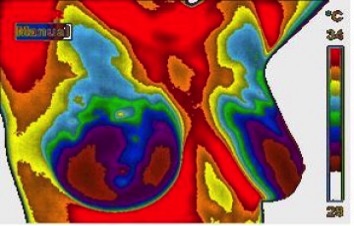
A thermogram image (from http://earlybreastscreen.com/)

Here are The Best Breast Cancer Screening Tests – 6 Reasons Why I Recommend Thermography from Dr. Christiane Northrup, M.D.’s blog:

  1. Good for young, dense breasts and implants. Younger breasts tend to be denser. Thermography doesn’t identify fibrocystic tissue, breast implants, or scars as needing further investigation.
  2.  Detect cell changes in arm pit area. The arm pit area is an area that mammography isn’t always good at screening.
  3.  Great additional test. Thermography can be used as an additional test to help women and their care teams make more informed treatment decisions.
  4.  It Doesn’t Hurt. The pressure of a mammogram machine is equivalent to putting a 50-pound weight on your breast, which can be quite painful for most women.
  5.  No radiation. Another reason the United States Preventative Services Task Force reversed its aggressive mammogram guidelines was because of the exposure to radiation. It’s well known that excessive doses of radiation can increase your risk of cancer. It’s ironic that the test women are using for prevention may be causing the very problem they’re trying to avoid in the first place! And this doesn’t even touch on the harm done to the body from unnecessary biopsies, lumpectomies, mastectomies, chemotherapy, radiation treatment, and so forth.
  6. Thermography is very safe. Thermography is even safe for pregnant and nursing women! It’s merely an image of the heat of your body.

Estrogen dominance as a cause of breast cancer and how to prevent it by eating for hormonal balance

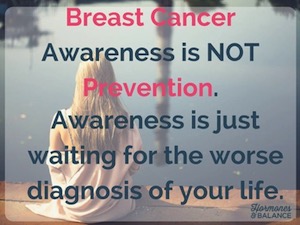
breast-cancer-prevention

Magdalena Wszelaki, founder of Hormones Balance, shares some signs of estrogen dominance as the leading cause of breast cancer: Breast Lumps? Thyroid Nodules? Horrendous PMS? Endometriosis? In her wonderful article: The Breast Cancer and Estrogen Link | 15 Ways to Prevent and Manage Breast Cancer Naturally, she covers how to move from fear to empowerment and prevention by eating for hormonal balance. The article covers estrogen dominance in detail addressing:

  • Most Breast Cancers are not Genetic
  • How Breast Cancer Forms and Multiplies
  • How Estrogen Feeds Cancer
  • Signs of Estrogen Dominance (ED)
  • Not All Estrogens Are Bad

But the big takeaway is that as Magdalena says:

You have more power over your risk of breast cancer than you think. There are many steps you can take to protect yourself. Each one of them has other positive domino effects for your hormonal balance and overall health.

She shares how to rotate seeds into your diet to balance hormone levels, how to increase cruciferous vegetables like kale, broccoli, cauliflower and cabbage and how to love your liver. Here are some of Magdalena’s tips for supporting your liver which she calls the “Estrogen Detox Ally”:

A sluggish liver does not carry out its important job of filtering toxins, chemical byproducts and hormonal metabolites from your body. This can leave you with high circulating levels of the dangerous estrogen metabolites. For Breast Protection:

  • Add bitters in the form of dandelion leaves and root, burdock, chicory root, parsley, radicchio or bitters in tincture form. They stimulate bile production which then helps “flush out” estrogen and other steroid hormones.
  • Add fiber, my favorite being 2 tablespoons of freshly ground golden flax seed. Fiber promotes good bowel movement which is essential in carrying out the toxic estrogens. Chronic constipation can contribute to the re-absorption of antagonistic estrogens back to the blood stream.
  • Add one tablespoon of apple cider vinegar or half a lemon to a glass of warm water and drink it before breakfast in the morning. This helps stimulate the gallbladder to release the bile which is instrumental in “flushing out” estrogen.

Be sure to read the entire article here to read more about gut health, red meat, wine, toxins, inflammation, exercise, smoking, the birth control pill (I also covered this and FAM in a recent blog on the connection to subsequent SSRI use), sleep and finally stress and cuddling!

If you want to learn more I encourage you to check out Magdalena’s no-cost “How to Use Food To Rebalance Your Hormones” Online Workshop.

cooking-for-balance

Avoiding endocrine disruptors and environmental pollutants

My friend and colleague Dr. Heather Paulson is the author of the soon to be released Textbook of Naturopathic Oncology. She is board certified in naturopathic oncology providing expert cancer care while creating a plan that restores health. She integrates her specialization in cancer and her love of nutrition, herbs, homeopathy, counseling, traditional healing, and current research to support you during your cancer journey and for cancer prevention. Dr. Paulson shares this about avoiding endocrine disruptors and environmental pollutants:

Endocrine disruptors are things in our environment that influence our hormonal system. You have probably heard about how plastics have been causing young boys to have feminine breasts. This plastic phenomenon is due to plastic disrupting the endocrine (or hormonal) system in boys. But the endocrine effects of environmental pollutants impacts both men and women. Some of the most common endocrine disruptors you are coming on contact with include plastic, pesticides, fragrances, beauty products, and cleaning products. Eliminating these from your personal environment is a critical piece of cancer prevention that is often missed.

She created this quiz How Toxic Is Your Home to help you see how well you are doing with endocrine disruptors. You can also find several checklists on her website to help you eliminate the necessary chemicals from your kitchen, yard, bedroom, and bathroom.

Boost glutathione levels to support the body’s detoxification channels

green-asparagus


And finally, my friend and colleague (and fellow South African) Kirsten Nussgruber shares the importance of reducing the toxic burden. When faced with the biggest challenge of her life – being diagnosed with aggressive breast cancer twice within a short three year period – Kirsten was forced to completely reevaluate what she believed was already a healthy lifestyle and now advocate for:

  • Eating clean and real food
  • Applying clean cosmetics and skin care products
  • And supporting the body’s detoxification channels

Kirsten shares the role of glutathione and ways to support body’s detoxification channels by boosting glutathione levels, often called your master detoxifier.

In its role as detoxifier it plays a crucial role in helping the body bind and get rid of many environmental toxins such as herbicides, pesticides, fungicides, insecticides, solvents, dyes, plastics, detergents and nitrosamines often found in processed foods.

Glutathione is also known to be cancer-preventing and has been found deficient in cancer patients. It can strengthen natural killer cells, a part of your immune system you want to have ready for action at all times!

In her blog post, she covers glutathione supplementation and shares a list of whole foods that boost glutathione production:
asparagus, acornsquash, avocados, broccoli, cabbage, cantaloupe, garlic, grapefruit, leeks, okra, onions, oranges, peaches, potatoes, spinach, strawberries, tomatoes, walnuts, watermelon, and zucchini.

Don’t be driven by fear and anxiety

As I said in my 2013 Breast Cancer Awareness blog: don’t be driven by fear and anxiety, instead use these wonderful resources as tools so you can be proactive and prevent breast cancer.

If you do get to a place where the anxiety and fear becomes overwhelming, don’t forget about the targeted individual amino acids like GABA and tryptophan for eliminating the anxiety and worry, obsessive thinking, negative self-talk, insomnia and overwhelm.

Here’s to beautiful healthy breasts for you and every woman!

Filed Under: Women's health Tagged With: anxiety, breast cancer, DCIS, detoxification, endocrine disruptors, estrogen dominance, fear, GABA, glutathione, liver support, Prevention, Thermography, toxins, tryptophan

Tryptophan for PMS: premenstrual dysphoria, mood swings, tension, and irritability

July 1, 2016 By Trudy Scott 69 Comments

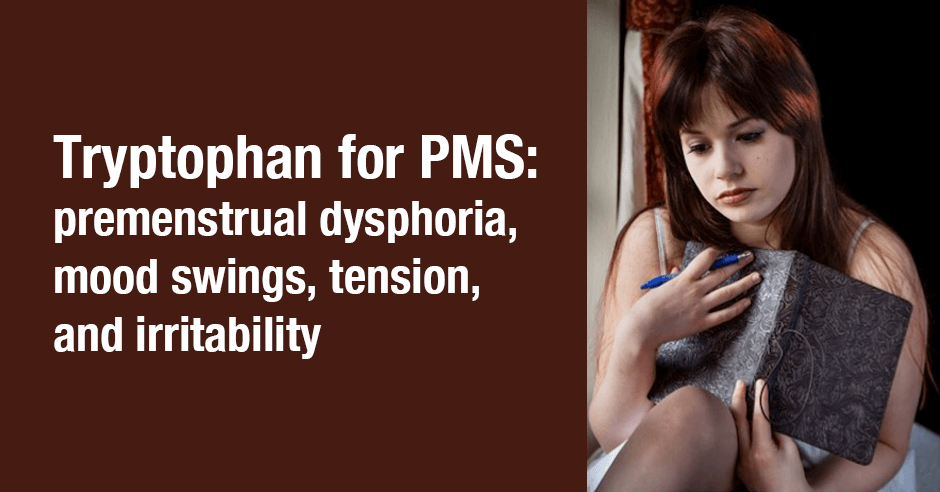
tryptophan for pms

In a study published in 1999, A placebo-controlled clinical trial of L-tryptophan in premenstrual dysphoria, tryptophan was found to reduce symptoms of PMS when used in the luteal phase or second half of the cycle (i.e. after ovulation):

37 patients with premenstrual dysphoric disorder were treated with L-tryptophan 6 g per day, and 34 were given placebo. The treatments were administered under double-blind conditions for 17 days, from the time of ovulation to the third day of menstruation, during three consecutive menstrual cycles.

They looked at dysphoria, which is defined as a state of unease or generalized dissatisfaction with life, plus mood swings, tension (and anxiety), and irritability and they found a 34.5% reduction of symptoms with tryptophan compared to 10.4% with placebo.

The paper concludes:

that these results suggest that increasing serotonin synthesis during the late luteal phase of the menstrual cycle has a beneficial effect in patients with premenstrual dysphoric disorder.

Let me share what I see with the women with PMS that I work with:

  • This is very typical when I’m working with someone with PMS and anxiety and other mood symptoms. It typically takes 2 to 3 cycles for an amino acid like tryptophan to have an impact on PMS itself. But it does typically start to work right away on the less severe anxiety and mood symptoms that may also be a factor during the rest of the month.
  • I don’t start with 6g per day of the tryptophan but rather have each person do the amino acid questionnaire, review the precautions and do a trial of tryptophan, increasing as needed to find the optimal amount for their needs (you can read more about this here on anxiety and the amino acid overview
  • We often find that adding GABA helps too, as this supports progesterone production
  • Many anxious women I work with also have pyroluria or signs of low zinc and low vitamin B6 and adding these nutrients, together with evening primrose oil, provide additional hormonal support (and help with the social anxiety).
  • Other factors to consider with PMS: low total cholesterol (as cholesterol is needed to make hormones), gluten issues, adrenal function and blood sugar control, gut health and the microbiome, and liver support
  • And finally, we can’t forget diet and need to switch to eating a real whole foods diet free from sugar, gluten and caffeine. Coffee and chocolate in the second half of the cycle can be especially problematic for many women

Together with the tryptophan and the above approaches (if needed as we are all so different), it’s not unreasonable to get the reduction of symptoms from 34.5% (as seen with the tryptophan) down to 100%. It breaks my heart when I hear women think they have to live with PMS symptoms when they don’t have to!

Additional resources when you are new to using tryptophan, GABA, and other amino acids as supplements

As always, I use the symptoms questionnaire to figure out if low serotonin or low GABA or other neurotransmitter imbalances may be an issue.

If you suspect low levels of any of the neurotransmitters and do not yet have my book, The Antianxiety Food Solution – How the Foods You Eat Can Help You Calm Your Anxious Mind, Improve Your Mood, and End Cravings, I highly recommend getting it and reading it before jumping in and using amino acids on your own so you are knowledgeable. And be sure to share it with the practitioner/health team you or your loved one is working with.

There is an entire chapter on the amino acids and they are discussed throughout the book in the sections on gut health, gluten, blood sugar control (this is covered in an entire chapter too), sugar cravings, anxiety and mood issues.

The book doesn’t include product names (per the publisher’s request) so this blog, The Antianxiety Food Solution Amino Acid and Pyroluria Supplements, lists the amino acids that I use with my individual clients and those in my group programs.

If, after reading this blog and my book, you don’t feel comfortable figuring things out on your own (i.e. doing the symptoms questionnaire and respective amino acids trials), a good place to get help is the GABA QuickStart Program (if you have low GABA symptoms). This is a paid online/virtual group program where you get my guidance and community support.

If you are a practitioner, join us in The Balancing Neurotransmitters: the Fundamentals program. This is also a paid online/virtual program with an opportunity to interact with me and other practitioners who are also using the amino acids.

Wrapping up and your feedback

Have you used tryptophan for PMS? Do you take it all month or just in the 2nd half of your cycle? What about other changes that have helped: GABA or liver support or quitting caffeine? Or something else?  Please share.

Filed Under: Tryptophan, Women's health Tagged With: anxiety, irritability, mood swings, PMS, premenstrual dysphoria, tension, tryptophan

  • « Go to Previous Page
  • Page 1
  • Interim pages omitted …
  • Page 3
  • Page 4
  • Page 5
  • Page 6
  • Page 7
  • Interim pages omitted …
  • Page 12
  • Go to Next Page »

Primary Sidebar

GABA QuickStart Homestudy

gaba quickstart homestudy

Free Report

9 Great Questions Women Ask about Food, Mood and their Health

You'll also receive a complimentary subscription to my ezine "Food, Mood and Gal Stuff"


Connect with me

Popular Posts

  • Amino Acids Mood Questionnaire from The Antianxiety Food Solution
  • The Antianxiety Food Solution Amino Acid and Pyroluria Supplements
  • Pyroluria Questionnaire from The Antianxiety Food Solution
  • Collagen and gelatin lower serotonin: does this increase your anxiety and depression?
  • Tryptophan for the worry-in-your-head and ruminating type of anxiety
  • GABA for the physical-tension and stiff-and-tense-muscles type of anxiety
  • The Antianxiety Food Solution by Trudy Scott
  • Seriphos Original Formula is back: the best product for anxiety and insomnia caused by high cortisol
  • Am I an anxious introvert because of low zinc and vitamin B6? My response to Huffington Post blog
  • Vagus nerve rehab with GABA, breathing, humming, gargling and key nutrients

Recent Posts

  • Her cravings for chips and peanut butter were triggered by stress: GABA ends cravings and reduces physical tension and fear of heights
  • It is truly miraculous to be able to move through life without crippling anxiety and panic
  • GABA and tryptophan combo provide immediate and noticeable relief for tremors and cervical dystonia in just 7 days
  • Red light therapy for back and neck pain, plantar fasciitis and low mood – a complement to the amino acids GABA, DPA and tryptophan
  • What do I use instead of Seriphos to help lower high cortisol that is affecting my sleep and making me anxious at night?

Categories

  • 5-HTP
  • AB575
  • Addiction
  • ADHD
  • Adrenals
  • Alcohol
  • Allergies
  • Alzheimer's disease
  • Amino Acids
  • Anger
  • Antianxiety
  • Antianxiety Food Solution
  • Antidepressants
  • Anxiety
  • Anxiety and panic
  • Autism
  • Autoimmunity
  • benzodiazapines
  • Bipolar disorder
  • Books
  • Caffeine
  • Cancer
  • Candida
  • Children/Teens
  • Collagen
  • Cooking equipment
  • Coronavirus/COVID-19
  • Cravings
  • Depression
  • Detoxification
  • Diabetes
  • Diet
  • DPA/DLPA
  • Drugs
  • EFT/Tapping
  • EMF
  • EMFs
  • Emotional Eating
  • Endorphins
  • Environment
  • Essential oils
  • Events
  • Exercise
  • Fear
  • Fear of public speaking
  • Fertility and Pregnancy
  • Fish
  • Food
  • Food and mood
  • Functional neurology
  • GABA
  • Gene polymorphisms
  • General Health
  • Giving
  • Giving back
  • Glutamine
  • Gluten
  • GMOs
  • Gratitude
  • Gut health
  • Heart health/hypertension
  • Histamine
  • Hormone
  • Hyperparathyroidism
  • Hypoglycemia
  • Immune system
  • Inflammation
  • Insomnia
  • Inspiration
  • Introversion
  • Joy and happiness
  • Ketogenic diet
  • Lithium orotate
  • Looking awesome
  • Lyme disease and co-infections
  • MCAS/histamine
  • Medication
  • Men's health
  • Mental health
  • Mercury
  • Migraine
  • Mold
  • Movie
  • MTHFR
  • Multiple sclerosis
  • Music
  • NANP
  • Nature
  • Nutritional Psychiatry
  • OCD
  • Osteoporosis
  • Oxalates
  • Oxytocin
  • Pain
  • Paleo
  • Parasites
  • Parkinson’s disease
  • PCOS
  • People
  • PMS
  • Postpartum
  • PTSD/Trauma
  • Pyroluria
  • Questionnaires
  • Real whole food
  • Recipes
  • Research
  • Schizophrenia
  • serotonin
  • SIBO
  • Sleep
  • Special diets
  • Sports nutrition
  • Stress
  • Sugar addiction
  • Sugar and mood
  • Supplements
  • Teens
  • Testimonials
  • Testing
  • The Anxiety Summit
  • The Anxiety Summit 2
  • The Anxiety Summit 3
  • The Anxiety Summit 4
  • The Anxiety Summit 5
  • The Anxiety Summit 6
  • Thyroid
  • Thyroid health
  • Toxins
  • Tryptophan
  • Tyrosine
  • Uncategorized
  • Vegan/vegetarian
  • Women's health
  • Yoga

Archives

  • May 2026
  • April 2026
  • October 2025
  • September 2025
  • August 2025
  • July 2025
  • June 2025
  • May 2025
  • April 2025
  • March 2025
  • February 2025
  • January 2025
  • November 2024
  • October 2024
  • September 2024
  • August 2024
  • July 2024
  • June 2024
  • May 2024
  • April 2024
  • March 2024
  • February 2024
  • January 2024
  • December 2023
  • November 2023
  • October 2023
  • September 2023
  • August 2023
  • July 2023
  • June 2023
  • May 2023
  • April 2023
  • March 2023
  • February 2023
  • January 2023
  • December 2022
  • November 2022
  • October 2022
  • September 2022
  • August 2022
  • July 2022
  • June 2022
  • May 2022
  • April 2022
  • March 2022
  • February 2022
  • January 2022
  • December 2021
  • November 2021
  • October 2021
  • September 2021
  • August 2021
  • July 2021
  • June 2021
  • May 2021
  • April 2021
  • March 2021
  • February 2021
  • January 2021
  • December 2020
  • November 2020
  • October 2020
  • September 2020
  • August 2020
  • July 2020
  • June 2020
  • May 2020
  • April 2020
  • March 2020
  • February 2020
  • January 2020
  • December 2019
  • November 2019
  • October 2019
  • September 2019
  • August 2019
  • July 2019
  • June 2019
  • May 2019
  • April 2019
  • March 2019
  • February 2019
  • January 2019
  • December 2018
  • November 2018
  • October 2018
  • September 2018
  • August 2018
  • July 2018
  • June 2018
  • May 2018
  • April 2018
  • March 2018
  • February 2018
  • January 2018
  • December 2017
  • November 2017
  • October 2017
  • September 2017
  • August 2017
  • July 2017
  • June 2017
  • May 2017
  • April 2017
  • March 2017
  • February 2017
  • January 2017
  • December 2016
  • November 2016
  • October 2016
  • September 2016
  • August 2016
  • July 2016
  • June 2016
  • May 2016
  • April 2016
  • March 2016
  • February 2016
  • January 2016
  • December 2015
  • November 2015
  • October 2015
  • September 2015
  • August 2015
  • July 2015
  • June 2015
  • May 2015
  • April 2015
  • March 2015
  • February 2015
  • January 2015
  • December 2014
  • November 2014
  • October 2014
  • September 2014
  • August 2014
  • July 2014
  • June 2014
  • May 2014
  • April 2014
  • March 2014
  • February 2014
  • January 2014
  • December 2013
  • November 2013
  • October 2013
  • September 2013
  • August 2013
  • July 2013
  • June 2013
  • May 2013
  • April 2013
  • March 2013
  • February 2013
  • January 2013
  • December 2012
  • November 2012
  • October 2012
  • August 2012
  • July 2012
  • June 2012
  • May 2012
  • April 2012
  • March 2012
  • February 2012
  • January 2012
  • December 2011
  • November 2011
  • October 2011
  • September 2011
  • August 2011
  • July 2011
  • June 2011
  • May 2011
  • April 2011
  • March 2011
  • February 2011
  • January 2011
  • December 2010
  • October 2010
  • September 2010
  • July 2010
  • May 2010
  • April 2010
  • March 2010
  • February 2010
  • January 2010
  • November 2009

Share the knowledge!

The above statements have not been evaluated by the Food and Drug Administration. Products listed in this website are not intended to diagnose, treat, cure or prevent any disease.

The information provided on this site is for informational and educational purposes only and is not intended as a substitute for advice from your physician or other health care professional. You should consult with a healthcare professional before starting or modifying any diet, exercise, or supplementation program, before taking or stopping any medication, or if you have or suspect you may have a health problem.


Copyright © 2026 Trudy Scott. All Rights Reserved. | Privacy | Terms and Conditions | Refund Policy | Medical Disclaimer

Free Report

9 Great Questions Women Ask about Food, Mood and their Health

You’ll also receive a complimentary subscription to my ezine “Food, Mood and Gal Stuff”