• Skip to primary navigation
  • Skip to main content
  • Skip to primary sidebar

everywomanover29 blog

Food, Mood and Women's Health – Be your healthiest, look and feel great!

  • Blog
  • About
  • Services
  • Store
  • Resources
  • Testimonials
  • The Book
  • Newsletter
  • Contact
  • Search this site

Pain

Low oxalate success stories: resolution of joint/body pain, insomnia, peripheral neuropathy and can walk without a cane

November 18, 2022 By Trudy Scott 18 Comments

low oxalate success stories

I’d love to hear how switching to a low oxalate way of eating helped you. And what motivated you to go down this path? Was it pain, weakness, low energy, anxiety, insomnia, bladder issues and/or restless legs and painful feet? (or something else?) How quickly did you see results when making the dietary changes? And what would you say to someone who can’t even imagine a better, easier and pain-free life, and really doesn’t want to give up so many foods?

I’ve seen incredible results personally and my painful feet and restless legs/insomnia (and also severe eye pain in one eye) was my motivation. I’m a nutritionist and understand the power of nutrition and know what is possible. But I know it’s tough to grasp for many individuals.

I’m asking for a dear family member who uses a walker and can’t imagine life without her walker and that dietary changes could make a difference.

I posted the above on Facebook and here are some of the few incredible responses I received. I hope they inspire and motivate you if you’re just beginning this low oxalate journey, or if you have a family member you’re trying to inspire, educate and help.

Beth shared how stopping high oxalate foods – beets, sweet potatoes, almonds, swiss chard, and chocolate – enabled her to stop using her cane in just 2 weeks:

I had to use cane by the time I was 28 and could barely hobble. The pain was like ground glass in my joints. To take a flight I had to get a wheelchair at the airport and had to use the electric carts at the grocery because I couldn’t walk or stand due to the excruciating pain. This went on for a few years.

When I learned about oxalates and stopped beets, sweet potatoes, almonds, swiss chard, and chocolate and went down to only medium oxalate foods or lower, I was off the cane in 2 weeks. I didn’t know about dumping, and I got lucky, but now if I eat too many oxalates the only problem I get is pain in my fingers and toes.

I can personally relate to the ground glass pain she describes – the pain in my feet felt like a mix of shards of glass and hot coals. It’s a common description I hear from clients.

You may be familiar with the wonderful work of Beth O’Hara, functional naturopath and founder of Mast Cell 360. She shares this too: “ I see a lot of mold toxicity underlying oxalate issues due to leaky gut, nutrient depletion, and a few other factors.” 

Quick results for insomnia, bloating, stomach pain, peripheral neuropathy, body pain, brain fog, weird rashes and more

Nicola shared these wonderful results and the fact that her symptoms started to resolve quickly:

I had extremely quick results – a couple of days for some symptoms. But the thrill of the slow realization that I wasn’t actually seriously ill and brewing up ever more and newer ways to suffer, was the biggest relief. Lower stress also equals lower pain.

Insomnia first, then bloating, stomach pain, peripheral neuropathy, chest pains, body pain, swollen lymph glands, brain fog, TMJ pains, weird rashes, arthritis type pains in hands/wrists, headaches. The list is too extensive to enumerate. Suffice to say I no longer feel in imminent danger of contracting lymphoma, heart problems, Alzheimer’s etc.

I am 66 years old and I’ve only been on this TLO (trying low oxalates) journey for about 8 months or so and all those issues have mostly been resolved. Kind of magical really. Still dumping oxalates regularly as I had a long way to come having been mostly Paleo for about 8 years previously.

I think we are too quick to resign ourselves to the ‘aging’ process. I find I am getting younger by the month, the longer I am lowering oxalates. I may not look any younger, but to be living without chronic pain is quite the unexpected boon.

I have to agree with Nicola. It is quite magical to get results like this and too often we take for granted that as we age chronic pain is inevitable. As you can see from these stories it is not inevitable and you have much more control than you may realize!

So desperate with pain that she thought she was going to have to quit work

Yvonne found out she had oxalate issues after having DNA testing done. She shares this about her journey and motivation:

I had extreme shoulder pain, grainy eyes and in the end, I couldn’t take my thyroid meds without the shoulder pain or some other pain. I found my way to the group through DNA testing which …suggested that I may have an oxalate problem. I slowly started eating low oxalate, suggested by the TLO group.

I had been primarily consuming high oxalate foods trying to be healthy but my diet wasn’t diverse enough. I was eating nuts, celery, spinach, kale, chocolate and sweet potatoes.

I was cautious after going low oxalate and having my problems relieved. Over time I’ve gone back to eating medium oxalate foods and done well. I do feel like making my own kombucha and drinking it daily has helped.

Dietary oxalate issues are often worse for women as they start to go through perimenopause and into menopause because of lower estradiol levels (more on that below). Yvonne was 65 at the time.

She shares what motivated her to make changes: “I was so desperate with pain that I thought I was going to have to quit work. That’s the reason I had the DNA testing done.”

Belly pain (maybe bladder), left leg pain, scalp itch, eye stinging and itching reduced immediately

Cristina shared what she observed when switching to a low oxalate diet:

Noticed belly pain (maybe bladder), left leg pain, scalp itch, eye stinging and itching reduced immediately. But might have taken a couple of years to really unload excess oxalates. I still get the exact same symptoms if I have high oxalates, particularly carrots, potatoes and nuts.

With much appreciation for these women for sharing their stories and giving me permission to share. I do hope this is inspiring and motivating for you if you are navigating dietary oxalates and can’t yet imagine that a diet change could lead to a better life and symptom-free existence.  I’ll be sharing all this wonderful feedback with my loved one too.

Additional reading about dietary oxalates

If you’re new to the concept of dietary oxalates here are some blog posts for additional reading:

  • Oxalate crystal disease, dietary oxalates and pain: the research & questions (this is a good one to start with if you’re new to dietary oxalates and the issues they can cause)
  • Vulvodynia: oxalates, GABA, tryptophan and physical therapy
  • Vitamin C causes oxalate formation resulting in pain, anxiety, and insomnia (when there is a defect in ascorbic acid or oxalate metabolism)?
  • Waking in the night due to environmental toxins: impacts on the liver, gallbladder and fat digestion (making oxalate issues worse)
  • Increased kidney stones in postmenopausal women with lower estradiol levels. What about increased dietary oxalate issues too?

I’d love to hear how switching to a low oxalate way of eating helped you and which high oxalate foods were you eating?

What motivated you to go down this path? Was it pain, weakness, low energy, anxiety, insomnia, bladder issues and/or restless legs and painful feet (or some other symptoms)?

How quickly did you see results when making the dietary changes?

And what would you say to someone who can’t even imagine a better, easier and pain-free life, and really doesn’t want to give up so many foods?

If you have questions please share them here too.
Filed Under: Insomnia, Oxalates, Pain Tagged With: anxiety, bladder pain, body pain, brain fog, eye pain, grainy eyes, ground glass, hot coals, insomnia, joint pain, low energy, Low oxalate, pain, pain-free, painful feet, peripheral neuropathy, restless legs, scalp itch, walk without a cane, weakness, weird rashes

GABA is a life saver for anxiety, theanine helps at night (insomnia) and 5-HTP makes a significant difference in lessening daily pain

September 16, 2022 By Trudy Scott 16 Comments

aminos help

Joie has Sjogren’s, Hashimoto’s, fibromyalgia & collagenous colitis (all diagnosed after severe mold exposure) and shared how GABA is a life saver for her anxiety, how theanine helps at night with her insomnia and how 5-HTP makes a significant difference in lessening her daily pain. Here is her wonderful feedback in her own words (my feedback for her follows):

I was diagnosed with Sjogrens several years ago. I also have Hashimoto’s, Fibromyalgia & Collagenous Colitis. All of these happened after a severe mold exposure which destroyed my pituitary, and caused Exocrine Pancreatic Insufficiency (EPI). I have to take human growth hormone injections daily, as my pituitary isn’t working, digestive enzymes for the EPI, and have experienced the anxiety and depression you’ve written about.

The GABA has been a life saver for me (for my anxiety), and I share this with all I know who experience anxiety. I also use L-theanine at night because of insomnia. The 5-HTP has helped somewhat for sleep. L-tryptophan didn’t seem to make a difference. However the 5-HTP has made a significant difference in lessening my daily pain levels, which I am most grateful for.

Unfortunately, I am also taking Klonopin and Gabapentin, both of which I have tried to get off of but keep finding myself back on both in order to have greater than 5 hours of sleep at night. Even with these, I often awaken after 4-6 hours and take 1-2 chewable GABA which allows me to go back to sleep and get 2-4 more hours of sleep.

She shared this on the blog, Sjogren’s syndrome: tryptophan and GABA for anxiety, and moisturizing for dry skin and inflammation?, where I write about the prevalence of anxiety and depression in this autoimmune condition, and the fact that serotonin and GABA are often low.

I shared how sorry I was to hear how mold has impacted her but that it was wonderful to hear the GABA has been a lifesaver for you in terms of anxiety (and when waking in the night) and that theanine helps her sleep. It’s wonderful that 5-HTP helps ease her daily pain (here is fibromyalgia research on 5-HTP) and helps somewhat with her sleep issues.

Has she increased the amino acids to the optimal doses for her unique needs?

My question for her was this: “how much of each of these amino acids are you using and have you increased them to the optimal doses for your unique needs?” I asked this because many folks don’t do this and we always want to capitalize on what is working.

Here are some examples that relate to Joie:

  • When 5-HTP helps with pain relief we also do afternoon and bedtime trials to see if it can improve sleep further. And we always explore some of the reasons why serotonin may be low and address those too. You can read more on that here: what causes low serotonin

I shared that tryptophan doesn’t work for everyone and some do better with 5-HTP, but I do also consider melatonin when sleep is an issue, especially timed release to prevent waking in the night.

  • Since GABA is a lifesaver for her in terms of her anxiety and also helps when she wakes, trialing higher doses at bedtime may prevent the early morning waking. The same could be said for trialing a higher dose of theanine and using both GABA and theanine together at night (a 2019 study shows the combination decreases sleep latency and improves NREM sleep).

High cortisol, rebound sleep issues with meds and/or poor fat digestion?

If she has already done the above, I’d explore high cortisol and do a 5-collection an adrenal saliva test). When cortisol is high during the night, the use of Seriphos can be a game-changer for many.

Unfortunately both Klonopin and Gabapentin (especially the former) can cause rebound insomnia even when they seem to be helping in the short-term.

I also mentioned that my recent blog post many be helpful since she mentions exocrine pancreatic insufficiency, which could affect sleep by impacting her fat digestion – Waking in the night due to environmental toxins: impacts on the liver, gallbladder and fat digestion (making oxalate issues worse). This has relevance whether or not oxalates are an issue.

Autoimmune-Paleo (AIP) diet, pyroluria and moisturizing for reducing inflammation

It goes without saying that since Sjogren’s, Hashimoto’s and even Collagenous Colitis are autoimmune conditions, following an Autoimmune-Paleo (AIP) diet is key too. I have links to some AIP resources on the above Sjogren’s blog post.

In this blog I also mention pyroluria which may be relevant for someone with Collagenous Colitis and is crucial to address when there has been toxic mold exposure or other chronic issues like Lyme disease or MCAS. More on this here.

And you can also read about the value of moisturizing for reducing inflammation.

I thanked her and said I plan to share her results and my response as a new blog as I feel it will help others and give hope!

Resources if you are new to using amino acids as supplements

If you are new to using any of the amino acids as supplements, here is the Amino Acids Mood Questionnaire from The Antianxiety Food Solution (you can see all the symptoms of neurotransmitter imbalances, including low serotonin and low GABA).

If you suspect low levels of any of the neurotransmitters and do not yet have my book, The Antianxiety Food Solution – How the Foods You Eat Can Help You Calm Your Anxious Mind, Improve Your Mood, and End Cravings, I highly recommend getting it and reading it before jumping in and using amino acids on your own so you are knowledgeable. And be sure to share it with the practitioner/health team you or your loved one is working with.

There is an entire chapter on the amino acids and they are discussed throughout the book in the sections on gut health, gluten, blood sugar control, sugar cravings, self-medicating with alcohol and more.

The book doesn’t include product names (per the publisher’s request) so this blog, The Antianxiety Food Solution Amino Acid and Pyroluria Supplements, lists the amino acids that I use with my individual clients and those in my group programs. You can find them all in my online store.

If, after reading this blog and my book, you don’t feel comfortable figuring things out on your own (i.e. doing the symptoms questionnaire and respective amino acids trials), a good place to get help is the GABA QuickStart Program (if you have low GABA symptoms). This is a paid online/virtual group program where you get my guidance and community support. Another option is the budget-friendly GABA QuickStart Homestudy Program.

If you need serotonin support, the Serotonin QuickStart Program is a good place to get help. This is also a paid online/virtual group program where you get my guidance on using tryptophan and 5-HTP safely, and community support during 5 LIVE Q&A calls. You can sign up to be notified when the next live launch of this program is happening.

If you are a practitioner, join us in The Balancing Neurotransmitters: the Fundamentals program. This is also a paid online/virtual program with an opportunity to interact with me and other practitioners who are also using the amino acids.

Wrapping up and your feedback

I’d love to hear if GABA helped with your anxiety and insomnia? What about theanine? And 5-HTP for your pain? Or melatonin for sleep?

Have you used taurine with success for fat digestion? Or Seriphos for high cortisol?

What else has helped you with symptoms like these ones?

If you have questions please share them here too.
Filed Under: 5-HTP, Anxiety, GABA, Insomnia, Pain Tagged With: 5-HTP, anxiety, Balancing Neurotransmitters: the Fundamentals program for practitioners, collagenous colitis, depression, Exocrine Pancreatic Insufficiency, Fibromyalgia, GABA, GABA Quickstart program, gabapentin, hashimoto's, Inflammation, insomnia, Klonopin, lessening daily pain, moisturizing, mold exposure, pain, serotonin, Sjogren’s, sleep, theanine, tryptophan

Waking in the night due to environmental toxins: impacts on the liver, gallbladder and fat digestion (making oxalate issues worse)

September 9, 2022 By Trudy Scott 37 Comments

night waking environmental toxins

Today I’m sharing how waking in the night may be caused by oxalate issues that are  made more severe because of home cleaning products, environmental toxins and fragrances/phthalates. It can happen because of the additional detoxification work required and adverse impacts on your liver and gallbladder. This can impact bile production so fat digestion is impaired. And when you have impaired fat digestion this can contribute to more severe oxalate issues because more oxalates are absorbed in the gut. This can lead to increased pain, worsening sleep and/or waking in the night, increased anxiety, fatigue, depression, more severe bladder symptoms, eye problems etc.

Using extra calcium citrate in the night can help in the short term. But improving fat digestion (with lipase, ox bile, taurine, a lipotropic formula, digestive bitters etc.) and supporting the liver/gallbladder is key because it gets to the root of the problem. And of course, avoid the chemical exposure. Sometimes this can’t be done – which is the case when you are traveling – so you have to do your best to reduce exposure.

This is actually my story. I’m traveling in South Africa at the moment and had a flare of my old oxalate issues, with increased foot pain at night, so much so that it was waking me at 3am in the morning. I’d be awake from 3-5am feeling agitated and restless and waiting for the extra calcium citrate to work. I’m a hot mess when I don’t get a solid 8-9 hours sleep so I had to figure out what the issue was and fix it quickly. It was a somewhat convoluted journey (more on that below) but eventually I landed on taurine as the solution and it’s been wonderful to get my solid sleep with no waking in the night!

I do eat a fair amount of fat – plenty of butter on my steamed veggies, olive oil, coconut oil, avocados, the fat from grass-fed meat, chicken skin, full fat cheese and eggs – and didn’t want to cut back.

So when taurine came to the rescue I was thrilled and still am!

I took 500mg before bed the first day and woke briefly twice but went right back to sleep. The second day I took 500mg taurine mid-morning, 500mg taurine mid-afternoon and 500mg before bed (all away from food). That night I woke briefly once and went right back to sleep. The third day I did the same and slept solidly through the night. My goal had been to increase to 3000mg per day but I’ll stick with 1500mg as long as this continues.

There were a few clues that indicated a need for liver-gallbladder support: the 3am waking is classic for liver issues; and my stool had become pale despite nothing else changing.

Impaired fat digestion leads to an increase in oxalate absorption

As mentioned above, when you have impaired fat digestion this can contribute to more severe oxalate issues because more oxalates are absorbed in the gut. This paper, Fat malabsorption induced by gastrointestinal lipase inhibitor leads to an increase in urinary oxalate excretion, summarizes the mechanism well:

Unabsorbed bile acids and fatty acids may react with calcium in the intestinal lumen, forming “soaps” that limit the amount of free calcium binding with oxalate, with a consequent increase in intestinal oxalate absorption leading to hyperoxaluria

In the above study, it’s orlistat (Xenical®), a gastrointestinal lipase inhibitor rather than environmental toxins and bile issues, that causes the increase in oxalates. I share it because it has a helpful explanation of the mechanism.

I share more about my issues with dietary oxalates here – Oxalate crystal disease, dietary oxalates and pain: the research & questions. My main issues in the past have been foot pain and eye pain, with downstream impacts on sleep. This blog has links to a number of other dietary oxalate blogs if this topic is new to you.

Bile production and detoxification

You may recall my wonderful interview with Ann Louise Gittleman on The Anxiety Summit 5: Gut-Brain Axis. The topic was: Why Bile is the Key to Anxiety & Hormone Havoc. I’ll add sleep to that too.

She covered the role of bile in PMS, estrogen imbalance and thyroid health; and importantly, how it’s involved in the removal of toxins from the body:

Bile is the dumping ground for hormones like estrogen. It’s the dumping ground for heavy metals that create anxiety like mercury, as well as too much aluminum and lead. And it’s the dumping ground, also, for a bunch of chemicals. So you got to keep the bile flowing. You have to keep it decongested. You have to thin it out.

She mentions simple tools to improve bile production: bitters (already part of my routine), lemon and water in the morning (also part of my daily routine), coffee (I can’t drink coffee as it makes me anxious), grapefruit and watercress. She also discusses key  nutrients for bile production and quality: choline, inositol, methionine and taurine.

I could not find any lipotropic formula with choline, inositol, methionine (they all had rice flour). And I could not find any products that contained only lipase or ox bile.

While I was looking for something to improve my bile production, I did try a milk thistle extract (for overall liver support) and a liver-gallbladder herbal tincture but both made things worse. So I did some reading on taurine, found a nice taurine only 500mg product and haven’t looked back. Read on for some of the mechanisms.

Taurine and bile acid conjugation and detoxification

Metabolic actions of the amino acid taurine include: “bile acid conjugation, detoxification, membrane stabilization, osmoregulation, and modulation of cellular calcium levels.”

This paper, The Continuing Importance of Bile Acids in Liver and Intestinal Disease, explains the significance of bile acid conjugation with taurine:

After biosynthesis from cholesterol and before excretion from the hepatocyte, bile acid molecules are conjugated with glycine or taurine, which converts a weak acid to a strong acid. As a result, conjugated bile acids are fully ionized at the range of pH values present in the small intestine.

Taurine works on GABA receptors and is a GABA alternative

What is really interesting is that taurine works on GABA receptors and has a synergistic effect with GABA. I suspect this played a role for me too.

In this editorial, Taurine and GABA neurotransmitter receptors, a relationship with therapeutic potential?, the authors share the following::

  • “Taurine exerts its neuronal inhibitory effect through the activation of GABAA receptors (GABAAR) but with less affinity than the specific agonists of each receptor.
  • GABA and taurine act synergistically in extra-synaptic GABA receptors.
  • Some experiments suggest that taurine activates GABAB receptors with high affinity”

In countries where over-the-counter GABA is not available (like the UK, Australia and New Zealand), I will recommend taurine as an option. I don’t find it to be as effective as GABA but it is slightly calming.

You may need to course-correct from time to time

I share this story to illustrate that things can be going well in terms of sleep, pain, anxiety, depression and so on, and then something can happen and you have to course-correct.

I also often hear from folks in my community saying: “GABA and/or tryptophan was working perfectly to help me sleep and all of a sudden it’s no longer working. What is going on?”  A situation like this shows how something else can change and it has nothing to do with the amino acids no longer working.

I do already use GABA, tryptophan (more on these below), melatonin and magnesium at bedtime and continued taking these supplements but I had to fix the root cause – the fat digestion issue.

I will add this: even if you don’t have dietary oxalate issues, this approach may be worth considering if you have no gallbladder, have fat digestion issues, are exposed to environmental toxins, have liver issues and wake in the night.

Resources if you are new to using amino acids as supplements

If you are new to using any of the amino acids as supplements, here is the Amino Acids Mood Questionnaire from The Antianxiety Food Solution (you can see all the symptoms of neurotransmitter imbalances, including low serotonin and low GABA).

If you suspect low levels of any of the neurotransmitters and do not yet have my book, The Antianxiety Food Solution – How the Foods You Eat Can Help You Calm Your Anxious Mind, Improve Your Mood, and End Cravings, I highly recommend getting it and reading it before jumping in and using amino acids on your own so you are knowledgeable. And be sure to share it with the practitioner/health team you or your loved one is working with.

There is an entire chapter on the amino acids and they are discussed throughout the book in the sections on gut health, gluten, blood sugar control, sugar cravings, self-medicating with alcohol and more.

The book doesn’t include product names (per the publisher’s request) so this blog, The Antianxiety Food Solution Amino Acid and Pyroluria Supplements, lists the amino acids that I use with my individual clients and those in my group programs. You can find them all in my online store.

If, after reading this blog and my book, you don’t feel comfortable figuring things out on your own (i.e. doing the symptoms questionnaire and respective amino acids trials), a good place to get help is the GABA QuickStart Program (if you have low GABA symptoms). This is a paid online/virtual group program where you get my guidance and community support.

If you are a practitioner, join us in The Balancing Neurotransmitters: the Fundamentals program. This is also a paid online/virtual program with an opportunity to interact with me and other practitioners who are also using the amino acids.

Have you experienced any adverse symptoms when exposed to environmental toxins? And has this made your oxalate issues worse or affected your fat digestion?

Have you used taurine with success? How much helps you?

Have other liver or gallbladder approaches also helped?

If you have questions please share them here too.
Read all posts in this series:

  • Coronavirus and vitamin C for immune support: new pain or more severe pain due to oxalate issues? (part 1)
  • Oxalate crystal disease, dietary oxalates and pain: the research & questions (part 2)
  • Vitamin C causes oxalate formation resulting in pain, anxiety, and insomnia (when there is a defect in ascorbic acid or oxalate metabolism)? (part 3)
  • Willow’s survival story: Easter Lilies cause acute renal failure in cats and Peace Lilies cause oxalate issues (part 4)
  • Waking in the night due to environmental toxins: impacts on the liver, gallbladder and fat digestion (making oxalate issues worse) (part 5)

Filed Under: GABA, Insomnia, Oxalates, Pain Tagged With: anxiety, Balancing Neurotransmitters: the Fundamentals program for practitioners, bile, bladder symptoms, calcium citrate, depression, detoxification, digestive bitters; GABA Quickstart program, environmental toxins, eye problems, fat digestion, fatigue, fragrances, gallbladder, home cleaning products, insomnia, lipase, lipotropic formula, liver, ox bile, oxalates, pain, phthalates, sleep, taurine, Waking in the night

Non-celiac gluten sensitivity manifestations outside the gut: foggy mind, depression, anxiety, neuropathy, joint pain, headache, fatigue and IBS

July 1, 2022 By Trudy Scott 2 Comments

non-celiac gluten sensitivity

Celiac disease is “a digestive and autoimmune disorder that can damage your small intestine. People with celiac disease might experience symptoms like diarrhea, bloating, gas, anemia and growth issues. Celiac disease can be triggered by a protein called gluten. Gluten is found in grains, like wheat, barley and rye” (and oats that are contaminated with gluten). This description by the Cleveland Clinic is well-understood and recognized.

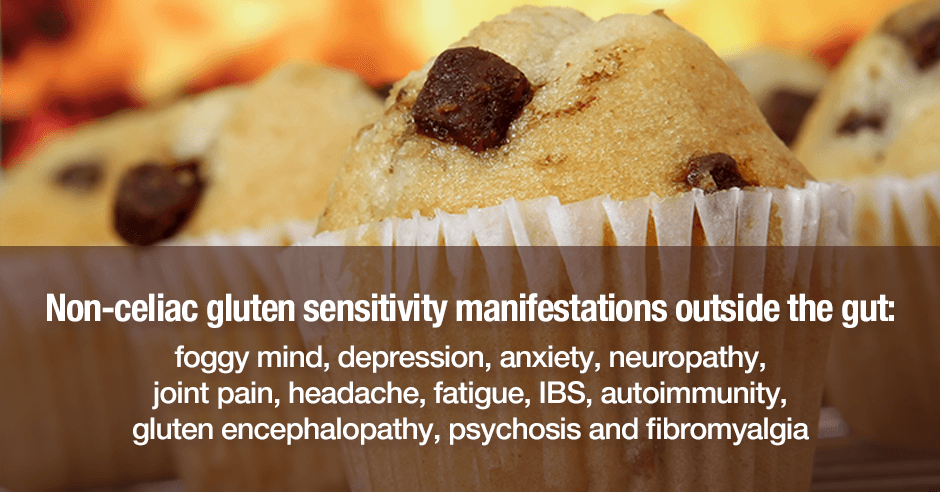
However, what is less recognized and understood, is extra-intestinal (or outside the gut) manifestations of non-celiac gluten sensitivity.  A paper published in 2018, Extra-intestinal manifestations of non-celiac gluten sensitivity: An expanding paradigm lists a number of symptoms and conditions that gluten consumption may cause and/or contribute to, even when you do not have celiac disease.

These can include: ‘foggy mind’; psychiatric diseases such as depression, anxiety and even psychosis; gluten ataxia, gluten neuropathy and gluten encephalopathy (causing memory and cognitive problems); joint and muscle pain, and leg or arm numbness; headache and fatigue;  irritable bowel syndrome (IBS); autoimmune disorders; and and fibromyalgia.

This blog post highlights excerpts from the 2018 non-celiac gluten sensitivity paper and stories from real people who have experienced relief when removing gluten from their diets. And resources if you find you need neurotransmitter support to help break the addiction and not feel deprived.

This is from the abstract of the above paper:

Non celiac gluten sensitivity (NCGS) is a syndrome characterized by a cohort of symptoms related to the ingestion of gluten-containing food in subjects who are not affected by celiac disease (CD) or wheat allergy. The possibility of systemic manifestations in this condition has been suggested by some reports.

  • In most cases they are characterized by vague symptoms such as ‘foggy mind’, headache, fatigue, joint and muscle pain, leg or arm numbness even if more specific complaints have been described.
  • NCGS has an immune-related background. Indeed there is strong evidence that a selective activation of innate immunity may be the trigger for NCGS inflammatory response. The most common autoimmune disorders associated with NCGS are Hashimoto thyroiditis, dermatitis herpetiformis, psoriasis and rheumatologic diseases.
  • A possible neurological involvement has been underlined by NCGS association with gluten ataxia, gluten neuropathy and gluten encephalopathy.
  • NCGS patients may show even psychiatric diseases such as depression, anxiety and psychosis.
  • Finally, a link with functional disorders (irritable bowel syndrome and fibromyalgia) is a topic under discussion.

We see all this clinically so it’s wonderful to see this being addressed in the research. However, the authors are saying we need more research and better studies:

the novelty of this matter has generated an expansion of literature data with the unavoidable consequence that some reports are often based on low levels of evidence. Therefore, only studies performed on large samples with the inclusion of control groups will be able to clearly establish whether the large information from the literature regarding extra-intestinal NCGS manifestations could be supported by evidence-based agreements.

Until then we use what we know works clinically: a gluten-free diet and observation of symptom resolution. We also use amino acids to balance brain chemicals so we break the addiction and don’t feel deprived (more on that below). Nutritional deficiencies caused by damage to the gut/leaky gut also need to be addressed, as well as healing the leaky gut and dysbiosis.

I shared the study abstract on Facebook asking for feedback and the response was so overwhelming that I can only share some of the feedback. I will do follow-up posts sharing more detailed information from their healing journeys.

Caroline had bloating, pain and chronic sadness, and discovered  “joie de vivre”

Caroline confirmed that she has gluten sensitivity saying she stopped eating wheat in 2011:

Within a few months, my chronic sadness disappeared and I discovered the “joie de vivre”. It also allowed me to get rid of my swelling belly (bloating). Every evening I looked like a woman 2-3 months pregnant. [this likely falls into the irritable bowel syndrome category mentioned in the paper]

The pain in my joints also ended up disappearing.

I read so much about gluten once I started to realize it had changed my life to quit eating that stuff that now I’m convinced grains shouldn’t be part of human food, and I mean all grains (botanically speaking).

I think grains should at least be taken off all the menus in all hospitals, especially the psychiatric ones.

I adore her “joie de vivre” feedback and am so happy for her! I had this same feeling of pure joy when I went gluten-free. And I get so much feedback like this from clients who had no idea life could be so much better.

I also agree with her sentiment about gluten and grains being an issue too, especially in psychiatric settings.

Daphne was emotionally dysregulated with negative feelings and a pressure headache

Daphne shared what she calls an odd effect that she gets soon after eating bread: roiling emotions:

I get emotionally dysregulated. Negative feelings surface in various degrees, for me primarily anger and the reviewing of the incidents that caused it (aka ruminating thoughts?); less often sadness, disappointment, and overwhelm (that usually surfaces on its own anyway).

I also get what I call ‘bread head.’ I get a pressure headache from between my eyebrows, up the center of my head to my crown.

An additional effect: ‘the hangover’. Overnight the pressure headache subsides and the next day my whole head feels heavy and I am slower physically and mentally, and my hands in particular are achy

Also, I have had chicken bumps on my skin my whole life, until I stopped eating bread. I still have some, maybe from rice, potato and corn reactions. Starch is not my friend.

As I mentioned above, many folks are surprised at the emotional changes they see when eating gluten. Daphne called it an odd effect but her response is a very typical extra-intestinal (outside the gut) psychiatric response. And yes starches and grains are an issue for many folks.

Other feedback: fibromyalgia pain, brain fog, depression, cystic acne, anxiety, body aches, fatigue, PCOS and hypothyroidism

Here is some feedback from a few other women. As you can see the symptoms can vary per person:

  • “Removal of gluten and all grains has improved my fibromyalgia pain symptoms … The difference in pain was so dramatic that it was worth it.”
  • “It makes such a difference with my brain fog and depression! And cystic acne. If I have gluten, I have cystic acne for about 2 weeks.”
  • “My joint pain, anxiety, and depression are much improved when I avoid gluten (and corn.)”
  • “Yes! Within 15 min of ingesting gluten containing food I get all over body aches, fatigue and brain fog. It’s very unpleasant. I cut gluten out of my diet simply because I can’t function properly while eating it. I also have had episodes of reactive hypoglycemia from it too.”
  • “Removing gluten has cured my hypothyroidism. Also has improved my PCOS, anxiety and depression.”

Stay tuned for a follow-up blog with more from their healing journeys and additional insights from me.

Using the amino acids to help break the gluten addiction and feel less deprived

Sometimes it’s difficult to figure out why you crave or are addicted to gluten. It can be challenging to determine which part of your brain chemistry it’s affecting, and you may not associate cravings with mood issues.

Your drug-of-choice is something you self-medicate with and it is something that makes you feel good or “normal.” It could be starchy gluten-containing foods like bread or pasta or cookies. It could also be candy, chocolate, ice-cream, coffee, sodas, wine/beer, cigarettes, marijuana, a prescription medication like Prozac, street drugs, or even shopping or exercise.

Cravings for these substances (or behaviors) typically indicate a brain chemistry imbalance, so it’s very helpful to identify how the substances you crave affect you. This will help you determine which amino acids you might supplement to address the imbalance.

Use your “drug-of-choice” from your gluten or grain list (perhaps you love bread or chocolate chip muffins) and the chart below to help you determine what brain chemistry imbalance may be affecting you and which amino acid you may benefit from.

How you feel before How you feel after Brain chemistry imbalance Amino acid to supplement
Anxious or stressed Calm or relaxed Low GABA GABA
Depressed or anxious Happy or content Low serotonin Tryptophan or 5-HTP
Tired or unfocused Energetic, alert, or focused Low catecholamines Tyrosine
Wanting a reward or sad Rewarded or comforted Low endorphins DPA (d-phenylalanine)
Irritable and shaky Grounded or stable Low blood sugar Glutamine

Once you address that brain chemical imbalance, it’s easy to quit and you won’t feel deprived.

You can read more about why you crave on this blog post

Resources if you are new to using the amino acids as supplements

If you are new to using any of the amino acids as supplements, here is the Amino Acids Mood Questionnaire from The Antianxiety Food Solution (you can see all the symptoms of neurotransmitter imbalances).

If you suspect low levels of any of the neurotransmitters and do not yet have my book, The Antianxiety Food Solution – How the Foods You Eat Can Help You Calm Your Anxious Mind, Improve Your Mood, and End Cravings, I highly recommend getting it and reading it before jumping in and using amino acids on your own so you are knowledgeable. And be sure to share it with the practitioner/health team you or your loved one is working with.

There is an entire chapter on the amino acids and they are discussed throughout the book in the sections on gut health, gluten, blood sugar control, sugar cravings, self-medicating with alcohol and more. There is also an entire chapter on gluten and grains if this is new to you.

The book doesn’t include product names (per the publisher’s request) so this blog, The Antianxiety Food Solution Amino Acid and Pyroluria Supplements, lists the amino acids that I use with my individual clients and those in my group programs.

If, after reading this blog and my book, you don’t feel comfortable figuring things out on your own (i.e. doing the symptoms questionnaire and respective amino acids trials), a good place to get help is the GABA Quickstart Program (if you have low GABA symptoms). This is a paid online/virtual group program where you get my guidance and community support. There are many moms in the program who are having much success with their kids.

If you are a practitioner, join us in The Balancing Neurotransmitters: the Fundamentals program. This is also a paid online/virtual program with an opportunity to interact with me and other practitioners who are also using the amino acids.

With much appreciation for these women for sharing their stories. I’d love to get some of these published as case studies to further add to the evidence.

Do you have (or suspect you may have) non celiac gluten sensitivity (NCGS)?

And has gluten removal resolved any of the above issues? And have you seen an improvement in gut issues too?

Have you observed other improvements since eating gluten and/or grain-free?

Did you find the amino acids helped you break your addiction and feel less deprived?

Or are you stuck and still eating gluten and have no idea where to start on quitting? If this is you, would a webinar series help?

If you have questions please share them here too.
Filed Under: Anxiety, Endorphins, GABA, Gluten, Pain, serotonin Tagged With: "joie de vivre", addiction, amino acids, anxiety, Autoimmunity, bloating, body aches, brain fog, celiac, cystic acne, depression, deprived, emotionally dysregulated, extra-intestinal, fatigue, Fibromyalgia, foggy mind, GABA, GABA Quickstart program, gluten, gluten encephalopathy, headache, hypothyroidism, IBS, joint pain, NCGS, negative feelings, neuropathy, Non-celiac gluten sensitivity, outside the gut, PCOS, psychosis, sadness, wheat

What is the difference between DPA and DLPA (amino acids) and which one do I use for weepiness, heart-ache, pain and energy?

March 11, 2022 By Trudy Scott 75 Comments

dpa and dlpa

Today we address a very common question I get: “What is the difference between DPA and DLPA?” The follow-up question is this: “And what symptoms do they help with?” These are both amino acids that help to boost certain feel-good neurotransmitters. DPA (d-phenylalanine) supports endorphins, whereas DLPA (dl-phenylalanine) supports both endorphins (to a lesser extent than DPA) and catecholamines (to a lesser extent than tyrosine).

Depending on your imbalances and symptoms, they could help with weepiness, heart-ache, comfort eating, emotional support, pain relief, better focus and energy, and even improved motivation.  

I mostly recommend DPA (which I call a-hug-in-a-bottle) and share the reasons why below, but some people do really well with DLPA. It’s a matter of figuring out the best one and dose for your unique needs.

DPA for low endorphin symptoms

DPA (d-phenylalanine) is an amino acid that destroys the enzyme that breaks down endorphins. Endorphins are feel-good chemicals that you experience with an endorphin rush when you go for a run or when someone gives you a big hug, when you show kindness to someone or an individual does something nice for you.

Taking the amino acid, DPA, as a supplement helps to raise your endorphins and helps when you feel weepy and overly emotional and reduces the need to self-medicate with treats as a reward or for comfort.

This amino acid is a favorite with so many of my clients and community because it makes them feel so lovely … a warm and fuzzy feeling. I often call it a-hug-in-a-bottle!

Here are the low endorphin symptoms I have my clients rate if they are considering a trial of DPA:

  • Heightened sensitivity to emotional pain
  • Heightened sensitivity to physical pain
  • Crying or tearing up easily
  • Eating to soothe your mood, or comfort eating
  • Really, really loving certain foods, behaviors, drugs, or alcohol
  • Craving a reward or numbing treat

Tyrosine for low catecholamine symptoms

Tyrosine is the amino acid that boosts catecholamines and helps with focus, motivation, energy (especially when you crave carbs for energy) and the blah kind of depression. It’s wonderful for helping you easily quit coffee/caffeine (when you are using it to “self-medicate” due to low catecholamines). It also provides support for the thyroid.

Here are the low catecholamine symptoms I have my clients rate if they are considering a trial of the amino acid tyrosine:

  • Depression and apathy
  • Easily bored
  • Lack of energy
  • Lack of focus
  • Lack of drive and low motivation
  • Attention deficit disorder
  • Procrastination and indecisiveness
  • Craving carbs, alcohol, caffeine, or drugs for energy

DLPA for both low endorphin and low catecholamine symptoms

If someone has both low endorphin and low catecholamine symptoms, a trial of DLPA could be considered.  DLPA supports both endorphins (to a lesser extent than DPA alone) and also catecholamines (to a lesser extent than tyrosine used alone). You could think of it as doing half and half of each.

Low endorphin symptoms:

  • Heightened sensitivity to emotional pain
  • Heightened sensitivity to physical pain
  • Crying or tearing up easily
  • Eating to soothe your mood, or comfort eating
  • Really, really loving certain foods, behaviors, drugs, or alcohol
  • Craving a reward or numbing treat

And low catecholamine symptoms:

  • Depression and apathy
  • Easily bored
  • Lack of energy
  • Lack of focus
  • Lack of drive and low motivation
  • Attention deficit disorder
  • Procrastination and indecisiveness
  • Craving carbs, alcohol, caffeine, or drugs for energy

Why I prefer my clients use DPA and tyrosine, rather than DLPA

Many people do well with DLPA (you can read one example below) but over the years I have streamlined my amino acid recommendations and seldom suggest DLPA. Here are the reasons why I prefer DPA:

  • DPA is not stimulating and doesn’t affect sleep. However, DLPA can be stimulating for anxious folks (and the majority of my clients have anxiety). For this reason, DLPA can not be used later than 3pm as it can affect sleep and for some folks with really bad sleep issues it can’t be tolerated later than mid-morning (in a similar way to tyrosine).
  • I like to have clients use DPA alone so we can clearly identify the benefits they are experiencing for their low endorphin symptoms and then use tyrosine alone so we can clearly identify their low catecholamine benefits.
  • There are no precautions or contraindications with DPA. However, DLPA has the same precautions as tyrosine. This limits using it for endorphin support. These are the precautions:
    • Overactive thyroid/Grave’s disease: tyrosine, DLPA (avoid)
    • Phenylketonuria (PKU): tyrosine, DLPA (avoid)
    • Melanoma: tyrosine, DLPA (avoid)
    • High Blood pressure: tyrosine, DLPA (watch)
    • Migraine headaches: tyrosine, DLPA (watch)
    • Bipolar disorder: tyrosine, DLPA, glutamine (watch)
  • The women I work with who do have low endorphin symptoms have reported superior benefits from DPA compared to DLPA, especially for emotional pain and emotional eating.
  • Some folks can’t tolerate tyrosine and these same folks have a hard time with DLPA.

The one disadvantage with DPA is that it’s not as widely and readily available as DLPA. It often needs to be purchased online (I list some brands below).

Here is some feedback from folks to give you an idea how these amino acids have helped them.

As you’ll see, there are some individuals who do well with DLPA so it’s really a matter of looking at the symptoms and doing a trial.

DPA helps Missy with weepiness and a deep heart-ache (and tastes like dark chocolate)

Missy shares how DPA helped her deep heart-ache sort of feeling:

I have found I was using this product incorrectly. If you are feeling fine, you do not feel much of anything from it. But today I was weepy and felt that deep, heart-ache sort of feeling. I chewed 1000 mgs (2 capsules) and it DID help lift that awful feeling within 15 minutes.

Notice that she said if you’re feeling fine you don’t feel much at all. This is true of all the amino acids – they only make a difference when you need them.

Missy said that she chewed the capsule, however around 2019, the gelatin capsule was replaced with a cellulose capsule. It’s much more palatable when it’s opened up into the mouth. I blog more about opening the capsule here.

She also reported what about half my clients say:

Tastes like slightly bitter dark chocolate 🙂

The remainder of my clients don’t like the taste at all, although many say the taste grows on them. I’ve always been in the dark chocolate camp and find it quite pleasant tasting.

DLPA helps Toby with energy and pain relief (he has CFS and fibromyalgia)

Toby has a diagnosis of CFS (chronic fatigue syndrome) and fibromyalgia and shared how DLPA helps him:

I’ve played around with (I think) all variations of these aminos and have found unequivocally (in the sense of definite and fast observable changes as opposed to none) that DLPA is the one that works for me. I have wondered what that means. I am male, 45, diagnosed with CFS and fibromyalgia and have speculated that in lay terms the DLPA gives me a bit of energy and pain relief (endorphins). Is that a logical conclusion?

He posted an image of the DLPA product he used and said this:

After putting it on my tongue, very quickly I get an agreeable boost in energy and pain relief. I have not experienced this with DPA or tyrosine.

Based on what I’ve covered above with the symptoms you can see that Toby has made a very logical conclusion. He is getting both endorphin support (the pain relief) and catecholamine support (the energy).

Resources if you are new to using DPA or DLPA as supplements

If you are new to using the amino acids DPA or DLPA as supplements, here is the Amino Acids Mood Questionnaire from The Antianxiety Food Solution (you can see the low endorphin and low catecholamine symptoms.)

If you suspect low levels of endorphins and/or low levels of catecholamine and do not yet have my book, The Antianxiety Food Solution – How the Foods You Eat Can Help You Calm Your Anxious Mind, Improve Your Mood, and End Cravings, I highly recommend getting it and reading it before jumping in and using amino acids on your own so you are knowledgeable. And be sure to share it with the team you or your loved one is working with. Blog posts like this are intended to add value to the chapter on amino acids, which contains detailed information on doses and time of the day for dosing.

The book doesn’t include product names (per the publisher’s request) so this blog, The Antianxiety Food Solution Amino Acid and Pyroluria Supplements, lists the DPA and DLPA products that I use with my individual clients and those in my group programs.

For DPA I have used the Lidtke Endorphigen product for years and it’s a firm favorite with my clients (and I’ve used it myself).

I recently purchased  a bottle of Doctor’s Best D-Phenylalanine to test and it works just as well as the Lidtke product.

If you are a practitioner, join us in The Balancing Neurotransmitters: the Fundamentals program. It’s an opportunity to interact with me and other practitioners who are also using the amino acids.

Do you have any of the low endorphin and/or low catecholamine symptoms and have you seen benefit with DPA, DLPA and/or tyrosine?  If yes, please share what benefits.

Has this blog provided clarification on DPA vs DLPA, and will you be changing how you use these amino acids going forward?

If you’re a practitioner please share what you use with clients/patients.

Feel free to ask your questions here too.

Filed Under: Amino Acids, Emotional Eating, Pain, Women's health Tagged With: amino acids, anxiety, anxious, catecholamines, cfs, comfort eating, d-phenylalanine, Dark chocolate, dl-phenylalanine, DLPA, DPA, emotional support, endorphins, energy, Fibromyalgia, focus, heart-ache, hug, insomnia, motivation, neurotransmitters, pain, symptoms, tyrosine, weepiness, What is the difference between DPA and DLPA

Trigeminal neuralgia and anxiety: GABA, tryptophan, St. John’s Wort, acupuncture, DPA, gluten, herpes and Lyme disease

December 31, 2021 By Trudy Scott 30 Comments

trigeminal neuralgia and anxiety

I get a surprisingly high number of questions about trigeminal neuralgia asking if there is a role for the amino acids GABA or tryptophan to help ease some of the nerve and associated face pain. It’s surprising because trigeminal neuralgia is considered a rare neurological disorder.

Nerve pain is not my area of expertise (anxiety is), and because anxiety and depression is common in this population, there are very likely similar underlying causes (more on that below). The targeted individual amino acids that we use for anxiety, also help to ease pain, so I’m sharing some of what I know in case it helps you or a loved one.

Read on to learn more about this condition and GABA, tryptophan, DPA, acupuncture, St. John’s Wort, Lyme disease, herpes and B vitamins.

About trigeminal neuralgia and the incidence

The NIH fact sheet defines trigeminal neuralgia (TN) as

a chronic pain condition that affects the trigeminal or 5th cranial nerve, one of the most widely distributed nerves in the head. TN is a form of neuropathic pain (pain associated with nerve injury or nerve lesion.) The typical or “classic” form of the disorder (called “Type 1” or TN1) causes extreme, sporadic, sudden burning or shock-like facial pain that lasts anywhere from a few seconds to as long as two minutes per episode.  These attacks can occur in quick succession, in volleys lasting as long as two hours.  The “atypical” form of the disorder (called “Type 2” or TN2), is characterized by constant aching, burning, stabbing pain of somewhat lower intensity than Type 1.  Both forms of pain may occur in the same person, sometimes at the same time. The intensity of pain can be physically and mentally incapacitating.

The incidence of new cases is approximately 12 per 100,000 people per year and women are impacted more than men.

A number of studies show anxiety, depression and insomnia are common when someone has trigeminal neuralgia. The question is this – is the pain causing the anxiety, depression and insomnia OR are there common underlying physiological causes for both. It’s likely a combination of both especially when it comes to idiopathic trigeminal neuralgia i.e. when there is no known cause. Known causes include head injury, multiple sclerosis, dental procedures, tumors and cysts.

By using some of the approaches outlined below, we may see pain relief and improved mood, less severe anxiety and better sleep.

When to consider GABA and serotonin support

There is no research on either GABA or tryptophan/5-HTP helping with symptoms of trigeminal neuralgia, however medications that work on both GABA and serotonin are typically prescribed for trigeminal nerve pain. For this reason I would consider a trial of GABA and/or tryptophan (or 5-HTP if other low GABA physical anxiety symptoms and low serotonin worry-type anxiety symptoms are also present. You can find the symptoms list here.

There is research-based and clinical evidence that GABA and serotonin support help with other types of pain:

  • Tryptophan ends TMJ pain, headaches and worry, and improves mood and sleep: a success story
  • GABA lozenge relieves excruciating pelvic floor/rectal pain and spasms within 30 seconds: a solution for proctalgia fugax

Both help with the anxiety, low mood and insomnia that is often present with pain conditions like this.

St. John’s Wort for nerve pain and mood

In one case report, Hypericum perforatum (St. John’s Wort) as a possible therapeutic alternative for the management of trigeminal neuralgia (TN), a 53-year-old Hispanic female patient with a history of trigeminal neuralgia used an over-the-counter preparation of St. John’s Wort and found it relieved her pain completely.

St. John’s Wort is a herb that is primarily “used for depression but also is used for rheumatism, gastroenteritis, headache and neuralgias. ” This case report is one of many studies on this herb and trigeminal neuralgia and other neuralgias (nerve pain).

It has anti-inflammatory and antioxidant effects and also supports serotonin and GABA production which further supports the above recommendations to trial the amino acids.  GABA and tryptophan would also be safe options if St. John’s Wort can’t be used as in the case of blood thinners, the birth control pill and other medications

Pain relief with endorphin support: acupuncture and DPA

Acupuncture offers pain relief via endorphin boosting and can be an option for the treatment of  trigeminal neuralgia, also offering relief for the “secondary myofascial pain associated with it.”

DPA (d-phenylalanine) is an endorphin-boosting amino acid that may also offer some pain relief. It can also be used to wean off prescription pain medication and improve sleep.

Other research-based pain-relief approaches for trigeminal neuralgia

Physical therapy, chiropractic care, using a custom dental appliance, and addressing myofacial pain may offer relief or be part of the solution.

There are some less recognized approaches too:

  • Photobiomodulation on trigeminal neuralgia: systematic review “Photobiomodulation appears to be as effective as conventional therapies” that include medications and surgery and yet without the side-effects. Photobiomodulation, also known as red light therapy, is also beneficial for anxiety and mood regulation.
  • Palmitoylethanolamide and Its Formulations on Management of Peripheral Neuropathic Pain – Palmitoylethanolamide (shortened to PEA) “has anti-inflammatory and anti-hyperalgesic effects, due to the down-regulation of activation of mast cells”
  • Therapeutic potential of cannabinoids in trigeminal neuralgia – there is growing evidence that “cannabinoids may be effective in alleviating neuropathic pain and hyperalgesia [extreme pain sensitivity]” via “inhibiting neuronal transmission in pain pathways.”

All of the above can also improve mood and insomnia and reduce anxiety too.

Other factors to consider: B vitamins, Lyme disease, herpes and gluten

As with any condition, a full functional medicine work up should be done to rule out and/or address gluten issues, low vitamin B6/B1/B12, and even herpes zoster and Lyme disease as a root cause (or contributing factor).

Current approaches and emerging interventions – disappointing for a 2021 paper

I was excited to read the title of this paper, Trigeminal Neuralgia: Current Approaches and Emerging Interventions, published late this year. The authors share that it “summarizes over 150 years of collective clinical experience in the medical and surgical treatment of trigeminal neuralgia.”

What is disappointing is there is no mention of any of the approaches listed in this blog. It’s published by neurosurgeons so it is understandable that they would say: “The first-line treatment remains anticonvulsant medical therapy. Patients who fail this have a range of surgical options available to them.”

Medications and/or surgical options may work well for you but if not, you need to know there are other options. You may also be looking for a medication-free or non-invasive approach.

Keep in mind that this is what you’ll be offered unless you work with a functional medicine practitioner.

I do agree with and am encouraged by these statements:

  • What is increasingly clear is that there is no catch-all medical intervention that is effective for all patients with trigeminal neuralgia, likely reflective of the fact that it is likely a heterogenous group of disorders that jointly manifests in facial pain.
  • Ultimately, elucidation of the molecular mechanisms underlying trigeminal neuralgia will pave the way for novel, more effective and less invasive therapies.

Complementary approaches: NIH fact sheet

What is encouraging is that the NIH fact sheet I link to above, does mention low-impact exercise, yoga, creative visualization, aromatherapy and meditation.

Other than the standard medications (carbamazepine, oxcarbazepine, topiramate, gabapentin, pregabalin, clonazepam, phenytoin, lamotrigine and valproic acid and tricyclic antidepressants such as amitriptyline or nortriptyline) and surgical options they do also mention acupuncture, chiropractic, biofeedback and nutrients.

Botox is listed too but I have concerns about this approach.

This blog is not intended to be a comprehensive approach for pain relief for trigeminal neuralgia but rather some options you can consider and explore with your practitioner – especially when you also have anxiety, depression and insomnia too.

Resources if you are new to using tryptophan/5-HTP, GABA and DPA as supplements

If you are new to using the amino acids as supplements, here is the Amino Acids Mood Questionnaire from The Antianxiety Food Solution (you can see the low serotonin, low GABA and low endorphin symptoms) and a brief overview here: Anxiety and targeted individual amino acid supplements: a summary.

If you suspect low levels of any of the neurotransmitters and do not yet have my book, The Antianxiety Food Solution – How the Foods You Eat Can Help You Calm Your Anxious Mind, Improve Your Mood, and End Cravings, I highly recommend getting it and reading it before jumping in and using amino acids so you are knowledgeable. And be sure to share it with the team you or your loved one is working with.

The book doesn’t include product names (per the publisher’s request) so this blog, The Antianxiety Food Solution Amino Acid and Pyroluria Supplements, lists the amino acid products that I use with my individual clients and those in my group programs.

Has any of the above approaches helped you or your loved one? If not, what has helped you?

What conventional treatment have you had and did it help? Were you offered any of the above non-medication and non-surgical treatment approaches?

If you’re a practitioner, has any of this helped? Please share your treatment approaches too.

Feel free to ask your questions here too.

Filed Under: Anxiety, GABA, Pain, serotonin, Tryptophan Tagged With: Acupuncture, anxiety, B vitamins, cannabinoids, depression, DPA, endorphin, face pain, GABA, gluten, herpes, insomnia, Lyme Disease, mood, nerve pain, pain relief, PEA, photobiomodulation, St. John’s Wort, trigeminal neuralgia, tryptophan

  • « Go to Previous Page
  • Page 1
  • Page 2
  • Page 3
  • Page 4
  • Page 5
  • Page 6
  • Go to Next Page »

Primary Sidebar

GABA QuickStart Homestudy

gaba quickstart homestudy

Free Report

9 Great Questions Women Ask about Food, Mood and their Health

You'll also receive a complimentary subscription to my ezine "Food, Mood and Gal Stuff"


Connect with me

Popular Posts

  • Amino Acids Mood Questionnaire from The Antianxiety Food Solution
  • The Antianxiety Food Solution Amino Acid and Pyroluria Supplements
  • Pyroluria Questionnaire from The Antianxiety Food Solution
  • Collagen and gelatin lower serotonin: does this increase your anxiety and depression?
  • Tryptophan for the worry-in-your-head and ruminating type of anxiety
  • GABA for the physical-tension and stiff-and-tense-muscles type of anxiety
  • The Antianxiety Food Solution by Trudy Scott
  • Seriphos Original Formula is back: the best product for anxiety and insomnia caused by high cortisol
  • Am I an anxious introvert because of low zinc and vitamin B6? My response to Huffington Post blog
  • Vagus nerve rehab with GABA, breathing, humming, gargling and key nutrients

Recent Posts

  • Her cravings for chips and peanut butter were triggered by stress: GABA ends cravings and reduces physical tension and fear of heights
  • It is truly miraculous to be able to move through life without crippling anxiety and panic
  • GABA and tryptophan combo provide immediate and noticeable relief for tremors and cervical dystonia in just 7 days
  • Red light therapy for back and neck pain, plantar fasciitis and low mood – a complement to the amino acids GABA, DPA and tryptophan
  • What do I use instead of Seriphos to help lower high cortisol that is affecting my sleep and making me anxious at night?

Categories

  • 5-HTP
  • AB575
  • Addiction
  • ADHD
  • Adrenals
  • Alcohol
  • Allergies
  • Alzheimer's disease
  • Amino Acids
  • Anger
  • Antianxiety
  • Antianxiety Food Solution
  • Antidepressants
  • Anxiety
  • Anxiety and panic
  • Autism
  • Autoimmunity
  • benzodiazapines
  • Bipolar disorder
  • Books
  • Caffeine
  • Cancer
  • Candida
  • Children/Teens
  • Collagen
  • Cooking equipment
  • Coronavirus/COVID-19
  • Cravings
  • Depression
  • Detoxification
  • Diabetes
  • Diet
  • DPA/DLPA
  • Drugs
  • EFT/Tapping
  • EMF
  • EMFs
  • Emotional Eating
  • Endorphins
  • Environment
  • Essential oils
  • Events
  • Exercise
  • Fear
  • Fear of public speaking
  • Fertility and Pregnancy
  • Fish
  • Food
  • Food and mood
  • Functional neurology
  • GABA
  • Gene polymorphisms
  • General Health
  • Giving
  • Giving back
  • Glutamine
  • Gluten
  • GMOs
  • Gratitude
  • Gut health
  • Heart health/hypertension
  • Histamine
  • Hormone
  • Hyperparathyroidism
  • Hypoglycemia
  • Immune system
  • Inflammation
  • Insomnia
  • Inspiration
  • Introversion
  • Joy and happiness
  • Ketogenic diet
  • Lithium orotate
  • Looking awesome
  • Lyme disease and co-infections
  • MCAS/histamine
  • Medication
  • Men's health
  • Mental health
  • Mercury
  • Migraine
  • Mold
  • Movie
  • MTHFR
  • Multiple sclerosis
  • Music
  • NANP
  • Nature
  • Nutritional Psychiatry
  • OCD
  • Osteoporosis
  • Oxalates
  • Oxytocin
  • Pain
  • Paleo
  • Parasites
  • Parkinson’s disease
  • PCOS
  • People
  • PMS
  • Postpartum
  • PTSD/Trauma
  • Pyroluria
  • Questionnaires
  • Real whole food
  • Recipes
  • Research
  • Schizophrenia
  • serotonin
  • SIBO
  • Sleep
  • Special diets
  • Sports nutrition
  • Stress
  • Sugar addiction
  • Sugar and mood
  • Supplements
  • Teens
  • Testimonials
  • Testing
  • The Anxiety Summit
  • The Anxiety Summit 2
  • The Anxiety Summit 3
  • The Anxiety Summit 4
  • The Anxiety Summit 5
  • The Anxiety Summit 6
  • Thyroid
  • Thyroid health
  • Toxins
  • Tryptophan
  • Tyrosine
  • Uncategorized
  • Vegan/vegetarian
  • Women's health
  • Yoga

Archives

  • May 2026
  • April 2026
  • October 2025
  • September 2025
  • August 2025
  • July 2025
  • June 2025
  • May 2025
  • April 2025
  • March 2025
  • February 2025
  • January 2025
  • November 2024
  • October 2024
  • September 2024
  • August 2024
  • July 2024
  • June 2024
  • May 2024
  • April 2024
  • March 2024
  • February 2024
  • January 2024
  • December 2023
  • November 2023
  • October 2023
  • September 2023
  • August 2023
  • July 2023
  • June 2023
  • May 2023
  • April 2023
  • March 2023
  • February 2023
  • January 2023
  • December 2022
  • November 2022
  • October 2022
  • September 2022
  • August 2022
  • July 2022
  • June 2022
  • May 2022
  • April 2022
  • March 2022
  • February 2022
  • January 2022
  • December 2021
  • November 2021
  • October 2021
  • September 2021
  • August 2021
  • July 2021
  • June 2021
  • May 2021
  • April 2021
  • March 2021
  • February 2021
  • January 2021
  • December 2020
  • November 2020
  • October 2020
  • September 2020
  • August 2020
  • July 2020
  • June 2020
  • May 2020
  • April 2020
  • March 2020
  • February 2020
  • January 2020
  • December 2019
  • November 2019
  • October 2019
  • September 2019
  • August 2019
  • July 2019
  • June 2019
  • May 2019
  • April 2019
  • March 2019
  • February 2019
  • January 2019
  • December 2018
  • November 2018
  • October 2018
  • September 2018
  • August 2018
  • July 2018
  • June 2018
  • May 2018
  • April 2018
  • March 2018
  • February 2018
  • January 2018
  • December 2017
  • November 2017
  • October 2017
  • September 2017
  • August 2017
  • July 2017
  • June 2017
  • May 2017
  • April 2017
  • March 2017
  • February 2017
  • January 2017
  • December 2016
  • November 2016
  • October 2016
  • September 2016
  • August 2016
  • July 2016
  • June 2016
  • May 2016
  • April 2016
  • March 2016
  • February 2016
  • January 2016
  • December 2015
  • November 2015
  • October 2015
  • September 2015
  • August 2015
  • July 2015
  • June 2015
  • May 2015
  • April 2015
  • March 2015
  • February 2015
  • January 2015
  • December 2014
  • November 2014
  • October 2014
  • September 2014
  • August 2014
  • July 2014
  • June 2014
  • May 2014
  • April 2014
  • March 2014
  • February 2014
  • January 2014
  • December 2013
  • November 2013
  • October 2013
  • September 2013
  • August 2013
  • July 2013
  • June 2013
  • May 2013
  • April 2013
  • March 2013
  • February 2013
  • January 2013
  • December 2012
  • November 2012
  • October 2012
  • August 2012
  • July 2012
  • June 2012
  • May 2012
  • April 2012
  • March 2012
  • February 2012
  • January 2012
  • December 2011
  • November 2011
  • October 2011
  • September 2011
  • August 2011
  • July 2011
  • June 2011
  • May 2011
  • April 2011
  • March 2011
  • February 2011
  • January 2011
  • December 2010
  • October 2010
  • September 2010
  • July 2010
  • May 2010
  • April 2010
  • March 2010
  • February 2010
  • January 2010
  • November 2009

Share the knowledge!

The above statements have not been evaluated by the Food and Drug Administration. Products listed in this website are not intended to diagnose, treat, cure or prevent any disease.

The information provided on this site is for informational and educational purposes only and is not intended as a substitute for advice from your physician or other health care professional. You should consult with a healthcare professional before starting or modifying any diet, exercise, or supplementation program, before taking or stopping any medication, or if you have or suspect you may have a health problem.


Copyright © 2026 Trudy Scott. All Rights Reserved. | Privacy | Terms and Conditions | Refund Policy | Medical Disclaimer

Free Report

9 Great Questions Women Ask about Food, Mood and their Health

You’ll also receive a complimentary subscription to my ezine “Food, Mood and Gal Stuff”