• Skip to primary navigation
  • Skip to main content
  • Skip to primary sidebar

everywomanover29 blog

Food, Mood and Women's Health – Be your healthiest, look and feel great!

  • Blog
  • About
  • Services
  • Store
  • Resources
  • Testimonials
  • The Book
  • Newsletter
  • Contact
  • Search this site

Pain

Pain Treatments That Work: My experience with GABA for anxiety and pain

August 31, 2017 By Trudy Scott 14 Comments

My friend and colleague, occupational therapist Phaedra Antioco, is a pain expert, has been in pain herself, and she’s on a mission to help you heal. She is host of the Pain Treatments That Work 2.0 online summit that runs Sept 2 – 9, 2017.

She’s bringing together more than 25 experts, including me, to share unique and innovative approaches to pain healing—approaches that work when nothing else has. You’ll learn:

  • Healthy ways to move your body, without pain, so you can get the exercise your body needs, and enjoy the myriad benefits including decreased anxiety, better health, and more fun.
  • Tips for managing stress so you can find more joy in each day.
  • How to find deeper meaning and more fulfillment in your life.
  • How to let go of physical and emotional pain and get through your day happy and pain-free (Really! It is possible).
  • Effective treatments that work … including some you may not have heard of.

I share more about my recent back injury and how I used GABA – sometimes in pretty high doses – to ease this recent pain and how I’ve used it and other approaches for the pain I’ve experienced in the past. Wow I hadn’t realized how much pain I’ve experienced in my life until I prepared for this interview (climbing injuries, car accidents, neck injury from poor posture at the computer, shingles, a tick bite and more!)

We also talk about the anxiety connection to pain and how fear can make us clench up and make the pain worse. And the role of GABA and tryptophan in this instance. Phaedra shares how much GABA helps her and her clients too!

I also asked Phaedra to share her expertise on pelvic floor adjustments:

Pelvic floor dysfunction commonly occurs from scars from abdominal/pelvic surgeries, childbirth, traumatic falls and injuries, and even too much sitting. Symptoms of Pelvic Floor Disorder in both men and women can cause chronic pelvic pain, inability to sit for long periods of time, urinary or rectal incontinence, painful intercourse, painful menstrual cycles in women and erectile dysfunction in men, to name a few. 

Manual internal treatment of the pelvic floor, using a myofascial release and craniosacral therapy approach, makes an excellent treatment choice for pelvic floor dysfunction due to the gentle-nature of treatment techniques. 

Pelvic floor treatment begins externally with releases of the abdomen and pelvis. Once a therapeutic relationship is established, internal treatment may be recommended.  Results often include relief from pain, improved sitting, walking and sleeping, and better elimination!

I also share my concerns with using collagen and gelatin for healing and how they may actually be lowering serotonin levels and contributing to anxiety and depression in susceptible individuals

I see everyone raving about gelatin and collagen (and rightly so – they are amazing) and yet no-one is addressing that fact that gelatin is actually used in tryptophan-depletion studies to lower serotonin. And it really concerns me that this aspect is ignored

You can register here.

I do hope you can join us!

Filed Under: Events, Pain Tagged With: collagen, pain treatment, Pain Treatments That Work 2.0, pelvic floor, Phaedra Antioco

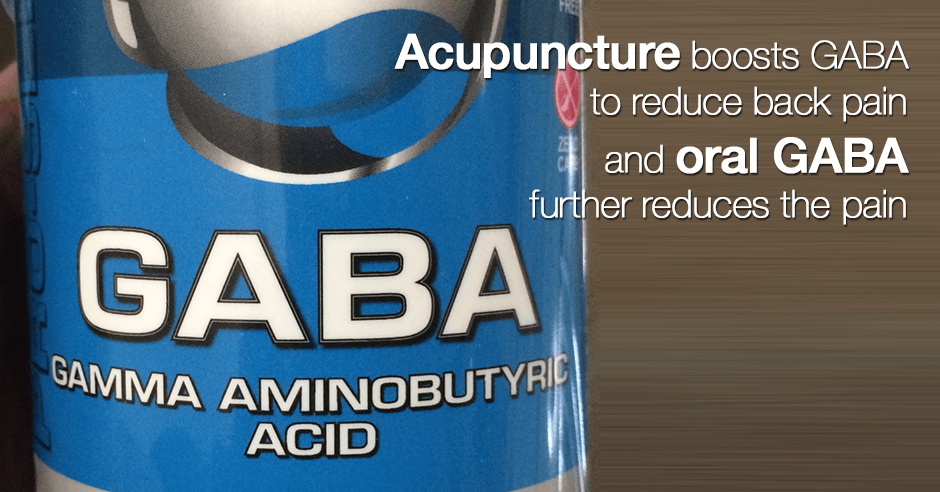
Acupuncture boosts GABA to reduce back pain and oral GABA further reduces the pain

August 18, 2017 By Trudy Scott 13 Comments

I fell and injured my back last week but I am doing much better already. I’m going to be sharing a series of articles on post what I’m doing to ease the pain and heal – acupuncture and cupping being two of the approaches. As well as heat (with a hot water bottle), I’m also using a long list of nutrients such as:

  • high-dose fish oil and curcumin (as anti-inflammatories)
  • relaxing magnesium
  • arnica for bruising
  • GABA for relaxing my muscles and helping with the acute pain, and for easing the fear and anxiety (initially I was very fearful I had a serious back injury) and
  • DPA (d-phenylalanine) for the endorphin-boosting pain-relief

Today I’m going to share some research on GABA and how it helps with pain reduction and muscle tension, and how the acupuncture actually boosts GABA (as well as endorphins) to reduce pain.

Based on the examination I have soft tissue bruising around the lumbar area (L3 to L5). Sitting had been impossible until 2 days ago and even now I have to alternate between sitting and standing. I also twisted my ankle in the fall so initially standing was even challenging!  

I had one acupuncture and cupping session last Saturday and will be having another one this coming Saturday. I felt some immediate relief after this session and my back has been getting better and better each day.

Oral sublingual GABA for the acute pain and muscle relaxation

In the interim, between acupuncture/cupping sessions I felt I needed relaxing support for my stiff and spasming back muscles so I immediately started using high doses of GABA for the acute pain. And it’s been working amazingly well.

Right after the fall I was taking 1g of GABA powder every few hours (held in my mouth for 1-2 minutes) and now I only need to take it 2 or 3 times a day as needed. This is the dose I started with only because I know this dose works for me for the rectal spasms I sometimes experience. I always have clients do a trial and start low and increase slowly based on need and response. The starting dose is typically 125mg as found in GABA Calm but I suspect this is likely too low if you are someone needing pain relief.

With the oral sublingual GABA I feel relief from the pain within 5 minutes and it lasts a few hours.

My pain level was 10/10 and is now down to 2/10 most of the time with a few times during the day when it is 4/10. I’m walking, standing, able to turn over in bed and sleep through the night, and able to get off the bed without assistance. I can now also put on my yoga pants, socks and shoes myself – these were impossible tasks in the first 5 days after my fall!

Acupuncture boosts GABA and downregulates substance P and CGRP

I have not been able to find research on oral GABA for easing pain but do have some research to share. In this first paper, Effect of electroacupuncture on thermal pain threshold and expression of calcitonin-gene related peptide, substance P and γ-aminobutyric acid in the cervical dorsal root ganglion of rats with incisional neck pain the authors state that it is known that acupuncture therapy effectively reduces post-surgical pain, but its mechanism of action remains unclear. The aim of the study was to investigate:

whether expression of γ-aminobutyric acid (GABA) and the neuropeptides substance P (SP) and calcitonin gene-related peptide (CGRP) in the primary sensory neurons of cervical dorsal root ganglia (DRG) are involved in electroacupuncture (EA)-induced analgesia [pain reduction]in a rat model of incisional neck pain.

The conclusion is as follows: acupuncture increases the pain threshold i.e. it reduces pain and the mechanism is likely related to

downregulation of pronociceptive mediators SP/CGRP and upregulation of the inhibitory transmitter GABA in the primary sensory neurons of cervical DRGs

In case you’re not familiar with the terms substance P (SP) and calcitonin gene-related peptide (CGRP) I’m going to explain what they are, how they are connected to pain and why downregulation helps with pain reduction.

What is substance P (SP)?

Founders and Directors of Neuroplastix, Marla Golden, DO and Michael Moskowitz, MD share this about substance-P (SP), the main pain neurotransmitter:

It has five basic functions in the body. They are pain, inflammation, anxiety, depression and nausea. Even though these seem like negative experiences, they are important for survival. Problems arise with excessive production and release of Substance-P.

They share a very descriptive video that:

depicts a nerve injury causing a massive release of Substance-P, up to 5 times greater than in acute pain. This diffuses out to three to five times more local area. This is a major way that the pain map expands in persistent pain and keeps the pain going.

Be sure to watch the video on this page.

What is calcitonin gene-related peptide (CGRP)?

Calcitonin gene-related peptide (CGRP) is relatively new marker for pain as this recent review paper discusses – Calcitonin gene-related peptide and pain: a systematic review

The present review revealed the association between measured CGRP levels and somatic, visceral, neuropathic and inflammatory pain. These data suggest that CGRP may act as a neuromodulator in non-headache pain conditions. However, more studies are needed to fully understand the role of CGRP in nociceptive processing and therapy of chronic pain.

Oral GABA lowers substance P and CGRP in asthmatic children

As I mentioned there is no research on the effects of oral GABA on pain reduction so I’m going to extrapolate from this study on asthma – Effect of gamma-aminobutyric acid treatment on plasma substance P and calcitonin gene-related peptide levels in children with asthma.

In this study of 75 children with asthma, 36 children were in the GABA treatment group and received oral GABA (25-30 mg/kg per day) in addition to standard asthma medications. For a 100 lb /45 kg child this would equate to 1125-1350mg of GABA per day.

The conclusion of the study is that oral GABA

can significantly decrease plasma levels of SP and CGRP in children suffering from acute asthma.

The authors propose that airway inflammation may be a factor in asthma and since GABA reduces SP and CGRP, eases neurogenic inflammation and tracheal spasms, it may offer a new approach for the prevention and treatment of asthma (this is my best translation from the Chinese paper).

In summary, oral GABA, used sublingually has helped me tremendously with the acute pain of my muscle injury, and it helped ease the anxiety and fear I felt right after the incident.

As you read above, I am using more than just the GABA, but because it works so quickly I saw benefits right away and had hope while all the other approaches are starting to slowly help too. I just love that I get to experience this first-hand and share it with you – although I would have preferred not falling and that initial severe pain!

I also have a good history of GABA helping me so this was a clue for me to try it now. It was my life-saver when I first experienced my terrible anxiety and panic attacks and helped me tremendously within a few days.  I also did very well with GABA when I used it for throat spasms during  my vagus nerve issue after that scary plane ride, and another incidence when I was getting terrible ice-pick type headaches that turned out to be a jammed neck issue.   I really am a GABA girl aren’t I!?

I have used high doses of GABA like this with one client who had a back and neck injury after a construction accident. It also helped him tremendously.

Have you used high doses of GABA for muscle injuries and seen improvements like this? Or do you use this approach with your clients/patients?

Filed Under: Anxiety, GABA, Pain Tagged With: Acupuncture, anxiety, asthma, back, calcitonin gene-related peptide, CGRP, GABA, Inflammation, muscle injury, pain, SP, substance P

How GABA eases agonizing rectal pain and spasms in under 2 minutes

June 30, 2017 By Trudy Scott 188 Comments

Proctalgia fugax is described as a condition that leads to rectal spasms and sharp fleeting pain in the lower rectum or anus. In some people it can be more than fleeting and is often described as excruciating and agonizing.  

This paper describing proctalgia fugax shares how this pain can

recur over weeks, is localized to the anus or lower rectum, and can last from seconds to several minutes with no pain between episodes. There is no diurnal variation. There are numerous precipitants [preceding factors] including sexual activity, stress, constipation, defecation and menstruation, although the condition can occur without a trigger.

Although the cause of proctalgia fugax is unclear, spasm of the anal sphincter is commonly implicated. The condition may be more likely to occur after sclerotherapy for hemorrhoids and vaginal hysterectomy. There are also associations with other functional pathologies, such as irritable bowel syndrome and anxiety.

My story

I have experienced this awful anal sphincter spasm and pain myself so I want to shine some light on this condition and offer the simplest and most effective solution: oral and sublingual GABA. It works to completely eliminate the pain in 1-2 minutes! And it can also be used to prevent a full-on spasm if you catch it in advance. More about this below.

Let me first share my story so you can relate to the pain. I started to experience this a few years ago. It was right after my aunt died from rectal cancer and my immediate thought was that I was dying of cancer. That’s how bad the pain was. It’s like nothing I’ve ever experienced and I’ve had some pretty bad pain experiences: shingles, a tick bite headache, ice-pick headaches from a neck injury and poking my eye on a tree-branch while hiking.

For me, since it initially used to happen during the night, it felt like I was in bad dream and was lying somewhere injured and in agony. I would half wake-up moaning in pain, not quite grasping how the pain I was feeling could be so bad. Then I would come fully awake and feel the need to bear down (as in needing to have a bowel movement) but this would actually make it worse.

How do others describe the pain?

When I shared this paper on facebook one woman said her rectal pain and spasms last 20-30 minutes and is bad a childbirth.

Someone else shared that her husband “complained of feeling like a knitting needle was being driven through his anus.”

What do I think my triggers are?

I have not had sclerotherapy for hemorrhoids or a vaginal hysterectomy. I do have a history of anxiety and panic attacks (in my late 30s) and do have IBS/SIBO right now and I suspect that both low GABA and IBS/SIBO are my biggest root causes. I no longer have any anxiety but since I respond so well to GABA I assume my GABA levels are not optimal (likely due to the SIBO). I suspect exposure to hidden sources of gluten could also be a factor, and this could also affect my GABA levels.

Medications or heating pads as a solution?

I didn’t ever consider the conventional approaches which include: botox, benzodiazepines, SSRIs, Gabapentin, lidocaine, oral diltiazem, topical glyceryl nitrate, nerve blocks or salbutamol.

A warm bath has been reported to help but I was looking for a 1-2 minute fix (and less if possible). Once you’ve experienced this pain you’ll understand that you not imagine running a bath in the midst of a spasm and waiting to get in it.

Heating pads do also work but can take 20 minutes to take effect and that is simply too long for most people.

The first solution for in-the-moment relief (takes 2 to 12 minutes)

After the first episode I started searching online and because I didn’t know it was called proctalgia fugax I searched for “rectal cramp”, “rectal spasm”, “anal cramp” and came across forums with hundreds of women asking about it and describing their pain.

But no-one really had a solution and many had seen their doctors without much success. The best solution that many people use is 30-60 seconds of finger pressure (with the finger wrapped in toilet paper) in the anal sphincter during a spasm. Sometimes this is needed for up to 2-3 mins and sometimes doing this 2 or 3 times a few minutes apart is needed. Think about how you put pressure on a calf muscle spasm to stop the cramps. This works well but the agony can last for the entire 2 to 12 minutes (depending on how many times it has to be done).  Adding a small amount of arnica cream onto the toilet paper seems to helps too.  

How common is it?

It took more searching and reading and then I discovered what it was called. Once I found a name for it and started looking into I was surprised to see how common it is:

The prevalence of proctalgia fugax in the general population may be as high as 8%–18%. Many patients present to primary health care physicians and often do not require further consultation because the symptoms are fleeting. This condition is more common among women than among men, and usually affects patients between 30 and 60 years of age.

Although it’s more common among women I worked with a male client who experienced this. During one of his episodes, the pain was SO bad he actually passed out and hit his head on the bathroom floor.

The best solution for almost-immediate relief (takes 1 minute)

I know that GABA works amazing well for physical anxiety and stiff and tense muscles and I decided to try GABA in the midst of a spasm. It worked amazingly well and within 1 minute the terrible pain started to ease. It does need to be taken sublingually and I have found that 250mg to 500mg opened onto my tongue works best for me.

Each person would need to find the ideal amount for their needs but at night this should be a reasonable amount. During the day this could be too much and make you sleepy or too relaxed.

I’ve also used a combination of sublingual GABA and theanine with similar results.

I know GABA isn’t readily available everywhere so I did an experiment with taurine and found I needed more (at least 1000 mg) and it did take longer (2-3 minutes) to get relief, but it did work.

THE immediate solution for preventing the spasm

But I have now gotten to the point where I can nip it in the bud and prevent the spasm altogether – by taking sublingual GABA at the very first hint of an ache or twinge. I’ve been fortunate that when this does happen (about once a month and sometimes every 2 months) it’s around 8-11pm.

The long-term solutions for getting to the root cause/s?

We always want to get to the root cause of an issue and that is the next step. I reached out to the practitioners in my community to ask them how they help their clients and patients with this and what approaches they have used to end the spasm and pain. I will be sharing some of their solutions and how to get to some of the root causes in part 2.

UPDATE: Here is part 2 – How to address rectal spasms with GABA, pelvic floor work, gluten removal and squats

I’d love your feedback!

I’d love your feedback so I can learn what works, so we can all learn from each other and so others get answers quicker than I did.

Have you ever experienced this rectal pain and spasms? And what has worked for you?

I’d love to know if it is more common after sclerotherapy for hemorrhoids and vaginal hysterectomy? Have you had either? Or any surgery in the abdominal area?

Do you also have IBS/SIBO?  What about celiac disease or gluten sensitivity?

Do you currently have anxiety or mood issues or have a history of anxiety or mood issues?  How many low GABA and low serotonin symptoms do you have – here is the questionnaire  (a paper from 1965 mentions that patients with proctalgia fugax have been described as irritable, perfectionistic, meticulous, obsessional, tense, and anxious)

If you’ve tried GABA or these other approaches (or decide to try them) please come back and share.  Too many people don’t know about this and it needs to change!

Filed Under: Amino Acids, Antianxiety, GABA, Hormone, Pain, SIBO, Women's health Tagged With: anal sphincter, anus, anxiety, cramp, GABA, pain, Proctalgia fugax, rectal spasm, taurine

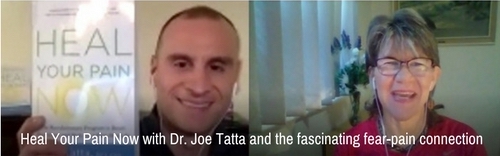
Interview: Heal Your Pain Now + the fear-pain connection

February 14, 2017 By Trudy Scott 5 Comments

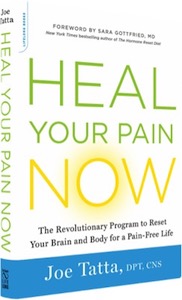
If you struggle with chronic pain from an injury, autoimmune disease, fibromyalgia, joint pain, arthritis, anxiety, depression or have tried everything without success, Heal Your Pain Now provides natural solutions to eliminate pain and return you to a life worth living.

I recently had the pleasure of interviewing Dr. Joe Tatta, physical therapist and nutritionist, author of this wonderful new book and a dear friend!

You can watch the interview here:


And here is a summary from our great interview:

What is chronic pain – it’s about protection. Acute pain like an ankle sprain tells you to rest and heal; chronic pain – persists beyond 3 months and is less about protection and more about the brain being in a hyper-sensitive state.

The human body has innate ability to heal i.e. the body has a natural anti-inflammatory process and tissue will heal in 3 months. After those 3 months it becomes less about the actual tissue and more about what is going on centrally in the brain and nervous system.

Central sensitization or the hyper-sensitive brain: we have a neural signature specific to you and your pain experience.

It’s based on what you believe about pain, are told about pain, your memories, your emotions, input from body (such as tightness), your thoughts, touch and sound.

With central sensitization pathways light up in the brain causing pain and in some instances those pathways never quiet down. The more we can be educated about pain the faster we can release this central sensitization and the pain.

An example: You and I had backpain – my life: mom is a nurse, my backpain comes and goes, I can move a little, I go to work, do some chores and basic exercise; in your life your grandmother had really bad back pain, was in a wheelchair and said back pain is the worst pain you could ever have. This may make your pain persist. Fear causes pain to persist over a long period of time.

Fear and pain: it can be actual fear or perceived; fight or flight – muscles tense around the spinal column; blood is shunted away from the spinal muscles because you’re getting ready to run or fight; when it’s persistent there is no blood flow and no healthy nutrients going to the spinal muscles; cortisol levels become elevated – they are inflammatory and very powerful at laying down memory patterns (which can make pain persist).

When you lessen fear you promote relaxation and in general pain disappears very fast.

When you hear all this the brain repatterns – you’re doing a mini cognitive behavior session just listening to and watching the video of us interacting! (I love this!)

Myth: chronic pain has to be chronic – no! Replace the word chronic with persistent because language is really important for creating these pain memories.

Myth: imaging studies like xrays and MRIs are correlated with pain. Often we see intense pain with normal xrays, sometimes no pain with awful rays.

There is also the emotional aspect – when someone in a white coat holds up that xray and says you have this issue it can start that fear response and the pain can be worse.

This fear pain connection is fascinating and I asked if it common knowledge

  • The average physician only receives 4 hours of pain science education in 12 -16 years of education – most of what they learn focused on medications, injections and surgery. We currently have a biomedical model (xray and injection or surgery, injections or medications) but we are moving to a biopsychosocial model (movement, nutrition, mindset, the brain)
  • The book has 40 pages of evidence based research (if you’re a practitioner and would like access to the papers let me know in the comments and Dr. Joe can get them to you)
  • I suggest using the book to educate yourself and your doctor

Medications prescribed for pain: Opioids (oxycontin, codeine, morphine) #1 drug prescribed for pain. CDC and NIH: You should not prescribe opioids as first line of treatment for chronic pain. They are highly addictive – 3 million addicted to them; 2 million die each year; opioid-induced hyperalgesia – the more you take the more pain sensitivity you have and the more medication is needed.

Side effects: constipation caused by opioids and you’re prescribed medications for the constipation; called OIC (opioid induced constipation) – changes the microbiome, fecal matter is bound up, you get leaky gut, inflammation starts in gut and there are impacts on neurotransmitter production like GABA and serotonin (and then increased anxiety and depression).

Other medications used are SSRIs – depression looks very similar to pain in the brain – when you heal the gut you can balance serotonin

Gabapentin and NSAIDs and benzodiazepines are also prescribed.

The book covers ALL pain – any chronic (or persistent) pain that has been around for 3 months or longer

Nutrition: diet is the #1 way to reduce inflammation – food is medicine approach; 100% whole food (if it comes in a box or a can or is made by man it has no place in your diet especially if you have chronic pain); farm-raised beef, wild fish, fruit and vegetables, healthy fats i.e. a modified Mediterranean diet.

Then use a gut-healing protocol for removing inflammation and addressing autoimmunity – remove gluten, dairy and sugar. In 3-7 days people see their pain decrease from 8/10 to 2/10.

“I don’t think I have arthritis and I don’t think I need this Aleve – I think it was the gluten I was eating”

If you slip a little and have some gluten then you realize you can’t even have any and you’re educating yourself that food is medicine. It’s very powerful

With gut healing, if you have autoimmunity take out eggs and GMOs (soy and corn) too; there is more clinical evidence around nightshades – if you can heal the gut you can often tolerate small amounts.

The ketogenic diet is last phase: 65% – 75% fat, 5% carbs (from fibrous vegetables) and the rest is protein. It’s awesome to regulate blood sugar, helps central sensitization (we know because those with seizures do really well on a ketogenic diet). With seizures glutamate is high and GABA low and the ketogenic diet helps balance out these in your brain and calms the nervous system and decreases pain; upregulates ATP (energy molecule) which helps with pain. Brain fogs goes away.

The ketogenic diet is not for someone with type 1 diabetes, who is pregnant or in acute adrenal fatigue

Do a trial of 3-4 weeks and cycle into ketosis every 4-6 months.

Intermittent fasting tricks body into thinking body is starving.

A big plane flies over at the 41 minute mark! Enjoy the laugh with us!

With intermittent fasting do a 14-16 hour fast overnight, say 6pm to 9am the next day

Mini-fasts: protein shake in the morning or evening – the meal is smaller; or use bone broth – healing for gut and collagen for your joints!

Supplements: omega-3s (2000 to 4000mg); curcumin (in oil – really important to help absorption); vitamin D 5000-10,000 IU; some kind of proteolytic enzymes; GABA for pain and anxiety and central sensitization.

If this feels overwhelming and you feel you need more support (in addition to reading the book) Dr. Joe does have a group program

It’s called Heal your Pain Heal your Life  – 6 week process, a Facebook group group, Q and A calls, and social support (which is huge if you have pain and can’t get out of house, or if others can’t relate to your pain, plus for the community support)

Movement, sedentary syndrome, sit rise test: movement is medicine and has to be in your life in some form. Even 5 minutes twice a day can help. It sends signal to your brain “I can move a bit and I’m safe”, you build confidence and fear decreases, releases endorphins, quiets down the nervous system

Sit rise test – cross your legs and lower yourself down to the floor without your hands and then stand back up. It indicates a long life-expectancy; they are not sure why – cardio effects? Balance? It tests strength and vitality; if you can’t do it – practice each day. Third world cultures sit on the floor to communicate – when you move joints in full range it lubricates them.

I’m a climber, skier, mountain biker, windsurfer and have had many injuries and worked with wonderful physical therapist and yet I have learned so much from Dr. Joe and this book! I will use it for prevention of injuries and pain and for the next time I am injured and in pain.

Dr. Joe ended by saying

Keep moving forward, we’re going to change the pain paradigm and give people their lives back!

This is the book summary:

In Heal Your Pain Now, Dr. Joe Tatta teaches you how to regain control of your life by breaking the cycle of persistent pain. Following Dr. Tatta’s program, you learn the role of the brain in pain–and how to use your brain to STOP your pain; how nutrition can eliminate the inflammation in your body, which is exacerbating your pain; and how to overcome Sedentary Syndrome and choose the best movement strategy. Dr. Tatta provides quizzes, self-assessments, meal plans, shopping lists, recipes, and exercises to support you throughout the program.

As I mentioned in the interview I really appreciate the very unique perspective Dr. Joe brings to healing from pain. His expertise from the physical therapy and movement world is so beautifully meshed with the power of nutrition! He covers the foundational information for eating an anti-inflammatory diet, an excellent gut healing protocol, healing supplements and with much fascinating reading on intermittent fasting and the ketogenic diet.

Dr. Joe explains these concepts brilliantly: the brain in pain, central sensitization, myths around pain and the biospychosocial model of pain. With the work that I do with anxious women like you (and men too), the pain connection to fear is very relevant; and the fact that stress, anxiety, post-traumatic stress disorder (PTSD), or depression are danger signals that can actually make the pain worse depending on how “sensitive” your nervous system has become.

Also, since many of the same pain medications are also often prescribed for anxiety, this book is a wonderful resource for someone with both pain and anxiety. But best of all, this book offers real solutions for everyone suffering from any kind of pain, and a solid understanding of the mechanisms.

I’m sure you’d like access to what we talked about during the interview:

  • Joe’s Pain Quiz
  • His 6 week group program Heal your Pain heal your Life
  • You can order the book Heal Your Pain Now from Amazon and get access to some bonus gifts here
  • I forgot to mention that Dr. Joe has live Q and A webinar coming up on February 22, 2017 at 7pm EST and you can register for that here so that you know exactly how to heal without medication, injections or surgery. There is new science to end – or dramatically reduce your pain.


Please let us know which parts of this really resonated with you and what you’re looking forward to implementing for your pain.


Filed Under: Books, Pain Tagged With: anxiety, Anxiety and Depression association, book, depression, fear, heal your pain now, Joe Tatta

Fibromyalgia: tryptophan or 5-HTP for anxiety, depression, pain and insomnia

January 29, 2016 By Trudy Scott 39 Comments

fibro and anxiety

Fibromyalgia syndrome is a musculoskeletal pain and fatigue disorder manifested by diffuse myalgia [muscle aches and pain], localized areas of tenderness, fatigue, lowered pain thresholds, and nonrestorative sleep.

This description comes from a paper titled: Fibromyalgia and the serotonin pathway

The paper discusses how low serotonin is often a contributing factor with fibromyalgia and how beneficial tryptophan and/or 5-HTP can be for the anxiety, depression, pain and insomnia we often see in those with classic fibromyalgia:

Evidence from multiple sources support the concept of decreased flux through the serotonin pathway in fibromyalgia patients.

Serotonin substrate supplementation, via L-tryptophan or 5-hydroxytryptophan (5-HTP), has been shown to improve symptoms of depression, anxiety, insomnia and somatic pains in a variety of patient cohorts.

I recently blogged about the effectiveness of 5-HTP being a clinically-effective serotonin precursor and how it improves many of these same symptoms:

Therapeutic administration of 5-HTP has been shown to be effective in treating a wide variety of conditions, including depression, fibromyalgia, binge eating associated with obesity, chronic headaches, and insomnia.

5-HTP improves symptoms of fibromyalgia but can also cause agitation when cortisol is high

An open 90-day study in 50 patients affected by fibromyalgia found benefits with the use of 5-HTP:

When all the clinical variables studied throughout the trial (number of tender points, anxiety, pain intensity, quality of sleep, fatigue) were compared with baseline results, they all showed a significant improvement.

It is concluded that 5-HTP is effective in improving the symptoms of primary fibromyalgia syndrome and that it maintains its efficacy throughout the 90-day period of treatment.

UPDATES March 25, 2022:

Despite the fact that 5-HTP is beneficial for many individuals there is no one-size fits all. 

I don’t recommend 5-HTP when a client has elevated cortisol levels because we know that it can raise cortisol levels in certain individuals. This can leave you feeling agitated, cranky, as well as “wired and tired” at the same time. You may be able to relate to this if you’ve ever used 5-HTP to help with anxiety and insomnia and ended up feeling more anxious and more wide-awake despite your exhaustion and need for sleep. You can read more about this here: Does 5-HTP make you “wired-tired” and affect your sleep when cortisol is high? 

A tryptophan-enriched diet and a combination tryptophan product for fibromyalgia symptoms

As you can see below, a tryptophan-enriched diet and a combination tryptophan product improved some fibromyalgia symptoms and for some individuals, but we still need to customize protocols.

In this study, Psychological and Sleep Effects of Tryptophan and Magnesium-Enriched Mediterranean Diet in Women with Fibromyalgia, “the intervention group received a Mediterranean diet enriched with high doses of tryptophan and magnesium.” Interestingly, the source of extra tryptophan (60 mg) and magnesium (60 mg) was eating walnuts at breakfast and dinner!

This study concludes that tryptophan and magnesium-enriched Mediterranean diet reduced anxiety symptoms, mood disturbance, eating disorders, and dissatisfaction with body image but did not improve sleep quality in women with fibromyalgia.

The addition of additional tryptophan as a supplement would be the next thing I’d recommend for improving sleep. This would be dosed according to each person’s unique needs and after doing a trial and adjusting as needed.

In another study, Comparison between Acupuncture and Nutraceutical Treatment with Migratens® in Patients with Fibromyalgia Syndrome: A Prospective Randomized Clinical Trial, the treatment group used product called Migratens®, a powdered blend of coenzyme Q10, vitamin D, alpha-lipoic acid, magnesium, tryptophan (300mg), niacin, and riboflavin.

It was used twice a day on an empty stomach and dissolved in a glass of water, spaced about 10 hours apart.

The authors report that “Migratens® treatment shows a statistically significant reduction of pain 1 month after the start of therapy, strengthened after 3 months with maintenance of treatment.” They also noted improvement in quality of life.

Unfortunately, gastrointestinal side-effects (diarrhea, nausea, dyspepsia, constipation, and lack of appetite) were reported by 11% of participants in the treatment group. I’d suspect these side-effects were caused by the ingredients used to make the product slow release.

It’s not surprising that the authors also confirmed “the validity of acupuncture in these patients, as stated by the most recent literature.”

If we suspect low serotonin may be a factor, I have my clients do the following (whether or not they have a fibromyalgia diagnosis):

  • complete the Amino Acids Mood Questionnaire from The Antianxiety Food Solution and check off their symptoms on the low serotonin section.  The rating uses scale of 1-10 with 10 being worst.
  • review the Amino Acids Precautions and figure out if we can do a trial of 5-HTP or tryptophan
  • do a trial of the amino acid 5-HTP or tryptophan and observe for improvements in anxiety, depression, pain, insomnia and the other low serotonin symptoms

We are all unique and some people do better on 5-HTP and some do better on tryptophan. I typically start with a tryptophan trial since I’ve seen such great benefits with this amino acid. If that’s not working, we’ll do a 5-HTP trial, always watching for high cortisol as 5-HTP can raise cortisol if it’s already high. In this instance 5-HTP may be too stimulating.

Quality is an important issue when it comes to the amino acids and this is especially the case with tryptophan. I find that the Lidtke brand is the most superior. You can see my amino acid product recommendations here.

If you suspect low levels of serotonin and do not yet have my book, The Antianxiety Food Solution – How the Foods You Eat Can Help You Calm Your Anxious Mind, Improve Your Mood, and End Cravings, I highly recommend getting it and reading it before jumping in and using amino acids on your own so you are knowledgeable. And be sure to share it with the team you or your loved one is working with. Blog posts like this are intended to add value to the chapter on amino acids, which contains detailed information on doses and time of the day for dosing.

If you are a practitioner, join us in The Balancing Neurotransmitters: the Fundamentals program. It’s an opportunity to interact with me and other practitioners who are also using the amino acids.


Do you have a diagnosis of fibromyalgia and have you found benefits with 5-HTP or tryptophan? For your pain? For your sleep? For your anxiety and/or depression?

I’d love to also hear what else has helped with your symptoms?

Feel free to ask your questions here too.

Filed Under: Anxiety and panic, Depression, Pain Tagged With: Fibromyalgia

The Anxiety Summit – Nutritional Influences on Anxiety and Musculoskeletal Pain

May 11, 2015 By Trudy Scott 20 Comments


Joe Tatta DPT, CCN, Musculoskeletal Pain Expert, was interviewed by host of the Anxiety Summit, Trudy Scott, Food Mood Expert and Nutritionist, author of The Antianxiety Food Solution.

Nutritional Influences on Anxiety and Musculoskeletal Pain

  • Link between anxiety and chronic musculoskeletal problems
  • Fear avoidance behaviors and pain
  • Headaches, back pain, joint pain and nutritional influences
  • An exercise prescription for anxiety

Here are some snippets from our interview:

People used to think depression was more linked to chronic pain but we are learning its more anxiety driven

The chronic anxiety that people have on a daily basis kicks off the pain process

Negative thoughts, worry, doom-and-gloom about the future all come in to play, with fear being the most common emotion leading to pain

Here is the very recent 2015 paper that discusses this – Psychological functioning of people living with chronic pain: A meta-analytic review.

Joe tied fear and anxiety to adrenalin release and the effects on the muscles, specifically how the smaller muscles around the spine and in the neck are turned off. You then have less blood flow, less oxygen and less nutrients going to those muscles and that’s when the pain starts.

Joe shared the staggering number of people who suffer from chronic pain:

more than those who suffer from heart disease, diabetes and cancer combined!

We also discussed migraines and magnesium, and this paper: Why all migraine patients should be treated with magnesium

Magnesium, the second most abundant intracellular cation, is essential in many intracellular processes and appears to play an important role in migraine pathogenesis. Routine blood tests do not reflect true body magnesium stores since <2% is in the measurable, extracellular space, 67% is in the bone and 31% is located intracellularly. Lack of magnesium may promote cortical spreading depression, hyperaggregation of platelets, affect serotonin receptor function, and influence synthesis and release of a variety of neurotransmitters.

There is strong evidence that magnesium deficiency is much more prevalent in migraine sufferers than in healthy controls.

Considering these features of magnesium, the fact that magnesium deficiency may be present in up to half of migraine patients, and that routine blood tests are not indicative of magnesium status, empiric treatment with at least oral magnesium is warranted in all migraine sufferers.

If you are not already registered for the Anxiety Summit you can get live access to the speakers of the day here: www.theAnxietySummit.com

Missed this interview or can’t listen live? Or want this and the other great interviews for your learning library? Purchase the MP3s or MP3s + transcripts and listen when it suits you.

You can find your purchasing options here: Anxiety Summit Season 1, Anxiety Summit Season 2, and Anxiety Summit Season 3.

Filed Under: Antianxiety, Anxiety and panic, Depression, Pain, The Anxiety Summit 3 Tagged With: anxiety, butterbur, chronic pain, cortisol, fear, Joe Tatta, magnesium, migraine, pain, the anxiety summit, Trudy Scott

  • « Go to Previous Page
  • Page 1
  • Interim pages omitted …
  • Page 3
  • Page 4
  • Page 5
  • Page 6
  • Go to Next Page »

Primary Sidebar

GABA QuickStart Homestudy

gaba quickstart homestudy

Free Report

9 Great Questions Women Ask about Food, Mood and their Health

You'll also receive a complimentary subscription to my ezine "Food, Mood and Gal Stuff"


Connect with me

Popular Posts

  • Amino Acids Mood Questionnaire from The Antianxiety Food Solution
  • The Antianxiety Food Solution Amino Acid and Pyroluria Supplements
  • Pyroluria Questionnaire from The Antianxiety Food Solution
  • Collagen and gelatin lower serotonin: does this increase your anxiety and depression?
  • Tryptophan for the worry-in-your-head and ruminating type of anxiety
  • GABA for the physical-tension and stiff-and-tense-muscles type of anxiety
  • The Antianxiety Food Solution by Trudy Scott
  • Seriphos Original Formula is back: the best product for anxiety and insomnia caused by high cortisol
  • Am I an anxious introvert because of low zinc and vitamin B6? My response to Huffington Post blog
  • Vagus nerve rehab with GABA, breathing, humming, gargling and key nutrients

Recent Posts

  • Her cravings for chips and peanut butter were triggered by stress: GABA ends cravings and reduces physical tension and fear of heights
  • It is truly miraculous to be able to move through life without crippling anxiety and panic
  • GABA and tryptophan combo provide immediate and noticeable relief for tremors and cervical dystonia in just 7 days
  • Red light therapy for back and neck pain, plantar fasciitis and low mood – a complement to the amino acids GABA, DPA and tryptophan
  • What do I use instead of Seriphos to help lower high cortisol that is affecting my sleep and making me anxious at night?

Categories

  • 5-HTP
  • AB575
  • Addiction
  • ADHD
  • Adrenals
  • Alcohol
  • Allergies
  • Alzheimer's disease
  • Amino Acids
  • Anger
  • Antianxiety
  • Antianxiety Food Solution
  • Antidepressants
  • Anxiety
  • Anxiety and panic
  • Autism
  • Autoimmunity
  • benzodiazapines
  • Bipolar disorder
  • Books
  • Caffeine
  • Cancer
  • Candida
  • Children/Teens
  • Collagen
  • Cooking equipment
  • Coronavirus/COVID-19
  • Cravings
  • Depression
  • Detoxification
  • Diabetes
  • Diet
  • DPA/DLPA
  • Drugs
  • EFT/Tapping
  • EMF
  • EMFs
  • Emotional Eating
  • Endorphins
  • Environment
  • Essential oils
  • Events
  • Exercise
  • Fear
  • Fear of public speaking
  • Fertility and Pregnancy
  • Fish
  • Food
  • Food and mood
  • Functional neurology
  • GABA
  • Gene polymorphisms
  • General Health
  • Giving
  • Giving back
  • Glutamine
  • Gluten
  • GMOs
  • Gratitude
  • Gut health
  • Heart health/hypertension
  • Histamine
  • Hormone
  • Hyperparathyroidism
  • Hypoglycemia
  • Immune system
  • Inflammation
  • Insomnia
  • Inspiration
  • Introversion
  • Joy and happiness
  • Ketogenic diet
  • Lithium orotate
  • Looking awesome
  • Lyme disease and co-infections
  • MCAS/histamine
  • Medication
  • Men's health
  • Mental health
  • Mercury
  • Migraine
  • Mold
  • Movie
  • MTHFR
  • Multiple sclerosis
  • Music
  • NANP
  • Nature
  • Nutritional Psychiatry
  • OCD
  • Osteoporosis
  • Oxalates
  • Oxytocin
  • Pain
  • Paleo
  • Parasites
  • Parkinson’s disease
  • PCOS
  • People
  • PMS
  • Postpartum
  • PTSD/Trauma
  • Pyroluria
  • Questionnaires
  • Real whole food
  • Recipes
  • Research
  • Schizophrenia
  • serotonin
  • SIBO
  • Sleep
  • Special diets
  • Sports nutrition
  • Stress
  • Sugar addiction
  • Sugar and mood
  • Supplements
  • Teens
  • Testimonials
  • Testing
  • The Anxiety Summit
  • The Anxiety Summit 2
  • The Anxiety Summit 3
  • The Anxiety Summit 4
  • The Anxiety Summit 5
  • The Anxiety Summit 6
  • Thyroid
  • Thyroid health
  • Toxins
  • Tryptophan
  • Tyrosine
  • Uncategorized
  • Vegan/vegetarian
  • Women's health
  • Yoga

Archives

  • May 2026
  • April 2026
  • October 2025
  • September 2025
  • August 2025
  • July 2025
  • June 2025
  • May 2025
  • April 2025
  • March 2025
  • February 2025
  • January 2025
  • November 2024
  • October 2024
  • September 2024
  • August 2024
  • July 2024
  • June 2024
  • May 2024
  • April 2024
  • March 2024
  • February 2024
  • January 2024
  • December 2023
  • November 2023
  • October 2023
  • September 2023
  • August 2023
  • July 2023
  • June 2023
  • May 2023
  • April 2023
  • March 2023
  • February 2023
  • January 2023
  • December 2022
  • November 2022
  • October 2022
  • September 2022
  • August 2022
  • July 2022
  • June 2022
  • May 2022
  • April 2022
  • March 2022
  • February 2022
  • January 2022
  • December 2021
  • November 2021
  • October 2021
  • September 2021
  • August 2021
  • July 2021
  • June 2021
  • May 2021
  • April 2021
  • March 2021
  • February 2021
  • January 2021
  • December 2020
  • November 2020
  • October 2020
  • September 2020
  • August 2020
  • July 2020
  • June 2020
  • May 2020
  • April 2020
  • March 2020
  • February 2020
  • January 2020
  • December 2019
  • November 2019
  • October 2019
  • September 2019
  • August 2019
  • July 2019
  • June 2019
  • May 2019
  • April 2019
  • March 2019
  • February 2019
  • January 2019
  • December 2018
  • November 2018
  • October 2018
  • September 2018
  • August 2018
  • July 2018
  • June 2018
  • May 2018
  • April 2018
  • March 2018
  • February 2018
  • January 2018
  • December 2017
  • November 2017
  • October 2017
  • September 2017
  • August 2017
  • July 2017
  • June 2017
  • May 2017
  • April 2017
  • March 2017
  • February 2017
  • January 2017
  • December 2016
  • November 2016
  • October 2016
  • September 2016
  • August 2016
  • July 2016
  • June 2016
  • May 2016
  • April 2016
  • March 2016
  • February 2016
  • January 2016
  • December 2015
  • November 2015
  • October 2015
  • September 2015
  • August 2015
  • July 2015
  • June 2015
  • May 2015
  • April 2015
  • March 2015
  • February 2015
  • January 2015
  • December 2014
  • November 2014
  • October 2014
  • September 2014
  • August 2014
  • July 2014
  • June 2014
  • May 2014
  • April 2014
  • March 2014
  • February 2014
  • January 2014
  • December 2013
  • November 2013
  • October 2013
  • September 2013
  • August 2013
  • July 2013
  • June 2013
  • May 2013
  • April 2013
  • March 2013
  • February 2013
  • January 2013
  • December 2012
  • November 2012
  • October 2012
  • August 2012
  • July 2012
  • June 2012
  • May 2012
  • April 2012
  • March 2012
  • February 2012
  • January 2012
  • December 2011
  • November 2011
  • October 2011
  • September 2011
  • August 2011
  • July 2011
  • June 2011
  • May 2011
  • April 2011
  • March 2011
  • February 2011
  • January 2011
  • December 2010
  • October 2010
  • September 2010
  • July 2010
  • May 2010
  • April 2010
  • March 2010
  • February 2010
  • January 2010
  • November 2009

Share the knowledge!

The above statements have not been evaluated by the Food and Drug Administration. Products listed in this website are not intended to diagnose, treat, cure or prevent any disease.

The information provided on this site is for informational and educational purposes only and is not intended as a substitute for advice from your physician or other health care professional. You should consult with a healthcare professional before starting or modifying any diet, exercise, or supplementation program, before taking or stopping any medication, or if you have or suspect you may have a health problem.


Copyright © 2026 Trudy Scott. All Rights Reserved. | Privacy | Terms and Conditions | Refund Policy | Medical Disclaimer

Free Report

9 Great Questions Women Ask about Food, Mood and their Health

You’ll also receive a complimentary subscription to my ezine “Food, Mood and Gal Stuff”