• Skip to primary navigation
  • Skip to main content
  • Skip to primary sidebar

everywomanover29 blog

Food, Mood and Women's Health – Be your healthiest, look and feel great!

  • Blog
  • About
  • Services
  • Store
  • Resources
  • Testimonials
  • The Book
  • Newsletter
  • Contact
  • Search this site

Events

Benzodiazepine horror story on The Mental Wellness Summit 2

August 27, 2017 By Trudy Scott 28 Comments

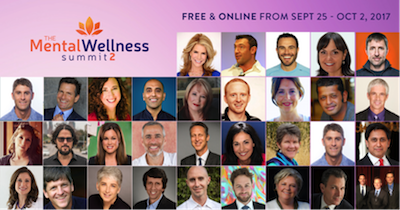
The Mental Wellness Summit 2 aired online September 25 – October 2, 2017

Whether challenged by depression, anxiety, stress, addiction or another mental health challenge, every single person is impacted and affected – you, your family, friends, neighbors and coworkers -either directly or indirectly every single day.

This Mental Wellness Summit 2 will provided the information you need to:

  • Overcome the silence, isolation and fear of your struggle
  • Transcend outdated, prescription-based healthcare systems
  • Find holistic practitioners and natural solutions for your pain
  • Implement expert practices, tools and tips into your daily routine

My interview covered the dangers of benzodiazepines and why GABA is a more effective option for anxiety.

Here are some snippets from my interview where I discuss benzodiazepines which are

  • a class of psychoactive drugs / tranquillizers with sedative, sleep-inducing, anti-anxiety, anticonvulsant, and muscle relaxant properties
  • they target the GABAA receptor and enhance the effect of the neurotransmitter GABA
  • the common Brand name/drug name are: Xanax/ Alprazolam, Klonopin/Clonazepam, Valium/ Diazepam, Ativan/ Lorazapam

These medications are commonly prescribed for:

  • Anxiety, social anxiety, panic, pain/dental pain, insomnia, fear of flying, Lyme disease, ER visits for back/neck spasms
  • Children with autism
  • IBS
  • pre-surgery anxiety
  • ICU patients needing ventilation
  • during chemotherapy for cancer treatments – for anxiety, nausea and anticipatory nausea

I share this true benzodiazepine horror story:

Been totally disabled by benzos for over 3 years. I have been off meds for 17.5 months and the impact of these meds makes any anxiety I ever felt a cake walk. Please run from the poison.

When I turned 21 I went to the doctor for dizziness and they put me on xanax. I started to feel anxious and they then added Zoloft. That was the start of a long journey. I was shifted from one anti-depressant to another. At 34 I was told I was treatment resistant and they added lamotrigine. Then my world crashed at age 37. I have been on xanax, then klonopin, then Ativan, then back to xanax, then valium to taper. I had also been given ambien to sleep in early 30s.

I tapered off meds over a period of a year. I was on 1.5 mg xanax and tapered off valium as prescribed. I have tried many supplements but I react poorly to all of them. I get very agitated and revved up.

I have locked shoulder muscles, neck, jaw; I have internal vibrations, I get bad headaches, jelly legs, distorted vision like floaters and squiggles and fireworks, my teeth all feel like they will fall out but they are not loose, it feels like adrenaline or cortisol rushes through the body. Sometimes my arms go numb. I am pretty tortured every day. These meds are truly causing chemical warfare on some of us. 

This is one of the many reasons I do this work – so more people don’t end up in this situation and so everyone knows about the dangers of benzodiazepines and that there are nutritional solutions for anxiety. One of them is the amino acid GABA and I discuss this in the latter half of the interview.
Filed Under: benzodiazapines, Events Tagged With: anxiety, benzodiazepine, GABA, Mental Wellness Summit

Integrative Medicine for Mental Health Conference 2017 (IMMH)

August 15, 2017 By Trudy Scott 22 Comments

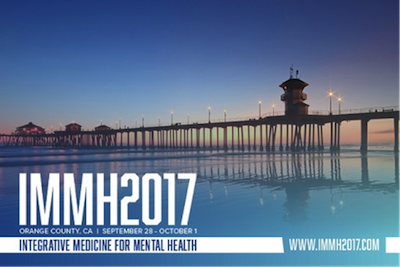
The Integrative Medicine for Mental Health Conference 2017 (IMMH) runs Sept 28-Oct 1, 2017, in Orange County, CA (near Anaheim).

This is a conference I attend every year and I’ll be attending again this year – it’s that good! As IMMH mentions:

research has revealed that many disorders such as depression, bipolar disorder, anxiety, OCD, eating disorders, and autism spectrum disorders often have biomedical causes that contribute to symptoms, from nutritional deficiencies to chronic infections.

This is a practitioner-only event and attendees include psychiatrists, naturopathic physicians, family physicians, chiropractic physicians, nurses and nurse practitioners, psychologists, nutritionists and registered dieticians, and other allied mental health professionals. 

Here is a video with highlights from the 2016 conference

Here are just a few of the topics and speakers I am especially looking forwarding at the 2017 conference:

Integrative Medicine Approaches to Autoimmune Encephalopathy and PANDAS – KENNETH BOCK, MD

This lecture will discuss neuropsychiatric disorders with abrupt onset that include symptoms ranging from anxiety to intrusive thoughts and rage episodes. They may also include tics, dysgraphia (inability to write coherently), and dyscalculia (difficulty understanding numbers). These symptoms are triggered by infectious autoimmune encephalopathy (frequently referred to as PANS/PANDAS). Evaluation and treatment will be discussed from a comprehensive integrative medicine point of view.

Ion Channel Genetics in Mental Health: Associated Integrative Therapies – LAUREN FEW, PHD

Several studies have implicated genetic mutations in voltage-gated ion channels in the pathogenesis of mental health disorders. For example, both the CACNA1C calcium channel gene and ANK3 gene have been linked to bipolar disorder, schizophrenia, and depression in genome-wide association studies. This talk will focus on a number of integrative therapeutic options that target ion channels and have demonstrated efficacy in the treatment of mental health symptomatology, including omega-3 fatty acids, lithium, magnesium, and N-acetylcysteine.

Mold and Mycotoxins: The Hidden Menace – MARK FILIDEI, DO

Mold and fungi are ubiquitous in the environment. However, particularly in “WDB”, water damaged buildings, mold can become a sinister force affecting physical and mental health. Not all molds are toxic and many just cause respiratory issues, but a subset of molds produce mycotoxins; powerful neurotoxins that can have a profound effect on the brain and mental health. The effects of mold, as well as testing, diagnosis, and treatment options will be discussed.

Mitochondria and Mood: Understanding the Role of Mitochondrial Dysfunction in Psychiatric Illness – PETER BONGIORNO, ND

As the ‘powerhouse of the cell’ and nervous system, healthy mitochondrial function is an underlying key to healing mental illness. Dr. Bongiorno will explain what you need to know to help identify mitochondrial issues, understand the factors that contribute to poor function, and review the best natural treatments to restore mitochondrial health.

Helping Patients Follow Special Diets Despite Barriers – JULIE MATTHEWS, CNC

How do we support effective special diet implementation when our patients – both adults and children – face varied behavior, psychosocial, and environmental barriers? How do you determine the right diet for each individual? If it’s too complex or restrictive the patient may become overwhelmed and non-compliant. If it’s too basic, you may not see positive results. In this presentation, Julie will share keen insights gleaned from fifteen years of working with special diets for complex digestive, immune, and neurological conditions in both children and adults, audiences fraught with implementation challenges.

Discovery of a Novel Cause of Alzheimer’s Disease – DALE BREDESEN, MD

The cause(s) of Alzheimer’s disease have remained incompletely defined, although risk factors such as type 2 diabetes and the epsilon-4 allele of the Apolipoprotein E gene (ApoE4) have been described. Precision medicine approaches have proven valuable for the evaluation and treatment of various malignancies. This presentation will review the metabolic profiling done by Dr. Bredesen and his team in patients with Alzheimer’s disease and pre-dementia conditions. The results suggested that mycotoxin exposure may be a novel cause of Alzheimer’s disease.

Genetic SNP Testing for Neuropsychiatric Disorders – WILLIAM SHAW, PHD

Genetic variants called single nucleotide polymorphisms (SNPs) play a greater role in the metabolism of the human brain compared to almost all the other organs. A SNP called apolipoprotein E4 markedly increases the chance of developing Alzheimer’s disease after 50. A SNP in protein HFe that absorbs iron improves brain function in populations that have dietary iron deficiency but greatly increases the risk of psychiatric disease in populations in which dietary iron is excessive. In this presentation, a survey of the most significant SNPs for psychiatric diseases and potential “fixes” for these SNPs will be reviewed.

Estrogen and Mental Health: Exploring Estrogen’s Vital Role Linking the Brain, the Gut Microbiome, and the Immune System – FELICE GERSH, MD

There is an amazing and complex interrelationship involving our gut microbiome, our brain function and emotional wellbeing, and our hormones, and most particularly estrogen. A dialogue has only recently been re-initiated, opening the door to a deeper exploration of the most advantageous ways and manner in which to deliver estrogen supplementation for the improvement and prevention of cognitive and mood disorders. This talk will review how this dialogue is unfolding and using this new information, provide practical ways to address mental health issues.

Botanicals for Depression: Rhodiola, St. John’s Wort, Curcumin and Saffron – JUDITH PENTZ, MD

Botanicals have long been a part of the healing traditions in many cultures for depression. Certain medicinal herbs have increasing evidence based research and thus can be part of toolbox for an integrative medical practice. Yet, having a greater understanding of the complexities that herbs present is critical in having a successful outcome when prescribing them for your patients.

Here is the entire schedule and all the topic outlines

And here is the link to register

This is a practitioner-only event and CEs and CMEs are available.

Hope to see you there! I’m not presenting again this year (as you saw in the video I did present last year) but will be there to support my dear friend and colleague Julie Matthews AND will also have a booth there to share The Antianxiety Food Solution message!

If there is enough interest I’m going to arrange a small group meet-up with Julie and I and some of the speakers so please let me know in the comments below if this is of interest.

P.S. If you are NOT a practitioner and are interested please pass this on to your doctor, nutritionist, social worker, therapist, naturopath etc. The event is also recorded and will be available to purchase after wards so please leave me a note in the comments if you’re interested in the recordings.

Filed Under: Events, Mental health Tagged With: IMMH 2017, Integrative Medicine, Integrative Medicine for Mental Health, mental health

Toxoplasma gondii: schizophrenia, bipolar disorder, OCD and unresolved anxiety?

August 14, 2017 By Trudy Scott 17 Comments

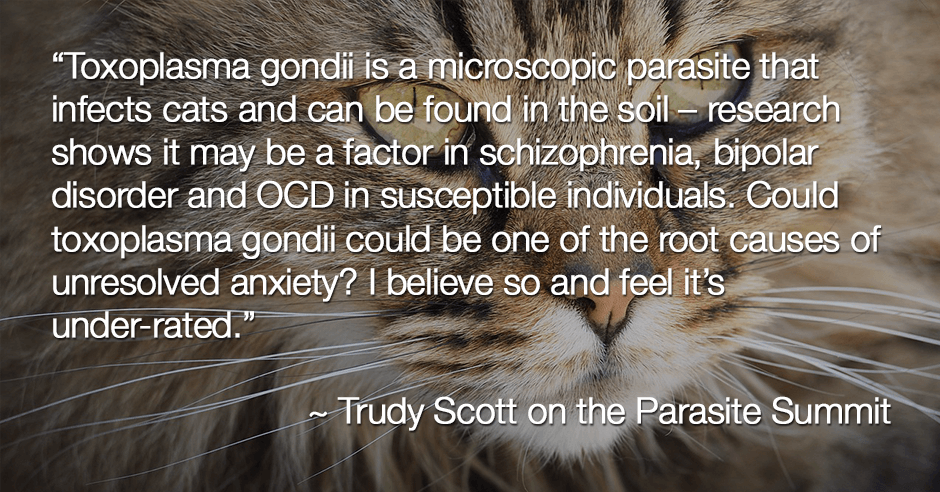
Toxoplasma gondii is a microscopic parasite that infects cats and can be found in the soil – research shows it may be a factor in schizophrenia, bipolar disorder and OCD in susceptible individuals. Could toxoplasma gondii could be one of the root causes of unresolved anxiety? I believe so and feel it’s under-rated.

This is the one of the parasitic infections I cover in an interview I did on The Parasite Summit.

Here are a few snippets from my interview:

A single-celled parasite called Toxoplasma gondii causes a disease known as toxoplasmosis.

Toxoplasma gondii is a microscopic parasite that infects cats and can be found in the soil. The infection can be acquired by ingesting contaminated food or water, by handling contaminated cat litter, or by transmission from mother-to-child.

According to the CDC – as of Mar 1, 2017 – in the United States it is estimated that 11% of the population 6 years and older have been infected with Toxoplasma. In various places throughout the world, it has been shown that up to 95% of some populations have been infected with Toxoplasma.

I love cats and have always been a cat person and pets are wonderful companions helping many of us humans recovering from PTSD and trauma – but we always need to dig deeper:

  • some individuals don’t respond as well to dietary changes, brain chemical balancing and addressing other biochemical/nutritional factors
  • I’m always looking for root possible causes. I’ve identified 70+ causes of anxiety and one of them is parasites
  • any parasite could be a factor – it causes stress and inflammation in the body, and we may see high cortisol leading to increased anxiety, insomnia and inflammation
  • could toxoplasma gondii could be one of the root causes of unresolved anxiety? I believe so and feel it’s under-rated – and believe we’ll be hearing more about it as more research comes out

I discuss this review paper published this year: Is Toxoplasma gondii a Trigger of Bipolar Disorder?

The association between T. gondii and schizophrenia/schizoaffective disorder is one of the most studied links between one pathogen and a psychiatric disorder.

However, growing emerging evidence has also documented an association between latent toxoplasmosis and the risk of [bipolar disorder] and suicidal/aggressive behaviors. T. gondii infection, as previously suggested for schizophrenia, may contribute to the onset and the progressive course of the disease interacting with genetic hereditary predisposing factors, as well as affecting neurotransmitter systems and immune responses, which have recently been shown to be closely linked to the pathogenesis of BD and its medical comorbidities.

The link between this parasite and psychiatric disorders could be also explained by its ability to influence neurotransmitter pathways. Indeed, T. gondii has been shown to increase dopamine levels, as well as to modulate serotonin, gamma-aminobutyric acid (GABA) and glutamate signaling.

With the impacts on neurotransmitters it’s clear how this parasite could directly trigger anxiety, panic attacks, fears, worry and even OCD. I cover this and more (malaria and malaria medications too) in my interview and book.

Parasites may be silently impacting your health and they’re FAR MORE COMMON than you think! Parasites aren’t just found in third-world countries, millions are already infected in industrialized countries and parasites could be silently hampering your health. Fortunately, with awareness and appropriate care, parasites can be prevented and treated, once detected.

If you’re struggling with any of the following, it may be worth looking into parasites:

  • Gastrointestinal: pain/cramps, excess gas, bloating, constipation/diarrhea
  • Infertility and hormone disorders
  • Skin issues: acne, itching, rashes
  • Mental health: depression, bipolar disorder, anxiety, OCD, schizophrenia
  • Challenges with autoimmune disease recovery (Toxoplasma gondii may also be a factor in Hashimoto’s thyroiditis)

Please share feedback and ask questions in the comments below.

Filed Under: Anxiety and panic, Events, Parasites Tagged With: anxiety, bipolar disorder, cats, dopamine, GABA, hashimoto's thyroiditis, OCD, parasite, schizophrenia, serotonin, The Parasite Summit, toxoplasma gondii, Trudy Scott

Mitomics – genetics of the mitochondria and food based antioxidants like curcumin

August 7, 2017 By Trudy Scott 2 Comments

Dr. David Haase, a functional medicine doctor and a leader in the field of genetics and genomics, covers mitomics in this very interesting interview on the upcoming Interpreting Your Genetics Summit which runs August 21-28, 2017.

Mitomics is the genetics of the mitochondria themselves. The mitochondria have their own set of genes. And that’s often given a lot of importance because we get our mitochondria from our mothers and therefore we inherit this genome from the mother and we get our mother’s energy per se.

But when you step back a little bit, you recognize that the genetics of the mitochondria are not just nuclear. It’s not just thirty-seven genes that hang out in the mitochondria, but rather, there is over a thousand genes that are in the nucleus that control the proteins or make proteins and influence the mitochondria at great levels. I’ve used a company called Courtagen who do whole mitome analysis. And in individuals with chronic fatigue syndrome or bizarre multi-system dysfunction, this is instrumental in giving a new plan of action to address.

He shares the story of a patient who had had chronic pain, fatigue and irritable bowel syndrome (a mitochondrial symptom)

She had tachycardia, palpitations, some dizziness. And so we actually did a whole mitome analysis on her and we found that she had a uniqueness in something called the TRAP1 related disease. I think it’s clever because the acronym is T1RED.

And this TRAP actually codes for a protein, which is a chaperone to the mitochondria and it’s involved in antioxidant defenses. And what’s been shown is that individuals with this TRAP1 related disease will be queasy, they’ll have pain and they’ll be fatigued and highly aggressive.

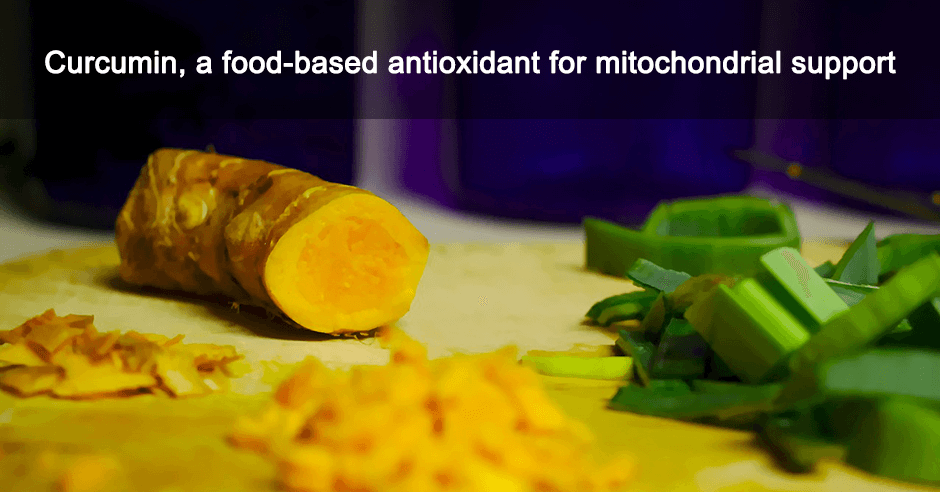
But when we found that she had this heterozygote for this particular abnormality – and it was associated with her having a lot of oxidative stress and elevation of hydroxyguanidine, which is a marker of genetic damage and oxidative damage, and elevations in her CK [creatine kinase], which was a marker of muscle injury. We went into this very intense antioxidant program with a lot of food-based antioxidants: sulforaphane, curcumin, resveratrol, CoQ10 and alpha-lipoic acid.

We went after this as aggressively as I think I’ve ever gone after this in a single patient with doses that are in excess of what I would typically use. And she had a remarkable recovery.

I share this snippet because with the tachycardia (an abnormally fast resting heart rate of at least 100 beats per minute) and palpitations, you may think it’s anxiety with a root cause such as low GABA or low serotonin or high cortisol or even Hashimoto’s thyroiditis, when in fact these symptoms are caused by mitochondrial TRAP-1 related disease.

I hope you can join us on Interpreting Your Genetics Summit, August 21-28, 2017. You can register here.

Here are some other reasons to attend:

  • once you register you’ll have immediate access to these interviews: Epigenetic Mastery for Everyone from Andrea Nakayama, CNC, CNE; The Current State of Genetics from Jeffrey Bland, PhD; and Your Genetics and Autoimmune Diseases with Dr. Tom O’Bryan, DC, CCN.
  • my digital ebook is available to you if you choose to purchase the series: Anxiety, Benzodiazepines and Your Genetics
  • as part of the lead up to the event, summit host, James Maskell will even be doing three of his own genetic tests and getting them interpreted by speakers from the summit

James Maskell has gathered world-renowned leaders from genetics, genomics and functional medicine and this promises to be a cutting-edge online event. These pioneering experts are on the front lines interpreting genetic data!

Hope to “see you” on the summit.

UPDATE August 11: I just went to the site and see this message today “Courtagen has closed its diagnostic laboratory and will no longer be accepting samples.”

They have a link to this press release of July 18 so it’s a brand new change: “Courtagen Life Sciences Inc. announced today that the company will be shifting the core focus of its business to medicinal cannabis genetics and testing. As the company reorients its business to respond to the growing opportunities in the medicinal cannabis industry, the company has made the decision to wind down its diagnostic neurology testing division.”

Filed Under: Events, Testing Tagged With: curcumin, genetics, Interpreting Your Genetics Summit, mitochondria, mitomics

GABA: an amino acid supplement for neurotransmitter support and anxiety relief

August 4, 2017 By Trudy Scott 44 Comments

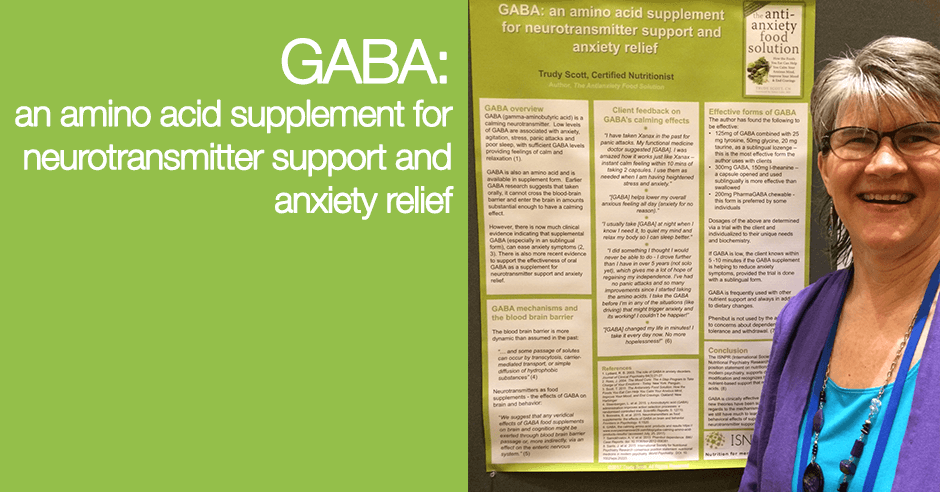
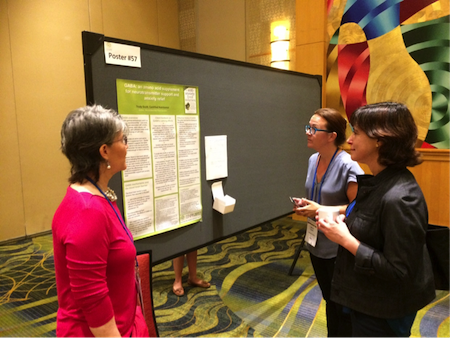
I recently attended the first international meeting of International Society for Nutritional Psychiatry Research and was honored and thrilled to present my poster – GABA: an amino acid supplement for neurotransmitter support and anxiety relief

Because you were not able to be there, here are the contents of my poster word for word.

GABA overview

GABA (gamma-aminobutyric acid) is a calming neurotransmitter. Low levels of GABA are associated with anxiety, agitation, stress, panic attacks and poor sleep, with sufficient GABA levels providing feelings of calm and relaxation (1).

GABA is also an amino acid and is available in supplement form. Earlier GABA research suggests that taken orally, it cannot cross the blood-brain barrier and enter the brain in amounts substantial enough to have a calming effect.

However, there is now much clinical evidence indicating that supplemental GABA (especially in a sublingual form), can ease anxiety symptoms (2, 3). There is also more recent evidence to support the effectiveness of oral GABA as a supplement for neurotransmitter support and anxiety relief.

GABA mechanisms and the blood brain barrier

The blood brain barrier is more dynamic than assumed in the past:

… and some passage of solutes can occur by transcytosis, carrier-mediated transport, or simple diffusion of hydrophobic substances (4)

Neurotransmitters as food supplements – the effects of GABA on brain and behavior:

We suggest that any veridical effects of GABA food supplements on brain and cognition might be exerted through blood brain barrier passage or, more indirectly, via an effect on the enteric nervous system. (5)

Client feedback on GABA’s calming effects

I have taken Xanax in the past for panic attacks. My functional medicine doctor suggested [GABA]. I was amazed how it works just like Xanax – instant calm feeling within 10 mins of taking 2 capsules. I use them as needed when I am having heightened stress and anxiety.

[GABA] helps lower my overall anxious feeling all day (anxiety for no reason).

I usually take [GABA] at night when I know I need it, to quiet my mind and relax my body so I can sleep better.”

I did something I thought I would never be able to do – I drove further than I have in over 5 years (not solo yet), which gives me a lot of hope of regaining my independence. I’ve had no panic attacks and so many improvements since I started taking the amino acids. I take the GABA before I’m in any of the situations (like driving) that might trigger anxiety and its working! I couldn’t be happier!

[GABA] changed my life in minutes! I take it every day now. No more hopelessness! (6)

Effective forms of GABA

The author has found the following to be effective:

  • 125mg of GABA combined with 25 mg tyrosine, 50mg glycine, 20 mg taurine, as a sublingual lozenge – this is the most effective form the author uses with clients
  • 300mg GABA, 150mg l-theanine – a capsule opened and used sublingually is more effective than swallowed
  • 200mg PharmaGABA chewable – this form is preferred by some individuals

Dosages of the above are determined via a trial with the client and individualized to their unique needs and biochemistry.

If GABA is low, the client knows within 5 -10 minutes if the GABA supplement is helping to reduce anxiety symptoms, provided the trial is done with a sublingual form.

GABA is frequently used with other nutrient support and always in addition to dietary changes.

Phenibut is not used by the author due to concerns about dependence, tolerance and withdrawal. (7)

Conclusion

The ISNPR (International Society for Nutritional Psychiatry Research) consensus position statement on nutritional medicine in modern psychiatry, supports dietary modification and recognizes the need for nutrient-based support that may include amino acids. (8)

GABA is clinically effective for anxiety, and new theories have been suggested with regards to the mechanism of action. However, we still have much to learn about the behavioral effects of supplemental GABA for neurotransmitter support and anxiety relief. (5)

References

  1. Lydiard, R. B. 2003. The role of GABA in anxiety disorders. Journal of Clinical Psychiatry 64(3):21-27.
  2. Ross, J. 2004. The Mood Cure: The 4-Step Program to Take Charge of Your Emotions – Today. New York: Penguin.
  3. Scott, T. 2011. The Antianxiety Food Solution: How the Foods You Eat Can Help You Calm Your Anxious Mind, Improve Your Mood, and End Cravings. Oakland: New Harbinger 
  4. Steenbergen, L. et al. 2015. γ-Aminobutyric acid (GABA) administration improves action selection processes: a randomised controlled trial. Scientific Reports. 5: 12770.
  5. Boonstra, E. et al. 2015. Neurotransmitters as food supplements: the effects of GABA on brain and behavior. Frontiers in Psychology. 6:1520.
  6. GABA, the calming amino acid: products and results (accessed July, 25, 2017)
  7. Samokhvalov, A. V. et al. 2013. Phenibut dependence. BMJ Case Reports. doi: 10.1136/bcr-2012-008381.
  8. Sarris, J. et al. 2015. International Society for Nutritional Psychiatry Research consensus position statement: nutritional medicine in modern psychiatry. World Psychiatry. DOI: 10. 1002/wps.20223

It was very encouraging to see the interest in my poster and this topic of GABA for anxiety! I shared how I use GABA with a number of psychiatrists, some dietitians, a psychiatric nurse practitioner, a number of researchers, and a number of nutritionists and health coaches.

I’m really pleased to have had the opportunity to meet so many amazing researchers and hope to be able to collaborate on research.  

Please let me know if you have questions and do share if you use GABA personally or use it with clients/patients.

Filed Under: Events, GABA Tagged With: anxiety relief, GABA, International Society for Nutritional Psychiatry Research, neurotransmitter support

Electromagnetic frequency pollution and wireless: a significant risk factor for disease

July 23, 2017 By Trudy Scott 23 Comments

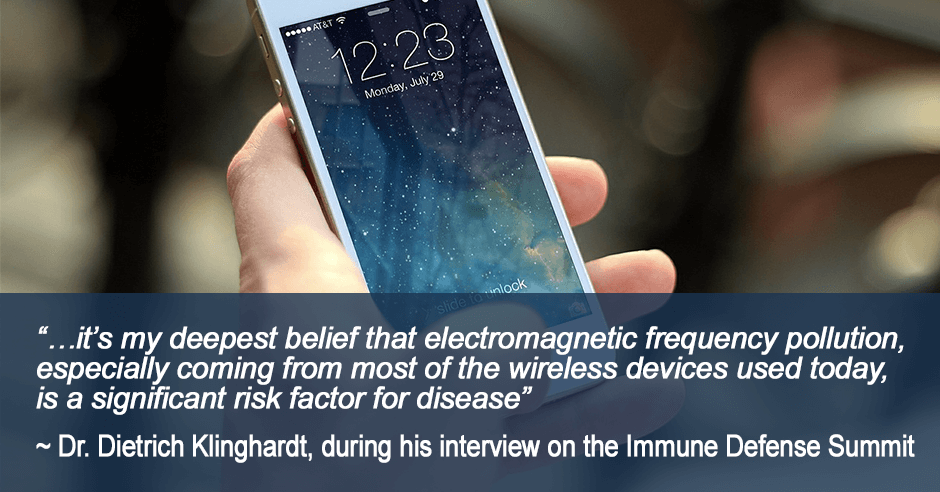
…it’s my deepest belief that electromagnetic frequency pollution, especially coming from most of the wireless devices used today, is a significant risk factor for disease”
~ Dr. Dietrich Klinghardt, during his interview on the Immune Defense Summit

Dr. Klinghardt is founder of the Klinghardt Academy, the American Academy of Neural Therapy, medical director of the Institute of Neural Biology, and lead clinician at the Sophia Health Institute shares this:

All the research points to the fact that it’s the cumulative effect of all the sources of Wi-Fi. We have the Wi-Fi router in the home; unfortunately, most of the cordless phones that are used in the US are also based on Wi-Fi technology. And they use 900 MHz, and they’re broadcasting 24/7 into the rooms in the home. Then we have the baby monitors, a huge source. And then the alarm systems in the house. And the new source, of course, the new kid on the block, is the smart meters…which create devastating amounts of radiation in the home, usually in a sheet that kind of goes horizontally through the house on the level where the smart meter is.

This is an in-depth interview and one of the best I’ve heard on the topic of EMFs and wireless technology and the dangers! He covers mercury containing compact fluorescent lights; Wi-Fi in schools; the responsible use of the cell phone; the impacts of this wireless technology on autism and insomnia, GABA and anxiety levels; how mold becomes more virulent in the presence of Wi-Fi; and how heavy metals in the brain can make you much more susceptible to microwave and wireless technology; how moisture contained in your mattress makes it a microwave receiver and more.    

He doesn’t expand on the insomnia mechanisms but because he mentions GABA I would assume using GABA as a supplement would help with both anxiety and sleep issues, in a similar way GABA helps with Lyme anxiety and GABA protects against fluoride-induced hypothyroidism.  This is an area I’m going to be researching further but clearly we want to be removing the source of exposure and not use GABA as a band-aid but rather as a tool to address the low GABA levels and anxiety/insomnia in the interim.

Dr. Klinghardt shares so much about how to protect yourself on the Immune Defense Summit. Here is some advice on how to protect your home from the incoming radio waves from the cell phone towers nearby, and from the neighbors:

We recommend the German system building biology. They have developed wall paints that can be applied to outside the home or inside the home with a graphite paint that’s electroconductive. It creates a faraday cage, basically, that needs to be grounded into the ground wire of your electric system, and shielding curtains that are made from silver coated cloth that deflect the incoming radio waves. That’s pretty much what we do with all of our clients.

He also offers the following tips for reducing exposure:

  • a sleep sanctuary that looks like a mosquito net that’s put over the bed that reduces the radiation to one-ten thousandths on the inside of it
  • only switch it on the Wi-Fi router if you need it – if you’re actually doing something with it
  • Stetzer filters

and much much more.

I was surprised that Dr. Klinghardt didn’t mention the Blushield devices which I learned about recently at the Sydney MINDD conference. I’m going to be following up with him to find out what results he has seen with these protective devices and will report back.

I do hope you can join us! Click here to register. The summit runs July 24-31

Be prepared – this interview is not for the faint of heart – Dr. Klinghardt is direct and to the point and doesn’t hold back.

Feel free to post questions and share your tips and experiences with EMFs and wireless in the comments.

Filed Under: Anxiety and panic, Environment, Events Tagged With: anxiety, Dr. Dietrich Klinghardt, electromagnetic frequency pollution, EMF, GABA, heavy metals, Immune Defense Summit, mold, wireless

  • « Go to Previous Page
  • Page 1
  • Interim pages omitted …
  • Page 7
  • Page 8
  • Page 9
  • Page 10
  • Page 11
  • Interim pages omitted …
  • Page 35
  • Go to Next Page »

Primary Sidebar

GABA QuickStart Homestudy

gaba quickstart homestudy

Free Report

9 Great Questions Women Ask about Food, Mood and their Health

You'll also receive a complimentary subscription to my ezine "Food, Mood and Gal Stuff"


Connect with me

Popular Posts

  • Amino Acids Mood Questionnaire from The Antianxiety Food Solution
  • The Antianxiety Food Solution Amino Acid and Pyroluria Supplements
  • Pyroluria Questionnaire from The Antianxiety Food Solution
  • Collagen and gelatin lower serotonin: does this increase your anxiety and depression?
  • Tryptophan for the worry-in-your-head and ruminating type of anxiety
  • GABA for the physical-tension and stiff-and-tense-muscles type of anxiety
  • The Antianxiety Food Solution by Trudy Scott
  • Seriphos Original Formula is back: the best product for anxiety and insomnia caused by high cortisol
  • Am I an anxious introvert because of low zinc and vitamin B6? My response to Huffington Post blog
  • Vagus nerve rehab with GABA, breathing, humming, gargling and key nutrients

Recent Posts

  • Her cravings for chips and peanut butter were triggered by stress: GABA ends cravings and reduces physical tension and fear of heights
  • It is truly miraculous to be able to move through life without crippling anxiety and panic
  • GABA and tryptophan combo provide immediate and noticeable relief for tremors and cervical dystonia in just 7 days
  • Red light therapy for back and neck pain, plantar fasciitis and low mood – a complement to the amino acids GABA, DPA and tryptophan
  • What do I use instead of Seriphos to help lower high cortisol that is affecting my sleep and making me anxious at night?

Categories

  • 5-HTP
  • AB575
  • Addiction
  • ADHD
  • Adrenals
  • Alcohol
  • Allergies
  • Alzheimer's disease
  • Amino Acids
  • Anger
  • Antianxiety
  • Antianxiety Food Solution
  • Antidepressants
  • Anxiety
  • Anxiety and panic
  • Autism
  • Autoimmunity
  • benzodiazapines
  • Bipolar disorder
  • Books
  • Caffeine
  • Cancer
  • Candida
  • Children/Teens
  • Collagen
  • Cooking equipment
  • Coronavirus/COVID-19
  • Cravings
  • Depression
  • Detoxification
  • Diabetes
  • Diet
  • DPA/DLPA
  • Drugs
  • EFT/Tapping
  • EMF
  • EMFs
  • Emotional Eating
  • Endorphins
  • Environment
  • Essential oils
  • Events
  • Exercise
  • Fear
  • Fear of public speaking
  • Fertility and Pregnancy
  • Fish
  • Food
  • Food and mood
  • Functional neurology
  • GABA
  • Gene polymorphisms
  • General Health
  • Giving
  • Giving back
  • Glutamine
  • Gluten
  • GMOs
  • Gratitude
  • Gut health
  • Heart health/hypertension
  • Histamine
  • Hormone
  • Hyperparathyroidism
  • Hypoglycemia
  • Immune system
  • Inflammation
  • Insomnia
  • Inspiration
  • Introversion
  • Joy and happiness
  • Ketogenic diet
  • Lithium orotate
  • Looking awesome
  • Lyme disease and co-infections
  • MCAS/histamine
  • Medication
  • Men's health
  • Mental health
  • Mercury
  • Migraine
  • Mold
  • Movie
  • MTHFR
  • Multiple sclerosis
  • Music
  • NANP
  • Nature
  • Nutritional Psychiatry
  • OCD
  • Osteoporosis
  • Oxalates
  • Oxytocin
  • Pain
  • Paleo
  • Parasites
  • Parkinson’s disease
  • PCOS
  • People
  • PMS
  • Postpartum
  • PTSD/Trauma
  • Pyroluria
  • Questionnaires
  • Real whole food
  • Recipes
  • Research
  • Schizophrenia
  • serotonin
  • SIBO
  • Sleep
  • Special diets
  • Sports nutrition
  • Stress
  • Sugar addiction
  • Sugar and mood
  • Supplements
  • Teens
  • Testimonials
  • Testing
  • The Anxiety Summit
  • The Anxiety Summit 2
  • The Anxiety Summit 3
  • The Anxiety Summit 4
  • The Anxiety Summit 5
  • The Anxiety Summit 6
  • Thyroid
  • Thyroid health
  • Toxins
  • Tryptophan
  • Tyrosine
  • Uncategorized
  • Vegan/vegetarian
  • Women's health
  • Yoga

Archives

  • May 2026
  • April 2026
  • October 2025
  • September 2025
  • August 2025
  • July 2025
  • June 2025
  • May 2025
  • April 2025
  • March 2025
  • February 2025
  • January 2025
  • November 2024
  • October 2024
  • September 2024
  • August 2024
  • July 2024
  • June 2024
  • May 2024
  • April 2024
  • March 2024
  • February 2024
  • January 2024
  • December 2023
  • November 2023
  • October 2023
  • September 2023
  • August 2023
  • July 2023
  • June 2023
  • May 2023
  • April 2023
  • March 2023
  • February 2023
  • January 2023
  • December 2022
  • November 2022
  • October 2022
  • September 2022
  • August 2022
  • July 2022
  • June 2022
  • May 2022
  • April 2022
  • March 2022
  • February 2022
  • January 2022
  • December 2021
  • November 2021
  • October 2021
  • September 2021
  • August 2021
  • July 2021
  • June 2021
  • May 2021
  • April 2021
  • March 2021
  • February 2021
  • January 2021
  • December 2020
  • November 2020
  • October 2020
  • September 2020
  • August 2020
  • July 2020
  • June 2020
  • May 2020
  • April 2020
  • March 2020
  • February 2020
  • January 2020
  • December 2019
  • November 2019
  • October 2019
  • September 2019
  • August 2019
  • July 2019
  • June 2019
  • May 2019
  • April 2019
  • March 2019
  • February 2019
  • January 2019
  • December 2018
  • November 2018
  • October 2018
  • September 2018
  • August 2018
  • July 2018
  • June 2018
  • May 2018
  • April 2018
  • March 2018
  • February 2018
  • January 2018
  • December 2017
  • November 2017
  • October 2017
  • September 2017
  • August 2017
  • July 2017
  • June 2017
  • May 2017
  • April 2017
  • March 2017
  • February 2017
  • January 2017
  • December 2016
  • November 2016
  • October 2016
  • September 2016
  • August 2016
  • July 2016
  • June 2016
  • May 2016
  • April 2016
  • March 2016
  • February 2016
  • January 2016
  • December 2015
  • November 2015
  • October 2015
  • September 2015
  • August 2015
  • July 2015
  • June 2015
  • May 2015
  • April 2015
  • March 2015
  • February 2015
  • January 2015
  • December 2014
  • November 2014
  • October 2014
  • September 2014
  • August 2014
  • July 2014
  • June 2014
  • May 2014
  • April 2014
  • March 2014
  • February 2014
  • January 2014
  • December 2013
  • November 2013
  • October 2013
  • September 2013
  • August 2013
  • July 2013
  • June 2013
  • May 2013
  • April 2013
  • March 2013
  • February 2013
  • January 2013
  • December 2012
  • November 2012
  • October 2012
  • August 2012
  • July 2012
  • June 2012
  • May 2012
  • April 2012
  • March 2012
  • February 2012
  • January 2012
  • December 2011
  • November 2011
  • October 2011
  • September 2011
  • August 2011
  • July 2011
  • June 2011
  • May 2011
  • April 2011
  • March 2011
  • February 2011
  • January 2011
  • December 2010
  • October 2010
  • September 2010
  • July 2010
  • May 2010
  • April 2010
  • March 2010
  • February 2010
  • January 2010
  • November 2009

Share the knowledge!

The above statements have not been evaluated by the Food and Drug Administration. Products listed in this website are not intended to diagnose, treat, cure or prevent any disease.

The information provided on this site is for informational and educational purposes only and is not intended as a substitute for advice from your physician or other health care professional. You should consult with a healthcare professional before starting or modifying any diet, exercise, or supplementation program, before taking or stopping any medication, or if you have or suspect you may have a health problem.


Copyright © 2026 Trudy Scott. All Rights Reserved. | Privacy | Terms and Conditions | Refund Policy | Medical Disclaimer

Free Report

9 Great Questions Women Ask about Food, Mood and their Health

You’ll also receive a complimentary subscription to my ezine “Food, Mood and Gal Stuff”