• Skip to primary navigation
  • Skip to main content
  • Skip to primary sidebar

everywomanover29 blog

Food, Mood and Women's Health – Be your healthiest, look and feel great!

  • Blog
  • About
  • Services
  • Store
  • Resources
  • Testimonials
  • The Book
  • Newsletter
  • Contact
  • Search this site

Events

My Kid is Not Crazy and PANS/PANDAS awareness day 2017

October 13, 2017 By Trudy Scott 33 Comments

Earlier this week was PANS/PANDAS awareness day 2017 so I’d like to bring some awareness to this condition that causes sudden-onset OCD (obsessive compulsive disorder) type symptoms and anxiety. The PANDAS Network defines PANDAS as follows:

PANDAS (Pediatric Autoimmune Neuropsychiatric Disorders Associated with Streptococcal Infections) occurs when strep triggers a misdirected immune response results in inflammation on a child’s brain. In turn, the child quickly begins to exhibit life changing symptoms such as OCD, anxiety, tics, personality changes, decline in math and handwriting abilities, sensory sensitivities, restrictive eating, and more.

PANDAS Network estimates that PANDAS/PANS affects as many as 1 in 200 children.
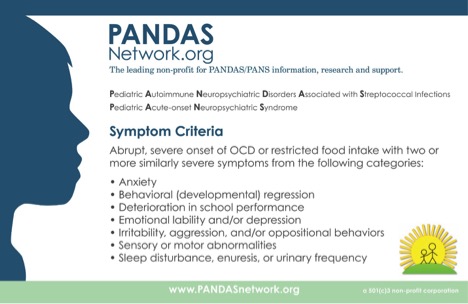
This Huffington Post article: Misdiagnosed: How Children With Treatable Medical Issues Are Mistakenly Labeled as Mentally Ill covers one family’s experience with misdiagnosis with their daughter and the treatment that eventually helped her recover. As you’ll read in the blog, PANS/PANDAS is still very poorly understood in the medical community and misdiagnoses are very common:

the vast majority of pediatricians, child psychiatrists, and neurologists are unapprised of the latest research and continue to misdiagnose children who have PANS/PANDAS with any number of mental health disorders.

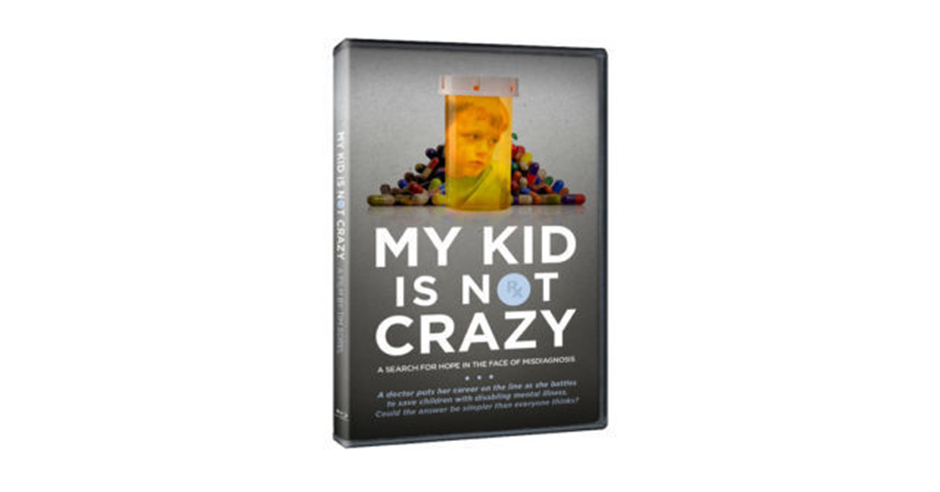
The new movie My Kid Is Not Crazy is another great resource for gaining a better understanding of this condition. Here are some snippets from this excellent movie:

Nine-year-old Kathryn was a normal, healthy child. She was a star student, athlete and dancer. In a matter of days, she would become totally dysfunctional. Kathryn had alarming rapid-onset OCD refusing to eat or drink. She had tremendous separation anxiety and would become panicked if her parents were not in sight. She had trouble sleeping and showed signs of age regression in vocabulary and handwriting.

How did this happen?

Kathryn’s family and many families like them— turned to a fractured medical system, where there is fierce disagreement about how to help their daughter. More often than not, a child with these symptoms would be diagnosed as having mental illness. They’d be treated with anti-psychotic medication, behavior therapy, and even hospitalization.
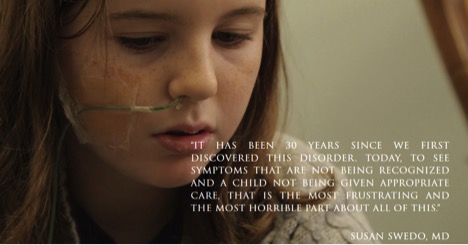
But more than 30 years ago, Susan Swedo—a doctor with the National Institutes of Health—discovered that an undiagnosed strep infection was the cause of one child’s disabling illness. The more Swedo dug, the more evidence she found: Strep was linked to symptoms normally chalked up to psychiatric illness.

She also discovered how non-accepting modern medicine can be of new ideas.

Swedo has put her reputation and career in jeopardy as she fights to cure the condition she named: Pediatric Autoimmune Neuropsychiatric Disorder Associated with Streptococcal Infections (PANDAS). Neurologists Jonathan Mink, Roger Kurlan, Harvey Singer and others publically ridicule Swedo and her PANDAS theory, creating controversy over diagnoses and treatment. This group has become known on social media as the “non-believers.” The result: the entire pediatric-care industry is confused and doesn’t know what to do.

And it’s the children who suffer.

“My Kid is Not Crazy,” a film by Tim Sorel, tracks the journey of six children and their families as they become tangled in the nightmare of a medical system heavily influenced by the pharmaceutical industry. Here it’s common for a caregiver to prescribe a young child with a Selective Serotonin Uptake Inhibitor (SSRI) but hesitate to prescribe an antibiotic to counteract a potential infectious-based trigger. For some of these kids, what happens after several years is shocking and sad.

You can watch the trailer here and rent the movie to watch it online or purchase the DVD here.

The movie site also lists many helpful resources for PANS/PANDAS.

Last week’s blog: Anxiety, compulsive thinking, counting behaviors: gluten, tryptophan and inositol covered gluten, tryptophan and inositol for OCD symptoms. I mentioned that I also always keep Lyme disease, heavy metals and PANDAS on the list as possible areas to refer out for if symptoms are not resolving with the above nutritional approaches, so it made sense to share more about PANDAS this week.

Even if the OCD and anxiety is due to PANS/PANDAS, I would still encourage a gluten-free diet and trials of tryptophan, GABA and inositol (and other nutritional approaches) in order to provide some relief while the infection/s are being addressed. Similar results are seen when providing nutrient support like the use of GABA (and/or tryptophan) for relief for Lyme anxiety.

Do you know about PANS/PANDAS and the connection to OCD and anxiety?

Have you seen symptom resolution by addressing the infection/s one of your children, personally or with a patient or client?

Have you seen some symptom relief when also using GABA and/or tryptophan and/or inositol?
Filed Under: Events Tagged With: My kid is not crazy, OCD, PANDAS, PANS, Susan Swedo, Tim Sorel, tryptophan

Lemongrass essential oil for cancer and anxiety: The Truth About Cancer livestream

October 2, 2017 By Trudy Scott 4 Comments

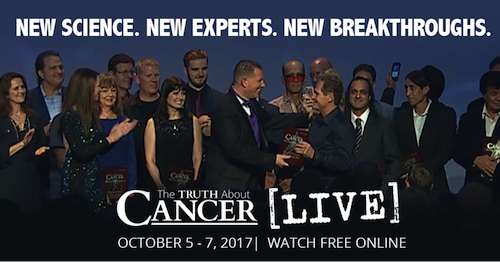
The Truth About Cancer live event which runs Oct 5-7 and the livestream broadcast starts on Thursday, October 5th at 9am Eastern. You can tune in and listen from home!

This event brings you the latest in natural cancer prevention, new therapies, cancer diets, toxins to avoid and much much more!

What’s so encouraging is that many of the natural treatments and approaches for cancer also help with reducing anxiety. One of these is the essential oil of lemongrass.

One of my favorite essential oil experts is Dr. Eric Zielinski and he is talking about Essential Oils, Aromatherapy, and Cancer. Dr. Z shares this about lemongrass essential oil and cancer:  

In 2009, an article was published that evaluated the essential oil of Cymbopogon flexuosus (a variety of lemongrass) for its in vitro cytotoxicity ability against 12 human cancer cell lines; as well as its anticancer effects on mice in vivo. The results were remarkable. Researchers discovered that the essential oil triggers a variety of mechanisms that kill cancer cells. “Our results indicate that the oil has a promising anticancer activity and causes loss in tumor cell viability by activating the apoptotic process as identified by electron microscopy.”

Research also shows that the GABAergic system contributes to the anxiety-reducing effect of essential oil from lemongrass (cymbopogon citratus).

A number of speakers are sharing the benefits of the ketogenic diet for cancer prevention and healing

  • Joseph Mercola – Ketogenic Diet and Cancer
  • Dr. Toni Bark – Ketogenic Diet and disease reversal and prevention
  • Cherie Calbom – Juice, Juice, and More Juice to Treat & Prevent Cancer: How Vegetable Juicing Complements a Ketogenic Diet

As you heard recently from Dr. David Jockers on the Mental Wellness Summit, the ketogenic diet helps with anxiety because it improves the ability of glutamate converting into GABA:

There is a relationship between glutamate, which is an excitatory neurotransmitter in the brain, and GABA, which is an inhibitory neurotransmitter. Glutamate naturally converts into GABA when certain nutrients are present – like magnesium and vitamin B6 – along with a properly working GAD enzyme.

Now, when we have ketones present, they have been shown to improve the ability to convert glutamate into GABA.

Dr. David Jockers is also a speaker at The Truth About Cancer and is covering The Sugar-Cancer Connection

The list of speakers is truly a Who’s Who of natural cancer therapies … and includes superstars like:

  • Patrick Quillin – Beating Cancer with Nutrition
  • Robert Scott Bell – Gut Health, the Microbiome, and Cancer
  • Rashid Buttar -The Cancer Conflict: Resolving the 5th Toxicity
  • Tony Jimenez – Treating Cancer with Sound and Light
  • Mike Adams – The importance of “ORGANIC”
  • Del Bigtree – Freedom of Choice in Medicine
  • Chris Wark – How “Chris Beat Cancer”
  • Sayer Ji – Epigenetics and Cancer
  • Dr. Darrell Wolfe – DETOX and the Lymphatic system
  • Jeffrey Smith – How GMOs have been linked to cancer
  • Doug Kaufman – The Fungal Link to Cancer
  • Pharmacist Ben Fuchs – Skin Health & Skin Cancer
  • Barbara Loe Fisher – Freedom of Choice in Medical Interventions
  • Dr. Stuart Nunnally – Biological Dentistry and Cancer Prevention
  • Dr. Ben Johnson – Stem Cells, Lasers, and Novel Approaches for Cancer
  • Dr. Marlene Siegel – Preventing and Treating Cancer in Pets

And many more!

It’s 3 days that could very well save your life or the life of someone you love.

You’re invited to watch it LIVE at no cost from the comfort of your own home.

Take a minute to get all the details right here. The broadcast starts Thursday, October 5th at 9am Eastern.

I don’t often share resources about cancer but I feel this is such an amazing opportunity to learn and feel empowered so you don’t have to feel anxious about cancer. These experts may just have the healing answers you’ve been looking for! Please share with your friends, family and anyone else you think could use this information!

Just like there is hope and solutions for anxiety, there is HOPE … and healing … and survival for cancer too.

To your health! See you on the livestream!

Filed Under: Cancer, Essential oils, Events Tagged With: anxiety, cancer, Dr. Eric Zielinski, essential oils, Ketogenic diet, lemongrass, The Truth About Cancer, Ty Bolinger

A ketogenic diet for energy, mood stability and an end to anxiety

September 21, 2017 By Trudy Scott 20 Comments

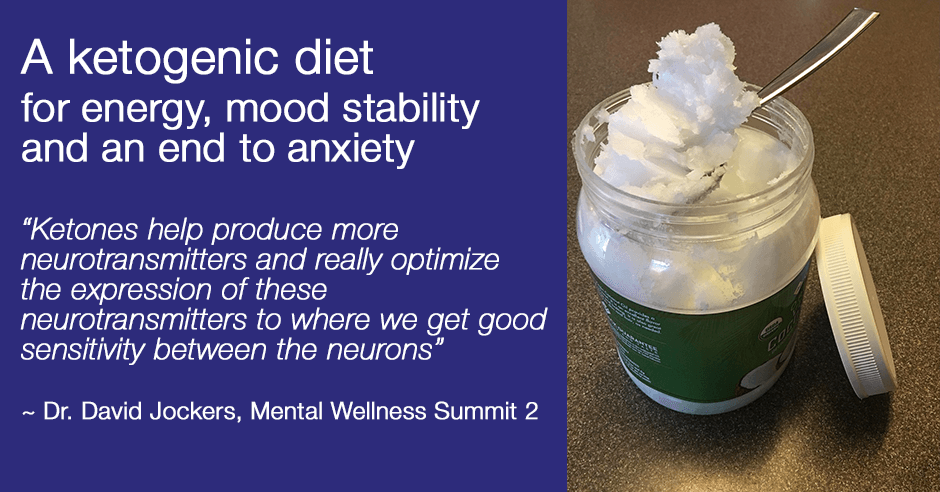
Dr. David Jockers, is interviewed on the topic of the ketogenic diet on the Mental Wellness Summit 2, which airs online September 25 – October 2, 2017. The title of his interview is “Ketogenesis for Energy Stability” but I feel it could be called “Ketogenesis for Energy, Mood Stability and an end to Anxiety.” It’s a brilliant interview and he starts by sharing how the brain can use ketones and not only sugar: 

We know that about 2/3 of the brain energy can be produced by ketones. We used to think that basically the brain depended upon sugar as its only energy source. And it does need a small amount of sugar, and that’s why it’s so important we have to have a certain level of blood glucose. However, as we get keto-adapted, when we start to utilize ketones as an energy source, the brain gets much more effective and efficient, and it needs less of the sugar. 

And that’s important because sugar produces a lot more metabolic waste. And so when the brain is using ketones, there is going to be less free radical damage and what we call oxidative stress in the brain, so less damage being associated with the various neurons in the brain therefore better connection, better communication.

He shares that ketones are epigenetic influencers and improve neuron sensitivity thereby improving neurotransmitter production:

Ketones act to induce healthy genetic expression. They’re epigenetic influencers where they actually influence the brain to promote more BDNF (brain derived neurotrophic growth factor), which helps grow more neurons and more synapses (little gaps between the neurons). They help produce more neurotransmitters and really optimize the expression of these neurotransmitters to where we get good sensitivity between the neurons.

So when the neurons secrete serotonin, the next neuron is able to actually connect with that very easily and realize “hey, this is the message that we need to get across.”

Dr. Jockers then goes into the relationship between GABA and glutamate and how the ketogenic diet improves the ability of glutamate converting into GABA:

There is a relationship between glutamate, which is an excitatory neurotransmitter in the brain, and GABA, which is an inhibitory neurotransmitter. Glutamate naturally converts into GABA when certain nutrients are present – like magnesium and vitamin B6 – along with a properly working GAD enzyme.

Now, when we have ketones present, they have been shown to improve the ability to convert glutamate into GABA.

Individuals with anxiety or obsessive compulsive [disorder] often have excessive amounts of glutamate, which can cause too much excitation in the brain and something called excitotoxicity that damages a whole bunch of different neurons, and causes massive neuronal death in parts of the brain. It can lead to symptoms like anxiety, headaches, migraines and seizures. The ketogenic diet has been shown in many studies to be a very powerful remedy for seizure disorders like epilepsy. That’s where this neuropharmacology of the ketogenic diet was analyzed in detail where they came up with the understanding that it impacts this glutamate to GABA conversion.

When we have adequate amounts of GABA and this proper relationship of glutamate to GABA, we feel very emotionally balanced and calm. We are able to fall asleep well. We have less pain in our body, and less susceptibility to headaches. In general, we just feel very emotionally balanced, and that’s what we’re going for.

Ketones are a huge help when it comes to that. When you’re in a state of ketosis, your natural feeling should be that you just feel awesome. You feel like a high performer. You feel at peace and you feel calm. That’s a sign that you’re in ketosis. If you are on a low carb ketogenic diet but you’re noticing irritability, anxiety and headaches, you’re actually not using the ketones. Your body is not actually keto-adapted. Instead, you’re in a hypoglycemic mode where your blood sugar is too low. You’re not using the ketones, and you’re getting exitotoxicity in your brain.

He goes on to share what a ketogenic diet should look like:

Avocados, coconut oil, coconut butter, coconut flakes, coconut milk, grass-fed butter, so butter or ghee (which is clarified butter from grass-fed cows) olives, olive oil. You want at least one of those in every single meal and you want a lot of it in every single meal.

Dr. Jockers shares about how much protein to eat, what proteins to eat, what fruits and vegetables and how much to eat, how he cycles in and out of ketosis, how he uses intermittent fasting, his favorite supplements to support ketosis (magnesium threonate is one of them), his favorite adrenal adaptogens and much more.

I hope you can us join on The Mental Wellness Summit 2 summit  to hear Dr. Jockers and other excellent speakers.

I know they are referring to medications but I find it quite funny that the hosts say the “magic pill” solution is not the answer. As you’ll hear in my interview, the dangers of benzodiazepines and why GABA is a more effective option for anxiety, I believe that GABA (and tryptophan and the other amino acids) are truly “magic pill” solutions that help so many seeking relief while they dig deeper for other contributing root causes and start to make dietary changes, whether it’s switching to real whole foods, quitting gluten, removing all grains or implementing a ketogenic diet.

Registration details are here

And let us know if you’d like to learn more about the ketogenic diet.

Also let us know how the ketogenic diet has helped you.

Filed Under: Events Tagged With: anxiety, calming, Dr. David Jockers, GABA, glutamate, Ketogenic diet, ketones, neurotransmitters

Parasites, heavy metals and Lyme disease on the Parasite Summit

September 10, 2017 By Trudy Scott 4 Comments

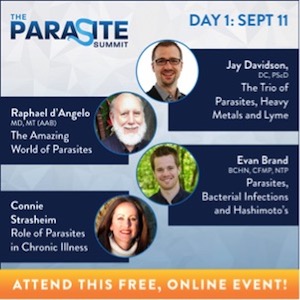
Here are a few snippets from some of the interviews on the Parasite Summit:

The Trio of Parasites, Heavy Metals and Lyme Disease by Dr. Jay Davidson 

from what we understand research wise, Lyme disease, which is technically a bacteria or spirochete, has been shown to live inside of certain nematodes, which is essentially a type of parasite like a roundworm. So parasites can actually house Lyme disease, or bacteria, or other viruses, or other bacteria. And then, parasites are also a huge sponge for absorbing heavy metals.

And here’s what’s really crazy to think about. Parasites absorb heavy metals. So if you run a test and think, “Oh, man, I must have a ton of heavy metals because Dr. Jay and Dr. Scott are saying heavy metals are like this big thing,” and all of a sudden you have like no heavy metals show up or even false lows, and let’s say you “ran the test right,” it could mean that you also have a massive parasite issue because parasites absorb heavy metals. And if you didn’t deal with the parasites, then the heavy metals are still in the parasite, which then means that, from a testing standpoint, can still come up negative.

Digestion Strategies for Parasite Prevention by Dr. David Jockers

Now, somebody that does have their gallbladder taken out, you’re still producing bile. You just can’t produce as much. And so ultimately, therefore, you’re going to be at a much greater risk of developing something like a parasitic overgrowth if you don’t already have one. Which is typically one of the problems when you do have a sluggish gallbladder, oftentimes, it’s associated with a parasitic overgrowth or some sort of bacterial overgrowth in your small intestine.

I think it has to do with the ability of bile to be an emulsifier. Okay. So not only is it good for breaking up fatty acids in there, which is super key for digestion there, but the outer membrane of a lot of bacteria and microbes also is a fatty membrane. And so it can help break that up, as well. I believe that’s the main mechanism for it.

Parasites: Root Cause of Mystery Diseases by Ann Louise Gittleman

I think if any of your listeners have real difficulty in shaking off some of sort of illness, and if they’ve been feeling tired and listless and if they have a problem that the doctor simply can’t identify, then they have to begin to suspect that parasites could be the underlying cause. I also want them to remember that parasitic diseases don’t always happen to people just in other countries. The rate of parasite related disorders in our country is just about skyrocketing. And every single one of the 134 species that have been identified has been found on our shores.

The dark circles, the intermittent diarrhea, the persistent acne, anorexia, food intolerance, palpitations, puffy eyes, depression. Oh, that’s a good one. And there have been clinical studies from JAMA, as I recall, where they’ve connected toxoplasmosis with depression. So depression is big…who would connect it with a parasite? And the inability to relax and anxiety and being overly angry very oftentimes can have a toxoplasmosis connection.

I cover toxoplasma gondii in great detail in my interview on the Parasite Summit, as well as malaria and malaria medications.

At the Parasite Summit, experts will help you determine if parasites are silently impacting your health–they’re FAR MORE COMMON than you think! Parasites aren’t just found in third-world countries, millions are already infected in industrialized countries and could be silently hampering your health. Fortunately, with awareness and appropriate care, parasites can be prevented and treated, once detected.

If you’re struggling with any of the following, don’t miss this event:

  • Gastrointestinal: pain/cramps, excess gas, bloating, constipation/diarrhea
  • Infertility and hormone disorders
  • Skin issues: acne, itching, rashes
  • Mental health: depression, bipolar disorder, anxiety, OCD, schizophrenia
  • Challenges with autoimmune disease recovery (Toxoplasma gondii may be a factor in Hashimoto’s thyroiditis)

The Parasite Summit is online from September 11-18, 2017 and you can register here I hope you can join us!

Please share feedback and ask questions in the comments below.

Filed Under: Events, Parasites Tagged With: ann louise gittleman, anxiety, David Jockers, heavy metals, Jay Davidson, Lyme Disease, The Parasite Summit, toxoplasma gondii

How the love hormone, oxytocin, is critical for gut health

September 7, 2017 By Trudy Scott 17 Comments

Dr. Lindsey Berkson’s fascinating interview on the Digestive Health Summit, hosted by Dr. Michael Murray, is all about the love hormone or oxytocin and the effects on digestion. The interview is called – How the Love Hormone is Critical for Gut Health.

Oyxtocin is not just a love hormone. It is also a helpful gut hormone. Dr. Berkson will clearly and easily explain the role of oxytocin in gut motility, sensation, tone of the muscular and nervous system layers, and even in the application for various gut issues from leaky gut to inflammatory bowel disease. You will also learn why nature intended oxytocin to be a care-taker of human health and how critical this hormone is in both genders throughout life. Historically oxytocin was regarded as a pregnancy and lactation hormone but you will now learn how it is even amazingly much more.  She shares that the love hormone: 

can be endocrine-disrupted by plastic, by Bisphenol A, by synthetic oxytocin given to a mother at birth i.e. Pitocin. I started using oxytocin in practice about 15 years ago as a hormonal Viagra and a rebooter, and I suddenly discovered that when I added it to the protocol of my inflammatory bowel disease patients, often people who were on Prednisone, methotrexate, on multiple meds, that could barely drag themselves out of bed, they were having many bowel movements a day, many of them were diarrhea-like and bloody; when I added oxytocin to them, usually within a few weeks we were able to get them off most of their meds and their health just came up incredibly.

There are oxytocin receptors all throughout the gut:

They’re in the esophagus. They’re in the stomach. They’re in the small intestine, the large intestine, they’re in the pancreas. They have a lot to do with the alpha and beta cells, with the release and maintenance of sugar. They’re in the liver; they have a lot to do with detoxification.

And oxytocin has also been shown to have an impact on constipation:

They have a double-blind, randomized trial in women with constipation and when they gave them oxytocin, they just delivered nasally because it first acts on the brain and then it has peripheral or distant actions. They had statistically significant normalization of bowel movements with oxytocin sprayed through the nose. How amazing is that?

Dr. Berkson then shares how intimacy and regular love-making improves gut health via oxytocin release:

I was so struck by how regular, satisfying intimacy was right up there with veggies and exercise [for longevity] and I was trying to figure out why, is it just the human contact? Well, one of the reasons was because both men and women become drenched in oxytocin and so nature takes care of your gut.

It’s a really fascinating interview with new information that is science-based.  It is not to be missed!

You can register for the Digestive Health Summit here

Other interviews include:

  • Joe Pizzorno, ND – The Toxin Solution: How to Clean Up the Gut to Ignite Vibrant Health
  • Wardee Harmon – Improve Your Gut Health and Save Money by Making Your Own Fermented Foods at Home
  • Razi Berry – Butterflies in Your Stomach: How Stess and Love Affect Digestive Health
  • Trudy Scott – Anxiety, the Microbiome, Psychobiotics and GABA
  • And more

Hope to see you on the summit!

Filed Under: Events, Gut health Tagged With: gut health, Lindsey Berkson, love hormone, oxytocin

Pain Treatments That Work: My experience with GABA for anxiety and pain

August 31, 2017 By Trudy Scott 14 Comments

My friend and colleague, occupational therapist Phaedra Antioco, is a pain expert, has been in pain herself, and she’s on a mission to help you heal. She is host of the Pain Treatments That Work 2.0 online summit that runs Sept 2 – 9, 2017.

She’s bringing together more than 25 experts, including me, to share unique and innovative approaches to pain healing—approaches that work when nothing else has. You’ll learn:

  • Healthy ways to move your body, without pain, so you can get the exercise your body needs, and enjoy the myriad benefits including decreased anxiety, better health, and more fun.
  • Tips for managing stress so you can find more joy in each day.
  • How to find deeper meaning and more fulfillment in your life.
  • How to let go of physical and emotional pain and get through your day happy and pain-free (Really! It is possible).
  • Effective treatments that work … including some you may not have heard of.

I share more about my recent back injury and how I used GABA – sometimes in pretty high doses – to ease this recent pain and how I’ve used it and other approaches for the pain I’ve experienced in the past. Wow I hadn’t realized how much pain I’ve experienced in my life until I prepared for this interview (climbing injuries, car accidents, neck injury from poor posture at the computer, shingles, a tick bite and more!)

We also talk about the anxiety connection to pain and how fear can make us clench up and make the pain worse. And the role of GABA and tryptophan in this instance. Phaedra shares how much GABA helps her and her clients too!

I also asked Phaedra to share her expertise on pelvic floor adjustments:

Pelvic floor dysfunction commonly occurs from scars from abdominal/pelvic surgeries, childbirth, traumatic falls and injuries, and even too much sitting. Symptoms of Pelvic Floor Disorder in both men and women can cause chronic pelvic pain, inability to sit for long periods of time, urinary or rectal incontinence, painful intercourse, painful menstrual cycles in women and erectile dysfunction in men, to name a few. 

Manual internal treatment of the pelvic floor, using a myofascial release and craniosacral therapy approach, makes an excellent treatment choice for pelvic floor dysfunction due to the gentle-nature of treatment techniques. 

Pelvic floor treatment begins externally with releases of the abdomen and pelvis. Once a therapeutic relationship is established, internal treatment may be recommended.  Results often include relief from pain, improved sitting, walking and sleeping, and better elimination!

I also share my concerns with using collagen and gelatin for healing and how they may actually be lowering serotonin levels and contributing to anxiety and depression in susceptible individuals

I see everyone raving about gelatin and collagen (and rightly so – they are amazing) and yet no-one is addressing that fact that gelatin is actually used in tryptophan-depletion studies to lower serotonin. And it really concerns me that this aspect is ignored

You can register here.

I do hope you can join us!

Filed Under: Events, Pain Tagged With: collagen, pain treatment, Pain Treatments That Work 2.0, pelvic floor, Phaedra Antioco

  • « Go to Previous Page
  • Page 1
  • Interim pages omitted …
  • Page 6
  • Page 7
  • Page 8
  • Page 9
  • Page 10
  • Interim pages omitted …
  • Page 35
  • Go to Next Page »

Primary Sidebar

GABA QuickStart Homestudy

gaba quickstart homestudy

Free Report

9 Great Questions Women Ask about Food, Mood and their Health

You'll also receive a complimentary subscription to my ezine "Food, Mood and Gal Stuff"


Connect with me

Popular Posts

  • Amino Acids Mood Questionnaire from The Antianxiety Food Solution
  • The Antianxiety Food Solution Amino Acid and Pyroluria Supplements
  • Pyroluria Questionnaire from The Antianxiety Food Solution
  • Collagen and gelatin lower serotonin: does this increase your anxiety and depression?
  • Tryptophan for the worry-in-your-head and ruminating type of anxiety
  • GABA for the physical-tension and stiff-and-tense-muscles type of anxiety
  • The Antianxiety Food Solution by Trudy Scott
  • Seriphos Original Formula is back: the best product for anxiety and insomnia caused by high cortisol
  • Am I an anxious introvert because of low zinc and vitamin B6? My response to Huffington Post blog
  • Vagus nerve rehab with GABA, breathing, humming, gargling and key nutrients

Recent Posts

  • Her cravings for chips and peanut butter were triggered by stress: GABA ends cravings and reduces physical tension and fear of heights
  • It is truly miraculous to be able to move through life without crippling anxiety and panic
  • GABA and tryptophan combo provide immediate and noticeable relief for tremors and cervical dystonia in just 7 days
  • Red light therapy for back and neck pain, plantar fasciitis and low mood – a complement to the amino acids GABA, DPA and tryptophan
  • What do I use instead of Seriphos to help lower high cortisol that is affecting my sleep and making me anxious at night?

Categories

  • 5-HTP
  • AB575
  • Addiction
  • ADHD
  • Adrenals
  • Alcohol
  • Allergies
  • Alzheimer's disease
  • Amino Acids
  • Anger
  • Antianxiety
  • Antianxiety Food Solution
  • Antidepressants
  • Anxiety
  • Anxiety and panic
  • Autism
  • Autoimmunity
  • benzodiazapines
  • Bipolar disorder
  • Books
  • Caffeine
  • Cancer
  • Candida
  • Children/Teens
  • Collagen
  • Cooking equipment
  • Coronavirus/COVID-19
  • Cravings
  • Depression
  • Detoxification
  • Diabetes
  • Diet
  • DPA/DLPA
  • Drugs
  • EFT/Tapping
  • EMF
  • EMFs
  • Emotional Eating
  • Endorphins
  • Environment
  • Essential oils
  • Events
  • Exercise
  • Fear
  • Fear of public speaking
  • Fertility and Pregnancy
  • Fish
  • Food
  • Food and mood
  • Functional neurology
  • GABA
  • Gene polymorphisms
  • General Health
  • Giving
  • Giving back
  • Glutamine
  • Gluten
  • GMOs
  • Gratitude
  • Gut health
  • Heart health/hypertension
  • Histamine
  • Hormone
  • Hyperparathyroidism
  • Hypoglycemia
  • Immune system
  • Inflammation
  • Insomnia
  • Inspiration
  • Introversion
  • Joy and happiness
  • Ketogenic diet
  • Lithium orotate
  • Looking awesome
  • Lyme disease and co-infections
  • MCAS/histamine
  • Medication
  • Men's health
  • Mental health
  • Mercury
  • Migraine
  • Mold
  • Movie
  • MTHFR
  • Multiple sclerosis
  • Music
  • NANP
  • Nature
  • Nutritional Psychiatry
  • OCD
  • Osteoporosis
  • Oxalates
  • Oxytocin
  • Pain
  • Paleo
  • Parasites
  • Parkinson’s disease
  • PCOS
  • People
  • PMS
  • Postpartum
  • PTSD/Trauma
  • Pyroluria
  • Questionnaires
  • Real whole food
  • Recipes
  • Research
  • Schizophrenia
  • serotonin
  • SIBO
  • Sleep
  • Special diets
  • Sports nutrition
  • Stress
  • Sugar addiction
  • Sugar and mood
  • Supplements
  • Teens
  • Testimonials
  • Testing
  • The Anxiety Summit
  • The Anxiety Summit 2
  • The Anxiety Summit 3
  • The Anxiety Summit 4
  • The Anxiety Summit 5
  • The Anxiety Summit 6
  • Thyroid
  • Thyroid health
  • Toxins
  • Tryptophan
  • Tyrosine
  • Uncategorized
  • Vegan/vegetarian
  • Women's health
  • Yoga

Archives

  • May 2026
  • April 2026
  • October 2025
  • September 2025
  • August 2025
  • July 2025
  • June 2025
  • May 2025
  • April 2025
  • March 2025
  • February 2025
  • January 2025
  • November 2024
  • October 2024
  • September 2024
  • August 2024
  • July 2024
  • June 2024
  • May 2024
  • April 2024
  • March 2024
  • February 2024
  • January 2024
  • December 2023
  • November 2023
  • October 2023
  • September 2023
  • August 2023
  • July 2023
  • June 2023
  • May 2023
  • April 2023
  • March 2023
  • February 2023
  • January 2023
  • December 2022
  • November 2022
  • October 2022
  • September 2022
  • August 2022
  • July 2022
  • June 2022
  • May 2022
  • April 2022
  • March 2022
  • February 2022
  • January 2022
  • December 2021
  • November 2021
  • October 2021
  • September 2021
  • August 2021
  • July 2021
  • June 2021
  • May 2021
  • April 2021
  • March 2021
  • February 2021
  • January 2021
  • December 2020
  • November 2020
  • October 2020
  • September 2020
  • August 2020
  • July 2020
  • June 2020
  • May 2020
  • April 2020
  • March 2020
  • February 2020
  • January 2020
  • December 2019
  • November 2019
  • October 2019
  • September 2019
  • August 2019
  • July 2019
  • June 2019
  • May 2019
  • April 2019
  • March 2019
  • February 2019
  • January 2019
  • December 2018
  • November 2018
  • October 2018
  • September 2018
  • August 2018
  • July 2018
  • June 2018
  • May 2018
  • April 2018
  • March 2018
  • February 2018
  • January 2018
  • December 2017
  • November 2017
  • October 2017
  • September 2017
  • August 2017
  • July 2017
  • June 2017
  • May 2017
  • April 2017
  • March 2017
  • February 2017
  • January 2017
  • December 2016
  • November 2016
  • October 2016
  • September 2016
  • August 2016
  • July 2016
  • June 2016
  • May 2016
  • April 2016
  • March 2016
  • February 2016
  • January 2016
  • December 2015
  • November 2015
  • October 2015
  • September 2015
  • August 2015
  • July 2015
  • June 2015
  • May 2015
  • April 2015
  • March 2015
  • February 2015
  • January 2015
  • December 2014
  • November 2014
  • October 2014
  • September 2014
  • August 2014
  • July 2014
  • June 2014
  • May 2014
  • April 2014
  • March 2014
  • February 2014
  • January 2014
  • December 2013
  • November 2013
  • October 2013
  • September 2013
  • August 2013
  • July 2013
  • June 2013
  • May 2013
  • April 2013
  • March 2013
  • February 2013
  • January 2013
  • December 2012
  • November 2012
  • October 2012
  • August 2012
  • July 2012
  • June 2012
  • May 2012
  • April 2012
  • March 2012
  • February 2012
  • January 2012
  • December 2011
  • November 2011
  • October 2011
  • September 2011
  • August 2011
  • July 2011
  • June 2011
  • May 2011
  • April 2011
  • March 2011
  • February 2011
  • January 2011
  • December 2010
  • October 2010
  • September 2010
  • July 2010
  • May 2010
  • April 2010
  • March 2010
  • February 2010
  • January 2010
  • November 2009

Share the knowledge!

The above statements have not been evaluated by the Food and Drug Administration. Products listed in this website are not intended to diagnose, treat, cure or prevent any disease.

The information provided on this site is for informational and educational purposes only and is not intended as a substitute for advice from your physician or other health care professional. You should consult with a healthcare professional before starting or modifying any diet, exercise, or supplementation program, before taking or stopping any medication, or if you have or suspect you may have a health problem.


Copyright © 2026 Trudy Scott. All Rights Reserved. | Privacy | Terms and Conditions | Refund Policy | Medical Disclaimer

Free Report

9 Great Questions Women Ask about Food, Mood and their Health

You’ll also receive a complimentary subscription to my ezine “Food, Mood and Gal Stuff”