• Skip to primary navigation
  • Skip to main content
  • Skip to primary sidebar

everywomanover29 blog

Food, Mood and Women's Health – Be your healthiest, look and feel great!

  • Blog
  • About
  • Services
  • Store
  • Resources
  • Testimonials
  • The Book
  • Newsletter
  • Contact
  • Search this site

Events

Functional Medicine Certified Health Coach program

December 6, 2017 By Trudy Scott Leave a Comment

Are you interested in learning more about being a health coach? Do you have a passion for helping others and a love of learning about health and wellness and are looking for formal training?

Do you want to integrate your previous healthcare training with functional medicine and positive psychology so that you can enter this exciting field of health coaching?

Do you want to learn more about health coaching in order to bring a health coach onto your growing team to better support your clients/patients?

The Functional Medicine Coaching Academy (FMCA) is hosting a webinar on Thu Dec 7 at 7pm CT/8pm ET that will help you figure out if this is right for you. You can register for the webinar here

Here is some information about functional medicine from FMCA and what it means to be a Functional Medicine Certified Health Coach:

  • The Functional Medicine movement is gaining momentum because it applies a holistic approach to health, finds the root causes of disease, and uses diet and lifestyle change to create wellness.
  • The Functional Medicine model is an individualized, patient-centered, science-based approach that empowers patients and practitioners to work together to address the underlying causes of disease and promote optimal wellness.
  • FMCA built their curriculum to cover everything a Functional Medicine Certified Health Coach needs to know to effectively support both the clients with whom they work and the doctors [or nutritionists or other practitioners] with whom they partner.

The 12-month online program grounds coaches in the principles of Functional Medicine and functional nutrition, mind/body medicine, positive psychology, and the art of coaching. Here is an overview of the curriculum

MONTH 1: Coaching Fundamentals and Creating Positive Coaching Relationships: Build a strong foundation with the basics of Positive Psychology techniques and Coaching skills you’ll use to connect with clients and inspire them to make lasting lifestyle changes.

MONTH 2: The Power of the Personal Narrative: Learn about character strengths—both how to work with clients to incorporate their character strengths into the goals they set and the changes they make, as well as how to identify and leverage your own character strengths to strengthen your coaching skills.

MONTH 3: Facilitating Values-Based Lifestyle Change: Help clients through their digestive issues with learning digestion basics and how to balance the microbiome to achieve better health.

MONTH 4: Supporting Digestion and Reducing Inflammation: Understand emotional eating and how stress can cause inflammation; learn how to use the Functional Medicine elimination diet to identify foods that heal and foods that inflame on a case by case basis.

MONTH 5: Improving Communication and Hormone Balance: Recognize and interpret the types of nonverbal communication clients may display, and discover the impact of hormone fluctuations on emotional eating, stress, and blood sugar regulation, so you can help your clients work through these challenges.

MONTH 6: Creating Energy and Resiliency: Learn how implementing specific food and exercise plans with clients can address their unique needs, and learn about energy—from cellular energy production to how the foods we choose affect our energy to using mindfulness meditation to develop resiliency.

MONTH 7: Integrating Detoxification into Your Practice: Learn how toxins relate to illness to ensure safe and appropriate food choices during detox; we cover how to shed toxic thoughts, so you can support clients through safe whole-body detoxification.

MONTH 8: Coaching Strategies for Challenging Gastrointestinal and Immune Compromised Conditions: Understand the science of celiac disease and gluten sensitivity, and learn about gut-related challenges—specifically, the gut-brain-obesity link and choosing gut-healing foods.

MONTH 9: Coaching Strategies for Working Through Emotional Content: Learn about cooking for a healthy mind, and how emotions can influence the way we feel and act; help clients manage the cravings that sometimes accompany their emotions.

MONTH 10: Running Group Wellness and Body Composition Programs: Learn the basic metabolic and hormonal aspects of resistant weight loss, discover how to incorporate food plans and your clients’ character strengths to help them manage their weight, and get the blueprint for both virtual and clinic-based group detox programs.

MONTH 11: Overcoming Challenges with Chronically Ill Clients and Families: Learn about the role of the Health Coach as part of a Functional Medicine collaborative care team, understand how to apply the Positive Psychology model to address complicated client challenges, and keep coaching simple to avoid overwhelming clients.

MONTH 12: Consolidating Learning, Tracking Progress, Preparing to Move On: Become familiar with the ethical guidelines and core competencies you’ll need to know in order to earn your Health Coaching certification, and discuss the business side of coaching as you prepare to move into your next phase.

If you’re ready to deepen your career helping others through your passion for health, or make a career transition (or bring a health coach onto your team), now is the time. You can learn more about this unique program by joining the webinar here. The webinar will be recorded so if you can’t make it live, register anyway and you’ll get the recording sent to you.

Here is the link to the application if you already know this is for you.

I know FMCA’s founders, Dr. Sandra Scheinbaum and Elyse Wagner, and I love that they are on this mission to transform healthcare by making Health Coaches the new face of wellness medicine.

Here is a picture of me with Sandra at a recent event in Los Angeles.  It was great to catch up and we were both thrilled to meet “Food Babe” activist Vani Hari.

If you are already a health coach or have teamed up with a health coach I’d love to hear your feedback on how this is working for you.

If you have any comments or questions please post them in the comments below.
Filed Under: Events Tagged With: Elyse Wagner, functional medicine, Functional Medicine Coaching Academy, health coach, Sandra Scheinbaum

Gut Hormone Connection with Dr. Jolene Brighten: Better Belly Project 2.0

December 4, 2017 By Trudy Scott 2 Comments


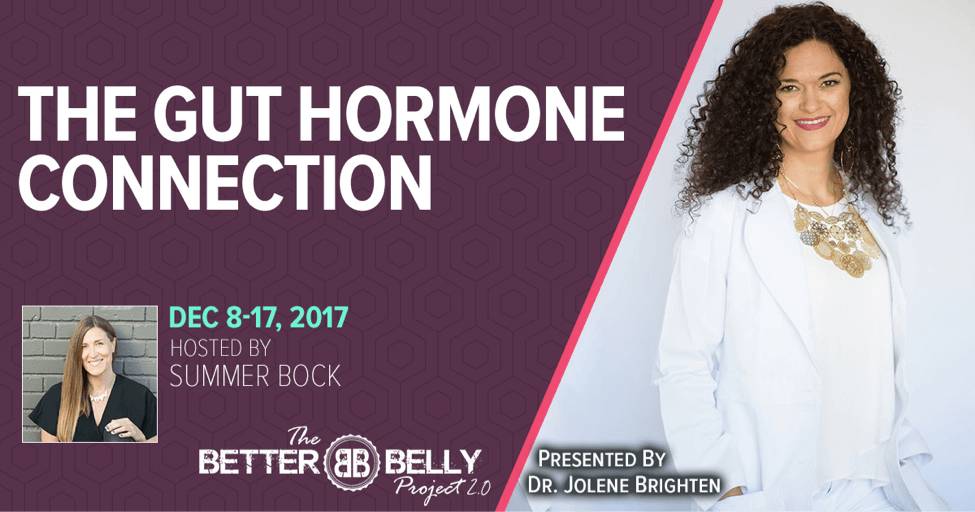
Dr. Jolene Brighten is one of my favorite women’s health experts and her Gut Hormone Connection interview with Summer Bock on the Better Belly Project 2.0: is fascinating. Here are a few snippets for you to enjoy about the connection between your thyroid, digestion and SIBO (small intestinal bacterial overgrowth) specifically:

In the case with hypothyroidism, this is something that’s a really interesting phenomenon. Your thyroid can be functioning perfectly well, but you can still be hypothyroid because it’s not about just the thyroid function but the conversion of T4 to T3. T3 helps your mood, it’s what helps your menstrual cycle, it’s your metabolism. It does so many wonderful things. Every single cell needs that active T3.

Well, your gut and your liver are major sites of activating that T3. If they are unhealthy they’re not going to convert your T4 to T3. Then, you get into a loop because if you don’t have enough T3, now, you don’t stimulate hydrochloric acid. If you don’t stimulate hydrochloric acid production, then, none of the other gastrointestinal organs are going to work as well. Your gallbladder is not going to contract. You’re not going to have pancreatic enzymes, which sets up a perfect environment for SIBO.

She goes on to share how T3 also affects motility, which is a major factor when it comes to SIBO.

Adrenal issues and high cortisol issues are common with the clients I work and Jolene shares more on this topic too, and how this can play a role in anxiety (and insomnia):

If the gut is inflamed, so if you’ve got gut infections going on, then, those adrenal glands are going to kick into hyperdrive. We can see they’ll try to secrete cortisol so that we can drop that inflammation. In addition to that, they’ll start spiking epinephrine and norepinephrine over time, which when those hit the brain, we’re going to feel anxious and panicked.

She also covers orgasms, and so much about birth control pill concerns like the impacts on the microbiome and an increased risk of Crohn’s disease. It’s an interview that is not to be missed!

Summer Bock, one of the leading gut health experts, is interviewing 49 experts who are leaders in the field of digestion, nutrition, and health in this huge, week-long virtual conference called Better Belly Project 2.0: Crushing the Critters, Plugging the Leaks, & Balancing the Biome for Your Best Body Ever

Summer’s goal is to create a great resource with a few different tracks to make it easier for you to navigate the information:

  1. Gut Health Basics
  2. Gut-Brain Axis (my interview “Low zinc, social anxiety/pyroluria and the gut” is in this track)
  3. Wellness Professional
  4. Fermentation
  5. Microbiome & Probiotics

This online event will provide exceptional value, knowledge, and truly life-changing insights from authors, professors, scientists, fermented foods experts, and wellness practitioners who have an understanding on how you can improve your digestive health amidst all the processed foods, antibiotics, stress and lack of probiotic-rich foods in the diet.

The dates are December 8-14th and there’s no charge to attend when you register in time for the live event. You can see the event schedule and register here for Better Belly Project 2.0

I hope you enjoy it and get as much out of it as I plan too! I learn new information at all these online events too!

Do you have thyroid issues and digestive symptoms? Feel free to leave your questions and comments below.

Filed Under: Events, Gut health, Hormone Tagged With: better belly project, hormone, jolene brighten, summer bock

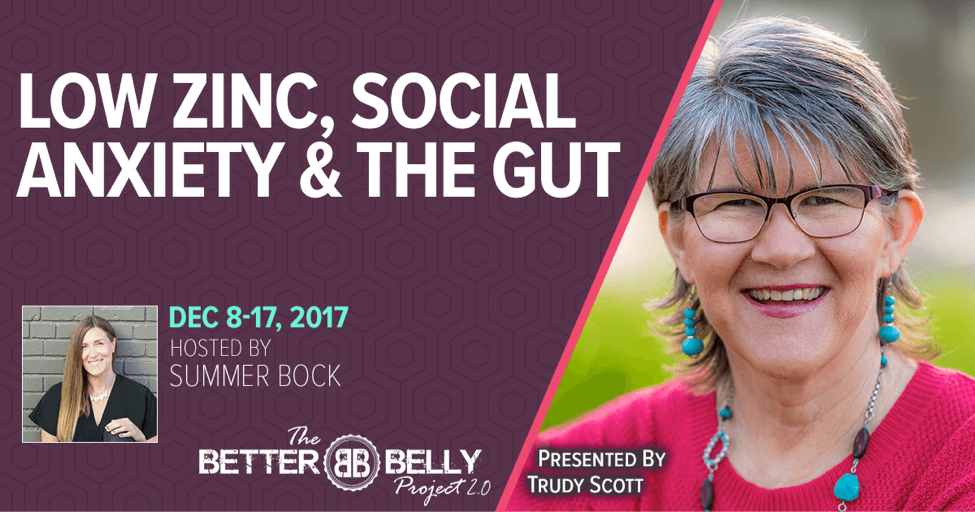
Low zinc, social anxiety and the gut on the Better Belly Project 2.0

November 27, 2017 By Trudy Scott 17 Comments

Pyroluria is a social anxiety condition, where specific physical and emotional symptoms are caused by deficiencies of vitamin B6 and zinc. As well as feeling anxious, shy, or fearful or experiencing inner tension since childhood (and often hiding these feelings from others), digestive symptoms are common.

I discuss this condition, connecting the dots with digestive issues and low zinc, with my friend and colleague, Summer Bock, on the virtual conference called Better Belly Project 2.0:

We talk about some of the digestive symptoms we see with pyroluria:

  • leaky gut
  • gluten and other food sensitivities
  • morning nausea
  • poor appetite
  • not a big protein eater (an aversion to red meat is common)
  • stitch on your side
  • morning constipation

(These symptoms and others are all listed on the pyroluria questionnaire)

I cover one possible mechanism related to low zinc, reviewing a 2016 study from Cornell University – Chronic Zinc Deficiency Alters Chick Gut Microbiota Composition and Function:  

  • Zinc deficiency is caused by insufficient dietary zinc (or in this instance, pyroluria)
  • This contributes to a decrease in gut microbial diversity
  • We see an overgrowth of bacteria because of low zinc conditions, leading to dysbiosis
  • This leads to alterations in the functional capacity of the microflora – affecting zinc absorption, carbohydrate digestion and fermentation
  • This causes less production of short chain fatty acids, which are compounds that are responsible for improving the bioavailability of zinc.
  • Overall, these microbial effects may decrease zinc absorbability and disturb gut health, perpetuating a zinc deficient state.

We also discuss the following:

  • How low vitamin B6 plays a major role in inflammation
  • How low zinc impacts your connective tissue – your joints, skin and your digestive system (there appears to be a possible connection to Ehlers Danlos Syndrome/EDS, a connective tissue disorder characterized by hypermobile joints)
  • How collagen and gelatin, which are being used to heal the gut, may actually be depleting serotonin levels and increasing anxiety/depression in some individuals

Summer Bock, one of the leading gut health experts, is interviewing 49 experts who are leaders in the field of digestion, nutrition, and health in this huge, week-long virtual conference called Better Belly Project 2.0: Crushing the Critters, Plugging the Leaks, & Balancing the Biome for Your Best Body Ever

Summer’s goal is to create a great resource with a few different tracks to make it easier for you to navigate the information:

  1. Gut Health Basics
  2. Gut-Brain Axis (my interview “Low zinc, social anxiety/pyroluria and the gut” is in this track)
  3. Wellness Professional
  4. Fermentation
  5. Microbiome & Probiotics

This online event will provide exceptional value, knowledge, and truly life-changing insights from authors, professors, scientists, fermented foods experts, and wellness practitioners who have an understanding on how you can improve your digestive health amidst all the processed foods, antibiotics, stress and lack of probiotic-rich foods in the diet.

The dates are December 8-14th and there’s no charge to attend when you register in time for the live event.

You can see the event schedule and register here for Better Belly Project 2.0

I hope you enjoy it and get as much out of it as I plan too! I learn new information at all these online events too!

Do you have pyroluria and can you relate to these digestive symptoms?

Feel free to leave your questions and comments below.

Filed Under: Events, Gut health Tagged With: gut, low zinc, summer bock

Pesticides, plastics and fluoridated water: environmental toxins on Healing Hashimoto’s Summit

November 6, 2017 By Trudy Scott 2 Comments

Lara Adler, environmental toxins expert, addresses the effects of environmental toxins on Healing Hashimoto’s Summit 2017 and how pesticides, plastics and fluoridated water impact the thyroid (and other endocrine systems) and what you can do about this exposure.   She sets the stage by explaining how it’s the environment that pulls the trigger: 

So there’s a common expression that I’m sure you’ve heard million times … our genetics loads the gun, but it’s the environment that pulls the trigger.

So even if somebody has a genetic predisposition towards autoimmune issues or Hashimoto’s, that doesn’t necessarily mean that they are destined to develop Hashimoto’s or another autoimmune condition. There is sort of this perfect storm that this needs to happen in order for that to manifest in someone’s body.

And one of those things in a lot of instances can be this exposure to environmental chemicals. And that sometimes an exposure to a chemical, maybe it’s in an occupational setting, if you work in a hair salon or you work in a factory or an office that uses chemicals, sometimes it can be an acute exposure to a chemical that can actually trigger an autoimmune response. It can set your immune system on high alert.

Sometimes, that might not be the primary trigger, but it’s adding gasoline to the fire. It’s just adding inflammation. It’s adding chemicals that can interfere specifically with hormone production of thyroid hormones.

She shares that chemicals like chlorine, bromine, and fluorine – chemicals that mimic iodine – can trigger cell death and inflammation in the thyroid. Lara’s first very practical tip is to eat organic as much as possible because of organochlorine pesticides. She shares how:

studies in both adults and children have shown that when people switch to a mostly organic diet, they can drop their levels of circulating pesticides by 80-90% in 3-5 days. That’s it. That’s all it takes.

Lara’s second tip is to avoid the hormone-disrupting effects of plastic. She shares how we all have had that forever stained orange Tupperware container:

No matter how many times you try to clean it, you can never get the orange out. The physical line actually blurs, and so you actually get oil molecules from your sauce physically embedded into the structure of the plastic, which is why you can’t wash it because it’s not on the plastic. It’s in the plastic. And the inverse of that is that you’re getting molecules of plastic inside your sauce.

She provides plenty of practical tips for phasing out everything plastic in your kitchen  – items like food storage containers, plastic spatulas, plastic colanders – and replacing them with glass, wood, stainless steel and bamboo.

Lara’s third tip is to filter your water to remove fluoride using a water filter that is either a reverse osmosis system or one that contains a media called activated alumina.

I’m really pleased they addressed overwhelm, anxiety, fear and even the term “detoxorexia” and just taking one step at a time and doing the best you can do. 

I’d like to add this to the discussion: if all this information leaves you feeling much too overwhelmed, very anxious and fearful and even obsessive about making these changes, then I’d suggest determining if low serotonin and low GABA are possible factors and doing a trial of tryptophan (and possibly inositol) and GABA. Keep in mind that an animal study has shown that GABA reverses fluoride-induced hypothyroidism, so you’ll be getting those benefits too.   

Tune in to the Healing Hashimoto’s Summit 2017 to hear the entire interview and the other experts.

The Healing Hashimoto’s Summit 2017 is here to:

  • Raise awareness about this chronic disease
  • Help with early detection, testing and diagnosis
  • Discuss the importance of physical, mental and emotional healing
  • Advice for navigating the ups and downs
  • Share success stories (it IS possible and you’re not alone!)

90% of all hypothyroid conditions are due to Hashimoto’s, and tens of millions of people world-wide are struggling from this disorder – it’s STILL one of the most common yet uncommonly diagnosed diseases in the world!

Your thyroid is important to every aspect of your health. Slight imbalances can cause problems all over your body. Symptoms range from hair loss, weight gain, depression, anxiety, chronic fatigue, cold hands and feet, excessive perspiration, dryness, irritability, brain fog, skin issues, hives, digestive distress, malnutrition, heart palpitations, hormone imbalance, decreased libido and sluggishness.
The Healing Hashimoto’s Summit 2017 is online from November 6-13, 2017. You can register here

Let us know what changes you have made in these 3 areas and if it’s helped your thyroid symptoms.

Filed Under: Events Tagged With: hashimoto's, Lara Adler

Fecal microbiota transplants and helminth therapy on the SIBO SOS Summit

October 21, 2017 By Trudy Scott 1 Comment

Mark Davis covers fecal microbiota transplants and helminth therapy on the SIBO SOS Summit part II. The title of his interview is: No Holds Bar Conversation About Fecal Transplants (yup, we go there) From a Fearless Expert. You will discover:

  • How Helminth therapy benefits autoimmune conditions & allergies
  • Fecal Matter/ microbiota Transplants: The shocking treatment with incredible results
  • New options for treating C Diff
  • Why not all parasites are bad! Parasite, commensal, and mutualistic organisms explained

This is what Mark has to share about helminths (microscopic worm-like organisms) and SIBO

My understanding of Dr. Pimentel’s hypothesis is that SIBO is really autoimmune enteritis. It’s your own body’s immune system launching antibodies either against cytolethal distending toxin B (CDT) or against vinculin in the gut. That’s an autoimmune process.

What these microscopic worm-like organisms, helminths, do for us is they invoke a robust T-regulatory cell response. T-regs are responsible for telling the rest of the immune system when to calm down.

If you’ve ever looked at the great book, Epidemic of Absence, the premise of the book is how absence of exposure to microbes, including helminths—your ancestors were exposed to them over and over again—absence to all that might be causing an epidemic of allergic and autoimmune disease today.

He also shares that his favorite helminth is one called Necator Americanus.

That’s the new world human hookworm. I have about 30 of them living in my gut right now. I’ve worked with dozens of patients using these.

Mark also shares what fecal microbiota transplantation is and how it is delivered:

taking the microorganisms that are alive in stool, which you have tens of trillions of them in and on you right now, and it is filtering and processing those in a way to isolate the important parts, as much as you can, and then delivering those to the gastrointestinal tract of somebody with a dysbiotic gut flora. That can be via capsule or upper endoscopy or via lower endoscopy or enema. Those are the most common ways to deliver it.

He goes on to share how effective a FMT is for a C. diff infection (when nothing else works, the FDA rulings about it only being allowed for C. diff or as part of a study, and how he is guiding his ulcerative colitis and Crohn’s disease patients through a DIY version.

I love this comment from Mark when we he is asked about the ick factor of working with poop:

It doesn’t feel like I’m processing poop. It feels like I’m mixing up a magic brew to help my patients.  

Here is some background on Mark Davis, ND: He practices at the IBD Specialty Center in Silver Spring, Maryland, and once per quarter at Bright Medicine Clinic in Portland, Oregon. He specializes in natural gastroenterology, especially the care of adults and children with inflammatory bowel disease. He is one of the few clinicians in North America with significant clinical experience using fecal microbiota transplantation (or FMT) as a therapeutic intervention, and has written and lectured extensively about FMT and helminthic therapy. He sits on the board of directors of the Fecal Transplant Foundation, and serves on the editorial board of the Natural Medicine Journal.

Mark is one of the speakers on the SIBO SOS Summit Part II. SIBO (Small Intestinal Bacterial Overgrowth) is a leading cause of IBS (irritable bowel syndrome). The most common SIBO symptoms are digestive issues, pain and bloating, and there are many other complications such as leaky gut and yeast overgrowth that make it difficult to diagnose and treat SIBO. Anxiety, depression and insomnia are common symptoms too.

FMT is not actually for used for treating small intestinal bacterial overgrowth (SIBO) and Mark shares this caution for about 5% of SIBO sufferers:

When you’re delivering [FMT] via capsules or upper endoscopy, some or all of them may end up in the small bowel. Ninety-five percent or more of the time, that ends up not being a problem, but if people already have impaired motility in the small bowel or an existing autoimmune process, or an existing small intestinal bacterial overgrowth (SIBO), that can compound the problem.

Part II of the SIBO SOS is all new interviews and is a great resource. Here are just a few of the guests and topics:

  • Dr. Allison Siebecker, Shivan Sarna, and Kristy Regan—Delicious Nutrient Rich Foods to Eat Even When You Have SIBO
  • Susanne Breen—When a SIBO Patient is Also a SIBO Doctor: The Obstacles and Strategies That Work For Her and Her Patients.
  • Dr. Megan Taylor: Been There, Done That! Help For Patients From a Doctor With Chronic SIBO
  • Dr. Norm Robillard—Choosing Diet Over Drugs
  • Angela Privin—How a Gut Health Coach Cured Herself of IBS After One Year of Paleo Done Right
  • Whitney Hayes—The Art and Science of SIBO Treatment
  • Jason Wysocki—The Importance of Neurology on GI Health and SIBO

You can register for the SIBO SOS Summit Part II here (it runs from Oct 21 to Oct 29)

Filed Under: Events, SIBO Tagged With: Mark Davis, SIBO, sibo sos summit

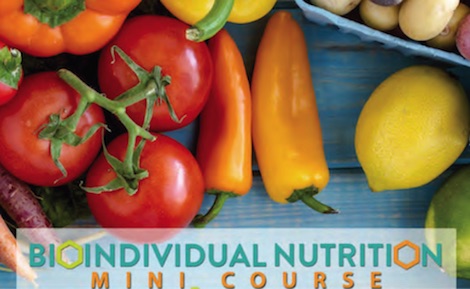
BioIndividual Nutrition Mini-Course and Phenols

October 18, 2017 By Trudy Scott Leave a Comment

My friend and colleague, Julie Matthews, BS, NC, Author of Nourishing Hope for Autism will be hosting the BioIndividual Nutrition Mini-Course as an online webinar for practitioners who make diet and nutrition recommendations. Customizing diets based on a person’s unique biochemistry and health needs is essential to healing chronic disorders.

Learn what it means to practice BioIndividual Nutrition, and how your clinical results can improve by using and customizing therapeutic diets.

The Mini-Course touches on each module of her advanced BioIndividual Nutrition Training program; providing immediately actionable clinical insights, pitfalls to avoid, and proven tips to help you increase your effectiveness with specialized diets.

By the end of this online mini-course, you’ll have a good understanding of how practicing BioIndividual nutrition can help you become more confident, streamline your practice and improve compliance! Whether or not you enroll in the full program semester… You will discover:

  • 14 Clinical Tips you can use in your practice today
  • The nutrition science behind therapeutic diets including low phenol, low oxalate, low amine, low glutamate and low FODMAPs
  • Symptom clues on how to assess your client’s bioindividual nutrition needs
  • 5 most common mistakes nutrition practitioners make
  • Breakthrough case studies

Julie shares this:

This BioIndividual Nutrition Mini-Course will NOT be a general overview. Come prepared to learn!

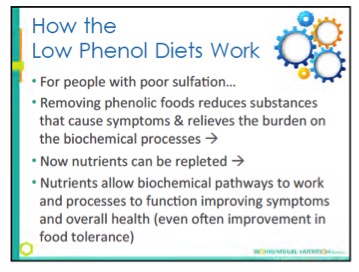
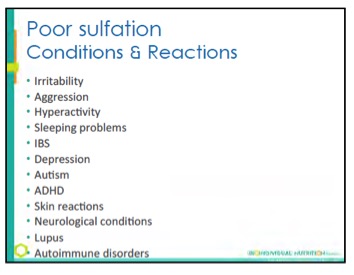
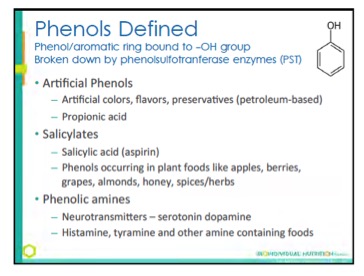
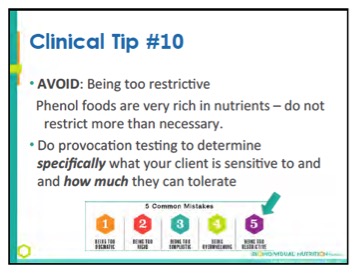
This sampling of valuable information from the section on phenols and sulfation gives you an inkling on the level of detail Julie goes into when she teaches this topic:

This isn’t an area I’ve covered yet on my blog but as you can see there is much relevance when it comes to depression, irritability, agitation and anxiety, autism, ADHD and insomnia and more.

If you have questions Julie will be setting aside some time for Q&A right after the mini-course.

You can register for the online BioIndividual Nutrition Mini-Course here

Filed Under: Events Tagged With: bioindividual nutrition, Julie Matthews

  • « Go to Previous Page
  • Page 1
  • Interim pages omitted …
  • Page 5
  • Page 6
  • Page 7
  • Page 8
  • Page 9
  • Interim pages omitted …
  • Page 35
  • Go to Next Page »

Primary Sidebar

GABA QuickStart Homestudy

gaba quickstart homestudy

Free Report

9 Great Questions Women Ask about Food, Mood and their Health

You'll also receive a complimentary subscription to my ezine "Food, Mood and Gal Stuff"


Connect with me

Popular Posts

  • Amino Acids Mood Questionnaire from The Antianxiety Food Solution
  • The Antianxiety Food Solution Amino Acid and Pyroluria Supplements
  • Pyroluria Questionnaire from The Antianxiety Food Solution
  • Collagen and gelatin lower serotonin: does this increase your anxiety and depression?
  • Tryptophan for the worry-in-your-head and ruminating type of anxiety
  • GABA for the physical-tension and stiff-and-tense-muscles type of anxiety
  • The Antianxiety Food Solution by Trudy Scott
  • Seriphos Original Formula is back: the best product for anxiety and insomnia caused by high cortisol
  • Am I an anxious introvert because of low zinc and vitamin B6? My response to Huffington Post blog
  • Vagus nerve rehab with GABA, breathing, humming, gargling and key nutrients

Recent Posts

  • Her cravings for chips and peanut butter were triggered by stress: GABA ends cravings and reduces physical tension and fear of heights
  • It is truly miraculous to be able to move through life without crippling anxiety and panic
  • GABA and tryptophan combo provide immediate and noticeable relief for tremors and cervical dystonia in just 7 days
  • Red light therapy for back and neck pain, plantar fasciitis and low mood – a complement to the amino acids GABA, DPA and tryptophan
  • What do I use instead of Seriphos to help lower high cortisol that is affecting my sleep and making me anxious at night?

Categories

  • 5-HTP
  • AB575
  • Addiction
  • ADHD
  • Adrenals
  • Alcohol
  • Allergies
  • Alzheimer's disease
  • Amino Acids
  • Anger
  • Antianxiety
  • Antianxiety Food Solution
  • Antidepressants
  • Anxiety
  • Anxiety and panic
  • Autism
  • Autoimmunity
  • benzodiazapines
  • Bipolar disorder
  • Books
  • Caffeine
  • Cancer
  • Candida
  • Children/Teens
  • Collagen
  • Cooking equipment
  • Coronavirus/COVID-19
  • Cravings
  • Depression
  • Detoxification
  • Diabetes
  • Diet
  • DPA/DLPA
  • Drugs
  • EFT/Tapping
  • EMF
  • EMFs
  • Emotional Eating
  • Endorphins
  • Environment
  • Essential oils
  • Events
  • Exercise
  • Fear
  • Fear of public speaking
  • Fertility and Pregnancy
  • Fish
  • Food
  • Food and mood
  • Functional neurology
  • GABA
  • Gene polymorphisms
  • General Health
  • Giving
  • Giving back
  • Glutamine
  • Gluten
  • GMOs
  • Gratitude
  • Gut health
  • Heart health/hypertension
  • Histamine
  • Hormone
  • Hyperparathyroidism
  • Hypoglycemia
  • Immune system
  • Inflammation
  • Insomnia
  • Inspiration
  • Introversion
  • Joy and happiness
  • Ketogenic diet
  • Lithium orotate
  • Looking awesome
  • Lyme disease and co-infections
  • MCAS/histamine
  • Medication
  • Men's health
  • Mental health
  • Mercury
  • Migraine
  • Mold
  • Movie
  • MTHFR
  • Multiple sclerosis
  • Music
  • NANP
  • Nature
  • Nutritional Psychiatry
  • OCD
  • Osteoporosis
  • Oxalates
  • Oxytocin
  • Pain
  • Paleo
  • Parasites
  • Parkinson’s disease
  • PCOS
  • People
  • PMS
  • Postpartum
  • PTSD/Trauma
  • Pyroluria
  • Questionnaires
  • Real whole food
  • Recipes
  • Research
  • Schizophrenia
  • serotonin
  • SIBO
  • Sleep
  • Special diets
  • Sports nutrition
  • Stress
  • Sugar addiction
  • Sugar and mood
  • Supplements
  • Teens
  • Testimonials
  • Testing
  • The Anxiety Summit
  • The Anxiety Summit 2
  • The Anxiety Summit 3
  • The Anxiety Summit 4
  • The Anxiety Summit 5
  • The Anxiety Summit 6
  • Thyroid
  • Thyroid health
  • Toxins
  • Tryptophan
  • Tyrosine
  • Uncategorized
  • Vegan/vegetarian
  • Women's health
  • Yoga

Archives

  • May 2026
  • April 2026
  • October 2025
  • September 2025
  • August 2025
  • July 2025
  • June 2025
  • May 2025
  • April 2025
  • March 2025
  • February 2025
  • January 2025
  • November 2024
  • October 2024
  • September 2024
  • August 2024
  • July 2024
  • June 2024
  • May 2024
  • April 2024
  • March 2024
  • February 2024
  • January 2024
  • December 2023
  • November 2023
  • October 2023
  • September 2023
  • August 2023
  • July 2023
  • June 2023
  • May 2023
  • April 2023
  • March 2023
  • February 2023
  • January 2023
  • December 2022
  • November 2022
  • October 2022
  • September 2022
  • August 2022
  • July 2022
  • June 2022
  • May 2022
  • April 2022
  • March 2022
  • February 2022
  • January 2022
  • December 2021
  • November 2021
  • October 2021
  • September 2021
  • August 2021
  • July 2021
  • June 2021
  • May 2021
  • April 2021
  • March 2021
  • February 2021
  • January 2021
  • December 2020
  • November 2020
  • October 2020
  • September 2020
  • August 2020
  • July 2020
  • June 2020
  • May 2020
  • April 2020
  • March 2020
  • February 2020
  • January 2020
  • December 2019
  • November 2019
  • October 2019
  • September 2019
  • August 2019
  • July 2019
  • June 2019
  • May 2019
  • April 2019
  • March 2019
  • February 2019
  • January 2019
  • December 2018
  • November 2018
  • October 2018
  • September 2018
  • August 2018
  • July 2018
  • June 2018
  • May 2018
  • April 2018
  • March 2018
  • February 2018
  • January 2018
  • December 2017
  • November 2017
  • October 2017
  • September 2017
  • August 2017
  • July 2017
  • June 2017
  • May 2017
  • April 2017
  • March 2017
  • February 2017
  • January 2017
  • December 2016
  • November 2016
  • October 2016
  • September 2016
  • August 2016
  • July 2016
  • June 2016
  • May 2016
  • April 2016
  • March 2016
  • February 2016
  • January 2016
  • December 2015
  • November 2015
  • October 2015
  • September 2015
  • August 2015
  • July 2015
  • June 2015
  • May 2015
  • April 2015
  • March 2015
  • February 2015
  • January 2015
  • December 2014
  • November 2014
  • October 2014
  • September 2014
  • August 2014
  • July 2014
  • June 2014
  • May 2014
  • April 2014
  • March 2014
  • February 2014
  • January 2014
  • December 2013
  • November 2013
  • October 2013
  • September 2013
  • August 2013
  • July 2013
  • June 2013
  • May 2013
  • April 2013
  • March 2013
  • February 2013
  • January 2013
  • December 2012
  • November 2012
  • October 2012
  • August 2012
  • July 2012
  • June 2012
  • May 2012
  • April 2012
  • March 2012
  • February 2012
  • January 2012
  • December 2011
  • November 2011
  • October 2011
  • September 2011
  • August 2011
  • July 2011
  • June 2011
  • May 2011
  • April 2011
  • March 2011
  • February 2011
  • January 2011
  • December 2010
  • October 2010
  • September 2010
  • July 2010
  • May 2010
  • April 2010
  • March 2010
  • February 2010
  • January 2010
  • November 2009

Share the knowledge!

The above statements have not been evaluated by the Food and Drug Administration. Products listed in this website are not intended to diagnose, treat, cure or prevent any disease.

The information provided on this site is for informational and educational purposes only and is not intended as a substitute for advice from your physician or other health care professional. You should consult with a healthcare professional before starting or modifying any diet, exercise, or supplementation program, before taking or stopping any medication, or if you have or suspect you may have a health problem.


Copyright © 2026 Trudy Scott. All Rights Reserved. | Privacy | Terms and Conditions | Refund Policy | Medical Disclaimer

Free Report

9 Great Questions Women Ask about Food, Mood and their Health

You’ll also receive a complimentary subscription to my ezine “Food, Mood and Gal Stuff”