• Skip to primary navigation
  • Skip to main content
  • Skip to primary sidebar

everywomanover29 blog

Food, Mood and Women's Health – Be your healthiest, look and feel great!

  • Blog
  • About
  • Services
  • Store
  • Resources
  • Testimonials
  • The Book
  • Newsletter
  • Contact
  • Search this site

Depression

The Anxiety Summit – Nutritional Influences on Anxiety and Musculoskeletal Pain

May 11, 2015 By Trudy Scott 20 Comments


Joe Tatta DPT, CCN, Musculoskeletal Pain Expert, was interviewed by host of the Anxiety Summit, Trudy Scott, Food Mood Expert and Nutritionist, author of The Antianxiety Food Solution.

Nutritional Influences on Anxiety and Musculoskeletal Pain

  • Link between anxiety and chronic musculoskeletal problems
  • Fear avoidance behaviors and pain
  • Headaches, back pain, joint pain and nutritional influences
  • An exercise prescription for anxiety

Here are some snippets from our interview:

People used to think depression was more linked to chronic pain but we are learning its more anxiety driven

The chronic anxiety that people have on a daily basis kicks off the pain process

Negative thoughts, worry, doom-and-gloom about the future all come in to play, with fear being the most common emotion leading to pain

Here is the very recent 2015 paper that discusses this – Psychological functioning of people living with chronic pain: A meta-analytic review.

Joe tied fear and anxiety to adrenalin release and the effects on the muscles, specifically how the smaller muscles around the spine and in the neck are turned off. You then have less blood flow, less oxygen and less nutrients going to those muscles and that’s when the pain starts.

Joe shared the staggering number of people who suffer from chronic pain:

more than those who suffer from heart disease, diabetes and cancer combined!

We also discussed migraines and magnesium, and this paper: Why all migraine patients should be treated with magnesium

Magnesium, the second most abundant intracellular cation, is essential in many intracellular processes and appears to play an important role in migraine pathogenesis. Routine blood tests do not reflect true body magnesium stores since <2% is in the measurable, extracellular space, 67% is in the bone and 31% is located intracellularly. Lack of magnesium may promote cortical spreading depression, hyperaggregation of platelets, affect serotonin receptor function, and influence synthesis and release of a variety of neurotransmitters.

There is strong evidence that magnesium deficiency is much more prevalent in migraine sufferers than in healthy controls.

Considering these features of magnesium, the fact that magnesium deficiency may be present in up to half of migraine patients, and that routine blood tests are not indicative of magnesium status, empiric treatment with at least oral magnesium is warranted in all migraine sufferers.

If you are not already registered for the Anxiety Summit you can get live access to the speakers of the day here: www.theAnxietySummit.com

Missed this interview or can’t listen live? Or want this and the other great interviews for your learning library? Purchase the MP3s or MP3s + transcripts and listen when it suits you.

You can find your purchasing options here: Anxiety Summit Season 1, Anxiety Summit Season 2, and Anxiety Summit Season 3.

Filed Under: Antianxiety, Anxiety and panic, Depression, Pain, The Anxiety Summit 3 Tagged With: anxiety, butterbur, chronic pain, cortisol, fear, Joe Tatta, magnesium, migraine, pain, the anxiety summit, Trudy Scott

Anxiety and targeted individual amino acid supplements: a summary

May 8, 2015 By Trudy Scott 58 Comments

woman-looking-evening 

The targeted use of individual amino acid supplements will balance brain chemistry to alleviate anxiety, fear, worry, panic attacks, and feeling stressed or overwhelmed. They can also be helpful in addressing other problems that contribute to or exacerbate anxiety, such as sugar cravings and addictions. In addition, they can help with depression and insomnia, which often co-occur with anxiety. When you balance your brain chemistry, not only will you alleviate symptoms of anxiety, you’ll also have a great mood, eliminate cravings, sleep well, and have good energy and mental focus.

This is a collection of past blog posts on the topic of amino acids in preparation for my season 3 interview on the Anxiety Summit: “Pyroluria, Amino Acids and Anxiety: Troubleshooting when you are not getting results”

In season 1 of the Anxiety Summit, I interviewed my hero, Julia Ross, MFT, pioneer in the field of Amino Acid Therapy and the author of best sellers The Mood Cure. The topic was Eliminating Anxiety – Amino Acid Therapy and Adrenal Balancing

I just love this quote from our interview:

On a scale of zero to ten, zero is not an unrealistic goal when it comes to anxiety.  It’s really the human potential and GABA and tryptophan give us access to it

And then this was the topic of my interview on season 2 of the Anxiety Summit: Targeted individual amino acids for eliminating anxiety: practical applications

  • Glutamine: how it’s calming and helps with blood sugar balancing
  • GABA: how it eases physical tension
  • Tryptophan: how it eases anxiety in the head/busy ruminations (and when not to use 5-HTP)
  • DPA and tyrosine: how they help you quit the comfort-eating and coffee
  • Precautions when using individual amino acids
  • Factors that make them more effective and factors that make them less effective

My interview on season 3 will be taking a deeper dive in to this last bullet: Factors that make them more effective and factors that make them less effective, and how to troubleshoot when they are not working.

Today I’d love feedback, comments and questions from you. I want to address your questions. I encourage you to read the blog posts I’m linking to below and learn if this is new to you. Or read them and get a recap if you’ve been following me for awhile. And then PLEASE ASK YOUR QUESTIONS in the comments section below.

Here is the Amino Acids Mood Questionnaire from The Antianxiety Food Solution. I encourage you to do and see which sections may be an issue for you (or see how much you’ve improved if you’ve been using amino acids)

There are some precautions to be aware of when taking supplemental amino acids. Here are the Amino Acid Precautions

If you are prone to low blood sugar and have adrenal issues glutamine is wonderful: Glutamine for low blood sugar and calming effects

Of course, if you need them, the aminos are also very effective for eliminating emotional eating and comfort eating. I write about this here:

  • Amazing Amino Acids for Ending Emotional Eating – No Willpower Required! Really!!
  • End emotional eating – no willpower required!

Of course I have to share some great success stories because the amino acids really are amazing:

The Anxiety Summit: amazing amino acids client success with Meme Grant

Meme had anxiety, had panic attacks, didn’t enjoy speaking in public, had insomnia and was an emotional eater. She found answers with the amazing aminos acids and the pyroluria protocol.

No coffee, adrenal support and amino acids: free of anxiety, high energy and great sleep!

The above great client testimonial shows how a few small changes can make the world of difference; that you don’t have to resort to drugs for anxiety or sleep or energy drinks for fatigue! And that you can feel on top on the world!

Unfortunately not everyone responds as expected when using amino acids. Some people

  • Don’t get any benefits
  • Get some benefits but they are marginal
  • Get an adverse reaction and may even feel more anxious
  • Get benefits that seem to come and go

My troubleshooting interview will be addressing the above scenarios and other related amino acid questions that come up. PLEASE ASK YOUR QUESTIONS in the comments section below.

If you’re not already signed up do join us here: season 3 of The Anxiety Summit


Filed Under: Anxiety and panic, Depression, Food and mood, The Anxiety Summit 3 Tagged With: supplements, targeted individual amino acid

The Anxiety Summit: Dr. Daniel Amen on the gut and serotonin

April 24, 2015 By Trudy Scott 45 Comments

DanielAmenTitle_Anxiety3

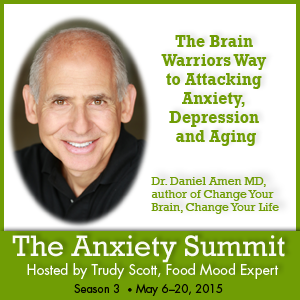
Dr. Daniel Amen MD, is well recognized as the brain doctor and this is the title of our interview on season 3 of The Anxiety Summit: “The Brain Warriors Way to Attacking Anxiety, Depression and Aging.”

  • Why we are in a war for the health of our brains?
  • Why anxiety is so common in women and how depression shows up in men
  • Four different brain types
  • Natural ways for dealing with anxiety (instead of typical anti-anxiety medications)
  • How birth control pills contribute to anxiety
  • The impact of gut health on anxiety

daniel-amen-anxietysummit


He just has so much wisdom:

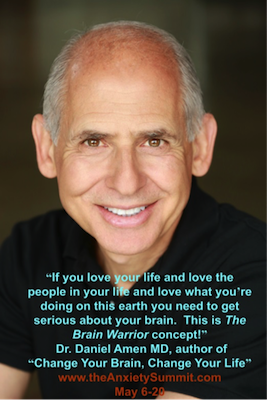
If you love your life and love the people in your life and love what you’re doing on this earth you need to get serious about your brain. This is The Brain Warrior concept!”

There is a path to keep your brain much healthier than most people every thought possible! Neurons don’t age, it’s blood vessels that age and if you understand that and can keep the blood flow to your brain healthy, it directly attacks ADD, anxiety, depression, obesity and Alzheimer’s disease.

And a great sense of humor too! We had many laugh out loud moments which are always good for us but especially great when we’re feeling sad, anxious or overwhelmed.

We talk about how important the microbiome and gut health is when it comes to mental health.   He finds it funny that as the brain doctor, he now going to have to consider poop! He really does say that!

You may recall my great interview with Dr. Ted Dinan on season 2: Microbes in the gut and psychobiotics as a potential treatment for anxiety and depression

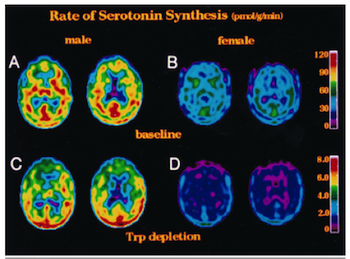
We also talk about how women make less serotonin so I just had to look up the research. Here are some snippets from this 1997 paper “Differences between males and females in rates of serotonin synthesis in human brain”

The marked difference in the rates of serotonin synthesis between male and female subjects is, to our knowledge, a new finding.

Moreover, no differences have been found between the number of serotonin re-uptake sites in the brains of male and female subjects.

The rate of serotonin synthesis will depend on numerous factors including the free plasma tryptophan levels, the plasma levels of tryptophan relative to the other large neutral amino acids, the activity of the system that transports the large neutral amino acids into brain, the gene expression of tryptophan hydroxylase, degradation of tryptophan hydroxylase, compartmentalization of tryptophan and tryptophan hydroxylase in brain cells, as well as probably numerous other factors.

Averaging over the different brain areas, the rate of serotonin synthesis is 52% greater in male than in female subjects. This is one of the largest differences between the brains of males and females that is not related to hormone binding sites. The reason for this difference is not clear at this time.

brainimage

Here is an image of brain scans that were published in the above study. The color bar on the right in the same row gives an indication of synthesis i.e. blues, purples and pinks means low synthesis of serotonin. The research found low synthesis of serotonin in the women in the study.

We can tie this all back to the gut since we make so much serotonin in the gut!

As Dr. Amen says “you need to get serious about your brain” and here a few of his recommendations:

  • eat real whole food, quit sugar and sodas, get plenty of healthy fats in your diet and quit bread
  • use natural approaches to boost serotonin and GABA, and address low progesterone if necessary
  • fall in love with exercise and get rid of negative thoughts (he calls them ANTS: automatic negative thoughts)
  • and avoid medications like benzodiazapines and the BCP/birth control pill

Here are some of Dr. Amen’s wonderful books:

Change Your Brain, Change Your Life: The Breakthrough Program for Conquering Anxiety, Depression, Obsessiveness, Anger, and Impulsiveness

daniel amen change your brain change your life


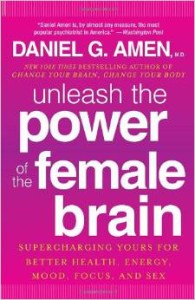
Unleash the Power of the Female Brain: Supercharging Yours for Better Health, Energy, Mood, Focus, and Sex

daniel amen unleash the power of the female brain


Dr. Amen, and his wife Tana have created this free 3-part online video series called the Brain Warrior’s Way. Dr. Amen says:

To survive and thrive, you must become a brain warrior, because without a doubt you are in a war for the health of your brain.

daniel amen gift video

You can get access to the 3-part online video series called the Brain Warrior’s Way here

Join us on season 3 of The Anxiety Summit (www.theanxietysummit) and hear Dr. Amen share more on “The Brain Warriors Way to Attacking Anxiety, Depression and Aging.”


Filed Under: Anxiety and panic, Depression, The Anxiety Summit 3 Tagged With: aging, brain warrior, depression, Dr. Daniel Amen, serotonin

Oxytocin and social anxiety, pyroluria and depression?

March 27, 2015 By Trudy Scott 66 Comments

A 2014 paper published in the Journal of Psychiatric Research looked at how variations in the oxytocin receptor gene is associated with increased risk for anxiety, stress and depression in individuals with a history of exposure to early life stress. Here are some excerpts from this paper:

Oxytocin is a neuropeptide that is involved in the regulation of mood, anxiety and social biology.

Genetic variation in the oxytocin receptor gene (OXTR) has been implicated in anxiety, depression and related stress phenotypes.

In this study, we examined genotypes in 653 individuals and tested whether SNP variation in OXTR correlates with severity of features of self-reported experience on the Depression Anxiety and Stress Scale (DASS), and whether this correlation is enhanced when early life trauma is taken into account.

The study found a significant effect of several oxytocin receptor genes (OXTR genotypes) on anxiety, stress and depression scores. They concluded that:

These results support the hypothesis that the oxytocin system plays a role in the pathophysiology of mood and anxiety disorders.

In this 2015 paper published in Neuropsychopharmacology, they looked at “Oxytocin modulation of amygdala functional connectivity to fearful faces in generalized social anxiety disorder” and found that oxytocin lessened anxiety by dampening amygdala reactivity to threat in individuals with generalized social anxiety disorder.

Results indicated that in individuals with generalized social anxiety disorder:

Oxytocin enhanced functional connectivity between the amygdala and the bilateral insula and middle cingulate/dorsal anterior cingulate gyrus during the processing of fearful faces

These findings suggest that [oxytocin] may have broad pro-social implications such as enhancing the integration and modulation of social responses.

We know that low serotonin can cause anxiety, worry and depression and research shows there are interactions between oxytocin and serotonin levels. So if you don’t respond to serotonin support (tryptophan or 5-HTP or light therapy), maybe boosting oxytocin is a possible solution?  Or maybe supporting serotonin will boost oxytocin? 

What is also really interesting to me is that zinc is needed for binding oxytocin to its receptor so I wonder about the oxytocin connection to pyroluria, a social anxiety condition where higher amounts of zinc and vitamin B6 are needed. I wonder if adding oxytocin to the mix or boosting it would help even more?  Or if optimizing zinc use and absorption would help promote oxytocin?

Have you had your oxytocin levels tested? Have you used oxytocin with good results and did it help your social anxiety/pyroluria and/or depression?  Have you done anything else to boost your oxytocin levels?


Filed Under: Amino Acids, Antianxiety, Depression, Pyroluria Tagged With: depression, oxytocin, pyroluria, serotonin, social anxiety, zinc

The Diabetes World Summit and the anxiety-diabetes connection

March 16, 2015 By Trudy Scott Leave a Comment

diabetes-summit

The Diabetes World Summit (ONLINE) from March 23-30, 2015!

The mission of The Diabetes World Summit is to change lives. This incredible, online event has the potential to improve the health of tens of thousands with diabetes or pre-diabetes!

387 million people in the world have diabetes, and nearly half of them don’t know it. In the United States alone, type 2 diabetes is the 7th leading cause of death. The statistics are alarming, especially when we’ve proven that type 2 can be prevented and reversed!

Dr. Brian Mowll, The Diabetes Coach™, created The Diabetes World Summit to share the expertise of the world’s leaders in natural diabetes care to help you regain blood sugar control, live the highest quality life and even reverse type 2 and pre-diabetes. The 40 powerful, expert sessions at The Diabetes World Summit will benefit anyone with type 1 or type 2 diabetes, pre-diabetes, metabolic syndrome, as well as those who want to avoid blood sugar problems and achieve optimal health.

You may wonder: what is the connection between anxiety/depression and diabetes? In this study: Frequency of depression and anxiety in patients attending a diabetes clinic, they found “almost 50% of patients were found to have anxiety and depression.” The study concludes with this: “There is a high incidence of depression and anxiety in patients with chronic type-2 diabetes and clinicians must screen regularly for better care of these patients.”

Register now at the following link: https://vj173.isrefer.com/go/summitreg/trudyscottcn/


Filed Under: Anxiety and panic, Depression Tagged With: Brian Mowll, diabetes, The Diabetes World Summit

MTHFR and methylation: mood, anxiety, depression, and resources

March 6, 2015 By Trudy Scott 27 Comments

Methylation polymorphisms (also called defects or mutations or SNPs) can impact mood. I’d like to share a few studies on some of the mood issues, other health conditions where we may see impacts and some resources for you to learn more.

If you have one of the MTHFR polymorphisms, the BH4 cycle may be affected and may impact how we make serotonin and dopamine. Here is some of the research:

  • Anxiety and schizophrenia
  • Depression
  • Bipolar disorder

There is much evidence on the methylation polymorphisms and these health conditions:

  • Cancer
  • Fertility
  • Heart disease and stroke
  • Thyroid cancer

Resources for further learning

The two practitioners who I have learned the most from are Dr. Ben Lynch ND and Coleen Walsh, a nutritionist who has been dubbed the “methyl queen”.    

  • Ben Lynch ND: his website http://mthfr.net/ and blog articles provide a wealth of information and he is very active on his Facebook page (https://www.facebook.com/drbenjaminlynch). I did his excellent 2 day professional training which he has available on this site. I also interviewed him on The Anxiety Summit and we talked about GAD, MOAO and COMT polymorphisms
  • Coleen Walsh, nutritionist, “methyl queen” offers a professional MTHFR and Methylation training for practitioners and a MTHFR workshop for the layperson and every day mutant. I highly recommend both of these.

Just remember this great quote from Coleen Walsh during our interview on the Anxiety Summit:

Our DNA is not set in stone! Diet and lifestyle can go a long way to change our health destiny

The good news is that we can change our health, our disease outcomes and how we feel by eating real whole good quality organic food, getting chemicals and toxins out of our diets and environment, reducing stress, supporting the liver and our natural detox processes.

Certain key nutrients can also be very help for many people with polymorphisms. I’ll share more on folate and other nutrients and other SNPs in a later blog post. I’ll also share more on genetic testing.

I’d love to hear if you’ve done genetic testing and how making changes (supplement, diet, lifestyle) have helped. Be sure to post questions too.


Filed Under: Anxiety and panic, Bipolar disorder, Cancer, Depression, MTHFR, The Anxiety Summit Tagged With: coleen walsh, Methylation, mthfr

  • « Go to Previous Page
  • Page 1
  • Interim pages omitted …
  • Page 10
  • Page 11
  • Page 12
  • Page 13
  • Page 14
  • Go to Next Page »

Primary Sidebar

GABA QuickStart Homestudy

gaba quickstart homestudy

Free Report

9 Great Questions Women Ask about Food, Mood and their Health

You'll also receive a complimentary subscription to my ezine "Food, Mood and Gal Stuff"


Connect with me

Popular Posts

  • Amino Acids Mood Questionnaire from The Antianxiety Food Solution
  • The Antianxiety Food Solution Amino Acid and Pyroluria Supplements
  • Pyroluria Questionnaire from The Antianxiety Food Solution
  • Collagen and gelatin lower serotonin: does this increase your anxiety and depression?
  • Tryptophan for the worry-in-your-head and ruminating type of anxiety
  • GABA for the physical-tension and stiff-and-tense-muscles type of anxiety
  • The Antianxiety Food Solution by Trudy Scott
  • Seriphos Original Formula is back: the best product for anxiety and insomnia caused by high cortisol
  • Am I an anxious introvert because of low zinc and vitamin B6? My response to Huffington Post blog
  • Vagus nerve rehab with GABA, breathing, humming, gargling and key nutrients

Recent Posts

  • Her cravings for chips and peanut butter were triggered by stress: GABA ends cravings and reduces physical tension and fear of heights
  • It is truly miraculous to be able to move through life without crippling anxiety and panic
  • GABA and tryptophan combo provide immediate and noticeable relief for tremors and cervical dystonia in just 7 days
  • Red light therapy for back and neck pain, plantar fasciitis and low mood – a complement to the amino acids GABA, DPA and tryptophan
  • What do I use instead of Seriphos to help lower high cortisol that is affecting my sleep and making me anxious at night?

Categories

  • 5-HTP
  • AB575
  • Addiction
  • ADHD
  • Adrenals
  • Alcohol
  • Allergies
  • Alzheimer's disease
  • Amino Acids
  • Anger
  • Antianxiety
  • Antianxiety Food Solution
  • Antidepressants
  • Anxiety
  • Anxiety and panic
  • Autism
  • Autoimmunity
  • benzodiazapines
  • Bipolar disorder
  • Books
  • Caffeine
  • Cancer
  • Candida
  • Children/Teens
  • Collagen
  • Cooking equipment
  • Coronavirus/COVID-19
  • Cravings
  • Depression
  • Detoxification
  • Diabetes
  • Diet
  • DPA/DLPA
  • Drugs
  • EFT/Tapping
  • EMF
  • EMFs
  • Emotional Eating
  • Endorphins
  • Environment
  • Essential oils
  • Events
  • Exercise
  • Fear
  • Fear of public speaking
  • Fertility and Pregnancy
  • Fish
  • Food
  • Food and mood
  • Functional neurology
  • GABA
  • Gene polymorphisms
  • General Health
  • Giving
  • Giving back
  • Glutamine
  • Gluten
  • GMOs
  • Gratitude
  • Gut health
  • Heart health/hypertension
  • Histamine
  • Hormone
  • Hyperparathyroidism
  • Hypoglycemia
  • Immune system
  • Inflammation
  • Insomnia
  • Inspiration
  • Introversion
  • Joy and happiness
  • Ketogenic diet
  • Lithium orotate
  • Looking awesome
  • Lyme disease and co-infections
  • MCAS/histamine
  • Medication
  • Men's health
  • Mental health
  • Mercury
  • Migraine
  • Mold
  • Movie
  • MTHFR
  • Multiple sclerosis
  • Music
  • NANP
  • Nature
  • Nutritional Psychiatry
  • OCD
  • Osteoporosis
  • Oxalates
  • Oxytocin
  • Pain
  • Paleo
  • Parasites
  • Parkinson’s disease
  • PCOS
  • People
  • PMS
  • Postpartum
  • PTSD/Trauma
  • Pyroluria
  • Questionnaires
  • Real whole food
  • Recipes
  • Research
  • Schizophrenia
  • serotonin
  • SIBO
  • Sleep
  • Special diets
  • Sports nutrition
  • Stress
  • Sugar addiction
  • Sugar and mood
  • Supplements
  • Teens
  • Testimonials
  • Testing
  • The Anxiety Summit
  • The Anxiety Summit 2
  • The Anxiety Summit 3
  • The Anxiety Summit 4
  • The Anxiety Summit 5
  • The Anxiety Summit 6
  • Thyroid
  • Thyroid health
  • Toxins
  • Tryptophan
  • Tyrosine
  • Uncategorized
  • Vegan/vegetarian
  • Women's health
  • Yoga

Archives

  • May 2026
  • April 2026
  • October 2025
  • September 2025
  • August 2025
  • July 2025
  • June 2025
  • May 2025
  • April 2025
  • March 2025
  • February 2025
  • January 2025
  • November 2024
  • October 2024
  • September 2024
  • August 2024
  • July 2024
  • June 2024
  • May 2024
  • April 2024
  • March 2024
  • February 2024
  • January 2024
  • December 2023
  • November 2023
  • October 2023
  • September 2023
  • August 2023
  • July 2023
  • June 2023
  • May 2023
  • April 2023
  • March 2023
  • February 2023
  • January 2023
  • December 2022
  • November 2022
  • October 2022
  • September 2022
  • August 2022
  • July 2022
  • June 2022
  • May 2022
  • April 2022
  • March 2022
  • February 2022
  • January 2022
  • December 2021
  • November 2021
  • October 2021
  • September 2021
  • August 2021
  • July 2021
  • June 2021
  • May 2021
  • April 2021
  • March 2021
  • February 2021
  • January 2021
  • December 2020
  • November 2020
  • October 2020
  • September 2020
  • August 2020
  • July 2020
  • June 2020
  • May 2020
  • April 2020
  • March 2020
  • February 2020
  • January 2020
  • December 2019
  • November 2019
  • October 2019
  • September 2019
  • August 2019
  • July 2019
  • June 2019
  • May 2019
  • April 2019
  • March 2019
  • February 2019
  • January 2019
  • December 2018
  • November 2018
  • October 2018
  • September 2018
  • August 2018
  • July 2018
  • June 2018
  • May 2018
  • April 2018
  • March 2018
  • February 2018
  • January 2018
  • December 2017
  • November 2017
  • October 2017
  • September 2017
  • August 2017
  • July 2017
  • June 2017
  • May 2017
  • April 2017
  • March 2017
  • February 2017
  • January 2017
  • December 2016
  • November 2016
  • October 2016
  • September 2016
  • August 2016
  • July 2016
  • June 2016
  • May 2016
  • April 2016
  • March 2016
  • February 2016
  • January 2016
  • December 2015
  • November 2015
  • October 2015
  • September 2015
  • August 2015
  • July 2015
  • June 2015
  • May 2015
  • April 2015
  • March 2015
  • February 2015
  • January 2015
  • December 2014
  • November 2014
  • October 2014
  • September 2014
  • August 2014
  • July 2014
  • June 2014
  • May 2014
  • April 2014
  • March 2014
  • February 2014
  • January 2014
  • December 2013
  • November 2013
  • October 2013
  • September 2013
  • August 2013
  • July 2013
  • June 2013
  • May 2013
  • April 2013
  • March 2013
  • February 2013
  • January 2013
  • December 2012
  • November 2012
  • October 2012
  • August 2012
  • July 2012
  • June 2012
  • May 2012
  • April 2012
  • March 2012
  • February 2012
  • January 2012
  • December 2011
  • November 2011
  • October 2011
  • September 2011
  • August 2011
  • July 2011
  • June 2011
  • May 2011
  • April 2011
  • March 2011
  • February 2011
  • January 2011
  • December 2010
  • October 2010
  • September 2010
  • July 2010
  • May 2010
  • April 2010
  • March 2010
  • February 2010
  • January 2010
  • November 2009

Share the knowledge!

The above statements have not been evaluated by the Food and Drug Administration. Products listed in this website are not intended to diagnose, treat, cure or prevent any disease.

The information provided on this site is for informational and educational purposes only and is not intended as a substitute for advice from your physician or other health care professional. You should consult with a healthcare professional before starting or modifying any diet, exercise, or supplementation program, before taking or stopping any medication, or if you have or suspect you may have a health problem.


Copyright © 2026 Trudy Scott. All Rights Reserved. | Privacy | Terms and Conditions | Refund Policy | Medical Disclaimer

Free Report

9 Great Questions Women Ask about Food, Mood and their Health

You’ll also receive a complimentary subscription to my ezine “Food, Mood and Gal Stuff”