• Skip to primary navigation
  • Skip to main content
  • Skip to primary sidebar

everywomanover29 blog

Food, Mood and Women's Health – Be your healthiest, look and feel great!

  • Blog
  • About
  • Services
  • Store
  • Resources
  • Testimonials
  • The Book
  • Newsletter
  • Contact
  • Search this site

Depression

Fibromyalgia: tryptophan or 5-HTP for anxiety, depression, pain and insomnia

January 29, 2016 By Trudy Scott 39 Comments

fibro and anxiety

Fibromyalgia syndrome is a musculoskeletal pain and fatigue disorder manifested by diffuse myalgia [muscle aches and pain], localized areas of tenderness, fatigue, lowered pain thresholds, and nonrestorative sleep.

This description comes from a paper titled: Fibromyalgia and the serotonin pathway

The paper discusses how low serotonin is often a contributing factor with fibromyalgia and how beneficial tryptophan and/or 5-HTP can be for the anxiety, depression, pain and insomnia we often see in those with classic fibromyalgia:

Evidence from multiple sources support the concept of decreased flux through the serotonin pathway in fibromyalgia patients.

Serotonin substrate supplementation, via L-tryptophan or 5-hydroxytryptophan (5-HTP), has been shown to improve symptoms of depression, anxiety, insomnia and somatic pains in a variety of patient cohorts.

I recently blogged about the effectiveness of 5-HTP being a clinically-effective serotonin precursor and how it improves many of these same symptoms:

Therapeutic administration of 5-HTP has been shown to be effective in treating a wide variety of conditions, including depression, fibromyalgia, binge eating associated with obesity, chronic headaches, and insomnia.

5-HTP improves symptoms of fibromyalgia but can also cause agitation when cortisol is high

An open 90-day study in 50 patients affected by fibromyalgia found benefits with the use of 5-HTP:

When all the clinical variables studied throughout the trial (number of tender points, anxiety, pain intensity, quality of sleep, fatigue) were compared with baseline results, they all showed a significant improvement.

It is concluded that 5-HTP is effective in improving the symptoms of primary fibromyalgia syndrome and that it maintains its efficacy throughout the 90-day period of treatment.

UPDATES March 25, 2022:

Despite the fact that 5-HTP is beneficial for many individuals there is no one-size fits all. 

I don’t recommend 5-HTP when a client has elevated cortisol levels because we know that it can raise cortisol levels in certain individuals. This can leave you feeling agitated, cranky, as well as “wired and tired” at the same time. You may be able to relate to this if you’ve ever used 5-HTP to help with anxiety and insomnia and ended up feeling more anxious and more wide-awake despite your exhaustion and need for sleep. You can read more about this here: Does 5-HTP make you “wired-tired” and affect your sleep when cortisol is high? 

A tryptophan-enriched diet and a combination tryptophan product for fibromyalgia symptoms

As you can see below, a tryptophan-enriched diet and a combination tryptophan product improved some fibromyalgia symptoms and for some individuals, but we still need to customize protocols.

In this study, Psychological and Sleep Effects of Tryptophan and Magnesium-Enriched Mediterranean Diet in Women with Fibromyalgia, “the intervention group received a Mediterranean diet enriched with high doses of tryptophan and magnesium.” Interestingly, the source of extra tryptophan (60 mg) and magnesium (60 mg) was eating walnuts at breakfast and dinner!

This study concludes that tryptophan and magnesium-enriched Mediterranean diet reduced anxiety symptoms, mood disturbance, eating disorders, and dissatisfaction with body image but did not improve sleep quality in women with fibromyalgia.

The addition of additional tryptophan as a supplement would be the next thing I’d recommend for improving sleep. This would be dosed according to each person’s unique needs and after doing a trial and adjusting as needed.

In another study, Comparison between Acupuncture and Nutraceutical Treatment with Migratens® in Patients with Fibromyalgia Syndrome: A Prospective Randomized Clinical Trial, the treatment group used product called Migratens®, a powdered blend of coenzyme Q10, vitamin D, alpha-lipoic acid, magnesium, tryptophan (300mg), niacin, and riboflavin.

It was used twice a day on an empty stomach and dissolved in a glass of water, spaced about 10 hours apart.

The authors report that “Migratens® treatment shows a statistically significant reduction of pain 1 month after the start of therapy, strengthened after 3 months with maintenance of treatment.” They also noted improvement in quality of life.

Unfortunately, gastrointestinal side-effects (diarrhea, nausea, dyspepsia, constipation, and lack of appetite) were reported by 11% of participants in the treatment group. I’d suspect these side-effects were caused by the ingredients used to make the product slow release.

It’s not surprising that the authors also confirmed “the validity of acupuncture in these patients, as stated by the most recent literature.”

If we suspect low serotonin may be a factor, I have my clients do the following (whether or not they have a fibromyalgia diagnosis):

  • complete the Amino Acids Mood Questionnaire from The Antianxiety Food Solution and check off their symptoms on the low serotonin section.  The rating uses scale of 1-10 with 10 being worst.
  • review the Amino Acids Precautions and figure out if we can do a trial of 5-HTP or tryptophan
  • do a trial of the amino acid 5-HTP or tryptophan and observe for improvements in anxiety, depression, pain, insomnia and the other low serotonin symptoms

We are all unique and some people do better on 5-HTP and some do better on tryptophan. I typically start with a tryptophan trial since I’ve seen such great benefits with this amino acid. If that’s not working, we’ll do a 5-HTP trial, always watching for high cortisol as 5-HTP can raise cortisol if it’s already high. In this instance 5-HTP may be too stimulating.

Quality is an important issue when it comes to the amino acids and this is especially the case with tryptophan. I find that the Lidtke brand is the most superior. You can see my amino acid product recommendations here.

If you suspect low levels of serotonin and do not yet have my book, The Antianxiety Food Solution – How the Foods You Eat Can Help You Calm Your Anxious Mind, Improve Your Mood, and End Cravings, I highly recommend getting it and reading it before jumping in and using amino acids on your own so you are knowledgeable. And be sure to share it with the team you or your loved one is working with. Blog posts like this are intended to add value to the chapter on amino acids, which contains detailed information on doses and time of the day for dosing.

If you are a practitioner, join us in The Balancing Neurotransmitters: the Fundamentals program. It’s an opportunity to interact with me and other practitioners who are also using the amino acids.


Do you have a diagnosis of fibromyalgia and have you found benefits with 5-HTP or tryptophan? For your pain? For your sleep? For your anxiety and/or depression?

I’d love to also hear what else has helped with your symptoms?

Feel free to ask your questions here too.

Filed Under: Anxiety and panic, Depression, Pain Tagged With: Fibromyalgia

Healthy ME Summit: Overcoming Depression and Anxiety

January 6, 2016 By Trudy Scott 10 Comments

healthy-me-summit

The “Healthy ME Summit: Overcoming Depression and Anxiety” online event starts this week!

You will discover 50 of the brightest and most brilliant minds in the field of mental health and wellness. The interviews are a collection of experts, as well as individuals sharing their inspirational personal experiences. The culmination of both of these points of view provides you with the answers and solutions to your mental health challenges.

It runs January 7-17, 2016. It’s being hosted from Australia so keep this in mind with regards to the time difference.

As with other online summits each day’s interviews will be available for FREE for a period of 24 hours. They will begin at 10 A.M. Australian Eastern Time and end the next day 9.59 A.M. Here’s the link for time conversion:

http://www.timeanddate.com/worldclock/converter.html

And here’s an example of the time difference: January 7th 10am Australian Eastern Time is January 6th 3pm Pacific time USA/ 6pm Eastern time USA. If you’re in the USA, this means each day new speakers will air at 3pm Pacific time USA/ 6pm Eastern time USA AND it starts on January 6th!

I recently shared some snippets from the excellent interview with Carolyn Ledowsky, Naturopath, Herbalist, Nutritionist: MTHFR, Depression & Anxiety (her interview is on day 1). You can read more here:
https://www.everywomanover29.com/blog/mthfr-depression-and-anxiety-with-carolyn-ledowsky/

Here are a few of the other speakers (including yours truly):

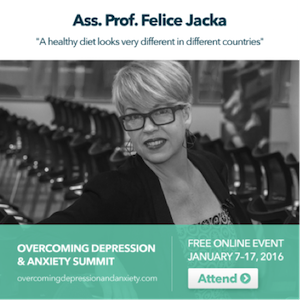
healthy-me-felice-jacka

Professor Felice Jacka, Principal Research Fellow: Does Junk Food Shrink Your Brain (her interview is on day 5)

A healthy diet looks very different in different countries

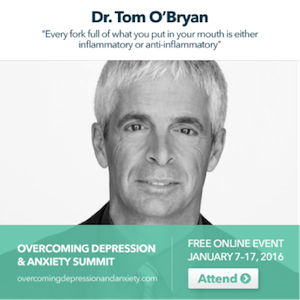
healthy-me-tom-obryan

Dr. Tom O’Bryan, International Speaker, Educator: How Wheat Harms the Brain (his interview is on day 3)

Every forkful of what you put in your mouth is either inflammatory or anti-inflammatory

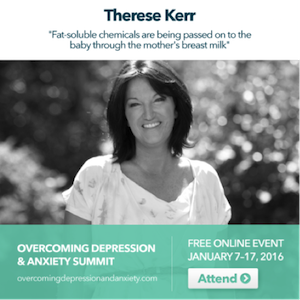
healthy-me-therese-kerr

Therese Kerr, Author, Speaker, Health Ambassador: Chemicals in Cosmetics to Avoid (her interview is on day 4)

Fat-soluble chemicals are being passed on to the baby through the mother’s breast milk.

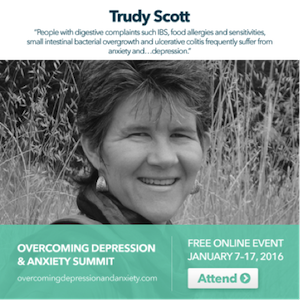
healthy-me-trudy-scott

Trudy Scott, Author, Nutritionist, Food Mood Expert: Nutritional Solutions for Anxiety (my interview is on day 3)

People with digestive complaints such as IBS, food allergies and food sensitivities, small intestinal bacterial overgrowth and ulcerative colitis frequently suffer from anxiety and depression.

I’m thrilled to be included in this line-up of experts and I cover how to address anxiety (and depression) using targeted amino acids GABA and tryptophan. I also talk about nutrients for the social anxiety condition called pyroluria (in case you haven’t yet heard me present on these topics – if you have, be sure to tune in to other great interviews).

Hope you can join us! You can learn more and register here:
http://overcomingdepressionandanxiety.com/infuisonsoft.php?p=TrudyScott&w=hme


Filed Under: Antianxiety, Depression, Events Tagged With: Healthy ME Summit

MTHFR, Depression and Anxiety with Carolyn Ledowsky

December 21, 2015 By Trudy Scott 21 Comments

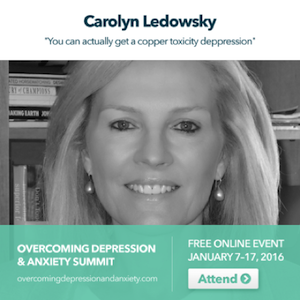
The Healthy ME Summit: Overcoming Depression and Anxiety runs Jan 7-17, 2016. Here are some snippets from the excellent interview with Carolyn Ledowsky, Naturopath, Herbalist, Nutritionist: MTHFR, Depression & Anxiety.

health-me-summit-carolyn-ledowsky

MTHFR is a gene that helps the conversion of folate to the active form. When you eat leafy greens the body goes through many metabolic processes to change the folate to an active folate and this active folate is what we call a methyl group.

It’s this methyl group that acts as a master switch in really important processes in our body… it helps detoxify chemicals and heavy metals, and really importantly it helps us make glutathione (our major antioxidant that protects us from free radical damage), it helps to process hormones and it’s really important in the stress response.

Stress uses up a lot of our methyl groups and some people use up all their methyl groups when they are really stressed. They can turn the stress response on but then they don’t have enough to turn it off so they stay in this hyper-stress state.

If you have a lack of methyfolate or methyl groups then you don’t have enough components to generate neurotransmitters like serotonin and dopamine.

I would say 80% of people with MTHFR who come to our clinic would experience anxiety or depression and for some of them it’s had a huge impact on their lives and they just can’t function.

Carolyn shares some of the early research on folate and depression, psychosis and schizophrenia; how SAMe is the distributor of all these really important methyl groups to every part of the body; the importance of vitamin B12, zinc, vitamin B6 and how elevated homocysteine is neurotoxic and has a massive impact on mood; how the mutations in the COMT gene can make you less able to tolerate methylfolate; why a vegan or vegetarian diet can be a big factor with anxiety and depression.

She also covers pyroluria (and low zinc and low vitamin B6) as well as high copper and infections:

You can actually get a copper toxicity depression (even without pyroluria). You can have high copper with estrogen dominance, low iron, low molybdenum and one of the key strategies is to balance copper and zinc (and look at why zinc is low to start with)

Strep infections can increase excitatory receptor activity, decreasing GABA levels and impairing speech in kids with autism

It’s a really excellent interview and not to be missed!

Here are more details about the Healthy ME Summit: Overcoming Depression and Anxiety, January 7-17, 2016.

healthy-me-summit

You will discover 50 of the brightest and most brilliant minds in the field of mental health and wellness. The interviews are a collection of experts, as well as individuals sharing their inspirational personal experiences. The culmination of both of these points of view provides you the listener with the answers and solutions to your mental health challenges.

Here are a few of the other excellent speakers and topics:

  • Nicole Bijlsma, Author, Naturopath, Acupuncturist: Mould The New Asbestos [this is the Australian spelling of mold]
  • Therese Kerr, Author, Speaker, Health Ambassador: Chemicals in Cosmetics to Avoid
  • Amy Myers, MD, Author: The Autoimmune Solution for Mental Health
  • Reed Davis, Functional Nutritionist: Addressing Metabolic Chaos

I’m thrilled to be included in this line-up of experts and I’ll be sharing Nutritional Solutions for Anxiety – and will cover the amino acids GABA and tryptophan, and the social anxiety condition pyroluria.

Hope you can join us! You can learn more and register here:
http://overcomingdepressionandanxiety.com/infuisonsoft.php?p=TrudyScott&w=hme

Filed Under: Depression, Events, MTHFR, Pyroluria Tagged With: Carolyn Ledowsky, Healthy ME Summit, online event

Anxiety and stress research summary: mother’s age, coffee and benzodiazepines

November 20, 2015 By Trudy Scott Leave a Comment

coffee-and-cream

I like to keep up with recent research papers and I post new studies on my facebook page each week asking for feedback, results, opinions and more. I’ve decided to try something new and I’ve gathered a few of the hot topics into a blog to share here.

Here are a few recent studies and links to the facebook discussions:

(1) Mother’s age at birth may influence symptoms of depression in daughters. Father’s age not a factor; effect not seen in sons, study says

Daughters whose mothers were age 30 to 34 when they gave birth reported significantly higher levels of stress and those whose mothers were over age 35 at the time of birth had significantly higher levels of stress, depression and anxiety compared with daughters whose mothers were under age 30.

Is this true for you, your daughters, your family? It’s not for me. My mom was under 30 when she had me and I really have to watch my stress levels and I did have really bad anxiety in my late 30s. Here is the link to the feedback on the facebook post and as you can see it’s about half and half.

(2) Drink To Your Health: Study Links Daily Coffee Habit To Longevity

In our study, we found people who drank three to five cups of coffee per day had about a 15 percent lower [risk of premature] mortality compared to people who didn’t drink coffee

Based on the all the excited and happy comments in this thread on the NPR facebook page there are many coffee addicts all self-medicating with caffeine! Sorry, but it’s the truth and one of the toughest things for most of my clients to quit.

Unfortunately coffee is not a great choice and it affects so many people with increasing anxiety and panic attacks, causing insomnia, impacting the adrenals and hormones. It’s also dehydrating, affects blood sugar levels, is loaded with pesticides unless organic, can cross-react with gluten and can be a source of mold.

Are you a coffee addict and would you like to quit? Are you a coffee addict but don’t plan to quit? Have you quit and are so glad you did? And what do you drink now? I quit about 18 years ago and I vote for rooibos herbal tea or carob!

Here is the link to the feedback on the facebook post and as you can see most commenters have embraced a life with no coffee which is wonderful!

(3) Drug driving: Are your meds affecting you?

In Australia, drivers with Benzodiazepines (used to treat sleep and anxiety disorders) levels at therapeutic concentrations and higher, were more likely to be culpable in a crash.

Many drivers think that the impairing effects of medicines only occur when they are used excessively, or taken in excess, but that is not the case.by drugs, according to (QUT) Queensland University of Technology road safety researcher Dr Tanya Smyth.

She said driving while affected by prescription and over-the-counter medications had the potential to be as dangerous as driving under the influence of illegal drugs.

The biggest problem is that research has shown drivers are unable to accurately self-assess their impairment when taking medication and are overconfident in assessing their abilities.

The concern is that drivers may be assessing themselves as safe to drive, when in fact they are not.

Many drivers think that the impairing effects of medicines only occur when they are used excessively, or taken in excess, but that is not the case.

Drug Driving is an interesting term and this is very scary considering how many people are prescribed benzodiazepines! If you’re currently on a benzo, do you feel safe driving? If you took benzos in the past, did you feel safe driving? Do you think we need better guidelines for driving for folks on certain prescription medications?

Here is the link to the feedback on the facebook post

I’d love to hear what you think of this format and if this is of interest to you? I’d also like to invite you to come on over to facebook and join in the discussion. Or feel free to post questions and comments right here on the blog.


Filed Under: Caffeine, Depression, Research

Western diet is associated with a smaller left hippocampus and anxiety

October 23, 2015 By Trudy Scott Leave a Comment

western-diet

A new food and mental health study has been published in the international BMC Medicine journal: Western diet is associated with a smaller hippocampus: a longitudinal investigation. The lead author is Associate Professor Felice Jacka from Deacon University in Australia.

Here is the conclusion of the study: 

Lower intakes of nutrient-dense foods and higher intakes of unhealthy foods are each independently associated with smaller left hippocampal volume. To our knowledge, this is the first human study to demonstrate associations between diet and hippocampal volume concordant with data previously observed in animal models.

Study participants were Australian adults aged 60-64.   The results of the study, show that an unhealthy “Western” diet is associated with a smaller left hippocampus and a healthier “prudent”, nutrient-dense diet is associated with a larger left hippocampus.

The unhealthy “Western” diet was:

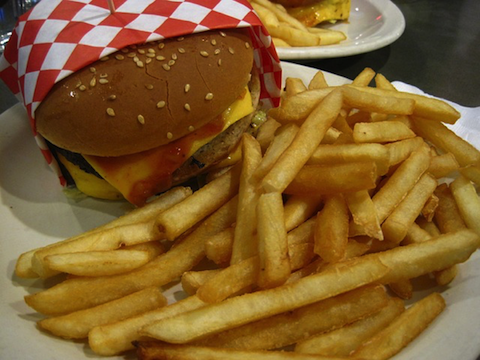
characterized by the consumption of roast meat, sausages, hamburgers, steak, chips, crisps and soft drinks

and the healthy “prudent”, nutrient-dense diet was:

characterized by the consumption of fresh vegetables, salad, fruit and grilled fish

This study has importance for cognition and mental health, both depression and very possibly anxiety too:

extensive evidence from animal studies points to the importance of the hippocampus in the association between diet and mental and cognitive health

The hippocampus is a brain structure associated with both learning and memory, as well as mood regulation, and is specifically implicated in depression

The study does group high sugar and high saturated fat together, and unfortunately the healthy diet excludes good quality red meat which is surprising considering previous research and conversations with Dr. Jacka about the benefits of good quality red meat and mental health:

In our study, out of every single dietary food grouping that I looked at including vegetables, fruits, salads, beans, etc the strongest correlate of mental health was red meat intake [grass-fed red meat of course]

Consistently, women who have less than the recommended intake of red meat seem to be in an increased risk for common mental disorders [like anxiety and depression] and bipolar disorder.

It will be wonderful to see follow-up research looking at the effect of quality grass-fed red meat on hippocampus size.  

Drew Ramsey, MD, an assistant clinical professor of psychiatry at Columbia University College of Physicians and Surgeons in New York City, described the study as “exciting” in an interview on Medscape Medical News:

It’s the first time that a dietary pattern has been linked to specific changes in the brain. We’ve known for a long time that there’s a correlation between dietary pattern and the risk of a number of brain illnesses, like depression and dementia, and the mechanism behind this, we believe, involves neuroplastic processes of how food affects brain growth. This is the first study that’s really shown that quite conclusively.

Dr. Ramsey is the author of The Happiness Diet, and co-founder of National Kale Day. His mission is to educate America on eating healthier and I’ll second what he said about this study:

nutrition should be incorporated into mental health clinical practice.

How wonderful is it to hear a statement like this from a psychiatrist!?

You can read the complete study here.

What does all this mean for you? Eat real whole nutrient-dense food and ditch the junk food and processed food. Your brain will be happy and so will you be!

If you’re a mental health practitioner, start talking to your clients and patients about what they’re eating, ask them what they had for breakfast and share this research.


Filed Under: Antianxiety Food Solution, Depression, Food and mood, Mental health, Real whole food, Research Tagged With: anxiety, depression, drew ramsey, felice jacka, healthy diet, hippocampal, red meat, western diet

Anxiety and OCD: Inositol instead of tryptophan or 5-HTP?

September 11, 2015 By Trudy Scott 191 Comments

inositol for anxiety and OCD
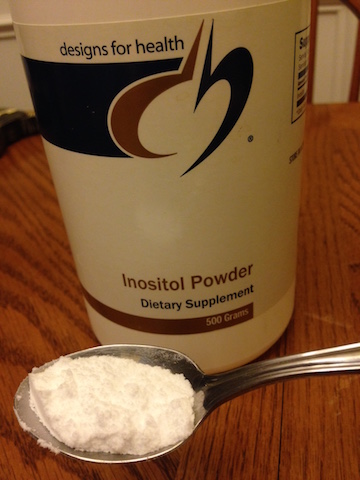
DFH Inositol powder – it’s pleasant-tasting and 1 teaspoon is about 3g

Have you used inositol for anxiety and OCD (obsessive compulsive disorder) or even obsessive thinking or behaviors? Have you used it alone or with tryptophan or 5-HTP? I’d like to share an interesting discussion on a recent blog I wrote: Amino acids for anxiety – which ones and for how long? to illustrate how we are all unique and how some nutrients work well and some not so well.

I received this question on the blog regarding the use of amino acids tryptophan or 5-HTP and OCD/anxiety:

I was wondering if this will help with OCD? I did not see any mention of OCD in your articles. Do you feel it can be treated the same way you would treat other anxieties? I was told that since I take serotonin medication that I should not take 5-HTP because it may cause too much serotonin. What are your thoughts?

My answer was as follows (I’ve added a few links because I like to share the research):

OCD can often be related to low serotonin so yes tryptophan and/or 5-HTP can help and is often very effective. If you take an SSRI then tryptophan and/or 5-HTP should only be taken under a doctor’s supervision and at least 6 hours from the SSRI. I would suggest working with a practitioner who knows the amino acids too. And talk to your doctor about doing a taper if that’s what you’d like to do

The other nutrient that helps with OCD is inositol and this is fine to take with an SSRI. I start my clients on 2g/day and go up to 18g/day. Here is one of the older papers on inositol, showing benefits for depression, panic attacks and OCD and a more recent paper discussing OCD and inositol and other nutrients such as NAC and glycine.

With OCD I’d always also look into past strep infections and PANDAs as this could be a factor too.

One of my blog readers, Tracy, responded to the question with some encouragement (how lovely!) and gave us a great example of how we are all different and there is no one size fits all:  

Chiming in with a bit of encouragement here – a bit late perhaps, but wanted to let you know that my teenage son suffers from OCD and anxiety. A number of years ago I found Trudy’s website while trying to find some natural ways to help him. We tried 5-HTP with good success (it also helped lessen the frequency and intensity of his migraines) but it caused stomach upset with him, even when taken with food, so be aware that it may have this effect on you if you try it. After about 9 months of 5-HTP we kind of “forgot” to give it to him and he continued to feel good.

Once my son started high school he started having more stress in his life and his OCD, anxiety and migraines returned. I started him on inositol about 8 months ago. It has had an even greater effect on the OCD than the 5-HTP (remember everyone is different tho!).

I’d highly recommend you try the inositol since 5HTP/tryptophan is not an option for you at this time. My son has had no side effects from inositol at all. Good luck!!

I was pleased to hear that the 5-HTP helped when Tracy’s son was younger. Some people do have digestive issues with 5-HTP. It’s usually in the first week and then typically resolves. This was obviously not the case with this young man.

I was also thrilled to hear that the inositol is helping so much now and wanted to know how much helps so I asked her. Tracy shared how much her son needs (not much at all) and the symptoms it helps with:

My son takes 500mg (NOW brand) daily in the mornings, usually with breakfast. That amount works well for him most days.

When stress is higher and he starts experiencing “breakthrough anxiety” or obsessions, I have him take another 500mg in the evenings as well, just for a couple days or until the stress has diminished.

I should mention that his OCD tends to be primarily obsessive in nature with very little compulsion. His father was actually diagnosed with mild OCD before I met him and he learned to deal with his through counseling and behavior modification. I read about tryptophan (Julia Ross) and asked him to try it. It works well for him when his anxiety acts up (which interestingly tends to have a seasonal component!) It has been an education living with these two!

You can take up to 18g a day of inositol but I suggest starting with 2g a day and building up as needed.  But as you can see above, even 500mg to 1000mg (which is 1 g – I grew up in South Africa and love the metric system!) may be enough.

I happen to use the DFH Inositol powder (pictured above). It has a pleasant slightly sweet taste and is easy to increase the amount based on how much you find helpful. You can find this on the supplements blog here.

As I mentioned above, tryptophan or 5-HTP can help with anxiety, OCD, obsessive thoughts and behaviors (and panic disorders and depression). Adding inositol is an option when the tryptophan/5-HTP isn’t quite enough, or simply use inositol alone.

I also think inositol makes a great addition for mixing into the nasty tasting tryptophan if you find you get better benefits with the tryptophan capsules opened. I suggest starting with 2g inositol per 500mg tryptophan.

I appreciate Tracy giving me permission to share her son’s success with these nutrients. We can all learn so much from stories like this. If you’ve been using any of the amino acids and/or inositol, I hope this has been helpful for you.

Please share how you’re doing in the comments and feel free to ask additional questions.

If this sounds intriguing and you’d like guidance with using the amino acids and other nutrients like inositol, stay tuned for the launch of The Amazing Aminos for Anxiety homestudy group program. This homestudy group program will provide guidance with using each of the targeted individual amino acids, including nutrients like inositol. You can also add your name in the comments if you’d like to be notified when it launches. You’re also welcome to sign up here to be notified when we have more details about the start date.

Filed Under: Antianxiety, Anxiety and panic, Depression, OCD Tagged With: anxiety, depression, inositol, obsessive thinking, OCD, supplements

  • « Go to Previous Page
  • Page 1
  • Interim pages omitted …
  • Page 8
  • Page 9
  • Page 10
  • Page 11
  • Page 12
  • Interim pages omitted …
  • Page 14
  • Go to Next Page »

Primary Sidebar

GABA QuickStart Homestudy

gaba quickstart homestudy

Free Report

9 Great Questions Women Ask about Food, Mood and their Health

You'll also receive a complimentary subscription to my ezine "Food, Mood and Gal Stuff"


Connect with me

Popular Posts

  • Amino Acids Mood Questionnaire from The Antianxiety Food Solution
  • The Antianxiety Food Solution Amino Acid and Pyroluria Supplements
  • Pyroluria Questionnaire from The Antianxiety Food Solution
  • Collagen and gelatin lower serotonin: does this increase your anxiety and depression?
  • Tryptophan for the worry-in-your-head and ruminating type of anxiety
  • GABA for the physical-tension and stiff-and-tense-muscles type of anxiety
  • The Antianxiety Food Solution by Trudy Scott
  • Seriphos Original Formula is back: the best product for anxiety and insomnia caused by high cortisol
  • Am I an anxious introvert because of low zinc and vitamin B6? My response to Huffington Post blog
  • Vagus nerve rehab with GABA, breathing, humming, gargling and key nutrients

Recent Posts

  • Her cravings for chips and peanut butter were triggered by stress: GABA ends cravings and reduces physical tension and fear of heights
  • It is truly miraculous to be able to move through life without crippling anxiety and panic
  • GABA and tryptophan combo provide immediate and noticeable relief for tremors and cervical dystonia in just 7 days
  • Red light therapy for back and neck pain, plantar fasciitis and low mood – a complement to the amino acids GABA, DPA and tryptophan
  • What do I use instead of Seriphos to help lower high cortisol that is affecting my sleep and making me anxious at night?

Categories

  • 5-HTP
  • AB575
  • Addiction
  • ADHD
  • Adrenals
  • Alcohol
  • Allergies
  • Alzheimer's disease
  • Amino Acids
  • Anger
  • Antianxiety
  • Antianxiety Food Solution
  • Antidepressants
  • Anxiety
  • Anxiety and panic
  • Autism
  • Autoimmunity
  • benzodiazapines
  • Bipolar disorder
  • Books
  • Caffeine
  • Cancer
  • Candida
  • Children/Teens
  • Collagen
  • Cooking equipment
  • Coronavirus/COVID-19
  • Cravings
  • Depression
  • Detoxification
  • Diabetes
  • Diet
  • DPA/DLPA
  • Drugs
  • EFT/Tapping
  • EMF
  • EMFs
  • Emotional Eating
  • Endorphins
  • Environment
  • Essential oils
  • Events
  • Exercise
  • Fear
  • Fear of public speaking
  • Fertility and Pregnancy
  • Fish
  • Food
  • Food and mood
  • Functional neurology
  • GABA
  • Gene polymorphisms
  • General Health
  • Giving
  • Giving back
  • Glutamine
  • Gluten
  • GMOs
  • Gratitude
  • Gut health
  • Heart health/hypertension
  • Histamine
  • Hormone
  • Hyperparathyroidism
  • Hypoglycemia
  • Immune system
  • Inflammation
  • Insomnia
  • Inspiration
  • Introversion
  • Joy and happiness
  • Ketogenic diet
  • Lithium orotate
  • Looking awesome
  • Lyme disease and co-infections
  • MCAS/histamine
  • Medication
  • Men's health
  • Mental health
  • Mercury
  • Migraine
  • Mold
  • Movie
  • MTHFR
  • Multiple sclerosis
  • Music
  • NANP
  • Nature
  • Nutritional Psychiatry
  • OCD
  • Osteoporosis
  • Oxalates
  • Oxytocin
  • Pain
  • Paleo
  • Parasites
  • Parkinson’s disease
  • PCOS
  • People
  • PMS
  • Postpartum
  • PTSD/Trauma
  • Pyroluria
  • Questionnaires
  • Real whole food
  • Recipes
  • Research
  • Schizophrenia
  • serotonin
  • SIBO
  • Sleep
  • Special diets
  • Sports nutrition
  • Stress
  • Sugar addiction
  • Sugar and mood
  • Supplements
  • Teens
  • Testimonials
  • Testing
  • The Anxiety Summit
  • The Anxiety Summit 2
  • The Anxiety Summit 3
  • The Anxiety Summit 4
  • The Anxiety Summit 5
  • The Anxiety Summit 6
  • Thyroid
  • Thyroid health
  • Toxins
  • Tryptophan
  • Tyrosine
  • Uncategorized
  • Vegan/vegetarian
  • Women's health
  • Yoga

Archives

  • May 2026
  • April 2026
  • October 2025
  • September 2025
  • August 2025
  • July 2025
  • June 2025
  • May 2025
  • April 2025
  • March 2025
  • February 2025
  • January 2025
  • November 2024
  • October 2024
  • September 2024
  • August 2024
  • July 2024
  • June 2024
  • May 2024
  • April 2024
  • March 2024
  • February 2024
  • January 2024
  • December 2023
  • November 2023
  • October 2023
  • September 2023
  • August 2023
  • July 2023
  • June 2023
  • May 2023
  • April 2023
  • March 2023
  • February 2023
  • January 2023
  • December 2022
  • November 2022
  • October 2022
  • September 2022
  • August 2022
  • July 2022
  • June 2022
  • May 2022
  • April 2022
  • March 2022
  • February 2022
  • January 2022
  • December 2021
  • November 2021
  • October 2021
  • September 2021
  • August 2021
  • July 2021
  • June 2021
  • May 2021
  • April 2021
  • March 2021
  • February 2021
  • January 2021
  • December 2020
  • November 2020
  • October 2020
  • September 2020
  • August 2020
  • July 2020
  • June 2020
  • May 2020
  • April 2020
  • March 2020
  • February 2020
  • January 2020
  • December 2019
  • November 2019
  • October 2019
  • September 2019
  • August 2019
  • July 2019
  • June 2019
  • May 2019
  • April 2019
  • March 2019
  • February 2019
  • January 2019
  • December 2018
  • November 2018
  • October 2018
  • September 2018
  • August 2018
  • July 2018
  • June 2018
  • May 2018
  • April 2018
  • March 2018
  • February 2018
  • January 2018
  • December 2017
  • November 2017
  • October 2017
  • September 2017
  • August 2017
  • July 2017
  • June 2017
  • May 2017
  • April 2017
  • March 2017
  • February 2017
  • January 2017
  • December 2016
  • November 2016
  • October 2016
  • September 2016
  • August 2016
  • July 2016
  • June 2016
  • May 2016
  • April 2016
  • March 2016
  • February 2016
  • January 2016
  • December 2015
  • November 2015
  • October 2015
  • September 2015
  • August 2015
  • July 2015
  • June 2015
  • May 2015
  • April 2015
  • March 2015
  • February 2015
  • January 2015
  • December 2014
  • November 2014
  • October 2014
  • September 2014
  • August 2014
  • July 2014
  • June 2014
  • May 2014
  • April 2014
  • March 2014
  • February 2014
  • January 2014
  • December 2013
  • November 2013
  • October 2013
  • September 2013
  • August 2013
  • July 2013
  • June 2013
  • May 2013
  • April 2013
  • March 2013
  • February 2013
  • January 2013
  • December 2012
  • November 2012
  • October 2012
  • August 2012
  • July 2012
  • June 2012
  • May 2012
  • April 2012
  • March 2012
  • February 2012
  • January 2012
  • December 2011
  • November 2011
  • October 2011
  • September 2011
  • August 2011
  • July 2011
  • June 2011
  • May 2011
  • April 2011
  • March 2011
  • February 2011
  • January 2011
  • December 2010
  • October 2010
  • September 2010
  • July 2010
  • May 2010
  • April 2010
  • March 2010
  • February 2010
  • January 2010
  • November 2009

Share the knowledge!

The above statements have not been evaluated by the Food and Drug Administration. Products listed in this website are not intended to diagnose, treat, cure or prevent any disease.

The information provided on this site is for informational and educational purposes only and is not intended as a substitute for advice from your physician or other health care professional. You should consult with a healthcare professional before starting or modifying any diet, exercise, or supplementation program, before taking or stopping any medication, or if you have or suspect you may have a health problem.


Copyright © 2026 Trudy Scott. All Rights Reserved. | Privacy | Terms and Conditions | Refund Policy | Medical Disclaimer

Free Report

9 Great Questions Women Ask about Food, Mood and their Health

You’ll also receive a complimentary subscription to my ezine “Food, Mood and Gal Stuff”