• Skip to primary navigation
  • Skip to main content
  • Skip to primary sidebar

everywomanover29 blog

Food, Mood and Women's Health – Be your healthiest, look and feel great!

  • Blog
  • About
  • Services
  • Store
  • Resources
  • Testimonials
  • The Book
  • Contact
  • Search this site

women

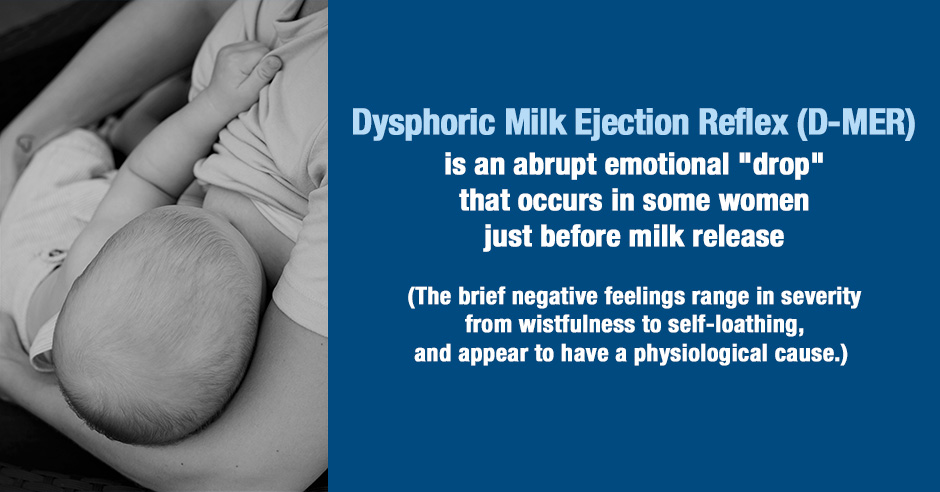
Dysphoric Milk Ejection Reflex (D-MER) is an abrupt emotional “drop” that occurs in some women just before milk release

June 23, 2023 By Trudy Scott 4 Comments

d-mer

Dysphoric Milk Ejection Reflex (D-MER) is an abrupt emotional “drop” that occurs in some women just before milk release and continues for not more than a few minutes. The brief negative feelings range in severity from wistfulness to self-loathing, and appear to have a physiological cause.

The authors suggest that an abrupt drop in dopamine may occur when milk release is triggered, resulting in a real or relative brief dopamine deficit for affected women.

Clinicians can support women with D-MER in several ways; often, simply knowing that it is a recognized phenomenon makes the condition tolerable. Further study is needed.

The above abstract is from this paper published in 2011 – Dysphoric milk ejection reflex: A case report.

Alia Heise (AH) is co-author of this paper and coined the term D-MER. She is sharing her breastfeeding and D-MER experiences as the case.

Many women who are struggling with these feelings don’t ask for help and when they do they are often dismissed. The authors share it’s “a breastfeeding problem for which affected mothers seem only rarely to seek or receive help.” I’m sharing this case and more about D-MER for these reasons and because troubled mothers often stop breastfeeding.

Read on to learn about the dopamine hypothesis and how Rhodiola helped Alia.

Feedback from struggling moms

The authors share this description from a struggling mom:

If you read Harry Potter they talk about the creatures that suck the soul out of you and when they are around it makes you cold and you start to focus on negative things and fall into this abyss of negative thoughts – that is how D-MER was for me at times.

Someone in my community shared this when I posted the case on Facebook:

I experienced an extreme emotional response. I would describe it as a wave of huge anxiety… almost suicidal at times but only during letdown (it lasted only a couple of minutes if that, but it was so severe.)

I started noticing it when I would pump. After I researched it I figured out there was a name for it and a reason. I never could find anyone to help me… I remember mentioning it to my doctor and she had never heard of it. I just suffered through and so my breastfeeding/pumping journey ended at 6 months.

I appreciate Alie and the authors for helping to create awareness and these moms for sharing their experiences. Hopefully this information will mean fewer moms struggle alone with D-MER and more awareness amongst practitioners.

I share some highlights below but be sure to read the entire paper here – Dysphoric milk ejection reflex: A case report.

The spectrum of D-MER symptoms and a drop in dopamine hypothesized as the cause

Here is the spectrum of D-MER symptoms (as listed in the above paper):

  1. Depression, wistfulness, homesickness, apprehension, hopelessness, hollowness in stomach (first 3 months)
  2. Anxiety, dread, panic, irritability (6 to 12 months)
  3. Anger, tension, agitation, paranoia (until weaning)

A drop in dopamine is hypothesized as the cause in susceptible mothers (also from the above paper):

Based on AH’s experiences, and until more is known, it is the authors’ very humble hypothesis that a drop in dopamine either facilitates or parallels each oxytocin spike in lactating human mothers, and that it is this dopamine drop that results in D-MER in susceptible mothers.

What adds value to Alia’s dopamine hypothesis is that bupropion, a dopamine reuptake inhibitor (i.e. a medication that increases dopamine), reduced her symptoms in a day and eliminated her symptoms in 5 days. She did, however, have to stop the medication due to side effects.

Rhodiola prevents the breakdown of dopamine, increasing it’s availability

Alia then learned about a herb called Rhodiola rosea that “is a monoamine oxidase inhibitor that prevents the breakdown of dopamine, increasing its availability.”

When she used Rhodiola her symptoms became much milder and when she missed taking Rhodiola her D-MER symptoms were worse. She didn’t notice any changes in her milk supply.

I will add that Alia used Rhodiola when her daughter was 14 months old and her D-MER symptoms were “somewhat reduced, but still extremely troublesome.” I have to wonder if she may have needed to use a higher dose when her daughter was a new-born and Alie’s symptoms were more severe.

Safety of Rhodiola when breastfeeding

The authors quote Sheila Humphrey, author of The Nursing Mother’s Herbal (my Amazon link) who groups Rhodiola with several other “tonic herbs” for which “there are no anecdotes, as yet, to suggest that they will affect breastfeeding babies.”

Dr Aviva Romm, MD, calls Rhodiola “The Spirit Calming, Anti-Anxiety Adaptogen” in this article about adaptogenic herbs

Rhodiola extract helps promote a calm emotional state and supports strong mental performance, optimal immune function, and hormonal balance. It is a key adaptogen for reducing anxiety. It improves mental and physical stamina, improves sleep, and reduces stress, “burn out,” and irritability.

She says to avoid Rhodiola if you have bipolar disorder and during pregnancy (due to lack of safety data), but considers it safe while breastfeeding.

But, as always, when it comes to nursing, I have clients work with their practitioner.

Future research on tyrosine and theanine during breastfeeding, and prevention

I would also love to see future research on the safety of tyrosine and theanine (and all amino acids) being used during breastfeeding, as another option for moms with D-MER.

Tyrosine is well-recognized as an amino acid that helps to boost dopamine levels and improve a low mood and may help ease some of the D-MER symptoms. Some individuals report how tyrosine also alleviates their anxiety and panic attacks and creates a feeling of calm focus.

Theanine, also an amino acid, supports GABA, dopamine and serotonin and I feel has a potential application in D-MER. There may well be a role for tryptophan (for serotonin support and the depression/self-loathing/anger/agitation/panic symptoms of D-MER) and GABA (for GABA support and the anxiety/tension symptoms of D-MER).

They may also help with postpartum anxiety, depression, OCD and intrusive thoughts.

I’d also like to see future research look at possible correlations between D-MER and low neurotransmitters before pregnancy/nursing. And if these women saw benefits with amino acids. Addressing low levels of neurotransmitters and the dietary factors I address in my book, The Antianxiety Food Solution, may help prevent this or at least reduce the severity of symptoms.

Resources if you are new to using amino acids as supplements

If you are new to using amino acids as supplements, here is the Amino Acids Mood Questionnaire from The Antianxiety Food Solution (you can see all the symptoms of neurotransmitter imbalances, including low GABA, low serotonin and low dopamine).

If you suspect low levels of any of the neurotransmitters and do not yet have my book, The Antianxiety Food Solution – How the Foods You Eat Can Help You Calm Your Anxious Mind, Improve Your Mood, and End Cravings, I highly recommend getting it and reading it before jumping in and using amino acids on your own so you are knowledgeable. And be sure to share it with the practitioner/health team you or your loved one is working with.

There is an entire chapter on the amino acids and they are discussed throughout the book in the sections on gut health, gluten, blood sugar control, sugar cravings, anxiety and mood issues.

The book doesn’t include product names (per the publisher’s request) so this blog, The Antianxiety Food Solution Amino Acid and Pyroluria Supplements, lists the amino acids that I use with my individual clients and those in my group programs. You can find them all in my online store.

If, after reading this blog and my book, you don’t feel comfortable figuring things out on your own (i.e. doing the symptoms questionnaire and respective amino acids trials), a good place to get help is the GABA QuickStart Program (if you have low GABA symptoms too). This is a paid online/virtual group program where you get my guidance and community support.

If you are a practitioner, join us in The Balancing Neurotransmitters: the Fundamentals program. This is also a paid online/virtual program with an opportunity to interact with me and other practitioners who are also using the amino acids.

Have you experienced D-MER and were you advised to use Rhodiola? And if yes, how did it help? What else helped?

Or did you get no help from your medical team?

Do you feel there is a possible correlation between your D-MER symptoms and low neurotransmitter symptoms you experienced before pregnancy/nursing? If yes, which amino acids helped you before you were pregnant?

If you are a practitioner, are you familiar with D-MER and have you seen Rhodiola help?

Feel free to post your feedback and questions here in the comments.
Filed Under: Anxiety, Depression, Postpartum, Women's health Tagged With: Alia Heise, amino acids, anxiety, before milk release, breastfeeding, calm; resources if you are new to the amino acids; the GABA Quickstart online program; and Balancing Neurotransmitters: the Fundamentals program for practitioners, D-MER, dopamine, Dysphoric Milk Ejection Reflex, emotional drop, negative feelings, physiological, Prevention, Rhodila, self-loathing, theanine, tyrosine, wistfulness, women

Outsmart Endometriosis by Dr. Jessica Drummond

February 5, 2021 By Trudy Scott Leave a Comment

outsmart endometriosis

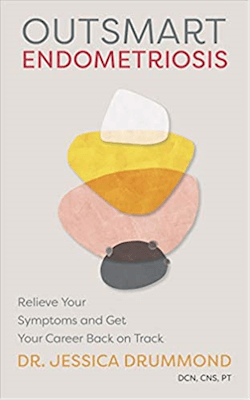
Dr. Jessica Drummond, DCN, CNS, PT, is a good friend and colleague whose work in women’s health I highly respect. Her book, Outsmart Endometriosis (now available in paperback), is integrative, evidence-based, practical and empowering!

She is a leader in the field and her vast experience and compassion makes this a must-read. As a nutritionist working with women with anxiety, I am thrilled to have this comprehensive evidence-based book as a resource for those in my community who are on their endometriosis healing journey, and for practitioners who work with women with endometriosis.

Here is the official book blurb:

Endometriosis does not have to ruin your career.

Wouldn’t it be nice to stop worrying about how your endometriosis symptoms are going to hold you back from hitting your career goals? Or to have tools that you can use to reduce your pain and manage your energy so you don’t have to miss out on important opportunities? Sometimes, it can feel like endometriosis is controlling your life.

Sought-after endometriosis, pelvic pain, and nutrition expert Dr. Jessica Drummond, DCN, CNS, PT, has helped thousands of women relieve their pelvic pain in over twenty years of practice. In Outsmart Endometriosis, she offers not another “one-size-fits-none endo diet,” but a comprehensive approach to managing your symptoms using simple, repeatable strategies, and without having to wait for an appointment with your doctor.

In Outsmart Endometriosis, Dr. Drummond can help you to:

  • Stop missing important work meetings or deadlines because of your endometriosis pain, fatigue, anxiety, and/or digestive symptoms
  • Let go of your worries about your fertility
  • Clear your brain fog so you can do your best work
  • Get control over your symptoms so you can feel more comfortable, and no longer just power through or be forced to quit
  • Build a team of the right professionals to support you along the way

Read Outsmart Endometriosis and become the boss of your symptoms and your career.

Get your copy on Amazon here (my Amazon link) or from Target, Barnes and Noble or independent bookstores.  You can also download book bonuses here.

Filed Under: Anxiety, Women's health Tagged With: anxiety, brain fog, digestive symptoms, Dr. Jessica Drummond, endometriosis, fatigue, fertility, nutrition, pain, pelvic pain, team, women, women’s health

Women, alcohol and mental health; autism and propionic acid; toxic farmed salmon

July 19, 2019 By Trudy Scott Leave a Comment

women alcohol mental health

Today I’m sharing some interesting and popular Facebook posts for you to either just read the article or come and join the Facebook discussion:

#1 Women who stop drinking alcohol improve mental health, study finds

Glad to see this research! I see way too much social drinking to de-stress, even by women who lead otherwise healthy lives

“Many women drink alcohol to relax, feel good and take the edge off life, but new evidence suggests skipping that daily glass of wine is a better way to boost their mental health.

Women who quit alcohol improved their mental well-being, researchers reported this week in CMAJ (Canadian Medical Association Journal). The study comes as many Americans are trying out an alcohol-free life as part of the “sober-curious” movement.”

Where are you with this? Do you “self-medicate” with alcohol in order to get through your week?

And there is no judging here…just educating and creating awareness.

Here is the Facebook discussion

bread

#2 Spike In Autism May Be Linked To Preservative In Processed Foods, Study Suggests

Very interesting connection – if it’s a possible factor in autism then it’s very likely a possible factor in anxiety, depression and other mood and neurological disorders too. You can read more about propionic acid here and how it’s found in most baked goods! Here is the Facebook discussion

wild salmon


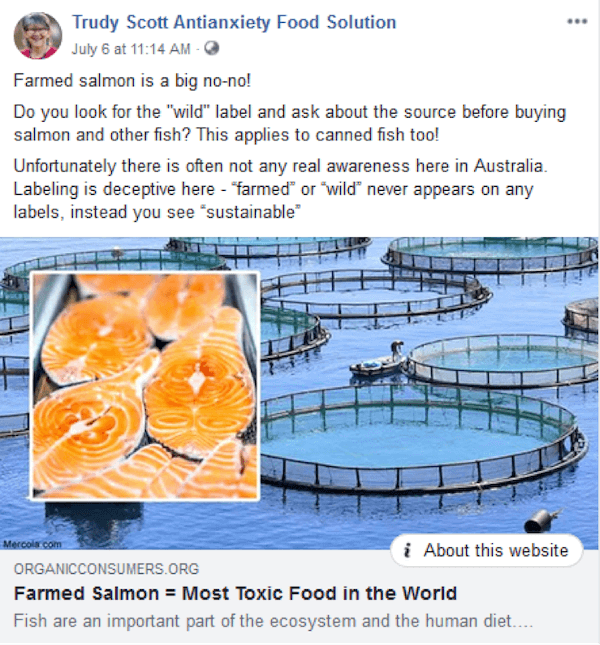
#3 Farmed Salmon = Most Toxic Food in the World

Farmed salmon is a big no-no!

Do you look for the “wild” label and ask about the source before buying salmon and other fish? This applies to canned fish too!

Unfortunately, there is often not any real awareness here in Australia. Labeling is deceptive here – “farmed” or “wild” never appears on any labels, instead you see “sustainable”

And you can’t tell if it’s farmed by just looking at it!

Here is the Facebook discussion

facebook post farmed salmon

Feel free to comment and/or post questions directly on any of the above Facebook discussions or here on the blog.

Filed Under: Women's health Tagged With: alcohol, autism, mental health, propionic acid, toxic farmed salmon, women

The role of low serotonin, low vitamin B6 and low iron in anxiety and panic attacks

December 7, 2018 By Trudy Scott 17 Comments

Low serotonin can cause anxiety and panic attacks. Because vitamin B6 and iron are required raw materials for making serotonin, we know that low levels of these two nutrients often contribute to anxiety and panic attacks.

We have some pretty recent research supporting all this: Low serum concentrations of vitamin B6 and iron are related to panic attack and hyperventilation attack

Reduced serotonin level is known as one of the causes of panic attacks and hyperventilation attacks ….

In the serotonin synthesis system of the brain, vitamin B6 is a coenzyme for tryptophan hydroxylase, which is involved in the conversion of tryptophan into 5-hydroxytryptophan and iron serves as a cofactor for aromatic L-amino acid decarboxylase involved in the formation of serotonin from 5-hydroxytryptophan. Therefore, a reduction in vitamin B6 and iron levels can suppress the progression of the serotonin synthesis.

The study authors measured serum levels of vitamins B2, B6, and B12 and iron in 21 premenopausal women who had been admitted to the emergency room with panic attacks.

The results were compared with lab values from 20 volunteers, also premenopausal women, and this is what they reported:

We found that both vitamin B6 and iron levels were significantly lower in the panic attack/hyperventilation attack group than in the volunteer group. There was no significant difference in the serum levels of vitamins B2 or B12.

These results suggest that low serum concentrations of vitamin B6 and iron are involved in panic attacks and hyperventilation attacks.

This certainly confirms what I see with my clients. When I’m working with someone with anxiety, we always assess for low serotonin, low iron and low vitamin B6 levels, and when we address low levels we almost always see improvements – both in the reduction of anxiety and panic attacks. We’ll often see a mood boost too, sleep improvements and a reduction in carb cravings.

Here are some additional factors to consider:

  • Vitamin B6 can be challenging to measure in serum so I like to also use the pyroluria questionnaire and poor dream recall as a clue. The authors mention that serum pyridoxal 5-phosphate (PLP) is often used as an indication of B6 status, however they opted to use pyridoxal (PAL) after conversion from PLP.
  • Supplementing with vitamin B6 can often lead to some improvements in a few weeks with many folks who have pyroluria reporting feeling less anxious and more social within a week.
  • There is the potential for vitamin B6 toxicity. I have yet to see any signs of toxicity in my clients, but I have also not ever recommended more than 500mg/day. However, there are some individuals who have issues with very small amounts of vitamin B6. Unfortunately, I do not know why this happens.
  • Testing ferritin levels are an excellent way to assess iron levels and iron should never be supplemented unless iron is low. Dr. Izabella Wentz, shares in her book Hashimoto’s Protocol and blog that the optimal ferritin level for thyroid function is between 90-110 ng/m. Addressing low iron levels can take awhile to see a shift in labs.
  • Because zinc and magnesium are also cofactors for making serotonin, low levels may also need to be addressed. I would have loved to see these included in this study,
  • As always, we assess for low serotonin levels using the amino acid questionnaire and start on tryptophan or 5-HTP right away, based on doing trials – so we can see anxiety reduction and relief from panic attacks right away, while the other changes are starting to provide the raw materials for serotonin production.

Keep in mind that low serotonin and low iron and/or low vitamin B6 – although very common with anxiety and panic attacks – are not the only root cause and many other factors may also need to be addressed.

We’d love to hear if addressing low iron and/or low vitamin B6 levels have helped you? Did you use tryptophan and/or 5-HTP at the same time?

If you’re a practitioner, are often do you see low iron and/or low vitamin B6 in your anxious clients/patients?

Filed Under: Anxiety Tagged With: 5-HTP, anxiety, ferritin, hyperventilation attacks, iron, magnesium, panic attacks, premenopausal, serotonin, tryptophan, vitamin B6, women, zinc

The pill and other hormonal contraception: depression, anxiety and FAM

October 21, 2016 By Trudy Scott 9 Comments

homonal-contraception

Women taking the contraceptive pill and other hormonal contraception are more likely to be depressed. These are the findings from a Danish study published in JAMA Psychiatry and reported in an article on PubMed Health.

This was a large prospective cohort study which aimed to investigate whether using hormonal contraception is associated with the future use of antidepressants and a diagnosis of depression.

More than 1 million women aged 15 to 34, with no prior history of depression, were included in the study [and followed for 13 years].

The researchers compared users of hormonal contraception with non-users and found users were more likely to be prescribed antidepressants and diagnosed with depression.

This study found that those women who used the pill were 23% more likely to use antidepressants.

And here are the connections between antidepressant use and these other birth control methods (categorized by estrogen type and dose, progesterone type and the method of contraception):

  • progestogen-only pill – 34% more likely to use antidepressants
  • levonorgestrel intrauterine system (IUS) – 40% more likely to use antidepressants
  • vaginal ring (etonogestrel) – 60% more likely to use antidepressants
  • contraceptive patch (norgestrolmin) – 100% more likely to use antidepressants

The study authors state this:

it’s important to note this study is not able to prove that the contraceptive methods are responsible for the depression, only to find possible links to investigate further.

The researchers don’t advise that women should stop using their contraception, just that further studies are needed. If this association is found to be true, depression may have to be added as a possible side effect of hormonal contraception. 

My fellow nutritionist Karla Maree says this: ‘we’re going to need black box warnings on these medications” and I agree. It’s disappointing that the researchers say further studies are needed.

Dr. Daniel Amen sees the association in his practice and shared this about birth control pills when I interviewed him during season 3 of the Anxiety Summit.

Unfortunately, they drop serotonin levels. You’ve got to ask yourself why are 23 percent of women between the ages of 20 and 60 taking antidepressants. In large part, it’s the birth-control pills that are changing the hormones in their brain, the neurotransmitters in their brain. All of a sudden, they’re more anxious and they’re more depressed.

Birth control pills also can drop magnesium. Magnesium is a natural calmer to nerve cells. They literally can change things. 

We know the pill can also deplete vitamin B6 and folate, and can raise copper levels so these are likely some of the additional reasons we see mood changes in women taking them.

You may have noticed that Dr. Amen mentions 23 percent in our interview – which was actually done in May 2015. He is referring to a 2011 report released by the National Center for Health Statistics:

  • the rate of antidepressant use in this country among teens and adults (people ages 12 and older) increased by almost 400% between 1988–1994 and 2005–2008.
  • 23% of women in their 40s and 50s take antidepressants, a higher percentage than any other group (by age or sex)
  • women are 2½ times more likely to be taking an antidepressant than men

Is this related to hormonal birth control? Very likely! I’m not in favor of any of these hormonal birth control methods and know from experience that they often cause both depression and anxiety in my clients but seeing these percentages is still shocking!

It’s quite strange how many of my clients don’t think of birth control as having side-effects or being as “bad” as other medications. This was certainly the case for me. I’ve very seldom taken medications in my life but I did use the pill and then an IUD for a short while, and initially I didn’t give either a second thought. But I’m sure they were part of the perfect storm that contributed to my anxiety and panic attacks in my late 30s. I was prescribed an antidepressant at this time but chose not to take it, instead searching for nutritional solutions.

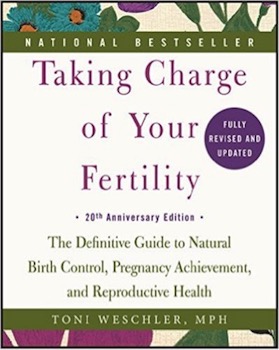
During my search for answers, I read tons of books and one book has had a huge impact on me: Taking Charge of Your Fertility by Toni Weschler. It offered a powerful non-hormonal option for birth control: the Fertility Awareness Method or FAM and gave me so much insight about my body and hormones. It’s also something I now share with my clients. It deserves an entire review so stay tuned. For now, you can check out an overview on her website.

My version of the book was published in 1995 and Toni now has a new revised 2015 edition: Taking Charge of Your Fertility, 20th Anniversary Edition: The Definitive Guide to Natural Birth Control, Pregnancy Achievement, and Reproductive Health.

taking-charge-of-your-fertility

What about you? Do you consider birth control more acceptable than other medications? Are you or were you on birth control and an antidepressant? And do you/did you feel that the birth control affected your mood and contributed to your depression or anxiety?

Or did it improve your symptoms (some women do report a better mood)?

Have you considered or used FAM as an alternative method of birth control? (or pregnancy achievement?)

Have you been offered birth control because of heavy periods or PMS? There are better ways to deal with this and one approach would be to address low serotonin levels with tryptophan.

If you’re in menopause and have no need for this information, please pass it on to your daughters and grand-daughters, nieces, sisters and girlfriends.

Filed Under: Depression Tagged With: anxiety, birth control, contraceptive pill, depression, FAM, pill, taking charge of your fertility, women

Low zinc and low GABA contributing to anxiety in children and women

October 7, 2016 By Trudy Scott 18 Comments

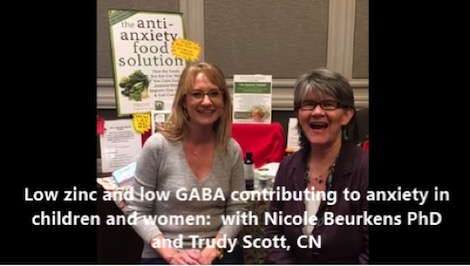
low-zinc-gaba-video

Dr. Nicole Beurkens and I sit down together at the end of the recent Integrative Medicine for Mental Health conference to talk about anxiety and the impact of both low zinc and low GABA. Nicole shares her perspectives on working with children and I share what I see with the adult women I work with. We don’t specifically talk about older adults or men but it’s applicable to everyone.

Dr. Nicole Beurkens PhD, a special educator, clinical psychologist and nutritionist, is author of the new book Life Will Get Better: Simple Solutions for Parents of Children with Attention, Anxiety, Mood and Behavior Challenges

In case you’re new to my community, this is my book: The Antianxiety Food Solution: How the Foods You Eat Can Help You Calm Your Anxious Mind, Improve Your Mood, and End Cravings

Here are some of the highlights from our conversation about zinc:

  • Zinc is a very common deficiency and can be a contributing factor in both anxiety and ADHD
  • Zinc is depleted by sugar consumption, stress and exercise
  • Zinc sulfate used as a zinc challenge is one way to determine your zinc status
  • Nicole’s response to the zinc challenge: fuzzy, strong yukky taste – which means good zinc levels
  • Most people coming to the booth had very little reaction to the zinc challenge – which means low zinc levels
  • Level 1, 2, 3 and 4 are used to figure out your zinc status (you can read about the zinc taste test here)
  • My response to the zinc challenge: metallic, gross, horrible and I got goosebumps – – which means good zinc levels
  • Nicole shares that most of kids and young adults at her clinic have level 1 or level 2 zinc status, and it’s an easy test to do with kids
  • Many people at the conference were on zinc and were surprised they were not tasting the zinc sulfate. Other than sugar consumption, stress and exercise, low HCl (stomach acid) can affect your absorption. I also found that many of these folks were on a gluten-free or Paleo or GAPs diet and eating a lot of nuts or using nut flours. Nuts are high in copper and this can counteract the zinc.
  • We talk about the importance of good quality zinc supplements and finding a zinc product and multi that is copper-free. Here are the products I recommend.

Then we talk about GABA Calm, a calming amino acid that we both love! Here are some of the highlights from this section:

  • It’s a lozenge/sublingual, is easy to take and helps in situations where the anxiety can quickly escalate into panic attacks. Nicole likes the peppermint flavor and finds many of the children and young adults she works with prefer the orange flavor. Personally I also prefer the orange flavor.
  • For adults, if you use wine at the end of the day to de-stress, you may be low in GABA and self-medicating, and using something like GABA-Calm often helps.
  • Moms will take their GABA Calm with them and use as needed and give to their kids if needed too.  
  • I share how effective it is for Lyme anxiety and how it can be used instead of benzodiazepines (I interviewed Trish about this on the recent Anxiety Summit)
  • GABA Calm can help when you’re on a benzodiazepine and even very severe anxiety or depression can be alleviated with diet and nutrients.
  • Nicole shares how common benzodiazepine prescriptions are in teens and young adults; and the issues with dependence and wanting to quit but not being able to. It can sometimes take years to reduce the medications.
  • I share about the first World Benzo Awareness Day on July 11 – so many people are in trouble and are not cautioned.

We were both so encouraged being at this conference and seeing so many physicians, psychiatrists, psychotherapists, psychiatric nurse practitioners and others practitioners who are really interested in learning more about these approaches. They are seeing the same issues we see with some of the medications (and not getting to the root cause of anxiety) and they are excited to expand their knowledge base. It’s just so exciting to see the pendulum swinging!

We both really appreciate the Integrative Medicine for Mental Health conference. If you’re a practitioner and haven’t attended it’s a must-attend event. If you were there you know what I mean. It was also super to meet so many of you after my talk and at my booth. If you’re not a practitioner do tell your doctor about it. Save the date for 2017: September 28 – October 1 in Orange County, California.

We did this as a live video feed on Facebook hence the references to posting questions and Facebook. It was also the end of the event and the people next to us were packing boxes and using a lot of tape so apologies for the weird noises.  

Feel free to share your results with zinc and GABA Calm and any questions you may have.

Filed Under: GABA Tagged With: anxiety, benzodiazepines, children, GABA, GABA Calm, Integrative Medicine for Mental Health conference, Nicole Beurkens, Trudy Scott, women, zinc

  • Page 1
  • Page 2
  • Go to Next Page »

Primary Sidebar

NEW! GABA QuickStart Homestudy (with special intro pricing)

gaba quickstart homestudy

Free Report

9 Great Questions Women Ask about Food, Mood and their Health

You'll also receive a complimentary subscription to my ezine "Food, Mood and Gal Stuff"


Connect with me

Popular Posts

  • Amino Acids Mood Questionnaire from The Antianxiety Food Solution
  • The Antianxiety Food Solution Amino Acid and Pyroluria Supplements
  • Pyroluria Questionnaire from The Antianxiety Food Solution
  • Collagen and gelatin lower serotonin: does this increase your anxiety and depression?
  • Tryptophan for the worry-in-your-head and ruminating type of anxiety
  • GABA for the physical-tension and stiff-and-tense-muscles type of anxiety
  • The Antianxiety Food Solution by Trudy Scott
  • Seriphos Original Formula is back: the best product for anxiety and insomnia caused by high cortisol
  • Am I an anxious introvert because of low zinc and vitamin B6? My response to Huffington Post blog
  • Vagus nerve rehab with GABA, breathing, humming, gargling and key nutrients

Recent Posts

  • What do I use instead of Seriphos to help lower high cortisol that is affecting my sleep and making me anxious at night?
  • BeSerene™ GABA/theanine cream eases severe muscle tension in her neck/shoulders, prevents her bad headaches and quells her anxiety
  • How the correct approach, dose and sublingual use of GABA can be calming and not cause a flushed and itchy face and neck
  • The amino acid glutamine improves low mood by addressing gut health, and it has calming effects too
  • Flight anxiety with heightened breath, physical tension and also fearing the worst (the role of low GABA and low serotonin)

Categories

  • 5-HTP
  • AB575
  • Addiction
  • ADHD
  • Adrenals
  • Alcohol
  • Allergies
  • Alzheimer's disease
  • Amino Acids
  • Anger
  • Antianxiety
  • Antianxiety Food Solution
  • Antidepressants
  • Anxiety
  • Anxiety and panic
  • Autism
  • Autoimmunity
  • benzodiazapines
  • Bipolar disorder
  • Books
  • Caffeine
  • Cancer
  • Candida
  • Children/Teens
  • Collagen
  • Cooking equipment
  • Coronavirus/COVID-19
  • Cravings
  • Depression
  • Detoxification
  • Diabetes
  • Diet
  • DPA/DLPA
  • Drugs
  • EFT/Tapping
  • EMF
  • EMFs
  • Emotional Eating
  • Endorphins
  • Environment
  • Essential oils
  • Events
  • Exercise
  • Fear
  • Fear of public speaking
  • Fertility and Pregnancy
  • Fish
  • Food
  • Food and mood
  • Functional neurology
  • GABA
  • Gene polymorphisms
  • General Health
  • Giving
  • Giving back
  • Glutamine
  • Gluten
  • GMOs
  • Gratitude
  • Gut health
  • Heart health/hypertension
  • Histamine
  • Hormone
  • Hyperparathyroidism
  • Hypoglycemia
  • Immune system
  • Inflammation
  • Insomnia
  • Inspiration
  • Introversion
  • Joy and happiness
  • Ketogenic diet
  • Lithium orotate
  • Looking awesome
  • Lyme disease and co-infections
  • MCAS/histamine
  • Medication
  • Men's health
  • Mental health
  • Mercury
  • Migraine
  • Mold
  • Movie
  • MTHFR
  • Multiple sclerosis
  • Music
  • NANP
  • Nature
  • Nutritional Psychiatry
  • OCD
  • Osteoporosis
  • Oxalates
  • Oxytocin
  • Pain
  • Paleo
  • Parasites
  • Parkinson’s disease
  • PCOS
  • People
  • PMS
  • Postpartum
  • PTSD/Trauma
  • Pyroluria
  • Questionnaires
  • Real whole food
  • Recipes
  • Research
  • Schizophrenia
  • serotonin
  • SIBO
  • Sleep
  • Special diets
  • Sports nutrition
  • Stress
  • Sugar addiction
  • Sugar and mood
  • Supplements
  • Teens
  • Testimonials
  • Testing
  • The Anxiety Summit
  • The Anxiety Summit 2
  • The Anxiety Summit 3
  • The Anxiety Summit 4
  • The Anxiety Summit 5
  • The Anxiety Summit 6
  • Thyroid
  • Thyroid health
  • Toxins
  • Tryptophan
  • Tyrosine
  • Uncategorized
  • Vegan/vegetarian
  • Women's health
  • Yoga

Archives

  • October 2025
  • September 2025
  • August 2025
  • July 2025
  • June 2025
  • May 2025
  • April 2025
  • March 2025
  • February 2025
  • January 2025
  • November 2024
  • October 2024
  • September 2024
  • August 2024
  • July 2024
  • June 2024
  • May 2024
  • April 2024
  • March 2024
  • February 2024
  • January 2024
  • December 2023
  • November 2023
  • October 2023
  • September 2023
  • August 2023
  • July 2023
  • June 2023
  • May 2023
  • April 2023
  • March 2023
  • February 2023
  • January 2023
  • December 2022
  • November 2022
  • October 2022
  • September 2022
  • August 2022
  • July 2022
  • June 2022
  • May 2022
  • April 2022
  • March 2022
  • February 2022
  • January 2022
  • December 2021
  • November 2021
  • October 2021
  • September 2021
  • August 2021
  • July 2021
  • June 2021
  • May 2021
  • April 2021
  • March 2021
  • February 2021
  • January 2021
  • December 2020
  • November 2020
  • October 2020
  • September 2020
  • August 2020
  • July 2020
  • June 2020
  • May 2020
  • April 2020
  • March 2020
  • February 2020
  • January 2020
  • December 2019
  • November 2019
  • October 2019
  • September 2019
  • August 2019
  • July 2019
  • June 2019
  • May 2019
  • April 2019
  • March 2019
  • February 2019
  • January 2019
  • December 2018
  • November 2018
  • October 2018
  • September 2018
  • August 2018
  • July 2018
  • June 2018
  • May 2018
  • April 2018
  • March 2018
  • February 2018
  • January 2018
  • December 2017
  • November 2017
  • October 2017
  • September 2017
  • August 2017
  • July 2017
  • June 2017
  • May 2017
  • April 2017
  • March 2017
  • February 2017
  • January 2017
  • December 2016
  • November 2016
  • October 2016
  • September 2016
  • August 2016
  • July 2016
  • June 2016
  • May 2016
  • April 2016
  • March 2016
  • February 2016
  • January 2016
  • December 2015
  • November 2015
  • October 2015
  • September 2015
  • August 2015
  • July 2015
  • June 2015
  • May 2015
  • April 2015
  • March 2015
  • February 2015
  • January 2015
  • December 2014
  • November 2014
  • October 2014
  • September 2014
  • August 2014
  • July 2014
  • June 2014
  • May 2014
  • April 2014
  • March 2014
  • February 2014
  • January 2014
  • December 2013
  • November 2013
  • October 2013
  • September 2013
  • August 2013
  • July 2013
  • June 2013
  • May 2013
  • April 2013
  • March 2013
  • February 2013
  • January 2013
  • December 2012
  • November 2012
  • October 2012
  • August 2012
  • July 2012
  • June 2012
  • May 2012
  • April 2012
  • March 2012
  • February 2012
  • January 2012
  • December 2011
  • November 2011
  • October 2011
  • September 2011
  • August 2011
  • July 2011
  • June 2011
  • May 2011
  • April 2011
  • March 2011
  • February 2011
  • January 2011
  • December 2010
  • October 2010
  • September 2010
  • July 2010
  • May 2010
  • April 2010
  • March 2010
  • February 2010
  • January 2010
  • November 2009

Share the knowledge!

The above statements have not been evaluated by the Food and Drug Administration. Products listed in this website are not intended to diagnose, treat, cure or prevent any disease.

The information provided on this site is for informational and educational purposes only and is not intended as a substitute for advice from your physician or other health care professional. You should consult with a healthcare professional before starting or modifying any diet, exercise, or supplementation program, before taking or stopping any medication, or if you have or suspect you may have a health problem.


Copyright © 2026 Trudy Scott. All Rights Reserved. | Privacy | Terms and Conditions | Refund Policy | Medical Disclaimer

Free Report

9 Great Questions Women Ask about Food, Mood and their Health

You’ll also receive a complimentary subscription to my ezine “Food, Mood and Gal Stuff”