• Skip to primary navigation
  • Skip to main content
  • Skip to primary sidebar

everywomanover29 blog

Food, Mood and Women's Health – Be your healthiest, look and feel great!

  • Blog
  • About
  • Services
  • Store
  • Resources
  • Testimonials
  • The Book
  • Newsletter
  • Contact
  • Search this site

stress

The Thyroid Connection Summit with Dr. Amy Myers

October 17, 2016 By Trudy Scott Leave a Comment

thyroid-connection

The Thyroid Connection Summit runs October 24-31 and addresses Graves’, Hashimoto’s, hypothyroidism or hyperthyroidism, cancer, nodules, cysts, are post-I-131 radiation or are post-thyroidectomy, or if your doctor says your labs are normal, yet you still have symptoms.

This event will help you:

  • Work with your doctor to get the right diagnosis/treatment
  • Address the root causes of thyroid dysfunction
  • Implement healthy dietary and lifestyle changes
  • Reclaim your health and vitality and more!

Tens of millions worldwide have some form of thyroid dysfunction, and 60% don’t know they have it or how it occurred. Dr. Amy Myers has identified 5 environmental factors that are the root cause of all thyroid dysfunction: diet, leaky gut, toxins, infections and stress. Every one of these is a piece of the pie — for some, one piece may be bigger — but all play a role to some degree.

Each day of The Thyroid Connection Summit will focus on a different root cause, with the first two days dedicated to understanding your thyroid and the worldwide thyroid epidemic.

thyroid-connection-1

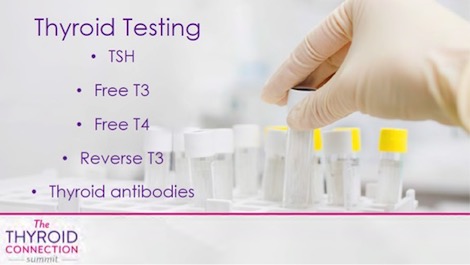
Here is an overview of what Dr. Myers and other summit experts cover about testing:
thyroid-connection-2

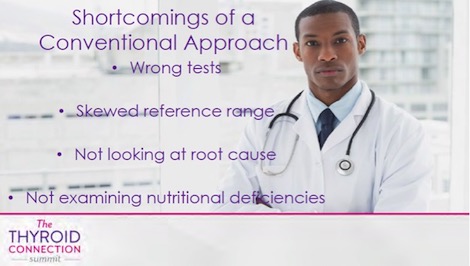
And some of the shortcomings of conventional testing and approaches:
thyroid-connection-3

I’m not a speaker on this summit but I’m sharing this resource because thyroid health is so key when it comes to anxiety and depression. And many of the topics on this summit have relevance for anxiety, like genetics, gut health, toxins and more. I’m so thrilled there is an entire day devoted to stress!

You can register for the summit here (and feel free to share with family and friends) 

And pre-purchase the summit at the special price here

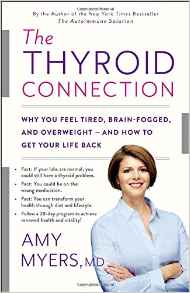
Congrats too, to Dr. Myers on the release of her new book The Thyroid Connection, which is a companion to the summit content.
The Thyroid connection

Filed Under: Events, Thyroid Tagged With: amy myers, anxiety, stress, thyroid, thyroid connection

Bergamot, lavender and ylangylang for anxiety and high blood pressure

August 4, 2016 By Trudy Scott 23 Comments

bergamot-eo

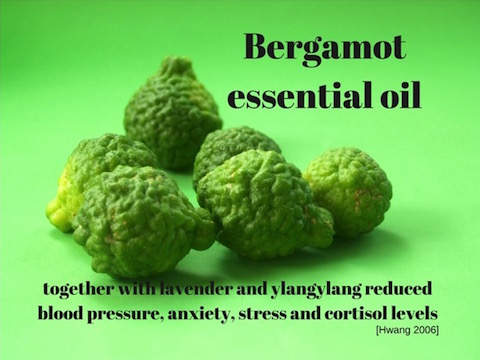
The wonderful combination of bergamot, lavender and ylangylang essential oils have been found to lower high blood pressure and reduce anxiety.

The study The effects of the inhalation method using essential oils on blood pressure and stress responses of clients with essential hypertension was published in 2006 and looked at 52 people who were anxious and stressed, and had high blood pressure.

The participants were placed in an essential oil group, a placebo group, and a control group by random assignment.

The essential oil group used aromatherapy inhalation by blending lavender, ylangylang, and bergamot essential oils once a day for 4 weeks.

To evaluate the effects of aromatherapy, blood pressure and pulse were measured two times a week and serum cortisol levels, catecholamine levels, subjective stress, and state anxiety were measured before and after treatment in the three groups.

 Here are the results of the study:

The blood pressure, pulse, subjective stress, state anxiety, and serum cortisol levels among the three groups were significantly statistically different.

The results suggest that the inhalation method using essential oils can be considered an effective nursing intervention that reduces psychological stress responses and serum cortisol levels, as well as the blood pressure of clients with essential hypertension.

They did not see any significant differences in catecholamine levels among the three groups but keep in mind this was only a 4-week study. And to see those other results in just 4 weeks is very encouraging! A simple intervention and yet very profound.

Dietary changes and amino acids and other nutrients are my go-to approach for anxiety but I’m finding more and more of my clients benefit with the addition of essential oils.

Essential oils are also very beneficial in the following instance where amino acids and other supplements can’t be taken or are not tolerated:

  • Young children (inhalation aromatherapy and creams/lotions work well here)
  • Older adults (creams/lotions work well when there is loss of smell with dementia or Alzheimer’s disease)
  • Someone going through benzodiazepine withdrawal and is too sensitive for supplements or can only tolerate small amounts

I talk about this research and other essential oils for anxiety and stress in the upcoming Essential Oils Revolution 2 summit which runs August 22 to 29. I’m thrilled to be part of this event!

essential-oils-revolution-banner

People all over the world are scrambling to find the answer to health problems like diabetes, pain, chronic fatigue, anxiety, estrogenic cancers and more. Millions are turning to natural solutions and many have experienced great success with essential oils. Learn if oils could be the missing ingredient for you and your family! What you will gain from this event:

  • Why essential oils are truly nature’s best medicine
  • How to use essential oils safely and effectively
  • Tips for regaining control of your health
  • Home recipes, guides, safety protocols and best practices
  • And so much more!

More than 165,000 people joined the 2015 Essential Oils Revolution. This year, the experts in aromatherapy, medicine and research will deliver in-depth discussion, debunk common myths and help you learn about the possibility of regaining your health using essential oils.

I can’t wait to learn more and hope you’ll tune in too. Here is the registration link:
https://qt247.isrefer.com/go/EOR16reg/trudyscottcn/

Let’s get the conversation started now. Feel free to share which essential oils you use for anxiety and stress? And how do you use them?

Filed Under: Essential oils, Events Tagged With: anxiety, Bergamot, cortisol, Essential Oils Revolution, high blood pressure, lavender, stress, Ylangylang

Alzheimer’s disease, inflammation, stress and candida: Dr. Rudy Tanzi at IHS 2016

March 4, 2016 By Trudy Scott 17 Comments

ihs-1

I spent last week in New York city at the Integrative Healthcare Symposium Annual Conference listening to some truly brilliant speakers and would like to share some highlights from the wonderful presentation by Rudolph Tanzi, PhD : What Can Alzheimer’s Disease Teach Us About the Brain, Mind, and Self?

Dr. Rudolph Tanzi is the Vice-Chair of Neurology and Director of the Genetics and Aging Research Unit at Massachusetts General Hospital, and serves as the Joseph P. and Rose F. Kennedy Professor of Neurology at Harvard Medical School. 

Dr. Tanzi co-discovered three of the first Alzheimer’s disease genes and has identified several others in the Alzheimer’s Genome Project, which he directs. He also discovered the Wilson’s disease gene and participated in the discovery of several other neurological disease genes.

The focus of his research is in identifying and characterizing the genetic and environmental factors involved in neurodegeneration in Alzheimer’s disease and autism.

Dr. Tanzi shared this fundamental information:

  • the Alzheimer’s disease pathology begins in all of us after the age of 40
  • two thirds of those with Alzheimer’s disease are female
  • and women are especially susceptible after menopause  
  • head injuries increase the risk
  • these genes predispose us to the disease: APP, PSEN1, PSEN2 and APOE

Most of the above apply to me (I know I have the APOE gene) but I’m less concerned about Alzheimer’s disease that I have ever been and this is based on what was shared later in his presentation.

ihs-2

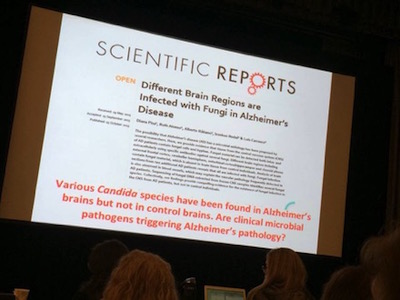
Dr. Tanzi’s whole presentation was fascinating and the section on fungi/candida, although concerning, was promising because we can do something about candida. This is the paper he shared: Different Brain Regions are Infected with Fungi in Alzheimer’s Disease with this question: Are clinical microbial pathogens triggering Alzheimer’s disease?

ihs-3

It was really interesting to hear that

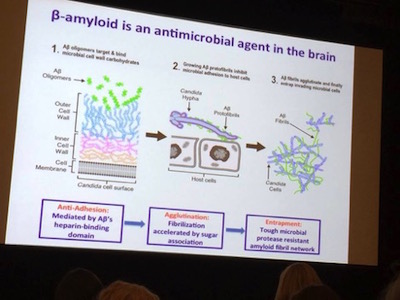
  • the amyloid is an antimicrobial agent in the brain and provides protection against the candida/fungi
  • and that that the amyloid plaques also provide protection against Borellia, periodontal bugs, Herpes Simplex 1 and other infectious agents

What was most encouraging was this:

  • your brain can handle tons of amyloid plaques and tangles and yet not develop Alzheimer’s disease.
  • the big deciding factor seems to be inflammation
  • “resilient brains” had plaques, no inflammation and no Alzheimer’s disease!

So these are some of my thoughts:

  • Tanzi did share that many people with Alzheimer’s disease suffer from depression and agitation. Here is a paper I retrieved; it does state that depression is worse when benzodiazepines have been used and we know benzodiazepines have been found to contribute to dementia so we need to consider this too.
  • We also know anxiety is a factor in Alzheimer’s disease and this study “showed that anxiolytic behavior…is predominantly due to cox-2 mediated neuroinflammation induced neurodegeneration in the brain.”
  • Some of the same underlying causes of anxiety and depression seem to be underlying factors when it comes to Alzheimer’s disease – like candida and inflammation – and there is something we can do about this. We can get rid of the candida and can use natural methods to reduce inflammation starting with eating an anti-inflammatory diet with wild oily fish, no gluten, no sugar and reduced carbs.    

Dr. Tanzi also shared these for preventing Alzheimer’s disease:

  • Social engagement (this is why addressing pyroluria/social anxiety is important – interestingly zinc, vitamin B6 and evening primrose oil are anti-inflammatory)
  • Learning new things
  • Reducing emotional stress and deep sleep (this is where my work with the amino acids comes in – interestingly I found this study that discusses how enhancing GABA signaling can prevent cognitive decline in mice with the apoE4 gene)
  • Exercise (also so beneficial in anxiety and depression)
  • And nutrients like ashwaganda and cat’s claw (to address stress and kill infections/candida)

Clearly I have more reading and researching to do! As you can tell I love putting all the puzzle pieces together.

I’ve also got more to share from Dr. Tanzi’s talk and will do so next week. Stay tuned for more information on his “three- dimensional human stem cell-derived neural culture system that recapitulates Alzheimer’s disease plaque and tangle pathology.”

Feel free to ask questions and share your thoughts in the comments section.


Filed Under: Candida, Events, Inflammation, Stress Tagged With: Alzheimer’s disease, candida, Dr. Rudy Tanzi, Inflammation, integrative healthcare symposium, stress

Barefoot on the grass with The Urban Monk: an interview with Dr. Pedram Shojai

February 3, 2016 By Trudy Scott 28 Comments

urban-monk
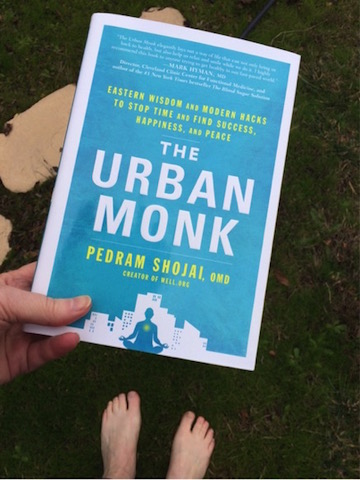
Barefoot on the grass with my copy of The Urban Monk

Dr. Pedram Shojai is the author of newly released book, The Urban Monk: Eastern Widsom and Modern Hacks to Stop Time and Find Success, Happiness and Peace.  

I recently had the opportunity to interview him and would love to share that wonderful interview with you (see the audio link below).

Dr. Shojai is a Doctor of Oriental Medicine and a Qi Gong master who has studied Kung Fu and Tai Chi for decades. He climbs big mountains and skies down them, he has two adorable kids, a delightful wife and is happy to be a family man. He’s the founder of Well.Org and the producer of the must-see movies “Vitality” and “Origins”.

Pedram was a Taoist monk for four years and decided his place was back here in the real world where he feels he can make a bigger impact:

Pedram has discovered a way for us to harness the calm of a Zen master in the midst of our hectic lives, showing how we can bring the centeredness of the monastery into our highly stimulating and demanding careers, families, and environments in a grounded way!

Here are some of the topics we discussed during our interview:

  • To merely survive is not enough. We want to thrive.
  • Stress impacts us physically and cuts off blood flow to the prefrontal cortex of our brains impacting digestion, reasoning, weight
  • A great “shake it out” de-stressing exercise
  • Sleep: “Our ancestors got a lot more of it and we’re suffering without it.” He shares a great tip for helping you get to sleep and here is his clip from the Dr. Oz show
  • How we are disconnected from nature and how our relationship with nature helps charge our batteries and soothe our souls … “the energy of nature is so simple and pure”
  • Why we want to kick off our shoes and put our feet on the grass

Here is an example of the simple and yet profound wisdom he shares in the book … on why we want to go barefoot:

Cutting off the flow of vital qi to your body is a bad idea. This happens as we cut off our contact with the natural world. We all get stuck doing it at times, and too much of it makes us weak and sick. Taking some time to reconnect with the planet and its free flow of limitless electrons is key. Take off your shoes and touch the earth. Doing so on raw earth is best. Grass, gravel, sand, and seawater are powerful ways to connect back into the “life soup” and let your body heal through the vital exchange of energy it needs (and direly misses) with the earth. The more the merrier on this. Some people take it to the extreme and go barefoot everywhere; I don’t advise this simply because walking around in urban environments subjects us to a barrage of petrochemicals and nasty agents that are not natural and have negative health impacts on us. We absorb things through our skin. We drag things into our homes with our feet. That’s why in traditional Asian cultures, shoes are left at the door and the house is to remain pure and clean. I’d say use shoes (with leather soles if you can) while walking the streets and go barefoot in nature, your yard, and your own house all the time.

Here is the whole interview.  (Click the link to listen)

Get a copy of the book if it sounds like you need help with some great ways for becoming an Urban Monk so you can reduce stress and anxiety and be a happier, healthier and more peaceful you!

Or sign up here for additional resources and Pedram’s upcoming Urban Monk 7-Day Reboot program if you feel you could do with wisdom and guidance from the Urban Monk himself, plus all the visuals of the videos.

I’ve also got 2 copies of the book for a giveaway so check out the table of contents (with the look inside Amazon feature) and share in the comments why you’d like to be one of the winners. Be sure to share at least one topic from the book that you think sounds really interesting. I’ll announce the winners in the ezine on Friday.

2/5/16 UPDATE: Thanks for participating and commenting – the winners are Michele and JoAnn. We’ll contact you to get a mailing address and get a copy of the book to each of you! 

If you missed out I encourage you to still check out the table of contents (with the look inside Amazon feature) and get the book if it feels like a fit for you. Check out the comments below to be inspired further.

Enjoy and lets us know what you think?

I’d also love to hear if you enjoy going barefoot in nature?

Filed Under: Anxiety and panic, Books, Stress Tagged With: anxiety, Dr. Pedram Shojai, happiness, stress, the urban monk

Rooibos tea with a chocolate twist

January 2, 2015 By Trudy Scott 23 Comments

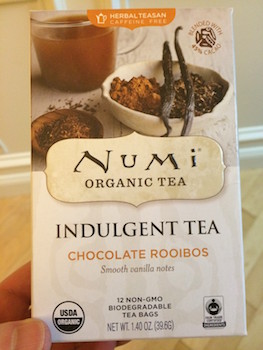
chocolate-rooibos

I’ve discovered a new rooibos tea and love it and want to share it with you! It’s rooibos tea with a chocolate twist: Numi Organic Tea – Chocolate Rooibos with smooth vanilla notes.

When I shared this image on facebook here are two comments I got:

  • I drink Numi’s Rooibos everyday, but I didn’t know they made CHOCOLATE!
  • CHOCOLATE…I’ll have to find that one!

Notice that both people wrote CHOCOLATE in upper case! I have no doubt that the word “chocolate” will get many more people trying this healthy herbal tea. But I must give you an advance warning – the chocolate taste is very subtle. And if you’re sensitive to the caffeine in chocolate like I am you may find you can tolerate this – I certainly can.

You may recall my interview with rooibos researcher, Dr. Amanda Swart, in season 1 of the Anxiety Summit: A Functional Food in the Management of Stress. We discussed the role rooibos plays in the maintenance of normal cortisol levels, the influence of rooibos on cytochrome P450 enzymes, and the amazing array of polyphenols and flavonoids found in rooibos. Wow, a simple beverage that can help reduce stress and anxiety! And so much more!

Here is some new rooibos research:

  • For diabetes: Antidiabetic effect of green rooibos (Aspalathus linearis) extract in cultured cells and type 2 diabetic model KK-Ay mice.
  • For bone growth: Rooibos flavonoids, orientin and luteolin, stimulate mineralization in human osteoblasts through the Wnt pathway.
  • For inflammation: Aspalathin and Nothofagin from Rooibos (Aspalathus linearis) Inhibits High Glucose-Induced Inflammation In Vitro and In Vivo.

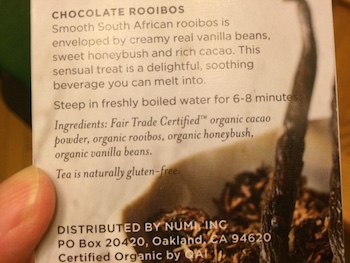
chocolate-rooibos-description

Just read the description on the back of the box and see if you can resist it:

Smooth South African rooibos is enveloped by creamy vanilla beans, sweet honeybush and rich cacao. This sensual treat is a delightful, soothing beverage you can melt into.

The vanilla gives it a naturally sweet taste which you may need if you don’t enjoy straight rooibos (an acquired taste for some)

Let me give you a few more reasons why I recommend this product – other than the delicious taste and wonderful health benefits:

  • It’s organic
  • It uses fair trade ingredients
  • It uses non-GMO biodegradable tea bags
  • It’s a herbal tea so is caffeine-free
  • It doesn’t have any artificial or even natural flavors

I’m a skier and Brad snowboards and I like to be prepared with “padkos” (South African for food-for-the-road) and one nice treat is hot herbal tea for the drive up and for the drive home. For the trip up to the ski resort, I make it in a large stainless steel mug with lid and we sip it as we drive. I take an extra teabag and a thermos flask of boiling water and make a new batch to sip on the trip home. It’s so yummy and so warming, plus it keeps us well-hydrated which is important with all that exercise. 

Check out the Numi site. I love this company and their vision: “Numi inspires well-being of mind, body and spirit through the simple art of tea. Our company is rooted in the principle of creating a healthful product that nurtures people and honors the planet. In all of our company initiatives, we strive to foster a healthy, thriving global community while bringing you the purest, best-tasting organic tea.”


Filed Under: Antianxiety, Caffeine, Food and mood, Real whole food, Stress Tagged With: anxiety, diabetes, NUMI, rooibos, stress

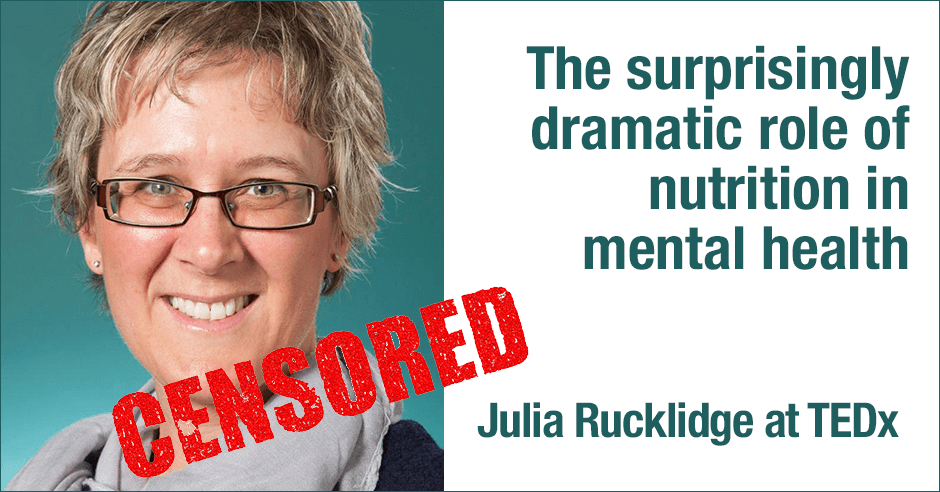
The surprisingly dramatic role of nutrition in mental health: Julia Rucklidge at TEDx

November 16, 2014 By Trudy Scott 29 Comments

Julia Rucklidge

Julia Rucklidge, PhD, researcher from New Zealand, recently did this amazing TEDx talk called: The surprisingly dramatic role of nutrition in mental health

I love how she opens with:

what I’m going to share today may sound as radical as hand-washing sounded to a mid-19th century doctor and yet it is equally scientific. It is the simple idea that optimizing nutrition is a safe and viable way to avoid, treat or lessen mental illness. Nutrition matters. Poor nutrition is a significant and modifiable risk factor for the development of mental illness

Here are some real gems from her talk:

A well-nourished body and brain is better able to withstand ongoing stress

When people get well they get well in all areas: improved sleep, mood stabilization, reduction in anxiety and less need for cigarettes/cannabis/alcohol.


My research and other research from around the world show 60-70% of people respond to micronutrients – this shows just how powerful this intervention is


We should focus on food and lifestyle changes and exercise first, then therapy and save medications for when these approaches don’t work

I’d like to share the ending of Julia Rucklidge’s talk. She shares the story of how limes on ships in the 1600s eliminated deaths from scurvy but that it took 264 years for the British government to mandate the use of citrus on ships. She closes with this profound question and challenge:

How long will it take us to recognize that that sub-optimal nutrition is contributing to the epidemic of mental illness? Nutrition matters!

Bravo Julia! And thank you for all the great research you’re doing! We appreciate you!

UPDATE: June 8, 2018

I have decided to update the blog and share it again because Professor Rucklidge is sharing powerful research-based evidence about food-as-medicine for mental health and her talk is being flagged/censored by TEDx and this is not acceptable!

Professor Bonnie J. Kaplan, PhD, from the University of Calgary shared this information with me via an email:

There have been almost 900,000 views of Julia Rucklidge’s TEDx talk on nutrition and mental health, with many complimentary comments. Last week, however, the TED organization inexplicably “flagged” the video with the following comment:

“NOTE FROM TED: We’ve flagged this talk, which was filmed at a TEDx event, because it appears to fall outside TEDx’s curatorial guidelines. There is limited evidence to support the claims made by this speaker.”

Julia has attempted to educate the TED people regarding the fact that over 35 peer-reviewed publications could hardly be described as “limited evidence,” and that her interpretations do not go beyond the data. But they are not interested in her evidence.

The whole thing seems so strange: isn’t TED supposed to be all about innovation? But clearly, some lobbyist has convinced them that a non-pharmaceutical treatment should not be respected.

I’m sharing it again and updating the blog so you can watch it again or watch it for the first time and be inspired and have hope!

We’d like to ask for your help in please sharing too. Let us support her work and all the nutritional psychiatry researchers at ISNPR and around the world!

  • Even if you have already watched it, please click on it again and watch again (click on the video link above or use this link)
  • Share the youtube video and/or this blog with others, through Facebook or email or twitter or word of mouth (or all of the above)
  • Comment below the youtube video and/or comment on this blog of mine
  • Ask your friends, family and colleagues to do the same

More about Professor Rucklidge’s research interests

Professor Rucklidge’s research interests are centered on the role of nutrition in the expression and treatment of mental illness, from ADHD to depression to stress following natural disasters. Research methodologies include single case research designs, open label trials and randomized controlled trials.

  • ADHD
  • Child and adolescent clinical psychology
  • Clinical psychology
  • Learning disabilities
  • Young Offending
  • Earthquake research
  • Nutritional interventions
  • Mood Disorders

Some of her publications on micronutrients

  • Database Analysis of Depression and Anxiety in a Community Sample-Response to Micronutrient Intervention

Overall, people from the general population who suffer from mood and anxiety problems may benefit from improved nutritional status achieved with nutritional supplements.

  • Vitamin-mineral treatment improves aggression and emotional regulation in children with ADHD: a fully blinded, randomized, placebo-controlled trial

Micronutrients improved overall function, reduced impairment and improved inattention, emotional regulation and aggression, but not hyperactive/impulsive symptoms, in this sample of children with ADHD. Although direct benefit for core ADHD symptoms was modest, with mixed findings across raters, the low rate of adverse effects and the benefits reported across multiple areas of functioning indicate micronutrients may be a favourable option for some children, particularly those with both ADHD and emotional dysregulation.

  • A randomised trial of nutrient supplements to minimise psychological stress after a natural disaster. This study was co-authored with Professor Kaplan, and adds to the body of evidence showing that nutrient formulas with multiple minerals and/or vitamins (such as a B-complex) minimise/minimize stress associated with natural disasters such as earthquakes, fires and floods. I blogged about this after Hurricane Harvey in Houston.


  • Could yeast infections impair recovery from mental illness? A case study using micronutrients and olive leaf extract for the treatment of ADHD and depression. This case study reports that infections like candida can contribute to poor gut health and inflammation, leading to nutrient absorption issues and deterioration in psychiatric symptoms. The yeast overgrowth has to be addressed in order for the micronutrients to be effective. I blog about this here also sharing the candida-serotonin connection.

 Nutritional medicine as mainstream in psychiatry

Professor Rucklidge is also a contributing author to Nutritional medicine as mainstream in psychiatry which I blog about here

Psychiatry is at an important juncture, with the current pharmacologically focused model having achieved modest benefits in addressing the burden of poor mental health worldwide. Although the determinants of mental health are complex, the emerging and compelling evidence for nutrition as a crucial factor in the high prevalence and incidence of mental disorders suggests that diet is as important to psychiatry as it is to cardiology, endocrinology, and gastroenterology. Evidence is steadily growing for the relation between dietary quality (and potential nutritional deficiencies) and mental health, and for the select use of nutrient-based supplements to address deficiencies, or as monotherapies or augmentation therapies.

As you can tell I’m a big fan of her research work and what an honor it was for me to interview her on one of the Anxiety Summits: What if… Nutrition could Treat Anxiety and Depression? She shared wise words then than seem very relevant to this censorship of her TEDx talk:

How long is it going to take our society to pay attention to the research that shows that suboptimal nutrition is contributing to the epidemic of mental illness? Are we just going to sit around and ignore this evidence to our peril? Or are we going to start paying attention and start to invest in the really important research that needs to happen?

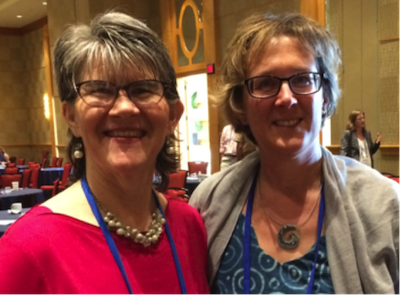
It was a thrill to then finally meet her in person last year at the ISNPR conference.

Julia Rucklidge and Trudy Scott
Meeting Julia Rucklidge at the ISNPR conference

This nutritional psychiatry work is widely supported by many practitioners

This nutritional psychiatry work is widely supported by many practitioners. Last year I interviewed Dr. Mark Hyman MD, creator of the Broken Brain series and author of What the Heck Should I Eat? In our interview he talks about somatopsychic medicine i.e. mental health symptoms caused by bodily illness and shares this about when he started to make this connection years ago:

I was just treating people’s physical systems, fixing their gut, helping their immune system, cleaning up their diet, optimizing their nutritional status, balancing their hormones, and all their mental problems would get better.

Their anxiety would get better, their depression would get better, and I wasn’t actually treating the depression or anxiety. Autism, ADD, memory issues, dementia, all these things would start to get better

And I began to realize that the body was driving a lot of this brain dysfunction, and that if you fix the body, a lot of the brain disorders would get better, that it wasn’t a primarily a mental problem, but it was a physical problem.

Dr. Nicole Beurkens, clinical psychologist and board-certified nutrition specialist, shares this about the talk:

This is an extremely important evidence-based talk on a topic that is moving the field of mental health forward. As a clinical psychologist and board-certified nutrition specialist, I see daily the positive impact that nutrition can have on mental health for children and adults. More than medication and talk therapy is needed to reduce symptoms for many people with these challenges, and nutrition is an accessible research-based option. I often recommend this video to patients and their families.

Dr. Beurkens is also speaker on a prior Anxiety Summit. It’s now in it’s fourth season and I’ve the wonderful opportunity to interview and share the nutritional psychiatry wisdom from over 70 practitioners, researchers, mental advocates and clients.

So much wonderful feedback from study participants

There is so much wonderful feedback in the comments below the youtube video. I love this comment from a study participant from New Zealand, Deidre Fraser:

I’m a pretty ordinary Kiwi, not particularly alternative. I don’t have a big appetite for risk. But I have participated in one of Julia Rucklidge’s studies and my family has benefited hugely from the introduction to, and continued use of micronutrients. Could we have achieved the same result using a pharmaceutical medicine? Some behaviours would have likely been addressed, but and it is a big BUT, one of the side effects (unexpected) would NOT have been improved happiness and self-worth, which resulted in better friendships – pretty basic things we all want from life!

We also got increased focus and the noticeably different academic performance that we thought we wanted (We just hadn’t realised that should be the secondary objective).

I don’t really understand the science behind it all, but the empirical research and published journals are there to support micronutrients as a valid option with verifiable research outcomes.

And SP Hancock shares these compelling results:

I’m so grateful for this presentation. It compelled me to find a medical doctor who looks at symptoms of mental illness from a perspective other than traditional psychiatry. He helped me heal my gut so that I can get the micronutrients I need from my food choices. 2 years ago I was using the micronutrient supplement Dr. Rucklidge had diligently researched for more than a decade. Today, I no longer need supplementation because my gut can absorb micronutrients from my food. I have been off medications for three years now–completely stable using only food after having lived for nearly two decades with acute symptoms of refractory schizoaffective disorder bipolar type with catatonia. Thank you Dr. Rucklidge for your structured, independently funded studies. Your hard work and sound research methodology gave me the courage to find a doctor willing to look at my symptoms from a fresh perspective. Keep up the exceptional work!

I hope this has inspired you to keep seeking a solution if you are still on your healing journey or and even if you have found your solution. Either way we’d love your help in getting this message out to more people so please share share and share!

Professor Bonnie Kaplan says: “Let’s see if we can quadruple the views to 5 million or so.” I’m sure we can! Thank you!

Filed Under: Food and mood Tagged With: ADHD, anxiety, depression, Julia Rucklidge, mental health, mental illness, micronutrients, natural disaster, nutrition, nutritional psychiatry, stress, TEDx

  • « Go to Previous Page
  • Page 1
  • Interim pages omitted …
  • Page 7
  • Page 8
  • Page 9
  • Page 10
  • Page 11
  • Go to Next Page »

Primary Sidebar

GABA QuickStart Homestudy

gaba quickstart homestudy

Free Report

9 Great Questions Women Ask about Food, Mood and their Health

You'll also receive a complimentary subscription to my ezine "Food, Mood and Gal Stuff"


Connect with me

Popular Posts

  • Amino Acids Mood Questionnaire from The Antianxiety Food Solution
  • The Antianxiety Food Solution Amino Acid and Pyroluria Supplements
  • Pyroluria Questionnaire from The Antianxiety Food Solution
  • Collagen and gelatin lower serotonin: does this increase your anxiety and depression?
  • Tryptophan for the worry-in-your-head and ruminating type of anxiety
  • GABA for the physical-tension and stiff-and-tense-muscles type of anxiety
  • The Antianxiety Food Solution by Trudy Scott
  • Seriphos Original Formula is back: the best product for anxiety and insomnia caused by high cortisol
  • Am I an anxious introvert because of low zinc and vitamin B6? My response to Huffington Post blog
  • Vagus nerve rehab with GABA, breathing, humming, gargling and key nutrients

Recent Posts

  • Her cravings for chips and peanut butter were triggered by stress: GABA ends cravings and reduces physical tension and fear of heights
  • It is truly miraculous to be able to move through life without crippling anxiety and panic
  • GABA and tryptophan combo provide immediate and noticeable relief for tremors and cervical dystonia in just 7 days
  • Red light therapy for back and neck pain, plantar fasciitis and low mood – a complement to the amino acids GABA, DPA and tryptophan
  • What do I use instead of Seriphos to help lower high cortisol that is affecting my sleep and making me anxious at night?

Categories

  • 5-HTP
  • AB575
  • Addiction
  • ADHD
  • Adrenals
  • Alcohol
  • Allergies
  • Alzheimer's disease
  • Amino Acids
  • Anger
  • Antianxiety
  • Antianxiety Food Solution
  • Antidepressants
  • Anxiety
  • Anxiety and panic
  • Autism
  • Autoimmunity
  • benzodiazapines
  • Bipolar disorder
  • Books
  • Caffeine
  • Cancer
  • Candida
  • Children/Teens
  • Collagen
  • Cooking equipment
  • Coronavirus/COVID-19
  • Cravings
  • Depression
  • Detoxification
  • Diabetes
  • Diet
  • DPA/DLPA
  • Drugs
  • EFT/Tapping
  • EMF
  • EMFs
  • Emotional Eating
  • Endorphins
  • Environment
  • Essential oils
  • Events
  • Exercise
  • Fear
  • Fear of public speaking
  • Fertility and Pregnancy
  • Fish
  • Food
  • Food and mood
  • Functional neurology
  • GABA
  • Gene polymorphisms
  • General Health
  • Giving
  • Giving back
  • Glutamine
  • Gluten
  • GMOs
  • Gratitude
  • Gut health
  • Heart health/hypertension
  • Histamine
  • Hormone
  • Hyperparathyroidism
  • Hypoglycemia
  • Immune system
  • Inflammation
  • Insomnia
  • Inspiration
  • Introversion
  • Joy and happiness
  • Ketogenic diet
  • Lithium orotate
  • Looking awesome
  • Lyme disease and co-infections
  • MCAS/histamine
  • Medication
  • Men's health
  • Mental health
  • Mercury
  • Migraine
  • Mold
  • Movie
  • MTHFR
  • Multiple sclerosis
  • Music
  • NANP
  • Nature
  • Nutritional Psychiatry
  • OCD
  • Osteoporosis
  • Oxalates
  • Oxytocin
  • Pain
  • Paleo
  • Parasites
  • Parkinson’s disease
  • PCOS
  • People
  • PMS
  • Postpartum
  • PTSD/Trauma
  • Pyroluria
  • Questionnaires
  • Real whole food
  • Recipes
  • Research
  • Schizophrenia
  • serotonin
  • SIBO
  • Sleep
  • Special diets
  • Sports nutrition
  • Stress
  • Sugar addiction
  • Sugar and mood
  • Supplements
  • Teens
  • Testimonials
  • Testing
  • The Anxiety Summit
  • The Anxiety Summit 2
  • The Anxiety Summit 3
  • The Anxiety Summit 4
  • The Anxiety Summit 5
  • The Anxiety Summit 6
  • Thyroid
  • Thyroid health
  • Toxins
  • Tryptophan
  • Tyrosine
  • Uncategorized
  • Vegan/vegetarian
  • Women's health
  • Yoga

Archives

  • May 2026
  • April 2026
  • October 2025
  • September 2025
  • August 2025
  • July 2025
  • June 2025
  • May 2025
  • April 2025
  • March 2025
  • February 2025
  • January 2025
  • November 2024
  • October 2024
  • September 2024
  • August 2024
  • July 2024
  • June 2024
  • May 2024
  • April 2024
  • March 2024
  • February 2024
  • January 2024
  • December 2023
  • November 2023
  • October 2023
  • September 2023
  • August 2023
  • July 2023
  • June 2023
  • May 2023
  • April 2023
  • March 2023
  • February 2023
  • January 2023
  • December 2022
  • November 2022
  • October 2022
  • September 2022
  • August 2022
  • July 2022
  • June 2022
  • May 2022
  • April 2022
  • March 2022
  • February 2022
  • January 2022
  • December 2021
  • November 2021
  • October 2021
  • September 2021
  • August 2021
  • July 2021
  • June 2021
  • May 2021
  • April 2021
  • March 2021
  • February 2021
  • January 2021
  • December 2020
  • November 2020
  • October 2020
  • September 2020
  • August 2020
  • July 2020
  • June 2020
  • May 2020
  • April 2020
  • March 2020
  • February 2020
  • January 2020
  • December 2019
  • November 2019
  • October 2019
  • September 2019
  • August 2019
  • July 2019
  • June 2019
  • May 2019
  • April 2019
  • March 2019
  • February 2019
  • January 2019
  • December 2018
  • November 2018
  • October 2018
  • September 2018
  • August 2018
  • July 2018
  • June 2018
  • May 2018
  • April 2018
  • March 2018
  • February 2018
  • January 2018
  • December 2017
  • November 2017
  • October 2017
  • September 2017
  • August 2017
  • July 2017
  • June 2017
  • May 2017
  • April 2017
  • March 2017
  • February 2017
  • January 2017
  • December 2016
  • November 2016
  • October 2016
  • September 2016
  • August 2016
  • July 2016
  • June 2016
  • May 2016
  • April 2016
  • March 2016
  • February 2016
  • January 2016
  • December 2015
  • November 2015
  • October 2015
  • September 2015
  • August 2015
  • July 2015
  • June 2015
  • May 2015
  • April 2015
  • March 2015
  • February 2015
  • January 2015
  • December 2014
  • November 2014
  • October 2014
  • September 2014
  • August 2014
  • July 2014
  • June 2014
  • May 2014
  • April 2014
  • March 2014
  • February 2014
  • January 2014
  • December 2013
  • November 2013
  • October 2013
  • September 2013
  • August 2013
  • July 2013
  • June 2013
  • May 2013
  • April 2013
  • March 2013
  • February 2013
  • January 2013
  • December 2012
  • November 2012
  • October 2012
  • August 2012
  • July 2012
  • June 2012
  • May 2012
  • April 2012
  • March 2012
  • February 2012
  • January 2012
  • December 2011
  • November 2011
  • October 2011
  • September 2011
  • August 2011
  • July 2011
  • June 2011
  • May 2011
  • April 2011
  • March 2011
  • February 2011
  • January 2011
  • December 2010
  • October 2010
  • September 2010
  • July 2010
  • May 2010
  • April 2010
  • March 2010
  • February 2010
  • January 2010
  • November 2009

Share the knowledge!

The above statements have not been evaluated by the Food and Drug Administration. Products listed in this website are not intended to diagnose, treat, cure or prevent any disease.

The information provided on this site is for informational and educational purposes only and is not intended as a substitute for advice from your physician or other health care professional. You should consult with a healthcare professional before starting or modifying any diet, exercise, or supplementation program, before taking or stopping any medication, or if you have or suspect you may have a health problem.


Copyright © 2026 Trudy Scott. All Rights Reserved. | Privacy | Terms and Conditions | Refund Policy | Medical Disclaimer

Free Report

9 Great Questions Women Ask about Food, Mood and their Health

You’ll also receive a complimentary subscription to my ezine “Food, Mood and Gal Stuff”