• Skip to primary navigation
  • Skip to main content
  • Skip to primary sidebar

everywomanover29 blog

Food, Mood and Women's Health – Be your healthiest, look and feel great!

  • Blog
  • About
  • Services
  • Store
  • Resources
  • Testimonials
  • The Book
  • Contact
  • Search this site

SSRI

ADHD and psychiatric meds in children/teens on the rise, and benzodiazepine use increases mortality in adults (including suicide)

October 7, 2020 By Trudy Scott Leave a Comment

meds teens children

Registration for my Anxiety Summit 6: Toxins/Meds/Infections is now open and in the spirit of continuing to share valuable snippets leading up to the summit, here goes for today.

(If you’ve already registered I do hope you find these snippets of value and they help you figure out more about which interviews to tune into first. If you’re only hearing about the summit for the first time, you can register here)

Today I want to highlight some aspects from two of the interviews on psychiatric medications.

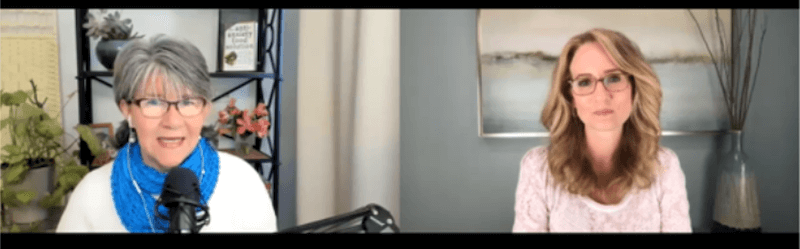
In the interview Psychiatric Medications in Children and Teens with Dr. Nicole Beurkens, we discuss these results from a 2019 paper:

  • Our study indicates that the rate of presentation to child and adolescent psychiatry outpatient clinics is increasing, and rates of diagnosis and initiation of psychiatry drugs are high among the presented children.
  • The prevalence of ADHD shows an increase in males and females in our country, and psychiatric polypharmacy has reached significant rates.

Polypharmacy means concurrent use of multiple medications by a patient. The fact that psychiatric polypharmacy is increasing in children and adolescents is most concerning. There are safer solutions that address the root causes of ADHD, anxiety and depression.

Here is what we cover in this interview:

  • Increasing ADHD, anti-anxiety, SSRI and antipsychotic meds and discontinuation syndrome
  • Disparities in BIPOC communities;
  • Psychiatric side effects of acne, constipation and asthma medications
  • Nutritional psychiatry/targeted nutrients/gut, sleep, movement, screen time and play
nicole beurkens interview

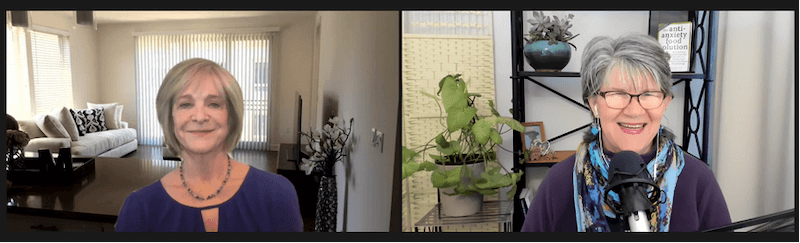
In the interview SSRIs, Benzodiazepines, Alcohol and Amino acids with Dr. Hyla Cass, she shares how benzodiazepines (a class of antianxiety medications that include Xanax, Ativan, Valium and others) are:

  • strongly associated with all cause mortality, including suicide (even when used for short durations of treatment
  • the cause of many accidents even if taken the previous day

Here is what we cover in this interview:

  • SSRI and benzodiazepine side-effects
  • Discontinuation syndrome, pre-taper protocols and tapering
  • The harmful effects of alcohol and the impacts on sleep
  • The dangers of combining alcohol with benzodiazepines, and the risks of antabuse (commonly used in alcohol addiction treatment plans)
  • GABA, tryptophan, 5-HTP, glutamine, DPA, CBD and key nutrient co-factors for medication taper, alcohol addiction, carb cravings and anxiety
hyla cass interview

Dr. Nicole Beurkens’ interview is focused on children and adolescents, and Dr. Hyla Cass’ interview is focused on adults but both are invaluable resources if you want to learn more about psychiatric medications, discontinuation syndrome, tapering and addressing the root-causes with nutritional other non-medication solutions.

Other related medication interviews of interest would be:

  • GABA and Tryptophan vs Meds for Hormone Balance – one of my 3 interviews (I also cover the birth control pill and more about using the amino acids)
  • Benzodiazepines: Short-Term Benefits, Long-Term Harms – Catherine M. Pittman, PhD, HSPP
  • 5-HTP: Anxiety, Depression, Insomnia and Liver Protection – Michael Murray, ND (he shares studies comparing 5-HTP to SSRIs)
  • Neuropsychiatric Toxicity from Fluoroquinolone Antibiotics – Lisa Bloomquist
  • Your Brain on Food: Anxiety, OCD and PTSD – Uma Naidoo, MD, PCP (she also shares studies comparing psychiatric meds to NAC and inositol)

In case you missed the first few emails about the summit … as you know, anxiety can be related to your daily life experiences BUT it can also be triggered by:

  • foods you eat and what you drink (like wheat, oxalates, alcohol and more)
  • environmental toxins (like lead, plastics, fragrances, insecticides, fluoride and more)
  • many types of medications (like the benzos/SSRIs, birth control pill, acne medication, fluoroquinolone antibiotics and more) and/or
  • chronic infections (like Lyme disease, PANDAS, parasites, candida and more).

Once you identify the root causes and understand anxiety’s mechanisms you can support the liver/gallbladder, detox, address infections, implement targeted and supportive solutions, and get relief!

This is my 6th Anxiety Summit, featuring all new topics and the latest research related to anxiety and toxins, medications and infections.
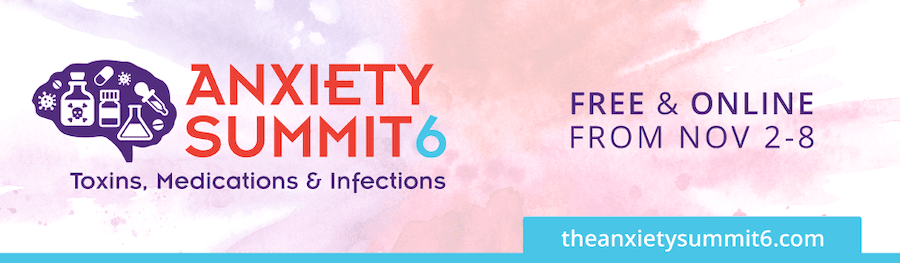
anxiety summit 6

Over the course of the next 6 weeks you’ll be seeing frequent emails from me with snippets and highlights from various interviews – like this one. I do hope you continue to enjoy them and get excited about the summit! Please do share if you know someone who has anxiety!

You’ve heard me say the Anxiety Summit has been called “a bouquet of hope!”  My wish for you is that this summit is your bouquet of hope!

I hope you’ll join me and these incredible speakers, be enlightened and find YOUR solutions!

Here’s to no more anxiety and you feeling on top of the world again!

If you’re already familiar with some of this information and practice some of this already please share how it’s helped you. That way we can all learn.

If you’d like to ask a question, please post in the comments below.

I’d also love to hear from you once you’ve listened to this interview. Please do come back and comment about some of the highlights of this interview and what changes you plan to make.
Filed Under: The Anxiety Summit 6 Tagged With: ADHD, amino acids, anxiety, benzodiazepine, cbd, children, depression, GABA, Hyla Cass, medications, mortality, Nicole Beurkens, psychiatric meds, SSRI, suicide, teens, The Anxiety Summit 6, tryptophan

Anxiety case study: a very very slow SSRI taper with tryptophan and other nutritional support

August 28, 2020 By Trudy Scott 14 Comments

anxiety case study

Today I’m sharing an update from someone in my community who is tapering from an SSRI (Cipralex/lexapro) in the best way possible – very methodically and doing a very very slow taper, using compounded medication and nutritional support. It is a team approach with a supportive doctor monitoring for serotonin syndrome, her pharmacist compounding her medication and input from me.

She has an excellent diet that contains enough healthy protein and fats, plenty of vegetables, and no sugar or caffeine. She has the basic nutrients covered and is on the pyroluria protocol (these nutrients help make serotonin). She is using the amino acid tryptophan for serotonin support as she tapers. And she is out walking in nature and practicing mindfulness.

All of this sets her up for success and being able to avoid antidepressant discontinuation syndrome.

Here is her story:

I began tapering off 10 mg of Cipralex in November 2017. I have my little “Support Team” that includes a compounding pharmacist and my GP. Feeling very fortunate that I have these people as my taper has not exactly gone as planned (although far better than my last two attempts)

Originally, the plan was to go down by 10% of the dose and stay at that dose for 4 weeks. That didn’t work for me. I was fine when I dropped from 10mg to 9, but after my next 10% drop I experienced that familiar withdrawal hell. I got a little scared, but stuck with it, and decided to stay at that dose for a bit longer. While I leveled out, I did a lot of reading about how SSRIs work. I learned about the 1/2 life of Cipralex (all SSRIs have a different 1/2 life) and what was actually happening physiologically as my body adjusts to the lower dose. It’s a recovery process.

With that new knowledge, I decided to try another approach. I knew I couldn’t handle a drop of 10%. So, I started to taper at a rate of 0.1mg once a week (far less than 10%!). By day three at the new dose, I could feel the withdrawal, but it was far less severe. Small drops=small “withdrawal wave”. I discovered that I am able to manage a 2% drop of the current dose and I have been able to drop that % each week. So, I’m still reducing by 8% a month, which means I am close to the original plan of dropping by 10% a month. At this time I am at 6.24mg.

Yes, it is a very slow process and I have a long way to go, but it’s working. I have read that some people have to reduce by 1% of their current dose and remain at that dose for 4 weeks to allow their body the time to heal and adjust to life on the lower dose. Having the liquid compound has made such a difference! You sure would have difficulty accurately shaving off a pill by 2%!! If anyone is trying to come off of this drug, do your best to find a compounding pharmacist!

I find that I must stick to a very healthy diet. I eat a lot of fresh, raw and cooked vegetables. I mean a LOT of vegetables. I eat good sources of protein and walk for at least 45 min almost every day. I steer clear of sugar and caffeine. Both make my withdrawal much worse.

Every day I take omega 3, vitamin C, vitamin D, vitamin B complex. I take the supplements for pyroluria, vitamin B6, evening primrose oil and zinc. I take magnesium at night. I took Trudy’s amino acids course online and did all of the amino acid trials. I discovered all I really need is tryptophan. It has made a huge difference for me. Yes, I take Lidke tryptophan. For us Canadians, it can be ordered online.

I practice mindfulness. I’ve read a lot about the anxious brain (the reason I took Cipralex in the first place) so I understand what is happening now, what is real and what is just noise in my head.

Antidepressant discontinuation syndrome

This is the best way to taper SSRI medications in order to avoid withdrawal effects, also known as discontinuation syndrome which can be very severe for some folks.

Accordingly to this paper, Antidepressant discontinuation syndrome occurs in about 20% of patients who reduce the dose or abruptly stop an antidepressant that they have been taking for one month. This paper states that “symptoms are usually mild….occur within two to four days after drug cessation and usually last one to two weeks.”

It also states that occasionally symptoms “may persist up to one year…and if the same or a similar drug is started, the symptoms will resolve within one to three days.”

I typically hear from individuals who fall into the category of severe symptoms that are persisting past 2 weeks. It’s not uncommon to see symptoms continue for a year and often longer in some cases.

Also from the above paper, is the mnemonic FINISH which summarizes these symptoms:

  • Flu-like symptoms (lethargy, fatigue, headache, achiness, sweating)
  • Insomnia (with vivid dreams or nightmares)
  • Nausea (sometimes vomiting)
  • Imbalance (dizziness, vertigo, light-headedness)
  • Sensory disturbances (“burning,” “tingling,” “electric-like” or “shock-like” sensations) and
  • Hyperarousal (anxiety, irritability, agitation, aggression, mania, jerkiness).”

How you will feel if your serotonin is low and how to learn more

With low serotonin you will have the worry-in-your-head and ruminating type of anxiety, panic attacks and phobias, lack of confidence, depression, negativity, imposter syndrome, PMS, irritability, anger issues, insomnia and afternoon/evening cravings.

If you suspect low serotonin symptoms and are new to using the amino acids and do not have my book I highly recommend getting it and reading it before jumping in to taking supplements and navigating this with your prescribing physician: The Antianxiety Food Solution – How the Foods You Eat Can Help You Calm Your Anxious Mind, Improve Your Mood, and End Cravings. You may need to lend him/her a copy of my book too.

There is a complete chapter on the amino acids and one for pyroluria, plus information on real whole food, sugar and blood sugar, gluten, digestion and much more.  If you’re not a reader there is now also an audible version.

Here is the Amino Acids Mood Questionnaire from The Antianxiety Food Solution and additional information on Anxiety and targeted individual amino acid supplements: a summary

Please also read and follow these Amino Acid Precautions.

This lists The Antianxiety Food Solution Amino Acid and Pyroluria Supplements that I use with my individual clients and those in my group programs – you will find the Lidtke Tryptophan here. You can also read more about why I prefer the Lidtke tryptophan on this blog.

I would like to end off by saying how much I appreciate this woman and others sharing their stories like this so we can all learn!

Please also share your taper story and what you did to make it easier.  If you had challenges share those too. Let us know if you can relate to any of the above FINISH symptoms and how long they lasted.

Feel free to post your questions here too.

Filed Under: Anxiety, Tryptophan Tagged With: achiness, aggression, agitation, antidepressant, anxiety, B6, burning, cravings, diet, Dizziness, fatigue, flu-like symptoms, headache, insomnia, irritability, jerkiness, lethargy, light-headedness, mania, nausea, Nightmares, nutritional support, panic, serotonin, shock-like sensations, SSRI, SSRI taper, sweating, tingling, tryptophan, vertigo, vivid dreams, vomiting, worry, zinc

Hydroxychloroquine and chloroquine (antimalarial drugs): quinism and the risk of sudden and lasting neuropsychiatric effects

July 31, 2020 By Trudy Scott 80 Comments

Hydroxychloroquine

The Quinism Foundation, a nonprofit charitable organization “promotes and supports education and research on quinism, the family of medical disorders caused by poisoning by mefloquine, tafenoquine, chloroquine, and related quinoline drugs.”

Executive Director of the foundation, Dr. Remington Nevin, MD, MPH, DrPH, is a Johns-Hopkins trained psychiatric epidemiologist and drug safety expert and former U.S. Army public health physician. He has published extensively on the subject.

The foundation share the symptoms of chronic quinoline encephalopathy, also known as neuropsychiatric quinism:

The term “quinism” may seem new, but the symptoms of poisoning by mefloquine (previously marketed as Lariam®), tafenoquine (marketed as Krintafel® and Arakoda™), chloroquine (marketed as Aralen®), and related quinoline drugs are all too familiar: Tinnitus. Dizziness. Vertigo. Paresthesias. Visual disturbances. Gastroesophageal and intestinal problems. Nightmares. Insomnia. Sleep apnea. Anxiety. Agoraphobia. Paranoia. Cognitive dysfunction. Depression. Personality change. Suicidal thoughts.

These symptoms are not “side effects,” they are symptoms of poisoning by a class of drug that is neurotoxic and that injures the brain and brainstem. This poisoning causes a disease, and this disease has a name: Chronic quinoline encephalopathy — also known as quinism.

In March they published this press release: The Quinism Foundation Warns of Dangers from Use of Antimalarial Quinolines Against COVID‑19. Here are some highlights:

  • A risk of sudden and lasting neuropsychiatric effects from the use of antimalarial quinolines against COVID‑19, the disease caused by the novel coronavirus
  • In susceptible individuals, these drugs act as idiosyncratic neurotoxicants, potentially causing irreversible brain and brainstem dysfunction, even when used at relatively low doses

What is concerning is lasting neuropsychiatric effects and the fact that even low doses can cause irreversible effects. The Foundation “has urged policy makers, physicians, and members of the public to be alert to such effects.”

Dr. Nevin states that “these are not safe drugs” and “While it may be tempting to attribute anxiety, depression, paranoia, or other mental health symptoms to the psychological effects of the COVID‑19 pandemic, these symptoms may be an early warning sign of idiosyncratic neurotoxicity, and must be taken seriously.” 

You can read the entire March 2020 press release here. It contains a link to U.S. Food and Drug Administration’s MedWatch program for reporting adverse effects.

Another press release published late July also cautions the use of tafenoquine against COVID-19 which The Qunism Foundation states “is a neurotoxic quinoline antimalarial drug with a similar adverse effect profile to mefloquine.”

New COVID-19 research on chloroquine and hydroxychloroquine

It’s encouraging to see that new research published on COVID-19 and these medications also highlights the possibility of neuropsychiatric side effects (even through the authors state it’s considered uncommon): Psychiatric Aspects of Chloroquine and Hydroxychloroquine Treatment in the Wake of COVID-19: Psychopharmacological Interactions and Neuropsychiatric Sequelae

…neuropsychiatric side effects are very uncommon but possible, and include a potentially prolonged phenomenon of “psychosis following chloroquine.” Hydroxychloroquine has less information available about its neuropsychiatric side effects than chloroquine, with psychosis literature limited to several case reports

Case reports on psychiatric symptoms induced by hydroxychloroquine

Here is one of these case reports: Psychiatric symptoms induced by hydroxychloroquine.  A 36-year-old woman was diagnosed with Systemic Lupus Erythematosus (SLE) and antiphospholipid syndrome, and was treated with prednisone 10 mg and hydroxychloroquine 200 mg every 24 hours. Her arthritis improved but

One month after initiation of treatment, the patient began with generalized anxiety, suicidal ideation and the appearance of auditory and kinaesthetic [tactile] hallucinations.

She had similar adverse effects 5 years later  when hydroxychloroquine (without prednisone) was prescribed following an outbreak of cutaneous SLE

A week later, the patient was admitted to the Department of Psychiatry because of suicidal ideation, self-harm and kinaesthetic and auditory hallucinations, which improved after withdrawal of hydroxychloroquine and treatment in a psychiatric setting. 

Since then, the patient has not been taking hydroxychloroquine and has had no further episodes of kinaesthetic [tactile] or auditory hallucinations.

Here are two other case reports: Hydroxychloroquine-induced acute psychosis in a systemic lupus erythematosus female and Hydroxychloraquine-induced acute psychotic disorder in a female patient with rheumatoid arthritis: a case report.

Risk factors for susceptibility

This review article from 2018, Neuropsychiatric clinical manifestations in elderly patients treated with hydroxychloroquine: A review article mentions that these adverse events can range from less severe nervousness to “actual psychosis and suicidal tendencies.” 

It also lists possible risk factors that may make certain individuals more susceptible:

co-exposure to interacting drugs, alcohol intake, familial history of psychiatric diseases, female gender, and the concomitant use of low-dose glucocorticoids [such as prednisone]. 

Malaria drug causes brain damage that mimics PTSD

I first learned of this neuropsychiatric connection a number of years ago when I read about the “case of a service member diagnosed with post-traumatic stress disorder but found instead to have brain damage caused by a malaria drug.” You can read about this here – Malaria drug causes brain damage that mimics PTSD: case study.

A few years ago I also blogged about the anti-malaria medication mefloquine and how it was known to contribute to neuropsychiatric symptoms in susceptible individuals: PTSD from 3 tours in Afghanistan: Can GABA help with the anxiety?

My concerns about long-term prophylactic use and lack of awareness

My concerns are long-term prophylactic use. There are a number of clinical trials planned or in progress for long-term use in healthcare workers. If they are stressed, anxious, depressed and exhausted because of the COVID-19 work they have been doing, they may incorrectly attribute some of their symptoms to all that rather than the medication side-effects. And if they do get COVID-19, they may confuse the neurological and psychiatric effects of COVID-19 with those of chloroquine or hydroxychloroquine.

What also concerns me is the lack of awareness. None of the advocates of this class of medications mentions quinism, the possible neuropsychiatric side-effects and long-term risks, or who may be susceptible.

I would be very happy if chloroquine or hydroxychloroquine is found to be a solution (or part of a solution) for COVID-19 – alone or in combination with zinc – for certain individuals.

But I believe we do need to be very aware about side-effects as serious as these. I’d also like to see education for healthcare providers and the consumer, as well as informed consent for the consumer.

Similar concerns with other medications

In the past I’ve written about similar concerns with other medications such as benzodiazepines, SSRIs and fluoroquinolone antibiotics:

  • Antibiotic Induced Anxiety – How Fluoroquinolone Antibiotics Induce Psychiatric Illness Symptoms
  • World Benzodiazepine Awareness Day – say NO to Benzodiazepines for anxiety! 
  • The benzodiazepine valium blocks DAO and impacts histamine levels: wisdom from Yasmina Ykelenstam and a tribute to her brilliance
  • Little evidence for SSRI use in anxiety and compulsions in ASD: my interview on Nourishing Hope for Autism Summit 

Your feedback and questions so we can all learn

I encourage you to keep all this in mind as you navigate what you hear in the news, read on social media and/or read in the research on hydroxychloroquine.

Keep all this in mind too if you have future plans to travel to a malaria area for a vacation in the future (wouldn’t we love that – a trip!?).

Have you used chloroquine or hydroxychloroquine for COVID-19 and experienced psychiatric side-effects? Or know someone who has?

Have you used antimalarial medications in the past and experienced psychiatric side-effects? Was this a short-course or long-term prophylactic use?

Have you used these medications for lupus or rheumatoid arthritis with success and without psychiatric side-effects? Or have you experienced adverse effects and had to stop?

If you have had adverse psychiatric effects please share which medication, dosage and frequency? Also do you have any of the predisposing risk factors: alcohol intake at the time, history of psychiatric diseases (you or family members), are female, and were also prescribed low-dose glucocorticoids such as prednisone, and/or other medications (and which ones)?

Feel free to post your questions here too.

Filed Under: Medication Tagged With: Agoraphobia, antimalarial drugs, anxiety, benzodiazepines, chloroquine, chronic quinoline encephalopathy, Cognitive dysfunction, Coronavirus, COVID-19, depression, Dizziness, fluoroquinolone antibiotics, Hydroxychloroquine, insomnia, lasting neuropsychiatric effects, mental health symptoms, neuropsychiatric, Nightmares, paranoia, Personality change, quinism, Quinism Foundation, Sleep apnea, SSRI, Suicidal, Tinnitus, vertigo

The vagus nerve impacts mood, anxiety, immune response, digestion and heart rate

May 4, 2020 By Trudy Scott 12 Comments

vagus nerve impacts

The vagus nerve forms a bi-directional “super-highway” between your brain and the majority of your internal organs. Unless your vagus nerve is in good shape and activates readily when it is supposed to, the communication between your brain and the body will be disrupted.

This modern world can lead to overstimulation of the nervous system and you can become desensitized to chronic stress. Over time, this can lead to low vagal tone, which has been linked to a variety of mental and physical health issues, including chronic inflammation, poor gut function, neurodegeneration, autoimmunity and cancer.

And we know this to be true: you cannot FULLY heal leaky gut, microbiome function or brain issues WITHOUT optimizing your vagus function.

Host of the Mind, Body & The Vagus Nerve Connection Summit, Eva Detko, PhD, MSc, BA (Hons), mIAHT, shares the above wisdom about the vagus nerve. I’ll add this: overstimulation of the nervous system is especially high right now during the coronavirus pandemic.

In my interview, Balancing Neurotransmitters to Optimize Vagus Function, we start with a review paper that reports how the vagus nerve is intricately connected with anxiety and mood (and immunity).

I share from Vagus Nerve as Modulator of the Brain–Gut Axis in Psychiatric and Inflammatory Disorders:

  • The vagus nerve represents the main component of the parasympathetic nervous system, which oversees a vast array of crucial bodily functions, including control of mood, immune response, digestion, and heart rate.
  • It establishes one of the connections between the brain and the gastrointestinal tract and sends information about the state of the inner organs to the brain via afferent fibers.

The review article goes on to state how the vagus nerve is an attractive tool for treating psychiatric and gastrointestinal disorders: “There is preliminary evidence that vagus nerve stimulation is a promising add-on treatment for treatment-refractory depression, posttraumatic stress disorder, and inflammatory bowel disease.”

And as we all know when we hear the term treatment-refractory depression, it means we haven’t got to the root cause of it. It just means that medications haven’t worked for it.

So this allows us to extrapolate and say, well, there’s other lifestyle and dietary, and nutritional approaches that we could use. But they’re saying that stimulating the vagus nerve, activating it, can actually help in this area. And with my work in anxiety, whenever I see depression, I feel like I can replace that with anxiety (because of similar underlying causes). The other thing that they say is that there’s this impact on inflammation: “Treatments that target the vagus nerve increase the vagal tone and inhibit cytokine production.”

And we know that when we’ve got inflammation going on in the body, that’s going to contribute to mood disorders: “Stimulation of vagal efferent fibers in the gut influences neurotransmitters (like serotonin and dopamine, and GABA) that play a crucial role in major psychiatric disorders.”

So the conclusion is that vagal tone is correlated with the capacity to regulate stress responses and can be influenced by breathing. Its increase through meditation and yoga is likely to contribute to resilience, and the mitigation of mood and anxiety symptoms. And we know from other research, and we know from just doing it, that using meditation and yoga is going to affect anxiety levels. We’ve seen research showing that yoga and meditation raises GABA levels, which is one of the neurotransmitters that helps us feel calm.  But now we’re also seeing from the research that good vagal tone has an impact as well.

So it’s really exciting to see that there’s many different ways that we can use to approach someone who does have anxiety issues.

I also talk about a very interesting study that brings the connections between GABA and the vagus nerve together very nicely. As I’m talking I see Eva nodding in agreement as I cover this. I wanted to share this study to add another mechanism as to how GABA may work, given so many people don’t believe it can because of the blood brain barrier.

This was an animal study done in 2011 and it’s titled: Ingestion of Lactobacillus Strain Regulates Emotional Behavior and Central GABA Receptor Expression in a Mouse via the Vagus Nerve. You may have had other people in the summit talking about this. I can see you nodding there. Let me just bring it back to this discussion because I’ve got something to add about this. But what they found is this – Lactobacillus rhamnosus increased GABA in the hippocampus. It reduced cortisol levels, which was caused by the increased stress, and it reduced anxiety and the depression in the animals.

When they severed the vagus nerve in some of the mice in the study they found that these neurochemical and behavioral effects were not found. So as soon as the vagus nerve was severed, the effects of the Lactobacillus rhamnosus, which was increasing GABA levels, was not reducing the anxiety and it was not reducing those cortisone levels.

The biggest question that I get about GABA is: “How could GABA possibly work if it can’t cross the blood brain barrier?”  Maybe this is one way that is having an impact on anxiety. We know that we’ve got a lot of GABA receptors in our peripheral tissue. We’ve got GABA receptors in our muscles, which probably is the reason why we feel it when we’ve got this physical tension, or we’ve got the spasms. We’ve got GABA receptors in our pancreas. We’ve got GABA receptors in our endocrine system.

But maybe this vagus nerve connection and the fact that when it’s severed we’re not getting those effects, maybe this is another way that GABA is having an impact on anxiety.

Making the vagus nerve connection to serotonin, I share some interesting new research on SSRIs/antidepressants and the vagus nerve: Oral Selective Serotonin Reuptake Inhibitors Activate Vagus Nerve Dependent Gut-brain Signalling.

SSRIs like Zoloft or Paxil or Prozac are often prescribed for anxiety, depression, autism and dementia. And there’s a whole host of issues that we have with SSRIs where you’ll have serious withdrawal symptoms in some people.

In the study, the researchers proposed that SSRIs were having an effect on serotonin and it was the vagus nerve that was now communicating to the brain leading to increased serotonin levels. Similar to the GABA study, when they severed the vagus nerve of the mice, they did not see the same benefits from the SSRI.

My thinking is this: could we possibly extrapolate and say the amino acid tryptophan may have similar effects?

We won’t hold our breath for a similar tryptophan study but we can learn from this paper and possible mechanisms.

I also share how I use GABA and tryptophan with clients so if you’re new to using targeted individual amino acids you’ll learn more about this too.

As you know, my work is primarily using the neurotransmitters precursors (such as the amino acids) and using dietary changes, but we don’t want to forget about other approaches like vagus nerve support.

If we can improve vagus function, then we’re going to get even better benefits.

I share some of my favorite vagus nerve exercises. One of them – social interaction – has been challenging lately but cold showers are very do-able.

Let me share some aspects on the importance of social interaction for improving vagal tone.

Research shows that the more social interactions you have, the more it improves vagal tone. And then that improved vagal tone, improves your mood and makes you more social (and has ramifications for so many other areas as you’ll learn on the summit).

However if you have a condition called pyroluria (social anxiety, preferring one-to-one connections rather than being in large groups, not liking small talk, early morning nausea, not really big on animal protein – I go into it in depth during the interview if it’s new to you), getting out and being social can be very challenging when you are forcing yourself and putting on a brave face:

It’s a very stressful situation in doing that, and then it makes your pyroluria worse so your social anxiety gets worse. So when you have pyroluria and you have a stressful situation, you end up dumping high levels of zinc and B6. So it makes things worse.

If you do go out, it’s either very stressful or you just don’t even do it. So my contribution to the discussion is: let’s address pyroluria and that’s going to in turn allow people to get out and socialize without feeling uncomfortable, without feeling awkward, without having to stress, without feeling absolutely exhausted afterwards, and it’s going to help improve vagal tone.

Eva sums up with this important aspect:

What people need to know is that social connection is good for your vagus nerve only if it’s perceived positively by you internally. So if you’re in a situation where you’re forcing yourself to interact with other people, you’re actually not going to have a positive knock-on effect on your vagus nerve because it’s going to be the opposite. You’re going to stimulate the sympathetic nervous system response because you’re there, as you described, completely uncomfortable and basically stress out. So those social connections need to be positive.

Here are some interviews I look forward to tuning into:

  • Niki Gratrix, BA, Dip ION: Connecting the Vagus Nerve, Emotions and Gut Function
  • Ben Lynch, ND: Epigenetics of Chronic Stress
  • Bridgit Danner, LAc, FDNP: How Mold Toxicity Damages Your Nervous System
  • Jay Davidson, DC, PScD: Impact of Infections on Mitochondrial and Vagus Function
  • Kimm Sun, CNM: Impact of Birth Trauma Across Lifetime
  • Eva Detko, PhD, MSc, BA (Hons): Impact of Perfectionism on Heart Rate Variability
  • Misa Hopkins: Vagus Nerve Session of the Day – Vagus Nerve Sound Healing

I don’t go into the immune connection in my interview because it was recorded before the coronavirus pandemic started but keep this in mind as you tune in: you cannot have a well-functioning immune system without a healthy nervous system, and vice-versa!

Filed Under: Events Tagged With: anxiety, B6, depression, digestion, Eva Detko, GABA, heart rate, immune response, immunity, lactobacillus rhamnosis, mood, neurotransmitters, pyroluria, serotonin, social interaction, SSRI, stress response, tryptophan, vagal tone, vagus nerve, zinc

Little evidence for SSRI use in anxiety and compulsions in ASD: my interview on Nourishing Hope for Autism Summit

July 2, 2018 By Trudy Scott 2 Comments

One of the reasons I’m so passionate about participating on summits like The Nourishing Hope for Autism Summit and sharing the powerful nutritional interventions is due to the fact that medications such as antidepressants and benzodiazepines are frequently prescribed in ASD – and the research and clinical evidence shows that children and adolescents with ASD (autism spectrum disorder) are more vulnerable to the side effects.

This paper, Psychopharmacological interventions in autism spectrum disorder, makes the following conclusion:

Psychopharmacological treatment of core and associated symptoms in ASD is challenging, in large part because ASD presents in many different ways. Furthermore, children and adolescents with ASD are more vulnerable to the side effects of psychopharmacological intervention than their age-matched, typically developing counterparts.

This paper, Pharmacotherapy of emotional and behavioral symptoms associated with autism spectrum disorder in children and adolescents, supports this, stating there is little evidence to support the use of SSRIs in ASD:

Selective serotonin reuptake inhibitors are often used in clinical practice to target anxiety and compulsions; however, there is little evidence to support its use in this population. There is a great need for further research on the safety and efficacy of existing psychotropic medications in youth with ASD.

And this paper published a few months ago, An update on pharmacotherapy of autism spectrum disorder in children and adolescents, concludes that

Overall, the evidence is limited for pharmacotherapy in children with ASD, and side-effects with long-term use can be burdensome.

Much of this also applies to adults with ASD and in my interview I talk about the psychiatric medicine concerns within the ASD community and the high incidence of anxiety, aggression, irritability and OCD in this population.

We also discuss the following nutritional solutions in my interview (appropriately titled: How to calm anxiety, and eliminate aggression and OCD) –

  • the role low serotonin plays in anxiety, aggression and OCD/obsessions and the use of tryptophan and when to avoid 5-HTP
  • the low GABA type of physical anxiety and how to effectively use GABA for results
  • how to use inositol for OCD and some wonderful success stories
  • lead toxicity and increased anxiety and the protective role of tryptophan and ascorbic acid
  • phenols and oxalates other special diets (and my story with oxalate issues)

Our interviews are always fun, science based and practical – and in this one we even shared some of our personal results (both good and bad) with some of these nutrients.

Here are just a few of the speakers and topics I’m really looking forward to hearing:

  • James Adams, PhD: The Scientific Evidence Linking Nutrition and Autism Improvement
  • Dietrich Klinghardt: Understanding Lyme, Infections, Mold, and Heavy Metals and the Effects on Autism
  • Chef Pete Evans: Food is Medicine, Inspiration from a chef
  • Kaalya Daniel, PhD: How You Can Use the Healing Properties of Camel’s Milk for Autism
  • Dominic D’Agostino, PhD: Is the Ketogenic Diet Right for an Autistic Child?
  • Susan Owens, MS: The Inflammasome, Oxalates, Autoimmunity and Autism
  • And of course, Julie Matthews, CNC: When GFCF Diets Don’t Work – BioIndividual Nutrition for Autism

This summit provides you with information and tools that address the root causes so medications such as the above do not even have to come into the picture!

The Nourishing Hope for Autism Summit runs July 30 to August 3 and is hosted by my dear friend and colleague Julie Matthews, whose work you’re probably very familiar with. In case Julie’s work is new to you, in my eyes, she is THE autism nutrition expert. I’ve had the pleasure of interviewing her a number of times on the Anxiety Summit, I endorse her Bioindividual Nutrition training (special diets) for practitioners, I highly respect the work she does and I adore her!

The focus of this summit is clearly autism and Julie is THE expert so you’ll learn a ton from the experts she has gathered.

But do keep in mind that those with autism or Asperger’s are often considered the canaries in the coalmine and even if you don’t have a loved one with ASD many of the interviews have wider applications for anxiety, ADHD and other developmental and learning disorders.

Register here for The Nourishing Hope for Autism Summit to learn more! It airs online from July 30 to August 3, 2018

Filed Under: Anxiety, Autism, Events Tagged With: antidepressant, anxiety, ASD, Asperger’s, autism, benzodiazepine, compulsions, GABA, inositol, Julie Matthews, medications, Nourishing Hope for Autism Summit, OCD, psychotropic, SSRI, tryptophan

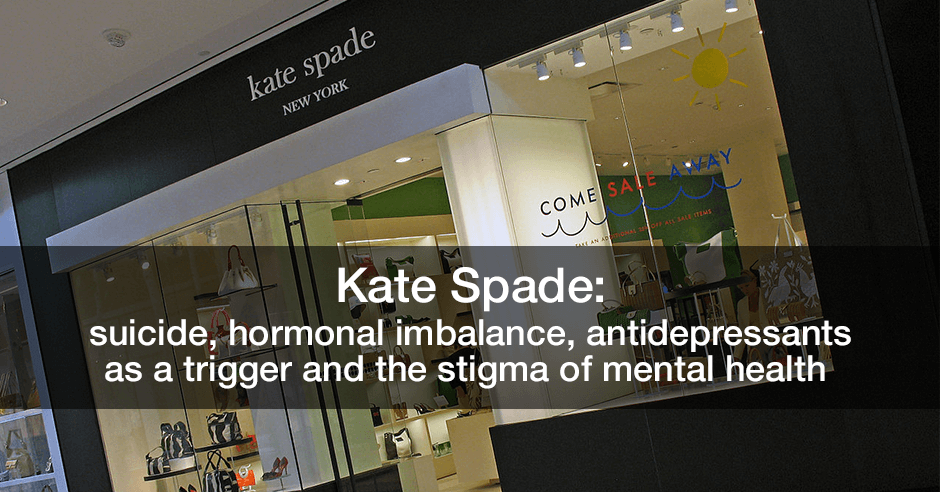
Kate Spade: suicide, hormonal imbalance, antidepressants as a trigger and the stigma of mental health

June 15, 2018 By Trudy Scott 34 Comments

Photo by Paul Keleher (originally posted to Flickr as kate spade) [CC BY 2.0], via Wikimedia Commons
Kate Spade, a well-known American fashion icon and handbag designer, died by suicide last week at the age of 55. I’m always torn in situations like this…just share the news story with my sympathies in order to respect the family or use this as an opportunity to learn from and prevent others from suffering the same fate. This time I’m doing the latter – with the risk of appearing insensitive – because there are red flags here and I feel so strongly that we all need to learn from this in order to move mental health forward. I’m hoping her husband and family would approve.

In the announcement about Kate Spade’s suicide in the New York Times, Mr. Spade said:

that though his wife had suffered from anxiety at points during their relationship and marriage, her serious bouts of depression only began about six years ago, at the age of 49.

Kate suffered from depression and anxiety for many years. She was actively seeking help and working closely with her doctors to treat her disease, one that takes far too many lives. We were in touch with her the night before and she sounded happy. There was no indication and no warning that she would do this. It was a complete shock. And it clearly wasn’t her. There were personal demons she was battling.

My heart goes out to Kate Spade’s husband, young daughter and loved ones. Her suicide is just so sad but as I said I have a fair bit to say about this….


Hormone imbalance triggering anxiety and depression?

According to the reports, Kate’s “serious bouts of depression only began about six years ago, at the age of 49, but she had suffered “from depression and anxiety for many years”.

Perimenopause and menopause is a classic time for women to experience worsening anxiety and depression and can be driven by fluctuating hormones, especially low estrogen. In this study, Depression and the menopause: why antidepressants are not enough? the authors share that

Postmenopausal depression is more severe, has a more insidious course, is more resistant to conventional antidepressants in comparison with premenopausal women and has better outcomes when antidepressants are combined with HT (hormone therapy).

Addressing hormone imbalance as one possible root cause can eliminate the anxiety and depression. Some of my favorite resources for hormone balance are these books: The Hormone Secret and Cooking for Hormone Balance.


Low levels of neurotransmitters like serotonin, catecholamines and GABA?

Directly connected to hormonal imbalance is brain chemistry imbalance. Addressing low levels of neurotransmitters like serotonin, the catecholamines and GABA provide results quickly when they are used in a targeted way based on individual needs:

  • Low serotonin is an issue when estrogen levels are declining and the amino acid tryptophan can have profound benefits if low serotonin is one of the root causes, leading to depression, worry, fear, overwhelm and sleep issues.
  • Low catecholamines can cause the “I just want to say in bed” depression and low motivation, together with fatigue and poor focus. The amino acid tyrosine can help to eliminate some of this and also provides thyroid support.  Poor thyroid health can also be a root cause of depression.
  • We see low GABA levels when progesterone is low and if this is one of the root causes, it can result in increased physical anxiety and insomnia. The amino acid GABA, opened on to the tongue, can provide calming results within minutes.

I can totally relate to the hormonal aspect as I suffered from PMS for years and my anxiety issues and panic attacks started in my late 30s and I had a really low spell as I was going through menopause.  Both GABA and tryptophan turned things around very quickly for me as they do for my clients.


The role of diet and nutritional psychiatry?

There is so much new science behind the role of a real foods traditional diet for alleviating both depression and anxiety. The SMILES study, published by Prof Felice Jacka early 2017, was the first randomized controlled diet depression study and ONE THIRD of the dietary intervention group saw improvements in their depression symptoms.  This was just diet alone and switching from processed and junk food to real food with no specific dietary restrictions.

There is also much clinical evidence supporting how diet can have an impact. Holly, suffered from with severe depression and anxiety changed her diet and shared this with me:

Over the course of a year and a half, I was given 10 different psychiatric diagnoses and cycled through 10 different medications. I discovered the healing power of diet completely by accident, and it changed my life. I now live with no diagnoses and no symptoms.

I started with the Whole30 (strict paleo), then went paleo, dabbled with a ketogenic approach, and now I eat a modified paleo diet, with some rice and goat dairy.

This has been termed nutritional psychiatry and you can read more diet-depression and diet-anxiety success stories here.

Keep in mind that your prescribing psychiatrist may not yet be on board with this or up to date on the newest research. Just last week someone told me what happened when they discussed nutritional psychiatry with their doctor and showed them my book The Antianxiety Food Solution (my Amazon link). He said: “Good luck with that!”


Could the antidepressant medication have triggered her suicide?

The statement from Kate’s husband says “She was actively seeking help for depression and anxiety over the last 5 years, seeing a doctor on a regular basis and taking medication for both depression and anxiety.”  Could the antidepressant medication have triggered her suicide or played some part?

We will never know with Kate but this is always my first thought when I learn of a suicide and when we hear of homicides in the news. One of my colleagues shared this when her suicide was first announced: “I was wondering if she was under psych care and what role meds might have played in this tragedy.”

This paper is one of many papers reporting similar antidepressant suicide and violence risks, and concludes that:

Antidepressants double the occurrence of events in adult healthy volunteers that can lead to suicide and violence

Kelly Brogan MD – Holistic Psychiatrist​ no longer prescribes psychiatric medications because we don’t know who will experience this side-effect. She writes this about a Swedish study and antidepressants and increased suicides

As antidepressant prescriptions increased 270% over 15 years, suicide rates also increased. Strikingly, more than half of the young women who committed suicide (52%) were prescribed antidepressants within a year of committing suicide. And antidepressants were detected in 41% of the women who committed suicide, showing that they were under the influence of antidepressants at the time of death. 


What if you are taking an antidepressant and seeing benefits?

When I posted some of this on Facebook earlier in the week someone who is on an antidepressant and benefiting shared her frustration that we are blaming suicide on medications.

There are many who do benefit but there are two issues I have:

  1. Even if someone is doing well on an antidepressant, benzodiazepine or other psychiatric medication I feel we need informed consent about the side-effects and training for the individual and family on what to look out for as things can change. The can occur when meds are changed, doses are increased or decreased, new meds are added, one or more are stopped abruptly or too quickly (called discontinuation syndrome). Many doctors also need to be educated and to acknowledge that suicide and homicide are very real side-effects of these meds.
  2. We don’t know who will be adversely impacted, which is why consent/knowledge about this is so important.

When we rent ski equipment or go bungee jumping we sign an informed consent form, acknowledging the possible risks of death. Why is this not happening with these medications? I just want individuals to be going into this with eyes wide-open so they don’t say “why didn’t anyone tell us this?”

If someone is currently seeing benefits from antidepressants (or benzodiazepines) I make sure they know ALL the risks and encourage them to continue to look for root the causes and address these (never stopping medications abruptly and never without the prescribing doctor’s permission).

There are many possible biological or biomedical or metabolic causes of depression and anxiety and many of these can play a factor in suicide.  Here is a list of just some of them:

  • gluten sensitivity and celiac disease
  • low B12, low B6, low omega3s, low zinc
  • the anti-malaria drug mefloquine (has been associated with acts of violence and suicide)
  • toxoplasma gondii
  • fluoroquinolone antibiotics
  • many common drugs may be contributing to depression (over 200 including acid reflux meds, blood pressure meds, birth control pill)

My concern is that none of these – the medications or poor diet and nutritional deficiencies – are ever discussed when someone does commit suicide or goes on a violent or homicidal rampage.


The stigma of mental health and the fear of seeking help

There are reports that “Kate Spade felt unable to seek help or discuss her mental health because she feared this might damage the brand she created.”  This is a huge issue and if it was true for her or if anyone with a mental health condition feels like this, this has to change!

As Dr. Mark Hyman MD​ said this when I interviewed him last year before the launch of his Broken Brain docu-series

I began to realize that the body was driving a lot of this brain dysfunction, and that if you fix the body, a lot of the brain disorders would get better, that it wasn’t a primarily a mental problem, but it was a physical problem.

Our interview and full transcript is here and we cover the gamut in 12 minutes: the gut and microbiome, nutritional deficiencies, food sensitivities, heavy metals, other environmental toxins and medications.

We don’t hide the fact that we have a broken leg so why do we have to hide it when we have a broken brain? If we can start to acknowledge that mental health issues so often have this physical aspect (and often it’s 100% physical) then hopefully we can end this crazy stigma.

And even if there is also trauma or lifestyle factors that make someone depressed or anxious – so be it. Stop the stigma and shame. Why do we have to put on a brave face and pretend all is well. It has to stop so people can ask for help.

Last but not least, I feel we need to offer practical nutritional psychiatry resources to the family who have been traumatized by the loss of a loved one to suicide.  We know the amino acids and B vitamins help individuals recover from psychological stress after a natural disaster and these same nutrients can help the family in the midst of their sorrow.

I am aware it’s a very delicate subject and I’m sure this will rub some people the wrong way but I believe we all need to be talking about this and not tip-toeing around it.

I really feel this all needed to be said today. I hope this helps you or a loved one.

Rest in peace Kate Spade.

Filed Under: Amino Acids, Depression, Nutritional Psychiatry Tagged With: antidepressant, anxiety, depression, estrogen, fear, GABA, hormone imbalance, Kate Spade, mental health, progesterone, root causes, serotonin, SSRI, stigma, suicide

  • « Go to Previous Page
  • Page 1
  • Page 2
  • Page 3
  • Go to Next Page »

Primary Sidebar

NEW! GABA QuickStart Homestudy (with special intro pricing)

gaba quickstart homestudy

Free Report

9 Great Questions Women Ask about Food, Mood and their Health

You'll also receive a complimentary subscription to my ezine "Food, Mood and Gal Stuff"


Connect with me

Popular Posts

  • Amino Acids Mood Questionnaire from The Antianxiety Food Solution
  • The Antianxiety Food Solution Amino Acid and Pyroluria Supplements
  • Pyroluria Questionnaire from The Antianxiety Food Solution
  • Collagen and gelatin lower serotonin: does this increase your anxiety and depression?
  • Tryptophan for the worry-in-your-head and ruminating type of anxiety
  • GABA for the physical-tension and stiff-and-tense-muscles type of anxiety
  • The Antianxiety Food Solution by Trudy Scott
  • Seriphos Original Formula is back: the best product for anxiety and insomnia caused by high cortisol
  • Am I an anxious introvert because of low zinc and vitamin B6? My response to Huffington Post blog
  • Vagus nerve rehab with GABA, breathing, humming, gargling and key nutrients

Recent Posts

  • What do I use instead of Seriphos to help lower high cortisol that is affecting my sleep and making me anxious at night?
  • BeSerene™ GABA/theanine cream eases severe muscle tension in her neck/shoulders, prevents her bad headaches and quells her anxiety
  • How the correct approach, dose and sublingual use of GABA can be calming and not cause a flushed and itchy face and neck
  • The amino acid glutamine improves low mood by addressing gut health, and it has calming effects too
  • Flight anxiety with heightened breath, physical tension and also fearing the worst (the role of low GABA and low serotonin)

Categories

  • 5-HTP
  • AB575
  • Addiction
  • ADHD
  • Adrenals
  • Alcohol
  • Allergies
  • Alzheimer's disease
  • Amino Acids
  • Anger
  • Antianxiety
  • Antianxiety Food Solution
  • Antidepressants
  • Anxiety
  • Anxiety and panic
  • Autism
  • Autoimmunity
  • benzodiazapines
  • Bipolar disorder
  • Books
  • Caffeine
  • Cancer
  • Candida
  • Children/Teens
  • Collagen
  • Cooking equipment
  • Coronavirus/COVID-19
  • Cravings
  • Depression
  • Detoxification
  • Diabetes
  • Diet
  • DPA/DLPA
  • Drugs
  • EFT/Tapping
  • EMF
  • EMFs
  • Emotional Eating
  • Endorphins
  • Environment
  • Essential oils
  • Events
  • Exercise
  • Fear
  • Fear of public speaking
  • Fertility and Pregnancy
  • Fish
  • Food
  • Food and mood
  • Functional neurology
  • GABA
  • Gene polymorphisms
  • General Health
  • Giving
  • Giving back
  • Glutamine
  • Gluten
  • GMOs
  • Gratitude
  • Gut health
  • Heart health/hypertension
  • Histamine
  • Hormone
  • Hyperparathyroidism
  • Hypoglycemia
  • Immune system
  • Inflammation
  • Insomnia
  • Inspiration
  • Introversion
  • Joy and happiness
  • Ketogenic diet
  • Lithium orotate
  • Looking awesome
  • Lyme disease and co-infections
  • MCAS/histamine
  • Medication
  • Men's health
  • Mental health
  • Mercury
  • Migraine
  • Mold
  • Movie
  • MTHFR
  • Multiple sclerosis
  • Music
  • NANP
  • Nature
  • Nutritional Psychiatry
  • OCD
  • Osteoporosis
  • Oxalates
  • Oxytocin
  • Pain
  • Paleo
  • Parasites
  • Parkinson’s disease
  • PCOS
  • People
  • PMS
  • Postpartum
  • PTSD/Trauma
  • Pyroluria
  • Questionnaires
  • Real whole food
  • Recipes
  • Research
  • Schizophrenia
  • serotonin
  • SIBO
  • Sleep
  • Special diets
  • Sports nutrition
  • Stress
  • Sugar addiction
  • Sugar and mood
  • Supplements
  • Teens
  • Testimonials
  • Testing
  • The Anxiety Summit
  • The Anxiety Summit 2
  • The Anxiety Summit 3
  • The Anxiety Summit 4
  • The Anxiety Summit 5
  • The Anxiety Summit 6
  • Thyroid
  • Thyroid health
  • Toxins
  • Tryptophan
  • Tyrosine
  • Uncategorized
  • Vegan/vegetarian
  • Women's health
  • Yoga

Archives

  • October 2025
  • September 2025
  • August 2025
  • July 2025
  • June 2025
  • May 2025
  • April 2025
  • March 2025
  • February 2025
  • January 2025
  • November 2024
  • October 2024
  • September 2024
  • August 2024
  • July 2024
  • June 2024
  • May 2024
  • April 2024
  • March 2024
  • February 2024
  • January 2024
  • December 2023
  • November 2023
  • October 2023
  • September 2023
  • August 2023
  • July 2023
  • June 2023
  • May 2023
  • April 2023
  • March 2023
  • February 2023
  • January 2023
  • December 2022
  • November 2022
  • October 2022
  • September 2022
  • August 2022
  • July 2022
  • June 2022
  • May 2022
  • April 2022
  • March 2022
  • February 2022
  • January 2022
  • December 2021
  • November 2021
  • October 2021
  • September 2021
  • August 2021
  • July 2021
  • June 2021
  • May 2021
  • April 2021
  • March 2021
  • February 2021
  • January 2021
  • December 2020
  • November 2020
  • October 2020
  • September 2020
  • August 2020
  • July 2020
  • June 2020
  • May 2020
  • April 2020
  • March 2020
  • February 2020
  • January 2020
  • December 2019
  • November 2019
  • October 2019
  • September 2019
  • August 2019
  • July 2019
  • June 2019
  • May 2019
  • April 2019
  • March 2019
  • February 2019
  • January 2019
  • December 2018
  • November 2018
  • October 2018
  • September 2018
  • August 2018
  • July 2018
  • June 2018
  • May 2018
  • April 2018
  • March 2018
  • February 2018
  • January 2018
  • December 2017
  • November 2017
  • October 2017
  • September 2017
  • August 2017
  • July 2017
  • June 2017
  • May 2017
  • April 2017
  • March 2017
  • February 2017
  • January 2017
  • December 2016
  • November 2016
  • October 2016
  • September 2016
  • August 2016
  • July 2016
  • June 2016
  • May 2016
  • April 2016
  • March 2016
  • February 2016
  • January 2016
  • December 2015
  • November 2015
  • October 2015
  • September 2015
  • August 2015
  • July 2015
  • June 2015
  • May 2015
  • April 2015
  • March 2015
  • February 2015
  • January 2015
  • December 2014
  • November 2014
  • October 2014
  • September 2014
  • August 2014
  • July 2014
  • June 2014
  • May 2014
  • April 2014
  • March 2014
  • February 2014
  • January 2014
  • December 2013
  • November 2013
  • October 2013
  • September 2013
  • August 2013
  • July 2013
  • June 2013
  • May 2013
  • April 2013
  • March 2013
  • February 2013
  • January 2013
  • December 2012
  • November 2012
  • October 2012
  • August 2012
  • July 2012
  • June 2012
  • May 2012
  • April 2012
  • March 2012
  • February 2012
  • January 2012
  • December 2011
  • November 2011
  • October 2011
  • September 2011
  • August 2011
  • July 2011
  • June 2011
  • May 2011
  • April 2011
  • March 2011
  • February 2011
  • January 2011
  • December 2010
  • October 2010
  • September 2010
  • July 2010
  • May 2010
  • April 2010
  • March 2010
  • February 2010
  • January 2010
  • November 2009

Share the knowledge!

The above statements have not been evaluated by the Food and Drug Administration. Products listed in this website are not intended to diagnose, treat, cure or prevent any disease.

The information provided on this site is for informational and educational purposes only and is not intended as a substitute for advice from your physician or other health care professional. You should consult with a healthcare professional before starting or modifying any diet, exercise, or supplementation program, before taking or stopping any medication, or if you have or suspect you may have a health problem.


Copyright © 2026 Trudy Scott. All Rights Reserved. | Privacy | Terms and Conditions | Refund Policy | Medical Disclaimer

Free Report

9 Great Questions Women Ask about Food, Mood and their Health

You’ll also receive a complimentary subscription to my ezine “Food, Mood and Gal Stuff”