• Skip to primary navigation
  • Skip to main content
  • Skip to primary sidebar

everywomanover29 blog

Food, Mood and Women's Health – Be your healthiest, look and feel great!

  • Blog
  • About
  • Services
  • Store
  • Resources
  • Testimonials
  • The Book
  • Contact
  • Search this site

pyroluria

Pectus excavatum and pyroluria: is there a connection?

June 7, 2019 By Trudy Scott 23 Comments

Pectus excavatum and pyroluria

I recently received a question about the possible connection between pectus excavatum and pyroluria, a social anxiety condition. In layman’s terms, pectus excavatum is a depression or indentation in the chest wall and is related to problems with connective tissue. This Medscape article describes it as follows:

Pectus excavatum, also known as sunken or funnel chest, is a congenital chest wall deformity in which several ribs and the sternum grow abnormally, producing a concave, or caved-in, appearance in the anterior chest wall.

It’s not something I’m familiar with other than seeing someone with this condition at the beach once (I share some pictures below) and when doing the research for this blog.

The question was posed in relation to a blog on Joint hypermobility / Ehlers-Danlos Syndrome, a connective tissue disorder that does seem to be common in those with pyroluria.

In case you’re new to pyroluria, it is a genetic condition that is frequently associated with a type of anxiety characterized by social anxiety, avoidance of crowds, a feeling of inner tension, and bouts of depression. People with this problem experience varying degrees of anxiety or fear, often starting in childhood, but they usually manage to cover it up and push through. They tend to build their life around one person, become more of a loner over time, have difficulty handling stress or change, and have heightened anxiety symptoms when under more stress. You can read more about it here.

There are also connective tissue symptoms with pyroluria with the following commonly a factor: joints popping, cracking, or aching; pain or discomfort between the shoulder blades; and/or cartilage problems. This is often due to low levels of zinc. Here is the entire pyroluria questionnaire.

Addressing low levels of the mineral zinc and vitamin B6, together with some other nutrients and stress management, are key to addressing pyroluria symptoms. The social anxiety can typically be lifted in a week and the joint and pain problems often ease in 1 to 2 months.

So now that I’ve set things up with an overview of pyroluria and EDS and the connective tissue problems, let me share what I uncovered about pectus excavatum and why I feel there is very likely a connection with pyroluria.

Pectus excavatum and low zinc – impacting connective tissue and psychological impairment

According to this 2012 paper, Pectus excavatum: history, hypotheses and treatment options

Pectus excavatum (PE) … is the most common chest wall deformity, representing 90% of all cases. Depending on the severity of PE, deviations of thoracic organs and spine deformities are known. Although PE in most instances has little or no influence on the function of the inner organs, the cosmetic appearance of the patients leads to psychological impairment which requires therapy.

In the above paper, they write about one of the hypotheses: weak cartilage through metabolism dysfunction. They report decreased levels of zinc in the pectus excavatum patients, suggesting “the lack of zinc in the diet results in a lower metabolic activity of chondrocytes.” Chondrocytes are cells found in cartilage connective tissue. In summary, one hypothesis is that low dietary zinc affects cartilage connective tissue in some individuals with pectus excavatum.

Observe the mention of psychological impairment. Could the low zinc be playing a role in this too? I address this below.

Pectus excavatum and Ehlers-Danlos, plus dental crowding

This paper, Pectus Excavatum and Heritable Disorders of the Connective Tissue, make the connective tissue and Ehlers-Danlos connection:

It seems clear that several patients affected by pectus excavatum display a typical association with connective tissue disorders, which may span from mild form like simple laxity without morbidity associated, to more severe forms such as MFS and Ehlers-Danlos syndrome

This paper also mentions “Highly arched palate with dental crowding” which is common in pyroluria and seems to be related to low levels of zinc.

The image below illustrates a moderate/severe form of pectus excavatum.
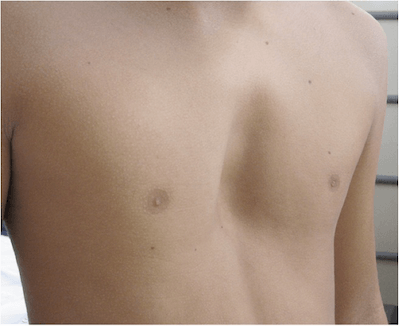
pectus excavatum
Figure 1. from Pectus Excavatum and Heritable Disorders of the Connective Tissue

Chest picture of an adolescent affected by a moderate/severe form of pectus excavatum. Written consent was obtained from the patient and the patient’s parents for publication of this image.

Vitamin B6 and high homocysteine

With regards to vitamin B6, one of the other key nutrients needed for pyroluria, one paper, Pectus carinatum repair in an adolescent with hyperhomocysteinaemia: Anaesthetic implications reports a case of a 14-year-old boy with high homocysteine. his level was 18.5 μmol/l (normal levels are within 7–10 μmol/l). He was treated with folic acid, Vitamin B6 and B12 supplements. Is this common in all cases of chest wall deformities? I don’t know but it would interesting to find out.

Pectus excavatum: social anxiety and depression

There are some older studies that report mental health symptoms, including social anxiety are common. In this 1999 paper, Funnel chest. Psychological and psychosomatic aspects in children, youngsters, and young adults, they report these reactions in children older than 11:

embarassment reactions, social anxiety, feelings of stigma, limited capacity for work, orientation towards failure, reduced tolerance of frustration and temptation, limited capacity for communication and even markedly depressive reactions are observed.

It’s understandable that the physical manifestations of this condition would lead to some of these feelings but I have to question how much of this could also be related to low zinc and low vitamin B6. Both nutrients are needed for easing pyroluria/social anxiety symptoms and making neurotransmitters such as serotonin.

Other than trying to make some connections with the research, when this question was asked on facebook, a number of people said they (or a family member) has both pyroluria and pectus excavatum.

If you do have pectus excavatum and pyroluria, getting on the pyroluria protocol will:

  • ease some of the social anxiety and depressive symptoms
  • very likely lead to less pain and discomfort
  • very possibly prevent further connective tissue issues
  • feasibly prevent pectus excavatum in future children or perhaps reduce the severity in the instance where zinc is a factor (this one is a long shot that I feel is worth further research)

I’d love to gather more information and am looking for feedback so please do share your symptoms and experiences in the comments. Let us know if you or your child or other family member has pectus excavatum and any of the following:

  • A score 15 or more on the pyroluria questionnaire and/or suffer from social anxiety
  • Have low zinc
  • Have low B6 (poor dream recall or nightmares is a clue)
  • Have high homocysteine i.e. above 10 μmol/l
  • Ehlers-Danlos syndrome or joint hypermobility
  • Dental crowding

Resources for you

  • My book The Antianxiety Food Solution (my Amazon affiliate link) has an entire chapter on pyroluria. Read it and become a savvy health-advocate for yourself. Share a copy with your doctor and point out the references.
  • Here is a blog if you’re new to pyroluria and the associated conditions.
  • Here is the pyroluria questionnaire.
  • You can find the pyroluria products in my supplement store here.
Filed Under: Pyroluria Tagged With: anxiety, Connective Tissue, dental crowding, depression, homocysteine, Pectus Excavatum, pyroluria, social anxiety, vitamin B6, zinc

Sjogren’s syndrome: tryptophan and GABA for anxiety, and moisturizing for dry skin and inflammation?

May 10, 2019 By Trudy Scott 33 Comments

sjogren's syndrome

A few weeks ago I blogged about a new pilot study about the use of a skin moisturizer twice a day reduced inflammation in older adults. I use the inflammation research to question if this may be applicable and helpful for you if you suffer from anxiety, extrapolating that it may well be given the added benefits of touch and an oxytocin boost.

I received a number of great questions about how to apply this information and have decided to share a question from someone with both Sjogren’s syndrome and anxiety, in order to illustrate how I’d work with someone like this.

Here is the question I received:

I would like to know how much of one’s body needs to be moisturized, and if it is also necessary to be done twice per day? Such a simple but effective way to help with anxiety. Will be slathering a lot more in the future! I have Sjogren’s so everything is dry – skin, mouth, eyes, hair. I have been trying to keep my face much “moister” and I am sure my wrinkles have lessened. I find rice bran oil is also quite good.

I’m going to address her moisturizing question below and share more about anxiety in Sjogren’s syndrome and some nutritional solutions, but first let me explain what Sjogren’s syndrome is.

An overview of Sjogren’s syndrome

Let me explain what Sjogren’s (SHOW-grins) is in case you’re not familiar with this condition. It’s an autoimmune condition and is described as follows on the Mayo Clinic site:

often accompanies other immune system disorders, such as rheumatoid arthritis and lupus. In Sjogren’s syndrome, the mucous membranes and moisture-secreting glands of your eyes and mouth are usually affected first — resulting in decreased tears and saliva.

Although you can develop Sjogren’s syndrome at any age, most people are older than 40 at the time of diagnosis. The condition is much more common in women.

The site goes on to say that other than dry eyes and mouth, some people experience joint pain and stiffness, swollen salivary glands, skin rashes or dry skin, vaginal dryness, persistent dry cough and prolonged fatigue. It’s worth a read to learn more about complications like more dental cavities, yeast infections, vision issues, problems in the lungs, kidneys or liver, the risk of lymphoma and peripheral neuropathy.

My feedback about moisturizing

In the study, moisturizing was done twice a day. I’m not sure how much of the body needs to be moisturized but if everything is dry, I’d want to moisturize as much as possible.

Given that chronic inflammation is a major factor in Sjogren’s and other autoimmune conditions like systemic lupus erythematosus, it’s feasible to expect similar benefits in terms of reduced inflammation. Hopefully we’ll see research on autoimmune conditions in the future.

When it comes to anxiety, I do want to make it clear that I was and still am extrapolating from the research on inflammation and measuring reduced anxiety was not part of the study. Moisturizing may or may not help with anxiety and I certainly wouldn’t only use this intervention.

Anxiety in Sjogren’s – low serotonin and GABA?

You may not be aware that anxiety/depression is very common in Sjogren’s. In one study they

found 33.8% patients with anxiety, and 36.9% had depression, which were significantly higher than controls.

I use a comprehensive nutritional and lifestyle approach to help my clients ease their anxiety and as I mention above, I would not only rely on moisturizing.

I would use the serotonin questionnaire to determine if low serotonin is contributing to the anxiety (the worry-in-the head and rumination type of anxiety) and do a trial of tryptophan or 5-HTP.

Interestingly, a number of studies suggest the involvement of the serotonin system in the development of Sjogren’s, with one study reporting

Significantly lower platelet levels of serotonin in Sjogren’s patients as compared to healthy controls.

They didn’t find a correlation between the levels of serotonin and how severe the Sjogren’s symptoms were, which falls in line with what we know about biochemical individuality and why doing a trial of tryptophan or 5-HTP (to find your ideal dose) is the best approach for serotonin support.

I would use also the GABA questionnaire to determine if low GABA (physical tension type of anxiety) is a factor, and do a trial of GABA.

If you recall, in the Mayo Clinic description above, stiffness is a common symptom of Sjogren’s and GABA eases stiffness.

I haven’t found any research on GABA in Sjogren’s, but one case study reports that a patient experiencing athetoid movements (a movement dysfunction, characterized by involuntary writhing movements), reported symptom improvement with hydroxychloroquine (which can have severe psychiatric effects in susceptible individuals), pilocarpine, gabapentin, and clonazepam. The latter two medications work on the GABA system.

You can find the tryptophan and GABA products I use with my clients here.

Poor sociability in Sjogrens – could this be related to pyroluria?

A study published earlier this year is reportedly the first study to conclude that patients with Sjogren’s score “high on neuroticism and anxiety and low on sociability.”

If social anxiety is a concern, I’d have her do the pyroluria questionnaire and address this if needed.

If you recall, in the Mayo Clinic description above, joint pain and dental cavities are common symptoms. These are also very common with pyroluria, so using a nutritional approach helps ease the social anxiety, and improves joint issues and mouth health.

The other factor that makes me suspect pyroluria may be common in Sjogren’s is that it’s considered a systemic connective tissue disorder, together with systemic lupus erythematosus and rheumatoid arthritis. You can read more about pyroluria and connective tissue disorders on the pyroluria prevalence blog and the Ehlers Danlos/joint hypermobility blog.

Poor mouth health is also common with histapenia/low histamine so I’d want to look into this too.

You can find the pyroluria supplements I use with my clients here.

Sjogren’s and the Autoimmune-Paleo diet

Since Sjogren’s is an autoimmune condition, following an Autoimmune-Paleo (AIP) diet is key too. Here are some books that are well-worth making part of your library, even though they are not specific to Sjogren’s syndrome they offer support for autoimmune conditions (and many individuals often have more than one autoimmune disease)

  • Hashimoto’s Protocol by Dr. Izabella Wentz (Hashimoto’s is an autoimmune thyroid condition)
  • Hashimoto’s Food Pharmacology, a recipe book by Dr. Izabella Wentz (both on Hashimoto’s but applicable to any autoimmune condition)
  • Cooking for Hormone Balance: a recipe book by Magdalena Wszelaki (she has AIP recipes)
  • The Autoimmune Solution Cookbook by Amy Myers MD

I haven’t dived into the research on all the other autoimmune conditions and the above connections (low serotonin, low GABA and pyroluria) but it’s highly likely similar connections exist. So, if you have any autoimmune condition and anxiety this could all apply for you too.

If you have been diagnosed with Sjogren’s syndrome please share if GABA and tryptophan have helped ease your anxiety, and if the pyroluria protocol has helped you with social anxiety?

And let us know if moisturizing is helping your dry skin and possibly reducing inflammation and anxiety too?

Filed Under: Anxiety, Autoimmunity, GABA, Pyroluria, serotonin, Tryptophan Tagged With: AIP diet, anxiety, autoimmune, dry skin, GABA, hashimoto's, Inflammation, moisturizer, pyroluria, serotonin, Sjogren’s syndrome, social anxiety, tryptophan

Perimenopause and menopause: low GABA, pyroluria and the adrenals

March 16, 2019 By Trudy Scott 14 Comments

As you go into perimenopause and menopause you don’t have to settle for increased anxiety, dull moods, depression, a foggy brain, a flabby belly, night sweats, insomnia, fatigue, low libido, weight gain and the bone loss that so “common” and “accepted” with getting older.

There are natural, effective and easy-to-implement solutions to balance your hormones at any age!

My perimenopausal symptoms hit with a vengeance in my late 30s. The stress that I was experiencing at work, together with all the hormone changes and what I call my “perfect storm” of gluten issues, heavy metals, low GABA, low serotonin, low zinc, adrenal issues, vegetarian diet, candida, pyroluria and leaky gut, all worked together to cause my anxiety and panic attacks.

I didn’t settle and as soon as I used GABA and tryptophan the anxiety and panic attacks stopped and I could take a step back and work on all the other underlying issues, without all the overwhelm.

I share my story in my interview on the Perimenopause Summit with summit host Dr. Michelle Sands, and go into great detail about how to use the amino acids in the most effective way to ease anxiety, worry, fear, negative self-talk, ruminations and overwhelm.

I also share a study about tryptophan easing PMS symptoms in just 3 cycles, as well as some of my other tips for PMS symptom relief (think liver support).

I also talk about a topic that no-one is addressing and yet there is such a simple solution for this excruciatingly painful condition called proctalgia fugax. You may not have heard this term but if you have you know it! In the medical literature it is described as “a condition that leads to rectal spasms and sharp fleeting pain in the lower rectum or anus.” Sublingual GABA works miracles in a few minutes).

My interview – Amino Acid Therapy for Anxiety

  • Problems with commonly prescribed anti-anxiety meds
  • How food affects mood
  • Right and wrong way to use amino acid therapy

Unfortunately, hormone and women’s health issues are incredibly misdiagnosed and misunderstood, leaving many women feeling hopeless, broken and stuck.

Dr. Michelle gets all this because she was also there, in her 20s with irregular and absent periods, mood swings, joint pain, infertility, low libido, digestive issues and insomnia. She was told her ovaries had failed and to manage her symptoms for the rest of her life with birth control pills, antidepressants and other medications. So, she found a better way — a natural way to help her body heal itself — and she’s here to teach you how to do the very same, no matter whether you’re in your 20s or decades older!

The pyroluria perimenopause connection

There are little known connections between pyroluria (a social anxiety condition) and perimenopause.

The nutrients, zinc, vitamin B6 and evening primrose oil, eliminate the social anxiety symptoms and have a direct tie in to perimenopause because these same nutrients:

  • are needed to make neurotransmitters like GABA and serotonin
  • are also are needed to make our sex hormones (and help so much with PMS and perimenopausal hormone imbalance)

In my interview with Dr. Michelle I also share how I discovered I had pyroluria before I even knew what pyroluria was. I was in perimenopause and had terrible PMS. I read Ann Louise Gittleman’s wonderful book Before the Change: Taking Charge of Your Perimenopause (my Amazon link), and she recommended zinc, vitamin B6, and evening primrose oil for PMS symptoms. Once I started taking these nutrients I had fewer hormonal issues and they helped so much with my social anxiety.

A few years later when I was working with clients with pyroluria and I looked at the pyroluria questionnaire I thought: “that looks like me, maybe I’ve got this too!” I did the urine test and I discovered that I have pyroluria.

In my interview I talk about :

  • the pyroluria-introvert connection and why I believe there is a nutritional aspect to introversion and it’s not purely a personality trait
  • the pyroluria-Lyme connection and how Klinghardt feels that Lyme Disease cannot be treated until the underlying pyroluria is addressed

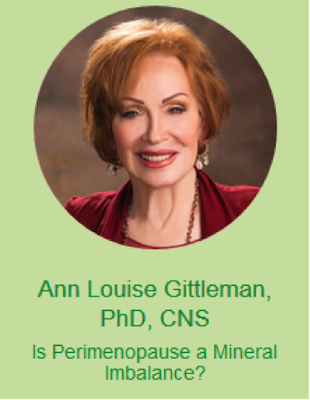
Be sure to also tune in to Ann Louise Gittleman’s interview. Her discussion about zinc and copper is a perfect complement to my interview.

Ann Louise Gittleman, PhD, CNS: Is Perimenopause a Mineral Imbalance?

  • Do you have toxic levels of this mineral (copper)?
  • Best way to test mineral imbalance
  • Overcoming nutrient and mineral imbalance

Adrenal health is so important during perimenopause

Adrenal health is so important during perimenopause. This is covered in this interview – Adrenals are a Perimenopausal Gal’s Bestie with Marcelle Pick MSN, OB-GYN, NP. She covers the following:

  • Role of the adrenal glands in hormone balance
  • Causes and consequences of adrenal burnout
  • Caring for your adrenals.

And shares these gems:

  • Prior to menopause about 15% of our sex hormones are produced by our adrenals and after menopause it’s 30% – this is why adrenal health is so important!
  • When you are stressed the adrenals will make cortisol at the expense of estrogen and progesterone

She also talks about how we handle stress impact the adrenals and why it’s so important to work on lifestyle changes. One great example she shares is this: “are we a perfectionist and do we expect too much of ourselves?”

I’d like to add to this and say that the first step is recognizing that you are a perfectionist and reminding you that perfectionism is a classic sign of low serotonin. That way you can consider using the amino acids tryptophan or 5-HTP to say goodbye to perfectionism and ease some of your stress.

I talk all about low serotonin in my interview but want to help you make this connection as you listen to Dr. Marcelle’s and my interviews.

Dr. Marcelle also discusses what to eat, some of her favorite adaptogenic herbs for the adrenals, exercise advice (and why to do less when you are healing your adrenals) and the effects of childhood trauma.

Do let us know if any of this resonates with you and feel free to post questions in the comments below.

Filed Under: Women's health Tagged With: adrenals, GABA, Michelle Sands, perimenopause, pyroluria, stress

The Antianxiety Food Solution online supplement store at Fullscript

March 1, 2019 By Trudy Scott 29 Comments

Purchase products through our Fullscript virtual dispensary.

Fullscript is my online supplement distributor. I have set up an account with them to make it convenient for my clients and those in my online community find quality professional grade supplements.

In order to purchase from Fullscript you will need to first set up a customer account under my practitioner account. There is no charge for this and you only need to do this once.

To create a new account follow these steps

  1. Click here for Trudy’s Store link
  2. Enter your Email address, click “Submit”
  3. Enter your Password, First Name and Last Name and click “Signup”
  4. On the next screen enter your Email and Password and click “Sign in”
  5. You are now in Trudy’s store and can start purchasing supplements
  6. Click on “Trudy Scott’s Anxiety Solutions favorites” to see what Trudy’s favorites by category

If you already have an existing account follow these steps

If you already have an existing account with another practitioner, but would like to see Trudy’s favorites/discounts follow these steps to add Trudy’s account:

  1. Click here for Trudy’s store link
  2. Sign in with your existing account’s (other practitioner’s) Email and Password and click “Sign in”
  3. You are now in Trudy’s store and can start purchasing supplements
  4. Click on “Trudy Scott’s Anxiety Solutions favorites” to see what Trudy’s favorites by category
  5. You can also click on your name and to choose “Switch dispensaries” to go to the other store.

Why purchase supplements from Fullscript

Fullscript carries everything I recommend. I have thoroughly researched and vetted the products I recommend because, as you know, quality is key when it comes to supplements just as it is key when it comes to food. That being said, formulations do change from time to time, so please don’t hesitate to let me know if a product has changed or is no longer available.

Finding Products in Fullscript

Here are some tips on how to find products in Fullscript (once you’ve set up an account):

  • Click on “Catalog” and then in the center of the page click on “Trudy Scott’s supplement & natural health products store favorites”  to see what may interest you.  You’ll see favorite folders such as Adrenal Support, Amino Acids, Anxiety, Basics, Candida, Cognition, Liquid and Powder Options, Pyroluria and so on
    (FYI – if these instructions may not apply as Fullscript sometimes changes their website – please let us know and we will update these instructions)
  • If you are doing the online  GABA Quickstart class, look under Class: GABA Quickstart for the related supplements that are in this favorite  folder.
  • If you are doing the online group program Amazing Amino Acids for Eliminating Anxiety look under Class 1, Class 2, Class 3, Class 4 and Class 5 for the recommended products for each of the five classes OR
  • You can simply use the search feature to find the product/s by name or brand (sometimes you have to go to the brand and then search for the product name)


Create account


If you do already have a Fullscript account, simply click the button above to place your new order or click the button below

Purchase products through our Fullscript virtual dispensary.


Amino acid and pyroluria supplements Trudy uses and related blogs


The amino acids and pyroluria supplements I use with my clients


And some product-specific blogs about some of the above amino acids:

  • GABA for the physical-tension and stiff-and-tense-muscles type of anxiety
  • Tryptophan for the worry-in-your-head and ruminating type of anxiety
  • DPA for weepiness, pain and comfort and reward eating


International Orders

What about international orders?

Unfortunately, Fullscript does not ship internationally.

So we suggest folks try an intermediary shipping service like www.shipito.com (we haven’t used them as of yet, so do your own research, and if they or someone else does work out please let us know in the comments below).

An alternative is to use iHerb to get similar products, as they ship worldwide and may even have a branch in your country for free shipping.

Here is the link for iHerb and to get 5% off: https://www.iherb.com/?rcode=BAN2021 and if you are interested in iHerb’s exclusive brands to get 10% off:  https://www.iherb.com/c/iherb-exclusives?rcode=BAN2021


Filed Under: Supplements Tagged With: account, amino acids, DPA, Fullscript, GABA, professional grade supplements, pyroluria, supplements, tryptophan

Why is vitamin B6 toxic for some and why don’t symptoms resolve when vitamin B6 is stopped?

August 17, 2018 By Trudy Scott 366 Comments

In a recent blog post, Vitamin B6 improves dream recall (which can be used to monitor vitamin B6 status), I promised to address concerns about the potential for vitamin B6 toxicity. I have yet to see any signs of toxicity in my clients, but I have also not ever recommended more than 500mg/day.

However, I was recently made aware (thanks to some folks in my community) that there are some individuals who have issues with very small amounts of vitamin B6.  As of this writing I don’t know why this occurs but I’m writing about it in the hope we can start to put some of the puzzle pieces together. If you have experienced any issues with using vitamin B6 supplements please do share in the comments.

I’d like to start with what we know from the research and from experts like Dr. Carl Pfeiffer – since B6 is water soluble, excesses are documented to be excreted via the urine so that toxic levels are never reached.

It is common knowledge that amounts of 50 mg or greater are considered therapeutic and a high dose, and you should reduce your dose if you notice any tingling in your fingers and other extremities. This could be a sign of too much vitamin B6 and is called peripheral neuropathy. Because vitamin B6 is water soluble, this condition is reported to be completely reversible if you stop supplementing with vitamin B6 or reduce your dose. In one case report, some patients were using up to 5000mg/day, and once they stopped the vitamin B6 their symptoms improved.

In his book Mental and Elemental Nutrients, published in 1975, Dr. Pfeiffer stated:

excesses are excreted via the urine so that toxic levels are never reached. Pyridoxic acid occurs in the urine of patients who take any excess of vitamin B6. This is a harmless excretion product.

He had some of his patients with pyroluria use 1000mg twice a day but recommended working with a practitioner if using amounts higher than 500mg. I agree with the latter.

You’ll see varied research papers on what is considered too high a dose. In this paper, How much vitamin B6 is toxic?, the authors report that 1000mg per day or more causes neuropathy. They also share that there

have also been occasional reports of toxicity at intakes of 100-300 mg per day [and that a report of] neurotoxicity in 2 patients who had taken 24 mg and 40 mg of vitamin B6 per day respectively, may be coincidence rather than a true toxic effect of such relatively low doses.

In the USA, per this article on the NIH site, the upper limit is set at 100mg/day. This is the rationale:

several reports show sensory neuropathy occurring at doses lower than 500 mg/day, studies in patients treated with vitamin B6 (average dose of 200 mg/day) for up to 5 years found no evidence of [neurological issues].

Based on limitations in the data on potential harms from long-term use, the FNB halved the dose used in these studies to establish a UL [upper limit] of 100 mg/day for adults. ULs are lower for children and adolescents based on body size.

As I mentioned above, I have yet to see any signs of toxicity in my clients, but I have also not ever recommended more than 500mg/day.

Psychosis that resolves when vitamin B6 is stopped

A colleague shared this about 2 patients developing psychosis as a result of using too much vitamin B6:

I have had 2 patients in the past 3 years who developed psychosis as a result of taking too much vitamin B6. I think it’s a fine line between what is enough for some people, and then what becomes too much. While some may be able to handle large doses of B6, we know that at higher doses it can cause severe problems for other people. It’s a nutrient I dose and monitor carefully for sure.

There is no research on acute psychosis and vitamin B6 toxicity but she shares this:

neuropathy and psychosis (or acute mental health symptoms) often co-occur, so to me it makes sense that a person could experience both together as a result of too much vitamin B6. In both the patients the acute psychotic symptoms resolved once they stopped taking high doses of B6. They were both taking pyridoxine HCL at doses above 500mg daily (one because of information she had read online, and the other because another practitioner had recommended it). My guess is there is some genetic factor and/or mediating factor biologically that makes some people susceptible to a negative response.

Serious issues that are not resolved when vitamin B6 is stopped

Clearly there are some individuals who do have serious issues that are not resolved when they stop taking vitamin B6. In the previous blog, Vitamin B6 improves dream recall (which can be used to monitor vitamin B6 status), Ruth shared this feedback about her experience with vitamin B6 toxicity:

Trudy, I appreciate your evidence-based approach to health issues, but I think you need to be aware that there are dangers in taking too much synthetic vitamin B6. B6 toxicity is not always reversible. Individuals vary in their response to B6, and while many do well on supplementation, others experience toxicity. I was diagnosed with pyroluria, but experienced serious toxicity.

Vitamin B6 toxicity is a very unrecognized but emerging epidemic that can cause widespread neurological damage to the body. It is not commonly recognized by most of the medical community and is often misdiagnosed. B6 toxicity can cause multiple different symptoms that can vary from person to person. Peripheral neuropathy or nerve damage to the feet, legs or hands is one of the most common symptoms of vitamin B6 toxicity. Tingling, shocks/zaps, vibrations, ataxia, burning, numbness of feet, calves and/or hands, and headaches are also commonly reported. Other symptoms are: ocular, sensory, skin, gastrointestinal and psychological.

I appreciate Ruth sharing this and am very concerned that this is happening. And yes, vitamin B6 is synthetic, but I am not yet convinced that this could be the only cause as there are other synthetic/man-made supplements (such as GABA) that don’t cause issues like this.

However, we do need to know why some folks have issues and why these issues continue even when the vitamin B6 supplementation is stopped.

Possible clues as to why vitamin B6 toxicity occurs?

If you have had issues that persist I’d ask these questions which may start to give us clues as to why this occurs:

  • What were/are your symptoms and how quickly did you notice issues?
  • Have you resolved the symptoms and if yes how?
  • Did you make any other changes around the same time i.e. stopping and/or other nutritional support?
  • Was it vitamin B6/pyridoxine or P5P you were taking?
  • And how much did you take and how often?
  • If you have pyroluria were you also taking zinc and how much? (Dr. Pfeiffer recommended taking zinc together with vitamin B6).

It seems like this an emerging issue unless there is just now more awareness because of the web and more ability to share on forums, blogs and social media.

If we are to assume this is a new and emerging issue I would ask what has changed since the 1970s when Dr. Carl Pfeiffer used high doses (as I mentioned above, up to 1000mg twice a day) with no adverse effects?

These factors have wide-reaching adverse effects and may be triggering a toxic reaction in certain susceptible individuals:

  • Past history or current use of certain medications like benzodiazepines, gabapentin, Lyrica, BCP, SSRIs, fluroquinolone antibiotics, PPIs, diabetes medications, statins, blood pressure medications etc.? (If you have not used the above medications have you been exposed to them via drinking water?)
  • Our increased EMF exposure – WiFi, cell phones, cordless phone and smart meters?
  • Our increased exposure to GMOs, glyphosate, plastics/phthalates, pesticides etc.?
  • Interactions with all of the above and/or certain polymorphisms – we know cytochrome P450 polymorphisms make benzodiazepines more toxic and more difficult to taper in about 60% of those prescribed benzodiazepines

Keep in mind that for most individuals, vitamin B6 causes no issues and is an important nutrient for improving the symptoms of pyroluria/social anxiety, reducing inflammation and oxidative stress, easing PMS and hormonal issues and much more. I share links to the research on the many benefits of supplemental vitamin B6 in this blog:  Vitamin B6 improves dream recall (which can be used to monitor vitamin B6 status).

That being said, we need to know why some individuals do have issues when using vitamin B6.

Please share in the comments if you have seen adverse issues with vitamin B6 supplementation

If you have been adversely affected and feel comfortable sharing answers to the following questions in the comments this may help us try and piece the puzzle together:

  1. What were/are your symptoms and how quickly did you notice issues?
  2. Have you resolved the symptoms and if yes how?
  3. Did you make any other changes around the same time i.e. stopping and/or other nutritional support?
  4. Was it vitamin B6/pyridoxine or P5P you were taking?
  5. And how much did you take and how often?
  6. If you have pyroluria were you also taking zinc and how much? (Dr. Pfeiffer recommended taking zinc together with vitamin B6).
  7. Past history or current use of medications like benzodiazepines (such as Ativan, Xanax, valium etc.), gabapentin, Lyrica, BCP / birth control pill, SSRIs /antidepressants (such as Prozac, Celexa, Lexapro, Paxil, Zoloft etc.), fluroquinolone antibiotics (such as ciprofloxacin/Cipro, gemifloxacin/Factive, levofloxacin/Levaquin, moxifloxacin/Avelox, norfloxacin/Noroxin and ofloxacin/Floxin), PPIs (proton pump inhibitors such as Nexium for heart-burn), diabetes medications, statins, blood pressure medications etc.?
  8. What kind of EMF exposure do you have – WiFi in the home and/or at work, how much cell phone use in a day, cordless phones at home and/or work and a smart meter at home?
  9. What kind of  exposure have you had to GMOs and pesticides (i.e. do you only eat organic food), glyphosate (eg. Roundup exposure from lawns, golf courses, parks etc.), plastics/phthalates (do you avoid plastics)?
  10. What polymorphisms do you have: cytochrome P450 polymorphisms (we know some of these make benzodiazepines more toxic and more difficult to taper in about 60% of those prescribed these meds), and/or MTHFR polymorphism (may affect our detox ability if it’s expressing) and others you know about?
  11. Did you take a B complex (or a multivitamin that contains all the B vitamins) with the vitamin B6?
  12. Did you also take magnesium with the vitamin B6 and if yes how much? (Bernie Rimland reported that taking vitamin B6 together with magnesium resulted in an improved behavior of ASD (autism spectrum patients))
  13. Have you observed any correlation with intake of dietary oxalates i.e. worsening symptoms when consuming medium or high oxalate foods (such as spinach, kale, berries, nuts, kiwi fruit, eggplant etc.) or using vitamin C or milk thistle, and less severe symptoms when consuming a low oxalate diet?  (Susan Owens is founder of www.lowoxalate.info and shares that vitamin B6 is the most efficacious vitamin for reducing oxalates and that we also don’t know if the classic signs of vitamin B6 toxicity has anything to do with oxalate dumping symptoms.)
  14. Do you have a thyroid disease? “peripheral diseases frequently include polyneuropathy”
  15. Have you been diagnosed with an autoimmune condition and if yes, which one?

Is there anything else that you have discovered that you suspect may be a factor?

I plan to add to this list of questions as we get feedback and as I learn more.

To be clear, I’m not dismissing the fact that vitamin B6 toxicity is a real issue for certain individuals. I’m simply trying to figure out if there are some common factors that may be making symptoms worse in some individuals or setting someone up to be predisposed to symptoms or even preventing healing/recovery from toxicity.

Filed Under: Anxiety Tagged With: P5P, pyroluria, toxicity, vitamin B6

Vitamin B6 improves dream recall (which can be used to monitor vitamin B6 status)

July 27, 2018 By Trudy Scott 40 Comments

It’s exciting to see new research confirming the connection between vitamin B6 and dream recall. In this new study, Effects of Vitamin B6 (Pyridoxine) and a B Complex Preparation on Dreaming and Sleep (which was randomized, double-blind and placebo-controlled), 100 participants from across Australia were given 240 mg vitamin B6 (pyridoxine hydrochloride) before bed for five consecutive days. Other study participants were given a B complex. This is the outcome of the study:

  • vitamin B6 significantly increased the amount of dream content participants recalled but did not significantly affect dream vividness, bizarreness, or color, nor did it significantly affect other sleep-related variables
  • participants in the B complex group showed significantly lower self-rated sleep quality and significantly higher tiredness on waking

Here are my thoughts on these results:

  • It’s wonderful to read that Vitamin B6 improves dream recall – this is what I see with my clients all the time.
  • With an optimal dose of vitamin B6, I would expect changes in “dream vividness, bizarreness, or color” and this also what I also see with my clients. If they are having horrible/vivid/bizarre dreams, the vitamin B6 changes them to pleasant dreams OR if dreams were not recalled prior to supplementation, they are now remembered and pleasant. The dose of 240 mg was used across the board but based on what we know about biochemical individuality, 240mg may be too much for some folks and not enough for others, so this could have impacted the results.
  • It’s not surprising that the B complex taken at bedtime impacted sleep. It’s known to be stimulating and it’s not something I’d advise any client to do. For this reason, I don’t feel it was the ideal control for this study.

The lead researcher is Dr. Denholm Aspy and his primary research focus is lucid dreaming. On his researcher profile on the University of Adelaide website, he describes lucid dreaming and the potential benefits:

In a lucid dream, the dreamer realizes that they are dreaming and can then explore and even control the dream. Lucid dreaming has a wide range of potential benefits and applications such as creative problem solving, treatment for recurrent nightmares and improvement of motor skills through rehearsal in the dream environment (e.g. for elite athletes or people recovering from physical trauma).

He shares that the purpose of his research is to address exploration of the potential applications of lucid dreaming and to “develop reliable ways to induce lucid dreams.” Looking for potential applications of lucid dreaming is very interesting and new to me.

Vitamin B6/dream recall research and pyroluria (a social anxiety condition)

However, this vitamin B6/dream recall research is of particular interest to me because of my work with pyroluria, a social anxiety condition which responds really well to supplementation with zinc, vitamin B6 or P5P (pyridoxal-5-phosphate) or a combination of both, and a few other key nutrients.  Here is the pyroluria questionnaire.

One of the classic signs of pyroluria is poor dream recall, stressful or bizarre dreams, or nightmares, signs which the late Carl Pfeiffer, MD attributed to low vitamin B6 status. He suggested that your dreams and dream recall serve as a good indicator of your need for vitamin B6. You should dream every night and you should remember your dreams. They should be pleasant—the kind of dreams where you wake up and want to close your eyes and continue dreaming.

Going back to the above discussion of lucid dreaming, in lucid dreams “the dreamer is aware of dreaming and often able to influence the ongoing dream content.” This is exactly how I would describe my dreams when I have good levels of vitamin B6 and my clients say the same.

Keep in mind that if you do have pyroluria, you may need to increase your dose of vitamin B6 in times of stress. Vitamin B6 can also be depleted by oral contraceptives because they cause both low vitamin B6 and zinc, reduce serotonin levels and increase anxiety. Vitamin B6 can also be depleted by antidepressants, diuretics, and cortisone, so if you start or stop taking any of these, you may need to adjust the amount you supplement.

If this intrigues you and you’re new to pyroluria, I write about dreams and vitamin B6 in the pyroluria chapter of my book, The Antianxiety Food Solution. My blog is also a wealth of information on pyroluria:

  • Pyroluria prevalence and associated conditions
  • Joint hypermobility / Ehlers-Danlos Syndrome and pyroluria?
  • Pyroluria and focal musician’s dystonia or musician’s cramp
  • Am I an anxious introvert because of low zinc and vitamin B6? My response to Huffington Post blog

Dream recall and vitamin B6 status is important even if you don’t have pyroluria

Observing your dream recall and hence vitamin B6 status is important even if you don’t have pyroluria. This is because vitamin B6 it has been implicated as a co-factor in more than 140 biochemical reactions in the cell, playing a role making amino acids and neurotransmitters, making fatty acids, and even quenching reactive oxygen species (ROS).

This is partial list showing the importance of vitamin B6 (with both research and clinical evidence) for:

  • carpal tunnel syndrome – I’ve had many clients see major improvements to the extent that surgery is able to be cancelled
  • PMS (together with magnesium) – all the women I work with see the benefits of vitamin B6 for PMS, perimenopause and menopausal symptoms
  • issues with dietary oxalates – vitamin B6 is one of the key nutrients for preventing metabolism of food to oxalate
  • morning sickness/vomiting during pregnancy
  • protective potential against Alzheimer’s disease due to antioxidant properties
  • inflammation and IBD/irritable bowel disease

You may also wonder what the mechanism of action is? How does vitamin B6 impact your dream recall? One hypothesis is that vitamin B6 is a co-factor nutrient used in the conversion of tryptophan to serotonin which is then used to make melatonin. Vitamin B6 is also an antioxidant, is anti-inflammatory, and modulates immunity and gene expression.

If you’re looking for a quality vitamin B6 product, my supplements blog lists a range of vitamin B6 supplements that I use with clients and those in my group program.

Monitoring your dream recall is one very simple way to assess changes in your vitamin B6 status. And we now have new research supporting this. I look forward to follow-on studies by these authors, learning more from them about lucid dreaming and I hope to be able to offer some of my insights from clinical practice.

*** I address some concerns about vitamin B6 toxicity in this blog: Why is vitamin B6 toxic for some and why don’t symptoms resolve when vitamin B6 is stopped? I have yet to see any signs of toxicity in my clients, but I have also not ever recommended more than 500mg/day. However, I was recently made aware (thanks to some folks in my community) that there are some individuals who have issues with very small amounts of vitamin B6.  If you have experienced any issues with using vitamin B6 supplementation please share.

What are your dreams like and do you use your dreams to monitor your vitamin B6 status? What improvements have you noticed by addressing low vitamin B6 levels?

If you’re a practitioner do you use dream recall as an indication of vitamin B6 status?  Have you seen adverse issues with vitamin B6 supplementation and at what doses?

Filed Under: Anxiety, Sleep Tagged With: anxiety, B6, carpel tunnel, dream recall, dreams, PMS, pyridoxine, pyroluria, serotonin, tryptophan, vitamin B6

  • « Go to Previous Page
  • Page 1
  • Interim pages omitted …
  • Page 4
  • Page 5
  • Page 6
  • Page 7
  • Page 8
  • Interim pages omitted …
  • Page 11
  • Go to Next Page »

Primary Sidebar

NEW! GABA QuickStart Homestudy (with special intro pricing)

gaba quickstart homestudy

Free Report

9 Great Questions Women Ask about Food, Mood and their Health

You'll also receive a complimentary subscription to my ezine "Food, Mood and Gal Stuff"


Connect with me

Popular Posts

  • Amino Acids Mood Questionnaire from The Antianxiety Food Solution
  • The Antianxiety Food Solution Amino Acid and Pyroluria Supplements
  • Pyroluria Questionnaire from The Antianxiety Food Solution
  • Collagen and gelatin lower serotonin: does this increase your anxiety and depression?
  • Tryptophan for the worry-in-your-head and ruminating type of anxiety
  • GABA for the physical-tension and stiff-and-tense-muscles type of anxiety
  • The Antianxiety Food Solution by Trudy Scott
  • Seriphos Original Formula is back: the best product for anxiety and insomnia caused by high cortisol
  • Am I an anxious introvert because of low zinc and vitamin B6? My response to Huffington Post blog
  • Vagus nerve rehab with GABA, breathing, humming, gargling and key nutrients

Recent Posts

  • What do I use instead of Seriphos to help lower high cortisol that is affecting my sleep and making me anxious at night?
  • BeSerene™ GABA/theanine cream eases severe muscle tension in her neck/shoulders, prevents her bad headaches and quells her anxiety
  • How the correct approach, dose and sublingual use of GABA can be calming and not cause a flushed and itchy face and neck
  • The amino acid glutamine improves low mood by addressing gut health, and it has calming effects too
  • Flight anxiety with heightened breath, physical tension and also fearing the worst (the role of low GABA and low serotonin)

Categories

  • 5-HTP
  • AB575
  • Addiction
  • ADHD
  • Adrenals
  • Alcohol
  • Allergies
  • Alzheimer's disease
  • Amino Acids
  • Anger
  • Antianxiety
  • Antianxiety Food Solution
  • Antidepressants
  • Anxiety
  • Anxiety and panic
  • Autism
  • Autoimmunity
  • benzodiazapines
  • Bipolar disorder
  • Books
  • Caffeine
  • Cancer
  • Candida
  • Children/Teens
  • Collagen
  • Cooking equipment
  • Coronavirus/COVID-19
  • Cravings
  • Depression
  • Detoxification
  • Diabetes
  • Diet
  • DPA/DLPA
  • Drugs
  • EFT/Tapping
  • EMF
  • EMFs
  • Emotional Eating
  • Endorphins
  • Environment
  • Essential oils
  • Events
  • Exercise
  • Fear
  • Fear of public speaking
  • Fertility and Pregnancy
  • Fish
  • Food
  • Food and mood
  • Functional neurology
  • GABA
  • Gene polymorphisms
  • General Health
  • Giving
  • Giving back
  • Glutamine
  • Gluten
  • GMOs
  • Gratitude
  • Gut health
  • Heart health/hypertension
  • Histamine
  • Hormone
  • Hyperparathyroidism
  • Hypoglycemia
  • Immune system
  • Inflammation
  • Insomnia
  • Inspiration
  • Introversion
  • Joy and happiness
  • Ketogenic diet
  • Lithium orotate
  • Looking awesome
  • Lyme disease and co-infections
  • MCAS/histamine
  • Medication
  • Men's health
  • Mental health
  • Mercury
  • Migraine
  • Mold
  • Movie
  • MTHFR
  • Multiple sclerosis
  • Music
  • NANP
  • Nature
  • Nutritional Psychiatry
  • OCD
  • Osteoporosis
  • Oxalates
  • Oxytocin
  • Pain
  • Paleo
  • Parasites
  • Parkinson’s disease
  • PCOS
  • People
  • PMS
  • Postpartum
  • PTSD/Trauma
  • Pyroluria
  • Questionnaires
  • Real whole food
  • Recipes
  • Research
  • Schizophrenia
  • serotonin
  • SIBO
  • Sleep
  • Special diets
  • Sports nutrition
  • Stress
  • Sugar addiction
  • Sugar and mood
  • Supplements
  • Teens
  • Testimonials
  • Testing
  • The Anxiety Summit
  • The Anxiety Summit 2
  • The Anxiety Summit 3
  • The Anxiety Summit 4
  • The Anxiety Summit 5
  • The Anxiety Summit 6
  • Thyroid
  • Thyroid health
  • Toxins
  • Tryptophan
  • Tyrosine
  • Uncategorized
  • Vegan/vegetarian
  • Women's health
  • Yoga

Archives

  • October 2025
  • September 2025
  • August 2025
  • July 2025
  • June 2025
  • May 2025
  • April 2025
  • March 2025
  • February 2025
  • January 2025
  • November 2024
  • October 2024
  • September 2024
  • August 2024
  • July 2024
  • June 2024
  • May 2024
  • April 2024
  • March 2024
  • February 2024
  • January 2024
  • December 2023
  • November 2023
  • October 2023
  • September 2023
  • August 2023
  • July 2023
  • June 2023
  • May 2023
  • April 2023
  • March 2023
  • February 2023
  • January 2023
  • December 2022
  • November 2022
  • October 2022
  • September 2022
  • August 2022
  • July 2022
  • June 2022
  • May 2022
  • April 2022
  • March 2022
  • February 2022
  • January 2022
  • December 2021
  • November 2021
  • October 2021
  • September 2021
  • August 2021
  • July 2021
  • June 2021
  • May 2021
  • April 2021
  • March 2021
  • February 2021
  • January 2021
  • December 2020
  • November 2020
  • October 2020
  • September 2020
  • August 2020
  • July 2020
  • June 2020
  • May 2020
  • April 2020
  • March 2020
  • February 2020
  • January 2020
  • December 2019
  • November 2019
  • October 2019
  • September 2019
  • August 2019
  • July 2019
  • June 2019
  • May 2019
  • April 2019
  • March 2019
  • February 2019
  • January 2019
  • December 2018
  • November 2018
  • October 2018
  • September 2018
  • August 2018
  • July 2018
  • June 2018
  • May 2018
  • April 2018
  • March 2018
  • February 2018
  • January 2018
  • December 2017
  • November 2017
  • October 2017
  • September 2017
  • August 2017
  • July 2017
  • June 2017
  • May 2017
  • April 2017
  • March 2017
  • February 2017
  • January 2017
  • December 2016
  • November 2016
  • October 2016
  • September 2016
  • August 2016
  • July 2016
  • June 2016
  • May 2016
  • April 2016
  • March 2016
  • February 2016
  • January 2016
  • December 2015
  • November 2015
  • October 2015
  • September 2015
  • August 2015
  • July 2015
  • June 2015
  • May 2015
  • April 2015
  • March 2015
  • February 2015
  • January 2015
  • December 2014
  • November 2014
  • October 2014
  • September 2014
  • August 2014
  • July 2014
  • June 2014
  • May 2014
  • April 2014
  • March 2014
  • February 2014
  • January 2014
  • December 2013
  • November 2013
  • October 2013
  • September 2013
  • August 2013
  • July 2013
  • June 2013
  • May 2013
  • April 2013
  • March 2013
  • February 2013
  • January 2013
  • December 2012
  • November 2012
  • October 2012
  • August 2012
  • July 2012
  • June 2012
  • May 2012
  • April 2012
  • March 2012
  • February 2012
  • January 2012
  • December 2011
  • November 2011
  • October 2011
  • September 2011
  • August 2011
  • July 2011
  • June 2011
  • May 2011
  • April 2011
  • March 2011
  • February 2011
  • January 2011
  • December 2010
  • October 2010
  • September 2010
  • July 2010
  • May 2010
  • April 2010
  • March 2010
  • February 2010
  • January 2010
  • November 2009

Share the knowledge!

The above statements have not been evaluated by the Food and Drug Administration. Products listed in this website are not intended to diagnose, treat, cure or prevent any disease.

The information provided on this site is for informational and educational purposes only and is not intended as a substitute for advice from your physician or other health care professional. You should consult with a healthcare professional before starting or modifying any diet, exercise, or supplementation program, before taking or stopping any medication, or if you have or suspect you may have a health problem.


Copyright © 2026 Trudy Scott. All Rights Reserved. | Privacy | Terms and Conditions | Refund Policy | Medical Disclaimer

Free Report

9 Great Questions Women Ask about Food, Mood and their Health

You’ll also receive a complimentary subscription to my ezine “Food, Mood and Gal Stuff”