• Skip to primary navigation
  • Skip to main content
  • Skip to primary sidebar

everywomanover29 blog

Food, Mood and Women's Health – Be your healthiest, look and feel great!

  • Blog
  • About
  • Services
  • Store
  • Resources
  • Testimonials
  • The Book
  • Contact
  • Search this site

parasites

Tryptophan doesn’t work, then it does and then it doesn’t: could it be hormonal shifts, dietary factors and/or parasites?

November 26, 2021 By Trudy Scott 19 Comments

tryptophan result

Have you been in a situation where tryptophan doesn’t work, then it does work, and then sometimes it doesn’t work as expected? There is a reasonable explanation as to why it may not work initially – too much or too little was used. The variable results and the need to switch between lower and higher doses on an ongoing basis can happen but it’s not very pronounced unless there is a specific reason. In this blog I cover some of these reasons – hormone shifts, dietary factors and parasites/other digestive issues.

I’m writing this blog in response to a question that was posted on one of my speaker pages on the Anxiety Summit: Gut-Brain Axis. This is the actual question:

I tried to use tryptophan the first time (whole capsule) and got really high. Some time later I tried again, but used 1/4 of a capsule and had a good result. A few weeks later 1/4 of the capsule didn’t work at night. So I went up to half a capsule. And that’s where  I am now. But some nights (very rare) I can only get good results from a whole capsule. I use it along with the same amount of GABA. Is that a normal reaction for tryptophan?

I don’t know what brand of tryptophan she was using but assume 500mg was her starting dose and she now shifts between 125 mg (¼ capsule) and 250 mg (½ capsule) with variable results.

It’s not unusual for someone to not feel great on 500 mg if that dose is too much for their unique needs. She did the right thing by lowering her dose.  It’s also reasonable that someone may find 500 mg as an initial dose isn’t enough to reduce symptoms.

The variable results and the need to switch between 125 mg and 250 mg can happen but it’s not very pronounced unless there is a specific reason. Some of these reasons include hormone shifts, dietary factors, parasites/other digestive issues, thyroid issues, low lithium, product quality and environmental factors. More on all this below.

Hormone shifts/more serotonin is needed in the luteal phase

I have my clients track when the variability happens, with female clients documenting their cycles. Some women need more serotonin support in the luteal phase i.e. after ovulation and right up to before their periods. Some may even need additional tryptophan for the first few days of their periods too.

Write about tryptophan working well in the luteal phase in this blog – Tryptophan for PMS: premenstrual dysphoria, mood swings, tension, and irritability

In a study published in 1999, A placebo-controlled clinical trial of L-tryptophan in premenstrual dysphoria, tryptophan was found to reduce symptoms of PMS when used in the luteal phase or second half of the cycle (i.e. after ovulation):

37 patients with premenstrual dysphoric disorder were treated with L-tryptophan 6 g per day, and 34 were given placebo. The treatments were administered under double-blind conditions for 17 days, from the time of ovulation to the third day of menstruation, during three consecutive menstrual cycles.

They looked at dysphoria, which is defined as a state of unease or generalized dissatisfaction with life, plus mood swings, tension (and anxiety), and irritability and they found a 34.5% reduction of symptoms with tryptophan compared to 10.4% with placebo.

The paper concludes: “that these results suggest that increasing serotonin synthesis during the late luteal phase of the menstrual cycle has a beneficial effect in patients with premenstrual dysphoric disorder.”

It’s a small study but the results are powerful and it’s something I see clinically with my clients. The one big difference is that I typically have clients using tryptophan throughout the month.

But if you are seeing tryptophan work and then not work at similar times each month this is something to consider and track. And then if need be, increase and decrease tryptophan accordingly (and track again).

Dietary factors – collagen, gluten, sugar, wine and coffee

There are other factors to consider too and dietary impacts is one. For example, collagen leads to a higher need for tryptophan in susceptible individuals (due to it’s serotonin-lowering effects – I blog about this here)

Another dietary factor is accidental gluten exposure in susceptible individuals or a newly discovered gluten issue

High sugar intake, alcohol and/or caffeine consumption may also be a factor – contributing to added stress for the adrenals and depletions in zinc and the B vitamins. This can contribute to lowered serotonin and a need for a higher dose of tryptophan.

Now imagine if it’s just before her period and she adds collagen to her diet and she also eats out and gets zapped by gluten. Triple whammy for this woman!

And she goes to a party and happens to indulge in cocktails or wine, and then goes on a binge at the dessert table, followed by a few cups of coffee (or even one dessert and one cup of coffee).

A food-mood log really helps you figure things out.  And then, if need be, increase and decrease tryptophan accordingly.  And track again and address the dietary issues.

Parasites and other gut issues

If she has a very pronounced shift in symptoms for 4-5 days around a full moon each month – more severe insomnia, more anxious, more depressed – I would want to check for parasites.

I would also want to check for other digestion issues like dysbiosis, SIBO (small intestinal bacterial overgrowth), candida and liver health as they may all be factors. With SIBO and candida, dietary slip-ups may make symptoms worse right after the slip-up, for example increased bloating making sleep and anxiety worse.

Using tryptophan sublingually/opened on the tongue may bypass some of the digestive/liver  issues until they are resolved.

As mentioned above, if need be, increase and decrease tryptophan accordingly. And track again and address the underlying issues.

Other factors to rule out – thyroid, lithium, environmental factors and the product

Two other underlying root causes we always want to rule out when we see variable results using tryptophan (and any of the amino acids) are Hashimoto’s thyroiditis (because we can have variable thyroid results – sometimes hypo/low and sometimes hyper/high) and low levels of lithium (because this can affect the results we see with all the amino acids).

And we always check environmental factors like mold, EMFs and outside stresses. And look for infections like Lyme disease or EBV.  If the basics are not unearthing the solution we continue to dig deeper and do a full functional medicine workup. And adjust the tryptophan as needed.

And finally the quality of the product is key. I find Lidtke Tryptophan to be better than many other brands. I’ve also had many clients switch to Lidtke tryptophan and see better results and often need a lower dose.

Resources if you are new to using tryptophan and the amino acids as supplements

If you are new to using the amino acids tryptophan/5-HTP and the other amino acids as supplements, here is the Amino Acids Mood Questionnaire from The Antianxiety Food Solution (you can see the low serotonin symptoms here) and a brief overview here, Anxiety and targeted individual amino acid supplements: a summary.

If you suspect low serotonin or low levels of any of the neurotransmitters and do not yet have my book, The Antianxiety Food Solution – How the Foods You Eat Can Help You Calm Your Anxious Mind, Improve Your Mood, and End Cravings, I highly recommend getting it and reading it before jumping in and using amino acids so you are knowledgeable. And be sure to share it with the team you or your loved one is working with.

The book doesn’t include product names (per the publisher’s request) so this blog, The Antianxiety Food Solution Amino Acid and Pyroluria Supplements, lists the amino acid products that I use with my individual clients and those in my group programs.

I always appreciate good questions like this and hope this feedback has helped her and you too if you’ve experienced something like this (or if you do in the future). In case you’re wondering, this question was posted after someone tuned into my interview, “GABA & Tryptophan: Gut-Anxiety Connections” on the Anxiety Summit 5: Gut-Brain Axis.

Have you had a variable response to tryptophan (or 5-HTP) and can you relate to any of this?

What did you figure out to be the reason?

Feel free to ask your questions here too.
Filed Under: Anxiety, Depression, Gut health, serotonin, Tryptophan Tagged With: amino acids, anxiety, coffee, collagen, depressed, diet, environmental, GABA, gluten, gut, hormonal shifts, lithium, liver, luteal phase, neurotransmitter, parasites, quality, serotonin, sugar, thyroid, tryptophan, variable, wine

GABA for anxiety, unwanted thoughts, sleep, gut pain, burning mouth (and the blood brain barrier theory and zinc-copper imbalance)

November 5, 2021 By Trudy Scott 13 Comments

gaba for anxiety

In the lead up to The Anxiety Summit 5: Gut-Brain Axis, today I am going to highlight GABA (gamma-aminobutyric acid), so you can really connect the dots and understand how far-reaching an impact this calming neurotransmitter has, and how important GABA is as an amino acid supplement.

Here are a few of the many interviews on the summit that feature GABA. Some of these gems come from the experts and some are from me helping to make the connections.

The GABA challenge for a leaky blood brain barrier: a theory

In my interview with Dr. Datis Kharrazian, Fix the Brain to Fix the Gut, we take a deep dive into his GABA Challenge for a leaky blood brain barrier and he shares how it is a theory and agrees that we still have much to learn about GABA:

  • The GABA challenge test was based on the lactulose mannitol test which is a well-established test in gastroenterology for measuring leaky gut.
  • He used GABA because the S100 B and blood brain permeability tests were not readily available at the time.
  • The theory was that if GABA helped ease anxiety or improved sleep, the person had a leaky blood brain barrier because of the GABA particle size.

He is still always suspicious if someone takes GABA and they have a reaction and does always want to go and check the blood brain barrier too.

But Dr. Kharrazian agrees there may be other mechanisms at play: “there is actually the possibility of other pathways that can impact GABA, maybe directly to the gut itself, through the vagus, so I don’t discount those possibilities. The real answer is, we don’t know.”

I have deep respect for Dr. Kharrazian and appreciate having the opportunity to discuss this with him.

Estrogen dominance, low progesterone, zinc-copper balance, GABA and  benzodiazepines

In my interview with Ann Louise Gittleman too, Bile: Key to Anxiety and Hormone Havoc, we talk about high estrogen, low progesterone, zinc-copper balance and GABA:

  • Part of the whole issue with estrogen dominance is that we don’t have enough zinc in our diet and we need the zinc to make progesterone. We know that when we have a copper/zinc imbalance, with high copper and low zinc, we’re going to feel more anxious.
  • And we need zinc in order to make GABA and other neurotransmitters like serotonin. We also need it to make progesterone.
  • Damage to the liver and thyroid that was caused by fluoride was reversed by using the amino acid GABA.

Ann Louise also shares how GABA was a savior for her personally. After suffering from a very bad concussion and a bout with post-traumatic stress she eventually ended up on a benzodiazepine and GABA helped her get off it. The benzo “was very very toxic for my system because I don’t have all the detox pathways functioning the way they should. GABA was my savior. So I’m a big believer in GABA. And to this day, I still take 750 mg at night and in the morning.”

Mimosa pudica seed kills parasites and the whole plant extract modulates GABA

In my interview with Dr. Jay Davidson, Parasites, Anxiety and TUDCA for Your Liver, we take a deep dive into the role of parasites in anxiety and a product he uses for doing a parasite cleanse. Dr. Jay shares these gems about mimosa pudica seed:

  • It is amazing for overall gut support: “So even if your goal isn’t a parasite cleanse, mimosa pudica seed is awesome to help support the digestive tract.”
  • It can help break up biofilm.
  • It’s really good against Candida
  • It helps to normalize microbial levels within the GI system

And I share a study where the whole plant extract of mimosa pudica was found to help modulate GABA receptors. The study reported the benefits were very similar to one of the common antianxiety medications.

I would love to know if the seed has an impact on GABA levels too and will be digging into the research. I’ll share what I find in a follow-up blog post.

Lactobacillus rhamnosus (a probiotic) increases in GABA levels

In my interview with Dr. Peter Bongiorno, Gut-Brain Axis and Mental Health, he shares a mouse study that found Lactobacillus rhamnosus (a probiotic) led to increases in the calming neurotransmitter GABA:

  • GABA is typically very low in people who have epilepsy and anxiety.
  • “This study is showing us that you can actually increase GABA by just getting a good microbiota and getting the right strains of probiotics into your body.”

I love his description of how he thinks about this: “when the brain gets over-excited it’s like a calm blanket that sort of covers the brain and makes everything feel okay.”

Everyone who has benefited from the calming effects of GABA can relate to this.

GABA for gut pain, throat spasms, burning mouth, and anxiety and sleep

And finally, in my interview, GABA & Tryptophan: Gut-Anxiety Connections, I take a deep dive into all things GABA, sharing how low GABA plays a role in poor gut health and digestion:

  • There is research that shows that low GABA may be a factor with the visceral pain we see with SIBO (small intestinal bacterial overgrowth) i.e. the bowels are very sensitive to the distention or stretch caused by bloating. Using a GABA supplement can help ease the pain very quickly.
  • GABA supplementation also helps to relax throat spasms that we see with vagus nerve issues (I share my vagus nerve story and how GABA helped me).
  • GABA supplementation helps with easing burning mouth syndrome which is very common in menopausal women.

I also go into how low levels of GABA cause physical anxiety and how to do a trial of GABA in order to ease anxiety quickly. I also share the following:

  • Hippocampal GABA enables inhibitory control over unwanted thoughts
  • A combination of GABA and theanine helps improve sleep problems

And I also go into the harmful effects of phenibut, which is often used instead of GABA. It can cause physical dependence and withdrawal issues similar to benzodiazepines.

Of course, I also share some of the profound benefits we see with GABA supplementation. One mom shared this about her daughter whose teachers were concerned about her ADHD and anxiety at school: “Since giving her GABA she has had amazing behavior at school and at home. She’s almost like a different child. GABA has truly changed her life.”

This is what we should expect. We want to have this wow effect!

These interviews dove-tail well with this topic and all tie back to and mention GABA, and anxiety and gut health:

  • Achina P. Stein, DO, DFAPA, ABIHM, IFMCP – SSRI Impact on the Microbiome and Safe SSRI Tapering
  • Hyla Cass, MD – Endocannabinoid System and Your Gut
  • Magdalena Wszelaki – Herbs to Improve Digestion and Support GABA
  • Chandler Marrs, PhD – Thiamine Deficiency in Anxiety and Gut Health (Part 1 & 2)

If this is the first time you’re hearing about the Anxiety Summit 5: Gut-Brain Axis, I encourage you to tune in if you have:

  • Anxiety & feel overwhelmed & stressed by little things
  • Panic attacks &/or obsessive thoughts or behaviors
  • Social anxiety/pyroluria
  • Phobias or fears (flying, spiders or even driving on a highway)

And also if you suffer from…

  • Food sensitivities, IBS/SIBO, parasites or gallbladder issues
  • Constipation, diarrhea, bloating, gas, pain & other digestive issues
  • Leaky gut, a leaky blood-brain barrier or vagus nerve issues

Join us if you are also an emotional eater with intense sugar cravings (and know you suffer from low blood sugar), experience insomnia, low mood, PMS, poor focus and/or low motivation.

This is THE online event to learn about the powerful individual amino acids – GABA, theanine, tryptophan, 5-HTP, glutamine, DPA and tyrosine – to quickly ease anxiety and help with gut symptoms while you are dealing with other root causes which take longer to address. (They also help with cravings as with this example, and sleep and immunity).

With research-based anxiety nutritional solutions and practical steps, you can determine your root causes, ease your anxiety and prevent it from coming back so you can feel on top of the world again!

If you are a practitioner, please join us too and find advanced solutions for your clients or patients too!

You’ve heard me say the Anxiety Summit has been called “a bouquet of hope!”  My wish for you is that this summit is your bouquet of hope!

I hope you’ll join me and these incredible speakers, be enlightened and find YOUR solutions!

Learn more/purchase now

Here’s to no more anxiety and you feeling on top of the world again!

Filed Under: Anxiety, GABA, The Anxiety Summit 5 Tagged With: ann louise gittleman, anxiety, benzodiazepines, blood brain barrier theory, burning mouth, datis kharrazian, GABA, gut pain, Jay Davidson, lactobacillus rhamnosus, mimosa pudica seed, parasites, Peter Bongiorno, sleep, throat spasms, unwanted thoughts, zinc-copper imbalance

Parasites, Anxiety and TUDCA for Your Liver with Dr. Jay Davidson: The Anxiety Summit 5

November 22, 2019 By Trudy Scott 4 Comments

parasites anxiety TUDCA

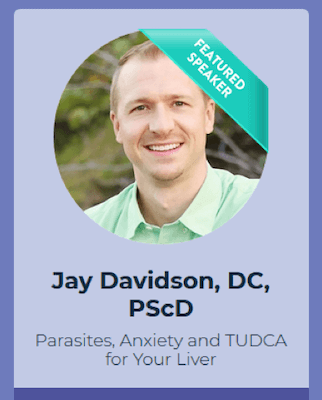
Dr. Jay Davidson is one my guest experts on The Anxiety Summit 5: Gut-Brain Axis and our topic is: Parasites, Anxiety and TUDCA for Your Liver.  What you’ll learn

  • Parasite facts and myths
  • New dosing options for mimosa pudica seed
  • TUDCA for liver, neuroinflammation and depression

and much more. It’s an excellent interview and was voted as one of the top 5 interviews of the summit in 2019.

jay davidson

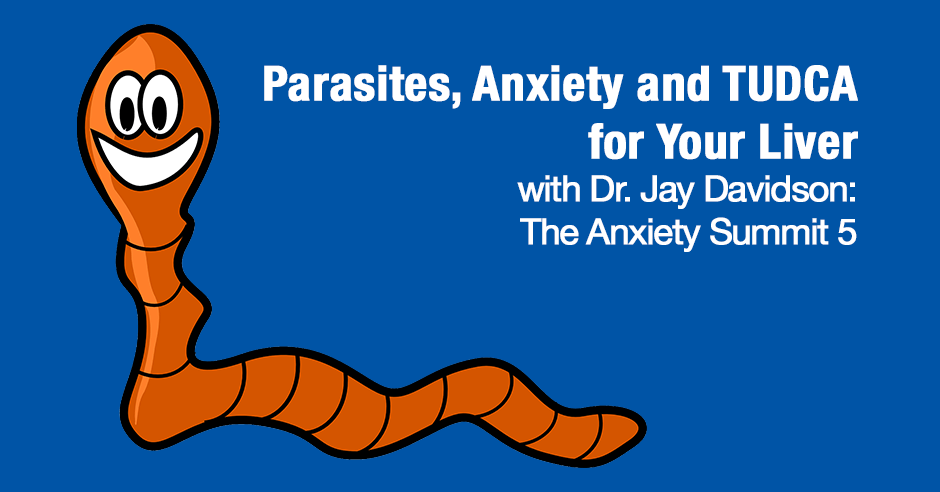
After hearing Dr. Jay’s explanation of what a parasite is, I couldn’t resist using the above image of a happy worm. This is what he shares:

the Greek meaning of parasite is one that sits at another’s table. So essentially think of a parasite as it’s taking things from you. It’s taking nutrients, it’s taking key things that your body needs and literally off of you, not to the point that it’s killing you because then you’re not a good host to give a good environment. So it’s basically just kind of sucking you dry.

Unfortunately you have this very “happy” and satisfied parasite sitting at your “table” and causing all kinds of symptoms:

Mood stuff for sure, which obviously this is The Anxiety Summit. So we want to highlight that one, absolutely. Sleep issues though. In the big sleep one that I see is restless sleep where you toss, you turn, you wake often. You can’t just be relaxed when you sleep. Parasites get active when you go to bed.

So the more active they are within your body and the more you’re trying to calm down, the more your body is getting stressed out. This is where teeth grinding happens when you sleep. This is, again, where the restless legs. You can also say the calf cramping, restless leg type symptoms would come in as well being associated. It’s classic, though, for parasites to affect the gut. So obviously diarrhea, is clearly a classic sign of acute parasitic type infection.

Other symptoms we discuss at length: bowel urgency, SIBO, vertical wrinkles above your mouth, nail-biting, food sensitivities, bed-wetting, insomnia (especially around full moon), grinding teeth, night sweats and anxiety.

And Dr. Jay shares how parasites contribute to neurotransmitter imbalances:

Parasites will eat the protein you eat and not allow your body to break down that protein into amino acids. That’s why amino acid therapy can be so beneficial symptomatically and change people’s lives, because they’re getting these amino acids that they’re not getting when they have parasites. But you always want to make sure to go to the underlying cause to remove the parasitic infection.

He also shares that parasites will “literally manipulate your thoughts and your personality” and I share the example of toxoplasma gondii and schizophrenia, and rats losing their fear of cats so the parasite can be transferred. It’s fascinating.

We cover why and how do do the parasite protocol before, during and after the full moon, his parasite story and the latest information on mimosa pudica seed:

So mimosa pudica seed is an amazing, just overall gut support. So even if your goal isn’t the parasite cleanse, mimosa pudica seed is awesome to help support the digestive tract. It can help break up biofilm. It’s really good against Candida and just helping to normalize microbial levels within the GI besides the fact that it can help with parasites.

Dr. Jay shares what he’s seeing clinically in terms of dosing mimosa pudica seed and when exactly to use it.

I share that I found an animal study where they were looking at the whole plant extract and found that it helped with modulating GABA receptors. And they said it had very similar effects to diazepam, which is a benzodiazepine that a lot of people with anxiety are prescribed. Fascinating!

The latter half of the interview focuses on drainage and supporting bile production with TUDCA, which also happens to support the mitochondria and help prevent Alzheimer’s disease.

I encourage you to also listen to Pyroluria, Oxidative Stress and Parasites with Todd Watts, DC, PScD. We discuss some of these same protocols in the context of pyroluria/social anxiety and oxidative stress.

You’re going to be hearing a lot more from me about these products and protocols as I learn more and trial them personally.

jay davidson trudy scott as5

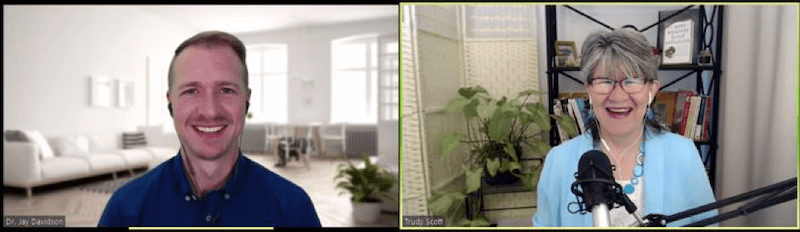
You may notice this image doesn’t look like the video on the summit. This was one of 4 interviews we had to repeat due to technical issues!

Be sure to listen to Dr. Jay’s wonderful interview on The Anxiety Summit 5: Gut-Brain Axis.

As I mentioned, his interview was voted as one of the top 5 interviews of the summit in 2019. The other 4 top voted interviews are:

  • Fix the Brain to Fix the Gut – Datis Kharrazian, DHSc, DC, MS, FACN, CNS (more here)
  • Why Bile is the Key to Anxiety & Hormone Havoc – Ann Louise Gittleman, PhD, CNS (more here)
  • Vagus Nerve Activation to Reduce Anxiety – Dr. Navaz Habib, DC (more here)

and my interview GABA & Tryptophan: The Gut-Anxiety Connections (more here)

If you’re already familiar with Dr. Jay’s parasite protocols and TUDCA please share how they have helped you. That way we can all learn.

I’d also love to hear from you once you’ve listened in to Dr. Jay’s interview and the others.

If you’d like to ask a question, please post in the comments below.

Learn more/purchase now


Filed Under: The Anxiety Summit 5 Tagged With: anxiety, anxiety summit, biofilm, candida, GABA, insomnia, Jay Davidson, microbial, mimosa pudica seed, mood, parasites, Todd Watts, TUDCA

Candida: anxiety and low serotonin, testing and parasites, sugar cravings, EMFs and your genes

July 8, 2018 By Trudy Scott 9 Comments

My interview on anxiety on The Candida Summit with host Evan Brand, addresses anxiety, the tie in to low serotonin and the sugar cravings aspect. I was so excited to find a connection between serotonin and candida and share this in our interview. 

with low serotonin you’ve got the mental anxiety – the worry, the ruminating thoughts, the obsessive thinking, the reprocessing, insomnia, lying awake in bed, trying to shut down the busy mind. And the two amino acids I use for this is tryptophan; that’s my first choice. And my second choice is 5-HTP. That being said, some people do better on one versus the other.

The reason I like tryptophan is 5-HTP can raise cortisol and make people who are wired/tired feel a little bit more wired/tired. So until I’ve seen cortisol results in saliva, I like to use tryptophan first.

But let me share some of this interesting research that I’ve found. And why I’m so excited about it is because as I said earlier, I will use the amino acids first before I’m specifically addressing the candida. But it seems like using tryptophan first, as well as helping with the low serotonin, it’s starting to have an impact on the candida, which I didn’t know about, until I did the research for this. So thank you for inviting me to speak. It just reinforces what I know about the amino acids – that they are pretty powerful.

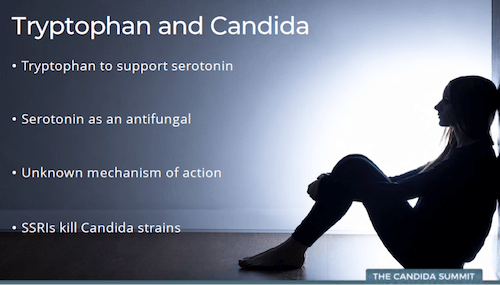
There was a study done in 2003, and the title is Antifungal Properties of Serotonin Against Candida species. And they looked at various different candida strains: albicans, glabrata, tropicalis, and a few others. And they exposed these candida strains to serotonin. The study concludes: “Serotonin showed antifungal activity towards all isolates of candida.”

What they didn’t know is what the mechanism of action was. They stated: “Identifying the mode of action would be of great help in developing and research new antifungal drugs.” I don’t agree with that. I’m just excited to see that there is this connection with serotonin, which reinforces how beneficial tryptophan is.

Of course, my solution is to provide serotonin support via diet, exercise and the use of the targeted individual amino acid tryptophan or 5-HTP.

You can read more about this serotonin-candida connection in my blog post: Symptoms, nutrient malabsorption, worsening psychiatric symptoms and the serotonin connection

In our interview I also discuss how I use the amino acids and how tryptophan/5-HTP as well as GABA, DPA, tyrosine and glutamine, can actually help with so much of the sugar craving we see in candida, PLUS how I use this approach to gauge when candida is really serious.

EMFs and the dangers of 5G – and candida

Dr. Schaffner talks about EMFs and the dangers of 5G and shares how they are protecting the Sophia Institute Clinic (which she shares with Dr. Dietrich Klinghardt):

What we have done at the clinic—and again, this is an evolving art—the two things that I think are going to make the most difference in what we can do right now is, first, of course we always say avoid exposure, try to distance yourself. Distance is your friend with any technology, when we’re looking at EMF.

But we actually shielded the clinic. We have a cell phone tower within a mile of the clinic. And so, we wanted to be mindful of that exposure. We ask everybody to turn off their cell phones when they come in to the clinic. And we don’t have Wi-Fi. So everything is ethernet corded. And then, we don’t have cell phone exposure while we’re practicing.

But we do two things that I think people should be aware of. And one is we use a type of graphite paint. It’s called YSHIELD. And that actually comes from Germany. And it has properties to, essentially, try to create a Faraday cage environment and block the incoming microwave radiation. And so, that has to be grounded, of course. And you want to always work with somebody who knows what they’re doing with this technology. Because if you don’t do it right, you can actually increase your exposures or create an unhealthy environment.

And then, Dr. Klinghardt works with the woman who creates these silver-lined curtains that actually help to block the microwave radiation coming in through the windows.

There’s a really great website—LessEMF has a lot of this technology. And then, YSHIELD, you can Google, I think it’s yshield.com. And then, the silver-lined curtains, I believe, is a fabric called, Swiss Shield. And so, you can either make them yourself or hire somebody to do that.

Learn more about candida, low serotonin, low melatonin, and your glymphatic system in the second half of Dr. Schaffner’s interview.

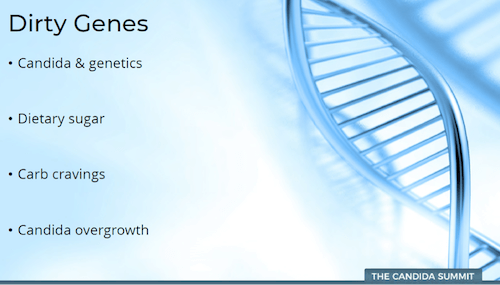
Candida, sugar cravings and COMT and MAOA genes

Evan Brand brings up the topic of sugar and carbs in the diet with Dr. Ben Lynch in the Candida, sugar cravings and COMT and MAOA genes interview: No one is discussing the influence of the whole epigenetic piece, and how people and their decision making with foods could be influenced by their genes?

Dr. Ben Lynch shares how he has a unique angle on this fascinating topic of our genes and sugar/carb cravings:

It’s one that always ties back to what came first—the chicken or the egg, right? So what came first, the genetic propensity towards carbohydrate binging or addictive personalities for high-caloric dense foods like ice cream and cakes, doughnuts, pastries, which then leads us to candida?

And then, they go on all these candida treatments. And they beat it. And they’re all happy again. But then their genetic propensity drives them yet again for the yeast overgrowth and the food binging.

He gives an example of how some people, when they’re down and out, may be drawn to sugar and carbs to self-medicate (this is something I see with my anxious clients all the time):

They’ll hit the chocolate. They’ll hit the doughnuts, the ice cream to make them feel good. And what these do is they spike your dopamine.

You’re not really aware of it, but you just do it. And you know you shouldn’t do it. But what happens here is, is some individuals, they have genes, which eliminate their dopamine out of their body pretty quickly. This gene is called COMT. And one of its jobs is to move dopamine out. You don’t want to always have neurotransmitters in your brain. That’s not good.

So some of these folks are born with a COMT gene that actually works faster, which is really good because they can calm down really quick in stressful environments. They can perform at a high level in stressful situations like surgeons, or EMT, or firefighters, or policemen, policewomen. They strive in these high-risk, highly-attentive situations.

But when they come home, everything’s a low normal. And they need that hit of dopamine. So they might come home and binge on sugars and carbs to drive their dopamine back up. And that’s a significant one.

Dr Lynch also shares about another gene, MAOA, which deals with our serotonin:

If you have a faster MAOA gene, which moves through your serotonin, then you are craving carbohydrates, and you’re craving pastas, and breads, and all the things that candida love, and beer. These things which increase your tryptophan levels, support your MAOA, and thus your serotonin. These are two major foods that our candida love. And these are two very, very common genes in the population which predispose us to having these issues

Candida testing, parasites and intractable yeast overgrowth 

Evan Brand asks this question about candida testing in the Candida, Mitochondrial Dysfunction, and Meditation interview with Dr. Dan Kalish: I’m guessing your statistics are similar to mine, 9 out of every 10 organic acids I find Candida overgrowth. Stool test, the GI map is missing a lot of Candida. Maybe you could help me understand why that’s happening.

Dr. Dan Kalish shares why candida testing can be challenging:

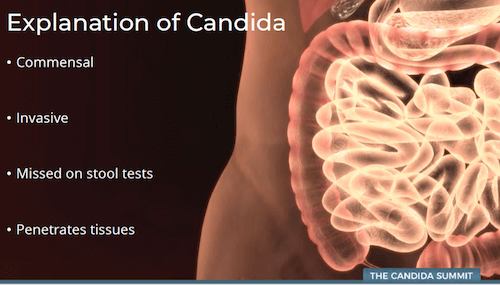
Because Candida can be commensal where it’s growing within the digestive tract itself, or it can be invasive where it penetrates into the tissue of the gut. And then it’s not going to be found in any of the stool tests. So stool tests can miss it easily. And in fact, the more severe it gets, the harder it is to find on a test.

That’s what happens with the yeast when it gets bad. It gets invasive. It goes up into the actual lining of the gut. So if it penetrates there, it causes leaky gut. But then it’s invasive, so it’s penetrating into the tissues. And you’re not going to see it in the stool. And that’s when it gets worse. In fact, it’s going to cause more symptoms. But then it’s almost impossible to find on the stool test.

He also shares this gem about intractable yeast overgrowth that just won’t go away:

You can have a Candida overgrowth, treat it and feel better, but have there be another underlying cause for the Candida. So there’s a lot of patients that will come to me and be like, “I had this Candida overgrowth. As long as I eat this radical and extreme and ridiculous diet, and take all these herbs, I’m fine. But every time I stop, it just comes back.”

Then, that leads the person to assume that it’s this horrific Candida overgrowth that’s never going to go away. And in those patients, there’s almost always Giardia, or Crypto [Cryptosporidium], or E. histo [Entamoeba histolytica], or some other bug that’s screwing up the ecology of the gut that’s allowing the Candida to keep coming back. So that’s just something to be on the lookout for.

If you feel like you have this intractable yeast overgrowth that just won’t go away, you should find a functional medicine doctor and do all the stool testing. Because you’re almost guaranteed there will be some other infection.

Click here to register for The Candida Summit which runs online from July 9-15, 2018!

Do share if you’ve successfully addressed candida overgrowth and how your symptoms improved and how bad your sugar cravings were.

Let us know if you’re EMF-aware and how addressing low serotonin has helped you.

If you have questions post them below in the blog comments.

Filed Under: Candida, Events Tagged With: 5G, anxiety, candida, COMT, EMFs, genes, MAOA, parasites, serotonin, sugar cravings, testing, tryptophan

The Anxiety Summit – The Parasite/Anxiety Connection

May 9, 2015 By Trudy Scott 46 Comments


Ann Louise Gittleman PhD, CNS, author of The Fat Flush Plan and Guess What Came to Dinner, was interviewed on the Anxiety Summit by host of the Anxiety Summit, Trudy Scott, Food Mood Expert and Nutritionist, author of The Antianxiety Food Solution.

The Parasite/Anxiety Connection

  • How common are parasites and how do we become infected (even if we live in a first world country)
  • How do parasites contribute to anxiety and depression and even schizophrenia
  • Other symptoms of a parasitic infection
  • How to avoid being exposed to parasites
  • How to test for parasites and how do we get rid of the parasite/s

Here are some gems from our interview:

Parasitic infections in the USA are far more common than you would expect – in fact the estimates are that 1 in every 3 people have a parasite or more than one

Parasites can contribute to or cause anxiety and fear by altering “hormonal and neurotransmitter communication and/or direct interference with the neurons and brain regions that mediate behavioural expression”

According to folklore, parasites are more active around the full moon, so testing and treating around this time may yield better results

Toxoplasma gondii is one parasite that has been researched a great deal and is one that has big implications for anxiety and other mood conditions, especially schizophrenia.

Ann Louise shared this interesting article from Scientific American called Toxoplasma’s Dark Side: The Link Between Parasite and Suicide

In 2003, E. Fuller Torrey of the Stanley Medical Research Institute in Bethesda, Maryland his colleagues noted a link between Toxoplasma and schizophrenia – specifically, that women with high levels of the parasite were more likely to give birth to schizophrenics-to-be

scientists have discovered a link between suicide and parasite infection

In 2006, researchers linked Toxoplasma infection to neuroticism in both men and women.

When we are infected with a parasite like Toxoplasma gondii, our immune system goes on the offensive, producing a group of molecules called cytokines that activate various immune cell types. The exact mechanism by which cytokines cause depression and other mental illnesses is poorly understood, but we do know they are able to pass the blood-brain barrier and alter neurotransmitters like serotonin and dopamine in the brain.

Here is the parasite testing and products we discussed:  

The Expanded GI panel (for testing)

Colon Cleaning kit with Verma-Plus and Para- Key (together with a probiotic)

Verma-Plus contains the Native American herb called Centaury (aerial portion) (Centaurium erythraea)

It seems to have antimicrobial properties too: Volatile organic compounds from Centaurium erythraea Rafn (Croatia) and the antimicrobial potential of its essential oil.

And gastroprotective effects: Gastroprotective effect of small centaury (Centaurium erythraea L) on aspirin-induced gastric damage in rats.

We also talked about using filtered water for washing fruits and vegetables and this is the water filter Ann Louise recommends: Countertop Ultra-Ceramic Water Filter. “It purifies your tap water for the removal of incoming contaminants including parasites, chlorine, chloramines, heavy metals, cloudiness and sediment. The ceramic filter also inhibits the growth of bacteria”

Ann Louise has written many wonderful books.  Here are three of them that were mentioned in this interview:

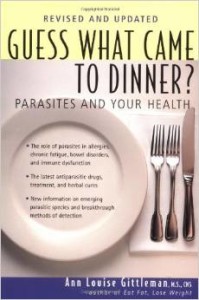
Guess What Came to Dinner? Parasites and Your Health (this is the book about parasites)

Ann Louise Gittleman_guess what came to dinner


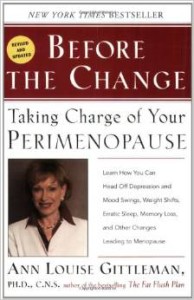
Before the Change: Taking Charge of Your Perimenopause (this is the one that helped me so much when I was in my late thirties and having perimenopausal symptoms – with the zinc, vitamin B6 and evening primrose oil )

Ann Louise Gittleman_before the change


The Fat Flush Plan (this is one of many her classic weight loss books)

AnnLouiseGittleman_fat flush plan


Here is her gift: a 50-Page Report on Parasites – Still the Greatest Masqueraders of All Time

If you are not already registered for the Anxiety Summit you can get live access to the speakers of the day here: www.theAnxietySummit.com

Missed this interview or can’t listen live? Or want this and the other great interviews for your learning library? Purchase the MP3s or MP3s + transcripts and listen when it suits you.

You can find your purchasing options here: Anxiety Summit Season 1, Anxiety Summit Season 2, and Anxiety Summit Season 3.

Filed Under: Antianxiety, Parasites, Testing, The Anxiety Summit 3 Tagged With: ann louise gittleman, parasites, perimenopause, schizophrenia, the anxiety summit, toxoplasma gondii, Trudy Scott

Primary Sidebar

NEW! GABA QuickStart Homestudy (with special intro pricing)

gaba quickstart homestudy

Free Report

9 Great Questions Women Ask about Food, Mood and their Health

You'll also receive a complimentary subscription to my ezine "Food, Mood and Gal Stuff"


Connect with me

Popular Posts

  • Amino Acids Mood Questionnaire from The Antianxiety Food Solution
  • The Antianxiety Food Solution Amino Acid and Pyroluria Supplements
  • Pyroluria Questionnaire from The Antianxiety Food Solution
  • Collagen and gelatin lower serotonin: does this increase your anxiety and depression?
  • Tryptophan for the worry-in-your-head and ruminating type of anxiety
  • GABA for the physical-tension and stiff-and-tense-muscles type of anxiety
  • The Antianxiety Food Solution by Trudy Scott
  • Seriphos Original Formula is back: the best product for anxiety and insomnia caused by high cortisol
  • Am I an anxious introvert because of low zinc and vitamin B6? My response to Huffington Post blog
  • Vagus nerve rehab with GABA, breathing, humming, gargling and key nutrients

Recent Posts

  • What do I use instead of Seriphos to help lower high cortisol that is affecting my sleep and making me anxious at night?
  • BeSerene™ GABA/theanine cream eases severe muscle tension in her neck/shoulders, prevents her bad headaches and quells her anxiety
  • How the correct approach, dose and sublingual use of GABA can be calming and not cause a flushed and itchy face and neck
  • The amino acid glutamine improves low mood by addressing gut health, and it has calming effects too
  • Flight anxiety with heightened breath, physical tension and also fearing the worst (the role of low GABA and low serotonin)

Categories

  • 5-HTP
  • AB575
  • Addiction
  • ADHD
  • Adrenals
  • Alcohol
  • Allergies
  • Alzheimer's disease
  • Amino Acids
  • Anger
  • Antianxiety
  • Antianxiety Food Solution
  • Antidepressants
  • Anxiety
  • Anxiety and panic
  • Autism
  • Autoimmunity
  • benzodiazapines
  • Bipolar disorder
  • Books
  • Caffeine
  • Cancer
  • Candida
  • Children/Teens
  • Collagen
  • Cooking equipment
  • Coronavirus/COVID-19
  • Cravings
  • Depression
  • Detoxification
  • Diabetes
  • Diet
  • DPA/DLPA
  • Drugs
  • EFT/Tapping
  • EMF
  • EMFs
  • Emotional Eating
  • Endorphins
  • Environment
  • Essential oils
  • Events
  • Exercise
  • Fear
  • Fear of public speaking
  • Fertility and Pregnancy
  • Fish
  • Food
  • Food and mood
  • Functional neurology
  • GABA
  • Gene polymorphisms
  • General Health
  • Giving
  • Giving back
  • Glutamine
  • Gluten
  • GMOs
  • Gratitude
  • Gut health
  • Heart health/hypertension
  • Histamine
  • Hormone
  • Hyperparathyroidism
  • Hypoglycemia
  • Immune system
  • Inflammation
  • Insomnia
  • Inspiration
  • Introversion
  • Joy and happiness
  • Ketogenic diet
  • Lithium orotate
  • Looking awesome
  • Lyme disease and co-infections
  • MCAS/histamine
  • Medication
  • Men's health
  • Mental health
  • Mercury
  • Migraine
  • Mold
  • Movie
  • MTHFR
  • Multiple sclerosis
  • Music
  • NANP
  • Nature
  • Nutritional Psychiatry
  • OCD
  • Osteoporosis
  • Oxalates
  • Oxytocin
  • Pain
  • Paleo
  • Parasites
  • Parkinson’s disease
  • PCOS
  • People
  • PMS
  • Postpartum
  • PTSD/Trauma
  • Pyroluria
  • Questionnaires
  • Real whole food
  • Recipes
  • Research
  • Schizophrenia
  • serotonin
  • SIBO
  • Sleep
  • Special diets
  • Sports nutrition
  • Stress
  • Sugar addiction
  • Sugar and mood
  • Supplements
  • Teens
  • Testimonials
  • Testing
  • The Anxiety Summit
  • The Anxiety Summit 2
  • The Anxiety Summit 3
  • The Anxiety Summit 4
  • The Anxiety Summit 5
  • The Anxiety Summit 6
  • Thyroid
  • Thyroid health
  • Toxins
  • Tryptophan
  • Tyrosine
  • Uncategorized
  • Vegan/vegetarian
  • Women's health
  • Yoga

Archives

  • October 2025
  • September 2025
  • August 2025
  • July 2025
  • June 2025
  • May 2025
  • April 2025
  • March 2025
  • February 2025
  • January 2025
  • November 2024
  • October 2024
  • September 2024
  • August 2024
  • July 2024
  • June 2024
  • May 2024
  • April 2024
  • March 2024
  • February 2024
  • January 2024
  • December 2023
  • November 2023
  • October 2023
  • September 2023
  • August 2023
  • July 2023
  • June 2023
  • May 2023
  • April 2023
  • March 2023
  • February 2023
  • January 2023
  • December 2022
  • November 2022
  • October 2022
  • September 2022
  • August 2022
  • July 2022
  • June 2022
  • May 2022
  • April 2022
  • March 2022
  • February 2022
  • January 2022
  • December 2021
  • November 2021
  • October 2021
  • September 2021
  • August 2021
  • July 2021
  • June 2021
  • May 2021
  • April 2021
  • March 2021
  • February 2021
  • January 2021
  • December 2020
  • November 2020
  • October 2020
  • September 2020
  • August 2020
  • July 2020
  • June 2020
  • May 2020
  • April 2020
  • March 2020
  • February 2020
  • January 2020
  • December 2019
  • November 2019
  • October 2019
  • September 2019
  • August 2019
  • July 2019
  • June 2019
  • May 2019
  • April 2019
  • March 2019
  • February 2019
  • January 2019
  • December 2018
  • November 2018
  • October 2018
  • September 2018
  • August 2018
  • July 2018
  • June 2018
  • May 2018
  • April 2018
  • March 2018
  • February 2018
  • January 2018
  • December 2017
  • November 2017
  • October 2017
  • September 2017
  • August 2017
  • July 2017
  • June 2017
  • May 2017
  • April 2017
  • March 2017
  • February 2017
  • January 2017
  • December 2016
  • November 2016
  • October 2016
  • September 2016
  • August 2016
  • July 2016
  • June 2016
  • May 2016
  • April 2016
  • March 2016
  • February 2016
  • January 2016
  • December 2015
  • November 2015
  • October 2015
  • September 2015
  • August 2015
  • July 2015
  • June 2015
  • May 2015
  • April 2015
  • March 2015
  • February 2015
  • January 2015
  • December 2014
  • November 2014
  • October 2014
  • September 2014
  • August 2014
  • July 2014
  • June 2014
  • May 2014
  • April 2014
  • March 2014
  • February 2014
  • January 2014
  • December 2013
  • November 2013
  • October 2013
  • September 2013
  • August 2013
  • July 2013
  • June 2013
  • May 2013
  • April 2013
  • March 2013
  • February 2013
  • January 2013
  • December 2012
  • November 2012
  • October 2012
  • August 2012
  • July 2012
  • June 2012
  • May 2012
  • April 2012
  • March 2012
  • February 2012
  • January 2012
  • December 2011
  • November 2011
  • October 2011
  • September 2011
  • August 2011
  • July 2011
  • June 2011
  • May 2011
  • April 2011
  • March 2011
  • February 2011
  • January 2011
  • December 2010
  • October 2010
  • September 2010
  • July 2010
  • May 2010
  • April 2010
  • March 2010
  • February 2010
  • January 2010
  • November 2009

Share the knowledge!

The above statements have not been evaluated by the Food and Drug Administration. Products listed in this website are not intended to diagnose, treat, cure or prevent any disease.

The information provided on this site is for informational and educational purposes only and is not intended as a substitute for advice from your physician or other health care professional. You should consult with a healthcare professional before starting or modifying any diet, exercise, or supplementation program, before taking or stopping any medication, or if you have or suspect you may have a health problem.


Copyright © 2026 Trudy Scott. All Rights Reserved. | Privacy | Terms and Conditions | Refund Policy | Medical Disclaimer

Free Report

9 Great Questions Women Ask about Food, Mood and their Health

You’ll also receive a complimentary subscription to my ezine “Food, Mood and Gal Stuff”