• Skip to primary navigation
  • Skip to main content
  • Skip to primary sidebar

everywomanover29 blog

Food, Mood and Women's Health – Be your healthiest, look and feel great!

  • Blog
  • About
  • Services
  • Store
  • Resources
  • Testimonials
  • The Book
  • Contact
  • Search this site

mood swings

The marketing of Risperdal and how atypical antipsychotics became a multi-billion-dollar industry – a shockingly eye-opening article!

August 22, 2025 By Trudy Scott 2 Comments

marketing of risperdal

Even though I’m very aware this happens, this shockingly eye-opening article by Lydia Green is  the best explanation I’ve heard….

I didn’t set out to shape the field of psychiatry. I was just a copywriter working in pharmaceutical advertising. But over time, I found myself at the center of a campaign that would help transform how mental illness—and its treatment—are understood in the U.S. This is the story of how we marketed one drug, Risperdal, and how that effort helped turn atypical antipsychotics into a multi-billion-dollar industry.

If you’ve ever wondered how this powerful class of drugs ended up being prescribed for everything from adolescent mood swings to agitated nursing home patients, you’re not alone. The rise of atypical antipsychotics was a business and marketing phenomenon—driven in part by a wave of pharmaceutical mergers in the 1990s. First introduced for schizophrenia, atypical antipsychotics were promoted as more effective and safer than older drugs like Haldol or Thorazine.

While journalists and regulators have addressed this issue, I want to share my memories of marketing Risperdal—the first widely prescribed atypical antipsychotic. This is the story of how we promoted Risperdal not just as a medication, but as a revolution in psychiatric care. It’s also the story of how we redefined schizophrenia, rewrote the safety narrative of antipsychotics, and helped drive one of the most successful (and concerning) pharmaceutical launches in history.

It was also my first realization of the immense power marketers have to shape their version of the truth—and how I eventually came to question the very system I helped build.

This is an excerpt from the excellent article recently published on the Mad in America site.  We all need to be aware what happened with this medication and is still happening. It’s so wrong and is just heart-breaking to think how individuals and their families were manipulated and impacted. Unfortunately it’s very likely also happening with many other block-buster medications too – like Ozempic (for weight-loss),  Evenity (for osteoporosis) and more.

In this blog, I share stories from social workers and psychologists who were working in the field at time, the overprescribing of atypical antipsychotics to children and teens in the mid-1990s and now, and the powerful effects of tryptophan, GABA, other nutrients and diet for anxiety, agitation, rage and sleep issues in autism, dementia and ADHD.

You can read the full article here – Confessions of an Ad Writer: How I Helped Turn Atypical Antipsychotics into a Billion-Dollar Industry.

Be sure to read some of the many comments from individuals and families who bore the brunt of this. It’s heartbreaking.

Stories from individuals who were working in the trenches at the time

I shared this article on Facebook and here is some of the feedback I received from the community. Laura Ann’s response:

Thank you for sharing this article. I can remember when I was fresh out of my grad social work program and was working in child psychiatry at the University of Maryland, our docs were pushing this drug for young children with ADHD and conduct disorder. Unbelievable! These companies and their executives should be criminally prosecuted.

We tend to think of these scandals as something that happened but aren’t currently happening. I think we will be reading similar articles about GLP-1’s.

I appreciate her for sharing what she was seeing as a social worker at the time. This is so sad and so wrong. I agree that these companies should be prosecuted. Instead they pay massive fines which are part of their marketing and just-doing-business budget, and continue as before.

Unfortunately Laura Ann is spot on, as much of this continues with Risperdal and other psychiatric meds and it’s already happening with GLP-1s. I share more on this below.

Elizabeth Mary’s response:

Just reading your post gave me chills and made my stomach turn. I worked with folks with developmental disabilities during this time period, I had for years! I watched as the antipsychotics and various psych meds infiltrated the group homes and joined a team of co-workers to fight it. We lost. It was disgusting. And I had no idea all this was happening in the background

My heart breaks for these individuals and their families. Bravo to her for trying to fight it and I appreciate her for sharing what she saw happening.

And this feedback from someone else in the community:

This drug was pushed on individuals with ASD (autism spectrum disorder)! Probably still is! Very sad!

I am a retired psychologist who worked primarily with individuals with developmental disabilities. I saw it all the time. The “medical model” was used a lot, meaning many saw psychiatrists and/or PCPs (primary care providers) who prescribed these meds. It has a long history.

Overprescribing of atypical antipsychotics and other psychiatric medications to children and teens – then and now

As mentioned above, I’ve been aware for some time that there is overprescribing of psychiatric medications to children and teens. In one of my interviews on an Anxiety Summit, “Psychiatric Medications in Children and Teens” with Dr. Nicole Beurkens, we discuss these results from this 2019 paper, Current Pattern of Psychiatric Comorbidity and Psychotropic Drug Prescription in Child and Adolescent Patients:

  • Our study indicates that the rate of presentation to child and adolescent psychiatry outpatient clinics is increasing, and rates of diagnosis and initiation of psychiatry drugs are high among the presented children.
  • The prevalence of ADHD shows an increase in males and females in our country, and psychiatric polypharmacy (multiple medications) has reached significant rates.

Keep in mind that Lydia Green shared her marketing work began in the mid-1990s, about 25 years before the above paper was published.

Unfortunately not much has changed. This 2025 paper from Swedish authors reports that the “number of prescriptions to children aged 5-17 years has increased” and that “most prescribed drugs were risperidone [Risperdal] and aripiprazole.”

This 2025 paper report that in a group of Australian children with intellectual disability, autism spectrum disorder and cerebral palsy, “risperidone was the most prescribed antipsychotic medication” and it was often prescribed off-label.

Similar increases in antipsychotic prescriptions are also reported in children and teens in Israel in 2025. The list of papers goes on and on and there are similar papers for dementia and other conditions.

There are versions of this story about a lot of diseases: osteoporosis is another one

Melissa’s response to the Risperdal article was this: “Makes you wonder about therapies they are pushing today.” It’s creating awareness which is what we need and she is asking a great question. Yes – there are many versions of this story about other medications.

Here is a perfect quote from this 2009 article: How A Bone Disease Grew To Fit The Prescription

There’s a powerful economic incentive for pharmaceutical firms to expand the boundaries of the use of different therapies. So whether you consider treatments for osteoporosis or treatments for depression or treatments for high cholesterol — in all of these settings — pharmaceutical firms stand to benefit if the therapies for these diseases are broadly used, even if they’re used among people who have very mild forms of these diseases.

In this same article, Caleb Alexander, a pharmaco-epidemiologist at the University of Chicago, is writing about the marketing of osteoporosis medications and says “the dynamic is well understood.” But all this applies equally to the marketing of all medications i.e. “There are versions of this story about a lot of diseases.”

Dubious marketing by the makers of Ozempic and Wegovy (GLP-1s for weight loss)

This is happening right now for GLP-1s. There were already reports in 2023 about dubious marketing by Novo Nordisk, the makers of Ozempic and Wegovy:

In Great Britain, the company has paid within three years a total of around 21.7 million pounds (24.7 million euros) to experts and organisations including important opinion leaders who have since touted semaglutide as a “game changer” in obesity in a campaign described as an “orchestrated PR campaign.

Sadly I expect their marketing campaigns to run unchecked and get more and more sophisticated, with unsuspecting consumers being taken advantage of and harmed.

Families are not aware of the powerful effects of tryptophan, GABA, other nutrients and diet

My goal is to try and change this lack of awareness so families and individuals can explore other options when they are faced with decisions about some of these medications.

Instead of using antipsychotics for a family member with dementia or Alzheimer’s who is experiencing agitation, aggression and anxiety, consider tryptophan and melatonin, and GABA:

  • Sundowning in Alzheimer’s and dementia: melatonin/tryptophan for the agitation, restlessness, anxiety, disturbed sleep and aggression
  • GABA lessens anxiety, agitation and defiance in 98 year old mother who has been “sundowning” for a couple of years

Instead of using antipsychotics, explore the use of 5-HTP/tryptophan and/or GABA for kids with ADHD:

  • ADHD: 5-HTP melts have been a miracle for one of my adopted kids
  • GABA for children: ADHD, focus issues, irritability, anxiety and tantrums

Instead of antipsychotics and other psychotropic medications in autism, explore tryptophan and GABA:

  • Pathological Demand Avoidance (PDA) in children with autism – how much is behavioral and how much is due to low serotonin?
  • Half a crushed GABA Calm for my autistic child: sleep, anxiety and sensorimotor skills (writing, horse riding and swimming) improve

This is by no means a conclusive approach to addressing these symptoms in dementia/Alzheimer’s, ADHD and autism. We also need to consider and address diet, other nutritional imbalances, infections, gut health, toxins and much more.

Additional resources when you are new to using GABA and tryptophan as supplements

As always, I use the symptoms questionnaire to figure out if low GABA or low serotonin or other neurotransmitter imbalances may be an issue.

If you suspect low levels of any of the neurotransmitters and do not yet have my book, The Antianxiety Food Solution – How the Foods You Eat Can Help You Calm Your Anxious Mind, Improve Your Mood, and End Cravings, I highly recommend getting it and reading it before jumping in and using amino acids on your own so you are knowledgeable. And be sure to share it with the practitioner/health team you or your loved one is working with.

There is an entire chapter on the amino acids and they are discussed throughout the book in the sections on gut health, gluten, blood sugar control (this is covered in an entire chapter too), sugar cravings, anxiety and mood issues.

The book doesn’t include product names (per the publisher’s request) so this blog, The Antianxiety Food Solution Amino Acid and Pyroluria Supplements, lists the amino acids that I use with my individual clients and those in my group programs.

If, after reading this blog and my book, you don’t feel comfortable figuring things out on your own (i.e. doing the symptoms questionnaire and respective amino acids trials), a good place to get help is the GABA QuickStart Program (if you have low GABA symptoms). This is a paid online/virtual group program where you get my guidance and community support. You can sign up to be notified when the next live launch is happening.

If you need serotonin support, the Serotonin QuickStart Program is a good place to get help. This is also a paid online/virtual group program where you get my guidance on using tryptophan and 5-HTP safely, and community support during 5 LIVE Q&A calls. You can sign up to be notified when the next live launch of this program is happening.

If you are a practitioner, join us in The Balancing Neurotransmitters: the Fundamentals program. This is also a paid online/virtual program with an opportunity to interact with me and other practitioners who are also using the amino acids.

Wrapping up and your feedback

I appreciate Lydia for sharing this and enlightening us, and Mad in Arica for inviting her to do the article. And I appreciate community members for sharing and allowing me to share on this blog

Have you or a family member been the victim of the overprescribing of atypical antipsychotics ?

Have you seen this overprescribing of atypical antipsychotics happening in the work you do as a social worker, psychologist, doctor or other health professional?

Are you surprised to learn about similar strategies being used for marketing osteoporosis and GLP-1 medications?

Feel free to share and ask your questions below.
Filed Under: ADHD, Alzheimer's disease, Autism, GABA, Medication, serotonin Tagged With: ADHD, agitation, anxiety, atypical antipsychotics, autism, children, dementia, diet, Evenity, GABA, Lydia Green, marketing, mood swings, multi-billion-dollar industry, osteoporosis, overprescribing, Ozempic, pharmaceutical, psychiatry, rage, risperdal, sleep, teens, tryptophan, weight-loss

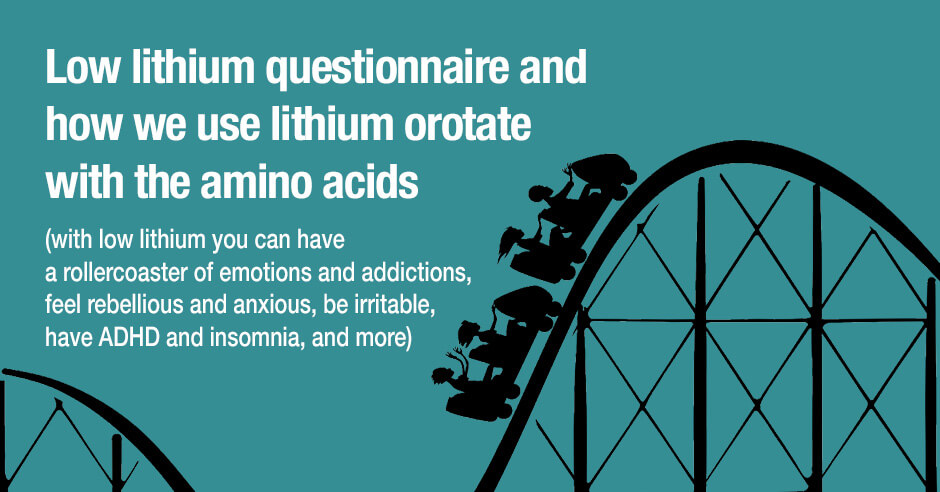
Low lithium questionnaire and how we use lithium orotate with the amino acids

August 19, 2022 By Trudy Scott 44 Comments

low lithium questionnaire

This is the low lithium questionnaire that I use with new clients in order for us to figure out if a trial of low dose lithium, in the form of lithium orotate, may be helpful. The hallmark of low lithium is a rollercoaster of emotions. Keep in mind that this is just one of 12 questionnaires that I have my clients complete. Many of the following symptoms can have multiple causes, the labs may relate to other deficiencies and the conditions have other root causes. This questionnaire simply provides additional evidence that lithium orotate may help.

We typically do a lithium orotate trial, starting with 5 mg once a day, and going up to 10 mg twice a day. We do this after we have started trialing the respective amino acids for low serotonin, low GABA, low endorphins, low catecholamines and low blood sugar. A big clue that lithium orotate may be helpful (when many of the symptoms below are checked off) is when the amino acids for low serotonin (tryptophan or 5-HTP), low GABA (GABA or theanine), low endorphins (DPA or DLPA), low catecholamines (tyrosine or DLPA) and low blood sugar (glutamine) are not as effective as expected (based on the amino acids mood/neurotransmitter questionnaire).

Low lithium questionnaire

Symptoms
Mood swings (a rollercoaster of emotions)
Addictions and/or cravings
Depressed
Low self-esteem
Boredom
Easily distracted
Rebellious, disruptive behavior and/or aggressiveness
Irritability
Restless/internal anxiety (similar to low serotonin worry/ruminating anxiety)
Restless/external anxiety (similar to low GABA physical anxiety)
Anxiety ups and downs (fluctuations)
Melancholic pessimism
Suicidal thoughts
Disorganized with planning difficulties
Focus issues/ADHD
Insomnia
Procrastination and/or no initiative
Jack of all trades, master of none
Impulsive and/or lacking tact
Poor insight
Risky behavior
Cognitive issues
Migraines or cluster headaches

Effectiveness of amino acids
The amino acids for low serotonin, low GABA, low endorphins, low catecholamines and low blood sugar are not as effective as expected (based on the amino acids mood/neurotransmitter questionnaire)

Labs
Low white blood cell count
Low red blood cell count
Anemia
Low platelet count

Conditions
Anorexia nervosa
Heart disease (heart arrhythmias, history of heart attack)
Raised blood sugar or diabetes
Kleptomania
Alcoholism
Alzheimer’s disease
Fibromyalgia
Bipolar II
Gout
Hyperthyroidism
Nearsightedness or glaucoma
Herpes infections (current or prone to them)

If you are new to low dose lithium / lithium orotate

As I share in this blog, Upping my tryptophan and lithium orotate have been absolutely profound for me: I’ve been depression free and anxiety free for over a year, I’ve used lithium orotate with many clients and use it when folks have mood swings and anxiety ups and downs. It’s harder for the amino acids to work when there is a moving goal post and lithium orotate evens things out.

You can read Katrin’s wonderful results: “Upping my tryptophan dose and also including and upping the dose of lithium orotate has been absolutely profound for me. I’m off my SSRI/antidepressant (which I was off and on for a number of years). I’ve been depression/anxiety free for over a year. So fantastic.”

The above blog also includes additional information on the differences between low dose lithium / lithium orotate and prescription lithium carbonate. The latter is used at much higher doses and does have side-effects.

One of the many ways lithium works is via the impact on neurotransmitter production. This paper, Potential Mechanisms of Action of Lithium in Bipolar Disorder, states this: “At a neuronal level, lithium reduces excitatory (dopamine and glutamate) but increases inhibitory (GABA) neurotransmission.” It also increases protective proteins such as BDNF (brain-derived neurotrophic factor), helps reduce oxidative stress and is neuroprotective. This paper is referring to lithium carbonate and not lithium orotate but until we have more research on lithium orotate, I feel comfortable extrapolating, given what I’ve seen clinically with lithium orotate.

I’ve also blogged about low dose or microdose lithium here: Microdose lithium formulation is capable of halting signs of advanced Alzheimer’s and improving cognition. In a study published in 2020, “a team of researchers has shown that, when given in a formulation that facilitates passage to the brain, lithium in doses up to 400 times lower than what is currently being prescribed for mood disorders is capable of both halting signs of advanced Alzheimer’s pathology and of recovering lost cognitive abilities.”  In this study, they used lithium citrate in similar doses as the lithium orotate i.e  3.2 mg to 6.4 mg NP03 based on 70kg of body weight (which is around 154.3 lbs).

Resources if you are new to using the amino acids as supplements (and where to get lithium orotate)

If you are new to using any of the amino acids as supplements, here is the Amino Acids Mood Questionnaire from The Antianxiety Food Solution (you can see all the symptoms of neurotransmitter imbalances).

If you suspect low levels of any of the neurotransmitters and do not yet have my book, The Antianxiety Food Solution – How the Foods You Eat Can Help You Calm Your Anxious Mind, Improve Your Mood, and End Cravings, I highly recommend getting it and reading it before jumping in and using amino acids on your own so you are knowledgeable. And be sure to share it with the practitioner/health team you or your loved one is working with.

There is an entire chapter on the amino acids and they are discussed throughout the book in the sections on gut health, gluten, blood sugar control, sugar cravings, self-medicating with alcohol and more.

The book doesn’t include product names (per the publisher’s request) so this blog, The Antianxiety Food Solution Amino Acid and Pyroluria Supplements, lists the amino acids that I use with my individual clients and those in my group programs.

You can find the amino acid products I use and a number of different lithium orotate products in my online Fullscript store.

If, after reading this blog and my book, you don’t feel comfortable figuring things out on your own (i.e. doing the symptoms questionnaire and respective amino acids trials), a good place to get help is the GABA QuickStart Program (if you have low GABA symptoms). This is a paid online/virtual group program where you get my guidance and community support. There are many moms in the program who are having much success with their kids.

If you are a practitioner, join us in The Balancing Neurotransmitters: the Fundamentals program. This is also a paid online/virtual program with an opportunity to interact with me and other practitioners who are also using the amino acids.

Do you resonate with any of the above and have you used lithium orotate with success?

Was the rollercoaster of emotions and fluctuating anxiety a hallmark for you before using lithium orotate?

If you’re a practitioner, do you use lithium orotate with your clients or patients?

If you have questions please share them here too.

Filed Under: Anxiety, Depression, GABA, Lithium orotate Tagged With: addiction, ADHD, aggressiveness, Alzheimer’s disease, amino acids, anxious, boredom, catecholamines, cognitive, endorphins, GABA, insomnia, irritable, lithium, lithium orotate, low blood sugar, low dose lithium, Low lithium questionnaire, low self-esteem, mood swings, rebellious, rollercoaster of emotions, serotonin, tryptophan

Upping my tryptophan and lithium orotate have been absolutely profound for me: I’ve been depression free and anxiety free for over a year

July 8, 2022 By Trudy Scott 66 Comments

tryptophan and lithium orotate

Upping my tryptophan dose and also including and upping the dose of lithium orotate has been absolutely profound for me.

I’m off my SSRI/antidepressant (which I was off and on for a number of years). I’ve been depression/anxiety free for over a year. So fantastic.

Everyone is bioindividual, of course, so please avoid using my dosing regime, but it wasn’t until I increased the lithium orotate to 20mg a day – 10mg in the AM and PM.

Life changing

Katrin shared this wonderful feedback on Facebook and I’m sharing this today in order to illustrate how much tryptophan dosing can vary, when you may need to up your dosage of tryptophan, how the addition of lithium orotate may be the missing link, and increasing it may help further and to offer hope (as always). And I share my insights and some additional information on lithium orotate.

Katrin was inspired by a post of mine where I discussed increasing tryptophan over and above 500mg twice a day and only taking it when needed). She shared this:

I was taking 3g tryptophan split up between the hours of 2pm and bedtime. 3 grams was what I increased to after floundering on 500mg afternoon and evening.  I don’t take it every day (as per your great suggestion of not taking an amino acid if you feel you don’t need to.) But if I’m having a stressful week etc and my serotonin tanks, I’ll start to take it again.

After the initial increase of lithium orotate, in conjunction with the tryptophan increase, that’s when I started to feel the real difference – the icing on the cake, so to speak (sugar-free, gluten free icing and cake, of course). Lithium orotate was the game changer.

She started with 5mg lithium orotate twice a day and then increased it to 10mg twice a day and has recently reduced this (more on this below).

Is there a role for lithium orotate in psychiatry?

If you’re new to lithium orotate, this editorial, Is there a role for lithium orotate in psychiatry?, is a useful introduction. Here are a few highlights:

  • The growing evidence from epidemiological studies mirror the cellular studies that suggest lithium is perhaps a crucial trace element necessary for optimum brain functioning. All these studies imply that adequate lithium intake may be neuroprotective. Conversely, inadequate lithium intake (especially in vulnerable individuals) may predispose and/or perpetuate a range of psychiatric and neurodegenerative conditions.
  • If further studies confirm this hypothesis, then a safe and effective lithium mineral supplement will be needed to correct this specific mineral deficiency. Advocates of lithium orotate argue that such a supplement already exists and that it is both safe and effective.
  • Lithium orotate has been used worldwide, mainly by non-medical health practitioners for over 30  years

Lithium orotate is used at low doses and the dosing is much lower and in a different form to prescription lithium (carbonate) that is prescribed for bipolar disorder. The above editorial explains some of the differences and standard daily dose:

To further illustrate the differences in the daily doses of elemental lithium between the orotate and carbonate forms, a single 120 mg tablet of lithium orotate contains about 5mg of elemental lithium. This is only 10% of the dose of elemental lithium that you would find in a single 250 mg tablet of lithium carbonate, which would have about 50 mg of elemental lithium.

There are no established (medical) guidelines for the daily dose of lithium orotate. However, the standard dose prescribed by alternative health practitioners is a single tablet of 120 mg of lithium orotate a day (which is equivalent to 5 mg of elemental lithium).

The authors conclude with this: “There have only been a few small trials done in humans, and they showed that lithium orotate was effective, safe and generally well tolerated.” Until we have more human trials we have to rely on what we see clinically.  And based on what I’ve seen and the feedback from colleagues, there is most definitely a role for lithium orotate in psychiatry.

Lithium orotate works when there are mood swings and anxiety ups and downs

I’ve used lithium orotate with many clients and use it when folks have mood swings and anxiety ups and downs. It’s harder for the amino acids to work when there is a moving goal post and lithium orotate evens things out. Katrin said she resonates with this and this may be why the lithium orotate works so well for her.

There are not many studies on lithium orotate, although it’s exciting that there has been an increase in the last few years. This small study done in 1994, Effects of nutritional lithium supplementation on mood, mentions the “mood-improving and stabilizing effect.”  They used a yeast based lithium supplement of 400 μg (which is just  0.4 mg) for former drug users of mostly heroin and crystal methamphetamine.

The above editorial states the following reported benefits of taking lithium orotate:

feeling calmer; experiencing fewer or less intense depressive, hypomanic or mixed affective symptoms; being less impulsive; experiencing less frequent and less intense suicidal thoughts or aggressive impulses; reduced consumption of alcohol and not getting as easily upset by stressors.

I also use a low lithium questionnaire with clients. A number of symptoms/signs other than mood swings  provide a clue that you may have low lithium levels and lithium orotate may need to be trialed.

My insights on Katrin’s approach to increasing her tryptophan and adding/increasing lithium orotate

Katrin increased the tryptophan to 3g and added lithium orotate at the same time. I recommend changing one thing at a time i.e. do a trial or tryptophan, then increase the tryptophan for better results (increasing slowly from 500mg 2 x day to 1000mg 2 x day and then 1500mg 2 x day, and tracking symptom improvements); then add lithium orotate; and then increase lithium orotate for even better results. But if it’s done the way Katrin did it, you simply unwind things so you can figure out what is really working for you.

Keep in mind, the starting dose for tryptophan is 500mg twice a day and lithium orotate is 5mg once a day. I would never recommend that anyone starts on 3g tryptophan or 20mg lithium orotate.

Experimenting with different doses and combinations

Katrin stayed at this dosing and combination of tryptophan and lithium orotate for close to a year. When something is working well, you understandably don’t want to change things. But more recently she has been experimenting with different doses and combinations. She is what is is doing now:

  • “currently trying lithium orotate by itself, during the day while only taking 1g tryptophan at night before bed.”
  • “now I only take a lithium orotate dose of 5mg twice a day and I do that every second day. It’s working for me.”

This is the perfect way to adjust things and if she finds the new combination doesn’t work over the coming weeks and months she can adjust again.

Also, keep in mind that your needs change as your hormones fluctuate, when you’re under more stress, with seasonal changes (winter time/winter blues and due to seasonal allergies), if you’re exposed to a toxin such as lead (it can impact serotonin levels) or parasites etc.

It goes without saying that diet must be addressed too – gluten-free, sugar-free, caffeine-free, real whole food, quality animal protein, organic vegetables and fruit, fermented foods and healthy fats.

Resources if you are new to using the amino acids as supplements

If you are new to using any of the amino acids as supplements, here is the Amino Acids Mood Questionnaire from The Antianxiety Food Solution (you can see all the symptoms of neurotransmitter imbalances).

If you suspect low levels of any of the neurotransmitters and do not yet have my book, The Antianxiety Food Solution – How the Foods You Eat Can Help You Calm Your Anxious Mind, Improve Your Mood, and End Cravings, I highly recommend getting it and reading it before jumping in and using amino acids on your own so you are knowledgeable. And be sure to share it with the practitioner/health team you or your loved one is working with.

There is an entire chapter on the amino acids and they are discussed throughout the book in the sections on gut health, gluten, blood sugar control, sugar cravings, self-medicating with alcohol and more. There is also an entire chapter on gluten and grains if this is new to you.

The book doesn’t include product names (per the publisher’s request) so this blog, The Antianxiety Food Solution Amino Acid and Pyroluria Supplements, lists the amino acids that I use with my individual clients and those in my group programs.

You can find the Lidtke Tryptophan products I use and a number of different lithium orotate products in my online Fullscript store.

If, after reading this blog and my book, you don’t feel comfortable figuring things out on your own (i.e. doing the symptoms questionnaire and respective amino acids trials), a good place to get help is the GABA QuickStart Program (if you have low GABA symptoms). This is a paid online/virtual group program where you get my guidance and community support. There are many moms in the program who are having much success with their kids.

If you need serotonin support, the Serotonin QuickStart Program is a good place to get help. This is also a paid online/virtual group program where you get my guidance on using tryptophan and 5-HTP safely, and community support during 5 LIVE Q&A calls. You can sign up to be notified when the next live launch of this program is happening.

If you are a practitioner, join us in The Balancing Neurotransmitters: the Fundamentals program. This is also a paid online/virtual program with an opportunity to interact with me and other practitioners who are also using the amino acids.

Wrapping up and your feedback

With much appreciation for Katrin for sharing her wonderful success story – I’m so thrilled for her! I’d love to get this published as case studies to further add to the evidence. If you are a researcher or have a resource for me please do let me know.

Did  you need to adjust your tryptophan dose for easing your anxiety, depression and other low serotonin symptoms? What adjustments did you make?

Have you found the addition of lithium orotate has helped keep things more even so the amino acids are more effective? What dosing works for you?

If you’re a practitioner, do you find the addition of lithium orotate to be helpful for your patients/clients?

If you have questions please share them here too.

Filed Under: Anxiety, Depression, Lithium orotate, serotonin, Tryptophan Tagged With: antidepressant, anxiety, Balancing Neurotransmitters: the Fundamentals program for practitioners, depression, dosing can vary, lithium carbonate, lithium orotate, mood swings, prescription lithium, psychiatry, serotonin, SSRI, stabilizing, tryptophan

DLPA (DL-Phenylalanine) eases PMDD/PMS symptoms in women who experience declining endorphin levels in the second half of their cycles

March 18, 2022 By Trudy Scott 23 Comments

dlpa

Mood swings, intense sugar cravings, comfort/binge eating, sadness, anxiety, crying, cramps and increased pain, irritability, anger, fatigue, cognitive dysfunction, overwhelm, feelings of unease and dissatisfaction, aggression, heartache, and/or insomnia are common for many women during the second half of the menstrual cycle i.e. in the luteal phase. You may relate to all or some of these symptoms. And you may have been diagnosed with or may identify with PMS (premenstrual syndrome) or PMDD (premenstrual dysphoric disorder – similar to PMS but more serious).

Research shows improvements of these symptoms with the amino acids tryptophan (which provides serotonin support) and GABA (which supports GABA levels). Although there is no research that the pyroluria protocol improves symptoms it’s something I see clinically all the time. (I’ve written about this extensively and share more on this below)

A really interesting study published in 1989 identified low endorphins and low catecholamines as a probable cause for some women – Prevention of Late Luteal Phase Dysphoric Disorder Symptoms with DL-Phenylalanine in Women with Abrupt β-Endorphin Decline: A Pilot Study

I recently came across the above paper and prior to this, had not considered this as a primary root cause. Here is the excerpt from the abstract:

Twenty-two women with late luteal phase dysphoric disorder were treated with DL-phenylalanine during the 15 days prior to menses in a double-blind crossover study.

DL-Phenylalanine was shown to be more effective than placebo in attenuating many symptoms characteristic of luteal phase dysphoric disorder. This amino acid was chosen because of its hypothesized actions in attenuating the symptoms associated with the sharp decline in central β-endorphin levels during the late luteal phase in women with luteal phase dysphoric disorder.

Let’s review a few terms… Late luteal phase dysphoric disorder is a synonym for PMDD. The luteal phase is one stage of the menstrual cycle and occurs after ovulation and before your period. When you feel dysphoric you feel very unhappy, uneasy, or dissatisfied. With the downward endorphin shift at this time, period pain and other pain can be worse, and weepiness and emotional symptoms increase. The need for comfort or reward eating also increases. The study authors suggest these PMDD symptoms may “closely resemble those seen during morphine or heroin withdrawal.”

Based on my experience I do feel comfortable extrapolating these findings to PMS and even peri and post-menopausal women who experience some or all of these symptoms (other than actual periods and period issues in post-menopausal women).

Study participants, dosing and timing of DLPA and improvements

The participants in the study were white, middle-class, and between 24 and 29. Each woman took one 750 mg of DLPA at breakfast and lunch for the 15 days prior to the expected onset of their periods.

In the study groups, it was found that “initial improvement started at the end of the first month of DLPA therapy. Continued therapy brought increased relief from symptoms by the end of the second month. Interestingly, the greatest period of improvement occurred during the washout period” at the end of the third month possibly due to a delayed action of DL-phenylalanine.

The authors make the following conclusion:

DL-phenylalanine was found to be safe, well-accepted, and without significant side effects. The significant improvement it produced with many of the symptoms characteristic of Late Luteal Phase Dysphoric Disorder [PMDD] suggests that it may prove a useful addition to the therapeutic armamentarium for this syndrome.

Keep in mind that a typical starting dose of DLPA is 500mg used 2-3 x per day and it’s typically used between meals for best effects. Ideal is also to customize dosing to your unique needs. In this study, everyone received the same dose at the same time. For these reasons it’s even more impressive to see results like they did.

It makes sense but I have just not used DPLA alone and only in the second half of the cycle

It’s a very small pilot study but given my experience with the amino acids DLPA, DPA and tyrosine, and the vast number of women I have worked with who had symptoms like the above, it makes sense. Using the above three amino acids in combination with dietary changes, tryptophan, GABA and the pyroluria protocol, this approach has offered relief for many of my clients. I have just not used DPLA alone and only in the second half of the cycle.

In case you’re wondering why I mention the three amino acids DLPA, DPA and tyrosine above, it’s because:

  • DLPA (the amino acid used in this study) supports both endorphins and catecholamines (dopamine is one of them)
  • Or DPA (supports endorphins only) can be used with tyrosine (supports catecholamines only) instead of DLPA which does both

I blog about the differences between DLPA and DPA here, together with all the symptoms we look at when considering doing a trial.

In this study, they used DLPA which boosts endorphins and catecholamines. As I share in my DPA vs DLPA blog, I prefer DPA (d-phenylalanine) for endorphin support when symptoms are severe. But DPA is not always available so DLPA is a good alternative, assuming the person can handle the catecholamine support. Some people can’t and there are some contraindications too.

I’d love to see follow-on research covering the following:

  • A larger group of women using DLPA
  • Individualizing the dosing of DLPA to each person’s unique needs
  • Correlating results with the low endorphin and low catecholamine symptoms questionnaire
  • Comparing DLPA alone with a combination of DPA + tyrosine (with each individualized based on unique needs)

Serotonin and GABA support for PMS/PMDD, and the pyroluria protocol

In this paper, Premenstrual Dysphoric Disorder the authors share that PMDD

comprises emotional and physical symptoms and functional impairment that lie on the severe end of the continuum of premenstrual symptoms. Women with PMDD have a differential response to normal hormonal fluctuations.

It’s recognized that serotonin and GABA play a role:

This susceptibility may involve the serotonin system, altered sensitivity of the GABAA receptor to the neurosteroid allopregnanalone [a naturally occurring neurosteroid which is made from the hormone progesterone], and altered brain circuitry involving emotional and cognitive functions.

They share SSRIs that are considered as the first-line treatment. Second-line treatments include oral contraceptives, calcium, chasteberry, and cognitive-behavioral therapy.

However, as I share in this blog, research supports the use of tryptophan – Tryptophan for PMS: premenstrual dysphoria, mood swings, tension, and irritability

A study published in 1999, A placebo-controlled clinical trial of L-tryptophan in premenstrual dysphoria, tryptophan was found to reduce symptoms of PMS when used in the luteal phase or second half of the cycle (i.e. after ovulation).

I mention GABA in this blog and the fact that many anxious women I work with also have pyroluria or signs of low zinc and low vitamin B6 and adding these nutrients, together with evening primrose oil, provide additional hormonal and neurotransmitter support, and help with the social anxiety.

Resources if you are new to using DLPA (or other amino acids) as supplements

If you are new to using DLPA or the other amino acids as supplements, here is the Amino Acids Mood Questionnaire from The Antianxiety Food Solution (you can see the low endorphin and low catecholamine symptoms.)

If you suspect low levels of endorphins and/or low levels of catecholamine and do not yet have my book, The Antianxiety Food Solution – How the Foods You Eat Can Help You Calm Your Anxious Mind, Improve Your Mood, and End Cravings, I highly recommend getting it and reading it before jumping in and using amino acids on your own so you are knowledgeable. And be sure to share it with the team you or your loved one is working with. Blog posts like this are intended to add value to the chapter on amino acids, which contains detailed information on doses and time of the day for dosing.

The book doesn’t include product names (per the publisher’s request) so this blog, The Antianxiety Food Solution Amino Acid and Pyroluria Supplements, lists the amino acid products that I use with my individual clients and those in my group programs.

If you are a practitioner, join us in The Balancing Neurotransmitters: the Fundamentals program. It’s an opportunity to interact with me and other practitioners who are also using the amino acids.

Have you considered that there may be different types of PMS (premenstrual syndrome) or PMDD (premenstrual dysphoric disorder) i.e. a different combination of root causes and therefore different solutions?

And have you had success with DLPA alone (providing both endorphin and dopamine support) or by using a combination of DPA (endorphin support only) and tyrosine (catecholamine support only).

If you’re peri or post menopausal have you also seen success with any of these amino acids?

Have the other amino acids, tryptophan and GABA or the pyroluria protocol helped too?

If you’re a practitioner please share what you’ve seen with clients/patients.

Feel free to ask your questions here too.

Filed Under: Amino Acids, Anxiety, Hormone, PMS, Women's health Tagged With: aggression, anger, anxiety, catecholamines, Cognitive dysfunction, comfort/binge eating, cramps, crying, dissatisfaction, dl-phenylalanine, DLPA, endorphin, fatigue, feelings of unease, GABA, heartache, increased pain, insomnia, intense sugar cravings, irritability, luteal phase. premenstrual syndrome, menstrual cycle, mood swings, overwhelm, PMDD, PMS, premenstrual dysphoric disorder, pyroluria, sadness, second half of their cycles, serotonin, tryptophan

Microdose lithium formulation is capable of halting signs of advanced Alzheimer’s and improving cognition

February 7, 2020 By Trudy Scott 59 Comments

microdose lithium formulation and alzheimer

In a new study, a team of researchers has shown that, when given in a formulation that facilitates passage to the brain, lithium in doses up to 400 times lower than what is currently being prescribed for mood disorders is capable of both halting signs of advanced Alzheimer’s pathology and of recovering lost cognitive abilities.

The above snippet is from a press release published in January 2020 on Science Daily: Can lithium halt progression of Alzheimer’s disease? Keep in mind that this is an animal study but the results are so promising.  I’m also very intrigued by the delivery method (more on that below).

In order to give this microdosing context, a typical adult prescription is 900-1800mg lithium carbonate/day.  I reached out to the lead author for clarification about the dosing of this new formulation and lead researcher Dr. Cuello shared this with me:

I calculate that our lithium dosage is 285 times lower concentration than the 900 mg dose (based on 70 kg of body weight) and 570 times lower than the 1800 mg dose.

This translates to around 3.2 mg to 6.4 mg NP03 based on 70kg of body weight (which is around 154.3 lbs).

NP03 is a disease-modifying nano dose formulation of lithium citrate which is used sublingually. I assume it’s not yet commercially available.

Also from the press release: “our findings show that microdoses of lithium in formulations such as the one we used, which facilitates passage to the brain through the brain-blood barrier while minimizing levels of lithium in the blood, sparing individuals from adverse effects, should find immediate therapeutic applications.”

Here is a link to the actual paper: NP03, a Microdose Lithium Formulation, Blunts Early Amyloid Post-Plaque Neuropathology in McGill-R-Thy1-APP Alzheimer-Like Transgenic Rats

Can we compare NP03 to low dose lithium orotate?

What is really interesting is that low dose lithium in the form of lithium orotate is commonly recommended by integrative practitioners for anxiety, mild mood swings, brain fog, ADHD and insomnia. I have found it to be extremely beneficial for many of my clients and have used it personally with success (for brain fog and insomnia).

Just how much lithium orotate is low dose? Typical doses are 5-10 mg per day, increasing to 20mg per day.

Can we compare NP03 to low dose lithium orotate? It’s too early to know for sure but we I believe we can start to make extrapolations, especially given that both are very low doses.

Integrative psychiatrist, Dr. James Greenblatt, MD has written extensively about low dose lithium orotate for the above purposes and for Alzheimer’s too. In this article, Lithium: The Cinderella Story About a Mineral That May Prevent Alzheimer’s Disease, he shares that

Scientists first became interested in the use of lithium for treating neurodegenerative disorders when they observed that bipolar patients using lithium therapy seemed to have lower rates of cognitive decline than peers on other medications.

He writes how an enzyme called Glycogen Synthase Kinase-3 (GSK-3) – a serine/threonine protein kinase – normally plays a major role in neural growth and development and how lithium

works as a direct GSK-3 inhibitor… halting inappropriate amyloid production and the hyper-phosphoryation of tau proteins before they become problematic.

If all this fascinates you as much as it does me, Dr. Greenblatt writes more about lithium orotate in his excellent book: “Nutritional Lithium: A Cinderella Story: The Untold Tale of a Mineral That Transforms Lives and Heals the Brain” (my Amazon link).

Lithium deficiency and the onset of Alzheimer’s disease: a 2025 study

Update August 8,  2025:

A new animal study, Lithium deficiency and the onset of Alzheimer’s disease (and published Aug 2025), supports the above, concluding that lithium orotate is “a potential approach to the prevention and treatment of Alzheimer’s disease.” The authors share this about lithium in the brain:

endogenous lithium is dynamically regulated in the brain and contributes to cognitive preservation during ageing. Of the metals we analysed, lithium was the only one that was significantly reduced in the brain in individuals with mild cognitive impairment (MCI), a precursor to Alzheimer’s disease. Lithium bioavailability was further reduced in Alzheimer’s disease by amyloid sequestration.

The authors explored the role of endogenous lithium in the brain (i.e. lithium within the brain) by depleting it from the diet of wild-type and Alzheimer’s disease mouse models and found that:

Reducing endogenous cortical lithium by approximately 50% markedly increased the deposition of amyloid-β and the accumulation of phospho-tau, and led to pro-inflammatory microglial activation, the loss of synapses, axons and myelin, and accelerated cognitive decline.

It’s exciting that they found that lithium orotate, “a lithium salt with reduced amyloid binding, prevents pathological changes and memory loss in Alzheimer’s disease mouse models and ageing wild-type mice.” And this paper also mentions the fact that these “effects were mediated, at least in part, through activation of the kinase GSK3β.”

They conclude that:

These findings reveal physiological effects of endogenous lithium in the brain and indicate that disruption of lithium homeostasis may be an early event in the pathogenesis (cause) of Alzheimer’s disease. Lithium replacement with amyloid-evading salts [such as lithium orotate] is a potential approach to the prevention and treatment of Alzheimer’s disease.

Given the concerns with the toxicity of high dose prescription lithium carbonate, I appreciate that this was addressed:

An important limitation in the treatment of aged individuals with pharmacological doses of lithium [i.e. lithium carbonate] is kidney and thyroid toxicity. It is encouraging that toxicity could not be detected following long-term treatment of ageing mice with a low dose of lithium orotate.

Alzheimer’s and cognitive decline have many root causes

Keep in mind that Alzheimer’s and cognitive decline have many root causes that must be considered. This may include inflammation, stress and candida, and even insecticide exposure.

The best Alzheimer’s book is “The End of Alzheimer’s: The First Program to Prevent and Reverse Cognitive Decline” by Dr. Dale Bredeson (my Amazon link). He doesn’t mention lithium orotate so I look forward to hearing his thoughts on this new research. [I’ll come and update the blog when I do]

You can read about some of Dr. Bredesen’s work here: Alzheimer’s disease, mercury and mycotoxins.

Benzodiazepines have also been linked to increased Alzheimer’s risk which is why a nutritional approach for anxiety is the best approach. Let’s use the amino acids like GABA (for physical anxiety), and tryptophan (for worry and fears), as well as dietary changes and improving gut health instead of anti-anxiety medications (more on these below).

Additional resources when you are new to using tryptophan and other amino acids as supplements

As always, I use the symptoms questionnaire to figure out if low serotonin or other neurotransmitter imbalances may be an issue.

If you suspect low levels of any of the neurotransmitters and do not yet have my book, The Antianxiety Food Solution – How the Foods You Eat Can Help You Calm Your Anxious Mind, Improve Your Mood, and End Cravings, I highly recommend getting it and reading it before jumping in and using amino acids on your own so you are knowledgeable. And be sure to share it with the practitioner/health team you or your loved one is working with.

There is an entire chapter on the amino acids and they are discussed throughout the book in the sections on gut health, gluten, blood sugar control (this is covered in an entire chapter too), sugar cravings, anxiety and mood issues.

The book doesn’t include product names (per the publisher’s request) so this blog, The Antianxiety Food Solution Amino Acid and Pyroluria Supplements, lists the amino acids that I use with my individual clients and those in my group programs.

If, after reading this blog and my book, you don’t feel comfortable figuring things out on your own (i.e. doing the symptoms questionnaire and respective amino acids trials), a good place to get help is the GABA QuickStart Program (if you have low GABA symptoms). This is a paid online/virtual group program where you get my guidance and community support. You can sign up to be notified when the next live launch is happening.

If you need serotonin support, the Serotonin QuickStart Program is a good place to get help. This is also a paid online/virtual group program where you get my guidance on using tryptophan and 5-HTP safely, and community support during 5 LIVE Q&A calls. You can sign up to be notified when the next live launch of this program is happening.

If you are a practitioner, join us in The Balancing Neurotransmitters: the Fundamentals program. This is also a paid online/virtual program with an opportunity to interact with me and other practitioners who are also using the amino acids.

Wrapping up and your feedback

I look forward to human clinical trials of NP03. Dr. Cuello “ believes that there is an excellent opportunity to launch initial clinical trials of this formulation with populations with detectable preclinical Alzheimer’s pathology or with populations genetically predisposed to Alzheimer’s, such as adult individuals with Down Syndrome.”

I also look forward to human clinical trials of lithium orotate for Alzheimer’s disease. And  I would love to see lithium orotate compared to NP03 in future research.

In the meantime I feel this research is exciting because it supports so much of what is being seen clinically with lithium orotate.

Have you used lithium orotate with success? How much has helped you and have you seen cognitive benefits? What about a more even mood, better sleep and less anxiety?

And have you or a family member seen improvements with the Bredesen protocol?

Filed Under: Alzheimer's disease, Anxiety Tagged With: alzheimer's, anxiety, benzodizepines, brain fog, cognition, cognitive, Dr. Dale Bredesen, Dr. James Greenblatt, insomnia, lithium, lithium citrate, lithium orotate, low-dose, Microdose, mood swings

Tryptophan for PMS: premenstrual dysphoria, mood swings, tension, and irritability

July 1, 2016 By Trudy Scott 65 Comments

tryptophan for pms

In a study published in 1999, A placebo-controlled clinical trial of L-tryptophan in premenstrual dysphoria, tryptophan was found to reduce symptoms of PMS when used in the luteal phase or second half of the cycle (i.e. after ovulation):

37 patients with premenstrual dysphoric disorder were treated with L-tryptophan 6 g per day, and 34 were given placebo. The treatments were administered under double-blind conditions for 17 days, from the time of ovulation to the third day of menstruation, during three consecutive menstrual cycles.

They looked at dysphoria, which is defined as a state of unease or generalized dissatisfaction with life, plus mood swings, tension (and anxiety), and irritability and they found a 34.5% reduction of symptoms with tryptophan compared to 10.4% with placebo.

The paper concludes:

that these results suggest that increasing serotonin synthesis during the late luteal phase of the menstrual cycle has a beneficial effect in patients with premenstrual dysphoric disorder.

Let me share what I see with the women with PMS that I work with:

  • This is very typical when I’m working with someone with PMS and anxiety and other mood symptoms. It typically takes 2 to 3 cycles for an amino acid like tryptophan to have an impact on PMS itself. But it does typically start to work right away on the less severe anxiety and mood symptoms that may also be a factor during the rest of the month.
  • I don’t start with 6g per day of the tryptophan but rather have each person do the amino acid questionnaire, review the precautions and do a trial of tryptophan, increasing as needed to find the optimal amount for their needs (you can read more about this here on anxiety and the amino acid overview
  • We often find that adding GABA helps too, as this supports progesterone production
  • Many anxious women I work with also have pyroluria or signs of low zinc and low vitamin B6 and adding these nutrients, together with evening primrose oil, provide additional hormonal support (and help with the social anxiety).
  • Other factors to consider with PMS: low total cholesterol (as cholesterol is needed to make hormones), gluten issues, adrenal function and blood sugar control, gut health and the microbiome, and liver support
  • And finally, we can’t forget diet and need to switch to eating a real whole foods diet free from sugar, gluten and caffeine. Coffee and chocolate in the second half of the cycle can be especially problematic for many women

Together with the tryptophan and the above approaches (if needed as we are all so different), it’s not unreasonable to get the reduction of symptoms from 34.5% (as seen with the tryptophan) down to 100%. It breaks my heart when I hear women think they have to live with PMS symptoms when they don’t have to!

Additional resources when you are new to using tryptophan, GABA, and other amino acids as supplements

As always, I use the symptoms questionnaire to figure out if low serotonin or low GABA or other neurotransmitter imbalances may be an issue.

If you suspect low levels of any of the neurotransmitters and do not yet have my book, The Antianxiety Food Solution – How the Foods You Eat Can Help You Calm Your Anxious Mind, Improve Your Mood, and End Cravings, I highly recommend getting it and reading it before jumping in and using amino acids on your own so you are knowledgeable. And be sure to share it with the practitioner/health team you or your loved one is working with.

There is an entire chapter on the amino acids and they are discussed throughout the book in the sections on gut health, gluten, blood sugar control (this is covered in an entire chapter too), sugar cravings, anxiety and mood issues.

The book doesn’t include product names (per the publisher’s request) so this blog, The Antianxiety Food Solution Amino Acid and Pyroluria Supplements, lists the amino acids that I use with my individual clients and those in my group programs.

If, after reading this blog and my book, you don’t feel comfortable figuring things out on your own (i.e. doing the symptoms questionnaire and respective amino acids trials), a good place to get help is the GABA QuickStart Program (if you have low GABA symptoms). This is a paid online/virtual group program where you get my guidance and community support.

If you are a practitioner, join us in The Balancing Neurotransmitters: the Fundamentals program. This is also a paid online/virtual program with an opportunity to interact with me and other practitioners who are also using the amino acids.

Wrapping up and your feedback

Have you used tryptophan for PMS? Do you take it all month or just in the 2nd half of your cycle? What about other changes that have helped: GABA or liver support or quitting caffeine? Or something else?  Please share.

Filed Under: Tryptophan, Women's health Tagged With: anxiety, irritability, mood swings, PMS, premenstrual dysphoria, tension, tryptophan

Primary Sidebar

NEW! GABA QuickStart Homestudy (with special intro pricing)

gaba quickstart homestudy

Free Report

9 Great Questions Women Ask about Food, Mood and their Health

You'll also receive a complimentary subscription to my ezine "Food, Mood and Gal Stuff"


Connect with me

Popular Posts

  • Amino Acids Mood Questionnaire from The Antianxiety Food Solution
  • The Antianxiety Food Solution Amino Acid and Pyroluria Supplements
  • Pyroluria Questionnaire from The Antianxiety Food Solution
  • Collagen and gelatin lower serotonin: does this increase your anxiety and depression?
  • Tryptophan for the worry-in-your-head and ruminating type of anxiety
  • GABA for the physical-tension and stiff-and-tense-muscles type of anxiety
  • The Antianxiety Food Solution by Trudy Scott
  • Seriphos Original Formula is back: the best product for anxiety and insomnia caused by high cortisol
  • Am I an anxious introvert because of low zinc and vitamin B6? My response to Huffington Post blog
  • Vagus nerve rehab with GABA, breathing, humming, gargling and key nutrients

Recent Posts

  • What do I use instead of Seriphos to help lower high cortisol that is affecting my sleep and making me anxious at night?
  • BeSerene™ GABA/theanine cream eases severe muscle tension in her neck/shoulders, prevents her bad headaches and quells her anxiety
  • How the correct approach, dose and sublingual use of GABA can be calming and not cause a flushed and itchy face and neck
  • The amino acid glutamine improves low mood by addressing gut health, and it has calming effects too
  • Flight anxiety with heightened breath, physical tension and also fearing the worst (the role of low GABA and low serotonin)

Categories

  • 5-HTP
  • AB575
  • Addiction
  • ADHD
  • Adrenals
  • Alcohol
  • Allergies
  • Alzheimer's disease
  • Amino Acids
  • Anger
  • Antianxiety
  • Antianxiety Food Solution
  • Antidepressants
  • Anxiety
  • Anxiety and panic
  • Autism
  • Autoimmunity
  • benzodiazapines
  • Bipolar disorder
  • Books
  • Caffeine
  • Cancer
  • Candida
  • Children/Teens
  • Collagen
  • Cooking equipment
  • Coronavirus/COVID-19
  • Cravings
  • Depression
  • Detoxification
  • Diabetes
  • Diet
  • DPA/DLPA
  • Drugs
  • EFT/Tapping
  • EMF
  • EMFs
  • Emotional Eating
  • Endorphins
  • Environment
  • Essential oils
  • Events
  • Exercise
  • Fear
  • Fear of public speaking
  • Fertility and Pregnancy
  • Fish
  • Food
  • Food and mood
  • Functional neurology
  • GABA
  • Gene polymorphisms
  • General Health
  • Giving
  • Giving back
  • Glutamine
  • Gluten
  • GMOs
  • Gratitude
  • Gut health
  • Heart health/hypertension
  • Histamine
  • Hormone
  • Hyperparathyroidism
  • Hypoglycemia
  • Immune system
  • Inflammation
  • Insomnia
  • Inspiration
  • Introversion
  • Joy and happiness
  • Ketogenic diet
  • Lithium orotate
  • Looking awesome
  • Lyme disease and co-infections
  • MCAS/histamine
  • Medication
  • Men's health
  • Mental health
  • Mercury
  • Migraine
  • Mold
  • Movie
  • MTHFR
  • Multiple sclerosis
  • Music
  • NANP
  • Nature
  • Nutritional Psychiatry
  • OCD
  • Osteoporosis
  • Oxalates
  • Oxytocin
  • Pain
  • Paleo
  • Parasites
  • Parkinson’s disease
  • PCOS
  • People
  • PMS
  • Postpartum
  • PTSD/Trauma
  • Pyroluria
  • Questionnaires
  • Real whole food
  • Recipes
  • Research
  • Schizophrenia
  • serotonin
  • SIBO
  • Sleep
  • Special diets
  • Sports nutrition
  • Stress
  • Sugar addiction
  • Sugar and mood
  • Supplements
  • Teens
  • Testimonials
  • Testing
  • The Anxiety Summit
  • The Anxiety Summit 2
  • The Anxiety Summit 3
  • The Anxiety Summit 4
  • The Anxiety Summit 5
  • The Anxiety Summit 6
  • Thyroid
  • Thyroid health
  • Toxins
  • Tryptophan
  • Tyrosine
  • Uncategorized
  • Vegan/vegetarian
  • Women's health
  • Yoga

Archives

  • October 2025
  • September 2025
  • August 2025
  • July 2025
  • June 2025
  • May 2025
  • April 2025
  • March 2025
  • February 2025
  • January 2025
  • November 2024
  • October 2024
  • September 2024
  • August 2024
  • July 2024
  • June 2024
  • May 2024
  • April 2024
  • March 2024
  • February 2024
  • January 2024
  • December 2023
  • November 2023
  • October 2023
  • September 2023
  • August 2023
  • July 2023
  • June 2023
  • May 2023
  • April 2023
  • March 2023
  • February 2023
  • January 2023
  • December 2022
  • November 2022
  • October 2022
  • September 2022
  • August 2022
  • July 2022
  • June 2022
  • May 2022
  • April 2022
  • March 2022
  • February 2022
  • January 2022
  • December 2021
  • November 2021
  • October 2021
  • September 2021
  • August 2021
  • July 2021
  • June 2021
  • May 2021
  • April 2021
  • March 2021
  • February 2021
  • January 2021
  • December 2020
  • November 2020
  • October 2020
  • September 2020
  • August 2020
  • July 2020
  • June 2020
  • May 2020
  • April 2020
  • March 2020
  • February 2020
  • January 2020
  • December 2019
  • November 2019
  • October 2019
  • September 2019
  • August 2019
  • July 2019
  • June 2019
  • May 2019
  • April 2019
  • March 2019
  • February 2019
  • January 2019
  • December 2018
  • November 2018
  • October 2018
  • September 2018
  • August 2018
  • July 2018
  • June 2018
  • May 2018
  • April 2018
  • March 2018
  • February 2018
  • January 2018
  • December 2017
  • November 2017
  • October 2017
  • September 2017
  • August 2017
  • July 2017
  • June 2017
  • May 2017
  • April 2017
  • March 2017
  • February 2017
  • January 2017
  • December 2016
  • November 2016
  • October 2016
  • September 2016
  • August 2016
  • July 2016
  • June 2016
  • May 2016
  • April 2016
  • March 2016
  • February 2016
  • January 2016
  • December 2015
  • November 2015
  • October 2015
  • September 2015
  • August 2015
  • July 2015
  • June 2015
  • May 2015
  • April 2015
  • March 2015
  • February 2015
  • January 2015
  • December 2014
  • November 2014
  • October 2014
  • September 2014
  • August 2014
  • July 2014
  • June 2014
  • May 2014
  • April 2014
  • March 2014
  • February 2014
  • January 2014
  • December 2013
  • November 2013
  • October 2013
  • September 2013
  • August 2013
  • July 2013
  • June 2013
  • May 2013
  • April 2013
  • March 2013
  • February 2013
  • January 2013
  • December 2012
  • November 2012
  • October 2012
  • August 2012
  • July 2012
  • June 2012
  • May 2012
  • April 2012
  • March 2012
  • February 2012
  • January 2012
  • December 2011
  • November 2011
  • October 2011
  • September 2011
  • August 2011
  • July 2011
  • June 2011
  • May 2011
  • April 2011
  • March 2011
  • February 2011
  • January 2011
  • December 2010
  • October 2010
  • September 2010
  • July 2010
  • May 2010
  • April 2010
  • March 2010
  • February 2010
  • January 2010
  • November 2009

Share the knowledge!

The above statements have not been evaluated by the Food and Drug Administration. Products listed in this website are not intended to diagnose, treat, cure or prevent any disease.

The information provided on this site is for informational and educational purposes only and is not intended as a substitute for advice from your physician or other health care professional. You should consult with a healthcare professional before starting or modifying any diet, exercise, or supplementation program, before taking or stopping any medication, or if you have or suspect you may have a health problem.


Copyright © 2026 Trudy Scott. All Rights Reserved. | Privacy | Terms and Conditions | Refund Policy | Medical Disclaimer

Free Report

9 Great Questions Women Ask about Food, Mood and their Health

You’ll also receive a complimentary subscription to my ezine “Food, Mood and Gal Stuff”