• Skip to primary navigation
  • Skip to main content
  • Skip to primary sidebar

everywomanover29 blog

Food, Mood and Women's Health – Be your healthiest, look and feel great!

  • Blog
  • About
  • Services
  • Store
  • Resources
  • Testimonials
  • The Book
  • Contact
  • Search this site

mental health

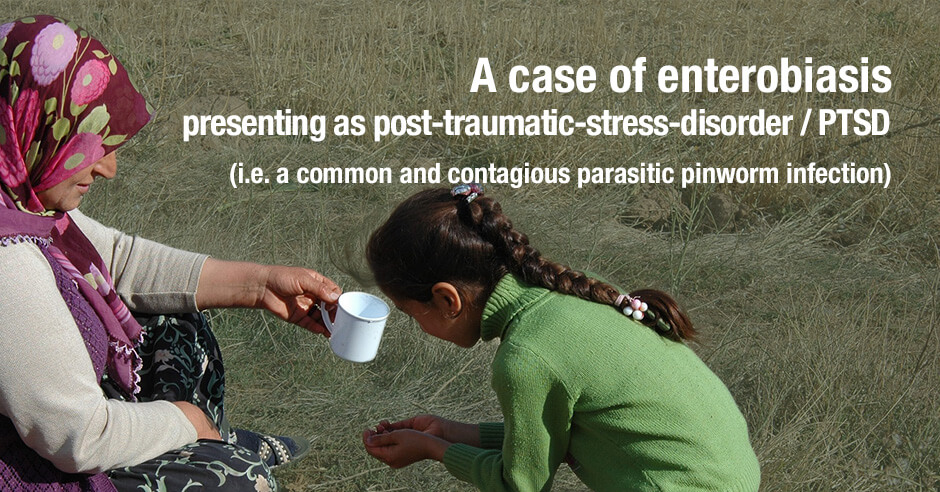
A case of enterobiasis presenting as post-traumatic-stress-disorder / PTSD (i.e. a common and parasitic pinworm infection)

February 3, 2023 By Trudy Scott 11 Comments

case of enterobiasis

Enterobiasis (oxyuriasis) is a common infection in humans caused by Enterobius vermicularis (E. vermicularis), a human intestinal helminth. Because of the easy way of its transmission among people, it has an extremely high prevalence in overcrowded conditions, such as nurseries and primary schools. Oxyuriasis’s symptoms are extremely diverse in children, ranging from nausea, diarrhea, insomnia, irritability, recurrent cellulitis, loss of appetite, nightmares and endometritis.

Here we report a curious case of oxyuriasis in the settings of a refugee camp in Greece. The patient was a 10-year old Syrian female, who presented with unusual and vague symptoms like insomnia and irritability. Given the violent background of the Syrian warzone that the patient had escaped, she was firstly diagnosed with post traumatic stress disorder (PTSD) before eventually getting correctly diagnosed with enterobiasis.

This infection is the first documented case of enterobiasis in the settings of a refugee camp and can highlight the unsanitary living conditions that refugees have to endure in those camps.

The above is the abstract from a 2017 paper: A case of enterobiasis presenting as post-traumatic-stress-disorder (PTSD): a curious case of the infection with predominant mental health symptoms, presenting for the first time in the settings of a refugee camp

In addition to her symptoms of insomnia and irritability, she had a decreased appetite and mild abdominal (tummy) pain. She was also experiencing nausea and vomiting and had a slightly raised body temperature (subfebrile). She was severely malnourished and had lost 3kg/6.6lbs in 5 days.

Because of the violent nature of her situation she was initially seen by a psychologist but her symptoms worsened in a few days. When this young girl complained about itching in the perianal area (around her anus), the clinic reassessed her and scars around the anal area from the scratches.

They then confirmed enterobiasis/pinworm after using a piece of clear adhesive tape “to collect a specimen from the perianal surface of the girl, for three consecutive mornings … A microscopic examination showed the presence of oval shaped eggs, which is typical for the specific helminth [parasitic worm].”

She was treated with “two doses of albendazole, with each dose two weeks apart, in order to avoid reinfection …. And after a 3 month follow-up period, the patient remains asymptomatic without any signs of recurrence.”

An overview of pinworm infections, symptoms, tape test and treatment approaches

This WebMD article offers an overview of pinworm infections, the symptoms, the tape test and treatment approaches.

As you’ll read it’s not only a problem in refugee camps – it’s “very common in elementary school-aged children” and it’s the most common kind of worm infection in the United States. “Most of the time, pinworm infections don’t cause serious problems.” However, when one child (or adult) gets a pinworm infection it can easily be spread to the entire family.  The Syrian refugee paper mentions the whole family was tested.

Systemic infection: female health issues and gut health

The WebMD authors also state, “in rare cases, and especially if you have a lot of them, the pinworms can travel from the anal area up the vagina to the uterus, fallopian tubes, and around the pelvic organs. This can cause inflammation of the vagina (vulvovaginitis).”

I first learned about these serious systemic issues in women from naturopathic doctor Rachel Arthur at a conference in Australia. Contrary to the WedMD article, she believes this is not rare and more common than you’d expect, contributing to hormonal imbalances and even infertility.

The research confirms the impacts of pinworm on the gut, with reports of pinworm associated with appendicitis, pinworm in the liver, pinworms contributing to dysbiosis and pinworm being a factor in inflammatory bowel disease.

The WebMD article doesn’t mention the mental health symptoms and mechanisms but you can read more about that (and my interview with Dr. Jay Davidson) below.

Annual deworming and concerns about drug resistance?

I’m not going to get into anti-parasitic medications and herbal alternatives in this blog post – Dr. Jay talks about mimosa pudica seeds and Dr. Rachel recommends chondroitin sulfate – but do I want to mention that there are many public policy papers calling for annual deworming procedures for everyone. It’s also mentioned in the above Syrian refugee paper, as is hand-washing for prevention.

And many folks recall annual deworming concoctions as a child and did/do the same with their children.

There is, however, the concern about antiparasitic drug resistance similar to what is being seen with antibiotics and antiviral drugs.

If you are new to parasites and their impacts on mood issues, anxiety and insomnia and more

If you are new to parasites, here are some insights from an interview I did with Dr. Jay Davidson on The Anxiety Summit 5: Gut Brain Axis. The topic of our interview is – Parasites, Anxiety and TUDCA for Your Liver. He shares this:

The Greek meaning of parasite is one that sits at another’s table. So essentially think of a parasite as it’s taking things from you. It’s taking nutrients, it’s taking key things that your body needs and literally off of you, not to the point that it’s killing you because then you’re not a good host to give a good environment. So it’s basically just kind of sucking you dry.

We discussed symptoms individuals may experience: mood issues, anxiety and insomnia (especially around full moon). He shared that with insomnia “the big issue that I see is restless sleep where you toss, you turn, you wake often. You can’t just be relaxed when you sleep. Parasites get active when you go to bed. The more active they are within your body and the more you’re trying to calm down, the more your body is getting stressed out. This is where teeth grinding happens when you sleep.

This is very typical and likely the kinds of insomnia symptoms this young refugee girl experienced too. Pinworm is more active at night so the itching around her anus and the need to scratch would have affected her sleep too. This is a classic sign of pinworm.

With regards to anxiety and mood issues and possible mechanisms, Dr. Jay shares how parasites contribute to neurotransmitter imbalances:

Parasites will eat the protein you eat and not allow your body to break down that protein into amino acids. That’s why amino acid therapy can be so beneficial symptomatically and change people’s lives, because they’re getting these amino acids that they’re not getting when they have parasites.

When we digest protein, the amino acids are needed to help us make neurotransmitters. With his amino acid comments, he is making reference to my work with the amino acid tryptophan to support your low serotonin worry-type of anxiety symptoms and the amino acid GABA to support your low GABA physical-anxiety type symptoms. They are wonderful for quick relief of anxiety and mood symptoms, and even help sleep problems too. But as he says “you always want to make sure to go to the underlying cause to remove the parasitic infection.”

Other symptoms of parasitic infection that we discuss at length: restless legs and calf cramping, diarrhea, bowel urgency, SIBO (small intestinal bacterial overgrowth), vertical wrinkles above your mouth, nail-biting, food sensitivities, bed-wetting and night sweats. These are all symptoms that we need to look for and then consider stool testing and/or the sticky tape test/clear adhesive tape test for pinworm (as mentioned in the Syrian refugee paper and WebMD article above).

If you missed this interview and/or summit, you can find the purchase link on the above blog and here.

Tryptophan is not working (possibly because of parasites) and toxoplasma gondii (and GABA/anxiety)

Here is some additional reading on parasites on my site and in the literature:

  • Tryptophan doesn’t work, then it does and then it doesn’t: could it be hormonal shifts, dietary factors and/or parasites? As I share here, if you have a very pronounced shift in symptoms for 4-5 days around a full moon each month – more severe insomnia, more anxious, more depressed – I would want to check for parasites (as well as hormonal impacts and everything else covered on this blog).
  • Toxoplasma gondii: schizophrenia, bipolar disorder, OCD and unresolved anxiety? As I share in this blog, toxoplasma gondii is a microscopic parasite that infects cats and can be found in the soil – research shows it may be a factor in schizophrenia, bipolar disorder and OCD in susceptible individuals. Could toxoplasma gondii could be one of the root causes of unresolved anxiety? I believe so and feel it’s under-rated.
  • In this study, Toxoplasma gondii Infections Alter GABAergic Synapses and Signaling in the Central Nervous System, the authors share that “toxoplasma interferes with GABA signaling in the brain …playing a role in seizures and other neurological complications seen in Toxoplasma-infected individuals.” This particular parasite disrupts the workings of the glutamic acid decarboxylase 67 enzyme (GAD67), used to make GABA from glutamate, and very likely contributes to increased anxiety symptoms too.

Resources if you are new to using tryptophan, GABA and other amino acids as supplements

If you are new to using tryptophan, GABA or any of the other amino acids as supplements, here is the Amino Acids Mood Questionnaire from The Antianxiety Food Solution (you can see all the symptoms of neurotransmitter imbalances, including low GABA and low serotonin).

If you suspect low levels of any of the neurotransmitters and do not yet have my book, The Antianxiety Food Solution – How the Foods You Eat Can Help You Calm Your Anxious Mind, Improve Your Mood, and End Cravings, I highly recommend getting it and reading it before jumping in and using amino acids on your own so you are knowledgeable. And be sure to share it with the practitioner/health team you or your loved one is working with.

There is an entire chapter on the amino acids and they are discussed throughout the book in the sections on gut health, gluten, blood sugar control, sugar cravings, self-medicating with alcohol and more.

The book doesn’t include product names (per the publisher’s request) so this blog, The Antianxiety Food Solution Amino Acid and Pyroluria Supplements, lists the amino acids that I use with my individual clients and those in my group programs. You can find them all in my online store.

If, after reading this blog and my book, you don’t feel comfortable figuring things out on your own (i.e. doing the symptoms questionnaire and respective amino acids trials), a good place to get help is the GABA QuickStart Program (if you have low GABA symptoms). This is a paid online/virtual group program where you get my guidance and community support.

If you are a practitioner, join us in The Balancing Neurotransmitters: the Fundamentals program. This is also a paid online/virtual program with an opportunity to interact with me and other practitioners who are also using the amino acids.

If you or a family member have had a pinworm infection, what symptoms did you experience and was the entire family affected?

Have you had hormonal and/or pelvic issues and/or gut issues as a result of systemic infection with pinworm?

How have other parasitic infections impacted your health?

How familiar are you with the fact that pinworm and other parasites can affect your mood, anxiety and sleep, as well as cause gut issues?

If you’re interested in learning more about testing and herbal protocols please let me know. If you’d like to share what has worked for you please do share too.

If you have other questions and feedback please share them here too.
Filed Under: Anxiety, Gut health, Insomnia, Parasites, PTSD/Trauma Tagged With: amino acids, anxiety, diarrhea, Enterobiasis, female health, GABA, insomnia, irritability, itching anal area, loss of appetite, mental health, mood, nausea, Nightmares, parasite, parasitic, pinworm, post-traumatic-stress-disorder, PTSD, Syrian, tape, the GABA Quickstart online program; and Balancing Neurotransmitters: the Fundamentals program for practitioners, toxoplasma gondii, tryptophan

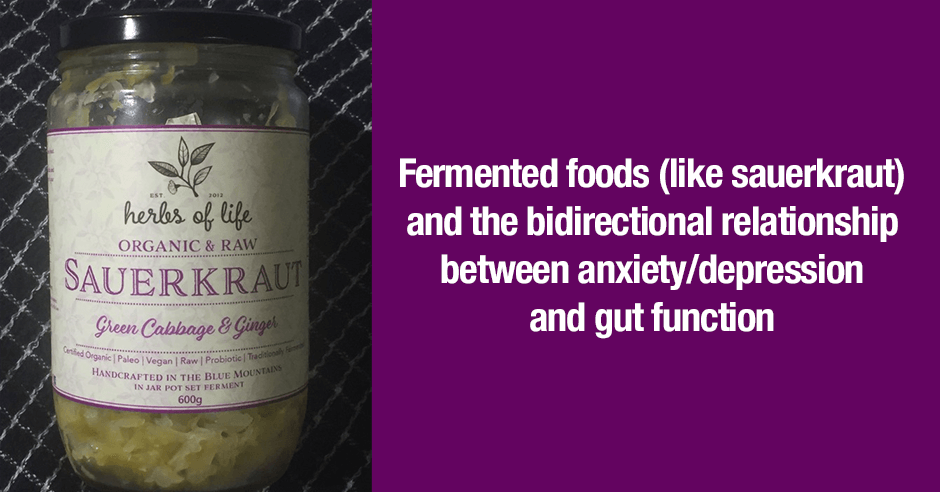
Fermented foods (like sauerkraut) and the bidirectional relationship between anxiety/depression and gut function

September 17, 2021 By Trudy Scott 6 Comments

fermented foods

Today’s blog is to whet your appetite (pun intended) with some snippets from my interview – Anxiety: Gut-Brain Communication & Diet – with Dr. David Perlmutter, author of Grain Brain and Brain Wash. In this interview we talk about fermented foods (like sauerkraut) and a study that highlights mechanisms underlying the  bidirectional relationship between anxiety/depression and gut function.

With anxiety at an all-time high and the ever-evolving research on the gut-brain connections we are relaunching the Anxiety Summit 5: Gut-Brain Axis summit on November 8-14, 2021. This interview is featured during the summit and is meaty (you’d expect nothing less from Dr. Perlmutter.)

The two-way connection between the gut and brain is powerful and needs to be explored and addressed if you have anxiety. Diet, fermented foods, reducing inflammation, addressing leaky gut (or intestinal permeability) and neurotransmitter support with amino acids are some of the ways that make a difference.

For the summit relaunch we have 4 incredible new guest expert interviews on sugar addiction, thiamine deficiency, trauma and the freeze response and safe tapering of SSRIs. And I have a new deep dive interview on glutamine, DPA and tyrosine for anxiety and sugar cravings/addiction. I’m excited to share it all with you!

For now, save the date and look out for the registration link in a few weeks. We’re in edit mode for the videos and transcripts, and getting all the backend setup done.

This is the first question I ask Dr. Perlmutter: I’d like to start with the microbiome and the fact that there is a bidirectional relationship between mental health and gut function. There’s a paper titled, Fermented foods, the gut and mental health: a mechanistic overview with implications for depression and anxiety published online late 2018 in The Journal of Nutritional Neuroscience. It highlights this important bidirectional relationship and the role of fermented foods. Can you share a little bit more about this and why this is important?

Before I share Dr. Perlmutter’s response, let me share a few quotes from the abstract of the paper:

  • Mental disorders including depression and anxiety are often comorbid with gut problems, suggesting a bidirectional relationship between mental health and gut function.
  • Several mechanisms might explain this comorbidity, such as inflammation and immune activation; intestinal permeability; perturbations in the hypothalamic-pituitary-adrenal axis; neurotransmitter/neuropeptide dysregulation; dietary deficiencies; and disturbed gut microbiome composition.
  • The potential of modulating the microbiome-gut-brain axis, and subsequently mental health, through the use of functional foods, is an emerging and novel topic of interest.
  • Fermented foods are considered functional foods due to their reputed health benefits.

The paper goes on to discuss food fermentation and summarizes how these foods “act biologically in the gastrointestinal tract and have the ability to modify the gut microbiota, influence translocation of endotoxins and subsequent immune activation, and promote host nutrition.” They are exploring their theoretical potential to improve symptoms of depression and anxiety in humans, saying more research is needed.

Dr. Perlmutter highlights various section of the paper and starts by sharing more about fermented foods and that we’ve been actively fermenting for thousands of years:

I think it’s first instructive to recognize that we’ve been actively fermenting foods for thousands of years as humans as a technique to preserve them, and allow us to travel with a food source. But beyond that, our ancestors prior to that would eat fermented foods. Fermentation is actually what happens to food when it’s left outside and is exposed to bacteria and begins the process of, dare I say, rotting. I don’t want that to be off putting to people who are going to hear the later part of our discussion dealing with eating fermented foods, because we have wonderful fermented foods that we eat these days.

He goes on to elaborate on what the paper terms functional foods. What this means is that these fermented foods have far-reaching health benefits for optimal health and for making us resistant to disease (i.e. improving our immunity):

The point is that the process of fermentation is basically a process of enrichment of food sources with bacteria. And what a notion that is, where we’re looking at the idea of eating a food that’s teeming with bugs, with germs, if you will. I say it that way, because it has such a negative connotation, but it really is what we want to do. These bacteria are involved in so many processes that deal with our health, and nurture our health, and our resistance to disease.

Some common examples of fermented foods are kimchi, sauerkraut, kefir (dairy kefir and water kefir), kombucha, and yogurt. Keep in mind, you can ferment many different vegetables. One of my favorites is cauliflower.

The paper also mentions inflammation as one possible mechanism for the bidirectional relationship between anxiety/depression and gut function, and Dr. Perlmutter discusses this in great detail, in the context of chronic health conditions. And he ties it all back to the microbiome:

From my perspective, of course, that has to do with the functionality of the brain, the way the brain remains healthy, and disease-free moving forward. And there are multiple mechanisms that relate to what’s going on in the gut to the brain. When we think of disease processes, most of what we are concerned about is the notion of inflammation, at least, in terms of a mechanism that relates to so many of the chronic degenerative conditions of the brain; be it Alzheimer’s, Parkinson’s, or even a non-chronic degenerative condition, which is autism is not necessarily considered to be progressive, but nonetheless at its heart, is in fact an inflammatory disorder.

So beyond that, of course, all of the chronic degenerative conditions that plague our planet, including heart disease, cancer, diabetes, the autoimmune conditions are at their very core, primarily inflammatory.

And let me be very clear that chronic degenerative conditions are ranked by the World Health Organization as the number one cause of death on planet Earth.

So we have to pay attention to anything that’s involved in the regulation of inflammation in the human body. And front and center right now in terms of gaining the spotlight, is the health of the gut bacteria, as well as its metabolites and it’s gene expression, collectively, we call that the microbiome.

The paper mentions intestinal permeability as another mechanism. Dr. Perlmutter covers the importance of the gut lining integrity and why it’s so important when it comes to anxiety, depression and the chronic diseases he mentions:

So we realize that the gut bacteria have a very important function, and that is to maintain the integrity of the gut lining.

And why would I, as a neurologist, give a hoot about the integrity of the gut lining? Quite categorically it’s because that is where inflammation in the body, in the long term, has its genesis. So, meaning we’ve got to have a strong gatekeeper at the lining of the gut to keep various gut-related proteins and other chemicals from making their way into the rest of the body, and challenging the immune system, upregulating the production of inflammatory chemicals that then do damage.

Dr. Perlmutter ends by discussing neurotransmitter dysregulation (also mentioned in the paper):

We know that our gut bacteria are involved in the manufacture of various neurochemicals, various neurotransmitters, serotonin, for example, dopamine, norepinephrine, epinephrine, [GABA], etcetera, that are primarily manufactured in the gut.

As a matter of fact, when it comes to serotonin, which certainly gains the spotlight; 90% is manufactured in the gut, another 9% is manufactured in the blood platelets, meaning that only 1% is actually manufactured in the brain, though, we call it a brain transmitter, a neurotransmitter. That said, the availability of the precursor for serotonin; the amino acid tryptophan, the availability of that even to the brain, is in fact controlled to a significant degree by actions of the gut microbes.

He wraps up by bringing in the microbiome, inflammation, chronic health conditions, anxiety and depression, and our lifestyle choices and diet (which includes foods such as fermented vegetables):

If we simply recognize that our gut bacteria are playing a massive role in regulating inflammation in the body, that’s enough, because our mission for the prevention of chronic degenerative conditions in the brain and out of the brain is controlling inflammation.

And it’s through the lens of the microbiome that we realize the detrimental or effectiveness of our food choices, and other lifestyle choices that can act to increase or balance inflammation. So it becomes extremely important.

The paper does discuss perturbations in the hypothalamic-pituitary-adrenal axis but we didn’t get into this during this interview. However, we do cover this in Dr. Peter Bongiorno’s interview on the summit.

Some of the recent research on specific fermented foods and mental health

Here is some of the recent research on specific fermented foods and mental health, where some or all of the above mechanisms may be a factor:

  • Kefir peptides exhibit antidepressant-like activity in mice through the BDNF/TrkB pathway
  • Effects of Fermented Milk Containing Lacticaseibacillus paracasei Strain Shirota on Constipation in Patients with Depression: A Randomized, Double-Blind, Placebo-Controlled Trial
  • Consumption of OLL1073R-1 yogurt improves psychological quality of life in women healthcare workers: secondary analysis of a randomized controlled trial (this improved mood, sleep and gastrointestinal health)
  • Possible use of fermented foods in rehabilitation of anorexia nervosa: the gut microbiota as a modulator

Some simple changes you can make

Here are some simple changes that be incorporated when you have anxiety or depression:

  • Include fermented foods and beverages in the diet (ideally on a daily basis). If you decide to include sauerkraut, you can make it yourself or buy it from the store. If you buy it ready-made, always make sure it’s raw and found in the refrigerated section. Vinegar should not feature on the label but do look for salt as this is used in the fermentation process. In the example I share above, the added ginger helps with digestion even further and is very delicious!
  • Eat a real whole foods diet with quality animal protein, healthy fats and organic vegetables and fruit (there is much research supporting dietary changes for improving mood and easing anxiety i.e. nutritional psychiatry)
  • Avoid inflammatory foods like gluten, sugar, processed foods/fast foods and foods that you have a sensitivity to
  • Address intestinal permeability if necessary (glutamine is my go-to nutrient for this and I take a deep dive into this amino acid in one of the new interviews on the summit)
  • Use targeted individual amino acids such as GABA to boost GABA (for physical anxiety symptoms) and tryptophan or 5-HTP to boost serotonin (for worry-type anxiety). You can do this while you are addressing underlying gut issues and making dietary changes. Keep in mind that these amino acids help you quit sugar, gluten and junk food at the same time as easing anxiety!

Resources if you are new to using the amino acids as supplements

If you are new to using the amino acids as supplements and want to know more, here is the Amino Acids Mood Questionnaire from The Antianxiety Food Solution and a brief overview here, Anxiety and targeted individual amino acid supplements: a summary.

If you suspect low neurotransmitters and do not yet have my book, The Antianxiety Food Solution – How the Foods You Eat Can Help You Calm Your Anxious Mind, Improve Your Mood, and End Cravings, I highly recommend getting it and reading it before jumping in and using amino acids so you are knowledgeable.

Do join us on the summit relaunch of Anxiety Summit 5: Gut-Brain Axis summit on November 8-14, 2021. Registration details coming soon.

And if you’d like to learn more about Dr. Perlmutter’s book, Brain Wash: Detox Your Mind for Clearer Thinking, Deeper Relationships, and Lasting Happiness (written with his son Dr. Austin Perlmutter), here is my review. In our interview on the summit, he shares about disconnection syndrome (and loneliness) and how our decision-making abilities have been compromised.

Are fermented foods and beverages included in your diet (and your family’s diet) on a daily basis? And what are your favorites?

Do you make your own fermented vegetables?

Have you observed mood and/or digestive improvements since including fermented foods in your diet?

If you are a practitioner, do you recommend fermented foods and discuss this bidirectional communication between the gut and the brain with your clients/patients?

Feel free to post your questions too.

Filed Under: Anxiety, Depression, Gut health, Inflammation Tagged With: amino acids, anxiety, anxiety summit, bidirectional, depression, diet, Dr. David Permutter, fermented foods, GABA, gut, gut-brain, Inflammation, intestinal permeability, leaky gut, mental health, neurotransmitter support, sauerkraut, serotonin, tryptophan

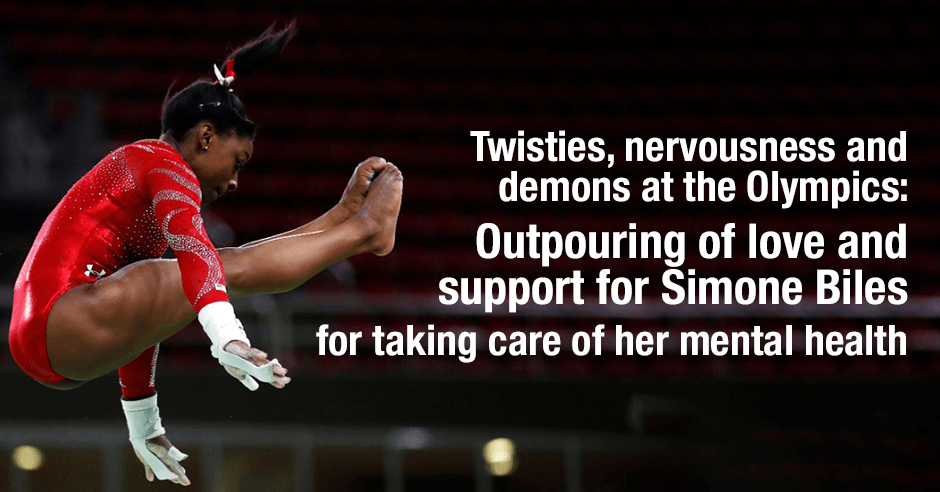
Twisties, nervousness and demons at the Olympics: Outpouring of love and support for Simone Biles for taking care of her mental health

July 30, 2021 By Trudy Scott 10 Comments


twisties olympics

Simone Biles at a training session at the Rio 2016 Summer Olympic Games (Salty View / Shutterstock.com)

There has been an incredible outpouring of love and support for gymnast Simone Biles, as she withdrew from the 2020 Olympics Women’s Team final on Tuesday and All-Around Individual Final on Wednesday. This was due to the twisties, nervousness and mental demons. I’ve decided to gather some of this admiration into a blog post as a testament to Simone who I adore and respect even more than I did before today. I want this to be all about the love and support, but in order to tie it all together, I share more on the twisties (and anxiety), being vulnerable and taking care of yourself, nutritional psychiatry, using amino acids and mental health advocacy below.

Before we get into all that, here is an ET video that explains some of the backstory leading up to this:

Simone shares that she feels good physically but emotionally, her feelings vary by the day. She also talks about the stress of the Olympics and being the star gymnast and that she feels she has the weight of the world on her shoulders.

You’ll also see and hear the love and support she gets from her team members and fellow gymnasts. Two-time Olympian, Aly Raisman, says this about Simone: “She is human too and sometimes people forget that. She is doing the best she can.”

The love and support continued to show up all over social media (and is still showing up)! What follows are some of my favorite posts and mentions.

The love and support – Simone Biles already won

Women Hold Up Half The Sky, a community that empowers women to find their voice and celebrates women in their diversity, shared this powerful post when Simone withdrew:

“Simone Biles already won” and how she has “shattered records to become the world’s most decorated gymnast, has four moves named for her and fought on behalf of abuse survivors.”

simone biles

Simone is one of many young female gymnasts who were sexually abused by disgraced former USA Gymnastics doctor Larry Nassar. This article in Elle covers her story and goal to be an advocate for other young girls.

We are just as proud of you today as yesterday

Jen Hatmaker, New York Times bestselling author of “Simple and Free” posts this lovely uplifting message, ending with:

I’ll tell you what, Simone Biles, the only thing withdrawing from the team competition told me is that absolutely nothing is more important than your mental health, and rather than push through until you had an utter breakdown emotionally or physically, you had the strength of character to step down. The watching, expectant eyes of the whole world are a heavy burden none of us understand.

Your IG caption on July 7th said: “Whatever is good for your soul, do that.” And you did. Well done.

Because this life is a long game, little sister. No matter what everyone is telling you, this is NOT your one moment. It sure isn’t. Most of your moments are ahead of you in fact, and you get to choose how you want to live them.

We are just as proud of you today as yesterday, and we will be proud of you for all your tomorrows. Catch your breath, girl. You are already a champion.

simone biles

I wholeheartedly agree, nothing is more important than her metal health. Too often we put on a brave face and push through. Simone didn’t and for that we are super-proud of her – for her own physical and mental health, and for being a role model to girls and women around the world.

Simone Biles and Naomi Osaka are the role models I want for my girls

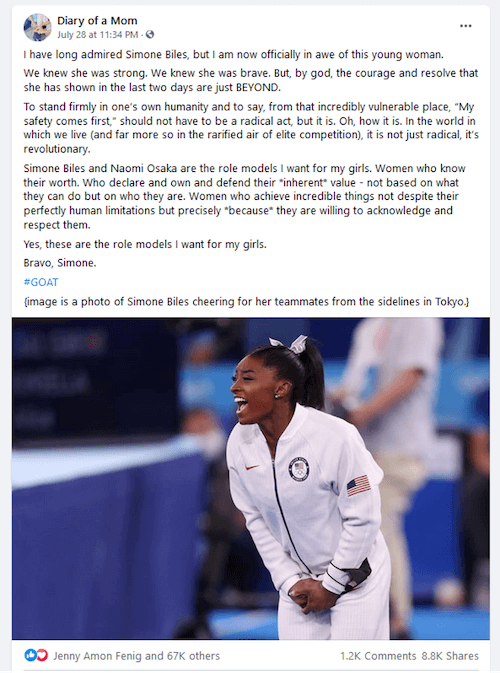
Diary of a Mom, mother, intersectional advocate, believer in the power of community, posted this beautiful message about strength, bravery, vulnerability and Simone and Naomi being role models for her daughters:

I have long admired Simone Biles, but I am now officially in awe of this young woman.

We knew she was strong. We knew she was brave. But, by god, the courage and resolve that she has shown in the last two days are just BEYOND.

To stand firmly in one’s own humanity and to say, from that incredibly vulnerable place, “My safety comes first,” should not have to be a radical act, but it is. Oh, how it is. In the world in which we live (and far more so in the rarified air of elite competition), it is not just radical, it’s revolutionary.

Simone Biles and Naomi Osaka are the role models I want for my girls. Women who know their worth. Who declare and own and defend their *inherent* value – not based on what they can do but on who they are. Women who achieve incredible things not despite their perfectly human limitations but precisely *because* they are willing to acknowledge and respect them.

Yes, these are the role models I want for my girls.

Bravo, Simone.

#GOAT

simone biles

I applaud this strong woman and amazing athlete

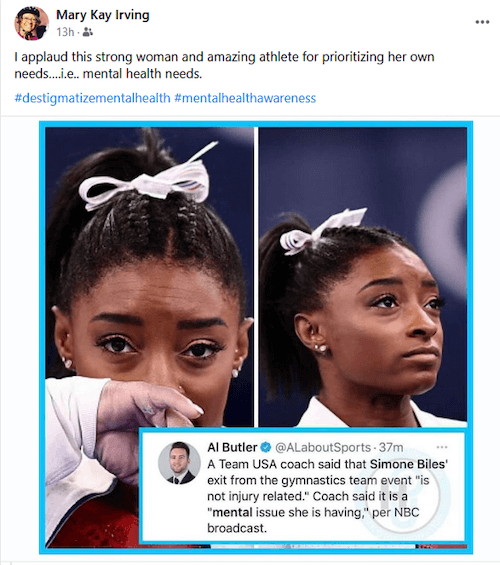
Mary Kay Irving, Therapist/Care Coordinator at Boulder Community Health and Owner at Boulder Center for Health and Nutrition, shares this message.

I applaud this strong woman and amazing athlete for prioritizing her own needs….i.e.. mental health needs. #destigmatizementalhealth #mentalhealthawareness

simone biles

I also applaud Simone and support her decision to take care of her mental health needs no matter how hard it must have been for her!

Simone is an absolute legend!

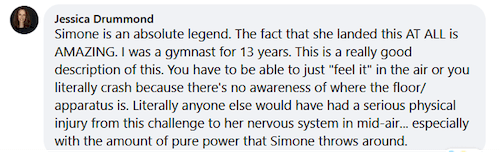
My friend and colleague Dr. Jessica Drummond, a functional nutrition and integrative women’s health expert, and founder of Integrative Women’s Health Institute, says Simone is an absolute legend:

Simone is an absolute legend. The fact that she landed this AT ALL is AMAZING. I was a gymnast for 13 years. You have to be able to just “feel it” in the air or you literally crash because there’s no awareness of where the floor/ apparatus is. Literally anyone else would have had a serious physical injury from this challenge to her nervous system in mid-air… especially with the amount of pure power that Simone throws around.

simone biles

This is so great for people, especially our youth athletes, to see

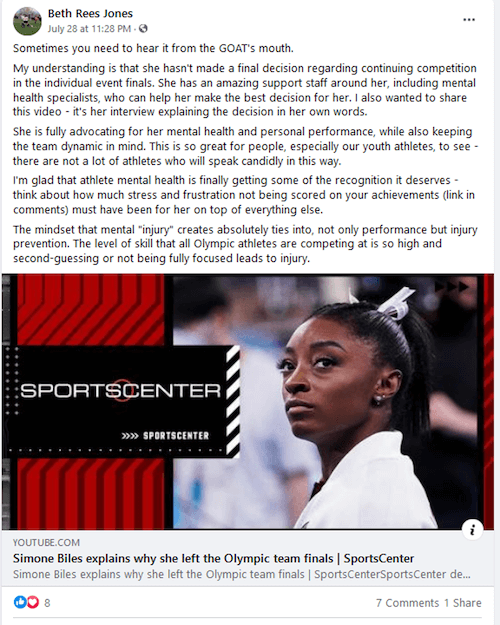
Another friend and colleague, Beth Jones who is a Female/Teen Athlete Wellness & Mindset Coach, posts this.

I’m grateful for athletes like Simone Biles and Naomi Osaka who are coming forward (and professionals as well) to normalize mental health as a key piece of sports training and recovery.

I could not agree more.

In this post, Beth also shares Simone’s press release video where she fully advocates for her mental health and personal performance, keeping the team dynamic in mind, and also sets a wonderful example for young athletes

Sometimes you need to hear it from the GOAT’s mouth.

My understanding is that she hasn’t made a final decision regarding continuing competition in the individual event finals. She has an amazing support staff around her, including mental health specialists, who can help her make the best decision for her. I also wanted to share this video – it’s her interview explaining the decision in her own words.

She is fully advocating for her mental health and personal performance, while also keeping the team dynamic in mind. This is so great for people, especially our youth athletes, to see – there are not a lot of athletes who will speak candidly in this way.

I’m glad that athlete mental health is finally getting some of the recognition it deserves – think about how much stress and frustration not being scored on your achievements (link in comments) must have been for her on top of everything else.

The mindset that mental “injury” creates absolutely ties into, not only performance but injury prevention. The level of skill that all Olympic athletes are competing at is so high and second-guessing or not being fully focused leads to injury.

simone biles

Thank you for finding your voice and staying true to yourself.

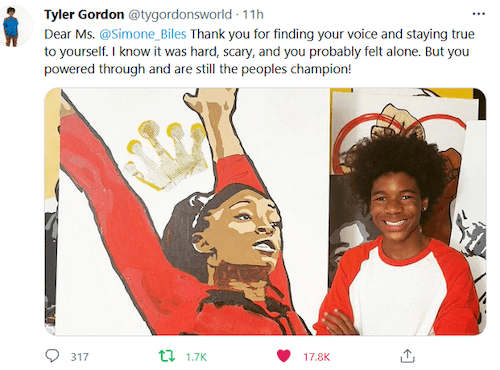
Tyler Gordon, a 14-year old artist who seeks to inspire through the stories of heroes in his work, tweeted this sweet message with  his painting of Simone:

Dear Ms. @Simone_Biles Thank you for finding your voice and staying true to yourself. I know it was hard, scary, and you probably felt alone. But you powered through and are still the peoples champion!

simone biles

This young man is kind-hearted and has talent! You can actually watch him painting Simone here.

Unfortunately, there have been way too many negative comments. I believe these are people who don’t understand mental health. You don’t have to have broken your back to have compassion for someone who has but there are still too many people who can’t understand mental health or have empathy until they have experienced it or see a loved one experiencing it. I’m hopeful all this media attention will help create more awareness, compassion and kindness.

The twisties and how stress and anxiety can play a role

In case you are new to this term (like I was until this week), this article explains what the twisties are – Simone Biles Mentioned Having ‘the Twisties’ – Here’s What That Means, and Why It Can Be Dangerous in Gymnastics:

The twisties is an informal term used to refer to a certain kind of mental block that a gymnast can experience as they are in the air during a twisting skill. When someone gets the twisties, there is a disconnect between the brain and body, Jamie Shapiro, PhD, a certified mental performance coach who is the co-director of the Masters in Sport and Performance Psychology program at the University of Denver

In this same article, Dr. Shapiro, a former gymnast herself, shares how this loss of control can have both physical and mental implications:

Physically, the twisties can make a gymnast unable to perform the skills as they were previously able to.

Mentally, that inability to perform the skills can cause anxiety, exacerbating the mental block.

Allie Wagener, PhD, a licensed psychologist who specializes in sport and performance psychology at Premier Sports Psychology and is also a former gymnast shares how dangerous this can be in terms of injuring yourself when “you don’t know where you are in the air and you don’t know how to land.” It’s also terrifying for the gymnast and that worry and fear about it happening again can make things worse.

I wanted to understand more about the “twisties” in gymnastics and asked Jessica Drummond how similar are they to the yips, which happen in golf or baseball, and which I know are closely tied to increased anxiety/stress. The stress/anxiety can be a trigger and then having the yips make your anxiety and fears worse. Jessica confirmed this about the twisties:

Yes, it’s sort of a loop that can get stuck – get lost in the air (cognitive, proprioceptive, vestibular) –> realize how dangerous that is/ was/ could be –> fear –> stress –> exacerbates the original brain-based issue.

I encourage you to read the entire article to see how stress and anxiety, racing/negative/distracted thoughts, fear of failure, high expectations and even focal dystonia (involuntary muscle spasms) can play a role.

The experts also mention a number of possible techniques to help (like progression, focusing on a different skill, using simple cue words to “keep you focused on the skill rather than the fear”), speaking with a sports psychologist and taking a break.

There is no mention of “nutritional psychiatry” as a possible solution (and I share more on this below).

What Simone has shared – I’m a little bit more nervous

Right now, we don’t know exactly why Simone experienced the twisties or if any of the above apply to her, but we do know some of what she has shared with the media up until now.

In this article Simone said she wasn’t physically injured but fighting some mental demons and had experienced a little injury to her pride. She said that “after the performance I did I just didn’t want to go on,” saying it was all in her head. Simone also emphasized the need to protect her body and mind, saying “I have to focus on my mental health and not jeopardize my health and well-being.”

An article in Women’s Health Magazine reports her comments at a press conference after the USA team won the Silver medal. Simone shared how she just doesn’t trust herself as much as she used to, wasn’t having as much fun as usual and admitted that “I’m a little bit more nervous when I do gymnastics.” 

It was here that she announced that she had the twisties.

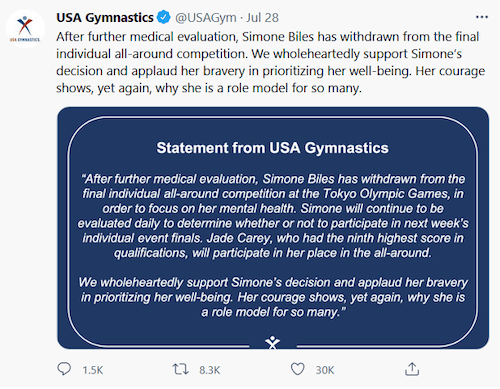
Around this time USA Gymnastics announced Simone had withdrawn to focus on her mental health. They also offered their support:

We wholeheartedly support Simone’s decision and applaud her bravery in prioritizing her well-being. Her courage shows, yet again, why she is a role model for so many.

simone biles

A place for “nutritional psychiatry” and “anxiety nutrition solutions”

My hope is that more and more “nutritional psychiatry” and “anxiety nutrition solutions” (like the use of GABA, tryptophan and other amino acids) will make it into the world of professional (and recreational) sports. I’d like to see this embraced by athletic coaches, registered dieticians and psychologists working with athletes, and hopefully some of the athletes themselves.

Research shows that elite young athletes have high psychological demands:

Elite young athletes have to cope with multiple psychological demands such as training volume, mental and physical fatigue, spatial separation of family and friends or time management problems may lead to reduced mental and physical recovery.

The paper concludes that:

Future research should focus on sports medical and sports psychiatric interventional approaches with the goal to prevent anxiety and depression as well as teaching coping strategies to young athletes.

I recently blogged about how the amino acid tyrosine erased severe performance anxiety in a female musician – to such an extent that she had no more shaking, sweating, panic attacks or passing out. Much of this could be applied to an athletic performance where low dopamine is a factor.

This recent blog resonated with many in my community: What if overthinking, fear, anxiety and worry (caused by low serotonin) is holding you back instead of low motivation/low dopamine? Much of this could also apply to athletes with the twisties or yips with low serotonin as a root cause.

My book, The Antianxiety Food Solution, is a great place to start with the foundations of eating to reduce anxiety (real whole food, no gluten, no caffeine, no sugar, eating for blood sugar control and gut health) and more advanced interventions (like using the amino acids GABA, tryptophan, 5-HTP, tyrosine, DPA and glutamine for balancing brain chemistry, and addressing low zinc and vitamin B6 for pyroluria/social anxiety.)

All this is clearly very needed, and the research and awareness are growing in leaps and bounds, but as Beth Jones, Female/Teen Athlete Wellness & Mindset Coach, shares, what an amazing shift it would be if we could add more “nutritional psychiatry” into the sports psych training:

Coming from 20 years working in sports med with athletes, I keep coming back to wishing there was a degree that combined sports psychology & nutrition (functional & fueling). I started looking into the more mental aspects of performance and healing and then also bringing in more nutrition aligned with healing needs about 15 years ago, but it was all on my own.

What I’ve been learning from you has given me some new tools to share, but you’re right in that they are not well known. I know our US Olympic Committee has amazing health professionals in all areas that work as a team approach for our athletes, but I wonder how many of the RDs are actually having conversations with the mental health team and collaborating taking all of the athlete-specific nuances into consideration.

I know my own therapist suggested that I not pursue sports psych because of the lack of support among therapists out there, but what an amazing shift it would be if we could add more nutritional psychiatry into the sports psych training? Trying to forge a path in this area on my own, but it’s a lot of bush-whacking and little progress.

Beth raises some excellent points and as I said above, hopefully more and more of the “anxiety nutrition solutions” and “nutritional psychiatry” will make it into professional and recreational sports.

It’s ok to say you’re not ok mentally

Simone has noticed and embraced the love and support she’s been receiving. She tweeted this:

The outpouring [of] love & support I’ve received has made me realize I’m more than my accomplishments and gymnastics which, I never truly believed before

She is way more than her accomplishments and gymnastics.

Naomi Osaka penned an article in Time magazine with this title: ‘It’s O.K. Not to Be O.K.’  She wrote this shortly after she withdrew from the French Open to tend to her own mental health. Naomi’s openness has inspired Simone to speak out.

When athletes like Simone and Naomi prioritize their own mental health and are public about it, they are paving the way for it being ok to say you’re not ok mentally. Through their honesty and vulnerability, they have become role models and mental health advocates, and we applaud them for that.

But most of all we applaud them both for taking care of their mental health!

What love and support can you share for Simone and Naomi? Feel free to post in the comments.

Does this motivate and inspire you to be more open about your own anxiety and mental health challenges (if you have not been open yet)?

If you’re an athlete (professional or recreational), does any of this resonate with you and have the amino acids or diet helped you with your anxiety?

If you work with athletes (professional or recreational), I’d love to hear if this resonates with you and if you’re using nutritional psychiatry approaches with them to help ease their anxiety?

If you have connections to athletes (professional or recreational), or coaches, dieticians or psychologists who work with athletes, please share this blog and my work, so we can get nutritional psychiatry resources and anxiety nutrition solutions into their hands and help more athletes.

Filed Under: Anxiety, People, Sports nutrition Tagged With: anxiety, anxiety nutrition solutions, athletes, demons, fear, low dopamine, low serotonin, mental health, mentally, Naomi Osaka, nerves, nervous, nervousness, nutritional psychiatry, Olympics, Simone Biles, twisties, worry

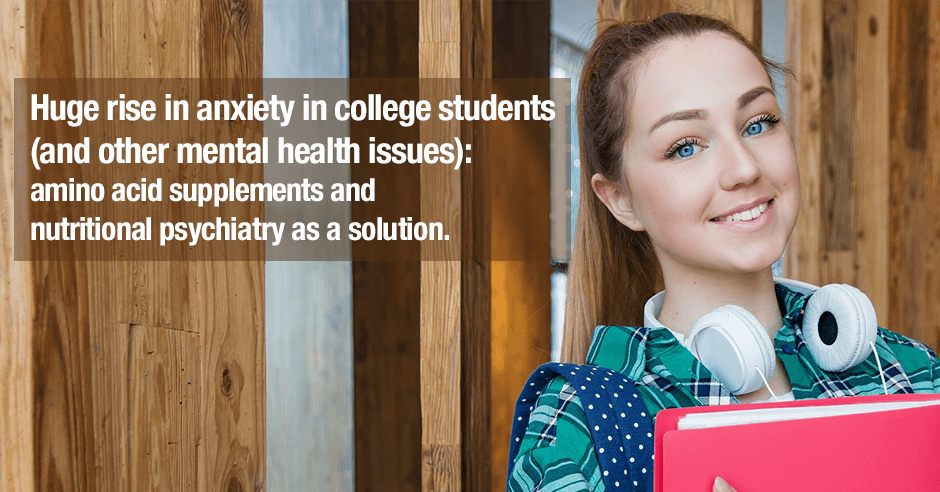
Huge rise in anxiety in college students (and other mental health issues): amino acid supplements and nutritional psychiatry as a solution.

May 21, 2021 By Trudy Scott 17 Comments

anxiety in college students

Is your son or daughter finding college/university overwhelming? Is he or she battling with new or worsening anxiety, worrying about results, has fears about success or fitting in, lying awake imagining the worst outcomes or maybe feeling like a perfectionist and getting stuck? Perhaps they have poor self-confidence, feel like an imposter and may even have panic attacks.  These signs and symptoms are all common with the low serotonin-type of worry-in-the-head anxiety, which may also include PMS (premenstrual syndrome), obsessive tendencies and anger issues.

They may also be experiencing the low GABA type of tension-anxiety, where they lie awake at night stiff and tense and self-medicate with too much sugar, carbs, junk food and/or alcohol (and maybe even pot and other drugs). There may be intrusive thoughts too and panic attacks also triggered by low GABA.

What about focus issues/ADHD and low motivation, no ability to follow-through on tasks and projects, procrastination and missing deadlines? These are all classic signs of low catecholamine, which also includes low energy, and feeling depressed/sad/low/flat. Your son or daughter may just want to crawl up in their dorm bed and not do anything or may spend hours doing mindless activities like binge watching Netflix or scrolling mindlessly through social media.

All of these signs and symptoms point to low levels of neurotransmitters or brain chemicals: low serotonin, low GABA and low dopamine. We need the right raw materials to make these neurotransmitters and the majority of college cafeterias are not providing nutrient-dense foods and/or foods that are unique for each person’s biochemistry (more on this below).

The huge rise in anxiety and other mental health issues in college students

It’s no wonder that we are seeing a huge rise in anxiety and other mental health issues in college students. Way too many students are dropping out and so many are struggling unnecessarily.

This 2019 Harvard blog post shares some alarming stats:

Anxiety in college is very common. According to the American College Health Association Fall 2018 National College Health Assessment, 63% of college students in the US felt overwhelming anxiety in the past year. In the same survey, 23% reported being diagnosed or treated by a mental health professional for anxiety in the past year.

This article in Nature earlier this year, The problem is greater than it’s ever been’: US universities urged to invest in mental-health resources, highlights points from US National Academies of Sciences, Engineering, and Medicine report:

  • 68% of university presidents listed student mental health as one of their most pressing issues
  • the dropout rate for students with diagnosed mental-health problems ranges from 43% to as high as 86%
  • The students who said that they had more trouble with anxiety or depression after the lockdown also reported greater alcohol use

It states that faculty members should “receive formal training to address and support student well-being” and “students should learn about mental-health issues as part of their introductory training.” They also say “Hiring more counsellors could be an important step, but counsellors alone can’t turn the tide.” I agree with all this but recommend adding nutritional psychiatry awareness, training and resources too.

Poor diet and nutritional deficiencies are a major contributing factor even though it’s seldom discussed. The good news is that there are relatively simple solutions – amino acids as supplements for quick relief and diet as the foundation – but it does take work.

Using amino acids as supplements for quick relief

Amino acids, used as supplements, are a quick way to offer immediate relief of symptoms:  tryptophan or 5-HTP (for the low serotonin worry-type anxiety), GABA (for the tension-type anxiety) and tyrosine (for the low dopamine poor-focus and low symptoms). Here are some examples:

  • A 23-year-old female college student, adopted and exposed to alcohol while in the womb, has some learning struggles. She doesn’t want to miss a day of taking 5-HTP, because she says that “it keeps her on her toes,” which she says means that it “keeps me focused,” when studying.
  • Tyrosine helped a young man who was learning new software: “Within an hour the stress just melted away!”, alleviating his anxiety and panic attacks and creating a feeling of calm focus.
  • A newly qualified nutritionist shared how she suffered badly from imposter syndrome at the end of her nutrition degree and she felt socially awkward in so many outings and situations. Her anxiety and stress were through the roof and her sleep was poor. She said these wonderful results: “What really tipped the balance was the supplementation of tyrosine, tryptophan & GABA.”

If you are new to the amino acids, here is the Amino Acids Mood Questionnaire from The Antianxiety Food Solution and additional information on Anxiety and targeted individual amino acid supplements: a summary

This lists The Antianxiety Food Solution Amino Acid and Pyroluria Supplements that I use with my individual clients and those in my group programs.

We use the amino acids for quick relief of symptoms and then focus on the foundations like diet and address other imbalances.

Diet as the foundation for students i.e. nutritional psychiatry

I first blogged about nutritional psychiatry in 2015 when the ISNPR position statement was published in World Psychiatry, the official journal of the World Psychiatric Association. This 2019 paper, Nutritional psychiatry: Towards improving mental health by what you eat provides an overview of the emerging field of nutritional psychiatry:

Does it matter what we eat for our mental health? Accumulating data suggests that this may indeed be the case and that diet and nutrition are not only critical for human physiology and body composition, but also have significant effects on mood and mental wellbeing. While the determining factors of mental health are complex, increasing evidence indicates a strong association between a poor diet and the exacerbation of mood disorders, including anxiety and depression, as well as other neuropsychiatric conditions.

The 2017 SMILES Trial is the first randomized controlled diet depression study and ONE THIRD of the dietary intervention group saw improvements in their depression symptoms.  This was just diet alone and switching from processed/junk food to real food with no specific dietary restrictions. Participants also reported improvements in anxiety symptoms. And the authors even addressed the cost factor, stating it was more affordable to eat this way.

Research supports this connection in college students. This is one of a growing number of studies, Eating behavior and relationships with stress, anxiety, depression and insomnia in university students, that concludes that:

unhealthy eating patterns are common in university populations and are related to anxiety, stress, and depression. Educational interventions to reduce unhealthy food consumption in university students can also result in psychological health improvements and/or vice versa.

Unfortunately, as students get more anxious and depressed their food choices get worse (especially for male students) and it becomes a vicious cycle. This paper, Examining the Role of Anxiety and Depression in Dietary Choices among College Students, reports:

Overall, a decrease in total caloric intake and an increase in sugar consumption were found as self-reported symptoms of anxiety and depression increased. In addition, there were sex differences in the relationship between depression and food choices. Men consumed more saturated fat as well as less fruits and vegetables as self-reported symptoms of depression increased. Results suggest symptoms of depression are a greater risk factor for poor nutrition in male college students than females.

It’s time for colleges/universities to recognize all this and teach about nutritional psychiatry. My book, The Antianxiety Food Solution is an excellent starting point for students, parents and educators (together with other blogs on this site).

Checking out cafeterias and cooking options

When looking at colleges are you also looking at what the cafeteria offers and if they cater for special diets (like gluten-free, dairy-free, Paleo etc) and/or offer real whole food, organic vegetables and fruit, grass-fed meat, wild fish and fermented foods?

Can students use a slow cooker, blender, Instant Pot or electric frying pan in their dorms?

Is there a dorm kitchen and can they take their own pots and pans (so non-stick pans can be avoided) and any of the above appliances?

Are there nearby living options that include a kitchen and a store with quality food for purchase?

I feel colleges/universities should be rated on all of the above in addition to everything else.

It all starts at home before they leave for college

Having a good college cafeteria and dorm kitchens is one step in the right direction, but these young adults also need to understand the impact of a breakfast of bagels and coffee or not having breakfast or the fact that gluten may trigger a panic attack and make them sad. They need to know how to shop and cook if there is a shared dorm kitchen or apartment. And they need to make the right choices when they do eat in the cafeteria or nearby restaurants (assuming good options are available). This all starts at home with you before they leave for college.

Katie shares this about her daughter who plans to use the college cafeteria for some meals and also cook in the apartment kitchen on weekends:

My daughter was just saying today how glad she is that she doesn’t have to figure out [the connection between increased anxiety, fatigue, brain fog, sadness and what they are eating] while learning how to live on her own and go to college. I changed how I ate 8 years ago for my PCOS and about 3 years ago she decided to give it a try after feeling so horrible but seeing my change. I’m so proud of her for embracing a healthier lifestyle in her teen years when everyone around her is subsisting off energy drinks and vending machine food. It makes me think that if we offer them a little education, they’ll make good choices for themselves.

This mom can also feel proud that she led by example for her daughter (and I appreciate them for letting me share here).

But I believe the colleges need to play a role in this too. They are providing food and this is a perfect educational opportunity that will serve their students (and future generations), solve the mental health crisis they are struggling with and prevent drop-outs (which is having an impact on their bottom-line).

Do you believe colleges/universities should be rated on all of the above in addition to everything else? What have you done to check out cafeterias and cooking options for your daughter or son?

Has your son or daughter benefited from any of the amino acids or eating real whole food (and according to their own needs?

Do you work in a college and are you seeing this rise in anxiety and depression? If yes, how do we get these changes implemented?

How do we educate students once they are at college (other than making sure campus food is excellent):

  • a lifestyle/diet/anxiety app with resources and tracking?
  • online training with a nutritionist/coach and access to an online forum and live Q&As?
  • one-on-one campus nutrition coaches?
  • make nutritional psychiatry part of the curriculum?
  • produce a documentary following the lives of students on campus and showing the transformation they experience?

Feel free to post your questions and ideas here too.


Filed Under: Anxiety, Diet, GABA, Nutritional Psychiatry, serotonin Tagged With: ADHD, alcohol, amino acid supplements, anxiety, cafeteria, carbs, college, college students, cooking, daughter, fears, focus issues, GABA, imposter, junk food, low motivation, mental health, nutritional psychiatry, overwhelming, panic attacks, perfectionist, procrastination, rise in anxiety, serotonin, son, stuck, sugar, tension, tryptophan, tyrosine, university, worry, worrying

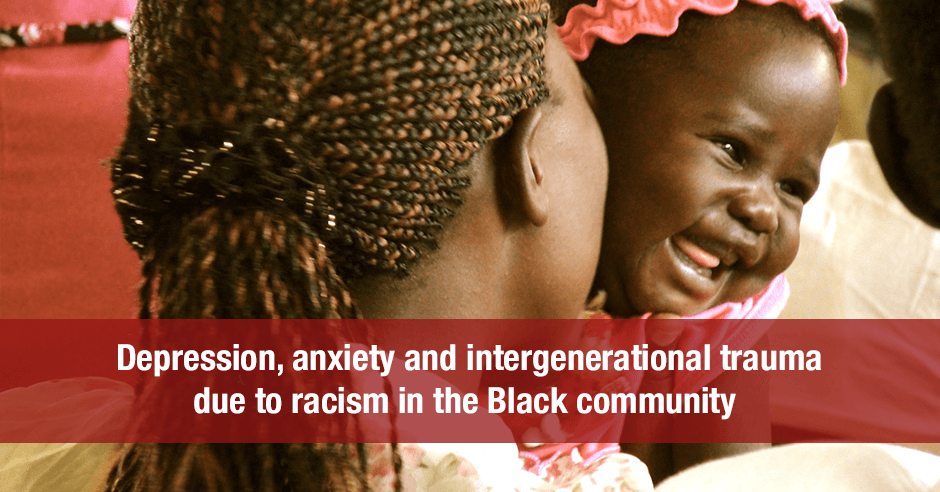
Depression, anxiety and intergenerational trauma due to racism in the Black community

June 5, 2020 By Trudy Scott 12 Comments

anxiety in black community

I feel sickened by George Floyd’s death and the police brutality we all witnessed. I stand by Black Lives Matter and an end to racism, social injustice and inequalities. In the light of current events in the USA and around the world, today’s article highlights the prevalence of mental health in the Black community, the biological impacts of trauma, racism and intergenerational trauma, some reasons why mental health services are not being used, the impacts of racism on physical health and some resources geared to Black mental health.

In this recent article by Columbia University Department of Psychiatry, Addressing Mental Health in the Black Community, we learn the following:

Research suggests that the adult Black community is 20% more likely to experience serious mental health problems, such as Major Depressive Disorder or Generalized Anxiety Disorder.

Additionally, Black emerging adults (ages 18-25) also experience higher rates of mental health problems and lower rates of mental health service utilization compared to White emerging adults, and older Black adults.

What shocked me was reading this statistic: “the Black community comprises approximately 40% of the homeless population, 50% of the prison population, and 45% of children in the foster care system.” All of this puts the Black community is at more risk for mental health issues.

The article also highlights the biological impacts of trauma“through enslavement, oppression, colonialism, racism, and segregation” and shares that “intergenerational trauma may be passed down biologically from one generation to the next.”

Some of the factors that may lead to mental health services not being used amongst the Black community are lack of trust, lack of finances and fear:

Lack of trust in the medical system due to historical abuses of Black people in the guise of health care, less access to adequate insurance, culturally responsive mental health providers, financial burden, and past history with discrimination in the mental health system.

I encourage you to read the entire article at this link.

This paper, Transgenerational Consequences of Racial Discrimination for African American Health goes further into the intergenerational effects of racism on both psychological and physical health: immune health, heart health, obesity, diabetes and so on. The paper concludes as follows:

without addressing the harmful consequences of racial discrimination, improving the health of African Americans as well as other marginalized groups, will remain inadequately addressed.

This inspiring quote is from Nelson Mandela from his autobiography, Long Walk to Freedom  (1994) and no-one says it better than him. It is a message of hope!

Nelson Mandela Quote
from the Nelson Mandela facebook page

Here are some resources geared specifically to Black mental health

  • Black Mental Health Resources to Fight the Harmful Effects of Racism
  • Black lives matter. Black mental health matters too.

With regards to nutritional support for anxiety, depression and PTSD, everything that I write about in terms of nutritional psychiatry applies. My book, The Antianxiety Food Solution, covers the foundations of diet and how to use amino acids. This recent blog, The psychological trauma of coronavirus – nutritional support for doctors, nurses and their loved ones could easily be adapted to be: The psychological trauma of racism – nutritional support for the Black Community.

I am very aware that when it comes to working with a functional medicine practitioner or a nutritionist, and purchasing supplements/doing special diets may be a major stumbling block for many Blacks with financial hardships. This needs to become the standard of care so everyone has access to resources like these.

Until then finding access to real whole foods is a powerful first step.  In the SMILES diet depression trial,  the first randomized controlled diet depression study, ONE THIRD of the dietary intervention group saw improvements in their depression and anxiety symptoms. This was simply by switching from processed/junk food to real food with no specific dietary restrictions.

This is the power of nutritional psychiatry:

Although the growth in scientific research related to nutrition in psychiatry may be recent, it is now at a stage where it can no longer be ignored. In light of this, we aim to provide a platform to move towards a new integrated paradigm in psychiatry whereby nutritional considerations (both educational and prescriptive) can be considered “mainstream”.

The International Society for Nutritional Psychiatry Research/ISNPR made the above statement via a letter published in 2015 in World Psychiatry, the official journal of the World Psychiatric Association –   “International Society for Nutritional Psychiatry Research consensus position statement: nutritional medicine in modern psychiatry.” You can read more about this here.

This recent paper, Nutritional Psychiatry: Towards Improving Mental Health by What You Eat, further adds to the discussion, providing an “overview of the emerging field of nutritional psychiatry, exploring the scientific evidence exemplifying the importance of a well-balanced diet for mental health.”

I recently heard integrative psychiatrist Dr. Kelly Brogan, share this on The Trauma and MindBody Super Conference:“it’s best to address trauma when your nervous system has physiologically improved.” She always starts with addressing physiology: diet, gluten issues, the gut and microbiome, blood sugar stability, micronutrient deficiencies such as low B12, low thyroid and other contributing physiological root causes.

By incorporating nutritional psychiatry and functional medicine approaches we can provide additional healing support for the depression, anxiety, current trauma and intergenerational trauma caused by racism and inequalities.


Updates 7/7/20:

The above SMILES Diet Depression study doesn’t mention race. There are, however, many studies that didn’t make it into the blog because I felt compelled to publish something quickly.

 Here are some of them:

  • Variation in the Prevalence of Depression and Patterns of Association, Sociodemographic and Lifestyle Factors in Community-Dwelling Older Adults in Six Low- And Middle-Income Countries

China, Ghana, India, Mexico, the Russian Federation, and South Africa…examine the relationship between demographic and lifestyle characteristics and depression….. Increased fruit and vegetable intake appeared to co-occur with significantly lower rates of depression, suggesting diet as a modifiable factor for addressing depression burden.

  • Community-based Fortified Dietary Intervention Improved Health Outcomes Among Low-Income African-American Women 

Among overweight/obese women, improvement in health-related quality of life related to physical health, a significant decrease in depressive score, and a reduction in waist circumference were noted.

I am not an authority on Black mental health, racism or intergenerational trauma. As I look into the research, read articles and listen to podcasts, I acknowledge that I’ve been learning a great deal. And I know I still have much to learn.

I am, however, an authority on food and using a nutritional approach for anxiety. Real whole nutrient-dense food is the foundation and always will be – for every single human regardless of race.  We do, however, need more programs and studies that are specific for people of color. 

This needs to be a public health initiative where we also address the food security issues. According to this paper, Food Insecurity and Maternal Mental Health Among African American Single Mothers Living With HIV/AIDS in the Alabama Black Belt, “Food insecurity places low-income African American women at risk of depression.”  This is one of many similar such studies.  

Together with this we need to address racism. This paper, Experiences of Racial and Ethnic Discrimination Are Associated with Food Insecurity and Poor Health, sums up with this:

Public health interventions intended to improve food security and health may be only partially effective without simultaneously addressing racism and discrimination

If you have information on non-profit organizations, community gardens, community kitchens and other resources for supporting Black communities when it comes to nutritional supplements, food insecurity and food deserts, and eating real foods please share in the comments.

For now check out and be inspired by Ron Finley, the Gangsta Gardener – and his amazing community garden and gardening masterclasses: 

Ron envisions a world where gardening is gangsta, where cool kids know their nutrition and where communities embrace the act of growing, knowing and sharing the best of the earth’s fresh-grown food. 

Determined to change South Central Los Angeles from food desert to food forest, he wants his actions to be educational, inspiring, and nutritious. He wants kids to grow up with the option of healthy food, instead of fried, fattening staples. He wants to sweep up and transform his street, his hood, the city of LA and communities everywhere.

Please also share your experiences supporting mental health in Black communities. And if you’ve been subject to racism and felt the mental and physical effects please share too. We’re here to support you and learn how we can do better.

Filed Under: Anxiety, Depression, PTSD/Trauma Tagged With: anxiety, Black community, depression, George Floyd, intergenerational, mental health, Nelson Mandela, racism, trauma

Food Fix by Dr. Mark Hyman – my review

February 27, 2020 By Trudy Scott 4 Comments

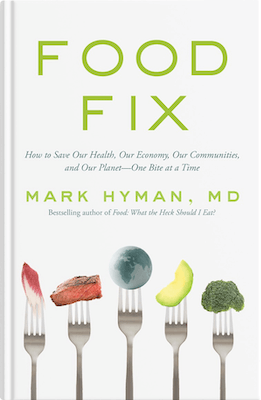
food fix by mark hyman

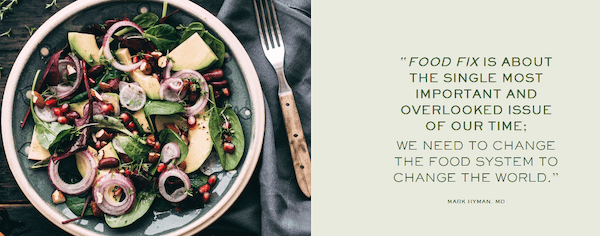
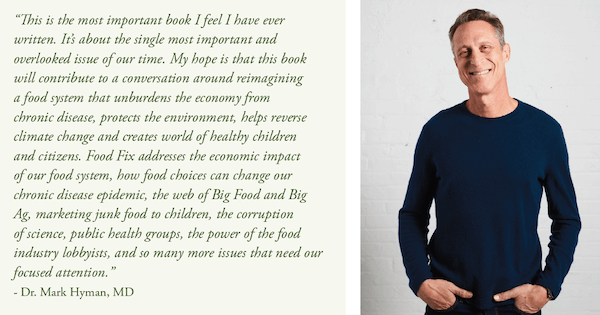
Dr. Mark Hyman has a brilliant new book called called Food Fix: How to Save Our Health, Our Economy, Our Communities, and Our Planet – One Bite at a Time and his big bold message is that: “We need to change the food system to change the world.”  It is an issue that is seriously overlooked and he wants to change this.

food fix

Watch this short video clip to hear it from Dr. Hyman himself.

food fix

Here are some of the key messages from Food Fix

  • If we don’t change the food system, we’re going to spend $95 trillion dollars on chronic disease – heart disease, obesity, type 2 diabetes, cancer, and dementia – over the next 35 years.
  • Big food spends a lot of money in Washington to keep us fat and sick.
  • The food industry preys on our most vulnerable citizens – children.

According to the American Psychological Association, children under the age of 8 don’t instinctively recognize the difference between TV Commercials and programs, which makes them particularly vulnerable.

  • Big Food buys partnerships with public schools.
  • Minorities are also targeted by the food industry.

Researchers at the University of Connecticut found that junk food companies spend the most on ads that target African Americans and Spanish speakers. Guess which products were most heavily advertised toward minorities—Gatorade, Pop Tarts, Twix Candy Bar, Cinnamon Toast Crunch Cereal, and Tyson Frozen Entrees

The worse the nutritional profile the more heavily the products were promoted through advertising.

Where are the broccoli ads?

These findings, the researchers noted, “highlight important disparities in the food and beverage industry’s heavy marketing of unhealthy foods to Hispanic and black youth, and the corresponding lack of promotion of healthier options.”

  • Bad food is making us anxious, depressed, and is messing with our brains. I’m thrilled that Dr. Hyman highlights how nutritional medicine is a key to mental health and psychiatry. Here are some snippets :

Studies show that adults with many types of mental health issues and children with ADHD have very low levels of antioxidants (which come from fruits and vegetables), such as the fifty-six-year-old man with lifelong crippling depression who improved by cleaning up his diet and taking a cocktail of B vitamins. I remember one man who presented with severe panic attacks every afternoon. Turned out he was eating a diet very high in sugar and starch and had wild swings in his blood sugar, which triggered the anxiety. When he cut out sugar and starch, his anxiety and panic attacks vanished. These stories are not anomalies. They are predictable results from applying nutritional medicine.

In recent years, major medical journals have clearly shown the link between nutrition and mental health. The Lancet Psychiatry, a top medical journal, maps out just how nutritional medicine is a key to mental health and psychiatry. Overall diet quality, high sugar loads, and rampant nutritional deficiencies (including omega‑3 fats, zinc, magnesium, vitamin D, and B vitamins) all drive mental illness. In other words, the culprit is once again the American and increasingly global industrial diet. We have discussed the costs of obesity and chronic disease, but most don’t connect mental illness to the costs of chronic disease. In fact, the cost of mental illness to the economic burden is far greater than the costs of heart disease, diabetes, and cancer.

Population studies have found that more fruits and vegetables and less french fries, fast food, and sugar are associated with a lower prevalence of mental illness, and that junk food creates moderate to severe psychological distress. The good news is that interventional studies have shown that treatment of mental illness with diet works well (especially since most medications for mental illness don’t work that well, despite being the second biggest category of drugs sold).

And here are a few of the many solutions proposed in the book:

  • Support regenerative agriculture and sustainable food.
  • Stop purchasing franken-foods:

Today 60% of our diet is ultra-processed food made from commodity crops—corn, soy, and wheat—that’s turned into various sizes, shapes, and colors from the raw materials—high fructose corn syrup, white flour, and refined soybean oil. When you vote with your dollars and your fork to stay away from these foods, you send a message to big food to stop subsidizing commodity crops and grow more fruits and vegetables!

  • End food waste:

Buy only what you need.  If food may go bad soon, make a soup or stew. Get a compost bucket for your kitchen.  Start a compost pile in your backyard, or buy an in-home composter.  Use it in your garden or donate it to someone who has a garden.

  • Be an activist and teach your family why food matters.
  • Address food deserts and food swamps in African American communities, and recognize that this is:

“food apartheid,” an embedded social and political form of discrimination.

Here is the official book blurb:

Help to transform the planet in crisis with this indispensable guide to healthy, ethical, and economically sustainable food from #1 New York Times bestselling author Mark Hyman, MD.

Food is our most powerful tool to reverse the global epidemic of chronic disease, heal the environment, reform politics, and revive economies. What we eat has tremendous implications not just for our waistlines, but also for the planet, society, and the global economy. What we do to our bodies, we do to the planet; and what we do to the planet, we do to our bodies. 

In Food Fix, Mark Hyman explains how our food and agriculture policies are corrupted by money and lobbies that drive our biggest global crises: the spread of obesity and food-related chronic disease, climate change, poverty, violence, educational achievement gaps, and more.

Pairing the latest developments in nutritional and environmental science with an unflinching look at the dark realities of the global food system and the policies that make it possible, Food Fix is a hard-hitting manifesto that will change the way you think about – and eat – food forever, and will provide solutions for citizens, businesses, and policy makers to create a healthier world, society, and planet.

I love that Dr. Hyman says he is left with a sense of hope and possibility after writing this book … “understanding the problems and challenges we face sets the foundations for the solutions.”

Wise words indeed! This book is much-needed, brilliant, eye-opening and shocking at times, but hopeful and solution-based.

You can get your copy of Food Fix here (my Amazon link) and find additional information and resources on the official book site here.

Filed Under: Books Tagged With: African Americans, chronic disease, climate change, education, environmental, food, food and agriculture policies, food deserts, Food Fix, food swamps, mark hyman, mental health, nutrition, Nutritional medicine, obesity, poverty, psychiatry, the planet, violence

  • Page 1
  • Page 2
  • Page 3
  • Go to Next Page »

Primary Sidebar

NEW! GABA QuickStart Homestudy (with special intro pricing)

gaba quickstart homestudy

Free Report

9 Great Questions Women Ask about Food, Mood and their Health

You'll also receive a complimentary subscription to my ezine "Food, Mood and Gal Stuff"


Connect with me

Popular Posts

  • Amino Acids Mood Questionnaire from The Antianxiety Food Solution
  • The Antianxiety Food Solution Amino Acid and Pyroluria Supplements
  • Pyroluria Questionnaire from The Antianxiety Food Solution
  • Collagen and gelatin lower serotonin: does this increase your anxiety and depression?
  • Tryptophan for the worry-in-your-head and ruminating type of anxiety
  • GABA for the physical-tension and stiff-and-tense-muscles type of anxiety
  • The Antianxiety Food Solution by Trudy Scott
  • Seriphos Original Formula is back: the best product for anxiety and insomnia caused by high cortisol
  • Am I an anxious introvert because of low zinc and vitamin B6? My response to Huffington Post blog
  • Vagus nerve rehab with GABA, breathing, humming, gargling and key nutrients

Recent Posts

  • What do I use instead of Seriphos to help lower high cortisol that is affecting my sleep and making me anxious at night?
  • BeSerene™ GABA/theanine cream eases severe muscle tension in her neck/shoulders, prevents her bad headaches and quells her anxiety
  • How the correct approach, dose and sublingual use of GABA can be calming and not cause a flushed and itchy face and neck
  • The amino acid glutamine improves low mood by addressing gut health, and it has calming effects too
  • Flight anxiety with heightened breath, physical tension and also fearing the worst (the role of low GABA and low serotonin)

Categories

  • 5-HTP
  • AB575
  • Addiction
  • ADHD
  • Adrenals
  • Alcohol
  • Allergies
  • Alzheimer's disease
  • Amino Acids
  • Anger
  • Antianxiety
  • Antianxiety Food Solution
  • Antidepressants
  • Anxiety
  • Anxiety and panic
  • Autism
  • Autoimmunity
  • benzodiazapines
  • Bipolar disorder
  • Books
  • Caffeine
  • Cancer
  • Candida
  • Children/Teens
  • Collagen
  • Cooking equipment
  • Coronavirus/COVID-19
  • Cravings
  • Depression
  • Detoxification
  • Diabetes
  • Diet
  • DPA/DLPA
  • Drugs
  • EFT/Tapping
  • EMF
  • EMFs
  • Emotional Eating
  • Endorphins
  • Environment
  • Essential oils
  • Events
  • Exercise
  • Fear
  • Fear of public speaking
  • Fertility and Pregnancy
  • Fish
  • Food
  • Food and mood
  • Functional neurology
  • GABA
  • Gene polymorphisms
  • General Health
  • Giving
  • Giving back
  • Glutamine
  • Gluten
  • GMOs
  • Gratitude
  • Gut health
  • Heart health/hypertension
  • Histamine
  • Hormone
  • Hyperparathyroidism
  • Hypoglycemia
  • Immune system
  • Inflammation
  • Insomnia
  • Inspiration
  • Introversion
  • Joy and happiness
  • Ketogenic diet
  • Lithium orotate
  • Looking awesome
  • Lyme disease and co-infections
  • MCAS/histamine
  • Medication
  • Men's health
  • Mental health
  • Mercury
  • Migraine
  • Mold
  • Movie
  • MTHFR
  • Multiple sclerosis
  • Music
  • NANP
  • Nature
  • Nutritional Psychiatry
  • OCD
  • Osteoporosis
  • Oxalates
  • Oxytocin
  • Pain
  • Paleo
  • Parasites
  • Parkinson’s disease
  • PCOS
  • People
  • PMS
  • Postpartum
  • PTSD/Trauma
  • Pyroluria
  • Questionnaires
  • Real whole food
  • Recipes
  • Research
  • Schizophrenia
  • serotonin
  • SIBO
  • Sleep
  • Special diets
  • Sports nutrition
  • Stress
  • Sugar addiction
  • Sugar and mood
  • Supplements
  • Teens
  • Testimonials
  • Testing
  • The Anxiety Summit
  • The Anxiety Summit 2
  • The Anxiety Summit 3
  • The Anxiety Summit 4
  • The Anxiety Summit 5
  • The Anxiety Summit 6
  • Thyroid
  • Thyroid health
  • Toxins
  • Tryptophan
  • Tyrosine
  • Uncategorized
  • Vegan/vegetarian
  • Women's health
  • Yoga

Archives

  • October 2025
  • September 2025
  • August 2025
  • July 2025
  • June 2025
  • May 2025
  • April 2025
  • March 2025
  • February 2025
  • January 2025
  • November 2024
  • October 2024
  • September 2024
  • August 2024
  • July 2024
  • June 2024
  • May 2024
  • April 2024
  • March 2024
  • February 2024
  • January 2024
  • December 2023
  • November 2023
  • October 2023
  • September 2023
  • August 2023
  • July 2023
  • June 2023
  • May 2023
  • April 2023
  • March 2023
  • February 2023
  • January 2023
  • December 2022
  • November 2022
  • October 2022
  • September 2022
  • August 2022
  • July 2022
  • June 2022
  • May 2022
  • April 2022
  • March 2022
  • February 2022
  • January 2022
  • December 2021
  • November 2021
  • October 2021
  • September 2021
  • August 2021
  • July 2021
  • June 2021
  • May 2021
  • April 2021
  • March 2021
  • February 2021
  • January 2021
  • December 2020
  • November 2020
  • October 2020
  • September 2020
  • August 2020
  • July 2020
  • June 2020
  • May 2020
  • April 2020
  • March 2020
  • February 2020
  • January 2020
  • December 2019
  • November 2019
  • October 2019
  • September 2019
  • August 2019
  • July 2019
  • June 2019
  • May 2019
  • April 2019
  • March 2019
  • February 2019
  • January 2019
  • December 2018
  • November 2018
  • October 2018
  • September 2018
  • August 2018
  • July 2018
  • June 2018
  • May 2018
  • April 2018
  • March 2018
  • February 2018
  • January 2018
  • December 2017
  • November 2017
  • October 2017
  • September 2017
  • August 2017
  • July 2017
  • June 2017
  • May 2017
  • April 2017
  • March 2017
  • February 2017
  • January 2017
  • December 2016
  • November 2016
  • October 2016
  • September 2016
  • August 2016
  • July 2016
  • June 2016
  • May 2016
  • April 2016
  • March 2016
  • February 2016
  • January 2016
  • December 2015
  • November 2015
  • October 2015
  • September 2015
  • August 2015
  • July 2015
  • June 2015
  • May 2015
  • April 2015
  • March 2015
  • February 2015
  • January 2015
  • December 2014
  • November 2014
  • October 2014
  • September 2014
  • August 2014
  • July 2014
  • June 2014
  • May 2014
  • April 2014
  • March 2014
  • February 2014
  • January 2014
  • December 2013
  • November 2013
  • October 2013
  • September 2013
  • August 2013
  • July 2013
  • June 2013
  • May 2013
  • April 2013
  • March 2013
  • February 2013
  • January 2013
  • December 2012
  • November 2012
  • October 2012
  • August 2012
  • July 2012
  • June 2012
  • May 2012
  • April 2012
  • March 2012
  • February 2012
  • January 2012
  • December 2011
  • November 2011
  • October 2011
  • September 2011
  • August 2011
  • July 2011
  • June 2011
  • May 2011
  • April 2011
  • March 2011
  • February 2011
  • January 2011
  • December 2010
  • October 2010
  • September 2010
  • July 2010
  • May 2010
  • April 2010
  • March 2010
  • February 2010
  • January 2010
  • November 2009

Share the knowledge!

The above statements have not been evaluated by the Food and Drug Administration. Products listed in this website are not intended to diagnose, treat, cure or prevent any disease.

The information provided on this site is for informational and educational purposes only and is not intended as a substitute for advice from your physician or other health care professional. You should consult with a healthcare professional before starting or modifying any diet, exercise, or supplementation program, before taking or stopping any medication, or if you have or suspect you may have a health problem.


Copyright © 2026 Trudy Scott. All Rights Reserved. | Privacy | Terms and Conditions | Refund Policy | Medical Disclaimer

Free Report

9 Great Questions Women Ask about Food, Mood and their Health

You’ll also receive a complimentary subscription to my ezine “Food, Mood and Gal Stuff”