• Skip to primary navigation
  • Skip to main content
  • Skip to primary sidebar

everywomanover29 blog

Food, Mood and Women's Health – Be your healthiest, look and feel great!

  • Blog
  • About
  • Services
  • Store
  • Resources
  • Testimonials
  • The Book
  • Contact
  • Search this site

Inflammation

Dark chocolate reduces stress and inflammation, improves memory, immunity and mood – but are you addicted?

June 22, 2018 By Trudy Scott 21 Comments

dark chocolate addiction

A press release from Loma Linda University reports that two new studies show dark chocolate consumption reduces stress and inflammation, while improving memory, immunity and mood. These are wonderful results from human trials and if you’re like most of us I’m sure this subject brings great delight! However (and sorry to be the party-pooper here), there are a number reasons why you may want to hold back on the excitement: if you’re addicted to chocolate and/or sugar this is a big red flag, and if dietary oxalates and caffeine are issues for you then this news won’t be good. But there may be ways you can get some of the benefits without the harmful effects (more on that below).

These papers were presented as posters at the Experimental Biology 2018 annual meeting in San Diego, and the press release reports that

dark chocolate with a high concentration of cacao (minimally 70% cacao, 30% organic cane sugar) has positive effects on stress levels, inflammation, mood, memory and immunity. While it is well known that cacao is a major source of flavonoids, this is the first time the effect has been studied in human subjects to determine how it can support cognitive, endocrine and cardiovascular health.

Lee S. Berk, a researcher in psychoneuroimmunology and food science from Loma Linda University, School of Allied Health Professions, served as principal investigator on both studies and stated the following:

For years, we have looked at the influence of dark chocolate on neurological functions from the standpoint of sugar content – the more sugar, the happier we are. This is the first time that we have looked at the impact of large amounts of cacao in doses as small as a regular-sized chocolate bar in humans over short or long periods of time, and are encouraged by the findings. These studies show us that the higher the concentration of cacao, the more positive the impact on cognition, memory, mood, immunity and other beneficial effects [such as enhanced neuroplasticity].

The flavonoids found in cacao are extremely potent antioxidants and anti-inflammatory agents, with known mechanisms beneficial for brain and cardiovascular health.

In these 2 small studies (which have yet to be published in a peer-review journal) the consumption of 48g of 70% dark organic chocolate offered many of these health benefits in as quickly as 30 mins (in one the study) and when consumed every day for a week (in the other study).

In case you’re wondering how much this means in practical terms: 48 g is just over an ounce and a half, or 2 tablespoons. So think about 2 squares of 70% dark chocolate.

But are you addicted to chocolate? And do you binge?

I know I sounded like a real party pooper in the introduction but if your eyes lit up or you even got a little teary-eyed or felt a really warm “I so deserve this treat” glow or you felt realy joy at the thought of indulging (or maybe all of the above emotions) when you read the subject line then these may be red flag for you. But despair not as there are ways to help you not overdo it and binge on a week’s supply of dark chocolate in one sitting. If you relate to the binge comment you know exactly what I mean and have felt that deep regret and shame afterwards.

Lorraine shares this about her chocolate addiction:

the minute I start eating it – I am like a heroin addict. I can’t stop. I end up bingeing for a few weeks as it’s all I can think about. It’s the weirdest thing – so I mainly abstain from it and have a slip, binge, anxiety relapse about once a year until I am able to buckle down and fight the cravings knowing the anxiety is not worth the euphoria.

For some people the anxiety that is caused by chocolate is too severe (more on that below) but if Lorraine’s anxiety and bingeing are related there may be a solution for her and if yes, it would be the GABA solution below.

The brain chemistry balancing solution for bingeing

Cravings for chocolate can often be due to brain chemical imbalances and when these are addressed no willpower is required and there are no feelings of being deprived. Here is a simple way to help you figure it out:

  • if you have to eat chocolate when you haven’t eaten in awhile it’s likely low blood sugar and glutamine on the tongue stops the desire on the spot
  • if you stress-eat your chocolate cravings are likely due to low GABA, and GABA will stop the stress-eating and calm you down
  • if you eat chocolate to feel happy (and especially from late afternoon onwards) then your cravings are likely due to low serotonin, and tryptophan stops the cravings and boosts mood and reduces anxiety
  • if you eat chocolate for an energy boost then it’s likely due to low catecholamines and tyrosine will stop those cravings and give you a mood and energy boost
  • if you are a comfort-eater then it’s likely due to low endorphins and DPA will stop that “I deserve-it-reward-eating” and also give you a hug-like mood boost

I write more about this in the glutamine cravings blog and you can find all the individual amino acids listed on my supplements blog here with details on how to purchase them from my distributor.

Once you have this figured out this brain balancing there is no bingeing, you can eat a small portion and feel very satisfied and will actually address some mood and anxiety issues at the same time!

Dark chocolate is a no-no if dietary oxalates are an issue for you

If dietary oxalates cause you issues like anxiety, insomnia, vulvar pain, urinary issues, or other pain (for me they cause dreadful foot pain – like shards of glass combined with hot coals)

When considering high oxalate foods, 41mg and above is considered an exceptionally high oxalate food. In one study, the total oxalate contents of 34 samples of dark chocolate collected from 13 different countries ranged from 155 to 485 mg/100 g which equates to around 77 to 240mg for 48g.   So dark chocolate does need to be avoided and I would not even consider eating some even with calcium citrate or magnesium citrate.

In a related study published last year by lead author Professor Lee Birk, Is Chocolate Beneficial for Brain Health? the 20 subjects were subjected to a sequence of cacao sensory awareness tasks ranging from:

  • recall of past experiences
  • imagine eating chocolate right now
  • visualization/looking at real chocolate
  • olfaction [or sense of smell]
  • taste but not swallow
  • and finally chocolate consumption (70% cocoa bar) to satiation

And for many the above provided benefits for them. For me a good long deep sniff of dark chocolate feels quite satisfying, as strange as it may sound.

I do sometimes miss the texture of melted chocolate but solid coconut butter satisfies that need. Believe it or not, but so does pemmican, a savory snack that is made with beef fat and beef jerky, honey/cherries and sea salt. Check out pemmican from US Wellness Meats here (my affiliate link).

Avoid it if the caffeine causes anxiety, insomnia, heart palpitations and/or migraines

For many of my clients the caffeine in dark chocolate can cause anxiety, insomnia, heart palpitations and/or migraines. Some of these “twitchy” effects may also be due to the theobromine, a chemical compound, which roughly translates to “food of the gods” and is also what makes chocolate deadly for dogs.

I have to admit that chocolate would be my “drug” of choice before cakes, cookies or sweets. Putting aside the oxalate issues, it also affects my sleep and creates mild anxiety/sort of edginess with mild heart palpitations with restless sleep. This is how I remember a coffee buzz feeling. But worse than this is the migraine I get a day or 2 days later. It is wicked pain above my left eye that leaves me horizontal for a day. So, no chocolate for me unfortunately, other than enjoying the aroma of it.

Carob as a delicious alternative

Carob is a delicious alternative to dark chocolate as it doesn’t contain caffeine and is lower in oxalates. It has a definite chocolate-like flavor.

A 2002 study found that carob may actually have calming effects. It is also antioxidant rich, contains the polyphenol gallic acid which has been shown to help metabolic syndrome, has chemoprotective properties and helps with digestion.

Check out my Carob Cinnamon Delight al la Trudy hot beverage recipe and this recipe for Carob Coconut Avocado bites (leave out the sesame seeds and add extra coconut flakes if oxalates are an issue).

Organic and Fair Trade of course

If you can get to enjoy dark chocolate be sure to consume only organic as cocoa plants are heavily sprayed, Other than the concerns with the actual pesticides and insecticides, there is cause for concern about raised copper levels because of copper-based pesticides.

Fair Trade is a global movement made up of a diverse network of producers, companies, shoppers, advocates, and organizations putting people and planet first

I know I’m going to get questions on what brands I recommend that are organic, Fair Trade and gluten-free so here goes – Vital Choice is my pick right now.
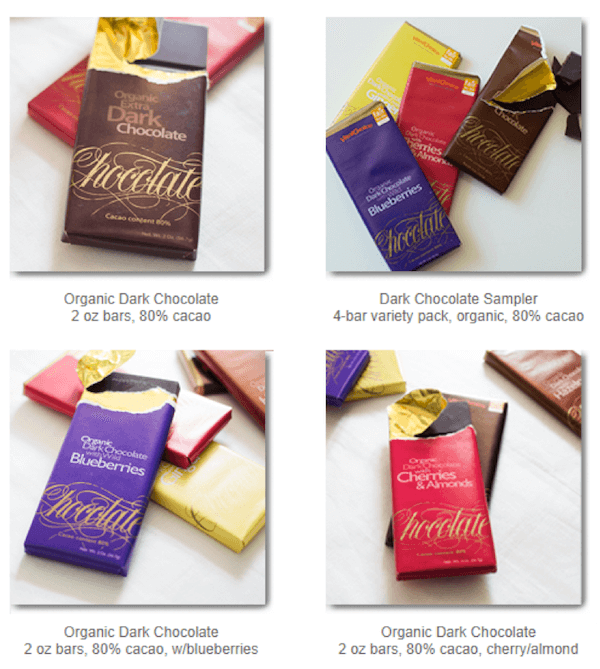
Vital Choice has quality dark chocolate that is both organic and Fair Trade. It is labeled gluten-free but they state it is “Manufactured on shared equipment with products containing wheat, milk, peanuts, and tree nuts.” I have not had any reports of anyone having a gluten issue with it but please use your own discretion. Here is the link to check them out and make a purchase (it is my affiliate link). Simply search for dark chocolate.

Feel free to share how you do with dark chocolate and how it makes you feel when you consume it and be sure to post any questions you may have.

And if you know of brands that are organic, Fair Trade and gluten-free please do share them.
Filed Under: Addiction Tagged With: addicted, anxiety, caffeine, comfort, Dark chocolate, DPA, immunity, Inflammation, insomnia, memory, mood, oxalates, reward, stress, tryptophan, Vital Choice

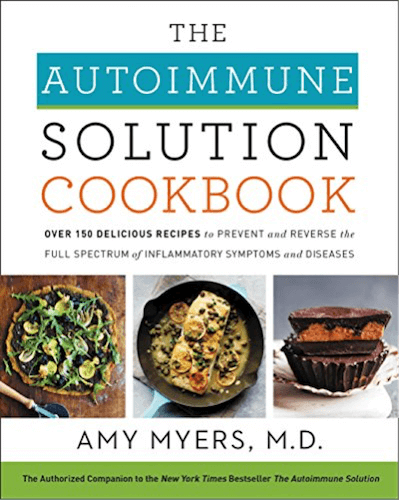
The Autoimmune Solution Cookbook by Amy Myers MD

May 8, 2018 By Trudy Scott 6 Comments

There is a wonderful new recipe book out this week and I want you to know about it!

Dealing with an autoimmune or other chronic health condition such as Hashimoto’s, IBS, Celiac, RA, Psoriasis, chronic fatigue or fibromyalgia, or even just committing to your family’s health does NOT have to mean giving up delicious foods!

No one knows this better than my dear friend and world-renowned functional medicine physician, Amy Myers, MD.

Amy Myers reversed her own autoimmune condition by addressing the root causes of her illness and diet played a HUGE role. She continues to follow the same dietary program that she recommends to her patients and community.

We actually ate out together in Melbourne at the recent Bioceuticals Symposium and I saw her put The Myers Way® (her proven program) of eating into practice at the restaurant, making sure everything she was eating was safe and would not trigger an autoimmune flare. Our server worked hard making sure all her questions were addressed in a satisfactory manner and she set a great example for all of us.

She does this in her wonderful new cookbook, setting a great example and guiding you to make the right choices in order to reduce inflammation, heal your leaky gut and help you move toward the optimal health side of the autoimmune spectrum and stay there.

Here I am with integrative pediatrician Elisa Song MD and functional medicine physician, Amy Myers, MD.

Amy inspires you to cook delicious meals at the same time. She helps you change the way you look at food, both when you’re cooking at home for our families, and when we’re eating out and traveling.

This new book, The Autoimmune Solution Cookbook (my Amazon link), contains over 150 absolutely delicious, easy-to-make, autoimmune-reversing recipes. Amy shares this:

Whether you’re a five-star chef or just getting started in the kitchen, I created these recipes to be a piece of cake (YES! There’s even a birthday cake recipe I created for my daughter).

This cookbook is perfect for you if you:

  • Have an autoimmune or other chronic condition
  • Know that autoimmunity runs in your family
  • Currently follow an autoimmune, Paleo or ketogenic diet
  • Have read The Autoimmune Solution and have already followed its thirty-day protocol, this cookbook is the perfect companion for spicing up your diet and adding more variety to your mealtimes
  • Are dealing with leaky gut, seasonal allergies, asthma, or eczema
  • Have Hashimoto’s, Graves’, or any other type of thyroid issue
  • Deal with digestive issues such as bloating, gas, constipation, and more
  • Have food allergies or food sensitivities
  • Have a loved one dealing with any of the above issues and are looking for the perfect gift for them
  • Are looking for a gift for your doctor or other health practitioner

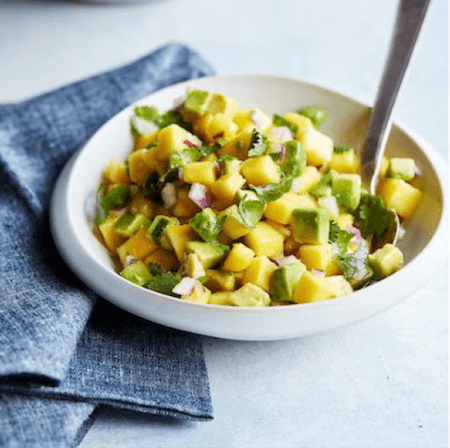
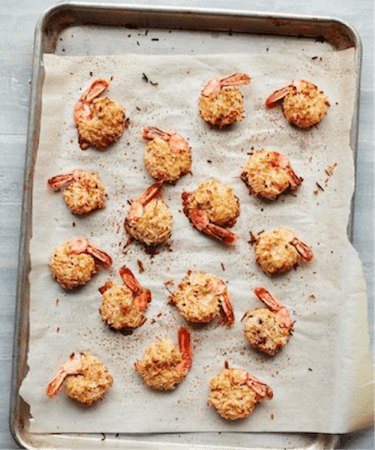
Here are 2 yummy recipes to get you tempted, your mouth watering and cooking: Refreshing Mango-Avocado Salsa and Coconut Shrimp.

Refreshing Mango-Avocado Salsa

With summer approaching, this refreshing mango-avocado salsa makes the perfect poolside snack or cookout appetizer served with plantain chips. Or add it to grilled fish, shrimp, or chicken for an extra boost of inflammation-fighting Omega 3 fatty acids. Makes 2 cups

Ingredients:

1 mango, cubed
1 avocado, cubed
½ red onion, finely chopped
3 tablespoons chopped fresh cilantro
Juice of 1 small lime
1 tablespoon extra virgin olive oil
¼ teaspoon fine sea salt
½ teaspoon freshly ground black pepper
½ teaspoon ground cumin

Instructions:

In a bowl, combine all ingredients and mix gently. Serve immediately


Coconut Shrimp

When I was growing up in New Orleans, my grandparents took the family out to dinner at the Yacht Club for special occasions, and I always ordered a fried shrimp po’ boy—a traditional Louisiana sandwich. This substitute for fried shrimp is a healthier option that everyone will love. The shrimp are tossed with coconut flour and shredded coconut instead of breadcrumbs— and they are so easy to make! My husband and I served this as an appetizer at our wedding and they were a huge hit! Serves 4

Ingredients:

2 tablespoons coconut flour
½ cup unsweetened shredded coconut
1 teaspoon garlic powder
1 teaspoon onion powder
½ teaspoon fine sea salt
½ teaspoon ground black pepper
¾ cup full-fat coconut milk
1 ½ tablespoons coconut aminos
1 pound wild-caught shrimp

Instructions:

  1. Heat oven to 400°F. In a shallow bowl, whisk together coconut flour, shredded coconut, garlic and onion powders, salt, and pepper.
  2. In another shallow bowl, whisk together the coconut milk and coconut aminos.
  3. Dip each shrimp into the liquid mixture, and then into the dry mixture to coat. Arrange in a single layer in a baking dish. Bake for 15 to 20 minutes, until golden brown. For extra crispiness, remove the pan and set the oven to broil. Broil the shrimp for 4 to 5 minutes.

Some of the other recipes I’m really looking forward to trying are the creamy zucchini-basil soup, the herbed roast chicken, the world’s best Asian flank steak, the rosemary sea-salt crackers (made with cassava flour), the spinach artichoke dip (I’ll replace the spinach with low-oxalate dino kale), raspberry cheesecake bites (I’ll make it with blueberries instead of high-oxalate raspberries), and the apple crisp.  There are so many delicious recipes!

There is no perfect eating plan for everyone and Amy has created this eating plan and recipes to cater for the majority of those with an autoimmune condition. I really appreciate that recipes are marked as being autoimmune-friendly, thyroid-friendly, suitable for candida and SIBO, and low histamine.  However, if you do have oxalate issues you will need to adjust some of the recipes. Also, if you have issues with collagen making your anxiety or insomnia worse then I recommend adding some protein powder to the recipes that call for gelatin or collagen, and/or consider a trial of tryptophan.

Here’s the official book blurb:

The companion cookbook to the revolutionary New York Times bestseller The Autoimmune Solution, filled with more than 150 nutritious, easy-to-prepare, every day recipes to heal symptoms of inflammation and autoimmune disorders, including Graves’ Disease, Psoriasis, Fibromyalgia, Lupus, Celiac disease, Hashimoto’s thyroiditis, and Multiple sclerosis.

Nine in ten Americans suffer from inflammation or an autoimmune disorder—conditions for which conventional medicine has no cure. Minor irritations like rashes and runny noses are ignored, while chronic and debilitating diseases like Crohn’s and rheumatoid arthritis are handled with a cocktail of toxic treatments that fail to address their root cause. But as Dr. Amy Myers revealed in The Autoimmune Solution, there are solutions. In this invaluable cookbook, she now shows you how to repair your body and reverse your symptoms by eating your way to good health.

The Autoimmune Solution Cookbook delivers more than 150 grain-free recipes designed to prevent and reverse the full spectrum of autoimmune diseases, including allergies, obesity, asthma, cardiovascular disease, fibromyalgia, lupus, IBS, chronic headaches, fatigue, multiple sclerosis, colitis, Graves’ disease, and Hashimoto’s thyroiditis. As our food and environment becomes more toxic, the health of millions of us have been impaired. Thanks to Dr. Myers, you no longer need to rely on prescriptions—with troubling, sometimes dangerous side effects—to counteract your body’s over-reactive immune system. The Autoimmune Solution Cookbook is the healthy alternative to cope with and conquer inflammatory-related symptoms and diseases.

If you’re ready to enjoy amazing meals that will help you take back your health and your life, this book is an absolute must-have, so get your copy of The Autoimmune Solution Cookbook today – on Amazon here (my affiliate link) or from your favorite book store.

This cookbook is the perfect companion to The Autoimmune Solution (my affiliate link), a wonderful book that introduced The Myers Way®, empowering so many to reverse their autoimmune conditions.

Learn more about the book and claim the book launch gifts here.

And stay tuned for an email notification from Dr. Myers about the upcoming Autoimmune Program webinar being held online on May 17. She’ll be sharing more about her group program if you’re the kind of person looking for a community-based program.

Happy cooking and do let us know how you enjoy the recipes!

If you have questions or feedback please post them in the comments below.

Filed Under: Books Tagged With: amy myers, autoimmune, autoimmune disease, Inflammation, The Autoimmune Solution, The Autoimmune Solution Cookbook

The ketogenic diet for mental health, weight loss, inflammation and disease prevention

May 2, 2018 By Trudy Scott 6 Comments

I wasn’t aware until recently that “KETO”, “Ketones” “Keto diet”, “Ketogenic lifestyle”, “Ketosis” and “Ketogenic diet” are some of the MOST SEARCHED terms on the internet today.

But there is a good reason for this and host of  The Keto Edge Summit (which runs from May 7-13, 2018), Dr. David Jockers shares this:

The goal of the ketogenic lifestyle is to adapt the body to utilize FAT as its primary fuel source instead of SUGAR.

For our ancestors, eating three meals a day just wasn’t a thing. Instead, they’d hunt and forage for the foods they could find. When there wasn’t food, they wouldn’t eat.

Sometimes they’d go for days without food. To sustain life during times of scarcity, the body is thought to have developed the ability to utilize fat as an alternative fuel source.

Today, there’s an abundance of food available to most of us at all times. We regularly eat three meals per day with intermittent snacking between them.

This kind of frequent eating, along with an overemphasis on carb-rich and sugary foods, causes a REDUCED ability to burn fat. Because we don’t have to hunt or forage for food; we’ve become “sugar burners.”

As these sugar-laden foods damage our bodies, we rely MORE on sugar and lose the ability to produce ketones – as a result, massive blood sugar spikes, inflammation, hormone imbalance and ultimately many of the chronic diseases that plague us today.

In a traditional nutrition course, you’d learn that sugar is the body’s PRIMARY fuel source, while fat is secondary. What we’ve learned now (and so much research is supporting this) fat can be a healthier and more sustainable source of energy.

Ketones help you burn fat for energy, powerfully reduce inflammation and show promise in preventing and eradicating diabetes, cancer, autoimmune and neurodegenerative diseases like Alzheimer’s and Parkinson’s, and they can even play a role in alleviating symptoms in mental health conditions like anxiety, depression and schizoaffective disorder.

One of the amazing speakers on the summit is Dominic D’Agostino, researcher and Associate Professor at the University of South Florida. I attended the Bioceuticals conference in Melbourne this past weekend and had the pleasure of hearing him present on this topic live and all I can say is wow! I don’t want you to miss out and now you don’t have to when you tune in via the Keto Edge Summit.

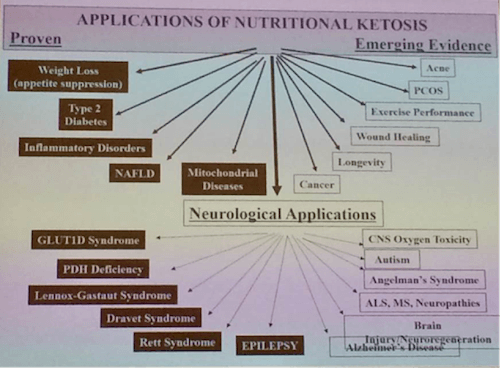
Here is one of the slides where he shares the many proven and emerging applications of nutritional ketosis:

The applications of nutritional ketosis are extensive – including epilepsy, type 2 diabetes, weight loss, NAFLD, mitochondrial disease and inflammation, with emerging evidence for acne, PCOS, wound healing, cancer, autism, ALS, MS, Alzheimer’s, the brain and anxiety.

(anxiety and depression fall under brain on the right and also under inflammatory disorders on the left)

I shared these case studies a few weeks ago in a blog post – Ketogenic diet: reductions in auditory hallucinations and delusions, better mood and energy, and weight loss. Two schizoaffective patients working with Dr. Chris Palmer, a psychiatrist from Harvard’s McLean Hospital in Belmont, Massachusetts, tried a ketogenic diet for weight loss:

  • After four weeks on the ketogenic diet, the female patient had resolution of her delusions and lost ten pounds.
  • The male patient experienced similar results with “dramatic” reductions in auditory hallucinations and delusions, as well as better mood and energy. He also lost weight, losing 104 pounds over the course of a year.

There is also research reporting the following results:

  • Therapeutic use of carbohydrate-restricted diets in an autistic child; a case report of clinical and 18FDG PET findings

the patient’s behavior and intellect improved in regard to hyperactivity, attention span, abnormal reactions to visual and auditory stimuli, usage of objects, adaptability to changes, communication skills, fear, anxiety, and emotional reactions

  • Exogenous Ketone Supplements Reduce Anxiety-Related Behavior in Sprague-Dawley and Wistar Albino Glaxo/Rijswijk Rats

ketone supplementation may represent a promising anxiolytic strategy through a novel means of inducing nutritional ketosis.

As Dr. Jockers states:

The GREATEST health discovery of this century may ALREADY be inside your body!

During this health summit, you’ll discover:

  • What is ketosis (and how does it work)?
  • Myths, and how to separate fact from fiction!
  • How to overcome the challenges of being “keto adapted.”
  • Whether you should start a keto diet (or not!).
  • How to shop, live and eat on a ketogenic lifestyle.

The Keto Edge Summit is online and available at no-cost from May 7-13, 2018! Register here

I will be in learning mode with you for the Keto Edge Summit. I’ve been following Dr. David Jockers for awhile and I’m very excited about the applications of a ketogenic diet for anxiety and depression, given what we’ve learned so far. It’s going to be a great educational opportunity for all of us.

Have you experienced benefits from a ketogenic diet? If yes please do share what benefits?

If you’ve had challenges being on a ketogenic diet please share those challenges too, so we can all learn.

Filed Under: Diet, Events, Ketogenic diet Tagged With: anxiety, brain, Dominic D'Agostino, Dr. David Jockers, Inflammation, keto, Ketogenic, Ketogenic diet, ketosis, The Keto Edge Summit, weight-loss

Wi-Fi is an important threat to human health and may contribute to unresolved anxiety, SIBO, oxalate issues and high cortisol

March 30, 2018 By Trudy Scott 32 Comments

A new paper by Martin Pall, Wi-Fi is an important threat to human health, states the following:

Repeated Wi-Fi studies show that Wi-Fi causes oxidative stress, sperm/testicular damage, neuropsychiatric effects including EEG changes, apoptosis, cellular DNA damage, endocrine changes, and calcium overload.

He states that EMF effects are often cumulative, EMFs may impact young people more than adults and that voltage-gated calcium channel (VGCC) activation plays a role in all seven effects:

Each of these seven is also produced by downstream effects of the main action of such EMFs, voltage-gated calcium channel (VGCC) activation.

Peroxynitrite is a very powerful oxidant leading to major oxidative stress in the body and his landmark VGCC paper covers how peroxynitrite is created:

EMF activation of VGCCs leads to rapid elevation of intracellular Ca2+ [calcium ions], nitric oxide and in some cases at least, peroxynitrite

I’m studying the human threats of Wi-Fi and EMFs in the practitioner ElectrosmogRx course being taught by Nick Pineault, so the timing of this new paper is excellent.  Nick’s course is highly recommended too.

I’ll have much more to share once the course is over but this is just some of what I’ve learned so far about the biological impacts of EMFs (other than what is mentioned in the above new paper by Martin Pall):

  • A contribution to mitochrondrial dysfunction
  • Increased inflammation
  • Glutathione depletion
  • Glutamate excitotoxicty
  • Break down of the blood brain barrier and other barriers like the gut
  • Melatonin depletion

And much more – all of which have major implications for mental health (and other health conditions too of course).

My speculations about chronic anxiety, insomnia, benzodiazepine issues, SIBO and oxalate issues

Based on the above and making some extrapolations from the research I am speculating that EMF overload may play a role in the following situations in some susceptible individuals:

  • Why some individuals have chronic high cortisol and yet nutritional support for the adrenals offers minimal help? And why some individuals continue to experience anxiety and insomnia (due in part to high cortisol and/or low melatonin) despite making all the root cause changes to diet, addressing gut health and addressing nutritional deficiencies? Or why ongoing nutrient support is needed despite following a healthy lifestyle?
  • Why some individuals on benzodiazepines have such a difficult time with tolerance, physical dependence and tapering, and even continue to experience adverse effects long after their last dose. This is based on extrapolations from research showing “Chronic benzodiazepine administration potentiates high voltage-activated calcium currents in hippocampal CA1 neurons”
  • Why so many have issues with dietary oxalates (found in nuts, wheat, leafy greens like spinach, strawberries, eggplant, kiwi fruit and other healthy vegetables and fruits) leading to increased anxiety and pain. I’m just starting to look at all the research – here is one paper that discusses the effects of electromagnetic radiation on the rat kidney: “kidney tissue is extremely sensitive to oxidative damage since it is one of the organs involving intense oxidation processes”
  • Why we are seeing such an increase in SIBO (small intestinal bacterial overgrowth) and why are there so many individuals who cannot resolve their chronic SIBO.  I’m still looking for some research linking EMFs and SIBO and/or IBS but Nick writes about this in his book. Is the high use of the cell phone for texting and communicating on social media playing a role since you hold your phone on your lap right by your belly? I did find this interesting research: could oxalate issues be contributing to chronic SIBO?

If you can relate to any of the above and you are now wondering if your Wi-Fi exposure could be playing a role, I’d love to hear from you in the comments. Please share your situation and symptoms and your current Wi-Fi and EMF exposure i.e. what are you being exposed to and for how long each day are you using various devices.

How to start mitigating your EMF exposure

I’ll be sharing more in the next few weeks, connecting some of the dots, digging into the research and sharing all the steps you can take to mitigate your EMF exposure. Here are some tips to get you started right now:

  • No electric blanket or clock radio next to your bed
  • Never have your cell phone on in a moving car (you can use Google maps with your cell phone on airplane mode – just do the search first and then put your phone on airplane mode)
  • Always have your cell phone on airplane mode at night (it’s even better to switch it off completely) and when carrying it in your bag or on your person
  • Never hold your cell phone to your ear – only ever speak on your cell phone using the speaker or use a hollow-tube headset
  • Stop texting/reading social media with your phone on your lap (it’s right by your belly and may be affecting your microbiome)
  • Do not allow children to use your cell phone or iPad or similar smart device unless they are on airplane mode.
  • Remove Wi-Fi from your home or at least (for starters) switch it off at night
  • Get rid of your wireless “toys” like wireless keyboard and mouse (I really didn’t want to get rid of mine)
  • Work on your laptop via an external wired keyboard and work on battery mode (charging it when you’re not working)
  • Get rid of cordless phones and get a corded phone

Nicolas Pineault is an investigative journalist and is the author of “The Non-Tinfoil Guide to EMFs” (my Amazon link). He is an expert on EMFs and his book is a wealth of knowledge.

I’d love to hear your level of awareness and concerns about the risks of EMFs? And what you currently do to reduce the risk for you and your family? And have you noticed any improvements in health or strange symptoms?

Or are you not concerned?

If you’re a practitioner is this something you discuss with your clients or patients? Have you observed they respond better to your recommendations and heal more quickly?

Filed Under: EMFs, Environment Tagged With: anxiety, depression, DNA damage, EMF, glutathione, health, Inflammation, melatonin, peroxynitrite, VGCC, Wi-Fi

Berries: cognition, PTSD, inflammation, microbiome, anxiety and depression

February 2, 2018 By Trudy Scott 11 Comments

Berries such as blueberries, raspberries, raspberries and strawberries have so many health benefits, including but not limited to improving cognitive function, offering benefits for PTSD (post-traumatic stress disorder), reducing inflammation and even increasing good bacteria in our gut. There are even initial promising results of a compound in blackberries having antibiotic like properties against drug-resistant bacteria MRSA (methicillin resistant staphylococcus aureus).

Blueberries improve cognition

In a 2017 randomized, double-blind, placebo-controlled trial, dietary blueberries were found to improve cognition among older adults

In this study, 13 men and 24 women, between the ages of 60 and 75 years, were recruited into a randomized, double-blind, placebo-controlled trial in which they consumed either freeze-dried blueberry (24 g/day, equivalent to 1 cup of fresh blueberries) or a blueberry placebo for 90 days.

The findings show that the addition of 1 daily cup of blueberries to the diets of older adults can improve some aspects of cognition, such as

…significantly fewer repetition errors … in the California Verbal Learning Test (CLVT), a neuropsychological test which can be used to assess verbal memory abilities.

… fewer errors on trials when they switched to a new task as part of a task-switching test. Task switching is an important component of executive function, a collection of brain processes that are responsible for guiding thought and behavior.

This research was funded by the U.S. Highbush Blueberry Council.

Blueberries boost serotonin and ease PTSD

A study presented in 2016 reports that blueberries boost serotonin and may help with PTSD and anxiety. This was an animal study where the traumatized rats were fed a blueberry-enriched diet. The study authors report an increase in serotonin levels and suggest that these findings

indicate non-pharmacological approaches might modulate neurotransmitters in PTSD.

Presumably this could help if you have anxiety and depression too, since low serotonin is often one of the underlying factors.  

Anti-inflammatory activity of berry fruits

A 2016 study compared the anti-inflammatory and antioxidant effects of extracts of Lycium barbarum (found in goji berries), Vaccinium macrocarpon (found in cranberries) and Vaccinium myrtillus (found in blueberries).

High amounts of phenolic compounds, including rutin, were identified in all berries extracts. Quercetin was identified in blueberries and cranberries. Hepatic/liver concentrations of glutathione were higher in animals treated with goji berry extracts. Overall the study reports that:

These results suggest that quercetin, rutin, or other phenolic compounds found in these berry fruits extracts could produce an anti-inflammatory response based on modulation of oxidative stress.

We know that inflammation plays a role in mood issues so this is yet another mechanism for supporting your body nutritionally.

Wild blueberry powder drink increases bifidobacteria in the human gut

Wild blueberries are a rich source of polyphenols, fiber and other compounds that are metabolized by the intestinal microbiota. A 2011 human study reports that six weeks of consumption of a wild blueberry (Vaccinium angustifolium) drink can positively impact the composition of the intestinal microbiome, by increasing levels of Bifidobacterium.

There are numerous studies showing the benefits of bifidobacteria probiotics on mood and anxiety. Here are a few of them:

  • reduced depressive symptoms in IBS patients
  • reduced anxiety (animal study)
  • reduced inflammation, balanced neurotransmitters and a positive impact on the HPA axis (animal study)

Blackberry compound as an antibiotic against MRSA?

This section doesn’t involve eating blackberries but I’m including it because I just love this story, it’s inspiring and it has not received any coverage in the mainstream media. An article in a local publication reports that Irish teen wins top science prize for blackberry antibiotic that fights resistant bacteria

A 15-year-old science student Simon Meehan of Coláiste Choilm won first place in the 54th BT Young Scientist & Technology Exhibition. His discovery is that chemicals found within blackberries could form antibiotics that kills Staphylococcus aureus – often known as MRSA and well known for being resistant to antibiotics.

And he says his grandfather – a herbalist – was the inspiration that kept him going, keeping a frame picture of him at his side whilst he worked.

Professor John O’Halloran, who helped judge the competition, was fulsome in his praise for Simon’s work: “This is a really exciting project which explores the possibility of the blackberry leaf extracts’ ability to control harmful bacteria. The unexpected findings deliver a unique approach to killing bacteria using natural plant active ingredients.

You can watch a video of Simon Meehan sharing more about this investigation and the result here:

Simon Meehan of Coláiste Choilm, Cork investigates the antimicrobial effects of aerial & root parts of selected plants against Staphylococcus aureus.

Here are some ways to enjoy berries in your diet:

  • Fresh berries as a healthy snack
  • Berries like blueberries are quite delicious when eaten frozen too – kids often love them like this
  • In a smoothie for breakfast, together with coconut milk, a banana and some whey, pea or other quality protein powder (great for good blood sugar control/hypoglycemia and reducing anxiety and irritability too)
  • As a dessert with grass-fed organic ice-cream or cream, or coconut milk if dairy is an issue for you
  • Dunked in melted dark organic free-trade chocolate as an occasional treat
  • Freeze-dried or dehydrated berries as a camping or travel snack

Make sure to buy organic berries as non-organic are on the Dirty Dozen list and are highly sprayed with pesticides.

How do you enjoy eating your berries and how often do you eat them?

Filed Under: Food Tagged With: antibiotic, anxiety, Berries, bifidiobacteria, blackberries, blueberries, cognition, depression, Inflammation, microbiome, PTSD, serotonin, Simon Meehan

Acupuncture boosts GABA to reduce back pain and oral GABA further reduces the pain

August 18, 2017 By Trudy Scott 13 Comments

I fell and injured my back last week but I am doing much better already. I’m going to be sharing a series of articles on post what I’m doing to ease the pain and heal – acupuncture and cupping being two of the approaches. As well as heat (with a hot water bottle), I’m also using a long list of nutrients such as:

  • high-dose fish oil and curcumin (as anti-inflammatories)
  • relaxing magnesium
  • arnica for bruising
  • GABA for relaxing my muscles and helping with the acute pain, and for easing the fear and anxiety (initially I was very fearful I had a serious back injury) and
  • DPA (d-phenylalanine) for the endorphin-boosting pain-relief

Today I’m going to share some research on GABA and how it helps with pain reduction and muscle tension, and how the acupuncture actually boosts GABA (as well as endorphins) to reduce pain.

Based on the examination I have soft tissue bruising around the lumbar area (L3 to L5). Sitting had been impossible until 2 days ago and even now I have to alternate between sitting and standing. I also twisted my ankle in the fall so initially standing was even challenging!  

I had one acupuncture and cupping session last Saturday and will be having another one this coming Saturday. I felt some immediate relief after this session and my back has been getting better and better each day.

Oral sublingual GABA for the acute pain and muscle relaxation

In the interim, between acupuncture/cupping sessions I felt I needed relaxing support for my stiff and spasming back muscles so I immediately started using high doses of GABA for the acute pain. And it’s been working amazingly well.

Right after the fall I was taking 1g of GABA powder every few hours (held in my mouth for 1-2 minutes) and now I only need to take it 2 or 3 times a day as needed. This is the dose I started with only because I know this dose works for me for the rectal spasms I sometimes experience. I always have clients do a trial and start low and increase slowly based on need and response. The starting dose is typically 125mg as found in GABA Calm but I suspect this is likely too low if you are someone needing pain relief.

With the oral sublingual GABA I feel relief from the pain within 5 minutes and it lasts a few hours.

My pain level was 10/10 and is now down to 2/10 most of the time with a few times during the day when it is 4/10. I’m walking, standing, able to turn over in bed and sleep through the night, and able to get off the bed without assistance. I can now also put on my yoga pants, socks and shoes myself – these were impossible tasks in the first 5 days after my fall!

Acupuncture boosts GABA and downregulates substance P and CGRP

I have not been able to find research on oral GABA for easing pain but do have some research to share. In this first paper, Effect of electroacupuncture on thermal pain threshold and expression of calcitonin-gene related peptide, substance P and γ-aminobutyric acid in the cervical dorsal root ganglion of rats with incisional neck pain the authors state that it is known that acupuncture therapy effectively reduces post-surgical pain, but its mechanism of action remains unclear. The aim of the study was to investigate:

whether expression of γ-aminobutyric acid (GABA) and the neuropeptides substance P (SP) and calcitonin gene-related peptide (CGRP) in the primary sensory neurons of cervical dorsal root ganglia (DRG) are involved in electroacupuncture (EA)-induced analgesia [pain reduction]in a rat model of incisional neck pain.

The conclusion is as follows: acupuncture increases the pain threshold i.e. it reduces pain and the mechanism is likely related to

downregulation of pronociceptive mediators SP/CGRP and upregulation of the inhibitory transmitter GABA in the primary sensory neurons of cervical DRGs

In case you’re not familiar with the terms substance P (SP) and calcitonin gene-related peptide (CGRP) I’m going to explain what they are, how they are connected to pain and why downregulation helps with pain reduction.

What is substance P (SP)?

Founders and Directors of Neuroplastix, Marla Golden, DO and Michael Moskowitz, MD share this about substance-P (SP), the main pain neurotransmitter:

It has five basic functions in the body. They are pain, inflammation, anxiety, depression and nausea. Even though these seem like negative experiences, they are important for survival. Problems arise with excessive production and release of Substance-P.

They share a very descriptive video that:

depicts a nerve injury causing a massive release of Substance-P, up to 5 times greater than in acute pain. This diffuses out to three to five times more local area. This is a major way that the pain map expands in persistent pain and keeps the pain going.

Be sure to watch the video on this page.

What is calcitonin gene-related peptide (CGRP)?

Calcitonin gene-related peptide (CGRP) is relatively new marker for pain as this recent review paper discusses – Calcitonin gene-related peptide and pain: a systematic review

The present review revealed the association between measured CGRP levels and somatic, visceral, neuropathic and inflammatory pain. These data suggest that CGRP may act as a neuromodulator in non-headache pain conditions. However, more studies are needed to fully understand the role of CGRP in nociceptive processing and therapy of chronic pain.

Oral GABA lowers substance P and CGRP in asthmatic children

As I mentioned there is no research on the effects of oral GABA on pain reduction so I’m going to extrapolate from this study on asthma – Effect of gamma-aminobutyric acid treatment on plasma substance P and calcitonin gene-related peptide levels in children with asthma.

In this study of 75 children with asthma, 36 children were in the GABA treatment group and received oral GABA (25-30 mg/kg per day) in addition to standard asthma medications. For a 100 lb /45 kg child this would equate to 1125-1350mg of GABA per day.

The conclusion of the study is that oral GABA

can significantly decrease plasma levels of SP and CGRP in children suffering from acute asthma.

The authors propose that airway inflammation may be a factor in asthma and since GABA reduces SP and CGRP, eases neurogenic inflammation and tracheal spasms, it may offer a new approach for the prevention and treatment of asthma (this is my best translation from the Chinese paper).

In summary, oral GABA, used sublingually has helped me tremendously with the acute pain of my muscle injury, and it helped ease the anxiety and fear I felt right after the incident.

As you read above, I am using more than just the GABA, but because it works so quickly I saw benefits right away and had hope while all the other approaches are starting to slowly help too. I just love that I get to experience this first-hand and share it with you – although I would have preferred not falling and that initial severe pain!

I also have a good history of GABA helping me so this was a clue for me to try it now. It was my life-saver when I first experienced my terrible anxiety and panic attacks and helped me tremendously within a few days.  I also did very well with GABA when I used it for throat spasms during  my vagus nerve issue after that scary plane ride, and another incidence when I was getting terrible ice-pick type headaches that turned out to be a jammed neck issue.   I really am a GABA girl aren’t I!?

I have used high doses of GABA like this with one client who had a back and neck injury after a construction accident. It also helped him tremendously.

Have you used high doses of GABA for muscle injuries and seen improvements like this? Or do you use this approach with your clients/patients?

Filed Under: Anxiety, GABA, Pain Tagged With: Acupuncture, anxiety, asthma, back, calcitonin gene-related peptide, CGRP, GABA, Inflammation, muscle injury, pain, SP, substance P

  • « Go to Previous Page
  • Page 1
  • Page 2
  • Page 3
  • Page 4
  • Go to Next Page »

Primary Sidebar

NEW! GABA QuickStart Homestudy (with special intro pricing)

gaba quickstart homestudy

Free Report

9 Great Questions Women Ask about Food, Mood and their Health

You'll also receive a complimentary subscription to my ezine "Food, Mood and Gal Stuff"


Connect with me

Popular Posts

  • Amino Acids Mood Questionnaire from The Antianxiety Food Solution
  • The Antianxiety Food Solution Amino Acid and Pyroluria Supplements
  • Pyroluria Questionnaire from The Antianxiety Food Solution
  • Collagen and gelatin lower serotonin: does this increase your anxiety and depression?
  • Tryptophan for the worry-in-your-head and ruminating type of anxiety
  • GABA for the physical-tension and stiff-and-tense-muscles type of anxiety
  • The Antianxiety Food Solution by Trudy Scott
  • Seriphos Original Formula is back: the best product for anxiety and insomnia caused by high cortisol
  • Am I an anxious introvert because of low zinc and vitamin B6? My response to Huffington Post blog
  • Vagus nerve rehab with GABA, breathing, humming, gargling and key nutrients

Recent Posts

  • What do I use instead of Seriphos to help lower high cortisol that is affecting my sleep and making me anxious at night?
  • BeSerene™ GABA/theanine cream eases severe muscle tension in her neck/shoulders, prevents her bad headaches and quells her anxiety
  • How the correct approach, dose and sublingual use of GABA can be calming and not cause a flushed and itchy face and neck
  • The amino acid glutamine improves low mood by addressing gut health, and it has calming effects too
  • Flight anxiety with heightened breath, physical tension and also fearing the worst (the role of low GABA and low serotonin)

Categories

  • 5-HTP
  • AB575
  • Addiction
  • ADHD
  • Adrenals
  • Alcohol
  • Allergies
  • Alzheimer's disease
  • Amino Acids
  • Anger
  • Antianxiety
  • Antianxiety Food Solution
  • Antidepressants
  • Anxiety
  • Anxiety and panic
  • Autism
  • Autoimmunity
  • benzodiazapines
  • Bipolar disorder
  • Books
  • Caffeine
  • Cancer
  • Candida
  • Children/Teens
  • Collagen
  • Cooking equipment
  • Coronavirus/COVID-19
  • Cravings
  • Depression
  • Detoxification
  • Diabetes
  • Diet
  • DPA/DLPA
  • Drugs
  • EFT/Tapping
  • EMF
  • EMFs
  • Emotional Eating
  • Endorphins
  • Environment
  • Essential oils
  • Events
  • Exercise
  • Fear
  • Fear of public speaking
  • Fertility and Pregnancy
  • Fish
  • Food
  • Food and mood
  • Functional neurology
  • GABA
  • Gene polymorphisms
  • General Health
  • Giving
  • Giving back
  • Glutamine
  • Gluten
  • GMOs
  • Gratitude
  • Gut health
  • Heart health/hypertension
  • Histamine
  • Hormone
  • Hyperparathyroidism
  • Hypoglycemia
  • Immune system
  • Inflammation
  • Insomnia
  • Inspiration
  • Introversion
  • Joy and happiness
  • Ketogenic diet
  • Lithium orotate
  • Looking awesome
  • Lyme disease and co-infections
  • MCAS/histamine
  • Medication
  • Men's health
  • Mental health
  • Mercury
  • Migraine
  • Mold
  • Movie
  • MTHFR
  • Multiple sclerosis
  • Music
  • NANP
  • Nature
  • Nutritional Psychiatry
  • OCD
  • Osteoporosis
  • Oxalates
  • Oxytocin
  • Pain
  • Paleo
  • Parasites
  • Parkinson’s disease
  • PCOS
  • People
  • PMS
  • Postpartum
  • PTSD/Trauma
  • Pyroluria
  • Questionnaires
  • Real whole food
  • Recipes
  • Research
  • Schizophrenia
  • serotonin
  • SIBO
  • Sleep
  • Special diets
  • Sports nutrition
  • Stress
  • Sugar addiction
  • Sugar and mood
  • Supplements
  • Teens
  • Testimonials
  • Testing
  • The Anxiety Summit
  • The Anxiety Summit 2
  • The Anxiety Summit 3
  • The Anxiety Summit 4
  • The Anxiety Summit 5
  • The Anxiety Summit 6
  • Thyroid
  • Thyroid health
  • Toxins
  • Tryptophan
  • Tyrosine
  • Uncategorized
  • Vegan/vegetarian
  • Women's health
  • Yoga

Archives

  • October 2025
  • September 2025
  • August 2025
  • July 2025
  • June 2025
  • May 2025
  • April 2025
  • March 2025
  • February 2025
  • January 2025
  • November 2024
  • October 2024
  • September 2024
  • August 2024
  • July 2024
  • June 2024
  • May 2024
  • April 2024
  • March 2024
  • February 2024
  • January 2024
  • December 2023
  • November 2023
  • October 2023
  • September 2023
  • August 2023
  • July 2023
  • June 2023
  • May 2023
  • April 2023
  • March 2023
  • February 2023
  • January 2023
  • December 2022
  • November 2022
  • October 2022
  • September 2022
  • August 2022
  • July 2022
  • June 2022
  • May 2022
  • April 2022
  • March 2022
  • February 2022
  • January 2022
  • December 2021
  • November 2021
  • October 2021
  • September 2021
  • August 2021
  • July 2021
  • June 2021
  • May 2021
  • April 2021
  • March 2021
  • February 2021
  • January 2021
  • December 2020
  • November 2020
  • October 2020
  • September 2020
  • August 2020
  • July 2020
  • June 2020
  • May 2020
  • April 2020
  • March 2020
  • February 2020
  • January 2020
  • December 2019
  • November 2019
  • October 2019
  • September 2019
  • August 2019
  • July 2019
  • June 2019
  • May 2019
  • April 2019
  • March 2019
  • February 2019
  • January 2019
  • December 2018
  • November 2018
  • October 2018
  • September 2018
  • August 2018
  • July 2018
  • June 2018
  • May 2018
  • April 2018
  • March 2018
  • February 2018
  • January 2018
  • December 2017
  • November 2017
  • October 2017
  • September 2017
  • August 2017
  • July 2017
  • June 2017
  • May 2017
  • April 2017
  • March 2017
  • February 2017
  • January 2017
  • December 2016
  • November 2016
  • October 2016
  • September 2016
  • August 2016
  • July 2016
  • June 2016
  • May 2016
  • April 2016
  • March 2016
  • February 2016
  • January 2016
  • December 2015
  • November 2015
  • October 2015
  • September 2015
  • August 2015
  • July 2015
  • June 2015
  • May 2015
  • April 2015
  • March 2015
  • February 2015
  • January 2015
  • December 2014
  • November 2014
  • October 2014
  • September 2014
  • August 2014
  • July 2014
  • June 2014
  • May 2014
  • April 2014
  • March 2014
  • February 2014
  • January 2014
  • December 2013
  • November 2013
  • October 2013
  • September 2013
  • August 2013
  • July 2013
  • June 2013
  • May 2013
  • April 2013
  • March 2013
  • February 2013
  • January 2013
  • December 2012
  • November 2012
  • October 2012
  • August 2012
  • July 2012
  • June 2012
  • May 2012
  • April 2012
  • March 2012
  • February 2012
  • January 2012
  • December 2011
  • November 2011
  • October 2011
  • September 2011
  • August 2011
  • July 2011
  • June 2011
  • May 2011
  • April 2011
  • March 2011
  • February 2011
  • January 2011
  • December 2010
  • October 2010
  • September 2010
  • July 2010
  • May 2010
  • April 2010
  • March 2010
  • February 2010
  • January 2010
  • November 2009

Share the knowledge!

The above statements have not been evaluated by the Food and Drug Administration. Products listed in this website are not intended to diagnose, treat, cure or prevent any disease.

The information provided on this site is for informational and educational purposes only and is not intended as a substitute for advice from your physician or other health care professional. You should consult with a healthcare professional before starting or modifying any diet, exercise, or supplementation program, before taking or stopping any medication, or if you have or suspect you may have a health problem.


Copyright © 2026 Trudy Scott. All Rights Reserved. | Privacy | Terms and Conditions | Refund Policy | Medical Disclaimer

Free Report

9 Great Questions Women Ask about Food, Mood and their Health

You’ll also receive a complimentary subscription to my ezine “Food, Mood and Gal Stuff”