• Skip to primary navigation
  • Skip to main content
  • Skip to primary sidebar

everywomanover29 blog

Food, Mood and Women's Health – Be your healthiest, look and feel great!

  • Blog
  • About
  • Services
  • Store
  • Resources
  • Testimonials
  • The Book
  • Contact
  • Search this site

detoxification

Waking in the night due to environmental toxins: impacts on the liver, gallbladder and fat digestion (making oxalate issues worse)

September 9, 2022 By Trudy Scott 37 Comments

night waking environmental toxins

Today I’m sharing how waking in the night may be caused by oxalate issues that are  made more severe because of home cleaning products, environmental toxins and fragrances/phthalates. It can happen because of the additional detoxification work required and adverse impacts on your liver and gallbladder. This can impact bile production so fat digestion is impaired. And when you have impaired fat digestion this can contribute to more severe oxalate issues because more oxalates are absorbed in the gut. This can lead to increased pain, worsening sleep and/or waking in the night, increased anxiety, fatigue, depression, more severe bladder symptoms, eye problems etc.

Using extra calcium citrate in the night can help in the short term. But improving fat digestion (with lipase, ox bile, taurine, a lipotropic formula, digestive bitters etc.) and supporting the liver/gallbladder is key because it gets to the root of the problem. And of course, avoid the chemical exposure. Sometimes this can’t be done – which is the case when you are traveling – so you have to do your best to reduce exposure.

This is actually my story. I’m traveling in South Africa at the moment and had a flare of my old oxalate issues, with increased foot pain at night, so much so that it was waking me at 3am in the morning. I’d be awake from 3-5am feeling agitated and restless and waiting for the extra calcium citrate to work. I’m a hot mess when I don’t get a solid 8-9 hours sleep so I had to figure out what the issue was and fix it quickly. It was a somewhat convoluted journey (more on that below) but eventually I landed on taurine as the solution and it’s been wonderful to get my solid sleep with no waking in the night!

I do eat a fair amount of fat – plenty of butter on my steamed veggies, olive oil, coconut oil, avocados, the fat from grass-fed meat, chicken skin, full fat cheese and eggs – and didn’t want to cut back.

So when taurine came to the rescue I was thrilled and still am!

I took 500mg before bed the first day and woke briefly twice but went right back to sleep. The second day I took 500mg taurine mid-morning, 500mg taurine mid-afternoon and 500mg before bed (all away from food). That night I woke briefly once and went right back to sleep. The third day I did the same and slept solidly through the night. My goal had been to increase to 3000mg per day but I’ll stick with 1500mg as long as this continues.

There were a few clues that indicated a need for liver-gallbladder support: the 3am waking is classic for liver issues; and my stool had become pale despite nothing else changing.

Impaired fat digestion leads to an increase in oxalate absorption

As mentioned above, when you have impaired fat digestion this can contribute to more severe oxalate issues because more oxalates are absorbed in the gut. This paper, Fat malabsorption induced by gastrointestinal lipase inhibitor leads to an increase in urinary oxalate excretion, summarizes the mechanism well:

Unabsorbed bile acids and fatty acids may react with calcium in the intestinal lumen, forming “soaps” that limit the amount of free calcium binding with oxalate, with a consequent increase in intestinal oxalate absorption leading to hyperoxaluria

In the above study, it’s orlistat (Xenical®), a gastrointestinal lipase inhibitor rather than environmental toxins and bile issues, that causes the increase in oxalates. I share it because it has a helpful explanation of the mechanism.

I share more about my issues with dietary oxalates here – Oxalate crystal disease, dietary oxalates and pain: the research & questions. My main issues in the past have been foot pain and eye pain, with downstream impacts on sleep. This blog has links to a number of other dietary oxalate blogs if this topic is new to you.

Bile production and detoxification

You may recall my wonderful interview with Ann Louise Gittleman on The Anxiety Summit 5: Gut-Brain Axis. The topic was: Why Bile is the Key to Anxiety & Hormone Havoc. I’ll add sleep to that too.

She covered the role of bile in PMS, estrogen imbalance and thyroid health; and importantly, how it’s involved in the removal of toxins from the body:

Bile is the dumping ground for hormones like estrogen. It’s the dumping ground for heavy metals that create anxiety like mercury, as well as too much aluminum and lead. And it’s the dumping ground, also, for a bunch of chemicals. So you got to keep the bile flowing. You have to keep it decongested. You have to thin it out.

She mentions simple tools to improve bile production: bitters (already part of my routine), lemon and water in the morning (also part of my daily routine), coffee (I can’t drink coffee as it makes me anxious), grapefruit and watercress. She also discusses key  nutrients for bile production and quality: choline, inositol, methionine and taurine.

I could not find any lipotropic formula with choline, inositol, methionine (they all had rice flour). And I could not find any products that contained only lipase or ox bile.

While I was looking for something to improve my bile production, I did try a milk thistle extract (for overall liver support) and a liver-gallbladder herbal tincture but both made things worse. So I did some reading on taurine, found a nice taurine only 500mg product and haven’t looked back. Read on for some of the mechanisms.

Taurine and bile acid conjugation and detoxification

Metabolic actions of the amino acid taurine include: “bile acid conjugation, detoxification, membrane stabilization, osmoregulation, and modulation of cellular calcium levels.”

This paper, The Continuing Importance of Bile Acids in Liver and Intestinal Disease, explains the significance of bile acid conjugation with taurine:

After biosynthesis from cholesterol and before excretion from the hepatocyte, bile acid molecules are conjugated with glycine or taurine, which converts a weak acid to a strong acid. As a result, conjugated bile acids are fully ionized at the range of pH values present in the small intestine.

Taurine works on GABA receptors and is a GABA alternative

What is really interesting is that taurine works on GABA receptors and has a synergistic effect with GABA. I suspect this played a role for me too.

In this editorial, Taurine and GABA neurotransmitter receptors, a relationship with therapeutic potential?, the authors share the following::

  • “Taurine exerts its neuronal inhibitory effect through the activation of GABAA receptors (GABAAR) but with less affinity than the specific agonists of each receptor.
  • GABA and taurine act synergistically in extra-synaptic GABA receptors.
  • Some experiments suggest that taurine activates GABAB receptors with high affinity”

In countries where over-the-counter GABA is not available (like the UK, Australia and New Zealand), I will recommend taurine as an option. I don’t find it to be as effective as GABA but it is slightly calming.

You may need to course-correct from time to time

I share this story to illustrate that things can be going well in terms of sleep, pain, anxiety, depression and so on, and then something can happen and you have to course-correct.

I also often hear from folks in my community saying: “GABA and/or tryptophan was working perfectly to help me sleep and all of a sudden it’s no longer working. What is going on?”  A situation like this shows how something else can change and it has nothing to do with the amino acids no longer working.

I do already use GABA, tryptophan (more on these below), melatonin and magnesium at bedtime and continued taking these supplements but I had to fix the root cause – the fat digestion issue.

I will add this: even if you don’t have dietary oxalate issues, this approach may be worth considering if you have no gallbladder, have fat digestion issues, are exposed to environmental toxins, have liver issues and wake in the night.

Resources if you are new to using amino acids as supplements

If you are new to using any of the amino acids as supplements, here is the Amino Acids Mood Questionnaire from The Antianxiety Food Solution (you can see all the symptoms of neurotransmitter imbalances, including low serotonin and low GABA).

If you suspect low levels of any of the neurotransmitters and do not yet have my book, The Antianxiety Food Solution – How the Foods You Eat Can Help You Calm Your Anxious Mind, Improve Your Mood, and End Cravings, I highly recommend getting it and reading it before jumping in and using amino acids on your own so you are knowledgeable. And be sure to share it with the practitioner/health team you or your loved one is working with.

There is an entire chapter on the amino acids and they are discussed throughout the book in the sections on gut health, gluten, blood sugar control, sugar cravings, self-medicating with alcohol and more.

The book doesn’t include product names (per the publisher’s request) so this blog, The Antianxiety Food Solution Amino Acid and Pyroluria Supplements, lists the amino acids that I use with my individual clients and those in my group programs. You can find them all in my online store.

If, after reading this blog and my book, you don’t feel comfortable figuring things out on your own (i.e. doing the symptoms questionnaire and respective amino acids trials), a good place to get help is the GABA QuickStart Program (if you have low GABA symptoms). This is a paid online/virtual group program where you get my guidance and community support.

If you are a practitioner, join us in The Balancing Neurotransmitters: the Fundamentals program. This is also a paid online/virtual program with an opportunity to interact with me and other practitioners who are also using the amino acids.

Have you experienced any adverse symptoms when exposed to environmental toxins? And has this made your oxalate issues worse or affected your fat digestion?

Have you used taurine with success? How much helps you?

Have other liver or gallbladder approaches also helped?

If you have questions please share them here too.

Read all posts in this series:

  • Coronavirus and vitamin C for immune support: new pain or more severe pain due to oxalate issues? (part 1)
  • Oxalate crystal disease, dietary oxalates and pain: the research & questions (part 2)
  • Vitamin C causes oxalate formation resulting in pain, anxiety, and insomnia (when there is a defect in ascorbic acid or oxalate metabolism)? (part 3)
  • Willow’s survival story: Easter Lilies cause acute renal failure in cats and Peace Lilies cause oxalate issues (part 4)
  • Waking in the night due to environmental toxins: impacts on the liver, gallbladder and fat digestion (making oxalate issues worse) (part 5)
Filed Under: GABA, Insomnia, Oxalates, Pain Tagged With: anxiety, Balancing Neurotransmitters: the Fundamentals program for practitioners, bile, bladder symptoms, calcium citrate, depression, detoxification, digestive bitters; GABA Quickstart program, environmental toxins, eye problems, fat digestion, fatigue, fragrances, gallbladder, home cleaning products, insomnia, lipase, lipotropic formula, liver, ox bile, oxalates, pain, phthalates, sleep, taurine, Waking in the night

Phthalates (found in soft plastics and fragrances) are the new BPA and cause anxiety. Is this why the amino acid GABA is so often needed long-term?

June 10, 2022 By Trudy Scott 11 Comments

phthalates and gaba

Using the amino acid GABA (as a supplement) for anxiety (the physical tension type of anxiety) should ideally be short-term to address your low levels of GABA (gamma-amino butyric acid). Why then do many folks only find relief when using GABA long-term? What is depleting their GABA levels on an ongoing basis? One reason is that anxiety is caused with ongoing exposure to phthalates (found in soft plastics and fragrances). Ongoing exposure can continue to deplete GABA levels so supplementation is needed long-term. This blog reviews sources of phthalates and the supporting (and growing) research. And also the fact that we’re being told that phthalates are safe.

The awareness and concern about BPA (bisphenol A), an industrial chemical found in hard plastics (and a contributing factor when it comes to anxiety), is being surpassed by an awareness and concern about phthalates (pronounced “thalates”).

I believe “Phthalates are the new BPA!” and “Fragrance is the new smoking!” and I suspect we’ll be seeing more and more research on the adverse health impacts (including anxiety and other conditions – more on that below) and hopefully more and more awareness too.

Here is a brief summary:

  • They act as binding agents and make plastics flexible….and are found in plastics in the kitchen, vinyl toys (it makes them soft), shower curtains, paint and nail polish.
  • They are also found in anything with a fragrance – like air-fresheners and most commercial house-cleaning products, and cosmetics such as shampoos, moisturizers, sun cream and of course perfumes, deodorants and after-shave products. I cringe every time I see the beautiful perfume ads on TV and when I walk past someone with loads of after-shave wafting behind them

My assumption is that you’ve heard of phthalates and know they are harmful. They are well-recognized as being an endocrine disruptor but less is known about the effects on GABA levels and increasing anxiety (more on that below).

If you are new to phthalates, the organization called Safer Chemicals Healthy Family, has an excellent overview. They share that

Food is the leading source of exposure. Phthalates have been found in dairy products, meats, fish, oils & fats, baked goods, infant formula, processed foods, and fast foods. Phthalates are not intentionally added ingredients but rather “indirect” food additives. They easily escape from food processing equipment, food packaging, and food preparation materials, and contaminate food at points all along the supply chain.

They list the many health impacts (with links to studies): Endocrine disruption (i.e. affecting your hormones); abnormalities in the male reproductive system; reduced testosterone levels and altered thyroid hormone production; neurodevelopmental effects in infants or children (ADHD-like behaviors, aggression, depression, a lower IQ, and autism); liver and kidney toxicity; cancer; and asthma.

This article also addresses the fact that we’re being told that phthalates are safe when they are not.

Phthalates are associated with emotional symptoms (depression, anxiety and stress) in male and female students

In addition to the above health impacts, phthalates play a role in causing anxiety too. This 2020 paper, Association of Urinary Phthalates Metabolites Concentration With Emotional Symptoms in Chinese University Students, reports the results of a school-based cross-sectional survey that was carried out among 990 university students aged 17-24 years:

  • the concentration of six phthalate metabolites in urine was measured (with a detection rate of 79.6% to 99.7%)
  • The positive rates of depressive symptoms, anxiety symptoms, and stress were 17.4%, 24.8%, and 9.5%, respectively
  • One type of phthalates affected the males more severely and another type affected the females more

The authors concluded that:

Our study demonstrates that Chinese university students are widely exposed to phthalates; and high- and low-molecular weight phthalates are associated with emotional symptoms in males and females, respectively.

It’s seldom one cause that is contributing to anxiety and emotional symptoms, as illustrated by this study: Association Between Screen Time, Fast Foods, Sugar-Sweetened Beverages and Depressive Symptoms in Chinese Adolescents. We need to address all factors. And here it’s a combination of screen time, as well as junk food and sugar, and the plastic containers and soda bottles that are a source of phthalates.

As you can see, fast foods are a huge source – Phthalate and novel plasticizer concentrations in food items from U.S. fast food chains: a preliminary analysis. This paper was published in May 2022 and already we’re seeing “certain ortho-phthalates (i.e., di-n-butyl phthalate (DnBP) and di(2-ethylhexyl) phthalate (DEHP)) have been phased out and replaced with other plasticizers (e.g., dioctyl terephthalate (DEHT))”. This mirrors what we saw with BPA being replaced with BPS and BPF, which are concerning.

The anxiety-inducing effects caused by phthalates could be alleviated by GABA

What is very encouraging is the fact that the amino acid GABA can alleviate the anxiety caused by phthalates. In this 2018 animal study, Intervention Effect of Gamma Aminobutyric Acid on Anxiety Behavior Induced by Phthalate (2-ethylhexyl Ester) in Rats. This is the conclusion:

  • DEHP [phthalate] exposure induced anxiety in rats, which may be achieved through elevating nitric oxide and nitric oxide synthase levels in the prefrontal cortex of rats.
  • The [anxiety-inducing] effects caused by DEHP could be alleviated by GABA.

This study was looking at Di(2-ethylhexyl) phthalate (DEHP), and the authors shared that “it is one of the most widely used phthalate esters.” As you can see from the 2022 paper I shared above, it’s now being replaced with other plasticizers.

This 2019 paper, Effect of di(2-ethylhexyl) phthalate on the neuroendocrine regulation of reproduction in adult male rats and its relationship to anxiogenic behavior: Participation of GABAergic system didn’t use the amino acid GABA but do report a “decrease in hypothalamic gamma-aminobutyric acid (GABA) concentration” and the authors “suggest that GABA could participate in the modulation of reproductive and behavioral DEHP effects.”

Long-term use of GABA because of phthalates: using GABA should ideally be short-term

We clearly need human studies to confirm all this but until then we can use what we know about GABA and supplement with the amino acid GABA (as a supplement) when there are low GABA symptoms of physical anxiety, tension, stiff and tense muscles, intrusive thoughts, insomnia, and self-medicating with alcohol or sugar.

As mentioned above, using GABA should ideally be short-term – 3 to 12 months – to address your low levels of GABA. I propose that many folks only find relief when using GABA long-term and it’s partly due to phthalates (and other chemicals) depleting their GABA levels on an ongoing basis.

I’m in favor of long-term use of GABA supplementation as long as GABA levels continue to be low and GABA supplementation offers relief.

But you also need to be addressing your exposure to these chemicals and doing ongoing detoxification. And also addressing diet, gut-health, infections, low zinc, low vitamin B6, low serotonin etc. (on an as-needed basis).

Addressing exposure and ongoing detoxification

As far as addressing our exposure to these chemicals, reduction and ideally avoidance is ideal. The Safer Chemicals Healthy Family overview includes plenty of practical steps.

As far as ongoing detoxification and nutritional support I encourage regular infrared sauna (my personal favorite is the portable Therasage sauna), rebounding, dry skin brushing, optimizing lymph drainage and exercise.

The research on NAC alone and a combination of zinc and NAC is encouraging even if it’s not specific to anxiety. Also, research shows that rosmarinic acid, a natural polyphenol “confers protection against DEHP-induced thyroid inflammation.”

You can read about other more general detox approaches on this pesticide spill blog: rooibos tea, castor oil packs, vitamin D (it’s often lower in those exposed to phthalates), epsom salts baths, apple cider vinegar and broccoli sprouts (as a source of sulforaphane).

Resources if you are new to using GABA as a supplement

If you are new to using GABA as a supplement, here is the Amino Acids Mood Questionnaire from The Antianxiety Food Solution (you can see all the low GABA symptoms).

If you suspect low levels of GABA or any of the neurotransmitters and do not yet have my book, The Antianxiety Food Solution – How the Foods You Eat Can Help You Calm Your Anxious Mind, Improve Your Mood, and End Cravings, I highly recommend getting it and reading it before jumping in and using amino acids on your own so you are knowledgeable. And be sure to share it with the team you or your loved one is working with.

There is an entire chapter on the amino acids and they are discussed throughout the book in the sections on gut health, blood sugar control, sugar cravings, self-medicating with alcohol and more.

The book doesn’t include product names (per the publisher’s request) so this blog, The Antianxiety Food Solution Amino Acid and Pyroluria Supplements, lists the amino acids that I use with my individual clients and those in my group programs.

If, after reading this blog and my book, you don’t feel comfortable figuring things out on your own (i.e. doing the symptoms questionnaire and respective amino acids trials), a good place to get help is the GABA Quickstart Program. This is a paid online/virtual group program where you get my guidance and community support. There are many moms in the program who are having much success with their kids.

If you are a practitioner, join us in The Balancing Neurotransmitters: the Fundamentals program. This is also a paid online/virtual program with an opportunity to interact with me and other practitioners who are also using the amino acids.

Have you been using GABA for longer than 3-12 months? (please share how long and how it’s helping)

Do you think phthalates could be a factor in keeping your GABA levels low?

What have you done to reduce or eliminate phthalates from your life? (please share which sources and how)

If you have questions please share them here too.

Filed Under: Anxiety, Detoxification, GABA, Toxins Tagged With: anxiety, Balancing Neurotransmitters: the Fundamentals. NAC, BPA, depression, detoxification, emotional symptoms, endocrine disruptor, fast foods, fragrances, GABA, GABA Quickstart program, long-term, phthalates, physical-tension, rosmarinic acid, sauna, short-term, soda, soft plastics, sulforaphane, vitamin D, zinc

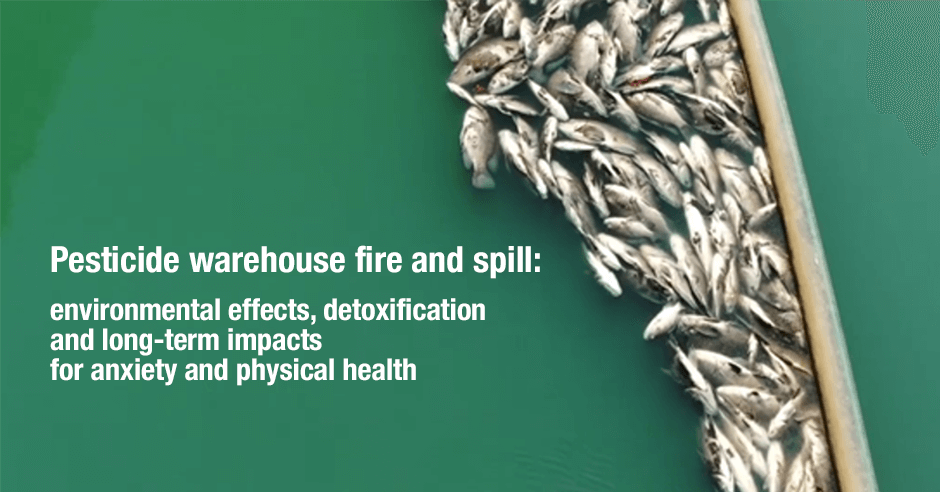
Pesticide warehouse fire and spill: environmental effects, detoxification and long-term impacts for anxiety and physical health

August 13, 2021 By Trudy Scott 6 Comments

pasticide warehouse and fire spill
The toxic green river/lagoon with poisoned/dead fish piling up (Credit: Drone Fundi)

One month ago, during the political riots in South Africa, a warehouse in Cornubia was burned down causing a slew of pesticides, insecticides and fungicides to be spilled into the nearby river and ocean, and burned into the atmosphere. This happened in a semi-industrial area bordering on residential areas such as Umhlanga Rocks and Sunningdale, and the informal settlement Blackburn. My sister and her family live in Umhlanga Rocks and we frantically communicated (during the riots and after the spill), trying to figure out what was going on, with me offering insights on how to help them mitigate some of the short-term toxic health effects. These included practical steps to avoid the toxic air and water, and some nutritional approaches to start supporting detoxification.

While this blog is specific to the situation in South Africa, something like this could happen near you one day. For this reason, I’m sharing what I have learned and what I already know about environmental toxins so you are aware of the short-term and long-term impacts for anxiety, mood and physical health.

Much of the nutritional support and detoxification recommendations are also applicable if you are dealing with smoke from forest fires too, like much of the western states of the US and Canada right now, and some countries like France and Greece in the EU.

The South African civil unrest and riots that led to the pesticide fire and spill

This article describes the civil unrest and explains how “South Africa suffered an insurrection attempt with two provinces, KwaZulu-Natal and Gauteng disabled, and national fuel and food supply lines disrupted.” It is thought that twelve masterminds planned and executed it on social media and then lost control after the looting started.

The pesticide warehouse in Cornubia, KwaZulu-Natal, was leased by United Phosphorus Limited (UPL) and was burned down as a direct result of this rioting and looting.

Queen Nandi Drive Durban
One of hundreds of  burning buildings: Queen Nandi Drive, Durban (Credit: Kierran Allen Photography)

The Cornubia warehouse was one of many hundreds of factories, stores and warehouses that were burned down, all contributing to a toxic soup in the atmosphere.

Wildlife photographer, Kierran Allen, captures the above scene and many other shocking images. Check them out on his Facebook page and here.

The pesticide warehouse fire and spill

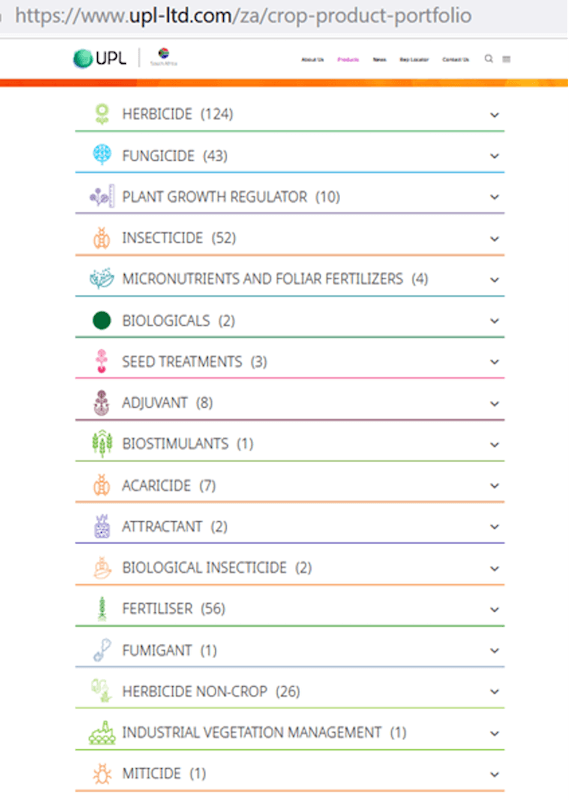
The UPL product list is long and includes 124 herbicides, 43 fungicides, 52 insecticides and various other chemicals. I looked through some of the categories and found atrazine, paraquat, glyphosate, chlorpyrifos and many more.

As of today, 30 days after the initial fire, the company has not disclosed which products were part of the fire and spill (more on this below).

spilled products

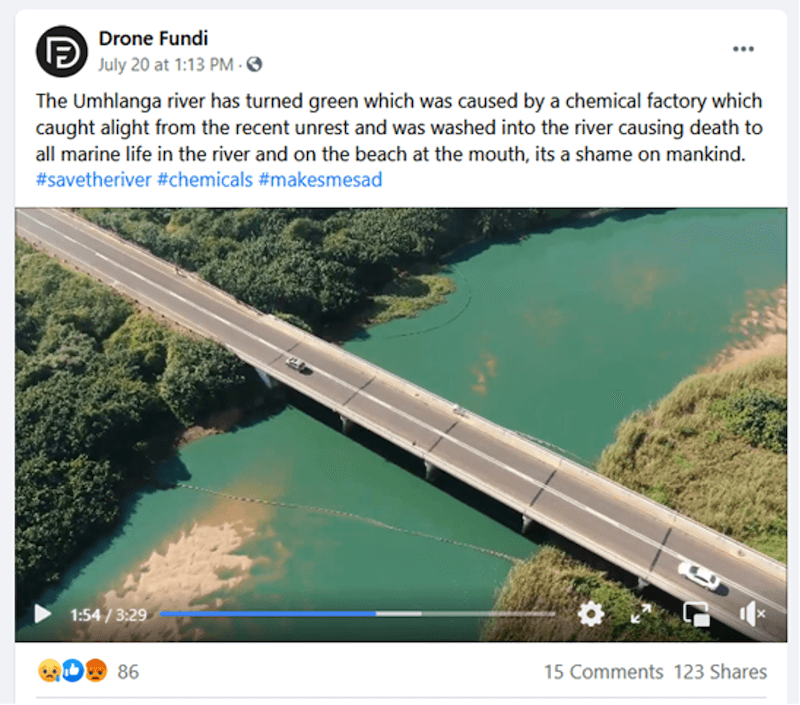
As a result of the warehouse fire and spill, the Ohlanga river and Umhlanga lagoon turned a strange green-blue and thousands and thousands of fish were killed. The beaches and sea water became toxic too. Koi fish in a nearby neighborhood pond died. Surfers reported burning skin while surfing at Umdloti, 12 km north of the lagoon mouth.

Individuals in the community reported headaches, burning skin and eyes, asthma, nose and throat problems, and coughing. I also saw a report of “oily black goop floating on my pool surface” and getting on the paws of their cats and dogs.

Drone Fundi published an excellent 3-minute aerial video on their Facebook page and gave me permission to snag a screenshot of the dead fish image for this blog.

Umhlanga river

umhlanga river
The toxic green-blue river/lagoon with poisoned/dead fish piling up (Credit: Drone Fundi)

Excellent coverage by environmental journalist, Tony Carnie

Environmental journalist, Tony Carnie, has provided the most comprehensive coverage in a number of excellent articles on The Daily Maverick blog:

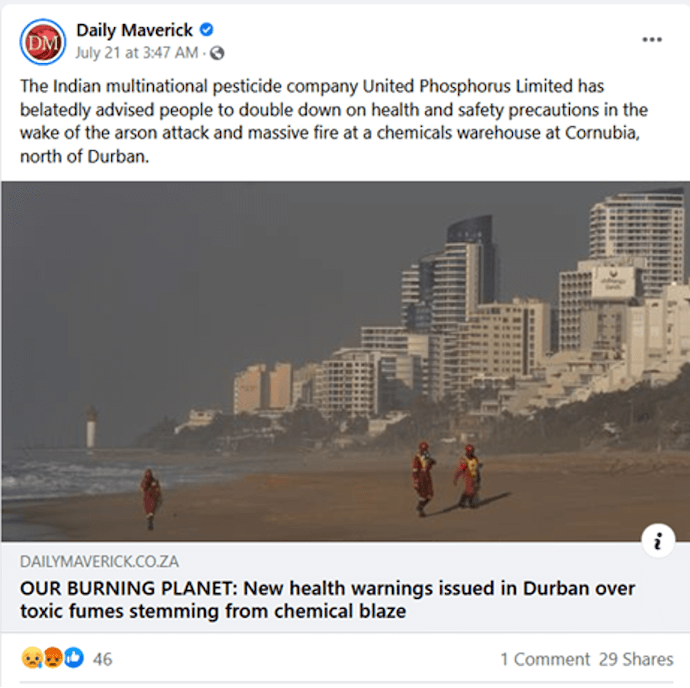
  • On July 20th, 2021: New health warnings issued in Durban over toxic fumes stemming from chemical blaze

    The Indian multinational pesticide company United Phosphorus Limited has belatedly advised people to double down on health and safety precautions in the wake of the arson attack and massive fire at a chemicals warehouse at Cornubia, north of Durban.

daily maverick article

  • On August 12, 2021: ‘Lift the cloud of secrecy over Durban toxic chemicals explosion,’ MPs and community leaders demand

    It has been exactly a month since a massive cloud of toxic chemical fumes engulfed residential areas over large parts of Durban for 12 days – but government officials and the Indian-owned UPL agrochemicals giant are still refusing to release a full inventory of the quantity and type of poisons to the public.

Red flags about the fire and spill that concern me

As I read the media articles, the company press releases and reached out to the company, a number of concerning red flags started showing up:

  • UPL hired a risk management company to do the press releases and respond to enquiries. I did correspond with them and although very responsive they didn’t initially provide details of what pesticides were involved and then offered a partial list
  • The first press release on July 17, 2021 mentioned a warehouse storing “plant protection products.” I had never heard this term before and had to look it up – they are pesticides and other chemicals like insecticides and fungicides. It took a good few days for this to make it into media reports
  • UPL consulted with Dr. Gerhard Verdoorn and shared this in a press releases on July 19, 2021:

    He was provided with a list of the crop solution products stored in the warehouse, and was requested to provide guidance on the possible health implications posed by the release of these products into the environment.

    In his view, there is a minimal risk of any long-term effects to the health of people exposed to smoke from the warehouse. However, exposure in the short term to some of the chemicals contained in the crop solution products may result in dermal, eye and respiratory irritation.

This does not mention that Dr. Verdoorn is an industry spokesperson and I have concerns that they continue to downplay the severity and possible long-term impacts.

This same press release did mention some of the chemicals that were in the fire:

Some of the herbicides, such as chloroacetamides (for example, acetochlor, S-metalochlor), phenoxycarboxylic acids (2,4-D, MCPA and benzoic acids, or dicamba) may not have burned out completely. Two pyrethroids – alpha-cypermethrin and lambda-cyhalothrin – which are dermal, eye and respiratory tract irritants may have been present in the smoke.

  • One of my first thoughts was why is this warehouse located so close to residential areas and why don’t they have safety measures in place
  • 30 days later there is no disclosure of what pesticides and how much (The Daily Maverick blog reports this). One article mentioned they don’t want to provoke anxiety in the community by sharing the list. Not knowing causes anxiety and concerns.
  • 30 days later there is no expert commentary on long term potential impacts (I share more on this below) and long term mitigation/cleanup and detoxification approaches for the community

After watching movies like Erin Brockovich, Dark Waters (the true story of Dupont and Teflon) and Rainmaker, red flags like this need to be documented. I’m more than happy to take all this back if and when things change.

I share all this for the residents of this area who are being impacted right now, and so you can get an idea of red flags to look out for if you encounter something like this in your neighborhood one day.

Update August 17th: The list of chemicals

According to this Daily Maverick article, Here it is: The toxic stockpile of chemicals in torched United Phosphorus Limited Durban warehouse

*More than 26 000 kilograms of Masta 900, an insecticide containing the “very potent neurotoxin” methomyl for which “contact with skin, inhalation of dust or spray, or swallowing may be fatal.”

*Another 1 800 litres of methamidophos, also a “very potent neurotoxin”.

*More than 40 000 litres of products using the herbicide paraquat which poses “high risk for all life forms”.

*Over 19 000 kilograms of Terbufos, another “very toxic” chemical presenting “high risk to all forms of life”.

*More than 600 000 kilograms of products containing tebuthiuron, a chemical classified as “very toxic to aquatic life … with long lasting effects” sold under a variety of brand names including Lava 800 and Limpopo SC.

*More than 160 000 kilograms of potassium hydroxide and 100 000 kilograms of ammonia hydroxide, both intermediate products used in manufacturing that are “extremely caustic” chemicals that burn skin on contact.

*More than 3 000 kilograms of Cyprex, a “highly active herbicide” containing halosulfuron-methyl, a product that “may damage the unborn child”, according to the European Chemicals Agency.

*More than 500 000 litres of Triclon, a product containing triclopyr butotyl and classified as “flammable, harmful and environmentally hazardous” and that “may cause lung damage if swallowed”.

*More than 30 000 litres of MSMA 720, also known as monosodium methylarsonate which has been shown to have “limited evidence of a carcinogenic effect”, and over time converts to inorganic arsenic in soil with the potential to contaminate water sources.

*More than 30 000 kilograms of oxamyl-based insecticides, including products Bandito and Oxadate, that also present “high risk for all life forms”.

*Almost 11 000 kilograms of Tenazole, containing “extremely flammable” fungicide terbuconazole.

*More than 1 000 litres of Colloso, a fungicide containing the active ingredient carbendazim which “may cause heritable genetic damage”,  “may impair fertility”, and “may cause harm to unborn child”.

Practical solutions for short-term immediate exposure

As soon as I learned what had happened I started reading everything in the local media, contacted UPL, looked up the products they carry and immediately shared Dr. Elisa Song’s 2018 blog with my sister and friends: How to Detoxify When Air Pollution is High. Dr. Song published this resource for keeping children and families safe and healthy through the tragedy of the 2018 California fire season.

I knew her advice on “Optimizing Indoor Air Quality” would be perfect for the toxic pesticide situation too:

  • keep doors and windows closed at all times
  • have separate outdoor clothes and shoes
  • vacuum daily and use a HEPA filter
  • bring plants inside to help improve air quality
  • use your air conditioner as another way to clean the air and
  • diffuse essential oils.

My additions were as follows:

  • don’t hang clothes on the washing line
  • keep your pets inside and wipe them down after they go outside
  • ideally go somewhere away from the situation
  • definitely don’t go to the source to see what is happening as exposure will likely be much higher.

I also reached out to colleagues for specific information relating to a pesticide spill and certified Toxicity and Detox Specialist, Sinclair Kennally, very kindly did a write up specially for this situation. In her blog post, Environmental Toxin Exposure: what to do when disasters hit, she shares wonderful advice on:

  • daily best practices during the disaster
  • DIY strategies to reduce toxic exposure when supplies are scarce
  • herbs that can be used for first aid in a pinch
  • most important supplements for recovery afterwards
  • using activated charcoal or zeolite on laundry loads
  • making your own air filter pet care (using apple cider vinegar and bentonite clay/activated charcoal)
  • emergency essentials (especially water).

Detoxification solutions, and respiratory and immune health

Dr. Song’s detox advice on the same blog on “Supporting Respiratory and Immune Health” is very applicable for a pesticide spill such as this and for forest fires (and other environmental pollution): “Daily epsom salt baths to support detoxification and enhance magnesium and glutathione levels,” liposomal glutathione, extra magnesium and essential oils to support detoxification, immune and respiratory health. She mentions citrus and lavender essential oils which offer the added benefit of being calming and helping with sleep too (more on that below).

On Sinclair’s blog she empahsizes “Toxin excretion is the most crucial stage of any disaster” and she discusses sauna, binders, mobilizers and support for detox pathways in great detail.

The stores were all closed because of the looting so I gathered some additional resources in case folks didn’t have certain things on hand:

  • N-Acetyl Cysteine/NAC – improves glutathione levels, is a powerful antioxidant, “acts directly as a scavenger of free radicals” and is a mucolytic (clears mucus and relieves breathing difficulties)
  • Rooibos tea – is neuroprotective and it’s “cell-protective activity …is connected with the ability of reducing glycaemia, inflammation as well as oxidative stress.” It also eases anxiety and supports healthy cortisol levels
  • Apple cider vinegar (preferably organic with the mother) – “could be promising for attenuation of liver cell damages induced by several toxins through its powerful antioxidant properties” due to its major constituents of flavonoids and polyphenols.
  • Broccoli sprouts or extract – “the sulforaphane may be exerting its protective actions by activating a signaling molecule, NRF2, that elevates the capacity of cells to adapt to and survive a broad range of environmental toxins.” The authors go on to say it’s a “frugal, simple and safe means that can be taken by individuals to possibly reduce some of the long-term health risks associated with air pollution.”  A simple way to get some of these benefits is to make your own homemade broccoli sprouts (easy and lots of fun to nurture them and watch them grow!) and to consume them daily!
  • Vitamin D3 – “vitamin D is a significant factor in detoxification and protection against environmental toxins” (used based on vitamin D levels i.e. always test first)

Sleep, stress/anxiety, pyroluria and immunity

Sinclair starts with a reminder to “be gentle and kind with yourself and others” and Dr. Song also mentions the importance of  managing stress: “Psychological stress IS a toxin and fills up our inflammation bucket as much as any physical toxin.” Dr. Song recommends some wonderful kid’s books and breathing/meditation apps.

Of course, I wholeheartedly support their sage advice. I also recommend increasing tryptophan or 5-HTP, and GABA, as needed, if you are already using these amino acid supplements. You’ll increase  tryptophan or 5-HTP for the worry-type low serotonin anxiety and/or GABA for the physical-tension low GABA anxiety.

Supporting serotonin and GABA levels also help with sleep issues and GABA also supports a good immune system.

We know these chemicals can have a direct impact on neurotransmitter levels. One example is the insecticide fipronil impacting GABA levels. In this blog I share how the main mechanism of action is by targeting the gamma-aminobutyric acid (GABA) receptor and that recent research points to increased anxiety, aggressive behavior, memory problems and even Alzheimer’s disease in animal studies.

Another example is the herbicide glyphosate, which affects gut microbiota, causing anxiety and depression-like behaviors in mice, very likely via alterations in GABA and serotonin levels.

I also recommend bumping up your pyroluria supplements because zinc and vitamin B6 are depleted by added stress and worry.

Potential long term impacts on mental and physical health

This paper, Environmental Exposures and Depression: Biological Mechanisms and Epidemiological Evidence shares that pesticides are “quickly absorbed through the skin, mucous membranes, gastrointestinal and respiratory tracts, and the placenta” and can cause depression via various mechanisms:

  • Inhibiting the enzyme acetylcholinesterase (AChE), which results in decreased degradation of the neurotransmitter acetylcholine
  • Interference with the serotonergic and dopaminergic systems

Depression may also be caused by DNA methylation in specific genes, “increased oxidative stress, astrocyte dysfunction, and impaired hippocampal neurotransmission.”  Prenatal exposure also increases the risk of depression.

This chapter, Psychiatric Effects of Organic Chemical Exposure, from the book, Effects of Persistent and Bioactive Organic Pollutants on Human Health, states that:

Clinicians should remain aware that psychiatric symptoms can arise from toxic chemicals in diverse situations including terrorist attacks with chemical agents, mass chemical disasters in industrial or community settings, individual chemical accidents, and intentional solvent inhalation. Emerging evidence also indicates that prenatal exposure to organic compounds adversely affects neurodevelopment in humans and may be associated with later risk of mental illness.

Other chapters in this book cover cancer, diabetes, heart disease, obesity, thyroid function, women’s and men’s reproductive health, bone and joint health, immunity, respiratory illnesses, cognitive function and Parkinson’s disease.

All this is why we need to know what products were part of the fire and spill.

Resources if you are new to using the amino acids as supplements

If you are new to using the amino acids tryptophan/5-HTP or GABA as supplements and want to know more in case you need them in a future situation, here is the Amino Acids Mood Questionnaire from The Antianxiety Food Solution (you can see all the low serotonin symptoms here) and a brief overview here, Anxiety and targeted individual amino acid supplements: a summary.

If you suspect low serotonin or low levels of any of the neurotransmitters and do not yet have my book, The Antianxiety Food Solution – How the Foods You Eat Can Help You Calm Your Anxious Mind, Improve Your Mood, and End Cravings, I highly recommend getting it and reading it before jumping in and using amino acids so you are knowledgeable. It also covers all the basics of a healthy diet that Dr. Song recommends.

The book doesn’t include product names (per the publisher’s request) so this blog, The Antianxiety Food Solution Amino Acid and Pyroluria Supplements, lists the amino acid products that I use with my individual clients and those in my group programs.

With much appreciation to Dr. Song, Sinclair for their helpful resources, the journalists, advocates and photographers, and to all the researchers.

Have you (or a loved one) experienced a pesticide or other environmental spill/disaster (or excessive smoke from a forest fire) and have these detox approaches and anxiety/sleep recommendations helped (or are they helping right now)?

Do you have any additional tips to share?

Feel free to post any questions here too.

Filed Under: Anxiety, Depression, Detoxification, Environment, Women's health Tagged With: 5-HTP, anxiety, Cornubia, depression, detoxification, environmental disaster, fire, forest fires, fungicides, GABA, insecticides, long-term impacts, pesticide, pesticides, physical health, serotonin, sleep, south africa, spill, stress, toxic health effects, tryptophan, Umhlanga Rocks

Thyroid health and anxiety: fluoride, mercury, nitrates, phthalates and other toxins

May 18, 2018 By Trudy Scott 3 Comments

thyroid health and anxiety

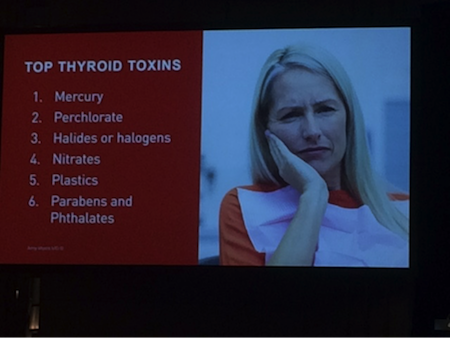
Dr. Amy Myers MD, author of The Autoimmune Solution, The Thyroid Solution and The Autoimmune Solution Cookbook, presented on thyroid health at the recent Bioceuticals Conference on Autoimmunity in Melbourne. I promised to share some highlights from her presentations (she did 4 different ones) and since toxins play such a huge role when it comes to anxiety, I’m sharing some highlights from the toxins presentation and the top thyroid toxins you need to avoid: mercury, perchlorate, halides or halogens, nitrates, plastics and parabens and phthalates. These toxins all also play a role in anxiety too.

We also have a new meta-analysis published earlier this month: Association of Depression and Anxiety Disorders With Autoimmune Thyroiditis – A Systematic Review and Meta-analysis confirming what functional medicine practitioners like Dr. Amy Myers, Dr. Mark Hyman and Dr. Izabella Wentz have been educating about for years:

Patients with AIT [autoimmune thyroiditis] exhibit an increased chance of developing symptoms of depression and anxiety or of receiving a diagnosis of depression and anxiety disorders.

Taming the toxins is one of 4 pillars that Dr. Myers covers in her approach for preventing and reversing autoimmune disease:

Pillar I: Heal your gut.

Pillar II: Get rid of gluten, grains, and legumes.

Pillar III: Tame the toxins.

Pillar IV: Heal your infections and relieve your stress.

Dr. Myers shared the top thyroid toxins you need to avoid:

  1. Mercury
  2. Perchlorate
  3. Halides or halogens
  4. Nitrates
  5. Plastics
  6. Parabens and phthalates

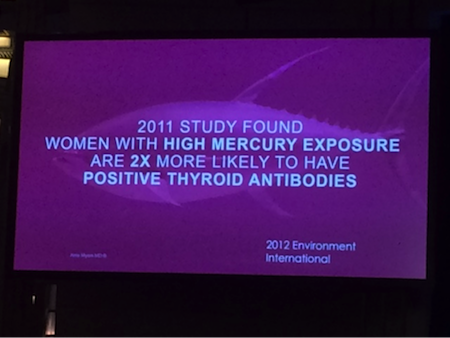
“A 2011 study found that women with high mercury exposure are 2x more likely to have positive thyroid antibodies.” The paper: Mercury and thyroid autoantibodies in U.S. women, NHANES 2007-2008, reports this increase for thyroglobulin autoantibodies.

As far as anxiety is concerned, Kris Homme shares much evidence to support her belief that mercury toxicity is a likely root cause of the other root causes of anxiety in our Anxiety Summit interview.

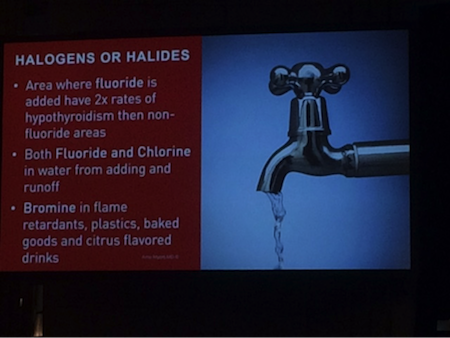
Halogens or halides also have an impact on thyroid health. In areas where fluoride is added to the water there are “2x the rates of hypothyroidism than non-fluoride areas.”

Bromine is also an issue and is found in “flame retardants, plastics, many baked goods and citrus flavored drinks.”

GABA in relation to thyroid health and fluoride was not covered in the presentation but there is research showing that GABA reversed fluoride-induced hypothyroidism in an animal study. I blogged about this research here: GABA protects against hypothyroidism caused by fluoride and reduces anxiety. The fluoride-exposed mice that were subsequently treated with GABA were found to have improved results for T4, T3 and thyroid hormone-binding globulin (TBG levels) and healing of the structural abnormalities in thyroid follicles that were observed after fluoride exposure.

The authors conclude with this statement, reporting that GABA acted as a natural antioxidant:

To the best of our knowledge, this is the first study to establish the therapeutic efficacy of GABA as a natural antioxidant in inducing thyroprotection against fluoride-induced toxicity.

The amino acid GABA  helps with physical-tension and stiff-and-tense-muscles type of anxiety, often in certain settings like public speaking or driving, and the need to self-medicate to calm down, often with alcohol but sometimes with carbs and sugary foods. Insomnia can also be due to low GABA and you’ll experience physical tension (rather than the ruminating thoughts which is the low serotonin type of insomnia – although it’s not uncommon to experience both). GABA also helps ease panic attacks, muscle spasms and pain relief when muscles are tight.

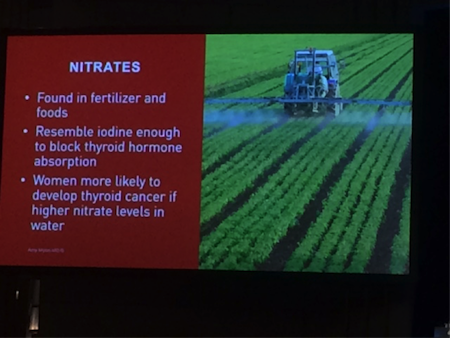
“Nitrates, found in fertilizer and foods, resemble iodine enough to block thyroid hormone absorption.” In one study, Nitrate intake and the risk of thyroid cancer and thyroid disease women were found to be “more likely to develop thyroid cancer with higher nitrate levels in the water.” Research shows similar results with nitrites and children and thyroid cancer.

Since the amino acid taurine offers neuroprotection against ammonia in the central nervous system I suspect GABA may offer some protection against nitrates too.

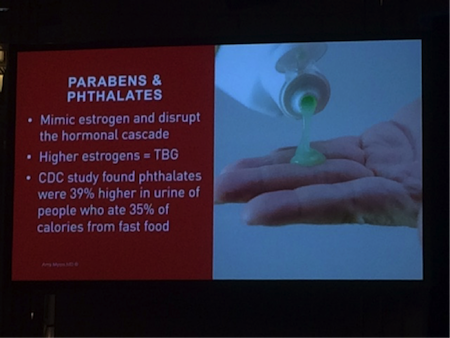
Parabens and phthalates found in many personal care products (and fast-foods) “mimic estrogen and disrupt the hormonal cascade”, with higher estrogens resulting in higher TBG (thyroxine binding globulin).

“A CDC study found phthalates were 39% higher in the urine of individuals who ate 35% of their calories from fast food.” This CNN article: Fast food serves up phthalates, too, study suggests covers many of the hormonal impacts

The American College of Obstetricians and Gynecologists released a report in 2013 stating that high levels of exposure to phthalates could lead to adverse reproductive outcomes in women. Research has linked these chemicals with increased risk of fibroids and endometriosis, which can cause infertility, and reduced IQ and behavioral problems in children exposed in the womb. High phthalate levels have also been linked with diabetes risk in women and adolescents.

There are countless ways that people can be exposed to phthalates. They are found in soaps, perfumes, nail polish, medications, and we can ingest, inhale and absorb them through the skin.

Out of all these routes of exposure, however, diet is emerging as a major one.

Dietary exposure is a major route of exposure of phthalates and this is one of many excellent reasons to cook and eat home-cooked meals. Dr. Myers makes it easy for you in her wonderful new book The Autoimmune Solution Cookbook.

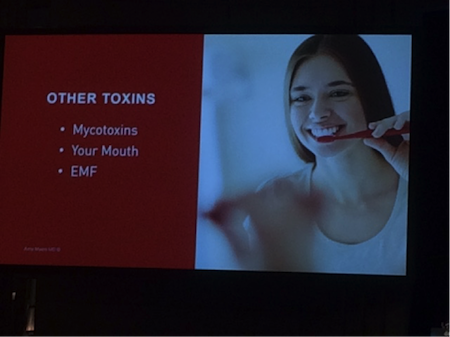
Mycotoxins from mold are also an issue as is poor mouth health. I was pleased to see EMFs mentioned as it is a growing concern and is under-rated as having harmful effects on the thyroid and when it comes to unresolved anxiety, SIBO, oxalate issues and high cortisol.

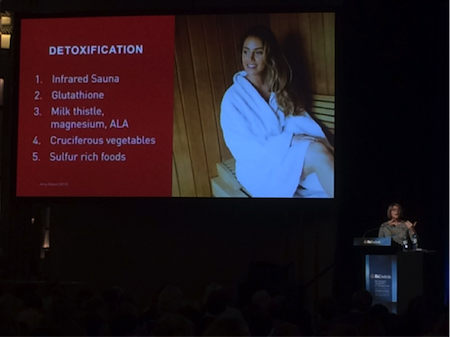
As far as detoxification, Dr Myer’s has these general recommendations:

  1. Infrared sauna
  2. Glutathione, the master antioxidant and detoxifier
  3. Milk thistle, magnesium and alpha-lipoic acid (ALA)
  4. Cruciferous vegetables such as cauliflower, broccoli, cabbage
  5. Sulfur rich foods such as onions, garlic, eggs

In her bestselling book, The Autoimmune Solution (my Amazon link), Dr. Myer’s covers the four pillars in great detail. You can read more about taming the toxins in this blog post.

Have you identified and eliminated exposure to these toxins and seen improved thyroid health and/or reduced anxiety? Is ongoing detoxification a priority for you?

Filed Under: Thyroid, Toxins Tagged With: anxiety, detoxification, Dr. Amy Myers, GABA, The Autoimmune Solution Cookbook, thyroid, toxins

Nutritional and lifestyle support for mercury toxicity and detoxification in general

February 4, 2018 By Trudy Scott 7 Comments


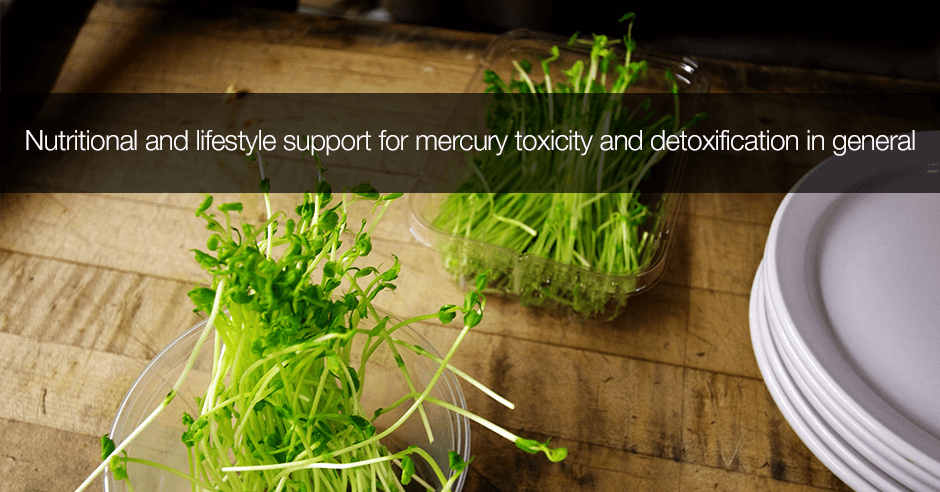
I’ve poured through most of the transcripts of the Heavy Metals Summit and there is so much information on nutritional and lifestyle support for mercury toxicity and the detoxification process in general:

  • sweating and using a sauna in order to detox through the skin
  • broccoli sprouts (due to a glutathione boost from sulforaphane, an organosulfur compound – in Julie Matthews’s interview)
  • reducing EMF/ELF and microwave exposure – in Dr. Mercola’s talk! He shares how all this can make matters worse and has some simple approaches like turning off power in the bedroom at night! This was new to me and a brilliant approach!
  • eating organic (to minimize GMO/glyphosate effects on a leaky gut and a leaky blood brain barrier) and never using Roundup
  • addressing low zinc and low selenium
  • supporting methylation so the body can detox on it’s own
  • supporting the liver and increasing bile production which is needed for detoxification
  • addressing low stomach acid which is needed for bile production and absorption of minerals like zinc (which is depleted by heavy metals)
  • avoiding meds like PPIs (which reduce stomach acid) and NSAIDs (which contribute to leaky gut)
  • thyroid support/iodine (as needed)
  • getting the brain’s glymphatic system working with sufficient sleep, melatonin (liposomal) and even liposomal GABA (in Dr. Christine Schaffer’s interview)
  • supporting the vagus nerve in order to improve digestion and detoxification
  • using an air filter and water filters
  • using foods/products like curcumin, ginger, probiotics, apple pectin
  • adding DPP-4 enzyme for gluten issues (mercury depletes this)
  • avoid energy-efficient bulbs (they are high mercury)
  • having Epsom salts baths
  • improving elimination from the bowels and much more

This is the support I offer as a nutritionist and it’s wonderful to hear all these doctors/practitioners discuss about all this with a tie back to mercury, lead and other metals.

Whey is not mentioned on the summit but since someone shared how it’s benefiting her (in the comments of the Boyd Haley blog) I’m sharing here too since it helps with glutathione production. In this paper “a case is made for the use of hydrolyzed whey protein to support metal detoxification and neurological function.” I recommend whey to clients if tolerated.

Many years ago I heard a presentation by a biological dentist who then became a nutritionist – he shared that he used whey with mercury toxic patients (together with other nutrients) and saw metals go up in hair analysis and then come down as their symptoms improved.

As I’ve mentioned in the past, mercury chelation is a controversial topic and you’ll see comments very divided on what the safest approach is. This is not my area of expertise and I’m very cautious with recommendations in this area as I’ve had reports of harm from individuals using all the approaches you’ll hear about on the summit (and even the Andy Cutler protocol which is not covered). My best advice is to follow all the nutritional/lifestyle recommendations and if you do decide to go the chelation root, do your homework, find a practitioner to work with and listen to your gut. If what you’re doing doesn’t feel right then stop doing it.

As with any chronic health condition, mercury detox is a comprehensive approach and very individualized.

There is also a discussion about safe removal of amalgams/mercury fillings. They do need to be done safely so as not to cause further issues. The IOMT also offers excellent guidelines.

The summit also covers other metals like copper (Ann Louise Gittleman covers this and I blog about it here), arsenic (Dr. Joseph Pizzorno covers this – reducing consumption is a big factor; and non-organic chicken is a source) and aluminum.

You can still register here to hear day 7 interviews and the encores: The Heavy Metals Summit.

Have you seen benefits with a nutritional approach?

Filed Under: Events Tagged With: anxiety, broccoli, detox, detoxification, heavy metals summit, liver support, magnesium, mercury, mercury toxicity, minerals, nutritional, nutritional support, sauna, sleep, zinc

Anxiety and the adrenals: low zinc and high copper

October 31, 2016 By Trudy Scott 23 Comments

two-girls

Anxiety, feelings of constant overwhelm and fatigue, plus insomnia, sugar cravings, the inability to control blood sugar, lack of mental clarity… these symptoms can be due to adrenal issues and this condition is brutally disruptive. And yes, you can suffer from all of the above at once!

In just a few weeks, from November 7-12, my colleague and good friend, NY Times bestselling author Dr. Alan Christianson will be hosting The Adrenal Reset Summit. It’s co-hosted by nutritionist Evan Brand.

I cover the Adrenals and Anxiety in my interview with Dr. Christianson and a few of the aspects we cover are low zinc and high copper.  

Here is a snippet from me about zinc:

zinc is very underrated as being a nutrient that is commonly deficient and certainly when it comes to anxiety, it’s a huge factor. We have the zinc-copper imbalance and when we’ve got very high copper levels and low zinc levels, we may feel more anxious. But zinc is really, really important for so many things. I just mentioned serotonin, it’s really important as a cofactor for making serotonin and the other neurotransmitters like GABA which is a calming neurotransmitter.

It’s really, really important for adrenal function as well. There was actually a really nice paper that was published in December 2015 [Effects of Physical Activity on Trace Elements and Depression Related Biomarkers in Children and Adolescents], looking at children and adolescents and found that children and adolescents with lower levels of zinc also had low serotonin, they had high copper levels, and they also had lower cortisol levels, and sometimes, they had high cortisol levels. So, it varies but they definitely have issues with their cortisol levels and that’s obviously going to be a big factor when it comes to how they’re able to handle stress, what their mood levels are going to be like, what their cognitive function is going to be like, and everything else. So, zinc is a really important thing. It’s not talked about a lot and it’s something that is definitely a big factor.

I didn’t share this specific information during the interview but here are some of the results from the above study:

Older children, especially girls, had higher levels of depression. Participants with moderate and severe depression had significantly lower physical activity, serotonin, and zinc levels, zinc/copper ratios, and significantly higher copper and cortisol levels.

Physically active boys showed significantly lower depressive scores and improvement in cortisol, serotonin, copper, and zinc concentrations compared to girls of sedentary life style.

A little later in the interview Dr. Christianson shares what happened to him when he was inadvertently exposed to high levels of copper:

This is a brief insight I won’t go too far into but there was a period of time I was studying with a Vedic practitioner and there were these various rituals that I had to do. One of them was involving putting liquids in these containers and drinking and doing [some of these] meditations. The historical vessels [that] were used were copper-based and I got pretty toxic at one point. I had these horrible leg cramps. I really lost my capacity for exercise. It was very dramatic. I had a hard time climbing stairs and odd mood changes and odd twitches and what not. I finally realized that was the culprit and yeah, I did mega doses of zinc which I normally would not have tolerated well but I did fine with during that time and recovered from that. So, those are a real thing! (laughs)

adrenal-reset-summit

I hope you can join us for the summit! The line-up is excellent. Here are a few of the many excellent speakers and their topics:

  • Chris Kresser, M.S., L.Ac – Is Adrenal Fatigue Real?
  • Steph Gadreau, CHNP – Perfectionism and Adrenals
  • Aviva Romm, MD – Adrenal Adaptogens
  • Ben Lynch, ND – Adrenals and Methylation
  • Wendy Myers, FDN, CHHC – Heavy Metal Toxicity
  • Dan Kalish, DC – Adrenal Neurotransmitter Connection
  • JJ Virgin, CNS, CHFS – Preventing Adrenal Burnout
  • Julia Ross, MA – Neurotransmitters and the Food Mood Connection

You can register here https://uo178.isrefer.com/go/arsScott/trudyscottcn/

Filed Under: Adrenals, Events Tagged With: anxiety, breast cancer, DCIS, detoxification, endocrine disruptors, estrogen dominance, fear, GABA, glutathione, liver support, Prevention, Thermography, toxins, tryptophan

  • Page 1
  • Page 2
  • Go to Next Page »

Primary Sidebar

NEW! GABA QuickStart Homestudy (with special intro pricing)

gaba quickstart homestudy

Free Report

9 Great Questions Women Ask about Food, Mood and their Health

You'll also receive a complimentary subscription to my ezine "Food, Mood and Gal Stuff"


Connect with me

Popular Posts

  • Amino Acids Mood Questionnaire from The Antianxiety Food Solution
  • The Antianxiety Food Solution Amino Acid and Pyroluria Supplements
  • Pyroluria Questionnaire from The Antianxiety Food Solution
  • Collagen and gelatin lower serotonin: does this increase your anxiety and depression?
  • Tryptophan for the worry-in-your-head and ruminating type of anxiety
  • GABA for the physical-tension and stiff-and-tense-muscles type of anxiety
  • The Antianxiety Food Solution by Trudy Scott
  • Seriphos Original Formula is back: the best product for anxiety and insomnia caused by high cortisol
  • Am I an anxious introvert because of low zinc and vitamin B6? My response to Huffington Post blog
  • Vagus nerve rehab with GABA, breathing, humming, gargling and key nutrients

Recent Posts

  • What do I use instead of Seriphos to help lower high cortisol that is affecting my sleep and making me anxious at night?
  • BeSerene™ GABA/theanine cream eases severe muscle tension in her neck/shoulders, prevents her bad headaches and quells her anxiety
  • How the correct approach, dose and sublingual use of GABA can be calming and not cause a flushed and itchy face and neck
  • The amino acid glutamine improves low mood by addressing gut health, and it has calming effects too
  • Flight anxiety with heightened breath, physical tension and also fearing the worst (the role of low GABA and low serotonin)

Categories

  • 5-HTP
  • AB575
  • Addiction
  • ADHD
  • Adrenals
  • Alcohol
  • Allergies
  • Alzheimer's disease
  • Amino Acids
  • Anger
  • Antianxiety
  • Antianxiety Food Solution
  • Antidepressants
  • Anxiety
  • Anxiety and panic
  • Autism
  • Autoimmunity
  • benzodiazapines
  • Bipolar disorder
  • Books
  • Caffeine
  • Cancer
  • Candida
  • Children/Teens
  • Collagen
  • Cooking equipment
  • Coronavirus/COVID-19
  • Cravings
  • Depression
  • Detoxification
  • Diabetes
  • Diet
  • DPA/DLPA
  • Drugs
  • EFT/Tapping
  • EMF
  • EMFs
  • Emotional Eating
  • Endorphins
  • Environment
  • Essential oils
  • Events
  • Exercise
  • Fear
  • Fear of public speaking
  • Fertility and Pregnancy
  • Fish
  • Food
  • Food and mood
  • Functional neurology
  • GABA
  • Gene polymorphisms
  • General Health
  • Giving
  • Giving back
  • Glutamine
  • Gluten
  • GMOs
  • Gratitude
  • Gut health
  • Heart health/hypertension
  • Histamine
  • Hormone
  • Hyperparathyroidism
  • Hypoglycemia
  • Immune system
  • Inflammation
  • Insomnia
  • Inspiration
  • Introversion
  • Joy and happiness
  • Ketogenic diet
  • Lithium orotate
  • Looking awesome
  • Lyme disease and co-infections
  • MCAS/histamine
  • Medication
  • Men's health
  • Mental health
  • Mercury
  • Migraine
  • Mold
  • Movie
  • MTHFR
  • Multiple sclerosis
  • Music
  • NANP
  • Nature
  • Nutritional Psychiatry
  • OCD
  • Osteoporosis
  • Oxalates
  • Oxytocin
  • Pain
  • Paleo
  • Parasites
  • Parkinson’s disease
  • PCOS
  • People
  • PMS
  • Postpartum
  • PTSD/Trauma
  • Pyroluria
  • Questionnaires
  • Real whole food
  • Recipes
  • Research
  • Schizophrenia
  • serotonin
  • SIBO
  • Sleep
  • Special diets
  • Sports nutrition
  • Stress
  • Sugar addiction
  • Sugar and mood
  • Supplements
  • Teens
  • Testimonials
  • Testing
  • The Anxiety Summit
  • The Anxiety Summit 2
  • The Anxiety Summit 3
  • The Anxiety Summit 4
  • The Anxiety Summit 5
  • The Anxiety Summit 6
  • Thyroid
  • Thyroid health
  • Toxins
  • Tryptophan
  • Tyrosine
  • Uncategorized
  • Vegan/vegetarian
  • Women's health
  • Yoga

Archives

  • October 2025
  • September 2025
  • August 2025
  • July 2025
  • June 2025
  • May 2025
  • April 2025
  • March 2025
  • February 2025
  • January 2025
  • November 2024
  • October 2024
  • September 2024
  • August 2024
  • July 2024
  • June 2024
  • May 2024
  • April 2024
  • March 2024
  • February 2024
  • January 2024
  • December 2023
  • November 2023
  • October 2023
  • September 2023
  • August 2023
  • July 2023
  • June 2023
  • May 2023
  • April 2023
  • March 2023
  • February 2023
  • January 2023
  • December 2022
  • November 2022
  • October 2022
  • September 2022
  • August 2022
  • July 2022
  • June 2022
  • May 2022
  • April 2022
  • March 2022
  • February 2022
  • January 2022
  • December 2021
  • November 2021
  • October 2021
  • September 2021
  • August 2021
  • July 2021
  • June 2021
  • May 2021
  • April 2021
  • March 2021
  • February 2021
  • January 2021
  • December 2020
  • November 2020
  • October 2020
  • September 2020
  • August 2020
  • July 2020
  • June 2020
  • May 2020
  • April 2020
  • March 2020
  • February 2020
  • January 2020
  • December 2019
  • November 2019
  • October 2019
  • September 2019
  • August 2019
  • July 2019
  • June 2019
  • May 2019
  • April 2019
  • March 2019
  • February 2019
  • January 2019
  • December 2018
  • November 2018
  • October 2018
  • September 2018
  • August 2018
  • July 2018
  • June 2018
  • May 2018
  • April 2018
  • March 2018
  • February 2018
  • January 2018
  • December 2017
  • November 2017
  • October 2017
  • September 2017
  • August 2017
  • July 2017
  • June 2017
  • May 2017
  • April 2017
  • March 2017
  • February 2017
  • January 2017
  • December 2016
  • November 2016
  • October 2016
  • September 2016
  • August 2016
  • July 2016
  • June 2016
  • May 2016
  • April 2016
  • March 2016
  • February 2016
  • January 2016
  • December 2015
  • November 2015
  • October 2015
  • September 2015
  • August 2015
  • July 2015
  • June 2015
  • May 2015
  • April 2015
  • March 2015
  • February 2015
  • January 2015
  • December 2014
  • November 2014
  • October 2014
  • September 2014
  • August 2014
  • July 2014
  • June 2014
  • May 2014
  • April 2014
  • March 2014
  • February 2014
  • January 2014
  • December 2013
  • November 2013
  • October 2013
  • September 2013
  • August 2013
  • July 2013
  • June 2013
  • May 2013
  • April 2013
  • March 2013
  • February 2013
  • January 2013
  • December 2012
  • November 2012
  • October 2012
  • August 2012
  • July 2012
  • June 2012
  • May 2012
  • April 2012
  • March 2012
  • February 2012
  • January 2012
  • December 2011
  • November 2011
  • October 2011
  • September 2011
  • August 2011
  • July 2011
  • June 2011
  • May 2011
  • April 2011
  • March 2011
  • February 2011
  • January 2011
  • December 2010
  • October 2010
  • September 2010
  • July 2010
  • May 2010
  • April 2010
  • March 2010
  • February 2010
  • January 2010
  • November 2009

Share the knowledge!

The above statements have not been evaluated by the Food and Drug Administration. Products listed in this website are not intended to diagnose, treat, cure or prevent any disease.

The information provided on this site is for informational and educational purposes only and is not intended as a substitute for advice from your physician or other health care professional. You should consult with a healthcare professional before starting or modifying any diet, exercise, or supplementation program, before taking or stopping any medication, or if you have or suspect you may have a health problem.


Copyright © 2026 Trudy Scott. All Rights Reserved. | Privacy | Terms and Conditions | Refund Policy | Medical Disclaimer

Free Report

9 Great Questions Women Ask about Food, Mood and their Health

You’ll also receive a complimentary subscription to my ezine “Food, Mood and Gal Stuff”