• Skip to primary navigation
  • Skip to main content
  • Skip to primary sidebar

everywomanover29 blog

Food, Mood and Women's Health – Be your healthiest, look and feel great!

  • Blog
  • About
  • Services
  • Store
  • Resources
  • Testimonials
  • The Book
  • Contact
  • Search this site

cortisol

How high to go on GABA for sleep issues and what are the negative effects of too much tyrosine?

September 13, 2019 By Trudy Scott 12 Comments

gaba and sleep issues

How high to go on GABA for sleep issues and what are the negative effects of too much tyrosine?

Today I’m sharing a great question I received about sleep issues – how high to go on GABA and what are the negative effects of too much tyrosine – together with my feedback because it’s not always a simple answer.

Here is the question about sleep, GABA and tyrosine:

I find I need more than the 500mg of sublingual Gaba Calm for sleep even with 200mg theanine. What dose can I go up to. Took a while to work up to that dose. I want to get away from sleeping tablets. Also what are the negative effects of too much tyrosine that comes with this product?

GABA Calm contains both GABA (125mg) and tyrosine (25mg) and it’s one of my most recommended products for anxiety. It sometimes works for insomnia and sometimes it doesn’t.

GABA and feeling stiff and tense with insomnia and anxiety

As you may know, with sleep issues caused by low GABA levels you’ll often lie awake with feelings of physical tension and stiff muscles rather than the ruminating thoughts which is the low serotonin type of insomnia – although it’s not uncommon to experience both. You may also have the stiff-and-tense type of anxiety, panic attacks and the need to self-medicate to calm down, often with alcohol but sometimes with carbs and sugary foods. By using the amino acid GABA you can raise your GABA levels and ease many of these symptoms.

Tyrosine can be stimulating and can be calming

Tyrosine is a considered a stimulating amino acid that is the precursor for making catecholamines (one of the neurotransmitters) like dopamine, epinephrine and norepinephrine. Boosting these neurotransmitters provides focus, increased energy and more motivation, and can also alleviate some forms of “curl-up-in-bed” depression.

Conversely tyrosine can also provide a sort of calm focus for some folks.

How much GABA and how much tyrosine?

Keeping all the above in mind, here is my feedback: 500mg of GABA is a large dose when starting out and is typically too high for most people, causing a light-headed feeling and sometimes a niacin-like flush. For this reason, it was good to hear that she worked up to that dose of GABA, found in 4 of the GABA Calm tablets i.e. 125mg of GABA for each one.

When my clients get up to multiple GABA Calm tablets I will often have them switch to a GABA-only product or a GABA/theanine product (opened up onto the tongue and held there for 2 minutes or longer) as the tyrosine can be stimulating. Some folks do fine on a small amount of tyrosine in the evening so 1-2 GABA Calm may be fine but more than that and it can be too much and may need to be avoided.

Taking 4 x GABA Calm tablets also provide a hefty dose of sugar alcohols which could cause diarrhea.

As far as using higher amounts of GABA, I have clients increase as long as they are seeing added benefits. I have had some clients go up to 1000-2000mg but more than this is rare. Theanine can often also be increased up to around 1000mg.

Here are some clues to look out for:

  • too tired in the day → too much GABA or too much theanine?
  • too tired in the day → too little GABA or too little theanine causing disturbed sleep?
  • too tired in the day → not enough tyrosine?
  • not able to sleep well → too little GABA or theanine?
  • not able to sleep well → too much tyrosine (at night or even mid-afternoon)?
  • calm energy → just enough tyrosine
  • sleep well → just enough GABA and/or theanine

There is research supporting that a GABA/theanine combination can improve sleep and that a GABA/5-HTP combination can too. There is no research on GABA Calm and insomnia but in practice it works for some people at night and not for others.

I’m sure you can agree with me that it’s not always simple and there can never be one size fits all. This doesn’t work: “Since you have insomnia take 2 GABA Calm and I’ll see you in a month” or even “This 250mg GABA with 100mg theanine will sort out your sleep issues in no time.”

It’s always a matter of figuring out what your own unique needs are.

Looking for other root causes of your insomnia

If my clients are not seeing incremental benefits as they increase the GABA and/or theanine (and stop the tyrosine) they go back down to their lower dose and we start looking for other root causes for their insomnia.

These root causes can range from low serotonin to high cortisol, also gut issues like SIBO, parasites (which are more active at night) or gluten issues. Too much caffeine (even if consumed in the morning and even a single cup of coffee!) and low blood sugar must always be ruled out too. Some sleep medications can actually make sleep worse especially benzodiazepines. And side-effects of all medications need to be looked at and also the possible effects of EMFs/WiFi.

Have you found that using the trial method with GABA and/or theanine has enabled you to find the ideal amount to take for your insomnia or anxiety? Where did you start and how high did you need to go and how much did this approach help?

Did the removal of tyrosine make a difference or make you more tired in the day?

Were there other factors at play as root causes of your insomnia or anxiety?

As a practitioner, do you want to learn more about how to incorporate GABA and theanine and the other targeted individual amino acids, tryptophan/5-HTP, DPA, glutamine and tyrosine, into your work to help your clients/patients with sleep issues and anxiety? I invite you to check out my online practitioner training here: Balancing Neurotransmitters – The Fundamentals.
Filed Under: GABA, Sleep Tagged With: anxiety, benzodiazepines, caffeine, cortisol, GABA, insomnia, serotonin, sleep, theanine, trial method

Sleeping through the night for the first time in many years: a trial and error approach to find the ideal tryptophan product

April 5, 2019 By Trudy Scott 38 Comments

If you have trouble sleeping through the night (or even have anxiety or panic attacks), finding the nutritional/biochemical root causes and addressing them is going to provide relief but it’s not always straightforward to find your root cause or causes (there are often more than one). Also, what works for you today may not work for you in 2 years time and may not work for your friend who has similar symptoms. You have to be a detective yourself and/or work with a health professional who can put all the puzzle pieces together.

I recently read a Facebook comment where someone was really frustrated about all the trial and error work that may be involved:

I’m just so tired of all this trial and error work trying to figure out why I’m anxious and depressed can’t sleep more than 4 hours a night. It’s been going on way too long I just want answers and a solution to all this. Enough already!

While I feel for this woman, I do acknowledge that it can sometimes be challenging to put all the puzzle pieces together. Other times we are able to figure things out very quickly. I’d like to share some feedback from Lorraine on the tryptophan-PMS-anxiety blog to illustrate how one small change made a big difference for her and it was a matter of trial and error.

Lorraine shares her great results with this Tryptophan Complete tweak for her insomnia:

Trudy, after listening to your talks about Lidtke Tryptophan I decided to give the Tryptophan Complete a try. I’ve taken one capsule each on the last two nights instead of two of the Tryptophan 500mg caps. Both nights I slept straight through all night and had a hard time waking up in the morning. I’ve struggled with insomnia for many, many years. The 500mg Lidtke Tryptophan supplements were helping but I was still waking up during the night. For me to sleep all night is almost miraculous.

I’ve been also taking Progesterone (low on testing), Magnesium, L-Theanine and Melatonin.

I recently added phosphatidylserine, and Holy Basil because saliva testing showed high cortisol at bedtime and off the charts high in the morning. I’m hoping to start eliminating some of those other supplements now that I’m sleeping so well.

I want to thank you for the Anxiety Summits and your book and updates on Facebook and newsletters. I have learned so much from you!

I’ve blogged about which product to use for boosting serotonin: Tryptophan 500mg or Tryptophan Complete (by Lidtke)?. I share this

  • I like to have my clients do a trial of the amino acidsso they can find the ideal dose for their needs and right now I still feel this would still be the best approach to take – using 500mg tryptophan. Once you have figured out you do well with tryptophan-only product and have your dose, then consider reducing it slightly after about 2-3 weeks and adding in additional Tryptophan Complete.
  • The other option is this: if you don’t get the expected results with Tryptophan 500mg, then try the Tryptophan Complete. You may need the other ingredients for it to work well for you.

Lorraine chose to do the latter – switching to Tryptophan Complete – since she didn’t get ideal results with Tryptophan 500mg and it worked for her. I will add that even though she slept straight through all night, I don’t like that she had a hard time waking up in the morning and when that happens, I recommend less tryptophan. It’s very possible that the ideal combination would be 1 x Tryptophan 500mg and 1 x Tryptophan Complete (my first suggestion).

Here is my quick commentary on the other products she’s using for her insomnia:

  • Progesterone and theanine: Testing progesterone levels are important before using progesterone. Both theanine and GABA support GABA production and when GABA is low, we often see low progesterone. With both low GABA and low progesterone, sleep and anxiety can be worse.
  • Magnesium: This mineral is commonly low and is needed to make both serotonin and GABA.
  • Melatonin: This is made in the body when there is sufficient serotonin and may not be needed long-term once she has good levels of serotonin (which the tryptophan product/s are helping her make).
  • Phosphatidylserine and holy basil: High cortisol is a common root cause of both insomnia and anxiety and saliva testing is an excellent way to confirm this. Phosphatidylserine can be used to lower high cortisol although I have found even better results with a phosphorylated serine product called Seriphos. Holy basil or tulsi is an adaptogenic herbal product that provides adrenal support helping with sleep problems and easing anxiety and stress.

In Lorraine’s case, her insomnia was caused by low serotonin (hence the need for tryptophan, melatonin and magnesium), low GABA/low progesterone (hence the need for progesterone, theanine and magnesium) and high cortisol (hence the need for phosphatidylserine and holy basil).

She shares she’s hoping to start eliminating some of these other supplements now that she’s sleeping so well. So, this would be another trial and error approach, stopping and/or reducing one at a time and seeing how she does. Or she may well find she needs to continue with everything for some time.

As you can see, for Lorraine it was a matter of trial and error to find her solution, but it was well worth it to get the “miraculous results” she experienced: sleeping though the night for the first time in many years!

Some of these products may work for you but it’s going to be a matter of trial and error to find your root cause/s and solution.

In case they are relevant for you, these products mentioned in this blog can all be found in my online Fullscript store:

  • Lidtke 500mg Tryptophan (with additional information here)
  • Lidtke Tryptophan Complete (with additional information here)
  • Magnesium
  • Melatonin (with additional information here)
  • Holy basil /tulsi (with additional information here)
  • Interplexus Seriphos (with additional information here)

I’d love to hear how you’ve used a trial and error approach either on your own or with the help of your practitioner to find the nutritional solution for your insomnia and/or anxiety?

If you’re a practitioner, please do share an example of how you’ve used this approach with a client or patient.

If you’ve had frustrations with this trial and error approach, please share them too.

Feel free to post your questions here too.

Filed Under: Tryptophan Tagged With: adrenals, anxiety, cortisol, depression, GABA, insomnia, Lidtke, magnesium, seriphos, serotonin, sleep, sleeping, trial and error, tryptophan, tryptophan complete, tulsi

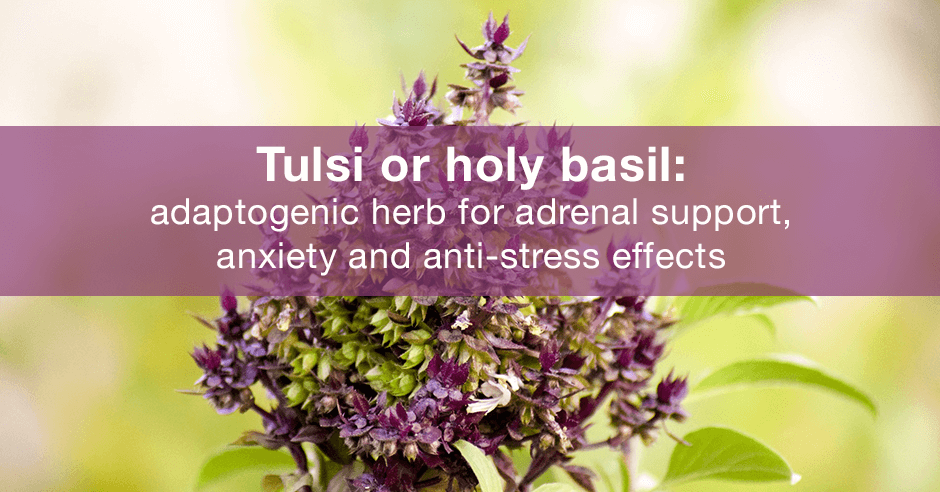
Tulsi or holy basil: adaptogenic herb for adrenal support, anxiety and anti-stress effects

March 1, 2019 By Trudy Scott 16 Comments

One very effective approach for supporting the adrenals, reducing anxiety and providing general anti-stress support is using a herbal adaptogen. One of my favorite herbal adaptogens and one that I have found to be very effective and well tolerated by my clients is tulsi, also known as holy basil or the “Elixir of Life” in Ayurveda. I also really like rhodiola. ashwagandha and licorice root but we’ll cover these in another blog.

As stated in this 2017 paper, The Clinical Efficacy and Safety of Tulsi in Humans: A Systematic Review of the Literature

Tulsi, also known as holy basil, is indigenous to the Indian continent and highly revered for its medicinal uses within the Ayurvedic and Siddha medical systems. Many in vitro, animal and human studies attest to tulsi having multiple therapeutic actions including adaptogenic, antimicrobial, anti-inflammatory, cardioprotective, and immunomodulatory effects.

The above paper is a review of the literature and the 24 studies that were included, reported favorable therapeutic effects of tulsi for humans and no significant adverse effects. Only one clinical trial reported mild nausea that lasted a short while.

The authors conclude that the outcome of this review

reinforces traditional uses and suggests tulsi is an effective treatment for lifestyle-related chronic diseases including diabetes, metabolic syndrome, and psychological stress.

With regards to psychological stress, three of the clinical studies reviewed

reported significant reduction in anxiety and stress levels with higher doses of tulsi given over a longer time period.

The positive effect of tulsi on mood was demonstrated … with two studies reporting reductions of 31.6%–39% in overall stress-related symptoms in patients with psychosomatic problems compared to a control group.

In two of these stress studies the dosage ranged from 300mg to 400mg 3 x day and was taken either before or after a meal. In one stress study, 3g (3,000mg) twice a day was used. In all the stress/anxiety studies improvements were observed in 4-12 weeks.

The review also looked at studies on metabolic disorders i.e. type 2 diabetes with “measures of blood glucose, lipids, and blood pressure” and studies on immunity, all showing benefits. In one of the immunity studies, the participants were given 10g (10,000mg) /day for viral hepatitis and symptoms all improved within 2 weeks. I’m sharing this so you can see that the dosage varies depending on the condition and severity of symptoms.

Adrenal support, anxiety, depression and radiation-protection

Here are some additional animal studies that support the use of holy basil or tulsi for adrenal support, for easing anxiety and even depression, and for the anti-stress effect it offers:

  • Anti-stress Activity of Ocimum sanctum: Possible Effects on Hypothalamic-Pituitary-Adrenal Axis

found to be effective in the management of stress effects, and anti-stress activity could be due to inhibition of cortisol release

  • Effects of Ocimum sanctum and Camellia sinensis on stress-induced anxiety and depression in male albino Rattus norvegicus

With all the WiFi we are exposed to and the fact that research is now showing that EMFs (electromagnetic frequencies) are likely playing a role in anxiety, depression and ADHD, I’m really pleased to see there are also some animal studies on tulsi being protective against radiation.

Consuming tulsi tea on a daily basis

The review paper above mentions

the Ayurvedic tradition of consuming tulsi on a daily basis

and an easy and delicious way to do this is to drink it as a herbal tea.

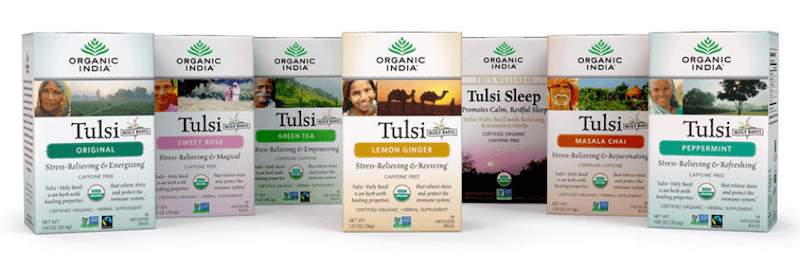
Next time you’re ordering your amino acids and pyroluria supplements from my online store with Fullscript, be sure to add a few boxes of Organic India tulsi tea to your shopping cart. This way you can enjoy the healing and anti-stress benefits of tulsi together with the many other herbs included in their teas.

The Lemon Ginger Tulsi has been a long-time favorite of mine and is wonderful when flying to counter motion sickness. Based on the radiation research I uncovered when writing this blog. I’m thrilled I’ll be getting those benefits when flying too. I also enjoy the Peppermint Tulsi early in the day and have recently found a new favorite, the Tumeric Ginger Tulsi (not pictured below). Just so you know, you can also find the herbal teas in most health shops and natural food markets.

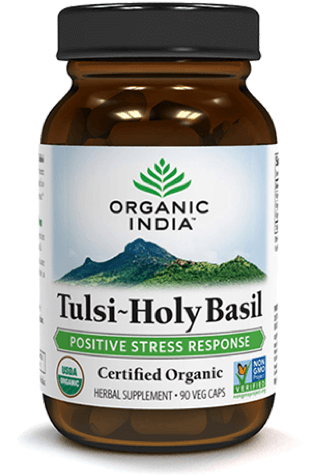
The adaptogenic Tulsi-Holy Basil product

Organic India also carries the wonderful adaptogenic Tulsi-Holy Basil product which is taken as a supplement. This is an option if you’re not a herbal tea drinker and/or you need some additional support.

If you’re interested in purchasing the tea or Tulsi-Holy Basil product, you can go to my online store with Fullscript, and simply search for “tulsi”.

How do I use tulsi with my anxious clients?

Where does recommending the tulsi herbal teas and/or the Tulsi-Holy Basil supplements fit in with the dietary and nutritional protocols of my anxious clients?

  • If you have stress in your life (and who doesn’t?!), drinking the tulsi herbal tea on a daily basis is beneficial. You can mix-and-match with other naturally caffeine-free and healing herbal teas such as rooibos
  • If you have done adrenal testing and cortisol results are outside of the reference ranges (either high or low) drink the herbal tea and use an adaptogenic herbal supplement such as tulsi (or rhodiola, licorice or ashwagandha), together with a B-Complex, extra vitamin C and extra pantothenic acid
  • Assess for low serotonin and low GABA anxiety with the questionnaire and do trials of amino acids for the low GABA physical anxiety and/or tryptophan for the worry-in-the-head anxiety
  • If you are tapering from a benzodiazepine and are not able to initially tolerate high doses of GABA, tulsi is often gentle enough to provide some additional healing support. Research shows the immune modulating effects of tulsi may be mediated by GABAergic pathways).
  • Make all the dietary changes and address gut health, blood sugar control, low levels of various nutrients like low zinc, reduce stress etc.

Organic India’s ethic and mission

I really love that Organic India works “with thousands of small family farmers in India to cultivate tens of thousands of acres of sustainable organic farmland”, the fact that their “farmers and tribal wildcrafters are educated in organic and regenerative agricultural practices”, and that they have global wellness as part of their bigger mission.

I would like to disclose that Organic India has sponsored me on a number of occasions, providing samples of herbal tea for me to share at conferences such as IMMH. I’ve blogged about this in the past thanking Organic India and other companies.

I do also want to mention that the review paper discloses that one of the authors, Professor Marc M. Cohen, “receives remuneration as a consultant and advisor to Organic India Pty. Ltd., which is a company that manufactures and distributes tulsi products. This article is the independent work of the authors and Organic India did not have input into the article’s content or the decision to publish it.” I appreciate this disclosure.

Do you drink tulsi tea on a regular basis and have you seen the anti-stress and calming benefits? If you drink Organic India tea, which one is your favorite one?

Have you used tulsi or holy basil in supplement form as an adaptogenic herb and what benefits have you observed? Have you used it while tapering from a benzodiazepine?

If you’re a practitioner do you use tulsi with clients/patients or recommend tulsi tea?

Feel free to post questions here too.

Filed Under: Supplements Tagged With: adaptogenic, adrenal, adrenals, anti-stress effects, anxiety, benzodiazepine, cortisol, depression, diabetes, GABA, holy basil, immunity, Organic India, radiation, serotonin, stress, tulsi, viral hepatitis

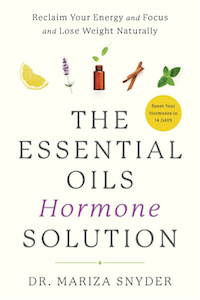
The Essential Oils Hormone Solution by Dr. Mariza Snyder – my book review

February 22, 2019 By Trudy Scott 15 Comments

Together with dietary changes and key nutrients like GABA, tryptophan, zinc and vitamin B6, using essential oils are a wonderful tool for helping to ease anxiety, reduce stress, improve sleep and focus and contribute to overall hormonal health for women. Now we have a new book that is a wonderful essential oil resource specifically for women, The Essential Oils Hormone Solution: Reclaim Your Energy and Focus and Lose Weight Naturally by Dr. Mariza Snyder.

She shares this about essential oils:

Essential oils are natural aromatic com­pounds found in the roots, seeds, stems, bark, leaves, and flowers of various plants. They are super-charged, fifty to seventy times more potent than their dried-herbal counterparts. They’re simply the best plant-based remedy that exists, and they have been success­fully used for thousands of years.

Dr. Mariza lists these top 5 must-have hormone-support essential oils for perimenopausal and menopausal women: clary sage, geranium, lavender, peppermint and rosemary. Lavender and peppermint have been long-time favorites of mine and I recently learned about clary sage and rosemary and love both.

She covers so many wonderful essential oils in the book but for the purposes of this review I’ll focus on clary sage since it was new to me until recently and may be new to you too.

In the chapter on sleep, she shares this about the benefits of clary sage and how to use this essential oil:

CLARY SAGE (Salvia sclarea)

  • Promotes relaxation of the body for a restful night’s sleep
  • Calms and soothes the mind and body
  • Supportive during menstrual distress

Aromatic Use 

  • Apply 1–2 drops directly to bedclothes or pillow.
  • Diffuse 3–4 drops before bedtime.

Topical Use

  • Dilute 1–2 drops with your favorite carrier oil and massage into abdomen.
  • Add 2–3 drops to a warm bath with ¼ cup Epsom salts dis­solved in the water.
  • Dilute 1–2 drops with your favorite carrier oil and massage into your soles before bedtime.

I had looked into clary sage about 6 months ago when I learned that it supports serotonin production and also lowers high cortisol.

Interestingly, I didn’t care for the aroma of clary sage when I first purchased it and I diffused it with lavender and rosemary to disguise the aroma. But I have grown to really like it and use a drop on a hanky each night and look forward to how much it helps me sleep and the fact that it eased the mild hot flashes I had started to experience again.

I love the combinations/blends Dr. Mariza recommends in the book and would have welcomed these ideas when I first started using clary sage myself. Here is one example of a rollerball blend with clary sage:

Tense-Away Rollerball Blend

10 drops Lavender essential oil

10 drops Clary Sage essential oil

10 drops Peppermint essential oil

Carrier oil of choice

I also really like that Dr. Mariza describes different ways to use the oils other than only diffusing – like using rollerballs, using them for massages and in baths, and applying the essential oils on various parts of the body for a more direct impact. One such example is the Hormone Synergy Rollerball Blend (which contains clary sage, lavender, geranium, bergamot and ylang ylang). She recommends applying this blend directly over your ovaries.

I learned this direct application tip from Dr. Mariza last year and started using lavender, peppermint and rosemary (in a carrier oil) topically on my belly before bed. It helps with digestion, occasional belly bloat from SIBO (if I’ve eaten something that triggers symptoms) and is relaxing too. I think I’ll add clary sage to this belly blend too for the added hormone benefits. This could be one way to use clary sage for the benefits if you find you don’t really like the aroma (because it will be further from your nose!)

Here are some of the benefits of the other top 5 hormone-support essential oils for perimenopausal and menopausal women that Dr. Mariza shares:

  • geranium – calming and soothing and “rejuvenates and revitalizes skin, complexion, and hair” (I haven’t been using this one and looking forward to trying this one)
  • lavender – “eases and calms feelings of anxiety, stress, and tension while rebalancing emotions” and “relieves discomfort associated with menstrual cycles” (I’ve been using lavender for years)
  • peppermint – “stimulates mental focus and energy by enlivening the senses” and supports your respiratory system (I also use this one all the time. It’s also great for headaches and neck pain)
  • and rosemary – “increases memory, concentration, and focus” (I also use it for EMF/electromagnetic radiation protection. Research shows rosemary could play a protective role against this harmful effect through its antioxidant activity)

Clary sage is also featured in the libido chapter: “Commonly used to stimulate sexual energy and boost libido.” This aspect was new to me, but it makes sense given that it lowers cortisol and supports serotonin production (and hence estrogen). Dr. Mariza also covers many other wonderful essential oils that boost libido too: jasmine, neroli, rose, sandalwood, ylang ylang and geranium.  In one study neroli, lavender, fennel, geranium, and rose significantly improved sexual function in menopausal women.

Here is the official book blurb:

Have your hormones been hijacked? Do you feel energy-depleted and irritable, unable to sleep, stay focused, or lose weight? You may have attributed these symptoms to the natural hormonal fluctuations that occur with age. But behind the scenes, there are a host of pesky culprits wreaking havoc on your hormonal health: chronic stress, air pollution, chemical-laden foods and cleaning supplies, and the synthetic estrogens in personal care products. Women of all ages are left vulnerable to the consequences, suffering from unnecessary hormonal imbalance and frustrating symptoms that are often dismissed by their doctors.

Dr. Mariza Snyder is here to help put you back in control of your health. In The Essential Oils Hormone Solution, you will learn how to heal hormonal chaos and revitalize the body from the inside out with the support of high-quality essential oils. You’ll learn how essential oils work on a cellular level to mitigate the toxic loads we carry, and how to use essential oils to reduce cravings, get deep, restful sleep, ease stress, improve mood, banish the worst symptoms of PMS, regain focus and concentration, boost libido, and increase energy.

Featuring a 14-day plan to jumpstart your hormonal health, with over 100 essential oil blends, daily self-care rituals, and delicious, easy-to-prepare recipes, you’ll discover how to reset your body and pave the way for improved hormonal health, without taking hormones.

Grab your copy of The Essential Oils Hormone Solution here (my Amazon link).

I’d like to add my thoughts on what I have found to be safe use of essential oils, and what I share with my clients (I consider myself an essential oil user like you – I’m not an expert):

  • Always use a carrier oil, unless you are diffusing, and this includes using essential oils in the bath (I know there is some conflicting advice on this, but I like to err on the side of caution)
  • Don’t try to remove too much of an essential oil with water – it will only drive it deeper into the skin
  • Think low doses i.e. a little goes a long way
  • Be sure to rotate your essential oils
  • Don’t ingest the oils neat or even in a gelatin capsule. I would only consider doing so if I was working with an experienced practitioner and using an enteric coated capsule  (there is definitely conflicting advice on this one but again I like to err on the side of caution)

It’s a fun book with wonderful ideas for how to combine essential oils and use them to improve hormone imbalance. I love this quote from Dr. Mariza:

Inhaling them and applying them is like adorning yourself in something truly beautiful

What are your favorite essential oils and combinations for easing anxiety, reducing stress, improving sleep and balancing your hormones? How are you “adorning yourself” and what is your favorite way to use them – diffused, topically, via a rollerball, or via a massage or in the bath? Feel free to post questions here too.

Filed Under: Books, Essential oils Tagged With: anxiety, calming, clary sage, cortisol, Dr. Mariza Snyder, energy, essential oils, focus, hormone, hormones, insomnia, lavender, libido, mood, peppermint, PMS, serotonin, sleep, stress, The Essential Oils Hormone Solution

Anxiety, stress and high cortisol: forest bathing to the rescue

January 25, 2019 By Trudy Scott 16 Comments

On the way home from a snorkelling trip to the beach earlier this week we stopped at Centennial Park in Sydney and were wowed by the magnificent trees. It inspired me to write this blog about forest bathing to inspire you to think about the power of nature as a simple way to give you joy and contribute to a wonderful sense of calm and peace. I was quite giddy with these feelings while there and still feel waves of awe days later when thinking about it and looking at these pictures of the Paperbark Grove and the massive Morton Bay fig trees.

We know being in nature has a psychological impact making us feel calm and relaxed, happy and joyful, and even playful. But what exactly is forest bathing and are there really physiological impacts i.e. does forest bathing simply help you feel good or does it actually lower your cortisol levels or blood pressure?

This paper, The physiological effects of Shinrin-yoku (taking in the forest atmosphere or forest bathing): evidence from field experiments in 24 forests across Japan, defines forest bathing:

The term Shinrin-yoku (taking in the forest atmosphere or forest bathing) was coined by the Japanese Ministry of Agriculture, Forestry, and Fisheries in 1982. It can be defined as making contact with and taking in the atmosphere of the forest: a process intended to improve an individual’s state of mental and physical relaxation

The above study set out to measure and clarify the physiological effects of Shinrin-yoku or forest bathing with 12 young male university students who had no history of physical or psychiatric disorders:

12 subjects walked in and viewed a forest or city area. On the first day, six subjects were sent to a forest area, and the others to a city area. On the second day, each group was sent to the other area as a cross-check.

The participants sat and viewed the landscape for 12-16 minutes and then walked in the landscape for 14-18 minutes (in one of the 24 forests and then in one of the 24 city areas on the second day).

The subjects had the following markers measured before breakfast and both before and after the walking and viewing periods:

  • salivary cortisol
  • blood pressure
  • pulse rate and
  • heart rate variability

After this surprisingly short period of viewing and walking in the forests the following results were found:

forest bathing promotes lower concentrations of cortisol, lower pulse rate, lower blood pressure, greater parasympathetic nerve activity, and lower sympathetic nerve activity

So, what we have, is more activity of the parasympathetic system i.e. more of the calming “rest and digest” activity and less activity of the sympathetic system i.e. what we term as “fight or flight” or stress activity.

The authors suggest that forest bathing “may be used as a strategy for preventive medicine” and I wholeheartedly agree.

Given that GABA can lower high pressure and calm down the “fight or flight” sympathetic system (see this animal study) I won’t be surprised when we see research showing us that forest bathing boosts GABA levels just in a similar way that yoga boosts GABA.

If you don’t have everyday access to parks, trees or forests be sure to go out of your way to make detours down nearby tree-lined streets to get some of these wonderful health benefits.

And because we know that simply looking at images of greenery and nature can have a calming and stress-reducing effect, here is a bigger version of the photo I took of the Paperbark Grove for you to enjoy looking at!

My picture of the Paperbark Grove in Centennial Park, Sydney

We were so excited to “discover” this gem and got home and googled it only to find out it’s a popular avenue for wedding parties! I’m sure you can see why!

Right next to the Paperbark Grove are three giant Moreton Bay fig trees. These trees are estimated to be older that the park, which was opened in 1888.

Here I am being “hugged” by one of them (doesn’t it take tree-hugging to another level!?)

If you’re local to Sydney or come for a visit one day, I highly recommend a trip to Centennial Park to see these magnificent trees and do your own Australian version of forest bathing. You may just see me there!

Until then, I encourage you to get outside into forests, get “hugged” by trees, hug trees and gaze up and enjoy every calming and joyous moment. It can help to lower your cortisol levels so you can be free of anxiety and it may even help to prevent anxiety!

Please do share your favorite forest bathing locations and how they make you feel.

Filed Under: Nature Tagged With: anxiety, calming, centennial park, cortisol, forest, forest bathing, GABA, Shinrin-yoku, stress, stress-reducing, trees, yoga

Melatonin improves sleep quality and reduces anxiety after a TBI (traumatic brain injury)

July 6, 2018 By Trudy Scott 11 Comments

New research shows that melatonin improves sleep quality and reduces anxiety after a TBI (traumatic brain injury). The study, Efficacy of melatonin for sleep disturbance following traumatic brain injury: a randomised controlled trial was completed in Australia and used a prolonged-release (also called timed-release) melatonin product.

The study participants, 67% of whom were male, had mild to severe TBI and sleep disturbances as a result of their injuries (most of which were from car accidents). There were 2 study groups, with one group given 2mg of prolonged-release melatonin for 4 weeks and then switched to a placebo for 4 weeks (with a 48-hour window in between). The other group did the opposite.

The prolonged-release melatonin was made by Sigma Pharmaceuticals Australia and called Circadin. Each night 2 hours before bedtime, 2mg of Circadin was taken by study participants. They received a reminder text message each night.

These are the study results for sleep:

Melatonin was associated with a significant and moderate reduction in PSQI [Pittsburgh Sleep Quality Index] global scores, indicating improved sleep quality.

There was no significant reduction in sleep onset latency with melatonin compared to placebo.

What this means is that overall quality of sleep improved but there was no change in the time it takes to fall asleep (sleep onset latency). The latter is to be expected with prolonged-release or timed-release melatonin.

The study concluded that:

The present results, therefore, suggest that melatonin may be useful in treating sleep disturbances in patients with TBI.

With better sleep quality you would expect reduced fatigue and improved vitality – both were reported by study participants.

Melatonin associated with a small decrease in self-reported anxiety

What is interesting is that melatonin was also associated with a small decrease in self-reported anxiety (no differences in depression were reported.) The authors suggest that one possible mechanism of this may be that melatonin acts a muscle relaxant. In this commentary: Potential action of melatonin in insomnia, the authors equate the beneficial effects of melatonin to benzodiazepines:

many of the actions of melatonin on sleep propensity, anxiety, thermoregulation, and convulsions resemble those reported following administration of benzodiazepines. It is possible that some of these actions of melatonin may be mediated via peripheral benzodiazepine receptors

They are suggesting that with melatonin we get the sleep improvement (sleep propensity is the readiness to transit from wakefulness to sleep, or the ability to stay asleep if already sleeping), relaxation effects and antianxiety benefits of benzodiazepines.

But you get none of the side-effects, tolerance issues and withdrawal nightmares with a benzodiazepine which do more harm than good. On a side notes: this month World Benzodiazepine Day is celebrated to create awareness and offer support for benzo sufferers.

I would have picked something more inert for the placebo ingredients

I would have picked something more inert for the placebo ingredients: mannitol (106mg), acacia (11 mg) and pure icing sugar (106 mg). Mannitol, a sugar alcohol, can cause bloating and diarrhea in some individuals and although the amount is tiny (5g of sugar equals 1 teaspoon), sugar consumption is not ideal before bed. As I would expect adverse symptoms:

were more frequently reported during placebo treatment. The most commonly reported symptoms were neurological, followed by bodily pain, gastrointestinal and dermatologic.

In Australia, melatonin cannot be purchased over the counter (OTC) at health stores or via online retailers, unlike in the USA, and is only available by prescription. I’m all for melatonin being available OTC but the silver lining to this is that companies that make melatonin, such as Circadin, have a vested interest in the research. Research is expensive and time-consuming and we get to benefit too.

Keep in mind that this research is applicable to anyone with low melatonin, whether or not a prior TBI has occurred.

There are many root causes of insomnia – how I work with clients

In those with TBI, sleep disturbances are common, and the authors do report reduced evening and overnight melatonin production in this population. However, there are many root causes of insomnia, with low melatonin being one possible root cause – in TBI and in those who have not had a TBI.

One study limitation is that they didn’t measure melatonin levels or circadian rhythm (salivary cortisol) in all of the study participants so we can’t be sure everyone did have low melatonin.

And melatonin isn’t going to work in all instances of insomnia. It’s one root cause I look at.

This is how I work with clients who have insomnia:

  • I start with low serotonin and address this with tryptophan observing improvements in sleep and easing of worry and anxiety (on a side note, low serotonin is common after a TBI so this makes total sense)
  • Then I have my client use sublingual melatonin if they have issues falling asleep AND timed-release melatonin if they have issues staying asleep (you can see some of the melatonin products I recommend here)
  • When saliva results come back, we address the adrenals as needed, often adding Seriphos when cortisol is high
  • Other factors are addressed based on each person’s need: gluten issues, SIBO, parasites, candida, EMFs, sex hormone imbalances, medication side-effects, sleep habits

We’d love to hear if timed-release melatonin has helped you improve your sleep quality? And if it also helped with easing anxiety?

What about tryptophan or sublingual melatonin for helping you fall asleep? And the other root causes?

If you’re a practitioner, do you use tryptophan or sublingual or timed-release melatonin with your clients? And address the other root causes of insomnia?

Feel free to post your questions too.

Filed Under: Anxiety, Insomnia Tagged With: anxiety, benzodiazepine, cortisol, insomnia, melatonin, prolonged-release, seriphos, serotonin, sleep quality, TBI, timed-release, traumatic brain injury, tryptophan

  • « Go to Previous Page
  • Page 1
  • Page 2
  • Page 3
  • Page 4
  • Page 5
  • Page 6
  • Page 7
  • Go to Next Page »

Primary Sidebar

NEW! GABA QuickStart Homestudy (with special intro pricing)

gaba quickstart homestudy

Free Report

9 Great Questions Women Ask about Food, Mood and their Health

You'll also receive a complimentary subscription to my ezine "Food, Mood and Gal Stuff"


Connect with me

Popular Posts

  • Amino Acids Mood Questionnaire from The Antianxiety Food Solution
  • The Antianxiety Food Solution Amino Acid and Pyroluria Supplements
  • Pyroluria Questionnaire from The Antianxiety Food Solution
  • Collagen and gelatin lower serotonin: does this increase your anxiety and depression?
  • Tryptophan for the worry-in-your-head and ruminating type of anxiety
  • GABA for the physical-tension and stiff-and-tense-muscles type of anxiety
  • The Antianxiety Food Solution by Trudy Scott
  • Seriphos Original Formula is back: the best product for anxiety and insomnia caused by high cortisol
  • Am I an anxious introvert because of low zinc and vitamin B6? My response to Huffington Post blog
  • Vagus nerve rehab with GABA, breathing, humming, gargling and key nutrients

Recent Posts

  • What do I use instead of Seriphos to help lower high cortisol that is affecting my sleep and making me anxious at night?
  • BeSerene™ GABA/theanine cream eases severe muscle tension in her neck/shoulders, prevents her bad headaches and quells her anxiety
  • How the correct approach, dose and sublingual use of GABA can be calming and not cause a flushed and itchy face and neck
  • The amino acid glutamine improves low mood by addressing gut health, and it has calming effects too
  • Flight anxiety with heightened breath, physical tension and also fearing the worst (the role of low GABA and low serotonin)

Categories

  • 5-HTP
  • AB575
  • Addiction
  • ADHD
  • Adrenals
  • Alcohol
  • Allergies
  • Alzheimer's disease
  • Amino Acids
  • Anger
  • Antianxiety
  • Antianxiety Food Solution
  • Antidepressants
  • Anxiety
  • Anxiety and panic
  • Autism
  • Autoimmunity
  • benzodiazapines
  • Bipolar disorder
  • Books
  • Caffeine
  • Cancer
  • Candida
  • Children/Teens
  • Collagen
  • Cooking equipment
  • Coronavirus/COVID-19
  • Cravings
  • Depression
  • Detoxification
  • Diabetes
  • Diet
  • DPA/DLPA
  • Drugs
  • EFT/Tapping
  • EMF
  • EMFs
  • Emotional Eating
  • Endorphins
  • Environment
  • Essential oils
  • Events
  • Exercise
  • Fear
  • Fear of public speaking
  • Fertility and Pregnancy
  • Fish
  • Food
  • Food and mood
  • Functional neurology
  • GABA
  • Gene polymorphisms
  • General Health
  • Giving
  • Giving back
  • Glutamine
  • Gluten
  • GMOs
  • Gratitude
  • Gut health
  • Heart health/hypertension
  • Histamine
  • Hormone
  • Hyperparathyroidism
  • Hypoglycemia
  • Immune system
  • Inflammation
  • Insomnia
  • Inspiration
  • Introversion
  • Joy and happiness
  • Ketogenic diet
  • Lithium orotate
  • Looking awesome
  • Lyme disease and co-infections
  • MCAS/histamine
  • Medication
  • Men's health
  • Mental health
  • Mercury
  • Migraine
  • Mold
  • Movie
  • MTHFR
  • Multiple sclerosis
  • Music
  • NANP
  • Nature
  • Nutritional Psychiatry
  • OCD
  • Osteoporosis
  • Oxalates
  • Oxytocin
  • Pain
  • Paleo
  • Parasites
  • Parkinson’s disease
  • PCOS
  • People
  • PMS
  • Postpartum
  • PTSD/Trauma
  • Pyroluria
  • Questionnaires
  • Real whole food
  • Recipes
  • Research
  • Schizophrenia
  • serotonin
  • SIBO
  • Sleep
  • Special diets
  • Sports nutrition
  • Stress
  • Sugar addiction
  • Sugar and mood
  • Supplements
  • Teens
  • Testimonials
  • Testing
  • The Anxiety Summit
  • The Anxiety Summit 2
  • The Anxiety Summit 3
  • The Anxiety Summit 4
  • The Anxiety Summit 5
  • The Anxiety Summit 6
  • Thyroid
  • Thyroid health
  • Toxins
  • Tryptophan
  • Tyrosine
  • Uncategorized
  • Vegan/vegetarian
  • Women's health
  • Yoga

Archives

  • October 2025
  • September 2025
  • August 2025
  • July 2025
  • June 2025
  • May 2025
  • April 2025
  • March 2025
  • February 2025
  • January 2025
  • November 2024
  • October 2024
  • September 2024
  • August 2024
  • July 2024
  • June 2024
  • May 2024
  • April 2024
  • March 2024
  • February 2024
  • January 2024
  • December 2023
  • November 2023
  • October 2023
  • September 2023
  • August 2023
  • July 2023
  • June 2023
  • May 2023
  • April 2023
  • March 2023
  • February 2023
  • January 2023
  • December 2022
  • November 2022
  • October 2022
  • September 2022
  • August 2022
  • July 2022
  • June 2022
  • May 2022
  • April 2022
  • March 2022
  • February 2022
  • January 2022
  • December 2021
  • November 2021
  • October 2021
  • September 2021
  • August 2021
  • July 2021
  • June 2021
  • May 2021
  • April 2021
  • March 2021
  • February 2021
  • January 2021
  • December 2020
  • November 2020
  • October 2020
  • September 2020
  • August 2020
  • July 2020
  • June 2020
  • May 2020
  • April 2020
  • March 2020
  • February 2020
  • January 2020
  • December 2019
  • November 2019
  • October 2019
  • September 2019
  • August 2019
  • July 2019
  • June 2019
  • May 2019
  • April 2019
  • March 2019
  • February 2019
  • January 2019
  • December 2018
  • November 2018
  • October 2018
  • September 2018
  • August 2018
  • July 2018
  • June 2018
  • May 2018
  • April 2018
  • March 2018
  • February 2018
  • January 2018
  • December 2017
  • November 2017
  • October 2017
  • September 2017
  • August 2017
  • July 2017
  • June 2017
  • May 2017
  • April 2017
  • March 2017
  • February 2017
  • January 2017
  • December 2016
  • November 2016
  • October 2016
  • September 2016
  • August 2016
  • July 2016
  • June 2016
  • May 2016
  • April 2016
  • March 2016
  • February 2016
  • January 2016
  • December 2015
  • November 2015
  • October 2015
  • September 2015
  • August 2015
  • July 2015
  • June 2015
  • May 2015
  • April 2015
  • March 2015
  • February 2015
  • January 2015
  • December 2014
  • November 2014
  • October 2014
  • September 2014
  • August 2014
  • July 2014
  • June 2014
  • May 2014
  • April 2014
  • March 2014
  • February 2014
  • January 2014
  • December 2013
  • November 2013
  • October 2013
  • September 2013
  • August 2013
  • July 2013
  • June 2013
  • May 2013
  • April 2013
  • March 2013
  • February 2013
  • January 2013
  • December 2012
  • November 2012
  • October 2012
  • August 2012
  • July 2012
  • June 2012
  • May 2012
  • April 2012
  • March 2012
  • February 2012
  • January 2012
  • December 2011
  • November 2011
  • October 2011
  • September 2011
  • August 2011
  • July 2011
  • June 2011
  • May 2011
  • April 2011
  • March 2011
  • February 2011
  • January 2011
  • December 2010
  • October 2010
  • September 2010
  • July 2010
  • May 2010
  • April 2010
  • March 2010
  • February 2010
  • January 2010
  • November 2009

Share the knowledge!

The above statements have not been evaluated by the Food and Drug Administration. Products listed in this website are not intended to diagnose, treat, cure or prevent any disease.

The information provided on this site is for informational and educational purposes only and is not intended as a substitute for advice from your physician or other health care professional. You should consult with a healthcare professional before starting or modifying any diet, exercise, or supplementation program, before taking or stopping any medication, or if you have or suspect you may have a health problem.


Copyright © 2026 Trudy Scott. All Rights Reserved. | Privacy | Terms and Conditions | Refund Policy | Medical Disclaimer

Free Report

9 Great Questions Women Ask about Food, Mood and their Health

You’ll also receive a complimentary subscription to my ezine “Food, Mood and Gal Stuff”