• Skip to primary navigation
  • Skip to main content
  • Skip to primary sidebar

everywomanover29 blog

Food, Mood and Women's Health – Be your healthiest, look and feel great!

  • Blog
  • About
  • Services
  • Store
  • Resources
  • Testimonials
  • The Book
  • Contact
  • Search this site

autism

Little evidence for SSRI use in anxiety and compulsions in ASD: my interview on Nourishing Hope for Autism Summit

July 2, 2018 By Trudy Scott 2 Comments

One of the reasons I’m so passionate about participating on summits like The Nourishing Hope for Autism Summit and sharing the powerful nutritional interventions is due to the fact that medications such as antidepressants and benzodiazepines are frequently prescribed in ASD – and the research and clinical evidence shows that children and adolescents with ASD (autism spectrum disorder) are more vulnerable to the side effects.

This paper, Psychopharmacological interventions in autism spectrum disorder, makes the following conclusion:

Psychopharmacological treatment of core and associated symptoms in ASD is challenging, in large part because ASD presents in many different ways. Furthermore, children and adolescents with ASD are more vulnerable to the side effects of psychopharmacological intervention than their age-matched, typically developing counterparts.

This paper, Pharmacotherapy of emotional and behavioral symptoms associated with autism spectrum disorder in children and adolescents, supports this, stating there is little evidence to support the use of SSRIs in ASD:

Selective serotonin reuptake inhibitors are often used in clinical practice to target anxiety and compulsions; however, there is little evidence to support its use in this population. There is a great need for further research on the safety and efficacy of existing psychotropic medications in youth with ASD.

And this paper published a few months ago, An update on pharmacotherapy of autism spectrum disorder in children and adolescents, concludes that

Overall, the evidence is limited for pharmacotherapy in children with ASD, and side-effects with long-term use can be burdensome.

Much of this also applies to adults with ASD and in my interview I talk about the psychiatric medicine concerns within the ASD community and the high incidence of anxiety, aggression, irritability and OCD in this population.

We also discuss the following nutritional solutions in my interview (appropriately titled: How to calm anxiety, and eliminate aggression and OCD) –

  • the role low serotonin plays in anxiety, aggression and OCD/obsessions and the use of tryptophan and when to avoid 5-HTP
  • the low GABA type of physical anxiety and how to effectively use GABA for results
  • how to use inositol for OCD and some wonderful success stories
  • lead toxicity and increased anxiety and the protective role of tryptophan and ascorbic acid
  • phenols and oxalates other special diets (and my story with oxalate issues)

Our interviews are always fun, science based and practical – and in this one we even shared some of our personal results (both good and bad) with some of these nutrients.

Here are just a few of the speakers and topics I’m really looking forward to hearing:

  • James Adams, PhD: The Scientific Evidence Linking Nutrition and Autism Improvement
  • Dietrich Klinghardt: Understanding Lyme, Infections, Mold, and Heavy Metals and the Effects on Autism
  • Chef Pete Evans: Food is Medicine, Inspiration from a chef
  • Kaalya Daniel, PhD: How You Can Use the Healing Properties of Camel’s Milk for Autism
  • Dominic D’Agostino, PhD: Is the Ketogenic Diet Right for an Autistic Child?
  • Susan Owens, MS: The Inflammasome, Oxalates, Autoimmunity and Autism
  • And of course, Julie Matthews, CNC: When GFCF Diets Don’t Work – BioIndividual Nutrition for Autism

This summit provides you with information and tools that address the root causes so medications such as the above do not even have to come into the picture!
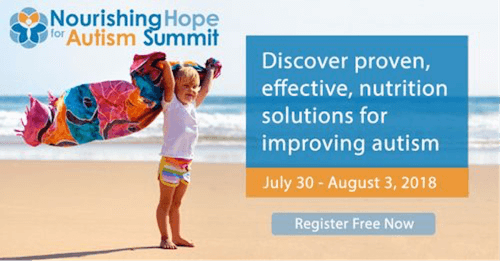
The Nourishing Hope for Autism Summit runs July 30 to August 3 and is hosted by my dear friend and colleague Julie Matthews, whose work you’re probably very familiar with. In case Julie’s work is new to you, in my eyes, she is THE autism nutrition expert. I’ve had the pleasure of interviewing her a number of times on the Anxiety Summit, I endorse her Bioindividual Nutrition training (special diets) for practitioners, I highly respect the work she does and I adore her!

The focus of this summit is clearly autism and Julie is THE expert so you’ll learn a ton from the experts she has gathered.

But do keep in mind that those with autism or Asperger’s are often considered the canaries in the coalmine and even if you don’t have a loved one with ASD many of the interviews have wider applications for anxiety, ADHD and other developmental and learning disorders.

Register here for The Nourishing Hope for Autism Summit to learn more! It airs online from July 30 to August 3, 2018
Filed Under: Anxiety, Autism, Events Tagged With: antidepressant, anxiety, ASD, Asperger’s, autism, benzodiazepine, compulsions, GABA, inositol, Julie Matthews, medications, Nourishing Hope for Autism Summit, OCD, psychotropic, SSRI, tryptophan

Nutritional and Dietary Intervention for Autism Spectrum Disorder – a new study

June 29, 2018 By Trudy Scott 3 Comments

The research confirms how effective nutritional psychiatry is for anxiety and depression (the SMILEs diet depression trial) so when a 12 month randomized trial reports the benefits of nutrition for autism spectrum disorder (ASD) we celebrate this too. Many of the same mechanisms that contribute to anxiety, can also play a role when it comes to ASD – such as food sensitivities, poor gut health, heavy metals, fatty acid imbalances and so on. Also, many children with ASD experience anxiety – 34 to 47% depending on whether you ask a parent of a teacher. Many adults with autism and Asperger’s syndrome also experience anxiety and overwhelm too. In one study 50% of adults with ASD experienced social anxiety.

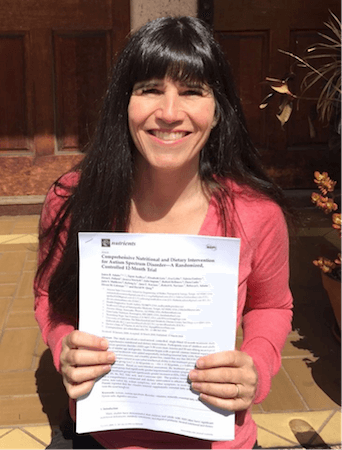
This paper was published in March this year: Comprehensive Nutritional and Dietary Intervention for Autism Spectrum Disorder-A Randomized, Controlled 12-Month Trial and was

a randomized, controlled, single-blind 12-month treatment study of a comprehensive nutritional and dietary intervention.

Treatment began with a special vitamin/mineral supplement, and additional treatments were added sequentially, including essential fatty acids, Epsom salt baths, carnitine, digestive enzymes, and a healthy gluten-free, casein-free, soy-free (HGCSF) diet.

Here is the year-long protocol for the study participants:

Day 0: Vitamin/Mineral supplementation begins.
Day 30: Essential Fatty Acid supplementation begins.
Day 60: Epsom salt baths begin.
Day 90: Carnitine Supplementation begins.
Day 180: Digestive Enzyme supplementation begins.
Day 210: Healthy, casein-free, gluten-free diet begins.
Day 365: Final assessment of autism severity and overall functioning status. Final blood draw and urine collection.

And these are the guidelines for the dietary changes for the study participants:

  1. Adequate intake of a variety of vegetables (including leafy greens) and fruit (preferably whole fruit).
  2. Adequate protein quality and intake.
  3. Adequate, but not excessive, caloric intake.
  4. Minimal consumption of “junk” foods and replacement with healthy snacks.
  5. Healthy, gluten-free, casein-free, and soy-free (HGCSF).
  6. Avoidance of artificial flavors, colors, and preservatives.

Parents of participants reported that the vitamin/mineral supplements, essential fatty acids, and HGCSF diet were the most beneficial. And when asked at the end of the study which treatments they planned to continue at the conclusion of the study, over 85% of parents said the vitamin/mineral supplement and the essential fatty acids were the most likely to be continued, 70% planned to continue the Epsom salt baths, 63% planned to continue the healthy HGCSF diet, and 44% planned to continue using the carnitine and digestive enzymes.

I’m really pleased that they mentioned the following limitation because we really do need to address the nutritional needs of each person:

all participants received all treatments, whereas probably only a subset are likely to benefit from any single intervention (for example, only participants with low carnitine are likely to benefit from carnitine supplementation)…. future studies could try to determine which treatments were most beneficial, using the results of this study to guide those future studies.

Despite the above study limitation, the treatment group saw the following improvements:

  • Improved nonverbal intellectual ability
  • Significantly greater improvement in autismsymptoms and developmental age
  • Significantly greater increases in EPA, DHA, carnitine, and vitamins A, B2, B5, B6, B12, folic acid, and coenzyme Q10

Many of the study participants saw improved communication skills as well as improved daily living skills and social skills – all of which can lead to reduced anxiety and social anxiety, and improved overall happiness.

The authors do mention that the combination of all of the above treatments is feasible for most families and that there were minimal adverse effects. They conclude that:

The positive results of this study suggest that a comprehensive nutritional and dietary intervention is effective at improving nutritional status, non-verbal IQ, autism symptoms, and other symptoms in most individuals with ASD [both children and adults].

Julie Matthews, one of the nutritionists supporting the study

My good friend and colleague, Julie Matthews, was one of the nutritionists supporting the study and is one of the co-authors on the paper. I’m so proud of her contribution to this research which further supports prior studies and the work she does clinically.

Julie is the author of Nourishing Hope for Autism: Nutrition and Diet Guide for Healing Our Children and the founder of the Bioindividual Nutrition Institute. She is hosting the Nourishing Hope for Autism Summit running July 30 to August 30 and she interviews lead researcher, James Adams, PhD, Director of the Autism/Asperger’s Research Program at Arizona State University. The interview is titled “The Scientific Evidence Linking Nutrition and Autism Improvement” so be sure to tune in if you’d like more information on this study and other dietary and nutritional interventions for ASD. (You can register here).


Shamus diagnosed with moderate to severe autism at age 2

Julie shares Shamus’ success story on her Nourishing Hope blog. He was diagnosed with moderate to severe autism at age 2.

When they began him on nutritional and biomedical protocols, his parents had no expectation of improved speech or ever “mainstreaming” their son. They just wanted him to sleep so they could cope with him being autistic.

Within 3 days of starting a gluten and casein-free (GFCF) diet his projectile vomiting stopped and his meltdowns reduced from 20 per day to just 3. The next step was the GAPS diet (Gut and Psychology Syndrome) which included broths and fermented foods, and did lead to worsening symptoms for a short time. Later on overgrowth of the harmful bacteria Clostridium difficile was addressed and other biomedical/nutritional interventions were included.

Today at age 10, Shamus shows no signs of autism and has been classified as “fully recovered!” He’s in a mainstream classroom at school, his teachers love him and he has a great group of friends. Shamus is great at team sports, and exhibits no problems in the classroom whatsoever.

I’m horrified that the doctor told this mom that she was over-anxious, had post-natal depression and needed to take an antidepressant (but that’s another entire blog post).


Both children and adults benefit from dietary changes

I find it very encouraging that the study participants were both children and adults with autism spectrum disorder and their ages ranged from 3 years to 58 years. Julie shares this inspiring and hopeful comment in the press release:

The study also shows that no matter the age of the individual with autism, diet and nutrition intervention can help. It’s never too late to be nourishing hope!

I agree, it’s never too late to make changes. This wonderful success story about an older gentleman with autism is just one example. Carolyn Gammicchia, mom/wife/autism advocate/ disability activist, shared the following on Facebook shortly after the study was published:

I have spoken to many people across the country who implemented this in older individuals, one man was 51 from TX who had been institutionalized and had not spoken. He was in very poor health when a wonderful lady took him in and somehow got my number and called me. She had seen a presentation I had done about five years ago about this and she weaned him off multiple medications, cleaned up his diet (went GFCFSF i.e. gluten-free, casein-free and soy-free) and supplemented with vitamins and minerals, plus exercise. He started speaking, lost 50 lbs, and is able to work now. It works!

Diet reduces anxiety and depression and helps with bipolar and schizoaffective disorder too

I mentioned nutritional psychiatry at the start so here are a few blog posts that highlight how diet reduces anxiety and depression and helps with bipolar and schizoaffective disorder too.

  • Ketogenic diet: reductions in auditory hallucinations and delusions, better mood and energy, and weight loss 
  • Bipolar, disruptive mood or gluten and junk food? 
  • Paleo and grain free diets: anxiety and depression success stories

Going back to the study limitation – what this all means is finding the right combination of dietary and nutritional interventions for each person. There is no one-size fits all and bioindividualized nutrition is key – for ASD, anxiety, depression and any other condition.

We’d love to hear what dietary interventions you’ve used with success with a loved one with autism or Asperger’s syndrome.  Have these changes also reduced anxiety and improved other mood symptoms?

If you’re a practitioner, feel free to share a success story about one of your clients/patients with ASD.

Do also share some tips that you have found make this dietary transition easier and some challenges you have faced. Feel free to post your questions too.

Filed Under: Autism, Diet Tagged With: anxiety, ASD, autism, casein-free, diet, GFCFSF, gluten-free, Julie Matthews, Nourishing Hope for Autism, soy-free

Associations between Parental Anxiety/Depression and Child Behavior Problems

June 10, 2018 By Trudy Scott 2 Comments

In my interview on the Autism, ADHD and Sensory Processing Disorder Summit (June 11 to June 20, 2018) I discuss Self-care strategies for parents that are stressed out, anxious and depressed – without using medications.

You may think “why do I need research to show what I already feel and know?” but I can share that many of the moms I’ve worked find this validating and almost a relief to know they are not alone in this.

The paper, Associations between Parental Anxiety/Depression and Child Behavior Problems Related to Autism Spectrum Disorders: The Roles of Parenting Stress and Parenting Self-Efficacy reports that

Parents of children with autism spectrum disorders (ASDs) have been shown to experience increases in stress, depression, and anxiety, which are also associated with child behavior problems related to ASDs.

The paper lists some reasons for the increased parental stress, anxiety and depression:

  1. First and foremost, the realization that there is no cure for the disorder may serve to increase parenting stress.
  2. Aspects of the child’s behavior, specifically socially inappropriate and aggressive behaviors typically associated with ASD, have been found to be associated with increases in parenting stress… due to a lack of understanding of ASD
  3. Additionally, raising a child with ASD typically involves allocating extra time to meet the needs of the children.

This event addresses all of the above and more by providing you with insights and tools on how to recover your child using a biomedical and nutritional approach together with traditional behavioral models (#1 addressed). This event also helps you understand what some of the underlying causes of socially inappropriate and aggressive behaviors may be – like pyroluria and low serotonin and gluten issues (#2 addressed). And finally, the planning resources that Tara offers via her coaching program help you manage your time while you’re figuring all this out (#3 addressed).

And as an added bonus you get my nutritional advice to help make you more resilient and better able to handle the stress and worry that comes with parenting a cild with ASD or other developmental disorder.

As always, I share about the amazing amino acids that provide anxiety-relief and end the overwhelm, spinning mind, second guessing from day one while you’re figuring everything else out.

In my interview (which airs on day 1), I share:

  • How amino acids can provide instantaneous relief to symptoms of anxiety
  • Low serotonin anxiety, what are the symptoms, and what nutrients can help
  • Low GABA anxiety, how to identify and how to help
  • How to trial amino acids to see if they can help you (and your child)
  • How caring for a child with a neurodevelopmental disorder can be equivalent to combat and result in a form of PTSD
  • B vitamins and adaptogenic herbs for PTSD nutritional support
  • The benefits of a ketogenic diet for caregivers and our children
  • How collagen can actually make anxiety, depression and insomnia worse.
  • EMFs role in our health and how they are contributing to our stress.

This event brings together 30+ of the leading doctors, nutritionists, and researchers working to help parents by sharing the latest information and strategies for achieving recovery for children with Autism, ADHD and Sensory Processing Disorder.

Having a child with Autism, ADHD or Sensory Processing Disorder is challenging. Figuring out what to do to help them is just as challenging. Join us for 10 days of eye-opening information into the root causes of your child’s neurological dysfunction. Imagine learning about what may have caused their symptoms and how to address them with nutrition and biomedical approaches and leverage the power of positive neuroplasticity to improve function, health, and their lives.

Anxiety, stress, depression and PTSD-like symptoms are common in any caregiver situation, so even if you don’t have a child with a neurological disorder, this may be of interest to you if you are taking care of an older parent, a sibling, a spouse or expect to in the near future.

Register for the summit here

Hope to see you there.

Filed Under: Autism, Children/Teens, Events Tagged With: ADHD, amino acids, autism, PTSD, Self-care, spd

KetoNutrition: From Science to Emerging Applications and Practical Implementation

May 4, 2018 By Trudy Scott Leave a Comment

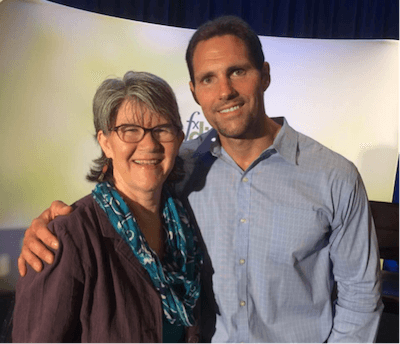
I had the pleasure of hearing Dominic D’Agostino, NASA crew member, researcher and Associate Professor at the University of South Florida present on “KetoNutrition: From Science to Emerging Applications and Practical Implementation” at the 6th BioCeuticals Research Symposium in Melbourne last weekend. His presentation was based on decades of evidence that supports the anticonvulsant and neuroprotective properties of nutritional ketosis. It was one of my favorite presentations and I’m thrilled to share some of the highlights with you here.

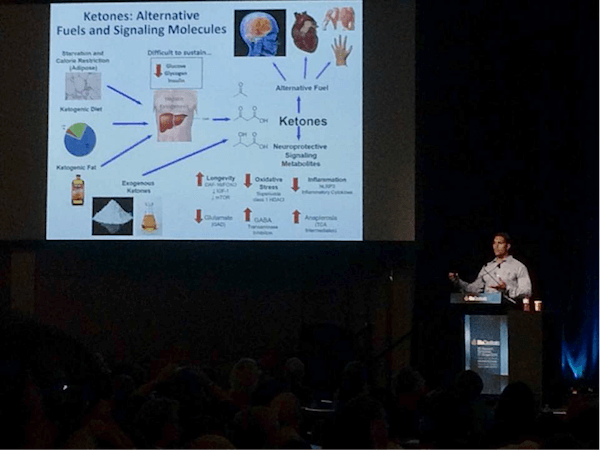
Ketones are alternative fuels and neuroprotective signaling metabolites – increasing longevity, lowering inflammation, dampening oxidative stress, lowering glutamate and raising GABA.

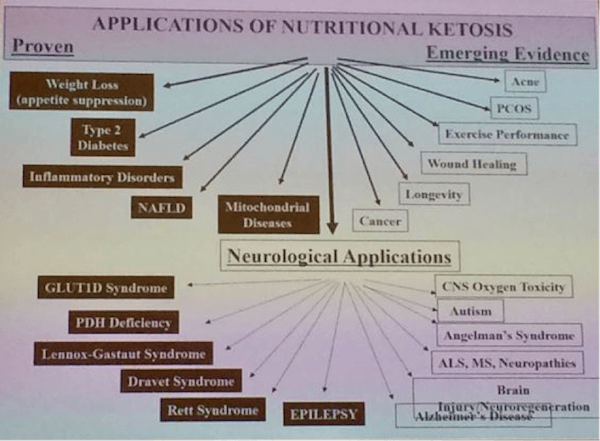
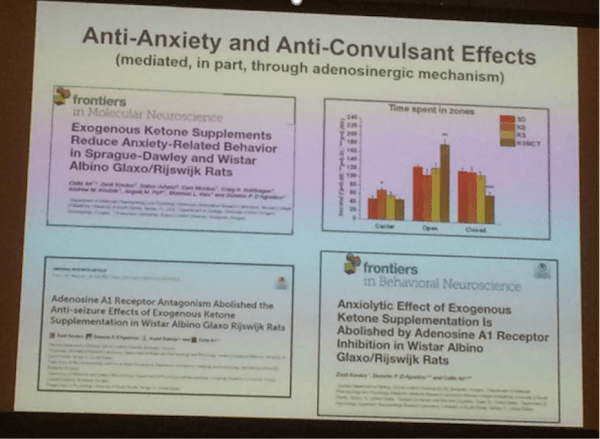
In this slide he shared how the proven applications of nutritional ketosis are extensive – including epilepsy, type 2 diabetes, weight loss, NAFLD, mitochondrial disease and inflammation, GLUTID Syndrome, PDH Deficiency, Lennox-Gastaut Syndrome, Dravet Syndrome and Rett Syndrome.

There is emerging evidence for acne, PCOS, exercise performance, wound healing, longevity, cancer, CNS Oxygen Toxicity, autism, Angelman’s Syndrome, ALS, MS, Neuropathies, Alzheimer’s disease, brain injury, neurodegeneration, anxiety, depression, bipolar and schizoaffective disorder.

Seizures, cancer and the ketogenic diet


In his TEDx talk from 2013 Dr. D’Agostino shares the benefits of a ketogenic diet for seizures and how while studying the effects of gasses on the brains of Navy Seal divers, he developed an approach for metabolically starving cancer cells through diet and compressed oxygen, replacing chemotherapy, surgery, or radiation.

He ends by saying this:

Future treatments and prevention of many diseases may fall back on the ancient wisdom of Hippocrates when he said “let food be thy medicine”

As you can see from the applications slide above, much more research has been done on the therapeutic benefits of a ketogenic diet since this 2013 TEDx talk.  And food truly is medicine!

In one of his studies, the first paper above, ketone supplementation was found to have an anti-anxiety effect – Exogenous Ketone Supplements Reduce Anxiety-Related Behavior in Sprague-Dawley and Wistar Albino Glaxo/Rijswijk Rats:

We conclude that ketone supplementation may represent a promising anxiolytic strategy through a novel means of inducing nutritional ketosis.

Adenosine and the adenosinergic mechanism

He shared a number of studies that describe how the anti-anxiety and anti-convulsant effects of ketone supplementation are mediated, in part, through the adenosinergic mechanism. This was one of his papers – Anxiolytic Effect of Exogenous Ketone Supplementation Is Abolished by Adenosine A1 Receptor Inhibition in Wistar Albino Glaxo/Rijswijk Rats.

Adenosine is a neurochemical which many coffee-drinkers may be familiar with since: “Caffeine increases wakefulness [and often anxiety] by antagonizing adenosine receptors, and adenosine itself promotes sleepiness” and a feeling of calm.

Older research finds that there is the “involvement of adenosinergic receptor system in anxiety related behaviours.” More recent research describes adenosine as “a mediator with multisystemic effects”, and it is produced by almost all cells, playing a role in heart function, sleep, bone health, activation of the immune system and mediating the effect of various hormones. I expect we’ll be hearing a great deal more about adenosine in relation to ketogenic diets in the near future.

The microbiomes of astronauts sync up and so do their serotonin levels

This was one of my favorite presentations at the BioCeuticals Symposium and it was really great to meet Dominic afterwards and learn more about future anxiety research. He shared that his lab has planned research on the benefits of ketosis for both anxiety and improved cognitive function.

It was also fascinating learning from someone who has been in space and hearing how the microbiomes of the astronauts sync up when they are all in space together. And so do their serotonin levels.

If the ketogenic diet is new for you or you want to see the latest research, check out Dominic’s work at Keto Nutrition. And if you want to learn more from Dominic and other keto experts, the Keto Edge Summit runs all of next week.

I also write about two schizoaffective case studies here and share questions and concerns I have about the ketogenic diet. It’s not a panacea for everyone in all instances. But the therapeutic benefits are profound when someone needs to adopt this dietary approach.

Feel free to ask questions and share you experiences with a ketogenic diet – in the comments below.

Filed Under: Anxiety, Bipolar disorder, Ketogenic diet Tagged With: adenosine, adenosinergic, anxiety, autism, cancer, depression, Dominic D'Agostino, keto, Ketogenic diet, ketosis, schizoaffective disorder, seizures, weight-loss

Smart pills: sensors, copper, silicon and EMFs in medications?

January 19, 2018 By Trudy Scott 1 Comment

Can you discuss the new copper and silicon microchip they are starting to use in Abilify and other bipolar and schizophrenia medications? This subject has been in the news.

The above question was posted on a recent blog – Copper toxicity: anxiety, phobias, ADHD on the Heavy Metals Summit

This was new to me and at first glance I didn’t like the sound of copper and a microchip in a medication, so I went looking for information.

Before I share my findings, here is a quick overview of Abilify/Aripiprazole and the FDA-Approved and Off-Label Uses: originally approved for schizophrenia and then approved for bipolar disorder, approved ‘as adjunctive treatment for major depressive disorder’ and also approved for irritability in autism spectrum disorders.

The above article also lists off-label use of Abilify which includes the following: generalized anxiety disorder, social phobia, ADHD, dementia, insomnia, OCD, PTSD, substance abuse and Tourette’s syndrome.

Dr. Mark Hyman actually mentions off-label use of antipsychotics like Abilify in the Broken Brain docuseries. He discusses their use in children:

there’s pushing of medications for off-label use, which means that they’re not approved for those indications. They’re doing this for kids with antipsychotics, and they’re actually being sued. The pharma companies have been held liable for promoting these drugs for off-label uses for kids, which they’re not allowed to do. They get fined billions of dollars, but they don’t care because they’ve made umpteen more billions, and they just see it as a marketing expense.

What are these ‘smart pills’?

This article, ‘smart pill’ can help patients remember their meds explains more about these new smart pills:

Chicago’s Rush University Medical Center has become one of the few health care providers in the United States to use a grain-of-sand-sized sensor that, after being swallowed, can alert patients when they’ve forgotten to take medication.

Developed by Proteus Digital Health, the FDA-approved sensor is made from microscopic quantities of copper and magnesium. Powered by the human body (no batteries or antennas required), the tiny sensor turns on after reaching patients’ stomachs, where it begins sending signals to a Band-Aid-like, Bluetooth-enabled patch worn on the torso. The patch then decodes those signals into meaningful health information and sends it to users and physicians in an app.

Here is the press release about these ‘smart pills’- Otsuka and Proteus® Announce the First U.S. FDA Approval of a Digital Medicine System: Abilify MyCite® (aripiprazole tablets with sensor)

This was approved by the FDA for use in U.S. in 2012. The microchip is actually made of copper, magnesium and silicon, and reacts with stomach juices when swallowed along with the medication. According to the above article:

Once the microchip has done its job, it dissolves and passes out of the body along with other digested food.

However, another article on the introduction of these smart pills into the UK doesn’t seem to reach the same conclusion:

What’s not clear is how long the microchip operates inside the body, and what happens to it once it dies. Is it digested, or is it flushed out into the sewer system wholly intact? And if it’s flushed, what happens to all those millions of chips that wind up in sewage treatment facilities?

Some of my concerns

I have no idea what the long-term implications of this ‘smart pill’ technology will be and would hope patients are being informed now, will be informed in the future, and will have a choice as to whether or not they want to use ‘smart’ medications like this.

Here are some of my initial concerns I’d like to share:

  • the adverse effects of added copper in the body (implications for dementia and Alzheimer’s disease, and anxiety and autism)
  • the adverse health effects of Bluetooth/EMFs for the person ingesting a ‘smart pill’ and for those around them (the new book The Non-Tinfoil Guide to EMFs by Nicolas Pineault is the most current resource for all things related to EMFs)
  • the adverse effects of silicon in the body
  • the harmful environmental impacts once these get into the sewer system
  • the added costs of these medications
  • how quickly we’ll start to see this technology used in more and more medications
  • lack of awareness for the consumer in terms of adverse health impacts and privacy concerns

Without going into the myriad of issues with off-label use of atypical antipsychotics and all the functional medicine and nutritional approaches that can be used to address anxiety (such as tryptophan), social phobia (such as low zinc and low vitamin B6), ADHD (such as gardening or low iron), OCD (such as a gluten-free diet or inositol), insomnia (such as GABA and 5-HTP) and PTSD, we now have the added concerns of what problems these ‘smart pills’ may contribute to.

I say let’s be smart about this and rethink these ‘smart pills’ and ideally look for functional medicine and nutritional solutions instead of using antipsychotics off-label.

And even if we look at some of the approved uses of antipsychotic medications, case studies report a nutritional psychiatry approach for this. Dr. Georgia Ede, MD, shares two schizoaffective cases in her article: Low-Carbohydrate Diet Superior to Antipsychotic Medications. These were patients of Dr. Chris Palmer, a psychiatrist from Harvard’s McLean Hospital in Belmont, Massachusetts. They both tried a ketogenic diet for weight loss. Here are the results the woman patient experienced:

After four weeks on the diet, her delusions had resolved and she’d lost ten pounds. At four months’ time, she’d lost 30 pounds and her score on a clinical questionnaire called the PANSS (Positive and Negative Symptom Scale), which ranks symptoms on a scale from 30 (best) to 210 (worst), had come down from 107 to 70. 

The male patient experienced similar results with “dramatic” reductions in auditory hallucinations and delusions, as well as better mood and energy. He also lost weight, losing 104 pounds over the course of a year.  As Dr. Ede writes:

These outcomes are truly remarkable: improvement by dozens of points on the PANSS, significant weight loss, and better quality of life. There simply is no psychiatric medication available with the power to accomplish those results.  

And in this instance and others like them we won’t have the ‘smart pill’ issues.

Have you ever been prescribed Abilify or one of the other antipsychotics? And for what symptoms?

Has your doctor ever offered you the ‘smart pill’ option?

Have you worked with clients or patients who have been prescribed these medications?

Filed Under: Antianxiety Tagged With: Abilify, antipsychotics, anxiety, autism, copper, depression, EMFs, off-label, smart pill, smart pills, social phobia

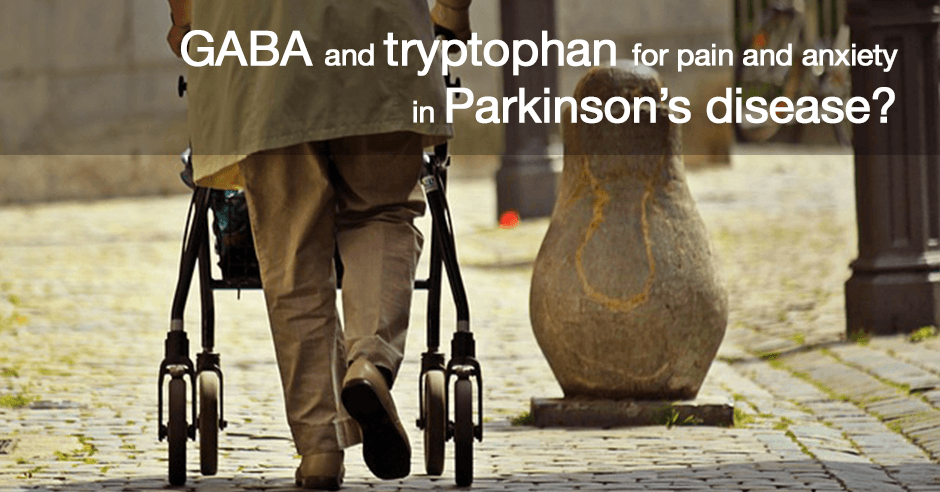
GABA and tryptophan for pain and anxiety in Parkinson’s disease?

August 25, 2017 By Trudy Scott 12 Comments

Last week I blogged about my recent back injury and how acupuncture boosts GABA to reduce back pain and how oral GABA further reduces the pain. Both these interventions have helped me so much and I’m doing so much better.

I love the feedback I receive in the blog comments and the great questions – which get to help the person asking the question and everyone else reading the blog and comments. So thank you if you comment!

I received this lovely feedback about GABA and anxiety, and a question about Parkinson’s disease (on the above blog) and want to share it and my response here so you and families with a loved one with Parkinson’s disease will also have access to this information:

I have loved reading your articles for a long time and listen to you whenever you are on a summit. I have learned a lot. GABA definitely helps me to relax, reduce my monkey mind and sleep better.

My mom has Parkinson’s disease and is very stiff and tight. She hurts often, especially her back. She also has afternoon anxiety, some call it “sundowners”. Can she take GABA with carbidopa-levidopa and blood pressure meds? She needs some kind of help!

Thank you in advance for any suggestions you might have to give her any quality of life as right now it is not good and the doctors offer no suggestions beyond possibly more prescriptions.

I responded saying how glad I was to hear GABA helps her to relax, reduces her monkey mind and also helps her to sleep better and how sorry I was to hear about her mom’s stiffness, pain and anxiety.

I posted this regarding the stiffness and back pain: share this paper with your doctor and get his/her approval to do a trial of GABA – Parkinson’s Disease and Neurodegeneration: GABA-Collapse Hypothesis:

the original description of Parkinson’s disease (PD) as due to the selective damage of dopaminergic neurons in the mesencephalon should be updated into the concept of a severe multisystemic neurodegenerative disorder of the nervous system, whose clinical symptoms reflect the localization and progression of the most advanced GABA pathology. A future and more complete therapeutic approach to PD should be aimed first at slowing (or stopping) the progression of Ca(2+)/GABA functional decline.

I have worked with a few people with Parkinson’s disease and GABA has been very helpful for the stiffness and pain, the physical anxiety, easing some of their tremors and helping with insomnia. I always do a trial so we know how much the individual will need.

For someone on blood pressure medication I’d start with a GABA-only product or GABA-theanine product rather than GABA Calm which does contain tyrosine.

I posted this regarding the “sundowners” question: I’d share this with your doctor and get the approval to do a trial of tryptophan – Sundown Syndrome in Persons with Dementia: An Update

sundown syndrome is characterized by the emergence or increment of neuropsychiatric symptoms such as agitation, confusion, anxiety, and aggressiveness in late afternoon, in the evening, or at night.

Although this paper refers to dementia, these symptoms also happen to be classic low serotonin symptoms that typically respond really well to tryptophan. The paper mentions melatonin as an intervention but since tryptophan converts to melatonin I’d start with tryptophan (based on doing a trial) and then consider adding melatonin too if needed.

I shared a few more resources on Parkinson’s disease:

  • Chris Kresser has an excellent blog post called New Research and Treatments for Parkinson’s Disease where he writes about the microbiome, constipation, SIBO, gluten, the HPA axis, low-dose naltrexone (LDN) and the possible autoimmune aspect, iron overload and the benefits of curcumin, a ketogenic diet and glutathione.
  • The Wahls Protocol for MS (some versions of which are ketogenic diets) shows promise for many neurodegenerative diseases and is also being researched for Parkinson’s disease

I also shared this amazing and inspiring video created by physical therapist Anicea Gunlock, on how using music while gait training can be beneficial for those suffering from Parkinsons’s disease

You read more about this music approach Anicea Gunlock used with her patient here.

The amino acids GABA and tryptophan can often be used in conjunction with all of the above approaches and often provide immediate relief for anxiety, pain, agitation and insomnia while some of the other root causes are being addressed.

I’ve recently updated the Antianxiety Food Solution Amino Acid and Pyroluria Supplements blog with some of my favorite GABA and tryptophan products mentioned above. You’ll also see the amino acid questionnaire and amino acid precautions on this blog.

Instead of only considering the amino acids for someone whose primary issue is anxiety, I’d like you to start thinking about using the amino acids for anyone who has a medical diagnosis – such as autism, cancer, ALS, Parkinson’s disease, MS, Alzheimer’s disease or anything else – and who also happens to suffer from anxiety.

Have you used GABA or tryptophan to ease stiff and tense muscles and pain in your Parksinson’s disease, for a family member or for a patient/client?

And have you used tryptophan for the low serotonin worry-type of anxiety, agitation and insomnia?

Filed Under: Anxiety, GABA, serotonin Tagged With: agitation, anxiety, autism, GABA, MS, pain, Parkinson's disease, serotonin, stiff and tense muscles, sundowners, tryptophan

  • « Go to Previous Page
  • Page 1
  • Page 2
  • Page 3
  • Page 4
  • Page 5
  • Page 6
  • Go to Next Page »

Primary Sidebar

NEW! GABA QuickStart Homestudy (with special intro pricing)

gaba quickstart homestudy

Free Report

9 Great Questions Women Ask about Food, Mood and their Health

You'll also receive a complimentary subscription to my ezine "Food, Mood and Gal Stuff"


Connect with me

Popular Posts

  • Amino Acids Mood Questionnaire from The Antianxiety Food Solution
  • The Antianxiety Food Solution Amino Acid and Pyroluria Supplements
  • Pyroluria Questionnaire from The Antianxiety Food Solution
  • Collagen and gelatin lower serotonin: does this increase your anxiety and depression?
  • Tryptophan for the worry-in-your-head and ruminating type of anxiety
  • GABA for the physical-tension and stiff-and-tense-muscles type of anxiety
  • The Antianxiety Food Solution by Trudy Scott
  • Seriphos Original Formula is back: the best product for anxiety and insomnia caused by high cortisol
  • Am I an anxious introvert because of low zinc and vitamin B6? My response to Huffington Post blog
  • Vagus nerve rehab with GABA, breathing, humming, gargling and key nutrients

Recent Posts

  • What do I use instead of Seriphos to help lower high cortisol that is affecting my sleep and making me anxious at night?
  • BeSerene™ GABA/theanine cream eases severe muscle tension in her neck/shoulders, prevents her bad headaches and quells her anxiety
  • How the correct approach, dose and sublingual use of GABA can be calming and not cause a flushed and itchy face and neck
  • The amino acid glutamine improves low mood by addressing gut health, and it has calming effects too
  • Flight anxiety with heightened breath, physical tension and also fearing the worst (the role of low GABA and low serotonin)

Categories

  • 5-HTP
  • AB575
  • Addiction
  • ADHD
  • Adrenals
  • Alcohol
  • Allergies
  • Alzheimer's disease
  • Amino Acids
  • Anger
  • Antianxiety
  • Antianxiety Food Solution
  • Antidepressants
  • Anxiety
  • Anxiety and panic
  • Autism
  • Autoimmunity
  • benzodiazapines
  • Bipolar disorder
  • Books
  • Caffeine
  • Cancer
  • Candida
  • Children/Teens
  • Collagen
  • Cooking equipment
  • Coronavirus/COVID-19
  • Cravings
  • Depression
  • Detoxification
  • Diabetes
  • Diet
  • DPA/DLPA
  • Drugs
  • EFT/Tapping
  • EMF
  • EMFs
  • Emotional Eating
  • Endorphins
  • Environment
  • Essential oils
  • Events
  • Exercise
  • Fear
  • Fear of public speaking
  • Fertility and Pregnancy
  • Fish
  • Food
  • Food and mood
  • Functional neurology
  • GABA
  • Gene polymorphisms
  • General Health
  • Giving
  • Giving back
  • Glutamine
  • Gluten
  • GMOs
  • Gratitude
  • Gut health
  • Heart health/hypertension
  • Histamine
  • Hormone
  • Hyperparathyroidism
  • Hypoglycemia
  • Immune system
  • Inflammation
  • Insomnia
  • Inspiration
  • Introversion
  • Joy and happiness
  • Ketogenic diet
  • Lithium orotate
  • Looking awesome
  • Lyme disease and co-infections
  • MCAS/histamine
  • Medication
  • Men's health
  • Mental health
  • Mercury
  • Migraine
  • Mold
  • Movie
  • MTHFR
  • Multiple sclerosis
  • Music
  • NANP
  • Nature
  • Nutritional Psychiatry
  • OCD
  • Osteoporosis
  • Oxalates
  • Oxytocin
  • Pain
  • Paleo
  • Parasites
  • Parkinson’s disease
  • PCOS
  • People
  • PMS
  • Postpartum
  • PTSD/Trauma
  • Pyroluria
  • Questionnaires
  • Real whole food
  • Recipes
  • Research
  • Schizophrenia
  • serotonin
  • SIBO
  • Sleep
  • Special diets
  • Sports nutrition
  • Stress
  • Sugar addiction
  • Sugar and mood
  • Supplements
  • Teens
  • Testimonials
  • Testing
  • The Anxiety Summit
  • The Anxiety Summit 2
  • The Anxiety Summit 3
  • The Anxiety Summit 4
  • The Anxiety Summit 5
  • The Anxiety Summit 6
  • Thyroid
  • Thyroid health
  • Toxins
  • Tryptophan
  • Tyrosine
  • Uncategorized
  • Vegan/vegetarian
  • Women's health
  • Yoga

Archives

  • October 2025
  • September 2025
  • August 2025
  • July 2025
  • June 2025
  • May 2025
  • April 2025
  • March 2025
  • February 2025
  • January 2025
  • November 2024
  • October 2024
  • September 2024
  • August 2024
  • July 2024
  • June 2024
  • May 2024
  • April 2024
  • March 2024
  • February 2024
  • January 2024
  • December 2023
  • November 2023
  • October 2023
  • September 2023
  • August 2023
  • July 2023
  • June 2023
  • May 2023
  • April 2023
  • March 2023
  • February 2023
  • January 2023
  • December 2022
  • November 2022
  • October 2022
  • September 2022
  • August 2022
  • July 2022
  • June 2022
  • May 2022
  • April 2022
  • March 2022
  • February 2022
  • January 2022
  • December 2021
  • November 2021
  • October 2021
  • September 2021
  • August 2021
  • July 2021
  • June 2021
  • May 2021
  • April 2021
  • March 2021
  • February 2021
  • January 2021
  • December 2020
  • November 2020
  • October 2020
  • September 2020
  • August 2020
  • July 2020
  • June 2020
  • May 2020
  • April 2020
  • March 2020
  • February 2020
  • January 2020
  • December 2019
  • November 2019
  • October 2019
  • September 2019
  • August 2019
  • July 2019
  • June 2019
  • May 2019
  • April 2019
  • March 2019
  • February 2019
  • January 2019
  • December 2018
  • November 2018
  • October 2018
  • September 2018
  • August 2018
  • July 2018
  • June 2018
  • May 2018
  • April 2018
  • March 2018
  • February 2018
  • January 2018
  • December 2017
  • November 2017
  • October 2017
  • September 2017
  • August 2017
  • July 2017
  • June 2017
  • May 2017
  • April 2017
  • March 2017
  • February 2017
  • January 2017
  • December 2016
  • November 2016
  • October 2016
  • September 2016
  • August 2016
  • July 2016
  • June 2016
  • May 2016
  • April 2016
  • March 2016
  • February 2016
  • January 2016
  • December 2015
  • November 2015
  • October 2015
  • September 2015
  • August 2015
  • July 2015
  • June 2015
  • May 2015
  • April 2015
  • March 2015
  • February 2015
  • January 2015
  • December 2014
  • November 2014
  • October 2014
  • September 2014
  • August 2014
  • July 2014
  • June 2014
  • May 2014
  • April 2014
  • March 2014
  • February 2014
  • January 2014
  • December 2013
  • November 2013
  • October 2013
  • September 2013
  • August 2013
  • July 2013
  • June 2013
  • May 2013
  • April 2013
  • March 2013
  • February 2013
  • January 2013
  • December 2012
  • November 2012
  • October 2012
  • August 2012
  • July 2012
  • June 2012
  • May 2012
  • April 2012
  • March 2012
  • February 2012
  • January 2012
  • December 2011
  • November 2011
  • October 2011
  • September 2011
  • August 2011
  • July 2011
  • June 2011
  • May 2011
  • April 2011
  • March 2011
  • February 2011
  • January 2011
  • December 2010
  • October 2010
  • September 2010
  • July 2010
  • May 2010
  • April 2010
  • March 2010
  • February 2010
  • January 2010
  • November 2009

Share the knowledge!

The above statements have not been evaluated by the Food and Drug Administration. Products listed in this website are not intended to diagnose, treat, cure or prevent any disease.

The information provided on this site is for informational and educational purposes only and is not intended as a substitute for advice from your physician or other health care professional. You should consult with a healthcare professional before starting or modifying any diet, exercise, or supplementation program, before taking or stopping any medication, or if you have or suspect you may have a health problem.


Copyright © 2026 Trudy Scott. All Rights Reserved. | Privacy | Terms and Conditions | Refund Policy | Medical Disclaimer

Free Report

9 Great Questions Women Ask about Food, Mood and their Health

You’ll also receive a complimentary subscription to my ezine “Food, Mood and Gal Stuff”